Naar de inhoud

Romenu

Over literatuur, gedichten, kunst en cultuur
akke.beakke.be

Berichten van 14 oktober 2013 tot 15 oktober 2013

A. F.Th. van der Heijden, Boualem Sansal, Friedrich Nietzsche, Michail Lermontov, Italo Calvino, Tessa de Loo

De Nederlandse schrijver A. F. Th. van der Heijden werd geboren in Geldrop op 15 oktober 1951. Zie ook mijn blog van 15 oktober 2010 en eveneens alle tags voor A. F.Th. van der Heijden op dit blog.


Uit: De helleveeg


“Ze ontving me in een crèmekleurige deux-pièces, die de duurdere kledingwinkel verried, en perfect om haar heen sloot: op haar achtendertigste had ze nog net zo'n mooi figuur als vijftien jaar eerder op haar trouwdag. Hoe kon het dat mijn moeder, die sterk op haar leek, al voor haar dertigste grijs begon te worden, en dat Tiny haar eigen donkerbruine haarkleur had behouden, zonder een enkel zilveren draadje? En dat de oudste van de twee zussen al tien jaar een rimpelig oudevrouwtjesgezicht had, terwijl dat van de jongste nog knap en strak was, met grote bruine ogen, waarvan de leden niet door permanente vermoeidheid waren gaan hangen? Tiny had zich bescheiden opgemaakt, precies genoeg om het bijzondere aan haar trekken te accentueren. Een dame, every inch. Maar pas op.
Misschien moest ik zeggen trois-pièces, want over het mantelpak droeg ze een huishoudschortje in dezelfde crèmekleur, met ruches en een grote strik, waarvan de lussen op haar billen dansten toen ze voor me uit naar de woonkamer liep. In de flat was weinig veranderd sinds ik er als jongen van elf, twaalf een paar keer gelogeerd had. Hetzelfde meubilair, nog als nieuw, de teakhouten leuningen zelfs niet een beetje verschoten. Er stond nu een grote kleurentelevisie op de plaats waar vroeger de kleine, lichtblauwe radio stond, waaraan ik me had gelaafd in die bloeitijd van de rock-'n-roll. Wat meer planten misschien, en nergens asbakken, althans niet zichtbaar - verder alles bij het oude. Ik ging wat ongemakkelijk op de bank zitten, onverminderd (en sinds de ontvangst zelfs in meerdere mate) gehinderd door het priapisme van Guy de Maupassant.
Ik vroeg Tiny of ze nog altijd op dezelfde wijze koffie maakte: heel sterk, met kokende melk aangelengd.
'Koos drinkt hem nu anders,' zei ze weinig vriendelijk, 'maar voor jou kan ik het nog wel een keer op de oude manier doen.' Tiny verdween naar de keuken. Ze hield er nog altijd die aanstellerig schokkerige manier van zich voortbewegen op na, met half opgeheven onderarmen en geknakte polsen - een beetje slofferig ook, zelfs nu ze haar hoogste hakken droeg. Het was in strijd met haar aanvankelijke verschijning als dame, wat misschien ook precies in haar bedoeling lag. Een clown met een schortje voor, dat is wat ze konden krijgen, de mensen.”


1476937-9c70bbf6b9f280bbb3bf938f90108b25.jpg 

A. F.Th. van der Heijden (Geldrop, 15 oktober 1951)


De Franstalige Algerijnse schrijver Boualem Sansal werd geboren op 15 oktober 1949 in El Teniente-Had. Zie ook alle tags voor Boualem Sansal op dit blog.


Uit: Harraga


« La pauvreté des jours ? la bêtise ambiante ? Oui, c'est cela mais il y a plus fort, le traficotage, la religion, la bureaucratie, la culture du crime, du coup, du clan, l'apologie de la mort, la glorification du tyran, l'amour du clinquant, la passion du discours hurlé. Est-ce tout ? Il y a le mauvais exemple. Il vient de haut, du gouvernement qui prend son inculture pour un diamant légendaire, sa barbarie pour du raffinement, ses bricolages pour de formidables stratégies d'Etat, ses détournements pour de légitimes rémunérations. Ah, les gueux, ah, la puanteur ! Et l'intelligentsia, que dit-elle, ses champions ne sont pas tous morts ? Qu'est-ce que tu veux qu'ils disent en prison, ils réclament du pain et une couverture comme les autres !  »

(…)


« Quel siècle fait-il dehors ? le bruit et la poussière qui me parviennent par vagues brutales ne me disent rien qui vaille. Il y a maldonne, l'Islam le plus ténébreux et le modernisme le plus toc se disputent les rengaines et les initiatives. C'est à hue et à dia, j'en ai les oreilles malades. Le temps, patrimoine mondial de l'humanité, subit ici les injures d'un passéisme virulent et les outrages d'un futurisme d'horreur, il n'a plus de force, plus d'allant, plus de lumière. Faut-il aimer le néant pour s'infliger pareille distorsion ! »


1476937-5730fb244d36a4c6b6d38435af9ce74b.jpg
Boualem Sansal (El Teniente-Had, 15 oktober 1949
)


De Duitse dichter, filosoof, filoloog en schrijver Friedrich Nietzsche werd geboren op 15 oktober 1844 in Röcken ten zuidwesten van Leipzig. Zie ook mijn blog van 15 oktober 2010 en eveneens alle tags voor Friedrich Nietzsche op dit blog.


Uit: Ecce Homo


“Das Glück meines Daseins, seine Einzigkeit vielleicht, liegt in seinem Verhängnis: ich bin, um es in Räthseltorm auszudrücken, als mein Vater bereits gestorben, als meine Mutter lebe ich noch und werde alt. Diese doppelte Herkunft, gleichsam aus der obersten und der untersten Sprosse an der Leiter des Lebens, décadent zugleich und Anfang - dies, wenn irgend Etwas, erklärt jene Neutralität, jene Freiheit von Partei im Verhältnis zum Gesammtprobleme des Lebens, die mich vielleicht auszeichnet. Ich habe für die Zeichen von Aufgang und Niedergang eine feinere Witterung als je ein Mensch gehabt hat, ich bin der Lehrer par excellence hierfür, ich kenne Beides, ich bin Beides. Mein Vater starb mit sechsunddreissig Jahren: er war zart, liebenswürdig und morbid, wie ein nur zum Vorübergehn bestimmtes Wesen, eher eine giftige Erinnerung an das Leben, als das Leben selbst. Im

gleichen Jahre, wo sein Leben abwärts ging, ging auch das meine abwärts: im sechsunddreissigsten Lebensjahre kam ich auf den niedrigsten Punkt meiner Vitalität, ich lebte noch, doch ohne drei Schritt weit vor mich zu sehen. Damals – es war 1879 - legte ich meine Basler Professur nieder, lebte den Sommer über wie ein Schatten in St. Moritz und den nächsten Winter, den sonnenärmsten meines Lebens, als Schatten in Nlaumburg. Dies war mein Miminum:

«Der Wanderer und sein Schatten» entstand währenddem. Unzweifelhaft, ich verstand mich damals auf Schatten ...“


 1476937-05c348b94a4bea35f7d3635ef19e3edc.jpg

Friedrich Nietzsche (15 oktober 1844 – 25 augustus 1900)

Portret door Edvard Munch, 1906


De Russische dichter en schrijver Michail Joerjevitsj Lermontov werd geboren op 15 oktober 1814 in Moskou. Zie ook mijn blog van 15 oktober 2010 en eveneens alle tags voor Michail Lermontov op dit blog.


A Prayer


Faithful before thee, Mother of God, now kneeling,
Image miraculous and merciful--of thee
Not for my soul's health nor battles waged, beseeching,
Nor yet with thanks or penitence o'erwhelming me!

Not for myself,--my heart with guilt o'erflowing--
Who in my home land e'er a stranger has remained,
No, a sinless child upon thy mercy throwing,
That thou protect her innocence unstained!

Worthy the highest bliss, with happiness O bless her!
Grant her a friend to stand unchanging at her side,
A youth of sunshine and an old age tranquil,
A spirit where together peace and hope abide.

Then, when strikes the hour her way from earth for wending,
Let her heart break at dawning or at dead of night--
From out thy highest heaven, thy fairest angel sending
The fairest of all souls sustain in heavenward flight!


Like An Evil Spirit


Like an evil spirit hast thou
Shocked my heart from out its rest,
If thou'lt take it quite away now--
Thou wilt win my healing blest!

My heart thy temple evermore!
Thy face,--the altar's Godhead sign!
Not heaven's grace,--thy smiles, restore,
Grant absolution, joy divine!


1476937-4facace1301306878062872deacf6156.jpg 

Michail Lermontov (15 oktober 1814 - 27 juli 1841)


De Italiaanse schrijver Italo Calvino werd geboren in Santiago de las Vegas op Cuba op 15 oktober 1923. Zie ook mijn blog van 15 oktober 2010 en eveneens alle tags voor Italo Calvino op dit blog.


Uit: Cosmicomics (Vertaald door William Weaver e.a.)


“I had fallen in love. What I mean is: I had begun to recognize, to isolate the signs of one of those from the others, in fact I waited for these signs I had begun to recognize, I sought them, responded to those signs I awaited with other signs I made myself, or rather it was I who aroused them, these signs from her, which I answered with other signs of my own . . . ”

(…)


“I could distinguish the shape of her bosom, her arms, her thighs, just as I remember them now, just as now, when the Moon has become that flat, remote circle, I still look for her as soon as the first sliver appears in the sky, and the more it waxes, the more clearly I imagine I can see her, her or something of her, but only her, in a hundred, a thousand different vistas, she who makes the Moon the Moon and, whenever she is full, sets the dogs to howling all night long, and me with them.”

(…)


“Now the situation is different, I admit: I have a wristwatch, I compare the angle of its hands with the angle of all the hands I see; I have an engagement book where the hours of my business appointments are marked down; I have a chequebook on whose stubs I add and subtract numbers. At Penn Station I get off the train, I take the subway, I stand and grasp the strap with one hand to keep my balance while I hold the newspaper up in the other, folded so I can glance over the figures of the stock market quotations: I play the game, in other words, the game of pretending there's an order in the dust, a regularity in the system, or an interpretation of different systems, incongruous but still measurable, so that every graininess of disorder coincides with the faceting of an order which promptly crumbles.”


1476937-ed9f5eb90b51d670f5b69e32e25119c4.jpg 

Italo Calvino (15 oktober 1923 - 19 november 1985)


De Nederlandse schrijfster Tessa de Loo (pseudoniem van Tineke Duyvené de Wit) werd op 15 oktober 1946 in Bussum geboren. Zie ook mijn blog van 15 oktober 2010 en eveneens alle tags voor Tessa de Loo op dit blog.


Uit: Die Zwillinge (Vertaald door Waltraud Hüsmeri)


“"Es gefiel ihm nicht, dass du krank warst. Ein gesundes Kind ist eine gute Investition, aber ein krankes ... Ärzte, Medikamente, ein Sanatorium, eine Beerdigung. Das hätte nur Geld gekostet. Deshalb war es ihm ganz recht, als seine Schwester Elisabeth anbot, dich mitzunehmen – auch wenn er sie überhaupt nicht leiden konnte und ihr in ihrer mondänen Trauerkleidung nur misstraute. Sie hatte ihm erzählt, ihr Sohn wohne in einer trockenen, waldreichen Gegend unweit von Amsterdam, wo das Klima heilsam sei für Tbc-Kranke, in der Nähe sei sogar ein Sanatorium [...] Opa war nichts mehr an dir gelegen, auch nicht, als du wieder gesund warst. Eine Katze, die als junges Tier kränkelt, wird nie richtig gesund und stark, das war sein Standpunkt."


1476937-52cc787a5f3daac414e7366230fd5656.jpg 

Tessa de Loo (Bussum, 15 oktober 1946)


Zie voor nog meer schrijvers van de 15e oktober ook
mijn blog van 15 oktober 2011 deel 1 en eveneens deel 2.

Geschreven door Romenu om 19:38 Reageer op dit bericht

Heinz Helle

De Duitse schrijver Heinz Helle werd geboren op 15 oktober 1978 in München. Helle studeerde filosofie in München en New York. Van 2009 tot 2012 bezocht hij het Zwitserse Literatuur Instituut. Hij werkt als copywriter voor verschillende reclamebureaus. In 2013 werd hij uitgenodigd door Daniela Strigl om deel te nemen aan de Ingeborg Bachmann-prijs. In 2014 zal zijn debuutroman “Der beruhigende Klang von explodierendem Kerosin” verschijnen.

Uit: Wir sind schön

„Wir sind schön. Es geht uns gut. Wir mögen unsere Körper, den eigenen und den jeweils anderen, andere finden, wir sind ein schönes Paar. Wir sind glücklich. Wir sind das, was man glücklich nennt. Wir sind das, was alle glücklich nennen, die wir kennen. Wir haben, was alle wollen, tun, was alle tun. Wir haben zusammen 53.374,43 Euro auf dem Konto und könnten eine Eigentumswohnung anzahlen, eine kleine, und dann abzahlen, langsam, nachdem wir beide feste, sichere Jobs angenommen hätten; fest müssten sie sein für den Kredit, und sicher wären sie aufgrund unserer Ausbildung, unserer freundlichen, zuverlässigen Art und unserer Erfahrung. Wir könnten in Elternzeit gehen, Deutschland ist ein zivilisiertes Land, das seinen jungen Eltern ermöglicht, ohne allzu große finanzielle Einbußen junge Eltern zu sein, zumindest vorerst, später dann nicht mehr, Kinder zu haben ist deutlich teurer, als Kinder zu bekommen, und nach einer Elternzeit ist die Karriere auch meistens gelaufen, aber das sagt man ihnen nicht, den Kindern nicht, weil sie es nicht verstehen würden, und den jungen Eltern nicht, weil es sie im Moment nicht interessiert. Ihnen sagt man: schön.
Wir haben Sex. Zunächst mehrmals am Tag, dann mehrmals in der Woche, dann mehrmals am Wochenende, dann einmal pro Woche. Wir finden es beide gut, so versichern wir einander, es wird eben weniger, es gibt viel zu tun, wir haben Stress, und ab und zu möchte man ja auch ein paar Freunde sehen.“


 1595076-083d42f24017e0fbe6864b8b39d2fc16.jpg
Heinz Helle (München, 15 oktober 1978)

Geschreven door Romenu om 00:00 Reageer op dit bericht

E. E. Cummings, Péter Nádas, Katha Pollitt, Daniël Rovers, Katherine Mansfield, Margarete Susman, Stefan Żeromski

De Amerikaanse dichter en schrijver Edward Estlin Cummings werd geboren in Cambridge, Massachusetts op 14 oktober 1894. Zie ook mijn blog van 14 oktober 2010 en eveneens alle tags voor E. E. Cummings op dit blog.


In The Rain-


in the rain-
darkness,     the sunset
being sheathed i sit and
think of you

the holy
city which is your face
your little cheeks the streets
of smiles

your eyes half-
thrush
half-angel and your drowsy
lips where float flowers of kiss

and
there is the sweet shy pirouette
your hair
and then

your dancesong
soul.     rarely-beloved
a single star is
uttered,and i

think
       of you


I Like My Body When It Is With Your


i like my body when it is with your
body. It is so quite new a thing.
Muscles better and nerves more.
i like your body.  i like what it does,
i like its hows.  i like to feel the spine
of your body and its bones,and the trembling
-firm-smooth ness and which i will
again and again and again
kiss, i like kissing this and that of you,
i like, slowly stroking the,shocking fuzz
of your electric furr,and what-is-it comes
over parting flesh….And eyes big love-crumbs,

and possibly i like the thrill

of under me you so quite new


It Is Funny, You Will Be Dead Some Day


it is funny, you will be dead some day.
By you the mouth hair eyes,and i mean
the unique and nervously obscene

need;it’s funny.  They will all be dead

knead of lustfulhunched deeplytoplay
lips and stare the gross fuzzy-pash
—dead—and the dark gold delicately smash….
grass,and the stars,of my shoulder in stead.

It is a funny,thing.  And you will be

and i and all the days and nights that matter
knocked by sun moon jabbed jerked with ecstasy
….tremble (not knowing how much better

than me will you like the rain’s face and

the rich improbable hands of the Wind)


 1476322-d438fb9cc1bfb0a28bb7f65be5c7f53d.jpg

E. E. Cummings (14 oktober 1894 - 3 september 1962)

Zelfportret, 1958


De Hongaarse schrijver Péter Nádas werd geboren op 14 oktober 1942 in Boedapest. Zie ook mijn blog van 14 oktober 2010 en eveneens alle tags voor Péter Nádas op dit blog.


Uit: A Lovely Tale Of Photography (Vertaald door Imre Goldstein)


"Mein Carl, on the other hand, regrets that the nights are so cool already. Isn't it so, Carl?"

"Our Kornélia keeps telling us that on some southern seas the weather wouldn't be nearly so pleasant."

"In truth, we could hardly afford to interrupt our walk, still we hastened over, since the young lady had sent for us. Would it be too much of an intrusion to suggest that you share the rest of our walk with us?"

"On the contrary. Nothing would please us more. All the more so since the young lady is deeply indebted to Mister Van der Woelde; and if she has taken the liberty of sending for him, she has done so for no other reason than to pay her respects to her savior and to express her gratitude."

"The young lady should not even think in terms of debt and gratitude."

"Forgive me, madam, but why not? And why should she not talk of such things? After all, the young lady was told how the young gentleman had saved her life."

"I grant you that it was he who found her on the steps of that abandoned house of terrible reputation. But that's hardly worth mentioning. We hope that the young lady has recovered from her fright; judging by her radiant complexion I cannot reach any other conclusion."

"The young body can overcome its passing weakness; the rest will be done by the curative effect of this marvelous environment and, last but not least, by the hoped-for company of the two of you."

And there is the voice that, to all indications, follows us everywhere.

"The elderly lady at this moment with a single regal gesture put an end to the stream of mutual courtesy and compliments. And although there was some gain, however unpleasant, to be had from this gesture, its necessity was not readily fathomable."


1476322-8ba52a7fb91cbad8d28a543210a76b1f.jpg
Péter Nádas (Boedapest,14 oktober 1942)


De Amerikaanse dichteres, essayiste, critica en feministe Katha Pollitt werd geboren op 14 oktober 1949 in New York. Zie ook mijn blog van 14 oktober 2010 en eveneens alle tags voor Katha Pollit op dit blog.


Silent Letter


It’s what you don’t hear

that says struggle

as in wrath and wrack

and wrong and wrench and wrangle.


The noiseless wriggle

of a hooked worm

might be a shiver of pleasure

not a slow writhing


on a scythe from nowhere.

So too the seeming leisure

of a girl alone in her blue

bedroom late at night


who stares at the bitten

end of her pen

and wonders how to write

so that what she writes


stays written.


Job


Worse than the boils and sores

and the stench and the terrible flies

was the nattering: Think.

You must have done something.

Things happen for a reason.

What goes around.


His life swept off in a whirlwind of camels and children!

Still, he knew enough to shut up

when his skin cleared pink as a baby’s

and overnight lambs blanketed the burnt fields.

People even said he looked taller

in his fine new robes: You see?

When one door closes, two doors open.


Nobody wanted to hear

about the rain or its father

or leviathan slicing the deeps

at the black edge of the world

under the cold blue light of the Pleiades.


The new sons were strong and didn’t ask difficult questions,

the new daughters beautiful, with glass-green eyes.


1476322-a817b3eac9aff8d9d71348434b3f3f4a.jpg 

Katha Pollitt (New York,14 oktober 1949)


De Nederlandse schrijver Daniël Rovers werd geboren in Zelhem op 14 oktober 1975. Zie ook mijn blog van 14 oktober 2010 en eveneens alle tags voot Daniël Rovers op dit blog.


Uit: Walter


“Da zal ow kontje wel vaore,’ gromde Van Leijsen, en hij schopte het beest in de linkerflank. ‘Onzen misdienaar laote gerust.’
Van Leijsen stampte op de straatstenen, alsof hij het koud had. Zijn klompen moesten nodig hersteld worden. De klompen van een knecht, maar de praatjes van een boer. Het werd tijd voor de mis. ‘Houdoe, Van Leijsen.’ Land bij de Moerdijk, dat kreeg die van zijn leven niet.
Op de Heuvel graasden de vaarzen van Van der Ven. De weide tussen de bomen was leeggevreten, toch bleven de beesten naar de laatste grassprieten op zoek. Daarom ook waren hun ogen zo groot, zoals bij vliegen. Eentje draaide zich om, rood zwol haar achterste op, stront – vlats, vlats – kwam in stoten uit de aars zetten. De zon zou er de hele dag op blijven schijnen. Daar kreeg je stevige, bijna zwarte korsten van, met van binnen groene saus. Maakte de zon alles hard? Kleigrond, pas gemaaid gras, broodkruimels. Maar boter wordt zacht als het in de zon op het aanrecht ligt, en ijs smelt in de sloten als de vorstnachten ophouden te duren.
Walter keek naar de punten van zijn schoenen, Trees had ze gisteren nog gepoetst. Er zat een vlekje op. Was dat water van het wassen of een strontspetter van zo-even? Hij spuugde in zijn zakdoek en ging door zijn knieën om het leder schoon te vegen. Wit belletjesschuim. Jezus Christus stond voor de kerk op zijn sokkel een witte slagtand te wezen.
De kerkdeur had een grote smeedijzeren klink, die je met twee handen naar beneden moest duwen. Donker was het voorportaal, het rook naar kelder en naar hersenschudding. Een tweede deur moest hij door, met daarachter het kerkschip. De koster had naast het altaar twee kaarsen aangestoken. In Made was zo vorig jaar op een ochtend brand uitgebroken; de preekstoel had als een braambos vlam gevat.
Weduwe Van Raamsdonk zat al in de kerk, aan de linkerkant, die van de vrouwen. Het silhouet dat al een keer in zijn dromen was verschenen: gebogen schouders, een dunne nek, het haar dat in een knot samengebonden werd.”


 1476322-c8cec834d9dddbbebcf85ed6be9c5269.jpg

Daniël Rovers (Zelhem, 14 oktober 1975)


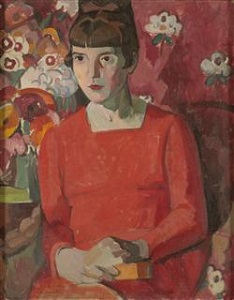
De Nieuw-Zeelandse schrijfster Katherine Mansfield werd geboren op 14 oktober 1888 in Wellington. Zie ook mijn blog van 14 oktober 2010 en eveneens alle tags voor Katherine Mansfield op dit blog.


Uit: The Swing of the Pendulum


“She heard him walk down the passage and then pause - lighting a cigarette.  Yes - a faint scent of delicious cigarette smoke penetrated her room.  She sniffed at it, smiling again.  Well, that had been a fascinating interlude!  He looked so amazingly happy: his heavy clothes and big buttoned gloves; his beautifully brushed hair... and that smile... 'Jolly' was the word - just a well-fed boy with the world for his playground.  People like that did one good - one felt 'made over' at the sight of them. Sane they were - so sane and solid.  You could depend on them never having one mad impulse from the day they were born until the day they died.  And Life was in league with them - jumped them on her knee - quite rightly, too.  At that moment she noticed Casimir's letter, crumpled up on the floor - the smile faded.  Staring at the letter she began braiding her hair - a dull feeling of rage crept through her - she seemed to be braiding it into her brain, and binding it, tightly, above her head...”


 1476322-9d2224568e429585eae249aa9f8a7c80.jpg

Katherine Mansfield (14 oktober 1888 – 9 januari 1923)

Portret door Anne Estelle Rice, 1918


De Duitse dichteres, schrijfster en filosofe Margarete Susman werd geboren op 14 oktober 1872 in Hamburg. Zie ook mijn blog van 14 oktober 2010 en eveneens alle tags voor Margarete Susman op dit blog.


Der Sturm rauscht durch die Linde


Der Sturm rauscht durch die Linde;

Düfte kommen im Winde

In tiefer klingender Nacht.

Mein Herz ist aufgewacht

Und pocht so laut und mächtig

In der Nacht tiefstürmendes Lied.

Ich weiss nicht, wie mir geschieht.

Ah, wie der Nachtsturm saust!

Ein grosses Vergessen umbraust

Das Haupt mir dunkel und nächtig -

Und in dem Vergessen ein Wissen

Von nie gewussten Dingen —

Ein Fliehn und Umschlingen,

Ein Verlieren und Finden,

Ein Erscheinen, Verschwinden —

Das sind die stummen Gestalten,

Das ist das webende Walten

Der Nacht. —

Der Sturm rauscht durch die Linde,

Düfte kommen im Winde,

Mein Herz ist aufgewacht.


Nacht ist's — zu meinen Füssen brandet


Nacht ist's — zu meinen Füssen brandet

Ein Meer von unerlöster Sehnsucht

In schluchzenden Wogen —

Und alle gekreuzigte Liebe der Welt

Steht um mich her. —

Dunkel — beengend — so voll die Welt

Von brennender Liebe,

Die in das dunkle Gewand der Nacht

Einsam ihr Antlitz birgt.

Stockende Seufzer — banges Schluchzen

Und die heiligste Liebe verströmt

Einsam ins All.


 1476322-b57891a3cd45aaaccc1569aaf9b1a43b.jpg

Margarete Susman (14 oktober 1872 - 16 januari 1966)


De Poolse schrijver
Stefan Żeromski werd geboren op 14 oktober 1864 in Strawczyn in de buurt van Kielce. Zie ook mijn blog van 14 oktober 2010 en eveneens alle tags voor Stefan Żeromski op dit blog.


Uit: Forebodings (Vertaald door Marie Busch)


“After having gazed at the awe-inspiring phenomena which surrounded him in the semicircle of the hospital theatre, he had slept during the operation.  His simple heart had not worked out the lesson that sleep, the greatest mistress on earth, teaches.  After the operation everything had been veiled by moral lassitude.  This had continued, but in the afternoon and at night they had mixed something heavy, like a stone ball, into his drinking-cup, and waves of warmth had flowed to the toes of his healthy foot from the cup.  Thoughts chased one another swiftly, like tiny quicksilver balls through some corner of his brain, and while he lay bathed in perspiration, and his eyelids closed of their own accord, not in sleep but in unconsciousness, he had been pursued by strange, half-waking visions.

Everything real seemed to disappear, only dimly lighted, vacant space remained, pervaded by the smell of chloroform.  He seemed to be in the interior of a huge cone, stretched along the ground like a tunnel.  Far away in the distance, where it narrowed towards the opening, there was a sparkling, white spot; if he could get there, he might escape. He seemed to be travelling day and night towards that chink along unending spiral lines running within the surface of the tunnel; he traveled under compulsion and with great effort, slowly, like a snail, although within him something leapt up like a rabbit caught in a snare, or as if wings were fluttering in his soul.  He knew what was behind that chink.  Only a few steps would lead him to the ridge under the wood… to his own four strips of his potato-field….’


 1476322-c61320bd9321aa76745373e33bbd0b5d.jpg

Stefan Żeromski (14 oktober 1864 - 20 november 1925)

Portret in het Nationale Museum in Kielce

Geschreven door Romenu om 18:57 Reageer op dit bericht

Maarten van der Graaff

De Nederlandse dichter en schrijver Maarten van der Graaff werd geboren op 14 oktober 1987 in Dirksland. Hij studeerde religiewetenschappen aan de Universiteit Utrecht en publiceerde poëzie en proza in onder andere De Revisor, nY, De Brakke Hond, DWB en Het Liegend Konijn. Van der Graaff staat op verschillende podia in Nederland en België en is redacteur en medeoprichter van het online literair tijdschrift “Samplekanon”. Hij debuteerde met de bundel “Vluchtautogedichten” bij uitgeverij Atlas Contact.


Kanaal

Deze zacht
toegeschroeide kras
is een kanaal.

De wil tot vooruitgang een
Hunebed, bestand tegen de terreur
van smeekbedes.

Uit het landgraf aan het kanaal
klauteren kinderen die moeten worden
beschreven.

Zo staat de wind.

Niets is eenvoudiger dan inzicht
in dit geval te verkrijgen.

Niets gemakkelijker dan met alle
nagels in de zwerfstenen wil
geslagen te wachten,
reikhalzend,

op de volle tiet
van de slaap.


 1611359-56c49ba8184c22e29a4bd98184a49d37.jpg
Maarten van der Graaff (Dirksland, 14 oktober 1987)

Geschreven door Romenu om 00:00 Reageer op dit bericht

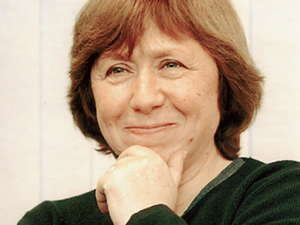
Friedenspreis des Deutschen Buchhandels voor Svetlana Alexievich

Aan de Wit-Russische schrijfster en onderzoeksjournaliste Svetlana Alexandrovna Alexievich  werd gisteren in de Frankfurter Paulskerk de Friedenspreis des Deutschen Buchhandels uitgereikt. Zie ook alle tags voor Svetlana Alexievich op dit blog.


Uit: Zinky Boys: Soviet Voices from the Afghanistan War


“I never want to write another word about the war, I told myself. Long after I'd finished "War is not a Woman", a book about World War II, I could still be upset by the sight of a child with a nosebleed.

Out in the country I couldn't bear to watch the fishermen cheerfully throwing their catch on to the sandy riverbank. Those fish, dragged up from the depts of God knows where, with their glassy, bulging eyes, made me want to vomit. I dare say we all have our pain threshold - physical as well as psychological. Well, I'd reached mine. The screech of a cat run over by a car, eventhe sight of a squa

shed worm, could make me feel I was going mad. I felt that animals, birds, fish, every living thing had a right to a life of its own. And then all of a sudden, if you can call it suddenfor the war had been going on for seven years...

One day we gave a lift to a young girl. She'd been to Minsk todo some food shopping for her mother. She had a big bag with chicken heads sticking out, I remember, and a shopping-net full of bread, which we put in the boot.

Her mother was waiting for her in the village. Or rather, standing at her garden gate, wailing.

'Mama!' The little girl ran up to her.

'Oh, my baby. We've had a letter. Our Andrey in Afghanistan.

Ohhh... They're sending him home, like they did Ivan Fedorinov. A little child needs a little grave, isn't that what they say? But my Andrei was as big as an oak and over six foot. "Be proud of me Mum, I'm in the Paras now," he wrote to us. Oh, why? .

Why? Can anyone tell me? Why? ''Each substance of agrief hath twenty shadoms.' (Richard II) Then, last year, something else happened.

I was in the half-empty waitingroom of a bus station. An officer was sitting there with a suitcase, and next to him there was as kinny boy who you could tell from his shaved head was a soldier.

The young soldier was digging in a plant pot (a dryold ficus, Iremember it was) with an ordinary kitchen fork. A couple of simple country women went and sat next to them and, out ofsheer curiosity, asked where they were going, and why, who were they? It turned out the officer was escorting the soldier home.“


1478925-e5bf9ecd11590b5d3498a917c9f14526.jpg
Svetlana Alexievich (Stanyslaviv, 31 mei 1948)

Geschreven door Romenu om 00:00 Reageer op dit bericht

Meer van Romenu

↑ Terug naar de berichten