Naar de inhoud

Romenu

Over literatuur, gedichten, kunst en cultuur
akke.beakke.be

Berichten van 26 oktober 2013 tot 27 oktober 2013

Dylan Thomas, Sylvia Plath, Albrecht Rodenbach, Jamie McKendrick
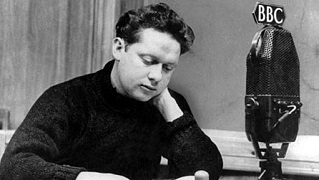
De Engelse dichter Dylan Thomas werd geboren op 27 oktober 1914 in Swansea in Wales. Zie ook mijn blog van 27 oktober 2010 en eveneens alle tags voor Dylan Thomas op dit blog.


A Grief Ago


A grief ago,
She who was who I hold, the fats and the flower,
Or, water-lammed, from the scythe-sided thorn,
Hell wind and sea,
A stem cementing, wrestled up the tower,
Rose maid and male,
Or, master venus, through the paddler's bowl
Sailed up the sun;

Who is my grief,
A chrysalis unwrinkling on the iron,
Wrenched by my fingerman, the leaden bud
Shot through the leaf,
Was who was folded on the rod the aaron
Road east to plague,
The horn and ball of water on the frog
Housed in the side.

And she who lies,
Like exodus a chapter from the garden,
Brand of the lily's anger on her ring,
Tugged through the days
Her ropes of heritage, the wars of pardon,
On field and sand
The twelve triangles of the cherub wind
Engraving going.

Who then is she,
She holding me? The people's sea drives on her,
Drives out the father from the caesared camp;
The dens of shape
Shape all her whelps with the long voice of water,
That she I have,
The country-handed grave boxed into love,
Rise before dark.

The night is near,
A nitric shape that leaps her, time and acid;
I tell her this: before the suncock cast
Her bone to fire,
Let her inhale her dead, through seed and solid
Draw in their seas,
So cross her hand with their grave gipsy eyes,
And close her fist.


Grief Thief Of Time


Grief thief of time crawls off,
The moon-drawn grave, with the seafaring years,
The knave of pain steals off
The sea-halved faith that blew time to his knees,
The old forget the cries,
Lean time on tide and times the wind stood rough,
Call back the castaways
Riding the sea light on a sunken path,
The old forget the grief,
Hack of the cough, the hanging albatross,
Cast back the bone of youth
And salt-eyed stumble bedward where she lies
Who tossed the high tide in a time of stories
And timelessly lies loving with the thief.

Now Jack my fathers let the time-faced crook,
Death flashing from his sleeve,
With swag of bubbles in a seedy sack
Sneak down the stallion grave,
Bull's-eye the outlaw through a eunuch crack
And free the twin-boxed grief,
No silver whistles chase him down the weeks'
Dayed peaks to day to death,
These stolen bubbles have the bites of snakes
And the undead eye-teeth,
No third eye probe into a rainbow's sex
That bridged the human halves,
All shall remain and on the graveward gulf
Shape with my fathers' thieves.


 1483771-0d8a48672ed152d3b4830c4aebc500c8.jpg

Dylan Thomas (27 oktober 1914 – 9 november 1953)


De Amerikaanse dichteres en schrijfster Sylvia Plath werd geboren op 27 oktober 1932 in Jamaica Plain, een buitenwijk van Boston. Zie ook mijn blog van 27 oktober 2010 en eveneens alle tags voor Sylvia Plath op dit blog.


Pheasant


You said you would kill it this morning.
Do not kill it.
It startles me still,
The jut of that odd, dark head, pacing

Through the uncut grass on the elm's hill.
It is something to own a pheasant,
Or just to be visited at all.

I am not mystical: it isn't
As if I thought it had a spirit.
It is simply in its element.

That gives it a kingliness, a right.
The print of its big foot last winter,
The trail-track, on the snow in our court

The wonder of it, in that pallor,
Through crosshatch of sparrow and starling.
Is it its rareness, then? It is rare.

But a dozen would be worth having,
A hundred, on that hill-green and red,
Crossing and recrossing: a fine thing!

It is such a good shape, so vivid.
It's a little cornucopia.
It unclaps, brown as a leaf, and loud,

Settles in the elm, and is easy.
It was sunning in the narcissi.
I trespass stupidly. Let be, let be.


Death & Co.


Two, of course there are two.
It seems perfectly natural now——
The one who never looks up, whose eyes are lidded
And balled¸ like Blake's.
Who exhibits

The birthmarks that are his trademark——
The scald scar of water,
The nude
Verdigris of the condor.
I am red meat. His beak

Claps sidewise: I am not his yet.
He tells me how badly I photograph.
He tells me how sweet
The babies look in their hospital
Icebox, a simple

Frill at the neck
Then the flutings of their Ionian
Death-gowns.
Then two little feet.
He does not smile or smoke.

The other does that
His hair long and plausive
Bastard
Masturbating a glitter
He wants to be loved.

I do not stir.
The frost makes a flower,
The dew makes a star,
The dead bell,
The dead bell.

Somebody's done for.


1483771-ff14664f7649f876cbfc5ed4b280bd70.jpg 

Sylvia Plath (27 oktober 1932 – 11 februari 1963)


De Belgische dichter en schrijver
Albrecht Rodenbach werd geboren te Roeselare op 27 oktober 1856. Zie ook mijn blog van 27 oktober 2010 en eveneens alle tags voor Albrecht Rodenbach op dit blog.


De laatste storm


Buldrend speelt de zee met 't oude vaartuig.

Kalm, manhaftig kampt de grijze zeeman

met den storm. Maar splijtend te allen kante

vreeslijk kraken de oude brooze wanden.

Bleek en bevend staart alom de manschap

naar het krakend wantwerk en den zeeman.

"Sloepen af en vrouwen eerst!" gebiedt hij.

Wiegend wagglen sloepen in den storrem,

angstig ijlt de manschap in de sloepen.

Eenzaam staat op 't vaartuig de oude zeeman.

"Vol!" zucht hij, "vaartwel, matrozen, redt u."

Door den storm verdwijnen zijne sloepen.

Buldrend speelt de zee met 't splijtend vaartuig.

Kalm, manhaftig bidt de grijze zeeman

de armen rond een mast. Zoo lange reisden

schip en zeeman samen door de stormen;

grijs is 't hoofd geworden van den zeeman,

krakend en versleten 't machtig vaartuig...

O de wind, de zee, de laatste storrem!

Schuimend, bruischend, stijgen wilde baren

onder zijne voeten. Krakend, berstend,

in de diepe kolken draait het vaartuig...

Samen duiklen schip en man verzwolgen.

Machtig stormt de zeewe grootsch en eenzaam.


Het land van Utopeia

In het land van Utopeia
groent en blauwt ene eeuwige mei,
glanst ene eeuwige lentezonne,
zingt eene eeuwige vogelenrei,
blinken marmeren sloten tussen
myrtenwoud en waterkant,
en het is een zalig land
't land van Utopeia.

In het land van Utopeia
draagt elk herder vurige min
tot het puur etherisch wezen
ener vorstelijke engelin,
wier getrouwe wederminne
zedens tart en edelstand,
en het is een zalig land
't land van Utopeia.

Och het land van Utopeia!
Hoe gewillig het lief ook zij,
trilt haar luchtige volmaaktheid
des verliefde greep voorbij;
edoch hoe platonisch ook, hoe
feller zijne liefde brandt,
en het is een zalig land
't land van Utopeia.


 1483771-ad158ce39f5f6471ad351d58d762e2e8.JPG

Albrecht Rodenbach (27 oktober 1856 – 23 juni 1880)

Standbeeld in Roeselaere


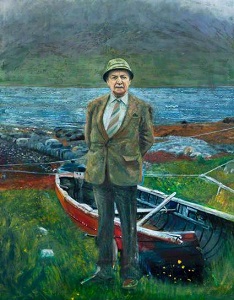
De Engelse dichter en vertaler Jamie McKendrick werd op 27 oktober 1955 in Liverpool geboren. Zie ook alle tags voor Jamie McKendrick op dit blog.


Black Gold


Here are the Carthaginian figs—Ciano
grinned as he handed Mussolini
some specimen chunk of shiny
copper ore from the Lezhë mine
in conquered Albania.


And here are the figs of Mesopotamia—
Vice President Cheney
traces on the map the red-marked pipeline
from the fields of Rumaila and Kirkuk
to the Turkish port of Ceyhan.


Under the Volcano


Between the Devil's Viaduct and the deep blue sea,
any darkened patch or nook will do,
they gather for the rites of youth
- a soluble nectar that arrives
from nowhere, like a boat in the port.


Incendi dolosi
. A bronze light worries
the night sky where the hiliside
consumes itself. Those
wanting compensation tie
a burning brand to a trapped bird’s foot


so where the bird alights in terror
flames spread.
No one's
the wiser as when the camorra
firebomb a discotheque or bar.
You sense the sulphur under the earth's crust.


The cortège follows the boy

they found in the Park of Springtime,
his forearm dandling a syringe.
Between the viaduct and the seafront
you crush the brittle flowers underfoot.


IMG_2310.jpg
Jamie McKendrick (Liverpool, 27 oktober 1955)


Zie voor nog meer schrijvers van de 27e oktober ook mijn vorige blog van vandaag.

Geschreven door Romenu om 00:00 Reageer op dit bericht

Zadie Smith, Nawal el Saadawi, Enid Bagnold, Fran Lebowitz, Kazimierz Brandys,Reza Allamehzadeh

De Engelse schrijfster Zadie Smith werd geboren op 27 oktober 1975 in Londen. Zie ook alle tags voor Zadie Smith op dit blog en eveneens mijn blog van 27 oktober 2010


Uit: NW


“On the way back from the chain supermarket where they shop, though it closed down the local grocer and pays slave wages, with new bags though they should take old bags, leaving with broccoli from Kenya and tomatoes from Chile and unfair coffee and sugary crap and the wrong newspaper.

They are not good people. They do not even have the integrity to be the sort of people who don't worry about being good people. They worry all the time. They are stuck in the middle again. They buy always Pinot Grigio or Chardonnay because these are the only words they know that relate to wine. They are attending a dinner party and for this you need to bring a bottle of wine. This much they have learned. They do not purchase ethical things because they can't afford them Michel claims and Leah says, no, it's because you can't be bothered. Privately she thinks: you want to be rich like them but you can't be bothered with their morals, whereas I am more interested in their morals than their money, and this thought, this opposition, makes her feel good. Marriage as the art of invidious comparison. And shit that's him in the phone box and if she had thought about it for more than a split second she would never have said:

— Shit that's him in the phone box.

— That's him?

— Yes, but — no, I don't know. No. I thought. Doesn't matter. Forget it.

— Leah, you just said it was him. Is it or isn't it?

Very quickly Michel is out of earshot and over there, squaring up for another invidious comparison: his compact, well-proportioned dancer's frame against a tall muscled threat, who turns, and turns out not to be Nathan, who is surely the other boy she saw with Shar, though maybe not.“


 1483768-c3afa5a23b83a919a8edda3cbf6ec5e8.jpg

Zadie Smith (Londen, 27 oktober 1975)


De Egyptische schrijfster, gynaecologe, moslimfeministe en politiek activiste Nawal el Saadawi werd geboren in Kafr Tahla op 27 oktober 1931. Zie ook alle tags voor Nawal el Saadawi op dit blog en ook mijn blog van 27 oktober 2010


Uit: Memoirs from the Women's Prison


“Writing: such has been my crime ever since I was a small child. To this day writing remains my crime. Now, although I am out of prison, I continue to live inside a prison of another sort, one without steel bars. For the technology of oppression and might without justice has become more advanced, and the fetters imposed on mind and body have become invisible. The most dangerous shackles are the invisible ones, because they deceive people into believing they are free. This delusion is the new prison that people inhabit today, north and south, east and west...We inhabit the age of the technology of false consciousness, the technology of hiding truths behind amiable humanistic slogans that may change from one era to another...Democracy is not just freedom to criticize the government or head of state, or to hold parliamentary elections. True democracy obtains only when the people - women, men, young people, children - have the ability to change the system of industrial capitalism that has oppressed them since the earliest days of slavery: a system based on class division, patriarchy, and military might, a hierarchical system that subjugates people merely because they are born poor, or female, or dark-skinned.”


 1483768-f43bcf5fb8105b1cbe4f98ea9793492e.jpg

Nawal el Saadawi (Kafr Tahla, 27 oktober 1931)


De Britse schrijfster Enid Algerine Bagnold werd geboren op 27 oktober 1889 in Rochester, Kent. Zie ook alle tags voor Enid Bagnold op dit blog en ook mijn blog van 27 oktober 2010


Uit: A Diary Without Dates


“Smiff laughed: he has been in hospital nine months, and his theoryis that a Sister may do anything at any moment; his theory is thatnothing does any good - that if you don't fuss you don't get worse. Corrigan was angry all day; the idea that 'a bloomin' woman should come an' shove something into me system' was too much for him.But he forgets himself: there are no individuals now; his 'system' belongs to us.

Sister said, laughing, to Smiff the other day, 'Your leg is mine.
''Wrong again; it's the Governmint's!' said Smiff. But Corrigan isIrish and doesn't like that joke.

There are times when my heart fails me; when my eyes, my ears,my tongue, and my understanding fail me; when pain means nothing to me...

In the bus yesterday, I came down from London sitting beside aSister from another ward, who held her hand to her ear and shifted in her seat.

She told me she had earache and we didn't talk, and I sat huddled in my corner and watched the names of the shops, thinking, as I was more or less forced to do by her movements, of her earache.What struck me was her own angry bewilderment before the fact of her pain. 'But it hurts ... You've no idea how it hurts!' She was surprised.

Many times a day she hears the words, 'Sister, you're hurtin' me... Couldn't you shift my heel? It's like a toothache,' and other similar sentences. I hear them in our ward all the time. One can't pass down the ward without some such request falling on one's ears.

She is astonished at her earache; she is astonished at what pain can be; it is unexpected. She is ready to be angry with herself, with her pain, with her ear. It is monstrous ... she thinks.”


1483768-ad67ac209bf866777157262cc4027990.jpg 

Enid Bagnold ( 27 oktober 1889 – 3 maart 1981)


De Amerikaanse schrijfster Frances Ann "Fran" Lebowitz werd geboren op 27 oktober 1950 in Morristown, New Jersey. Zie ook alle tags voor Frans Lebowitz op dit blog en ook mijn blog van 27 oktober 2010


Uit: When Smoke Gets In Your Eyes … Shut Them


“Smoking is, if not my life, then at least my hobby. I love to smoke. Smoking is fun. Smoking is cool. Smoking is, as far as I’m concerned, the entire point of being an adult.

“I understand, of course, that many people find smoking objectionable. That is their right. I would, I assure you, be the very last to criticize the annoyed. I myself find many—even most—things objectionable. Being offended is the natural consequence of leaving one’s home. I do not like after-shave lotion, adults who roller-skate, children who speak French, or anyone who is unduly tan. I do not, however, go around enacting legislation and putting up signs. In private I avoid such people; in public they have the run of the place. I stay at home as much as possible, and so should they. When it is necessary, however, to go out of the house, they must be prepared, as am I, to deal with the unpleasant personal habits of others. That is what “public” means. If you can’t stand the heat, get back in the kitchen.

“Due to something called the Minnesota Clean Air Act, it is illegal to smoke in the baggage-claim area of the Minneapolis Airport. This particular bit of news is surprising, since it has been my personal observation that even nonsmokers tend to light up while waiting to see if their baggage has accompanied them to their final destination. As I imagine that this law has provoked a rather strong response, I was initially quite puzzled as to why Minnesota would risk alienating what few visitors it had been able to attract. This mystery was cleared up when, after having spent but a single day there, I realized that in Minnesota the Clean Air Act is a tourist attraction. It may not be the Beaubourg, but it’s all their own. I found this to be an interesting, subtle concept, and have suggested to state officials that they might further exploit its commercial possibilities by offering for sale plain blue postcards emblazoned with the legend: Downtown Minneapolis.”


 1483768-1dca561cb65f2205f6e68d63b3874045.jpg

Fran Lebowitz (Morristown, 27 oktober 1950)


De Poolse schrijver Kazimierz Brandys werd geboren op 27 oktober 1916 in Lodz. Zie ook alle tags voor Kazimierz Brandys op dit blog.


Uit: Rondo (Vertaald door Karol Lesman)


“Naar mijn overtuiging was mijn voornemen niet het plan van een waanzinnige, maar juist andersom: van iemand die normaler was dan de anderen. (-) Cezar noemde mij indertijd "de man met de gestoorde norm'. (-) Er zat een schroefje bij me los, en wel dat van een doodgewoon zintuig voor evenwicht, maar ik beschikte daarentegen over een zesde zintuig: dat van de persoonlijke vrijheid.”


1483768-444b9e09a575828f193a4abf0c94bda2.jpg
Kazimierz Brandys (27 oktober 1916 – 11 maart 2000)


Zie voor onderstaande schrijver ook mijn blog van 27 oktober 2008.


De Iraanse schrijver en filmmaker Reza Allamehzadeh werd geboren op 27 oktober 1943 in Sari, Mazandaran.

Geschreven door Romenu om 00:00 Reageer op dit bericht

Jan Wolkers, Marja Pruis, Andrew Motion, Maartje Wortel Stephen L. Carter, Karin Boye

De Nederlandse dichter, schrijver en beeldend kunstenaar Jan Wolkers werd geboren in Oegstgeest op 26 oktober 1925. Zie ook mijn blog van 26 oktober 2010 en eveneens alle tags voor Jan Wolkers op dit blog.


Uit: Kort Amerikaans


‘Ik hoef niet langer alleen te zijn. Eindelijk heb ik een vrouw gevonden voor wie ik mijn hoofd niet af hoef te wenden uit angst dat ze mijn geschonden gelaat zal zien, die me niet zal verlaten omdat ik haar van te voren gezegd heb dat het onmogelijk is. Dat je met zo iemand als ik ben niet getrouwd kan zijn.’ En, doelend op het schilderij waarop het litteken was aangebracht, denkt hij verder: ‘Voordat we elkaar gezien hadden hebben ze al geprobeerd het onmogelijk te maken tussen ons. Ze hebben je voor mij gewaarschuwd, je laten zien, hoe ik getekend ben.’

(…)


‘Als jij aan je ouders en je broers en je zusters evenveel liefde gaf als aan die koudbloedige dieren, dan zou het nog niet zo slecht met je aflopen. Die beesten zit je maar te knuffelen en te bevingeren en ons doe je niets dan het leven zuur maken. Als jij ooit nog een vrouw krijgt mag ze wel Jobs geduld en Salomo's wijsheid hebben.’ De getekende is de vervloekte. Op bladzijde 50 voegt de vader Erik toe: ‘Jij gaat naar het gesticht, ik zal je morgen weg laten halen! Van de duivel ben je bezeten! Jou wacht het eeuwig vuur. Ontaard kind! Laag en gemeen ben je!’

(…)


‘Gesteld dat u zo'n sigaret had en die aan mij verkocht. Goed, ik stop hem bij mij en thuis geef ik hem aan mijn broer. Die is daar heel blij mee en gaat hem meteen op roken. Maar de volgende dag heeft hij een dikke keel. Hij kan zijn mond niet meer opendoen want taaie slijmdraden zitten aan de binnenkant over zijn mond geplakt. Dan moet hij naar het ziekenhuis waar hij op een afschuwelijke manier sterft. Maar voor hij doodgaat zie ik hem voor het laatst. Ik mag niet bij hem komen want het is erg besmettelijk. Ik kan hem alleen achter glas zien als een vis in een aquarium. Voor hij sterft steekt hij zijn arm naar mij omhoog en balt zijn vuist. Dan spreidt hij twee vingers, zoals je doet om er een sigaret tussen te houden en maakt een gebaar van roken. Daarna valt hij terug in het kussen en is dood. Maar ik weet het, ik heb het teken verstaan. Ik ben zijn moordenaar op het spoor.Terwijl hij sprak brak het zweet door zijn huid naar buiten.’


 1483150-6daa69c5a9df240a47969fde06b5f444.jpg

Jan Wolkers (26 oktober 1925 – 19 oktober 2007)


De Nederlandse schrijfster en journaliste Marja Pruis werd geboren in Amsterdam op 26 oktober 1959. Zie ook alle tags voor Marja Pruis op dit blog.


Uit: Wandelaar en zwartziener Het debuut van Martinus Nijhoff


“Nijhoffs poëzie, met haar eigen idioom, klassieke vorm en suggestieve symboliek, nodigt uit tot dooddenken. ‘Een gedicht bestaat uit woorden, niet uit gedachten,’ waarschuwt de dichter in een voordracht over eigen werk, in 1935 (afgedrukt als inleiding op de bloemlezing Lees maar, er staat niet wat er staat, 1959). Hij vond dat je een gedicht moest ondergaan, zonder te proberen het in gedachten over te brengen. ‘Het verdraagt de overheveling niet.’ Om onmiddellijk hieraan toe te voegen: ‘Ik was me bewust dat ik dit uit een soort gemakzucht zei.’ Vervolgens gaat hij op zoek naar wat kenmerkend zou kunnen zijn voor de poëzie van zijn tijd, misschien zelfs voor die van hemzelf. En hij constateert dat de moderne dichters raadselachtiger zijn dan hun voorgangers, omdat zij niet meer bezig zijn hun gevoel direct op papier te storten. In tegendeel: zij construeren en componeren ‘korte stukjes geobjectiveerd leven’, en stellen daarbij hoge eisen aan de taal die, aldus Nijhoff, zuiverder en onderzoekender dan ooit wordt ingezet.

Met het oog op dat zuivere en onderzoekende helpt het om ‘De wandelaar’ een keer hardop te lezen. Het strakke rijmschema te proeven op de tong (Carolingen - zingen, Baudelaire - misère), langzaam mee te lopen met de archaische wendingen (‘Stil heeft mijn hart de daden sterven laten’, ‘Toen zich mijn handen tot geen daad meer hieven’), andermaal de raadselachtige openingsregel te beschouwen (‘Mijn eenzaam leven wandelt in de straten’) en de even raadselachtige slotregel (‘Stil mozaïkspel zonder perspectieven’). Niet een gedicht om ontmoedigend eerbiedig over te doen, maar wel één om je blijvend over te verbazen. Omdat het zonder een lyrische gevoelsuitstorting te zijn, een desolate indruk wekt.”


1483150-dc29058ce2012c87241b496809f96540.jpg 

Marja Pruis (Amsterdam, 26 oktober 1959)


De Engelse dichter, schrijver en biograaf Andrew Motion werd geboren op 26 oktober 1952 in Braintree in Essex. Zie ook alle tags voor Andrew Motion op dit blog en ook mijn blog van 26 oktober 2010


Uit: Silver


“My Father’s Orders
In those days I did my father’s bidding. I would leave my bed at six o’clock every morning, tiptoe past his door so as not to disturb his slumber, then set to work as quietly as possible among the foul tank­ards, glasses, plates, knives, gobs of tobacco, broken pipe-­stems and other signs of interrupted pleasure that awaited me in the taproom below. Only after an hour or so—­when everything had been made straight and the air was fresh again—­could my father be trusted to appear, cursing me for having made such an intolerable racket.
“Good Lord, boy” was his reliable greeting. “Must you dole out headaches to the entire county?” He did not look in my direction as he asked this, but slouched from the doorway to a freshly wiped table, and collapsed there with both hands pressed to his temples. What followed was also always the same: I must look sharp and fetch him a reviving shot of grog, then cook some rashers of bacon and present them to him with a good thick slice of brown bread.
My father gulped his rum without so much as blinking, and chewed his meal in silence. I see him now as clearly as I did then—­almost forty years distant. The flushed face, the tuft of sandy hair, the red-­rimmed eyes—­and melancholy engulfing him as palpably as smoke surrounds a fire. At the time I thought he must be annoyed by the world in general and me in particular. Now I suppose he was chiefly frustrated with himself. His life had begun with adventure and excitement, but was ending in the banality of repetition. His consolation—­which might even have been a positive pleasure—­was to finish his breakfast by issuing me with instructions he thought might keep me as unhappy as he felt himself.“


 1483150-46f83f3e5b4b5728669c087b09bb13d0.jpg

Andrew Motion (Braintree, 26 oktober 1952)


De Nederlandse schrijfster Maartje Wortel werd geboren in Eemnes op 26 oktober 1982. Zie ook alle tags voor Maartje Wortel op dit blog.


Uit: Half mens


“Hij dacht aan het meisje, haar huis, de rolstoel, dokter Manzini en aan zijn vele mislukte pogingen. Hij dacht aan papegaaien die net als mensen logisch kunnen redeneren. Hij dacht opnieuw aan alle mislukte pogingen en toen kwam hij klaar, spuitend over de badkamervloer en het gereedschap in de badkuip. Het gereedschap hielp niets, het masturberen hielp niet, alles was  zoals het was en zo bleef het. Met zijn broek nog op zijn enkels liep hij naar de woonkamer, dat ging verdomde moeilijk en dat kon hem niet schelen. Hij pakte de luchtbuks, overwoog dat hele ding leeg te schieten op zijn muur, de bank, alle planten. Maar de buren, dan had je de buren. Ze zouden denken dat hij gek was. hij was niet gek. hier stond hij; een man die reclame maakte voor anderen, die wist hoe zijn dagen gingen, iemand die steeds verder weg was gevlucht van wie hij zelf was. Hier stond hij dan op de derde verdieping in zijn ruimte woonkamer bij het raam met zijn broek op zijn enkeles en zijn lul in half stijve toestand. Je leeft, je werkt, je vertrekt iedere ochtend met een taxi naar de Summer Factory, waar je typt, knikt, lacht lunch en de lift pakt, je werk zit erop, je gaat naar huis, je leest, je kijkt documentaires over de natuur, de mens, het leven, technologie, je verhuist steeds opnieuw wanneer je uitgevlucht bent, en alles wat er van je wordt is een man met zijn broek op zijn enkels.”


 1483150-e836c8b3bb63778584a83701bd23b103.jpg

Maartje Wortel (Eemnes, 26 oktober 1982)


De Amerikaanse schrijver Stephen L. Carter werd geboren op 26 oktober 1954 in Washington, D.C. Zie ook alle tags voor Stephen L. Carter op dit en ook mijn blog van 26 oktober 2010


Uit: The Violence of Peace


“The election of Barack Obama, according to critics and admirers alike, ushered in a new era in American foreign policy. Perhaps. But it did not usher in a new era in American warfare. Under Obama, we fight in much the same way that we did under his predecessor—for similar reasons, with similar justifications. Strip away the soaring rhetoric and you begin to discover what probably we should have known from the start: When it comes to war, presidents do what they think they must.

Obama might have run in 2008 as the peace candidate, but next time around he will be running as a war president. This simple truth cannot be avoided. Although the next presidential election will doubtless feature bitter disputes over domestic policy, it will also be a referendum on Obama as commander in chief of the mightiest armed forces on the face of the globe.

Surely a degree of Barack Obama’s electoral victory was due to his successful effort to persuade voters that he was a builder of bridges. It even looks as if he has; not in domestic policy, which remains as polarized as ever, but in his approach to war. True, there were people on the left and right alike who thought that America had elected an antiwar president, but that simply turned out not to be true. Rather, the nation elected a president in the tradition of American wartime leaders: a man ultimately willing, whether or not it was his original intention, to sacrifice idealism for pragmatism in pursuit of his primary duty of keeping the nation safe.”


 1483150-ba9b95ae25768bf3dd29ee3af0ce5869.jpg

Stephen L. Carter (Washington, 26 oktober 1954)


De Zweedse dichteres en schrijfster Karin Maria Boye werd geboren op 26 oktober 1900 in Göteborg. Zie ook alle tags voor Karin Boye op dit en ook mijn blog van 26 oktober 2010


WALPURGIS NIGHT


At last I stand near the mountain of the fates.
All around like stormclouds crowd formless beings, creatures of the twilight,
black-winged,
phosphorous-eyed.
Shall I stay? Shall I go? The road lies dark.
If I stay peacefully here at the foot of the mountain,
then no one will touch me.
Calmly I can see their struggle like a play of the mist in the air, myself merely a lost eye.
But if I go, if I go, then I shall know nothing more.
For the one who takes those steps
life becomes legend.


Myself fire
I shall ride on coiling snakes of fire.
Myself wind
I shall fly on winged wind-dragons.
Myself nothing,
myself lost in the storm
I shall fling myself forth dead or living, a fate future-heavy.


Vertaald door David McDuff


The tree under the earth


There grows a tree under the earth;

a mirage pursues me,

a song of living glass, of burning silver.

Like darkness before light

all weight must melt

when only one drop falls fom the song of the leaves.


An anguish pursues me.

It trickles out of the earth.

A tree suffers agonies in the heavy stratum of the earth.

Oh wind! Sunlight!

Feel that agony:

the promise of scent of paradise wonders.


Where are you wandering, feet, that trample

so soft or hard,

that the crust fragments and gives up its booty?

For the tree's sake, have pity!

For the tree's sake, have pity!

For the tree's sake I'm calling you from the four points of the compass!

Or must we wait for a god - and which?


Vertaald door Michael Peverett


 1483150-325691e3bb2bd5eebe9bbc0cded09873.jpg

Karin Boye (26 oktober 1900 – 24 april 1941)

Standbeeld in Huddinge


Zie voor nog meer schrijvers van de 26e oktober ook mijn vorige blog van vandaag.

Geschreven door Romenu om 14:51 Reageer op dit bericht

Trevor Joyce, Pat Conroy, Ulrich Plenzdorf, Sorley MacLean, Andrej Bely

De Ierse dichter Trevor Joyce werd geboren op 26 oktober 1947 in Dublin. Zie ook alle tags voor Trevor Joyce op dit blog en ook mijn blog van 26 oktober 2010


Elegy Of The Shut Mirror


Inside rooms I’ve never seen
an old man beats himself
at chess, the moon recurs
as a white dove in a child’s dream,
a virgin leaves the glass
and, turning the light, retires;
as the mirror broods on itself.
 
Though the sun burns still through a vacant sky
frost thickens on the gates
and the moon grows up in the poplar's shade.
 
A girl waits, lonely, on the bridge.
can I tell her of remote roads
where love, not knowing the shock of loss,
has atrophied, and no-one sees
how, at the desolate junctions
the monuments of the old dead bleed
with the green ichors of bronze;
 
or there are streets,
icy now where pools contract,
where I have heard the ringing footfalls of a child
who will remember evenings
charged with light, fever
of strange games played
in the falling of the oblique sun;
the private hurt of times and words
not uttered yet.
 
And shall I tell the destitute
how I have found their misery
like the wardrobe of a suicide, where I
the living, recognize
only the faded linens, the frayed cloth,
the torn letters in an inside pocket,
extracts from an unintelligible
and unfinished history;
 
or tell the old of aging
and the inevitable death.
with dusk the rain comes;
the ice loosens and the expanding locks
respond and open. such time impedes
the passage of another fall
that drags through lengthening nights
into the season of its bitter end.


1483147-48e749341fa0cdc8d7c188ba66e10549.jpg 

Trevor Joyce (Dublin, 26 oktober 1947)


De Amerikaanse schrijver Pat Conroy werd geboren op 26 oktober 1945 in Atlanta, Georgia. Zie ook alle tags voor Pat Conroy op dit blog en ook mijn blog van 26 oktober 2010


Uit: The Prince of Tides


“But, as I watch this film, I often think that the boy did not know what he was really running toward, that it was not the end zone which awaited him. Somewhere in that ten second dash the running boy turned to metaphor and the older man could see it where the boy couldn not. He would be good at running, always good at it, and he would always run away from the things that hurt him, from the people who loved him, and from the friends empowered to save him. But where do we run when there are no crowds, no lights, no end zones? Where does a man run? the coach said, studying the films of himself as a boy. Where can a man run when he has lost the excuse of games? Where can a man run or where can he hide when he looks behind him and sees that he is only pursued by himself?”

(…)


“It was growing dark on this long southern evening, and suddenly, at the exact point her finger had indicated, the moon lifted a forehead of stunning gold above the horizon, lifted straight out of filigreed, light-intoxicated clouds that lay on the skyline in attendant veils.
Behind us, the sun was setting in a simultaneous congruent withdrawal and the river turned to flame in a quiet duel of gold....The new gold of moon astonishing and ascendant, he depleted gold of sunset extinguishing itself in the long westward slide, it was the old dance of days in the Carolina marshes, the breathtaking death of days before the eyes of children, until the sun vanished, its final signature a ribbon of bullion strung across the tops of water oaks.”


1483147-9d3ddef3f925f206d2bb7b605937ba76.jpg
Pat Conroy (Atlanta, 26 oktober 1945)


De Duitse schrijver Ulrich Plenzdorf werd geboren op 26 oktober 1934 in Berlijn. Zie ook alle tags voor Ulrich Plenzdorf op dit blog en ook mijn blog van 26 oktober 2010


Uit: Die neuen Leiden des jungen W.


„Wenn Sie mich fragen - Ed ging weg, weil er Maler werden wollte. Das war der Grund. Mist war bloß, daß sie ihn an der Kunsthochschule ablehnten in Berlin.«

»Warum?«

»Ed sagte: Unbegabt. Phantasielos. Er war ziemlich sauer.«

War ich! Aber Fakt war, daß meine gesammelten Werke nicht die Bohne was taugten.

Weshalb malten wir denn die ganze Zeit abstrakt? - Weil ich Idiot nie im Leben was

Echtes malen konnte, daß man es wiedererkannt hätte, einen ollen Hund oder was. Ich

glaube, das mit der ganzen Malerei war eine echte Idiotie von mir. Trotzdem war die

Szene an sich nicht schlecht, wie ich da in diese Hochschule klotzte und gleich rein in das Zimmer von diesem Professor und wie ich ihm meine gesammelten Werke knallhart auf den Tisch blätterte.

Er fragte erst mal: Wie lange machen Sie das schon?

Ich: Weiß nicht! Schon lange. Ich sah ihn nicht mal an dabei. Er: Haben Sie einen Beruf? Ich: Nicht daß ich wüßte. Wozu auch? Mindestens da hätte er mich rausschmeißen müssen! Aber der Mann war hart. Er blieb bei der Stange!

Er: Hat das irgendeine Ordnung? Was ist das letzte, was das erste?

Er meinte meine Ausstellung auf seinem Tisch. Ich: Die frühen Sachen liegen links.

Die frühen Sachen! Leute! Das hatte ich gut drauf. Das war ein Tiefschlag. Er: Wie alt sind Sie? Der Kerl war wirklich hart! Ich nuschelte: Neunzehn! Ich weiß nicht, ob er mir das glaubte. Er: Phantasie haben Sie. Das ist keine Frage, überhaupt keine, und zeichnen können Sie auch.

Wenn Sie einen Beruf hätten, würde ich sagen: technischer Zeichner.

Ich fing an, meine Blätter einzupacken.


 1483147-66950ede0cdacd7bf0f831cb3c45eab7.jpg

Ulrich Plenzdorf (26 oktober 1934 – 9 augustus 2007)

Scene uit een opvoering in Aschaffenburg, 2011


De Schotse dichter Sorley MacLean (Schots Gaelic: Somhairle MacGill-Eain) werd geboren op 26 oktober 1911 Osgaig op het eiland Raasay. Zie ook alle tags voor Sorley MacLean op dit blog en ook mijn blog van 26 oktober 2010


Hallaig


Time, the deer, is in Hallaig Wood


There's a board nailed across the window
I looked through to see the west
And my love is a birch forever
By Hallaig Stream, at her tryst


Between Inver and Milk Hollow,
somewhere around Baile-chuirn,
A flickering birch, a hazel,
A trim, straight sapling rowan.


In Screapadal, where my people
Hail from, the seed and breed
Of Hector Mor and Norman
By the banks of the stream are a wood.


To-night the pine-cocks crowing
On Cnoc an Ra, there above,
And the trees standing tall in moonlight -
They are not the wood I love.


I will wait for the birches to move,
The wood to come up past the cairn
Until it has veiled the mountain
Down from Beinn na Lice in shade.


If it doesn't, I'll go to Hallaig,
To the sabbath of the dead,
Down to where each departed
Generation has gathered.


Hallaig is where they survive,
All the MacLeans and MacLeads
Who were there in the time of Mac Gille Chaluim:
The dead have been seen alive,


The men at their length on the grass
At the gable of every house,
The girls a wood of birch trees
Standing tall, with their heads bowed.


Between The Leac and Fearns
The road is plush with moss
And the girls in a noiseless procession
Going to Clachan as always


And coming boack from Clachan
And Suisnish, their land of the living,
Still lightsome and unheartbroken,
Their stories only beginning.


From Fearns Burn to the raised beach
Showing clear in the shrouded hills
There are only girls congregating,
Endlessly walking along


Back through the gloaming to Hallaig
Through the vivid speechless air,
Pouring down the steep slopes,
Their laughter misting my ear


And their beauty a glaze on my heart.
Then as the kyles go dim
And the sun sets behind Dun Cana
Love's loaded gun will take aim.


It will bring down the lightheaded deer
As he sniffs the grass round the wallsteads
And his eye will freeze: while I live,
His blood won't be traced in the woods.


Vertaald door Seamus Heaney


 1483147-9dd011df095bcc2bcc176a15a3a3a392.jpg

Sorley MacLean (26 october 1911 - 24 november 1996)

Portret door Peter Douglas Edwards, 1990


De Russische schrijver en theoreticus van het symbolisme Andrej Bely werd geboren op 26 oktober 1880 in Moskou. Zie ook alle tags voor Andrej Bely op dit blog en ook mijn blog van 26 oktober 2010


Uit: Petersburg (Vertaald door Robert A. Maguire en John E. Malmstad)


“Why has Petersburg not been given the attention and respect it deserves in the English speaking literary world? A large part of the reason is surely historical. Petersburg was one of the victims of the Soviet devastation of Russian culture; in the land of Leningrad, Bely’s words died: “there is no Petersburg. It only appears to exist.” But neither did Bely’s book benefit from the aura of dissidence that made Solzenitsyn or Pasternak such celebrities. As Maguire and Malmstad say: “Those writers of real talent whom the Soviets have simply neglected tend to suffer the same fate here.”

But this isn’t the whole story. I’m pretty sure that at least part of the reason for Petersburg’s comparative neglect is more literary: Petersburg is not easily assimilable to the ‘great tradition’ of English literature. Bely’s book does different things, in different ways, from the novels we are used to reading and studying. In some ways, perhaps, Petersburg is just too strange for the Anglo-Saxon literary imagination to get much of a bearing on it.

The comparison may be invidious, but I’m going to run with it anyway. Compare Petersburg and Ulysses. The comparison is often made. Both novels give a starring role to their cities – which serve as prisms through which to view the spirit of a nation; both follow the peregrinations of two men – older and younger, practical and intellectual. Though Petersburg doesn’t have Ulysses’ restricted time-scale, it very nearly does: once the assassins’ bomb starts ticking, we know that the story will reach its climax within twenty four hours. (Has anyone thought of pitching Ulysses to the makers of 24?). Both books are packed with the minutiae of everyday life; both use old newspapers to provide the detail of their characters’ habitats; and both are, of course, extraordinary masterpieces.”


 1483147-8ea925a94dcaee8b05ec411ea517d445.jpg

Andrej Bely (26 oktober 1880 – 8 januari 1934)

Geschreven door Romenu om 14:43 Reageer op dit bericht

Meer van Romenu

↑ Terug naar de berichten