Daniël Dee, Johnny van Doorn, Cristina Peri Rossi, Naomi Wolf, Juana Inés de la Cruz
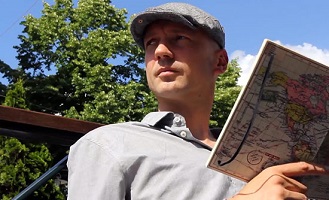
De Nederlandse dichter Daniël Dee werd geboren op 12 november 1975 in Empangeni, Zuid-Afrika. Zie ook mijn blog van 12 november 2010 en eveneens alle tags voor Daniël Dee op dit blog.
A day in the life
pas op dat je niet zonder komt te zitten
ooit daar aan gedacht
straks gaan de dagen weder lengen
de lente komt van ver op blote voetjes
om hier uiteindelijk te heersen
in al haar heerlijkheid elke dag
en elke dag wordt tot op de minuut
voor onze burgemeester
gedicteerd door de agenda
het heilige boek van de 21ste eeuw
het heilige moeten is ingekapseld
in een lappendeken van regelingen
de ambtsketen verleent hem
zijn krachten of is het juist andersom
sommige mechaniek blijft vertrouwelijk
gevraagd aan de burgemeester
waar hij een tientje aan zou uitgeven
antwoordt hij zonder nadenken
één euro is voor het onderwijs
twee voor het onderwijs
drie voor het onderwijs
en daarna zien we pas verder
het rode lichtje van de microfoon brandt
het aantal minuten spreektijd wordt in het groen
op een beeldscherm weergegeven
politici komen en gaan
als pop-ups op je pc hun retoriek
hol als een chocoladen paashaas
de burgemeester blijft en pareert
in de raadszaal de kritiek
met feiten die achter hem staan
tot zover het verbale geweld
hard als inktpotten
want nu is het genoeg
inktpotten werpt men slechts
in de raadszaal
Daniël Dee (Empangeni, 12 november 1975)
De Nederlandse dichter Johnny van Doorn (The Selfkicker) werd geboren op 12 november 1944 in Beekbergen en groeide op in Arnhem. Zie ook mijn blog van 12 november 2010 en eveneens alle tags voor Johnny van Doorn op dit blog.
Dendermonde 63
Voor een Vlaams cultureel café
Waar ik een expositie zal openen,
Wordt ons Volkswagenbusje met
Minstens 25 inzittenden door
De plaatselijke Wouten tot
Staan gebracht & in de tussen-
Tijd dat er rechtsomkeert
Naar het bureau wordt gereden
Wordt de nu gevaarlijke Pot
Door alle aanwezigen snel
Verorberd of in de bilspleet
Gestopt. Triomfantelijk wordt
Met ons de hoofdverdachte (ivm 5 kilo Marihu -dat is tijm,
Stramonium, laurier etcetc)
Aan fouillering en verhoor
Onderworpen. Op de vraag hoe
Ik wel heten mag, antwoord ik
Johnny the Selfkicker &
Spijtig betreurt men dat
The Electronic Jezus (dat ben ik ook!)
Niet aanwezig is &
De oerdomme vertoning zet
Zich voort: als men mijn zakken
Beklopt roep ik schertsend Kijk
Voor De Zekerheid Eens In M’n
Tokus (plat Vlaams voor kont) &
Een deskundige uit Brussel
Wordt opgebeld om snel per taxi
Over te komen & men toont hem
Meteen bij aankomst een gevonden
Stukje kattebrood (dat hij
Gewichtig met een heetgemaakt
Zakmesje onderzoekt):
Waarbij hij verrast constateert
Mijne Heren Dit Is De Befaamde Hasjies!!
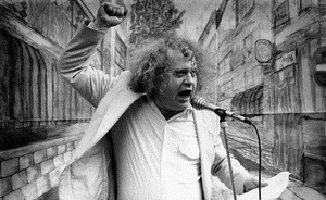
Johnny van Doorn (12 november 1944 – 26 januari 1991)
De Uruguayaanse schrijfster, vertaalster en journaliste Cristina Peri Rossi werd geboren op 12 november 1941 in Montevideo. Zie ook mijn blog van 12 november 2010 en eveneens alle tags voor Christina Peri Rossi op dit blog.
Uit: The Fallen Angel (Vertaald door Mary Jane Treacy)
“The angel plummeted to the earth exactly
like the Russian satellite that while spying on the movements of the American
Tenth Fleet lost height when it should have been thrust into a strong nine
hundred and fifty kilometer orbit. It fell exactly like the American satellite
that while spying on the movements of the Russian fleet in the North Sea also
fell to earth after a wrong move. But while both of these incidents brought
about innumerable catastrophes – part of Canada turned into desert, several
types of fish became extinct, local people’s teeth crumbled, and neighboring
lands became polluted – the angel’s fall didn’t cause any ecological
disturbance. Because it was weightless (a theological mystery that cannot be
doubted upon pain of heresy), it didn’t destroy anything in its wake, not the
trees on the road nor the electric wires; it didn’t cause interference in TV
programs nor in radio stations; it didn’t open up a crater in the face of the
earth, nor did it poison the waters. No, it just settled down on the sidewalk
and stayed there without moving, confused and with a terrible case of motion
sickness.
-----At first no one noticed it. That was because the inhabitants of the place,
sick and tired of nuclear catastrophes, had lost the ability to be surprised
and were busy putting the city back together, cleaning out debris, analyzing
food and water, putting houses back up and finding furniture, just like ants
when the ant hill is destroyed, but with much more sadness.
-----“I think it’s an angel,” said the first observer, contemplating the little
figure fallen at the base of a statue beheaded in the last conflagration.
Actually, it was a rather small angel with mutilated wings (it’s not known if
this was due to the fall) and an unhappy expression.
-----A woman walked right by, so busy pushing a baby carriage that she didn’t
notice it. But a hungry stray walked right up and then stopped short: that
thing, whatever it was, didn’t smell, and anything that doesn’t smell can’t
really exist, so the dog wasn’t going to waste its time. Slowly (it was lame)
it did an about face.”
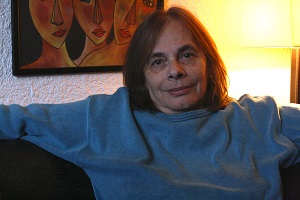
Cristina Peri Rossi (Montevideo, 12 november 1941)
De Amerikaanse, feministische schrijfster Naomi Wolf werd geboren in San Francisco op 12 november 1962. Zie ook alle tags voor Naomi Wolf op dit blog en ook mijn blog van 12 november 2010
Uit: The Beauty Myth
“Men are visually aroused by women's bodies and less sensitive to their arousal by women's personalities because they are trained early into that response, while women are less visually aroused and more emotionally aroused because that is their training. This asymmetry in sexual education maintains men's power in the myth: They look at women's bodies, evaluate, move on; their own bodies are not looked at, evaluated, and taken or passed over. But there is no "rock called gender" responsible for that; it can change so that real mutuality--an equal gaze, equal vulnerability, equal desire--brings heterosexual men and women together.”
(…)
“Whatever is deeply, essentially female--the life in a woman's expression, the feel of her flesh, the shape of her breasts, the transformations after childbirth of her skin--is being reclassified as ugly, and ugliness as disease. These qualities are about an intensification of female power, which explains why they are being recast as a diminution of power. At least a third of a woman's life is marked with aging; about a third of her body is made of fat. Both symbols are being transformed into operable condition--so that women will only feel healthy if we are two thirds of the women we could be. How can an "ideal" be about women if it is defined as how much of a female sexual characteristic does not exist on the woman's body, and how much of a female life does not show on her face?”

Naomi Wolf (San Francisco, 12 november 1962)
De Mexicaanse dichteres en moniaal Juana Inés de la Cruz de Asbaje y Ramírez, ook bekend als Sor Juana, werd geboren in San Miguel Nepantla op 12 november 1648 of 1651. Zie ook alle tags voor Juana Inés de la Cruz op dit blog en ook mijn blog van 12 november 2010
To Her Portrait
This that you see,
the false presentment planned
With finest art and all the colored shows
And reasonings of shade, doth but disclose
The poor deceits by earthly senses fanned!
Here where in constant flattery expand
Excuses for the stains that old age knows,
Pretexts against the years' advancing snows,
The footprints of old seasons to withstand;
'Tis but vain artifice of scheming minds;
'Tis but a flower fading on the winds;
'Tis but a useless protest against Fate;
'Tis but stupidity without a thought,
A lifeless shadow, if we meditate;
'Tis death, tis dust, tis shadow, yea, 'tis nought.
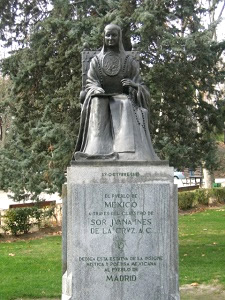
Juana Inés de la Cruz (12 november 1648 of 1651 - 17 april 1695)
Standbeeld in Madrid
Zie voor nog meer schrijvers van de 12e november ook mijn
blog van 12 november 2011 deel 1 en eveneens deel
2.