Naar de inhoud

Romenu

Over literatuur, gedichten, kunst en cultuur
akke.beakke.be

Berichten van 17 november 2013 tot 18 november 2013

Joost Zwagerman, Toon Tellegen, Klaus Mann, Seán Mac Falls, Richard Dehmel, Eugenio Montejo

De Nederlandse dichter en schrijver Joost Zwagerman werd geboren in Alkmaar op 18 november 1963. Zie ook alle tags voor Joost Zwagerman op dit blog.


Uit: Vals licht


“Uiteindelijk, toen zij dagenlang in de onderwaterkamer vertoefden, loste alles zich vanzelf op door de ontdekking van een gedeelde voorliefde: kinderspel. Niets wekte zoveel vertrouwen als een gezamenlijke verjonging, tot op het kleuterachtige af. Steeds vaker spraken zij elkaar liefkozend toe in een nagebootste kindertaal, gevat in poezelige verkleinwoorden en brokstukken van zinnen. Zij speelden Klein Arcadië. Schmierend en toegewijd blonk Lizzie uit in pruilende vragen om aandacht, koket geloken ogen en in falset geslaakt gekir. Zij werd Shirley Temple aan de Sarphatistraat, met af en toe een halve stap naar volwassenheid als híj het was die kleuter werd en zij zijn gezicht opmaakte met de indianenkleuren die hij van haar kende en hem kleedde in haar witkanten ondergoed dat hem om het lichaam spande. Voor in bad kochten zij drijvende speeltjes in Mondriaan-kleuren en weekten uren in het dampend water, wolkend badschuim tot onder hun kin. Daarna spreidde zij de Charlie Brown-handdoek uit op de grond en zaten zij tegenover elkaar, twee jongbedorven cherubijnen, Simon in kleermakerszit en Lizzie in schoolmeisjeshouding met opgetrokken knieën en haar handen om de enkels geklemd. Haar bruine haar hing in natte, dikke slierten langs haar wangen. Ernstig telde zij zijn ribben terwijl zij elkaar afdroogden. Geregeld slaakten zij hun kinderlach en toonden al te valse grimasjes van achtjarigen. Zo, tegenover elkaar, sloegen zij elkaar gade, keurend en afwachtend, want hun ogen deden niet meer mee met hun zelfverzonnen baltsgedrag voor baby's.

Zij streefden geen perfectie van hun spel na. Alleen hun opzichtige valsheid was geavanceerd; juist hierin school de onweerstaanbaarheid. Hun kinderkitsch was betoverend obsceen. In geen peeskamer had Simon zich ooit in een rollenspel verloren: daar had het keurslijf van rituelen hem wel van weerhouden. Nu, onder haar ogen, diende hun acteren om met souplesse de wederzijdse weerloosheid te vergroten.”


 1496738-2eef47b13bc11edaedb79c81c71649e8.jpg

Joost Zwagerman (Alkmaar, 18 november 1963)


De Nederlandse dichter Toon Tellegen werd geboren op 18 november 1941 te Brielle. Zie ook alle tags voor Toon Tellegen op dit blog.


Klop Klop


Het is ochtend.
Geluk kan wel wachten.

'Ja, ik hoor u wel! Ik kom er aan!'
Geluk is zo ongeduldig...
'Ik ben bezig! Wacht u nu toch even!'

Het wordt middag, het wordt avond,
het wordt nacht.

Het lijkt of ik jaren heb geschreeuwd,
maar ik heb gezwegen,
ik was niet thuis.


Een locomotief


Er staat en locomotief op een zijspoor,
tot in haar merg verroest, met distels overgroeid.

Als het regent weent zij bruine tranen.

Ik loop langs haar, raak haar aan,
aai haar,
zeg iets tegen haar, iets bemoedigends
klim op de resten van een treeplank.

In de verte slaat een klok.
Misschien ben ik wel een prins. Je weet het nooit!
Misschien is dit wel Doornroosje.
Locomotiefje, liefje... open je ogen..!

Hoog aan de hemel staat de zon.
'Hé!' roepen ze. 'Ho!', 'Wacht eens even!' en 'Sta stil!'.
Maar wij vertrekken en horen niets en niemand meer.


Een voorjaarswandeling 1


Wij liepen in een bos
langs oude dennen, varens, berken mos
en spinnewebben.
Wij konden daar slechts fluisteren, durfden elkaar
niet goed verstaan.
Plotseling hoorden wij hoge stemmen:
'Ga weg! Straks vallen alle bomen om!'
Wij stonden stil, hielden onze adem in.
De zon scheen, het was het midden van een dag.
Een beek leek wel te rinkelen, had niet genoeg aan glinsteren.
Toen vielen alle bomen om, bedolven ons.


 1496738-905952403c6654331bec72e80a7b35d8.jpg

Toon Tellegen (Brielle, 18 november 1941)


De Duitse schrijver Klaus Mann werd op 18 november 1906 geboren in München als oudste zoon van Thomas en Katia Mann. Zie ook alle tags voor Klaus Mann op dit blog.


Uit: Das zwölfhundertste Hotelzimmer


„Einsame Nacht, da man über den Rand des Buches in eine Oede starrt, die den kleinen Raum ins Unendliche weitet.

Liebesnacht im Hotelzimmer – oh, welcher Töne bedürfte ich, um deine Reize zu schildern, die, bitterer, zärtlicher, unverbindlicher, als Liebesnächte in anderen Zimmern sie kennen, den Geschmack des Endes in jeder Umarmung hatten.

(Und draußen Meer und eine mondbeschienene Promenade; oder die große Stadt; oder das schwarze Gebirg.)

Ihr verlorenen zwölfhundert!

Ich glaubte, jeden von euch ohne Schmerzen hinter mir zu lassen, ihn gleich zu vergessen.

Aber, ach, es waren zwölfhundert Abschiede –

Ohne daß ich es merkte.

Nach jedem von euch ist mir eine winzig kleine Sehnsucht geblieben.

Ich trage eure Gerüche in meinem Herzen.

Ich gehe dahin, schwer von zahllosen unbeträchtlichen und  doch schweren Erinnerungen.

Hotelzimmer des Südens, wo man unter einem Moskitonetz  schläft, wie inmitten einer weißen Wolke;

Gasthausstube auf dem bayerischen Land, mit schweren, rot- karierten Plumeaus, schweren Wasserkrügen, Blumenkästen am Fenster.“


1496738-e9e3b03a09e6edbb6d60bf5d0d5faa2e.jpg 

Klaus Mann (18 november 1906 – 21 mei 1949)

Met Erika Mann in München, 1929


De Iers-Amerikaanse dichter Seán Mac Falls werd geboren op 18 november 1957 in Boston. Zie ook alle tags voor Seán Mac Falls op dit blog.


Blueberry Picking


Blueberry picking was no chore.
In the hoary-head of blue things,
Stuff was easy, and ripe for the picking,
Bunching blue-baubles in baskets over-ripened
Of berries.
On special mornings, due southwest
In lazy hills, round my home, — bells
Were breaking, in quiet sections of the Canton,
Massachusetts woods, and playing by them,
We rounded blue notes, some friends and I,
Plucked-out tunes to the breeze, on leafy-
Instruments, and pulled our weight, into moil-moisted
Bushels, (one batch of blue was more than a ton
Of any other fruit!)
Toiling, till the sky would peek
And spill its hue. Foragers were we, as teaming
Minnows round a polk-a-dot reef, feasting on some great
Blue-Fin’s roe, brave savages, painted in the glow of ember-
Light, of burnished yellows, and bushy-blanched browns
Drenched by dew and dappled in the stipple
Of sun-brushed fire, all the colours making patterns, even
Box Turtles knew. How merry it was we made our labors,
Why it was wicked! And muggy from the heat of cool
Indigo stars, we squenched our thirst, in glugs
Of kisses, each following the greatest by far,
And one soft day, we did notice the crown
Of a Princess, set on top of each full
Noble-blooded faery-pearl dropped
As if to commemorate all
The things that were worth
Knowing, stuff that was ripe,
Easy, and rapt
In blue.


 1496738-54786c6f789abf914a9165e57a57c4d3.jpg

Seán Mac Falls (Boston, 18 november 1957)


De Duitse dichter Richard Dehmel werd geboren op 18 november 1863 in Wendisch-Hermsdorf. Zie ook alle tags voor Richard Dehmel op dit blog.


Lied an meinen Sohn


Der Sturm behorcht mein Vaterhaus,
mein Herz klopft in die Nacht hinaus,
laut; so erwacht ich vom Gebraus
des Forstes schon als Kind.
Mein junger Sohn, hör zu, hör zu:
in deine ferne Wiegenruh
stöhnt meine Worte dir im Traum der Wind.

Einst hab ich auch im Schlaf gelacht,
mein Sohn, und bin nicht aufgewacht
vom Sturm; bis eine graue Nacht
wie heute kam.
Dumpf brandet heut im Forst der Föhn,
wie damals, als ich sein Getön
vor Furcht wie meines Vaters Wort vernahm.

Horch, wie der knospige Wipfelsaum
sich sträubt, sich beugt, von Baum zu Baum;
mein Sohn, in deinen Wiegentraum
zornlacht der Sturm - hör zu, hör zu!
Er hat sich nie vor Furcht gebeugt!
horch, wie er durch die Kronen leucht:
sei du! sei Du! -

Und wenn dir einst von Sohnespflicht,
mein Sohn, dein alter Vater spricht,
gehorch ihm nicht, gehorch ihm nicht:
horch, wie der Föhn im Forst den Frühling braut!
Horch, er bestürmt mein Vaterhaus,
mein Herz tönt in die Nacht hinaus,
laut - -


1496738-295b3c3aab0cb9a9057c67902b838053.jpg 

Richard Dehmel (18 november 1863 – 9 februari 1920)
Hier rechts naast zijn moeder en met zijn kinderen


De Venezolaanse dichter en schrijver Eugenio Montejo werd geboren in Caracas op 18 november 1938. Zie ook alle tags voor Eugenio Montejo op dit blog en ook mijn blog van 18 november 2010.


The Trees


The trees speak so little, you know.

They spend their entire life meditating

and moving their branches.

Just look at them closely in autumn

as they seek each other out in public places:

only the oldest attempt some conversation,

the ones that share clouds and birds,

but their voice gets lost in the leaves

and so little filters down to us, nothing really.


It’s difficult to fill the shortest book

with the thoughts of trees.

Everything in them is vague, fragmented.

Today, for instance, on the way to my house

hearing a black thrush shriek,

the last cry of one who won’t reach another summer,

I realized that in his voice a tree was speaking,

one of so many,

but I don’t know what to do with this sharp deep sound,

I don’t know in what type of script

I could set it down


Vertaald door Peter Boyle


 1496738-4759de05d85e575bc25a8ebd452bf30e.jpg

Eugenio Montejo (18 november 1938 - 5 juni 2008)


Zie voor nog meer schrijvers van de 18e november ook
mijn blog van 18 november 2011 deel 2.

Geschreven door Romenu om 19:00 Reageer op dit bericht

In Memoriam Doris Lessing


In Memoriam Doris Lessing


De Britse schrijfster en Nobelprijswinnares Doris Lessing is gisteren overleden. Ze was 94 jaar. Doris Lessing werd geboren in Kermanshah, Perzië op 22 oktober 1919. Zie ook mijn blog van 22 oktober 2010 en eveneens alle tags voor Doris Lessing op dit blog.


Uit: Walking In the Shade


“I was also having those thoughts--perhaps better say feelings--that disturb every arrival from Southern Africa who has not before seen white men unloading a ship, doing heavy manual labour, for this had been what black people did. A lot of white people, seeing whites work like blacks, had felt uneasy and threatened; for me, it was not so simple. Here they were, the workers, the working class, and at that time I believed that the logic of history would make it inevitable they should inherit the earth. They--those tough, muscled labouring men down there--and, of course, people like me, were the vanguard of the working class. I am not writing this down to ridicule it. That would be dishonest. Millions, if not billions, of people were thinking like that, using this language.

I have far too much material for this second volume. Nothing can be more tedious than a book of memoirs millions of words long. A little book called In Pursuit of the English, written when I was still close to that time, will add depth and detail to those first months in London. At once, problems--literary problems. What I say in it is true enough. A couple of characters were changed for libel reasons and would have to be now. But there is no doubt that while 'true', the book is not as true as what I would write now. It is a question of tone, and that is no simple matter. That little book is more like a novel; it has the shape and the pace of one. It is too well shaped for life. In one thing at least it is accurate: when I was newly in London I was returned to a child's way of seeing and feeling, every person, building, bus, street, striking my senses with the shocking immediacy of a child's life, everything oversized, very bright, very dark, smelly, noisy. I do not experience London like that now. That was a city of Dickensian exaggeration. I am not saying I saw London through a veil of Dickens, but rather that I was sharing the grotesque vision of Dickens, on the verge of the surreal.”


 1496430-9aa85f03c1a21260a7cbcb78ac8551bf.jpg

Doris Lessing (22 oktober 1919 – 17 november 2013)

Geschreven door Romenu om 10:00 Reageer op dit bericht

Joost Oomen

De Nederlandse dichter Joost Oomen werd geboren in De Bilt op 18 november 1980. Hij groeide op in Ysbrechtum. Hij bezocht het Bogerman (christelijke school voor vmbo, havo en vwo) te Sneek. Oomen behaalde het bachelor Nederlandse taal & cultuur aan de Rijksuniversiteit Groningen. Hij schreef een scriptie over “De Dichters uit Epibreren” en brak daarna zijn studie af. In het studiejaar 2010-2011 was hij huisdichter van de Rijksuniversiteit Groningen. In januari 2013 werd hij voor twee jaar benoemd tot zesde stadsdichter van Groningen. Zijn werk verscheen in diverse bloemlezingen.


In deze sloep van staal

In deze sloep van staal
zal ik je leren bomen
en je ogen vervangen door de poorten van mijn boot
 
Jij leert mij dan diezelfde middag
hoe het is om naakt te zwemmen
hoe het is om te horen als er op volle zee
een potvis eet
 
Kijk zei ik dan
je steekt de staak hier door
de borstkas van de golven
en door naar achter te lopen
duw je het waterlichaam weg
 
Kijk zei jij dan je
legt je oor op het water
zoals een indiaan dat met een spoorrails zou doen
Als je goed luistert
hoor je alles wat er in de zee gebeurt
 
‘s Avonds
toen de zon als een iglo op de horizon begon te smelten
zakt het ijzer van de boot als een pudding door het water
Het laatste licht zwemt koeltjes langs de zee.


 1676711-8820de907df951bb507b057ce49e26b8.jpg
Joost Oomen (De Bilt, 18 november 1980)

Geschreven door Romenu om 00:00 Reageer op dit bericht

Rebecca Walker, Joost van den Vondel, Auberon Waugh, Christopher Paolini, Dahlia Ravikovitch, Max Barthel, Pierre Véry

De Amerikaanse schrijfster, uitgeefster en politiek activiste Rebecca Walker werd geboren op 17 november 1969 in Jackson, Mississippi. Zie ook alle tags voor Rebecca Walker op dit blog.


Uit: Baby Love


“And then I had what could only be the first twinges of the maternal instinct. Healthy and robust? A huge smile spread across my face. That's my baby! And then it was as if the synapses in my brain sending exploratory signals to my uterus finally made contact. Aye, mate, is it a go down there? Yes, yes, Captain, we're full steam ahead!

I was convinced that getting off the phone would exponentially increase my chances of reverting to not-pregnant, but I released Becky anyway and stumbled over to the bathroom, where Glen, my life partner and father of our soon-to-be-born baby, was shaving. I looked into his eyes and tried to keep myself from screaming and jumping up and down. We did it, I said. He grinned. Well, I guess that puts the whole motility question to rest. And I said, I guess it does. Then I wrapped my arms around him and buried my face in his chest, and he wrapped his arms around me and rested his chin on the top of my head.

I was in ecstatic bliss for about ninety seconds, and then it hit me: an avalanche of dread that took my breath away. Pregnant? A baby? What have I done? I looked at Glen. He was going through his own reality check, which brought me even closer to the brink of total hysteria. But then, before I could burst into tears and run screaming out of the room, he pulled me into his arms. You are going to be a fantastic mother, he said to me, to my fear. His love overwhelmed me, and I started to cry big, wet tears onto his favorite black shirt.

We're going to have a baby.”


1495996-bc91617ae74c48e50ab8274a125b8aea.jpg
Rebecca Walker (Jackson, 17 november 1969)


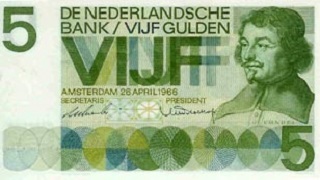
De Nederlandse dichter en schrijver Joost van den Vondel werd geboren op 17 november 1587 in Keulen. Zie ook Zie ook alle tags voor Joost van den Vondel op dit blog.


Stabat Mater


Jezus’ nat bekreten moeder
Stond bij 't kruis, waar ons Behoeder,
Haar beminde zoon, aan hing;
En haar docht, terwijl ze steende,
Hem betreurde en drukkig weende,
Dat een zwaard door 't harte ging.

Och! hoe drukkig, hoe vol rouwe
Was die zegenrijkste vrouwe,
Moeder van Gods enig kind?
Die, met een weemoedig harte,
Levend aanzag al de smarte
Van haar vrucht, bij God bemind.

Och! wie zou in 't hart niet snijden,
Zo hij, in dat deerlijk lijden,
Christus' lieve Moeder zag?
Och! wie zou zich niet bedroeven,
Zag hij 't hart beklemd van schroeven,
Om de Zoon, die 'r onder lag?

Zij zag Jezus pijn en stramen
Lijden, om ons al te zamen,
En hem sterven met geschal,
Toen die Waarde en Uitverkozen
Treurig, als een troosteloze,
Zijne geest aan God beval.

Bron van moederlijke minne,
Stort me mee 't gevoelen inne
Van meedogen en geklag.
Doe mijn koude hart verlangen
Om mijn Heiland aan te hangen,
Dat ik hem behagen mag.

Heil’ge Moeder, allerkuiste,
Druk de wonden des Gekruiste
Krachtelijk in mijn gemoed.
Laat ik ook met u bezuren
Uw gewonde Zoons kwetsuren,
Die mij vrijkocht met zijn bloed.

Dat ik ijvrig u geleie
En 't gekruiste Lam beschreie
Al de dagen die ik leef.
'k Wens uw kruis te helpen dragen,
En bij 't kruis met u te klagen,
Schoon een ander u begeef.

Puik der maagdelijke loten,
Wil mijn bede niet verstoten:
Laat mij aan uw zijde staan,
Christus’ dood mijn ziel genezen:
Laat ik die deelachtig wezen:
Laat ze in 't hart geschilderd staan.

Laat zijn hartkwetsuur mij raken,
En zijn bloed mij dronken maken
In de liefde van Gods Zoon.
Reine Maagd! Gij doet mij blaken:
Uw gebed zal voor mij waken
En mij vrijen voor Gods troon.

Laat het kruis mijn ziel bedekken,
Christus’ dood mijn schild verstrekken
En mij koestren met genâ.
Als dit lichaam komt te sterven,
Laat mijn ziel met blijdschap erven
't Hemels Paradijs hierna.


 1495996-111fdbcc08cc627ac7adf0cf20699283.jpg

Joost van den Vondel (17 november 1587 – 5 februari 1679)

Op 5 gulden biljet uit 1966


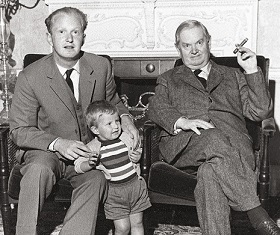
De Britse schrijver journalist en polemist Auberon Alexander Waugh werd geboren op 17 november 1939 in Dulverton, Somerset. Zie alle tags voor Auberon Waugh op dit blog.


Uit: Will This Do? An Autobiography

“Evelyn Waugh always re­ferred to him as ‘my rival, Mr Coggins’, and was being only partly humorous. She actually preferred the gardener’s company to that of anyone else. His slightly implausible deference, the embarrass­ingly apparent sub-text of all advice, the extreme ordinariness of every opinion he advanced, appealed to her deepest sense of social propriety. This was the most natural and acceptable form of human relationship.

'They do say, madam, that if you see a crow with a broken wing, that means 'twill be a good year for raspberries,' he would say in his fine Somerset voice, and she would lap it up.

In the week my father died, Coggins disappeared. My mother got it into her head that I had murdered him (Coggins) and put his corpse in the boot of my car before driving back to Chilton Foliat. I do not know why she should have reached this conclusion, but suppose it must have been the product of stress. In fact he had been out on a blind, something which is well known among Somerset farming folk. But by the time we moved down to Combe Florey in October 1971, Walter Coggan, too, had died, in the way that elderly men have always tended to do. The clergyman, at his funeral, said: ‘We have memories of Walter which time can never alter.’

Obviously, he was most missed by his widow and family, but I think it was the loss of Coggins which reconciled my mother to the idea that the little Waughs, as my father used to call us, should move into the main part of the house, and she would move into a more or less disused wing, equipped with its own kitchen and other appointments.”


 1495996-04ce82eed5ae3d34dc307ea9a4e14f75.jpg

Auberon Waugh (17 november 1939 -16 januari 2001)

Auberon, Alexander en Evelyn Waugh in 1965.


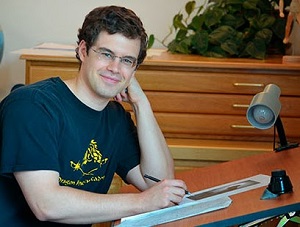
De Amerikaanse schrijver Christopher Paolini werd geboren in Los Angeles County, California, op 17 november 1983. Zie ook alle tags voor Christopher Paolini op dit blog.


Uit: Brisingr


“The elf smiled, revealing teeth that were sharper than normal. “I am Blödhgarm, son of Ildrid the Beautiful.” He introduced the other elves in turn before continuing: “We bring you glad tidings from Queen Islanzadí; last night our spellcasters succeeded in destroying the gates of Ceunon. Even as we speak our forces advance through the streets toward the tower where Lord Tarrant has barricaded himself. Some few still resist us, but the city has fallen, and soon we shall have complete control over Ceunon.”

Nasuada’s guards and the Varden gathered behind her burst into cheers at the news. She too rejoiced at the victory, but then a sense of foreboding and disquiet tempered her celebratory mood as she pictured elves — especially ones as strong as Blödhgarm — invading human homes. What unearthly forces have I unleashed? She wondered. “These are glad tidings indeed,” she said, “and I am well pleased to hear them. With Ceunon captured, we are that much closer to Urû’baen, and thus to Galbatorix and the fulfillment of our dreams.” In a more private voice, she said, “I trust that Queen Islanzadí will be gentle with the people of Ceunon, with those who have no love of Galbatorix but lack the means or the courage to oppose the Empire.”

“Queen Islanzadí is both kind and merciful to her subjects, even if they are her unwilling subjects, but if anyone dare oppose us, we shall sweep them aside like dead leaves before an autumn storm.”


 1495996-7480a5bb3d1e0348c8c9712c5695728f.jpg

Christopher Paolini (Los Angeles County, 17 november 1983)


De Israëlische dichteres en schrijfster Dahlia Ravikovitch werd geboren op 17 november 1936 in een voorstad van Tel Aviv. Zie ook alle tags voor Dahlia Ravikovitch op dit blog.


A Wicked Hand


Smoke rose in the slanted light
And my daddy was hitting me.
Everyone there laughed at the sight,
I’m telling the truth, and nothing but.

Smoke rose in the slanted light.
Daddy slapped the palm of my hand.
He said, It’s the palm of a wicked hand.
I’m telling the truth, and nothing but.

Smoke rose in the slanted light
And Daddy stopped hitting me.
Fingers sprouted from the wicked hand,
Its works endure and will never end.

Smoke rose in the slanted light.
Fear singes the wicked hand.
Daddy stopped hitting me
But that fear endures and will never end.


Delight


There did I know a delight beyond all delight,
And it came to pass upon the Sabbath day
As tree boughs reached for the sky with all their might.

Round and round like a river streamed the light,
And the wheel of the eye craved the sunwheel that day.
Then did I know a delight beyond all delight.

The heads of the bushes blazed, insatiable bright
Sunlight striking the waves, igniting the spray.
It would swallow my head like a golden orange, that light.

Water lilies were gaping their yellow bright
Mouths to swallow the ripples and reeds in their way.
And indeed it came to pass on the Sabbath day
As tree boughs lusted for the sky with all their might,
And then did I know a delight beyond all delight.


Vertaald door Chana  Bloch and Chana Kronfeld 


 1495996-c2e34f35f46d7cbe17965453a56fa11d.jpg

Dahlia Ravikovitch (17 november 1936 – 21 augustus 2005)


De Duitse dichter en schrijver Max Barthel werd geboren in Dresden-Loschwitz op 17 november 1893. Zie ook alle tags voor Max Barthel op dit blog en ook mijn blog van 17 november 2010.


Uit: Der Mensch am Kreuz


„Endlos dehnen sich die Felder und Wälder in Ostpreußen und verlieren sich nach der Steppenewigkeit Rußlands. Wie eine blitzende Kette sind die vielen Seen in die bäuerliche Erde verstreut. Darüber wölbt sich der gewaltige Himmel. Im freien Raum zwischen den Wolken und den Straßen sausen im Winter die krachenden Stürme. Die Menschen, die hier wohnen, sind ernst und verschlossen. Viel Schwärmerei und Schwermut ist in ihnen. Das nahe russische Blut ist auch in ihre Adern verspritzt.

Die Erlers stammten aus dem Rheinland. Über zweihundert Jahre saßen sie schon als Pioniere und Vorposten unter Masuren und Litauern hart an der russischen Grenze. Sie waren meistens Lehrer und Organisten, liebten die deutsche Sprache und ihr schönstes Kind, die Dichtkunst. Sie liebten auch Mozart und Beethoven, und wenn sie heirateten, so nahmen sie Bauerntöchter aus deutschem Blut.

Paul Erler heiratete in der Mitte des vorigen Jahrhunderts eine gewisse Klara Scheffler. Sie lebten glücklich zusammen. Vier Kinder wurden ihnen geboren. Zwei Kinder starben im jugendlichen Alter. Die Erlers waren nicht wohlhabend. In dem armseligen Schulhäuschen bewohnten sie zwei kleine Zimmer. An den Gräbern wurde Chopin gespielt und nicht Mozart, aber in der Kirche saß der Organist nach jedem Begräbnis stundenlang an der Orgel und ließ die Pfeifen wie das ewige Gewitter der Schöpfung brausen. Die kahle Kirche war sein Haus, seine weite Welt, sein Riesenschiff. Dort löste er sich aus der Enge des Daseins und vom versteinerten Strand der Armut, dort phantasierte er in die Sterne hinein.

An einem Frühlingstag, als das zweite Kind starb, es war ein Mädchen, wurde ihm ein Sohn geboren. Da glaubte der kleine Orgelspieler und Lehrer, die Hand des barmherzigen Gottes zu erkennen, dem auch der Tod nur Saat ist für neue Auferstehung. An diesem Frühlingstag spielte er auf seiner Orgel Bach und Haydn. Ihm war, als die Fugen brausten, als sei kein Kind gestorben, ihm war, als beginne ein kleiner, geliebter Mensch nur ein zweites Dasein. Das Mädchen, das gestorben war, hieß Maria. Den Sohn nannte er Tobias. Trauer und Freude, Licht und Schatten, Tod und Leben waren um den ersten Schrei dieses Kindes versammelt.“


1495996-4983b4fbb7610602eea006275da75881.jpg 

Max Barthel (17 november 1893 – 28 juni 1975)


De Franse schrijver Pierre Véry werd op 17 november 1900 in Bellon geboren. Zie ook alle tags voor Pierre Véry op dit blog en ook mijn blog van 17 november 2009.


Uit: Goupi-Mains rouges à Paris


„Le magot, - Mains-Rouges s'en moquait bien !
Sa seule richesse, c'était ses souvenirs. Et Dieu sait qu'ils n'étaient pas gais !
Lison, - sa soeur...Tellement elle était jolie, on n'avait pas trouvé mieux, comme surnom, que de l'appeler Goupi-la-belle. La Loi l'avait refusée en mariage à un garçon de l'assistance, parce-que il n'y avait pas d'espoir d'héritage !
Par peine de coeur, la pauvre belle s'était jetée dans un puits.
Morte, elle était encore plus belle que de son vivant ; personne n'arrivait à croire qu'elle ne respirait plus !
Au point que, pour s'habituer à l'idée qu'elle était morte, - vraiment morte - on avait dû changer son surnom, l'appeler "Goupi-la-Morte"
Dieu merci, Mains-Rouges n'était pas encore fossoyeur, dans ce temps-là. S'il avait dû creuser sa tombe...
Mais il avait creusé celle de Marie des Goupi, la vieille servante, et celle de son fils, Jean des Goupi, l'innocent...Celui-là, comme Mains-Rouges, avait aimé les choses pour elles mêmes, - par pour le plaisir égoïste de les posséder. Les bêtes, l'herbe des champs, la forêt, ses odeurs et ses voix...“


 1495996-b6894b179d44cbba6c74cb03b8bbbdff.jpg

Pierre Véry (17 november 1900  -  12 oktober 1960)

Geschreven door Romenu om 13:51 Reageer op dit bericht

Meer van Romenu

↑ Terug naar de berichten