

 Sinterklaas, Hans Andreus, Hanif Kureishi, Joan Didion, Christina Rossetti
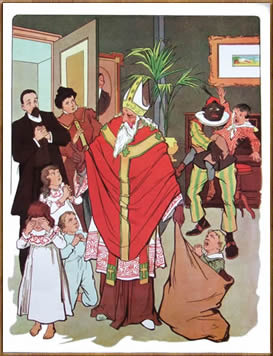
Bij Sinterklaas
Uit: Een heel stout jongetje
"Even kijken," zei Sint Nicolaas terwijl hij zijn bril opzette en in het Grote Boek keek, "ah, juist, nu weet ik het weer, hier woont dat hele stoute jongetje. Zozo..." en hij keek over zijn brillenglazen naar het jongetje. Het stoute jongetje keek brutaal terug, maar zijn tong durfde hij toch niet uit te steken.
"Piet," vervolgde Sint Nicolaas tegen Zwarte Piet, "dit jongetje is onverbeterlijk. Wat ik niet allemaal over hem gehoord heb, sinds ik weer in Nederland ben!"
"Dus geen cadeautje, Sinterklaas?" vroeg Zwarte Piet.
"Cadeautje?" vroeg Sint Nicolaas. "Hoe haal je 't in je hoofd, Piet. Is het niet juist," vroeg hij toen aan Vader en Moeder, "dat dit jongetje dit jaar nóg meer ruiten heeft gebroken en nóg meer potten jam heeft leeggelikt dan verleden jaar? En dat hij de schoenen van zijn schoolmeester, die de arme man uitgetrokken had omdat zijn voeten zo'n pijn deden, zomaar heeft verstopt, zodat de meester op zijn sokken naar huis moest? En... ach, ik kan wel blijven doorgaan."
"Het spijt ons," knikten vader en moeder, "het is allemaal waar."
"En heb jij geen spijt?" vroeg Sint Nicolaas aan het jongetje.
Illustratie uit “Sint Nicolaas en zijn knecht” van Jan Schenkman, uitgave ca. 1907
"Je hebt stoute jongetjes en Brave Hendriken," zei het jongetje, "en ik wil geen Brave Hendrik zijn."
"Nog steeds even brutaal," zei Sint Nicolaas. "Piet, stop hem in de zak!" Het jongetje probeerde nog weg te lopen, maar Zwarte Piet pakte hem meteen beet en stopte hem in de zak. "Zo, dan gaan we maar weer," zei Sint Nicolaas. "Maar ons jongetje dan?" vroegen vader en moeder. Sint Nicolaas en Zwarte Piet waren echter de kamer en het huis al uit.
Nu moet je weten dat Sint Nicolaas stoute kinderen nooit heel lang in de zak laat zitten. Na een half uurtje of zo vindt hij het wel genoeg, dan doet hij de zak open en laat de kinderen beterschap beloven, voor hij ze naar huis stuurt. En dikwijls geeft hij ze dan nog een cadeautje ook. Maar toevallig was het jongetje één van de laatste kinderen die hij had bezocht. En de volgende dag ging hij terug naar Spanje, want hij had haast dit jaar.
Pas toen ze weer thuis in Spanje waren, zei Sint Nicolaas tegen zijn knecht: "Zeg, Piet, herinner ik me dat nou goed? Hadden wij niet een heel stout jongetje in de zak gestopt?"
"Ja, baas," zei Piet.
"Maar hebben we dat jongetje ook weer uit die zak gehaald?"
"Nee, baas, dat ben ik helemaal vergeten," zei Piet.
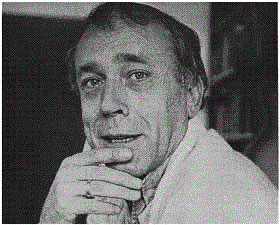
Hans Andreus (21 februari 1926 – 9 juni 1977)
De Britse schrijver en regisseur Hanif Kureishi werd geboren op 5 december 1954 in Bromley, Kent. Zie ook alle tags voor Hanif Kureishi op dit blog.
Uit: Intimacy
“It is the saddest night, for I am leaving and not coming back. Tomorrow morning, when the woman I have lived with for six years has gone to work on her bicycle, and our children have been taken to the park with their ball, I will pack some things into a suitcase, slip out of my house hoping that no one will see me, and take the tube to Victor's place. There, for an unspecified period, I will sleep on the floor in the tiny room he has kindly offered me, next to the kitchen. Each morning I will heave the thin single mattress back to the airing cupboard. I will stuff the musty duvet into a box. I will replace the cushions on the sofa.
I will not be returning to this life. I cannot. Perhaps I should leave a note to convey this information. `Dear Susan, I am not coming back ...' Perhaps it would be better to ring tomorrow afternoon. Or I could visit at the weekend. The details I haven't decided. Almost certainly I will not tell her my intentions this evening or tonight. I will put it off. Why? Because words are actions and they make things happen. Once they are out you cannot put them back. Something irrevocable will have been done, and I am fearful and uncertain. As a matter of fact, I am trembling, and have been all afternoon, all day.
This, then, could be our last evening as an innocent, complete, ideal family; my last night with a woman I have known for ten years, a woman I know almost everything about, and want no more of. Soon we will be like strangers. No, we can never be that. Hurting someone is an act of reluctant intimacy. We will be dangerous acquaintances with a history. That first time she put her hand on my arm -- I wish I had turned away. Why didn't I? The waste; the waste of time and feeling. She has said something similar about me. But do we mean it? I am in at least three minds about all questions.
I perch on the edge of the bath and watch my sons, aged five and three, one at each end. Their toys, plastic animals and bottles float on the surface, and they chatter to themselves and one another, neither fighting nor whingeing, for a change. They are ebullient and fierce, and people say what happy and affectionate children they are. This morning, before I set out for the day, knowing I had to settle a few things in my mind, the elder boy, insisting on another kiss before I closed the door, said, `Daddy, I love everyone.'

Hanif Kureishi (Bromley, 5 december 1954)
De Amerikaanse schrijfster Joan Didion werd geboren in Sacramento Valley op 5 december 1934. Zie ook alle tags voor Joan Didion op dit blog.
Uit: Blue Nights
“When I began writing these pages I believed their subject to be children, the ones we have and the ones we wish we had, the ways in which we depend on our children to depend on us, the ways in which we encourage them to remain children, the ways in which they remain more unknown to us than they do to their most casual acquaintances; the ways in which we remain equally opaque to them. The ways in which our investments in each other remain too freighted ever to see the other clear. The ways in which neither we nor they can bear to contemplate the death or the illness or even the aging of the other. As the pages progressed it occurred to me that their actual subject was not children after all, at least not children per se, at least not children qua children: their actual subject was this refusal even to engage in such contemplation, this failure to confront the certainties of aging, illness, death. This fear. Only as the pages progressed further did I understand that the two subjects were the same. When we talk about mortality we are talking about our children. Once she was born I was never not afraid. I was afraid of swimming pools, high-tension wires, lye under the sink, aspirin in the medicine cabinet, The Broken Man himself. I was afraid of rattlesnakes, riptides, landslides, strangers who appeared at the door, unexplained fevers, elevators without operators and empty hotel corridors. The source of the fear was obvious: it was the harm that could come to her. A question: if we and our children could in fact see the other clear would the fear go away? Would the fear go away for both of us, or would the fear go away only for me?”

Joan Didion (Sacramento Valley, 5 december 1934)
In 1966
De Engelse dichteres en schrijfster Christina Georgina Rossetti werd geboren in Londen op 5 december 1830. Zie ook alle tags voor Christina Rossetti op dit blog.
Holy Innocents
Sleep, little Baby, sleep,
The holy Angels love thee,
And guard thy bed, and keep
A blessed watch above thee.
No spirit can come near
Nor evil beast to harm thee:
Sleep, Sweet, devoid of fear
Where nothing need alarm thee.
The Love which doth not sleep,
The eternal arms around thee:
The shepherd of the sheep
In perfect love has found thee.
Sleep through the holy night,
Christ-kept from snare and sorrow,
Until thou wake to light
And love and warmth to-morrow.
If Stars Dropped Out Of Heaven
If stars dropped out of heaven,
And if flowers took their place,
The sky would still look very fair,
And fair earth's face.
Winged angels might fly down to us
To pluck the stars,
Be we could only long for flowers
Beyond the cloudy bars.
O Wind, Why Do You Never Rest
O wind, why do you never rest
Wandering, whistling to and fro,
Bringing rain out of the west,
From the dim north bringing snow?

Christina Rossetti (5 december 1830 - 27 december 1894)
Zie voor nog meer schrijvers van de 5e december ook mijn blog van 5 december 2011 deel 1 en eveneens deel 2.


