Naar de inhoud

Romenu

Over literatuur, gedichten, kunst en cultuur
akke.beakke.be

Berichten van 22 december 2013 tot 23 december 2013

Robert Bly, Norman Maclean, Marcelin Pleynet, Iván Mándy, J.J.L. ten Kate, Tim Fountain
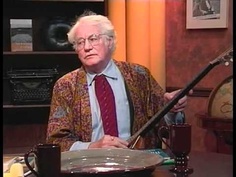
De Amerikaanse dichter en schrijver Robert Bly werd geboren op 23 december 1926 in Madison, Minnesota. Zie ook alle tags voor Robert Bly op dit blog.


Snowfall in the Afternoon

1
The grass is half-covered with snow.
It was the sort of snowfall that starts in late afternoon
And now the little houses of the grass are growing dark.

2
If I reached my hands down near the earth
I could take handfuls of darkness!
A darkness was always there which we never noticed.

3
As the snow grows heavier the cornstalks fade farther away
And the barn moves nearer to the house.
The barn moves all alone in the growing storm.

4
The barn is full of corn and moves toward us now
Like a hulk blown toward us in a storm at sea;
All the sailors on deck have been blind for many years.


The Hermit

Darkness is falling through darkness
Falling from ledge
To ledge.
There is a man whose body is perfectly whole.
He stands the storm behind him
And the grass blades are leaping in the wind.
Darkness is gathered in folds
About his feet.
He is no one. When we see
Him we grow calm
And sail on into the tunnels of joyful death.


At Midocean

All day I loved you in a fever holding on to the tail of the horse.
I overflowed whenever I reached out to touch you.
My hand moved over your body covered
With its dress
Burning rough an animal's hand or foot moving over leaves.
The rainstorm retires clouds open sunlight
sliding over ocean water a thousand miles from land.


  1518536-c19ac5c74124b119847a603da46a6e77.jpg
Robert Bly (Madison, 23 december 1926)


De Amerikaanse schrijver Norman Fitzroy Maclean werd geboren op 23 december 1902 in Clarinda, Iowa. Zie ook alle tags voor Norman Maclean op dit blog.

Uit:A River Runs Through It

“The four-count rhythm, of course, is functional. The one count takes the line, leader, and fly off the water; the two count tosses them seemingly straight into the sky; the three count was my father's way of saying that at the top the leader and fly have to be given a little beat of time to get behind the line as it is starting forward; the four count means put on the power and throw the line into the rod until you reach ten o'clock—then check-cast, let the fly and leader get ahead of the line, and coast to a soft and perfect landing. Power comes not from power everywhere, but from knowing where to put it on. "Remember," as my father kept saying, "it is an art that is performed on a four-count rhythm between ten and two o'clock."
My father was very sure about certain matters pertaining to the universe. To him, all good things—trout as well as eternal salvation—come by grace and grace comes by art and art does not come easy.


 1518536-803914cb22f78931388d904b0ae8bb33.jpg
Scene uit de film van Robert Redford uit 1992 met o.a. Brad Pitt

So my brother and I learned to cast Presbyterian-style, on a metronome. It was mother's metronome, which father had taken from the top of the piano in town. She would occasionally peer down to the dock from the front porch of the cabin, wondering nervously whether her metronome could float if it had to. When she became so overwrought that she thumped down the dock to reclaim it, my father would clap out the four-count rhythm with his cupped hands.”


 1518536-9dd011df095bcc2bcc176a15a3a3a392.jpg
Norman Maclean (23 december 1902 – 2 augustus 1990)


De Franse dichter, schrijver en essayist Marcelin Pleynet werd geboren op 23 december 1933 in Lyon. Zie ook alle tags voor Marcelin Pleynet op dit blog.

Uit:Comme la poésie la peinture

“Lorsque Apollinaire et Picasso se rencontrent, en 1905, le poète ne peut pas ne pas être pourvu d’une aura romanesque. Né d’une mère polonaise (fille d’un émigré qui, installé à Rome, obtint, fin 1866, la charge de camérier d’honneur de cape et d’épée à la cour papale) et d’un père noble (mais qui ne le reconnaîtra pas), François Flugi d’Aspermont, ancien officier d’état-major du roi des Deux-Siciles, le jeune Apollinaire, après diverses pérégrinations en Italie, passera son enfance à Monaco où sa mère est une assidue du casino. Inscrit au collège Saint-Charles, Apollinaire reçoit une éducation religieuse. Il fait sa première communion le 8 mai 1892, il est secrétaire de la Congrégation de l’Immaculée Conception. Apollinaire, son frère et sa mère vivent à Monaco jusqu’en 1898. À cette date, la famille quitte Monaco, et toujours entraînés dans le sillage de leur mère, les deux garçons séjournent à Aix-les-Bains, Lyon, Paris qu’ils quitteront en juillet 1899 (Mme de Kostrowitzky ayant décidé de tenter fortune au casino de Spa) pour y revenir sans argent quatre mois plus tard.
Lorsque, en 1905, Apollinaire rencontre Picasso, il a vécu (et quelle vie !) à Rome, Monaco, puis, jeune homme, en Allemagne, à Berlin, Dresde, Prague, Vienne, Munich, Londres, Paris...”


 1518536-e075f676e5bddba805498cab5f2c3c9f.jpg
Marcelin Pleynet (Lyon, 23 december 1933)


De Hongaarse schrijver Iván Mándy werd geboren op 23 december 1918 in Boedapest. Zie ook alle tags voor Iván Mándy op dit blog.

Uit: God

“I've been getting ready for our chat a long time. Sometime, somewhere we'll sit down together. Maybe at a table in an old café. (There must still be a table like that somewhere!) In a quiet little tavern. Maybe on a terrace around the end of summer or in the fall. At such times the weather is cooler, and maybe no other guests will turn up besides ourselves. In a movie vestibule. Under a deserted football stand. On a secluded back pew in a church on the outskirts of town. Maybe we'll bump into each other on the street. Two passersby. Two rather weary passersby who even so keep expecting something.
It'll make no difference where. He won't turn away. He'll recognize the child who prayed so fervently. The praying stopped suddenly, but He won't be terribly angry about that. Silence is still more bearable than rattling off lessons in meaningless repetition. Silence can always bring forth something worthy.
But maybe now we might break the silence. It's certain I'd begin with some stupid complaint. My lament would be a faint melody. What if He took a crack at it!
I wouldn't ask Him anything. I wouldn't grill Him about wars, plagues, famine, floods. If He wants to say something, let Him say it on His own.
Just so He doesn't want to put my fears to rest, because then I'll...
Is it possible we'd quarrel? That a big fight is in the air that could suddenly explode? That wouldn't be such a great problem either. I can have a real good fight only with those I love.
But there is something I'd ask Him, after all.
His humor, what's happened to it?
What a sense of humor He had! He created the braying of Balaam's ass before Balaam's ass. Joseph's coat before Joseph himself.
I say, I'd ask Him this. Otherwise, I'd leave Him in peace. Just let Him sit at the table in the café, in the tavern, on the terrace, in the movie vestibule, under the football stand, in the church on the outskirts.
If He doesn't want to talk, I'll understand that too.
After a time we'll say goodbye. He'll go his way, and I'll go mine.”


 1518536-3d62379f82f10903c705bdee5c9e04bd.jpg
Iván Mándy (23 december 1918 – 26 oktober 1995)
Portret door Szinte Gábor, 1979


De Nederlandse dichter-dominee Jan Jakob Lodewijk ten Kate werd geboren op 23 december 1819 in Den Haag. Zie ook alle tags voor J.J.L. ten Kate op dit blog.

Het Onze Vader

Onuitspreeklijk Opperwezen,
Die voor ons een Vader zijt!
U zij eeuwig lof gewijd,
Eeuwig worde Uw naam geprezen!
Al wat leeft valle U te voet,
Driemaal heilig, driemaal goed!

Kome Uw rijk, o grote Koning!
En geschiede Uw wil alom,
Boven in Uw Heiligdom,
Hier in aller mensen woning,
Tot dit aardse schaduwdal
Als Uw Hemel worden zal!

Geef ons brood en kracht ten leven,
Gij, die alle nood vervult!
En vergeef ons onze schuld,
Zo als wij elkaar vergeven!
Voed ons harte met Uw Geest;
Leer ons lieven allermeest!

Leid ons, macht- en krachtelozen,
Geen verzoeking te gemoet!
Maar beveilig onze voet,
En verlos ons van de Boze!
Want U is in eeuwigheid
't Rijk, de Kracht, de Majesteit!

Vouwen wij de handen samen,
't Is in naam van Uwe Zoon,
Dat wij naadren tot Uw troon,
Dat wij vrolijk zeggen: ‘Amen!
Amen! dit, o Hemelheer,
Geeft Gij ons, en - eindloos meer!’


 1518536-6b4ca457f7241c0ba2f2454b761bba34.jpg
J.J.L. ten Kate (23 december 1819 - 24 december 1889)
Borstbeeld in het Rijksmuseum, Amsterdam


De Britse schrijver Tim Fountain werd geboren op 23 december 1967 in Dewsbury, West Yorkshire. Zie ook alle tags voor Tim Fountain op dit blog.

Uit:Icons: Quentin Crisp

„His line: “Ask yourself, if there were no praise and no blame, who would I be then?” will echo down the ages. Sadly, Crisp never saw Resident Alien, as he died on his way to London to have tea with Bourne during the show’s first run in 1999. I regret this, because I think he’d have recognised that he could have had no finer representative on earth than Bourne. The show went on to be a big success in London and New York (where Bourne won an Off-Broadway Theatre Award for his performance) and it played just two blocks round the corner from Crisp’s old flat.
So what was it that made him unique? I think in the end it was because, as his friend performance artist Penny Arcade said, “he grew up to be himself”. And, warts and all, perhaps that’s the greatest thing any of us can hope to achieve.”


 1518536-f1bbd4f8e7b70635be3cc1d85b21f22d.jpg
Tim Fountain (Dewsbury, 23 december 1967)


Zie voor nog meer schrijvers van de 23e december ook mijn blog van 23 december 2012 deel 2 en eveneens eveneens deel 3. 

Geschreven door Romenu om 19:04 Reageer op dit bericht

Donna Tartt

De Amerikaans schrijfster Donna Tartt werd geboren in Greenwood, Mississippi, op 23 december 1963. Tartt studeerde samen met onder anderen auteur Brett Easton Ellis klassieke talen en filosofie aan het Bennington College in Bennington (Vermont). In 1992 debuteerde ze met de roman "The Secret History" (“De verborgen geschiedenis”), over 6 studenten klassieke talen, die op zoek gaan naar de vervoering, die door Euripides beschreven werd in zijn toneel 'Bakchai'. Hierin wordt meermaals verwezen naar de roes die de maenaden, de vrouwelijke volgelingen van Dionysos, bereiken en waarin ze dieren verscheuren, geslachtsgemeenschap hebben en dergelijke meer in een uitzinni ge staat van bewustzijn. Dit boek leverde Tartt veel lovende kritieken op en de verwachtingen stonden hoog gespannen voor haar tweede boek. Dit verscheen in 2002, "The Little Friend" ("De Kleine Vriend"). In 2004 verscheen een kort verhaal, "Sleepytown: A Southern Gothic Childhood, with Codeine" ("Het Land Van De Papaver"). De in 2013 verschenen roman “Het puttertje” kreeg de wereldpremière in de Nederlandse vertaling. Een tweede Nederlands element van de roman is dat het schilderij “Het puttertje“van Carel Fabritius er een rol in speelt en is afgebeeld op de omslag.

Uit: The Little Friend

“For the rest of her life, Charlotte Cleve would blame herself for her son's death because she had decided to have the Mother's Day dinner at six in the evening instead of noon, after church, which is when the Cleves usually had it. Dissatisfaction had been expressed by the elder Cleves at the new arrangement; and while this mainly had to do with suspicion of innovation, on principle, Charlotte felt that she should have paid attention to the undercurrent of grumbling, that it had been a slight but ominous warning of what was to come; a warning which, though obscure even in hindsight, was perhaps as good as any we can ever hope to receive in this life.
Though the Cleves loved to recount among themselves even the minor events of their family history–repeating word for word, with stylized narrative and rhetorical interruptions, entire death-bed scenes, or marriage proposals that had occurred a hundred years before–the events of this terrible Mother's Day were never discussed. They were not discussed even in covert groups of two, brought together by a long car trip or by insomnia in a late-night kitchen; and this was unusual, because these family discussions were how the Cleves made sense of the world. Even the cruelest and most random disasters–the death, by fire, of one of Charlotte's infant cousins; the hunting accident in which Charlotte's uncle had died while she was still in grammar school–were constantly rehearsed among them, her grandmother's gentle voice and her mother's stern one merging harmoniously with her grandfather's baritone and the babble of her aunts, and certain ornamental bits, improvised by daring soloists, eagerly seized upon and elaborated by the chorus, until finally, by group effort, they arrived together at a single song; a song which was then memorized, and sung by the entire company again and again, which slowly eroded memory and came to take the place of truth”


 1582349-8c62c4ad054162d6c464709b2eac768c.jpg
Donna Tartt (Greenwood, 23 december 1963)

Geschreven door Romenu om 00:00 Reageer op dit bericht

Sara Coleridge

De Engelse dichteres, schrijfster en vertaalster Sara Coleridge werd geboren op 23 december 1802 in Greta Hall, Keswick, als derde kind van Samuel Taylor Coleridge en zijn vrouw Sarah Fricker. In het huis woonden, na 1803, de Coleridges , Robert Southey en zijn vrouw ( mevrouw Coleridge 's zus) en Mrs Lovell (andere zuster), weduwe van Robert Lovell, de dichter allemaal samen, maar Coleridge was vaak van huis. In 1822 publiceerde Sara Coleridge een vertaling in drie grote delen van Martin Dobrizhoffers “An Account of the Abipones, an Equestrian People of Paraguay.” In september 1829, na een verloving van zeven jaar trouwde Sara Coleridge met haar neef Henry Nelson Coleridge. De eerste acht jaar van haar huwelijksleven woonden zij in een klein huisje in Hampstead, waar vier van haar kinderen werden geboren. In 1834 publiceerde Coleridge haar “Pretty Lessons in Verse for Good Children.” In 1837 verhuisde de Coleridges naar Chester Place, Regents Park en in hetzelfde jaar verscheen “Phantasmion, a Fairy Tale” het langste originele werk van Coleridge. De liederen in Phantasmion werden destijds veel bewonderd door Leigh Hunt en andere critici. In 1843 overleed Henry Coleridge waardoor zijn weduwe voor de taak kwam te staan de werken van haar vader te redigeren. Zij voegde er enkele werken van zichzelf aan toe, waaronder het “Essay on Rationalism.” Tijdens de laatste jaren van haar leven was Sara Coleridge invalide. Kort voor haar dood vermaakte zij zich door het schrijven van een kleine autobiografie voor haar dochter. Daarmee kwam zij slechts tot haar negende jaar. De biografie werd voltooid door haar dochter en gepubliceerd in 1873, samen met enkele van haar brieven, onder de titel “Memoires en brieven van Sara Coleridge. “Sara Coleridge overleed in Londen op 3 mei 1852.


From “Phantasmion” - One Face Alone

ONE face alone, one face alone,
These eyes require;
But, when that long’d-for sight is shown,
What fatal fire
Shoots through my veins a keen and liquid flame,
That melts each fibre of my wasting frame!

One voice alone, one voice alone,
I pine to hear;
But, when its meek mellifluous tone
Usurps mine ear,
Those slavish chains about my soul are wound,
Which ne’er, till death itself, can be unbound.

One gentle hand, one gentle hand,
I fain would hold;
But, when it seems at my command,
My own grows cold;
Then low to earth I bend in sickly swoon,
Like lilies drooping ’mid the blaze of noon.


He Came Unlook'd For

HE came unlook’d for, undesir’d,
A sunrise in the northern sky,
More than the brightest dawn admir’d,
To shine and then forever fly.

His love, conferr’d without a claim,
Perchance was like the fitful blaze,
Which lives to light a steadier flame,
And, while that strengthens, fast decays.

Glad fawn along the forest springing,
Gay birds that breeze-like stir the leaves,
Why hither haste, no message bringing,
To solace one that deeply grieves?

Thou star that dost the skies adorn,
So brightly heralding the day,
Bring one more welcome than the morn,
Or still in night’s dark prison stay.


1522125-10f0f43dd218a5f2fb6c1267fde3395b.jpg
Sara Coleridge (23 december 1802 - 3 mei 1852)

Geschreven door Romenu om 00:00 Reageer op dit bericht

Bij de vierde zondag van de Advent (Advent 1955, John Betjeman)


Bij de vierde zondag van de Advent


 1517093-44e9a30acd0b73ffb119bb14b0a216ae.jpg
Weihnachtsmarkt in Hildesheim door Oskar Popp, 1928


Advent 1955

The Advent wind begins to stir
With sea-like sounds in our Scotch fir,
It's dark at breakfast, dark at tea,
And in between we only see
Clouds hurrying across the sky
And rain-wet roads the wind blows dry
And branches bending to the gale
Against great skies all silver pale
The world seems travelling into space,
And travelling at a faster pace
Than in the leisured summer weather
When we and it sit out together,
For now we feel the world spin round
On some momentous journey bound -
Journey to what? to whom? to where?
The Advent bells call out 'Prepare,
Your world is journeying to the birth
Of God made Man for us on earth.'

And how, in fact, do we prepare
The great day that waits us there -
For the twenty-fifth day of December,
The birth of Christ? For some it means
An interchange of hunting scenes
On coloured cards, And I remember
Last year I sent out twenty yards,
Laid end to end, of Christmas cards
To people that I scarcely know -
They'd sent a card to me, and so
I had to send one back. Oh dear!
Is this a form of Christmas cheer?
Or is it, which is less surprising,
My pride gone in for advertising?
The only cards that really count
Are that extremely small amount
From real friends who keep in touch
And are not rich but love us much
Some ways indeed are very odd
By which we hail the birth of God.

We raise the price of things in shops,
We give plain boxes fancy tops
And lines which traders cannot sell
Thus parcell'd go extremely well
We dole out bribes we call a present
To those to whom we must be pleasant
For business reasons. Our defence is
These bribes are charged against expenses
And bring relief in Income Tax
Enough of these unworthy cracks!
'The time draws near the birth of Christ'.
A present that cannot be priced
Given two thousand years ago
Yet if God had not given so
He still would be a distant stranger
And not the Baby in the manger.


 1517093-c0c578f8ae3bfc6eeb68fd1b21a6c341.jpg
John Betjeman (28 augustus 1906 - 19 mei 1984)
Londen, kerstmarkt, Southbank. John Betjeman werd in Londen geboren.


Zie voor de schrijvers van de 22e december ook mijn vorige twee blogs van vandaag.

Geschreven door Romenu om 11:07 Reageer op dit bericht

Margit Schreiner, Felicitas Hoppe, Hugo Loetscher, F.T. Marinetti, Jean Racine, Kenneth Rexroth

De Oostenrijkse schrijfster Margit Schreiner werd geboren op 22 december 1953 in Linz. Zie ook alle tags voor Margit Schreiner op dit blog.

Uit: Haus, Friedens, Bruch.

„Zurück bleibt ein süßer Geschmack auf der Zunge und Übelkeit. Es wird die allgemeine Sinnkrise sein, die alles so erschwert. Besonders natürlich das Schreiben. Alles schon tausendmal geschrieben, sagt sich der Schriftsteller in der Sinnkrise, was soll ich dem noch hinzufügen? Er verlegt sich dann auf die Form, weil da hat er noch die größere Hoffnung, etwas Neues bieten zu können. Aber was die meisten Schriftsteller für das Neueste halten, ist ja meistens auch schon ein alter Hut. Die Romantiker haben eigentlich schon alles ausgelotet. Bleibt nur die Verpackung. Das Rundherum. Die Werbung lehrt uns, wie man das macht: Es darf gar nicht um die Sache selbst gehen und auch nicht um ihre Form. Trotzdem muss irgendwie, nebenbei sozusagen, das Produkt durchschimmern, das jeder dann kaufen will. Aber wie ich vor dreißig Jahren schon dem Herrn von der Arbeiterkammer (mittlerweile ist er in Pension, ich nicht), der meinen Beitrag zum Literaturwettbewerb aus formalen Gründen nicht annehmen wollte, gesagt habe, stelle ich Literatur her und keine Klodeckel. Ich mache deshalb keine Produktwerbung. Und das ist bis heute meine Überzeugung. (Obwohl ja der Klodeckel im Gegensatz zur Literatur wenigstens noch zu etwas nütze ist, das muss auch einmal gesagt werden.) Jetzt muss man natürlich auch sagen, dass das schon immer so war. Denken Sie nur an die literarischen Salons und was für ein Kitsch und Quatsch da immer schon vorgetragen wurde. Oder die literarischen Zeitschriften, »Gartenlaube« und so weiter. Da darf man sich nicht wundern, dass es das auch heute noch gibt. Nur eben in anderer Form. Weil irgendwann haben die Deutschen und die Österreicher entdeckt, dass Schriftsteller anderer Länder weitaus witzigere und unterhaltsamere Bücher schreiben, und da haben sie sich gedacht: Heben wir die Trennung zwischen U und E auf und schreiben wir auch witzige und unterhaltsame Bücher. Nur: Das gelingt halt nicht immer. Was dem Engländer möglicherweise im Kolonialblut liegt, muss dem Deutschen noch immer nicht unbedingt aus der Blockwartmentalität herausspringen.“


 1517079-95f77786319b0116b2c2d1102017c088.jpg
Margit Schreiner (Linz, 22 december 1953)
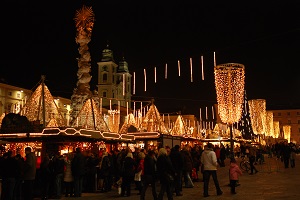
Kerstmarkt in Linz


De Duitse schrijfster Felicitas Hoppe werd geboren op 22 december 1960 in Hameln. Zie ook alle tags voor Felicitas Hoppe op dit blog.

Uit: Hoppe

“Weltweit, egal welcher Zeitung, hat Hoppe immer dieselbe Geschichte erzählt: wie sie als Ratte mit Schnurrbart und Schwanz versehen, Wurst in der Linken, Brot in der Rechten, den Marktplatz ihrer Heimatstadt Hameln betritt, um sich im Freilichttheater unter der Führung des Rattenfängers vor Touristen aus aller Welt ein Taschengeld zu verdienen. Wie sie das eben Verdiente sofort auf den Kopf haut, Blumen für ihre Mutter (»die Gastgeberkönigin«) und ein Päckchen Zigaretten für ihren Vater (»den Erbauer des ersten Kaspertheaters«) kauft, um danach mit dem verbliebenen Rest ihre vier Geschwister zu einem Ausflug ins Miramare zu überreden, eine Hamelner Eisdiele, »die sommers floriert und sich winters, wenn sich die Italiener saisonbedingt nach Süden verziehen, in einen Ausstellungsraum für Pelze verwandelt.« Bis Hoppe sich dreißig Jahre später »endlich erhebt«, um ein Schiff von Hamburg nach Hamburg zu besteigen und die Welt mit eigenen Augen zu sehen: »Ein Ausflug, nichts weiter, in ein paar Tagen bin ich zurück, sitze wieder am Tisch, der zweite Esser von rechts.« (Pigafetta, 1999)
Sowenig beglaubigt ist, dass Hoppe jene vielzitierte Reise um die Welt auf einem Containerfrachtschiff tatsächlich persönlich unternahm, ist bekannt, dass sie bereits als Kind mehrfach die Weltmeere befuhr. Allerdings nicht als zweiter Esser von rechts, sondern als einzige Tochter eines Patent-agenten, der das deutsche Kaspertheater vermutlich niemals von innen sah.”


 1517079-7af13aaac807f4b47866c7a6c1d7920f.jpg
Felicitas Hoppe (Hameln, 22 december 1960)


De Zwitserse schrijver Hugo Loetscher werd geboren op 22 december 1929 in Zürich. Zie ook alle tags voor Hugo Loetscher op dit blog.

Uit: War meine Zeit meine Zeit

„Eines Nachmittags hatte ich ein Holzscheit aus der Sihl gefischt. Ich wunderte mich, dass ein Stück Brennholz im Wasser trieb. Ich hatte den Fund hinter einer Betonröhre versteckt. Als das Holz trocken war, schnitzte ich daran, zunächst ohne Absicht, doch dann formte ich einen Bug, und als das Holz noch die Form eines Rumpfes erhielt, ritzte ich den ersten Buchstaben meines Vornamens ein, bohrte ein Loch, steckte als Mast ein Streichholz hinein, ein kürzeres, um den Mast zu befestigen, und schickte das segellose Schiffchen auf große Fahrt, nicht wissend, wohin, und rief ihm einen Gruß nach, nicht wissend, an wen. Ein Bote, der annoncierte: Einer kommt nach.
Aufregend nur schon war, dazuhocken und sich dem Vorbeifließen hinzugeben, dem Glucksen, Raunen und Flüstern zuzuhören, zuweilen mit geschlossenen Augen, damit, was zu sehen war, nicht das, was zu hören war, störte. Gespannt, ob einem eine Welle anvertraut, wie das ist, wenn sie an einem Stein aufschlägt.“


 1517079-dc584b99c8fd48df73516f435fd4e9e9.jpg
Hugo Loetscher (22 december 1929 – 18 augustus 2009)


De Italiaanse dichter, schrijver en futuristisch kunstenaar Filippo Tomasso Marinetti werd geboren op 22 december 1876 in Alexandrië. Zie ook alle tags voor F.T. Marinetti op dit blog.

Uit: Manifest des Futurismus (Vertaald door Jean-Jacques)

„Nichts kommt dem Glanz ihres roten Schwertes, das zum ersten Male streitet in unserer tausendjährigen Finsternis gleich.
Wir näherten uns den drei schnaubenden Maschinen, um ihre Brust zu streicheln. Ich streckte mich auf meiner Maschine aus wie ein Leichnam auf der Bahre, aber ich richtete mich plötzlich unter dem Lenkrad auf, - diesem Guillotine-Hackmesser -, das meinen Magen bedrohte.
Wirbelnd entführte uns der Wahnsinn uns selbst und trieb durch die steilen, tiefen Straßen wie ausgetrocknete Wildbäche. Hier und da tauchten an den Fenstern Lampen auf, die uns lehrten, unsere mathematischen Augen zu verachten.
- Die Witterung, rief ich, die Witterung genügt dem Rotwild!... Und wir jagten wie junge Löwen den schwarzhaarigen Tod, der vor uns in den weiten, malvenfarbigen, lebenden Himmel lief.
Und dennoch hatten wir keine ideale Gebieterin, die ihre Gestalt bis in die Wolken streckte, noch eine grausame Königin, der wir unsere wie byzantinische Ringe gewundenen Leichname hätten geben können! Nichts, um zu sterben, wäre es auch nur der Wunsch, endlich unseres nur allzu drückenden Mutes ledig zu sein!
Wir sausten dahin und zermalmten auf den Schwellen der Häuser die Hunde, die sich unter unsere brennenden Pneumatiks legten, wie Kragen unter Plätteisen.“


 1517079-844193e055cd0fa0369c08ac528215bb.jpg
F.T. Marinetti (22 december 1876 – 2 december 1944)


De Franse dichter en schrijver Jean Racine werd geboren op 22 december 1639 in La Ferté-Milon. Zie ook alle tags voor Jean Racine op dit blog.


Le mardi à laudes

L’oiseau vigilant nous réveille ;
Et ses chants redoublés semblent chasser la nuit :
Jésus se fait entendre à l’âme qui sommeille,
Et l’appelle à la vie, où son jour nous conduit.

« Quittez, dit-il, la couche oisive
Où vous ensevelit une molle langueur :
Sobres, chastes et purs, l’œil et l’âme attentive,
Veillez : je suis tout proche, et frappe à votre cœur. »

Ouvrons donc l’œil à sa lumière,
Levons vers ce Sauveur et nos mains et nos yeux,
Pleurons et gémissons : une ardente prière
Écarte le sommeil, et pénètre les cieux.

Ô Christ, ô soleil de justice !
De nos cœurs endurcis romps l’assoupissement ;
Dissipe l’ombre épaisse où les plonge le vice,
Et que ton divin jour y brille à tout moment !

Gloire à toi, Trinité profonde,
Père, Fils, Esprit-Saint : qu’on t’adore toujours,
Tant que l’astre des temps éclairera le monde,
Et quand les siècles même auront fini leur cours !


 1517079-a16aa1100a338e07a05000e27d5b2ce9.jpg
Jean Racine (22 december 1639 - Parijs, 21 april 1699)
Borstbeeld in Port-Royal-des-Champs


De Amerikaanse dichter Kenneth Rexroth werd geboren in South Bend (Indiana) op 22 december 1905. Zie ook alle tags voor Kenneth Rexroth op dit blog.


Rogation Days

Under the orchards, under
The tree strung vines, little blue
Figures are making hay, high
On the steep hillsides above
Palladio's drowsy villas
And Tiepolo's swirling walls.
On the highest field they are
Still cutting with swinging scythes;
Down below they are tossing
The long swathes of hay to cure
In the sun; further down they
Are cocking it, or carrying
It off in two-wheeled donkey carts.
The Venetian plain vanishes
In haze. The nearby Alps are
Indefinite blue smudges,
Capped with faint streaks of orange
Snow. Clouds of perfume roll up
The hillside in waves. All the birds
Sing. All the flowers bloom. Here
At a stone table like this,
On a little hill like this,
In a circle of cypress
And olive like this, the infinite
Visited Leopardi,
And ravished him and carried
Him off in the deep summer.
It would carry me off, too,
If I knew where I wanted
To go, or if I just wanted
To go nowhere at all.


 1517079-42268d5ebf1b90bd8bc0a3b5449c86ab.jpg
Kenneth Rexroth (22 december 1905 – 6 juni 1982)
Hier met zijn dochter


Zie voor nog meer schrijvers van de 22e december ook mijn vorige blog van vandaag.

Geschreven door Romenu om 10:58 Reageer op dit bericht

Johan Sebastian Welhaven, E. A.Robinson, Lulu Wang, Christoph Keller, Ulrich Bräker, Rudolf Krämer-Badoni, Thomas Higginson

De Noorse dichter en criticus Johan Sebastian Welhaven werd op 22 december 1807 in Bergen geboren. Zie ook alle tags voor Johan Sebastian Welhaven op dit blog.


The snow’s now falling thick and fast

The snow’s now falling thick and fast,
And the boy runs hither and thither.
A great many miles does he slither
And slide now before the day’s past.

Great blocks of snow in the courtyard he rolls,
And into stout soldiers he makes them;
Much effort and toil does it take him.
The soldiers are given eyes made of coal.

He trundles the snow as if in a trance,
While the towering warriors stand gazing;
A breastwork he now works on raising.
The broomstick he gives them serves as a lance.

And now he is done, and his strength is no more;
His hands are both frozen and stinging.
With strong dreams soon to be winging
A restless night the boy has in store.

You hear him exclaim, the tired little one:
‘Tomorrow they all will do battle!’
Then rainclouds the sky shake and rattle,
And his warriors soon are all gone.


Vertaald door John Irons


 1517072-29d857673d501adc52d93d1163e1f491.jpg
Johan Sebastian Welhaven (22 december 1807 – 21 oktober 1873)
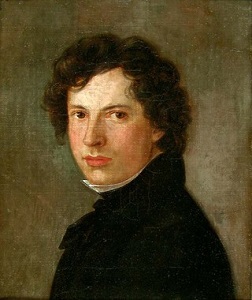
Portret door Jacob Calmeyer, 1827


De Amerikaanse dichter Edwin Arlington Robinson werd geboren op 22 december 1869 in Head Tide, Maine. Zie ook alle tags voor E. A. Robinson op dit blog.


Job the Rejected

They met, and overwhelming her distrust
With penitence, he praised away her fear;
They married, and Job gave him half a year
To wreck the temple, as we knew he must.
He fumbled hungrily to readjust
A fallen altar, but the road was clear
By which it was her will to disappear
That evening when Job found him in the dust.

Job would have deprecated such a way
Of heaving fuel on a sacred fire,
Yet even the while we saw it going out,
Hardly was Job to find his hour to shout;
And Job was not, so far as we could say,
The confirmation of her soul’s desire.


The Flying Dutchman

Unyielding in the pride of his defiance,
Afloat with none to serve or to command,
Lord of himself at last, and all by Science,
He seeks the Vanished Land.

Alone, by the one light of his one thought,
He steers to find the shore from which he came,
Fearless of in what coil he may be caught
On seas that have no name.

Into the night he sails, and after night
There is a dawning, thought there be no sun;
Wherefore, with nothing but himself in sight,
Unsighted, he sails on.

At last there is a lifting of the cloud
Between the flood before him and the sky;
And then--though he may curse the Power aloud
That has no power to die--

He steers himself away from what is haunted
By the old ghost of what has been before,--
Abandoning, as always, and undaunted,
One fog-walled island more.


 1517072-1b242e5650b2cb1c98c5c9c9a492c630.jpg
E. A. Robinson (22 december 1869 – 6 april 1935)
Portret door Richard (Thomas) Hood, 1933


De Nederlandse schrijfster Lulu Wang werd geboren op 22 december 1960 in Beijing. Zie ook alle tags voor Lulu Wang op dit blog.

Uit: The Lily Theater (Vertaald door Hester Velmans)

“Chemistry class was interrupted by a knock on the door. I was called out and saw Mother standing in the corridor. I was going to ask her how she had managed to return from the reeducation camp again so soon, but on seeing her tense face I decided to keep the question to myself. I had to run to keep up with her as she strode to the office of the director of the Teachers' University.
"Well, well, little Wine-Cup, in the six months since I saw you last, you have grown from a cheeky little girl into a charming young lady!"
I blushed. I wasn't sure how to behave in his presence. I knew him quite well, because he had supervised the project Mother had been working on for the past five years--the Textbook of the Modern History of China. I had often visited Mother's office after school. The director was usually there. He used to tease me about the dimple in my right cheek: "Well, well, if that little Wine-Cup were full of wine, and you were to drink from it until it was all gone, you'd have to go ask your neighbors, 'Remind me, what's my name again?' That's how deep that dimple of yours is, did you know that?" He was friendly toward me.”


 1517072-1ea625b595bbbb1adc2284c7707e9ee7.JPG
Lulu Wang (Beijing, 22 december 1960)


De Zwitserse schrijver Christoph Keller werd geboren op 22 december 1963 in St. Gallen. Zie ook alle tags voor Christoph Keller op dit blog.

Uit: Der Stand der letzten Dinge (samen met Heinrich Kuhn)

«Prächtig», sagt dieser, «und dir?»
«Genauso», zieht er gleich und beobachtet, wie der andere die Gläser mit Weißwein füllt. Ein chilenischer Chardonnay, registriert er zufrieden. Der kleine Esoteriker weiß, was gut ist.
«Was ich dich fragen wollte», setzt er verlegen an, nachdem sie auf ihre gutnachbarschaftliche Beziehung angestoßen haben. «Sind dir vielleicht in letzter Zeit Leute aufgefallen, die nicht hierher gehören?» Er gibt sich den Anschein, als sei ihm die Antwort eigentlich nicht wichtig.
«Da kommt jeweils dieser Typ, der dich anschleicht. Ich hätte Lust, mir den mal vorzunehmen und ihm Nachhilfestunden anzubieten. Geht ziemlich ungeschickt vor, wenn du mich fragst, aber da du …»
«Mach keine Witze. Das ist doch Prinz. Ich muss ihn dir das nächste Mal vorstellen.»
«Da du schon vormittags im Liegestuhl liegst, wollte ich sagen, und ein vorgezogenes Mittagsschläfchen hältst, schafft er es jeweils doch noch, dich zu überraschen.»
«Ich überdenke Arbeitspläne.»
«Was du nicht sagst.» Der Nachbar grinst gutmütig. «Das wollte ich dich schon einige Male fragen: Woran arbeitest du eigentlich?»
«Zur Zeit schreibe ich an einem neuen Roman.»
«Ach ja, lesen ist meine Achillesferse. Meist bleibt es beim Vorsatz. Du hast nicht zufälligerweise etwas zu Hause? Etwas Spezielles, mit Tiefgang und Action, wenn möglich. Aber zurück zu deinem Anliegen: Hätte ich diesen Prinz denn kennen sollen?»
«Wir schreiben zusammen. Hin und wieder liest man davon.»


 1517072-ed5da7b9d5b60ce82a92de5dbc5ba4da.jpg
Christoph Keller (St. Gallen, 22 december 1963)


De Zwitserse schrijver Ulrich Bräker werd geboren op 22 december 1735 in Näppis (Scheftenau), Toggenburg, Kanton St. Gallen. Zie ook alle tags voor Ulrich Bäker op dit blog.

Uit:Lebensgeschichte und Natürliche Ebentheuer des Armen Mannes im Tockenburg

„Am End derselben rauschte ein wildangelaufener Bach durch ein Tobel. Den Stäg könnt' ich nicht finden, und wollte darum ohne weiters und gerade hinüber, dem Näbis zu; glitschte aber über eine Riese zum Bach hinab, wo mich das Wasser beynahe ergriffen hätte. Die äusserste Anstrengung meiner jugendlichen Kräfte half mir noch glücklich davon. Ich kroch wieder auf allen Vieren durch Stauden und Dörn' hinauf der Wiese zu, auf welcher ich überall herumirrte, und den Gaden nicht mehr finden konnte – als ich gegen einer Windhelle zwey Kerls – Birn- oder Aepfeldiebe – auf einem Baum ansichtig ward. Diesen ruft ich zu, sie sollten mir doch auf den Weg helfen. Aber da war kein Bescheid; vielleicht daß sie mich für ein Ungeheuer hielten, und oben im Gipfel noch ärger zittern mochten, als ich armer Bube unten im Koth. – Inzwischen war mein Vater, der während meinem Schlummer nach einem ziemlich entfernten Haus gieng, etwas zu holen, wieder zurückgekehrt. Da er mich vermißte, suchte er in allen Winkeln nach, wo ich mich etwa mögte verkrochen haben; zündete bis in die siedenden Kessel hinein, und hörte endlich mein Geschrey, dem er nachgieng, und mich nun bald ausfindig machte. O, wie er mich da herzte und küßte, Freudenthränen weinte und Gott dankte, und mich, sobald wir zum Gaden zurückkamen, sauber und trocken machte – denn ich war mausnaß, dreckigt bis über die Ohren, und hatte aus Angst noch in die Hosen ... Morndeß am Morgen führte er mich an der Hand durch die Wiese: Ich sollt ihm auch den Ort zeigen, wo ich heruntergepurzelt.“


 1517072-59dc6f022ae76bcaf16854121e144c77.jpg
Ulrich Bräker (22 december 1735 – (begraven) 11 september 1798)


De Duitse schrijver Rudolf Krämer-Badoni werd geboren op 22 december 1913 in Rüdesheim als Rudolf Kramer. Zie ook alle tags voor Rudolf Krämer-Badoni op dit blog.

Uit: Die Barbaren waren wir

„Wenn et etwas bewirkte, würde ich diesen Menschen die Zugehörigkeit zu meinem Vaterland absprechen. Aber das wäre Geschwätz. Sie waren Deutsche, wir kommen darum nicht herum.
Ich kann sie nicht einmal Bestien nennen, es wäre eine Beleidigung für die Tiere, die den eigenen Artgenossen nicht zu töten vermögen. Aber ich verweigere diesen ehrlosen Henkern Wehrloser und Schuldloser jeden Schatten eines Gedenkens, und ich verfluche die künftige Stunde, da die verblaßte Erinnerung ihre Namen historisch neutral unter anderen historischen Namen aufzählen wird als Namen, die dies oder jenes ins Rollen gebracht haben, was wir heute noch nicht deutlich sehen. Am Volkstrauertag verweigere ich die mitfühlende Trauer jenen, die mein Vaterland besudelt haben und die Sie alle und mich besudelt haben. De mortuis nil nisi bene - dafür gibt es eine sehr genaue Grenze. Meinungskampf und zuletzt immer wieder Krieg - wir wissen, daß dies bis heute die schmerzliche Mitgift unserer Menschwerdung war...“


 1517072-06fce4e48cfee4369740203182fb684d.jpg
Rudolf Krämer-Badoni (22 december 1913 - 18 september 1989)


De Amerikaanse schrijver en strijder tegen slavernij Thomas Wentworth Higginson werd geboren op 22 december 1823 in Cambridge, Massachusetts. Zie ook alle tags voorThomas Higginson op dit blog.

Uit: The Complete Civil War Journal and Selected Letters

“I have entered on command and am trying to play Col. Sprague as well as may be. Spent morning with Gen. Saxton who is quite absorbed in this regiment & gave up all else for me—He gives me Carte blanche—I am to send for Dr Rogers & James. The line officers I like much, young & not highly educated but thoroughly manly & very ready to meet me as I wish. My adjutant is a Boston Fraternity man and heard me in my Crumble lecture say Come & is delighted to have me, as they all are. Gen. S. had many applications for the place but left it to me. The Lieut. Col. & Major I like least as military men. I am to live in a tent when I can get one. Meanwhile in a forlorn plantation house. Soon after my arrival this morning, in marched a company of my men, to be mustered in—all black as coals as Margaret predicted, not a mulatto among them, but marching well with their red legs which are the only peculiarity of their uniform, as distinct from the ordinary. Gen. Saxton talked to them a little—so did I & they know what they are doing, I assure you. Being introduced to one who has been wounded in the late (second expedition) I said "Did you think that was more than you bargained for"? "Dat's just what I meant for Massa" says he. Very good for my first exchange of remark with my men, was it not?"


 1517072-10598d46fcfa36f2f193bde5b0a36ca5.jpg
Thomas Higginson (22 december 1823 – 9 mei 1911)

Geschreven door Romenu om 10:46 Reageer op dit bericht

Meer van Romenu

↑ Terug naar de berichten