Naar de inhoud

Romenu

Over literatuur, gedichten, kunst en cultuur
akke.beakke.be

Berichten van 25 december 2013 tot 26 december 2013

Christmas Bells (Henry Longfellow)


Aan alle bezoekers en mede-bloggers een Prettig Kerstfeest!


 1519885-48b6e24529c21c6e2dd7e4183f060488.jpg
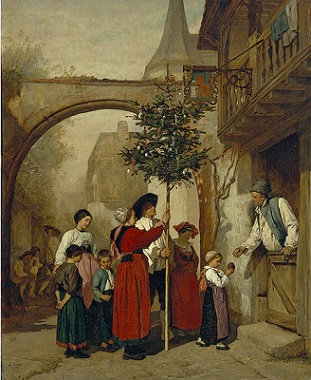
Les chanteurs de Noël door Gustave Brion, 1858


Christmas Bells

I heard the bells on Christmas Day
Their old familiar carols play,
And wild and sweet
The words repeat
Of peace on earth, good-will to men!

And thought how, as the day had come,
The belfries of all Christendom
Had rolled along
The unbroken song
Of peace on earth, good-will to men!

Till, ringing, singing on its way,
The world revolved from night to day,
A voice, a chime
A chant sublime
Of peace on earth, good-will to men!

Then from each black accursed mouth
The cannon thundered in the South,
And with the sound
The carols drowned
Of peace on earth, good-will to men!

It was as if an earthquake rent
The hearth-stones of a continent,
And made forlorn
The households born
Of peace on earth, good-will to men!

And in despair I bowed my head;
"There is no peace on earth," I said;
"For hate is strong,
And mocks the song
Of peace on earth, good-will to men!"

Then pealed the bells more loud and deep:
"God is not dead; nor doth he sleep!
The Wrong shall fail,
The Right prevail,
With peace on earth, good-will to men!


 1519885-a2c41d8f1086b6f1a65d147ba70c6811.jpg
Henry Longfellow (27 februari 1807 - 24 maart 1882)
Portland. Henry Longfellow werd geboren in Portland.


Zie voor de schrijvers van de 26e december ook mijn vier vorige blogs van vandaag.

Geschreven door Romenu om 11:09 Reageer op dit bericht

David Sedaris, Elizabeth Kostova, Henry Miller, Rainer Malkowski

De Amerikaanse schrijver David Sedaris werd geboren in Binghamton, New York, op 26 december 1956. Zie ook alle tags voor David Sedaris op dit blog.

Uit: Holidays on Ice

„In a parade, maybe, but not on the streets. I figure that at least as an elf I will have a place; I’ll be in Santa’s Village with all the other elves. We will reside in a fluffy wonderland surrounded by candy canes and gingerbread shacks. It won’t be quite as sad as standing on some street corner dressed as a french fry.
I am trying to look on the bright side. I arrived in New York three weeks ago with high hopes, hopes that have been challenged. In my imagination I’d go straight from Penn Station to the offices of “One Life to Live,” where I would drop off my bags and spruce up before heading off for drinks with Cord Roberts and Victoria Buchannon, the show’s greatest stars. We’d sit in a plush booth at a tony cocktail lounge where my new celebrity friends would lift their frosty glasses in my direction and say, “A toast to David Sedaris, the best writer this show has ever had!!!”
I’d say, “You guys, cut it out.” It was my plan to act modest.
People at surrounding tables would stare at us, whispering, “Isn’t that … ? Isn’t that … ?”
I might be distracted by their enthusiasm and Victoria Buchannon would lay her hand over mineand tell me that I’d better get used to being the center of attention.
But instead I am applying for a job as an elf. Even worse than applying is the very real possibility that I will not be hired, that I couldn’t even find work as an elf. That’s when you know you’re a failure.
This afternoon I sat in the eighth-floor SantaLand office and was told, “Congratulations, Mr. Sedaris. You are an elf.
In order to become an elf I filled out ten pages’ worth of forms, took a multiple choice personality test, underwent two interviews, and submitted urine for a drug test. The first interview was general, designed to eliminate the obvious sociopaths.“


 1519882-741fca44a5f6070812cd6983957e1ce0.jpg
David Sedaris (Binghamton, 26 december 1956)


De Amerikaanse schrijfster Elizabeth Kostova werd geboren op 26 december 1964 in New London, Connecticut. Zie ook alle tags voor Elizabeth Kostova op dit blog.

Uit: The Historian

“My father's library had probably once been a sitting room, but he sat down only to read, and he considered a large library more important than a large living room. He had long since given me free run of his collection. During his absences, I spent hours doing my homework at the mahogany desk or browsing the shelves that lined every wall. I understood later that my father had either half forgotten what was on one of the top shelves or-more likely-assumed I would never be able to reach it; late one night I took down not only a translation of the Kama Sutra but also a much older volume and an envelope of yellowing papers.
I can't say even now what made me pull them down. But the image I saw at the center of the book, the smell of age that rose from it, and my discovery that the papers were personal letters all caught my attention forcibly. I knew I shouldn't examine my father's private papers, or anyone's, and I was also afraid that Mrs. Clay might suddenly come in to dust the dustless desk-that must have been what made me look over my shoulder at the door. But I couldn't help reading the first paragraph of the topmost letter, holding it for a couple of minutes as I stood near the shelves.”


 1519882-763c181a71bd5d1ba8651bd8e962b9d6.jpg
Elizabeth Kostova (New London, 26 december 1964)


De Amerikaanse schrijver Henry Miller werd geboren op 26 december 1891 In New York. Zie ook alle tags voor Henry Miller op dit blog.

Uit: Sexus

“If there is no realization there is no purpose or advantage in substituting the imaginative life for the purely adventurous one of reality. Everyone who lifts himself above the activities of the daily round does so not only in the hope of enlarging his field of experience, or even of enriching it, but of quickening it. Only in this sense does struggle have any meaning. Accept this view, and the distinction between failure and success is nil. And this is what every great artist comes to learn en route- that the process in which he is involved has to do with another dimension of life, that by identifying himself with this process he augments life. In this view of things he is permanently removed- and protected- from the insidious death which seems to triumph all about him. He divines that the great secret will never be apprehended but incorporated in his very substance. He has to make himself a part of the mystery, live in it as well as with it. Acceptance is the solution: it is an art, not an egotistical performance on the part of the intellect. Through art, then, one finally establishes contact with reality: that is the great discovery. Here all is play and invention; there is no solid foothold from which to launch projectiles which will pierce the miasma of folly, ignorance and greed. The world has not to be put in order: the world is order incarnate. It is for us to put ourselves in unison with this order, to know what is the world order in contradistinction to the wishful-thinking orders which we seek to impose on one another.”


 1519882-662c94212b575224520bdee223437244.jpg
Henry Miller (26 december 1891 – 7 juni 1980)
Portret door Man Ray, 1945


De Duitse dichter Rainer Malkowski werd geboren op 26 december 1939 in Berlijn-Tempelhof. Zie ook alle tags voor Rainer Malkowski op dit blog.


Epitaph für einen leisen Erzieher

Du hast etwas
von mir erwartet,
Aber ich wusste nicht, was.

Irgendetwas
hast du geglaubt,
wird deutlich geschehen.
Eine Zeit später
begann ich,
danach zu suchen.


Mittag im Süden

Ein Rolladen aus Blech
vor dem einzigen Geschäft
am Dorfplatz.

Ein Brunnen,
daneben ein roter Klappstuhl.

Nach langer Zeit
ein Ruf,
irgendwo
in den tiefer liegenden Gassen

Der verrückte, verrückte
Sekundenzeiger
meiner Armbanduhr.


 1519882-7200e5a35966c2735cff73dc90cdb0d0.jpg
Rainer Malkowski (26 december 1939 – 1 september 2003)
Cover


Zie voor nog meer schrijvers van de 26e december ook mijn vorige drie blogs van vandaag.

Geschreven door Romenu om 11:07 Reageer op dit bericht

Mani Beckmann, Alejo Carpentier, Hans Brinkmann, Jean Toomer, Willy Corsari

De Duitse schrijver Mani Beckmann (pseudoniem Tom Finnek) werd geboren op 26 december 1965 in Alstätte/Westfalen. Zie ook alle tags voor Mani Beckmann op dit blog.

Uit: Sodom und Gomera

“Ich schaute mich hilflos und suchend im Flughafengebäude um und beneidete die anderen Fluggäste, die genau zu wissen schienen, wohin sie wollten und wie sie dorthin gelangten. Zwar hatte ich mir am Vorabend einen Reiseführer besorgt und ihn sogleich in die Innentasche meiner
Lederjacke gesteckt, um ihn auf keinen Fall zu vergessen und im Flugzeug zur ersten Recherche zur Hand zu haben.
Doch leider hatte ich mich heute morgen entschieden, statt der winterlichen Leder- die sommerliche Jeansjacke mitzunehmen, und so ruhte der Reiseführer wohlbehalten in meiner Wohnung, während ich einigermaßen orientierungslos im sonnigen Süden gelandet war. Zu allem Überfluss war ich des Spanischen nicht mächtig und beherrschte außer den Titeln einiger spanischer Spielfilme wenig mehr als die Namen diverser karibischer Cocktails.
»Deutsch reicht da unten völlig«, hatte Ute am Sonntag gemeint, als wir uns in einem Café in der Nähe des Kreuzberger Victoriaparks zu einem französischen Frühstück getroffen hatten. »Gomera ist genau wie Mallorca, nur ganz anders.« Dann hatte sie meine Hand genommen und mich traurig lächelnd angeschaut. »Würdest du das wirklich für mich tun?«
»Für dich würde ich alles tun«, hatte ich scherzhaft geantwortet und ihr dabei nicht in die Augen geschaut, um ihr nicht zu erkennen zu geben, dass ich es keineswegs nur als Scherz gemeint hatte.“


 1519878-ab1712734f408b23351daddb14acfdca.jpg
Mani Beckmann (Alstätte, 26 december 1965)


De Cubaanse schrijver, essayist en musicoloog Alejo Carpentier werd geboren in Havana op 26 december 1904. Zie ook alle tags voor Alejo Carpentier op dit blog.

Uit: The Kingdom of This World (Vertaald door Harriet de Onís)

“Toward the end of 1943, I had the good fortune to visit the kingdom of Henri Christophe --the poetic ruins of Sans-Souci, the massive citadel of La Ferriere, imposingly intact despite lightning bolts and earthquakes--- and to acquaint myself with the still-Norman Cap-Haitien (the Cap Français of the former colony) where a street lined with long balconies leads to the cut-stone palace once inhabited by Pauline Bonaparte.
  After having felt the undeniable enchantment of this Haitian earth, after having discerned magical warnings on the red roads of the Central Plateau, after having heard the drums of Petro and Rada, I was moved to compare the marvelous reality I'd just experienced with the tiresomsome attempts to arouse the marvelous that has characterized certain European literatures for last thirty years. The marvelous, sought for in the old clichés of the Forest of Broceliande, the Knights of the Round Table, Merlin the Magician, and the Arthurian cycle. The marvelous, pathetically evoked by the antics and deformities of sideshow characters--will the young poets of France never get tired of the freaks and clowns of the féte foraine, which Rimbaud dismissed long ago in his Alchemie du verbe? “


 1519878-86e93f9a53cb95fbd97ecd0671fd2a03.jpg
Alejo Carpentier (26 december 1904 - 24 april 1980)


De Duitse dichter, schrijver en criticus Hans Brinkmann werd geboren op 26 december 1956 in Freiberg in Sachsen. Zie ook alle tags voor Hans Brinkmann op dit blog.


Fragment wovon?

Mitten im Leben stehe ich im Wald.
Vor lauter Bäumen stehe ich, die Vöglein schweigen.
Das Holz ist tot. Papier geduldig. Tinte kalt.
Der Wald heißt Himmelarsch und großes Meinungsgeigen.
Hier schreite durch, wer Fäuste in der Tasche ballt.
Muss denn das Trüffelschwein sich vor dem Moos verneigen?
Im Lodenmantel liegt Natur im Hinterhalt,
um plötzlich ihren Jagdschein vorzuzeigen.
Die aus dem Boden Geschossene grient.
Dass ich mir kein’n grünen Zweig um die Stirn winde,
scheint irre, weil gleichwohl fast militant. – Ach:
Wer sich eignen Verstandes noch gerne bedient,
kämpft um jeden Quadratzentimeter Hirnrinde
wie um einen Fußbreit Land.


 1519878-8acfc0980f7fe3d26d35a4247f06f90c.jpg
Hans Brinkmann (Freiberg, 26 december 1956)
Freiberg, kerstmarkt


De Amerikaanse dichter en schrijver Jean Toomer werd geboren op 26 december 1894 in Washington, D.C. Zie ook alle tags voor Jean Toomer op dit blog.


People

To those fixed on white,
White is white,
To those fixed on black,
It is the same,
And red is red,
Yellow, yellow-
Surely there are such sights
In the many colored world,
Or in the mind.
The strange thing is that
These people never see themselves
Or you, or me.

Are they not in their minds?
Are we not in the world?
This is a curious blindness
For those that are color blind.
What queer beliefs
That men who believe in sights
Disbelieve in seers.

O people, if you but used
Your other eyes
You would see beings.


Unsuspecting

There is a natty kind of mind
That slicks its thoughts,
Culls its oughts,
Trims its views,
Prunes its trues,
And never suspects it is a rind.


 1519878-790e1ac35fb5044178d8708549a373a7.jpg
Jean Toomer (26 december 1894 – 30 maart 1967)


De Nederlandse schrijfster Willy Corsari (pseudoniem van Wilhelmina Angela Douwes-Schmidt) werd geboren in Sint-Pieters-Jette, Brussel, op 26 december 1897. Zie ook alle tags voor Willy Corsari op dit blog.


Toen je voor ‘t eerst mij leerde kennen (Fragment)

Nu vind je alles even aardig
Je kust de grond waarop ik ga
Je lacht omdat ik niet kan koken
Onhandig in de keuken sta
Maar als je later van je werk kwam
Het eten was weer aangebrand
En ik kon je kleren niet verstellen
De kamers waren niet aan kant
En ik liep door het huis te zingen
Dacht niet aan huishouden of jou
Ik ben niet zeker, lieve jongen
Dat je dan ook nog lachen zou

Misschien deed je me dan verwijten
Een bitter woord is gauw gezegd
En 't mooie tussen ons zou sterven
Al wordt een twist ook bijgelegd
Dan was het uit met onze dromen
Als rook, vervlogen in de wind
Hoe wou jij door het leven komen
Met mij, met zo'n zigeunerkind

En daarom: Liefste, laat het uit zijn
Het is het leven dat ons scheidt
Over een poosje zul je lachen
Om deze hele dwaze tijd
Misschien word jij nu ook wel bitter
En noemt me harteloos en koud
Ach, 't is maar beter dat je niet weet
Hoeveel ik eigenlijk van je houd
Maar als je over een paar jaren
Tevreden leeft in je gezin
Misschien denk je dan nog eens
Dankbaar terug aan je zigeunerin


1519878-614e0379e6e02c922b9263c775646793.jpg

Willy Corsari (26 december 1897 – 11 mei 1998)
In 1921 


Zie voor nog meer schrijvers van de 26e december ook mijn vorige twee blogs van vandaag.

Geschreven door Romenu om 11:06 Reageer op dit bericht

Alfred Huggenberger, René Bazin, Julien Benda, Jean Galtier-Boissière

De Zwitserse dichter en schrijver Alfred Huggenberger werd geboren op 26 december 1867 in Bewangen nabij Bertschikon. Zie ook alle tags voor Alfred Huggenbergerop dit blog.


Chrischtbäumli

's hät nid vill Chrömli am mim Baum,
kei Silberchugle gseht me dra,
defür denn Öpfel, gäl und rot,
düer Bire, was nu hange cha.

I weiss, dass d'Muetter briegget hät,
i weiss, i hett's nid sölle gseh.
Si hett mer, wenn's hett chöne si,
di schönschte, türschte Sache g'gäh.

Wenn z'Obed d'Liechtli brenne tüend,
so sitz i ufem Ofetritt
und luege halt mis Bäumli a, –
öb's uf der Welt e schöners git?

Emol, do hät's mi heimli quält,
ha lisli d'Chuchitür ufto,
hett gern der Muetter alles gseit –
si lächlet: Hescht, i weiss es scho! ...


Rosen am Weg

Zwischen Dorn und Disteln liegen
Rote Rosen hingestreut:
Kleine Freuden, die das Leben
Jedem zeigt und allen beut.

Geh nicht achtlos dran vorüber,
Nütz' die Augenblicke aus!
Von der Fahrt nach grossem Glücke
Kehrt so mancher leer nach Haus.

O, der Strauss, am Weg gebunden,
Wird dir noch zum Kleinod wert!
Gott versagt, was wir erflehen,
Schenkt uns vieles unbegehrt.


 1519875-3a907d07eba756f4dd7810aefb5f9166.jpg
Alfred Huggenberger (26 december 1867 – 14 februari 1960)


De Franse schrijver René Bazin werd geboren op 26 december 1853 in Angers. Zie ook alle tags voor René Bazin op dit blog.

Uit: Les Noëllet

À sa gauche, la pente roide du coteau, l’Èvre tordant ses rives plantées d’aunes autour d’un mamelon boisé, des prairies au delà, puis l’autre coteau qui remonte, couronné, comme d’une aigrette, par le château blanc du Vigneau. À droite, au contraire, les champs s’élèvent en courbes régulières, par longues bandes de cultures diverses, et dont les tons se fondent à mesure que la lumière décroît. Pierre connaît leurs maîtres, celui de ces chaumes où filent deux rangs de pommiers, celui de ces grands choux où des perdrix rappellent, et de ce guéret d’où monte l’haleine des terres fraîchement remuées. En apprenti qui commence à juger les choses, il songe que la métairie paternelle est mieux cultivée, mieux fumée, reconnaissable entre toutes à la hardiesse de ses labours, à la beauté de ses moissons. Et ce n’est pas étonnant : les voisins sont tous plus ou moins gênés, ils travaillent pour d’autres, écrasés de leurs lourds fermages, tandis que le père !…
Voici justement le premier champ de la Genivière. L’horizon s’élargit démesurément. On voit, à présent, par l’ouverture de la vallée, la succession lointaine des collines, jusqu’à Gesté, jusqu’à Saint-Philbert-en-Mauges, des clochers fins sur le ciel, des futaies comme des brumes violettes. Oh ! tous ces petits villages aux toits de tuiles gaufrées, qu’anime un dernier rayon de jour ! Des bruits se croisent : appels des coqs dans les fermes et des merles dans les fossés, roulements de chariots, jappements des chiens qu’on détache, voix qui partent des maisons vers les hommes attardés au loin, un pas qui sonne on ne sait où et que bientôt l’herbe étouffe. Et les étoiles s’allument là-haut, d’où descend par degrés, sur la terre de Vendée, le calme immense de la nuit.


 1519875-3059e359e0a6f52712f0e67207b0bf5f.jpg
René Bazin (26 december 1853 – 19 juli 1932)


De Franse schrijver en filosoof Julien Benda werd geboren op 26 december 1867 in Parijs. Zie ook alle tags voor Julien Benda op dit blog.

Uit: The Treason of the Intellectuals (Vertaald door Richard Aldington)

“Peace, it must be repeated after so many others have said this, is only possible if men cease to place their happiness in the possession of things "which cannot be shared," and if they raise themselves to a point where they adopt an abstract principle superior to their egotisms. In other words, it can only be obtained by a betterment of human morality. But, as I have pointed out above, not only do men to-day steel themselves entirely against this, but the very first condition of peace, which is to recognize the necessity for this progress of the soul, is seriously menaced. A school arose in the nineteenth century which told men to expect peace from enlightened self-interest, from the belief that a war, even when victorious, is disastrous, especially to economic transformations, to "the evolution of production," in a phrase, to factors totally foreign to their moral improvement, from which, these thinkers say, it would be frivolous to expect anything. So that humanity, even if it had any desire for peace, is exhorted to neglect the one effort which might procure it, an effort it is delighted not to make. The cause of peace, which is always surrounded with adverse factors, in our days has one more against it—the pacifism which pretends to be scientific.”


 1519875-2e737461c32fe5d1e33ee4cb9593d559.jpg
Julien Benda (26 december 1867 – 7 juni 1956)


De Franse schrijver, polemist en journalist Jean Galtier-Boissière werd geboren op 26 december 1891 in Parijs. Zie ook alle tags voor Jean Galtier-Boissière op dit blog.

Uit: Mémoires d’un Parisien (Nos amours de jeunesse)

“En faisant beaucoup de frais, il a prouvé que l'ardeur et l'empressement font aisément oublier un certain manque de régularité dans les traits; les femmes se moquent du profil grec, archaïque ou classique; le timbre de voix a beaucoup plus d'importance que la courbe du nez, et Gabriel put aligner un lot fort honorable de belles personnes.
Le premier atout de mon ami Jean, c'était un aimable minois avec un air passablement effronté; le second, son don de raconter gaiement des histoires, de lancer des mots cocasses et des reparties plaisantes. Les Parisiennes, aussi bien que les étrangères, prisent le garçon avec lequel elles sont sûres de ne jamais s'ennuyer et, pour s'assurer sa présence assidue, sont prêtes à tout lui accorder.
Le tableau de chasse de mon ami Jean fut donc copieux et varié. Je ne dirai pas qu'il n'est jamais tombé sur un bec, ce ne serait pas vraisemblable. Mais il avait mis au point une parade assez particulière: lorsqu'il s'était vu rabroué, il s'attachait à déceler le menu défaut physique de la rebelle. La perfection n'est pas de ce monde.”


1519875-031e3ae2c593f7765d581cefa604d8c5.jpg
Jean Galtier-Boissière (26 december 1891 – 22 januari 1966)


Zie voor nog meer schrijvers van de 26e december ook mijn vorige blog van vandaag.

Geschreven door Romenu om 11:04 Reageer op dit bericht

Thomas Gray, Ernst Moritz Arndt, Johann Gaudenz von Salis-Seewis, E. D. E. N. Southworth, Jean-François de Saint-Lambert

De Engelse dichter en geleerde Thomas Gray werd geboren op 26 december 1716 in Londen. Zie ook alle tags voor Thomas Gray op dit blog.


The Fatal Sisters (Fragment)

Now the storm begins to lower,
(Haste, the loom of Hell prepares!)
Iron-sleet of arrowy shower
Hurtles in the darkened air.

Glittering lances are the loom,
Where the dusky warp we strain,
Weaving many a soldier's doom,
Orkney's woe and Randver's bane.

See the grisly texture grow,
('Tis of human entrails made!)
And the weights that play below,
Each a gasping warrior's head.

Shafts for shuttles, dipped in gore,
Shoot the trembling cords along.
Sword, that once a monarch bore,
Keep the tissue close and strong.

Mista, black, terrific maid,
Sangrida, and Hilda, see,
Join the wayward work to aid;
'Tis the woof of victory.

Ere the ruddy sun be set,
Pikes must shiver, javelins sing,
Blade with clattering buckler meet,
Hauberk crash, and helmet ring.

(Weave the crimson web of war!)
Let us go, and let us fly
Where our friends the conflict share,
Where they triumph, where they die.

As the paths of fate we tread,
Wading through the ensanguined field,
Gondula and Geira, spread
O'er the youthful king your shield.


 1519870-abb51852e56531d1c2ba6b5a77718e13.jpg
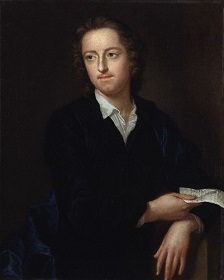
Thomas Gray (26 december 1716 – 30 juli 1771)
Portret door John Giles Eccart, 1747-1748


De Duitse dichter en schrijver Ernst Moritz Arndt werd op 26 december 1769 in Groß-Schoritz geboren op het eiland Rügen. Zie ook alle tags voor Ernst Moritz Arndt op dit blog.


Gottes Geist

O Gottes Geist und Christi Geist,
Der uns den Weg zum Himmel weist,
Der uns die dunkle Erdennacht
Durch seine Lichter helle macht.

Du Hauch, der durch das Weltall weht
Als Gottes stille Majestät,
Du, aller Lichter reinstes Licht,
Erleucht' uns Herz und Angesicht.

Komm, leuchte mit dem Gnadenschein
Hell in die weite Welt hinein,
Komm, mach' uns in der Finsternis
Des lichten Himmelswegs gewiß.

Ach! Hier ist alles Staub und Nacht,
Die Wahn und Sünde trübe macht,
Ach! Hier ist alles Not und Tod,
Geht uns nicht auf dein Morgenrot.

Das Morgenrot der bessern Welt,
Das wie ein Strahl vom Himmel fällt,
Als Gottes Macht und Gottes Lust
Durchblitzt die kranke Menschenbrust.

O Gottes Geist und Christi Geist,
Der uns wie Kinder beten heißt,
Der uns wie Kinder glauben heißt,
O komm! o komm, du Heil'ger Geist!

Komm, Gottes Frieden, Gottes Mut!
Komm, stille Kraft, die nimmer ruht!
Komm, gieße deinen Gnadenschein
In Seele, Sinn und Herz mir ein.

Dann wandl' ich wie ein Kind des Lichts
Im Glanze deines Angesichts
Schon meinen kurzen Erdenlauf
Stets himmelein und himmelauf.


 1519870-f7aeeda8acd1739e9cd76c3483616156.jpg
Ernst Moritz Arndt (26 december 1769 – 29 januari 1860)
Portret door Julius Roeting, 1859


De Zwitserse dichter en schrijver Freiherr Johann Gaudenz von Salis-Seewis werd geboren op 26 december 1762 op slot Bothmar bei Malans. Zie ook alle tags voor Johann Gaudenz von Salis-Seewis op dit blog.


Mit vielen teile deine Freuden

Mit vielen teile deine Freuden,
Mit allen Munterkeit und Scherz,
Mit wenig Edlen deine Leiden,
Und Auserwählten nur dein Herz.


Der schönste Augenblick

Schön ist´s wenn zwei Sterne
Nah sich stehn am Firmament.
Schön, wenn zweier Rosen
Röte ineinander brennt.

Doch in Wahrheit! Immer
Ist´s am schönsten anzusehn;
Wie zwei, so sich lieben,
Selig beieinander stehn.


Die Rose

Weiß war die Rose zuerst. Die Mädchen und Jünglinge priesen
Ihren reinen Glanz, ihren unschuldigen Schmuck.
Schnell umfloß sie die steigende Röte bescheidenen Schämens,
Und sie glühet zeither reizender noch als zuvor.


 1519870-9f72a8488ec2e9c306c42a650e1b8de1.jpg
Johann Gaudenz von Salis-Seewis (26 december 1762 – 29 januari 1834)
Malans, slot Bothmar


De Amerikaanse schrijfster Emma Dorothy Eliza Nevitte Southworth werd geboren op 26 december 1819 in Washington, D.C. Zie ook alle tags voor E. D. E. N. Southworth op dit blog.

Uit: Ishmael or In The Depths

"Well, if there be any truth in the old adage, young Herman Brudenell will have a prosperous life; for really this is a lovely day for the middle of April—the sky is just as sunny and the air as warm as if it were June," said Hannah Worth, looking out from the door of her hut upon a scene as beautiful as ever shone beneath the splendid radiance of an early spring morning.
"And what is that old adage you talk of, Hannah?" inquired her younger sister, who stood braiding the locks of her long black hair before the cracked looking-glass that hung above the rickety chest of drawers.
"Why, la, Nora, don't you know? The adage is as old as the hills and as true as the heavens, and it is this, that a man's twenty-first birthday is an index to his after life:—if it be clear, he will be fortunate; if cloudy, unfortunate."
"Then I should say that young Mr. Brudenell's fortune will be a splendid one; for the sun is dazzling!" said Nora, as she wound the long sable plait of hair around her head in the form of a natural coronet, and secured the end behind with—a thorn! "And, now, how do I look? Aint you proud of me?" she archly inquired, turning with "a smile of conscious beauty born" to the inspection of her elder sister.”


 1519870-7110ccf13db66f949592488566c6b747.jpg
E. D. E. N. Southworth (26 december 1819 – 30 juni 1899)
Cover


De Franse dichter, schrijver en filosoof Jean-François de Saint-Lambert werd geboren op 26 december 1716 in Nancy. Zie ook alle tags voor Jean-François de Saint-Lambert op dit blog.


L’Hiver (Fragment)

QUEL bruit s’est élevé des forêts ébranlées,
Du rivage des mers, & du fond des vallées ?
Pourquoi ces sons affreux, ces longs rugissements,
Ce tumulte confus, ce choc des éléments ?
O puissance féconde ! ô nature immortelle !
Des êtres animés, mère tendre & cruelle !
Faut-il donc qu’aux faveurs dont tu les as comblés
Succèdent les fléaux dont ils sont accablés ?
Le fougueux aquilon déchaîné sur nos têtes,
Sous un ciel sans clarté promene les tempêtes ;
Il mugit dans les bois, & sur les monts déserts ;
En tourbillon rapide il tourne sur les mers ;
Il étend, il resserre, il fait fondre les nues ;
Les champs ont disparu sous des mers inconnues ;
Sur les eaux qui tomboient le ciel verse des eaux ;
Les torrents sont pressés par des torrents nouveaux.
Ce fleuve qui s’élance & franchit la prairie,
Porte au penchant des monts son onde, & sa furie ;
Et des arbres tombés, des hameaux renversés,
Il roule dans son sein les débris dispersés.
Quel ravage effrayant des asyles champêtres !
Quel désordre étendu regne sur tous les êtres !
Le monde est menacé du retour du cahos,
Et l’humide élément vainqueur de ses rivaux,
Vainqueur du dieu du jour, dans la nature entière
Semble éteindre aujourd’hui la vie & la lumière.


 1519870-3d42f4b3766d55a91b319e838d575e5d.JPG
Jean-François de Saint-Lambert (26 december 1716 – 9 februari 1803)
Borstbeeld in Nancy

Geschreven door Romenu om 11:03 Reageer op dit bericht

Music On Christmas Morning (Anne Brontë)


Aan alle bezoekers en mede-bloggers een Prettig Kerstfeest!


 1519201-92ee652abdf76d4b2f2fe77cbe894619.jpg
 De geboorte van Christus met St.Franciscus en
 St. Laurentius door Caravaggio, 1609


Music On Christmas Morning

Music, I love--but never strain
Could kindle raptures so divine,
So grief assuage, so conquer pain,
And rouse this pensive heart of mine--
As that we hear on Christmas morn,
Upon the wintry breezes borne.

Though Darkness still her empire keep,
And hours must pass, ere morning break;
From troubled dreams, or slumbers deep,
That music KINDLY bids us wake:
It calls us, with an angel's voice,
To wake, and worship, and rejoice;

To greet with joy the glorious morn,
Which angels welcomed long ago,
When our redeeming Lord was born,
To bring the light of Heaven below;
The Powers of Darkness to dispel,
And rescue Earth from Death and Hell.

While listening to that sacred strain,
My raptured spirit soars on high;
I seem to hear those songs again
Resounding through the open sky,
That kindled such divine delight,
In those who watched their flocks by night.

With them I celebrate His birth--
Glory to God, in highest Heaven,
Good-will to men, and peace on earth,
To us a Saviour-king is given;
Our God is come to claim His own,
And Satan's power is overthrown!

A sinless God, for sinful men,
Descends to suffer and to bleed;
Hell MUST renounce its empire then;
The price is paid, the world is freed,
And Satan's self must now confess
That Christ has earned a RIGHT to bless:

Now holy Peace may smile from heaven,
And heavenly Truth from earth shall spring:
The captive's galling bonds are riven,
For our Redeemer is our king;
And He that gave his blood for men
Will lead us home to God again


 1519201-c5e660186a26d9913487ab244e8a749d.jpg
Anne Brontë (17 januari 1820 – 28 mei 1849)
Brontë Country in de winter


Zie voor de schrijvers van de 25e December ook mijn vorige twee blogs van vandaag.

Geschreven door Romenu om 08:43 Reageer op dit bericht

David Pefko, Karin Amatmoekrim, Quentin Crisp, Tununa Mercado, Sabine Kuegler, Alfred Kerr

De Nederlandse schrijver David Pefko werd op 25 december 1983 geboren in Amsterdam. Zie ook alle tags voor David Pefko op dit blog.

Uit: Levi Andreas

“Ik had een afspraak met het 22-jarige meisje gemaakt. We moesten elkaar maar eens in het echt zien.
Ze was veel langer dan ik dacht, in mijn ogen een soort reuzin. Ze droeg een bloemenblouse en een rokje van velours, suède laarzen. Haar lange bruine haar zat in een staart, haar gezicht verstopt onder een dikke laag make-up.
‘Je bent wel klein hè,’ was het eerste wat ze zei. Daar had ze gelijk in, in het echte leven was ik bijna vijf centimeter korter dan op de datingsite.
Ik voelde de moed in de schoenen zakken. Misschien had ik thuis iets moeten drinken, maar nu was het al te laat.
We beklommen de trappen van het Amstelhotel, en liepen door de foyer met zijn vergulde kroonluchters en afzichtelijke Perzische tapijten. Ik had deze plek uitgekozen, omdat ik er in die tijd veel kwam, met vrienden en met mijn broertje en moeder; maar vooral omdat ik op die mensen na, hier niemand tegen zou kunnen komen.
We dronken champagne, die ons regelmatig werd bijgeschonken door een ober die vertelde dat hij nog in opleiding was.
Het gesprek ging nergens over. Ik was zenuwachtig en wilde een aspirine, mijn hoofd tolde. Ook had ik behoorlijke motorische problemen, zelfs aan het tafeltje. De klunzige handelingen van de ober maskeerden de mijne gelukkig een beetje.

Ze vertelde over de reizen die ze had gemaakt, de studie die ze volgde, de scriptie die ze nog steeds moest schrijven, over haar vriendinnen en hun problemen, over haar moeder en jongere broertje, over de rest van haar familie. Eigenlijk vertelde ze over iedereen in haar omgeving, zelfs haar buren kwamen aan bod. Ze sprak met me alsof we elkaar al jaren kenden.”


 1519195-f5fdfc1fe5911bfb39001ee785bc456f.jpg
David Pefko (Amsterdam, 25 december 1983)


De Surinaams-Nederlandse schrijfster Karin Amatmoekrim werd geboren in Paramaribo op 25 december 1976. Zie ook alle tags voor Karin Amatmoekrim op dit blog.

Uit: Titus

“Het was moeilijk om haar terug te vinden. Toen ik haar eenmaal had waar ik haar hebben wilde (naast me in het café, omgekocht met Martini’s en sigaretten. Gauloises. Ze waardeerde mijn geheugen voor details), vertelde ze dat ze een tijdje ondergedoken zat. ‘Een huis voor huislozen,’ antwoordde ze enkel toen ik vroeg waar ze zich had verscholen (ik dorste nog niet te vragen voor wie). En toen; ‘Er zijn er nog een paar die zich om ons bekommeren,’ op een manier die deed  vermoeden dat ook ik tot haar ons behoorde.
Ik besteedde verder weinig tijd aan small talk. Ze was teveel een vrouw van de wereld om die niet te doorzien.
‘Ik wil weten wat jij van Titus weet. De man van het meisje dat jij hebt zien verongelukken.’
Ze keek me aan met die kattenogen van haar, die hoe dan ook dit keer niet meer het effect op me hadden als de dag dat ik haar ontmoette.
‘Tutoyeren we elkaar al?’
Ik liet me niet van slag brengen en zei dat we dat inderdaad deden, omdat we dan konden doen alsof we goede vrienden waren.
‘Goede vrienden van de fles,’ reageerde ze.
Ik begon bang te worden dat ik haar op een verkeerde dag getroffen had.
‘Als je niet wil praten, dan doen we dit een andere keer.’


 1519195-e9b5c72e393e458f8a72004b84632fcd.jpg
Karin Amatmoekrim (Paramaribo, 25 december 1976)


De Engelse schrijver, acteur en homoactivist Quentin Crisp werd geboren als Denis Charles Pratt op 25 december 1908 in Sutton, Surrey. Zie ook alle tags voor Quentin Crisp op dit blog.


AND IT'S UNCOMFORTABLE!

There’s nothing that great about sex — never was. What usually comes from it? Sweat, fatigue, and dirty linens, then later unwanted pregnancies, and, of course, today there’s the health angle.

As for gay sex in particular: Nothing’s really that great about it. It’s very uncomfortable and many times vastly more complex than lovemaking in heterosexual counterparts.

When a boy and girl decide they are going to have sex, they roughly know what to expect. But before two men have sex, they practically have to hold a board meeting in order to figure out the agenda of what they’re going to do.


 1519195-0640f6c450fd715bb5ac5c9285090d60.jpg
Quentin Crisp (25 december 1908 – 21 november 1999)


De Argentijnse schrijfster Tununa Mercado werd geboren op 25 december 1939 in Córdoba, Argentinië. Zie ook alle tags voor Tunana Mercado op dit blog.

Uit: In a State of Memory

“The name Cindal, whose spelling escapes me, comes back to me time and again along with a man and the words of that man incessantly repeated in the waiting room of a psychiatric clinic. Tell him to do something for me, please! Tell him to do something for me! I have an ulcer! I have an ulcer! he cried, not a little repetitively. While he begged and pleaded, I imagined a factory in some part of his body, at the pit of his stomach judging from the way he was doubled over, clutching at his waist, in some part of his body where ulcers were bursting without remission or pity. The patients, assembled in the waiting room for problems that were quite minor compared to Cindal's terminal situation, were frozen, gripped by his shrieks and howls. The receptionist, to whom Cindal appealed to see the doctor, had no idea how to deal with the unusual case that had barged into the office with no prior phone call, no appointment, and no previous visits, but that nonetheless did not seem a violent man. She disappeared toward the interior of the clinic and reappeared with the message that the doctor could not attend to him, that he was presently in a session, and that he would see the scheduled group in the waiting room next. The man then approached and pleaded with us, in a voice trembling with suffering, to grant him a few minutes of our hour. But the hour was sacred, and although we were willing to surrender some terrain of our madness so that he could unburden himself of his own, the psychiatrist was adamant: he would not see him.”


 1519195-9d64c2d53ea66dac186a1cedf54bc24f.jpg
Tununa Mercado (Córdoba, 25 december 1939)


De Duitse schrijfster Sabine Kuegler werd geboren op 25 december 1972 in Patan in Nepal. Zie ook alle tags voor Sabine Kuegler op dit blog.

Uit: Dschungelkind

„Ich stehe einen Augenblick da und weiß nicht, was ich machen soll. Mein Herz klopft so stark, als wolle es zerspringen. Da bemerke ich, dass es Türen gibt, die es ermöglichen, durch die einzelnen Wagen zu gehen. Ich laufe los nach vorn. Ich fange an zu schwitzen und sorge dafür, dass ich bloß keinen Augenkontakt mit Fremden aufnehme. Die Waggons scheinen niemals aufzuhören, es geht weiter und weiter. Plötzlich stehe ich in einem Abteil, das schöner aussieht als die, die ich gerade durchlaufen habe – es ist die Erste Klasse. Es gibt kei nen Durchgang mehr. Ratlos bleibe ich stehen. Meine Augen füllen sich mit Tränen.

In diesem Moment taucht ein Mann aus einem Abteil auf und sieht mich. Ich wende mich schnell ab, aber er kommt auf mich zu. Er fragt, ob er mir helfen kann. Ich sehe ihn an, er scheint Ende dreißig zu sein, dunkler Anzug, braune Haare und hellblaue Augen. Ich zeige ihm meine Fahrkarte und frage ihn nach dem Waggon mit dieser Nummer. Gerade kommt

auch ein Mann in Uniform den Gang herunter. Nach einem Blick auf meinen Fahrschein teilt er mir gleichgültig mit, dass ich im falschen Zug sei. Mein Herz steht still, ich werde ganz blass im Gesicht. Der Schaffner muss meine Angst gesehen haben, weil er mich schnell beruhigt und mir erklärt, dass es ausnahmsweise zwei Züge gibt, die beide zum selben Zielort fahren.“


 1519195-1daf6ae51416943bc075c923847a9e42.jpg
Sabine Kuegler (Patan, 25 december 1972)
Patan in Nepal


De Duitse schrijver, journalist en theatercriticus Alfred Kerr werd op 25 december 1867 in Breslau geboren. Zie ook alle tags voor Alfred Kerr op dit blog.

Uit: Berliner Plauderbriefe

“Seitdem Fräulein Mestorf Professor geworden ist, scheint auch die Wahlberechtigung der Frau nicht mehr in einer märchenhaften Ferne zu stehen. Wenn unsere preußische Regierung, die überstürzten und leichtsinnigen Neuerungen nicht grade hold ist, einen solchen Schritt thut, darf man annehmen, daß sie der vollständigen bürgerlichen Gleichstellung der Frau keinen grundsätzlichen und unbesiegbaren Widerstand mehr entgegenstellen wird. Es geschehen Zeichen und Wunder – es ist jetzt alles möglich! Freilich mit der Kriegführung, mit dem Soldatenthum wird es noch hapern. Wenn sie schon die Funktionen eines Professors verrichten können – zu den Funktionen eines Füsiliers werden sie doch unfähig sein. Solange sie aber nicht mit in den Krieg ziehen, wird man ihnen kaum dasselbe Recht wie den Männern zugestehen. Darauf könnte man allerdings erwidern: bitte sehr, erstens ziehen nicht alle Männer in den Krieg, sondern nur diejenigen, die dazu tauglich befunden werden und in dem betreffenden Alter stehen. Zweitens könnten die Frauen, wenn nicht als Krieger, so doch als Samariterinnen in den Krieg ziehen, wobei sie ihr Leben vielleicht nicht weniger riskiren als die Soldaten. Und drittens: wenn sie überhaupt nicht in den Krieg ziehen (denn sämmtliche Frauen können doch nicht Samariterinnen sein), so riskiren sie ihr Leben auf andere Weise zur Erhaltung des Staates; am Ende setzen sie ebensoviel ein, wie der Soldat, der auf dem Schlachtfelde bereit ist, zu sterben. Thatsächlich hat man diesen Einwand bereits erhoben. Wer sich ein Urtheil anmaßt, möge entscheiden, ob mit Recht oder Unrecht.“


 1519195-151cbb64b6abea2e7a70dab69de45e59.jpg
Alfred Kerr (25 december 1867 - 12 oktober 1948)
Berlijn, Unter den Linden in kerstsfeer


Zie voor nog meer schrijvers van de 25e december ook mijn vorige blog van vandaag.

Geschreven door Romenu om 08:24 Reageer op dit bericht

Friedrich Wilhelm Weber, Christian Geissler, Dorothy Wordsworth, Carlos Castaneda, William Collins, Ute Erb, Gerhard Holtz-Baumert

De Duitse schrijver Friedrich Wilhelm Weber werd geboren op 25 december 1813 in Althausen. Zie ook alle tags voor Friedrich Wilhelm Weber op dit blog.


Näher, mein Gott, zu dir!

Wär' ich, mein Gott, zu dir
Näher gehoben,
Selbst durch ein Leid, das mich
Führte nach oben!
Laut ruf' ich für und für,
Näher, mein Gott, zu dir,
Näher zu dir!

Wenn ich auch wandern muß
Bei Nacht alleine,
Rasten mein müdes Haupt
Auf kaltem Steine:
Fliegt doch mein Traum von hier,
Näher, mein Gott, zu dir,
Näher zu dir!

Laß mich die Leiter sehn,
Himmlische Pfade;
Lende herab zu mir
Boten der Gnade.
Engel, sie winken mir
Näher, mein Gott, zu dir,
Näher zu dir!

Dann der Erwachende
Wird dir lobsingen,
Und auf des Kummers Stein
Opfer dir bringen,
Schmerzen, sie helfen mir
Näher, mein Gott, zu dir,
Näher zu dir!

Schwebt auch mein sel'ger Flug
Durch Himmelsferne,
Hoch über Sonn' und Mond,
Über die Steine:
Ruf' ich doch für und für,
Näher, mein Gott, zu dir,
Näher zu dir!


 1519181-61ee2d436a6606cdd59e0dc8c3fafee0.jpg
Friedrich Wilhelm Weber (25 december 1813 – 5 april 1894)
Bosrtbeeld in Alhausen, bij het Friedrich-Wilhelm-Weber-Museum


De Duitse dichter en schrijver Christian Geissler werd geboren op 25 december 1928 in Hamburg. Zie ook alle tags voor Christian Geissler op dit blog.

Uit: Im Vorfeld einer Schußverletzung

wo du nicht endgültig gehst
bist du schon selber das garn

wo du wirklich das tust was du weißt
kannst du so elend nie werden

dennoch der haken bleibt drin
dennoch den faden abbeißen


lieder für zuhaus

da ist ein alter mann
umbaumelt von apfelsinen
im rätsel der fremden sprache
unterm hieb der sonne
im weißen haus
fast verstummt.

er sehnt sich nachhaus
ins regenplatschen
ins ofenbullern
ins gänsegeschrei überm tee.

Die heimat hat zwei große augen.
Das ist rätsel genug.


 1519181-3c2268a6329d533a6e559e790d1b2a63.jpg
Christian Geissler (25 december 1928 – 26 augustus 2008)


De Engelse dichteres en dagboekschrijfster Dorothy Mae Ann Wordsworth werd geboren in Cockermouth, Cumberland, 25 december 1771. Zie ook alle tags voor Dorothy Wordsworth op dit blog.

Uit: Journals of Dorothy Wordsworth

“We rang a bell at the gate, and, instead of a porter, an old woman came to open it through a narrow side-alley cut in a thick plantation of evergreens. On entering, saw the thatch of her hut just above the trees, and it looked very pretty, but the poor creature herself was a figure to frighten a child, - bowed almost double, having a hooked nose and overhanging eyebrows, a complexion stained brown with smoke, and a cap that might have been worn for months and never washed. No doubt she had been cowering over her peat fire, for if she had emitted smoke by her breath and through every pore, the odour could not have been stronger. This ancient woman, by right of office, attended us to show off the curiosities, and she had her tale as perfect, though it was not quite so long a one, as the gentleman Swiss, whom I remember to have seen at Blenheim with his slender wand and dainty white clothes.
The house of Lord Buchan and the Abbey stand upon a large flat peninsula, a green holm almost covered with fruit-trees. The ruins of Dryburgh are much less extensive than those of Melrose, and greatly inferior both in the architecture and stone, which is much mouldered away. Lord Buchan has trained pear-trees along the walls, which are bordered with flowers and gravel walks, and he has made a pigeon-house, and a fine room in the ruin, ornamented with a curiously-assorted collection of busts of eminent men, in which lately a ball was given; yet, deducting for all these improvements, which are certainly much less offensive than you could imagine, it is a very sweet ruin, standing so enclosed in wood, which the towers overtop, that you cannot know that it is not in a state of natural desolation till you are close to it.”


 1519181-4a2237336f09a838ee39c8e1f1452f7c.jpg
Dorothy Wordsworth (25 december 1771 – 25 januari 1855)


De Amerikaans-Peruviaanse schrijver Carlos Castaneda werd geboren op 25 december 1925 in São Paulo, Brazilië (volgens hem zelf) of op 25 december 1919 in Cajamarca, Peru (volgens zijn immigratiepapieren). Zie ook alle tags voor Carlos Castaneda op dit blog.

Uit: Journey to Ixtlan

“I have no routines or personal history. One day I found out that they were no longer necessary for me and, like drinking, I dropped them. One must have the desire to drop them and then one must proceed harmoniously to chop them off, little by little. If you have no personal history, no explanations are needed; nobody is angry or disillusioned with your acts. And above all no one pins you down with their thoughts. It is best to erase all personal history because that makes us free from the encumbering thoughts of other people. I have, little by little, created a fog around me and my life. And now nobody knows for sure who I am or what I do. Not even I. How can I know who I am, when I am all this?”
(…)

“To worry is to become accessible, unwittingly accessible. And once you worry you cling to anything out of desperation; and once you cling you are bound to get exhausted or to exhaust whoever or whatever you are clinging to.”


 1519181-cf1717d7651ab55b072d896cb4334fea.jpg
Carlos Castaneda (25 december 1925 – 27 april 1998)


De Engelse dichter William Collins werd geboren in Chichester op 25 december 1721. Zie ook alle tags voor William Collinsop dit blog.


The Passions (Fragment)
An Ode for Music

When Music, heavenly maid, was young,
While yet in early Greece she sung,
The Passions oft, to hear her shell,
Thronged around her magic cell,
Exulting, trembling, raging, fainting,
Possest beyond the Muse's painting:
By turns they felt the glowing mind
Disturbed, delighted, raised, refined;
Till once, 'tis said, when all were fired,
Filled with fury, rapt, inspired,
From the supporting myrtles round
They snatched her instruments of sound,
And, as they oft had heard apart
Sweet lessons of her forceful art,
Each (for Madness ruled the hour)
Would prove his own expressive power.

First Fear his hand, its skill to try,
Amid the chords bewildered laid,
And back recoiled, he knew not why,
E'en at the sound himself had made.

Next Anger rushed, his eyes on fire,
In lightnings owned his secret stings:
In one rude clash he struck the lyre,
And swept with hurried hand the strings.


 1519181-bf635d9c568972d6bbc86eed7e13c768.jpg
William Collins (25 december 1721 – 12 juni 1759)
Chichester, kathedraal


De Duitse schrijfster en dichteres Ute Erb werd geboren op 25 december 1940 in Scherbach, nu Rheinbach, in de Voreifel. Zie ook alle tags voor Ute Erb op dit blog.


Gedächtniskirche

Die Kirche haben sie wieder aufgebaut
und das Gedächtnis zerstört erhalten.


 1519181-02c6859efb5999b309db40a6ea4138dc.jpg
Ute Erb (Scherbach, 25 december 1940)
Gedächtniskirche in Berlijn (Geen portret beschikbaar)


De (Oost) Duitse schrijver Gerhard Holtz-Baumert werd geboren op 25 december 1927 in Berlijn. Zie ook alle tags voor Gerhard Holtz-Baumert op dit blog.

Uit: Alfons Zitterbacke hat wieder Ärger

 „Na, willst du nicht wieder mal etwas lesen?“
Mein Sohn, acht Jahre, räkelt sich auf der Couch und stiert in den Fernseher, als hätte er nichts gehört.
„Hallo, ich rede mit dir!“
Keine Antwort. Erst als ich den Fernseher leiser drehe, reagiert mein Herr Sohn: „Jetzt nicht, jetzt kommen doch die Schlümpfe. Und dann Bugs Bunny. Und dann die Simpsons. Und dann Alf. Und dann ...“, mein Sohn denkt kurz nach, „dann ,Eine schrecklich nette Familie‘.“ Ich mußte einsehen, der Nachmittag war verplant. Auf dem Bildschirm erscheint ein widerwärtig gut gelaunter Hase und läßt coole Sprüche ab. An der Miene meines lieben Kindes lese ich ab, daß ich gegen das blöde Langohr keine Chance habe. „Das ist die große bunte Bunny-Show und wir sind alle mit dabei“. Ja leider. Doch meine Zeit wird kommen ...
Kurz vor zwanzig Uhr, und mein Kind sollte sich eigentlich zu Bett begeben: „Mama, wir wollten doch was lesen.“
Es ist soweit. Mein Kind lechzt nach Literatur. Den Gedanken, daß hiermit nur ein raffiniert getarnter Anschlag auf die für acht Uhr festgesetzte Schlafenszeit unternommen wird, schiebe ich schnell beiseite. Jetzt bloß ein Buch her, das nicht wieder den Unmut meines Nachwuchses hervorruft. Nur nicht wieder das gefürchtete Och-ist-das-langweilig.” 


 1519181-3bc3bd9e695f791a91907b1ce7780d17.jpg
Gerhard Holtz-Baumert (25 december 1927 – 17 oktober 1996)

Geschreven door Romenu om 08:22 Reageer op dit bericht

Lisa Kränzler

De Duitse schrijfster Lisa Kränzler werd geboren op 25 december 1983 in Ravensburg. Zij behaalde in 2003 het eindexamen gymnasium in Weingarten. Daarna studeerde zij van 2005 tot 2010 in Karlsruhe schilderkunst en grafiek aan de Rijksacademie van Beeldende Kunsten. In de periode 2010 – 2011 was zij een masterstudent bij Tatjana Doll. Kränzler wijdde zich al vroeg aan het schrijven. Tijdens haar studie schreef ze onophoudelijk en wel met een mechanische typemachine op A4-vellen, die werden verdeeld door horizontale lijnen. Voor haar tekeningen en vooral voor de grootschalige werken gebruikt ze vaak comic-sjablonen die haar door hun willekeurige kleuren inspireren. Als kunstenaar beschouwd ze literatuur en beeldende kunst als eenheid, Zij ziet zich zelf als een schildersd die schrijft. In februari 2012 publiceerde Kränzlerhaar eerste roman “Export A” over een zestien-jarige uitwisselingsstudent in Canada. Haar tweede roman “Nachhinein” werd in 2013 genomineerd in de categorie Literatuur voor de Leipziger Buchmesse.

Uit: Nachhinein

„Unwahrscheinlich, dass sich das Gefühl ihrer frisch gesprossenen, streichholzkopfkurzen Haarspitzen unter meiner Handfläche nach mehr als 24 Jahren noch wiedererwecken lässt …
Glücklicherweise schert sich meine Erinnerung einen Dreck um Wahrscheinlichkeiten und lässt meine kleine, dickliche Hand wieder und wieder über ihren großen, kurzgeschorenen Kinderkopf streichen.
Im Hintergrund grölen gnadenlose Zwergstimmen einen heute harmlos anmutenden Spitznamen: »Igel«.
»Igel-Igel-Igel!«, tönt es aus Kinderkehlen, die so lange am I ­ziehen, bis ein IHHH draus wird, – wodurch aus dem Igel ein IHHHgel und somit etwas Ekelerregendes wird.
Später hat sie behauptet, ich sei die Einzige gewesen, die sie beim Namen, ihrem richtigen Vornamen, der vielleicht Jasmin, vielleicht Celine, vielleicht Justine lautete, gerufen hat, dass meine Weigerung, es den anderen gleichzutun und ihr einen Tiernamen zu geben, unsere Freundschaft begründet hat.
Ich hingegen halte es für viel wahrscheinlicher, dass mich das ­pelzige, perserteppichflauschige und dabei doch seltsam störrische Kitzelgefühl, das ihr Haar meiner Handfläche bescherte, gerade­zu magnetisch angezogen und eine Lust auf mehr in mir ausgelöst hat, mehrmaliges Streichen, mehrmaliges Fühlen, mehrmaliges Genießen, dieser mir bisher unbekannten Oberflächen- und Haarstruktur.
Folglich würde ICH sagen, dass der Grundstein unserer Freundschaft keineswegs meine Enthaltsamkeit in Sachen Hänselei, ­sondern vielmehr jener Bordstein gewesen ist, der ihr, kurz vor Kinder­garteneintritt, den Schädel gespalten hatte.
Ich kenne den Hügel und auch die Stelle genau, an der ebendies geschah und die wir in den darauffolgenden Jahren oft mit roten X-en aus Straßenkreide markierten. Den Unfallhergang, den ich nur aus Erzählungen kenne, und das Bild einer furchtlosen Kamikaze-Jasmin oder Celine oder Justine auf einem klappernden, trotz Stützrädern wenig verkehrssicheren Zweirad, kann ich jederzeit, ohne die geringsten Schwierigkeiten und mit zuverlässiger Kamera­schärfe, in mir aufrufen. Das Unfallbild, dessen Existenz ich der erwähnten Weigerung meiner Erinnerung, sich um Wahrscheinlichkeiten zu scheren, verdanke, verteidigt seinen Platz in meinem Bilderspeicher seit unglaublichen 24 Jahren, während andere »live« miterlebte Bilder längst im Trubel der Lebendigkeit verloren ge­gangen sind.“


 1686217-6be3e84ee555b073db8eb5e87d944d82.jpg
Lisa Kränzler (Ravensburg, 25 december 1983)

Geschreven door Romenu om 00:00 Reageer op dit bericht

N.E.M. Pareau

De Nederlandse dichter, schrijver en hoogleraar N.E.M. Pareau (pseudoniem van Herman Jan Scheltema) werd geboren in Groningen op 25 december 1906. Hij studeerde rechten te Groningen en promoveerde in 1934. Hij stond in nauw contact met de Groningse schildersvereniging 'De Ploeg'. Hij publiceerde anonieme bijdragen in de 'Groninger Studenten Almanak' (1927-1933) en samen met H.C. Kool, J.C. Noordstar en H. Poort pamfletten, gedrukt door Hendrik Werkman. Hij schreef onder het pseudoniem N.E.M. Pareau en Mr. J.Jer. van Nes onder andere XXVIII Sonnetten (1942). Met J.C. Noordstar was hij verder deelgenoot van Uitgeverij Eben Haëzer. Hij werd in 1940 privaatdocent in het Byzantijns recht. Vanaf 1945 was hij hoogleraar Romeins recht aan de RUG. Van 1945 tot 1977 was hij hoogleraar rechtsgeschiedenis aan de Rijksuniversiteit Groningen. Hij was onder andere medewerker aan 'Werk' en 'De Gids' (1941). Onder zijn eigen naam verzorgde hij de editie van de 60-delige Byzantijnse vertaling van de Justiniaanse codificatie : Ta basilika nómma. Op 7 juni 1977 ging Scheltema met emeritaat.


Aan de ganzen

Laat in de nacht, wanneer ik droomend door
het venster staar, roepen uit hooge luchten
onzichtbaar overgaande ganzenvluchten;
een zwak gekrijsch, dat zwelt en gaat teloor.

Nauw drijven door de duisternis geruchten;
de zomernacht is zwoel en drachtig. Voor
de sterren hangt een nevelwaas. Ik hoor
de donkere aard’ in diepen sluimer zuchten.

Ay, vreemde vogelen, die komt overzweven
en ongestoord de breede vlerken vouwt
in landen waar nog vredig volken leven,

Vertelt hun, hoe men hier den vrede rouwt
en welk een ongeluk de menschen lijden
die d’overgaande trekganzen benijden.


Kloosterzangen I

Dit schijnt mij 't schoonste leven toe: om rust te vinden
in 't oude landhuis, waar wij kinderen zijn geweest;
het is zeer stil en witgekalkt. De zware linden
verroeren 't lover nauw en fluisteren bedeesd.
De lage muren blinken door de zon en in de
doorschenen kamers werkt men zwijgende en leest.
Daar trekt zich terug een uitverkoren schare vrinden,
die vorsen na en zoeken: zervers naar de geest.

De zon zinkt lager. Glazen deuren draaien open;
de gasten dwalen, groepen vormend, over 't gras,
verscholen telkens achter 't zware struikgewas.
Men ziet hen handgebarende door 't koren lopen.
Daarna in wijde kring gezeten op 't terras
blinkt de lange tijd nog wijn in 't kristallijnen glas.


 1593447-1af799d3067e96d8ea702e651160cfbc.jpg
N.E.M. Pareau (25 december 1906 - 2 december 1981)
Portret door J.S. Sjollema, z.j.

Geschreven door Romenu om 00:00 Reageer op dit bericht

Sheila Heti

De Canadese schrijfster Sheila Heti werd geboren op 25 december 1976 in Toronto als dochter van Hongaarse Joodse immigranten. Heti studeerde kunstgeschiedenis en filosofie aan de Universiteit van Toronto en schrijven voor toneel aan de National Theatre School of Canada. Ze werkt als redacteur Interviews bij The Believer. Haar verhalenbundel “The Middle Stories” werd in 2001 uitgegeven, toen ze vierentwintig was en vertaald in het Duits, Frans, Spaans en Nederlands. Heti’s roman “Ticknor” verscheen in 2005. In 2011 publiceerde zij “The Chairs are Where The People Go”, geschreven samen met haar vriend Misha Glouberman. In september 2010 werd “How Should a Person Be?” gepubliceerd. Het werd gekozen door de New York Times als een van de 100 beste boeken van 2012 en door James Wood van The New Yorker als een van de beste boeken van het jaar. Heti stond aan de wieg van Trampoline Hall, een populaire maandelijkse lezingenreeks in Toronto en New York, waarin mensen over onderwerpen buiten hun vakgebied spreken . Heti was als kind actrice en als tiener verscheen zij in shows geregisseerd door Hillar Liitoja, de oprichter en artistiek directeur van het experiemental DNA Theater. In 2010 speelde zij een rol in Margaux Williamson's film “Teenager Hamlet”. In november 2013 regisseerde Jordanië Tannahill Heti 's toneelstuk “All Our Happy Days are Stupid” in Toronto Videofag. Heti 's tien jaar lange worsteling om het stuk te schrijven is een primaire plot in haar roman “How Should a Person Be?”

Uit: How Should a Person Be?

“That night, after spending several hours staring at my impossible play, I finally decided I would tell the theater to pull it. I had been laboring on it for so many years, never getting any closer to making it a thing of beauty. It resisted my every advance. I got up and left my apartment in frustration and went out to a party to celebrate three more books of poetry in the world.
The party was in a wide and cavernous room with a stage up front and the ceiling painted brown, hung around the sides with brown velvet. A large disco ball rotated in the center, and everything was polished wood, semi-formal and awful.
Standing alone by the bar, I wondered if I could love the boy I noticed at the end of it — the one with the curly brown hair, who looked like a washed-out, more neutral version of the first boy I loved. When he stepped outside onto the front steps, I thought, If he has gone out there to smoke, I will love him. But when I got outside, though I could see a cigarette dangling from his lips, I did not love him.
I went back inside to get myself a drink, and was standing by the bar when a man, slightly taller than me, stepped out from the crowd and moved toward me. My stomach lurched. I turned away. I felt so attracted to him, I couldn’t let myself speak. I knew him: his name was Israel. This was a guy whose girlfriend I had complimented the year before, running into her on the street and saying, Your boyfriend is the sexiest guy in the city. Later, when I learned that she was mad at me for saying this, I got upset. I had genuinely wanted to compliment her!
I had met Israel once before, several years ago, and never forgot it. I was married at the time, and was going down in an elevator in a building of artists’ studios. He entered on the same floor and stood there beside me. He had killer eyes, huge, jaded soul-sucking eyes, a nice, easy, lazy smile, big thick lashes, and the lips of a real pervert.”


 1567997-98691a3d24068d0fef9c3734ed994035.jpg
Sheila Heti (Toronto, 25 december 1976)

Geschreven door Romenu om 00:00 Reageer op dit bericht

Meer van Romenu

↑ Terug naar de berichten