

Naar de inhoud

Romenu

Over literatuur, gedichten, kunst en cultuur
akke.beakke.be

Berichten van 7 januari 2014 tot 8 januari 2014

Juan Marsé, Waldtraut Lewin, Gaston Miron, Ko Un, Leonardo Sciascia
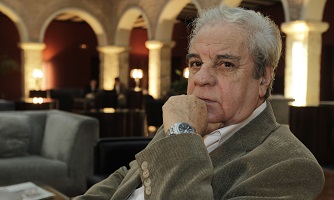
De Catalaanse schrijver Juan Marsé werd geboren op 8 januari 1933 in Barcelona. Zie ook alle tags voor Juan Marsé op mijn blog.

Uit: L'amant bilingue (Vertaald door Jean-Marie Saint-Lu)

“Le châssis rouillé de la Lincoln Continental 1941, sans roues ni moteur, gît au milieu du terrain vague, entouré d’herbes hautes que peigne le vent. C’est le squelette calciné d’un rêve. Personne dans le quartier ne se rappelle comment ni quand la fantastique automobile est arrivée jusque sur ces hauteurs, qui l’a abandonnée sur cette petite colline au nord-ouest de la ville, la condamnant ainsi à mourir à l’état de ferraille. Elle est toujours échouée dans ma mémoire au milieu d’une mer d’herbe et de boue noire, et entourée de tout un tas de choses mortes : des morceaux de poêles en fer, un fauteuil défoncé, des enfants au crâne tondu qui fument à croupetons, des piles de vieux pneus, ma mère, ivre, qui marche contre le vent, des sommiers oxydés et des petits matelas crasseux et tout déchirés.
J’écris ici ces souvenirs pour qu’ils soient sauvés de l’oubli. Ma vie a été une vraie merde, mais je n’en ai pas d’autre.
J’habite avec ma mère en haut de la rue Verdi, dans un vieux pavillon délabré avec un jardin, sur un versant contigu au parc Güell. Je vois la rue en pente, estompée par la bruine, comme un merveilleux toboggan au-dessus de la ville. Au coin; on peut voir la figure d’un jeune garçon, masquée d’un loup noir. C’est moi, douze ans, crâne tondu, brassard de deuil. L’enfant masqué regarde d’un côté et de l’autre, furtivement, puis traverse la rue. Je revois le quartier gris et apeuré, les chats faméliques, les petites terrasses, les draps blancs que fouette le vent. Au coin de l’autre rue, je rejoins trois garçons, Faneca, David et Jaime. Faneca mange une patate cuite, il a été faire une course pour madame Lola et il est passé par la cuisine de la pension Ynès, il y récupère toujours quelque chose à manger. Les rues sont si raides qu’elles ont des marches.
Mon quartier est si haut, si près des nuages, que la pluies’y arrête avant de tomber."


 1527345-78dcb53bf3f75b0cf7d9ce3a551efbcf.jpg
Juan Marsé (Barcelona, 8 januari 1933)


De Duitse schrijfster Waldtraut Lewin werd geboren op 8 januari 1937 in Wernigerode. Zie ook alle tags voor Waldtraut Lewin op dit blog.

Uit: Goethe

„Er nimmt sich den Dreispitz vom Haken, greift nach dem Spazierstock aus Ebenholz mit dem Silberknauf und verlässt fluchtartig seine Wohnung, um eine Runde um den Häuserblock zu machen. Inzwischen schlägt die Uhr der Kirche Mittag.
»Du hast es überstanden, Töchterchen! Gott sei gepriesen! Und es ist ein Junge, der Stammhalter der Goethes ist da!«
Anna Margarethe Textor streicht ihrer Tochter liebevoll das schweißnasse Haar unter die verrutschte Haube, während die Hebamme sich um das Kind bemüht. Hinter dem Bett sitzt in ihrem Lehnstuhl die alte Frau Goethe, die tapfer alles mit durchgestanden hat.
Elisabeth atmet schwer. Ihre Augen sind geschlossen und sie ist bleich von der Anstrengung, ihr Gesicht, sonst lustig und fast noch kindlich, mit der etwas aufgeworfenen Nase und dem kleinen Doppelkinn, wirkt jetzt schlaff und mitgenommen. Sie tastet nach der Hand ihrer Mutter. Es ist ruhig im Raum. Sehr ruhig. Allzu ruhig.
Plötzlich fährt die junge Frau hoch, öffnet angstvoll die Augen. »Warum – warum schreit es nicht?«
»Warte nur, alles wird gut!«
»Warum schreit es nicht??«
»Die Wehmutter tut ihr Bestes …«
»Gütiger Gott, ist es tot? Ist mein Kind tot?«
»Du musst dich in Gottes Ratschluss fügen!«
»Nein! Müllern, was ist mit meinem Kind?!«
Die Hebamme Anna Dorothea Müller versetzt dem Knaben klatschende Schläge auf das Hinterteil, rüttelt und schüttelt ihn. Was Elisabeth von ihrem Lager aus nicht sehen kann – die beiden Großmütter bemerken es: Das Kind ist bläulich angelaufen, »ganz schwarz und ohne Lebenszeichen«, wie später berichtet wird.“
 

 1527345-12bf4e25485d7e6bcb428356633cff2f.jpg
Waldtraut Lewin (Wernigerode, 8 januari 1937)


De Franstalige, Canadese dichter, schrijver en uitgever Gaston Miron werd geboren op 8 januari 1928 in Sainte-Agathe-des-Monts. Zie ook alle tags voor Gaston Miron op dit blog.


October

The man of the hour has the face of a scourged Christ­
and you, Land of Quebec, Mother Courage
in your long march you are swollen
with our painful infectious dreams
witht the uncounted wasting of bodies and souls

upland back there I was born
your son in the old grated mountains of the north
I hurt and ache with the bite of birth
while in my arms my youth blushes

here are my knees so that men may forgive us
we have allowed our fathers' spirit to be degraded
we have allowed the word's splendor to be debased
till we were ashamed and hating ourselves in our brothers
we didn't know how to bind our suffering's roots
to the universal pain in each man hollowed out

I will join my burning companions whose struggle
breaks and shares the bread of our common lot
in the quicksand huddles of grief

we will make you, Land of Quebec
a bed of resurrections
and a thousand lightning metamorphoses
of our leavens from which the future shall rise
and of our wills which will concede nothing
men shall hear your pulse beating through history
this is us winding through the October autumn
the russet sound of roe-deer in the sunlight
this is our future, clear

                                   and commited


Vertaald door Benoît Rheault


 1527345-1d43b194f8e8e09b14fb1a987826ffd7.jpeg
Gaston Miron (8 januari 1928 – 14 december 1996)


De Zuidkoreaanse dichter Ko Un werd op 8 januari 1933 (volgens anderen op 1 augustus 1933) in Kunsan geboren. Zie ook alle tags voor Ko Un op dit blog.


Leven doden:

ouders, kinderen, snij ze af!
Dit, dat en wat niet dat is
en verder wat dan ook,
snij het af met scherpe snede
van een mes in het donker. Weg ermee!
De volgende morgen liggen he mel en aarde
met dode dingen volgestouwd.
Die de hele dag begraven is ons werk
en zo een nieuwe wereld maken.


Vertaald door Boudewijn Walraven


In a Temple's Main Hall

Down with Buddha!
Down with handsome, well-fed Buddha!
What's he doing up there with that oh so casually
     elegant wispy beard?
Next, break down that painted whore of a crossbeam!
A dragon's head? What use is that, a dragon's head?
Tear down that temple, drive out the monks,
turn it all into dust and maggots!
Phaw!

Buddha with nothing, that's real Buddha!
Our foul-mouthed Seoul street-market mother,
     she's real Buddha!
We're all of us Buddhabuddhabuddha real!
Living Buddha? One single cigarette, now
there's real cool Holy buddha!

No, not that either.
For even supposing this world were a piece of cake,
with everyone living it up and living well,
in gorgeous high-class gear, with lots of goods produced
thanks to Korean-American technological collaboration,
each one able to live freely, with no robbing of rights,
Paradise, even!
Paradise, even!
utter Eden unequalled, plastered with jewels, still even then,
day after day people would have to change the world.
Why, of course, in any case,
day after day this world must all be overturned
and renewed to become a newly blooming lotus flower.
And that is Buddha.

Down for sure with those fifteen hundred years
rolling on foolish, rumbling along:
time fast asleep like stagnant water that stinks and stinks.


Vertaald door Brother Anthony


 1527345-99e266c2dbf1c93a81bc94a92fc65a12.jpg
Ko Un (Kunsan, 8 januari 1933)


De Italiaanse schrijver en politicus Leonardo Sciascia werd geboren in Racalmuto, Agrigento op 8 januari 1921. Zie ook alle tags voor Leonardo Sciascia op dit blog.

Uit: The Day of the Owl (Vertaald door Anthony Oliver)

“The only institution in the Sicilian conscience that really counts is the family; counts, that is to say, more as a dramatic juridical contract or bond than as a natural association based on affection. The family is the Sicilians’ State. The State, as it is for us, is extraneous to them, merely a de facto entity based on force; an entity imposing taxes, military service, war, police. Within the family institution the Sicilian can cross the frontier of his own natural tragic solitude and fit into a communal life where relationships are governed by hair-splitting contractual ties. To ask him to cross the frontier between family and State would be too much. In imagination he may be carried away by the idea of the State and may even rise to being Prime Minister; but the precise and definite code of his rights and duties will remain within the family, whence the step towards victorious solitude is shorter.”
(…)

“Scientists say that the palm tree line, that is the climate suitable to growth of the palm, is moving north, five hundred metres, I think it was, every year...The palm tree line...I call it the coffee line, the strong black coffee line...It's rising like mercury in a thermometer, this palm tree line, this strong coffee line, this scandal line, rising up throughout Italy and already passed Rome...”


 1527345-c89df89e2936649e5f4846b54554d58b.jpg
Leonardo Sciascia (8 januari 1921 - 20 november 1989)
Standbeeld in Racalmuto, Sicilië


Zie voor nog meer schrijvers van de 8e januari ook mijn blog van 8 januari 2011 deel 1 en eveneens deel 2.
Geschreven door Romenu om 18:36 Reageer op dit bericht

Frans Kellendonk, Dionne Brand, Sofi Oskanen, Henk van Zuiden, Shobhaa Dé, Marie Desplechin

De Nederlandse schrijver en vertaler Frans Kellendonk werd geboren in Nijmegen op 7 januari 1951. Zie ook alle tags voor Frans Kellendonk op dit blog.

Uit: De Nietsnut

“Ik vulde de schrale contouren van mijn herinnering met stukjes en beetjes van mezelf. [...] Het werd, al met al, volstrekt onduidelijk waar hij ophield en ikzelf begon. Het probleem was niet zozeer dat hij mijn creatuur werd - dat zou bovendien een heel goede manier zijn geweest om me van hem te ontdoen -, maar dat hij in dezelfde mate waarin ik bezit nam van hem, bezit van mij nam.
(…)

‘Alles wat ik van mijn vader weet is even belangrijk of onbelangrijk. Ik moet een vorm vinden voor zijn leven, ik moet er een verhaal van maken. Zoals het nu is verdwijnt het tussen de omstandigheden.’
(…)

“Mijn speurtocht had geen enkel nieuw gezichtspunt opgeleverd. Weliswaar bungelde dat charivari van voor- en toevallen nu aan een deugdelijke causale ketting, maar een bewijsstuk of redenering om in te brengen tegen de visies van Willem Kieft en mijn oom Richard had ik niet kunnen ontdekken. Over wat mijn vader had bezield had ik alleen wat kunnen fantaseren, of liever projecteren. Ik had wat rondgestruind in zijn schoenen, met als enig gevolg dat hij, wat mij betrof, nu even onwerkelijk was als het monster van Loch Ness of de Verschrikkelijke Sneeuwman. Alsof ik hem zelf had uitgevonden. En heus niet bij gebrek aan feiten. Feiten te over! Stille en kletsgrage getuigen, sporen, een vuilnisbelt vol sporen. [...] Een beetje detective zou daaruit allang een meedogenloos sluitende reconstructie hebben gewrocht, die geen enkele vraag onbeantwoord liet. Zo niet Frits Goudvis. Die zag alleen maar rommel en chaos, het gat in de hand van de werkelijkheid.”


 1526762-25714294b4b0c9cf12500eabf22a6ad6.jpg
Frans Kellendonk (7 januari 1951 – 15 februari 1990)


De Canadese dichteres en schrijfster Dionne Brand werd geboren op 7 januari 1953 op Trinidad. Zie ook alle tags voor Dionne Brand op dit blog.


Old Pictures of the New World (Fragment)

They show tourists rolling
on beaches in Barbados
someone told me that this island
is flat and inescapable
just right for american military transports,
this same someone said,
the topography of the island
lacking in gradient or thick forest
gives historical witness to the absence
of slave rebellions,
the slaves having nowhere to run
adopted an oily demeanour.
How history slaps us in the face,
using our own hand too.
They show an old
black man
beckoning racists back
to the way it was in Jamaica
a full page ad in the Chicago Sun Times
the slave catcher, the African one,
is a little analysed character,
(being amongst us
is it embarrassing to admit,)
but in contemporary times
whenever the IMF raises the price
on our heads,
whenever the americans want to buy
our skins,
they raise their hands so quickly,
it shocks us.
They show a little grenadian boy
eating an orange
with an american soldier
this is the new picture postcard
the new commercial for the new right
the new look for the new colonialism.


 1526762-d15871becf100970a9dec3852658ca8b.jpg
Dionne Brand (Trinidad, 7 januari 1953)


De Finse schrijfster Sofi Oskanen werd geboren in Jyväskylä op 7 januari 1977. Zie ook alle tags voor Sofi Oskanen op dit blog.

Uit: Purge (Vertaald door Lola Rogers)

“d never seen before, and then she would come back and tell them what Germany was really like.
They waved good-bye and Aliide watched as Hans’s hands wrapped around Ingel’s waist and moved toward her rear end. Their murmurs could be heard all the way into the front yard—Aliide pressed her teeth into the palm of her hand. Images of Ingel’s swelling waist and Hans’s body wrapped around Ingel’s tortured her endlessly, day or night, asleep or awake; she couldn’t see or hear anything else. None of the three of them took any notice of the furrows that were appearing on older people’s brows, furrows that didn’t go away but rather deepened, or how the girls’ father examined the sunset, searched it every evening from the edge of the field, smoking his pipe and staring at the horizon in search of a sign, studying the leaves of the maple tree, sighing as he read the newspaper or listened to the radio, then returned to the sound of the birds.
In 1940, the baby was born—Linda—and Aliide’s head felt like it was about to explode. Hans carried his daughter around, happiness shone in Ingel’s eyes, tears in Aliide’s, and Father’s eyes disappeared under worried wrinkles as he started to hoard gasoline and exchange his paper money for silver and gold. Waiting lines appeared in the village, the first lines ever in the country, and the shops were out of sugar. Hans didn’t warm to Aliide, even though she succeeded three times in putting her blood in his food, once an entire month’s worth. She should try pee the next time. Maria Kreel said it sometimes worked better.”


1526762-96a5a85723fe576a654d0057a1e740f9.jpg
Sofi Oskanen (Jyväskylä, 7 januari 1977)


De Nederlandse dichter, bloemlezer Henk van Zuiden werd geboren in Apeldoorn op 7 januari 1951. Zie ook alle tags voor Henk van Zuiden op dit blog.


Moeder Aarde, Vader Hemel

Dit leven is ons dierbaar―
Al stoppen we zelden voor zebra’s,
eren vogels met verloren broodpakketjes,
jagen honden het bos in,
wuiven kinderen ’s winters onverlicht
naar school en zeggen zonder blozen bij
geplaagde dieren ruimen in plaats van doden.
Dit leven is ons lief ―
We lopen mee in stille tochten, praten
modieus over zinvol en zinloos geweld en
trouw aan ons handelen uit naastenliefde
blijven we dieren offeren.
Vader Hemel, Moeder Aarde,
laat de gesneuvelde schepselen
na het barre bestaan op aarde
in een paradijs waar geen
zondig mens bij kan.
Amen


Toegenegen

Zij zijn zich aan het losmaken
van de omgeving waarin ze groot werden.
Zij zijn niemand anders dan voorheen,
voel maar: de vertrouwde hand, zoen op wang.
Alleen kunnen wij de wereld waarin ze
aankwamen niet vinden —
Oude en nieuwe boeken worden achter
elkaar in hun hoofden open en dicht geslagen.
Soms verhalen ze (hardop of fluisterend)
over iemand die je niet eerder kende.
Blijf luisteren, schuif dichterbij.
Laat ze niet alleen als ze ver dwalen
in andere taal die ze spreken.
Maak jezelf niet wijs dat er nog weinig
in hun leven toe doet, wandel genegen
hun naamloze dagen in en uit, totdat
een vlinder of engel de boeken sluit.


 1526762-b9e8179c50f48b582e9ae8709a9eda6f.jpg
Henk van Zuiden (Apeldoorn, 7 januari 1951)


De Indiase schrijfster en columniste Shobhaa Dé werd geboren op 7 januari 1947 in Maharashtra. Zie ook alle tags voorShobhaa Dé op dit blog.

Uit:Sethji

“Amrita’s urgent whisper pulled him out of his reverie. “Babuji, Babuji. Aapne suna nahin? Suraj has done something terrible.” Babuji held her at arm’s length. “He has done something to himself, right? That’s okay. If somebody had done something to him—then I would have been worried.” Sethji tried to embrace Amrita. He wasn’t looking for sexual satisfaction at that moment, just the indescribable comfort that proximity to her warm, supple body provided. Amrita pushed him away impatiently. “Babuji, please pay attention to what I’m saying, it’s serious. Suraj has raped someone. The girl could die, we have to do something.” Sethji stepped back, looked skywards and chuckled. “Bas? That’s all? Just a rape? Then why all this tamasha? Couldn’t this big news have waited till I finished my massage? You people are impossible. How many times do I have to remind you not to interrupt my maalish? That is the most important part of the day for me. What is all this rape nonsense?”
Amrita’s eyes were cold and expressionless as she led her father-in-law to the narrow cot. The same one she had often slept on, bearing his weight over her own strong muscled body. “Babuji, rape is a serious crime these days. Forget your own years in the village when a man could pick any woman from the field and force himself on her. Times have changed.
If even a single word about this gets out, Suraj could land in jail, and if the girl dies, then he has had it. Plus, you have had it too, Babuji. Rape is seen in a very poor light now. A criminal light. There are strong mahila samaj groups. You know that if Kavitaji hears about this incident, you will have to face hell. It’s such a critical day for you— think, Babuji, think carefully. Kavitaji will blow it all up at the meeting to disgrace you. Babuji, this incident could cost you the confidence vote. This is just what Kavitaji has been waiting for. If it is not handled immediately, Kavitaji wins, you lose!”


 1526762-0bed2d97364085091a82afdc064de5d4.jpg
Shobhaa Dé (Maharashtra, 7 januari 1947)


De Franse schrijfster Marie Desplechin werd geboren op 7 januari 1959 in Roubaix. Zie ook alle tags voor Marie Desplechin op dit blog.

 Uit: Sans moi

“Elle hausse les épaules.
Oh là là, qu’est-ce que tu veux que la personne qui s’est toujours fait violer aille tirer la sonnette chez les flics ? Pardon de vous déranger monsieur l’agent mais cette fois j’en ai marre… Sans compter les histoires de dope à la clé. Quand la personne est dans la merde, elle ne va pas faire la maligne au poste, elle ferme sa gueule.
Mais Olivia, dis-je faiblement, si la personne est mineure, la justice la protège.
Les gens comme toi, ils les protègent. Pas les autres, tu peux me croire. Ils n’auraient balancée au juge des enfants, le juge m’aurait fourré dans un foyer ou même dans une prison, tu ne sais pas comment c’est de se retrouver là-bas.
Mais tu n’avais pas d’éducatrice, pas de DDASS, personne pour te défendre ?
Olivia pouffe.
Si, il y en avait une, la pauvre, elle a fini par me jeter, j’étais insupportable, elle m’a dit : Je me fous de ce qui peut t’arriver, puisque tu ne veux rien écouter, démerde-toi toute seule, et voilà, rayée des listes, j’étais peinarde.
Elle a un visage crâne, des regards de défi. Elle se croit quitte, quand on fait l’andouille, il faut s’attendre à morfler, qui casse paie, pas besoin d’avoir inventer la poudre pour comprendre ça.
Elle n’a aucune idée de la justice, qui écoute les gens, pèse leurs fautes, établit leurs peines. Elle croit dans l’ordre qui aime les forts et réduit les imbéciles en purée. Elle est d’une ignorance crasse, elle ne connaît que la loi des voyous.“


 1526762-ec737332d0248301d1800019761914c3.jpg
Marie Desplechin (Roubaix, 7 januari 1959) 


Zie voor nog meer schrijvers van de 7e januari ook mijn blog van 7 januari 2011 deel 1 en ook deel 2 en eveneens deel 3.

Geschreven door Romenu om 19:48 Reageer op dit bericht

Meer van Romenu

↑ Terug naar de berichten