Naar de inhoud

Romenu

Over literatuur, gedichten, kunst en cultuur
akke.beakke.be

Berichten van 19 januari 2014 tot 20 januari 2014

Edward Hirsch, Nazim Hikmet, Guy Helminger, Sawako Ariyoshi, Batya Gur, Robert Olen Butler Jr.
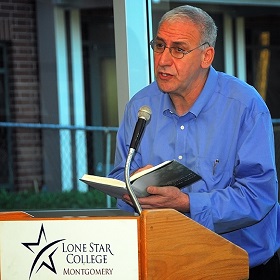
De Amerikaanse dichter en letterkundige Edward Hirsch werd geboren op 20 januari 1950 in Chicago. Zie ook alle tags voor Edward Hirsch op dit blog.


For the Sleepwalkers

Tonight I want to say something wonderful
for the sleepwalkers who have so much faith
in their legs, so much faith in the invisible

arrow carved into the carpet, the worn path
that leads to the stairs instead of the window,
the gaping doorway instead of the seamless mirror.

I love the way that sleepwalkers are willing
to step out of their bodies into the night,
to raise their arms and welcome the darkness,

palming the blank spaces, touching everything.
Always they return home safely, like blind men
who know it is morning by feeling shadows.

And always they wake up as themselves again.
That's why I want to say something astonishing
like: Our hearts are leaving our bodies.

Our hearts are thirsty black handkerchiefs
flying through the trees at night, soaking up
the darkest beams of moonlight, the music

of owls, the motion of wind-torn branches.
And now our hearts are thick black fists
flying back to the glove of our chests.

We have to learn to trust our hearts like that.
We have to learn the desperate faith of sleep-
walkers who rise out of their calm beds

and walk through the skin of another life.
We have to drink the stupefying cup of darkness
and wake up to ourselves, nourished and surprised.


 1534899-a4e966aafe94c38e056c38c222607f14.jpg
Edward Hirsch (Chicago, 20 januari 1950)


De Turkse schrijver Nazim Hikmet werd op 20 januari 1902 geboren in Thessaloniki. Zie ook alle tags voor Nazim Hikmet op dit blog.


The Faces Of Our Women

Mary didn't give birth to God.
Mary isn't the mother of God.
Mary is one mother among many mothers.
Mary gave birth to a son,
a son among many sons.
That's why Mary is so beautiful in all the pictures of her.
That's why Mary's son is so close to us, like our own sons.
The faces of our women are the book of our pains.
Our pains, our faults and the blood we shed
carve scars on the faces of our women like plows.
And our joys are reflected in the eyes of women
like the dawns glowing on the lakes.
Our imaginations are on the faces of women we love.
Whether we see them or not, they are before us,
closest to our realities and furthest.


You

You are my enslavement and my freedom
You are my flesh burning like a raw summer night
You are my country
You are the green silks in hazel eyes
You are big, beautiful and triumphant
And you are my sorrow that isn't felt
the more I feel it.


You Are My Drunkenness

You are my drunkenness...
I did not sober up, as if I can do that;
I don't want to anyway.
I have a headache, my knees are full of scars
I am in mud all around
I struggle to walk towards your hesitant light.


1534899-3109574625cf3d04c39571192d4fe28f.jpg
Nazim Hikmet (20 januari 1902 – 3 juni 1963)


De Duitse (Luxemburgse) schrijver Guy Helminger werd geboren op 20 januari 1963 in Esch-sur-Alzette. Zie ook alle tags voor Guy Helminger op dit blog.


nächtliches

er sei nämlich astronome,
und die energie
hocke in schwarzen löchern.

die prognosen?
pillenesser und götter.
brüste.
gräten und computer im netz
oder das blutende huhn,
der schächer im schaumbad.

des nachts.
abwechselnd gegen das wellblech gepinkelt,
fugenartig.


neckargedicht

fragmente im nebel.
eisschicht.

am ufer
glitten frachter
durch braune schneepfützen.

äste fingen vogelleiber:
möwen.

ein unbekannter
sprang von der brücke
in den fluß.


 1534899-fa610e95ea2ac49e6d90d295540e33d3.jpg
Guy Helminger (Esch-sur-Alzette, 20 januari 1963)


De Japanse schrijfster Sawako Ariyoshi werd geboren op 20 januari 1931 in Wakayama. Zie ook alle tags voor Sawako Ariyoshi op dit blog.

 The River Ki (Vertaald door Mildred Tahara)

“The two palanquin bearers, ordered from Wakayama City, gave a loud shout as they lifted the palanquin in which Hana was seated and carried it aboard the boat moored at the landing. They set the palanquin down in the middle of the boat and stationed themselves at the stern.
"She's a beauty!" said one of the men.
"A little doll," whispered the other. In the meantime the boatmen were calling out one to another.
"All set?"
"All right!"
The bride's boat left the shore. The go-betweens sat side by side like mandarin ducks in the lead boat, which had been loaded to capacity with presents for relatives and gifts sent in return for engagement presents. Toku waited on her mistress in the boat carrying Hana's palanquin, the second in the procession. Toku was fifty years old, and her face, heavily made up for the occasion, was tense. Though Ki province is relatively warm, the air over the river this early March morning chilled the women's skin, even though they were dressed in crested kimonos of silk pongee with matching sashes.“


 1534899-8c9def14371c3e9e02f2b95ea8b0e579.jpg
Sawako Ariyoshi (20 januari 1931 – 30 augustus 1984)
Cover


De Israëlische schrijfster, journaliste en literatuurwetenschapster Batya Gur werd geboren op 20 januari 1947 in Tel Aviv. Zie ook alle tags voor Batya Gur op dit blog.

Uit: Murder in Jerusalem

“Schreiber's smooth, large, white face was shining when he lifted his head from the camera lens. Benny Meyuhas touched his shoulders and moved him gently aside in order to get a peek through the lens, and then he too saw the figure standing at the edge of the roof, near the railing, holding the hem of her white gown in her hand, her drawn and pale face turned to the dark sky. He lifted his head and pointed at the moon.
Rain had fallen all week, especially at night, and even though the weather forecasters had noted repeatedly that these rains were benefi-cial, welcome, appearing now in mid-December as the harbinger of a wonderful winter, Benny Meyuhas was beside himself; it seemed to him that the head of the Production Department himself had ordered this rain in order to prevent him from the night filming of Iddo and Eynam, or, as he put it, "to finish up already with that thing that's eaten up our entire budget for Israeli drama." Just when Benny had lost all hope of completing these last scenes, which were being filmed in secret, if not absolutely underground due to the threat-which no crew member had actually mentioned but everyone knew-that Matty Cohen, head of production, could at any moment appear on the set and put a stop to the whole project, the rain suddenly let up and the moon appeared, as if it had consented to perform its role and cast light on the path of Gemullah the somnambulist, the heroine of Agnon's story, as she sleepwalked at the edge of the roof and sang songs from her childhood.”


 1534899-870e4c9b2610503d1cb5bcc7ff2cff66.jpg
Batya Gur (20 januari 1947 – 19 mei 2005)


De Amerikaanse schrijver Robert Olen Butler Jr. Werd geboren op 20 januari 1945 in Granite City, Illinois. Zie ook alle tags voor Robert Olen Butler Jr. op dit blog.

Uit: The Star of Istanbul

“I made another step to the side and another and I could see her again, in profile now, her long, straight nose beautifully at odds with the usual standards of beauty of this age. I thought: I bet her feet are large too and her hands and she is all the more beautiful for defying this world’s conventions in these details. And I was still entranced by her nose, absorbing even the precise curve where its bridge met her brow, a perfect fit, I fancied, for my fingertip, when she said, “I am a film actress.”
She’d hardly finished the sentence when one reporter leaped in before another hubbub of questions could begin. “Miss Bourgani,” he said, “the world is at war.” She turned her face instantly to him—in my general direction as well—and her dark eyes riveted him and his voice snagged as if he were suddenly beginning to choke. He managed to stammer a couple of meaningless vowel sounds and then he fell silent. The other reporters all laughed. But it was a sympathetic laugh. Hers was a face that could stop a thousand ships.
“Yes?” she said, encouraging him to go on with his question, giving the impression that she’d spoken softly, though I could hear her clearly.“Miss Bourgani,” the reporter began again. “In light of the German threats and this being a British liner, are you afraid to be traveling on the
Lusitania?”


 1534899-d2fca829557f36180649c377f9b73350.jpg
Robert Olen Butler Jr. (Granite City, 20 januari 1945)


Zie voor nog meer schrijvers van de 17e januari ook mijn blog van 20 januari 2013 deel 1 en ook deel 2 en eveneens deel 3.

Geschreven door Romenu om 18:24 Reageer op dit bericht

Stefan Popa

De Nederlandsche schrijver en journalist Stefan Popa werd op 20 januari 1989 geboren in Vleuten als zoon van een Roemeense vader en Nederlandse moeder, Hij bezocht het Ichthus College in Dronten en volgde een opleiding in de journalistiek aan de Hogeschool Windesheim in Zwolle.Hij publiceert regelmatig in onder andere De Volkskrant en Trouw. In 2012 werd hij benaderd door een literair agent die zijn weblog had gelezen. Dat leidde in 2014 uiteindelijk tot zijn debuutroman “Verdwenen grenzen.”

Uit: Verdwenen grenzen

“‘Remus sloeg een bres in de blauwe mistbank van goedkope sigarettenrook die hem tegemoet walmde toe hij La Nisip binnenstrompelde. Alsof hij zich eigenhandig een weg door het IJzeren Gordijn had gevochten, zo stond hij in de deuropening van het koffiehuis. Na herhaaldelijk piekeren had hij alle moed verzameld en was het gebouwtje binnengegaan. De discussie in het koffiehuis viel stil. Remus rilde. De aanwezigen keurden hem, hij voelde hun ogen graven naar ziel, waarin inmiddels alles was veranderd.’


 1572102-35e8da48e3588aa5a0f421333be85fac.jpg
Stefan Popa (Vleuten, 20 januari 1989)

Geschreven door Romenu om 00:00 Reageer op dit bericht

Julian Barnes, Edgar Allen Poe, Edwidge Danticat, Gustav Meyrink, Eugénio de Andrade

De Engelse schrijver Julian Barnes werd geboren op 19 januari 1946 in Leicester. Zie ook alle tags voor Julian Barnes op dit blog.

Uit: The Sense of an Ending

„I remember, in no particular order:
– a shiny inner wrist;
– steam rising from a wet sink as a hot frying pan is laughingly tossed into it;
– gouts of sperm circling a plughole, before being sluiced down the full length of a tall house;
– a river rushing nonsensically upstream, its wave and wash lit by half a dozen chasing torchbeams;
– another river, broad and grey, the direction of its flow disguised by a stiff wind exciting the surface;
– bathwater long gone cold behind a locked door. This last isn’t something I actually saw, but what you end up remembering isn’t always the same as what you have witnessed.
We live in time – it holds us and moulds us – but I’ve never felt I understood it very well. And I’m not referring to theories about how it bends and doubles back, or may exist elsewhere in parallel versions. No, I mean ordinary, everyday time, which clocks and watches assure us passes regularly: tick-tock, click-clock. Is there anything more plausible than a second hand? And yet it takes only the smallest pleasure or pain to teach us time’s malleability. Some emotions speed it up, others slow it down; occasionally, it seems to go missing – until the eventual point when it really does go missing, never to return.

***

I’m not very interested in my schooldays, and don’t feel any nostalgia for them. But school is where it all began, so I need to return briefly to a few incidents that have grown into anecdotes, to some approximate memories which time has deformed into certainty. If I can’t be sure of the actual events any more, I can at least be true to the impressions those facts left. That’s the best I can manage.
There were three of us, and he now made the fourth. We hadn’t expected to add to our tight number: cliques and pairings had happened long before, and we were already beginning to imagine our escape from school into life. His name was Adrian Finn, a tall, shy boy who initially kept his eyes down and his mind to himself. For the first day or two, we took little notice of him: at our school there was no welcoming ceremony, let alone its opposite, the punitive induction. We just registered his presence and waited.”


 1534281-7af61140867206438d45ecb40ee98268.jpg
Julian Barnes (Leicester, 19 januari 1946)


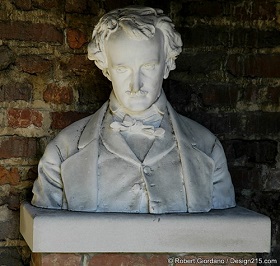
De Amerikaanse dichter en schrijver Edgar Allen Poe werd geboren op 19 januari 1809 in Boston. Zie ook alle tags voor Edgar Allen Poe op dit blog


Sancta Maria

Sancta Maria! turn thine eyes -
Upon the sinner's sacrifice,
Of fervent prayer and humble love,
From thy holy throne above.
At morn - at noon - at twilight dim -
Maria! thou hast heard my hymn!
In joy and wo - in good and ill -
Mother of God, be with me still!

When the Hours flew brightly by,
And not a cloud obscured the sky,
My soul, lest it should truant be,
Thy grace did guide to thine and thee;

Now, when storms of Fate o'ercast
Darkly my Present and my Past,
Let my Future radiant shine
With sweet hopes of thee and thine!


Sonnet- Silence

There are some qualities- some incorporate things,
That have a double life, which thus is made
A type of that twin entity which springs
From matter and light, evinced in solid and shade.
There is a two-fold Silence- sea and shore-
Body and soul. One dwells in lonely places,
Newly with grass o'ergrown; some solemn graces,
Some human memories and tearful lore,
Render him terrorless: his name's "No More."
He is the corporate Silence: dread him not!
No power hath he of evil in himself;
But should some urgent fate (untimely lot!)
Bring thee to meet his shadow (nameless elf,
That haunteth the lone regions where hath trod
No foot of man,) commend thyself to God!


 1534281-4d934d6de2d9d92b197bff23cdca9caf.jpg
Edgar Allen Poe (19 januari 1809 – 7 oktober 1849)
Borstbeeld in het Poe museum in Richmond


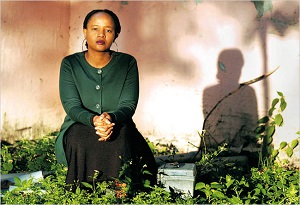
De Amerikaanse schrijfster Edwidge Danticat werd geboren in Port-au-Prince op Haïti op 19 januari 1969. Zie ook alle tags voor Edwidge Danticat op dit blog.

Uit: The Dew Breaker

“My creative eye finds Manager Salinas’ office gaudy. The walls are covered with orange-and-green wallpaper, briefly interrupted by a giant gold leaf–bordered print of a Victorian cottage that resembles the building we’re in.
Patting his light green tie, which brings out even more the hallucinatory shade of his eyes, Manager Salinas reassuringly tells me, "Officer Bo and I will do our best."
We start out with a brief description of my father: "Sixty-five, five feet eight inches, one hundred and eighty pounds, with a widow’s peak, thinning salt-and-pepper hair, and velvet-brown eyes—"
"Velvet?" Officer Bo interrupts.
"Deep brown, same color as his complexion," I explain.
My father has had partial frontal dentures since he fell off his and my mother’s bed and landed on his face ten years ago when he was having one of his prison nightmares. I mention that too. Just the dentures, not the nightmares. I also bring up the blunt, ropelike scar that runs from my father’s right cheek down to the corner of his mouth, the only visible reminder of the year he spent in prison in Haiti.
"Please don’t be offended by what I’m about to ask," Officer Bo says. "I deal with an older population here, and this is something that comes up a lot when they go missing. Does your daddy have any kind of mental illness, senility?"
I reply, "No, he’s not senile."
"You have any pictures of your daddy?" Officer Bo asks.
My father has never liked having his picture taken. We have only a few of him at home, some awkward shots at my different school graduations, with him standing between my mother and me, his hand covering his scar. I had hoped to take some pictures of him on this trip, but he hadn’t let me.”


 1534281-0c90eb9ca767b3b31d4f3683bd72eeee.jpg
Edwidge Danticat (Port-au-Prince, 19 januari 1969)


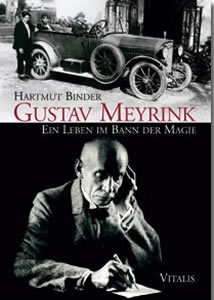
De Oostenrijkse schrijver Gustav Meyrink werd op 19 januari 1868 te Wenen geboren. Zie ook alle tags voor Gustav Meyrink op dit blog.

Uit: Der Engel vom westlichen Fenster

„Sonderbares Gefühl: das verschnürte und versiegelte Eigentum eines Toten in der Hand zu halten! Es ist, als gingen feine, unsichtbare Fäden von ihm aus, zart wie Spinnengewebe, und leiteten hinüber in ein dunkles Reich.
Die Führung des oft verschlungenen Spagats, die sorgsame Faltung des blauen Umschlagpapiers darunter: das alles zeugt stumm vom zielvollen Denken und Handeln eines Lebendigen, der den Tod kommen fühlte. Der darum Briefe, Notizen, Schatullen, angefüllt mit einst Wichtigem, nun aber bereits Gestorbenem, vollgesogen mit Erinnerungen, die lange jetzt verweht sind, sammelt, ordnet, bündelt mit halben Gedanken an einen zukünftigen Erben, einen ihm fast fremden, fernen Menschen – an mich –, der von seinem Hingang wissen und ihn erfahren wird, wenn das geschlossene Bündel, verschollen im Reiche der Lebenden, den Weg in fremde Hand gefunden hat.
Die wuchtigen Rotsiegel meines Vetters John Roger sinds, die es verschließen, und sie tragen das Wappen meiner Mutter und ihrer Familie. Lang genug hatte dieser Mutter-Brudersohn bei Basen und Tanten schon 'der Letzte seines Stammes' geheißen, und dieses Wort klang in meinen Ohren immer wie ein feierlicher Titel hinter seinem ohnedies fremdartigen Namen, wenn es mit sonderbarem, ein wenig lächerlichen Stolz ausgesprochen wurde von den dünnen, verschrumpften Lippen, die rundum die letzten waren, einen abgestorbenen Stamm den Rest seines Lebens aushüsteln zu lassen.
Dieser Stammbaum – so wuchert das heraldische Wortbild weiter in meiner grübelnden Phantasie – hat seltsam verknorrte Äste über ferne Länder gestreckt. In Schottland hat er gewurzelt und überall in England geblüht; mit einem der ältesten Geschlechter in Wales soll er blutsverwandt gewesen sein. Kräftige Schossen faßten Boden in Schweden, in Amerika, zuletzt in Steiermark und in Deutschland. Überall sind die Zweige abgestorben; in Großbritannien verdorrte der Stamm. Einzig bei uns hier im südlichen Österreich schoß ein letzter Ast in Saft: mein Vetter John Roger. Und diesen letzten Ast hat – England erwürgt!”


 1534281-e594d91dde66f9e1c668aaeb5ba9a012.jpg
Gustav Meyrink (19 januari 1868 – 4 december 1932)
Cover biografie


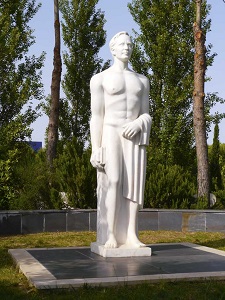
De Portugese dichter Eugénio de Andrade (eig. José Fontinhas) werd geboren op 19 januari 1923 in Póvoa de Atalaia. Zie ook alle tags voor Eugénio de Andrade op dit blog.


Goats

Wherever the earth is crag and scrub, the goats are there—the black ones, girlishly skipping, leaping their little leaps from rock to rock. I’ve loved their nerve and frisk since I was small.

Once my grandfather gave me one of my own. He showed me how I could serve myself when I got hungry, from the full-feeling bags there like warmish wineskins, where I’d let my hands linger some before bringing my mouth close, so the milk wouldn’t go to waste on my face, my neck, even my naked chest, which did happen sometimes, who knows if on purpose, my mind dwelling all the while on the savory-smelling vulvazinha. I called her Maltesa; she was my horse; I could almost say she was my first woman.


Vertaald door Atsuro Riley


We zijn groene bladeren waarin vogels...

We zijn groene bladeren waarin vogels
slapen van schaduw en eenzaamheid.
We zijn slechts bladeren en hun geruis.
Onzeker, niet in staat om bloem te zijn,
tot de bries ons beroert en doet trillen.
Waardoor bij elk van onze bewegingen
iedere vogel een ander wezen wordt.


Vertaald door Toon Cappuyns en Germain Droogenbroodt


 1534284-7f68e61f7cd5134fcfe11057166a7fb2.jpg
Eugénio de Andrade (19 januari 1923 – 13 juni 2005)
Beeld door Francisco Simões in het Parque dos Poetas in Oeiras


Zie voor nog meer schrijvers van de 19e januari ook mijn vorige blog van vandaag.

Geschreven door Romenu om 18:02 Reageer op dit bericht

Patricia Highsmith, Marie Koenen, Thomas Gsella, Paul-Eerik Rummo

De Amerikaanse schrijfster Patricia Highsmith werd geboren als Mary Patricia Plangman in Fort Worth (Texas) op 19 januari 1921. Zie ook alle tags voor Patricia Highsmith op dit blog.

Uit: The Talented Mr. Ripley

'I wasn't quite sure you were Tom Ripley,' Mr Greenleaf said. 'I've seen you only once before, I think. Didn't you come up to the house once with Richard?'
'I think I did.'
'The Schrievers gave me a description of you, too. We've all been trying to reach you, because the Schrievers wanted us to meet at their house. Somebody told them you went to the Green Cage bar now and then. This is the first night I've tried to find you, so I suppose I should consider myself lucky.' He smiled. 'I wrote you a letter last week, but maybe you didn't get it.'
'No, I didn't.' Marc wasn't forwarding his mail, Tom thought. Damn him. Maybe there was a cheque there from Auntie Dottie. 'I moved a week or so ago,' Tom added.
'Oh, I see. I didn't say much in my letter. Only that I'd like to see you and have a chat with you. The Schrievers seemed to think you knew Richard quite well.'
'I remember him, yes.'


 1534270-6b35543e7008519235ded01c60f0be58.jpg
Scene uit de gelijknamige film met Matt Damon, Jude Law en Gwyneth Paltrow, 1999


'But you're not writing to him now?' He looked disappointed.
'No. I don't think I've seen Dickie for a couple of years.'
He's been in Europe for two years. The Schrievers spoke very highly of you, and thought you might have some influence on Richard if you were to write to him. I want him to come home. He has responsibilities here -- but just now he ignores anything that I or his mother try to tell him.'
Tom was puzzled. 'Just what did the Schrievers say?'
'They said -- apparently they exaggerated a little -- that you and Richard were very good friends. I suppose they took it for granted you were writing him all along. You see, I know so few of Richard's friends any more--' He glanced at Tom's glass, as if he would have liked to offer him a drink, at least, but Tom's glass was nearly full.


 1534270-2ddeb990d48ce6797bee8b7e9da15cee.jpg
Patricia Highsmith (19 januari 1921 - 4 februari 1995)


De Nederlandse dichteres en schrijfster Marie Koenen werd geboren in ’s-Hertogenbosch op 19 januari 1879. Zie ook alle tags voor Marie Koenen op dit blog.

Uit: De moeder Gods in de heg

“De karreweg van Orzel begon daar berg-op te klimmen en splitste zich juist bij dezen bongerdhoek in twee smalle paden, die tusschen de hooge meidoornheggen verdwenen.Drie wilgen, oude holle knoesten, sloten de punt van den appelboomgaard af, en de twee heggen vonden tusschen die holle knoesten hun einde en aanvang met warrig groeisel van dorens, takken en ranken.
Het was op dezen vroeg- Maartschen morgen een ruige wildernis aan dien driesprong. De wilgen leken in hun na-wintersche naaktheid niet meer dan molmige schorsmantels, waaruit de levende boom was weggekuierd.
De warrige dorre meidorens zelf waren overwoekerd door het doode groeisel van hop en lierelei, van winden en clematis, zwart-vergane ranken over het stekelig hout.
Toch begonnen blad- en bloemknoppen van de haag reeds glimmend bruin te zwellen, en in den oplichtenden dag blonk en glinsterde aan elken doorn en aan elk dor blad, aan elke doode bloem of vergane vrucht of leeg zaadhulsel, een parel, dien de nachtnevel daar had nagelaten.
Melia Santen, de eenige dochter van de hoeve Hoogvelt, was juist berg-af bij den driesprong gekomen op haar dagelijkschen weg naar de kerk van Haelem, die nog een half uur verder lag. Zij zag het parelig geglinster in de dorens, dacht aan lentedauw en Meischen regen, en het viel haar ineens bij, dat tusschen het wakbruine overjaarsche bladstrooisel aan den voet van heg en wilgen, wel reeds de eerste viooltjes moesten bloeien.
Het was de tijd. Tegelijk meende Melia ze te ruiken, en meteen bukte ze zich op de knieën, legde haar dik kerkboek met de zilveren sloten op den grond, en begon met de vingers voorzichtig in de vochtige bladers te woelen. Frisch ontsproten hadden juist de eerste kleine malsch groene blaadjes aan de violenstruikjes zich opengeplooid en diep gebogen en verscholen zaten de bloemknopjes er tusschen. Na lang geduldig turen vond Melia twee ontloken bloemekes, die ze huiverig-behoedzaam afplukte en tusschen den top van duim en wijsvinger hield. Kort gesteeld waren ze, en hun sombere kopjes hielden ze als verlegen neergewend. Lichtschuw en droefgeestig, overdropen van dauw, leken ze nu tastbare tranen."


 1534270-9db5ded3756569aee60b834f82fb3927.jpg
Marie Koenen (19 januari 1879 - 11 juli 1959)
Het oude station van ’s-Hertogenbosch van Eduard Cuypers uit 1896.


De Duitse dichter en satiricus Thomas Gsella werd geboren op 19 januari 1958 in Essen. Zie ook alle tags voor Thomas Gsella op dit blog.


Darmstadt

Das schönste Ding im Menschen heißt?
Ein Tipp: Es ist kein kurzes.
Es ist der Grund, aus dem du scheißt,
Und Vater deines Furzes.
Das schönste Ding des
Menschen ist?
Ein Tipp: das Werk der Ahnen.
Sie ist der Grund, auf dem du bist,
und Mutter des Urbanen.
Die schönste Stadt der
Menschheit klingt?
Ein Tipp: wie Scheißfurzhausen.
Aus diesem Grund lass unbedingt
in Darmstadt einen sausen!


Kassel

Das Leben ist nicht wunderbar,
Und hier ist es unsäglich.
Hier sagt man „Frohes neues Jahr“
Vor lauter Unglück täglich.
Im Winter darben Mensch und Schwein
Mit Pommes und Polenta.
Im Sommer fallen Spinner ein
Und machen documenta.
Die City wie aus Hass gerührt,
Der Bahnhof ein Schlamassel.
Leb' du zur Not in Ulm und Fürth,
Doch nie, niemals in Kassel.


 1534270-65ecac154ed3bceed0c509f1f11ea5ff.jpg
Thomas Gsella (Essen,19 januari 1958)


De Estlandse dichter, schrijver en politicus Paul-Eerik Rummo werd geboren op 19 januari 1942 in Tallinn. Zie ook alle tags voor Paul-Eerik Rummo op dit blog.


Come and be close to my joys

Come and be close to my joys
through the stunted shrubs of my sorrow

Though the gravalled road
        scrapes your feet
Come and be close to my joys

Yesterday I was a child
it was simple then

I saw laughter and a merry heart
smooth paths, even roads.

Today the sun was born
        as yesterday
but I had grown older

In the shadow of laughter
       I saw tears
Behind a steady heart
       I saw doubtings

Tomorrow I will become a child again
it is not simple now

I want to see laughter
       in the shadow of tears
Behimd doubting a steady heart

When the gravelled road
       scrapes your feet
come and be close to my joys

Come and be close to my joys
through the stunted shrubs of my sorrow.


Vertaald door Tiina Kirss


 1534270-20f188eff8954b509bedc8e232a8f0b2.JPG
Paul-Eerik Rummo (Tallinn, 19 januari 1942)

Geschreven door Romenu om 17:46 Reageer op dit bericht

Meer van Romenu

↑ Terug naar de berichten