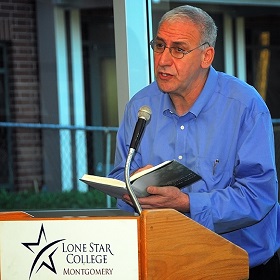
Louis Menand, Ludwig Thoma, Ludwig Jacobowski, Kristín Marja Baldursdóttir, Egon Friedell, Imre Madách

De Amerikaanse schrijver en letterkundige Louis Menand werd geboren op 21 januari 1952 in Syracuse, New York. Zie ook alle tags voor Louis Menand op dit blog.
Uit: The Metaphysical Club
„Oliver Wendell Holmes, Jr., was an officer in the Union Army. He stood six feet three inches tall and had a soldierly bearing. In later life, he loved to use military metaphors in his speeches and his conversation; he didn't mind being referred to good-naturedly as Captain Holmes; and he wore his enormous military mustaches until his death, in 1935, at the age of ninety-three. The war was the central experience of his life, and he kept its memory alive. Every year he drank a glass of wine in observance of the anniversary of the battle of Antietam, where he had been shot in the neck and left, briefly behind enemy lines, for dead.
But Holmes hated the war. He was twenty years old and weighed just 136 pounds at the time of his first battle, at Ball's Bluff, where he was shot through the chest. He fought bravely and he was resilient, but he was not strong in a brute sense, and as the war went on the physical ordeal was punishing. He was wounded three times in all, the third time in an engagement leading up to the battle of Chancellorsville, when he was shot in the foot. He hoped the foot would have to be amputated so he could be discharged, but it was spared, and he served out his commission. Many of his friends were killed in battle, some of them in front of his eyes. Those glasses of wine were toasts to pain.
Holmes recovered from the wounds. The effects of the mental ordeal were permanent. He had gone off to fight because of his moral beliefs, which he held with singular fervor. The war did more than make him lose those beliefs. It made him lose his belief in beliefs. It impressed on his mind, in the most graphic and indelible way, a certain idea about the limits of ideas. This idea he stuck to, with a grimness and, at times, a cynicism that have occasionally repelled people who have studied his life and thought. But it is the idea that under lies many of the opinions he wrote, long after the war ended, as an associate justice on the United States Supreme Court. To understand the road Holmes had to travel in order to write those opinions, we have to go back to one of the worlds the Civil War made obsolete, the world of prewar Boston.”
Louis Menand (Syracuse, 21 januari 1952)
De Duitse dichter en schrijver Ludwig Thoma werd geboren op 21 januari 1867 in Oberammergau. Zie ook alle tags voor Ludwig Thoma op dit blog.
Gewohnheit
Als Kain den Abel umgebracht,
Zum Himmel dampft das Blut.
Es ward ein starker Lärm gemacht,
Und Gott geriet in Wut.
Die Engel wurden watschelnass,
So haben sie geflennt.
Und Gott hat Kain in grimmen Hass
Ein Zeichen aufgebrennt.
Dann jagte man den Frevler fort;
Fluch folgte ihm und Hohn.
Man sieht, der erste Brudermord
Erregte Sensation.
Doch man gewöhnt sich jetzt zuletzt
Auch an ein solches Ding;
Worüber man sich erst entsetzt,
Schätzt später man gering.
Man hat hernach im großen Stil
Die Menschen umgebracht.
Ein Tausend um das andre fiel.
Das wird noch heut' gemacht.
Jedoch von oben hört man nichts,
Und keine Stimme tönt,
Die Stimme, die einst angesichts
Des ersten Mords gedröhnt.
Im Gegenteil, der Priester fleht
Und bittet Gott um Sieg,
Wenn es zum großen Morden geht.
Und heilig heißt der Krieg.
Sexuelle Aufklärung
Der alte Storch wird nun begraben.
Ihr Kinder lernt im Unterricht,
Warum wir dies und jenes haben,
Und es verbreitet sich das Licht.
Zu meiner Zeit, du große Güte!
Da herrschte tiefe Geistesnacht.
Man ahnte manches im Gemüte
Und hat sich selber was gedacht.
Mich lehrte dieses kein Professer;
Nur eine gute, dicke Magd
Nahm meine Unschuld unters Messer
Und machte auf dieselbe Jagd.
Ihr Unterricht war nicht ästhetisch,
Im Gegenteil, sehr weit entfernt.
Und doch, wenn auch nicht theoretisch,
Ich hab' es ziemlich gut gelernt.

Ludwig Thoma (21 januari 1867 – 26 augustus 1921)
Bij zijn huis in Rottach-Egern
De Duitse dichter en schrijver Ludwig Jacobowski werd geboren op 21 januari 1868 in Strzelno (Strelno). Zie ook alle tags voor Ludwig Jacobowski op dit blog.
Eine Seele
In deinen Lieder lebt mein Leben,
Durch meine Lieder strömt dein Blut.
Ein unerschöpftes Nehmen, Geben
Und eine unerschöpfte Glut.
Ein Lächeln nur und nur e i n Leiden,
Du bist in mir und ich in dir.
Und kommt das Glück, es winkt uns beiden,
Und keiner bettelt: Komm zu mir!
Und wenn mein Blick vom letzten Ziele
Ins fremde Land hinüberrinnt,
Du fühlst es mit, wie ich es fühle,
Weil wir so ganz verkettet sind.
Schwert und Rosen
Was tust, mein Liebster, bist du starr wie Stahl,
Auf dem die Sonnenblitze schmerzlich blinken? —
Vor deinem Schwerte wird mein Blick nicht fahl,
Und will es auch in meinem Blut versinken.
Denn sieh — mein Lächeln werf’ ich auf die Schneide,
Und liebe Wünsche fallen aus der Hand
Gleich Rosen, die in überreifer Freude
Die schwersten Düfte für sich losgebrannt.
Einst wird dein Stahl im Blut der Blätter liegen,
Dann ruht veratmend deine stumme Kraft,
Und lachend über Schwert und Schärfe siegen
Die roten Rosen meiner Leidenschaft.
Mit einem Buch
Dies Büchlein ist ein Lorbeerhaufen,
Den die Begeist’rung üppig trieb.
Du, Liebste, lass den Dichter laufen,
Und hab’ nur mich, den Menschen, lieb.

Ludwig Jacobowski (21 januari 1868 – 2 december 1900)
De IJslandse schrijfster Kristín Marja Baldursdóttir werd geboren op 21 januari 1949 in Hafnarfjörður. Zie ook alle tags voor Kristín Marja Baldursdóttir op dit blog.
Uit: Karitas (Vertaald door Henry Kiljan Albansson)
“La corde à linge chanta dans l'air glacé lorsque les soeurs la touchèrent, les tabliers qu'elles y avaient étendus à sécher s'étaient blottis les uns contre les autres dans le froid, ils étaient entortillés et raidis par le gel. Venu de l'océan, le vent du nord s'était acharné sur eux toute la nuit et les soeurs essayaient de deviner ses méthodes, avait-il d'abord soufflé du nord, puis de l'est et achevé de les tordre par de longues bourrasques du sud ou bien avait-il opéré en sens inverse ? Elles regardèrent autour d'elles dans toutes les directions comme si elles espéraient voir le vent lui-même en chemin avec une tête et une queue mais il s'en était allé par-delà les abruptes montagnes bien avant l'aube. Seul restait le gel qui crissait sous leurs pieds.
La servante sortit dans la cour pour chercher l'aiguille à tricoter qu'elle avait perdue dans son dernier accès de fureur, aperçut le linge sur la corde et dit, après avoir tapoté celui-ci du doigt et poussé un cri : vous serez liées ensemble comme ces tabliers toute votre vie, mes petites agnelles. Et elle bêla dans l'air glacé du matin tout en cherchant son aiguille. Leur mère sortit à son tour. Ne dit pas un seul mot en observant l'entortillement de tabliers. Resserra seulement un peu mieux le châle de laine sur sa poitrine et plissa les yeux comme on le fait par un froid vif. Avec une expression froide, elle laissa glisser son regard du linge gelé jusqu'à l'anse, courte, large et agitée, scruta l'océan et le large comme si elle voulait faire jaillir leur père des profondeurs par magie, se retourna à demi, regarda d'un air lugubre la montagne couverte de neige qui pouvait n'importe quand et comme ça lui chantait se débarrasser de son lourd fardeau juste pour ensevelir les hommes et les bêtes, et finalement, le dos tourné à l'océan, elle laissa courir son regard sur la vallée et jusqu'à la colline où habitait l'esprit maléfique.”

Kristín Marja Baldursdóttir (Hafnarfjörður, 21 januari 1949)
De Oostenrijkse schrijver en kunsthistoricus Egon Friedell werd op 21 januari 1878 in Wenen geboren. Zie ook alle tags voor Egon Friedell op dit blog.
Uit: Kleine Porträtgalerie (Novalis)
„Friedrich von Hardenberg, der als Künstler Novalis hieß, darf als einer der allercharakteristischsten Repräsentanten seiner Zeit gelten. Seine Philosophie tritt erst in ihre volle Beleuchtung, wenn sie als Extrakt und Type ihres Zeitalters verstanden wird. Wir müssen daher zunächst versuchen, uns diese Periode in ihren allgemeinsten historischen Zügen kurz zu vergegenwärtigen.
(...)
Hardenbergs Leben umfaßt die drei letzten Jahrzehnte des achtzehnten Jahrhunderts: die Zeit der großen Revolutionen. Auf den nordamerikanischen Freiheitskrieg und die Gründung der Vereinigten Staaten war die Französische Revolution gefolgt, die durch die imposante Ferozität der Instinkte, die hier frei wurden, Europa ein blendendes Schauspiel bot. Indessen hat die Französische Revolution auf Deutschland im ganzen nicht günstig gewirkt: ihre Haupterzeugnisse auf deutschem Boden waren Schwärmerei und Reaktion.
Auch in Preußen, dem Vaterlande und vorwiegenden Aufenthalte Hardenbergs, lagen die politischen Zustände nicht günstiger als anderswo. Kein Land ruhte mehr auf der Persönlichkeit seines Monarchen als Preußen. Auf die glänzende friderizianische Ära war die Regierung Friedrich Wilhelms II. gefolgt, der in allem das Gegenbild seines großen Oheims war. Er war kein böser Mensch, auch nicht unbegabt, aber überaus leichtfertig und genußsüchtig, energielos und bequem, jeder momentanen Impression bereitwillig zugänglich, der richtige Gefühlsmensch am Ende des achtzehnten Jahrhunderts. Seine persönlichen Verhältnisse waren ungeordnet, das Hofleben frivol und ausschweifend, er selbst dem schönen Geschlecht mehr zugetan, als es sich mit seinen strenggläubigen Tendenzen vertrug.“

Egon Friedell (21 januari 1878 – 16 maart 1938)
Cover biografie
De Hongaarse schrijver Imre Madách werd geboren op 21 januari 1823 in Dolná Strehová in het huidige Slowakije. Zie ook alle tags voor Imre Madách op dit blog.
Uit: Tragedy Of The Man (Vertaald door Ottó Tomschey)
MICHAEL ARCHANGEL
Who unifies the eternally
Changing and the unchanging nations,
Creating infinity and time
And entities and generations:
Hosanna to Thee, Power! (Throws himself down.)
RAPHAEL ARCHANGEL
Thou, who irradiates blessedness
Bringing to consciousness the body,
And allows piously the whole world
Your wisdom forever to study:
Hosanna to Thee, Goodness! (Throws himself down.)
(Pause.)
THE LORD
You, Lucifer, are silent, proudly stand,
Or you have no words to my laudation?
Or you dislike what I have created?
LUCIFER
And what to like in it? That some matter
Endowed with different characteristics
That before being manifested maybe
You did not foresee in them and if yes,
You possess now no power to change them,
Being moulded in some balls by fits and starts,
These attract, pursue, repel one another
And become conscious in some sorry worms,
Till all will be fill'd and all will be cool'd
And there remains the neutral slag only. - -
Man will certainly learn this by watching
And will simulate it in his kitchen. -
You put into your great kitchen your man
And of his bungling you take no notice,
He brews and fancies himself to be God.

Imre Madách (21 januari 1823 – 5 oktober 1864)
Standbeeld in Balassagyarmat
Zie voor nog meer schrijvers van de 17e januari ook mijn blog van 17 januari 2011 deel 1 en eveneens deel 2.