Naar de inhoud

Romenu

Over literatuur, gedichten, kunst en cultuur
akke.beakke.be

Berichten van 18 april 2014 tot 19 april 2014

Paaszaterdag (Jacques Schreurs)


Bij Stille Zaterdag


 1584417-b1bb64a8295b31837b9db201355ccc8f.jpg
Graflegging van Christus door Caravaggio, 1602


Paaszaterdag 

Nog is de stilte Gods volkomen 
En boven ons, ontbladerd, staat 
Het vruchtbaar hout: de Boom der bomen 
Omhangen met een dageraad. 

De rijp hangt in de meidoornhagen, 
De wachters waken bij het Graf; 
Maar ons geloof zal vruchten dragen, 
Groen lover reeds draagt onze staf. 

De duiven dalen naar de beken, 
Een kleine vrouw verlaat haar huis 
En schouwt den heuvel en het Teken 
En tekent zich met Christus' Kruis. 

Als gij de krekels in de grassen 
Het jong hoort piepen in de schaal, 
Zal u zijn heerlijkheid verrassen ! 
Want maatloos is zijn zegepraal.


1584417-580c967ba859d80c50ae3bb440b82a9b.jpg
Jacques Schreurs (9 februari 1893 – 31 januari 1966)
Sittard, oude ansichtkaart (Jacques Schreurs werd geboren in Sittard)


Zie voor de schrijvers van de 19e april ook mijn vorige twee blogs van vandaag.

Geschreven door Romenu om 10:05 1 reactie Reageer op dit bericht

Marjoleine de Vos, Manuel Bandeira, n. c. kaser, Veniamin Kaverin

De Nederlandse dichteres en schrijfster Marjoleine de Vos werd geboren in Oosterbeek op 19 april 1957. Zie ook alle tags voor Marjoleine de Vos op dit blog.


Zie de Lente

Barst plots in de sneeuw de helleborus open
trompettert leven en knalt geel forsythia.
Guur waait de lente weg de stille winter
dun hoog licht verdrijft behaaglijk vuur.
Ineens moet alles uit zijn grond of tak
in bermen joelen paardebloemen
de kromme wilg rilt in zijn lichte groen.
Daar staan wij ook, naakt en koud met bloesem
in grijzig haar en willen warm en wild
en dat we houden van die schrille kleuren
van elkaar.


De ziel, een kudde schapen

Brave witten, zoet klingelen, lief eten.
Paar zwarten, tuintje leeg vreten
rennen waar geen schaap nog ging.
En die slome die niet merkt dat
brroemmm! de jonge herder op zijn brommer.

Leuke ziel met krullen wol en suffe kop,
veelstemmig omlaag stromend naar zee.
Dan weer verplicht de bergen op.
Valt het onze jongens niet mee
in het doel van hun missie te geloven.


 1584412-9f5cb34e2da5afd8028fb95c77d466a1.jpg
Marjoleine de Vos (Oosterbeek, 19 april 1957)


De Braziliaanse dichter, schrijver en vertaler Manuel Carneiro de Souza Bandeira Filho werd geboren op 19 april 1886 in Recife. Zie ook alle tags voor Manuel Bandeira op dit blog.


Profundamente

When last night I feel asleep
At the feast of St. John
There was much merriment and noise
Stacatto banging of rockets and lights of Roman candles
Voices songs and laughter
Near the kindled bonfires.

In the middle of the night I awoke

And could no longer hear voices and laughter
Only vagrant balloons
Drifted here and there
Oh, so silently
And from time to time
Only the clatter of the streetcar
Bored through the silence
Like a tunnel.
Where were those who a mere moment ago
Were dancing
Were singing
Were laughing
Near the kindled bonfires?

— They were all asleep
They were all lying down
Sleeping
Oh, so profoundly.

When I was sic years old
I could not see the end of the feast of St. John
Because I fell asleep.

Today I can no longer hear the voices of that time
My grandmother
My grandfather
Totonio Rodrigues
Tomasia
Rosa
Where are they all?

— They are all asleep
They are all lying down
Sleeping
Oh, so profoundly.


Vertaald door John Nist enYolanda Leite


 1584412-520ab4e9c48735af6e4c8cee2d00f44f.jpg
Manuel Bandeira (19 april 1886 – 13 oktober 1968)
Portret door Frederico Maron, 1931


De Zuidtiroolse dichter norbert c. kaser werd geboren op 19 april 1947 in Brixen. Zie ook alle tags voor norbert c. kaser op dit blog.


der hahn

wenn der hahn sich erhebt
an jedem morgen
seinen kamm neu stellt
rot voller blut und fleisch
da werfe ich ihm steine nach
an jedem morgen
dem hahn in
seine federn

wenn der hahn sich erhebt
an jedem abend
seinen kamm noch stellt
wo er doch schlafen soll
da werfe ich ihm sand ins lid
an jedem abend
dem hahn daß
er schlafe


ich bin so voll erregung

ich bin so voll erregung
daß ich zu zerspringen
angst habe
wie ein wasserglas

& auszulaufen zu
versickern in den klaffenden
spalten des bodens
der frisch
gescheuert ist
mit sand & asche

& wieder ergreift erregung
mich
daß etwas geschieht
zwischen eulen
& spritzendem lack
daß mir die schuhe
zerfallen
in rinder


 1584412-1a2052b2c7cfafdcecd0027738a0a5a7.jpg
n. c. kaser (19 april 1947 – 21 augustus 1978)


De Russische schrijver Veniamin Kaverin werd geboren op 19 april 1902 in Pskov. Zie ook alle tags voor Veniamin Kaverin op dit blog.

Uit: Two captains (Vertaald door Bernard Isaacs)

“The watchman ran heavily and once he even stopped to take breath. But the one who was running ahead seemed to find the going still harder, for he suddenly stopped and crouched down by the handrail. The watchman ran up to him, shouting, then suddenly reeled back, as if he had been struck from below. He hung on the handrail, slowly slipping down, while the murderer was already disappearing behind the rampart.
I don't know why, but that night no one was guarding the pontoon bridge. The sentry-box stood empty, and except for the watchman, who was lying on his side with his arms stretched forward, there was not a soul in sight. A large undressed hide lay beside him, and when, shaking with terror, I went up to him, he started to yawn slowly. Years afterwards I learned that many people yawn just before they die. Then he heaved a deep sigh, as though with relief, and grew still.
Not knowing what to do, I bent over him, then ran to the sentry-box- that was when I saw it was empty-and back again to the watchman. I couldn't even shout, not only because I was a mute at the time, but from sheer terror. Now voices could be heard from the bank, and I rushed back to the place where I had been fishing for crabs. Never again in my life did I run so fast; my heart hammered wildly and I could scarcely breathe. I had no time to cover up the crabs with grass and I lost half of them by the time I got home. But who cared about crabs then! With a thumping heart I opened the door noiselessly. In the single room of our home it was dark, all were fast asleep and no one had seen me go and come. In a moment I was lying in my old place beside my father, but I could not fall asleep for a long time. Before my eyes was the moonlit bridge and on it the two long running shadows.”


 1584412-1296197b0828d77a3fa7e1aab54c185f.jpg
Veniamin Kaverin (19 april 1902 – 4 mei 1989)
Pskov


Zie voor nog meer schrijvers van de 19e april ook mijn vorige blog van vandaag.

Geschreven door Romenu om 09:53 Reageer op dit bericht

Pierre-Jean de Béranger, Louis Amédée Achard, Stefan Schütz, Gudrun Reinboth, Werner Rohner

De Franse dichter en schrijver van liedteksten Pierre-Jean de Béranger werd geboren op 19 april 1780 in Parijs. Zie ook alle tags voor Pierre-Jean de Béranger op dit blog.


Bon vin et fillette

L'amour, l'amitié, le vin,
Vont égayer ce festin ;
Nargue de toute étiquette !
Turlurette, turlurette,
Bon vin et fillette !

L'amour nous fait la leçon ;
Partout, ce dieu sans façon,
Prend la nappe pour serviette.
Turlurette, turlurette,
Bon vin et fillette !

Que dans l'or mangent les grands,
Il ne faut à deux amants
Qu'un seul verre, qu'une assiette.
Turlurette, turlurette,
Bon vin et fillette !

Sur un trône est-on heureux ?
On ne peut s'y placer deux ;
Mais vive table et couchette !
Turlurette, turlurette,
Bon vin et fillette !

Si pauvreté qui nous suit
A des trous à son habit,
De fleurs ornons sa toilette.
Turlurette, turlurette,
Bon vin et fillette !

Mais que dis-je ? Ah ! dans ce cas,
Mettons plutôt habit bas :
Lise en paraîtra mieux faite,
Turlurette, turlurette,
Bon vin et fillette !


 1584407-8b4c21c847d07a31f24707dd9a20015c.jpg
Pierre-Jean de Béranger (19 april 1780 – 16 juli 1857)
Borstbeeld door David d'Angers, 1829


De Franse schrijver Louis Amédée Achard werd geboren op 19 april 1814 in Marseille Zie ook alle tags voor Louis Amédée Achard op dit blog.

Uit: Belle-Rose

« Parmi ces enfants qui venaient là de tous les coins du faubourg, il y en avait trois qui appartenaient à Guillaume Grinedal, le maître du logis : Jacques, Claudine et Pierre.
Guillaume Grinedal, ou le père Guillaume, comme on l'appelait familièrement, était bien le meilleur fauconnier qu'il y eût dans tout l'Artois ; mais depuis longtemps déjà il n'avait guère eu l'occasion d'exercer son savoir. Durant la régence de la reine Anne d'Autriche, le seigneur d'Assonville, son maître, ruiné par les guerres, avait été contraint de vendre ses terres ; mais, avant de quitter le pays, voulant récompenser la fidélité de son vieux serviteur, il lui avait fait présent de la maisonnette et du jardin. Le vieux Grinedal, se refusant à servir de nouveaux maîtres, s'était retiré dans cette habitation, où il vivait du produit de quelques travaux et de ses épargnes. Devenu veuf, le père Guillaume ne pensait plus qu'à ses enfants, qu'il élevait aussi bien que ses moyens le lui permettaient et le plus honnêtement du monde.
Tant qu'ils furent petits, les enfants vécurent aussi libres que des papillons, se roulant sur l'herbe en été, patinant sur la glace en hiver, et courant tête nue au soleil, par la pluie ou par le vent. Puis arriva le temps des études, qui consistaient à lire dans un grand livre sur les genoux du bonhomme Grinedal, et à écrire sur une ardoise, ce qui n'empêchait pas qu'on trouvât encore le loisir de ramasser les fraises dans les bois et les écrevisses dans les ruisseaux.
Jacques, l'aîné de la famille, était, à dix-sept ou dix-huit ans, un grand garçon qui paraissait en avoir plus de vingt. »


 1584407-f56a338f2736367dc65c834ba2be3cfb.jpg
Louis Amédée Achard (19 april 1814 – 24 maart 1875)
Cover


De Duitse schrijver Stefan Schütz werd geboren op 19 april 1944 in Memel. Zie ook alle tags voor Stefan Schütz op dit blog.

Uit:Staschs Effekt

“Ich bin kein guter Europäer, auch kein guter Deutscher, ich bin das Wrack eines Menschen von unbeflaggter Nationalität, der hier gestrandet ist. Nehmen wir es mal so, ich bin ein alter Dickhäuter, der seinen Rüssel hebt und noch ein wenig trompetet, bevor er sich abseits des Menschenzoos in die Büsche schlägt und zum Sterben niederlegt. Ich habe annähernd fünf Dutzend Jahre auf dem Buckel, eine überaus angemessene Elefantenlebenszeit. Gewiß, davon führte drei Dutzend Stasch die Feder, aber die restlichen tragen allein meine Handschrift.“


 1584407-8516839c60fc23f831755affb138f9f0.jpg
Stefan Schütz (Memel 19 april 1944)


De Duitse schrijfster en dichteres Gudrun Reinboth werd geboren op 19 april 1943 in Berlijn. Zie ook alle tags voor Gudrun Reinboth op dit blog.

Uit: Drachensommer

„In diesem Frühjahr waren besonders viele Drachen ausgeschlüpft. Vielleicht lag das am warmen Wetter. Schon im März be kamen wir Krach mit Mama, weil wir mit Söckchen und kurzen Ärmeln in den Garten wollten. Vielleicht lag es auch am Mond, der seit Wochen von einem regenbogenfarbenen Ring umgeben war. Mia und ich merkten es zuerst.
»Annika, schau doch mal!«, flüsterte meine kleine Schwester.
Sie machte ein Gesicht, als hätte sie die Weihnachts geschenke fürs nächste Jahr entdeckt und zeigte mir ihren hellblauen Gummistiefel. Der war am Rand rings herum ausge franst, und wo Mias große Zehe hingehörte, hatte der Stie fel ein Loch.
»Psst!«, machte ich und lief in Hausschuhen in den Garten.
Meine Stiefel fand ich unter den Fliederbüschen, und Mias zweiter lag im Goldfischteich, und alle hatten deut liche Knabberspuren.
Und weil angeknabberte Gummistiefel Mama und Papa immer zu peinlichen Fragen anregen, mussten wir ganz heimlich unsere Stiefel in der Spielzeugtruhe verschwinden lassen und unsere abgeschabten Winterschuhe anziehen, denn für Sanda len war das Gras zu nass.“


 1584407-17cd0b929359067be18c811cc8527e4c.jpg
Gudrun Reinboth (Berlijn, 19 april 1943)


Onafhankelijk van geboortedata:

De Zwitserse schrijver Werner Rohner werd in 1975 geboren in Zürich. Zie ook alle tags voor Werner Rohner op dit blog.

Uit: Lektionen im Größenwahn

„Gott spielen
Wichtig ist, alles, was man nicht selbst geschrieben hat, scheiße zu finden. Das ist nicht immer einfach, vor allem in jungen Jahren schart man gern ein paar Götter um sich; doch wozu Götter, wenn man das Leben hat. Aber auch heute noch, wenn es sich nicht vermeiden lässt und ich ein Buch lese (dazu später mehr), trifft es mich manchmal wie – trifft es mich, so verdammt gut ist es. Doch das geht vorbei, da muss man durch, bis man auch in diesem Buch etwas entdeckt, das scheiße ist. Kann man trotz noch so unfairer Lesarten nichts finden, bleibt es trotz anhaltender Voreingenommenheit immer noch perfekt, in sich geschlossen wahr, muss man ihm genau diese Perfektion zum Vorwurf machen: Dann ist es einfach zu perfekt! Natürlich wird das eigene Schreiben davon meist nicht besser. Oft erkennt man darin gar die eigenen Ansätze wieder, nur ausgereifter, weiter gedacht, bis ins letzte Detail ausgearbeitet. Es gilt dann herauszufinden, warum das Eigene doch anders ist, wie es noch mehr anders werden könnte, und weshalb man doch der Beste ist; oder sagen wir: das Potenzial dazu hat.
Einmal, auf einer nicht ganz legalen Substanz, habe ich sogar geglaubt, ich sei Jesus. Ich fand das sehr romantisch, und vielleicht ginge es der Welt besser, wenn mehr Menschen glauben würden, sie seien Jesus“.


 1584407-b5a826265cef79c854dc7ef48e505c50.jpg
Werner Rohner (Zürich, 1975)

Geschreven door Romenu om 09:42 Reageer op dit bericht

De soldaat die Jezus kruisigde (Martinus Nijhoff)


Bij Goede Vrijdag


 1583950-415f108b6aada2de56266c51d5e802b0.jpg
Christus aan het kruis door Rembrandt Harmensz. van Rijn, 1631


De soldaat die Jezus kruisigde


Wij sloegen hem aan 't kruis. Zijn vingers grepen
Wild om den spijker toen 'k den hamer hief -
Maar hij zei zacht mijn naam en: 'Heb mij lief -'
En 't groot geheim had ik voorgoed begrepen.

Ik wrong een lach weg dat mijn tanden knarsten,
En werd een gek die bloed van liefde vroeg:
Ik had hem lief - en sloeg en sloeg en sloeg
Den spijker door zijn hand in 't hout dat barstte.

Nu, als een dwaas, een spijker door mijn hand,
Trek ik een visch - zijn naam, zijn monogram -
In ied'ren muur, in ied'ren balk of stam,
Of in mijn borst of, hurkend, in het zand,

En antwoord als de menschen mij wat vragen:
'Hij heeft een spijker door mijn hand geslagen.'


 1583950-ea2948c13e9ace0f742a42f75f293185.jpg
Martinus Nijhoff (20 april 1894 – 26 januari 1953)
Den Haag, Vredespaleis (Nijhoff werd geboren in Den Haag)

Zie voor de schrijvers van de 18e april ook mijn vorige blog van vandaag.

Geschreven door Romenu om 11:32 Reageer op dit bericht

Bas Belleman, Clara Eggink, Kathy Acker, Joy Davidman, Richard Harding Davis, Henry Kendall

De Nederlandse dichter Bas Belleman werd in Alkmaar geboren “op een heldere ochtend in april” (Rottend Staal) van het jaar 1978. Zie ook alle tags voor Bas Belleman op dit blog.

Uit: De drift van Sneeuwwitje (Twee Koningskinderen, fragment)

Ze renden hand in hand over de paden,
zigzaggend tussen de bomen
en sprongen over glinsterende beekjes,
in hun rug de rode gloed van de opgaande zon. Steeds feller prikten de blakende zonnestralen
door de bladeren van de bomen.
De koning stond radeloos,
met lege handen,
tegenover zijn koningin.
     ‘Ga hen achterna,’ zei ze.
Dus besteeg de koning zijn snelste paard
en galoppeerde hen achterna
door de bossen, hij kwam steeds dichterbij.
Wat moesten de koningskinderen doen?
De prinses kreeg een idee.
     ‘Ik verander jou in een rozenstruik
     en mijzelf in een roos tussen jouw doornen.’
De vingers van de prins werden lang en dun
en splitsen zich, krulden alle kanten op,
net als zijn armen en benen,
Zijn tenen boorden zich de grond in
en de wind waaide door hem heen,
er ritselden blaadjes in zijn buik
en midden in de prinselijke rozenstruik
bloeide een roos.
De koning zag hen nergens en droop af.
     ‘Je had de roos moeten plukken,’ zei de koningin,
     ‘dan was de struik wel meegekomen.’
De koning kon het nauwelijks geloven:
dat waren ze, dat waren ze!


 1583945-6ddcc11b16706ac4e9c1c043fe2bff00.jpg
Bas Belleman (Alkmaar, april 1978)


De Nederlands dichteres en schrijfster Clara Eggink werd geboren in Utrecht op 18 april 1906. Zie ook alle tags voor Clara Eggink op dit blog.


Verloren

Ik lees een boek, ik schrijf een brief,
Ik kom bij jou, wij praten.
Die dingen zijn mij even lief;
Ik kan ze ook wel laten.

Het voorjaar buiten is altijd zoel,
Maar niet dat wilde wonder
Toen ik weg wou gaan, alleen en koel;
Nu kan ik ook wel zonder.

Ik meende aan 't strand te zijn geboren,
Mijn huis te hebben in het duin.
Dat alles is al lang verloren,
Nu voer ik meeuwen in mijn tuin.


 1583945-651d837760f18146fe82a71c29cecf24.jpg
Clara Eggink (18 april 1906 - 3 maart 1991)


De Amerikaanse schrijfster, essayiste en feministe Kathy Acker werd op 18 april 1947 in New York geboren als Karen Alexander. Zie ook alle tags voor Kathy Acker op dit blog.

Uit: Great Expectations

“My father’s name being Pirrip, and my Christian name Philip, my infant tongue could make of both names nothing longer or more explicit that Pip. So I called myself Pip, and came to be called Pip.
I give Pirrip as my father’s family name on the authority of his tombstone and my sister—Mrs. Joe Gargery, who married the blacksmith.
On Christmas Eve 1978 my mother committed suicide and in September of 1979 my grandmother (on my mother’s side) died. Ten days ago, it is now almost Christmas 1979, Terence told my fortune with the Tarot cards. This was not so much a fortune—whatever that means—but a fairly, it seems to me, precise psychic map of the present, therefore: the future.
I asked the cards about future boyfriends. This question involved the following thoughts: Would the guy who fucked me so well in France be in love with me? Will I have a new boyfriend? As Terence told me, I cut the cards into four piles: earth water fire air. We found my significator, April 18th, in the water or emotion fantasy pile. The cards were pointing to my question. We opened up this pile. The first image was a fat purring humper cat surrounded by the Empress and the Queen of Pentacles »


 1583945-92a927d9c8c71443b673f9190492d8c0.jpg
Kathy Acker (18 april 1947 – 30 november 1997)


De Amerikaanse dichteres en schrijfster Joy Davidman werd geboren op 18 april 1915 in New York. Zie ook alle tags voor Joy Davidman op dit blog.


Letter to a Comrade (Fragment)

Pray for us
pray for us; we the sons of the French adventurers
salt and dry codfish beside a salty stream
here with no buyers; here our bread
stands to the flies; here our children
have no teeth, live on the thin flesh of fishes
and the pallid taste of Christmas berries plucked by the roadside
while waiting for the cars and money of tourists;
and because we have no teeth in our heads with which to bite
therefore priest pray for us, you sitting in the house of yellow
bricks
which we have made beside the church of yellow bricks
which we have built and made bright with decorations of metal
and three white saints, and which we have given a tower
sheeted with tin, and of which we are proud because it is fine.
Priest give us good words and make intercession
to the Virgin that she may make intercession
since now every hour is the hour of our death.


 1583945-9bb552fc21fd01cff2157f0ca46ef945.jpg
Joy Davidman (18 april 1915 – 13 juli 1960)
Hier met haar echtgenoot C.S. Lewis 


De Amerikaanse journalist en schrijver Richard Harding Davis werd geboren op 18 april 1864 in Philadelphia. Zie ook alle tags voor Richard Harding Davis op dit blog.

Uit:Once Upon A Time

“The standard of life to which Everett was accustomed was high. In his home in Boston it had been set for him by a father and mother who, though critics rather than workers in the world, had taught him to despise what was mean and ungenerous, to write the truth and abhor a compromise. At Harvard he had interested himself in municipal reform, and when later he moved to New York, he transferred his interest to the problems of that city. His attack upon Tammany Hall did not utterly destroy that organization, but at once brought him to the notice of the editors. By them he was invited to tilt his lance at evils in other parts of the United States, at "systems," trusts, convict camps, municipal misrule. His work had met with a measure of success that seemed to justify Lowell's Weekly in sending him further afield, and he now was on his way to tell the truth about the Congo. Personally, Everett was a healthy, clean-minded enthusiast. He possessed all of the advantages of youth, and all of its intolerance. He was supposed to be engaged to Florence Carey, but he was not. There was, however, between them an "understanding," which understanding, as Everett understood it, meant that until she was ready to say, "I am ready," he was to think of her, dream of her, write love-letters to her, and keep himself only for her. He loved her very dearly, and, having no choice, was content to wait. His content was fortunate, as Miss Carey seemed inclined to keep him waiting indefinitely.”


 1583945-e4ce53feb3372798b4a4eaddae3d2ded.jpg
Richard Harding Davis (18 april 1864—11 april 1916)


De Australische dichter Henry Kendall werd geboren op 18 april 1839 in Milton. Zie ook alle tags voor Henry Kendall op dit blog.


The Austral Months

May

Now sings a cool, bland wind, where falls and flows
The runnel by the grave of last year's rose;
Now, underneath the strong perennial leaves,
The first slow voice of wintering torrent grieves.
Now in a light like English August's day,
Is seen the fair, sweet, chastened face of May;
She is the daughter of the year who stands
With Autumn's last rich offerings in her hands;
Behind her gleams the ghost of April's noon,
Before her is the far, faint dawn of June;
She lingers where the dells and dewy leas
Catch stormy sayings from the great bold seas;
Her nightly raiment is the misty fold
That zones her round with moonlight-coloured gold;
And in the day she sheds, from shining wings,
A tender heat that keeps the life in things.


 1583945-faafa4d9a6d0fcab53fe18ad003e4544.JPG
Henry Kendall (18 april 1839 – 1 augustus 1882)


Zie voor nog meer schrijvers ook mijn blog van 18 april 2012 deel 1 en ook deel 2.

Geschreven door Romenu om 11:24 Reageer op dit bericht

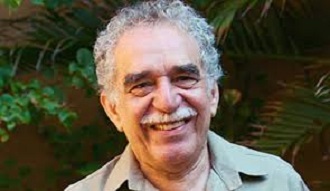
In Memoriam Gabriel García Márquez


In Memoriam Gabriel García Márquez


De Colombiaanse schrijver Gabriel García Márquez, bekend van zijn boeken 'Honderd jaar eenzaamheid' en 'Liefde in de tijd van cholera', is overleden in Mexico. De winnaar van de Nobelprijs voor Literatuur is 87 jaar geworden. Gabriel García Márquez werd op 6 maart 1928 in de kustplaats Aracataca geboren. Zie ook alle tags voor Gabriel García Márquez op dit blog.

 Uit: Chronicle of a Death Foretold (Vertaald door Gregory Rabassa).

 « The only thing he left intact in the parlor was the spiral staircase rescued from some shipwreck. On the upper floor, where the customs offices had been before, he built two large bedrooms and five cubbyholes for the many children he intended having, and he constructed a wooden balcony that overlooked the almond trees on the square, where Plácida Linero would sit on March afternoons to console herself for her solitude. In the front he kept the main door and built two full-length windows with lathe-turned bars. He also kept the rear door, except a bit taller so that a horse could enter through it, and he kept a part of the old pier in use. That was always the door most used, not only because it was the natural entry to the mangers and the kitchen, but because it opened onto the street that led to the new docks without going through the square. The front door, except for festive occasions, remained closed and barred. Nevertheless, it was there, and not at the rear door, that the men who were going to kill him waited for Santiago Nasar, and it was through there that he went out to receive the bishop, despite the fact that he would have to walk completely around the house in order to reach the docks.
No one could understand such fatal coincidences. The investigating judge who came from Riohacha must have sensed them without daring to admit it, for his impulse to give them a rational explanation was obvious in his report. The door to the square was cited several times with a dime-novel title: "The Fatal Door." In reality, the only valid explanation seemed to be that of Plácida Linero, who answered the question with her mother wisdom: "My son never went out the back door when he was dressed up." It seemed to be such an easy truth that the investigator wrote it down as a marginal note, but he didn't include it in the report.
Victoria Guzmán, for her part, had been categorical with her answer that neither she nor her daughter knew that the men were waiting for Santiago Nasar to kill him. But in the course of her years she admitted that both knew it when he came into the kitchen to have his coffee. They had been told it by a woman who had passed by after five o'clock to beg a bit of milk, and who in addition had revealed the motives and the place where they were waiting. "I didn't warn him because I thought it was drunkards' talk," she told me. Nevertheless, Divina Flor confessed to me on a later visit, after her mother had died, that the latter hadn't said anything to Santiago Nasar because in the depths of her heart she wanted them to kill him. She, on the other hand, didn't warn him because she was nothing but a frightened child at the time, incapable of a decision of her own, and she'd been all the more frightened when he grabbed her by the wrist with a hand that felt frozen and stony, like the hand of a dead man.”


 1583876-e8973a1133adb43cc4225a1fff188266.jpg
Gabriel García Márquez (6 maart 1928 – 17 april 2014)

Geschreven door Romenu om 08:56 Reageer op dit bericht

Wam de Moor

De Nederlandse schrijver, dichter, neerlandicus en literatuurcriticus Willem Anton Marie (Wam) de Moor werd geboren in Zevenaar op 18 april 1936. De Moor studeerde Nederlandse Taal- en Letterkunde aan de Katholieke Universiteit Nijmegen en promoveerde op de schrijver en diplomaat J. van Oudshoorn (1876-1951). Hij doceerde eerst aan Het Geert Grote College in Deventer, vervolgens aan de Gelderse Leergangen en vanaf 1978 aan de universiteit in Nijmegen. Hij schreef veel literatuurrecensies en artikelen over literatuur en poëzie, onder andere in De Tijd en later in De Gelderlander. De Moor was initiator van het leesdossier wat op scholen in het literatuuronderwijs gebruikt wordt. Zelf schreef hij ook verhalen en gedichten en stelde bloemlezingen samen. De Moor werd gedecoreerd tot officier in de Orde van Oranje Nassau.

Uit:Over de meester en zijn leerlingen. Een voortgezette verkenning

“Vestdijk is dan ook vooral de meester van een aantal prozaschrijvers. Daarover schreef ik zes jaar geleden in het boek Meester en leerling.5. Ik stelde daarin Vestdijk zelf aan de orde met het in memoriam dat ik op 24 maart 1971 in het dagblad De Tijd had geplaatst en met zijn romans Het verboden bacchanaal, Het proces van Meester Eckhart en het postuum verschenen werk Kind tussen vier vrouwen. Voorts besprak ik daarin als een soort meesterleerlingen Hella Haasse en Willem Brakman, en vier wat oudere verwanten, wier talent wat minder in het oog sprong. Dat waren Sjoerd Leiker, Willem van Toorn, Judicus Verstegen en, op grond van zijn geringe produktie in de jaren zeventig, Willem G. van Maanen, wiens werk ik overigens hoger aansloeg dan dat der overige drie. Ik rekende bovendien tot Vestdijks school anno 1978 twee excellente leerlingen: Maarten 't Hart en Doeschka Meijsing, geen meesters nog, maar zo te zien wel op weg naar het meesterschap.
Ik zou nu twee dingen willen proberen. In de eerste plaats nagaan wat deze schrijvers met Vestdijk verbindt en hoe hun ontwikkeling sedert 1978 is geweest. In de tweede plaats wil ik weten of zich na 1978 nog andere auteurs hebben gemanifesteerd voor wie de held van Harlingen een voorbeeld is geweest.
Vestdijk heeft zijn roem en zijn naam verworven met zijn proza. Ik houd het bij de tekst van degenen die met zoveel zorg de fraaie herdruk van zijn tweeënvijftig romans bijna tot een einde hebben gebracht. ‘Al blonk hij uit in vele literaire genres, zijn prestatie als romancier is in de Nederlandse literatuur ongeëvenaard’. Hoe hij zich schoolde tot de schrijver van de eersteling Kind tussen vier vrouwen en de psychologische romans te beginnen met Meneer Visser's hellevaart (1936), Terug tot Ina Damman (1934) en Else Böhler (1935), aan de hand van grote meesters als Joyce, Dostojevski en Proust, zou een zeer belangrijk item voor de biografie kunnen zijn. Wat betekende Thomas Mann voor zijn historisch werk, te beginnen met Het vijfde zegel (1937)? En waar ligt de leerstof voor het derde soort romans dat hij in 1948 begon, de ‘fantastische’ of visionaire romans, De redding van Fré Bolderdey of De kellner en de levenden? Zoals Rudi van der Paardt in nr. 32 van de Vestdijkkroniek heeft laten zien is over dat alles nog maar weinig bekend.”


 1711566-b28e7ff6a4e9250a15f3933184e2a3a7.jpg
Wam de Moor (Zevenaar, 18 april 1936)

Geschreven door Romenu om 00:00 Reageer op dit bericht

Meer van Romenu

↑ Terug naar de berichten