Naar de inhoud

Romenu

Over literatuur, gedichten, kunst en cultuur
akke.beakke.be

Berichten van 17 mei 2014 tot 18 mei 2014

Yi Mun-yol, Markus Breidenich, W.G. Sebald, François Nourissier, Gunnar Gunnarsson

De Zuidkoreaanse schrijver Yi Mun-yol werd geboren op 18 mei 1948 in Yongyang. Zie ook alle tags voor Yi Mun-yol op dit blog.

Uit:The Poet (Vertaald doorBrother Anthony en Chung Chong-hwa)

“Perhaps we ought to begin this investigation into the deviations of his life by evoking the problem of human memory. In his later years, summing up the whole course of his existence in a long lyric, he wrote the following lines:

   As my hair grew longer,
   my fortunes travelled a rough road:
   he family line in ruins
   the blue sea a mulberry grove.

Later readers have not usually considered those lines to be the transposition into poetry of any actual experience. At most they have assumed that they were inspired by some childhood event he learned about in his adult years, a pseudo-memory as it were, an analogy fabricated to harmonize with the assumed course of his life's history.
Such theories may satisfy those who prefer an entertaining folk-tale to the actual details of a man's real life. For them, it is unthinkable that he might have retained any actual memories of his family or origins before that fateful moment, so often chronicled, when he won first prize in a rural poetry-contest at the age of nineteen. That way the legend could be given a dramatic and really effective starting-point.
Unfortunately, the realities of life rarely if ever correspond to the demands of such fabulations. Generally received opinion notwithstanding, his memory actually stretched much further back into the past than is normally the case.
In particular, even when his life was almost done, at the end when he was weary and alone, he could recall the events of a certain evening late in the year in which he turned four as vividly as if they were just then happening before his eyes: that fateful night when his life was fundamentally transformed, as if the blue sea had indeed suddenly been turned into a mulberry grove.
He was only a child, of course, but during the last few days he had become vaguely aware of an extraordinary atmosphere brooding over the house.
The servants who had until then filled their home with a constant presence seemed visibly to have diminished in number, while those who remained no longer worked but stood in corners endlessly whispering together about something.”


 1599403-219472086634ee259b5e3f2e0307316a.jpg
Yi Mun-yol (Yongyang, 18 mei 1948)


De Duitse dichter en schrijver Markus Breidenich werd geboren in Düren op 18 mei 1972. Zie ook alle tags voor Markus Breidenich op dit blog.


Lesung der Briefe

Ich selbst halte Rechnungen in Händen
(was ich ausgegeben habe, das habe ich
ausgegeben). Meinen weißen Tauben
stecke ich Geld in den Schnabel und
bitte sie, Stillschweigen zu bewahren
über mich. Während des Flugs schalte
ich mein Handy aus und bewege mich
kaum. Die Tiere landen am späten
Nachmittag, wenn die Sonne hinter
den Bäumen verschwindet. Die meisten
legen das Geld unter die Fußmatte der
Eingangstür und sind abends zurück.
Manche von ihnen tragen Zweige in ihren
Schnäbeln. Die Zeichen stehen auf Land.


Aus Bronzezeiten

Oft bin ich unsichtbar, und du weißt nicht,
was es bedeutet, den Schneewolken seine
Aufwartung zu machen. Sie sind mit dem
Einbalsamieren der Felder beschäftigt.
Leinentücher gehören in ihren Besitz. Die
Haut streift bei jeder Gelegenheit über
Eiskristalle und glättet sich leicht. Wo
Hände erfrieren, bleibt dunkles Gewebe
zurück, das im Innern von Gletschern
verschwindet. Meine Waffen sind stumpf,
das Fell über dem Rücken ist abgetragen.
Du kannst der Lage meiner Arme etwas
Gleichgültiges entnehmen, und der Sprache
der Höhenwinde meine Autobiografie. Ich bin
der Stummzeuge meiner Gegenwart. Du findest
mich oft bei den Steingärten über den Wiesen.

 

 1599403-028e6a5c1b55b51d8b5655f275c9f596.jpg
Markus Breidenich (Düren, 18 mei 1972)


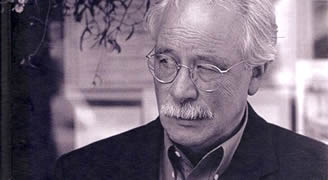
De Duitse schrijver W.G. Sebald werd geboren in Wertach (Allgäu) op 18 mei 1944. Zie ook alle tags voor W. G. Sebald op dit blog.

Uit: Austerlitz (Vertaald door Anthea Bell)

“He had gone on and on down the corridors, said Austerlitz, sometimes turning left and then right again, then walling straight ahead and passing through many tall doorways, and once or twice he had climbed flights of creaking wooden stairs which gave the impression of being temporary structures, branching off from the main corridors here and there and leading half a story up or down, only to end in dark cul-desacs with roll-top cupboards, lecterns, writing desks, office chairs, and other items of furniture stacked up at the end of them, as if someone had been obliged to hold out there in a state of siege. He had even heard, said Austerlitz, of people who, over the years, had managed to start up a small business in one or other of the empty rooms and remote corridors of that great warren: a tobacconist's, a bookie's, a bar, and it was rumored, Austerlitz added, that a man called Achterbos had once turned a gentlemen's lavatory down in the basement into a public convenience for, among others, passersby in the street, installing himself at the entrance with a small table and a plate to take the money, and that later, when he engaged an assistant who was handy with a comb and a pair of scissors, it was a barber's shop for a while.
I heard several such apocryphal stories from Austerlitz, anecdotes in curious contrast to his usual rigorous objectivity, not only that day but on our later encounters, for instance one quiet November afternoon when we spent some time sitting in a cafe with a billiards room in Terneuzen-I still remember the proprietress, a woman with thick-lensed spectacles who was knitting a grassgreen sock, the glowing nuggets of coke in the hearth, the damp sawdust on the floor, the bitter smell of chicory-and looked out through the panoramic window, which was framed by the tentacles of an ancient rubber plant, at the vast expanse of the misty gray mouth of the Schelde”.
 

 1599403-80563aa97ed90aea39391b56e6952a35.jpg
W.G. Sebald (18 mei 1944 – 14 december 2001)


De Franse schrijver François Nourissier werd geboren op 18 mei 1927 in Parijs. Zie ook alle tags voor François Nourissier op dit blog.

Uit: Le gardien des ruines

« Un carrefour, dans la lumière du matin, à Paris, en France, à l'automne de l'année, à l'automne du siècle, à l'automne d'une vie, — pas de quoi pavoiser. Fargeau se hâte. Est-il en retard?? Il n'a rien à faire, aucune obligation, aucun rendez-vous mais il se complait dans une impatience furieuse?: elle lui permet d'invectiver contre les lents et les calmes qui croisent son chemin. Pour l'instant il crispe la main sur le levier des vitesses de sa voiture, immobilisée au feu rouge qui bloque la circulation de la rue Chardon-Lagache, là où elle se jette dans l'avenue de Versailles. Déjà il anticipe les deux ou trois coups de volant indispensables pour dépasser la fourgonnette qu'il serre de près, traverser au large le carrefour et se faufiler dans la rue Le Marois avant que cet autre feu, là -bas, inutile, ne l'arrête. Il arrive ici que des gêneurs surgissent de l'une ou l'autre des six rues entrecroisées qu'on aperçoit dans le fouillis des constructions anarchiques, des vitrines tape- à -l'œil, des terre-pleins placés comme au hasard. Où que se porte le regard il ne découvre rien que de laid. On ne saurait se croire ailleurs. Ce sud du XVIe arrondissement est un faubourg, un avant-goût de banlieue. Personne ne regarde jamais rien. Si l'on voyait le décor où l'on vit on ne se lèverait pas le matin. »
Au vert, la Peugeot bondit, contourne la fourgonnette hésitante et fonce. Le feu passe à l'orange à l'instant o ù une silhouette se profile, que Fargeau remarque à peine, empêcheuse de filer droit qui pose le pied sur la chaussée et s'avance, tassée, tête baissée, comme on tombe. Fargeau crie, freine et il a le temps de voir trébucher un pot-?-tabac enveloppé de guenilles, une tête grise et jaune sous un fichu. Le choc est faible. Ce sont les hurlements, dehors, et le crissement des freins qui donnent le sentiment d'un drame. Voilà Fargeau dehors, et le premier à? s'agenouiller près du corps allongé: les témoins s'indignent, mais pour un empire ils ne toucheraient pas ? ce tas de vêtements qui gémit. Il s'agit d'une vieille femme asiatique, incroyablement vilaine et ridée, qui cherche ? se relever, souffle, se débat. »
 

 1599403-04509c62b1b39cde53f7ca55c8e59d62.jpg
François Nourissier (18 mei 1927 – 15 februari 2011)


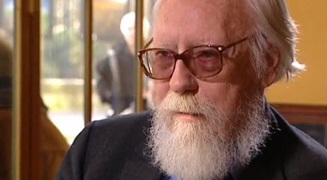
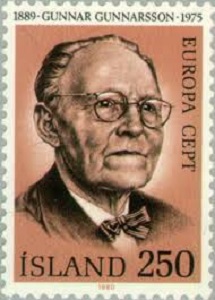
De IJslandse dichter en schrijver Gunnar Gunnarsson werd geboren op 18 mei 1889 in Fljótsdalur. Zie ook alle tags voor Gunnar Gunnarsson op dit blog.

Uit:Father And Son (Vertaald door Peter Foote)

“Whenever the weather was fit, they put off in their boat but often rowed back empty-handed or with one skinny flat-fish in the bottom.
This did not affect their outlook. They never complained; they bore their burden of distress, heavy as it was, with the same even temper as they showed in the face of good fortune on the rare occasions it smiled on them; in this, as in everything else, they were in harmony. For them there was always comfort enough in the hope that, if they ate nothing today, God would send them a meal tomorrow—or the next day. The advancing spring found them pale and hollow-cheeked, plagued by bad dreams, so that night after night they lay awake together.--And one such spring, a spring moreover that had been colder and stormier than usual, with hardly a single day of decent weather, evil chance paid another visit to old Snjolfur's home.
Early one morning a snow-slip landed on the cabin on the Point, burying both father and son. By some inexplicable means little Snjolfur managed to scratch his way out of the drift. As soon as he realised that for all his efforts he could not dig his father out single-handed, he raced off to the village and got people out of their beds. Help came too late--the old man was suffocated when they finally reached him through the snow.”
 

 1599403-7cd77242b542f8ed64eb505fc9e9633c.jpg
Gunnar Gunnarsson (18 mei 1889 – 21 november 1975)


Zie voor nog meer schrijvers van de 17e mei ook mijn vorige blog van vandaag.

Geschreven door Romenu om 19:27 Reageer op dit bericht

Omar Khayyam, Ernst Wiechert, Franziska zu Reventlow, Bertrand Russell, John Wilson

De Perzische dichter Omar Khayyám, of zoals zijn arabische naam luidt, al-Imâm Abu Hafs 'Omar ebn Ebrâhim al-Khayyâmi, werd geboren op 18 mei 1048 te Nishapur. Zie ook alle tags voor Omar Khayyám op dit blog.


Kwatrijnen

Hij zelf trad gistren in dees aardsche kroeg,
Hij, de vervuller van wat ieder vroeg.
Hij sprak den beker langend: drink! ‘k zei: neen!
Drink! loech Hij, is mijn liefde niet genoeg?


Wat baat de wereld ons vertrek of komen?
Rest iets van wijsheids roem, of lof van vromen?
Wat blijft er staan van ‘t steil gebergt der hoop?
Stof, stof, slechts stof – stof uit stof voortgekomen.


Bestendig blijf in wisselvalligheid.
Wees niet bedrukt voor ‘t vlieden van den tijd.
In een paar dagen slijt ziels kleed tot lompen.
Wat geeft ‘t, of gij werkt, vecht, bezoedeld zijt?


Die, wars van ‘t goede, leeft van slechte streken,
Zich achter Gods gena driest durft versteken,
Hoop niet te zeker op zijn gunst, Hij zal
Nooit met één maat zondaars en zuivren reeknen.


Vertaald door Willem de Mérode


 1599398-8273e4c739daca6deffbbee34128c8cf.jpg
Omar Khayyam (18 mei 1048 - 4 december 1131)
Omar Khayyam en Saki 


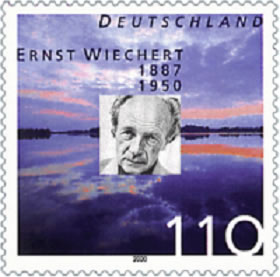
De Duitse dichter en schrijver Ernst Wiechert werd geboren op 18 mei 1887 in Kleinort bij Sensburg in Oostpruisen.(Tegenwoordig Polen). Zie ook alle tags voor Ernst Wiechert op dit blog.


Ihr seid der Pfeil

Ihr seid der Pfeil auf meinem dunklen Bogen,
der Glocke Erz auf meinen stillen Türmen,
ihr seid der Bote weit vor meinem Heere,
ihr seid der Wald vor meinen nächt'gen Stürmen.
Was ich noch frage, habt ihr schon gesprochen,

was ich noch suche, habt ihr schon gefunden,
was ich noch halte, habt ihr schon zerbrochen,
was ich noch binde, habt ihr schon entbunden.

In eurem Ohr braust das "Steh auf und wandle",
Jehovas Säule leuchtet eurem Wege,
indessen ich in der verlassnen Kammer
des Grabes Tücher still zusammenlege.


Mit dem „Betenden Knaben“

Er schweigt zu Gott aus einem tiefen Walde,
aus dem nur Rufe sanfter Tiere klangen,
und seine Hände sind wie eines Kindes
geöffnet, um das Wunder zu empfangen.

Um seine Lip'pen strahlt des Kindes Glaube,
daß Gott zu ihm im Sturm wird kommen müssen,
und um sein Knie bebtschon die leise Beugung,
mit der er stürzen wird zu seinen Füßen.

Von seinen Schultern fällt das Leid der Erde,
und wie ein Kind aus seiner kleinen Schale
hebt er die reifen Früchte zu der Kelter
des Weins zu unsrem großen Abendmahle ...

Du aber weißt, daß ich mich dir enthülle
und ganz in diesem Bild dein eigen bleibe,
und wie ein Kind zu jenem Gotte flehe,
der sich geoffenbart in deinem Leibe.


 1599398-ff551498b8f583ca0851863e1d07c257.jpg
Ernst Wiechert (18 mei 1887 – 24 augustus 1950)


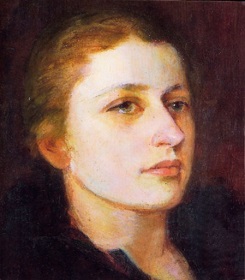
De Duitse schrijfster Franziska (gravin) zu Reventlow werd geboren op 18 mei 1871 in Husum. Zie ook alle tags voor Franziska zu Reventlow op dit blog.

Uit: Ellen Olestjerne

“Manchmal seufzte Marianne dann im stillen mit: die Mutter ließ sich und anderen wenig Ruhe, und ihre rastlose Lebhaftigkeit hatte beinahe etwas Aufreibendes – es war keine Kleinigkeit, ihr immer das Gleichgewicht zu halten, besonders, wenn sie sich in Taten umsetzte. Mochten nun die Dienstboten etwas versehen haben, die Jungen mit schlechten Zeugnissen heimkommen, oder die Kleinen irgendein Unheil anrichten – immer war es Marianne, bei der sie Zuflucht suchten, die alles ausgleichen und vermitteln sollte. So atmete sie meist erleichtert auf, wenn der stürmische Vormittag vorüber war und die Mutter sich nach Tisch mit einem Buch ins Wohnzimmer zurückzog. Für Marianne kamen dann die besten Stunden des Tages, wo sie dem Vater bei seinen Schreibereien half, oder ihn bei seinen Rundgängen auf dem Gut begleitete.
Auch die jüngeren Geschwister wußten diese häusliche Nachmittagsruhe nach Kräften zu genießen. Es war die Zeit, wo sie ungestört allen möglichen verbotenen Unternehmungen nachgehen konnten – den alten Gärtner drüben im Nebenhaus besuchen, wo sie Kaffee bekamen und an seinen langen Pfeifen rauchen durften, oder die Dorfkinder, die schon lange wartend am Gitter standen, hereinlassen und mit ihnen am Graben Brücken bauen und Schiffe schwimmen lassen. Das Kindermädchen hatte noch zu tun, und wenn Erik dabei war, ließ man die Kinder ruhig eine Zeitlang ohne Aufsicht. Ellen folgte dem älteren Bruder durch dick und dünn und zog den kleinen Detlev an der Hand hinter sich her. Mit vereinter Anstrengung bekamen sie ihn über alle Gitter und Schwierigkeiten weg, und wehe ihm, wenn er schrie oder sie verklagte.“


  1599398-089740c2cfd896f55be2569fd391ea70.jpg
Franziska zu Reventlow (18 mei 1871 – 25 juli 1918)
Portret door Marie von Geysow, 1901 - 1902 


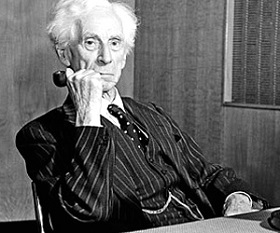
De Britse filosoof, logicus, wiskundige en politiek activist Bertrand Arthur William Russell werd geboren in Trellech (Monmouthshire), Wales, op 18 mei 1872. Zie ook alle tags voor Bertrand Rusell op dit blog.

Uit: In Praise of Idleness

“First of all: what is work? Work is of two kinds: first, altering the position of matter at or near the earth's surface relatively to other such matter; second, telling other people to do so. The first kind is unpleasant and ill paid; the second is pleasant and highly paid. The second kind is capable of indefinite extension: there are not only those who give orders, but those who give advice as to what orders should be given. Usually two opposite kinds of advice are given simultaneously by two organized bodies of men; this is called politics. The skill required for this kind of work is not knowledge of the subjects as to which advice is given, but knowledge of the art of persuasive speaking and writing, i.e. of advertising.
Throughout Europe, though not in America, there is a third class of men, more respected than either of the classes of workers. There are men who, through ownership of land, are able to make others pay for the privilege of being allowed to exist and to work. These landowners are idle, and I might therefore be expected to praise them. Unfortunately, their idleness is only rendered possible by the industry of others; indeed their desire for comfortable idleness is historically the source of the whole gospel of work. The last thing they have ever wished is that others should follow their example.
From the beginning of civilization until the Industrial Revolution, a man could, as a rule, produce by hard work little more than was required for the subsistence of himself and his family, although his wife worked at least as hard as he did, and his children added their labor as soon as they were old enough to do so. The small surplus above bare necessaries was not left to those who produced it, but was appropriated by warriors and priests
.”


 1599398-87f64bf09ac6e06073dfefaa9175c8c3.jpg
Bertrand Russell (18 mei 1872 – 2 februari 1970)


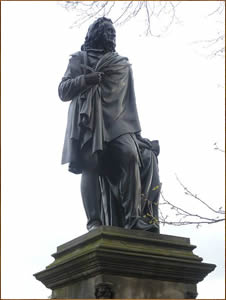
De Schotse schrijver John Wilson werd geboren in Paisley op 18 mei 1785. Zie ook alle tags voor John Wilson op dit blog.


The Three Seasons of Love

With laughter swimming in thine eye,
That told youth's heartfelt revelry;
And motion changeful as the wing
Of swallow wakened by the spring;
With accents blithe as voice of May
Chanting glad Nature's roundelay;
Circled by joy like planet bright
That smiles 'mid wreathes of dewy light,—
Thy image such, in former time,
When thou, just entering on thy prime,
And woman's sense in thee combined
Gently with childhood's simplest mind,
First taught'st my sighing soul to move
With hope towards the heaven of love!
Now years have given my Mary's face
A thoughtful and a quiet grace:—
Though happy still,—yet chance distress
Hath left a pensive loveliness;
Fancy hath tamed her fairy gleams,
And thy heart broods o'er home-born dreams!
Thy smiles, slow-kindling now and mild,
Shower blessings on a darling child;
Thy motion slow, and soft thy tread,
As if round thy hushed infant's bed!
And when thou speak'st, thy melting tone,
That tells thy heart is all my own,
Sounds sweeter, from the lapse of years,
With the wife's love, the mother's fears!
By thy glad youth and tranquil prime
Assured, I smile at hoary time!
For thou art doomed in age to know
The calm that wisdom steals from woe;
The holy pride of high intent,
The glory of a life well-spent.
When, earth's affections nearly o'er,
With Peace behind, and Faith before,
Thou render'st up again to God,
Untarnished by its frail abode,
Thy lustrous soul,—then harp and hymn,
From bands of sister seraphim,
Asleep will lay thee, till thine eye
Open in Immortality.


 1599398-6beb01632e3c0591263f1db8658e6c6c.jpg
John Wilson (18 mei 1785 - 3 april 1854)
Stabdbeeld in Edinburgh

Geschreven door Romenu om 19:12 Reageer op dit bericht

Lars Gustafsson, Peter Høeg, Gary Paulsen, Henri Barbusse, Virginie Loveling, Mischa Andriessen

De Zweedse dichter en schrijver Lars Gustafsson werd geboren in Västeras, op 17 mei 1936. Zie ook alle tags voor Lars Gustafsson op dit blog.


Bos onderweg

Iedere nacht, klokslag elf
komt het dode bos voorbij.

Zorgvuldig verzaagd en gestapeld
op de vele treinwagons.

De trein is lang. Heel lang.

Eens zong de aanwakkerende wind
door alle kruinen van zijn bomen.


Over de rijdom van de bewoonde werelden

In enkele werelden heeft men Riemanns
vermoeden over priemgetallen bevestigd.

In enkele werelden dwingt men
oeroude paddenstoelen bekentenissen af

In een bepaalde wereld wordt de diepe duisternis
verlicht door wonderbaarlijke sprekende stenen

In tamelijk veel werelden duurt de zomer
een eeuw lang en zij die het ongeluk hebben

in winterse eeuwen geboren te zijn
brengen hun leven slapend door

opgehangen aan de binnenkant van
bontbeklede lichtgrijze cocons.

In enkele werelden is zelfs dit gedicht
al geschreven en verworpen.


December

December was altijd de maand
waarin je tijdelijk ophield te bestaan.

Je werd tot een tussenzin in het donker,
nauwelijks meer.

Lampen werden aangestoken, lampen en kaarsen.
Maar zij waren duidelijk
ontoereikend
tegen de stijgende vloed van het duister.
Het is eenvoudig
een meer oorspronkelijke en
heidenser kerstboodschap te vatten:
Om met fakkels en flambouwen
tot iedere prijs het zonlicht terug te krijgen

waarvan de terugkeer nooit vanzelfsprekend was.


Vertaald door J. Bernlef


 1598896-f8d853090e131d453925a57c33f4e982.jpg
Lars Gustafsson (Västeras, 17 mei 1936)


De Deense schrijver Peter Høeg werd geboren in Kopenhagen op 17 mei 1957. Zie ook alle tags voor Peter Høeg op dit blog.

Uit: Borderliners (Vertaald door Barbara Haveland)

“Once you have realised that there is no objective external world to be found; that what you know is only a filtered and processed version, then it is a short step to the thought that, in that case, other people too are nothing but a processed shadow, and but a short step more to the belief that every person must somehow be shut away, isolated behind their own unreliable sensory apparatus. And then the thought springs easily to mind that man is, fundamentally, alone. That the world is made up of disconnected consciousnesses, each isolated within the illusion created by its own senses, floating in a featureless vacuum.
He does not put it so bluntly, but the idea is not far away. That, fundamentally, man is alone.”
(...)

“She said she had been thinking about the way you remembered your past. What you remembered, she said, was a string of events and years stretching back from the point where you now found yourself. In other words, a line of time. This might be coloured differently, depending upon what had happened to you. For example, if you had lost someone then it would be black. Other spots might be lighter. On some sections of the line time would have passed quickly, on other sections more slowly. But, for a long way back, it would still be a line. Though not all the way back – at any rate, not in her case – and what about me? She asked me to think about it. For her, she said, and maybe for everyone, if you went far enough back the line disintegrated. If you went all the way back to your early childhood it was no longer a line. Then there was a sort of landscape of events. You could not remember their sequence, maybe they had none, they just lay scattered about, as if on a plain. She believed that this plain belonged to the days before time had entered your world.”


 1598896-9e6eaf68b3241e6ecb1eb36b806216c9.jpg
Peter Høeg (Kopenhagen, 17 mei 1957)


De Amerikaanse schrijver Gary Paulsen werd geboren op 17 mei 1939 in Minneapolis, Minnesota. Zie ook alle tags voor Gary Paulsen op dit blog.

Uit:Brian's Return

“Brian sat quietly, taken by a peace he had not known for a long time, and let the canoe drift forward along the lily pads. To his right was the shoreline of a small lake he had flown into an hour earlier. Around him was the lake itself, an almost circular body of water of approximately eighty acres surrounded by northern forest—pine, spruce, poplar and birch—and thick brush.
It was late spring—June 3, to be exact—and the lake was teeming, crawling, buzzing and flying with life. Mosquitos and flies filled the air, swarming on him, and he smiled now, remembering his first horror at the small blood drinkers. In the middle of the canoe he had an old coffee can with some kindling inside it, and a bit of birchbark, and he lit them and dropped a handful of green poplar leaves on the tiny fire. Soon smoke
billowed out and drifted back and forth across the canoe and the insects left him. He had repellant with him this time—along with nearly two hundred pounds of other gear—but he hated the smell of it and found it didn't work as well as a touch of smoke now and then. The blackflies and deerflies and horseflies ignored repellant completely—he swore they seemed to lick it off—but they hated the smoke and stayed well off the
canoe. The relief gave him time to see the rest of the activity on the lake. He remained still, watching, listening.”


 1598896-6f96ad205211d84b4fd341c3ac0e26ce.jpg
Gary Paulsen (Minneapolis, 17 mei 1939)


De Franse dichter en schrijver Henri Barbusse werd geboren op 17 mei 1873 in Asnières-sur-Seine. Zie ook alle tags voor Henri Barbusse op dit blog.

Uit: Le Feu

“L'aviateur, dress? le plus qu'il peut, la nuque ? la vo?te, agite ses bras, appelle Dieu et lui demande comment il s'appelle, quel est son vrai nom. On voit se jeter sur les autres, renvers? par le vent, celui qui, d?braill?, les v?tements ouverts ainsi qu'une large plaie, montre son c?ur comme le Christ. La capote du crieur monotone qui r?p?te: "Quand tu te d?soleras!", se r?v?le toute verte, d'un vert vif, ? cause de l'acide picrique d?gag?, sans doute, par l'explosion qui a ?branl? son cerveau. D'autres - le reste - impotents, estropi?s, remuent, se coulent, rampent, se faufilent dans les coins, prenant des formes de taupes, de pauvres b?tes vuln?rables que pourchasse la meute ?pouvantable des obus.
Le bombardement se ralentit, s'arr?te, dans un nuage de fum?e retentissante encore des fracas, dans un grisou palpitant et br?lant. Je sors par la br?che: j'arrive, tout envelopp?, tout ligot? encore de rumeur d?sesp?r?e, sous le ciel libre, dans la terre molle o? sont noy?s des madriers parmi lesquels les jambes s'enchev?trent. Je m'accroche ? des ?paves; voici le talus du boyau. Au moment o? je plonge dans les boyaux, je les vois, au loin, toujours mouvants et sombres, toujours emplis par la foule qui, d?bordant des tranch?es, s'?coule sans fin vers les postes de secours. Pendant des jours, pendant des nuits, on y verra rouler et confluer les longs ruisseaux d'hommes arrach?s des champs de bataille, de la plaine qui a des entrailles, et qui saigne et pourrit l?-bas, ? l'infini.»


 1598896-dccd689c4bcdf1a75a38a2b4092a712d.jpg
Henri Barbusse (17 mei 1873 –30 augustus 1936)
Cover


De Vlaamse dichteres en schrijfster Virginie Loveling werd geboren in Nevele op 17 mei 1836. Zie ook alle tags voor Virginie Loveling op dit blog.


Grootmoeders portret

In grootmoeders kamer daar hangt het beeld
Uit hare kinderjaren:
Een lachend mondje, peerlenoog
En bruine kroezelharen.

De kinderen stonden en staarden ’t aan,
En ’t een zei aan het ander:
‘ Och, waar dat schone kindje hier,
Wij speelden met malkander!’

En de oude in haar leunstoel met bril en toer,
Keek op bij deze rede:
‘ Wie zou dat schone kindje zijn?…
Gij speelt er altijd mede.’


In ’t lof

Het nonneke zit gebogen,
Stil aan de kerkpilaar;
De gele lichtjes flikkren
Ginds, op het hoogaltaar.

De gele lichtjes flikkren,
Het orgel dreunt en schalt;
De wierookwalmen stijgen,
En de avondschemering valt.

De wierookwalmen stijgen,
De kerkzang sleept haar mee,
En wiegt haar zacht in dromen
Van rust en hemelvreê.

En wiegt haar zacht in dromen,
Allengskens, onbewust; -
Gezang en orgel zwijgen,
En de kerke ligt in rust.

Gezang en orgel zwijgen,
De laatste stap galmt heen…
Zij zit nog stil te dromen,
In ’t schemeruur alleen.


 1598896-a8b5b5d67fa22865b6303536e25a121a.jpg
Virginie Loveling (17 mei 1836 – 1 december 1923)
Nevele - Gedenkplaat aan het geboortehuis van Virginie en Rosalie Loveling.


Onafhankelijk van geboortedata:

De Nederlandse dichter Mischa Andriessen werd geboren in Apeldoorn in 1970. Zie ook alle tags voor Mischa Andriessen op dit blog.


Abda

In het uniform van een jonge legerarts
koos hij uit de opgestelde rij onbekenden
lukraak patienten tot het voldoende was
voor een alibi.
Ze verdwenen in de gestolen ambulance.
Zijn vader zag hij niet.
Onderweg liet hij iedereen gaan.
'Niet,' antwoordde hij
op de vraag hoe ze hem konden bedanken,
zag ze rennen door het lege land
en ging naar een kamp, dat op zijn kaart
nog niet was doorgekrast.
In de inderhaast opgestelde rij vond hij
nieuwe patienten, geen daarvan zijn vader.
Toen gooide hij de achterklep dicht,
smeet de kaart weg, stapte in,
reed verder, keek niet meer
naar het krakende, zwarte land
of naar de jonge vrouwen op het veld
die bloosden van schaamte
om zoveel geluk.


 1598896-f3904a0e7df7fcdd78e9bcb779089b28.jpg
Mischa Andriessen (Apeldoorn, 1970)


Zie voor nog meer schrijvers van de 17e mei ook mijn vorige blog van vandaag.
Geschreven door Romenu om 22:27 Reageer op dit bericht

Dennis Potter, Cor Bruijn, Dorothy Richardson, Jacint Verdaguer, Eva Schmidt

De Britse schrijver Dennis Potter werd geboren op 17 mei 1935 in Forest of Dean, Gloucestershire. Zie ook alle tags voor Dennis Potterop dit blog.

Uit: Stand up, Nigel Barton

“Nigel Barton: Eh dad, why do you always walk in the middle of the road?
Harry Barton: I don't know.
Nigel Barton: What do you think the pavement's for?
Harry Barton: Dogs to poop in, by the looks of things!
Harry Barton: Clever sod, aren't you? I expect they think the sun shines out of you down at Oxford.
Nigel Barton. Up.
Harry Barton: What?
Nigel Barton. Up, dad. Up.
Harry Barton: Aye, and up you, too!
Nigel Barton: Everyone says 'Up at Oxford'. You come 'down' when you've finished there.
Harry Barton: Well, what's this then? Does bloody Oxford move up and down the bloody map then?
Georgie Pringle: The word of the LORD came again unto me, saying, Son of man, there were two women, the daughters of one mother: And they committed whoredoms in Egypt; they committed whoredoms in their youth: there were their breasts pressed, and there they bruised the teats of their virginity.
Pringle, "the class comic", has been asked to choose the bible reading for a secondary school class. He has a reputation for knowing "all the dirty bits in the bible off by heart," according to Nigel Barton's narration. The quote is from Ezekiel, chapter 23, verses 1-3.
Miss Tillings: Stand up, Nigel Barton! Well, Nigel, do you know anything about this? I can't believe it was you!”


 1598888-b4cb375da337e6e2e16823a053870b6c.jpg
Dennis Potter (17 mei 1935 – 7 juni 1994)
Scene uit de tv-film “Stand up, Nigel Barton”, uit 1965


De Nederlandse schrijver Cor Bruijn werd geboren in Wormerveer op 17 mei 1883. Zie ook alle tags voor Cor Bruijn op dit blog.

Uit: Sil de strandjutter

"Goeienavond, zegt Ane, - Ik zou je wel eens even gesproken willen hebben. Sil trekt meteen zijn hoofd in zijn schouders, zijn gewonen strijdhouding. Snel gaan zijn blikken langs Ane, dan draait hij hem de rug toe en veegt verder. - Je begrijpt wel waarover, vervolgt Ane rustig. Dan wacht hij, tot Sil klaar is. Sil flapt de bezem in een hoek van het kot neer, veegt met zijn handen langs zijn dijen - Je moet je er eigenlijk niet mee bemoeien, zegt hij korzelig, maar hij loopt toch met Ane naar de millem, daar is het nu het rustigst. - Dan zou ik een slechte buur wezen, antwoordt Ane. - Als je ziet, dat de zaken naast je deur scheef gaan, dan moet je helpen. Daarvoor zijn we buren. - Er wordt anders niet om gevraagd, opent Sil meteen de aanval, terwijl hij Ane boos aanziet. Ane is thans diep in de zeventig, zijn haren zijn zilverwit, maar hij staat nog stevig op zijn beenen, recht als een kaars is hij. Hij sluit even de ogen, dan zegt hij rustig, alsof hij Sils woorden niet gehoord heeft: - Sil, je bent te bazig. Ik dacht, je moest dat anders aanpakken met Lobke en Jelle. - Zo, snauwt Sil daar dadelijk hard tegen in, - dacht je dat? Wou je het zaakje soms van me overnemen? Daar schudt Ane zijn hoofd om. Hij legt zijn hand op Sils schouder. -- Geloof je, Sil, zeg hij warm, - dat we zulke dingen van elkaar over kunnen nemen? Je gelooft er niets van? Je snauwt alleen maar zo, omdat je veel te graag je boontjes zelf wil doppen. En daar heb je gelijk in. - Zo, nou dan? - Nou dan? Man, zie je dan niet, dat je met Lobke en Jelle... zo knijp je de boontjes immers aan pulver. Dat is toch geen doppen! Vermorzelen is dat!”


 1598888-1b0379d02b4719d6f941bf2ebeabeca8.jpg
Cor Bruijn (17 mei 1883 - 6 november 1978)
Scene uit de televisieserie “Sil de strandjutter” uit 1976


De Engelse schrijfster Dorothy Miller Richardson werd geboren op 17 mei 1873 in Abington, Oxfordshire. Zie ook alle tags voor Dorothy Richardson op dit blog.

Uit: Pilgrimage

“There would be no more silent sunny mornings with all the day ahead and nothing to do and no end anywhere to anything; no more sitting at the open window in the dining-room, reading Lecky and Darwin and bound "Contemporary Reviews" with roses waiting in the garden to be worn in the afternoon, and Eve and Harriett somewhere about, washing blouses or copying waltzes from the library packet... no more Harriett looking in at the end of the morning, rushing her off to the new grand piano to play the "Mikado" and the "Holy Family" duets. The tennis-club would go on, but she would not be there. It would begin in May. Again there would be a white twinkling figure coming quickly along the pathway between the rows of holly-hocks every Saturday afternoon.
Why had he come to tea every Sunday—never missing a single Sunday—all the winter? Why did he say, "Play 'Abide with me,'" "Play 'Abide with me'" yesterday, if he didn't care? What was the good of being so quiet and saying nothing? Why didn't he say "Don't go" or "When are you coming back?" Eve said he looked perfectly miserable.
There was nothing to look forward to now but governessing and old age. Perhaps Miss Gilkes was right.... Get rid of men and muddles and have things just ordinary and be happy. "Make up your mind to be happy. You can be perfectly happy without anyone to think about...." Wearing that large cameo brooch—long, white, flat-fingered hands and that quiet little laugh.... The piano-organ had reached its last tune. In the midst of the final flourish of notes the door flew open. Miriam got quickly to her feet and felt for matches.“


 1598888-bb1757864b0234b9bea22a67d2e3592b.jpg
Dorothy Richardson (17 mei 1873 - 17 juni 1957)
Cover 


De Catalaanse dichter en schrijver Jacint Verdaguer i Santaló werd geboren op 17 mei 1845 in Folgueroles. Zie ook alle tags voor Jacint Verdaguer op dit blog.

Uit: Canigó (Fragment)

Posant les mans en la sagrada feina,
deixen l'espasa los guerrers per l'eina
del manobre, la llança per magall,
i en lo serrat a on sota una llosa
en son eterna el bell Gentil reposa
bellugueja l'exèrcit del treball.

En temps d'estiu, heu vistes les formigues,
quan daura el sol i esgrana les espigues,
anar, venir, i correr per rostoll ?
l'una el gra abasta, l'altre se'l carrega,
esta l'empeny, aquella l'arrossega
i s'atreesora el gra, i es llença el boll.


 1598888-40d421499c3f87f31d1c209151498528.jpg
Jacint Verdaguer (17 mei 1845 – 10 juni 1902)
Standbeeld in Mare de Déu del Mont


Zie ook voor onderstaande schrijver ook mijn blog van 17 mei 2009.

De Oostenrijkse schrijfster Eva Schmidt werd geboren op 17 mei 1952 in Lustenau / Vorarlberg.

Geschreven door Romenu om 11:31 Reageer op dit bericht

Meer van Romenu

↑ Terug naar de berichten