Naar de inhoud

Romenu

Over literatuur, gedichten, kunst en cultuur
akke.beakke.be

Berichten van 12 oktober 2014 tot 13 oktober 2014

Herman Franke, Colin Channer, Migjeni, Arna Wendell Bontemps, Conrad Richter, Edwina Currie
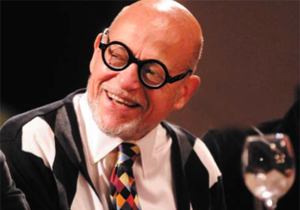
De Nederlandse schrijver Herman Franke werd geboren op 13 oktober 1948 in Groningen. Zie ook mijn blog van 13 oktober 2010 en eveneens alle tags voor Herman Franke op dit blog.

Uit: De ziel van Nederland

“Schrijvers zijn misdadigers. Mij duidt men vaak aan als schrijver en criminoloog. Daar schemeren duistere verbanden, maar het zal nog even duren voordat ik iets over Klinkhamer en consorten opmerk. Zoals het een wetenschapper betaamt, begin ik gewoon met een inleiding en eindig, des schrijvers eigen, en als God het wil, met een verhaaltje. Het is de bedoeling dat daartussenin Jean Genet, Raskolnikov, Moll Flanders, Andreas Burnier, Charles Dickens, Oscar Wilde, Václav Havel en Breyten Breytenbach nog ter sprake komen, maar je weet het maar nooit. Toen Dostojevski voor het vuurpeloton op de kogel stond te wachten, duidde niets erop dat hij een van de grootste schrijvers van de wereld zou worden.
Door de titel van deze beschouwing zit ik vast aan een januskop. Die moet er dan eerst maar af, met bekentenissen en al.
Zie-ief!
Dat hebben geguillotineerde misdadigers waarschijnlijk gehoord voordat hun hoofd in het mandje rolde. Maar zeker kun je dat nooit weten. Daar kun je geen research naar doen. Research. Zo heet dat. Wetenschappers in dit land verrichten gewoon onderzoek, maar Nederlandse schrijvers doen aan research. Zij doelen met research heel gewichtig op de werkzaamheden die voorafgaan aan het schrijven van hun romans, zoals gericht om zich heen kijken, wat non-fictieboeken uit de bibliotheek halen, reizen maken op kosten van het Fonds voor de Letteren, een vraaggesprekje voeren met deze of gene en participerend observeren tot hoereren en vreemdgaan toe. Voor de roman waaraan ik nu werk, heb ik ook research gedaan. Ik heb mij onder meer een tijdje verdiept in de fascinerende en verbijsterende subcultuur van de plastische chirurgie. Ik las over een jonge vrouw die na haar gezichtsoperatie in onmin raakte met haar familie, omdat ze niet meer het karakteristieke paardenbekje had van haar oma, moeder, ooms, tantes, neefjes, nichtjes, zusters en broers. Haar gezicht was ook hun gezicht, vonden ze, daar had ze niet zomaar zonder hun toestemming aan mogen sleutelen. Haar zusje vond het heel erg dat ze nu niet meer op haar zusje leek. Ze werd van familieverraad beschuldigd en leidde sindsdien het treurige bestaan van een verstotene. O, had zij haar paardenbekje nog maar.”


 1665026-780202338cf8bead765530835c4593cc.jpg
Herman Franke (13 oktober 1946 – 14 augustus 2010)


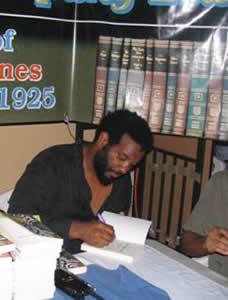
De Jamaicaanse schrijver Colin Channer werd geboren op 13 oktober 1963 in Kingston. Zie ook mijn blog van 13 oktober 2010 en eveneens alle tags voor Colin Channer op dit blog.

Uit: Satisfy My Soul

“Ride all over me,” she whispered. “Find water.”
Chadwick leans toward me.
“On my final night on earth I would experiment with pork.”
“You would cook it in a whole new way?”
“More than that. I’ve never had it. My father was a member of the Nation of Islam. My mother is a Jew.”
“So you’re mixed,” he says appraisingly. His voice is engaged but impersonal, as if I were a piece of art. “I would not have known.”
“And now you do. What does that mean?”
“Well . . . nothing.”
“So why did you ask? What does it mean in terms of reparations? Do I get less for being a diluted brother or do I get a little extra for the Holocaust?”
“And what would be your book?” he asks me after we have sailed a mile in silence.
“I would read the Book of Psalms. I’d listen to “Redemption Song” and some fish and bread with my closest friend Kwabena Small, the best playwright I know.”
“And what would be the other choice? The woman?”
I burrow through the crates that line the basement of my mind and mount a retrospective of my lovers. It’s an exhibit of ambitious scope. The catalog is thicker than a phone book. I can’t decide. But I know that I have loved them all . . . at some time . . . in some way . . . with some degree of faithfulness and truth.
We argue politics until we disembark at Rafter’s Rest, a restaurant and bar that occupies what used to be a rambling house: white walls, soft arches, slim columns.”
 

 1665026-27fc32b37f965c121fea8f1ac0c75260.jpg
Colin Channer (Kingston, 13 oktober 1963)


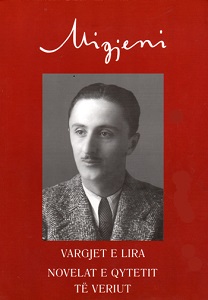
De Albanese dichter Migjeni (eigen. Millosh Gjergj Nikolla) werd geboren op 13 oktober 1911 in Shkodra. Zie ook mijn blog van 13 oktober 2010 en eveneens alle tags voor Migjeni op dit blog.


Scandalous Song

A pale-faced nun who with the sins of this world
Bears my sins, too, upon her weary shoulders,
Those shoulders, wan as wax, which some deity has kissed,
Roams the streets like a fleeting angel.

A pale-faced nun, cold as a marble tomb,
With greyish eyes like the ashes of spent desires,
With thin red-ribbon lips, tightly pressed to smother her sighs,
A chilling image of her has lingered in my memory.

From pious prayers she comes and to her prayers she returns.
In downcast eyes, in lips, in folded hands her prayers repose.
Without her prayers what fate would be the world's?
Yet they cannot stop another day from dawning.

Oh, nun so pale, making love to the saints,
Consumed in ecstasy before them like an altar candle,
Revealing herself to them..., oh, how I envy the saints,
Pray not for me, for I am hell-bent with desire.

You and I, nun, are two ends of a rope,
On which two teams tug one against the other -
The struggle is stern and who knows how it will end,
So, tug the rope, let the teams contend.
 

 1665026-effe2fe6af4aa5fe7b3d15207d7fa7d3.jpg
Migjeni (13 oktober 1911 – 26 augustus 1938)
Cover


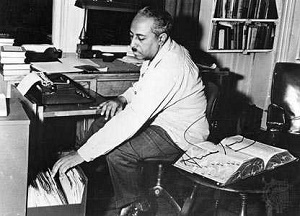
De Amerikaanse dichter en schrijver Arna Wendell Bontemps werd geboren op 13 oktober 1902 in Alexandria in Louisiana. Zie ook mijn blog van 13 oktober 2010 en eveneens alle tags voor Arna Wendell Bontemps op dit blog.

Uit: God Sends Sunday

“As a child, on the Red River plantation where he was born, Little Augie was not required to chop cotton or work in the rice swamp like the other boys of his age. He was considered too frail for hard labor. Instead it became his duty to mind the cows when they grazed in the clover fields and to lead the horses to the watering-place.
Augie lived with his grown sister, Leah, in the same quarters in which he had been born shortly after the 'Mancipation and in which his old dead mammy had been a slave. He was a thin, undersized boy, smaller for his years than any other child on the place, and he had round pop-eyes. But he enjoyed a certain prestige among the black youngsters, and older folks as well, because of the legend that he was lucky, a legend that had attended him since birth, due to a mysterious veil with which he had entered the world.
Set apart from his mates by these circumstances, Little Augie soon grew to be miserable. In his heart he felt inferior to the strong, healthy children who worked alongside the grown-ups in the fields. He became timid in the presence of unfamiliar people and fell into the habit of stuttering when he tried to talk.
Sometimes, to amuse himself, Augie would follow the men out to plow the fields and then ride the horses home for them in the evening. It pleased him to sit on the back of the old lead mare and watch the other animals string along behind. It made him feel good to be directing the procession, shouting at the tired critters and giving the orders to start and stop. So, as he grew older, Augie spent more and more time with the animals. He became a competent rider. Curiously, he did not feel timid when he was riding ormanaging a fine horse; he felt big. And he loved horses for that reason.
Augie had also one other diversion. He liked to watch the river boats that came puffing around the bend and past the plantation now and again. Especially was he fascinated by the P. T. Blain that came on alternate Wednesdays, because it was the one that stopped at the tiny wooden landing in sight of the quarters.”
 

 1665026-1e4be0d2d7b0a40dd8af2921659a47aa.jpg
Arna Wendell Bontemps (13 oktober 1902 – 4 juni 1973)


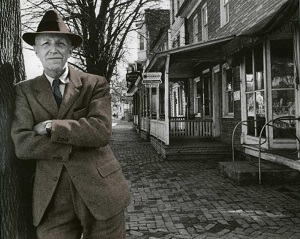
De Amerikaanse schrijver Conrad Richter werd geboren op 13 oktober 1890 in Pine Grove, Pennsylvania. Zie ook mijn blog van 13 oktober 2010 en eveneens alle tags voor Conrad Richter op dit blog.

Uit: The Town

“The moving part she put off till the very last.  The truth was she hated to leave the cabin.  Most of her life had she lived here. Now she would have to give it up for a place where it looked like she was putting on airs, thinking herself better than ordinary folks.  The last day she kept looking about the cabin.  How many times had she stood at the fire with her long-handed pan, or gone down on her knees of a morning to puff at the coals.  This ladder and those steps, how often had she climbed them when one of the young ones lay abed ailing.  Why, forty years of her life had she spent between these log walls.  And now she had to go and leave them."
(…)

"But the most alien thing was Rosa's mother sitting here with him, her tangled hair falling over the soiled shoulders of her once fine dress with tassels.  She was reading a book in the darkest corner as if she had owl's or cat's eyes.  Right in the middle of all this dirt and disorder she sat at her ease, and in the middle of the day when women still had most of their work to do."
 

 1665026-0e00eaeb225890c809f31d6392e82a47.jpg
Conrad Richter (13 oktober 1890 – 30 oktober 1968)


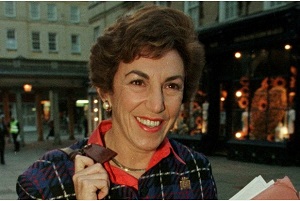
De Britse romanschrijfster en gewezen politica Edwina Currie werd geboren in Liverpool op 13 oktober 1946.Zie ook alle tags voor Edwina Currie op dit blog en ook mijn blog van 13 oktober 2010.

Uit: Diaries

“Clapham, Thursday, March 13, 10.08pm
John joined me and some other MPs in the tearoom on Tuesday. We were talking about clubs, and how even the Carlton club in London won’t have women as full members.
‘I think that sort of attitude is terrible,’ said the PM, between mouthfuls of buttered teacake. We all blinked at him, then I said testily, ‘Well, we could have done something about it. Removed the clubs’ rights to ignore the law on discrimination. You’d have got it through with a big majority.’
The PM looked surprised. It was clear the idea had never occurred to him. I was so disgusted that I rose to leave, in case I said something very sharp.
As for the planned facelift: I’ve now seen Dr C. He has a house next to Harrods with a grand piano in the waiting-room, which had a rapid succession of anxious blonde Sloanes, mainly in their 30s.
Breast implants, at a guess. They were all too willowy to need liposuction — nowt to suck!”
 

 1665026-4006203f8ae0b431559ba58672cd6b6e.jpg
Edwina Currie (Liverpool, 13 oktober 1946)
Geschreven door Romenu om 18:38 Reageer op dit bericht

Friedenspreis des deutschen Buchhandels 2014 voor Jaron Lanier


Friedenspreis des deutschen Buchhandels 2014 voor Jaron Lanier

Aan de Amerikaanse computer wetenschapper en schrijver Jaron Lanier werd gisteren in de Frankfurter Paulskerk de Friedenspreis des Deutschen Buchhandels uitgereikt.

De Amerikaanse computer wetenschapper, schrijver, componist en beeldend kunstenaar Jaron Lanier werd geboren in New York op 3 mei 1960. Hij is de auteur van “You Are Not A Gadget: A Manifesto” en “Who Owns The Future?” Laniers naam wordt ook vaak geassocieerd met het onderzoek naar Virtual Reality Hij bedacht dan wel populariseerde de term 'Virtual Reality' en in de vroege jaren 1980 richtte hij VPL Research op, het eerste bedrijf dat VR producten verkocht. Hij leidde het team dat de eerste veelgebruikte software platform architectuur ontwikkelde voor immersieve virtual reality-toepassingen. Van 1997 tot 2001 was Lanier de Chief Scientist van Advanced Network en Services, waar het Ingenieursbureau van Internet2 deel van uitmaakte en werkte hij als de Lead Scientist van de National Tele-immersion Initiative, een coalitie van universiteiten die onderzoek deden naar geavanceerde toepassingen voor Internet2. Van 2001 tot 2004 was hij Visiting Scientist bij Silicon Graphics Inc, waar hij oplossingen voor kernproblemen in telepresence en tele-immersie ontwikkelde. Lanier ontving o.a. een eredoctoraat van de New Jersey Institute of Technology in 2006, de CMU's Watson award in 2001 en een Lifetime Career Award van de IEEE in 2009 voor bijdragen aan Virtual Reality. Hij schrijft en spreekt over tal van onderwerpen, met inbegrip van hightech bedrijven, de sociale gevolgen van technologie, de filosofie van bewustzijn en informatie, internetpolitiek en de toekomst van het humanisme. Zijn artikelen verschenen in The New York Times, Discover, The Wall Street Journal, Forbes, Harpers Magazine, The Sciences, Wired Magazine en Scientific American.

Uit: Digital Passivity (Artikel in The Herald Tribune, 2013)

“I wish I could separate the two big trends of the year in computing — the cool gadgets and the revelations of digital spying — but I cannot.
Back at the dawn of personal computing, the idealistic notion that drove most of us was that computers were tools for leveraging human intelligence to ever-greater achievement and fulfillment. This was the idea that burned in the hearts of pioneers like Alan Kay, who a half-century ago was already drawing illustrations of how children would someday use tablets.
But tablets do something unforeseen: They enforce a new power structure. Unlike a personal computer, a tablet runs only programs and applications approved by a central commercial authority. You control the data you enter into a PC, while data entered into a tablet is often managed by someone else.
Steve Jobs, who oversaw the introduction of the spectacularly successful iPad at Apple, declared that personal computers were now ‘‘trucks’’ — tools for working-class guys in T-shirts and visors, but not for upwardly mobile cool people. The implication was that upscale consumers would prefer status and leisure to influence or self-determination.
I am not sure who is to blame for our digital passivity. Did we give up on ourselves too easily?
This would be bleak enough even without the concurrent rise of the surveillance economy. Not only have consumers prioritized flash and laziness over empowerment; we have also acquiesced to being spied on all the time.
The two trends are actually one. The only way to persuade people to voluntarily accept the loss of freedom is by making it look like a great bargain at first.
Consumers were offered free stuff (like search and social networking) in exchange for agreeing to be watched. Vast fortunes can be made by those who best use the personal data you voluntarily hand them. Instagram, introduced in 2010, had only 13 employees and no business plan when it was bought by Facebook less than two years later for $1 billion.
One can argue that network technology enhances democracy because it makes it possible, for example, to tweet your protests. But complaining is not yet success. Social media didn’t create jobs for young people in Cairo during the Arab Spring.  
To be free is to have a private zone in which you can be alone with your thoughts and experiments. That is where you differentiate yourself and grow your personal value. When you carry around a smartphone with a GPS and camera and constantly pipe data to a computer owned by a corporation paid by advertisers to manipulate you, you are less free. Not only are you benefiting the corporation and the advertisers, you are also accepting an assault on your free will, bit by bit."


 1664832-c29c5d14baa19af00047e50ff06ed2b9.jpg
Jaron Lanier (New York City, 3 mei 1960)

Geschreven door Romenu om 09:36 Reageer op dit bericht

Richard Howard

De Amerikaanse dichter, literair criticus, essayist en vertaler Richard Joseph Howard werd geboren op 13 oktober 1929 in Cleveland, Ohio. Howard (wiens achternaam bij de geboorte onbekend was) iwerd als kind geadopteerd door Emma Joseph en Harry Orwitz, een middle-class Joods echtpaar. Zijn moeder veranderde hun laatste namen in "Howard" na de scheiding van haar man. Howard ontmoette zijn biologische ouders nooit, noch zijn zus, die door een ander plaatselijk gezin werd geadopteerd. Howard is homo, een feit dat vaak naar voren komt in zijn meer recente werk. Na zijn studie Franse letterkunde aan de Sorbonne in 1952-53 had Howard een korte vroege carrière als lexicograaf. Hij richtte al snel zijn aandacht op poëzie en poëtische kritiek, en won de Pulitzer Prize voor poëzie voor zijn in 1969 verschenen bundel “Untitled Subjects”, die dramatische fictieve brieven en monologen van 19e eeuwse historische figuren tot onderwerp had. Howard was een vruchtbaar literair criticus, Zijn monumentale bundel “Alone With Amerika” uit 1969 telde 594 pagina's en behandelde 41 Amerikaanse dichters (zes van hen vrouwen). Hij werd bekroond met de PEN Translation Prize in 1976 voor zijn vertaling van EM Ciorans "A Short History of Decay" en in 1983 de National Book Award voor zijn vertaling van Baudelaire's “Les Fleurs du Mal”. Howard was lange tijd poëzie-redacteur van The Paris Review en is momenteel poëzie-redacteur van The Western Humanities Review. Hij ontving ook een Pulitzer prijs, the Academy of Arts and Letters Literary Award en een MacArthur Fellowship. In 1985 ontving Howard de PEN / Ralph Manheim Medaille voor Vertaling. Hij was hoogleraar Engels aan de Universiteit van Houston en, daarvoor Ropes hoogleraar vergelijkende literatuurwetenschap aan de Universiteit van Cincinnati. Hij was Poet Laureate van de staat New York van 1993 tot 1995. In 1982, werd Howard door de regering van Frankrijk benoemd tot Chevalier de L'Ordre National du Mérite.


Like Most Revelations

It is the movement that incites the form,
discovered as a downward rapture--yes,
it is the movement that delights the form,
sustained by its own velocity.And yet

it is the movement that delays the form
while darkness slows and encumbers; in fact
it is the movement that betrays the form,
baffled in such toils of ease, until

it is the movement that deceives the form,
beguiling our attention--we supposed
it is the movement that achieves the form.
Were we mistaken?What does it matter if

it is the movement that negates the form?
Even though we give (give up) ourselves
to this mortal process of continuing,
it is the movement that creates the form.


209 Canal

Not hell but a street, not
Death but a fruit-stand
Devils just hungry devils
Simply standing around the stoops, the stoops.
We find our way, wind up
The night, wound uppermost,
In four suits, a funny pack
From which to pick ourselves a card, any card:
Clubs for beating up, spades
For hard labor, diamonds
For buying up rough diamonds,
And hearts, face-up, face-down, for facing hearts.
Dummies in a rum game
We cout the tricks that count
Waiitng hours for the dim bar
Like a mouth to open wider After Hours.


 1688090-6b9c22920cf15402fdae925e8cb6d915.png
Richard Howard (Cleveland, 13 oktober 1929)
 

Geschreven door Romenu om 00:00 Reageer op dit bericht

Eugenio Montale, Stefaan van den Bremt, Robert Fitzgerald, Paul Engle, Ann Petry, Louis Hemon, Paula von Preradović

De Italiaanse dichter Eugenio Montale werd geboren in Genua op 12 oktober 1896. Zie ook mijn blog van 12 oktober 2010 en eveneens alle tags voor Eugenio Montale op dit blog.


In de tuin

Je daalt de brede laan af
onder een zware azuurblauwe
zomerlucht. Een witte wolk
als van linnen verfrist
de zindering bij je aankomst.
We gaan zitten op het vertrouwde bankje.
Dan opeens een windvlaag
en je strooien hoed begint te tollen.
Je grijpt hem en gaat weer zitten.
Het groen van de grote zeeden is als
een opengevouwen zeil en voert ons weg.
Vanuit deze kust laveren we
langs alle kuststreken,
in een duet van namen, van herinneringen
helemaal terug tot Nervi.
Maar de zon daalt al,
verspreidt zijn prachtig licht in schuine stralen,
verdwijnt, komt terug, en de gedachte aan
avonden gelijk aan deze verdubbelt de horizonten,
vertaalt in andere dagen
dat vluchtig moment, dat verdwijnt.
Zelfs de wind zwijgt nu


Vertaald door Ansje Weima en Kees Godefrooij


De zwaluw

De zwaluw op de tegels opgekruld
had teer op zijn vleugels, vliegen
kon hij vergeten.
Gina, die hem verpleegde,
wreef taaie klonten los met watten zwaar
van olie en eau de cologne, ze kamde zijn veren,
borg hem weg in een mandje, juist zo groot dat hij van lucht
nog iets zou weten.
Erkentelijk mocht je wel zeggen keek hij haar aan
met één oog, het andere zat dicht. Toen at hij twee korrels
rijst, een half slablad, sliep lang. De volgende dag
bij zonsopgang vloog hij ervandoor zonder ook maar
dank je te schreeuwen.
Het kamermeisje boven zag hem gaan.
Wat een haast, kwam ze zeggen. Wij hebben hem nota bene
van de katten gered! Maar ze kunnen het zelf altijd
beter.

Vertaald door Eva Gerlach


In de stilte

Algemene staking vandaag.
Geen mens te zien op straat.
Alleen een transistortje achter de muur.
Sinds kort moet daar iemand wonen.
Hoe moet het nu verder met de productie?
Zelfs de lente talmt om in productie te komen.
De verwarming is voortijdig uitgezet.
De post, beseft men, is van geen belang.
Elk raderwerk moet vroeg of laat eens stokken.
Zelfs de doden werken mee aan het protest.
Zij dragen tot de algemene stilte bij.
Jij ligt onder een zerk. Je wekken heeft geen zin
omdat je altijd wakker bent. Ook vandaag,
nu alles en iedereen slaapt.

Vertaald door Frans Denissen


 1664576-7c5fca7ba59cce56d35184c13c12e48a.jpg
Eugenio Montale (12 oktober 1896 - 12 september 1981)
Portret door Renato Guttuso, 1939


De Vlaamse dichter en essayist Stefaan van den Bremt werd geboren in Aalst op 12 oktober 1941. Zie ook mijn blog van 12 oktober 2010 en eveneens alle tags voor Stefaan van den Bremt op dit blog.


Waakvlam

Eén grote waakvlam is de dag. Een baai
van goud en diepblauw is de hemel. Jij
zit in de tuin en kijkt op als een kraai
hikt van de hitte en krast, of op een lei-
en dak gegriffeld wordt. Je zit te schrij-
ven in het eerste leerjaar. Hou je taai,
't is hanepoot en baksteen. Ben je blij-
ven zitten? En nog vind je niet de draai?
Alleen waar vuur heerst, heilig vuur, ontwaakt
de ware schrijfaandrift. Dat vuur volmaakt
het handwerk van het schrijven, een gedreven
aaneenrijgen van letters die gaan leven
en naderhand het woord, de zin, los zand
tot glas versmolten, hard en transparant.


Reis om mijn schrijftafel

Sterrenbeelden schietend uit de dierenriem -
Weegschaal uit balans, ascendant: Sextant -
en tussen aardgordels de koers bijster.
De hemel was een valkuil in de wolken.

Overleven? Een werk van lange adem. Nood
brak wet en lente vorst, de dronken boot
de klip. De rekening volgde op het bordje
dat ik zelf te berde had gebracht. Van één

kwamen er andere gedichten: het onpare paar
ten dans, ten baltsdans in een zwermcel.
Mezelf moeizaam herinnerend met ogen

vol vergetelheid, reisde ik, rovend in den
vreemde wat mij na is: een verbeelde boedel,
onveilbaar, die ik je vers voor vers vermaak.


 1664576-c6698fbab29a3fc09e5274435e3c1076.jpg
Stefaan van den Bremt (Aalst, 12 oktober 1941)


De Amerikaanse dichter, criticus en vertaler Robert Stuart Fitzgerald werd geboren op 12 oktober 1910 in Springfield, Illinois. Zie ook mijn blog van 12 oktober 2010 en eveneens alle tags voor Robert Fitzgerald op dit blog.


Counselors (Fragment)

Whom should I consult? Philosophers  
Are happy in their homes and seminars.
See this one with the mischievous bright childlike  
Gaze going out through walls and air,  
A tangent to the bent rays of the star.  
Hear the chalk splutter, hear the groping voice:  
Conceive the demiurge in his perpetual  
Strife with the chaos of the universe,  
That humming equilibrium of creation  
Pure and enormous, crossed by the constant  
Light of unimaginable combustion:  
Teems, how it teems. An elm tree sighs  
Beyond the dusty windowledge of June.  
As in the mind the notes of a melody  
Vibrate when vibration’s gone, a series  
Generated by a decimal has no end;  
Observe it closely, though; it stops when it stops.  
The frail spectacles are bedimmed with spring.


But whom should I consult? Well-seasoned men,  
Ruddy with business or the salty summer,  
Autumnal in their woolens, gaze
Toward the quick plumes above the city.  
A frosty morning sun reddens the river.  
This one is meditative and well-qualified:  
Decently shined, one heavy saddle-dark  
Perforated brogan swings from the swivel  
Chair arm; leaning back, the head
Well-cropped and grey, the experienced
Eyes quiet, with one highlighted pupil.  
A reader of Herodotus in the evening.  
The road was in receivership, the mills  
Were in receivership, the bondholders  
Suitably informed would not dissent  
From an able plan of reorganization.  
Easy did it.


 1664576-a7d4ca81b0ecbad59bf433c3dc1efcac.jpg
Robert Fitzgerald (12 oktober 1910 – 16 januari 1985)


De Amerikaanse dichter en schrijver Paul Engle werd geboren op 12 oktober 1908 in Cedar Rapids. Zie ook alle tags voor Paul Engle op dit blog en ook mijn blog van 12 oktober 2010.


Tourist

I am an American tourist in my room writing letters.
Outside the air of Calcutta trembles in the terrible heat.
Air conditioning gently wraps me in cool air.
I call room service and the cold drinks
fly in like tame birds on my bearer's hand.

The Wisdom of the East, I decide, drinking,
would be wiser if it used more American devices
to give the body ease, thus freeing the mind
for meditation on eternity.

I sit there writing careful English,
wanting to make the deliberate phrases prove
that I really am here in an Asian country,
a jet-propelled Marco Polo,
my blood stream brave with shots and antibodies.

Outside the window, screams.
They go on and on, each an echo of the other,
in a dark, small, desperate voice.

I am outraged by that rage.

Who can write words, hearing that wordless noise?
Did I fly over oceans and mountains
to sit here and yell at that yelling?

I rush out to the street
wearing indignation and a dark businessman's suit.

Sound stops.

A thin and hungry woman has just given
her brown breast to a hungry child.
Nothing of her has fulness but that breast.

In this heat, even my eyes sweat!

I wrap my shame in a smile like spit in a Kleenex.


 1664576-9ae7c367678caf9a6f628de39f7cd0d8.jpg
Paul Engle (12 oktober 1908 – 25 maart 1991)


De Amerkaanse schrijfster Ann Petry werd geboren op 12 oktober 1908 in Old Saybrook, Connecticut. Zie ook alle tags voor Ann Petry op dit blog en ook mijn blog van 12 oktober 2010.

Uit: The Street

“He looked out toward the lobby of the hotel, attracted by the sound of voices. A white cop was arguing with a frowzy-looking girl who had obviously had too much to drink.
"I got a right in here. I'm mindin' my own business," she said with one eye on the bar.
"Aw, go chase yourself." The cop gave her a push toward the door. She stumbled against a chair.
William watched her in amusement. "Better than a movie," he told himself.
She straightened up and tugged at her girdle. "You white son of a bitch," she said.
The cop's face turned a furious red. He walked toward the woman, waving his nightstick. It was then that William saw the soldier. Tall Straight. Creases in his khaki pants. An overseas cap cocked over one eye. Looks like Sam looked that one time he was home on furlough, he thought.
The soldier grabbed the cop's arm and twisted the nightstick out of his hand. He threw it half the length of the small lobby. It ratted along the floor and came to a dead stop under a chair.
"Now what'd he want to do that for?" William said softly.
(…)

“She held the paper in her hand for a long time, trying to follow the reasoning by which that thin ragged boy had become in the eyes of a reporter a 'burly Negro.' And she decided that it all depended on where you sat how these things looked. If you looked at them from inside the framework of a fat weekly salary, and you thought of colored people as naturally criminal, then you didn't really see what any Negro looked like. You couldn't because the Negro was never an individual. He was a threat, or an animal, or a curse, or a blight, or a joke.”


 1664576-86bd5abb40606208a798dfeacbc94acf.jpg
Ann Petry (12 oktober 1908 – 28 april 1997)
Cover 


De Franse schrijver Louis Hemon werd geboren op 12 oktober 1880 in Brest in Bretagne. Zie ook alle tags voor Louis Hemon op dit blog en eveneens mijn blog van 12 oktober 2010.

Uit: Maria Chapdelaine

« ─ Les travaux du quai vont recommencer... J'ai reçu de l'argent du gouvernement, et tous ceux qui veulent se faire engager n'ont qu'à venir me trouver avant les vêpres.  Si vous voulez que cet argent-là reste dans la paroisse au lieu de retourner à Québec, c'est de venir me parler pour vous faire engager vitement.
Quelques-uns allèrent vers lui; d'autres, insou¬ciants, se contentèrent de rire.  Un jaloux dit à demi¬-voix:
─ Et qui va être un foreman à trois piastres par jour?  C'est le bonhomme Laliberté...
Mais il disait cela plus par moquerie que par malice, et finit par rire aussi.
Toujours les mains dans les poches de son grand manteau, se redressant et carrant les épaules sur la plus haute marche du perron, Napoléon Laliberté continuait à crier très fort.
─ Un arpenteur de Roberval va venir dans la paroisse la semaine prochaine.  S'il y en a qui veulent faire arpenter leurs lots avant de rebâtir les clôtures pour l'été, c'est de le dire.
La nouvelle sombra dans l'indifférence.  Les cul¬tivateurs de Péribonka ne se souciaient guère de faire rectifier les limites de leurs terres pour gagner ou per¬dre quelques pieds carrés, alors qu'aux plus vaillants d'entre eux restaient encore à défricher les deux tiers de leurs concessions, d'innombrables arpents de forêt ou de savane à conquérir.
Il poursuivait:
─ Il y a icitte deux hommes qui ont de l'argent pour acheter les pelleteries.  Si vous avez des peaux d'ours, ou de vison, ou de rat musqué, ou de renard, allez voir ces hommes-là au magasin avant mercredi ou bien adressez-vous à François Paradis, de Mistassini, qui est avec eux.  Ils ont de l'argent en masse et ils paye¬ront cash pour toutes les peaux de première classe.
Il avait fini les nouvelles et descendit les marches du perron.  Un petit homme à figure chafouine le remplaça.
─ Qui veut acheter un beau jeune cochon de ma grand-race? demanda-t-il en montrant du doigt une masse informe qui s'agitait dans un sac à ses pieds. »


 1664576-4c87e2320275749ac9fadb5118585040.jpg
Louis Hemon (12 oktober 1880 - 8 juli 1913)
Affiche in Brest 


De Oostenrijkse dichteres en schrijfster Paula von Preradović werd geboren op 12 oktober 1887 in Wenen. Zie ook alle tags voor Paula von Preradović op dit blog.


Trabakel

Es fahren die Fischer um Scombri heut aus.
Borin bläht die blutrot bemalten Lateiner;
Im Frischen der Brise wird blässer und kleiner
Die Kiefer der Küste, des Zollwächters Haus.

Es schlagen die Segel beim Reffen und Wenden.
Es feuern die Männer, sie kochen und kauern
Am Boden des Bootes beim Wein und den sauern
Fisolen, getreulich die Taue in Händen.

Zum Abend, da müssen die Netze sie heben.
Von schuppichtem Zappeln, von silbrigem Leben
Ist blinkend die bauchige Barke bewohnt.

Heimkehren die Müden in Traumesgedanken.
So schwarz wie der Wein, den die Durstigen tranken,
Erdunkelt ihr Segel im sinkenden Mond.


 1664576-2b97e706094f979b74b6f98573230e8e.jpg
Paula von Preradović (12 oktober 1887 – 25 mei 1951)

Geschreven door Romenu om 14:24 Reageer op dit bericht

Meer van Romenu

↑ Terug naar de berichten