Naar de inhoud

Romenu

Over literatuur, gedichten, kunst en cultuur
akke.beakke.be

Berichten van 20 november 2014 tot 21 november 2014

Wouter Steyaert, Isaac Bashevis Singer, Margriet de Moor, Gerard Koolschijn, Marilyn French, Freya North, Voltaire

De Vlaamse dichter Wouter Steyaert werd geboren in Gent op 21 november 1982. Zie ook alle tags voor Wouter Steyaert op dit blog.


het wordt wettelijk geregeld

er kruipen mieren door me heen
maar niet als kogels - als hele kleine
dames die daar niets te zoeken hebben

het is echter niet verboden - niet van mij
noch van hen - mij te betreden

zonder sleutel of slot - zelfs een kijkgat
is hen te veel - en dat mag allemaal

er kruipen mieren door mijn hoofd
en ik word er wit van
ik word er ovaal en theatraal van

anderzijds kruip ik ook als een mier
dus als een hele grote dame
met een wit hoofd, ovaal en theatraal

die niets te zoeken heeft dan kogels
en dat mag ook


Kassa

Ik kocht zeep in Delhaize.
Aan de kassa struikelde ik
over mijn schoenveters.

Ik probeerde mij
vast te klampen
aan de knieën
van de dame voor mij.

Zij schrok hevig
en vond dat ik stonk.
Zij reed met haar karretje over mij.

Ik had pijn en riep om hulp.

Nadien raapte een kassierster
mij op. Zij was lief.

Zij had geen diploma.
Daarom weigerde ik
verder contact.


 1683005-f6bb2ade4bc71ce73361c74ee7b82e20.jpg
Wouter Steyaert (Gent, 21 november 1982)


De Amerikaans-Poolse schrijver Isaac Bashevis Singer werd geboren op 21 november 1904 als Isaac Hertz Singer in Radzymin, Polen. Zie ook alle tags voor Isaac Bashevis Singer op dit blog.

Uit: Fool's Paradise

“In despair, Kadish went to consult a great specialist, celebrated for his knowledge and wisdom. His name was Dr. Yoetz. After listening to a description of Atzel's illness, he said to Kadish, "I promise to cure your son in eight days, on one condition. You must do whatever I tell you to, no matter how strange it may seem."
Kadish agreed, and Dr. Yoetz said he would visit Atzel that same day. Kadish went home and told his wife, Aksah and the servants that all were to follow the doctor's orders without question.
When Dr. Yoetz arrived, he was taken to Atzel's room. The boy lay on his bed, pale and thin from fasting.
The doctor took one look at Atzel and called out, "Why do you keep a dead body in the house? Why don't you make a funeral?"
On hearing these words the parents became terribly frightened, but Atzel's face lit up with a smile and he said, "You see, I was right."
Although Kadish and his wife were bewildered by the doctor's words, they remembered Kadish's promise, and went immediately to make arrangements for the funeral.
The doctor requested that a room be prepared to look like paradise. The walls were hung with white satin. The windows were shuttered, and draperies tightly drawn. Candles burned day and night. The servants were dressed in white with wings on their backs and were to play angels.
Atzel was placed in an open coffin, and a funeral ceremony was held. Atzel was so exhausted with happiness that he slept right through it. When he awoke, he found himself in a room he didn't recognize. "Where am I?" he asked.
"In paradise, my lord," a winged servant replied.
"I'm terribly hungry," Atzel said. "I'd like some whale flesh and sacred wine."
The chief servant clapped his hands and in came men servants and maids, all with wings on their backs, bearing golden trays laden with meat, fish, pomegranates and persimmons, pineapples and peaches. A tall servant with a long white beard carried a golden goblet full of wine. Atzel ate ravenously. When he had finished, he declared he wanted to rest. Two angels undressed and bathed him, and carried him to a bed with silken sheets and a purple velvet canopy. Atzel immediately fell into a deep and happy sleep.”


 1683005-fb24358445485a2c116aa0160dda3865.jpg
Isaac Bashevis Singer (21 november 1904 – 24 juli 1991)


De Nederlandse schrijfster Margriet de Moor werd als Margaretha Maria Antonetta Neefjes op 21 november 1941 in Noordwijk geboren. Zie ook alle tags voor Margriet de Moor op dit blog.

Uit: Mélodie d'amour

“Een meter of vijftig verderop had je in die tijd nog een stukje binnenstad dat niet alleen de bommen had overleefd, maar ook de bouwrazernij van de eerste decennia na de oorlog. Het is dinsdag 10 november 1970. Niets in dat wijkje daarginds is verbrand, ingestort of zelfs maar dichtgetimmerd geweest. In een van die koppige huisjes, met als verdieping een vliering waar je netaan kon staan – maar zij kón toen al niet meer staan – heeft Atie na de scheiding haar intrek genomen. Eergisteren is ze gestorven. Gustaaf Doesburg legt het laatste stuk te voet af, nieuwsgierig, vastbesloten, bang, en slaat rechtsaf de steeg in die naar de binnenplaatsjes achter de huizen voert. Uitgerekend Luuk, haar lieveling, heeft het gebod van de moeder overtreden en de vader bericht dat het voorbij is. Gebeurd.
Het clandestiene telefoontje heeft hem de dag tevoren bereikt toen hij alleen thuis was, net gedoucht en op slippers na het werk. Het trof hem als een fysieke opdoffer, een dreun in zijn maag, maar hij reageerde nog voor de dreun uit hem wegtrok, naar zijn aard, drastisch.
Hij zei tegen zijn zoon dat hij haar nog één keer wilde zien. ‘Dat kan niet, pappa.’
Ze wisten dat. Ze wisten dat allebei drommels goed. Toch voerden Gustaaf en Luuk dit dialoogje van niks waarin een hun volledig bekend miserabel feit nog eens werd aangehaald en beklonken. Dialoogje van niks of niet, het hoort wél thuis in het script van hun familiegeschiedenis, in de lotgevallen van Atie en Gustaaf Doesburg-Maas en hun zoons Kaspar, Wijnand, Jan en Luuk. (Dat de vier broers ook nog een halfzusje hebben, Dittie, is een verhaal apart.)
Atie dood… was het mogelijk?”


 1683005-b28e7ff6a4e9250a15f3933184e2a3a7.jpg
Margriet de Moor (Noordwijk, 21 november 1941)


De Nederlandse schrijver en vertaler Gerard Koolschijn werd op 21 november 1945 in Den Haag geboren. Zie ook alle tags voor Gerard Koolschijn op dit blog.

Uit: Geen sterveling weet

“Mijn zonen lagen nog in bed. Ik wachtte al meer dan een uur.
Intussen werd geteld per tien minuten, de spanning steeg.
In de wedstrijdkooi werd gedrongen en gescholden.
Ik herkende gezichten om me heen. Nu werden de minuten afgeteld.
En van de laatste halve minuut de seconden.
Met nog tien seconden te gaan klonken overal uit de kooien schorre uitroepen, niet van aanmoediging, niet van vreugde, maar akelige, losse kreten.
Bij zes, vijf, vier seconden zwollen ze aan, kreten van ontzetting leken het.
En toen het schot door de hal barstte kwam uit die duizenden kelen één woeste schreeuw, rauw, monotoon, diep uit de lijven, vol bitterheid en woede op de tijd, een grimmige triomfkreet
over leven dat de dood versloeg, want de tocht was gekomen, de tocht was begonnen, nog was alles niet verloren. De wedstrijdrijders braken uit.


 1683005-9c3fcd23a2f0d761f3b8e3a323d53f81.jpg
Gerard Koolschijn (Den Haag, 21 november 1945)
Den Haag, Gravenstraat


De Amerikaanse schrijfster en literatuurwetenschapster Marilyn French werd geboren op 21 november 1929 in New York. Zie ook alle tags voor Marilyn French op dit blog.

Uit: The Women's Room

“She could envision Shakespeare's sister. But she imagined a violent, an apocalyptic end for Shakespeare's sister, whereas I know that isn't what happened. You see, it isn't necessary. I know that lots of Chinese women, given in marriage to men they abhorred and lives they despised, killed themselves by throwing themselves down the family well. I'm not saying it doesn't happen. I'm only saying that isn't what usually happens. It it were, we wouldn't be having a population problem. And there are so much easier ways to destroy a woman. You don't have to rape or kill her; you don't even have to beat her. You can just marry her. You don't even have to do that. You can just let her work in your office for thirty-five dollars a week. Shakespeare's sister did...follow her brother to London, but she never got there. She was raped the first night out, and bleeding and inwardly wounded, she stumbled for shelter into the next village she found. Realizing before too long that she was pregnant, she sought a way to keep herself and her child safe. She found some guy with the hots for her, realized he was credulous, and screwed him. When she announced her pregnancy to him, a couple months later, he dutifully married her. The child, born a bit early, makes him suspicious: they fight, he beats her, but in the end he submits. Because there is something in the situation that pleases him: he has all the comforts of home including something Mother didn't provide, and if he has to put up with a screaming kid he isn't sure is his, he feels now like one of the boys down at the village pub, none of whom is sure they are the children of the fathers or the fathers of their children. But Shakespeare's sister has learned the lesson all women learn: men are the ultimate enemy. At the same time she knows she cannot get along in the world without one. So she uses her genius, the genius she might have used to make plays and poems with, in speaking, not writing. She handles the man with language: she carps, cajoles, teases, seduces, calculates, and controls this creature to whom God saw fit to give power over her, this hulking idiot whom she despises because he is dense and fears because he can do her harm.”
 

 1683005-4f0a1dd9fa77c953205a722a5ec7bd9f.JPG
Marilyn French (New York, 21 november 1929 – 2 mei 2009)
Cover 


De Britse schrijfster Freya North werd geboren op 21 november 1967 in Londen. Zie ook alle tags voor Freya North op dit blog en ook mijn blog van 21 november 2010.

Uit: Ontbijt op bed (Vertaald door Nellie Keukelaar-van Rijsbergen)

"Onder de douche dacht Petra na. Was dit alles wat ze nodig had? Had een vlugge injectie van North Yorkshire haar ingeënt tegen hartzeer? Als ik mijn spullen zou inpakken en zou teruggaan, zou alles dan weer in orde zijn? Misschien. Wie weet trakteer ik mezelf op een welverdiende vakantie, want het is lang geleden dat ik vrij heb gehad. Wat liefde en aandacht schijnen wonderen te doen, maar misschien moest je daar eerst een eind voor reizen.
Na het ontbijt liep ze door de ommuurde tuin en ging een kijkje nemen in het kleine, maar goed uitgeruste atelier. Petra had besloten nog geen vertrekdatum vast te stellen. Aanvankelijk was dit uitstapje bedoeld om weg te rennen en aan te sterken, Londen te ontvluchten en Rob te ontlopen. Ze had nu al het gevoel dat het hier beter lukte om uit te rusten en te ontspannen. Ze zou er geen drama van maken en dit als een werkvakantie beschouwen die precies op het juiste moment kwam."


 1683005-5b4de2ae1a769bfc74b38b3b8b44a842.jpg
Freya North (Londen, 21 november 1967)


De Franse schrijver Voltaire, (pseudoniem van François-Marie Arouet)werd werd op 21 november 1694 geboren in Parijs. Zie ook alle tags voor Voltaire op dit blog.

Uit: Candide, of het optimisme (Vertaald door Hans van Pinxteren)

“ Maar met welk doel is deze wereld dan geschapen?’ vroeg Candide.
‘Om ons hoorndol te maken,’ antwoordde Martin.
(…)

‘Denkt u dat de mensen elkaar altijd hebben afgeslacht, zoals dat nu gebeurt?’ vroeg Candide. ‘Dat het altijd leugenaars, schurken, verraders, ondankbaren, rovers, zwakkelingen, losbollen, lafaards, jaloerse krengen, vreetzakken, dronkelappen, vrekken, strebers, sadisten, kwaadsprekers, wellustelingen, fanaten, hypocrieten en dwazen zijn geweest?’
‘Denkt u,’ zei Martin, ‘dat sperwers altijd duiven hebben opgegeten als ze die te pakken kregen?’
‘O, vast en zeker,’ zei Candide.
‘Nou dan,’ zei Martin, ‘als sperwers altijd dezelfde aard hebben gehad, waarom zouden de mensen dan veranderd zijn?’
‘Och,’ zei Candide, ‘er is toch wel een verschil, want de vrije wil…’


 1683005-8ec29da2d2d2a0c960f4bb746dead737.jpg
Voltaire (21 november 1694 – 30 mei 1778)
Standbeeld in Parijs 


Zie voor nog meer schrijvers van de 21e november ook mijn blog van 21 november 2011 deel 1 en eveneens deel 2.

Geschreven door Romenu om 18:22 Reageer op dit bericht

Ada Cambridge

De Australische dichteres en schrijfster Ada Cambridge werd geboren op 21 november 1844 in St Germans, Norfolk als tweede kind van Thomasine en Henry Cambridge, een herenboer. Zij werd opgeleid door gouvernantes, een ervaring die zij verafschuwde. Het was in feite een ongetrouwde tante die het meest heeft bijgedragen aan haar intellectuele ontwikkeling. Op 25 april 1870 trouwde zij met dominee George Frederick Cross en een paar weken later vertrok zij met haar man naar Australië, waar zij 30 jaar zouden blijven. Zij beschrijft hun ervaringen in “Thirty Years in Australia”. Cambridge leidde in eerste instantie het typische leven van een hardwerkende vrouw van een geestelijke op het platteland, maar haar gezondheid ging achteruit, om een aantal redenen, waaronder een bijna-fatale miskraam en ernstig ongeluk, maar zij bleef wel schrijven. In 1893 verhuisden zij en haar man verhuisde naar hun laatste parochie, Williamstown, in de buurt van Melbourne, en bleven daar tot 1909. In 1913 keerden zij terug naar Engeland, waar Cambridge bleef wonen tot zijn dood op 27 februari 1917. Daarna keerde zij naar Australië terug. Terwijl Cambridge begon te schrijven in de jaren 1870 om geld te verdienen waarmee zij haar kinderen kon ondersteunen, omspant haar carrière een periode vanaf 1865 toen “Hymns on the Litany” verscheen tot 1922, met het artikel 'Nightfall' in Atlantic Monthly. In 1875 verscheen haar eerste roman “Up the Murray” verscheen in de “Australasian” maar pas in 1890 met de publicatie van “A Marked Man”vestigde zij haar naam als schrijfster. Ondanks regelmatige goede recensies, waren er velen die haar bekritiseerden omdat zij niet schreef in de literaire traditie van die tijd. Zij was de eerste president van de Women Writers Club en had veel vrienden in de literaire wereld, waaronder Grace 'Jennings' Carmichael, Rolf Boldrewood, Ethel Turner en George Robertson. In 2005 werd de Ada Cambridge Prize in het leven geroepen die wordt toegekend voor het beste biografische verhaal van een lokale volwassen schrijver.


Faith

And is the great cause lost beyond recall?
Have all the hopes of ages come to naught?
Is life no more with noble meaning fraught?
Is life but death, and love its funeral pall?
Maybe. And still on bended knees I fall,
Filled with a faith no preacher ever taught.
O God -- MY God -- by no false prophet wrought --
I believe still, in despite of it all!

Let go the myths and creeds of groping men.
This clay knows naught -- the Potter understands.
I own that Power divine beyond my ken,
And still can leave me in His shaping hands.
But, O my God, that madest me to feel,
Forgive the anguish of the turning wheel!


The Dawn Of God's Sabbath

The dawn of God’s dear Sabbath
Breaks o’er the earth again,
As some sweet summer morning
After a night of pain;
It comes as cooling showers
To some exhausted land,
As shade of clustered palm trees
’Mid weary wastes of sand.

Lord, we would bring for offering
Though marred with earthly soil,
Our week of earnest labor,
Of useful daily toil;
Fair fruits of self denial,
Of strong, deep love to Thee,
Fostered by Thine own Spirit
In our humility.

And, we would bring our burden
Of sinful thought and deed,
In Thy pure presence kneeling,
From bondage to be freed;
Our heart’s most bitter sorrow
For all Thy work undone;
So many talents wasted!
So few bright laurels won!

And with that sorrow mingling,
A steadfast faith, and sure,
And love so deep and fervent,
That tries to make it pure;
In His dear presence finding
The pardon that we need;
And then the peace so lasting,
Celestial peace indeed!


 1833475-f519b90ecac34e9357b33eea9b3f2731.jpg
Ada Cambridge (21 november 1844 - 19 juli 1926)

Geschreven door Romenu om 00:00 Reageer op dit bericht

Sheema Kalbasi , Nadine Gordimer, Viktoria Tokareva, Thomas Chatterton, Don DeLillo, Zinaida Hippius

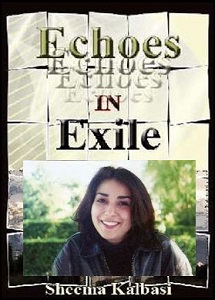
De Iraanse dichteres, vertaalster en mensenrechten-advocate Sheema Kalbasi werd geboren op 20 november 1972 in Teheran. Zie ook alle tags voor Sheema Kalbasi op dit blog.


Middle East

I dreamt that I was innocent
my naked skin
in touch with reality
and my soul was in search
to hear your -worldly- murmur: Peace

I offered you my love
wrapped in honesty
(pure to catch up with you)
shrunk with disbelief

I -asking you: Know me

with your gorgeousness
as you played with the waves
breaking one after another
taking them into your hands
touching them one after another

I wanted to be called with your name: just

what color was Peace?
the one you chose to paint me?
the one you narrowed into my heart and nested in my grave,
what color was it?

I am longing in my grave
to receive the flowers
with your hand written note: rest-in-peace- Middle East


5.7

I don’t care if you are you and I am I. I am not some exotic flower. Whatever coat you have on, I will put it on to warm me… and the shoes however small… I will walk in them to balance our height difference. You don’t need to convert for me; I have already converted to you. You see I never had a religion to begin with. I was born naked from all religions but your love.

I know that was not the point. I know there is no conversion. There is no coat, no balance, no shoes but the naked truth of me finding you first, not you finding me. You, whom will never know who I was when I was sitting on the white sheets.

Y o u, not b e s i d e m e.

And the words that are already written. The words that are already said, are already felt, and are already gone.

And I try to take them back into my empty bowl of hands. To put my hands on the chest. The chest into rest. The rest in to the heart. The beat back to the soul. The soul, back to what it was before you.

Alas! I am 5.7


 1682546-deb81280e6948914636c98bc3c75b2ee.jpg
Sheema Kalbasi (Teheran, 20 november 1972)


De Zuidafrikaanse schrijfster Nadine Gordimer werd geboren op 20 november 1923 in Springs. Zie ook alle tags voor Nadine Gordimer op dit blog.

Uit: No Time Like the Present

“He can’t see far among the bodies pressed around him. There are white hands among those raised in the stomping, chanting, so he couldn’t be so noticeably there, the absorption in purpose is blindly fervent, he knows from political rallies. In the mass you have no direction of your own, he is carried along in a surge towards the main gates of the campus. Outside between the street and the gates, another gathering—a few pausing in curiosity before turning away, others, some black men and women literally throwing their yelling weight about. All cling to gates too wide, tall and strong to shake: they’ve joined the students’ action.
He tries to make a way to other parts of the campus but progress is against powerful currents as urge drives each limb of the great body to join that. He reaches only the science block from where he had set out.
Did any of his academic colleagues to whom he’d been advised to kick arse attempt to be along with the uprising against tuition fees most of their students couldn’t pay (so the cell phones worn like ear ornament, who pays for the serial calls). The faculty coffee room may say, factually, the university couldn’t exist without tuition fees to supplement the government’s inadequate grant; ‘funding free education is that government’s affair’. No dereliction of the university’s responsibility towards students?
Did he have a place down there (he’s back up at his window again). Claim it—claim on him—because of his part, his deci- sion to get mixed up in providing scientific know-how and ingredients to make bombs, his Jabu, his children gestated in a black womb. There are bonfires signalling here, there, like the Guy Fawkes ones of his childhood commemorating a revo- lutionary arson he and his siblings had never heard of. One of the bundles of whatever was being fed smoking to the flames was very near the archeological museum where tooled stones are the reminder that young men rioting are the descendants of peoples who had skills before invaders brought others; he had a sudden fear not for himself but for what is an extension of self, the work, research that was in progress in the science faculty. What if they burst into the laboratories where climate change is being studied for solutions that would save their own existence on this planet.”


 1682546-dd194e88d43a78385184cb2ae453fa9b.jpg
Nadine Gordimer (20 november 1923 – 13 juli 2014)


De Russische schrijfster en scenariste Viktoria Tokareva werd geboren op 20 november 1937 in Leningrad (Sint Petersburg). Zie ook alle tags voor Viktoria Tokareva op dit blog.

Uit: Korrida

“- How much does a she-goat weigh? Sixty kolograms? asked Anikee.
- I don’t know, answered Lil’ka.
- No. You weigh sixty. That’s like a pig, but a goat weighs less. About thirty kilograms. I’ll have to ask Granny Panya about that. Granny Panya! – Anikeev called out.
(...)

When he came back, he saw that Lilka was standing in jeans and wearing a coat. She was pushing the puncho “fieruchello” into a denim backpack. She also shoved the terri-cloth robe and slippers into it.
- Where are you going? –Anikeev was surprised. –To the sauna?
- I am leaving you.
- Where are you going?
- I am leaving you and never coming back.
(..)

Anikeev put his arms around Lilka’s knees and under her arms. Picked her up and grunted.
-Don’t... --Lilka became frightened. –I am heavy. Like a pig. Fifty kilograms."


 1682546-81a076c085b1ed3029c51c9d62cdcbf1.jpg
Viktoria Tokareva (Leningrad, 20 november 1937)


De Engelse dichter en schrijver Thomas Chatterton werd geboren op 20 november 1752 in Bristol als zoon van een koster. Zie ook alle tags voor Thomas Chatterton op dit blog.


February (Fragment)

Whilst Envy, on a tripod seated nigh,
In form a shoe-boy, daubs the valu'd fruit,
And darting lightnings from his vengeful eye,
Raves about Wilkes, and politics, and Bute.

Now Barry, taller than a grenadier,
Dwindles into a stripling of eighteen;
Or sabled in Othello breaks the ear,
Exerts his voice, and totters to the scene.

Now Foote, a looking-glass for all mankind,
Applies his wax to personal defects;
But leaves untouch'd the image of the mind,
His art no mental quality reflects.

Now Drury's potent kind extorts applause,
And pit, box, gallery, echo, "how divine!"
Whilst vers'd in all the drama's mystic laws,
His graceful action saves the wooden line.

Now-- but what further can the muses sing?
Now dropping particles of water fall;
Now vapours riding on the north wind's wing,
With transitory darkness shadow all.

Alas! how joyless the descriptive theme,
When sorrow on the writer's quiet preys
And like a mouse in Cheshire cheese supreme,
Devours the substance of the less'ning bays.


 1682546-98657767b3814e8cd8110f0decd10867.jpg
Thomas Chatterton (20 november 1752 - 5 augustus 1770)
Thomas Chatterton door Henrietta Mary Ada Ward, 1873


De Amerikaanse schrijver Don DeLillo werd op 20 november 1936 geboren in New York City als zoon van Italiaanse immigranten. Zie ook alle tags voor Don DeLillo op dit blog en ook mijn blog van 20 november 2010.

Uit: Cosmopolis

“Steam came venting from a manhole through a tall blue stack, the most common sight, he thought, but beautiful now, carrying the strangeness, the indecipherability of a thing seen new, steam heaving from the urban earth, nearly apparitional. An old industrial loft building stood on the southeast corner, 10 storeys, blocklike, a late medieval sweatshop and firetrap. There were scaled windows and scaffolding and the sidewalk was boarded off. Ibrahim nosed the car farther right, keeping a distance from closed-off areas. A vehicle pulled out in front of them, a lunch van, un- likely at this hour, one, two, three in the morning.
Then lights came on, dead ahead, flaring with a crack and whoosh, great carbon-arc floodlights that were set on tripods and rigged to lampposts. A woman in jeans appeared, flagging down the car. The intersection was soaked in vibrant light, the night abruptly alive.
People crisscrossed the streets, calling to each other or speaking into handsets, and teamsters unloaded equipment from long trucks parked on both sides of the avenue. Trailers sat in the petrol station across the street. The man in the van ahead lowered the fold-over side, for meals, and it was only now that Eric saw the heavy trolley with movable boom attached, rolling slowly into place. Installed at the high end of the boom was a platform that held a movie camera and a couple of seated men.
The crane wasn't the only thing he'd missed. When he got out of the car and moved to a spot that wasn't blocked by the lunch truck, he saw the elements of the scene in preparation.”


 1682546-ef7d808618bcff9e1903d4edd77bbadb.jpg
Don DeLillo (New York City, 20 november 1936)


Rectificatie

De Russische dichteres en schrijfster Zinaida Nikolaevna Hippius werd als kind van uit Duitse familie geboren op 20 november in Beljov bij Tula.(Niet op 8 november) Zie ook alle tags voor Zinaida Hippius en Zinaida Gippius op dit blog.


Zij

In haar verdorven, schamele geslepenheid
Is zij als as zo grijs, als stof is zij.
Ik sterf aan die verstikkende benepenheid,
Aan die verbondenheid van haar en mij.

Ze zit vol stekels en is niet inschikkelijk,
Gelijk een slang is zij, koud en gevlekt,
Haar kromgebogen schubben zijn verschrikkelijk
En hebben mij met wonden overdekt.

Log is ze, afgestompt en niet ontvankelijk,
O, drong een scherpe angel door tot mij!
Ze is zo lusteloos en ontoegankelijk, 
Niet te benaderen en doof is zij.

Ze kronkelt vleiend rond me, de aanhalige,
Ze smoort me haast, dit duistere reptiel.
En dit vasthoudende, en dit onzalige,
Dit angstaanjagende - dat is mijn ziel!


Vertaald door Mieke en Mouring Lindenburg


 1682546-b5e7cf9a8a48bf8c45a92d49bca08fa9.jpg
Zinaida Hippius (20 november 1869 - 9 september 1945)


Zie voor nog meer schrijvers van de 20e november ook mijn blog van 20 november 2011 deel 1 en eveneens deel 2.
Geschreven door Romenu om 19:54 Reageer op dit bericht

Meer van Romenu

↑ Terug naar de berichten