Naar de inhoud

Romenu

Over literatuur, gedichten, kunst en cultuur
akke.beakke.be

Berichten van 16 februari 2015 tot 17 februari 2015

Soir de carnaval (Jules Laforgue)


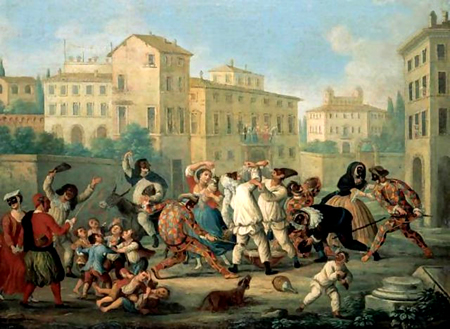
Bij Carnaval


 1723949-8f089f544b0c463a9863980cf3712c63.jpg
Carnavalsscene, toegeschreven aan Marco Marcola (1740–1793)


Soir de carnaval

Paris chahute au gaz. L'horloge comme un glas
Sonne une heure. Chantez! dansez! la vie est brève,
Tout est vain, -- et, là-haut, voyez, la Lune rêve
Aussi froide qu'aux temps où l'Homme n'était pas.

Ah! quel destin banal ! Tout miroite et puis passe,
Nous leurrant d'infini par le Vrai, par l'Amour;
Et nous irons ainsi, jusqu'à ce qu'à son tour
La terre crève aux cieux, sans laisser nulle trace.

Où réveiller l'écho de tous ces cris, ces pleurs,
Ces fanfares d'orgueil que l'Histoire nous nomme,
Babylone, Memphis, Bénarès, Thèbes, Rome,
Ruines où le vent sème aujourd'hui des fleurs ?

Et moi, combien de jours me reste-t-il à vivre ?
Et je me jette à terre, et je crie et frémis
Devant les siècles d'or pour jamais endormis
Dans le néant sans cour dont nul dieu ne délivre!

Et voici que j'entends, dans la paix de la nuit,
Un pas sonore, un chant mélancolique et bête
D'ouvrier ivre-mort qui revient de la fête
Et regagne au hasard quelque ignoble réduit.

Oh! la vie est trop triste, incurablement triste!
Aux fêtes d'ici-bas, j'ai toujours sangloté :
« Vanité, vanité, tout n'est que vanité! »
-- Puis je songeais : où sont les cendres du Psalmiste?


 1723949-f0c0e77858e1bb94352ef7a791b271df.jpg
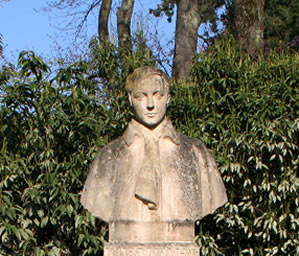
Jules Laforgue (16 augustus 1860 - 20 augustus 1887)
Borstbeeld in Tarbes


Zie voor de schrijvers van de 17e februari ook mijn vorige blog van vandaag.

Geschreven door Romenu om 11:09 Reageer op dit bericht

Shahrnush Parsipur, Sadegh Hedayat, Yevgeni Grishkovetz, Mo Yan,Frederik Hetmann, Emmy Hennings

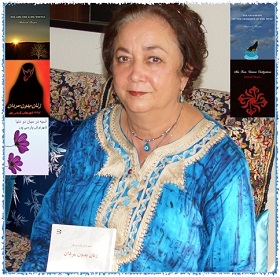
De Iraanse schrijfster Shahrnush Parsipur werd geboren op 17 februari 1946 in Teheran. Zie ook alle tags voor Shahrnush Parsipur op dit blog.

Uit: The Gentlemen (Vertaald door Farzin Yazdanfar)

“Mr. Habibi: What should we look at? I don't get it.
Mr. Nemati: He's right, dear. We should look around. We just talk. We've been talking for 2500 years.**
Mr. Tahmooresi: According to history, 2800 years. I don't understand why we're insisting on 2500 years. Humanity has existed for a million years.
Mr. Habibi: Not humanity, 'humans'.
Mr. Tahmooresi: 'Humanity' is symmetrical with 'human'. One is meaningless without the other.
Mr. Habibi: But it's correct to say 'human'. For instance, Dr. Barnard,*** who performs heart transplant operations, replaces a human being's heart; he doesn't replace humanity's heart.
Mr. Tahmooresi: You're just playing with words. Well, if Dr. Barnard can change the heart of human beings, he'll somehow be able to change the heart of humanity. Won't he?
Mr. Nemati: But let's be honest. The question of humanity aside, Dr. Barnard seems to have started a good business. There's nobody to ask him what the fuss is about.
Mr. Tahmooresi: I really like Nemati.
He never lets the argument end up with a quarrel. I was once a soldier serving in the army in Kurdestan. I mean I wasn't a soldier. I was higher in rank, I was a lieutenant...
Mr. Habibi: This is how they fool people. They think that if they give you a couple of badges and promote you to a higher rank, they have the right to bully you. I don't understand the logic behind it. Why do they waste two years of one's life?
Mr. Tahmooresi: It's obvious. If a war breaks out, there should be some people to fight. After all, how would a war be possible without soldiers?
Mr. Nemati: I don't understand at all what the real purpose of war is. I read somewhere that war isn't part of man's nature. Man invented war.
Mr. Habibi: Man invented God, too.”
 

 1723946-f1db50db728f9d50e9ce14a8dc4a7563.jpg
Shahrnush Parsipur (Teheran, 17 februari 1946)


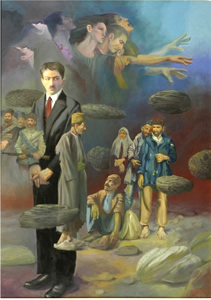
De Iraanse schrijver Sadegh Hedayat werd geboren op 17 februari 1903 in Teheran. Zie ook alle tags voor Sadegh Hedayat op dit blog.

Uit: The Silent Language of a Donkey at the Time of Death (Vertaald door Farzin Yazdanfar)

“Ah! My body is shuddering from pain. This is my reward for all the services I have done for this ruthless, cruel two-legged animal. Today is my last day, and this is my only consolation! After having lived a life full of hardship, suffering and trouble, after having endured unbearable loads, repeated blows from stick and chain and the curses of passers-by, thank God that I am bidding farewell to this dreadful life.
Young Hedayat
Here is Shemiran Road. Today my legs were crushed in a car accident because of my master's carelessness. That is why I am in this situation. After beating me and using foul language, they dragged my wounded body to the road side and left me there - alone. Perhaps they had forgotten that they could still use my horseshoes and hide! They seemed to have lost hope in me.
Will they bring me food in time? No... I have to die in great torment and hunger because I am no longer any use to them.
Ah! The pain is getting more severe and blood is still running from my wounds. What kind of beast is this human being who has dominated us, made our lives shameful, disgraceful and full of suffering and hardship, hurt our natural, frank and friendly feelings, constantly wounded our bodies, and made our lives unpleasant and deplorable. On the surface, he looks similar to us; and, like us, he finally dies. In this respect, there seems to be no difference between us; however, he seems to be made of wood and stone because he whips us as if we had no feelings. If he could feel pain, he would have mercy on us.
These torture instruments that human beings use are unnatural. They themselves have made them. It is sometime since societies called "Humane Societies" have been established in Europe and the United States to defend the rights of animals. Specific laws have been enacted to defend the rights of animals and to stop human beings' cruelty and unjust dealings towards them. Are those who belong to these societies the same as these beasts? Impossible! If they were the same, their hearts could not be made of stone.”
 

 1723946-78cd66bb02f8ca451fae6bc9485460f0.jpg
Sadegh Hedayat (17 februari 1903 – 9 april 1951)
Portret door Shahab Mousavizadeh, 2008


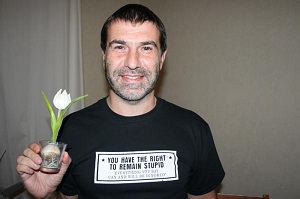
De Russische schrijver, regisseur en acteur Yevgeni Grishkovetz werd geboren op 17 februari 1969 in Kemerovo. Zie ook alle tags voor Yevgeni Grishkovetz op dit blog.

Uit:How I Ate the Dog

“I remember how we traveled seven days from the “Taiga” station to the Vladivostok station on a passenger/mail train.  We traveled slowly, stood at each crossing, and I was grateful to the railroad workers for these tiny delays….  We were going…, and interestingly, you could be going anywhere, to the east, to the south, to the north, and the whole time it would be the exact same scenery, in the sense that, it changes, of course, but the feeling remains that it’s the exact same: This means not very thickly growing birch trees, those uniformly spaced white-black trees, everywhere….  Well, in general, the kind of scenery, looking at which a Russian is obligated to say: “My God… what beauty!”  It happens like this: The Russian has woken up, comes out from the sleeping compartment into the corridor of the wagon, on his shoulders hangs a towel, like so, in his hand a toothbrush with toothpaste already on it, he’s a bit blinded by the morning light (in the compartment it had been very dark), he stops at the window, like so, holding onto the handrail.  In the corridor the rattle of the train is stronger.  Someone draws water from the tea urn.  The train: tuduk-tuk-tuk, tuduk-tuk-tuk.  The person who has just woken up: “Ssssoooo, where are we by now?”  The person with hot water in his mug, swaying with concentration, slowly walking and because of this swaying even more, says: “Who knows…”
The person who has just woken up: “Yeah?! Well, all the same, what beauty…!” Tuduk-tuk-tuk, tuduk-tuk-tuk…
Two sailors took us, they wore white dress uniforms and really looked after their appearance.  Both were short, one had a moustache that he really loved and obviously was very proud of, you couldn’t make it out immediately, but if you so desired, it wasn’t hard to count all the tiny hairs he had on his upper lip, and the other was, I for some reason recall, from Tambov, he was bowlegged and right about here he wore a medal “For faraway deployment.”
 

 1723946-e928f7f069d8c30dc96ad8bbed2cb096.jpg
Yevgeni Grishkovetz (Kemerovo, 17 februari 1969)


De Chinese schrijver Mo Yan werd geboren op 17 februari 1955 in Gaomi in de provincie Shandong. Zie ook alle tags voor Mo Yan op dit blog.

Uit: Shifu, You'll Do Anything for a Laugh (Vertaald door Howard Goldbaltt)

“Just then a white Jeep Cherokee drove in the gate honking its horn, seizing the attention of the people fighting to read the layoff list; they all turned to stare at the Jeep, which looked as if it had just come back from a long, muddy trip. The clamor died down as dazed expressions showed on the people's faces. The Jeep looked a little dazed too, its horn suddenly silent, the engine sputtering, the tailpipe spitting out puffs of exhaust. It was like a wild beast that sensed danger. Its gray eyes stared as they fearfully sized up the situation. At roughly the same time it decided to back out through the gate a chorus of shouts erupted from the workers, whose legs got the message, and in no time the Jeep was surrounded. It tried to break free, lurching forward and backward a time or two, but it was too late. A tall, muscular young man with a purple face — Ding Shikou saw that it was his apprentice, Lü Xiaohu — bent down, opened the car door, and jerked the as**sistant manager in charge of supply and marketing right out of his seat. Curses rained down on the man's head, translucent gobs of spittle splattered on his face, which by then was a ghostly white. His greasy hair fell down over his eyes as he clasped his hands in front of his chest, bent low at the waist, and bowed, first to Lü Xiaohu, then to the rest of the crowd. His lips were moving, but whatever he was trying to say was drowned out by the threatening noises around him. Ding couldn't make out a single word, but there was no mistaking the wretched look on the man's face, like a thief who'd been caught in the act. The next thing he saw was Lü Xiaohu reach out to grab the as**sistant manager's colorful necktie, which looked like a newly-weds’ quilt, and jerk it straight down; the as**sistant manager disappeared from view, as if he'd fallen down a well.“

 

 1723946-b9ef6e4c46a7edfdf6ce65d9b30437aa.jpg
Mo Yan (Gaomi, 17 februari 1955)


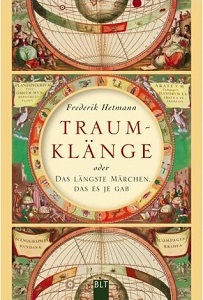
De Duitse schrijver Frederik Hetmann (eig. Hans-Christian Kirsch) werd geboren op 17 februari 1934 in Breslau. Zie ook alle tags voor Frederik Hetmann op dit blog.

Uit: Traumklänge

„Er hatte die vergangenen Wochen über „Herman Melville in New York“ recherchiert und dann für das „New York Times Magazine“ einen Essay von acht Schreibmaschinenseiten geschrieben. Der Artikel war abgelehnt worden. Sie hatten ihn zwar bezahlt, und am Vormittag hatte er sich das Geld an der Kasse abgeholt, aber er fühlte sich trotzdem in seinem Selbstvertrauen erschüttert.
Wie immer, wenn Izaak sich nicht wohl fühlte und es für ihn nichts zu tun gab, ging er ins Hayden Planetarium. Neuerdings hieß es Rose Center und Gottman Hall of Planet Earth, aber für ihn blieb es das Hayden.
Wenn er dort saß, kam er sich vor, als treibe er schwebend im Universum, und er vergaß allen Kummer dieser Welt. Er hörte kaum hin, wenn die Lautsprecherstimme erklärte wie Rote Riesen und Schwarze Löcher entstehen. Es ging ihm nicht um Wissen und Information. Es war diese Illusion, der Erde und ihrer Schwerkraft entrückt zu sein und sich in einem Raum zu befinden, der so unendlich groß war, dass sein Ende unvorstellbar wurde.
An diesem Tag lief ein Programm über den Halley’schen Kometen.
In die Kuppel wurde eine ungewöhnliche Aufnahme aus dem Jahr 1910 projiziert. Man sah den langen weißen Schweif des Kometen, der sich etwa so ausnahm, wie sich Izaak als Kind ein Gespenst vorgestellt hatte, dazu noch Tausende von Sternen als winzige Punkte und am linken unteren Rand vergrößert die Venus. Izaak fühlte sich plötzlich von einer Hand berührt, die wohl zu der Person gehören musste, welche neben ihm saß. Eine sanfte weibliche Stimme sagte:
„Wenn wir aufs gerade Wohl ins All geworfen würden, stünden die Chancen auf oder auch nur nahe einem Planeten landen, nicht einmal eins zu m10/33, eine 10 mit 33 Nullen. Wussten Sie das?”
 

 1723946-79f62d961f279502744e26449102a27b.jpg
Frederik Hetmann (17 februari 1934 – 1 juni 2006)
Cover


De Duitse dichteres, schrijfster en caberetiere Emmy Hennings werd geboren op 17 februari 1885 in Flensburg. Zie ook alle tags voor Emmy Hennings op dit blog.


Wie Kinder sind wir hilflos

Wie Kinder sind wir hilflos,die nicht wissen,
Ob sie im Diesseits oder Jenseits gehen.
Vor hohen Fenstern sieht man scheu uns stehen.
Man scherzt mit uns. Doch schweigen wir beflissen.

Denn: wenn wir gingen –würde man uns missen?
Und so beschleicht uns nur auf leisen Zehen
Ein Heimweh, mit dem Sommer zu verwehen
Und zu zerrinnen mit den Dämmernissen.

O, man war wohl besorgt, man war bemüht,
Mit manchen Schätzen uns vertraut zu machen.
Um unsere hellen Lippen aber zieht

Ein ängstlich Fremdsein. Unsere überwachen,
Erstaunten Augen sind der Nähe müd.
Auf weiter Fläche grüßen sie den Nachen…


Mädchen am Kai

Hab keinen Charakter, hab nur Hunger,
Ich, Passagier im Zwischendeck des Lebens,
Geliebt und gehasst hab ich vergebens,
Und jeden Abend auf der Lunger.
Und diese Kunst, die geht nach Brot.
Und kann man sterben denn vor Scham?
Ich bin so müde, lendenlahm,
Und dennoch, Zähne gesund, mein Mund ist rot.
Madonna, lass mich fallen in tiefen Schacht.
Nur einmal noch behütet sein.
Lieb mich von allen Sünden rein.
Sieh, ich hab manche Nacht gewacht!
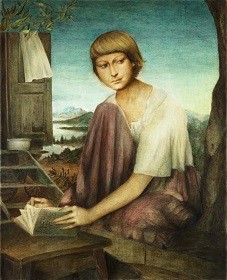
 

 1723946-d300efab91046c73eaa1a9c2be360fc5.jpg
Emmy Hennings (17 februari 1885 – 10 augustus 1948)
Portret door Bernhard Brungs, 2008


Zie voor nog meer schrijvers van de 17e februari ook mijn blog van 17 februari 2012 deel 2 en eveneens mijn blog van 17 februari 2011 deel 2 en eveneens deel 3.


Geschreven door Romenu om 10:56 Reageer op dit bericht

Ripe Fruit (Robert W. Service)


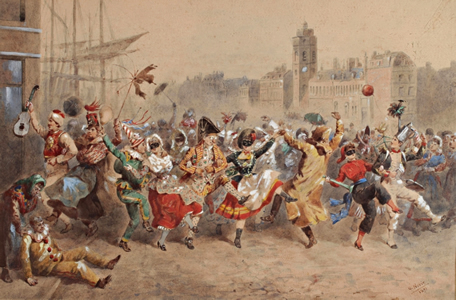
Bij Carnaval


 1723518-2282bf1e177a83543e470d47afc7e080.jpg
Le carnaval à Dunkerque, sur les quais, door Orlando Norie, 1891


Ripe Fruit

Through eyelet holes I watched the crowd
Rain of confetti fling;
Their joy is lush, their laughter loud,
For Carnival is King.
Behind his chariot I pace
To earn my petty pay;
They laugh to see my monster face:
"Ripe Fruit," I hear them say.

I do not laugh: my shoulders sag;
No heart have I for glee,
Because I hold aloft a hag
Who grins enough for me;
A hideous harridan who bears
In crapulous display,
Like two grub-eaten mouldy pears
Her bubbies on a tray.

Ripe Fruit! Oh, God! It's hell to think
How I have drifted down
Through vice and dice and dope and drink
To play the sordid clown;
That I who held the golden key
To operatic fame,
Should gnaw the crust of misery
And drain the dregs of shame.

What matter! I'll get soused to-night,
And happy I will be,
To sit within a tavern bright,
A trollop on my knee. . . .
So let the crazy pipers pipe,
And let the rapture ring:
Ripe fruit am I - yea, rotten ripe,
And Carnival is King.


 1723518-dfe62d6923cf5555f230c3aa1db813d7.jpg
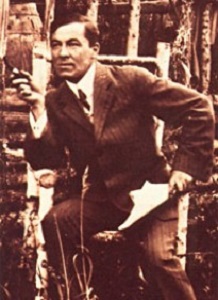
Robert W. Service (16 januari 1874 – 11 september 1958)


Zie voor de schrijvers van de 16e februari mijn vorige blog van vandaag.

Geschreven door Romenu om 13:38 Reageer op dit bericht

Elisabeth Eybers, Anil Ramdas, Ingmar Heytze, Iain Banks, Iris Kammerer, Alfred Kolleritsch

De Zuidafrikaanse dichteres Elisabeth Eybers werd geboren op 16 februari 1915 in Klerksdorp. Zie ook alle tags voor Elisabeth Eybers op dit blog.


Terugblik

Moeder, my eerste sekerte was jy,
gedugter as die voorbestemmingsleer;
diè slotsom was my soetste kettery,
dat aardse liefde ewige onheil weer.
 
Hoe moes ek snags, soms tot beswymens bang,
my uit die stikgreep van die Bose red,
verkluim, kaalvoet oor kwaste van die gang
voortstrompel na die vrystad van jou bed.
 
Jy het die vroegste flits van agterdog
op die gehurkte garingbuik, Calvyn,
wat waghou oor sy wrede web, laat skyn;
my douvoordag op 'n verkenningstog
geloods - bestem tot jou verdriet, maar steeds
erfkind van jou week hart en wakker gees.


Job
 
'n Potskerf het die paadjies van die juk
geduldig opgespoor, die etterdruip
het droog geword, die tentatiewe tik
teen rowe laat die huid wellustig kruip.
 
As Gods hand alles uitwis bly die tyd
nog onvernietigbaar. Die ganse dag
was dus tot sy beskikking om die vlyt
van brommers in die vuilgoed te betrag
 
- aandagtig asemend, terwyl die stank
en sonsteek hul beswering om hom rank.
Toe al die yweraars ondergronds verdwyn
het hy sy bak sorgvuldig skoon gelek,
sy mantelflenters oor sy kop getrek
en ingekrimp tot 'n klein pit van pyn.


Verjaardag
 
Twaalf jaar. Gespanne vóór die donker sprong,
jou klapperdop 'n korf wat gons van vrae,
astrant, seepbekkig soos 'n groenteklong,
jou moeder daeliks trotser, meer verslae.
 
Vanmôre dink ek weer aan die verhaal
van daardie vindingryke, vroegwys Knaap,
aan háár wat drie dae lank moes radeloos dwaal
terwyl die tempelgangers hul vergaap.
 
Hoe ver kan ek jou vergesel? Jou oë
is newelig en wimperswaar gedroom
van ruimtereise, radar en atoom...
Klein Ikaros, by voorbaat reeds bedroë,
weeg jy my wankel woorde, kyk my aan,
meewarig oor sovéél wat 'k nie verstaan.


 1723513-e1c0888655d025c294a356d50b2dcdae.gif
Elisabeth Eybers (16 februari 1915 – 1 december 2007)
Als jonge studente  in Johannesburg


De Surinaams-Nederlandse schrijver,columnist, essayist, programmamaker en presentator Anil Ramdas werd geboren in Paramaribo op 16 februari 1958. Zie ook alle tags voor Anil Randas op dit blog.

Uit: Madame Bovary (De papegaai, de stier en de klimmende bougainvillea)

“In de verfilming van Bukowski's Tales of Ordinary Madness zegt Ben Gazara op het podium: alles wat je kunt doen, kun je ook met stijl doen. Zelfs als je een blikje sardientjes opent, doe het met stijl. Stijl is uiteindelijk datgene wat mens en dier van elkaar onderscheidt. Een tijger loopt als een tijger, hij kan niet lopen als een olifant. Alleen mensen kunnen lopen als tijgers of als olifanten.
Creolen hebben stijl, vonden wij hindoestanen in Suriname altijd; dat loopje, dat wipje met het linkerbeen en dat slome slingeren met de armen, ijverig oefenden we die motoriek als we dachten dat niemand keek. Maar verder dan een mankepoterige manier van voortbewegen kwamen we niet.
Cultuur is in haar breedste betekenis dan ook niets anders dan een verzameling van stijlen, van de kleinste maniertjes tot de grootste levenswijzen. Cultuur is een aggregaat van de wetenschap, en geleefde cultuur, zoals de Britse onderzoekers Raymond Williams en E.P. Thompson voorstellen, is dan ook een praktische onmogelijkheid. Als je erin leeft zie je geen cultuur, maar slechts een chaos van stijlen. Het onderscheid tussen de kortstondige, oppervlakkige stijl die we mode noemen en de langdurige, diepgaande stijl die we, ja toe maar, ‘volksaard’ noemen, is bepaald niet eenvoudig. Cultuur is per definitie een observatie van de buitenstaander.
Degene die geobserveerd wordt ziet alleen maar maniertjes om zich heen: hindoestaanse kindertjes die met kokosolie worden ingewreven, waardoor ze in de zon op glimwormpjes lijken. Hindoestaanse jongeren die zich net zo hip proberen te kleden als de creolen van Paramaribo, maar het zien mislukken, qua maat en snit, omdat ze te klein zijn gebouwd voor de westerse confectiekleding en aangewezen zijn op kleermakers die wel korting geven, maar geen modegevoel hebben. Hindoestaanse gezinnen die vaak kerrie eten, maar op zondag gebakken sardientjes in tomatensaus verkiezen. Ik herinner me een nationale rel in het buurland Guyana, toen de regering wegens een deviezentekort besloot de import van ingeblikte sardientjes te verbieden. Men had de zondagen van de hindoestanen verpest. Op dezelfde zondag gaan hindoestanen trouw naar de bioscoop waar Indiase films worden gedraaid: om te dromen van een India zonder krotten, bedelaars, onrecht of stank. Ze genieten van hun heimwee naar het land van herkomst, ze smullen van het bedrog dat hun wordt voorgeschoteld, juist omdat ze weten dat het maar bedrog is.”


 1723513-71678b2908c8d60a9d22cfd9618e75c3.jpg
Anil Ramdas (16 februari 1958 - 16 februari 2012)


De Nederlandse schrijver en dichter Ingmar Heytze werd geboren op 16 februari 1970 in Utrecht. Zie ook alle tags voor Ingmar Heytze op dit blog.


Uit het leven een greep

Dat ik 's nachts naar huis toe fiets
en dat mijn stuur een omweg maakt

en ik onder je venster sta
en aanbel tot het licht aangaat

en jij naar buiten komt in een peignoir
(die droeg je vroeger nooit en staat ook raar)

en dat ik snotter dat het me zo spijhijt
en jij zegt van het kom allemaal wel goehoed

en dat ik op dat moment pas zie het huis
is niet jouw huis de straat is niet je straat en jij -

en dat ik voor de zekerheid nog vraag
terwijl de taxi al rijdt: 'Betekent dit nu ook
dat het allemaal niet goed komt?'


Ballade van de man

'For what is a man, what has he got -' Paul Anka

Wat is een man, zijn vrijheid
staat te roesten voor de deur en schuld
klopt in zijn onderbroek.

Zijn droom een spannend jongensboek
onder de dekens van een kind,
zijn angst de wind door dunnend haar.

Zijn dood een blauwe waterval
van grauwe staar, zijn einde zoek,
een druppel in een cataract.

Spijt hangt in de plooien
om zijn navel, tochtend stopcontact.
ontkoppeld met een koude knip -

sindsdien een satelliet op drift,
vervloekt en vloekend eeuwig zoekend
naar het moederschip.


Shy effects

Ben ik verlegen
wordt elke gedachte
een bang konijntje
op mijn hoofd

ik kan daar verder
niets aan doen:
de een gaat zweten,
de ander wordt rood

en ik zit al gauw
met een roedel konijntjes
op schoot.


 1723513-8438cb1bb455493f2f698e86b459fe12.jpg
Ingmar Heytze (Utrecht, 16 februari 1970)


De Schotse schrijver Iain Menzies Banks werd geboren op 16 februari 1954 in Dunfermline, Schotland. Zie ook alle tags voor Ian Banks op dit blog.

Uit: Surface Detail

“She was standing, flattened, against a flat scenery. In the gloom, a moment before she had spread herself against the enormous backdrop, she had been able to make out that it was just painted canvas with great sweeps of dark and light paint, but she had been too close to it to see what it actually portrayed. She angled her head out a little and risked a quick look down and to the left, to where the two men were, standing on a gantry cantilevered out from the side of the fly tower’s north wall. She glimpsed a pair of shadowy figures, one holding something that might have been a rifle. She couldn’t be sure. Unlike Jasken, she had only her own eyes to see with.
She brought her head back in again, quickly but smoothly, scared that she might be seen, and tried to breathe deeply, evenly, silently. She twisted her neck this way and that, clenched and unclenched her fists, flexed her already aching legs. She was standing on a narrow wooden ledge at the bottom of the flat. It was slightly narrower than her shoes; she had to keep her feet splayed, toes pointing  outwards in opposite directions, to stop herself from falling. Beneath, unseen in the darkness, the wide rear stage of the opera house was twenty metres further down. If she fell, there were probably other cross-gantries or scenery towers in the way for her to hit on the way down.
Above her, unseen in the gloom, was the rest of the fly tower and the gigantic carousel that sat over the rear of the opera house’s stage and stored all the multifarious sets its elaborate productions required. She started to edge very slowly along the ledge, away from where the two men stood on the wall gantry. Her left heel still hurt where she’d dug out a tracer device, days earlier."


 1723513-a3e8bfa54104b84abd71fd65e34ae029.jpg
Iain Banks (Dunfermline, 16 februari 1954)


De Duitse schrijfster Iris Kammerer werd geboren op 16 februari 1963 in Krefeld. Zie ook alle tags voor Iris Kammerer op dit blog.

Uit: Die Schwerter des Tiberius

"In diesen Gegenden ist es notwendig, Praefect, dass die Soldaten auch bei schlechtem Wetter kämpfen können, aber diese Männer haben keine Disziplin. Leider ist es zu spät, das noch zu ändern, bevor wir übermorgen aufbrechen."
Eine Bewegung zog Cinnas Aufmerksamkeit auf sich; auf der Böschung stand eine Frau, eng in ein blaues Manteltuch gehüllt, das sie über den Kopf gezogen hatte. Seine Frau, Sunja. Er spürte, dass sich ein Lächeln in seine Mundwinkel schlich, und grub die Zähne in die Unterlippe, um es zu verbergen, weil auch Eggius seinem Blick gefolgt war.
"Wir reden später darüber", beschwichtigte er den Centurio und machte sich auf den Weg die Böschung hinauf, deren Kamm er mit wenigen großen Schritten erreichte. Sunja blickte an ihm vorbei, und als sie die Schultern hochzog, wie um sich zu wappnen, drehte er sich um. Eggius war ihm gefolgt.
"Was gibt es denn noch? Verweigern die Männer etwa den Gehorsam?"
Die knotigen Finger des Centurios umkrampften den Weinstock. Der bittere Schatten, der sich in seine Mundwinkel grub, war leicht zu deuten; auch Cinna hatte Berichte über Varus Niederlage gelesen, über den endlosen Regen, der das ohnehin schwierige Gelände in glitschigen Schlamm verwandelt hatte.“


 1723513-942a3a98980fc1f8c177ce52741fd646.jpg
Iris Kammerer (Krefeld, 16 februari 1963)


De Oostenrijkse dichter en schrijver Alfred Kolleritsch werd geboren op 16 februari 1931 in Brunnsee, Südsteiermark. Zie ook alle tags voor Alfred Kollertitsch op dit blog.


ES MACHT MIR IMMER WENIGER Mühe, aufzustehen.
Das ist kein Zeichen von Glück.
Ich gehe vor das Haus und sehe das verbrannte Gras,
auf den Gartenbänken und Stühlen liegt kein Tau,
der grüne Gartenschlauch
ist nicht der gartenschlauch,
von dem ich geträumt habe.


Da fällt mir ein,
daß ich vergessen habe, an dich nicht zu denken.
Deine Gegenwart siedet in mir
mit dem alten Gebrumm.
Das Schildenkrötennot Zenons bleibt mir
auf den Fersen.
Du gehst weg, ich stehe still,
die Entfernung ändert nichts an der Nähe.


Über mich selbst fallen mir nur Dinge ein,
die ich sehe,
jede kante, jede Linie ist ein Rand,
ein Ufer, an dem es aufhört.


Tische, Flaschen, Stachelbeersträucher,
eine vertrocknete Maus,
ich halte mich hin,
aber nicht wie ein Saugnapf.
Das Äußerste ist die Gleichgültigkeit
und ihre Enzyklopädie,
ein Sommermorgen mit wenig Freude
am Weiterlesen in Flauberts "Bouvard et Pécuchet".


 1723513-a447daa317f4a85e69023434d3fa7ed8.jpg
Alfred Kolleritsch (Brunnsee, 16 februari 1931)


Zie voor meer schrijvers van de 16 februari ook mijn blog van 16 februari 2013 deel 1 en ook deel 2 en eveneens deel 3.

Geschreven door Romenu om 13:38 Reageer op dit bericht

Meer van Romenu

↑ Terug naar de berichten