

Naar de inhoud

Romenu

Over literatuur, gedichten, kunst en cultuur
akke.beakke.be

Berichten van 22 april 2015 tot 23 april 2015

William Shakespeare, Andrey Kurkov, Pascal Quignard, Peter Horst Neumann, Halldór Laxness, Christine Busta
De Engelse dichter en schrijver William Shakespeare werd geboren in Stradford-upon-Avon op, vermoedelijk, 23 april 1564. Zie ook alle tags voor William Shakespeare op dit blog.

Uit: The Merchant of Venice

„SHYLOCK
No, not take interest, not, as you would say,
Directly interest: mark what Jacob did.
When Laban and himself were compromised
That all the eanlings which were streak'd and pied
Should fall as Jacob's hire, the ewes, being rank,
In the end of autumn turned to the rams,
And, when the work of generation was
Between these woolly breeders in the act,
The skilful shepherd peel'd me certain wands,
And, in the doing of the deed of kind,
He stuck them up before the fulsome ewes,
Who then conceiving did in eaning time
Fall parti-colour'd lambs, and those were Jacob's.
This was a way to thrive, and he was blest:
And thrift is blessing, if men steal it not.
ANTONIO
This was a venture, sir, that Jacob served for;
A thing not in his power to bring to pass,
But sway'd and fashion'd by the hand of heaven.
Was this inserted to make interest good?
Or is your gold and silver ewes and rams?
SHYLOCK
I cannot tell; I make it breed as fast:
But note me, signior.
ANTONIO
Mark you this, Bassanio,
The devil can cite Scripture for his purpose.
An evil soul producing holy witness
Is like a villain with a smiling cheek,
A goodly apple rotten at the heart:
O, what a goodly outside falsehood hath!
SHYLOCK
Three thousand ducats; 'tis a good round sum.
Three months from twelve; then, let me see; the rate—“


 1754841-878365806d5b83d52e0ccae0a0611e78.jpg
William Shakespeare (23 april 1564 – 23 april 1616)
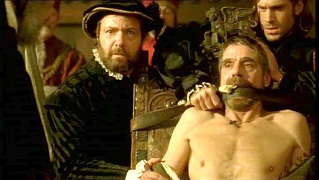
John Sessions (Salerio) en Jeremy Irons (Antonio) in de verfilming uit 2004


De Oekraïense schrijver Andrey Kurkov werd geboren op 23 april 1961 in Leningrad. Zie ook alle tags voor Andrey Kurkov op dit blog.

Uit: Death and the Penguin (Vertaald door George Bird)

 « Two days later the phone rang.
«Capital News . Sorry to trouble you, »said a crisp, clear female voice. I have the Editor-in-Chief on the line.”
The receiver changed hands.
«Viktor Alekseyevich”? a man's voice enquired. « Couldn't pop in today, could you? Or are you busy? »
«No, »said Viktor.
«I'll send a car. Blue Zhiguli . Just let me have your address. »
Viktor did, and with a “Bye, then,”the Editor-in-Chief rang off without giving his name.
Selecting a shirt from the wardrobe, Viktor wondered if it was to do with his story. Hardly ... What was his story to them? Still, what the hell!
The driver of the blue Zhiguli parked at the entrance was deferential. He it was who conducted Viktor to the Editor-in-Chief.
“I'm Igor Lvovich,”he said, extending a hand. “Glad to meet you.”


 1754841-f811da7e146d926ae41a01a1e2f134ca.jpg
Andrey Kurkov (Leningrad, 23 april 1961)


De Franse schrijver Pascal Quignard werd geboren op 23 april 1948 in Verneuil-sur-Avre. Zie ook alle tags voor Pascal Quignard op dit blog.

Uit: Les Ombres Errantes

« Une dernière fois le maître de pêche la supplie :
— Si tu m’expliques pourquoi tu ne m’as pas aimé autant que le chantre, je te laisse passer.
Elle le regarde dans les yeux.
Puis elle hausse les épaules.
Elle tourne son regard vers le large.
Plus tard encore, elle regarde de nouveau son époux, longuement. Son visage ne marque pas de mépris, mais il est sans douceur.
Elle baisse les paupières mais elle ne dit rien.
Il dit tout bas :
— Dis-moi, mon amour, pourquoi tu ne m’aimes plus ? Alors le beau visage de son épouse est placé sur sa gauche. Il la voit de profil. Il ne voit pas ses lèvres bouger. Il entend pourtant qu’elle dit à voix basse :
— J’avais plus de plaisir dans la compagnie de ce mort, même une minute, même en pensée, même en errantes mâchouillant sans fin dans ma bouche le secret de son nom, que dix ans dans tes bras, même quand j’étais heureuse dans tes bras.
— Ah ! fit-il et il s’effondra sur le sol.
Ils passèrent.
Ils descendirent le sentier.
Ils gagnèrent le sable et la laisse de mer. Ils se tenaient par la main au bord des vagues.
Ils marchaient sur les algues tout en bas.
Le pêcheur voyait les vêtements jaunes flotter au-dessus des algues et des flaques.
Il était jaloux.
Bien que tous deux fussent morts, le maître pêcheur était jaloux de leur bonheur chez les morts."


 1754841-8ed7574e4bf1d019db09027ac0335539.jpg
Pascal Quignard (Verneuil-sur-Avre, 23 april 1948)


De Duitse dichter, essayist en literatuurwetenschapper Peter Horst Neumann werd geboren op 23 april 1936 in Neisse. Zie ook alle tags voor Peter Horst Neumann op dit blog.


Schlesische Sommerfrische 1943

Das Pferd hat den brennenden
Wagen zum Löschteich gezogen,
der Bauer lag tot im Heu.

Das war noch mitten im Frieden
und sie erzählten es gern.

Am Abend wurden die Hühner gezählt,
die Milch in der Küche geschleudert.

In der Scheune die mährischen Schnitter,
die sich morgens am Brunnen wuschen.

Die Mägde schliefen im Haus,
ein Spucknapf in jeder Kammer,
was ging mich das an.

Den Kleinknecht hatte eine Dresch-
flegel über der Schläfe getroffen,
der brauchte nicht in den Krieg.

Im Braunhemd spielte die Lehrerin
zur Sonntagsmesse die Orgel,
zwei Knabenfüße traten den Balg.

Heuwarme Nächte.

Der Hund gab leise Laut,
wenn auf der Leiter nachts der Hahn
sein Schlafbein wechselte.

In der Diele die Erntekronen,
knisternde Bauerngebete aus Stroh.


 1754841-5162e9b13afe1c176889bcbd2fd4d629.jpg
Peter Horst Neumann (23 april 1936 – 27 juli 2009)


De IJslandse schrijver Halldór Laxness (eig. Halldór Guðjónsson) werd geboren in Reykjavik op 23 april 1902. Zie ook alle tags voor Halldór Laxness op dit blog.

Uit: Paradise Reclaimed (Vertaald door Magnus Magnusson)

“It had long been the custom in the district to point out the dry-stone dykes and walls of Hlidar in Steinahlidar as an example for aspiring young farmers to follow in life; there were no other works of art in those parts to compare with these carefully built walls of stone. The farms in Steinahlidar stand on a plain under cliffs which had been the seaboard twenty thousand years before. Pockets of soil keep forming in crevices up in the rock-face and various plants take root in them, which undermine the fabric of the rock. In the heavy rains of spring and autumn the soil is washed away from the fissures, and pieces of rock bounce down on to the farms below. On some farms these stones would cause great damage every year to the meadows and home-field, sometimes even to the buildings themselves. Steinar of Hlidar often had his hands full in the spring, clearing the boulders from his home-field and meadows--the more so since he was more meticulous than most. Many were the times he had to bend double and straighten up with a heavy boulder in his arms, for no other reward than the joy of seeing a destructive stone fitted with dedicated care into a wall.
It is said that Steinar of Hlidar had a white pony which was considered the finest animal in the south. This horse was the sort of phenomenon that every farm needs. It seemed beyond serious doubt that this was a supernatural beast and had been so ever since he was a foal, when he had unexpectedly appeared on the scene at the side of a rather elderly white mare which had been running with the herd for a long time in the mountains. At the time of the birth she was grazing at LÃ?nsbakkar (Creek-Banks), but she had been stabled over midwinter and no one had had any idea that she was in foal. If there were ever a case of immaculate conception in Iceland, then this was it.”


 1754841-fdc740225cc07dab9d41df585b47a5b8.jpg
Halldór Laxness (23 april 1902 – 8 februari 1998)


De Oostenrijkse dichteres Christine Busta werd geboren op 23 april 1915 in Wenen. Zie ook alle tags voor Christine Busta op dit blog.


Windiger Tag

An jeder Ecke gibt’s heut ein Scharmützel:
der Wind pflückt Kapuzen und Kinderhauben,
hat keinen Respekt vor Damenhüten
und hängt sie an kahle Sträucher wie Blüten,
dem Maronibrater stibitzt er Stanitzel,
und die Zeitungsfrau flattert wie zwanzig Tauben.


Für den Winterabend

Wenn der Mondmann geht ums Haus,
weht der Schnee bald leiser,
nur die rote Feuermaus
huscht noch durch die Reiser.
Leiser, als die Spinne spinnt,
webt im Ofenloch der Wind
Träume schon für Vater,
Mutter, Kind und Kater.


 1754841-99f2cc06333bea4681f7cbf1fa455dcf.jpg
Christine Busta (23 april 1915 – 3 december 1987)
Zelfportret, 1966


Zie voor nog meer schrijvers van de 23e april ook mijn blog van 23 april 2012 deel 1 en ook deel 2.

Geschreven door Romenu om 18:36 Reageer op dit bericht

Giorgio Fontana, Jan de Hartog, Vladimir Nabokov, Björn Kern, Chetan Bhagat, Peter Weber, Jos de Haes

De Italiaanse schrijver Giorgio Fontana werd geboren op 22 april 1981 in Saronno. Zie ook alle tags voor Giorgio Fontana op dit blog.

Uit: Het geweten van Roberto Doni (Vertaald door Philip Supèr)

“De bouten. Daarmee was het allemaal begonnen. Elke dag, als hij op het werk kwam, naar buiten liep om te lunchen of weer naar huis ging, bleef Doni even staan om ze te bekijken.
Van een afstand leken het gewoon slijtplekken, of vlekjes die altijd al in de tegels hadden gezeten, maar het waren bouten, grote metalen bouten, die het marmer op zijn plaats moesten houden. Het oorspronkelijk aangebrachte cement was namelijk aan het loslaten, waardoor het hele gebouw gevaar liep.
Die dingen hadden natuurlijk iets van een morele boodschap. Het huis van het Recht dat zich moet voegen naar de hogere wetten van de materie. Maar Doni zag er niets anders in dan de idiotie van de mensen, en misschien een vage waarschuwing: nooit bouwen op zand.
Op de dag dat zij hem schreef, bedacht Doni dat het Paleis van Justitie dat lot had moeten ondergaan omdat het de omringende ruimte van zich af stootte. Het was ermee in gevecht, het was niet in staat er deel van uit te maken, zoals het dat trouwens ook niet zou kunnen in een willekeurige andere wijk van de stad. En het kon niet alleen maar een kwestie zijn van bouten en scheuren en lelijkheid. Net zo min als de architectuur uit de tijd van het fascisme of de overwinning van de breedte op de hoogte voldoende waren om het Paleis te vonnissen. Nee, het Paleis had één bepaalde, unieke eigenschap.
Het was iets wat te maken had met ballingschap, een moeilijk te vatten gevoel.
Als hij daar binnen was, voelde Doni zich verbannen uit de rest van de stad, uit het land, uit de wereld. De kracht van honderden bouten moest hem overeind houden, zand gebouwd op zand.
Op de dag dat zij hem schreef, bestond Doni’s lunch niet uit de gebruikelijke mueslireep, maar at hij samen met Salvatori, een officier van justitie, in een restaurant. Dat was niet de gewoonte. Als magistraten hadden ze altijd haast, hoogstens kwamen ze wel eens in een of andere vreselijke selfservice in de buurt.”


 1754435-41b27d2ba84c4886ed46e3e77abd3fe0.jpg
Giorgio Fontana (Saronno, 22 april 1981)


De Nederlandse schrijver Jan de Hartog werd geboren in Haarlem op 22 april 1914. Zie ook alle tags voor Jan de Hartog op dit blog.

Uit: Hollands Glorie

“Hij streelt haar muts, maar durft haar niet meer te kussen; zij wandelen samen naar de sluis en staan daar weer in een omhelzing, tot een rattenplons in de diepte hen opschrikt. Dan nemen zij haastig afscheid en hij vloekt op de maat van zijn driftige stappen tot hij bij zijn kosthuis is; de wereld is vol schoften en ratten en er is ook een juffrouw Dijkmans, die laatdunkende oogjes heeft en een mond als een litteken en een gevaarte van een boezem vol onverzettelijke heerszucht, - de duivel hale hen met z'n allen!
In Juli krijgt hij vacantie, vaart tot September weer als matroos, alsof er niets gebeurd was, tracht in het vooronder bij een slingerende lantaren zijn taak te leren, maar de maats laten duidelijk blijken dat hij zich niet moet verbeelden nou meneer de Piet te zijn; is dat gemummel nou potdome uit of hoe zit dat, er moet geslapen worden! Hij vloekt en tracht minuten te stelen met een boek op het privaat, maar ze hebben hem in de gaten en nu moeten ze ineens allemaal, of er wordt geschreeuwd: Wandelaar! Wandelaar! en als hij haastig komt, wijzen ze overboord en zeggen: een zeemeermin, je ben nèt te laat. Hij wil den stuurman er niet in kennen, want dat zou mis zijn; hij slaat er een op zijn bakkes en dat is helemaal mis, want nu is het vooronder met één slag vol armen en benen, die stompen en trappen en hij wordt met een vork in zijn billen gestoken, dat hij 's nachts aan het roer staat te krimpen. Hij heeft de spaken van het stuurwiel beet of het de strotten van dat rapalje zijn en de kompasroos wordt een nevelig maantje door de tranen.
Eindelijk is die bezoeking voorbij; hij heeft niet veel geleerd voor de school, maar heel wat voor het leven. Zijn eerste rapport dat seizoen is niet zo best, maar nu laat hij zich niet meer kennen; nu wordt de nacht ook een dag en zelfs moeder Dijkmans zegt dat hij weinig meer komt, op een toon of ze het verdacht vindt.”


 1754435-053e7200be0c76546618d05980c4fb99.jpg
Jan de Hartog (22 april 1914 – 22 september 2002)
Scene uit de televisieserie "Hollands Glorie”, 1977-1978


De Rüssisch-Amerikaanse schrijver Vladimir Vladimirovic Nabokov werd geboren in St. Petersbürg, op 22 april 1899. Zie ook alle tags voor Vladimir Nabokov op dit blog.

Uit: Lolita

“Among some treasures I lost during the wanderings of my adult years, there was a snapshot taken by my aunt which showed Annabel, her parents and the staid, elderly, lame gentleman, a Dr. Cooper, who that same summer courted my aunt, grouped around a table in a sidewalk café. Annabel did not come out well, caught as she was in the act of bending over her chocolat glac?, and her thin bare shoulders and the parting in her hair were about all that could be identified (as I remember that picture) amid the sunny blur into which her lost loveliness graded; but I, sitting somewhat apart from the rest, came out with a kind of dramatic conspicuousness: a moody, beetle-browed boy in a dark sport shirt and well-tailored white shorts, his legs crossed, sitting in profile, looking away. That photograph was taken on the last day of our fatal summer and just a few minutes before we made our second and final attempt to thwart fate. Under the flimsiest of pretexts (this was our very last chance, and nothing really mattered) we escaped from the caf? to the beach, and found a desolate stretch of sand, and there, in the violet shadow of some red rocks forming a kind of cave, had a brief session of avid caresses, with somebody's lost pair of sunglasses for only witness. I was on my knees, and on the point of possessing my darling, when two bearded bathers, the old man of the sea and his brother, came out of the sea with exclamations of ribald encouragement, and four months later she died of typhus in Corfu.
I leaf again and again through these miserable memories, and keep asking myself, was it then, in the glitter of that remote summer, that the rift in my life began; or was my excessive desire for that child only the first evidence of an inherent singularity? When I try to analyze my own cravings, motives, actions and so forth, I surrender to a sort of retrospective imagination which feeds the analytic faculty with boundless alternatives and which causes each visualized route to fork and re-fork without end in the maddeningly complex prospect of my past. I am convinced, however, that in a certain magic and fateful way Lolita began with Annabel.”


 1754435-0b7cf7ac17748148885058e87848c77c.jpg
Vladimir Nabokov (22 april 1899 - 2 jüli 1977)
Scene uit de film `Lolita` met Jeremy Irons en Dominique Swain, 1997


De Duitse schrijver Björn Kern werd geboren op 22 april 1978 in Lörrach (Baden). Zie ook alle tags voor Björn Kern op dit blog.

Uit:Einmal noch Marseille

"Meine Mutter bettelte nicht, wenn ich nein gesagt hatte, sie sagte nicht: Überleg es dir noch mal, sondern machte eine kleine Pause und erzählte dann von meinem Vater. Mein Vater hörte entweder nicht zu, wenn sie mit ihm sprach, oder er lag mit nervösem Magen im Bett und war für niemanden da. Am Telefon erzählte sie mir, wie sehr sie darunter litt.
Manchmal auch, daß sie ihn verstand.
Es regnete seit dem Morgen, und irgendwann rief sie: Dann gehen wir eben mit Schirm. Sie verschwand in der Garderobe, suchte und fluchte eine Weile und kam dann mit einem zerrissenen schwarzen Regenschirm zurück.
Auf dem Feldweg staute sich das Wasser, ich machte einen Bogen um die Pfützen, aber meine Mutter sah immer nur geradeaus. Als ihre Schuhe in einer Lache verschwanden, sagte sie: Auch egal, naß bin ich sowieso.
Dann klappte sie den Schirm zusammen und schaute mit offenem Mund in den Himmel. Sie schnappte nach den Regentropfen und sagte: Ich fühl mich wie ein kleines Kind.
Unter meinen Sohlen klumpte der Schlamm, ich war naß bis auf die Unterhose, und neben mir schnappte meine Mutter nach Tropfen."


 1754435-70942f1bb4a76834f484e92eedb012a2.jpg
Björn Kern (Lörrach 22 april 1978)


De Indiase schrijver Chetan Bhagat werd geboren op 22 april 1974 in New Dehli. Zie ook alle tags voor Chetan Bhagat op dit blog.

Uit: Two States

“Dr. Iyer…” “Neeta is fine,” she said. “OK, Neeta, I don’t think my problem warrants this. I don’t know why Dr.Ramachandran sent me here.” She picked my file from her desk. “Let’s see. This is Dr. Ram’s brief to me –patient has sleep deprivation, has cut off human contact for a week, refuses toeat, has Google-searched on best ways to commit suicide.” She paused andlooked at me with raised eyebrows. “I Google for all sorts of stuff,” I mumbled, “don’t you?” “The report says the mere mention of her name, her neighbourhood or anyassociation, like her favourite dish, brings out unpredictable emotions rangingfrom tears to rage to frustration.” “I had a break-up. What do you expect?” I was irritated. “Sure, with Ananya who stays in Mylapore. What’s her favourite dish? Curdrice?” I sat up straight. “Don’t,” I said weakly and felt a lump in my throat. I foughtback tears. “Don’t,” I said again. “Don’t what?” Neeta egged me on, “Minor problem, isn’t it?” “Fuck minor. It’s killing me.” I stood agitatedly. “Do you South Indians evenknow what emotions are all about?” “I’ll ignore the racist comment. You can stand and talk, but if it is a long story,take the couch. I want it all,” she said. I broke into tears. “Why did this happen to me?” I sobbed.
She passed me a tissue. “Where do I begin?” I said and sat gingerly on the couch. “Where all love stories begin. From when you met her the first time,” she said. She drew the curtains and switched on the air-conditioner. I began to talk andget my money’s worth."


 1754435-7973eb8db3a6b1bb893d9321df093d35.jpeg
Chetan Bhagat (New Dehli, 22 april 1974)


De Zwitstserse schrijver en müsicüs Peter Weber werd geboren op 22 april 1968 in Wattwil / Toggenbürg. Zie ook alle tags voor Peter Weber op dit blog.

Uit: Die melodielosen Jahre

"Der Wecker spuckt diese kleinen Ausrufezeichen ins schläfrige Nachmittagsblau, zwischen die keifenden Möwen, unter die Hornstösse der mächtigen Schiffe, fern der Schlafhintergrund, auf der europäischen Seite die Silhouetten der Moscheen, vorne am Wasser die Kutter und kleinen Boote, auf denen Fisch gegrillt und an Land gereicht wird, Makrelen und Sardinen, Schwarmfische also. Wenn eine Fähre anlegt, schlagen die Wellen an die Ufermauer, die Fischboote mit ihren farbigen Sonnenverdecken beginnen zu wanken, die Männer üben uraltes Gleichgewicht, es entsteht für Momente ein Bild gesamthaften Wankens, selbst der asiatische Bahnhof, ganz ans Wasser gebaut, scheint schwimmend, ein Wasserbahnhof, Bahnhof mit Meeranstoss, die Gleise nach Asien haben Deutsche verlegt: die Bagdadbahn, dahinter die Krananlagen des Frachthafens.
Bosporus, weltschönste Umwälzanlage der Elemente, die nachmittägliche Sonne streut üblich Münzen übers Wasser, mehrt das Glück zu einem schimmernden Vielfachen, erfindet die Mehrzahl von Glück, indem sie Schwebeteilchen kleinsten Lichts zeugt, blinkende Blättchen, die dann von den Schrauben der Fähren unters Wasser gebracht werden, Vapur im Singular, Vapuren wohl im Plural, was nach einem der Völker klingt, die hier das Meer überquert haben mögen. Die alten weissen Fähren sind Geschwisterschiffe der Raddampfer auf Schweizer Seen, wenn sie ablegen, wühlen sie Grund auf, die Möwen stürzen sich auf die zerkraulten Wasser, folgen ihren Ernährern über den Bosporus verwegenen Flugs, setzen ihnen lebendige Flug- oder Gedankenhauben auf."


 1754435-61ee2d436a6606cdd59e0dc8c3fafee0.jpg
Peter Weber (Wattwil, 22 april 1968)


De Vlaamse dichter en essayist Jos de Haes werd geboren in Leüven op 22 april 1920. Zie ook alle tags voor Jos de Haes op dit blog.


Anekdote
voor P.V.

De mensen doen hun warme luiken dicht.
De nacht heest smaak van mout en wilgehout.
Het leven gevend ingewand is dood gewicht
in 't mispelvlees dat aan de beenderen houdt.
Ik heb mijn laatste vriend naar huis gebracht.
Het houten kleppen van mijn bekkeneel
wordt door de rinse kliersappen verzacht,
en herfstwind schuift, als handen, rond mijn keel
de koelte van een vrouwelijk geweld.
Twee dode vrienden lachen veel te luid,
verdwijnen in hun nachthemd over veld
van bietebladeren uit kikkerhuid.
Dan dansen duivels met de bladeren rond.
De wegen vluchten in een wolk van kaf.
Een bonte piekenier spietst op de grond
het dronken dier en steekt zijn lenden af.


Avond en morgen

II
Steeds meer denk ik aan hem die, vóór
een Ariër keizer of paus
werd in een wereld van vijf delen,
potaarde stak en blij was met zijn ziel

- een berm zijn horizon, een dier
zijn vriend, een plant zijn stijl -
en als een brand beweging blies
in 't eerste pottenbakkerswiel.


 1754435-c60123dcfada640affb330fcc99b6906.jpg
Jos de Haes (22 april 1920 – 1 maart 1974)
Rond 1950


Zie voor nog meer schrijvers van de 22e april ook mijn blog van 22 april 2014 en ook mijn blog van 22 april 2012 deel 1 en ook deel 2 en eveneens deel 3.

Geschreven door Romenu om 18:44 Reageer op dit bericht

Meer van Romenu

↑ Terug naar de berichten