Naar de inhoud

Romenu

Over literatuur, gedichten, kunst en cultuur
akke.beakke.be

Berichten van 4 juni 2015 tot 5 juni 2015

Federico García Lorca, Adriaan Morriën, Ken Follett, Margo Lanagan, Carel Peeters
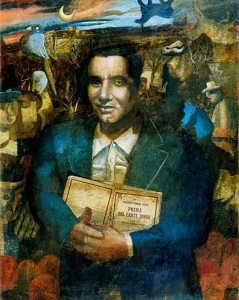
De Spaanse dichter en toneelschrijver Federico Garcia Lorca werd geboren op 5 juni 1898 in Fuente Vaqueros, Granada. Zie ook alle tags voor Federico Garcia Lorca op dit blog.


De gitaar

Aanvangt de klaagzang van de gitaar.
Breken doen de bekers van de ochtend.
Aanvangt de klaagzang van de gitaar.
Hem smoren is nutteloos.
Hem smoren is onmogelijk.
Hij huilt eentonig zoals het water huilt,
zoals de wind huilt over de sneeuwvlakte.
Hem smoren is nutteloos.
Hem smoren is onmogelijk.
Hij huilt om dingen ver.
Heet zand uit het zuiden
snakt naar witte camelia's.
Hij huilt om de pijl zonder doel,
om de avond zonder ochtend
en om de eerste vogel dood
op de tak.
O gitaar!
Hart door vijf zwaarden zwaargewond.


Processiebeeld

Maad met hoepelrok,
Maagd der Verlatenheid,
open als een onmetelijke
Op je lichtende schip
klief je
door het hoogwater
van de stad,
tussen roezige saeta's
en kristalsterren.
Maagd met hoepelrok
jij klieft
door de straatrivier
tot in zee!


Vertaald door Bart Vonck


De zigeunernon
                 Voor José Moreno Villa

Stilte van witkalk en mirte.
Kaasjeskruid in de kruidentuin.
De non borduurt violieren
op een strogeel doek.
In de grijze luchter vliegen
zeven vogels van het prisma.
In de verte gromt de kerk
als een beer op zijn rug.
Wat borduurt zij mooi! Hoe fraai!
Op het strogele doek
wil zij de bloemen
van haar fantasie borduren.
Wat een zonnebloem! Wat een magnolia
van pailletten en linten.
Wat een saffraantjes, wat een maantjes
op de altaardwaal!
Vijf pompelmoezen versuikeren
vlakbij in de keuken.
De vijf wonden van Christus
in Alméria geoogst.
In de ogen van de non
galopperen twee ruiters.
Een verre gesmoorde zucht
maakt haar hemd los,
en terwijl ze in verstarde verten
naar wolken en bergen staart,
breekt haar hart
van suiker en citroenverbena.
O, wat een steile vlakte
met twintig zonnen erboven.
Wat een rechtopstaande stromen
dagen in haar fantasie!
Toch gaat zij verder met haar bloemen,
terwijl rechtop, in de bries,
het licht schaakspeelt
hoog in het zonnescherm.


Vertaald door Lepus


 1773750-6a7cf994821b81cf98b57d3b4a4c6708.jpg
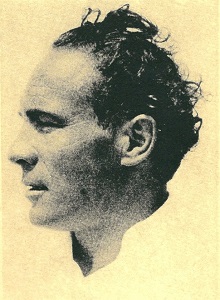
Federico García Lorca (5 juni 1898 – 19 augustus 1936)
Portret door Mick Rooney, 1990-95


De Nederlandse dichter en schrijver Adriaan Morriën werd geboren op 5 juni 1912 in Amsterdam. Zie ook alle tags voor Adriaan Morriën op dit blog.


Spijsvertering

Vergeet je maag niet op een blauwe zomermorgen,
Gevuld met louter aangename dingen:
Sinaasappelsap, bruin brood en yoghurt.
De zuivere nasmaak duurt tot aan de koffie.
Je lichaam is als een tevreden kind,
Verdiept in 't hoge spel der spijsvertering.
Je mond is niet te droog en niet te vochtig.
Je zou nu kunnen praten als er iemand was.
Maar je kunt denken en een droom beginnen.
Je raam staat open en de wereld fladdert binnen.
Zij luistert als een vogel in het pasgemaaide gras.


Terugkeer

Alle revoluties wissen de dood
van mijn moeder niet uit.
En alle vooruitgang hindert niet
dat ik mijn vader heb gehaat.

Ik doe nog altijd, te laat van school,
de stap naar de keukendeur
en licht de klink op, bang
dat de deur weer te hard kraakt.

Alles is mogelijk: mijn vader zwijgt
of leest mij met strenge ogen de les;
mijn moeder glimlacht of kijkt
met een stil gezicht op haar bord.

Ik schik aan tafel aan
en reik, dwars door de verleden tijd
met een hand die weer kinderlijk wordt,
naar de dampende aardappelschaal.


 1773750-1f02271e68144931a8efc86609337702.jpg
Adriaan Morriën (5 juni 1912 – 7 juni 2002)
Borstbeeld door Hans Sassen in het Letterkundig Museum 


De Engelse schrijver Ken Follett werd geboren op 5 juni 1949 in Cardiff, Wales. Zie ook alle tags voor Ken Follett op dit blog.

Uit:Edge Of Eternity

“Rebecca Hoffmann was summoned by the secret police on a rainy Monday in 1961.
It began as an ordinary morning. Her husband drove her to work in his tan Trabant 500. The graceful old streets of central Berlin still had gaps from wartime bombing, except where new concrete buildings stood up like ill-matched false teeth. Hans was thinking about his job as he drove. “The courts serve the judges, the lawyers, the police, the government—everyone except the victims of crime,” he said. “This is to be expected in Western capitalist countries, but under Communism the courts ought surely to serve the people. My colleagues don’t seem to realize that.” Hans worked for the Ministry of Justice.
“We’ve been married almost a year, and I’ve known you for two, but I’ve never met one of your colleagues,” Rebecca said.
“They would bore you,” he said immediately. “They’re all lawyers.” “Any women among them?”
“No. Not in my section, anyway.” Hans’s job was administration: appointing judges, scheduling trials, managing courthouses.
“I’d like to meet them, all the same.”
Hans was a strong man who had learned to rein himself in. Watching him, Rebecca saw in his eyes a familiar flash of anger at her insistence. He controlled it by an effort of will. “I’ll arrange something,” he said. “Perhaps we’ll all go to a bar one evening.”
Hans had been the first man Rebecca met who matched up to her father. He was confident and authoritative, but he always listened to her. He had a good job—not many people had a car of their own in East Germany—and men who worked in the government were usually hard-line Communists, but Hans, surprisingly, shared Rebecca’s political skepticism. Like her father he was tall, handsome, and well dressed. He was the man she had been waiting for.”


 1773750-4b316a68dbb37c9a91e061c36afc5c3d.jpg
Ken Follett (Cardiff, 5 juni 1949)


De Australische schrijfster Margo Lanagan werd geboren op 5 juni 1960 in Waratah, New South Wales. Zie ook alle tags voor Margo Lanagan op dit blog.

Uit: Singing My Sister Down

“We all went down to the tar-pit, with mats to spread our weight.
Ikky was standing on the bank, her hands in a metal twin-loop behind her. She’d stopped sulking; now she looked, more, stare-y and puzzled.
Chief Barnarndra pointed to the pit. Out you go then, girl. You must walk on out there to the middle and stand. When you picked a spot, your people can join you.
So Ik stepped out, very ordinary. She walked out. I thought—hoped, even—she might walk right across and into the thorns the other side; at the same time, I knew she wouldn’t do that.
She walked the way you walk on the tar, except without the arms balancing. She nearly fell from a stumble once, but Mumma hulloo’d to her, and she straightened and walked a straight upright line out to the very middle, where she slowed and stopped, not looking back.
Mumma didn’t look to the chief, but all us kids and the rest did. Right, then, he said.
Mumma stepped straight out, as if she’d just herself that moment happened to decide to. We went after her—only us, Ik’s family, which was like us being punished too, everyone watching us walk out to that girl who was our shame.
In the winter you come to the pit to warm your feet in the tar. You stand long enough to sink as far as your ankles—the littler you are, the longer you can stand. You soak the heat in for as long as the tar doesn’t close over your feet and grip, and it’s as good as warmed boots wrapping your feet. But in summer, like this day, you keep away from the tar, because it makes the air hotter and you mind about the stink.
But today we had to go out, and everyone had to see us go.
Ikky was tall, but she was thin and light from all the worry and prison; she was going to take a long time about sinking. We got our mats down, all the food-parcels and ice-baskets and instruments and such spread out evenly on the broad planks Dash and Felly had carried out.”


 1773750-c582962e274693927aaae90a5265bf62.jpg
Margo Lanagan (Waratah, 5 juni 1960)


De Nederlandse literair criticus Carel Peeters werd geboren in Nijmegen op 5 juni 1944. Zie ook alle tags voor Carel Peeters op dit blog.

Uit: Kan het licht aanblijven?

“Dat de achttiende eeuw de eeuw van de Verlichting en de kritiek was, zoals Kant in de inleiding van zijn Kritik der reinen Vernunft schreef, en dat de Verlichting als filosofie de bedoeling had mensen ‘mondig’ te maken, zoals Kant antwoordde op de vraag ‘Was ist Aufklärung?’ - dat is kennis die weer in herinnering gebracht schijnt te moeten worden, want al wat ik hoor zijn schimpscheuten op de Verlichting. De eeuw van de rede zou de bakermat van de huidige ellende zijn, van de illusoire vooruitgangsgedachte, van staatsbemoeienis, van het verpesten van de natuur en de ongebreidelde woekering van de technologie. Kortom: Der Traum der Vernunft: Vom Elend der Aufklärung, zoals de titel luidde van een reeks lezingen gedurende bijna een jaar lang in 1984-1985 aan de Akademie der Künste in Berlijn.
Tijdens die reeks lezingen waren er ook sprekers als Günter Grass en Oskar Negt die zich niet lieten meeslepen door het enthousiasme de filosofie van de Verlichting om zeep te helpen. Dat is niet zo verbazingwekkend: zelfkritiek is in de Verlichting ingebakken, al ziet men dat graag over het hoofd. ‘Sapere aude!’, de aansporing voor zichzelf te denken die Kant deed, nodigt uit tot een terugkerende ‘Selbstaufklärung der Aufklärung’, zoals de Duitsers dat zo kernachtig kunnen uitdrukken. Maar deze zelfkritiek schijnt niet groot genoeg te zijn geweest, anders zou de Verlichting niet door de Frankfurter Schule, het structuralisme, alle religieuze bewegingen en het postmodernisme zijn aangevallen. Dat zou men kunnen denken, maar alle bijzondere aandacht voor de Verlichting is het gevolg van een gemakzuchtige fixatie. Door de nadruk op de rede en het rationalisme heeft de Verlichting onder meer de industrialisatie voortgebracht, en daarna de technologie en daarmee het misbruik van de technologie. De technologie, in haar vreedzame én verwoestende gedaante, is het meest in het oog lopende gevolg van de Verlichting, en daar richt zich de meeste kritiek op.
De Verlichting heeft niet alleen de technologie voortgebracht, zij heeft ook een rationele instelling tegenover allerlei menselijke en maatschappelijke verschijnselen aangekweekt die men niet met het technologische barbarisme gelijk kan stellen. Wie dat wel doet is als die goudzoeker die zo verblind werd door de glinsteringen van het zand in zijn handen dat hij alles weggooide, ook het goud.”


 1773750-376e8bfb94443ec4c0a6ce4b7ce53c08.jpg
Carel Peeters (Nijmegen, 5 juni 1944) 


Zie voor nog meer schrijvers van de 5e juni ook mijn twee vorige blogs van vandaag.
Geschreven door Romenu om 14:39 Reageer op dit bericht

Margaret Drabble, Kristin Gore, Thomas Kling, Hélène Cixous, Spalding Gray

De Engelse schrijfster Margaret Drabble werd geboren op 5 juni 1939 in Sheffield, Yorkshire. Zie ook alle tags voor Margaret Drabble op dit blog.

Uit: The Millstone

“When, some years after the Hamish episode, I found that I was pregnant, I went through slightly more than the usual degrees of incredulity and shock, for reasons which I doubtless shall be unable to restrain myself from recounting: there was nobody to tell, nobody to ask, so I was obliged once more to fall back on the dimly reported experiences of friends and information I had gleaned through the years from cheap fiction. I never at any point had any intention of going to a doctor: I had not been ill for so many years that I was unaware even of the procedure for visiting one, and felt that even if I did get round to it I would be reprimanded like a school child for my state. I did not feel much in the mood for reproof. So I kept it to myself, and thought that I would try at least to deal with it by myself. It took me some time to summon up the courage: I sat for a whole day in the British Museum, damp with fear, staring blankly at the open pages of Samuel Daniel, and thinking about gin. I knew vaguely about gin, that it was supposed to do something or other to the womb, quinine or something, I believe, and that combined with a hot bath it sometimes works, so I decided that other girls had gone through with it, so why not me. One might be lucky. I had no idea how much gin one was supposed to consume, but I had a nasty feeling that it was a whole bottle: the prospect of this upset me both physically and financially. I grudged the thought of two pounds on a bottle of gin, just to make myself ill. However, I couldn't pretend that I couldn't afford it, and it was relatively cheap compared with other methods, so I grimly turned the pages of Daniel and decided that I would give it a try. As I turned the pages, a very handy image, thesis-wise, caught my attention, and I noted it down. Lucky in work, unlucky in love. Love is of man's life a thing apart, 'tis woman's whole existence, as Byron mistakenly remarked.”


 1773746-514b9a15f8b6ab5cc8b196720b8dbac6.jpg
Margaret Drabble (Sheffield, 5 juni 1939)


De Amerikaanse schrijfster Kristin Carlson Gore werd geboren op 5 juni 1977 in Carthage, Tennessee Zie ook alle tags voor Kristin Gore op dit blog.

Uit: Sammy's House

"Just what is this all about?" he demanded fiercely, painfully aware of all the photos that had already been taken. There wasn't any press aboard; the cruise was for staff only. But though everyone was ostensibly loyally intent on protecting the administration from unnecessary scandal, it was hard to keep a story like this from getting out. I myself could think of five people I planned to regale immediately with this sordid tale. It wasn't often that one attended an office function and got entertained by a scantily clad exhibitionist inked with dancing fantasy creatures. It would be selfish to keep this to myself. "I'm a gift from the Exterminators," the stripper answered. "They say congratulations for making it this far. They didn't think you had it in you." I watched Harry's jawline stiffen. When he got angry, which was distressingly often, he looked like he'd had steel cheek implants. I'd met few people more ripe for a hernia. "Thank you, that will be all," he ground out through clenched teeth.
Harry and a couple Secret Service agents ushered the woman through the still-stunned crowd toward the caterers' station. The hushed silence that had accompanied her performance exploded into the sounds of a hundred and seventy-five people talking at once. The Exterminators were a very disgruntled band of former officials from the previous administration. Most of them had stayed in D.C. to form an opposition think tank, and nothing seemed to please them more than perpetrating juvenile pranks while they worked very seriously to sabotage every policy change we tried to make. They hadn't named their think tank the Exterminators. That particular moniker derived from one of the many vindictive stunts they'd pulled on their way out of the West Wing, which they had vandalized to the best of their abilities in a rage against their ouster. In addition to rigging booby traps and carving their initials into various pieces of furniture, they had also taken the time to enact a much more elaborate and dastardly scheme."


 1773746-4a24f7ca6ead16c3ab02a3ab01a19203.jpg
Kristin Gore (Carthage, 5 juni 1977)
Hier te midden van vader Al Gore en moeder Tipper


De Duitse dichter en schrijver Thomas Kling werd geboren op 5 juni 1957 in Bingen. Zie ook alle tags voor Thomas Kling op dit blog.


Mailand. Ambrosianische Litanei 2

auf eine halbsäule hin gemalt
steht ein junger mann: lebensgroßer
melancholiker – typ aus untersicht gesehen.
athlet, der auf die zweiten blicke sich entpuppt.

betrachten ist schmerzforschung.
kahlheit nackter bildprogramme.
sirrendes, singendes, zuletzt ein
stummgemachtes fleisch.

dies ist der heilige mit der eignen haut (attribut);
in kniehöhe sein schopf: dort
baumelt die apostelhülle, struppig,
ein ziemlich totes angesicht.

so stehen dulder. ein geschundenes bild.
der haut entkleidet. mit rosigem kopf: ein
bartholomäus, die haut überm arm wie
regenhaut. dazu die patientenglatze – sieht aus
wie von der chemotherapie.

die vorgewiesenen attribute: ein messer, keine spritze.
und muß mit links, mit eleganz, sein lebensgroßes hautbild
halten, den lebensnahen, totengrauen skalp.
der aderzeichen zeigt: das bild das ihm
sonst runterrutschen würde von der schulter.
der nimmt das hin; ist schinderwerk.
ein bildprogramm, termingerecht geliefert –

ein sonderbarer heiliger, seitlich angebracht.
ein weihrauch-echo. (fresko)


 1773746-4d570d1926c3b54e7d17dae160bbbe81.jpg
Thomas Kling (5 juni 1957 - 1 april 2005)


De Franse feministische schrijfster, dichteres, professor, filosoof, literair criticus en historica Hélène Cixous werd geboren in Oran, Algerije, op 5 juni 1937. Zie ook alle tags voor Hélène Cixous op dit blog.

Uit: Si près

«Je connais un poète qui est mort dans l'escalier, le jour où il partait dans un pays où il n'était plus plus jamais revenu. Tous ces pays dont on ne revient pas où on ne revient pas où on va revenir où on revient tellement en pensée qu'il est difficile de faire la différence entre aller, ne pas aller, et aller ne pas aller, on passe des années dans la lumière lunaire de l'aéroport. On y est attaché par le pacte le plus antique et le bien moins connu, le pacte d'être un né ou un mort de ce pays. Il n'y a pas d'explication. Il y a un cordon ombilical. C'est une ombre de cordon, un cordon immatériel dont on sent l'effet planté dans le cervelet. Nous sommes des conséquences. Il y a les cellules, dit mon aimé. Moi, je songe à aller à Alger depuis une dizaine d'années. Par précaution j'utilise le verbe " aller". Mes cellules ne suivent pas. Elles font comme si je disais : "retourner". J'attends.
(…)

Il fut un temps. Ce temps je le sais d'un savoir désaffecté. J'ai voulu arriver en Algérie, il aurait peut-être mieux valu moi que j'y atteigne, mais c'était impossible. Si bien que j'ai atteint l'impossibilité et cela sans l'avoir calculé.(...) "Atteindre l'impossibilité" n'est ni un but, ni une possibilité, c'est une impossibilité délivrée en notre absence. Ai-je jamais cru, espéré, décrocher le faîte du désir ? (...) il se peut qu'ai couvé en moi l'ombre d'une sensation de vanité, une de ces formes furtives de pressentiment que l'on chasse d'un souffle(...) Ces retropressentiments de fatalité, je leur ai accordé une importance décisive en 1993, l'année où je n'ai plus réussi à faire obstacle à l'entrée de la Chose Algérie dans mes livres. Reconnaître que je n'avais jamais crû arriver un jour en Algérie, en vérité, et tenter de m'approcher de la Chose par les puissants moyens de la littérature, les deux faits se sont produits à la même époque."


 1773746-38cea88bd4e7236a0a049251adf3799a.jpg
Hélène Cixous (Oran, 5 juni 1937)


De Amerikaanse schrijver en acteur Spalding Gray werd geboren op 5 juni 1941 in Barrington, Rhode Island. Zie ook alle tags voor Spalding Gray op dit blog.

Uit:Swimming to Cambodia

“This bombing went on for five years. The Supreme Court never passed any judgment on it and the military speaks with pride today that five years of the bombing of Cambodia killed 16,000 of the so-called enemy. That's 25% killed, and there's a military ruling that says you cannot kill more than 10% of the enemy without causing irreversible, psychological damage. So, five years of bombing, a diet of bark, bugs, lizards and leaves up in the Cambodian jungles, uh, an education in Paris environs in a strict Maoist doctrine with a touch of Rousseau, and other things that we will probably never know about in our lifetime -- including, perhaps, an invisible cloud of evil that circles the Earth and lands at random in places like Iran, Beirut, Germany, Cambodia, America -- set the Khymer Rouge out to carry out the worst auto-homeo genocide in modern history.
(…)

What a fantastic land it was, how it was Shangri-La before it was colonized... Thailand was a Nordic country compared to Cambodia, and they're right next to each other. And he said 90% of the land was owned by the people; it was earth, it was dirt, but it was THEIRS, and it was good. And-and they knew how to have a good time. They knew how to have a good time. They knew how to have a good time getting born, a good time growing up, a good time going through puberty, a good time falling in love, a good time staying in love, a good time getting married, a good time staying married, a good time having children, a good time raising children, a good time growing old, a good time dying... they even knew how to have a good time on NEW YEAR'S EVE! I couldn't believe it!”


 1773746-c07dfced23d8d723051db38a0637556a.jpg
Spalding Gray (5 juni 1941 – 10 januari 2004)


Zie voor nog meer schrijvers van de 5e juni ook mijn vorige blog van vandaag.

Geschreven door Romenu om 14:29 Reageer op dit bericht

Christy Brown, David Hare, Alifa Rifaat, Otto F. Walter, Ivy Compton-Burnett

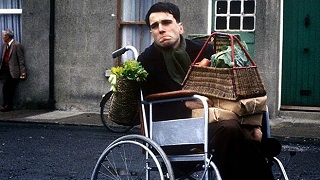
De Ierse dichter, schrijver en schilder Christy Brown werd geboren op 5 juni 1932 in Dublin. Zie ook alle tags voor Christy Brown op dit blog.

Uit:My Left Foot

“I was born in the Rotunda Hospital, on June 5th, 1932. There were nine children before me and twelve after me, so I myself belong to the middle group. Out of this total of twenty-two, seventeen lived, but four died in infancy, leaving thirteen still to hold the family fort.
Mine was a difficult birth, I am told. Both mother and son almost died. A whole army of relations queued up outside the hospital until the small hours of the morning, waiting for news and praying furiously that it would be good.
After my birth Mother was sent to recuperate for some weeks and I was kept in the hospital while she was away. I remained there for some time, without name, for I wasn't baptized until my mother was well enough to bring me to church.
It was Mother who first saw that there was something wrong with me. I was about four months old at the time. She noticed that my head had a habit of falling backward whenever she tried to feed me. She attempted to correct this by placing her hand on the back of my neck to keep it steady. But when she took it away, back it would drop again. That was the first warning sign. Then she became aware of other defects as I got older. She saw that my hands were clenched nearly all of the time and were inclined to twine behind my back; my mouth couldn't grasp the teat of the bottle because even at that early age my jaws would either lock together tightly, so that it was impossible for her to open them, or they would suddenly become limp and fall loose, dragging my whole mouth to one side. At six months I could not sit up without having a mountain of pillows around me. At twelve months it was the same.”


 1773741-14d12013455ab2b759f1c34f701a8cfd.jpg
Christy Brown (5 juni 1932 – 6 september 1981)
Daniel Day-Lewis als Christy in de film “My Left Foot” uit 1989 


De Britse schrijver, dramaturg en regisseur David Hare werd geboren op 5 juni 1947 in Sussex. Zie ook alle tags voor David Hare op dit blog.

Uit: Wall: A Monologue

« Except, of course, they don’t call it a wall. They call it a fence.
It’s one of those things, there seem to be so many, don’t there?—I’m thinking of abortion, or armed revolt—where the words you use—pro-life/pro-choice, terrorist/freedom fighter—tell the world which way you think. Words become flags, they announce which side you’re on. In this case, literally. The Israelis call it the gader ha’harfrada, which in Hebrew means “separation fence.” The Palestinians don’t call it that. Not at all. They call it jidar al-fasl al-‘unsuri, which in Arabic means “racial segregation wall.”
OK, let’s go coolly into this, shall we? If I use one word or the other, forgive me, it does not imply I am partisan. I have acquaintances on both sides of the fence and on both sides of the wall. “I hate the wall,” say my Israeli friends. “I regret it.” “I’m ashamed of the wall.” “I drive for miles so that I don’t have to see it. But it works. 80 percent of terrorist attacks against Israel have stopped. Have been stopped. Am I not meant to be pleased about that?”
Very well. I shall seek to describe the history of the wall.”


 1773741-a52f5f33a789d350e4278c5705650d54.jpg
David Hare (Sussex, 5 juni 1947)


De Egyptische schrijfster Alifa Rifaat werd op 5 juni 1930 in Caïro geboren. Zie voor onderstaande schrijfster ook alle tags voor Ailfa Rifaat op dit blog.

Uit: Another Evening at the Club

“In a state of tension. she awaited the return of her husband. At a loss to predict what would happen between them, she moved herself back and forth in the rocking chair on the wide wooden verandah that ran along the bank and occupied part of the river itself. its supports being fixed in the river bed. while around it grew grasses and reeds. As though to banish her apprehension, she passed her fingers across her hair. The spectres of the eucalyptus trees ranged along the garden fence rocked before her gaze. with white egrets slumbering on their high branches like huge white flowers among the thin leaves.
The crescent moon rose from behind the eastern mountains and the peaks of the gently stirring waves glistened in its feeble rays, intermingled with threads of light leaking from the houses of Manfalout scattered along the opposite bank. The coloured bulbs fixed to the trees in the garden of the club at the far end of the town stood out against the surrounding darkness. Somewhere over there her husband now sat, most likely engrossed in agame of chess.
It was only a few years ago that she had first laid eyes on him at her father‘s house, meeting his gaze that weighed up her beauty and priced it before offering the dowry. She had noted his eyes ranging over her as she presented him with the coffee in the Japanese cups that were kept safely locked away in the cupboard for important guests.”


 1773741-cc093466e63c11526e5edd22774f91f9.jpg
Alifa Rifaat (5 juni 1930 - 4 januari 1996)
Cover (geen portret beschikbaar)


De Zwitserse schrijver en uitgever Otto Friedrich Walter werd geboren op 5 juni 1928 in Rickenbach. Zie ook alle tags voor Otto. F. Walter op dit blog.

Uit: Herr Tourel

“Den Kopf kann ich auf meine Tasche legen; hinter mir, mit der Hand von hier aus eben noch zu erreichen, die Eingangstür. Da oben die Dachpappe über den angefaulten Balken, darüber, soviel ich gestern noch feststellen konnte, noch immer die aufgeschlitzten, flachgetrampelten und festgenagelten Teerfässer, verbeulte Blechstücke, schwarzrot. So waren sie schon damals, als wir da drüben am linken Aareufer noch badeten, vor, nun, fünfundzwanzig Jahre mögens her sein. Da hört mich niemand. Aber also mit einem Wort: ich bin zurückgekommen, zufällig, ich bin gestern zufällig wieder in die Gegend gekommen. Vielleicht muß ich kurz vorausschicken: ich habe hier in Jammers meine frühe Kindheit verbracht, wie man so sagt. Oben in der Stadt, in einem der alten Ringmauerhäuser. Mit elf Jahren kam ich fort, zunächst in die Klosterschule der Zisterzienser nach Sankt Leonhard, später habe ich bei Zoller & Co. in Fahris drüben während vier Jahren Photographie gelernt. Für ein Jahr war ich danach als Volontär und mit der Absicht, Französisch zu lernen, bei Auquier, Photogeschäft, in Aubonne, nordwestlich von Lausanne. Anschließend verbrachte ich ein halbes Jahr in dem, was wir hierzulande als Rekrutenschule bezeichnen.
Schon nach drei Monaten führte ich eine Gruppe. Tourel, pflegte unser Leutnant zu mir zu sagen, Sie sollten unbedingt Offizier werden. Aber ich lehnte ab. Ich kehrte als Angestellter zu meinem ehemaligen Chef nach Fahris zurück. Dort bin ich zwölf Jahre lang geblieben, und ich darf sagen, zunächst als zweiter, dann als erster Angestellter habe ich mir eine weithin geachtete Position erarbeitet. Herr Zoller senior ist jederzeit bereit, das zu bestätigen. Er hat mir ein entsprechend hervorragendes Zeugnis mitgegeben, und ich kann nur erneut erklären, daß es sich bei den meinen Wegzug von Fahris betreffenden Gerüchten um eigentliche Verleumdungen handelt.“


 1773741-b373790f0a0643896add305a6e883c64.jpg
Otto F. Walter (5 juni 1928 – 24 september 1994)


De Engelse schrijfster Ivy Compton-Burnett werd geboren op 5 juni 1884. Zie ook alle tags voor Ivy Compton-Burnett op dit blog.


Uit: A House and Its Head

“Duncan stood in the hall, with hat and book, in an attitude of being on the point of leaving the house. The young people stood about, still and silent, until Grant and Nance met each other’s eyes and broke into laughter.
Duncan breathed more audibly and maintained his position, but as the laughter increased, he dropped his book, and signed sharply to Grant to retrieve it. Grant took a moment to follow, and Sibyl was before him; and Duncan idly dropped it again, and motioned his nephew to obedience.
Ellen came hurrying down the stairs, her avoidable haste acting in its normal way upon her husband. He remained as he was, until she came up, and then without turning his eyes upon her, walked from the house
.”


 1773741-a99a672839e3dde51b08935da28ab6b8.jpg
Ivy Compton-Burnett (5 juni 1884 - 27 augustus 1969)

Geschreven door Romenu om 14:20 Reageer op dit bericht

Robert Franquinet

De Nederlandse dichter, schrijver en schilder Robert Marie Philmain Joseph Franquinet werd geboren in Amby (bij Maastricht) op 5 juni 1915. Franquinet debuteerde in 1933 als jong katholiek dichter met de bundel Het vroege uur. De barokke taal in die eersteling heeft hem zijn leven lang niet meer verlaten. Na een fervent belijden van het katholicisme werd hij steeds kritischer en nam hij afstand van zijn katholieke tijdgenoten. Hij publiceerde regelmatig in het tijdschrift Forum en ontwikkelde zich als essayist en romanschrijver. WO II, waarvan hij een jaar in de gevangenis doorbracht, is de breuk in zijn leven: alle romans en poëzie van na deze tijd cirkelen rond het thema van geweld en zijn tegenstrevers liefde en erotiek. Na de oorlog vestigde hij zich in Parijs en verdween hij langzaam van het literaire toneel, ondanks het feit dat hij door Marsman, Greshoff en Vestdijk tot de belangrijke auteurs werd gerekend. Met zijn roman “Drijfzand” (1977) begon echter een herwaardering van Franquinet.

Uit: Drijfzand

““Wanneer is onder mijn schedel het ruisen begonnen? Herinneringen zijn ontastbare obstakels geworden. Valt er ooit nog stilte over het woud van verminkingen? Wie ben ik geworden? Een schrale boom in de mist. Een bed in een uitdragerszaak. Een drijvend ding in het schuim van afvoerwater. Lang voordat de schimmels van de weemoed woekerden. Afscheid? Dit en dat moesten we nog doen. Een val in de kale ruimteloosheid spannen van wat nog zelfverdediging genoemd kan worden. Hebben we geen feilloze kennis van elkaar? We beminden als ongekooide honden. Een langspeelplaat die altijd draait is als de vorm van iemands handen die in troebel water zijn omtrek verliest. In de wulpsheid van je vlees hoor ik de stem van de gevangene jammerend schreeuwen. Wie van jullie heeft de straf bedacht? Het plat van zijn voeten wordt opengesneden, het vel gesperd, gevuld met kleine spijkers en daarna weer dichtgenaaid. Hij wordt naar de woestijn gebracht, ver van het dorp. Hij wordt aan zijn lot overgelaten, gillend van de pijn wanneer hij staan of gaan wil. Woestijngieren laten een kadaver de tijd niet om uit te drogen in de brandende sirocco.
De man heeft een parkiet gestolen.
‘En jij opent je ogen en blijft glimlachend liggen.’
‘Je moet bij zulke dingen niet teveel nadenken,’ zeg je.
‘Je kijkt naar de muur aan de overkant alsof daar de verloren tijd staat aangetekend. Het irriteert me dat ik je over de dingen-achter-de-dingen moet spreken.’
‘Nee, geen uitleg. Waarom? Dat vogeltje is een turkooiskleurige schaduw, maar men kan het liefhebben.’
‘Doe niet belachelijk.’
En ik bedroefd: ‘de eerste keer in Normandië.’
Er komt een nuance in de plooi van je mondhoek. Ik huiver om de koelte van je ogen en raak met een vinger de rand van je mond aan. En je trilt als het wateroppervlak tegen mijn lichaam voor dat onze monden hun vocht mengen. Nou, ja, wat doe ik met mijn onuitgesproken minachting? Zo gaat het altijd. De werkelijkheid is sneller dan de onwerkelijkheid. Afstand? Veel later. Maar de tijd krimpt als een overwinterde appel.”


 1916427-0d55d733ec6a29b05910754ea36020ad.jpg
Robert Franquinet (5 juni 1915 - 30 mei 1979)

Geschreven door Romenu om 00:00 Reageer op dit bericht

Fronleichnam (Hugo von Hofmannsthal)


Bij Sacramentsdag


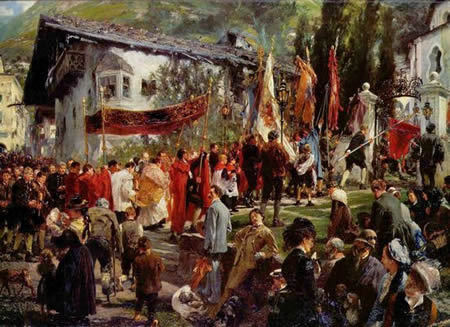
 1773362-a7a5187aa8983333d11e115b6fccbd37.jpg
Fronleichnamsprozession in Hofgastein door Adolph Menzel, 1880


Fronleichnam

Von Glockenschall, von Weihrauchduft umflossen,
Durchwogt die Straßen festliches Gepränge
Und lockt ringsum ein froh bewegt Gedränge
An alle Fenster, – deines bleibt geschlossen.

So hab auch ich der Träume bunte Menge,
Der Seele Inhalt, vor dir ausgegossen:
Du merktests kaum, da schwieg ich scheu-verdrossen,
Und leis verweht der Wind die leisen Klänge.

Nimm dich in acht: ein Tag ist schnell entschwunden,
Und leer und öde liegt die Straße wieder;
Nimm dich in acht: mir ahnt, es kommen Stunden,

Da du ersehnest die verschmähten Lieder:
Heut tönt dir, unbegehrt, vielstimmiger Reigen,
Wenn einst du sein begehrst, wird er dir schweigen.


 1773362-b7709c88250e9e8d8939e72348445a41.jpg
Hugo von Hofmannsthal (1 februari 1874 – 15 juli 1929) 
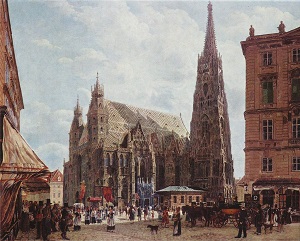
Wenen, Stephansdom vom Stock-im-Eisen-Platz, door Rudolf von Alt, 1832.
Hugo von Hofmannsthal werd geboren in Wenen.


Zie voor de schrijvers van de 4e juni ook mijn vorige twee blogs van vandaag.
Geschreven door Romenu om 12:22 1 reactie Reageer op dit bericht

Ralf Thenior, Marie Ndiaye, Erasmus Schöfer, Buddy Wakefield, Yaak Karsunke, Charles Dickinson

De Duitse dichter en schrijver Ralf Thenior werd geboren op 4 juni 1945 in Bad Kudowa. Zie ook alle tags voor Ralf Thenior op dit blog.

Uit: Strange Kebab

Vollmond über Balkonien

Der Efeuripper vom Rombergpark hackt wieder blindwütig auf den Efeu ein. Doch auf Balkonien stört das keinen. Man sitzt und trinkt Sangria con mucho alegria. Noch eben waren die Wölkchen lachsrot vom Sonnenuntergang, jetzt ist es schon dunkel, dämmerungsblau mit Violettschein, und die Fledermaus flippt durchs Himmelskarree im Hinterhof. Gott sei Dank, dass die Nachbarn nicht mehr grillen dürfen. – Ob er heute wieder hackt? – Der Efeuripper? Vielleicht. Gegenüber steht eine einsame Frau und raucht. Der Mond ist aufgegangen. Ein Baby schreit. Das ist der Mond! Das Baby schreit lauter. Dann schluchzt es nur noch, wird still. Der Duft des Sommerflieders, der aus dem Schuppendach wächst, steigt empor und weht durch den Hinterhof. Alle unterhalten sich leise,lachen gedämpft, nur im dritten Stock knurrt einer: Immer das Gefummel mit dem Werwolfgebiss!


Fett absaugen

Die letzte Flasche Wein war schlecht, er sucht seine Socken auf der Straße. Sagt einer: Komm mit, wir gehen protestieren. Er mit. Kleiner Haufen, aber zum Äußersten entschlossen. Sie bauen sich vor dem Rathaus auf. Wogegen sind wir? – Weißt du’s nicht? Der Bürgermeister hat dem Stadtwappen das Fett absaugen lassen. – Wie? – Ein Designer aus Düsseldorf hat dem Struppvogel den Bauch wegretuschiert. – Bei die-ser Haushaltslage? Für fuffzehntausend Eu! War es mein Genosse? Er schreit: Bürgermeister Langemeyer, klaut des Adlers gold’ne Eier! Und backt sich ein Ei!
Er steht allein vor dem Rathaus. Eine Hand legt sich auf seine linke Schulter. Auf seine rechte auch. Grüne Minna. Und ab nach Aplerbeck.


 1773360-9c3f6427b335fe8c9f868d7538f65519.jpg
Ralf Thenior (Bad Kudowa, 4 juni 1945)


De Franse schrijfster Marie Ndiaye werd geboren op 4 juni 1967 in Pithiviers. Zie ook alle tags voor Marie Ndiaye op dit blog.

Uit: Ein Tag zu lang (Vertaald door Claudia Kalscheuer)

„Als der Lehrer sich entschloß, Nachforschungen anzustellen, war es dunkel geworden. Die Lichter des nahe gelegenen Gehöfts waren im Nebel kaum zu erkennen, und bei aller Besorgnis war der Lehrer froh, die Gegend schon am nächsten Morgen zu verlassen, denn wie sich zeigte, lebte man dort, kaum war der August zu Ende, in ständigem Regen und Nebel, was er bisher nicht gewußt hatte und erst dieser Nachmittag ihm zu Bewußtsein brachte. Das ganze Jahr über könnte ich hier niemals wohnen, dachte er angewidert, als er in den Weg zum Gehöft einbog und dabei vor jedem Schritt mit der Fußspitze den Boden prüfte, so schwach war das Licht des Mondes.
Es kam ihm vor, als sei die Kälte mit einem Schlag gekommen, unmittelbar nach dem Mittagessen, gerade als der Lehrer und seine Frau in aller Ruhe beschlossen, erst am nächsten Tag, dem zweiten September, in die Hauptstadt zurückzureisen, etwas später als sonst.
Sie waren plötzlich beide erschauert, und der Lehrer hatte ein paar gelehrte Sentenzen über den Wechsel der Jahreszeiten zum besten gegeben. Hatten sie sich dann nicht etwas zu selbstzufrieden über ihre baldige Abreise gefreut und lediglich bedauert, daß das schöne Wetter ihnen nicht noch einen weiteren Tag erhalten blieb? Gewiß, das örtliche Klima war ihnen gleichgültig, ebenso wie alles andere, was die Gegend betraf, denn sie waren nach der langen, stets heiteren und warmen Ferienzeit am 31. August immer abgereist“.


 1773360-d9ccf0d545a4e6fc6edc4df7ff9cd80c.jpg
Marie Ndiaye (Pithiviers, 4 juni 1967)


De Duitse schrijver Erasmus Schöfer werd geboren op 4 juni 1931 in Altlandsberg bij Berlijn. Zie ook alle tags voor Erasmus Schöfer op dit blog.

Uit:Vom Eisen befreit

 „Ökobäuerin Salli erzählt Armin von ihrem Plan für eine Landkommune.
" ...inzwischen hab ich feste Kunden und könnte manchmal mehr verkaufen als unsre Felder hergeben. Sie werfen uns Steine in den Weg, die Offiziellen vom Bauernverband, ich will dich nicht langweilen mit den Details, will dir nur erklären, weshalb ich meine, dass wir unser eigenes
Ding anfangen müssen, statt uns nur gegen die Zerstörungen zu wehren, die unser Wirtschaftssystem anrichtet.
Glaubst du, dass du mit wurmigen Radieschen und Äpfeln den Kapitalismus erschüttern kannst?
Die Sorte Fragen von euch Linken kennich Armin. Ihr wollt nicht begreifen,dass wir heute schon Beispiele schaffen müssen wie wir leben möchten, in dem Sozialimus oder Kommunismus der irgendwo im Nebel der Zukunft liegt oder nicht. Du hast mir mal begeistert erzählt von Arbeitern einer
Glashütte, die ihren Betrieb vor der Pleite gerettet haben, ihren Chef rausgeschmissen und selbst die Hütte weitergeführt. Das hat dir damals imponiert, stimmts? In der Schweiz hab ich einen Vortrag gehört über eine Landkommune in der Provence, das wolltich wissen, bin voriges Jahr hingefahrn, Longo Maï heißt die, so vierzig fünfzig Leute, Franzosen, Schweizer, Österreicher, und Deutsche, leben dort seit ix Jahren auf einem alten Bauergut zusammen und die sind keine Aussteiger - Einsteiger sind die, in ein andres, ja, solidarisches Leben.“


 1773360-b5ed951caffe7b9d387a7a021a55b402.jpg
Erasmus Schöfer (Altlandsberg, 4 juni 1931)


De Amerikaanse (slam) dichter Buddy Wakefield werd geboren op 4 juni 1974 in Shreveport, Louisiana. Zie ook alle tags voor Buddy Wakefield op dit blog.


Hurling Crowbirds at Mockingbars (Hope is Not a Course of Action) - Fragment

It was not my intention to make such a
production of the emptiness between us
playing tuba on the tombstone of a soprano
to try and keep some dead singer’s perspective alive.
It’s just that I coulda swore you had sung me a love song back there
and that you meant it
but I guess sometimes people just chew with their mouth open

so I ate ear plugs alive with my throat
hoping they’d get lodged deep enough inside the empty spots
that I wouldn’t have to hear you leaving
so I wouldn’t have to listen to my heart keep saying
all my eggs were in a basket of red flags
all my eyes to a bucket of blindfolds
in the cupboard with the muzzles and the gauze
ya know I didn’t mean to speed so far out and off
trying to drive all your nickels to the well
when you were happy to let them wishes drop

but I still show up for gentleman practice
in the company of lead dancers
hoping their grace will get stuck in my shoes.
Is that a handsome shadow on my breath, sweet woman
or is it a cattle call
in a school of fish? Still dance with me
less like a waltz for panic
more for the way we’d hoped to swing
the night we took off everything
and we were swingin’ for the fences

don’t hold it against
my love
you know I wanna breath deeper than this
you know I didn’t mean to look so serious
didn’t mean to act like a filthy floor
didn’t mean to turn us both into a cutting board
but there were knives s-stuck
in the words where I came from
too much time in the back of my words.
I pulled knives from my back and my words.
I cut trombones from the moment you slipped away


 1773360-273f31cfac9d8bdc22cf686d0e5ffa1a.jpg
Buddy Wakefield (Shreveport, 4 juni 1974)


De Duitse dichter en schrijver Yaak Karsunke werd geboren op 4 juni 1934 in Berlijn. Zie ook alle tags voor Yaak Karsunke op dit blog.


Zur schönen Aussicht

die täter - so hört man - sind nicht
nur bereit ihren Opfern
voll zu verzeihen nein mehr noch

sie sind entschlossen
die vergangenheit ruhen zu lassen
den blick nach vorne zu richten
& mit ihren opfern gemeinsam
einen neuen anfang zu wagen

gänzlich unbelastet von ihren
früheren taten


perdido

einer nach dem andern gibt die kanne
oder das horn ab
klappt den klavierdeckel zu
lehnt seinen bass an die wand

auch tänzer verlassen die bühne
vor zwei tagen Nurejew
gestern starb Dizzy Gillespie
einer aids einer krebs so als ob man
es sich aussuchen könnte wie früher
als man die wahl hatte zwischen
alkohol & heroin

ladies and gentleman: this
was the massey hall quintett
1953 im mai
the greatest bebop concert ever
mit Charlie "Bird" Parker
John Birks "Dizzy" Gillespie
Bud Powell & Charles Mingus &

hinter dem Schlagzeug Max Roach
still alive spielt jetzt
den letzten chorus blues march
für trommel allein


 1773360-2a77c2dc4e1eb671dc7d3f2160b0fb14.jpg
Yaak Karsunke (Berlijn, 4 juni 1934)
Berlijn, Mauergedenkstätte in de Bernauer Straße


De Amerikaanse schrijver Charles Dickinson werd geboren op 4 juni 1951 in Detroit, Michigan. Zie ook alle tags voor Charles Dickinson op dit blog.

Uit: Shortcut in Time

“It was a towel trolley, right side up at the bottom of the pool's slopping floor. Its wooden lid was closed. A baseball-size bubble escaped from it and wobbled to the surface.
Then I was diving down through the water, wishing I'd taken a bigger gulp of air. The water squeezed my head as I went deeper and I felt vital passageways in my brain begin to slam shut. With a final, exhausted kick I got close enough to grab the edge of the trolley's wooden lid. It was varnished and slippery, but I expected it to open easily. It didn't budge. I yanked harder. Nothing. Another bubble--shaken free--broke against my chin.
Then I saw that the lid was locked, a ballpoint pen lodged in the latch. The pen was blue, with gold printing along the barrel. Removing it was easy enough. I tried to put it in my shorts pocket but it slipped out of my hand. When I grabbed for it I lost my grip on the trolley lid and bobbed to the surface.
Someone--a girl--was running from the poolhouse. I didn't get a good look at her. I could only scream--"Ambulance!"--and kick back down.
The water pressure on the trolley made it hard to lift the lid. A school of small bubbles fizzed past my face. The first thing I saw inside the trolley was a blue-white hand. As I lifted the lid higher I saw that the hand belonged to my brother.
I reached out in a panic and grabbed a good chunk of Kurt's cheek and pinched. Hard. I knew he hated when I did that and I hoped the pain and outrage might travel down to whatever cold grain of life remained inside him and make him angry enough to return to me.
He didn't respond. The imprint of my finger and thumb remained pressed into his skin like a dent in clay. He was folded into a fetal position. His eyes were half-open. I was pretty sure he was dead. A million times over the years that followed, I wished that he had been.”


 1773360-61120eb841708903a14cb62f523875f6.jpg
Charles Dickinson (Detroit, 4 juni 1951)
Detroit, Downtown


Zie voor nog meer schrijvers van de 4e juni ook mijn vorige blog van vandaag.

Geschreven door Romenu om 12:19 Reageer op dit bericht

Elizabeth Jolley, Apollon Maykov, Jacques Roumain, Charles Dickinson, Fritz Weber, Dana Bönisch

De Australische schrijfster Elizabeth Jolley werd geboren op 4 juni 1923 in Birmingham, Engeland. Zie ook alle tags voor Elizabeth Jolley op dit blog.

Uit: Milk and Honey

“A wind blew through Europe. It blew stronger and ever stronger. It swept up the soot and the dirt, the horse manure, the brickdust and the thistledown.
Countless whirlwinds, spiralling and gathering, carried all that which was not fixed and secure upwards into the sky. And in this twisting movement cones were formed which, because of the intensity of the whirlwind, grew more and more compact as they moved higher and higher into the winds above the firmament.
The clotted debris travelled far away into another hemisphere and, forgetting the winds, sank down to earth. Most of the cones, as they reached the earth, fell apart and mixed with the dust of the new place.
Some did not do this.
Even as they fell they pressed closer and closer into themselves as if this was their only means of surviving.
In the new land they were scattered like rocks, not mixing with the soil but, from time to time, settling on the fragments of other such cones from which they drew sustenance in order to preserve themselves and remain unchanged for as long as possible”.


 1773347-a4194d910f400cfdde4a71cec10ba1b8.jpg
Elizabeth Jolley (4 juni 1923 – 13 februari 2007)
Portret door Peter Kendall, 1986


De Russische dichter Apollon Nikolayevich Maykov werd geboren op 4 juni 1821 in Moskou. Zie ook alle tags voor Apollon Maykov op dit blog.


Swallow rushed

Swallow rushed
Because of the white sea,
The village and began to sing:
"As of February, not slice,
As you March, don't look so glum,
Whether or even snow, though the rain -
All spring smell!"


Summer Rain

"Gold, gold falls from the sky!" -
The children scream and run for the rain...
- Fullness, children, we serem,
Only serem Golden grain
In full barns sweet bread!


 1773347-1ece793f3a61fde50da4cb161ad4da5f.jpg
Apollon Maykov (4 juni 1821 – 20 maart 1897)
Portret door  Ivan Kramskoy, 1883


De Haïtiaanse dichter, schrijver en politicus Jacques Roumain werd geboren op 4 juni 1907 in Port-au-Prince. Zie ook alle tags voor Jacques Roumain op dit blog.

Uit: Bois d'Ebène

Trop tard
jusqu’au cœur des jungles infernales
retentira précipité le terrible bégaiement
télégraphique des tam-tams répétant infatigables
répétant
que les nègres
n’acceptent plus
d’être vos niggers
vos sales nègres
trop tard
car nous aurons surgi
des cavernes de voleurs des mines d’or du Congo
et du Sud-Afrique
trop tard il sera trop tard
pour empêcher dans les cotonneries de Louisiane
dans les Centrales sucrières des Antilles
la récolte de vengeance
des nègres
des niggers
des sales nègres
il sera trop tard je vous dis
car jusqu’aux tam-tams  auront appris le langage
de l’Internationale
car nous aurons choisi notre jour
le jour des sales nègres
des sales indiens
des sales hindous
des sales indo-chinois
des sales arabes
des sales malais
des sales prolétaires
des sales juifs


 1773347-83ba9f454e09994af664df0e74758f75.jpg
Jacques Roumain (4 juni 1907 – 18 augustus 1944)
Hier op Cuba, tweede van links


De Oostenrijkse schrijver Fritz Weber werd geboren op 4 juni 1895 in Wenen. Zie ook mijn blog van 4 juni 2009.

Uit:Granaten und Lawinen

„Gegen Mitternacht des 30. Mai wird das Werk alarmiert. Seit zwei Stunden heult es hoch über uns hinweg, kracht auf die Anmarschstraßen nieder. Unsere Artillerie antwortet. Der Raum ist von Blitzen, Bersten und Dröhnen erfüllt, nur über den vordersten Linien liegt unheimliche Ruhe
Wolf und ich stehen nebeneinander in der Nahkampfanlage. Unsere Maschinengewehre sind hochgekippt, die Gurten eingezogen. Wir rauchen ununterbrochen. immer wieder sehen wir nach, ob alles griffbereit liegt: die Verschläge, die Patronenzieher, die Reserveläufe. Dann horchen wir in das Blitzen und Brodeln des Feuers.
Da saust auf dem Hügel Costesin eine grüne Rakete hoch. Aus den Stützpunkten knattert Gewehrfeuer, Schrapnells heulen von Lusern herüber und krepieren über unserm Drahtverhau. Ein Leuchtschirm schwebt plötzlich in der Luft und gießt blendende Helle ins Vorfeld.
Wolf hält die Leuchtpistole durch die Scharte und drückt ab. Wir sehen Menschen laufen, grün übergossen von dem Licht der langsam sinkenden Zündmasse. Sie haben Gewehre in den Händen und hasten aus der Mulde vor dem Werk den Hang herauf. Immer mehr quellen aus dem Wald..”


 1773347-61ee2d436a6606cdd59e0dc8c3fafee0.jpg
Fritz Weber (4 juni 1895 – 1 juni 1972)


De Duitse schrijfster Dana Bönisch werd geboren op 4 juni 1982 in Frechen. Zie ook alle tags voor Dana Bönisch op dit blog.

Uit: „Du wirst mal eine ganz Große…“ (Interview door Elisa Jannasch, MyCulture )

“„Ich hatte die Geschichte schon lange im Kopf und zwar hatten wir in Deutsch vor Ewigkeiten mal ‚Die Leiden jungen Werther’ durchgenommen und abschließend hatte unser Lehrer die Frage in den Raum geworfen, ‚Was glaubt ihr, könnte so eine Figur heute noch existieren, könnte eine Geschichte heute noch so verlaufen?’ Und da hab ich mir irgendwie Gedanken drüber gemacht und die Gedanken auf Eis gelegt, bis mir die Idee zu der Figur kam. Und bei Werther ist es ja auch so, dass er dieses Problem hat, seine Sehnsucht nach  eigenen Grenzen nennt er das immer, also durch die Welt durchdringen zu können. Ich hab mich da schon ein bisschen dran angelehnt, wenn es dann auch ironisiert wurde, dadurch dass Goethe da auch selber aufgetaucht ist. Ein Jahr hab ich dann für ‚Rocktage’ gebraucht. Und zum Schluss war ich mit meinen Eltern in den Semesterferien ganz geruhsam in Holland am Strand und hab das dort zu Ende geschrieben. Ich lag dann jeden Tag in den Dünen und das war schon ganz idyllisch.“  


 1773347-8ab0548b9faaeaa6eb24cc3a16e5fe61.jpg
Dana Bönisch (Frechen, 4 juni 1982)

Geschreven door Romenu om 12:00 Reageer op dit bericht

Meer van Romenu

↑ Terug naar de berichten