Naar de inhoud

Romenu

Over literatuur, gedichten, kunst en cultuur
akke.beakke.be

Berichten van 10 augustus 2015 tot 11 augustus 2015

Hugh MacDiarmid, Ernst Stadler, Yoshikawa Eiji, Fernando Arrabal, Andre Dubus, Alex Haley

De Schotse dichter Hugh MacDiarmid werd geboren op 11 augustus 1892 als Christopher Marray Grieve in Langholm. Zie ook alle tags voor Hugh MacDiarmid op dit blog.


Stony Limits (Fragment)
(In Memoriam: Charles Doughty, 1843-1926)

Under no hanging heaven-rooted tree,
Though full of mammuks' nests,
Bone of old Britain we bury thee
But heeding your unspoken hests
Naught not coeval with the Earth
And indispensable till its end
With what whom you despised may deem the dearth
Of your last resting-place dare blend.
Where nature is content with little so are you
So be it the little to which all else is due.

Nor in vain mimicry of the powers
That lifted up the mountains shall we raise
A stone less of nature's shaping than of ours
To mark the unfrequented place.
You were not filial to all else
Save to the Dust, the mother of all men,
And where you lie no other sign needs tells
(Unless a gaunt shape resembles you again
In some momentary effect of light on rock)
But your family likeness to all her stock.

Flowers may be strewn upon the grave
Of easy come easy go.
Fitly only some earthquake or tidal wave
O'er you its red rose or its white may throw
But naught else smaller than darkness and light
—Both here, though of no man's bringing!—
And as any past time had been in your sight
Were you now from your bed upspringing,
Now or a billion years hence, you would see
Scant difference, eyed like eternity.


 1801044-fb89a431602fdc93c6fea016c43bf717.jpg
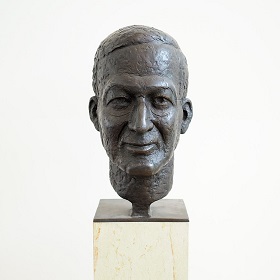
Hugh MacDiarmid (11 augustus 1892 – 9 september 1978)
Portret door Charles Pulsford, ca. 1975


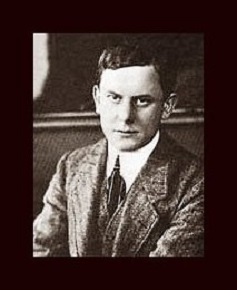
De Duitse dichter Ernst Stadler werd geboren op 11 augustus 1883 in Colmar (Kolmar). Zie ook alle tags voor Ernst Stadler op dit blog.


Die Flucht
Worte

Man hatte uns Worte vorgesprochen, die von nackter Schönheit und Ahnung und zitterndem Verlangen übergiengen.
Wir nahmen sie, behutsam wie fremdländische Blumen, die wir in unsrer Knabenheimlichkeit aufhiengen.
Sie versprachen Sturm und Abenteuer, Überschwang und Gefahren und todgeweihte Schwüre –
Tag um Tag standen wir und warteten, daß ihr Abenteuer uns entführe.
Aber Wochen liefen kahl und spurlos, und nichts wollte sich melden, unsre Leere fortzutragen.
Und langsam begannen die bunten Worte zu entblättern. Wir lernten sie ohne Herzklopfen sagen.
Und die noch farbig waren, hatten sich von Alltag und allem Erdwohnen geschieden:
Sie lebten irgendwo verzaubert auf paradiesischen Inseln in einem märchenblauen Frieden.
Wir wußten: sie waren unerreichbar wie die weißen Wolken, die sich über unserm Knabenhimmel vereinten,
Aber an manchen Abenden geschah es, daß wir heimlich und sehnsüchtig ihrer verhallenden Musik nachweinten.


Gegen Morgen

Tag will herauf. Nacht wehrt nicht mehr dem Licht.
O Morgenwinde, die den Geist in ungestüme Meere treiben!
Schon brechen Vorstadtbahnen fauchend in den Garten
Der Frühe. Bald sind Straßen, Brücken wieder von Gewühl und Lärm versperrt –
O jetzt ins Stille flüchten! Eng im Zug der Weiber, der sich übern Treppengang zur Messe zerrt,
In Kirchenwinkel knien! O, alles von sich tun, und nur in Demut auf das Wunder der Verheißung warten!
O Nacht der Kathedralen! Inbrunst eingelernter Kinderworte!
Gestammel unverstandner Litanein, indes die Seelen in die Sanftmut alter Heiligenbilder schauen . .
O Engelsgruß der Gnade . . ungenannt im Chor der Gläubigen stehn und harren, daß die Pforte
Aufspringe, und ein Schein uns kröne wie vom Haar von unsrer lieben Frauen.
 

 1801044-ee13b93675f74a020fccda937ffb315b.jpg
Ernst Stadler (11 augustus 1883 – 30 oktober 1914)


De Japanse schrijver Yoshikawa Eiji werd geboren op 11 augustus 1892 in de prefectuur Kanagawa. Zie ook alle tags voor Yoshikawa Eiji op dit blog.

Uit: Musashi (Vertaald door Werner Peterich)

„Zerknirscht entschuldigte er sich immer und immer wieder. Die ersten Male hatte Takezo das einfach mit einem "Schon gut!" beiseite gefegt. Als sie schließlich doch haltmachten, um sich auszuruhen, platzte er heraus: "Schau! Ich bin es, der um Verzeihung bitten müßte, denn schließlich war ich es, der dir all dies eingebrockt hat, oder? Weißt du nicht mehr, wie ich dich in meinen Plan eingeweiht habe, endlich etwas zu unternehmen, was Eindruck auf meinen Vater gemacht hätte? Ich habe mich nie damit abfinden können, daß er bis zum letzten Atemzug überzeugt war, aus mir würde nie was Rechtes werden. Und nun wollte ich es ihm beweisen. Ha!"
Takezos Vater, Munisai, hatte einst unter Fürst Shimmen von Iga gedient. Als Takezo hörte, daß Ishida Mitsunari eine Armee aufstellte, war er überzeugt, endlich sei die Chance seines Lebens gekommen. Sein Vater war Samurai gewesen. War es da nicht selbstverständlich, daß auch aus ihm ein Samurai wurde? Alles in ihm verlangte schmerzlich danach, endlich in die Schlacht zu ziehen, seinen Mut zu beweisen und dafür zu sorgen, daß sich die Nachricht, er habe einem feindlichen General den Kopf abgeschlagen, mit Windeseile in seinem Heimatort verbreitete. Verzweifelt hatte er gewünscht, beweisen zu können, daß er jemand sei, dem man Achtung entgegenzubringen habe, und daß er nicht nur ein Tunichtgut war, dem man nichts weiter zutraute, als Unruhe im Dorf zu stiften.
An all dies erinnerte Takezo Matahachi, und der Freund nickte. "Ich weiß, ich weiß. Aber mir war genauso zumute."
Takezo fuhr fort: "Ich wollte, daß du mitkommst, denn schließlich haben wir immer alles gemeinsam gemacht.“

 

 1801044-8bd8fe3c24775147856b6fef68f19da0.jpg
Yoshikawa Eiji (11 augustus 1892 – 7 september 1962)
Cover


De Spaanse schrijver, dichter, dramaturg en cineast Fernando Arrabal werd geboren in Melila, Spaans Marokko op 11 augustus 1932. Zie ook alle tags voor Fernando Arrabal op dit blog.

Uit: The Burial of the Sardine (Vertaald door Patrick Bowles)

“XXXVI

When Lis arrived, Altagora had already gone. Before I had even opened my mouth she sat down and began smoking a cigarette. She set it exactly half-way across her lips; it looked as if it were fixed there. She wasn t really smoking, but a wisp of smoke kept rising from the end She didn't move. Then she put a kind of crest on her head which jutted out like a horn or an enormous finger-nail. She didn't move; I saw the tears start into her eyes but she didn't seem to be crying.
And I spoke to her, but she didn't reply.
After a few moments she took off her clothes. There was a kind of mask drawn on her belly and the lips were those of her sex. There in the middle as if it were fixed there she placed the cigarette she had had in her mouth and the wisp of smoke kept rising.
And I spoke to her, but she didn't reply.
After a few minutes she extinguished the cigarette and carefully undressed me. Then she took some carnations out of her bag and laid them on my back, below the kidneys. And I saw that tears were falling from her eyes which were not crying.”

 

 1801044-d5d9c8247b074fafe338ee70bac8914a.jpg
Fernando Arrabal (Melila, 11 augustus 1932)


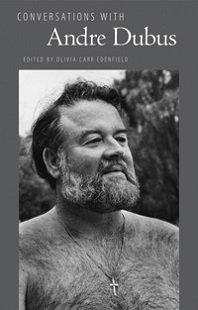
De Amerikaanse schrijver en essayist Andre Dubus werd geboren op 11 augustus 1936 in Lake Charles, Louisiana. Zie ook alle tags voor Andre Dubus op dit blog.

Uit: Dancing After Hours

“Its sound in her soul was a distant fast train. Love did not bring happiness, it did not last, and it ended in pain. She did not want to believe this, and she was not certain that she did; perhaps she feared it was true in her own life, and her fear had become a feeling that tasted like disbelief.”
(…)

“There were three of these women, separated by short intervals of pain, remorse, and despair. When he and the last one had their final quarrel - she threw the breadboard - he was nearly fifty-five, and he gave up on love, save the memory of it. Always his aim had been marriage. He had never entered what he considered to be an affair, something whose end was an understood condition of its beginning. But he had loved and wanted for the rest of his life women who took him in their arms, and even their hearts, but did not plan to keep him. He had known that about them, they had told him no lies about what they wanted, and he had persisted, keeping his faith: if he could not change their hearts, then love itself would.”
 

 1801044-c0545efb715d01c3abad583c7b1a2c2f.jpg
Andre Dubus (11 augustus 1936 -  24 februari 1999)
Cover


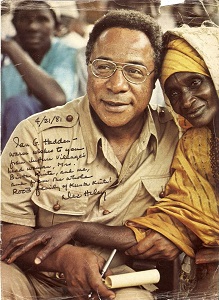
De Amerikaanse schrijver Alexander Palmer Haley werd geboren in Ithaca (New York) op 11 augustus 1921. Zie ook alle tags voor Alex Haley op dit blog en ook mijn blog van 11 augustus 2010.

Uit: The Shadowland of Dreams

« Many a young person tells me he wants to be a writer. I always encourage such people, but I also explain that there’s a big difference between “being a writer”and writing. In most cases these individuals are dreaming of wealth and fame, not the long hours alone at a typewriter. “You’ve got to want to write,”I say to them, “not want to be a writer.”
The reality is that writing is a lonely, private and poor-paying affair. For every writer kissed by fortune there are thousands more whose longing is never requited. Even those who succeed often know long periods of neglect and poverty. I did.
When I left a 20-year career in the Coast Guard to become a freelance writer, I had no prospects at all. What I did have was a friend in New York City, George Sims, with whom I’d grown up in Henning, Tenn. George found me my home, a cleaned-out storage room in the Greenwich Village apartment building where he worked as superintendent. It didn’t even matter that it was cold and had no bathroom. I immediately bought a used manual typewriter and felt like a genuine writer.
After a year or so, however, I stil l hadn’t gotten a break and began to doubt myself. It was so hard to sell a story that I barely made enough to eat. But I knew I wanted to write. I had dreamed about it for years. I wasn’t going to be one of those people who die wondering, What if?
I would keep putting my dream to the test — even though it meant living with uncertainty and fear of failure. This is the Shadowland of hope, and anyone with a dream must learn to live there.
Then one day I got a call that changed my life. It wasn’t an agent or editor offering a big contract. It was the opposite — a kind of siren call tempting me to give up my dream. On the phone was an old acquaintance from the Coast Guard, now stationed in San Francisco. He had once lent me a few bucks and liked to egg me about it.
“When am I going to get that $15, Alex?” he teased.“
 

 1801044-3b3e8159585bc6f9829a2c447ab46694.jpg
Alex Haley (11 augustus 1921 - 10 februari 1992)


Zie voor nog meer schrijvers ook mijn blog van 11 augustus 2011 deel 2.
Geschreven door Romenu om 00:00 Reageer op dit bericht

Kees van Kooten, Alfred Döblin, Moses Isegawa, Mark Doty, Jerzy Pilch

De Nederlandse schrijver en cabaretier Kees van Kooten werd geboren op 10 augustus 1941 in Den Haag. Zie ook mijn blog van 10 augustus 2010 en eveneens alle tags voor Kees van Kooten op dit blog.

Uit: Droomvakantie (Het groot bescheurboek)

“Onze stewardess was alleraardigst (we kregen de man twee snoepjes voor het opstijgen), alle koffers kwamen onbeschadigd uit het vliegtuig, we mochten zondermeer doorlopen van de douane, de taxichauffeur was een schat die een schijntje rekende en zo'n mooi hotel hadden we nog nooit gezien.
De bedden waren om nooit meer uit op te staan, alles dééd het in de badkamer en het ontbijt leek wel een diner!
Het hotelpersoneel weigerde fooien aan te nemen, het gebruik van de overdreven gevulde 300 liter-koelkast op de kamer was gratis en als je 's avonds je zwemvliezen voor de deur zette, bleken ze 's ochtends gepoetst!
Wij waren drie weken lang de enigen op het zes kilometer lange, goudgele zandstrand; de ligstoelen, parasols, waterfietsen en sorbets waren gratis; terwijl de zeeëgels een stukje opzij zwommen als ze je zagen aankomen, zodat je niet in ze zou trappen.
Als je terugkwam op je kamer lag het verschoonde bed al opengeslagen, met een bos rozen op je kussen. Er hingen nieuwe schilderijen en op de televisie kon je de hele wereld ontvangen.
We hebben elkaar wel tot zes uur 's ochtens stomdronken op de hotelgang achterna gezeten, zonder dat iemand er iets van zei; de receptionist aan de balie schreef desgewenst de ansichtkaarten naar huis en in het verwarmde zwembad mocht je gewoon dwars door je badpak heen plassen.
's Avonds aan het diner kwam er een gitarist met gewoon zijn gitaar nog in het foudraal langs alle tafeltjes, om te zeggen dat hij, gratis, niet zou spelen.
Autochtoon dansen deden ze daar niet, dus kwam er niemand vragen of je mee wilde doen en daar werden ook nog eens geen foto 's van genomen, die de volgende dag niet voor tien gulden te verkrijgen waren.
Op zondag waren alle winkels, café's, postkantoren, banken en doktoren open. Alleen de begrafenisondernemers waren dicht, dus dan sloegen we die gewoon een dagje over.
Ze hebben daar af en toe een wind die omgevallen glazen weer overeind zet en kranten precies op de goede pagina's openblaast. Drie keer woei er zomaar een prachtig hoedje op mijn hoofd!”


 1800446-2d581d767c9bb40c14dbdf9193b2e444.jpg
Kees van Kooten (Den Haag, 10 augustus 1941)


De Duitse schrijver Alfred Döblin werd op 10 augustus 1878 geboren in Stettin. Zie ook alle tags voor Alfred Döblin op dit blog en ook mijn blog van 10 augustus 2010

Uit: Berlin Alexanderplatz

“Da war ein Haus, er nahm den Blick weg von dem Pflaster, eine Haustür stieß er auf, und aus seiner Brust kam ein trauriges brummendes oh, oh. Er schlug die Arme umeinander, so mein Junge, hier frierst du nicht. Die Hoftür öffnete sich, einer schlürfte an ihm vorbei, stellte sich hinter ihn. Er ächzte jetzt, ihm tat wohl zu ächzen. Er hatte in der ersten Einzelhaft immer so geächzt und sich gefreut, daß er seine Stimme hörte, da hat man was, es ist noch nicht alles vorbei. Das taten viele in den Zellen, einige am Anfang, andere später, wenn sie sich einsam fühlten. Dann fingen sie damit an, das war noch was Menschliches, es tröstete sie. So stand der Mann in dem Hausflur, hörte das schreckliche Lärmen von der Straße nicht, die irrsinnigen Häuser waren nicht da. Mit gespitztem Munde grunzte er und ermutigte sich, die Hände in den Taschen geballt. Seine Schultern im gelben Sommermantel waren zusammengezogen zur Abwehr.
Ein Fremder hatte sich neben den entlassenen Sträfling gestellt, sah ihm zu. Er fragte: »Ist Euch was, ist Euch nicht gut, habt Ihr Schmerzen?«, bis der ihn bemerkte, sofort mit dem Grunzen aufhörte. »Ist Euch schlecht, wohnt Ihr hier im Haus?« Es war ein Jude mit rotem Vollbart, ein kleiner Mann im Mantel, einen schwarzen Velourshut auf, einen Stock in der Hand. »Ne, hier wohn ich nich.« Er mußte aus dem Flur, der Flur war schon gut gewesen. Und nun fing die Straße wieder an, die Häuserfronten, die Schaufenster, die eiligen Figuren mit Hosen oder hellen Strümpfen, alle so rasch, so fix, jeden Augenblick eine andere.
Und da er entschlossen war, trat er wieder in einen Hausflur, wo man aber die Tore aufriß, um einen Wagen durchzulassen. Dann rasch ins Nachbarhaus in einen engen Flur neben dem Treppenaufgang. Hier konnte kein Wagen kommen. Er hielt den Geländerpfosten fest. Und während er ihn hielt, wußte er, er wollte sich der Strafe entziehen (o Franz, was willst du tun, du wirst es nicht können), bestimmt würde er es tun, er wußte schon, wo ein Ausweg war.”


 1800446-bcdc158657fd45cbe0b31f7e1940fffc.jpg
Alfred Döblin (10 augustus 1878 – 26 juni 1957)
Borstbeeld door Siegfried Wehrmeister, 1992


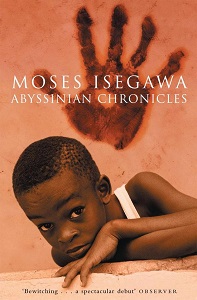
De Oegandese schrijver Moses Isegawa (pseudoniem van Sey Wava)werd geboren op 10 augustus 1963 in Kawempe in Oeganda. Zie ook alle tags voor Moses Isegawa op dit blog en ook mijn blog van 10 augustus 2010.

Uit: Abyssinian Chronicles

“The exodus of wives, relatives, friends and hangers-on had left a big howling lacuna which wrapped the homestead in webs of glorious nostalgia. The fifties and sixties were spanned by that nostalgia and provided us with stories pickled, polished and garnished by memory. Every migrant soul was now a compact little ghost captured in words, invoked from the lacuna by the oracle of Grandpa and Grandma and made to inject doses of old life into our present truncated existence. The hegemony of lacuna'd ghosts in their stories was broken only when the characters, like resurrected souls, braved the dangerous slopes of Mpande Hill and the treacherous papyrus swamps to come and state their case in person. The Fiddler never returned, but was most prevalent because he was immortalized by the poor rendition of his songs Grandpa showered on his homestead as he shaved, as he toured his coffee plantation—the shamba—to supervise work, as he reminisced in the shade and as he wondered how to get a young girl with an old soul to see him through his last days.
Late in the sixties, no one ’5 visit was awaited more eagerly than Uncle Kawayida’s: the man was a wizard, a gold mine full of fascinating and sometimes horrifying tales, a fantastic storyteller endowed with a rare patience who answered my often tedious questions with a cheerful, reassuring face. When he stayed away too long, I became restless and worked out the days and months he was most likely to come. On such days I would climb into the branches of my favorite tree, the tallest jackfruit in the three homesteads, and fix my eyes on the distant Mpande (“Manhood”) Hill. If I was lucky, I would see his motorbike, a blue-bellied eagle encased in silver flashes, glide down the notoriously steep slope and disappear into the umbrella-shaped greenery of the papyrus swamp below. With “ Uncle Kawayida, Uncle Kawayida!” on my tongue, I would speed down the tree-dry, sharp sticks pricking my skin, the sweet hypnotic smell of jackfruit in my nose-and rush into Grandma’s courtyard to break the good news.”


 1800446-890d3be56458b53906876ae79308a083.jpg
Moses Isegawa (Kawempe, 10 augustus 1963)
Cover 


De Amerikaanse dichter en schrijver Mark Doty werd geboren op 10 augustus 1953 in Maryville, Tennessee. Zie ook alle tags voor Mark Doty op dit blog en ook mijn blog van 10 augustus 2010.


Atlantis

2. REPRIEVE

I woke in the night
and thought, It was a dream,

nothing has torn the future apart,
we have not lived years

in dread, it never happened,
I dreamed it all. And then

there was this sensation of terrific pressure
lifting, as if I were rising

in one of those old diving bells,
lightening, unburdening. I didn’t know

how heavy my life had become—so much fear,
so little knowledge. It was like

being young again, but I understood
how light I was, how without encumbrance,—

and so I felt both young and awake,
which I never felt

when I was young. The curtains moved
—it was still summer, all the windows open—

and I thought, I can move that easily.
I thought my dream had lasted for years,

a decade, a dream can seem like that,
I thought, There’s so much more time ...

And then of course the truth
came floating back to me.

You know how children
love to end stories they tell

by saying, It was all a dream? Years ago,
when I taught kids to write,

I used to tell them this ending spoiled things,
explaining and dismissing

what had come before. Now I know
how wise they were, to prefer

that gesture of closure,
their stories rounded not with a sleep

but a waking. What other gift
comes close to a reprieve?

This was the dream that Wally told me:
I was in the tunnel, he said,

and there really was a light at the end,
and a great being standing in the light.

His arms were full of people, men and women,
but his proportions were all just right—I mean

he was the size of you or me.
And the people said, Come with us,

we’re going dancing. And they seemed so glad
to be going, and so glad to have me

join them, but I said,
I’m not ready yet. I didn’t know what to do,

when he finished,
except hold the relentless

weight of him, I didn’t know
what to say except, It was a dream,

nothing’s wrong now,
it was only a dream.


 1800446-ea4d93a073007616191ab909adb7ec31.jpg
Mark Doty (Maryville, 10 augustus 1953)


De Poolse schrijver Jerzy Pilch werd geboren op 10 augustus 1952 in Wisla. Zie ook alle tags voor Jerzy Pilch op dit blog en ook mijn blog van 10 augustus 2010.

Uit: His Current Woman (Vertaald door Bill Johnston)

“Or at the very least I should have a serious heart-to-heart with her. I mean, during these few weeks we’ve never really had a decent talk. I told one lie afier another and shewent on and on about literature, Kohoutek admits to himself.
What’s to be done? Where can I put her? A hotel is out of the question, since everyone would know all about it at once. The entire town, inhabited as it is exclusively by adherents of the Lutheran faith, would know the whole story immediately. Maybe- the glimmer of a vague notion brightens Kohoutek’s mind-maybe she could be passed off as a vacationer, and maybe they could be persuaded to rent out a room to her? After all, for years there’s beenm talk of the money to be made from renting out rooms; every year hundreds of summer visitors ask if there are rooms to rent and are met with a sneering rebuff. Every time there’s someone who won’t agree to it, either Kohoutek’s folks, or Oma, or Miss Wandzia’s mother-though she rents a room herself, she’s opposed to the other rooms being rented. But no one will agree, thinks Kohoutek, to my current woman.When they see her in that little curio of a hat, as one man they’ll all be opposed to her renting a room even for an hour. What’s to be done? thinks Kohoutek feverishly. Howlong will she be staying in the attic? I mean, she needs certain comforts; she has to wash, use the bathroom. How will I be able to handle all that? How could she do this to me?
All at once the floor creaked and Kohoutek sat bolt upright, because he thought he saw his current woman standing at the foot of his bed.“


 1800446-bda85d3c51ebcbbc20ee88b5c33b037c.jpg
Jerzy Pilch (Wisla, 10 augustus 1952)


Zie voor nog meer schrijvers van de 10e augustus ook mijn blog van 10 augustus 2014 deel 2 en eveneens deel 3.

Geschreven door Romenu om 18:35 Reageer op dit bericht

Meer van Romenu

↑ Terug naar de berichten