Naar de inhoud

Romenu

Over literatuur, gedichten, kunst en cultuur
akke.beakke.be

Berichten van 19 augustus 2015 tot 20 augustus 2015

Anneke Brassinga, Etgar Keret, Clemens Meyer, Arno Surminski, Maren Winter, Edgar Guest, Charles de Coster, Tarjei Vesaas
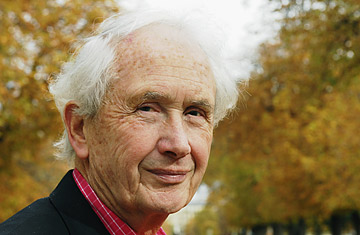
De Nederlandse dichteres, schrijfster en vertaalster Anneke Brassinga werd geboren in Schaarsbergen op 20 augustus 1948. Zie ook alle tags voor Anneke Brassinga op dit blog.


Tedere nacht

Er komt een nacht
dat je liefhebt

niet wat mooi -
wat lelijk is.

Niet wat stijgt -
maar vallen moet.

Niet waar je helpen kan -
waar je hulpeloos bent.

Het is een tedere nacht
de nacht dat je liefhebt

wat liefde
niet redden kan.


Jongste dag

aarde is het plafond, vol bleke tastende
ranken. We waren ten slotte onder het gras
beland, om van hartstocht te verteren.

Hoor, hoe in den hogen grote koren blij opeens kwelen!
Stop met ijle vingers me de oren toe: wie
kan er boodschap hebben aan ons, die heimelijk

en traag in humus opgaan, zinnen strelend
van de diepste stof? Wij zullen opstaan
als gesteente, als een zee, een zwerfhond

of een wilde ui. Of als een zon
die bloedig alle zijnsgordijnen scheurend
ondergaat daarboven.


Verschiet te Rome

Ruïnes? Ik weet ze in mijn leven al.
Een weids terrein vol brokken, zelf gemaakt,
uit eigen grond gestampt. Maar avondgloed
te Rome, zachtvurige zonsravage regenboogbekroond
laat door geen glorieus verwoest bestaan
zich evenaren. Ik aanzie die wondere
ondergang, besef hoe mijne evenmin fataal
en keer op keer als voor het eerst zal zijn.


 1804047-8036bb403cdc0d58a5ca7d3c6575c841.jpg
Anneke Brassinga (Schaarsbergen, 20 augustus 1948) 


De Israëlische schrijver Etgar Keret werd geboren op 20 augustus 1967 in Ramat Gan. Zie ook alle tags voor Etgar Keret op dit blog.

Uit: The Seven Good Years: A Memoir

"I just hate terrorist attacks," the thin nurse says to the older one. "Want some gum?"
The older nurse takes a piece and nods. "What can you do?" she says. "I also hate emergencies."
"It's not the emergencies," the thin one insists. "I have no problem with accidents and things. It's the terrorist attacks, I'm telling you. They put a damper on everything."
Sitting on the bench outside the maternity ward, I think to myself, She's got a point. I got here just an hour ago, all excited, with my wife and a neat-freak taxi driver who, when my wife's water broke, was afraid it would ruin his upholstery. And now I'm sitting in the hallway, feeling glum, waiting for the staff to come back from the ER. Everyone but the two nurses has gone to help treat the people injured in the attack. My wife's contractions have slowed down, too. Probably even the baby feels this whole getting-born thing isn't that urgent anymore. As I'm on my way to the cafeteria, a few of the injured roll past on squeaking gurneys. In the taxi on the way to the hospital, my wife was screaming like a madwoman, but all these people are quiet.
"Are you Etgar Keret?" a guy wearing a checked shirt asks me. "The writer?" I nod reluctantly. "Well, what do you know?" he says, pulling a tiny tape recorder out of his bag. "Where were you when it happened?" he asks. When I hesitate for a second, he says in a show of empathy: "Take your time. Don't feel pressured. You've been through a trauma."
"I wasn't in the attack," I explain. "I just happen to be here today. My wife's giving birth."
"Oh," he says, not trying to hide his disappointment, and presses the stop button on his tape recorder. "Mazal tov." Now he sits down next to me and lights himself a cigarette.
"Maybe you should try talking to someone else," I suggest as an attempt to get the Lucky Strike smoke out of my face. "A minute ago, I saw them take two people into neurology."
"Russians," he says with a sigh, "don't know a word of Hebrew. Besides, they don't let you into neurology anyway. This is my seventh attack in this hospital, and I know all their shtick by now." We sit there a minute without talking. He's about ten years younger than I am but starting to go bald. When he catches me looking at him, he smiles and says, "Too bad you weren't there. A reaction from a writer would've been good for my article. Someone original, someone with a little vision. After every attack, I always get the same reactions: ‘Suddenly I heard a boom,' ‘I don't know what happened,' ‘Everything was covered in blood.' How much of that can you take?"


 1804047-e99d08b038711fc12b281cd16766ca71.jpg
Etgar Keret (Ramat Gan, 20 augustus 1967)


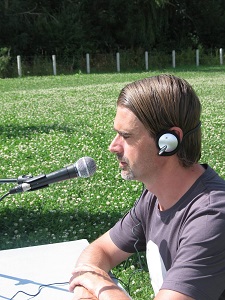
De Duitse schrijver Clemens Meyer werd geboren op 20 augustus 1977 in Halle an der Saale. Zie ook alle tags voor Clemens Meyer op dit blog.

Uit: Im Stein

„(Girl Girl Girl. Lass mal sehn, wie die Sterne heut stehn.)
Wenn es Abend wird, stehe ich am Fenster. Ich schiebe die Lamellen der Jalousie mit den Fingern auseinander und sehe den Abendhimmel hinter den Häusern auf der anderen Seite der Straße.
Es wird immer noch früh dunkel. Das Jahr ist nichtmal einen Monat alt, aber es fühlt sich schon lang und schwer an. Obwohl es nicht so viel Arbeit gibt zurzeit. Im Januar jammern wir alle. Ich will immer noch einmal die Sonne sehen und den letzten Streifen Licht. Ich gehe früh um acht zur Arbeit, da ist es immer noch nicht richtig hell. Im Sommer ist alles besser, so geht es sicher den meisten, aber andererseits denke ich im Sommer an Urlaub und habe oft keine Lust auf die Arbeit. Und ich glaube, dass es im Winter am besten läuft, wenn man jetzt mal den Januar außen vor lässt. Obwohl das viele bestimmt anders sehen. Ich finde es schade, dass die Wohnung keinen Balkon hat. Im Sommer könnte ich dort sitzen und mich sonnen, besser als das blöde Solarium, und im Winter könnte ich vor der Dämmerung dort stehen und eine rauchen und den Himmel beobachten, wie er rot wird. In den klaren Nächten sehe ich gerne den Mond. Da muss ich immer an das Kinderlied denken. Meine Mutter hat mir das oft vorgesungen vorm Einschlafen. Der Mond ist aufgegangen. Wenn ich das heute höre, und das ist nicht oft, weiß nicht, wann ich das überhaupt mal höre, also dann ... Ich kann das schlecht beschreiben. In Gedanken singe ich es manchmal. Magda hat immer gesagt »dann krieg ich Gefühl«, wenn sie meinte, dass sie traurig wird. Aber es ist Quatsch, wegen den Jahreszeiten. Ob Sommer oder Winter, Herbst oder Frühling, das Telefon klingelt immer.“


 1804047-bea3972b28af337281bc7ccc2d2f0b1c.jpg
Clemens Meyer (Halle an der Saale, 20 augustus 1977)


De Duitse schrijver Arno Surminski werd geboren op 20 augustus 1934 in Jäglack in Oostpruisen. Zie ook alle tags voor Arno Surminski op dit blog.

Uit: Vaterland ohne Väter

„Wie soll ich beginnen? Das Dorf liegt an die tausend Kilometer östlich meines eingeschneiten Gartens. Wie es heute heißt, weiß ich nicht. Es könnte ihm so ergangen sein wie diesem Stalingrad, das auch seinen Namen verloren hat.
Eines Tages werde ich, aber es müßte im Juni geschehen, nach Osten fahren, um es zu suchen. Bis ich es gefunden habe, stelle ich mir ein Straßendorf vor, am Ende ein eingeschneites Bauernhaus, aus dessen Schornstein weißer Rauch steigt. An jenem 31. Januar heizten sie die Stuben tüchtig ein, damit das Neugeborene sich nicht erkältet. Am Fenster werden Eisblumen geblüht haben. Wo gibt es heute noch Eisblumen? Durch ein Guckloch im Eis ging der Blick über weit verschneite Felder zu einer einsamen Straße, die nach Osten führte, immer weiter nach Osten.
Vier Wochen bin ich im Ruhestand, und es ist immer noch Winter. Wegener behauptet, dieser Winter sei so streng wie die Winter im Osten. Ich weiß es nicht, ich habe nur zwei Jahre in Podwangen gelebt, in meiner Erinnerung war immer Sommer. Der Tag beginnt mit einem sonnigen Morgen, die Bäume in meinem Garten haben Lichter aufgesteckt. So stelle ich mir eine Winterlandschaft in Rußland vor oder in meinem unbekannten Dorf.
Ich will nun endlich mit meinem Vater beginnen. Oder soll ich bis zum Sommer warten, wenn die Sonne hoch steht, Blumen und Bäume blühen? Juni wäre eine schöne Zeit. Wie konnte dieser unselige Mensch in der Mittsommernacht einen Krieg anfangen! Allein das war gegen die Natur und konnte nicht gutgehen.
Ich ziehe mich warm an und laufe ziellos durch die Straßen. Die Schneeluft soll mich auf andere Gedanken bringen, ich will an frisches Brot und warmen Kaffee denken, auch an Prishtina, wo es schon frühlingshaft warm ist. Auf dem Marktplatz treffe ich die alte Frau Gentsch aus dem Nachbarhaus.“


 1804047-720ca8de1438ae395ec15553b00e6e1a.jpg
Arno Surminski (Jäglack, 20 augustus 1934)


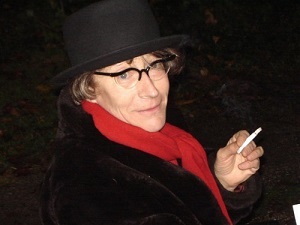
De Duitse schrijfster Maren Winter werd geboren op 20 augustus 1961 in Lübeck. Zie ook alle tags voor Maren Winter op dit blog.

Uit:Der Stundensammler

„Sie ängstigte sich ein wenig vor seiner sanft bestimmenden Art, und als sie zum ersten Mal bei ihm liegen sollte, hatte sie lautlos geweint. Da hatte er begonnen leise in ihr Ohr zu summen, schmeichelnd zuerst und zunehmend heißblütiger. Sie sei zu seiner Muse ausersehen, der Muse eines Sängers. Nun müsse sie das Ihre tun und die verborgenen Melodien in ihm wecken. Unter seinem Gewicht war sie sich zerbrechlich vorgekommen, aber auch wertvoll wie ein Kleinod.
Jetzt fühlte sie sich nur noch widerlich.
Energisch zog sie ihr wollenes Tuch vom Hals und rubbelte sich die Beine trocken. Sie bemerkte, dass der Säugling ihr dabei zusah.
Wieso drehte sie sich um? Wieso schämte sie sich vor einem Kleinkind? Tatsächlich, er beobachtete sie – lag im Dreck, glotzte sie an und forderte, dass sie ihn in die Arme schließen sollte. Reichte es nicht, dass er sie über Monate aufgezehrt und geschwächt hatte? Seit er sich in ihrem Körper eingenistet hatte, entglitten ihr all die wunderbaren Pläne. Es war gewiss nur seine Schuld, dass ihr Gönner sie seit Wochen nicht mehr begehrt hatte.
Lais wusste, dass ein Handwerker sich nie mit einer Bettelmaid vermählen würde, aber sie träumte trotzdem davon. Zumindest als Magd konnte er sie nehmen. Doch erst musste er Meister werden, ein eigenes Haus kaufen, selbst Herr über seine Entscheidungen sein … Lais würde warten.
Allmählich kehrte Leben in ihren Leib zurück. Sie fror und konnte ihre schlotternden Glieder nicht mehr ruhig halten. Sogar in der Kälte nahm sie den Gestank der Gerber und Lederer wahr, die sich an der Flussmündung angesiedelt hatten. Es war wirklich an der Zeit, diesen abscheulichen Ort zu verlassen.“


 1804047-e02971d3f4ed1a0b313a989eebe599b1.JPG
Maren Winter (Lübeck, 20 augustus 1961)
Lübeck, raadhuis


De Engelse dichter Edgar Albert Guest werd geboren op 20 augustus 1881 in Birmingham, Engeland. Zie ook alle tags voor Edgar Guest op dit blog.


See It Through

When you're up against a trouble,
Meet it squarely, face to face;
Lift your chin and set your shoulders,
Plant your feet and take a brace.
When it's vain to try to dodge it,
Do the best that you can do;
You may fail, but you may conquer,
See it through!
Black may be the clouds about you
And your future may seem grim,
But don't let your nerve desert you;
Keep yourself in fighting trim.
If the worst is bound to happen,
Spite of all that you can do,
Running from it will not save you,
See it through!


Even hope may seem but futile,
When with troubles you're beset,
But remember you are facing
Just what other men have met.
You may fail, but fall still fighting;
Don't give up, whate'er you do;
Eyes front, head high to the finish.
See it through!


 1804047-5ef444fed8d244c64ffd1434bf8078ac.jpg
Edgar Guest (20 augustus 1881 – 5 augustus 1959)


De Belgische schrijver Charles de Coster werd geboren in München op 20 augustus 1827. Zie ook alle tags voor Charles de Coster op dit blog.

Uit: De legende en de heldhaftige, vroolijke en roemrijke daden van Uilenspiegel en Lamme Goedzak in Vlaanderenland en elders

“—Erbarming, zuchtte Soetkin, erbarming, Heere God: wat duister voorteeken voor Vlaanderenland!
—Ziet gij dat met uwe oogen of in droom? vroeg Klaas.
—Met mijne eigen oogen, sprak Katelijne.
Doodsbleek en schreiend sprak Katelijne toen:
—Twee kinderkens zijn geboren; het een, in Spanje, is de kleine Philippus, het ander, in Vlaanderenland, is de zoon van Klaas, die later Uilenspiegel zal heeten. Philippus wordt een beul, want hij werd verwekt door Karel den Vijfde, den moordenaar van ons land. Uilenspiegel wordt een meester in kwinkslagen en guitenstreken, maar goedhertig zal hij zijn, want zijn vader is Klaas, de wakkere arbeider, die in braafheid, eer en deugd zijn brood verdient. Keizer Karel en koning Philippus zullen hun leven lang kwaad doen, door oorlog en knevelarij en andere misdaden. Klaas, die heel de week werkt, zal leven volgens recht en wet, bij zijn zuren arbeid zal hij lachen in stee van weenen: hij zal het zinnebeeld van de goede Vlaamsche werkers zijn. Uilenspiegel, immer jong en onsterfelijk, gaat de wereld door, maar nergens zal hij een vaste woonplaats hebben. En hij zal boer, edelman, schilder, beeldhouwer worden, alles zal hij te gelijk zijn. Zoo zal hij dolen langs velden en wegen, het goede en het schoone prijzen en lachen en spotten met alles wat dwaas en verkeerd is. Klaas is uw moed, edel volk van Vlaanderen, en Soetkin uwe dappere moeder; Uilenspiegel is uw geest; een lief en bevallig meisje, Uilenspiegel’s gezellin en onsterfelijk als hij, zal uw hert zijn, en Lamme Goedzak, een dikke pens, uwe maag. En omhoog zullen de opeters van ’t volk gaan, en omlaag hunne slachtoffers; omhoog de roovende wespen, omlaag de noeste bijen, en in den hemel zullen de wonden van Christus bloeden.”.


 1804047-d22bbd9be9dd92f5c1427ec96feb7c65.jpg
Charles de Coster (20 augustus 1827 - 7 mei 1879)
Tijl Uilenspiegel en Nele op een monument in Elsene, Brussel


De Noorse dichter en schrijver Tarjei Vesaas werd geboren in in Vinje, Telemark op 20 augustus 1897. Zie ook alle tags voor Tarjei Vesaas op dit blog.


There’s rowing and rowing

The day is past –
and there’s rowing and rowing

The dark mass of rock,
darker than the evening,
leans over the water
with black folds:
A caved-in face
with its mouth in the lake.
No one knows all.

There’s rowing and rowing,
in rings,
for the rock sucks.
Confused splashes on deep water.
Exhausted creaks from wood.
Confused and faithful soul that rows
and soon can be sucked down.

He too stands there
the other,
the one in the rock-folds
in blacker than black,
and listens outwards.
Paralysed with shame.
Stiffly listening.
Stiff with fright
for here there’s rowing.

Then there must be gusts and blue-gleaming
back and forth
like warm breezes
and like frost.

There’s rowing and rowing tonight.
There’s no one seeing and seeing.
No one knows
who licks at the rock
when it is dark.
No one knows the bed
of Lake Angst.
No one knows
who it is that cannot row.

Vertaald door John Irons


 1804047-9a8bb99062c17c58fad29e43c0ef793f.jpg
Tarjei Vesaas (20 augustus 1897 – 15 maart 1970)


Zie voor nog meer schrijvers van de 20e augustus ook mijn blog van 20 augustus 2014 en ook mijn blog van 20 augustus 2011 deel 2 en ook mijn blog van 20 augustus 2010.
Geschreven door Romenu om 19:11 Reageer op dit bericht

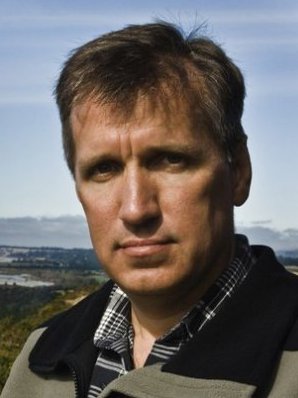
James Rollins

De Amerikaanse schrijver James Rollins (pseudoniem van James Paul Czajkowski) werd geboren in Chicago op 20 augustus 1961. In 2007 heeft hij op vraag van de filmproducent van de laatste Indiana Jonesfilm, Indiana Jones and the Kingdom of the Crystal Skull, het boek naar de film geschreven. Samen met zijn drie broers en drie zusters bracht hij zijn jeugd door in een berggebied in Canada. Daar verkende hij vaak de omliggende velden, de bevroren vijvers, en alles wat de natuur te bieden had. Omdat hij niet zeker was dat hij ging kunnen leven van het schrijverschap studeerde hij Diergeneeskunde aan de universiteit van Missouri, waar hij in 1985 tot doctor promoveerde. Een van de onderwerpen die hij tijdens zijn studies behandeld had was evolutie, een onderwerp dat hij ook verwerkte in “De Zwarte Orde”. Nadat Rollins aan de Universiteit van Missouri een bachelordiploma in de evolutionaire biologie had behaald studeerde hij in 1985 af met een doctoraat in de diergeneeskunde. Daarna verhuisde hij naar El Dorado County in Californië waar hij een praktijk begon. Daarnaast probeerde hij korte verhalen schrijven, waar hij echter geen uitgever voor kon vinden. Dus besloot hij om een ​​roman te schrijven. Nadat het manuscript voor “Sub Terra” na 49 mislukkingen was aanvaard door de vijftigste uitgever, werd het als zijn eerste werk gepubliceerd in 1999 onder het pseudoniem James Rollins. Kort tevoren was echter “Witch Fire” , in het Nederlands uitgegeven als “Het boek van Vuur”, verschenen onder het pseudoniem James Clemens. De daarop volgende 10 jaar bleef Rollins aan het werk in zijn praktijk en schreef hij minstens één boek per jaar. Pas toen in 2009 zijn boek​ “The Doomsday Key” op de 2e plaats van de bestsellerlijst van de New York Times terecht was gekomen, verkocht hij zijn praktijk. Onder het pseudoniem James Rollins heeft hij ook nog een aantal opzichzelfstaande boeken gepubliceerd, waarvan er maar vier in het Nederlands vertaald zijn, namelijk IJsjacht (Ice Hunt), Het Maya Mysterie (Jake Ransom And The Skull King's Shadow), De Sfinx (Jake Ransom And The Howling Sphinx) en "Hof van Eden" ("Altar of Eden").

Uit:The Bone Labyrinth

“6:22 a.m.
An abrupt knock on the door woke Maria in her office. Fueled by a vague sense of panic, she jerked up to an elbow. Her heart pounded in her throat. An open book, resting on her bosom, toppled to the floor. It took her a half breath to remember where she was — though no more than that, since she had spent many nights at work.
Calming herself, she glanced to the computer monitor on the neighboring desk. The screen scrolled with data from the latest genetic assay. She had fallen asleep while waiting for it to compile.
Damn . . . still processing.
“Y-yes?” she managed to croak out.
“Dr. Crandall,” a voice called through her office door. “I’m sorry to disturb you, but there’s a bit of a ruckus with Baako. I thought you should know.”
She sat quickly, recognizing the nasal twang of the animal husbandry student from Emory University.
“Okay, Jack, I’ll be right there.”
She climbed to her feet, took a swig of stale Diet Coke from the can on her desk to wash away her morning dry mouth, and headed into the hall.
The student on duty, Jack Russo, paced beside her.
“What happened?” she asked, trying to keep any accusation out of her voice, but her maternal instincts made her words harsher than she intended.
“Don’t know. I was cleaning some empty pens nearby when he just went off.”
She reached the door that led down to Baako’s domicile. Below, he had his own dedicated playroom, bedroom, and classroom, separate from much of the rest of the facility. During the day, under supervision, he also had a fair amount of free run of the hundred wooded acres that made up the field station of the Yerkes National Primate Research Center. The main facility was located at Emory University in Atlanta thirty miles away.”


 1811668-de2895550f76209c725bf930b216adc8.jpg
James Rollins (Chicago, 20 augustus 1961)

Geschreven door Romenu om 00:00 Reageer op dit bericht

Jonathan Coe, Li-Young Lee, Louis Th. Lehmann, Ogden Nash, Frank McCourt, Frederik Lucien De Laere, John Dryden

De Engelse schrijver Jonathan Coe werd geboren op 19 augustus 1961 in Birmingham. Zie ook mijn blog van 19 augustus 2010 en eveneens alle tags voor Jonathan Coe op dit blog.

Uit: Rain Before It Falls

“Let me see, now. The caravan itself is half-obscured, in this picture, by overhanging trees. It had been placed, for some reason, in one of the most remote corners of the grounds, and left there for many years. This photograph captures it just as I remember it: eerie, neglected, the woodwork starting to rot and the metalwork corroding into rust. It was tiny, as this image confirms. The shape, I think, is referred to as “teardrop”: that is to say, the rear end is rounded, describing a small, elegant curve, while the front seems to have been chopped off, and is entirely flat. It’s a curious shape: in effect, the caravan looks as though it is only half there. The trees hanging over its roof and trailing fingers down the walls are some kind of birch, I believe. The caravan had been placed on the outskirts of a wood: in fact the dividing line between this wood–presumably common land–and the furthest reaches of Uncle Owen’s property was difficult to determine. A more modern caravan might have had a picture window at the front; this one, I see, had only two small windows, very high up, and a similar window at the side. No surprise, then, that it was always dark inside. The door was solid and dark, and made of wood, like the whole of the bottom half of the caravan–even the towbar. That’s an odd feature, isn’t it?–but I’m sure that I am right. It rested on four wooden legs, and always sat closer to the ground than it should have done, because both the tyres were flat. The windows were filthy, too, and the whole thing gave the appearance of having been abandoned and fallen into irreversible decay. But to a child, of course, that simply made it all the more attractive. I can only imagine that Ivy and Owen had bought it many years ago–in the 1920s, perhaps, when they were first married–and had stopped using it as soon as they had children. Inside there were only two bunks, so it would have been quite useless for family holidays.
How many weeks was it, I wonder, before Beatrix and I set up camp there together? Or was it only a matter of days? They say that split seconds and aeons become interchangeable when you experience intense emotion, and after my arrival at Warden Farm I was soon feeling a sense of loneliness and homesickness which I find it impossible to describe. I was beside myself with unhappiness.”


 1803689-195ae01d08b6a950cc8ba8a46f9ca86f.jpg
Jonathan Coe (Birmingham, 19 augustus 1961)


De Amerikaanse dichter Li-Young Lee werd geboren op 19 augustus 1957 in Jakarta, Indonesië. Zie ook mijn blog van 19 augustus 2010 en eveneens alle tags voor Li-Young Lee op dit blog.


Arise, Go Down

It wasn't the bright hems of the Lord's skirts
that brushed my face and I opened my eyes
to see from a cleft in rock His backside;

it's a wasp perched on my left cheek. I keep
my eyes closed and stand perfectly still
in the garden till it leaves me alone,

not to contemplate how this century
ends and the next begins with no one
I know having seen God, but to wonder

why I get through most days unscathed, though I
live in a time when it might be otherwise,
and I grow more fatherless each day.

For years now I have come to conclusions
without my father's help, discovering
on my own what I know, what I don't know,

and seeing how one cancels the other.
I've become a scholar of cancellations.
Here, I stand among my father's roses

and see that what punctures outnumbers what
consoles, the cruel and the tender never
make peace, though one climbs, though one descends

petal by petal to the hidden ground
no one owns. I see that which is taken
away by violence or persuasion.

The rose announces on earth the kingdom
of gravity. A bird cancels it.
My eyelids cancel the bird. Anything

might cancel my eyes: distance, time, war.
My father said, Never take your both eyes
off of the world, before he rocked me.

All night we waited for the knock
that would have signalled, All clear, come now;
it would have meant escape; it never came.

I didn't make the world I leave you with,
he said, and then, being poor, he left me
only this world, in which there is always

a family waiting in terror
before they're rended, this world wherein a man
might arise, go down, and walk along a path

and pause and bow to roses, roses
his father raised, and admire them, for one moment
unable, thank God, to see in each and
every flower the world cancelling itself.


 1803689-cb4bb2d6df1b5744761a82d2dcd001e2.jpg
Li-Young Lee (Jakarta, 19 augustus 1957)


De Nederlandse schrijver, dichter en vertaler Louis Th. Lehmann werd geboren op 19 augustus 1920 in Rotterdam. Zie ook mijn blog van 19 augustus 2010 en eveneens alle tags voor Louis Th. Lehmann op dit blog.


Fundamenteel

Ik kijk naar mijn broekspijpen en schoenen
terwijl ik ze aan heb,
en verbaas me dat dit ik is.
Ik is vast iets anders.
Maar wat?


Anti-Alphen

Ik heb seeds medelijden
met wollen speelgoedbeesten,
zij kijken uit hun ogen
alsof ze wilden leven.

Ze zijn bijzonder kwetsbaar,
hun wonden helen nooit,
ze zijn nooit werk'lijk dood
en worden toch gegeven

mee aan de vuilnisman.
zo doen nu eenmaal ouders,
dat zijn volwassenen
en nimmer te vertrouwen.


 1803689-c89a9846b5c498ef90adceae3237bca7.jpg
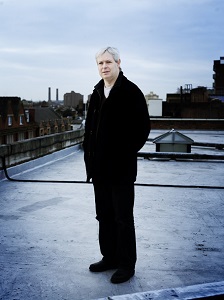
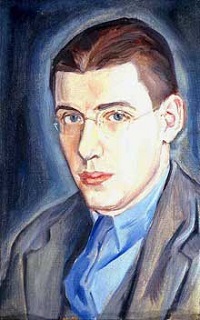
Louis Th. Lehmann (19 augustus 1920 – 23 december 2012)
Portret door Hennie van der Vegt


De Amerikaanse dichter Frederic Ogden Nash werd geboren in Rye, New York, op 19 augustus 1902. Zie ook mijn blog van 19 augustus 2010 en eveneens alle tags voor Ogden Nash op dit blog.


Summer Serenade

When the thunder stalks the sky,
When tickle-footed walks the fly,
When shirt is wet and throat is dry,
Look, my darling, thats July.

Through the grassy lawn be leather,
And prickly temper tug the tether,
Shall we postpone our love for weather?
If we must melt, lets melt together!


The Chipmunk

My friends all know that I am shy,
But the chipmunk is twice and shy and I.
He moves with flickering indecision
Like stripes across the television.
He's like the shadow of a cloud,
Or Emily Dickinson read aloud.


The Camel

The camel has a single hump;
The dromedary , two;
Or else the other way around.
I'm never sure. Are you?


 1803689-4cd25cbfa546b5819c66457451730d2c.jpg
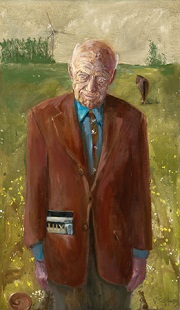
Ogden Nash (19 augustus 1902 – 19 mei 1971)
Portret door Frederick S. Wight , 1933


De Iers-Amerikaanse schrijver Frank McCourt werd geboren op 19 augustus 1930 in New York. Zie ook mijn blog van 19 augustus 2010 en eveneens alle tags voor Frank McCourt op dit blog.

Uit: Teacher Man

“If I knew anything about Sigmund Freud and psychoanalysis I'd be able to trace all my troubles to my miserable childhood in Ireland. That miserable childhood deprived me of self-esteem, triggered spasms of self pity, paralyzed my emotions, made me cranky, envious and disrespectful of authority, retarded my development, crippled my doings with the opposite sex, kept me from rising in the world and made me unfit, almost, for human society. How I became a teacher at all and remained one is a miracle and I have to give myself full marks for surviving all those years in the classrooms of New York. There should be a medal for people who survive miserable childhoods and become teachers, and I should be first in line for the medal and whatever bars might be appended for ensuing miseries.
I could lay blame. The miserable childhood doesn't simply happen. It is brought about. There are dark forces. If I am to lay blame it is in a spirit of forgiveness. Therefore, I forgive the following: Pope Pius XII; the English in general and King George VI in particular; Cardinal MacRory, who ruled Ireland when I was a child; the bishop of Limerick, who seemed to think everything was sinful; Eamonn De Valera, former prime minister (Taoiseach) and president of Ireland. Mr. De Valera was a half-Spanish Gaelic fanatic (Spanish onion in an Irish stew) who directed teachers all over Ireland to beat the native tongue into us and natural curiosity out of us. He caused us hours of misery. He was aloof and indifferent to the black and blue welts raised by schoolmaster sticks on various parts of our young bodies. I forgive, also, the priest who drove me from the confessional when I admitted to sins of self-abuse and self-pollution and penny thieveries from my mother's purse. He said I did not show a proper spirit of repentance, especially in the matter of the flesh."


 1803689-d5c090cf9af302e30b0c0e1ce97516d0.jpg
Frank McCourt (19 augustus 1930 – 19 juli 2009)


De Vlaamse dichter Frederik Lucien De Laere werd geboren in Brugge op 19 augustus 1971. Zie ook mijn blog van 19 augustus 2010 en eveneens alle tags voor Frederik Lucien De Laere op dit blog.


Hoorn

De balts in de pas, lonkend
naar de fonkelende ogen
van het schichtig wijfje,
met een gewei wijds
vertakkend zich
tot bronstig netwerk.

Het hoofdschuddend pronken
met de uitstekende conditie
treft doel: een haard, een harem
clustert zich rond hem, hij
die het gevaar verkent.

Hij die op den duur status
koppelt aan grotesk, zijn toorn
laat varen en zijn macht
aan de hoorns hangt,
spijts het overgrote ego.


Filoktetes

De vriendschap had geen gelijke
zoals hij daar hand in hand bij de brandstapel stond
met een held die het vuur als verlossing koos
en hem een boog met gifpijlen schonk, als laatste gift.

Bijna vond hij zijn einde, insgelijks,
op het eiland onderweg
waar een slang beet in zijn voet:
ondraaglijk was de stank, het leed,
de boete en de eenzaamheid.

Een held komt, een wonder geschiedt
en de geschiedenis wordt herschreven
als het orakel in daden wordt vertaald
en hij vele levens neemt, een non-stop
sneuvelen bij de halsstarrige stad.


 1803689-3800e10df8ddd54f5bcdfca2b238760e.jpg
Frederik Lucien De Laere (Brugge, 19 augustus 1971)


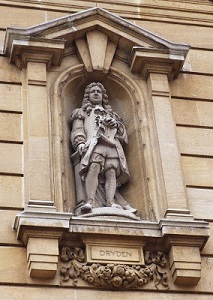
De Engelse toneelschrijver, dichter en criticus John Dryden werd geboren op 19 augustus 1631 in Aldwinkle (Northamptonshire). Zie ook mijn blog van 19 augustus 2010 en eveneens alle tags voor John Dryden op dit blog.


Can Life Be A Blessing

Can life be a blessing,
Or worth the possessing,
Can life be a blessing if love were away?
Ah no! though our love all night keep us waking,
And though he torment us with cares all the day,
Yet he sweetens, he sweetens our pains in the taking,
There's an hour at the last, there's an hour to repay.

In ev'ry possessing,
The ravishing blessing,
In ev'ry possessing the fruit of our pain,
Poor lovers forget long ages of anguish,
Whate'er they have suffer'd and done to obtain;
'Tis a pleasure, a pleasure to sigh and to languish,
When we hope, when we hope to be happy again.


 1803689-ac1bf27502c63ec892d0ff62c1b99ee6.JPG
John Dryden (19 augustus 1631 – 12 mei 1700)
Standbeeld aan de Northampton Public Library


Zie voor nog meer schrijvers van de 19e augustus ook mijn blog van 19 augustus 2011 deel 2 en ook mijn blog van 19 augustus 2010.

Geschreven door Romenu om 20:27 Reageer op dit bericht

Meer van Romenu

↑ Terug naar de berichten