Naar de inhoud

Romenu

Over literatuur, gedichten, kunst en cultuur
akke.beakke.be

Berichten van 30 oktober 2015 tot 31 oktober 2015

A Rhyme for Halloween (Maurice Kilwein Guevara)


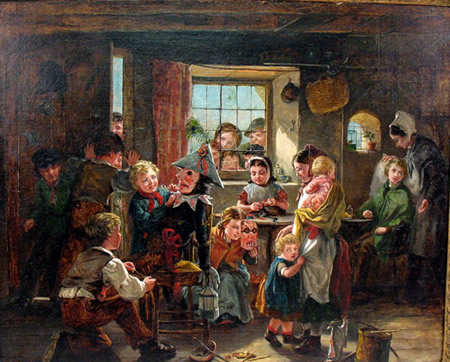
Bij Halloween


 1833111-04f21c91370d28fa97154a2638c8863c.jpg
Halloween door Emma Brownlow, 1860


A Rhyme for Halloween

Tonight I light the candles of my eyes in the lee
And swing down this branch full of red leaves.
Yellow moon, skull and spine of the hare,
Arrow me to town on the neck of the air.

I hear the undertaker make love in the heather;
The candy maker, poor fellow, is under the weather.
Skunk, moose, raccoon, they go to the doors in threes
With a torch in their hands or pleas: "O, please . . ."

Baruch Spinoza and the butcher are drunk:
One is the tail and one is the trunk
Of a beast who dances in circles for beer
And doesn't think twice to learn how to steer.

Our clock is blind, our clock is dumb.
Its hands are broken, its fingers numb.
No time for the martyr of our fair town
Who wasn't a witch because she could drown.

Now the dogs of the cemetery are starting to bark
At the vision of her, bobbing up through the dark.
When she opens her mouth to gasp for air,
A moth flies out and lands in her hair.

The apples are thumping, winter is coming.
The lips of the pumpkin soon will be humming.
By the caw of the crow on the first of the year,
Something will die, something appear.


 1833111-54b8ccfb98b5f7ab116549846706e9ad.jpg
Maurice Kilwein Guevara (Belencito, 5 november 1961)
The Bloomfield Halloween parade in Pittsburgh, 2012


De Amerikaanse dichter, schrijver en hoogleraar Maurice Kilwein Guevara werd geboren op 5 november 1961 in Belencito, Colombia, en groeide op in de buurt van Pittsburgh, Pennsylvania. Zie ook alle tags voor Maurice Kilwein Guevara op dit blog.

Zie voor de schrijvers van de 31e oktober ook mijn vorige twee blogs van vandaag.

Geschreven door Romenu om 13:24 Reageer op dit bericht

Joseph Boyden, Bruce Bawer, John Keats, Carlos Drummond de Andrade

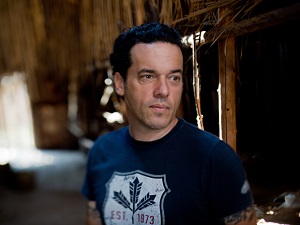
De Canadese schrijver Joseph Boyden werd geboren op 31 oktober 1966 in Willowdale, Ontario. Zie ook mijn blog van 31 oktober 2010 en eveneens alle tags voor Joseph Boyden op dit blog.

Uit: Through Black Spruce

“I hit hard ice this time, and it knocked the little breath left out of me. My jeans and jacket were already frozen worse than a straitjacket, and the shivers came so bad my teeth felt like they were about to shatter. I knew my Zippo was in my coat pocket but probably wet to uselessness. Push bad thoughts away. One thing at a time. First things first. I crawled quick as I could, trying to stand and walk, and I frankensteined my way to the trees and began snapping dry twigs from a dead spruce.
After I made a pile, I reached into my chest pocket, breaking the ice from the material that felt hard as iron now. My fingers had lost all feel. I reached for my cigarettes, struggled to pull one from my pack, and clinked open the lighter. I’d decided that if the lighter worked, I‘d enjoy a cigarette as I started a fire. It the lighter didn't work, I’d freeze to death and searchers would find me with an unlit smoke in my mouth, looking cool as the Marlboro Man. On the fifteenth thumb roll I got the lighter going. I was saved for the first time. I reached for my flask in my ass pocket and struggled to open it. Within five minutes I had a fire going. Within fifteen I’d siphoned fuel from my tank and had one of the greatest fires of my life burning, so hot I had to stand away from it, slowly rotating my body like a sausage.
The darkness of a James Bay night in January is something you two girls know well. Annie, you’re old enough to remember your grandfather. Suzanne, I don't know. I hope so.Your moshum, he liked nothing more than taking you girls out, bundled up like mummies, to look at the stars and especially the northern lights that flickered over the bay. He’d tell you two that they danced just for you, showed you how to rub your fists together to make them burn brighter. Do you remember?
My first crash ended good. My old friend Chief Joe flew out to me the next morning. found me by the smoky fire I’d kept burning all night. We got my plane unstuck and had a couple of good drinks and he gave me a spare pair of boots. Then Joe went to find those trappers and I got my gas lines unfrozen and flew home to Helen.
Joe quit flying soon after that. He was ready for something else. Me, I kept going. I had no other choice. A wife who wanted children, the idea of a family to feed coming to us like a good sunrise on the horizon. I made my choices. I was young still, young enough to believe you can put out your gill net and pull in options like fish.
The snow’s deep here, nieces. I'm tired, but I have to keep walking. I’m so tired, but I‘ve got to get up or I'll freeze to death. Talking to you, it keeps me warm.”


 1833108-5bea0abd4ef6b1cb710675a0ad241d07.jpg
Joseph Boyden (Willowdale, 31 oktober 1966)


De Amerikaanse dichter, schrijver en literatuurcriticus Bruce Bawer werd geboren op 31 oktober 1956 in New York. Zie ook mijn blog van 31 oktober 2010 en eveneens alle tags voor Bruce Bawer op dit blog.

Uit: While Europe Slept

“Then came 9/11. Most Americans were quick to understand that they were at war and recognized the need for a firm response (though there was, and continues to be, much disagreement as to whether the response decided upon was the right one). Yet while most Western European countries participated in the invasion of Afghanistan and several helped topple Saddam, America's forceful approach alienated opinion makers across the continent and opened up a philosophical gulf that sometimes seemed as wide as the Atlantic itself. Why was there such a striking difference in perspectives between the two halves of the democratic West? One reason was that the Western European establishment--the political, media, and academic elite that articulates what we think of as "European opinion"--tended to regard all international disputes as susceptible to peaceful resolution. It was therefore ill equipped to respond usefully to sustained violence by a fierce, uncompromising adversary. Another reason was Western Europe's large immigrant communities, many of them led by fundamentalist Muslims who looked forward to the establishment in Europe of a caliphate governed according to sharia law--the law of the Koran--and who viewed Islamist terrorists as allies in a global jihad, or holy war, dedicated to that goal. A fear of inflaming minorities who took their lead from such extremists was one more reason to tread gently. Few European politicians had challenged this passivity. The Dutchman Pim Fortuyn had done so, and been murdered for it. Not even the March 2004 bombings in Madrid--"Europe's 9/11"--had fully awakened Europe's sleeping elite. True, not all European Muslims shared the terrorists' goals and loyalties. Many, one gathered, were grateful to be living in democracies. Yet even they seemed hamstrung by the belief that loyalty to the umma (the worldwide Islamic community) overrode any civic obligations to their kaffir (infidel) neighbors. Hence most European Muslims responded passively to van Gogh's murder. Few spoke up against the extremists in their midst. The pressure--from without and within--to stick by their own was, it appeared, simply too overwhelming. And the potential price for betrayal was an end not unlike that dealt out to Theo van Gogh. “


 1833108-4bc40f1b45c660b1e51ee5f6789206b2.jpeg
Bruce Bawer (New York, 31 oktober 1956)


De Engelse dichter John Keats werd geboren op 31 oktober 1795 in Finsbury Pavement in Londen. Zie ook mijn blog van 31 oktober 2010 en eveneens alle tags voor John Keats op dit blog.


When I Have Fears

When I have fears that I may cease to be
Before my pen has glean'd my teeming brain,
Before high-piled books, in charactery,
Hold like rich garners the full ripen'd grain;
When I behold, upon the night's starr'd face,
Huge cloudy symbols of a high romance,
And think that I may never live to trace
Their shadows, with the magic hand of chance;
And when I feel, fair creature of an hour,
That I shall never look upon thee more,
Never have relish in the faery power
Of unreflecting love;--then on the shore
Of the wide world I stand alone, and think
Till love and fame to nothingness do sink.


Sonnet V. To A Friend Who Sent Me Some Roses

As late I rambled in the happy fields,
What time the skylark shakes the tremulous dew
From his lush clover covert;—when anew
Adventurous knights take up their dinted shields;
I saw the sweetest flower wild nature yields,
A fresh-blown musk-rose; 'twas the first that threw
Its sweets upon the summer: graceful it grew
As is the wand that Queen Titania wields.
And, as I feasted on its fragrancy,
I thought the garden-rose it far excelled;
But when, O Wells! thy roses came to me,
My sense with their deliciousness was spelled:
Soft voices had they, that with tender plea
Whispered of peace, and truth, and friendliness unquelled.


To A Cat

Cat! who has pass'd thy grand climacteric,
How many mice and rats hast in thy days
Destroy'd? How many tit-bits stolen? Gaze
With those bright languid segments green, and prick
Those velvet ears - but prythee do not stick
Thy latent talons in me - and tell me all thy frays,
Of fish and mice, and rats and tender chick;
Nay, look not down, nor lick thy dainty wrists, -
For all the wheezy asthma - and for all
Thy tail's tip is nick'd off - and though the fists
Of many a maid have given thee many a maul,
Still is thy fur as when the lists
In youth thou enter'dst on glass-bottled wall.


 1833108-1adf1d68924a7652cc53414b3c7924c9.jpg
John Keats (31 oktober 1795 – 23 februari 1821) 
Portrety door William Hilton, vóór 1839


De Braziliaanse dichter Carlos Drummond de Andrade werd geboren op 31 oktober 1902 in Itabira, een klein dorpje in de staat Minas Gerais. Zie ook alle tags voorCarlos Drummond de Andrade op dit blog en ook mijn blog van 31 oktober 2010


Souvenir Of The Ancient World

Clara strolled in the garden with the children.
The sky was green over the grass,
the water was golden under the bridges,
other elements were blue and rose and orange,
a policeman smiled, bicycles passed,
a girl stepped onto the lawn to catch a bird,
the whole world--Germany, China--
all was quiet around Clara.

The children looked at the sky: it was not forbidden.
Mouth, nose, eyes were open. There was no danger.
What Clara feared were the flu, the heat, the insects.
Clara feared missing the eleven o'clock trolley:
She waited for letters slow to arrive,
She couldn't always wear a new dress. But she strolled in the garden,
in the morning!
They had gardens, they had mornings in those days! 


Boy Crying In The Night

In the warm, humid night, noiseless and dead, a boy cries.
His crying behind the wall, the light behind the window
are lost in the shadow of muffled footsteps, of tired voices.
Yet the sound of medicine poured into a spoon can be heard.

A boy cries in the night, behind the wall, across the street,
far away a boy cries, in another city,
in another world, perhaps.

And I see the hand that lifts the spoon while the other holds the head,
and I see the slick thread run down the boy's chin,
and slip into the street, only a thread, and slip through the city.
And nobody else in the world exists but that boy crying.


Quadrilha (Square Dance)

João loved Teresa who loved Raimundo
who loved Maria who loved Joaquim
who loved Lili
who loved nobody.
João left to the United States,
Teresa to a convent,
Raimundo died in a crash,
Maria became an old maid,
Joaquim killed himself and Lili married J. Fernandes Pinto
who hadn't been in the story.


 1833108-f157923f440437f001b96ce70fa61e42.jpg
Carlos Drummond de Andrade (31 oktober 1902 – 17 augustus 1987)


Zie voor nog meer schrijvers van de 31e oktober ook mijn vorige blog van vandaag.

Geschreven door Romenu om 13:22 Reageer op dit bericht

Jean Améry, Nick Stone, Irina Denezhkina, Ernst Augustin

De Oostenrijkse schrijver Jean Améry werd geboren op 31 oktober 1912 in Wenen. Zie ook mijn blog van 31 oktober 2010 en eveneens alle tags voor Jean Améry op dit blog.

Uit: Die Schiffbrüchigen

„Vollends verflogen war nun der Dämmer des Morgens, fordernd und hart war der Tag heraufgebrochen. Eugen hatte seinen Mantel genommen und das Fenster geöffnet. Nun also galt es fortzugehen, das Wehen des Aprilwindes, der durch das offne Fenster brach, die halbdunkle Stube reinigen zu lassen von Nacht und Traum und dem Duft von Agathe. An der Zeit war es nun, Überschriften der Morgenblätter zu ertragen, die tagblassen Mädchen, die Beamten – und Zughunde vor Fleischerwagen. Schwer ächzte draußen das Haustor. Eugen stand auf der Straße.
Die kommenden Stunden niederzuringen, war außerordentlich schwierig. Um diese Zeit saß Agathe gebückt vor einer grünbeschirmten Lampe und übertrug Zahlen aus vielen färbigen Zetteln in ein unmäßig großes Buch. Und unweit von dort, an einem niedrigen Pulte sitzend, schrieb Heinrich Hessl ebenfalls an Zahlen. So verschiedener Art die Zahlen auch waren, in deren engen Kreisen Agathe, die Geliebte, und Heinrich Hessl, der Freund, lebten, hielt sie doch der schmale Gurt irgend eines Gemeinsamen zusammen. Denn: wirklich waren die Geschäftsfälle gewesen, die Agathes Feder zu selbständigen geistigen Dingen machte, und wirklich waren die Kriege, Belagerungen und Stadteinnahmen gewesen, deren Jahrzahlen Heinrich Hessl kalt und entseelend in seine blauen Kolleghefte schrieb. Ein Mensch hatte von Agathes Firma am 16. Jänner fünf Fässer Wein gekauft und sie entsprechend bezahlt. Ein kleiner Mensch vielleicht, mit rundlich wintergerötetem Antlitz und blinkenden, dicken, ungefaßten Brillen. Unmenschlich aber und kalt, jedoch klar und bestimmt stand in Agathes Buch: Jänner 16., M. Korn & Sohn, 5 Faß Burgunder A.
Und auch aus Heinrich Hessls Zahlen stieg kein Geruch von Lagerküchen, oder Stampfen von Pferdehufen. Und dennoch waren Agathe, die Geliebte, und Heinrich Hessl, der Freund, noch hineinverwoben in ein Allgemeines, das man Sinn oder Leben oder Gesellschaft nennen mag, waren umstützt und gehalten von einer äußeren Gestalt der Dinge. Sorgsam geführt waren sie vom vorbestimmten Lauf ihrer Stunden, der hinführen mochte, wohin er wollte: in irgend einen Traum oder eine ferne Landschaft, der aber da sein mußte, den sie mitliefen, hungrig und voller Angst, ihn zu verlieren.“


 1833105-dd4b696b791b9eb3ae6cfe97b59fb6ac.jpg
Jean Améry (31 oktober 1912– 17 oktober 1978)
Cover


De Engelse schrijver Nick Stone werd geboren op 31 oktober 1966 in Cambridge. Zie ook mijn blog van 31 oktober 2009 en ook mijn blog van 31 oktober 2010 en eveneens alle tags voor Nick Stone op dit blog.

Uit: The Unarmed Robbery

"But...aren't you forgetting the money?"
I turned back and looked at her as if she'd grown a third eyeball. "How'm I suppose to take the money with an empty gun?"
"Aww c'mon, weren't you ever a kid? Didn't you ever pretend? I can simply pretend I never saw the empty chambers."
My face turned skeptical. "Why would you do that?"
"Well I can plainly see I'm moving a little too fast for you, so I'll demonstrate." She opened the register drawer and started filling my cloth bag with tens and twenties. "Now what are you suppose to say?"
"I, uhh... thank you?"
"No, you silly fucker! Damn dude, do I gotta do everything for you? You're suppose to tell me to grab the cash under the drawer too!" She lifted the plastic money tray, removed eight fifties and dropped them into the bag. She then removed five one-hundred-dollar bills from under the tray, and proceeded to stuff them in her socks. "And here's my cut."
"But...what about the cameras?" I asked, pointing to one right above her head.
"Oh...yeah, about the cameras. They're fake. $9.95 at Radio Shack. The owner's tight with money." She smiled. "I'm sure that'll change after tonight."
She handed me my big bag of unearned cash and offered her hand. "Name's Melissa."
I shook her hand. "And I'm Ni...not gonna tell you! Nice try."
"Good, you're learning! Well, I'd love to shoot the breeze with you all night, but I should probably call the cops now. Oh, hey! Gimmie your opinion on this first." She dropped to her knees, covered her face with her hands and began crying. "He was a relentless madman, officer! He kept waving the gun in my face and talked about killing my whole family! How could you guys let such a psycho walk the streets?!" She stood up. "How was that? Think they'll buy it?"


 1833105-814e914aaea2b514eeac20e31f04cba7.jpg
Nick Stone (Cambridge, 31 oktober 1966)


De Russische schrijfster Irina Denezhkina werd geboren op 31 oktober 1981 in Yekaterinburg. Zie ook alle tags voor Irina Denezhkina op dit blog en ook mijn blog van 31 oktober 2009 en ook mijn blog van 31 oktober 2010

Uit: Give Me: Songs for Lovers

"Hi!" he said in a low voice.
Aha ... His ears stick out from under his cap, a sharp face, mischievous eyes, brazen. Beautiful hands, the hands are something else. I like the hands.
"Right then, comrades," I said, squeezing my way between the little guy and the rapper. The beautiful hands instantly barred my way.
"Where do you live?"
"Zhenya Egorova Street."
The rapper opened his eyes wide and laughed. But he kept on standing there like a traffic barrier, with his arms spread wide.
"That's fucking far away, Nigger," the little kid announced gleefully.
"Give me your number," the rapper said to me, not listening to him.
I shrugged again and rattled off my number. The quicker you tell them, the quicker they lay off you. Nigger wrote the number on his hand and gave me back my pen.
"Denya lives there; he'll see her home," Nigger answered the kid confidently, maintaining the siege.
Half an hour later my ears were popping on the metro, and sitting there beside me staring into empty space was Denya, the one whose head Vova had put a hole in. The scar was clearly visible - stitched up and daubed with bright green ointment. Denya was like Ryan Gosling in The Believer. The same shaved head, eyes bunched together, straight nose, beaky lips. But on the whole not too bad, pretty tasty. At least he didn't come on to me. My nerves were already stretched worrying about my bare legs and skintight T-shirt. You can never tell.”


 1833105-3dade609bfb6267ee2055fbf3edc6ceb.jpg
Irina Denezhkina (Yekaterinburg, 31 oktober 1981)
Cover 


De Duitse schrijver Ernst Augustin werd geboren op 31 oktober 1927 in Hirschberg. Zie ook alle tags voor Ernst Augustin op dit blog en ook mijn blog van 31 oktober 2009 en ook mijn blog van 31 oktober 2010.

Uit: Die Schule der Nackten

„Das war am Montag. Am Dienstag war ich mit meinen chaldäisch-aramäischen Studien beschäftigt. Ein warmer, sogar heißer Dienstag war es, mit einem nahezu wolkenlosen Himmel, trotzdem hatte ich mich in meine Bibliothek im ersten Stock eingeschlossen, deren Fenster noch dazu nach Norden hinausgehen. Es war kühl hier drinnen, die lange Reihe der goldgepreßten Lederrücken, die ich mir zugelegt hatte – sechsundzwanzig Bände Pflugk-Hartung! – spiegelte das Licht der großen, grünen Sommerkugel wider. Ich gebe zu, es war wegen der Lederrücken, daß ich sie mir geleistet hatte, es hätte auch die gekürzte Ausgabe sein können, oder die broschierte, aber ich leistete mir die sechsundzwanzigbändige. Vielleicht heute nicht mehr. Dazu den Wieland-Kroll, der steht in Weinrot und Moosgrün auf der anderen Seite, achtzehnbändig. Meine Studien haben mich über Jahre systematisch in die Denkungsart vorderasiatischer Kulturen sowie überhaupt frühgeschichtlicher Menschheitsperioden eingeführt. Ich erheische, mit einigem Realitätsbezug, wie ein Hethiter aus der Zeit Darius des Ersten denken zu können – und, wenn es darauf ankäme, zu handeln. Beachtliches Echo erzeugte meine 98 im „History-Sheffield“ erschienene Abhandlung über Tempelprostitution im alten Ninife (genauer gesagt im „neuen“ Ninife), in der ich die Stellung der Frau spezifiziere, welche von Staats wegen ausnahmslos – verheiratet oder nicht verheiratet – ein Jahr lang in den Lustparks der Tempelbezirke ihren Dienst zu verrichten hatte. Das zog einiges Echo nach sich. Ich meine, es war die Veröffentlichung, bekannt war es natürlich. So wie ich auch auf zwei meiner Arbeiten über den Tantrakult an der indischen Ostküste (wedische Zeit) verweisen kann. Ebenfalls im Rahmen meiner frühhistorischen Studien.
An diesem Tag schrieb ich anderthalb durchschnittlich gute Seiten eines Skripts „Die Kinder Sems“, an dem ich seit vier Jahren arbeite und nachweise, daß das Hebräische, Aramäische und Arabische gemeinsamen Ursprungs im semitischen Sprachraum sind – beziehe mich auf die Genesis (Kap. 10), wo die Stammväter dieser Völkerschaften als Kinder des Sem, Sohn des Noah bezeichnet wurden. Alttestamentarisch. Vergleichbar mit dem sumerischen „Elam“   –  –   aber ich möchte hier nicht zu weit gehen, kam auch nicht mehr weit an diesem sehr schönen Morgen. Zwei Seiten weit. Bis zwölf Uhr.
Dann ging ich ins Jakobi-Bad.“


 1833105-57df233e267cccc3c246dfa475f483dd.jpg
Ernst Augustin (Hirschberg, 31 oktober 1927)


Geschreven door Romenu om 13:20 Reageer op dit bericht

Andrew Solomon

De Amerikaanse schrijver, psychiater en journalist Andrew Solomon werd geboren op 30 oktober 1963 in New York. Hij voltooide zijn middelbare school in 1981 cum laude. Hij behaalde zijn Bachelor in 1985 magna cum laude aan de Yale University. Zijn master in Engels behaalde hij aan het Jesus College, Cambridge. In 2013promoveerde hij in de psychologie aan dezelfde universiteit. Andrew Solomon is de oudste zoon van Carolyn Bower Solomon en Howard Solomon, een CEO van het farmaceutische bedrijf Forest Laboratories. De ervaring, aanwezig te zijn bij de geplande zelfmoord van zijn moeder, die leed aan een ongeneeslijke kanker van de eierstokken heeft Solomon onder andere beschreven in een artikel voor The New Yorker, in zijn roman “A Stone Boat” en in zijn boek “The Noonday Demon”. Solomon leed na de zelfmoord van zijn moeder aan een depressie, die hij met psychotherapie en een antidepressivum onder controle kreeg. Als volwassene verwief Solomon de dubbele nationaliteit van zowel de VS als het Verenigd Koninkrijk. Hij woont samen met de journalist John Habich in een geregistreerd partnerschap. Het paar trouwde in 2009 een tweede keer in Connecticut, zodat hun huwelijk ook in de Amerikaanse staat New York zou worden erkend. In 2003 besloten Solomon en zijn oude vriendin Blaine Smith om samen om een ​​kind te krijgen. Hun dochter werd geboren in november 2007. Moeder en dochter wonen in Texas. Een gemeenschappelijke zoon, George Charles Habich Salomon werd geboren in 2009 en woont in New York, samen met Solomon en Habich. Habich is zijn adoptievader. Habich is ook de biologische vader van twee kinderen die door een lesbisch stel worden opgevoed. De ontwikkeling van deze patchwork familie was het onderwerp van een essay, dat Solomon in Newsweek heeft beschreven en die ook geportretteerd werd in The Observer. Onder de tijdschriften en kranten, waarin hij heeft gepubliceerd, onder andere The New York Times, The New Yorker, Artforum en Travel and Leisure. Hij ontving o.a. de National Book Award 2001 en werd genomineerd in 2002 voor de Pulitzer Prize. The Times koos “The Noonday Demon”. als een van de honderd beste boeken van het decennium. Voor zijn 2012 gepubliceerde boek “Far from the Tree: Parents, Children, and the Search for Identity.ontvangen” kreeg Solomon onder meer de National Book Critics Circle Award 2012, de Anisfield-Wolf Book Award en de Dayton Literary Peace Prize

Uit: A Stone Boat

“I need to write this as quickly as possible, because it is about my mother. I want to write it while we can still remember how we hoped that she would get well. "lhat is sentimental and extravagant, I know. I once told my mother that I would never forget her because there is so much of her in me, but this year, I’m not so sure that I can rely on myself to recall everything about her, and I need to remember everything I possibly can. Did I get this sentimental and extravagant streak from her? Five years ago, I would have said that it came from my father, but now I’m not so sure.
Yesterday I was on a plane. I remember when that was an event in my life-to take a plane somewhere-but now planes are the most regular occurrence of all; I am the emperor of baggage claim, the king of check-in, the prime minister of in-flight meals. I am as savvy as a flight attendant, with a profound knowledge of the location of the emergency exits and an aficionado’s grasp of the technology of seat belts. I can guess within a fraction of a second when the “No Smoking” sign will go on.
I have figured out how to angle myself so that the overhead reading light illuminates my book and not my hair, and I know where the further extra pillows are stored when the first cache of extra pillows has been distributed. I have mastered the look that bores customs oflicers, and even when I am carrying great misshapen boxes and large cumbersome suitcases, I am not stopped on my way out of the airport.
On Friday I will take a plane to Istanbul to play in a Brahms festival in the gardens of the Topkapi Palace. No doubt the piano will be sliding out of tune. Next Monday I will return to London. Next Tuesday I will go to New York, and then for a few days to Berlin to play Schubert, and then the following Friday I will go back to New York for an indefinite period of not more than nine days. That’s the plan, unless my mother needs to go in for surgery. If my mother needs to go in for surgery, I’ll just go straight to New York and miss some more of the rest of my life and stay for as long as I have to and cancel all my performances.”


 1887334-4515286b9a88ce5d7ef1dce835973e74.jpg
Andrew Solomon (New York, 30 oktober 1963)


Geschreven door Romenu om 00:00 Reageer op dit bericht

Jan Van Loy, Fjodor Dostojevski, Ezra Pound, Paul Valéry, Georg Heym

De Vlaamse schrijver Jan Van Loy werd op 30 oktober 1964 geboren te Herentals, in de Antwerpse Kempen. Zie ook alle tags voor Jan Van Loy op dit blog.

Uit: Ik, Hollywood

‘Is het ver?’ vroeg hij.
‘Half uur,’ zei Mooney.
De bebouwing dunde spoedig uit en ze snelden over een lange weg van stof en steenslag tussen hoofdzakelijk ‘niets’, zoals Charlie geneigd was om landbouwgronden te noemen. Er reden bijna evenveel auto’s als rijtuigjes. Louie en Charlie hadden hun hoeden afgenomen en lieten de lauwe wind door hun haren spelen. De zon scheen en het was warm genoeg voor hemdsmouwen. Goed dat ze hun overjassen hadden verpand.
‘Is het waar dat het hier nooit regent?’ riep Louie.
‘Nee,’ zei Mooney.
Louie vond dat ze snel reden, tot ze werden ingehaald door een rode tram.
‘Waar gaan we eigenlijk heen?’ riep Charlie. ‘Het huis was toch in de stad?’
Ze zaten in een vallei, aan de horizon begrensd door een mistige heuvelkam. Of het mooi was, kon Louie niet meer zeggen, want hij had tijdens de vijfdaagse treinreis over het continent meer dan zijn portie bergen en dalen gezien.
Het was Charlies affaire met Eleanor Whitfield, enig kind van een rijke vader, die hen hierheen had gebracht. Charlie zag eruit als een heer en gedroeg zich als een heer, meestal, maar in feite was hij een niksnut uit de Bowery en hoe hij op intieme voet was geraakt met een erfgename, was Louie een raadsel.
Vader Whitfield wilde niet minder dan een halve aardbol afstand tussen de geliefden. Hij verscheepte Eleanor naar Londen, Engeland, en wilde dat Charlie minstens een jaar naar de westkust ging. Het huis van Whitfield waar hij in mocht wonen, zou na dat jaar zijn eigendom worden. Charlie tekende een contract. Het sprak vanzelf dat Louie met hem mee zou gaan.
Sinds ze voor de poort van een weeshuis waren gedropt, had Charlie zijn driejarige broer onder zijn hoede genomen. Zelf was hij toen nog maar zeven, maar van meet af aan een man. Stilaan wilde Louie ook wel als een man worden beschouwd. Die bolhoed was misschien een start.
Mooney sloeg een onverharde zijstraat in en stopte aan de kant van de weg, waar normaal een stoep zou zijn geweest. Toen de motor zweeg, waren er plots tjilpende vogels en ruisende bomen te horen. En vervolgens het tikken van afkoelend autometaal.
‘We zijn er,’ zei Mooney.”


 1832800-bb926f696be86a312c79b56b0ca77de5.jpg
Jan Van Loy (Herentals, 30 oktober 1964)


De Russische schrijver Fjodor Michajlovitsj Dostojevski werd geboren ergens tussen 30 oktober en 11 november 1821 in Sint Petersburg. Zie ook mijn blog van 30 oktober 2010 en eveneens alle tags voor Fjodor Dostojevski op dit blog.

Uit: Misdaad en straf (Vertaald door Lourens Reedijk)

“Wat betreft mijn indeling van de mensen in gewone en buitengewone, ik moet toegeven dat die enigszins willekeurig is, maar ik sta immers niet op exacte cijfers. Ik geloof alleen in mijn belangrijkste gedachte. Die behelst namelijk dat de mensen volgens de wet van de natuur over het algemeen in twee categorieën worden verdeeld: in een lagere (van de gewone), dus zogezegd in materiaal dat alleen maar dient tot het voortbrengen van zijn eigen soort, en in eigenlijke mensen, dat wil zeggen in hen die de gave of het talent bezitten om in hun milieu iets nieuws te verkondigen. Er zijn hierbij vanzelfsprekend eindeloze onderverdelingen, maar beide categorieën zijn nogal scherp afgebakend: de eerste categorie, het materiaal dus in het algemeen gesproken, is die van de van nature conservatieve en keurige mensen, die in gehoorzaamheid leven en ervan houden om gehoorzaam te zijn. Volgens mij is het ook hun plicht om gehoorzaam te zijn omdat dit hun bestemming is, en hierin steekt voor hen absoluut niets vernederends. De mensen van de tweede categorie overtraden allen de wet; het zijn omverwerpers of gezien hun kwaliteiten daartoe geneigd. Het spreekt vanzelf dat de misdaden van deze mensen betrekkelijk en zeer verschillend zijn; zij eisen merendeels, in uitingen van velerlei vorm, de omverwerping van het bestaand ein naam van het betere; Maar indien hij voor zijn ideaal over lijken zou moeten gaan of bloed moeten vergieten, dan kan hij zichzelf volgens mij, innerlijk, met een zuiver geweten, veroorloven om bloed te vergieten; echter, bedenk dit wel: met inachtneming van het ideaal en zijn maatstaven. Het is dan ook slechts in deze zin dat ik in mijn artikel over hun recht op misdaad spreek. (u herinnert zich toch dat we van het juridische vraagstuk uitgingen?)
Er is trouwens weinig reden tot ongerustheid: de massa zal hun bijna nooit dat recht toekennen; die stelt hen terecht en hangt hen op (min of meer) en vervult daarmee geheel rechtmatig haar conservatieve bestemming, met het voorbehoud echter dat deze zelfde massa in de volgende generaties de terechtgestelden op een voetsutk plaatst en hen (min of meer) vereert. De eerste categorie is altijd heer van het heden, de tweede categorie is heer van de toekomst. De eersten behoeden de gemeenschap en zorgen voor getalsmatige vermeerdering; die van de tweede houden de gemeenschap in beweging en leiden haar naar haar bestemming. Zowel dezen als genen hebben een volkomen gelijkelijk recht om te bestaan. Kortom, bij mij zijn allen gelijkberechtigd en, vive la guerre éternelle, tot het Nieuwe Jeruzalem, dat spreekt vanzelf’.


 1832800-a5518a80d9d8d75c0ef945ab5b39ea71.jpg
Fjodor Dostojevski (30 oktober 1821 - 9 februari 1881)
Monument in Dresden


De Amerikaanse dichter Ezra Pound werd geboren in Hailey, Idaho op 30 oktober 1885. Zie ook mijn blog van 30 oktober 2010 en eveneens alle tags voor Ezra Pound op dit blog.

Uit: Canto II (Fragment)

HANG it all, Robert Browning,
there can be but the one "Sordello."
But Sordello, and my Sordello?
Lo Sordels si fo di Mantovana.
So-shu churned in the sea.
Seal sports in the spray-whited circles of cliff-wash,
Sleek head, daughter of Lir,
           eyes of Picasso
Under black fur-hood, lithe daughter of Ocean;
And the wave runs in the beach-groove:
"Eleanor, ἑλέναυς and ἑλέπτολις!"
           And poor old Homer blind, blind, as a bat,
Ear, ear for the sea-surge, murmur of old men's voices:
"Let her go back to the ships,
Back among Grecian faces, lest evil come on our own,
Evil and further evil, and a curse cursed on our children,
Moves, yes she moves like a goddess
And has the face of a god
           and the voice of Schoeney's daughters,
And doom goes with her in walking,
Let her go back to the ships,
           back among Grecian voices."
And by the beach-run, Tyro,
           Twisted arms of the sea-god,
Lithe sinews of water, gripping her, cross-hold,
And the blue-gray glass of the wave tents them,
Glare azure of water, cold-welter, close cover.
Quiet sun-tawny sand-stretch,
The gulls broad out their wings,
           nipping between the splay feathers;
Snipe come for their bath,
           bend out their wing-joints,
Spread wet wings to the sun-film,
And by Scios,
           to left of the Naxos passage,
Naviform rock overgrown,
           algæ cling to its edge,
There is a wine-red glow in the shallows,
           a tin flash in the sun-dazzle.


 1832800-27f7f3330f87b975c9b40d00dc8fee98.jpg
Ezra Pound (30 oktober 1885 - 1 november 1972)


De Franse dichter en schrijver Paul Valéry werd geboren op 30 oktober 1871 in Sète Zie ook mijn blog van 30 oktober 2010 en eveneens alle tags voor Paul Valéry op dit blog.


Uw schreden
(naar Paul Valéry)
 
Uw schreden, aan mijn stilte ontsproten,
Als in een tempel neergezet,
In kleumende eenzaamheid besloten,
Benaad'ren traag mijn waakzaam bed.
 
O godd'lijk schaduwbeeld, hoe zoet
Zijn mij uw aarzelende schreden,
Alles waarom ik heb gebeden
Komt tot mij met uw naakte voet.
 
Zoo gij met uw gespitste lippen,
Waarmee gij zorg en onrust stilt,
In 't binnenst van mijn ziel wilt glippen
En met een kus mij sterken wilt,
 
Zoo overhaast U niet daarbij,
Behoud de macht terug te glijden,
Want heel mijn leven was u beiden,
En heel mijn hart waart gij.

Vertaald door Simon Vestdijk


De verspilde wijn

Eens heb ik in de Oceaan
(Maar onder welke zonneschijn?)
Geplengd als offer aan de waan
Een weinig waardevolle wijn...

O vocht, wie wou uw ondergang?
Een ziener die het mij gebood?
Ofwel een onderhuidse drang,
Die bloed beleed en wijn vergoot?

Zijn onveranderlijke leven
Nam na een roze rookwalm even
Doorschijnend weer het water aan...

Verspilde wijn, bedronken baren!...
Ik zag in 't zilte zwerk ontstaan
Gestalten zonder evenaren...


Vertaald door Paul Claes 


1832800-d84bae23d7b357a71bcdc239a29f1c86.jpg
Paul Valéry (30 oktober 1871 – 20 juli 1945)
Portret door G. d'Espagnat, 1910


De Duitse dichter Georg Heym werd geboren op 30 oktober 1887 in Hirschberg. Zie ook mijn blog van 30 oktober 2010 en eveneens alle tags voor Georg Heym op dit blog.


Der Winter

Der Sturm heult immer laut in den Kaminen,
Und jede Nacht ist blutigrot und dunkel,
Die Häuser recken sich mit leeren Mienen.

Nun wohnen wir in rings umbauter Enge
Im kargen Licht und Dunkel unsrer Gruben,
Wie Seiler zerrend an der Tage Länge.

Die Tage zwängen sich in niedre Stuben,
Wo heisres Feuer krächzt in großen Öfen.
Wir stehen an den ausgefrornen Scheiben
Und starren schräge nach den leeren Höfen.


Letzte Wache

Wie dunkel sind deine Schläfen.
Und deine Hände so schwer.
Bist du schon weit von dannen,
Und hörst mich nicht mehr.

Unter dem flackenden Lichte
Bist du so traurig und alt,
Und deine Lippen sind grausam
In ewiger Starre gekrallt.

Morgen schon ist hier das Schweigen
Und vielleicht in der Luft
Noch das Rascheln von Kränzen
Und ein verwesender Duft.

Aber die Nächte werden
Leerer nun, Jahr um Jahr.
Hier wo dein Haupt lag, und leise
Immer dein Atem war.


 1832800-717e3b2cd980df46ac78c5755fb92a78.jpg
Georg Heym (30 oktober 1887 – 16 januari 1912)
Cover 


Zie voor nog meer schrijvers van de 30e oktober ook mijn blog van 30 oktober 2011 deel 2.

Geschreven door Romenu om 00:00 Reageer op dit bericht

Meer van Romenu

↑ Terug naar de berichten