Naar de inhoud

Romenu

Over literatuur, gedichten, kunst en cultuur
akke.beakke.be

Berichten van 8 november 2015 tot 9 november 2015

Ivan Toergenjev, Erika Mann, Jens Christian Grøndahl, Jan Decker, Roger McGough, Anne Sexton
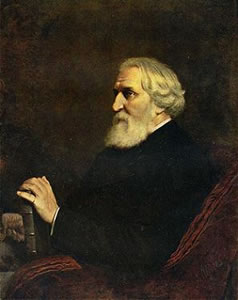
De Russische schrijver Ivan Sergejevitsj Toergenjev werd geboren op 9 november 1818 in Orjol, in de Oekraïne. Zie ook mijn blog van 9 november 2010 en eveneens alle tags voor Ivan Toergenjev op dit blog.

Uit: Virgin Soil (Vertaald door R. S. Townsend)

“At one o'clock in the afternoon of a spring day in the year 1868, a young man of twenty-seven, carelessly and shabbily dressed, was toiling up the back staircase of a five-storied house on Officers Street in St. Petersburg. Noisily shuffling his down-trodden goloshes and slowly swinging his heavy, clumsy figure, the man at last reached the very top flight and stopped before a half-open door hanging off its hinges. He did not ring the bell, but gave a loud sigh and walked straight into a small, dark passage.
“Is Nejdanov at home?” he called out in a deep, loud voice.
“No, he’s not. I’m here. Come in,” an equally coarse woman’s voice responded from the adjoining room.
“Is that Mashurina?” asked the newcomer.
“Yes, it is I. Are you Ostrodumov?
“Pemien Ostrodumov,” he replied, carefully removing his goloshes, and hanging his shabby coat on a nail, he went into the room from whence issued the woman’s voice.
It was a narrow, untidy room, with dull green coloured walls, badly lighted by two dusty windows. The furnishings consisted of an iron bedstead standing in a corner, a table in the middle, several chairs, and a bookcase piled up with books. At the table sat a woman of about thirty. She was bareheaded, clad in a black stuff dress, and was smoking a cigarette. On catching sight of Ostrodumov she extended her broad, redhand without a word. He shook it, also without saying anything, dropped into a chair and pulled a half-broken cigar out of a side pocket. Mashurina gave him a light, and without exchanging a single word, or so much as looking at one another, they began sending out long, blue puffs into the stuffy room, already filled with smoke.
There was something similar about these two smokers, al- though their features were not a bit alike. In these two slov- enly figures, with their coarse lips, teeth, and nose.
Ostrodumov was even pock-marked), there was something honest and firm and persevering.
“Have you seen Nejdanov?” Ostrodumov asked.
“Yes. He will be back directly. He has gone to the library with some books.”

 1836968-3fd4a435f3db5631a06231d5b24f862e.jpg
Ivan Toergenjev (9 november 1818 – 3 september 1883)
Portret door Vasily Perov, 1872


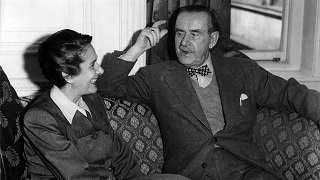
De Duitse schrijfster Erika Mann werd geboren op 9 november 1905 in München als oudste dochter van de Duitse schrijver Thomas Mann. Zie ook mijn blog van 9 november 2010 en eveneens alle tags voor Erika Mann op dit blog.

Uit: Erika Mann. Briefe und Antworten

"26. Mai 1947an Lotte Walter
„…es ist zur Zeit - völlig gleichgültig, wie man es macht - mit den Menschen nicht auszukommen, und je weniger man sich abgibt mit ihnen, desto besser, schonsamer (für alle) und, à la longue, aussichtsreicher. Meinst Du wirklich (der Gedanke verfolgt mich!), der Besuch, von welchem ich Dir abgeraten (ohne ihn freilich, als es ernst wurde, irgend sabotieren zu wollen) hätte alles, alles zum Besseren und Guten wenden können? Nie und nimmer hätte er dies gekonnt.“
(…)

22. September 1948 an Duff Cooper
Wäre ich amerikanische Staatsbürgerin gewesen, ich hätte mich nicht stärker bemühen können, dem Lande nützlich zu sein. In der Tat fühlte ich wie eine Amerikanerin, lebte wie eine Amerikanerin, war praktisch eine Amerikanerin. [...] Ich lebte und arbeitete nun einmal in den USA, und da ich dies auch weiterhin zu tun wünschte, hielt ich es nur für korrekt, mich dem guten Volk dieses Landes auch legal anzuschließen.“
 

 1836968-642513528c5de667539442d7bffeaf8a.jpg
Erika Mann (9 november 1905 - 27 augustus 1969)
Erika en Thomas Mann in Londen, 1947


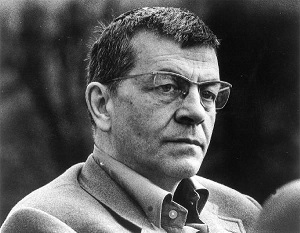
De Deense schrijver Jens Christian Grøndahl werd geboren in Lyngby op 9 november 1959. Zie ook alle tags voor Jens Christian Grøndahl op dit blog.

Uit:Lucca (Vertaald door Anne Born)

“One evening in April a thirty-two-year-old woman, unconscious and severely injured, was admitted to the hospital in a provincial town south of Copenhagen. She had a concussion and internal bleeding, her legs and arms were broken in several places, and she had deep lesions in her face. A gas station attendant in a neighboring village, beside the bridge over the highway to Copenhagen, had seen her go the wrong way up the exit and drive at high speed into the oncoming traffic. The first three approaching cars managed to maneuver around her, but about 200 meters after the junction she collided head-on with a truck. The Dutch driver was admitted for observation but released the next day. According to his statement he started to brake a good 100 meters before the crash, while the car seemed to actually increase its speed over the last stretch. The front of the vehicle was totally crushed, part of the radiator was stuck between the road and the truck's bumper, and the woman had to be cut free. The spokesman for emergency services said it was a miracle she had survived. On arrival at the hospital the woman was in very critical condition, and it was twenty-four hours before she was out of serious danger. Her eyes were so badly damaged that she lost her sight. Her name was Lucca. Lucca Montale. Despite the name there was nothing particularly Italian about her appearance. She had auburn hair and green eyes in a narrow face with high cheek-bones. She was slim and fairly tall. It turned out she was Danish, born in Copenhagen. Her husband, Andreas Bark, arrived with their small son while she was still on the operating table. The couple's home was an isolated old farmhouse in the woods seven kilometers from the site of the accident. Andreas Bark told the police he had tried to stop his wife from driving. He thought she had just gone out for a breath of air when he heard the car start. By the time he got outside he saw it disappearing along the road. She had been drinking a lot. They had had a marital disagreement. Those were the words he used; he was not questioned further on that point. Early in the morning, when Lucca Montale was moved from the operating room into intensive care, her husband was still in the waiting room with the sleeping boy's head on his lap. He was looking out at the sky and the dark trees when Robert sat down next to him. Andreas Bark went on staring into the gray morning light with an exhausted, absent gaze”.

 

 1836968-ff3f3cd600b4b25f29e6daa39e12618f.jpeg
Jens Christian Grøndahl (Lyngby, 9 november 1959)


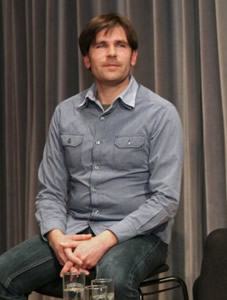
De Duitse schrijver Jan Decker werd geboren op 9 november 1977 in Kassel. Zie ook mijn blog van 9 november 2010 en eveneens alle tags voor Jan Decker op dit blog.

Uit: Vogelkunde für Städtebewohner

„An der Kreuzung ist Vorsicht geboten. Schon öfter musste Walther Lembeck einer geschwungenen Lederhandtasche ausweichen, die nicht ihm, sondern einem Weibchen des Nebenreviers galt. Heute verharrt das Biotop reglos. Man könnte von einem Wachsfigurenkabinett der Prostituierten sprechen, das er jeden Morgen auf dem Weg zu den Stadtvögeln durchstreift. Und so weit reicht Frau Sperlings Blick vom Balkon. Dann zieht sie sich vermutlich zufrieden und bestätigt in ihre Wohnung zurück. Schau an, hört er Frau Sperling sagen. Walther Lembeck macht wieder Nuttensafari.
Eine neue Vogelstimme ist zu hören. Walther Lembeck geht flink weiter. Der Buntspecht kann es nicht sein, der ist abgeflattert. Walther Lembeck hört aufmerksam hin. Natürlich, es ist das durchdringende Twiht des Kleibers. Hier in den ausgefaulten Astlöchern der Straßenbäume liegen seine Brutplätze. Sie sind das erste Ziel seines Morgenspaziergangs. Ausgerechnet hier an der Kreuzung streift der schnurrende Jäger umher, den sich Frau Sperling hält. Als hätten die beiden sich verabredet. Walther Lembeck scheucht Frau Sperlings Katze mit einem beherzten Tritt auf die Kreuzung. Autoreifen quietschen. Da fliegt der Kleiber fröhlich auf das Astloch zu, im Schnabel klumpenweise frisches Baumaterial. Der zweite Standvogel des Tages, und das dritte Exemplar einer Art, der sich Walther Lembeck selbst zuschreibt. Dem gefiederten Flaneur, der unter widrigen Bedingungen in der Stadt ausharrt..
Denn was lauert am Stadtrand? Die Langeweile. Der Stadtvogel dagegen zeigt, wie man inmitten all des Lärms sein eigenes Biotop bestellen kann, trotz der gackernden Gegenwart von Städtebewohnern wie Frau Sperling. Und der Stadtvogel weiß sich zu wehren, indem er die Städtebewohner imitiert. Er dreht, nicht anders als Frau Sperling, die Lautstärke auf. So hört Walther Lembeck es jeden Morgen mit eigenen Ohren, das Trommeln des Buntspechts, das Teck-Teck des Gartenrotschwanzes, das Tsiwit der Rauchschwalbe, das weiche Hui des Fitis, in zehnfacher Lautstärke. Die Stadtvögel haben ihr Biotop gefunden, nur wissen es die Städtebewohner noch nicht.“
 

 1836968-5719971ba226ffc5c5d915bf84064237.jpg
Jan Decker (Kassel, 9 november 1977)


De Engelse dichter en schrijver Roger Joseph McGough werd geboren op 9 november 1937 in Litherland, Lancashire. Zie ook alle tags voorRoger McGough op dit blog enook mijn blog van 9 november 2010.


Soil

we've ignored eachother for a long time
and I'm strictly an indoor man
anytime to call would be the wrong time
I'll avoid you as long as I can

When I was a boy we were good friends
I made pies out of you when you were wet
And in childhood's remembered summer weather
We roughandtumbled together
We were very close

just you and me and the sun
the world a place for having fun
always so much to be done

But gradually I grew away from you
Of course you were still there
During my earliest sexcapades
When I roughandfumbled
Not very well after bedtime
But suddenly it was winter
And you seemed so cold and dirty
That I stayed indoors and acquired
A taste for girls and clean clothes

we found less and less to say
you were jealous so one day
I simply upped and moved away

I still called to see you on occasions
But we had little now in common
And my visits grew less frequent
Until finally
One coldbright April morning
A handful of you drummed
On my fathers waxworked coffin

at last it all made sense
there was no need for pretence
you said nothing in defence

And now recently
While travelling from town to town
Past where you live
I have become increasingly aware
Of you watching me out there.
Patient and unforgiving
Toying with the trees.

we've avoided eachother for a long time
and I'm strictly a city man
anytime to call would be the wrong time
I'll avoid you as long as I can.

 

 1836968-e640ba8594ffbf1a1fed938534ae658a.jpg
Roger McGough (Litherland, 9 november 1937)


De Engelse dichteres en schrijfster Anne Sexton werd geboren op 9 november 1928 in Newton, Massachusetts. Zie ook mijn blog van 9 november 2010 en eveneens alle tags voor Anne Sexton op dit blog.


Barefoot

Loving me with my shoes off
means loving my long brown legs,
sweet dears, as good as spoons;
and my feet, those two children
let out to play naked. Intricate nubs,
my toes. No longer bound.
And what's more, see toenails and
all ten stages, root by root.
All spirited and wild, this little
piggy went to market and this little piggy
stayed. Long brown legs and long brown toes.
Further up, my darling, the woman
is calling her secrets, little houses,
little tongues that tell you.

There is no one else but us
in this house on the land spit.
The sea wears a bell in its navel.
And I'm your barefoot wench for a
whole week. Do you care for salami?
No. You'd rather not have a scotch?
No. You don't really drink. You do
drink me. The gulls kill fish,
crying out like three-year-olds.
The surf's a narcotic, calling out,
I am, I am, I am
all night long. Barefoot,
I drum up and down your back.
In the morning I run from door to door
of the cabin playing chase me.
Now you grab me by the ankles.
Now you work your way up the legs
and come to pierce me at my hunger mark.

 

 1836968-442d8b74768acd71c183005859cfa879.jpg
Anne Sexton (9 november 1928 – 4 oktober 1974)


Zie voor nog meer schrijvers van de 9e november ook mijn blog van 9 november 2014 deel 1 en eveneens deel 2.

Geschreven door Romenu om 18:46 Reageer op dit bericht

Michael Derrick Hudson


Onafhankelijk van geboortedata

De Amerikaanse dichter en bibliothecaris Michael Derrick Hudson werd geboren in 1963 in Wabash, Indiana. Hij studeerde af aan de Wayne High School in 1982. Na de middelbare school studeerde hij aan de Universiteit van Indiana in Bloomington. Hij woont momenteel in Fort Wayne, Indiana, waar hij werkt als bibliothecaris bij in het Genealogy Center van de Allen County Public Library. Als dichter, heeft Hudson gepubliceerd in diverse tijdschriften. Zijn gedichten werden genomineerd voor de Pushcart Prize door de Greensboro Review en North American Review. Hudson kreeg veel publiciteit door de publicatie van een gedicht in het literaire tijdschrift Prairie Schooner dat vervolgens werd geselecteerd door dichter en romanschrijver Sherman Alexie voor de 2015 editie van de bloemlezing van beste Amerikaanse Poëzie. Hudson, een blanke man, beweerde dat hij het gedicht 40 keer onder zijn eigen naam had ingediend en dat het telkens werd afgewezen. Daarna gebruikte hij het pseudoniem Yi-Fen Chou, vermoedelijk een Chinese vrouw, en het werd geaccepteerd voor publicatie. Critici en mensen binnen de poëzie-gemeenschap waren kritisch over Hudson's gebruik van een pseudoniem. Sommigen noemden het racistisch of beschreven het als "literaire fraude". Anderen waren kritisch over de uitgeverij en spraken van positieve discriminatie. Hudson's manuscript, getiteld “The Dead Bird in the Liquor Store Parking Lot werd geselecteerd als finalist voor zowel de University of Wisconsin‍ '​s Brittingham and Felix Pollak Poetry Prize als de Utah State University‍ '​s May Swenson Poetry Award.


Russians

For Russians the stars are always incontinent, ejaculatory
smears across the squalor of a boundlessly

unhygienic sky. You’d scoff, Marina, at how I go at them
with a tiny plastic shovel and my litter box

technique, scooping up the sidereal splooge while trying
to wipe down the universe. You’d say

I tug at God’s Old Testament beard, praying the prayers

of a coward. You’d confide to your diary my eyelashes
don’t bat sootily enough. Such a lummox

could never rumple the sheets of Paris! You’d jot down
my ugly shoes, my idiotic jokes, reproach

my skies for lacking splendor, bleached
by electric lights and the haze of a dying atmosphere ... 

What else could I do, Marina? You and your comrades
vanished long ago, exiled, shot, or pensioned

off by the End of History. So I inch through your legacy
with my groundling’s fears, my glut,

my botched American upbringing: I can’t imagine your
heartbreaks, but you’d never comprehend

how life for me arrived precanceled. Tonight, Marina,
the mercury streetlights will make us

ghastly: you can see only Venus from here, a drunken
queen’s pearl dissolving into the crescent moon’s

tipped-over goblet. Or perhaps I just fucked that up too.


 1836966-c7cb294770402847ae58dff2da83caa1.jpg
Michael Derrick Hudson (Wabash, 1963)

Geschreven door Romenu om 18:44 Reageer op dit bericht

Joshua Ferris, Kazuo Ishiguro, Herbert Hindringer, Elfriede Brüning, Margaret Mitchell, Detlef Opitz

De Amerikaanse schrijver Joshua Ferris werd op 8 november 1974 in Danville, Illinois geboren. Zie ook mijn blog van 8 november 2010 en eveneens alle tags voor Joshua Ferris op dit blog.

Uit: The Fragments

“Here’s a question I’ve always wanted to ask. When you’re up there, are there coördinates you have to follow, or are you free to go anywhere you like?”
“Depends on where in the city you are. If you come near any of the airports, obviously—”
“Oh, sure.”
“Which you need clearance to do, anyway.”
“I’m just talking about, like, say you’re over midtown.”
“I don’t do midtown. There’s another guy does midtown.”
“I’m saying, what if you just happened to find yourself there?”
“Let me tell you,” the second man said, laughing. “You never just find yourself inside a chopper in midtown.”
He stopped eavesdropping on them when the call from Katy came in. He picked up, hoping that her deadline had been pushed back, that she’d changed her mind, that she’d be joining him after all.
“Hey,” he answered.
No reply. Static. A physical thing, a trail of it. Static heading somewhere, making progress down a hallway.
“Katy?” he said.
Static crumpling and ironing itself out. A quick vacuum silence, then more jostle. “Katy,” he said again. “Helloooo.” He stepped out of the bar, knowing by then that his wife hadn’t intended to call him. “Kaaa-teee!” he sang. Static shifting, churning, then lifting suddenly. He hollered to be heard. “Yoo-hoo, Katy!”
“… no, he thinks I’m …”
More static.
“… just wish . . . could spend the night…”
Then a man’s voice. “…too bad you live …have an extra hour…”


 1836128-479b9c567fd2f6382f09f12f3ba7136e.jpg
Joshua Ferris (Danville, 8 november 1974)


De Japanse schrijver Kazuo Ishiguro werd op 8 november 1954 geboren in Nagasaki. Zie ook mijn blog van 8 november 2009 en ook mijn blog van 8 november 2010 en eveneens alle tags voor Kazuo Ishiguro op dit blog.

Uit:The Buried Giant

“You would have searched a long time for the sort of winding lane or tranquil meadow for which England later became celebrated. There were instead miles of desolate, uncultivated land; here and there rough-hewn paths over craggy hills or bleak moorland. Most of the roads left by the Romans would by then have become broken or overgrown, often fading into wilderness. Icy fogs hung over rivers and marshes, serving all too well the ogres that were then still native to this land. The people who lived nearby -- one wonders what desperation led them to settle in such gloomy spots -- might well have feared these creatures, whose panting breaths could be heard long before their deformed figures emerged from the mist. But such monsters were not cause for astonishment. People then would have regarded them as everyday hazards, and in those days there was so much else to worry about. How to get food out of the hard ground; how not to run out of firewood; how to stop the sickness that could kill a dozen pigs in a single day and produce green rashes on the cheeks of children.
In any case, ogres were not so bad provided one did not provoke them. One had to accept that every so often, perhaps following some obscure dispute in their ranks, a creature would come blundering into a village in a terrible rage, and despite shouts and brandishings of weapons, rampage about injuring anyone slow to move out of its path. Or that every so often, an ogre might carry off a child into the mist. The people of the day had to be philosophical about such outrages."


 1836128-303bf1468ec330a33ff3ba79c049881e.jpg
Kazuo Ishiguro (Nagasaki, 8 november 1954)


De Duitse dichter en schrijver Herbert Hindringer werd geboren op 8 november 1974 in Passau. Zie ook alle tags voor Herbert Hindringer op dit blog en ook mijn blog van 29 december 2010.


flussbett

das glück sei woanders dachte man
und rasierte sich das schamhaar zur pfeilspitze
richtung unschuld
ein langer winter endete dort

wo eines morgens regenwasser durch die dachrinnen
in den boden hinab rauschte
brauchte man nicht einmal die augen zu öffnen
um auf einem schiff wach zu werden

ein frühmorgendlicher regen war das
was man noch erwarten wollte
bevor man sich per annonce ein aktmodell suchte
das nach zu vielen sitzungen liegen blieb
sodass man beim ausziehen das bett aufgeben musste
sich ganz leise hinausschlich

nur mit sonntagen im gepäck
stand einem die neue stadt misstrauisch gegenüber
war gleich eine bäckerei
man schloss die fenster
und schraubte so lange an seinem kopf herum
bis die trockenhaube endlich passte


 1836128-da9049adeb60553b0407fedf1fe27add.jpg
Herbert Hindringer (Passau, 8 november 1974)


De Duitse schrijfster Elfriede Brüning werd geboren op 8 november 1910 in Berlijn. Zie ook mijn blog van 8 november 2010 en eveneens alle tags voor Elfriede Brüning op dit blog.

Uit: Kaffeefahrt ins Paradies

„Ein Mitarbeiter hatte von Hannover aus eigens dazu anreisen sollen. „Wahrscheinlich steckt er noch im Stau“, sagte eines der beiden Models, die sich endlich zu einer Erklärung veranlaßt sah. Doch was war zu tun? Noch langer warten? Inzwischen war Eile geboten. Unser Fahrer hupte schon ungeduldig, er wollte noch vor Mitternacht zu Hause sein. Aber sie habe ja für uns ein Ersatzgeschenk! rief die Modefrau plötzlich, und flugs zog sie aus einem Korb, den irgendwer herbei geschleppt hatte, die Überraschung hervor: für die Damen eine Keksdose (ohne Inhalt) mit dazu passendem Tablett, und die Herren erhielten etwas Undefinierbares zum Basteln, das sich später als ein aus Pappe zusammengesetzter Papierkorb entpuppte.
Damit war unser „Badisches Winzerfest“ zu Ende gegangen. Ohne Weinkönigin und ohne Lotterie; beides hatte man glatt unter den Tisch fallenlassen. Auf der langen Autobahn – Rückfahrt durch die „herrliche Landschaft“ der Börde hatte ich Muße, ein Resümee zu ziehen.
Wir waren geneppt, belogen und betrogen worden. Eigentlich gehörten die Veranstalter vor Gericht gestellt. Sie waren gemeine Betrüger! Aber sahen das meine Mitreisenden ebenso?
Nicht ein einziger von ihnen hatte sich verärgert gezeigt oder gar laut protestiert. Sie hatten das Ganze als willkommene Abwechslung wahrgenommen. Als wir endlich, wirklich gegen Mitternacht, dem Bus entstiegen, hatte ich den Eindruck, daß sie alle, beladen mit ihren Einkäufen, die man ihnen aufgeschwatzt hatte, zufrieden nach Hause trabten. Wieder mal hatten sie einen Tag ihres Rentnerdaseins herum gebracht. Einen Tag näher zum Tod.“


 1836128-a198cde8cfc1a0a2bbcb6017dc7ade5b.jpg
Elfriede Brüning (8 november 1910 – 5 augustus 2014)


De Ameikaanse schrijfster Margaret Mitchell werd geboren op 8 november 1900 in Atlanta, Georgia. Zie ook alle tags voor Margaret Mitchell op dit blog en ook mijn blog van 8 november 2010.

Uit: Gone with the wind

“Scarlett sat down on the column, too sick at the sight to go on. This desolation went to her heart as nothing she had ever experienced. Here was the Wilkes pride in the dust at her feet. Here was the end of the kindly, courteous house which had always welcomed her, the house where in futile dreams she had aspired to be mistress. Here she had danced and dined and flirted and here she had watched with a jealous, hurting heart how Melanie smiled up at Ashley. Here, too, in the cool shadows of the trees, Charles Hamilton had rapturously pressed her hand when she said she would marry him.
"Oh, Ashley," she thought, "I hope you are dead! I could never bear for you to see this."
Ashley had married his bride here but his son and his son's son would never bring brides to this house. There would be no more matings and births beneath the roof which she had so loved and longed to rule. The house was dead and, to Scarlett, it was as if all the Wilkeses, too, were dead in its ashes.
"I won't think of it now. I can't stand it now. I'll think of it later," she said aloud, turning her eyes away.
Seeking the garden, she limped around the ruins, by the trampled rose beds the Wilkes girls had tended so zealously, across the back yard and through the ashes of the smokehouse, barns and chicken houses. The split-rail fence around the kitchen garden had been demolished and the once orderly rows of green plants had suffered the same treatment as those at Tara. The soft earth was scarred with hoof prints and heavy wheels and the vegetables were mashed into the soil. There was nothing for her here.
She walked back across the yard and took the path down toward the silent row of whitewashed cabins in the quarters, calling "Hello!" as she went. But no voice answered her. Not even a dog barked. Evidently the Wilkes negroes had taken flight or followed the Yankees. She knew every slave had his own garden patch and as she reached the quarters, she hoped these little patches had been spared.”


 1836128-0b913c7584f4d16932666a38bc2aadba.jpg
Margaret Mitchell (8 november 1900 – 16 augustus 1949)
Scene uit de film 'Gone with the wind' uit 1939


De Duitse schrijver Detlef Opitz werd geboren op 8 november 1956 in Steinheidel-Erlabrunn. Zie ook alle tags voor Detlef Opitz op dit blog en ook mijn blog van 8 november 2009 en ook mijn blog van 8 november 2010.

Uit:Faites vos jeux!

“Und wie schon die letzten beiden Sonntage: das Läuten war noch gar nicht verklungen, schon hatte Minzo eine Länge gut und spurtete die Pace; wunderbar schlecht weggekommen hingegen Transit, ein brauner Gestütshengst aus Leipzig, nach der Papierform der schärfste Widersacher des Wallachs.
Auf dem Programm der klassische Sprint. Über die doppelte Distanz am vergangenen Sonntag hatte sich Minzo noch auf dem Zielfoto geschlagen geben müssen von Rosanna, aber die Zwölfhundert heute galten als seine Spezialstrecke, zudem standen die Gewichte günstig für ihn. So der Kurier.
Der Ansager bestätigte, was Brenzig aus seiner Perspektive nicht genau zu erkennen vermochte: 2 Längen voraus Minzo, eingangs des Dahlwitzer Bogens. Und Transit ganz am Ende des Oktetts, gemeinsam mit Hakima, der Stallgefährtin des Wallachs, um die allerdings sich Brenzig nicht sorgen brauchte, er hatte ausschließlich auf Einlauf gesetzt, in 5 Kombinationen. Und Stall zahlt bekanntlich nur auf Sieg & Platz.
Aus dem Bogen in die Zielgerade, keine 400 Meter mehr. Die anfängliche Stille auf den Tribünen verlor sich mehr & mehr im Fiebergeschrei einiger 1000 - so mochte man meinen: Infizierter. Brenzig kaute sich die Kuppe des kleinen Fingers wund und bemerkte nicht den Schmerz, eine versoffene Stimme hinter ihm fluchte auf Kalmus, der Hakima ritt, und zwar erbärmlich! Von ihr abgesetzt hatte sich jetzt ganz außen der Hengst, über den im Kurier stand, er pflege seine Rennen immer erst auf der Geraden zu entscheiden. Auch der Magdeburger hielt mit, Claas, seit dem Start an 2. Position. Transit nun schon gleichauf mit ihm und vorbei. So genau lautete Brenzigs teuerste Wette: Minzo - Transit - Claas!“


 1836128-5af56aede05277173dcb0f2c763e0a5d.jpg
Detlef Opitz (Steinheidel-Erlabrunn, 8 november 1956)


Zie voor nog meer schrijvers van de 8e november ook mijn vorige blog van vandaag.

Geschreven door Romenu om 11:50 Reageer op dit bericht

Zinaida Gippius, Peter Weiss, Bram Stoker, Martha Gellhorn, Inge Schilperoord

De Russische dichteres en schrijfster Zinaida Gippius werd geboren op 8 november 1869 in Beljov in de buurt van Tula. Zie ook alle tags voor Zinaida Gippius op dit blog en ook mijn blog van 8 november 2009 en ook mijn blog van 8 november 2010.


The Awful

It’s awful not to live but only sleep…
To see all's being ever multiplied,
To have in past so wildly many sins,
That it’s a shame to look up at the sky.

When can I pray for mercy for my sins? 
I’m on the last of circles’ strong incline.  
But most dread and shameful is the thing,
That no one loves now any one.


The Spiders

My world is like a chamber, narrow, –
It’s very low, very small.
In four its corners sit four fellows –
Four spiders, diligent in all.

They are all fat, adroit, and dirty, 
And always spin and spin the web…
And it is awful – their portly,
Monotonous and even step.

With four their webs, when they were ready,
They spun the immense one, at last. 
I watch their fat backs’ movement, steady,
In darkness of the stinking dust.                       

My eyes – under the webbing’s level:
It’s gray, and soft, and sticky, yet.
And they are glad with gladness, evil, --
Four spiders, fat.


Vertaald door Yevgeny Bonver


 1836127-625c7284cbdc845812672cf3c33dde62.jpg
Zinaida Gippius (8 november 1869 – 9 september 1945)


De Duitse schrijver Peter Weiss werd geboren op 8 november 1916 in Nowawes (het tegenwoordige Neubabelsberg) bij Berlijn. Zie ook alle tags voor Peter Weiss op dit blog en ook mijn blog van 8 november 2010.

Uit:Die Ästhetik des Widerstands

„Es war in mancher Arbeiterküche zu finden. In größerem Format und eingerahmt kam es früher bei Gewerkschaftsfeierlichkeiten zur Verlosung, später wurde es ausgegeben von nationalsozialistischen Organisationen. Die Werkleute, von Menzel in ein Gefängnis versetzt, aus dem der Klassenkampf verbannt war, wurden von meinem Freund Coppi oft umgezeichnet, so daß in den Zangengriff strampelnde Männchen in Frack und Zylinder oder ordenbehängter Uniform gerieten. Die Reproduktion des Bilds untersuchend, waren wir auf eine weitere aufschlußreiche Einzelheit gestoßen. Beim Nachziehn des perspektivischen Musters der Komposition zeigte sich, daß die Fluchtlinien aller Rohre und Balken, der Walzgestelle und angehobnen Zangengriffe, der Werkstücke auf den Karren und der Schwergewichtsverlagrung in den Bewegungen der Gruppen in dem Punkt links im Hintergrund zusammenliefen, wo, unter der Senkrechten eines Tragpfeilers, ein Herr stand, in Hut und Gehrock, die Hände auf dem Rücken, abgewandt vom Betrieb, das Profil träumerisch dem Lichtstrahl entgegengehoben, der durch die Dämpfe hindurch auf ihn fiel. Solchermaßen beschienen und so abgesondert, müßig und zufrieden war sonst keiner. Unauffällig stand er da, verweilte auf seinem Rundgang und sann nach, vielleicht über die malerischen Reize dieses metallischen Gefüges, vielleicht über Aktienkurse oder über Auszeichnungen, die ihm von den Ministern verliehn würden, und darüber, wie wohl alles unverändert seinen Lauf nehmen könne. So hatte Menzel in dem imponierenden Vexierbild seinen Auftraggeber versteckt."


 1836127-3989b08448e955011510b81fd8d37d8e.jpg
Peter Weiss (8 november 1916 - 10 mei 1982)


De Ierse schrijver Bram Stoker werd geboren op 8 november 1847 in Clontarf, een wijk van Dublin in Ierland. Zie ook alle tags voor Bram Stoker op dit blog en ook mijn blog van 8 november 2010.

Uit: Dracula

“On my saying that I did not understand, she went on:
"It is the eve of St. George's Day. Do you not know that tonight, when the clock strikes midnight, all the evil things in the world will have full sway? Do you know where you are going, and what you are going to?" She was in such evident distress that I tried to comfort her, but without effect. Finally, she went down on her knees and implored me not to go; at least to wait a day or two before starting.
It was all very ridiculous but I did not feel comfortable. However, there was business to be done, and I could allow nothing to interfere with it.
I tried to raise her up, and said, as gravely as I could, that I thanked her, but my duty was imperative, and that I must go.
She then rose and dried her eyes, and taking a crucifix from her neck offered it to me.
I did not know what to do, for, as an English Churchman, I have been taught to regard such things as in some measure idolatrous, and yet it seemed so ungracious to refuse an old lady meaning so well and in such a state of mind.
She saw, I suppose, the doubt in my face, for she put the rosary round my neck and said, "For your mother's sake," and went out of the room.
I am writing up this part of the diary whilst I am waiting for the coach, which is, of course, late; and the crucifix is still round my neck.
Whether it is the old lady's fear, or the many ghostly traditions of this place, or the crucifix itself, I do not know, but I am not feeling nearly as easy in my mind as usual.
If this book should ever reach Mina before I do, let it bring my goodbye. Here comes the coach!
5 May. The Castle.--The gray of the morning has passed, and the sun is high over the distant horizon, which seems jagged, whether with trees or hills I know not, for it is so far off that big things and little are mixed.”


 1836127-36f6ccf548ea85a5c671b075ea94ad24.jpg
Bram Stoker (8 november 1847 – 20 april 1912)
Luke Evans als Prince Vlad in de film “Dracula Untold” uit 2014


De Amerikaanse schrijfster en oorlogscorrespondente Martha Ellis Gellhorn werd geboren in St. Louis, Missouri op 8 november 1908. Zie ook alle tags voor Martha Gelhorn op dit blog en ook mijn blog van 8 november 2010.

Uit:Is There a New Germany?

„It is worth remembering that the German national anthem is, as before, "Deutschland über Alles," and that the second and third verses, deleted by the Allies as too aggressive, were restored immediately Germany became independent, and are sung with enthusiasm. There is a German problem, and it will not be solved by denying it or acting as if the problem were a geographical one; let Germany be united, and all will be dandy. The problem is moral, and only the Germans themselves can handle it. They talk ceaselessly about democracy, but "democracy" is a virtuous slogan, without meaning. Until Germans really believe that the state is the servant of the people, and each man is responsible for his acts and his conscience, and that orders are not their own justification, Germany merely changes its leaders, not its character.
The forms of teaching in German universities are the exercise (a small study group of twelve to twenty-four students), the seminar (up to two hundred students), and the lecture in the large amphitheater (about six hundred students). The students learn by dictation from above, the unquestioned professorial word, the assigned books: they listen for thirty hours a week or more. Many students said bitterly that the only sure way to pass examinations and get the essential degree was to repeat to your professor what the professor had told you.
Young Germans, throughout their schooling, are taught to memorize facts but are not guided to relate facts, experience, observation, and emotion to produce their own personal thought. »


 1836127-51d167324b2b78fc432387605f9ac077.jpg
Martha Ellis Gellhorn (8 november 1908 - 16 februari 1998)


Onafhankelijk van geboortedata

De Nederlandse schrijfster Inge Schilperoord werd geboren in 1973. Zij publiceerde in NRC Handelsblad, Psychologie Magazine en Crossing Border Magazine. Ze werkt als forensisch psycholoog bij onder andere het Pieter Baan Centrum. Van haar debuut Muidhond werden deze zomer de Franse en Engelse vertaalrechten verkocht, evenals de filmrechten. Het boek won de Bronzen Uil 2015. Ook staat de roman op de shortlist van de ECI Literatuurprijs.

Uit: Muidhond

 “Nu moet ik goed opletten, dacht Jonathan. Nu. Het begint nu. Hij legde zijn trillende handen in zijn schoot en wreef met de duim van zijn rechterhand langzaam over het kootje van zijn linker, in de hoop dat het hem kalm zou maken. Het was de laatste ochtend van zijn gevangenschap. Als altijd zat hij alleen in zijn cel. Zijn cel die de anderen, de bewaarders, zijn kamer noemden. Hij zat op bed, staarde naar de muur en wachtte. Hij wist niet hoe laat het was. Vroeg, het was in elk geval vroeg. De eerste streep zonlicht was net door de spleet in zijn te dunne gordijnen gedrongen. Misschien half zes, zes uur. Het maakte hem vandaag ook niet uit. Ik heb tijd, dacht hij, vanaf nu heb ik alle tijd. En: ze komen wanneer ze komen. Als hun tijd daar is komen ze, ik kan daar niks aan veranderen, ze komen niet eerder, niet later, ik merk het wel.
Tot ze kwamen zou hij kijken hoe het ochtendlicht steeds verder zijn cel binnen zou dringen en langzaam, onverstoorbaar, in zijn eigen baan door de ruimte zou trekken, zich van niemand iets zou aantrekken. Hij wist al heel lang niet meer hoe laat het precies was. De eerste nacht hier had hij de batterijen meteen uit het binnenwerk van de wandklok gepeuterd. Hij kon het getik niet verdragen. Daarbij was er op de klok niets te zien waar hij wat aan had. De dagactiviteiten waren niet verplicht en hij liet ze aan zich voorbijgaan. Rondjes lopen, onderwijs, sporten. Werk. Wie niet rookte, snoepte of dure kleding kocht, had hier geen geld nodig.
Hij keek liever naar de stand van de zon, naar de volheid van het licht, hoe het scheen langs de wolken die boven de toppen van de uitkijktorens dreven. Dat vertelde hem hoe lang het nog zou duren, hoe lang nog tot het donker werd. Hoe lang nog die herrie: de stemmen van de mannen die langs de wanden van de luchtplaats omhoog kropen, de muziek door de muren. Schaduwen over de vloer van zijn cel, over het bed en het tafeltje. Maar nu werd het anders. ‘Alles wordt anders,’ fluisterde hij.”


 1836127-32f54fcde150c1a38da1ce97679a97ad.jpg
Inge Schilperoord (1973)

Geschreven door Romenu om 11:49 Reageer op dit bericht

Meer van Romenu

↑ Terug naar de berichten