Naar de inhoud

Romenu

Over literatuur, gedichten, kunst en cultuur
akke.beakke.be

Berichten van 26 november 2015 tot 27 november 2015

Navid Kermani, Philippe Delerm, Han Kang, James Agee, Nicole Brossard, Jos. Habets, Friedrich von Canitz
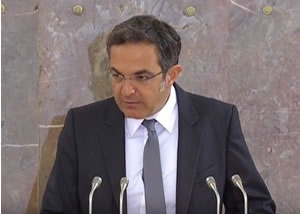
De Duits-Iraanse schrijver en islamist Navid Kermani werd geboren op 27 november 1967 in Siegen. Zie ook alle tags voor Navid Kermani op dit blog.

Uit: Der Schrecken Gottes

„Solange meine Erinnerung zurückreicht, versorgte er die Häuser aller Verwandten und Bekannten, auch jener, die in Europa und den Vereinigten Staaten leben, mit einem selbstentworfenen braunen Poster, auf dem «Remember God» in drei Sprachen stand, auf englisch, arabisch und persisch. Bei meinen Eltern hängt es noch heute im Flur.
Herr Ingenieur war fromm, aber nie kleingeistig. Ich war jung, um seine Größe zu überblicken, mein ältester Bruder jedoch berichtete mir, wie der Herr Ingenieur ihn einmal während der Ferien in Teheran zur Seite nahm und auf dessen Hosenlatz deutete. Mein Bruder stand damals kurz vor der Geschlechtsreife, die im Islam mit der Verpflichtung zum Ritualgebet einhergeht.
– Paß mal auf, sagte er meinem Bruder, du wirst bald an deinem Körper etwas ganz Besonderes und sehr Schönes bemerken. Dein Glied wird manchmal groß und fest werden, und vielleicht wachst du auch mal eines Morgens mit einem Flecken vorn in der Hose auf oder bemerkst, daß es Spaß macht, mit deinem Glied zu spielen. Vielleicht wird dann etwas Weißes aus deinem Glied spritzen, eine Flüssigkeit, die aussieht wie Milch. Das ist nicht schlimm. Das ist etwas Wunderbares. Das ist eines der schönsten Geschenke, die Gott uns gibt. Du mußt dich nicht schämen oder dich fürchten. Du darfst es genießen.
Bei allem Frohlocken über die Wohltaten Gottes vergaß Herr Ingenieur Kermani nicht, meinen Bruder auf die bevorstehende Verpflichtung zum Ritualgebet hinzuweisen. Daß ihm die Sexualität göttlich vorkam, machte ihn nicht zum Freigeist. Er nahm es als einen Grund mehr, Gott zu danken. Gott zu lieben hieß für den Herrn Ingenieur, die Schöpfung zu lieben. Gott zu dienen hieß für ihn, Gottes Geschöpfen zu dienen. Mein Bruder erzählte mir auch von der Hochzeit eines Bettlers, die der Herr Ingenieur ausgerichtet hatte. Der Bettler hatte ihn auf der Straße um ein Almosen gebeten, und der Herr Ingenieur hatte ihm statt dessen eine Arbeit besorgt, später eine Ehefrau vermittelt und dazu noch die Aussteuer bezahlt. Auch die anderen
Bettler und Bedürftigen der Nachbarschaft konnten sich auf ihn verlassen, und für die Waisenkinder Isfahans gründete er ein Heim, wie es heute noch in Isfahan kein größeres und besser organisiertes gibt.“


 1844337-714d5476c7a27e0a2104198aa9543831.jpg
Navid Kermani (Siegen, 27 november 1967)


De Franse schrijver Philippe Delerm werd geboren op 27 november 1950 in Auvers-sur-Oise. Zie ook alle tags voor Philippe Delerm op dit blog.

Uit: La sieste assassinée (Rencontre à l’étranger)

« On ne sait rien d’eux. On ne connaît même pas leur nom. D’habitude, on se contente de les saluer d’un mouvement de tête, chez la boulangère ou dans le bureau de tabac. Dix ans quand même qu’on les croise ainsi, sans la moindre curiosité. Ce n’est même pas de l’indifférence. Plutôt une sorte de contiguïté familière, pas désagréable, mais qui ne mène nulle part.
Et puis voilà qu’ils sont là, en plein cœur de Hyde Park, quelle idée ! Après la cohue des magasins de Regent Street, on s’était amusé de cette liberté anglaise qui permet à chacun de s’emparer d’une chaise longue et de s’affaler, les pieds sur le gazon, avec un soupir de satisfaction — et le sentiment d’être presque devenu un autochtone. Mais à quelques yards, juste en face de vous, pareillement alanguis dans la toile vert sombre... Il faut en convenir, cette reconnaissance ne suscite pas d’emblée un enthousiasme irrépressible. Plutôt une réticence, liée précisément à l’idée qu’il serait opportun de manifester de la joie, et que ça ne sera pas facile. De leur côté, le même sentiment naît à la même seconde, et les gestes alors deviennent parallèles. On s’étonne à l’unisson, les yeux écarquillés, la bouche ouverte. On s’approche avec une lenteur qui dément aussitôt l’extrême félicité affectée l’instant précédent. Que va-t-on bien se dire ?
C’est là que l’hypocrisie sociale accumulée pendant des années vient vous sauver. Oui, cette espèce d’aisance valable en toutes circonstances qui ne console pas des belles timidités de l’adolescence, mais leur succède, et marque l’irrémédiable passage à l’âge adulte, cet aplomb dérisoire mais si pratique vous permettent de faire face, avec un naturel vaguement obscène.
On parle. On parle d’Angleterre, évidemment. Toute allusion à la communauté des origines est exclue d’office. Par contre, les circonstances du voyage, les hasards de l’hébergement, le dilemme entre le tube et le taxi sont tour à tour passés au crible. Enivré par sa propre énergie, on s’étonne.”
 

 1844337-0fae1d6944f158c8c56f8817b865eb38.jpg
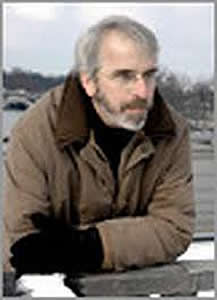
Philippe Delerm (Auvers-sur-Oise, 27 november 1950)


De Zuid-Koreaanse schrijfster Han Kang werd geboren op 27 november 1970 in Gwangju, in de provincie Zuid-Cholla. Zie ook alle tags voor Han Kang op dit blog.

Uit: The Vegetarian (Vertaald door Deborah Smith)

„And so it was only natural that I would marry the most run-of-the-mill woman in the world. As for women who were pretty, intelligent, strikingly sensual, the daughters of rich families—they would only ever have served to disrupt my carefully ordered existence. In keeping with my expectations, she made for a completely ordinary wife who went about things without any distasteful frivolousness. Every morning she got up at six a.m. to prepare rice and soup, and usually a bit of fish. From adolescence she’d contributed to her family’s income through the odd bit of part-time work. She ended up with a job as an assistant instructor at the computer graphics college she’d attended for a year, and was subcontracted by a manhwa publisher to work on the words for their speech bubbles, which she could do from home.
She was a woman of few words. It was rare for her to demand anything of me, and however late I was in getting home she never took it upon herself to kick up a fuss. Even when our days off happened to coincide, it wouldn’t occur to her to suggest we go out somewhere together. While I idled the afternoon away, TV remote in hand, she would shut herself up in her room. More than likely she would spend the time reading, which was practically her only hobby. For some unfathomable reason, reading was something she was able to really immerse herself in—reading books that looked so dull I couldn’t even bring myself to so much as take a look inside the covers. Only at mealtimes would she open the door and silently emerge to prepare the food. To be sure, that kind of wife, and that kind of lifestyle, did mean that I was unlikely to find my days particularly stimulating. On the other hand, if I’d had one of those wives whose phones ring on and off all day long with calls from friends or co-workers, or whose nagging periodically leads to screaming rows with their husbands, I would have been grateful when she finally wore herself out.”
 

 1844337-0427d26b9f683a7239809d71b23efc56.jpg
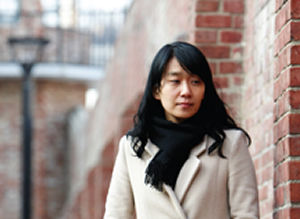
Han Kang (Gwangju, 27 november 1970)


De Canadese dichteres en schrijfster Nicole Brossard werd geboren op 27 november 1943 in Montreal (Quebec). Zie ook alle tags voor Nicole Brossard op dit blog.


Villes avec un visage 
 
parce qu’il vaut mieux soupirer 
au-delà des croyances et plus loin 
la solitude encore 
voici que tu la déploies 
devant toi comme quelqu’un qui veut 
toute la mer pour soi 
son infaillible lumière d’emportement 
 
• 
 
sans avoir peur de la peur 
ni du vent méticuleux 
qui annule au passage les pensées dociles 
villes couchées en chien de fusil 
comme le font un jour les civilisations 
puisque nous rêvons en continu 
d’un autre rêve déjà un autre rêve confondu 
aux nuits de déluge et de chagrin 
 
• 
 
Bagdad Vaduz et Samarcande 
où je ne fus pas 
autre qu’en lisant 
me déplaçant de la forêt au désert halogène 
rêvant de ne rien 
massacrer à force de répétition 
déterrant ici une parure d’amour, un bras 
là-bas une impossible notion de futur 
et toujours la voix de B. Heidsieck 
qui exhume un à un les peuples 
les recouvre d’une immensité si grande 
que je suis déjà dans la disparition  
 

 1844337-abdae93b84c608a1b9b9e56870b4e9d8.jpg
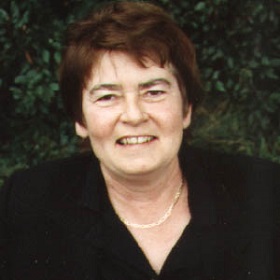
Nicole Brossard (Montreal, 27 november 1943)


De Amerikaanse dichter en prozaïst James Agee werd geboren in Knoxville, Tennessee.op 27 november 1909. Zie ook alle tags voor James Agee op dit blog.

Uit: A Death in the Family

“And then it was even funnier when Charlie very carefully got himself up from the sidewalk, with that sickly look even worse on his face, and put his cane under one arm, and began to pick up his pants, front and back, very carefully, with his little fingers crooked, as if it were too dirty to touch, picking the sticky cloth away from his skin. Then he reached behind him and took out the wet bag of broken eggs and opened it and peered in; and took out a broken egg and pulled the shell disgustedly apart, letting the elastic yolk slump from one half shell into the other, and dropped it, shuddering. Then he peered in again and fished out a whole egg, all slimy with broken yolk, and polished it off carefully on his sleeve, and looked at it, and wrapped it in his dirty handkerchief, and put it carefully into the vest pocket of his little coat. Then he whipped out his cane from under his armpit and took command of it again, and with a final look at everybody, still sickly but at the same time cheerful, shrugged his shoulders and turned his back and scraped backward with his big shoes at the broken shells and the slimy bag, just like a dog, and looked back at the mess (everybody laughed again at that) and started to walk away, bending his cane deep with every shuffle, and squatting deeper, with his knees wider apart, than ever before, constantly picking at the seat of his pants with his left hand, and shaking one foot, then the other, and once gouging deep into his seat and then pausing and shaking his whole body, like a wet dog, and then walking on; while the screen shut over his small image a sudden circle of darkness: then the player-piano changed its tune, and the ads came in motionless color. They sat on into the William S. Hart feature to make sure why he had killed the man with the fancy vest—it was as they had expected by her frightened, pleased face after the killing; he had insulted a girl and cheated her father as well—and Rufus’ father said, “Well, reckon this is where we came in,” but they watched him kill the man all over again; then they walked out.”
 

 1844337-af33fba61dd554e5c12ca4fc8f2a87c9.jpg
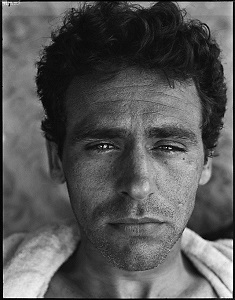
James Agee (27 november 1909 - 16 mei 1955)


De Nederlandse schrijver, priester en archivaris Joannes Josephus (Jozef) Habets werd geboren in Oirsbeek op 27 november 1829. Zie ook alle tags voor Jos. Habets op dit blog en ook mijn blog van 27 november 2010.

Uit:Oorsprong van Susteren

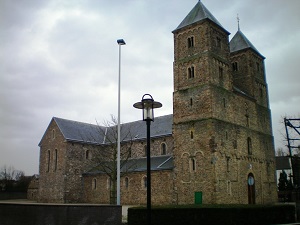
“Niet verre van Aldeneik, de aloude en gezegende bakermat van twee op christenen stengel ontloken leliën van maagdelijkheid, Relindis en Harlindis, op de uiterste palen der christelijke streken van den rechter Maasoever, sloeg zich, onder de leiding van den H. Willibrordus, eene volkplanting van christelijke maagden neder. Het dorpje was in het bezit van den hofmeester Pepijn van Herstal, die het op den 2. Maart 714, ietwat vóór zijn dood aan den Heilige schonk om het klooster te begiftigen; de maagden groetten elkander met den schoonen naam van zuster, en het volk, eerst pas uit het heidendom ontwaakt, door dit zoete woord getroffen, noemde die plaats Suestram, in het toenmalig Dietsch, dat later in Susteren is veranderd. De H. Amelberga was de eerste abdis van Susteren, zij nam er de drie dochters van koning Zwentibold, Benedicta, Ceeilia en Relindis, in op onder het getal der bruiden van Christus; zij wist de vorstinnen zoo te bestieren, dat ze heilig werden verklaard. Behalve Relindis, die te Flemalle bij Luik stierf, rusten de HH. Amelberga, Benedicta en Ceeilia in de kerk van den Allerh. Verlosser te Susteren. (Prop. Dioec.) De H. Amelberga is patrones der kerk te Susteren. Nog zijn aldaar begraven koning Zwentibold of Sanderbout, en de H. Gregorius, bloedverwant der Frankische koningen, die het bisdom Utrecht gedurende twee en twintig jaren bestierde; hij ligt er naast zijne moeder de H. Vastradis. Ook rust er de H. Albricus, neef en opvolger van den H. Gregorius, † 783. In 882 werd de abdij door de Noormannen verbrand."
 

 1844337-85cef3521c6658dcc0aff7046ffccb38.jpg
Jos. Habets (27 november 1829 - 22 juni 1893)
St Amelberga-kerk te Susteren: 11e eeuw.


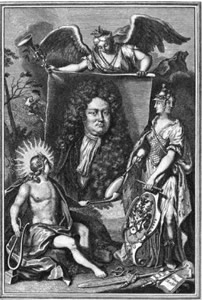
De Duitse dichter, schrijver en diplomaat Friedrich Ludwig Rudolf Freiherr von Canitz werd geboren op 27 november 1654 in Berlijn. Zie ook alle tags voor Friedrich von Canitz op dit blog en ook mijn blog van 27 november 2010.


Der Sünden-Schlaff
Sonnet.

O Gott! ich bin nicht werth, daß du mir so viel Güte
Von Kindes-Beinen an biß diesen Tag erzeigt.
Wie kömmts denn, daß mein Mund von deinem Lobe schweigt,
Da ich doch, ohne dich, in tausend Noth geriethe?

Wie kömmts, daß öfter nicht aus feurigem Gemüthe
Mein Weyrauch, voller Danck, zu deinem Throne steigt!
Ich habe leider! mich zum Sünden-Schlaff geneigt!
Der Wollust süsser Traum entgeistert mein Geblüte.

Herr, wecke du mich auf, der du mein Retter bist!
Ich weiß, daß in dem Schlaff mein Tod verborgen ist,
Daß Träume dieser Welt, wie leichte Schatten, trügen.

Komm bald, und mache mich doch deiner Liebe werth:
Und wenn mein müdes Hertz ja eine Ruh begehrt,
So laß es nur allein in deinen Wunden liegen.
 

 1844337-f01b8a015e66f39f69c48ea1b233dcaf.jpg
Friedrich von Canitz (27 november 1654 - 11 augustus 1699)


Zie voor nog meer schrijvers van de 27e November ook mijn blog van 27 november 2014 en ook mijn blog van 27 november 2011 deel 1 en eveneens deel 2.
Geschreven door Romenu om 18:26 Reageer op dit bericht

Luisa Valenzuela, Eugène Ionesco, Marilynne Robinson, Louis Verbeeck, William Cowper, Theophilus Cibber

De Argentijnse schrijfster Luisa Valenzuela werd geboren op 26 november 1938 in Buenos Aires. Zie ook alle tags voor Luisa Valenzuela op dit blog.

Uit: I'm your horse in the night (Vertaald door Deborah Bonner)

« Cachaca's good drink. It goes down and up and down all the right tracks, and then stops to warm up the corners that need it most. Gal Costa's voice is hot, she envelops us in its sound and half-dancing, half floating, we reach the bed. We lie down and keep on staring deep into each other's eyes, continue caressing each other without allowing ourselves to give into the pure senses just yet. We continue recognizing, rediscovering each other.
Beto, I say, looking at him. I know that isn't his real name, but it's the only one I can call him out loud. He replied:
"We'll make it some day, Chiquita, but let's not talk now."
It's better that way. Better if he doesn't start talking about how we'll make it someday and ruin the wonder of what we're about to attain right now, the two of us, all alone.
"A noite eu so teu cavala," Gal Costa suddenly sings from the record player.
"I'm your horse in the night," I translate slowly. And so to bind him in a spell and stop him from thinking about other things:
"It's a saint's song, like in the macumba. Someone who's in a trance says she's the horse of the spirit who's riding her, she's his mount."
"Chiquita, you're always getting carried away with esoteric meanings and witchcraft. You know perfectly well that she isn't talking about spirits. If you're my horse in the night it's because I ride you, like this, see? …"


 1843901-b69a6bb0986f914307b3c1c1bed3c336.jpg
Luisa Valenzuela (Buenos Aires, 26 november 1938)


De Frans-Roemeense schrijver Eugène Ionesco werd geboren op 26 november 1912 in Slatina, Roemenië. Zie ook alle tags voor Eugène Ionesco op dit blog.

Uit: Fragments of a Journal Vertaald door Jean Stewart)

“Nothing is mightier than our why, nothing stands above it, because in the end there is a why to which no answer is possible. In fact, from why to why, from one step to the next, you get to the end of things. And it is only by travelling from one why to the next, as far as the why that is unanswerable, that man attains the level of the creative principle, facing the infinite, equal to the infinite maybe. So long as he can answer the why he gets lost, he loses his way among things. 'Why this?' I answer, 'because that," and from one explanation to the next I reach the point where no explanation is satisfying, from one explanation to the next I reach zero, the absolute, where truth and falsehood are equivalent, become equal to one another, are identified with one another, cancel each other out in face of the absolute nothing. And so we can understand how all action, all choice, all history is justified, at the end of time, by a final cancelling-out. The why goes beyond everything. Nothing goes beyond the why, not even the nothing, because the nothing is not the explanation; when silence confronts us, the question to which there is no answer rings out in the silence. That ultimate why, that great why is like a light that blots out everything, but a blinding light; nothing more can be made out, there is nothing more to make out.”
(…)

“If I tell these private thoughts of mine, it is because I know they are not mine alone, and that practically everyone is trying to say the same things and that the writer is only a man who says out loud what other people think or whisper.”


 1843901-5690a77ebf008e980141ba03ecb8e43f.jpg
Eugène Ionesco (26 november 1912 – 28 maart 1994)


De Amerikaanse schrijfster Marilynne Robinson werd geboren in Sandpoint, Idaho op 26 november 1943. Zie ook alle tags voor Marilynne Robonson op dit blog.

Uit:Gilead

“I felt like telling them, I appreciate a joke as much as anybody. There have been many occasions in my life when I have wanted to say that. But it’s not a thing people are willing to accept. They want you to be a little bit apart. I felt like saying, I’m a dying man, and I won’t have so many more occasions to laugh, in this world, at least. But that would just make them serious and polite, I suppose. I’m keeping my condition a secret as long as I can. For a dying man I feel pretty good, and that is a blessing. Of course your mother knows about it. She said if I feel good maybe the doctor is wrong. But at my age there’s a limit to how wrong he can be.
And what else should I tell you? I’ll tell you about my grandfather. He was a chaplain in the Union Army. He lost an eye at the battle of Wilson’s Creek, on the day of the death of General Lyon. I do wish you could have known him. It was as if that one good eye of his were somehow ten times an eye. He could make me feel as though he had poked me with a stick, just by looking at me. Not that he meant any harm to speak of. He was just afire with old certainties, and he couldn’t bear all the patience that was required of him by the peace and by the aging of his body and the forgetfulness that had settled over everything. He thought we should all be living at a dead run. I don’t say he was wrong. That would be like contradicting John the Baptist. There is a photograph of my grandfather around the house somewhere. It is a good likeness. It shows a wild-haired, one-eyed, scrawny old fellow with a crooked beard, like a paintbrush left to dry with lacquer in it, staring down the camera as if it had accused him of something terrible, very suddenly, and he is still thinking how to reply, and keeping the question at bay with the sheer ferocity of that stare. Of course there is guilt enough in the best life to account for a look like that.”


 1843901-ecfc3d54d305d975bc2288906a11ed16.jpg
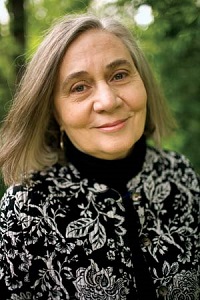
Marilynne Robinson (Sandpoint, 26 november 1943)


De Vlaamse dichter en schrijver Louis Verbeeck werd geboren in Tessenderlo op 26 november 1932. Zie ook alle tags voor Louis Verbeeck op dit blog.


Zenobia
Voor Jan Engelman
 
Zenobia, gij loeit mij aan.
Ik zie u in de weide staan
van liefde rood te blozen.
 
Gij staart mistroostig in het rond
en traag beweegt uw moedermond.
Er is nu melk in dozen.
 
De boter wijkt voor margarien.
Gij hangt niet meer in de vitrien.
Men maalt u tot konserven.
 
Gedaan met alle tederheid
Men melkt met electriciteit.
Uw koedom ligt aan scherven.
 
Daarom zijt gij zo droef van zin
en blinkt er bleke weemoed in
de toendra's van uw ogen.
 
O kijk, een gouden tranendreef.
Kom, dat ik u mijn zakdoek geef
om ze wat af te drogen.


 1843901-141fa0373350004d6c7c1640b87eb41e.jpg
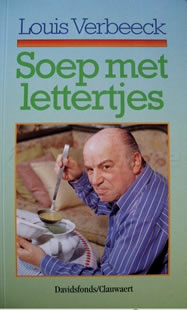
Louis Verbeeck (Tessenderlo, 26 november 1932)
Cover 


De Engelse dichter William Cowper werd geboren op 26 november 1731 in Berkhamstead, Herford. Zie ook alle tags voor William Cowper op dit blog.


Abuse Of The Gospel

Too many, Lord, abuse Thy grace
In this licentious day,
And while they boast they see Thy face,
They turn their own away.

Thy book displays a gracious light
That can the blind restore;
But these are dazzled by the sight,
And blinded still the more.

The pardon such presume upon,
They do not beg but steal;
And when they plead it at Thy throne,
Oh! where's the Spirit's seal?

Was it for this, ye lawless tribe,
The dear Redeemer bled?
Is this the grace the saints imbibe
From Christ the living head?

Ah, Lord, we know Thy chosen few
Are fed with heavenly fare;
But these, -- the wretched husks they chew,
Proclaim them what they are.

The liberty our hearts implore
Is not to live in sin;
But still to wait at Wisdom's door,
Till Mercy calls us in.


 1843901-80b089659ed94e6eed1983506e844301.jpg
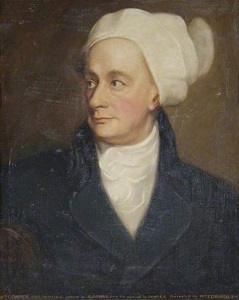
William Cowper (26 november 1731 – 25 april 1800)
Portret door Robert John Swan, 1900


De Engelse schrijver en acteur Theophilus Cibber werd geboren op 26 november 1703 in Londen. Zie ook alle tags voor Theophilus Cibber op dit blog.

Uit: The Lives of the Poets of Great Britain and Ireland (William Shakespeare)

“There have been some ages in which providence seemed pleased in a most remarkable manner to display it self, in giving to the world the finest genius's to illuminate a people formerly barbarous. After a long night of Gothic ignorance, after many ages of priestcraft and superstition, learning and genius visited our Island in the days of the renowned Queen Elizabeth. It was then that liberty began to dawn, and the people having shook off the restraints of priestly austerity, presumed to think for themselves. At an Æra so remarkable as this, so famous in history, it seems no wonder that the nation would be blessed with those immortal ornaments of wit and learning, who all conspired at once to make it famous.----This astonishing genius, seemed to be commissioned from above, to deliver us not only from the ignorance under which we laboured as to poetry, but to carry poetry almost to its perfection. But to write a panegyric on Shakespear appears as unnecessary, as the attempt would be vain; for whoever has any taste for what is great, terrible, or tender, may meet with the amplest gratification in Shakespear; as may those also have a taste for drollery and true humour. His genius was almost boundless, and he succeeded alike in every part of writing. I cannot forbear giving the character of Shakespear in the words of a great genius, in a prologue spoken by Mr. Garrick when he first opened Drury-lane house as Manager.”


 1843901-646e9c203b13221489b2d55401e5093a.jpg
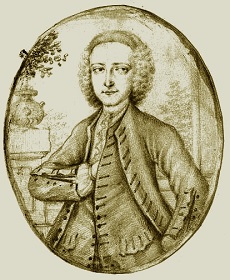
Theophilus Cibber (26 november 1703 - oktober 1758)


Zie voor nog meer schrijvers van de 26e november ook mijn blog van 26 november 2011.

Geschreven door Romenu om 18:23 Reageer op dit bericht

Mihály Babits

De Hongaarse dichter, schrijver en vertaler Mihály Babits werd geboren op 26 november 1883 in Szekszárd. Hij studeerde Franse en Latijnse filologie aan de Loránd Eötvös-universiteit te Boedapest van 1901 tot 1905, waar hij Dezső Kosztolányi en Gyula Juhász ontmoette. Hij werd leraar en gaf les aan scholen in Baja (1905-1906), Szeged (1906–1908), Fogaras (1908 -1911), Újpest (1911) en Boedapest (1912 -1918).In 1908 verwief hij met zijn gedichten bekendheid. In datzelfde jaar reisde hij naar Italië, wat zijn interesse voor Dante Alighieri verklaart; later bezocht hij het land nog meerdere malen. Met zijn verworven kennis vertaalde hij Dantes Divina Commedia (Inferno, 1913, Purgatorium, 1920, en Paradiso, 1923).Kort na de Hongaarse Revolutie van 1919 werd hij professor Buitenlandse Literatuur en Moderne Hongaarse Literatuur aan de Eötvös Loránd Universiteit te Boedapest, maar hij werd er bedankt voor zijn diensten na de val van de revolutionaire regering vanwege zijn pacifisme.In 1911 werd hij redacteur van het literaire magazine Nyugat.In 1921 huwde hij Ilona Tanner. Zij publiceerde later gedichten onder de naam 'Sophie Török.Twee jaar later trok hij naar Esztergom. In 1927 werd hij lid van het Kisfaludy Társaság (Kisfaludy Gezelschap) In 1929 werd hij hoofdredacteur bij het tijdschrift “Nyugat”, een taak die hij deelde met Zsigmond Móricz. Babits is het meest bekend om zijn lyrische poëzie met invloeden van klassieke poëzie en Engelse rijmkunst. Behalve gedichten schreef hij ook essays en hij vertaalde veel werken uit het Engels, het Frans, het Duits, het Grieks, het Italiaans en het Latijn.


Jonah’s Prayer

Words have become unfaithful things to me,
or else am I an overflowing sea,
goalless and hesitant, without a shore.
Vain words, articulated once before,
I carry like dikes, or signposts made of wood,
torn hedges carried by a straying flood.
Oh if the Master only would provide
a bed for my brook’s current and thus guide
my steps on sheltered pathways toward the sea;
if only He would carve a rhyme for me,
a ready-made rhyme, I would avail myself,
for prosody, of the Bible on my shelf,
so that like Jonah, lazy servitor
of God, we hid from Him and later bore
not three brief days or months of agonies,
but three long years of even centuries,
when he went down into the living Fish,
in dark hot torments more than he would wish,
I too, before I disappear, might find
in an eternal Whale whose eyes are blind
my old accustomed voice, my words arrayed
in faultless battle order; as He made
His whispers clear, with all my poor throat’s might
I could speak out, unwearied till the night,
so long as Heaven and Nineveh comply
with my desire to speak and not to die.


The Lyric Poet’s Epilogue

I am the only hero of my verses,
the first and last in every line to dwell:
my poems hope to sing of Universes,
but never reach beyond my lonely cell.

Are others there outside, to bear the curses
of being born? If God would only tell.
A blind nut in the nutshell's dark traverses,
I loathe to wait for Him to break the spell.

A magic circle binds me like a chain,
and yet, my soaring dreams defy the weight -
but wishful dreams, I know, may tell a lie.

A prison for myself I must remain,
the subject and the object. Heavy fate:
the alpha and the omega am I.


 1979707-69a5293b0382c90a33f8ff2667708119.jpg
Mihály Babits (26 november 1883 - 4 augustus 1941)

Geschreven door Romenu om 00:00 Reageer op dit bericht

Alyosha Brell


Onafhankelijk van geboortedata

De Duitse schrijver Alyosha Brell werd geboren in 1980 in Wesel als zoon van een balletleraar en een operazangeres. De eerste 18 jaar van zijn leven bracht hij door op een boerderij in de buurt van Goch. Na zijn eindexamen verhuisde hij naar Berlijn om filosofie en Duitse literatuur te studeren, wat hij echter al snel voor gezien hield. In plaats daarvan werkte hij meer dan tien jaar in een in Berlijn gevestigd IT-bedrijf, waar hij leiding gaf aan een team van concept ontwikkelaars, grafisch ontwerpers en webprogrammeurs. In 2008 kreeg hij een beurs van de schrijverswerkplaats Proza van het Literaire Colloquium Berlin. In 2009 ontving hij de Alfred Döblin beurs van de Berliner Akademie der Künste. Zijn debuutroman 'Kress' verscheen in 2015 in de Ullstein Verlag.

Uit: Kress

„Als Kress an diesem Abend nach Hause kam, war ihm mächtig feierlich zumute. Auf dem Heimweg hatte er sich hinreißen lassen, in einem türkischen Imbiss eine Fanta zu ordern. Fanta war sein Lieblingsgetränk, aber weil schöne Dinge schwach machten, gab es Fanta nur in besonderen Momenten. Jetzt, noch während er die Tür abschloss, schüttelte er sich den letzten Tropfen in den Rachen, und weil er noch nicht genug hatte von dem herrlichen Süß, stapfte er in die Küche und suchte aus einem der Kartons das Brotmesser hervor. So ausgerüstet begab er sich an den Schreibtisch und machte sich daran, mit kleinen Sägebewegungen die Aluminuiumdose zu enthaupten, um auch an die in der Dose verbliebene Fantafeuchtigkeit zu gelangen. Er bog den Dosenkopf zur Seite, wischte mit dem Zeigefinger entlang der Innenwände und steckte sich den Finger gedankenvoll in den Mund. Die kleine blonde Person ging ihm nicht aus dem Sinn. Er fragte sich, wie er vernünftigerweise den Erstkontakt herstellte, wenn er sie denn aufgespürt hatte, und weil ihm nichts Besseres einfiel, stand er auf und wanderte hinüber zu seinen Umzugskartons, wo er aus seiner Ausgabe von Goethes Werken Band 3 hervor suchte (Dramatische Dichtungen I) und im Faust die Stelle aufschlug, wo Faust das Gretchen erstmalig anspricht, um ihm seinen Arm und Geleit anzutragen. Das Ganze erschien ihm nicht sonderlich überzeugend, trotzdem legte er einen Zettel zwischen die Seiten, um sie am Morgen noch einmal genau zu studieren. Er trat zurück an den Schreibtisch und streckte neuerlich den Finger zur Dose — ratsch, ärgerlich: Da hatte ihm der gesägte Dosenrand einen halben Quadratzentimeter Fingerkuppe abrasiert. Einen Moment lang war Kress sehr zufrieden mit sich, weil es gar nicht blutete; dann aber füllte sich der Schnitt mit dunklem Rot, und mürrisch latschte er ins Bad, um die Wunde mit Klopapier zu verbinden.“


 1886946-b5ca244a3976c7d863610fb4ac22e94a.jpg
Alyosha Brell (Wesel, 1980)


Geschreven door Romenu om 00:00 Reageer op dit bericht

Mohamed Al-Harthy

Onafhankelijk van geboortedata

De Omaanse dichter Mohamed Al-Harthy werd geboren in al-Mudhayrib, Oman, in 1962. Mohamed Al-Harthy studeerde geologie en maritieme wetenschappen en begon een loopbaan die daarop aansloot, maar na korte tijd nam hij ontslag om te reizen en te schrijven. Zijn eerste gedichtenbundel werd in 1992 onder de titel “Ogen zolang het dag is" in Casablanca gepubliceerd. Zijn bundel “Terug naar het schrijven met potlood” verscheen in 2013 en bevat gedichten die hij tussen 2005 en 2012 schreef. Een bijzondere uitgave van Al-Harthy is zijn reisboek “Oog en vleugel” waarin hij over zijn reizen naar Thailand, Vietnam, Andalusië en het lege kwartier van Arabië schrijft. Voor dit boek kreeg hij de Ibn Battuta Award voor Geografische literatuur in 2005.


THE BOAT OF WORDS CASTS ANCHOR

Remarkable, the three of them together:
the mouse,
the keyboard
and the word processor
that fails to process them, but rather
does quite the contrary
and makes me forget
to save them in the proper file.
And so the icon of accusation
appears on the screen
before I can even accuse myself
or the word processor
or the playful mouse
after the disappearance of many a poem
about nights and morning suns . . . 
 
The icon’s accusation wore me out
so I thought of looking for a typewriter
(like the one Virginia Woolf used),
one that would not weary
of tapping out its symphony
with speedy slowness
or slowing speed.
But these enchanting instruments
have fallen out of use these days
and no one pays them any heed:
under heavy guard they bemoan their fate
in museum kingdoms
that no one ever visits.
 
I almost raised the flag, I almost surrendered,
but I opted to follow Hemingway’s advice
and go back to writing with a pencil.
I traversed page after page with that sharpened oar
so that the boat of words might finally cast anchor
on arrival’s coast. But I went too far
in my emulation, and started
scrawling on the walls
like him,
and so I failed to master
his short sentences.


Vertaald door Kareem James Abu-Zeid


 1844132-d1bd55c03f91ceaca263d0fc31b23024.jpg
Mohamed Al-Harthy (al-Mudhayrib, 1962)

Geschreven door Romenu om 00:00 Reageer op dit bericht

Meer van Romenu

↑ Terug naar de berichten