Naar de inhoud

Romenu

Over literatuur, gedichten, kunst en cultuur
akke.beakke.be

Berichten van 26 december 2015 tot 27 december 2015

Bernard Wesseling, Édouard Nabe, Wendy Coakley-Thompson, Louis de Bourbon, Bob Flanagan, Malin Schwerdtfeger

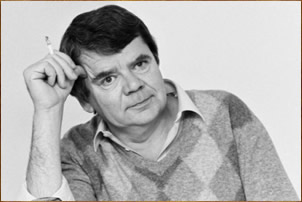
De Nederlandse dichter en schrijver Bernard Wesseling werd geboren in Amsterdam op 27 december 1978. Zie ook alle tags voor Bernard Wesseling op dit blog.


Naar de daken

Als ik opkijk is het nacht.
De maan verschijnt, het is die uit de kindertijd:
pips maar bont gemutst. Nu dwaalt mijn blik
naar mijn werkeloze handen als gaf een herinnering af.
Had ik al gezegd dat ik geen ondragelijk geheim heb?
Soms waan ik me onderwerp van twist tussen deze of gene listige goden.
Mijn onbegrip een ode aan hun almacht,
als ik dat eens durfde geloven. Dan weer denk ik de holle lach
van de alleman te horen, maar het blijkt slechts de wereld
van de verrekijk en de uitgekiende gein van elkaar opzettelijk
verkeerd begrijpen. Niets doet minder pijn of het is doodgeboren.
Inenen wens ik mijn vod van een gemoed uitgeslagen
en ik vraag me af: wat wacht ons op het dak?
Welke overheerlijke vloek rijpt daar in de sferen?
Naar de daken ja! En dan maar wachten tot morgen de luchten
van postmodern blauw – het oude grijs – naar een trouwer blauw
verschieten en mij de staar wegnemen, in het kraaiennest
van de antenne gezeten, want op mijn plek
ben ik de vogel in de krok zijn bek en
het is begonnen te hongeren.


Stomme vogel

Ik had me teruggetrokken om ergens op te mediteren,
waarop weet ik niet meer. Toen hij me eindelijk belde.

Ik zei dat ik me gevangen voelde in deze kersenboomgaard
– hij zei dat het hem niks verbaasde – en er een joekel
van een boom was hier, met een net erover waar
een vogel in vastzat die zich vol had gevreten van de
kersen en nu onder het net uit wilde maar niet kon,
hoe ik ook probeerde te helpen door het net te lichten.

Ik was almaar moe. In mijn hoofd deden namen de
ronde, gezichten ook. Wat ik nodig had, ik kon er niet
opkomen. Wat ik niet nodig had, ik zag het overal.
In de smalende groene velden, in de kersen rondom
de bomen die de geur van likeur verspreidden.

Er was een betekenisloze stilte.
Hij zei: en je weet het, altijd een steen los in
de muur achterlaten voor mij.


Bernard Wesseling, Édouard Nabe, Wendy Coakley-Thompson, Louis de Bourbon, Bob Flanagan, Malin Schwerdtfeger, Romenu
Bernard Wesseling (Amsterdam, 27 december 1978)


De Franse dichter, schrijver, schilder en musicus Marc-Édouard Nabe (eig. Alain Zannini) werd geboren in Marseille op 27 december 1958. Zie ook alle tags voor Edouard Nabe op dit blog.

Uit: Au régal des vermines

«J'ai vécu toute mon enfance devant des fouilles : de ma fenêtre je plongeais sur un chantier : toute la journée des types en tricot de peau harcelaient la caillasse. Je pensais à un bagne. En quelques années, ils ont dégagé tout un forum, des colonnes, quelques statues au marteau-piqueur... Il faut écrire son premier livre au marteau-piqueur... C'est ainsi que Sa Grâce la Littérature peut s'avancer dans les rubans, les étendards, s'enfoncer dans le terrain vague, parmi les Arabes, caresser les nuques comme un murmure ému... Je ne décorerai pas mes livres. Pas question de leur trouver une forme. Une belle robe attrayante croulant sous les pompons. Hors de question de m'enfiorituriner élégamment. La prétention et la seule, c'est bien cette mise en forme, les détours de la composition, les travaux... Exactement comme si c'était de la cuisine. Toutes ces épices dedans pour que ce soit digeste (ou non). Travail mâché. Sinistre et cynique puérilité ! Il faut aller tout droit, de moi à vous, sans déformation. On doit retrouver l'univers de l'écrivain du début à la fin, dans une seule phrase, la première venue. Ceux qui cherchent la forme, c'est que leur écriture n'est pas vitale pour eux : ils ne dépendent pas d'elle. Elle ne les fait pas marcher Ils veulent la maîtriser au contraire, la dompter et non la laisser intacte, sauvage, salope de griffes, surprenante pour tout dire ! Se laisser entraîner par elle dans sa brutalité, dans la jungle, bambouler ensemble parmi les bambous bouffis de lianes !...»


Bernard Wesseling, Édouard Nabe, Wendy Coakley-Thompson, Louis de Bourbon, Bob Flanagan, Malin Schwerdtfeger, Romenu
Marc-Édouard Nabe (Marseille, 27 december 1958)


De Amerikaanse schrijfster Wendy Coakley-Thompson werd geboren op 27 december 1966 in Brooklyn, New York. Zie ook alle tags voor Wendy Coakley-Thompson op dit blog.

Uit: Writing While Black

“So, they’re acquiring?”
“Yes!” Meghan squealed. “They’re looking for new product to publish in both traditional and electronic formats. They want new, fresh, edgy stuff. Immediately, I thought about you.”
Yeah, me. I’m fresh and edgy. “You thought about me.”
“Of course, I thought about you!”
“So, you’re thinking of pitching him A Thousand Churches?”
Crickets…
Finally, Meghan spoke. “No sweetie, after twenty rejections, you’ve got to let that one breathe. We can go out with it again later. It’s all about timing.”
Christina deflated. Her mind took her back to last night, before she drowned her sorrows in martinis and champagne.
“What then?” she asked, dejected.
“I want you to send me whatever you’ve got,” Meghan said. “It doesn’t even have to be complete. Just three chapters, an outline for the rest of the book, and a proposal for how to sell it and why it’s different from other books. You’re a lawyer. Make the best argument you can that’s going to make them want to acquire your book. Do you have anything you can send me by Monday?”
Christina was poised to say no when she remembered. The treatment that four Mayflower martinis built was residing on her laptop in the living area. The treatment where she masqueraded as a white woman to tell the story of white women. Something about the whole affair left a bad taste in her mouth.
But the other part of her was hearing none of that. Do it. What do you have to lose?
Christina scratched her head. “Well, I do have a little something I’ve been working on,” she said, hesitant. “It’s different though.”
“Different is good, Christina,” Meghan assured her. “I want to see different.”
“I don’t know…”


Bernard Wesseling, Édouard Nabe, Wendy Coakley-Thompson, Louis de Bourbon, Bob Flanagan, Malin Schwerdtfeger, Romenu
Wendy Coakley-Thompson (New York, 27 december 1966)


De Nederlandse dichter Louis de Bourbon werd geboren in Renkum op 27 december 1908. Zie ook alle tags voor Louis de Bourbon op dit blog.


In memoriam matris

Ik kan u niet geheel meer samenvinden
- de winden woeien door mijn hoofd -
hier is uw naam, uw beeld is ginder
en uwe geuren zijn mij gansch ontroofd.
 
Onder wat hooge, tengre boomen is uw graf,
maar daar is niet wat ik aan u beminde
en wat ik nimmermeer zal vinden
voor ook mijn lichaam rusten zal in 't graf.


De open wereld
 
Nu ligt de wereld open tot de kern
en schemering verbloedt aan alle wegen
een witte wolk hangt slapend aan een ster;
dit is het uur dat alles wordt beschreven.
 
Sluit nu de luiken van het donker huis:
wanneer de ziel der dingen wordt geboren
trekt ieder zich terug in d'eigen kluis
om naar het zingend hart te hooren.


Bernard Wesseling, Édouard Nabe, Wendy Coakley-Thompson, Louis de Bourbon, Bob Flanagan, Malin Schwerdtfeger, Romenu
Louis de Bourbon (27 december 1908 – 8 januari 1975)


De Amerikaanse schrijver en optredend artiest Bob Flanagan werd geboren op 26 december 1952 in New York. Zie ook alle tags voor Bob Flanagan op dit blog.


Why (Fragment)

because I'm attracted to it; because I'm addicted to it; because endorphins in the brain are like a natural kind of heroin; because I learned to take my medicine; because I was a big boy for taking it; because I can take it like a man; because, as someone once said, HE'S GOT MORE BALLS THAN I DO, because it is an act of courage; because it does take guts; because I'm proud of it; because I can't climb mountains; because I'm terrible at sports; because NO PAIN, NO GAIN; because SPARE THE ROD AND SPOIL THE CHILD; BECAUSE YOU ALWAYS HURT THE ONE YOU LOVE.


Bernard Wesseling, Édouard Nabe, Wendy Coakley-Thompson, Louis de Bourbon, Bob Flanagan, Malin Schwerdtfeger, Romenu
Bob Flanagan (27 december 1952 – 4 januari 1996)
Cover 


De Duitse schrijfster Malin Schwerdtfeger werd geboren op 27 december 1972 in Bremen. Zie ook mijn blog van 27 december 2008. Zie ook alle tags voor Malin Schwerdtfeger op dit blog.

Uit: Café Saratoga

„Bei dem Gedanken an eine lange Fahrt durch das andere Deutschland bekam ich feuchte Hände und wollte das Lenkrad nicht mehr loslassen, bis wir die Grenze passiert hätten.
An der blauen Tankstelle war ich abgefahren, weil ich noch einmal in Bundes hatte pinkeln wollen, und auch Jane hatte ich noch ein letztes Mal auf die Toilette geschickt, denn ich wollte nicht mitten im anderen Deutschland anhalten müssen.
Das war ich Tata und Bocian schuldig, die mir eingeschärft hatten, diese Straße niemals zu verlassen. Es sei eine Straße ohne Links und Rechts, hatten sie gesagt.
Ich drehte am Lenkrad, wie es Autofahrer in alten Filmen tun, Lilian Harvey am Steuer, daneben Willy Fritsch, im Hintergrund flimmert ein unscharfer Film von der Landschaft, und jemand wackelt am Auto.
»Bei dir fühle ich mich so sicher«, sagte Jane. Der Mirafiori schlingerte. »Autofahren, Autofahren ist die größte Schwäche jeder kleinen Frau«, sang Jane, »und es träumen alle Mägdelein heute schon von einem Führerschein.« Jane sang, um mich wach und bei Laune zu halten, Jane hatte eine Dreißiger-Jahre-Stimme, dünn und hell wie ihre Haare, und seit dem
Tankstellenklo sang sie mir ein Medley aus »Die drei von der Tankstelle«, bis weit in das andere Deutschland hinein.
»Ein wunderbarer Film«, sagte Jane. »Willy Fritsch und Heinz Rühmann, und niemand kennt den Dritten, obwohl er der Sexieste ist und der Einzige, der singen und tanzen kann.«
Jane langweilte sich und wollte spielen, also spielte sie Waswürdest-du-nehmen-wenn-du-was-nehmen-müsstest.“


Bernard Wesseling, Édouard Nabe, Wendy Coakley-Thompson, Louis de Bourbon, Bob Flanagan, Malin Schwerdtfeger, Romenu
Malin Schwerdtfeger (Bremen, 27 december 1972)
Bremen


Zie voor nog meer schrijvers van de 27e december ook mijn vorige twee blogs van vandaag.

Geschreven door Romenu om 18:15 Reageer op dit bericht

Mariella Mehr, Markus Werner, Mirza Ghalib, Carl Zuckmayer

De Zwitserse dichteres en schrijfster Mariella Mehr werd geboren op 27 december 1947 in Zürich. Zie ook alle tags voor Mariella Mehr op dit blog.

Uit: Angeklagt

„Ich sage das nicht, weil ich die Absicht habe, Sie
zu belügen. Aber ein bisschen Spiel sei mir erlaubt und Erinnerungen, das wissen Sie, sind unberechenbar.
Nehmen wir zum Beispiel mein Vaterhaus. Eins, das man wirklich so nennen darf, denn es wurde von meinem Vater eigenhändig erbaut. Zu groß für eine Kleinfamilie. Vier Stockwerke, die Mansarde mitgerechnet. Ich kann mich nur noch an die Küche, den unbewohnten Salon, so nannte ihn meine Mutter, an das elterliche Schlafzimmer, an meines und an die Mansarde erinnern.
An die Mansarde.
Seltsam, sich an eine Mansarde erinnern zu wollen, nicht wahr? An eine wie die unsere, an der nichts Nennenswertes zu sehen ist.
Vater baute das Haus vor meiner Geburt. Um das Haus wucherte eine hohe Buchsbaumhecke. Innerhalb des Geheges ein Gemüsegarten, Spalierbirnen an der Hausmauer, ein Rosenstrauch. Lachsfarbene Blüten. Jedes Jahr ein paar weniger.”


 1856460-11b883a99eda800d9a38ede0efee1dfd.jpg
Mariella Mehr (Zürich, 27 december 1947)


De Zwitserse schrijver Markus Werner werd geboren op 27 december 1944 in Eschlikon (Kanton Thurgau). Zie ook alle tags voor Markus Werner op dit blog.

Uit: Bis bald

„Blind war ich nur sekundenlang, der Vorhang hat sich rasch gehoben: Der Bus fuhr bereits, vorne beim Reiseleiter stand ein junger Mann in Shorts, der Reiseleiter schwenkte sein Ticket und sprachüber Mikrophon auf ihn ein, entschlossen, sich vor der Busladung erneut zu profilieren. Ich bekam mit, daß der Mann Amerikaner war, weder Deutsch noch Französisch verstand und also in Kauf nehmen mußte, den Erläuterungen des Fremdenführers nicht folgen zu können. Den Amerikaner schien dieser Sachverhalt, falls er ihn faßte, nicht zu quälen, jedenfalls sagte er zweimal okay und zweimal no problem, kam nach hinten und setzte sich neben mich. Er gab mir die Hand und stellte sich vor, Grünberg, Ohio. Ich hatte noch nie einen Amerikaner stottern gehört, Grünberg stotterte und gefiel mir, aber ich war zu wenig konzentriert, um ein Gespräch zu führen, ich fühlte mich ungut und mußte oft gähnen, auch begann der Reiseleiter, sobald wir auf der Hauptstraße waren, mit seinen zweisprachigen Ausführungen. Er stellte zuerst sich selber vor, wahrscheinlich als Ali, Mohamed oder Farouk, dann die tunesische Geschichte im Abriß, und Grünberg, die Hände über dem Geschlecht gefaltet, schlief ein, zuckte, pendelte und kam an meiner Schulter zur Ruhe.Es störte mich kaum, mich störte einzig das =Geschwätz des Reiseleiters, der zwar vorzüglich Deutsch und Französisch sprach, aber alles so mechanisch hersagte, wie man nur tausendmal Gesagtes sagen kann.“


 1856460-f41c2c9a6f49cb5929a8b39462926fdd.jpg
Markus Werner (Eschlikon, 27 december 1944)


De Indische dichter Mirza Ghalib (eigenlijk Asadullah Baig Khan) werd geboren op 27 december 1796 in Agra. Zie ook alle tags voor Mirza Ghalib op dit blog.


A Thousand Desires

Thousands of desires, each worth dying for...
Many of them I have realized...yet I yearn for more...

Why should my killer (lover) be afraid? No one will hold her responsible
For the blood which will continuously flow through my eyes all my life

We have heard about the dismissal of Adam from Heaven,
With a more humiliation, I am leaving the street on which you live...

Oh tyrant, your true personality will be known to all
If the curls of my hair slip through my turban!

But if someone wants to write her a letter, they can ask me,
Every morning I leave my house with my pen on my ear.

In that age, I turned to drinking (alcohol)
And then the time came when my entire world was occupied by alcohol

From whom I expected justice/praise for my weakness
Turned out to be more injured with the same cruel sword

When in love, there is little difference between life and death
We live by looking at the infidel who we are willing to die for

Put some pressure on your heart to remove that cruel arrow,
For if the arrow comes out, so will your heart...and your life.

For god's sake, don't lift the cover off any secrets you tyrant
The infidel might turn out to be my lover!

The preacher and the bar's entrance are way apart
Yet I saw him entering the bar as I was leaving!

Thousands of desires, each worth dying for...
Many of them I have realized...yet I yearn for more.


 1856460-1220f4351bdcf6fafe1887f134c44c2b.jpg
Mirza Ghalib (27 december 1796 – 15 februari 1869)
Agra 


De Duitse schrijver Carl Zuckmayer werd op 27 december 1896 geboren in Nackenheim am Rhein. Zie ook alle tags voor Carl Zuckmayer op dit blog.


Ich habe Angst vor dem Tod
 

Ich habe Angst vor dem Tod
Bein Einschlafen denke ich manchmal:
was wird mit mir sein, wenn ich nicht mehr aufwache?

Ich denke mir oft,
daß ich vor der Geburt
von meiner Mutter umgeben war,
in ihrem Leib, ohne sie zu kennen.
Dann brachte sie mich zur Welt,
und ich kenne sie nun und lebe mit ihr.

So, glaube ich ,
sind wir als Lebende von Gott umgeben,
ohne ihn zu erkennen.

Wenn wir sterben,
werden wir ihn erfahren,
so wie ein Kind seine Mutter,
und mit ihm sein.

Warum soll ich den Tod fürchten?


 1856460-4c59dfa95fb6b3002013f649b67372c7.jpg
Carl Zuckmayer (27 december 1896 – 18 januari 1977)
Borstbeeld in Nackenheim


Zie voor nog meer schrijvers van de 27e december ook mijn vorige blog van vandaag


Geschreven door Romenu om 17:46 Reageer op dit bericht

Louis Bromfield, Wilfrid Sheed, Charles Olson, Serafín Estébanez Calderón, Klaus Hoffer

De Amerikaanse schrijver Louis Bromfield werd geboren op 27. Dezember 1896 in Mansfield, Ohio. Zie ook alle tags voor Louis Bromfield op dit blog.

Uit: Early Autumn

“There was a ball in the old Pentland house because for the first time in nearly forty years there was a young girl in the family to be introduced to the polite world of Boston and to the elect who had been asked to come on from New York and Philadelphia. So the old house was all bedizened with lanterns and bunches of late spring flowers, and in the bare, white-painted, dignified hallway a negro band, hidden discreetly by flowers, sat making noisy, obscene music.
Sybil Pentland was eighteen and lately returned from school in Paris, whither she had been sent against the advice of the conservative members of her own family, which, it might have been said, included in its connections most of Boston.
Already her great-aunt, Mrs. Cassandra Struthers, a formidable woman, had gone through the list of eligible young men - the cousins and connections who were presentable and possessed of fortunes worthy of consideration by a family so solidly rich as the Pentlands. It was toward this end that the ball had been launched and the whole countryside invited, young and old, Spry and infirm, middle-aged and dowdy-toward this end and. with the idea of showing the world that the family had lost none of its prestige for all the lack of young people in its ranks. For this prestige had once been of national proportions, though now it had shrunk until the Pentland name was little known outside New England.
Rather, it might have been said that the nation had run away from New England and the Pentland family, leaving it stranded and almost forgotten by the side of the path which marked an unruly, almost barbaric progress away from all that the Pentland family and the old house represented.
Sybil’s grandfather had seen to it that there was plenty of champagne; and there were tables piled with salads and cold lobster and sandwiches and hot chicken in chafing-dishes. It was as if a family whose whole history had been marked by thrift and caution had suddenly cast to the winds all semblance of restraint in a heroic gesture toward splendor.”


 1856452-f634e1f46ad8da23f1de05e368fc1278.jpg
Louis Bromfield (27 december 1896 – 18 maart 1956)


De Amerikaanse schrijver en essayist Wilfrid Sheed werd geboren op 27 december 1930 in Londen. Zie ook alle tags voor Wilfrid Sheed op dit blog.

Uit: The House That George Built

“Well, just because everybody was doing it didn't make it right. But remember: There was no other living music around except the music of the streets; there were no radios or records, or even talking pictures. Unless your parents took you to the theater, like Jerome Kern's, or to concerts, like no one I can think of, "good" music only existed in the form of hieroglyphs on a page, which meant that in effect it was a dead language, and a growing child could not survive on dead languages alone. So they listened instead to the sounds that seeped out of the vaudeville house rear windows and under the doors of taverns, and to the riffs of the barrel organs and ice cream trucks playing "Nola" and "The Whistler and His Dog," and from the upstairs windows of the tenements themselves, where seditious neighbors had actually acquired the latest sheet music and couldn't wait to bang it out on their new pianos, for the rest of the community to swing to and curse.
But perhaps the most effective medium for spreading the new music around were the average absentminded whistlers and hummers whose names were legion in those days, and still semi-legion when I was growing up in the 1940s and '50s. In fact, I have a vague feeling I was one myself. Anyway, you had little choice about it. If you knew the music, you whistled it, as if all the backed-up melody in your head was forcing its way out through your mouth like steam from a kettle.”


 1856452-11c84aa494807984f89889d1067fd5f8.jpg
Wilfrid Sheed (27 december 1930 – 19 januari 2011)
Londen in Kersttijd 


De Amerikaanse dichter Charles Olson werd geboren op 27 december 1910 in Worcester, Massachusetts. Zie ook alle tags voor Charles Olson op dit blog.,


The Kingfishers

2
I thought of the E on the stone, and of what Mao said
la lumiere”
                    but the kingfisher
de l’aurore”
                    but the kingfisher flew west
est devant nous!
                    he got the color of his breast
                    from the heat of the setting sun!
 
The features are, the feebleness of the feet (syndactylism of the 3rd & 4th digit)
the bill, serrated, sometimes a pronounced beak, the wings
where the color is, short and round, the tail
inconspicuous.
 
But not these things were the factors. Not the birds.
The legends are
legends. Dead, hung up indoors, the kingfisher
will not indicate a favoring wind,
or avert the thunderbolt. Nor, by its nesting,
still the waters, with the new year, for seven days.
It is true, it does nest with the opening year, but not on the waters.
It nests at the end of a tunnel bored by itself in a bank. There,
six or eight white and translucent eggs are laid, on fishbones
not on bare clay, on bones thrown up in pellets by the birds.
 
                                                   On these rejectamenta
(as they accumulate they form a cup-shaped structure) the young are born.
And, as they are fed and grow, this nest of excrement and decayed fish becomes
                                                              a dripping, fetid mass
 
Mao concluded:
                nous devons
                              nous lever
                                           et agir!


 1856452-dd36ee2f5dfbd7ec68dda7accb55971b.jpg
Charles Olson (27 december 1910 – 10 januari 1970)


De Spaanse schrijver Serafín Estébanez Calderón werd geboren op 27 december 1799 in Málaga. Zie ook alle tags voor Serafín Estébanez Calderón op dit blog.

Uit: An Andalusian Duel (Vertaald door Emilia Pardo-Bazan)

"I will strike higher; but let us go on."
"Take care of my chest, it was always weak."
"Then just tell me, friend, where am I to sound or tap you?"
"My dear Balbeja, there's always plenty of time and space to hack at a man; I have here on my left arm a wen, of which you can make meat as much as you like."
"Here goes for it," said Balbeja, and he hurled himself like an arrow; the other warded off the thrust with his cloak, and both, like skilful penmen, began again tracing S's and signatures in the air with dashes and flourishes without, however, raising a particle of skin.
I do not know what would have been the end of this onslaught, since my venerable, dry, and shriveled person was not suitable for forming a point of exclamation between two combatants; and the tavern-keeper troubled so little about what was happening that he drowned the stamping of their feet and clatter of the tumbling stools and utensils by scraping street music on a guitar as loud as he could. Otherwise he was as calm as if he were entertaining two angels instead of two devils incarnate.
I do not know, I repeat, how this scene would have ended, when there crossed the threshold a parsonage who came to take a part in the development of the drama. There entered, I say, a woman of twenty to twenty-two years of age, diminutive in body, superlative in audacity and grace. Neat and clean hose and shoes, short, black flounced petticoat, a linked girdle, head-dress or mantilla of fringed taffeta caught together at the nape of her neck, and a corner of it over her shoulder, she passed before my eyes with swaying hips, arms akimbo, and moving her head to and fro as she looked about her on all sides."


 1856452-3779e49ff1850eae28f9a5c03b00d6b0.jpg
Serafín Estébanez Calderón (27 december 1799 – 5 februari 1867)
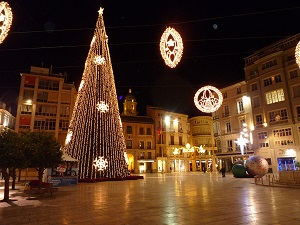
Málaga in de Kersttijd


De Oostenrijkse schrijver en essayist Klaus Hoffer werd geboren op 27 december 1942 in Graz. Zie ook alle tags voor Klaus Hoffer op dit blog.

Uit: Bei den Bieresch Recensie door Wolfgang Schneider)

„Der größte Teil des Buches besteht aus initiierenden Gesprächen: Hans wird von einer zickschen Autorität zur nächsten gereicht, jeder versucht ihm ein wenig aus der Ahnungslosigkeit zu helfen und erzählt von den Traditionen und Gepflogenheiten der Bieresch. Dabei widerspricht einer dem anderen. Die "Göds", die in Zick das Sagen haben, erweisen sich allesamt als durchgedrehte Hermeneuten, von denen Hans wenig Konkretes erfährt, von denen er aber mit vertrackten mythologisch-religiösen Erörterungen versorgt wird. Wie bei Kafka sind sie von der Liebe zum Paradoxen und Ausweglosen inspiriert.
So viel steht fest - es geht um einen Sündenfall vor Urzeiten: "Das Gefühl, dass ein nicht gutzumachender Fehler gemacht wurde, begleitet uns, während wir auf der Stelle treten." Die Welt ist verkorkst, und man fragt sich, warum. Man lebt nicht, sondern ergeht sich in doppelt und dreifach hintersinnigen Erklärungen des Lebens. Der Ertrag des kollektiven Grübelns besteht in mysteriösen Aphorismen und Redensarten, in denen sich die Essenz des Bieresch-Lebens mit seiner albtraumhaften Wiederkehr des Gleichen abgelagert hat: "Der Hund kehrt zum Erbrochenen zurück." Oder: "Unsere Geschichte ist der Knoten, der sich löst, wenn man ihn knüpft."


 1856452-32d78bea43f495d92299db3c15078fb6.jpg
Klaus Hoffer (Graz, 27 december 1942)

Geschreven door Romenu om 17:39 Reageer op dit bericht

Am zweiten Weihnachtstage (Annette von Droste-Hülshoff)


Aan alle bezoekers en mede-bloggers een Prettig Kerstfeest!


 1855380-209e361d6bec4aee2217706eadce82c2.jpg
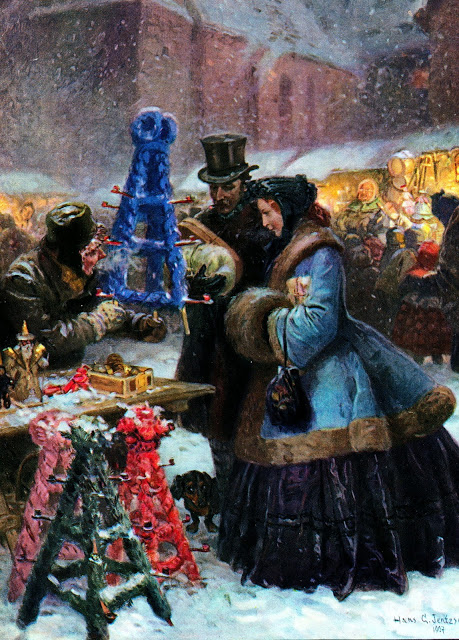
Weihnachtsmarkt door Hans G. Jentzsch, 1907


Am zweiten Weihnachtstage

[Stephanus]

Jerusalem, Jerusalem!
Wie oft erschollen ist sein Ruf;
Du spieltest sorglos unter dem
Verderben, unter Rosses Huf
Und Rades Wucht. Schau, darum ist
Verödet deine Stätte worden,
Und du ein irres Küchlein bist,
Sich duckend unter Geierhorden.

Vorüber ist die heil'ge Zeit,
Wo deine Sinne ihn erkannt;
Noch seiner Wunder Herrlichkeit
Zieht nur als Sage durch das Land.
Der Weise wiegt sein schweres Haupt,
Der Tor will dessen sich entschlagen,
Und nur die fromme Einfalt glaubt
Und mag die Opfergabe tragen.

O bringt sie nur ein willig Tun,
Ein treues Kämpfen zum Altar,
Dann wird auf ihr die Gnade ruhn,
Ein hohes Wunder immerdar.
Doch bleibt es wahr: der Gegenwart
Gebrochen sind gewalt'ge Stützen,
Seit unsren Sinnen trüb und hart
Verhüllt ward seiner Zeichen Blitzen.

War einst erhellt der schwanke Steg,
Und klaffte klar der Abgrund auf,
Wir müssen suchen unsren Weg
Im Heiderauch ein armer Hauf.
Des Glaubens köstlich teurer Preis
Ward wie gestellt auf Gletschers Höhen;
Wir müssen klimmen über Eis
Und schwindelnd uns am Schlunde drehen.

Was, Herr, du ließest fort und fort,
Hat in die Seele wohl gebrannt;
Doch bleibt es ein geschriebnes Wort,
Unsichtbar die lebend'ge Hand.
Ach, nur wo Grübeln nicht und Stolz
Am Stamme nagt seit Tag und Jahren,
Blieb frisch genug das mark'ge Holz,
Frei durch Jahrtausende zu fahren.

So ist es, wehe, schrecklich wahr,
Daß Mancher, der zum starken Mast
Geschaffen, in der Zeit Gefahr
Die Glaubenssegel hat gebraßt,
Nun dürre Säule nackt und schwer
Nur krachend kündet durch das Wehen,
Hier sei in Zweifels schwarzem Meer
Ein mächtig Schiff am Untergehen.

O sende, Retter, deinen Blitz,
Der ihm den frommen Hafen hellt,
Da einst der starke Mast als Sitz
Der Pharuslampe sei gestellt.
Es trägt Gebirge ja dein Land,
Wo Cedern sich zu Cedern einen;
Laß nicht ein Sturmlicht den Verstand
Und einen Fluch die Kraft erscheinen!

Als Stephanus mit seinem Blut
Besiegelte den Christussinn,
Da legten Mörder, heiß vor Wut,
Zu eines Jünglings Füßen hin,
Der stumm und finster sich gesellt,
Die Kleider staubig, schweißbefeuchtet:
Und der ward Paulus, Christi Held,
Des Strahl die ganze Welt durchleuchtet.


 1855380-eb299f7395838603c2a4b5bf8b4bfe0a.jpg
Annette von Droste-Hülshoff (10 januari 1797 – 24 mei 1848)
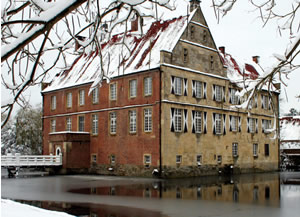
Winter op Burg Hülshoff, waar von Droste-Hülshoff werd geboren.


Zie voor de schrijvers van de 26e december ook mijn drie vorige blogs van vandaag.

Geschreven door Romenu om 09:57 Reageer op dit bericht

David Sedaris, Elizabeth Kostova, Henry Miller, Rainer Malkowski, Mani Beckmann, Alejo Carpentier

De Amerikaanse schrijver David Sedaris werd geboren in Binghamton, New York, op 26 december 1956. Zie ook alle tags voor David Sedaris op dit blog.

Uit: Me Talk Pretty One Day 

“No one else had been called, so why me? I ran down a list of recent crimes, looking for a conviction that might stick. Setting fire to a reportedly flameproof Halloween costume, stealing a set of barbecue tongs from an unguarded patio, altering the word on a list of rules posted on the gymnasium door; never did it occur to me that I might be innocent.
"You might want to take your books with you," the teacher said. "And your jacket. You probably won't be back before the bell rings."
Though she seemed old at the time, the agent was most likely fresh out of college. She walked beside me and asked what appeared to be an innocent and unrelated question: "So, which do you like better, State or Carolina?"
She was referring to the athletic rivalry between the Triangle area's two largest universities. Those who cared about such things tended to express their allegiance by wearing either Tar Heel powder blue, or Wolf Pack red, two colors that managed to look good on no one. The question of team preference was common in our part of North Carolina, and the answer supposedly spoke volumes about the kind of person you either were or hoped to become. I had no interest in football or basketball but had learned it was best to pretend otherwise. If a boy didn't care for barbecued chicken or potato chips, people would accept it as a matter of personal taste, saying, "Oh well, I guess it takes all kinds." You could turn up your nose at the president or Coke or even God, but there were names for boys who didn't like sports. When the subject came up, I found it best to ask which team my questioner preferred. Then I'd say, "Really? Me, too!"
Asked by the agent which team I supported, I took my cue from her red turtleneck and told her that I was for State. "Definitely State. State all the way."
It was an answer I would regret for years to come.
"State, did you say?" the agent asked.
"Yes, State. They're the greatest."


 1855359-5fdc94474e4198cd5e86bf7610b16b2c.jpg
David Sedaris (Binghamton, 26 december 1956)


De Amerikaanse schrijfster Elizabeth Kostova werd geboren op 26 december 1964 in New London, Connecticut. Zie ook alle tags voor Elizabeth Kostova op dit blog.

Uit: The Historian

“Reluctantly, my father agreed. He talked with my teachers and with Mrs. Clay, and reminded me that there would be ample time for my homework while he was in meetings. I wasn’t surprised; for a diplomat’s child there was always waiting to be done. I packed my navy suitcase, taking my schoolbooks and too many pairs of clean kneesocks. Instead of leaving the house for school that morning, I departed with my father, walking silently and gladly beside him toward the station. A train carried us to Vienna; my father hated planes, which he said took the travel out of traveling. There we spent one short night in a hotel. Another train took us through the Alps, past all the white-and-blue heights of our map at home. Outside a dusty yellow station, my father started up our rented car, and I held my breath until we turned in at the gates of a city he had described to me so many times that I could already see it in my dreams.
Autumn comes early to the foot of the Slovenian Alps. Even before September, the abundant harvests are followed by a sudden, poignant rain that lasts for days and brings down leaves in the lanes of the villages. Now, in my fifties, I find myself wandering that direction every few years, reliving my first glimpse of the Slovenian countryside. This is old country. Every autumn mellows it a little more,in aeternum, each beginning with the same three colors: a green landscape, two or three yellow leaves falling through a gray afternoon. I suppose the Romans—who left their walls here and their gargantuan arenas to the west, on the coast—saw the same autumn and gave the same shiver.
When my father’s car swung through the gates of the oldest of Julian cities, I hugged myself. For the first time, I had been struck by the excitement of the traveler who looks history in her subtle face.”


 1855359-58e0ca42cd036e3f506148a4aa814173.jpg
Elizabeth Kostova (New London, 26 december 1964)


De Amerikaanse schrijver Henry Miller werd geboren op 26 december 1891 In New York. Zie ook alle tags voor Henry Miller op dit blog.

Uit: Sexus

“The power which we long to possess, in order to establish the good, the true and the beautiful, would prove to be, if we could have it, but the means of destroying one another. It is fortunate that we are powerless. We have first to acquire vision, then discipline and forbearance. Until we have the humility to acknowledge the existence of a vision beyond our own, until we have faith and trust in superior powers, the blind must lead the blind. The men who believe that work and brains will accomplish everything must even be deceived by the quixotic and unforeseen turn of events.
They are the ones who are perpetually disappointed; no longer able to blame the gods, or God, they turn on their fellow men and vent their impotent rage by crying “Treason! Stupidity!” and other hollow terms. The great joy of the artist is to become aware of a higher order of things, to recognize by the compulsive and spontaneous manipulation of his own impulses the resemblance between human creation and what is called “divine” creation.
In works of fantasy the existence of law manifesting itself through order is even more apparent than in other works of art. Nothing is less mad, less chaotic, than a work of fantasy. Such a creation, which is nothing less than pure invention, pervades all levels, creating, like water, its own level.
The endless interpretations which are offered up contribute nothing, except to heighten the significance of what is seemingly unintelligible. This unintelligibility somehow makes profound sense. Everyone is affected, including those who pretend not to be affected. Something is present, in works of fantasy, which can only be likened to an elixir. This mysterious element, often referred to as “pure nonsense,” brings with it the flavor and the aroma of that larger and utterly impenetrable world in which we and all the heavenly bodies have their being.”.


 1855359-b19e11006590ec7a6ee6f3d707e23bf8.jpg
Henry Miller (26 december 1891 – 7 juni 1980)


De Duitse dichter Rainer Malkowski werd geboren op 26 december 1939 in Berlijn-Tempelhof. Zie ook alle tags voor Rainer Malkowski op dit blog.


Am Sonntag leere Chausseen

Am Sonntag leere Chausseen.
Die Stille in den Zementwerken.
Auf den Koppeln rann der Regen
strähnig
in rostende Badewannen.
Sieben Jahre vergingen.
Ich arbeitete, aß, trank, schlief.
Ich starrte auf die dringlich
nickenden Pappeln am Horizont:
Ausrufezeichen, die lange
bereitstanden.
Ich begriff allmählich
für welche nicht
mehr zu unterdrückenden
Sätze.


Uit: Ein Tag für Impressionisten

Etwas von der Ruhe
Fabres,
dem der Nachmittag verging
über der Beobachtung
einer Sandwespe.

Auch Fabre wußte nicht,
was das ist: die Zeit.
Aber er ertrug es vielleicht
besser,
weil er so wenig
für sich selber brauchte.

Ein sehr beschäftigter alter Mann
auf einem Stück Provenceerde.
Was die Mühe lohnt,
konnte er
mit bloßem Auge erkennen.


 1855359-6e5f5a32486e5d6f84ba24093a4bb0ea.jpg
Rainer Malkowski (26 december 1939 – 1 september 2003)


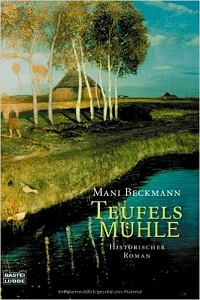
De Duitse schrijver Mani Beckmann (pseudoniem Tom Finnek) werd geboren op 26 december 1965 in Alstätte/Westfalen. Zie ook alle tags voor Mani Beckmann op dit blog.

Uit: Teufelsmühle

“Vor et was mehr als dreißig Jahren, 1974, musste das alte Bauernhaus meiner Großeltern, Heinrich und Anna Vortkamp, dem Neubau einer Landstraße zwischen der münsterländischen Kreisstadt Altheim und dem niederländischen Enschede weichen. Das winzige und windschiefe Häuschen, das von allen im Dorf nur Molenkotten* genannt wurde, hatte mehrere hundert Jahre an dieser Stelle im Ahlbecker Bruch gestanden. Einige Heimatkundler behaupteten gar, bei dem Kotten handele es sich neben der gotischen Dorfkir-che und der an der holländischen Grenze gelegenen Wassermühle um das älteste Gebäude des Dorfes. Alle Proteste, Petitionen und Leserbriefe an die lokalen Zeitungen nützten jedoch nichts, das ur-alte backsteinerne Kötterhaus mit dem niedrigen Schindeldach, der kleinen Holzscheune nebenan und dem verrotteten Brunnen vor der Tür wurde niedergerissen und dem Erdboden gleichge-macht, ebenso wie das umliegende Moor trockengelegt und die Feuchtwiesen dräniert wurden. Nur eine knorrige alte Eiche ne-ben der Landstraße, direkt am Abzweig zum Dorf Ahlbeck, deutet heute darauf hin, wo einst der Molenkotten zu finden war. Meine Großeltern zogen in die nahe gelegene, in den fünfziger Jahren für die Vertriebenen gebaute Hölderlinsiedlung, wo sie jedoch wenig später, in kurzem Abstand zueinander, verstarben. Obwohl ich da-mals erst sechs Jahre alt war, habe ich noch sehr genaue Erinne-rungen an den Bauernhof mit seinen niedrigen Decken, winzigen Butzenscheiben und rußgeschwärzten Wänden, und diese Erinne-rungen sind unauslöschlich mit einem Koffer aus braunem Leder verbunden.”


 1855359-ab1712734f408b23351daddb14acfdca.jpg
Mani Beckmann (Alstätte, 26 december 1965)
Cover


De Cubaanse schrijver, essayist en musicoloog Alejo Carpentier werd geboren in Havana op 26 december 1904. Zie ook alle tags voor Alejo Carpentier op dit blog.

Uit: The Kingdom of This World (Vertaald door Harriet de Onís)

“The marvelous, manufactured by sleight of hand, by juxtaposing objects ordinarily never found together: the old, fraudulent story of the fortuitous encounter of the umbrella and the sewing machine on an operating table,which engendered ermine spoons, snails in a rainy taxi, the lion's head on the widow's pelvis in Surrealist exhibitions. Or, even more to the point, the literary marvelous: the king in Sade's Juliette, Jarry's supermacho, Lewis's monk, the hair-raising theatrical props of the English gothic novel: ghosts, immured priests, lycanthropy, hands nailed to the castle door.
The result of attempting to arouse the marvelous at all costs is that the thaumaturges become bureaucrats. Invoked by means of cliched formulas that turn certain paintings into a monotonous mess of drooping clocks, seamstress' dummies, or vague phallic monuments, the marvelous is stuck in umbrellas, or lobsters, or sewing machines, or wherever, on an operating table, in a sad room, in a stony desert. Miguel de Unamuno said that memorizing rule books indicated a poverty of imagination.
Today there are codes for the fantastic based on the principle of the donkey devoured by the fig ( proposed in the Chants de Maldoror as the supreme inversion of reality), codes to which we owe Children Menaced by Nightingales or Andre Masson's Horses Devouring Birds.
But we should note that when Andre Masson tried to draw the jungle of Martinique, with its incredible entangling of plants and the obscene promiscuity of certain fruits, the marvelous truth of the subject devoured the painter, leaving him virtually impotent before the empty canvas.”


 1855359-86e93f9a53cb95fbd97ecd0671fd2a03.jpg
Alejo Carpentier (26 december 1904 - 24 april 1980)
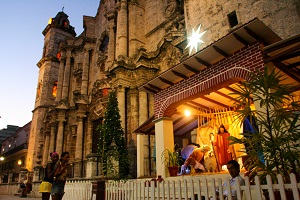
Kersttijd in Havanna


Zie voor nog meer schrijvers van de 26e december ook mijn vorige twee blogs van vandaag.


Geschreven door Romenu om 09:55 Reageer op dit bericht

Jean Toomer, Hans Brinkmann, Willy Corsari, Alfred Huggenberger, René Bazin, Julien Benda

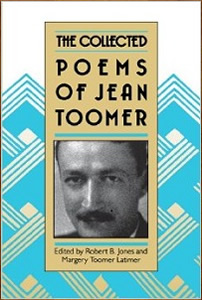
De Amerikaanse dichter en schrijver Jean Toomer werd geboren op 26 december 1894 in Washington, D.C. Zie ook alle tags voor Jean Toomer op dit blog.


People

To those fixed on white,
White is white,
To those fixed on black,
It is the same,
And red is red,
Yellow, yellow-
Surely there are such sights
In the many colored world,
Or in the mind.
The strange thing is that
These people never see themselves
Or you, or me.

Are they not in their minds?
Are we not in the world?
This is a curious blindness
For those that are color blind.
What queer beliefs
That men who believe in sights
Disbelieve in seers.

O people, if you but used
Your other eyes
You would see beings.


 1855303-8d3799c58af79ae790040c8af2add4c0.jpg
Jean Toomer (26 december 1894 – 30 maart 1967)
Cover


De Duitse dichter, schrijver en criticus Hans Brinkmann werd geboren op 26 december 1956 in Freiberg in Sachsen. Zie ook alle tags voor Hans Brinkmann op dit blog.

Uit:Letternbrut (Lezing bij de presentatie van het boek “Letternbrut” van Jürgen Höritzsch)

“LETTERNBRUT - das Wort lässt an ein Brüten über den Büchern denken, an strenges Selbststudium, der Text als Ei, der Leser als Huhn und der Ertrag des Ganzen, die so genannten Lesefrüchte, als ein Haufen Küken; das dottergelbe Spektakel, das kennt man ja, mit Eierschalen am Hintern unter der Wärmelampe, so schrill und laut allesamt, das man überhaupt nicht mehr zum Denken kommt ...
Aber Brut ist freilich auch die abfällig bis böse Bezeichnung für meist anderer Leute Kinder, da schwingt Genervtheit mit, gelegentlich auch der schiere Schrecken, wenn man sich etwa den Horrorfilmklassiker "Das Dorf der Verdammten" vergegenwärtigt, in dem die Brut vom anderen "bösen" Planeten stammt, oder, um noch weitere Klassiker zu erwähnen: "Das Omen" oder "Rosemaries Baby" oder, oder ...
Und wenn wir schon mal dabei sind, lässt Brut folgerichtig auch an "brutal" denken. - All das schwingt mit, wenn wir das Buch öffnen, auf dessen Einband ein Warnreflektor zu sehen ist, ein so genanntes "Katzenauge", wie wir's von Fahrrädern und Schultaschen kennen, hier allerdings mit einem Vögelchen drin. Gemütlich ist was anderes.
Und genauso beunruhigend fühlen sich die übrigen Visionen an, die der Künstler in seinen Radierungen heraufbeschwört. Kein Zweifel, wir befinden uns im Reich der Träume. Doch von einer anderen Welt als der unseren handeln sie nur bedingt. Was das Literarische betrifft, so gibt es in diesem Buch zwei Arten von Text: die Schrift im Bild und die Schrift außerhalb des Bildes. Man könnte sagen, das Bild steht bzw. entsteht zwischen den Zeilen. Während die Bildunterschrift von außen her die Vorgänge kommentiert, ja, beinahe nacherzählt, ist das Wort oder sind die Wörter im Bild meist versteckte Botschaften, Schrift an der Wand: Menetekel. Sie tun eine Wahrheit kund, die verborgen ist, untergründig, rätselhaft.“


 1855303-a7b44c6a3a51f6caaedf85807b781794.jpg
Hans Brinkmann (Freiberg, 26 december 1956)


De Nederlandse schrijfster Willy Corsari (pseudoniem van Wilhelmina Angela Douwes-Schmidt) werd geboren in Sint-Pieters-Jette, Brussel, op 26 december 1897. Zie ook alle tags voor Willy Corsari op dit blog.

Uit:Het mysterie van de Mondscheinsonate

‘Ik vraag je, Puck,’ zei inspecteur Lund en klapte het dikke boek ‘Misdaad en Karakter’, waaruit hij had voorgelezen, dicht, ‘waarom kan zo'n interessant geval nu niet eens hier voorkomen? Waarom wordt mijn jonge leven verbitterd door drankzuchtige heren en diefachtige dames?
Waarom...’ hij maakte een theatraal gebaar, zodat de as van zijn sigaret over tafel vloog, ‘waarom zijn al mijn jongensdromen omtrent het romantisch bestaan van een politieman verbleekt in walgelijk-nuchtere werkelijkheid? Ik had evengoed een brave boekhouder of notaris kunnen worden. Waar blijven de mooie meisjes, die eerst schuldig lijken en dan tenslotte toch onschuldig blijken? Waar blijven de misdadigers, wier hersenen letterlijk knarsen door het uitdenken van geraffineerde schurkenstreken? Waar blijven de ingenieuze moorden met veel geheimzinnige en verwarrende aanwijzingen en ogenschijnlijk goede, brave mensen, die allemaal verborgen hartstochten kweken... ik vraag je, waar blijven ze voor een in proza en alledaagsheid verstikkend speurdersgenie, Puck?’
Zijn vrouw keek op van het onmenselijke gat, dat ze stopte in een van zijn sokken en antwoordde: ‘Ik had evengoed kunnen trouwen met die acteur, waar ik als meisje zo verliefd op was. Kind, zei m'n moeder, weet wat je doet; acteurs verdienen weinig en zaniken altijd over de rollen die ze niet krijgen. Ik vraag me af,’ eindigde ze, haar stopnaald omhoog stekend, ‘wààr het verschil nu in zit met jou.’
‘Het verschil zit 'em hierin, dat die acteur een walgelijk mannetje was en dat je nu een knappe, innemende, intelligente, interessante echtgenoot bezit. Of heb je spijt, Puck?’
‘Nee,’ zei ze, ‘ik zou het ook leuk vinden als er eens iets gebeurde, iets bijzonders, iets detective-romanachtigs... maar dat kun je bijna niet verwachten van ons keurige villadorp.’ Ze zuchtte en stopte de sok in haar verstelmandje. ‘Zou je me dan alles vertellen?’ vroeg ze, ‘je weet, datik mijn mond houd!’


 1855303-12ba317239836ec42a18b1d042ff5e53.jpg
Willy Corsari (26 december 1897 – 11 mei 1998)


De Zwitserse dichter en schrijver Alfred Huggenberger werd geboren op 26 december 1867 in Bewangen nabij Bertschikon. Zie ook alle tags voor Alfred Huggenberger op dit blog.


Der Träumer

Oft wenn Festtagsglocken läuten
Geht’s mir plötzlich durch den Sinn,
Dass ich zwischen klugen Leuten
Doch ein sondrer Träumer bin.

Kann nicht froh sein, wie die andern,
Wo die bunten Wimpel wehn,
Lieber möcht’ ich einsam wandern,
Sinnend unter Buchen stehn.
 
Sitz’ im fröhlichen Gelage
Oft verloren und allein.
Mein Gewinn sind stille Tage
Und mein Licht der Abendschein.

Könnt’ mein Glück wohl besser machen,
Wenn ich wär’, wie andre sind;
Manchen sah ich leise lachen:
Seht einmal das grosse Kind!

Konnt’ er nicht sein Pfund verwalten,
Dass es reichlich Zinsen trug?
Müsst mir’s schon zu gute halten,
Dass ich nie nach Zinsen frug.

Mein Gewinn sind stille Stunden
Und mein Licht der Abendschein.
Wer der Träume Land gefunden,
Wird mit Gott zufrieden sein.


 1855303-a5d53b91af3762acfd3907f2846d9eec.jpg
Alfred Huggenberger (26 december 1867 – 14 februari 1960)
Hier met vrouw en dochter


De Franse schrijver René Bazin werd geboren op 26 december 1853 in Angers. Zie ook alle tags voor René Bazin op dit blog.

Uit: Les Noëllet

« La flambée de l’âtre dansante au gré du vent qui venait un peu de partout, éclairait en travers la paysanne, de taille moyenne, sèche et nerveuse, son visage régulier, mais vieilli avant le temps, ses yeux très noirs où vivait une âme maternelle qu’on sentait prompte à s’alarmer, puis la table et les bancs de cerisier ciré, l’échelle au pain suspendue aux solives, et, de chaque côté de la porte donnant accès dans la pièce voisine, deux lits à quatre quenouilles, garnis, suivant l’ancienne mode, de rideaux de futaine grise et de couvertures jaunes.
Quand Perrine Noellet vit s’avancer le châtelain, elle posa le pain sur la table, et releva prestement un coin de son tablier dont l’endroit n’était pas sans doute immaculé.
– Bonjour, monsieur Hubert, dit-elle. Vous voilà donc de retour ?
– Bien tard, n’est-ce pas ? Nous arrivons de Suisse et d’Italie, un voyage de trois mois dont je me serais dispensé volontiers : car vous savez que j’aime avant tout ce pays-ci, ma Landehue, mes bois et ma paroisse du Fief-Sauvin. Mais, que voulez-vous ! mes filles m’ont entraîné : quand les enfants grandissent, on ne leur résiste plus si bien.
– Pourquoi, par exemple ?
– Oui, oui, je sais, métayère… Chez vous, c’est l’ancien régime, l’autorité paternelle des jours passés, tandis que moi, je suis moderne, je gâte un peu mes filles. Croiriez-vous que Madeleine ne veut plus se contenter de son poney et de son petit panier : elle me demande un cheval de chasse. Ah ! les enfants !
– Une bien belle demoiselle que vous avez là, monsieur Hubert."


 1855303-2913feb2efdc5a40bd391a1b4062a568.jpg
René Bazin (26 december 1853 – 19 juli 1932)


De Franse schrijver en filosoof Julien Benda werd geboren op 26 december 1867 in Parijs. Zie ook alle tags voor Julien Benda op dit blog.

Uit: The Treason of the Intellectuals (Vertaald door Richard Aldington)

“I think I see another motive in the French writers who in 1914 adopted the attitude of M. Romain Rolland—the fear that they would fall into national partiality if they admitted that their nation was in the right. It may be asserted that these writers would have warmly taken up the cause of France, if France had not been their own country. Whereas Barrès said, "I always maintain my country is right even if it is in the wrong," these strange friends of justice are not unwilling to say: "I always maintain my country is in the wrong, even if it is right." There again we see that the frenzy of impartiality, like any other frenzy, leads to injustice.
I have also a word to say about the severities of these "justiciaries" towards France's attitude immediately after her victory, towards her desire to force the enemy to make good the damage done to her, and to seize on pledges if he refused. The motive which here animated these moralists without their perceiving it, seems to me very remarkable; it was the thought that the just person must inevitably be weak and suffer, that he must be a victim. If the just man becomes strong and comes to possess the means of enforcing justice towards himself, then he ceases to be just to these thinkers. If Socrates and Jesus make their persecutors disgorge, then they cease to embody justice; one step more and the persecutors, having become victims, would embody right. In this the cult of justice is replace by the cult if misfortune, a Christian Romanticism which is somewhat unexpected in a man like Anatole France. No doubt the events of 1918 upset all the habits of the advocates of right. Outraged right became the stronger, the assailed toga triumphed over the sword, the Curiatii were victorious. Perhaps some coolness of mind was needed to recognize that right remained right, even when thus invested with force. The French pacifists failed to remain cool. In short, their attitude in the past ten years has been inspired by sentiment alone, and nothing could show better the degree of weakness to which intellectual discipline has now fallen among our "princes of the mind."


 1855303-3c1d93fb3e49fab23a1ccd5f9570d2be.jpg
Julien Benda (26 december 1867 – 7 juni 1956)


Zie voor nog meer schrijvers van de 26e december ook mijn vorige blog van vandaag.


Geschreven door Romenu om 09:54 Reageer op dit bericht

Thomas Gray Jean Galtier-Boissière, Ernst Moritz Arndt, Johann Gaudenz von Salis-Seewis, E. D. E. N. Southworth, Jean-François de Saint-Lambert

De Engelse dichter en geleerde Thomas Gray werd geboren op 26 december 1716 in Londen. Zie ook alle tags voor Thomas Gray op dit blog.


The Bard

1.1
Ruin seize thee, ruthless King!
Confusion on thy banners wait,
Tho' fanned by Conquest's crimson wing
They mock the air with idle state.
Helm, nor Hauberk's twisted mail,
Nor even thy virtues, Tyrant, shall avail
To save thy secret soul from nightly fears,
From Cambria'sÊ curse, from Cambria's tears!'
Such were the sounds, that o'er the crested pride
Of the first Edward scatter'd wild dismay, 10
As down the steep of Snowdon's shaggy sideÊ
He wound with toilsome march his long array.
Stout Glo'ster stood aghast in speechless trance:
'To arms!' cried Mortimer, and couch'd his quiv'ring lance.

I.2

On a rock, whose haughty brow
Frowns o'er old Conway's foaming flood,
Robed in the sable garb of woe,
With haggard eyes the Poet stood;
(Loose his beard, and hoary hair
Stream'd, like a meteor, to the troubled air) 20
And with a Master's hand, and Prophet's fire,
Struck the deep sorrows of his lyre.
'Hark, how each giant-oak, and desert cave,
Sighs to the torrent's aweful voice beneath!
O'er thee, oh King! their hundred arms they wave,
Revenge on thee in hoarser murmurs breath;
Vocal no more, since Cambria's fatal day,
To high-born Hoßl's harp, or soft Llewellyn's lay.


 1855291-c07dfced23d8d723051db38a0637556a.jpg
Thomas Gray (26 december 1716 – 30 juli 1771)
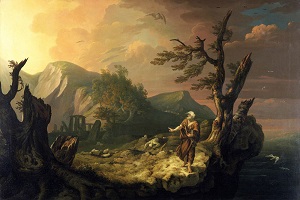
The Bard door Tnomas Jones uit 1774 werd geïnspireerd door het gedicht van Gray


De Franse schrijver, polemist en journalist Jean Galtier-Boissière werd geboren op 26 december 1891 in Parijs. Zie ook alle tags voor Jean Galtier-Boissière op dit blog.

Uit: Mémoires d’un Parisien (Nos amours de jeunesse)

« Les réservistes commencent à arriver. Nous accueillons avec joie nos anciens de la classe 10 : Ridet, Sinet, le fourrier Taupin… Il y a beaucoup d’inconnus plus âgés, avec des grosses moustaches, des airs de patrons et de pères de famille. L’atmosphère n’a rien de tragique. Elle évoque les albums militaires de Guillaume : on croise dans les couloirs des civils coiffés de képis et des sergents en pantalons de zingueurs. Toutes les formalités, revues et corvées s’opèrent dans la bonne humeur. La caserne a pris un air de fête ; on dirait vraiment que tout ce monde-là se rassemble en vue d’une réjouissance.
Je ne vois que deux figures renfrognées : le sous-lieutenant Champfraisier, lequel est très pessimiste :
– Tous ces bougres-là se figurent qu’ils partent à une partie de plaisir ! Je crois qu’ils éprouveront quelques désillusions : ça n’a rien de rigolo, vous savez, la guerre moderne !
Et l’électricien Girardet qui m’a pris dans un coin :
– Dis donc, un homme comme toi, tu vas te démerder pour rester au petit dépôt ?
– Penses-tu ! je ne vais pas plaquer les copains !
– Alors, ça t’intéresse, toi, les obus, les mitrailleuses, les assauts ? Eh bien ! moi, ça ne me dit rien de me faire bigorner ; avec ma prostatite, je me suis fait classer aux inaptes. Pas si bête!”


 1855291-b4e171599b0c744483d46139b936b9e4.jpg
Jean Galtier-Boissière (26 december 1891 – 22 januari 1966) 


De Duitse dichter en schrijver Ernst Moritz Arndt werd op 26 december 1769 in Groß-Schoritz geboren op het eiland Rügen. Zie ook alle tags voor Ernst Moritz Arndt op dit blog.


Blüh und leuchte, goldner Baum

Blüh denn, leuchte, goldner Baum,
Erdentraum und Himmelstraum;
blüh und leuchte in Ewigkeit
durch die arme Zeitlichkeit!

Sei uns Bild und sei uns Schein,
dass wir sollen fröhlich sein,
fröhlich durch den süßen Christ,
der des Lebens Leuchte ist.

Sei uns Bild und sei uns Schein,
dass wir sollen tapfer sein
auf des Lebens Pilgerbahn,
kämpfend gegen Lug und Wahn.

Sei uns Bild und sei uns Schein,
dass wir sollen heilig sein,
rein wie Licht und himmelsklar,
wie das Kindlein Jesus war!


 1855291-dc1f3ab5f885e7951d1ca8bbaeff6361.jpeg
Ernst Moritz Arndt (26 december 1769 – 29 januari 1860)
Het geboortehuis in Groß-Schoritz


De Zwitserse dichter en schrijver Freiherr Johann Gaudenz von Salis-Seewis werd geboren op 26 december 1762 op slot Bothmar bei Malans. Zie ook alle tags voor Johann Gaudenz von Salis-Seewis op dit blog.


Vertrauen

Wer gibt uns unsern Kinderglauben
An eine treue Welt zurück?
Ach, schließt den allzu scharfen Blick!
Was uns die Zuversicht kann rauben,
Zerstört des Herzens Glück.

Dein denkt mein Geist mit Wohlgefallen,
O Zeit, wann, fremd' in klüg'rer Welt,
Man traut zu jedem sich gesellt,
Und arglos, wie die Nachtigallen,
In offne Schlingen fällt.

O Glück, noch kindlich hinzulangen,
Nach Blumen, eh' man sie benennt,
Nach Freuden, die man halb nur kennt;
Wenn unser Blick, kaum aufgegangen
Nicht Schein und Wesen trennt!

Ihr Tage, wo wir klüger werden,
Wie schwül ist euer Mittagslicht,
Wenn die Erfahrung warnend spricht:
Vollkommnes weilet nichts auf Erden!
Was blühet, währet nicht.

Wohl dann dem liebenden Gemüthe,
Das sein Vertrauen rein bewahrt,
Und, sein Gefühl sei noch so zart,
Nie zweifelt an des Edeln Güte,
Noch an der Menschen Art.


 1855291-848cb9818f0d2e3001a289c9db300ad5.jpg
Johann Gaudenz von Salis-Seewis (26 december 1762 – 29 januari 1834)


De Amerikaanse schrijfster Emma Dorothy Eliza Nevitte Southworth werd geboren op 26 december 1819 in Washington, D.C. Zie ook alle tags voor E. D. E. N. Southworth op dit blog.

Uit: Tried for Her Life

“When Sybil recovered from her death-like swoon, she felt herself being borne slowly on through what seemed a narrow, tortuous underground passage; but the utter darkness, relieved only by a little gleaming red taper that moved like a star before her, prevented her from seeing more.
A presentiment of impending destruction possessed her, and overwhelming horror filled her soul and held her faculties. Though her life had depended upon her speech, she could not have uttered a syllable. And no word was breathed by the mysterious beings who bore her on. Dumb as mutes at a funeral, they marched. Silent, breathless as one on the brink of death, Sybil held her senses fast and prayed. And the little red spark moved through the darkness before her, like a malignant star leading her to doom. And how long drawn out the dreadful way! Minutes seemed months, and hours ages. The awful forms that held her in their hands; their monotonous tread as they bore her on; their utter silence; the deep darkness; the damp, earthy, stifling atmosphere; the agony of suspense; the horror of anticipation!--all these must have sent her into another swoon, but that her vigilant mind still held her senses alert, and she prayed.
Who were these beings? Why had they abducted her? What would they do with her? She asked herself these questions, but shrank appalled from any possible answer. Death? dishonor worse than death? Oh that some miracle might save her in this tremendous peril! She prayed. And what a tedious anguish of anxiety! When would the end come?
At length a breath of fresh air as from the upper world was wafted past her face. Welcome as a drop of cold water to a parched palate, was this breath of fresh air to her fevered lungs. But it passed, and all was close and suffocating again.”


 1855291-a7e876f8d20f5d8756ae827ec4cffb7b.jpg
E. D. E. N. Southworth (26 december 1819 – 30 juni 1899)
Cover


De Franse dichter, schrijver en filosoof Jean-François de Saint-Lambert werd geboren op 26 december 1716 in Nancy. Zie ook alle tags voor Jean-François de Saint-Lambert op dit blog.

L’Hiver (Fragment)

Le globe de la nuit d’étoiles entouré,
Montoit sur l’horison, d’un jour pâle éclairé ;
Les nuages légers fuyants dans l’air humide,
Sembloient entraîner tout dans leur ombre rapide :
On voyoit les forêts & les monts s’ébranler,
Et dans l’air incertain les astres osciller.
Ce bruit sourd, qui précède & qui suit les orages,
Expiroit dans les bois & le long des rivages.
Je sentois se calmer le trouble de mon cœur ;
Mon esprit s’élevoit au sein de son auteur ;
Je suivois la nature en ses métamorphoses,
Et cherchois les rapports des effets & des causes ;

Je vis, ou je crus voir l’ordre de l’univers.
Ces orages, disois-je, & ces tristes hivers,
Nos maux & nos plaisirs, nos travaux & nos fêtes,
Les frimats, les chaleurs, les beaux jours, les tempêtes
Sont dans l’ordre éternel l’un à l’autre enchaînés ;
Ils naissent de leur cause aux jours déterminés,
Et par ces changements la sagesse infinie
Dans l’univers immense entretient l’harmonie.
Les vents qui sur ces mers tourmentoient ces vaisseaux,
Sur un rivage aride ont apporté les eaux ;
Les esprits sulphureux, les sels, l’huile étérée,
Dispersés par ces vents de contrée en contrée,
Rajeunissent la terre, & vont rendre féconds
Ces champs couverts de chaume, usés par les moissons.
Hiver, cruel hiver, toi qui sembles détruire,
Tu rends à nos sillons la force de produire :
Tandis que sur ces bords tu répands les frimats,
Le globe des saisons va sur d’autres climats
Renouveller la vie, & varier l’année.
Soleil, marche, & poursuis ta carrière ordonnée ;
Nous te verrons dans peu recommencer ton cours,
Et ramener encor la joie & les beaux jours ;
Voulons-nous jouir seuls de ta clarté féconde,
Que doivent partager tous les peuples du monde ?


 1855291-d028461e3263906a6229cc407e5a4c32.jpg
Jean-François de Saint-Lambert (26 december 1716 – 9 februari 1803)
Kerstmarkt in Nancy


Geschreven door Romenu om 09:51 Reageer op dit bericht

Meer van Romenu

↑ Terug naar de berichten