Naar de inhoud

Romenu

Over literatuur, gedichten, kunst en cultuur
akke.beakke.be

Berichten van 6 maart 2016 tot 7 maart 2016

Bret Easton Ellis, Robert Harris, Jürgen Theobaldy, Georges Perec, Milo Dor, Abe Kōbō, Jan Frederik Helmers
De Amerikaanse schrijver Bret Easton Ellis werd geboren op 7 maart 1964 in Los Angeles. Zie ook alle tags voor Bret Easton Ellis op dit blog.

Uit:Less Than Zero

As we walk out of the theater, ninety minutes, maybe two hours later, some girl with pink hair and roller skates slung over her shoulders come up to Trent.
"Trent, like, oh my God. Isn't this place a scream?" the girl squeals.
"Hey, Ronnette, this Clay. Clay, this is Ronnette."
"Hi, Clay," she says, flirting. "Hey, you two, what flick did you see?" She opens a piece of Bazooka and pops it into her mouth.
"Um . . . number thirteen," Trent says, groggy, eyes red and half closed.
"What was it called?" Ronnette asks.
"I forget," Trent says, and looks over at me.
I forgot too and so i just shrug.
"Hey Trenty, I need a ride. Did you drive here?" she asks.
"No, well yeah. No, Clay did."
"Oh, Clay, could you please give me a ride?"
"Sure."
"Fab. Let me put these on and we'll go."
On the way through the mall, a security guard, sitting alone on a white bench, smoking a cigarette, tells Ronnette that there's no roller skating in the Beverly Center.
"Too much," Ronnette says, and rolls away.
The security guard just sits there and takes another drag and watches us leave.
Once in my car Ronnette tells us that she just finished singing vocals, actually background vocals, on Bandarasta's new album.
"But I don't like Bandarasta. He's always calling me 'Halloween' for some reason. I don't like to be called 'Halloween.' I don't like it at all."
I don't ask who Bandarasta is; instead I ask her if she's a singer.
"Oh, you could say.
I'm a hairdresser, really. See, I got mono and dropped out of Uni and just hung around. I paint too . . . oh gosh, that reminds me. I left my art over at Devo's house. I think they want to use it in a video. Anyway . . ." She laughs and then stops and blows a bubble and snaps her gum. "What did you ask me, I forgot."


 1887069-d5d756524f939b7096e22a4149e85195.jpg
Bret Easton Ellis (Los Angeles, 7 maart 1964)
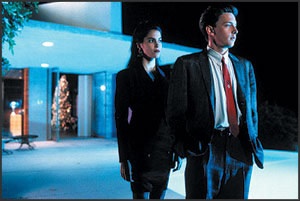
Scene uit de film “Less Than Zero” Uit 1987 met o.a. Anrew McCarthy als Clay


De Britse schrijver en journalist Robert Dennis Harris werd geboren op 7 maart 1957 in Nottingham. Zie ook alle tags voor Robert Harris op dit blog.

Uit: An Officer and a Spy

“Major Picquart to see the Minister of War . . .”
The sentry on the rue Saint-Dominique steps out of his box to open the gate and I run through a whirl of snow across the windy courtyard into the warm lobby of the hôtel de Brienne, where a sleek young captain of the Republican Guard rises to salute me. I repeat, with greater urgency: “Major Picquart to see the Minister of War . . . !”
We march in step, the captain leading, over the black-and-white marble of the minister’s official residence, up the curving staircase, past suits of silver armour from the time of Louis the Sun King, past that atrocious piece of Imperial kitsch, David’s Napoleon Crossing the Alps at the Col du Grand-Saint-Bernard, until we reach the first floor, where we halt beside a window overlooking the grounds and the captain goes off to announce my arrival, leaving me alone for a few moments to contemplate something rare and beautiful: a garden made silent by snow in the centre of a city on a winter’s morning. Even the yellow electric lights in the War Ministry, shimmering through the gauzy trees, have a quality of magic.
“General Mercier is waiting for you, Major.”
The minister’s office is huge and ornately panelled in duck-egg blue, with a double balcony over the whitened lawn. Two elderly men in black uniforms, the most senior officers in the Ministry of War, stand warming the backs of their legs against the open fire. One is General Raoul le Mouton de Boisdeffre, Chief of the General Staff, expert in all things Russian, architect of our burgeoning alliance with the new tsar, who has spent so much time with the Imperial court he has begun to look like a stiff-whiskered Russian count. The other, slightly older at sixty, is his superior: the Minister of War himself, General Auguste Mercier.”


 1887069-bbe1037934b81286b436dd5a976bdc9b.jpg
Robert Harris (Nottingham, 7 maart 1957)


De Duitse dichter en schrijver Jürgen Theobaldy werd geboren op 7 maart 1944 in Straatsburg. Zie ook alle tags voor Jürgen Theobaldy op dit blog


Vor der Pension
Für Jannis Ritsos

Nachts trocknen die Straßen aus, jede Nacht.
Geröll sammelt sich im Rinnstein, Geröll,
das die Farben übrigließen, der Mittagslärm,
die fettbeschlagenen Scheiben, die Autos, all die Autos...
Kein Wind geht, und doch, etwas strömt um die Häuser,
etwas, das kein Zeitungsblatt im Staub aufwirft,
das nicht stärker rauscht als das Blut in den Ohren.
Starkes Licht steht in der Taverne, und die Mauer
hindert es, auf die Tische vor der Tür zu fallen.
Wie lange ist es her, daß ein Gewehrabzug knackte
und mondgraue Trupps hier um die Ecke drängten, Athen?
Jede Nacht um elf kommen sie an diesen Tisch,
der mächtige Alte im Burnus, mit Fäusten
groß wie der Kopf des Kinds, das ihn mit sich zieht.
Ich sehe die beiden schmausen, immer für sich,
Hammel mit Bohnen und Brot und Wasser.
Und jede Nacht nach zwölf gehen sie davon,
zu welchem Lager hin, er, in Schuhen, ohne Strümpfe,
das Mädchen barfuß? Aus den Fingern
meiner rechten Hand zieht eine schmale Spur Blut
durchs Notizbuch. Ich halte den Atem an.
Weit weg entfernt sich das Rasseln des Panzers.


 1887069-598a6220c5f5066a36faf84996559411.jpg
Jürgen Theobaldy (Straatsburg, 7 maart 1944)


De Franse schrijver Georges Perec werd geboren op 7 maart 1936 in Parijs. Zie ook alle tags voor Georges Perec op dit blog.

Uit: Les choses

“Comme presque tous leurs collègues, Jérôme et Sylvie étaient devenus psychosociologues par nécessité, non par choix. Nul ne sait d'ailleurs où les aurait menés le libre développement d'inclinations tout à fait indolentes. L'histoire, là encore, avait choisi pour eux. Ils auraient aimé, certes, comme tout le monde, se consacrer à quelque chose, sentir en eux un besoin puissant, qu'ils auraient appelé vocation, une ambition qui les aurait soulevés, une passion qui les aurait comblés. Hélas, ils ne s'en connaissaient qu'une: celle du mieux-vivre, et elle les épuisait. Etudiants, la perspective d'une pauvre licence, d'un poste à Nogent-sur-Seine, à Château-Thierry ou à Etampes, et d'un salaire petit, les épouvanta au point qu'à peine se furent-ils rencontrés - Jérôme avait alors vingt et un ans, Sylvie dix-neuf - ils abandonnèrent, sans presque avoir besoin de se concerter, des études qu'ils n'avaient jamais vraiment commencées. Le désir de savoir ne les dévorait pas; beaucoup plus humblement, et sans se dissimuler qu'ils avaient sans doute tort, et que, tôt ou tard, viendrait le jour où ils le regretteraient, ils ressentaient le besoin d'une chambre un peu plus grande, d'eau courante, d'une douche, de repas plus variés, ou simplement plus copieux que ceux des restaurants universitaires, d'une voiture peut-être, de disques, de vacances, de vêtements.”


 1887069-108b1c5cbf8b776f3f2a071c12547e5e.jpg
Georges Perec (7 maart 1936 – 3 maart 1982)
In 1965 


De Oostenrijkse schrijver Milo Dor werd als Milutin Doroslovacgeboren op 7 maart 1923 in Boedapest. Zie ook alle tags voor Milo Dor op dit blog.

Uit: Die Raikow Saga

“Nun war sie nicht mehr da, und niemand kümmerte sich um ihre Uhren; sie standen alle still.
Marko genügte eine Uhr. Er brauchte sie nur, um zu wissen, wie spät es war; ihn interessierte weder ihre äußere Form noch ihr Klang, noch die Melodie, die sie vielleicht spielen konnte.
[...]; sie standen alle stumm und mit starren Zeigern da, als wären sie mitten in ihrem hastigen Gang erfroren– ein Friedhof verlorengegangener Zeit.
(…)

Ihre fixe Idee war es gewesen, die ganze Familie in einem Grab zu vereinigen; wie eine Henne, die auch das letzte ihrer Küken in ihrem Schutz wissen muß, hatte sie alle sterblichen Überreste der Familienmitglieder, die in den verschiedenen Gräbern gelegen waren – oft hatte man von ihnen nicht mehr als einen Haufen verfaulter Erde gefunden –, unter diesem marmornen Ungeheuer von einer Gruft versammelt.
(…)

Später hatte sie nur Schwierigkeiten mit ihrer Schwiegermutter, die auch weiterhin den ganzen Haushalt führte und Militza nur eine untergeordnete Rolle zuwies. Sie durfte Kinder gebären und ihrer Schwiegermutter helfen, aber sie hatte nicht viel zu sagen. Da sie sich aber ihren Platz als Hausfrau erkämpfen wollte, kam es oft zu Streitereien, die im Haus eine unangenehme Atmosphäre schufen. Slobodan nahm sie zu dieser Zeit meistens mit auf seine Geschäftsreisen, um sie von seiner Mutter zu trennen, die ihre Alleinherrschaft im Haus hartnäckig zu behaupten verstand.“


 1887069-39552f176e3d74dcbf9c397a2eef2d94.jpg
Milo Dor (7 maart 1923 – 5 december 2005)
Cover 


De Japanse schrijver Abe Kōbō werd geboren op 7 maart 1924 in Tokyo. Zie ook alle tags voor Abe Kōbō op dit blog.

Uit: The ruined map (Vertaald door E. Dale Saunders)

“I shifted the briefcase to my leeward hand and, crossing the sidewalk, directed my footsteps into a dark rectangle surrounded by nothing but the narrow caves of the buildings.
The sound of my shoes, like the clanking of an empty an, leapt up along the stairs. Eight mailboxes arranged in two horizontal rows. Written in white paint underneath number 12, the name Nemuro inscribed in a small hand on a piece of paper attached with Scotch tape. Walking slowly up the stairs, I wondered if I should not prepare myself so that, as soon as I knew what my client wanted, I could play the required role at once. It was our business to be well aware that there is no set type.
A warm steel door bordered by a dark green frame. A white buzzer with a cracked plastic cover.
The corner of the cloth over the postcard-sized window placed in the middle of the door at face height was raised at an angle. I heard the sound of a chain being removed; the knob turned and the door, which appeared to weigh all of a ton, was Opened. There was the faint smell of burning oil.
The kerosene stove had probably just been lit in preparation for my visit. The door Opened in two movements, first twenty degrees and then sixty. The Opener withdrew a step, clasping her hands together before her. It was a woman, younger than I had expected, though I could not make her out clearly since she was against the light. She was short, with a long neck, and she gave the feeling of swaying. Had it been a little darker I could have mistaken her for a child.”


 1887069-3db5dc0cfef5372f4c8450a88fc0b1b6.jpg
Abe Kōbō (7 maart 1924 – 22 januari 1993)


De Nederlandse dichter en schrijver Jan Frederik Helmers werd geboren op 7 maart 1767 in Amsterdam. Zie ook alle tags voor Jan Frederik Helmers op dit blog.


De Hollandsche Natie (Fragment)

Op de eeuwige Alpen, dik met sneeuw en ijs omschorst,
Ontwringt de schone Rijn zich aan der bergen korst.
Eerst sluipt hij nietig voort, met ongewisse gangen,
Als een versmade beek, nauw waard een naam te ontvangen.
Allengskens aangegroeid, schiet hij langs breder boord
Met jonglings vuur en kracht zijn stoute golven voort
En stort bij Lauffen zich met ongehoord gedonder
In d’afgrond, schuimt en bruist en woelt en wringt van onder
De klippen zich hervoort; getergd door wederstand,
Verbreekt, verbrijzelt hij de rotsen aan zijn kant.
Een hel van water stort hij neer met schriklijk klateren,
En heel de landstreek dreunt van de afgeschoten wateren!
Nu golft hij Duitsland door, met trotse majesteit,
Langs rijke dorpen, aan zijn vruchtbre boord verspreid,
Langs bergen, lachende van Bacchus zegeningen,
En steden, trots gebouwd, die zijne lof bezingen.
Van Ehrenbreitsteins top ziet elk zijn slangenloop
En groet hem, van die hoogte, als bronaâr van Euroop.’ -
Ach! zoek die schone stroom nu weer bij Katwijks stranden!
Wat vindt ge? een vuile poel, gesmoord in slijk en zanden.
Onedel en versmaad kruipt hij daar schandlijk voort,
Eer zich zijn drabbig nat in ’t zand der duinen smoort.
De vreemdeling, die hem langs Koblentz’ muur zag golven,
Herziet hem hier! maar ach! in ruigte en wier bedolven.
Hij mijmert aan zijn zoom met waggelende treên,
Denkt aan het oud Karthaag’! - en gaat in weemoed heen.

Is, Neêrland! dit uw beeld? moet uit die flauwe trekken
Mijn hart, dat voor u gloeit, uw naderend lot ontdekken? -
.........................................................
Ach! zult gij, als die stroom; bezwijken in uw loop?
De uitfluiting zijn der aard’? de schandvlek van Euroop’?
Neen! neen! der Vadren roem verspreidt te sterk een luister;
En ’t kroost van zulk een volk zinkt niet geheel in ’t duister.


 1887069-8b4b1cea10f5378e2de2c82052d70adb.jpg
Jan Frederik Helmers (7 maart 1767 – 26 februari 1813)
Portret door Philippus Velijn, rond 1800


Zie voor nog meer schrijvers van de 7e maart ook mijn blog van 7 maart 2015 deel 2.


Geschreven door Romenu om 18:53 Reageer op dit bericht

Patrick deWitt, Gabriel García Márquez, Jeremy Reed, Marijke Hanegraaf, Günter Kunert, Clark Accord

De Canadese schrijver en scenarist Patrick deWitt werd geboren op 6 maart 1975 op Vancouver Island. Zie ook alle tags voor Patrick deWitt op dit blog.

Uit: Undermajordomo Minor

“On the morning of the guests’ arrival, Mr Olderglough had taken Lucy aside and told him, “I will look after the Duke and Duchess, and you will mind the Count and Countess. Is that quite all right with you, boy?”
Lucy answered that it was, but it struck him as curious, for Mr Olderglough had never positioned an instruction in so accommodating a manner before. “May I ask why you prefer the Duke and Duchess to the Count and Countess?” he said.
Here Mr Olderglough nodded, as if he had been found out. “We have been through a good deal together, you and I, and so I feel I can speak to you in confidence, and as a peer. Are you comfortable with that?”
“Of course, sir.”
“Very good. Well, boy, if I’m to address the truth of the matter, none of the coming guests is what might be called desirable company. Actually, I have in the past found them to be distinctly undesirable.”
“In what way, sir?”
“In many ways which you will, I fear, discover for yourself. But your question, if I understand correctly, is to wonder which of the two parties is the worse, isn’t that right?”
“I suppose so, sir.”
“Then I must tell you that the Count and Countess merit that prize, handily. And while I feel on the one hand duty-bound to take the heavier burden unto myself, I must also recognize that I simply haven’t the capacities I once did. To look after people such as those who are coming to stay with us is a young man’s game, and I am not young any longer, and so I take the simpler path, though you may rest assured that when I say simpler, I do not mean simple. The Duke and Duchess are no stroll in the park, and I can attest to that personally, and at length.” Mr Olderglough stepped closer, his eyes filled with ugly memories. “Be on your guard with these people, boy. They answer to no one. They never have, and they never will.”


 1886463-38917017bfde172be7ed98df709146b9.jpg
 Patrick deWitt (Vancouver Island, 6 maart 1975)


De Colombiaanse schrijver Gabriel García Márquez werd op 6 maart 1928 in de kustplaats Aracataca geboren. Zie ook alle tags voor Gabriel García Márquez op dit blog.

Uit: One Hundred Years of Solitude (Vertaald door Gregory Rabassa)

“In spite of the fact that a trip to the capital was little less than impossible at that time, José Arcadio Buendía promised to undertake it as soon as the government ordered him to so that he could put on some practical demonstrations of his invention for the military authorities and could train them himself in the complicated art of solar war. For several years he waited for an answer. Finally, tired of waiting, he bemoaned to Melquíades the failure of his project and the gypsy then gave him a convincing proof of his honesty: he gave him back the doubloons in exchange for the magnifying glass, and he left him in addition some Portugues maps and several instruments of navigation. In his own handwriting he set down a concise synthesis of the studies by Monk Hermann, which he left José Arcadio so that he would be able to make use of the astrolabe, the compass, and the sextant. José Arcadio Buendía spent the long months of the rainy season shut up in a small room that he had built in the rear of the house so that no one would disturb his experiments. Having completely abandoned his domestic obligations, he spent entire nights in the courtyard watching the course of the stars and he almost contracted sunstroke from trying to establish an exact method to ascertain noon. When he became an expert in the use and manipulation of his instruments, he conceived a notion of space that allowed him to navigate across unknown seas, to visit uninhabited territories, and to establish relations with splendid beings without having to leave his study. That was the period in which he acquired the habit of talking to himself, of walking through the house without paying attention to anyone, as Úrsula and the children broke their backs in the garden, growing banana and caladium, cassava and yams, ahuyama roots and eggplants.”


 1886463-668961db94ba6c77a85017f1c8e8d15c.jpg
Gabriel García Márquez (6 maart 1928 - 17 april 2014)


De Engelse dichter en schrijver Jeremy Reed werd geboren op 6 maart 1951 op Jersey. Zie ook alle tags voor Jeremy Reed op dit blog.


William S Burroughs

Bullet holes pepper the shotgun painting-
a yellow shrine with a black continent
patched up on wood.
he sit's impeccable, no lazy tie,
the knot perfect between blue collar points,
a grey felt has tilted back off the head,
the face vulterine, eyes which have stepped in
to live with mental space and monitor

all drifting fractal implosions;
the man is easy in his Kansas yard,
his GHQ since 1982,
the New York bunker left behind, and cats
flopping around his feet, finding the sun,
picking up on psi energies.

He's waiting for extraterrestials,
psychic invasion; we can bypass death
by shooting interplanetary serum.
Some of us are the deathless ones. He pours
a cripplig slug of Jack Daniels.
The body can't function without toxins
or wierd metabolic fluctuations.
He's waiting for the big event.

And he has become a legend, now a myth,
a cellular mythology.
His double pressure-locked in the psyche,
for fear he blows a fuse, goes out on leave
and kills. He is invaded by Genet,
his presence asks for love, for completion.
The man wanders to his tomatoe patch;
his amanuensis snatches a break.
The light is hazy gold. He'll outlive death,
be here when when there's no longer a planet.


 1886463-0bd40c114be35239d36677435d299384.jpg
Jeremy Reed (Jersey, 6 maart 1951)


De Nederlandse dichteres Marijke Hanegraaf werd op 6 maart 1946 geboren in Tilburg. Zie ook alle tags voor Marijke Hanegraaf op dit blog.


Kapmeeuw

Vroeg in de ochtend zit op de rand
van de steiger een meeuw.
Hij slaapt, ogen dicht, poten in.
Maar te stil en te lang.

Is hij dood? Hij is dood.
Zit toch of hij slaapt.
En de kop van de kapmeeuw is heel.
Is de nek van de kapmeeuw geknakt?

Vloog hij tegen een ruit? En dan
dreef hij lam van de ruit naar de dood
is nog net op de steiger geland.
Is het ver van een ruit naar de dood?

Iets in de meeuw duurt een dag.

Op de eerste dag van de dood
komt geen eend in zijn buurt
maar de dag erna schuiven ze aan.
Zijn kop hangt nu over de rand.


Agenda

Jan zeventien jaar dood schrijf ik
in mijn nieuwe agenda bij tweeëntwintig april
en ik weet weer hoe je stierf en hoe
ik het moeder vertelde, hoe ze toen zat en keek.

Ieder jaar opnieuw schrijf ik het op.
Ieder jaar wordt je dood ouder.

Als ik het opschrijf is de dag nog leeg.
Lees ik het later dan sta je tussen afspraken,

nog stiller dan je was, maar minder broos.
Ik schrijf ook op wanneer je jarig was.

De achtenveertig jaar tussen je geboorte en je dood
liggen in mijn agenda dicht bij elkaar.

Eerst sterf je. Daarna word je geboren.


 1886463-fd2ae050badefaacd581acc96f9481f6.jpg
Marijke Hanegraaf (Tilburg, 6 maart 1946)


De Duitse dichter en schrijver Günter Kunert werd geboren op 6 maart 1929 in Berlijn. Zie ook alle tags voor Günter Kunert op dit blog.


Lautlose Stimme

Vor fünfzig Millionen Jahren gelebt,
bin ich jetzt nichts als Stein.
Namenlos über Sümpfen geschwebt,
muß ich nun Archäopterix sein.

Meine Eleganz ist nicht zu beweisen,
werde plump geheißen und gierig nach Beute.
Und segelte doch in seligen Kreisen
über ein Gestern wahrer als heute.

Menschen leben nicht unter mir -
Bestien ferner Gegenwart.
Gegen sie war ich ein friedliches Tier -
zu bald von Natur verscharrt.


Für mehr als mich

Ich bin ein Sucher
Eines Weges
Der breiter ist
Als ich.

Nicht zu schmal.
Kein Ein-Mann-Weg.
Aber auch keine
Staubige, tausendmal
überlaufene Bahn.

Ich bin ein Sucher
Eines Weges.
Sucher eines Weges
Für mehr
Als mich.


 1886463-298ca62190ebb2f52a8b01c440da2351.jpg
Günter Kunert (Berlijn, 6 maart 1929)


De Surinaamse schrijver Clark Accord werd op 6 maart 1961 geboren in de Surinaamse hoofdstad Paramaribo. Zie ook alle tags voor Clark Accord op dit blog.

Uit: The Queen From Paramaribo (Vertaald door Susan Massotty)

“The Buick slowly inched its way through the crowd. People only moved over when the car was practically on top of them. Anonymous faces peered in, hoping to catch a glimpse of the passenger. Betsy listened with satisfaction and pride to the cries of admiration that reached her in snatches through the rolled-down window. She wrapped her fingers tightly around the jade handle of her feather fan – all her tension seemed to be concentrated in her hands. The fan provided a welcome breeze on this hot and sultry April evening. The usual wind wasn’t blowing in from the Surinam River, and the oppressive heat had driven people out of their houses. They swarmed over the road like ants on an anthill.
She had been looking forward to this evening for months. The birthday of Crown Princess Juliana was going to be celebrated in style – dancers were even coming from the Demerara!
“So, are you a little nervous about tonight?” the driver asked, flicking his eyes towards the rear-view mirror to watch her reaction.
“What’s there to be scared of?”
She tried to keep the irritation out ofher voice, though she was fed up with his stares. It was all she could do to stay calm before the big event, and here he was, doing his best to rattle her. For all she knew he was a friend of one of the other girls who was going to dance tonight.
“Just think,” he said, “in a few hours you’ll be dancing with the Demerara’sfamous Black Bottom specialist. That’s what I call a real honor!”


 1886463-718c838e4798b6a15c14599f4c3651e3.jpg
Clark Accord (6 maart 1961 – 11 mei 2011)
Portret door  Nicolaas Porter, z.j.


Zie voor nog meer schrijvers van de 6e maart ook mijn vorige twee blogs van vandaag.

Geschreven door Romenu om 11:57 Reageer op dit bericht

Elizabeth Barrett Browning, Stéphane Hoffmann, Michelangelo, Teru Miyamoto, Nicolas Bouvier, Jan Kjærstad

De Engelse dichteres Elizabeth Barrett Browning werd op 6 maart 1806 geboren in Durham, Engeland. Zie ook alle tags voor Elizabeth Barrett Browning op dit blog.


A Dead Rose

O Rose! who dares to name thee?
No longer roseate now, nor soft, nor sweet;
But pale, and hard, and dry, as stubble-wheat,---
Kept seven years in a drawer---thy titles shame thee.

The breeze that used to blow thee
Between the hedgerow thorns, and take away
An odour up the lane to last all day,---
If breathing now,---unsweetened would forego thee.

The sun that used to smite thee,
And mix his glory in thy gorgeous urn,
Till beam appeared to bloom, and flower to burn,---
If shining now,---with not a hue would light thee.

The dew that used to wet thee,
And, white first, grow incarnadined, because
It lay upon thee where the crimson was,---
If dropping now,---would darken where it met thee.

The fly that lit upon thee,
To stretch the tendrils of its tiny feet,
Along thy leaf's pure edges, after heat,---
If lighting now,---would coldly overrun thee.

The bee that once did suck thee,
And build thy perfumed ambers up his hive,
And swoon in thee for joy, till scarce alive,---
If passing now,---would blindly overlook thee.

The heart doth recognise thee,
Alone, alone! The heart doth smell thee sweet,
Doth view thee fair, doth judge thee most complete,---
Though seeing now those changes that disguise thee.

Yes, and the heart doth owe thee
More love, dead rose! than to such roses bold
As Julia wears at dances, smiling cold!---
Lie still upon this heart---which breaks below thee!


 1886459-9b67a3584ec7ddcfb794e73bf2b9b3a1.jpg
Elizabeth Barrett Browning (6 maart 1806 – 29 juni 1861)
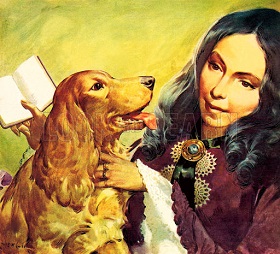
Elizabeth Barrett Browning en haar cocker spaniel, Flush. Illustratie door James E. McConnell


De Franse schrijver Stéphane Hoffmann werd geboren op 6 maart 1958 in Saint-Nazaire. Zie ook alle tags voor Stéphane Hoffmann op dit blog.

Uit: Les autos tamponneuses

“Je réussis une seule chose, au cours de ces semaines, un rituel : dix-neuf heures, champagne. Tous les jours. Tous les jours une bouteille nouvelle, une seule, au gré de notre cave. II y a des gens qui visitent les châteaux de la Loire, nous visitons la Champagne par ce qu’elle fait de mieux : ses vins. Et nous buvons en silence, seul le pétillement, sans nous permettre de ces commentaires que les amateurs se croient tenus de faire, ce qui m’a toujours paru aussi grossier que de parler pendant un concert. Hélène et moi nous livrons au vin de Champagne, qu’un seul mot transformerait en infecte bibine. J’aimerais alors lui parler des enfants, mais je n’ose pas. Pas encore. C’est trop tôt. Notre façon de nous retrouver, désormais : nous griser en silence. Voilà le mariage : des roses par douzaines, puis cirrhose
(…)

Pour me ressaisir, je me dis que, autant le champagne, cette légèreté qui électrise, va bien à Hélène, autant l’engourdissement du rhum semble convenir à Natalie, abandonnée à l’humeur du moment et n’y accordant pas plus d’importance qu’à celle qui va suivre. « Qu’est-ce donc que des jours pour valoir qu’on les pleure ? Un soleil, un soleil. Une heure, et puis une heure. » Ces vers de Lamartine, version 1830 de l’Ecclésiaste, ont toujours été ma pratique. Voilà pourquoi, sans doute, je ne ferai rien de ma vie. J’y ai juste tenu ma place, comme Natalie parmi les yachtmen, tout à l’heure, à la demande de son mari.
- Votre mari, c’est Lawton, c’est ça ? Jean-Charles Lawton ? Le pharmacien ?
Ce brave Dédé, toujours lourdingue. Le visage de Natalie se défait comme un pare-brise qui se fendille. C’est assez marrant à voir, on voudrait un ralenti. Elle approche la main du verre que je remplis en hâte, boit une longue gorgée.“


 1886459-9582edf8f0b881ac661f4c7314f9f77b.jpg
Stéphane Hoffmann (Saint-Nazaire, 6 maart 1958)


De Italiaanse beeldhouwer, schilder, architect en dichter Michelangelo werd geboren op 6 maart 1475 in Caprese. Zie ook alle tags voor Michelangelo op dit blog.


On The Brink Of Death

Like a frail bark reached that wide port where all
Are bidden, ere the final reckoning fall
Of good and evil for eternity.
Now know I well how that fond phantasy
Which made my soul the worshiper and thrall
Of earthly art, is vain; how criminal
Is that which all men seek unwillingly.
Those amorous thoughts which were so lightly dressed,
What are they when the double death is nigh?
The one I know for sure, the other dread.
Painting nor sculpture now can lull to rest
My soul that turns to His great love on high,
Whose arms to clasp us on the cross were spread.


Vertaald door John Addington Symonds


 1886459-7392d64c0ae6af20e2a8e8372d489d05.jpg
Michelangelo (6 maart 1475 – 18 februari 1564) 
Portret door  Domenico Cresti (Il Passignano), begin 17e eeuw


De Japanse schrijver Teru Miyamoto werd geboren op 6 maart 1947 in Kobe. Zie ook alle tags voor Tery Miyamoto op dit blog.

Uit: Kinshu: Autumn Brocade (Vertaald door Roger K Thomas)

“At length you glanced in my direction, then turned again to the scenery outside the window. Then you looked at me once more, your eyes wide with amazement. It seems as if we stared at each other for an eternity. I thought I should say something, but words failed me. I finally managed to say, "It's been a long time, hasn't it?" After responding, "Yes, it has," you looked at Kiyotaka with a blank expression and asked, "Is this your boy?" It was all I could do to answer in the affirmative, in a voice that was almost trembling. The clusters of trees with scarlet leaves flowing past both sides of the gondola were reflected indifferently in my eyes. How often have I been asked, "Is this your boy?" When Kiyotaka was smaller, with disabled limbs and a face that clearly revealed his mental retardation, some people would ask the question with an obvious look of pity, while others would contrive a sort of vacuity. Each time I would muster all my energy, look the person straight in the eye, and proudly answer, "Yes." Yet when you asked, "Is this your boy?" I was overcome by shame of a sort I had never experienced before, and replied hesitantly, in a weak voice. The gondola proceeded slowly up the mountain toward the landing platform by Dokko Pond. The Asahi Range was coming into view in the distance, while in a fold in the mountain below, the roofs of buildings in the resort town were minuscule points of reflected light. On the mountain slope, the lone red roof of a hotel, set apart from the others, appeared intermittently through gaps in the trees. I distinctly recall even now that for some reason it reminded me of a scroll painting from the Kamakura period depicting the flames of hell. Why did it make me think of something like that? Perhaps my nervousness and mental agitation had put me in a strange state of mind as the gondola swayed along. I should have been able to talk about all sorts of things with you during the twenty-minute ride, but I just sat in stony silence, thinking only of how soon we could arrive before I could get off. It was exactly the same as when we parted ten years ago.”


 1886459-1c184beb8fc5360619ce67c330edaddb.jpg
Teru Miyamoto (Kobe, 6 maart 1947)


De Zwitserse schrijver, fotograaf en journalist Nicolas Bouvier werd geboren op 6 maart 1929 in Lancy. Zie ook alle tags voor Nicolas Bouvier op dit blog.

Uit: L'Usage du Monde

“L’air de septembre est transparent, la vue porte loin, et ce qui domine c’est le vif brun montagnard tranché çà et là par un vol de perdrix, un bouquet de peupliers dont chaque feuille se dessine, les fumées d’un village. Aux endroits où l’eau le permet, des arbres rabougris bordent la route ; on roule alors sur un tapis de nèfles, de petites poires jaunies qu’on écrase, qui sentent, et dont l’odeur véhémente suffit pour transformer ces solitudes en campagne.
Solitudes ? Pas absolument. On y sent l’homme après la nature, mais une heure ne passe pas sans qu’on croise un de ces hauts camions vernis comme un jouet en bleu pervenche, en vert pistache, qui brille dans tout ce brun.
Un paysan sur son âne, une faucille chaude de soleil sous le bras. Un porc-épic. Ou une troupe de romanichels koutchi installés sous un saule avec leurs ours, leurs perruches, deux singes vêtus de gilets rouges cousus de grelots, tandis que les femmes – de grandes garces vociférantes – s’affairent autour d’un feu qui prend mal. On s’arrête, on s’amuse d’eux autant qu’ils s’amusent de vous, on repart.
(…)

A ce train-là, il se peut bien, le soir venu, qu’on n’ait fait qu’un seul petit col. Mais on n’a que lui en tête. C’est devenu une sorte de propriété. Au dîner on en reparle. On s’endort dessus, on en rêve. En pleine nuit la caravane dépassée à la montée rejoint l’étape, débâte dans un remue-ménage de lanternes et de voix qui vous réveillent : c’est encore du col qu’il s’agit. Pourtant il ne mérite pas même une mention sur la carte et les montagnes dignes de ce nom sont encore loin au nord. Ce n’est qu’une quarantaine de rampes au cœur d’alpages jaunis, et au sommet, une mosquée de pierres sèches dont l’étendard vert claque comme un mousquet dans le vent. On aura tout de même employé la journée à l’atteindre, le franchir et se l’approprier. Ici, prendre son temps est le meilleur moyen de n’en pas perdre.”


 1886459-96254d10a316429d2cd11965d9a801b6.jpg
Nicolas Bouvier (6 maart 1929 – 17 februari 1998)


De Noorse schrijver Jan Kjærstad werd geboren op 6 maart 1953 in Oslo. Zie ook alle tags voor Jan Kjærstad op dit blog.

Uit: The Discoverer (Vertaald door Barbara Haveland)

„Yet he hangs there, rigid. Still holding his breath. Or am I wrong? Does he bend down ever so slightly? I think — I know it sounds strange, but I almost believe he is trying to kneel.
One hand fumbles with the knot, as if he means to undo himself from the rope. "Sit!" I call sharply. "Don't look down." But he goes on staring, seeming more mesmerized than frightened now. Or infuriated perhaps, contemptuous. As if this were a set-to with Norway itself, a confrontation for which he has waited years — to stand on the edge of an abyss, without a safety net. I can see temptation written large on his face. He could let himself fall. He could realize the cliché which will forever be attached to his story: that of his downfall. The final, glorious headline.
"You're perfectly safe," I shout. "It's all in your head." I'm jittery too now, I check that the coil of rope is securely fixed around the sharp rock next to me. I know I can trust Martin, who has led the way, hammering in pitons at regular intervals, and is now out of sight behind some large boulders, a short rope-length from the bottom of the chimney. Martin has climbed everything from the Bonatti pillar to Ama Dablam. But never with such a partner, a man who — according to the newspapers — lost his head and shot a woman straight through the heart. I am uneasy. The uncertainty of the figure huddled against the rock face radiates towards me. I may have miscalculated. Perhaps I should have said no after all. Then he turns to me. His face is calm. I can see that he is breathing, drawing the cool mountain air deep into his lungs, hungrily. He smiles, even raises his hand in a wave, traverses onwards.
Behold this man. Behold this man, the bearer of a mystery.”

 1886459-1372b07842f0f1ba6f12f458633af70c.jpg
Jan Kjærstad (Oslo, 6 maart 1953)


Zie voor nog meer schrijvers van de 6e maart ook mijn vorige blog van vandaag.

Geschreven door Romenu om 11:56 Reageer op dit bericht

Cyrano de Bergerac, Elisabeth Castonier, Johan Bojer, Stanisław Jerzy Lec , Victoria Benedictsson, Luigi Alamanni

De Franse schrijver Savinien Cyrano de Bergerac werd geboren op 6 maart 1619 in Parijs. Zie ook alle tags voor Cyrano de Bergerac op dit blog.

Uit: Voyage dans la lune

“L’épouvantable horreur dont je fus consterné ne renversa point tellement les facultés de mon âme, que je ne me sois souvenu depuis de tout ce qui m’arriva dans cet instant. Vous saurez donc que la flamme ayant dévoré un rang de fusées (car on les avait disposées six à six, par le moyen d’une amorce qui bordait chaque demi-douzaine) un autre étage s’embrasait, puis un autre, en sorte que le salpêtre embrasé éloignait le péril en le croissant. La matière toutefois étant usée fit que l’artifice manqua ; et lorsque je ne songeais plus qu’à laisser ma tête sur celle de quelque montagne, je sentis (sans que je remuasse aucunement) mon élévation continuer, et ma machine prenant congé de moi, je la vis retomber vers la terre. Cette aventure extraordinaire me gonfla d’une joie si peu commune que, ravi de me voir délivré d’un danger assuré, j’eus l’impudence de philosopher dessus. Comme donc je cherchais des yeux et de la pensée ce qui pouvait être la cause de ce miracle, j’aperçus ma chair boursouflée, et grasse encore de la moelle dont je m’étais enduit pour les meurtrissures de mon trébuchement ; je connus qu’étant alors en décours, et la lune pendant ce quartier ayant accoutumé de sucer la moelle des animaux, elle buvait celle dont je m’étais enduit avec d’autant plus de force que son globe était plus proche de moi, et que l’interposition des nuées n’en affaiblissait point la vigueur.”


 1886454-cd2c32f159d305a9a7ce480af562b23e.jpg
Cyrano de Bergerac (6 maart 1619 – 28 juli 1655)
Standbeeld in Bergerac


De Duitse schrijfster Elisabeth Castonier werd geboren op 6 maart 1894 in Dresden. Zie ook alle tags voor Elisabeth Castinier op dit blog.

Uit: Exil im Nebelland. Briefe an Mary Tucholsky

“Great Bedwyn
Wiltshire 23.2.1959

Liebe Tucholska,
ich hoffe, Sie sind noch immer so krägel, wie ich Sie zuletzt sah – mit Bersaglieri-Hütchen und überhaupts. Bald bekommen Sie mein neues Buch - und im Rundfunk können Sie mancherlei von mir hören, falls Sie jemals aufdrehen sollten. Bildet man in Rottach schon wieder Nazi-Standarten? Es geht ja wieder zu wie einst im Appprill, warum auch nicht, warum sollte sich was ändern? Ich hoffe Sie sind dann nicht etwa Führerin der Ortsgruppe, denn dann esse ich keine Würstchen niemals nie nicht mehr mit Ihnen ! ! ! ! Das dürfte Sie abschrecken.
Ich, bin noch immer im Metallgestell eingespannt, ad infinitum, kann mich absolut nicht erholen. Muss eine strenge Entfettungskur machen, tu es auch, aber die Waage nimmt keine Notiz davon. – Wir sitzen im Nebel, Macmillan macht Unsinn in Moskau, die Königin niest in einem fort, weil sie’s wie alle Königlichen auf dem Beuschel hat, der fette zukünftige König bricht sich teils d’Füass, teils liegt er danieder und Philipp amüsiert sich im Osten, der Schlimme. Soweit von der Politik.
Ich habe statt dessen einen abessynischen Kater und wer das nicht kennt, ahnt nicht, wie süss es ist. - Meine älteste Katze Nana rollt sich nach dem Kater, obzwar sie längst kastriert ist, unsere Hündin trägt jetzt N ylonhöschen im Haus, die Tauben tanzen wie närrisch, die alten Hühner tun es mit Rigoletto, dem Hahn, die Schneeglöckchen blühen seit 2 Wochen und eine Rose versuchte neulich mal zu blühen, tat ihr aber leid - soviel vom F riehlink auf Nebelland.
Meine Freundin ist eifrig bemüht, viele Erdbeeren zu züchten, der Garten wird wieder eine preisgekrönte Herrlichkeit sein. Und hier ist eine kleine Leseprobe aus dem 2. Band, der 1960 erscheint. Der erste, den Sie bald kriegen, erscheint zu meinem ich sage es unverholen. Dasallein ist schon traurig. Man muss versuchen, drüber zu lachen. Und somit, wie stets
Ihre EC.}


 1886454-9f58eb54d64197cf3d84960f5af1385e.jpg
Elisabeth Castonier (6 maart 1894 – 24 september 1975)


De Noorse schrijver Johan Bojer werd geboren op 6 maart 1872 in Orkdal. Zie ook alle tags voor Johan Bojer op dit blog en ook alle tags voor J. Bojer.

Uit: The Last of the Vikings (Vertaald door Jessie Muir)

“Such things happen every year in the north of Norway, and for a day or two afterward the men talk about it; and then they go out on the same sea and begin fishing again.
The shop was full of men, all talking at once. Some of them had been on their way landward when the storm broke, and had got in safely; others had been brought in by the lifeboat, but some had only just come in after having been out in the storm all night.
One small, fair man in a yellow sou’wester was talking louder than all the others, and people were looking at him in surprise. Quite by chance he had been on shore the day before, and the boat he belonged to had gone down with all hands on board. It was evident that it had been so ordained, and that he was not meant to be with them that day. God’s ways were wonderful!
It was calm to-day, but cold. Men were standing out on the islands watching for boats that had not yet come in. The chief inspector had sent steamers out to look for any that had capsized. A great number of boats from fishing-stations many miles away had come in during the night, and they were now setting sail for their own stations in good weather.
Later in the day a steamer had come across a strange boat in the middle of the West Fiord. It was a Nordland boat, and her sail was closereeled, although there was little wind.
The steamer hove to, and found that the head-man at the helm was half dead, and that the other three men, who were sitting and holding on to the thwart, were frozen to death.
Spray had turned to ice in their hair and beards and upon their clothes, and they were staring straight before them with wide-open, glassy eyes.
Peter Suzansa that night had come safely in to Hammaroy, and it was with a heavy heart that he now sailed back across the West Fiord. He did not know how many men he knew might have been drowned, and he could not bear to think of Kristéver Myran and his men.”


 1886454-61797ada39458a46a765682a689d0315.jpg
Johan Bojer (6 maart 1872 – 3 juli 1959)


De Poolse dichter en aforist Stanisław Jerzy Lec werd geboren op 6 maart 1909 in Lemberg. Zie ook alle tags voor Stanislaw Jerzy Lec op dit blog.

Uit: Unkempt Thoughts (Vertaald door Jacek Galazka)


“All is in the hands of Man. Therefore you should wash them often.”


“Do not ask God the way to heaven; he will show you the hardest one.“


„Thoughts, like fleas, jump from man to man, but they don't bite everybody.”


 1886454-d475976ca39ae2933fb76844982936dd.jpg
Stanisław Jerzy Lec  (6 maart 1909 – 7 mei 1966)


De Zweedese schrijfster Victoria Maria Benedictsson werd geboren op 6 maart 1850 in Schonen. Zie ook alle tags voor Victoria Benedictsson op dit blog.

Uit: The Big Book (Vertaald door Verne Moberg)

“The rigid look of horror on her face gripped me so, I trembled deep in my soul. I had never before seen how repulsive and hideous this was.
I saw it now in this young face with its composed seriousness, its heavy sorrow, its tearless gaze. She looked as if life's happiness had passed her by and was now going far, far away, never to return. Only when I saw this warm, young full-blooded woman shrink back in the presence of this thing did I realize to my horror what it was: to drag one's best, most human feelings through the mud and then offer them up to the one person who has kept her own living clean. He had turned away from this wholesome young woman, for whom his feeling had begun to waken, and had gone to the sad gray sirens of the streets; he had touched them with his hands, and now he reached out these same hands to my child, for her to put her whole life into them, her whole world of feeling. And people don't call this arrogance! For me it was upsetting, frighteningly hideous. I asked if she would still think of him with the same feeling.
Yes, She couldn't feel anything but cold disgust.
Was it over Anna Whitlock or the other?
It was the other. She could not understand how -- after he'd already begun showing her attention -- it had been possible for him to go to the others. It was so disgusting.
I was afraid. A whole spider's nest of self-reproach was overturned upon me. Of course, I had known or at least surmised about his life, and not thought it was anything special: he'd lived like the others, and I hadn't felt repulsed by that, I could have kept them from getting together but had not done so.
I said that if she felt indifferent to him now, then she shouldn't keep from putting an end to it because of what people would say.”


 1886454-aff3669964adbdc66ed85a6d72e90beb.jpg
Victoria Benedictsson (6 maart 1850 – 21 juni 1888)
Cover 


De Italiaanse dichter Luigi Alamanni werd geboren op 6 maart 1495 in Florence. Zie ook alle tags voor Luigi Alamanni op dit blog.


Petrarca's Retreat

Vaucluse, ye hills and glades and shady vale,
So long the noble Tuscan bard's retreat,
When warm his heart for cruel Laura beat,
As lone he wandered in thy beauteous dale !
Ye flowers, which heard him oft his pains bewail
In tones of love and sorrow, sad, but sweet !
Ye dells and rocks, whose hollow sides repeat,
Even yet, his ancient passion's moving tale !
Fountain, which pourcst out thy waters green
In ever-flowing streams the Sorgue to fill,
Whose charms the lovely Arno's emulate !
How deeply I revere your holy scene,
Which breathes throughout the immortal poet still,
Whom I, perchance all vainly, imitate !


Vertaald door Sara Agnes Ryan


 1886454-616d3dc069f05ca6c22b91938e205157.jpg
Luigi Alamanni (6 maart 1495 – 18 april 1556)

Geschreven door Romenu om 11:54 Reageer op dit bericht

Thomas Acda

De Nederlandse cabaretier, acteur, schrijver en zanger Thomas Acda werd geboren in Amsterdam op 6 maart 1967. Acda groeide op in het Noord-Hollandse dorp De Rijp. Na de havo ging hij eerst naar de toneelacademie, maar hij stapte al snel over naar de Kleinkunstacademie in Amsterdam. Daar maakte hij voor het eerst kennis met Paul de Munnik. Ze studeerden in 1993 af met een gezamenlijke productie waarvoor ze de Pisuisse-aanmoedigingsprijs kregen. Daarna gingen ze eerst weer even ieder hun eigen weg. Acda trad een tijdje op met de band Herman en Ik. In 1995 kwamen Acda en De Munnik weer bij elkaar om samen een theatershow te maken met de naam Zwerf'On. Hun eerste cd 'Acda & De Munnik´ stond ruim 100 weken in de album top 100. In 2014 maakte het tweetal bekend te stoppen. Acda werd na zijn afstuderen naast zingen ook actief op verschillende andere terreinen. Hij speelde een gastrol in de televisieserie In voor en tegenspoed en zat een tijdje in de cabaretredactie van het programma Spijkers (later: Kopspijkers). Ook was hij tijdens de eerste zes seizoenen te zien in het panel van Dit was het nieuws. In het voorjaar van 2011 nam hij zijn rol als panellid weer op zich. Vanaf 1997 speelde hij in een aantal films, waaronder All stars, The missing link en Lek. De film All Stars was zo'n succes dat de serie All Stars volgde, waarin Acda wederom de rol van keeper Willem speelde. In 2004 speelde hij wederom in een film over voetbal getiteld In Oranje. Hij speelde ook in verschillende afleveringen van Flikken Maastricht. Voor zijn rol in Alles is Liefde uit 2007 ontving hij een Rembrandt in 2008. In 2014 speelde hij de hoofdrol in de televisieserie Jeuk. In 2015 debuteerde Thomas Acda als romanschrijver met het boek “Onderweg met Roadie.”

Uit: Onderweg met Roadie

“Nu ben je een van de twaalf!' De enorme zwarte vrouw schreeuwt het vanaf haar krukje bij de uitgang tegen iedereen die haar passeert. En dan neem ik voor het gemak aan dat er ergens onder die rollen en bulten een kruk staat, of deze vrouw moet over getrainde buikspieren beschikken.
'Sorry?'
'Slechts twaalf mensen zijn op de maan geweest. En jij bent er een van!' En of ik door wil lopen, maar dat laatste zegt ze met een wenk van haar ogen die mij dwingend naar buiten zwiept. Een grote hoeveelheid lillend vlees schiet langs haar ogen, die even trillend blijft hangen en dan al fibrillerend aan de terugweg begint. Ik heb niks tegen dikke mensen, laat dat duidelijk zijn. Als ik mocht kiezen verbleef ik het liefst in de buurt van Noord-Amerikanen uit de zuidelijke staten. Nu ben ik zelf toevallig slank, of nou, slank-ish, maar ook toen ik met heel mijn 125 kilo in New York van de boot stapte, voelde ik me in vergelijking met die Amerikaanse dikkerds meteen een stuk gezonder. Iedereen is hier gigantisch. Dat krijg je ervan als een paprika hetzelfde kost als zes cheeseburgers. Maar goed, eerst deze over de kruk gezakte appeltaart fileren.
Slechts twaalf mensen? Plus ikzelf dus. Kom ik op dertien, volgens de laatste gangbare telmechanismen. Als een sportman schiet ik in de juiste modus: de bal komt op me af en alles in mij reageert zoals ik het al jaren gewend ben. Ik blijf dramatisch staan en kijk omhoog. Boven de deur staan twaalf namen. Armstrong voorop, uiteraard. Even de lijst scannen, op zo'n manier dat ze mijn ogen gaat volgen... Ik draai me gespeeld teleurgesteld om. Mijn naam staat er niet bij. Dat komt natuurlijk omdat ik niet echt op de maan geweest ben, maar in een soort veredelde schuur sta die ze het New Mexico Museum of Space History durven te noemen. Een donkere hal waarin een hoop zand ligt dat verrassend veel lijkt op het zand buiten waar ik de auto en de hond heb achtergelaten. Bovendien zijn er vandaag al minstens honderddertig bezoekers geweest, die allemaal 'Nu ben jij een van de twaalf' uit een spelonk van Jabba de Hutt op zich af hebben horen vuren. Achter mij nog minstens zesentwintig man die eenzelfde lot te wachten staat.”


 1920815-92dacbe7bd10fd58cbd544f70ce0f1ed.jpg
Thomas Acda (Amsterdam, 6 maart 1967)

Geschreven door Romenu om 00:00 Reageer op dit bericht

Meer van Romenu

↑ Terug naar de berichten