Naar de inhoud

Romenu

Over literatuur, gedichten, kunst en cultuur
akke.beakke.be

Berichten van 1 mei 2016 tot 2 mei 2016

Esther Freud, Jef Last, Gottfried Benn, Rob Waumans, Tilman Rammstedt, James Holmes, Wytske Versteeg, Novalis
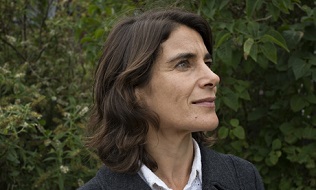
De Engelse schrijfster Esther Freud werd geboren in Londen op 2 mei 1963. Zie ook alle tags voor Esther Freud op dit blog.

Uit: Lucky Break

“When the Lindens arrived in Los Angeles it was raining. Not drizzling, or even pouring, but streaming down outside the glass doors of the arrivals lounge in thick, grey sideways slices. Water sluiced along the airport roads, tumbling in the gutters, spinning in the wheels of the taxis that splashed up to collect the lucky people at the head of the queue.
Dan and Jemma stood and stared out through the sheets of glass. ‘Blimey,’ they said, almost in unison and Dan put his hand up to his mouth and laughed.
‘I’m cold.’ Their eldest child, Honey, shivered in her pink T-shirt and Dan knelt down to rifle through the bags, removing as he did so numerous insubstantial outfits which they’d packed with the expectation that the five of them, lifted out of a grey London morning, would be enjoying an endless bright blue Californian afternoon.
Dan and Jemma had rented a house in the hills. The house had been recommended by a friend of Dan’s, although at the last minute his wife had interjected: They can’t stay up there! They’ve got to be by the ocean. In Santa Monica.
‘But Santa Monica’s extortionate, and you don’t even get a pool,’ Dan’s friend had told her, ‘and what’s the point of LA if there’s no pool?’
Jemma and Dan had listened nervously. They’d already said yes to the house in the hills, paid their deposit, filled in numerous forms for insurance, gas, electric and telephone, and so neither of them mentioned Santa Monica or the ocean again. Instead they talked about the pool. ‘The pool, the pool,’ they repeated like a charm and the children tugged on their swimming costumes, blew up their arm bands, and ran shrieking up and down the draughty, carpeted stairs of their north London home.
The higher they drove the more heavily it rained. It clattered on the roof of the taxi and washed in sheets over the windscreen, and occasionally when the driver stopped to call the number they gave him for directions they could see the water rushing past them down hill over the cobbled streets. ‘Got it, got it,’ he assured their landlord who was waiting with the key, but then almost immediately they became lost again, roaring along narrow roads, catching glimpses of lit-up Spanish villas and rain soaked ferns and the same few street names over and over again.”


 1909672-3bee8d6470c1b07da0fbd8304e9d7253.jpg
Esther Freud (Londen, 2 mei 1963)


De Nederlandse dichter en schrijver Josephus Carel Franciscus (Jef) Last werd geboren in Den Haag op 2 mei 1898. Zie ook alle tags voor Jef Last op dit blog.


De onbekende machinist

Naar Groningen, naar Emmerik
naar Deventer en Nieuwe Schans
naar Maastricht Zutfen Zevenaar
staan lange zwarte treinen klaar
onder de holle zwarte kap.
de spreker en de zakenman
de kruier en de officier
matroos en meisjes van pleizier
ze stroomen langs de zwarte trap
ze zoeken zich een plaats en dan
neemt één een krant neemt één een boek
ze leunen rustig in hun hoek
de stoom uit de machine sist
de chef wenkt af
de trein vertrekt
géén kent den machinist.
 
Langs Enschedee en Emmerik
door Apeldoorn en Amersfoort
langs Bussum Weesp en Diemerbrug
rijden de treinen heen en terug
over de rechte stalen baan.
in Telegraaf en Handelsblad
leest zakenman en heilsoldaat
van Hitler's Duitsche tuchthuisstaat
ze steken hun cigaren aan:
- die jodenhaat is erg, maar dat
een sterke man, als hier Colijn
daar orde schept, is zoo 't moet zijn
een lesje voor den kommunist.
't gesprek verstomt
de trein snelt voort
géén kent den machinist.
 
 In Düsseldorf en Elberfeld
in Wedding, Hamburg en Spandau
in kelder kerker kamp en cel
turen de oogen smart'lijk fel
naar ieder teeken van verzet.
de leider en de stempelaar
de werker en de kunstenaar
de vrouw en dochter hunkeren naar
het eerste blijk van makkerschap.
en ergens op een donkere trap
grijpt één een krant één een pamflet
hun hart heeft weer in vlam gezet
de strijdroep van den kommunist
de hoop leeft voort
de opstand groeit
dat deed de machinist.


 1909672-f2f72b031675f5d1d03e88ae72611bd7.jpg
Jef Last (2 mei 1898 – 15 februari 1972)
In 1968


De Duitse dichter en schrijver Gottfried Benn werd geboren in Mansfeld op 2 mei 1886. Zie ook alle tags voor Gottfried Benn op dit blog.


Dir auch

Dir auch –: tauschen die Nächte
dich in ein dunkleres Du,
Psyche, strömende Rechte
schluchzend dem andern zu,
ist es auch ungeheuer
und du littest genug:
Liebe ist Wein ins Feuer
aus dem Opferkrug.

Selbst du beugst dich und jeder
meint, hier sei es vollbracht,
ach, in Schattengeäder
flieht auch deine, die Nacht,
wohl den Lippen, den Händen
glühst du das reinste Licht,
doch die Träume vollenden
können wir nicht.

Nur die Stunden, die Nächte,
wo dein Atem erwacht,
Psyche, strömende Rechte,
tiefe tauschende Nacht,
ach, es ist ungeheuer,
ach, es ist nie genug
von deinem Wein im Feuer
aus dem Opferkrug.


Wer allein ist

Wer allein ist, ist auch im Geheimnis,
immer steht er in der Bilder Flut,
ihrer Zeugung, ihrer Keimnis,
selbst die Schatten tragen ihre Glut.

Trächtig ist er jeder Schichtung
denkerisch erfüllt und aufgespart,
mächtig ist er der Vernichtung
allem Menschlichen, das nährt und paart.

Ohne Rührung sieht er, wie die Erde
eine andere ward, als ihm begann,
nicht mehr Stirb und nicht mehr Werde:
formstill sieht ihn die Vollendung an.


 1909672-c4645272a775f8db65d9ff6603d76f82.jpg
Gottfried Benn (2 mei 1886 - 7 juli 1956)
De Gottfried Benn bibliotheek in Steglitz-Zehlendorf, Berlijn


De Nederlandse schrijver Rob Waumans werd geboren in Alkmaar op 2 mei 1977. Zie ook alle tags voor Rob Waumans op dit blog.

Uit: De nacht van Lolita

"De eerste keer dat ik zag dat mijn vader mijn moeder sloeg, lag ik op de grond naast de bank te spelen en zag mijn vader tegenover mijn moeder staan. Zijn hand vloog door de lucht, ik hoorde het kletsende geluid. Mijn moeder viel achterover, tegen de zijkant van de eettafel. Van die tijd zijn me geen gezellige verjaardagen of lange boswandelingen bijgebleven, alleen. Dat mijn vader mijn moeder tegen de grond sloeg en dat ik daar niets aan kon doen."
(…)

“Prima”, en ik kijk hoe mijn moeder naar het koffiezetapparaat kijkt. Naar de koffie die langzaam de pot vult. En weer voel ik de drang om mijn vader iets vreselijks aan te doen. Ik kan niet wachten tot de ouderdom van mijn vader tot d e dood leidt. Dan pas denk ik aan de mogelijkheid dat mijn moeder eerder kan overlijden dan mijn vader."


 1909672-af059216324b418b8bb6774ef0276c40.jpg
Rob Waumans (Alkmaar, 2 mei 1977)


De Duitse schrijver Tilman Rammstedt werd geboren op 2 mei 1975 in Bielefeld. Zie ook alle tags voor Tilman Rammstedt op dit blog.

Uit: Der Kaiser von China

„Ja", sagte ich zu der Frau am Telefon, und „Nein" sagte ich und „Gut", obwohl nichts gut war, weil ich nun zwar ein Problem weniger hatte, dafür aber etliche neue, und ich legte auf, nahm die letzte Postkarte aus dem Stapel und glaubte zu wissen, dass ich traurig war.
Auf der Vorderseite der Postkarte war die Statue eines dicken Mannes zu sehen, der in einer goldenen Blüte auf einem Elefanten sitzt, die Rückseite war übersät mit den winzigen knorrigen Buchstaben meines Großvaters, die zu Entziffern ich schon immer mühsam fand, die nun aber, wie ich feststellte, zu vollkommener Unlesbarkeit verkommen waren, selbst mit einer Lupe konnte ich keine wiederkehrenden Strukturen ausmachen, noch nicht einmal die Vokale eingrenzen. Bevor ich aufgab, hatte ich ein „Ich" entdeckt, ein „Berg" und ein „Morgen" oder „Mögen" oder „Magen", aber ganz sicher war ich mir da nicht
Nur der letzte Satz war deutlich geschrieben, größer als der Rest und genau wie die Adresse in Druckbuchstaben, so tief in die Karte gekerbt, dass sie sich auf der Rückseite spiegelverkehrt in den Elefanten drückten. „Du hättest mitkommen sollen", stand da, und dahinter hatte mein Großvater noch ein keilförmiges Ausrufezeichen gesetzt, das mich endgültig davon überzeugen sollte, dass es sich um keine nette Floskel handelte, um keinen Ausdruck des zugeneigten Bedauerns, sondern um eine handfeste Enttäuschung, um einen Vorwurf, um eine Drohung, und weil es nun seine letzte Karte war, drohte es besonders, als ob er nicht gestorben wäre, wenn ich mitgekommen wäre, als ob er dann nicht in diesem gottverlassenen Kaff, von dem ich nicht einmal genau wusste, wo es lag, auf einmal zusammengebrochen wäre, sondern wenigstens in China, oder am besten gar nicht, er hätte sich, wenn ich mitgekommen wäre, nur kurz an mir festhalten müssen, „Nichts, mir ist nur etwas schwindelig", hätte er gesagt, und ich hätte ihn zu einer Parkbank gebracht, ihm eine Flache Wasser gekauft, weil mir nichts anderes eingefallen wäre, weil auch nichts anderes nötig gewesen wäre, „Geht schon wieder", hätte mein Großvater nach ein paar Minuten gesagt und seinen Kamm rausgeholt, die Frisur wäre sein größtes Problem gewesen.“


1909672-727d8a45f882a1228aea71b140347a78.jpg
Tilman Rammstedt (Bielefeld, 2 mei 1975)


De Amerikaanse dichter en vertaler James Stratton Holmes werd geboren in Collins, Iowa, op 2 mei 1924. Zie ook alle tags voor James Holmes op dit blog.

Uit: A Long Night In Leatherland (Verschenen onder het pseudoniem Jacob Lowland)

“And then he appears: Kurt. He comes from downstairs…must have been there anyhow, I came back up too fast. He sees me, recognition shines in his eyes, then he quickly looks to the ground. But he walks along. Now what? In a nick of time he’s back, a bottle of beer and a glass of bitter in his hands. “Please sir, may I offer you a beer?” How sweet life sometimes is. We talk. His name isn’t Kurt, but Karl. He has been in Amsterdam for only a short while, has to go back to Hamburg again in the morning, where he studies History. He has had a master for two years, now he is alone. And lonely.
“Please, sir, could I stay with you, for tonight?” A question which causes a misunderstanding: I think he wants to come with me, but he doesn’t want to. He doesn’t want to sleep, this last night in Amsterdam, he wants to stay in the scene until it’s time for his train. Wants to do things here. And that’s what we do. Him, handcuffed, serving me, here at the bar. After a few minutes he asks:”Please, sir, may I be, uh… what’s the word…permitted to wear your slave collar?”
“No”, I say,”That’s not until I’m sure. And then it’s gonna be locked on. For good.” Disappointment flashes over his face, disappears in a shy smile. Again he’s off to get some booze. Later, downstairs in the sling, my fist into the depths. And even later, both satisfied and content, talking, in silence and drinking, me on the motorbike, him squatted in front of me. It’s as if the leathergod has drawn a magical circle around us, so far away  everything seems that’s happening around us.”


 1909672-99e5b5ab7464ab000303cb1f1055c78c.jpg
James Holmes (2 mei 1924 - 6 november 1986)


De Nederlandse schrijfster Wytske Versteeg werd geboren op 2 mei 1983. Zie ook alle tags voor Wytske Versteeg op dit blog.

Uit: Quarantaine

“De ziekte kwam toen niemand er meer op gerekend had. Het eerste geval werd niet opgemerkt, of veel te laat, dat was iets waar de kranten over discussieerden. Rituele uitingen van ongenoegen. Die eerste maand dachten de media dat er een onderzoek zou komen, er werd nog gesproken van Kamercommissies.
Hilarisch, achteraf bezien.
Natuurlijk hadden we ervan gehoord, al eerder, maar uitsluitend als iets wat zich ver weg afspeelde. Het viel geen nieuws te noemen toen de ziekte zich verspreidde, gestaag de grenzen over kroop van landen die altijd problemen hadden. We zagen de beelden elke avond, met steeds een groter stukje van de kaart gekleurd, dat was niet meer dan te verwachten. Onze angst bewaarden we voor andere zaken; we dachten veel aan terrorisme, vliegtuigrampen, af en toe aan het klimaat. Nog altijd bevond de ziekte zich op een ander continent, totdat dat plotseling niet meer zo was.
Toen pas begon de paniek.
Zolang de ziekte zich tot Afrika beperkt had, was het niet de moeite waard geweest er geld aan te besteden dat nooit zou worden terugverdiend. Nu wist niemand wat ertegen te doen viel. Er was geen tijd voor dubbelblinde onderzoeken, het was een kwestie van geluk wanneer een enkeling de ziekte overleefde. Als arts volgde ik de berichten met professionele interesse, maar zelfs voor mij beperkte de ziekte zich in die tijd tot de rand van mijn blikveld, iets wat zo nu en dan opflakkerde en daarna meteen weer verdween.”


 1909672-204a3bdd1054824e708eaf21d0a47195.jpg
Wytske Versteeg (Amsterdam (?), 2 mei 1983)


De Duitse dichter en schrijver Novalis werd geboren in Oberwiederstedt op 2 mei 1772. Zie ook alle tags voor Novalis op dit blog.

Uit: Hymnen an die Nacht (Fragment)

4
Nun weiß ich, wenn der letzte Morgen seyn wird - wenn das Licht nicht mehr die Nacht und die Liebe scheucht - wenn der Schlummer ewig und nur Ein unerschöpflicher Traum seyn wird. Himmlische Müdigkeit fühl ich in mir. - Weit und ermüdend ward mir die Wallfahrt zum heiligen Grabe, drückend das Kreutz. Die krystallene Woge, die gemeinen Sinnen unvernehmlich, in des Hügels dunkeln Schooß quillt, an dessen Fuß die irdische Flut bricht, wer sie gekostet, wer oben stand auf dem Grenzgebürge der Welt, und hinübersah in das neue Land, in der Nacht Wohnsitz - warlich der kehrt nicht in das Treiben der Welt zurück, in das Land, wo das Licht in ewiger Unruh hauset.
Oben baut er sich Hütten, Hütten des Friedens, sehnt sich und liebt, schaut hinüber, bis die willkommenste aller Stunden hinunter ihn in den Brunnen der Quelle zieht - das Irdische schwimmt obenauf, wird von Stürmen zurückgeführt, aber was heilig durch der Liebe Berührung ward, rinnt aufgelöst in verborgenen Gängen auf das jenseitige Gebiet, wo es, wie Düfte, sich mit entschlummerten Lieben mischt.
Noch weckst du, muntres Licht den Müden zur Arbeit - flößest fröhliches Leben mir ein - aber du lockst mich von der Erinnerung moosigem Denkmal nicht. Gern will ich die fleißigen Hände rühren, überall umschaun, wo du mich brauchst - rühmen deines Glanzes volle Pracht - unverdroßen verfolgen deines künstlichen Werks schönen Zusammenhang - gern betrachten deiner gewaltigen, leuchtenden Uhr sinnvollen Gang - ergründen der Kräfte Ebenmaß und die Regeln des Wunderspiels unzähliger Räume und ihrer Zeiten. Aber getreu der Nacht bleibt mein geheimes Herz, und der schaffenden Liebe, ihrer Tochter.


 1909672-a9915f71c8da7621e5d7bed92be02566.jpg
Novalis (2 mei 1772 - 25 maart 1801)
Schloss Oberwiederstedt, het geboortehuis van Novalis 


Zie voor nog meer schrijvers van de 2e mei ook mijn blog van 2 mei 2015 deel 2 en eveneens deel 3.
Geschreven door Romenu om 18:43 Reageer op dit bericht

Guido Gezelle, Johano Strasser, Yasmina Reza, Joseph Heller, Yánnis Rítsos

De Vlaamse dichter Guido Gezelle werd geboren in Brugge op 1 mei 1830. Zie ook mijn blog van 1 mei 2010 en verder alle tags voor Guido Gezelle.


Peren

Gebogen hangt het perenhout,
bevallig, onder ‘t menigvoud
gedrag, dat hem bewonderen laat
alom, en op de bomen staat.

Zo druiven, in malkaâr geklist,
bij grote en dikke krabben is ‘t,
dat top en takken, scheefgelaân,
bezwijkend, van de peren staan.

Hoe schone, als ‘t lieve zonnelicht
daarop zijn mooie stralen zicht;
en, geluw-, groen- en grauwgeveld,
fijn goud op al die peren smelt!

Hoe spannen ze, in hun ronde glans,
vol zerpe en zoete zeupen gans;
die, borstgeeene en lijfgenoot,
nog wassen, bij de moederschoot!

Het staat er die, vol rode schijn,
bloedverwig als de kaken zijn
van menig menig mensenkind,
dat m'hier en daar ten boere vindt.

Het staat er, effenbruin van bast,
aan klene, tere takken vast;
die ‘k puilen zie, alhier, aldaar,
ter pelen uit en... ponden zwaar.

Vaarwel, die zulke giften laat,
o zonne, aleer gij henengaat,
en elders weunt, de lange tijd
dat ‘t wintert, en ge onzichtbaar zijt.

Dat ‘t donker is, dat ‘t waait en buist;
dat verre is al het groen verhuisd;
dat, naakt, of heel met ijs belaân,
onvriendelijk de bomen staan.

Vaarwel, o zonne!... Hij is groot,
diens hand u in de hemel schoot;
diens goedheid, die geen' beurte en kent,
bij beurten, ons die zomer zendt.

o Eeuwig goede, om al het goed
dat ‘t bakelen van de zonne doet
onze onbeholpen schamelheid,
zij lof en ere u toegezeid!


Het kruis

Het kruis ontliet de mens
uit 's vijands helse banden;
met 't kruise wijden hem,
in 't doopsel, 's priesters handen;
gebiecht, gevormd, berecht,
getrouwd, gezalfd in 't kruis,
nog wijst hem 't kruis de weg
naar hier, zijn laatste thuis.
o kruise, dat daar staat,
och, of zij 't allen wisten,
gij zijt het teken en
de hoop van elke christen:
zo Christus leefde en stierf,
in kruisen en verdriet,
zo zult gij, of ge en volgt
in Zijn triomf hem niet!


Ach licht en is het lot van al

Ach licht en is het lot van al,
zo menig band wordt keten;
zo menige en zo groot getal
die 't blijzijn haast vergeten!


 1909166-74e7835b128d73315cb090fed3bbd75c.jpg
Guido Gezelle (1 mei 1830 – 27 november 1899)
Standbeeld in Brugge


De Duitse dichter en schrijver Johano Strasser werd geboren op 1 mei 1939 in Leeuwarden. Zie ook alle tags voor Johano Strasser op dit blog.


Auf der Schwelle
Für Franziska

Das Glück:
An einem Sommermorgen
Aus der Haustür zu treten
Und für einen Moment
Nicht zu wissen wer du bist

Makellos die Dinge
Die Lebewesen
Vollzählig als hätte man dich im nachhinein
Dem Universum hinzugefügt
Als eine Art Nachgedanken
(Oder weil es vielleicht doch
Nicht ohne dich geht)

Aber dann der Verdacht
Es habe sich womöglich
Nichts Nennenswertes ereignet seit
Die letzte Eiszeit den See ausgrub
Und den Lehmhügel aufwarf
Hinter dem Haus

Glänzend
Wie ein Seidenfaden
Schwebt der Gedanke im Morgenlicht
Ein leichtes fast unhörbares Klopfen
Ein Rascheln vielleicht
Ein Knistern
Mehr nicht

Das also ist es was bleibt
Wenn der Tod nach mir greift:
Eine Welt


 1909166-3fdeed6b4c35ab8c973efb98875aa282.jpg
Johano Strasser (Leeuwarden, 1 mei 1939)


De Franse schrijfster Yasmina Reza werd geboren op 1 mei 1960 in Parijs. Zie ook alle tags voor Yasmina Reza op dit blog.

Uit: Une désolation

« Si tu ouvres le placard de la salle de bain de Nancy, tu as la plus parfaite vision du pathétique humain.
Nancy feint de vieillir avec courage. Un instant, j'ai même craint que forte de sa nouvelle spiritualité, elle n'accepte rides et moustache et se mette, canne en main, à battre les sentiers. Il n'en est rien. Ouvre son placard. Antre de la guerre secrète que Nancy a déclaré contre le temps. Tu tombes, ma dernière découverte en ce réduit de démence, sur "Exfoliating Force C Radiance". Nouveauté que je n'aurais jamais remarquée, ne fût-ce la taille de la boîte et la violence de son orangé. Tu sais que je n'ai jamais bien manié l'anglais. "Exfoliating !" Pauvre Nancy, me dis-je. Pauvre petite, qui veut plaire une heure ou deux encore avant d'en finir. Pauvre créature qui s'abrase la gueule, ivre d'arracher à la vie son petit reste de piment. "Mais pourquoi Nancy, lui dis-je, pourquoi tellement de produits? En faut-il autant?" Nancy hausse les épaules et met tout de suite la conversation sur le fait que j'ai osé m'aventurer dans sa salle de bain strictement privée, ouvrir son placard strictement privé pour m'intéresser, au mépris du plus élémentaire respect, à des objets strictement privés. Tandis qu'elle énonce pour la quatre cent douzième fois les principes de son intimité, j'observe son visage abreuvé de toutes les conneries du placard interdit, visage gentiment effondré, visage tremblant de bien faire, visage en route calme vers sa fin.
(…)

Je te félicite mon vieux, en une génération tu balaies le seul credo qui m'ait jamais animé. Moi dont la seule terreur est la monotonie des jours, moi qui pousserais les battants de l'enfer pour fuir cet ennemi mortel, j'ai un fils qui savoure des fruits exotiques chez les canaques. La vérité a plusieurs visages, m'a dit ta soeur dans un élan de connerie. Certes. Mais la vérité sous les traits du mangeur de papayes m'est opaque, sais-tu."


 1909166-b62c8d1a97efbb681cd391b9597352b5.jpg
Yasmina Reza (Parijs, 1 mei 1960)


De Amerikaanse schrijver Joseph Heller werd geboren in New York op 1 mei 1923. Zie ook alle tags voor Joseph Heller op dit blog.

Uit: Closing Time

“The attendants wore red jackets and green jockey caps and many smelled of whiskey. Tilyon had lived on Sorf Avenue in his own private house, a substantial wooden structure with a walkway to the stoop from a short flight of stone steps that descended right to the margin of the sidewalk and appeared to be sinking. By the time I was old enough to walk past on my way to the public library, subway station, or Saturday movie matinee, his family name, which had been set in concrete on the vertical face of the lowest step, was already sloping out of kilter and submerged more than halfway into the ground. In my own neighborhood, the installation of oil burners, with the excavations into the pavement for pipes and fuel tanks, was unfailingly a neighborhood event, a sign of progress.
In those twenty more years we will all look pretty bad in the newspaper pictures and television clips, kind of strange, like people in a different world, ancient and doddering, balding, seeming perhaps a little bit idiotic, shrunken, with toothless smiles in collapsed, wrinkled cheeks. People I know are already dying and others I've known are already dead. We don't look that beautiful now. We wear glasses and are growing hard of hearing, we sometimes talk too much, repeat ourselves, things grow on us, even the most minor bruises take longer to heal and leave telltale traces.
And soon after that there will be no more of us left.
Only records and mementos for others, and the images they chance to evoke. Someday one of the children -- I adopted them legally, with their consent, of course -- or one of my grown grand-children may happen upon my gunner's wings or Air Medal, my shoulder patch of sergeant's stripes, or that boyish snapshot of me -- little Sammy Singer, the best speller of his age in Coney Island and always near the top of his grade in arithmetic, elementary algebra, and plane geometry -- in my fleecy winter flight jacket and my parachute harness, taken overseas close to fifty years back on the island of Pianosa off the western shore of Italy. We are sitting with smiles for the camera near a plane in early daylight on a low stack of unfused thousand-pound bombs, waiting for the signal to start up for another mission, with our bombardier for that day, a captain, I remember, looking on at us from the background.“


 1909166-e8acda4897321059ab02d303f9b2b6b3.jpg
Joseph Heller (1 mei 1923 – 12 december 1999)


De Nieuwgriekse dichter Yánnis Rítsos werd geboren op 1 mei 1909 in Monemvasia. Zie ook mijn blog van 1 mei 2010 en verder alle tags voor Yánnis Rítsos.


Moonlight Sonata (Fragment)

Once it too was new – not the photograph that you are starting at so dubiously –
I mean the armchair, very comfortable, you could sit in it for hours
with your eyes closed and dream whatever came into your head
– a sandy beach, smooth, wet, shining in the moonlight,
shining more than my old patent leather shoes that I send each month to the shoeshine shop on the corner,
or a fishing boat’s sail that sinks to the bottom rocked by its own breathing,
a three-cornered sail like a handkerchief folded slantwise in half only
as though it had nothing to shut up or hold fast
no reason to flutter open in farewell. I have always has a passion for handkerchiefs,
not to keep anything tied in them,
no flower seeds or camomile gathered in the fields at sunset,
nor to tie them with four knots like the caps the workers wear on the construction site across the street,
nor to dab my eyes – I’ve kept my eyesight good;
I’ve never worn glasses. A harmless idiosyncracy, handkerchiefs.

Now I fold them in quarters, in eighths, in sixteenths
to keep my fingers occupied. And now I remember
that this is how I counted the music when I went to the Odeion
with a blue pinafore and a white collar, with two blond braids
  – 8,16,32,64 –
hand in hand with a small friend of mine, peachy, all light and picked flowers,
(forgive me such digressions – a bad habit) – 32, 64 – and my family rested
great hopes on my musical talent. But I was telling you about the armchair –
gutted – the rusted springs are showing, the stuffing –
I thought of sending it next door to the furniture shop,
but where’s the time and the money and the inclination – what to fix first?
I thought of throwing a sheet over it – I was afraid
of a white sheet in so much moonlight. People sat here
who dreamed great dreams, as you do and I too.
and now they rest under earth untroubled by rain or the moon.
Let me come with you.


Vertaald door Peter Green en Beverly Bardsley


 1909166-8c94bdf9441fdb2a27ef9c331722f290.jpg
Yánnis Rítsos (1 mei 1909 — 11 november 1990)
Borstbeeld in  Monemvasia


Zie voor nog meer schrijvers van de 1e mei ook mijn vorige twee blogs van vandaag.

Geschreven door Romenu om 13:37 Reageer op dit bericht

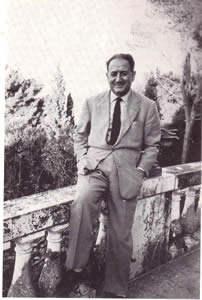
Antal Szerb, Ignazio Silone, Aleksander Wat, Viktor Astafiev, Reinier van Genderen Stort

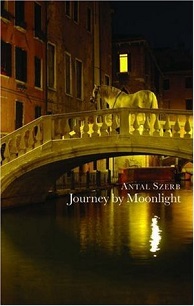
De Hongaarse schrijver Antal Szerb werd geboren op 1 mei 1901 in Boedapest. Zie ook mijn blog van 1 mei 2010 en verder alle tags voor Antal Szerb.

Uit: Journey by Moonlight (Vertaald door Len Rix)

“On the train everything seemed fine. The trouble began in Venice, with the back-alleys.
Mihály first noticed the back-alleys when the motor-ferry turned off the Grand Canal for a short cut and they began appearing to right and left. But at the time he paid them no attention, being caught up from the outset with the essential Veniceness of Venice: the water between the houses, the gondolas, the lagoon, and the pink-brick serenity of the city. For it was Mihály’s first visit to Italy, at the age of thirty-six, on his honeymoon.
During his protracted years of wandering he had travelled in many lands, and spent long periods in France and England. But Italy he had always avoided, feeling the time had not yet come, that he was not yet ready for it. Italy he associated with grown-up matters, such as the fathering of children, and he secretly feared it, with the same instinctive fear he had of strong sunlight, the scent of flowers, and extremely beautiful women.
The trip to Italy might well have been postponed forever, but for the fact that he was now married and they had decided on the conventional Italian holiday for their start to married life. Mihály had now come, not to Italy as such, but on his honeymoon, a different matter entirely. Indeed, it was his marriage that made the trip possible. Now, he reasoned, there was nothing to fear from the danger Italy represented.
Their first days were spent quietly enough, between the pleasures of honey-mooning and the gentler, less strenuous forms of sightseeing. Like all highly intelligent and self-critical people, Mihály and Erzsi strove to find the correct middle way between snobbery and its reverse. They did not weary themselves to death ‘doing’ everything prescribed by Baedeker; still less did they wish to be bracketed with those who return home to boast, “The museums? Never went near them,” and gaze triumphantly at one another.
One evening, returning to their hotel after the theatre, Mihály felt he somehow needed another drink. Quite what of he wasn’t yet sure, but he rather hankered after some sort of sweet wine and, remembering the somewhat special, classical, taste of Samian, and the many times he had tried it in Paris, in the little wine merchant’s at number seven rue des Petits Champs, he reasoned that, Venice being effectively Greece, here surely he might find some Samian, or perhaps Mavrodaphne, since he wasn’t yet quite au fait with the wines of Italy. He begged Erzsi to go up without him. He would follow straightaway. It would be just a quick drink, “really, just a glass” he solemnly insisted as she, with the same mock-seriousness, made a gesture urging moderation, as befits the young bride.”


 1909160-658215f21e8cf1fafc146ef6f334bc0f.jpg
Antal Szerb [1 mei 1901 – 27 januari 1945)
Cover


De Italiaanse schrijver Ignazio Silone werd geboren op 1 mei 1900 in Pescina dei Marsi. Zie ook mijn blog van 1 mei 2010 en verder alle tags voor Ignazio Silone.

Uit: Le pain et le vin (Vertaald door J.P. Samson)

« L'institutrice rougit, s'embrouilla et personne n'y comprit plus rien. Enfin, elle eut un éclair de génie, elle imposa le silence et dit :
- La révolution rurale a sauvé le pays du péril communiste.
- Qui sont les communistes ? demanda Grascia.
La maîtresse était sauvée. Elle n'avait plus besoin de réfléchir.
- Je vous l'ai déjà expliqué plusieurs fois, mais je peux vous le répéter. Les communistes sont des malfaiteurs. Ils se réunissent de préférence la nuit, dans les égoûts de la ville. Pour devenir communiste, il faut fouler au pied le crucifix. Lui cracher à la figure et promettre de manger de la viande le vendredi saint.
- Qui la leur donne, la viande ? demanda Chatap. Ils la reçoivent gratuitement ou ils doivent la payer ?
- Je n'en ai pas connaissance, dit l'institutrice.
- En somme, protesta le vieux Grascia, le plus important, vous ne le savez jamais. »


 1909160-3b191ea98265b4a76108cb39afaf8136.jpg
Ignazio Silone (1 mei 1900 – 22 augustus 1978)


De Poolse schrijver en dichter Alexander Wat werd geboren op 1 mei 1900 in Warschau. Zie ook mijn blog van 1 mei 2010 en verder alle tags voor Aleksander Wat.


Japanese Archery

1.
The hand tells the bowstring:
    Obey me.
The bowstring answers the hand:
    Draw Valiantly.
The bowstring tells the arrow:
    O arrow, fly.
The arrow answers the bowstring:
    Speed my flight.
The arrow tells the target:
    Be my light.
The target answers the arrow:
    Love me.

2.
The target tells arrow, bowstring, hand and eye:
    Ta twam asi.
Which means in a sacred tongue:
    I am Thou.

3.
(Footnote of a Christian:
O Mother of God,
watch over the target, the bow, the arrow
and the archer).


Vertaald door Richard Lourie


 1909160-9290aeba57a09eb1be107b09b6171b31.jpg
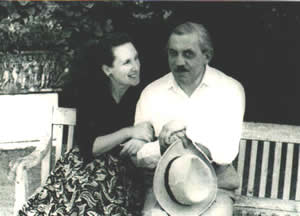
Aleksander Wat (1 mei 1900 – 29 juli 1967)
Hier met echtgenote Ola 


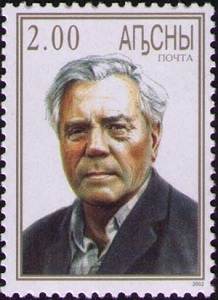
De Russische schrijver Viktor Astafiev werd geboren op 1 mei 1924 in Ovsyanka. Zie ook alle tags voor Viktor Astafiev op dit blog en ook mijn blog van 1 mei 2010.

Uit: The Cursed And The Slain (Vertaald door Arch Tait en Martin Dewhirst)

“The soldiers grimly lugging on their shoulders and backs rifles, machine gun mounts and barrels, trench mortar bases, anti-tank guns with bumps at the ends like the rotted skulls of weird birds which snagged overhead branches and knocked down snow on them, seemed not to be returning from exercises. They were going into battle, into bloody battle. This was not a formation trudging through pine trees and wearily planting the much repaired heels of worn-out boots in the yielding sand, but men full of strength and righteous anger, with faces scorched not by frost but by the flame of battles fought. They radiated a great potency which there was no understanding or explaining, which could only be felt, and made you draw yourself up, aware of being part of this defiant world and subordinate to it. Nothing else mattered any more, everything seemed infinitely remote, even your life itself.
When the recruits were marched down into the gloom of an underground barracks where crushed pine branches thrown on the sand formed the floor, and when they were ordered to find themselves a place on plank beds made from unstripped tree trunks barely squared on the side for sleeping on, Leshka could still hear within himself the fading echoes of that defiant "Arise to fight the foe..." He was overwhelmed by a sense of fatalism. He as an individual was no longer of significance, no longer in charge of his future. There were more important matters and causes which took priority over his little self. What mattered was the tempest, the torrent he was now caught up in. His was now to march, and sing, and fight, perhaps to die at the front together with these weary masses which carried all in their path before them, roaring out that incantation, that mighty roar of a country calling all to join to fight the foe, a country over which there hung a chilling, darksome, murky threat."


 1909160-e93ed9d50ff7ff3b605b98616fef33b1.jpg
Viktor Astafiev (1 mei 1924 – 29 november 2001)


De Nederlandse dichter en schrijver Reinier van Genderen Stort werd geboren op 1 mei 1886 in Buitenzorg, Nederlands Indië.Zie ook alle tags voor Reinier van Genderen Stort op dit blog en ook mijn blog van 1 mei 2010.

Uit: De gelukzalige

“Van vader op zoon had het geslacht, waaruit Tanchelm stamde, het eerzaam bedrijf van herbergier beoefend in het welvarend stadje, gelegen aan de smalle, snelvlietende rivier, die het verkeer met andere steden en dorpen onderhield, stroomafwaarts tot de zee, stroomopwaarts naar de verten daarginds, waar de bergen blauwden. Heuvelig was het beminnelijk landschap, waarin het stadje tierde en de burcht, die het beschermde en bedreigde tevens, verhief zich op één der lage heuvelen, waarvan de vruchtbare glooiïngen bedekt waren met akkers en weiden, zoodat de boekweit, wanneer het oogsttijd was, geurde als honing en in wonderschoone schakeeringen van zoete kleuren bloeide, terwijl de bellen der kleine, gesikte geiten en der zwaargeschofte koeien melodisch weerklonken in de stilte van den avond ofwel van het zonnig middaguur, waarop een ieder rustte. Tanchelm had zijn vreugde aan deze schoone dingen en als hij zwierf met één der mooie meisjes uit het stadje in de vreedzame, harmonische omgeving, werd hij niet moede haar te wijzen op bekoringen, die, volgens zijn schalksche zeggen, de hare evenaarden. Zij echter liet haar vochtigen, smachtenden blik noode over het landschap dwalen en verloor zich liever in de zalige aanschouwing van zijn bemind wezen. En wanneer zij aldus zwierven bij middagtij en zonnegloed, terwijl de felle wijnen sliepen in de zware, blauwe druiven en hij zag hoe haar lippen voller en rooder zwollen, dan voerde hij haar mede langs de geitenpaden naar de olijfgaarde, waarvan het gras zacht als sameet was en in welker schaduw zij elkaar uitzinnig beminden.
De herbergier was een welgesteld en verstandig man en zoo liet hij den zoon, den kunstenaar, met heel zijn speelschen zin den vrijen loop. Met vaardigheid rijmde Tanchelm sonnetten, en hij teekende met enkele rassche houtskoolstreken hetportret der schoone edelvrouw, die, toevend in de herberg, terwijl haar lieden zich beijverden de karos met versche, trappelende rossen te bespannen, een oogenblik zijn betooverd model was.”


 1909160-2937ec905f9717b3974e7821786454cc.jpg
Reinier van Genderen Stort (1 mei 1886 – 7 januari 1942)


Zie voor nog meer schrijvers van de 1e mei ook mijn vorige blog van vandaag.

Geschreven door Romenu om 13:37 Reageer op dit bericht

Alexej Chomjakov, Marcel Prévost, Konrad Weiß, Joseph Addison, José Martiniano de Alencar, Jean de Joinville

De Russische dichter, schrijver, filosoof en theoloog Alexej Stepanovitsj Chomjakov werd geboren op 1 mei 1804 in Moskou. Zie ook alle tags voor Alexej Chomjakov op dit blog en ook mijn blog van 1 mei 2010.


Russian Song

Hail, lovely land of Saint Vladimir!
Thy strength is vast, thy cities mighty;
Thou hast a host of faithful people!
On azure mountains firm thou leanest;
In azure seas thy feet thou bathest.
Thou dost not fear the cruel foe,
But thou dost fear the wrath of God!

Hail, lovely land of Saint Vladimir!
My fathers’ fathers gave thee service.
They won thee peace by fruitful reason,
Thy holy cities they embellisht,
Thy cruel foes they helpt to vanquish.
Recall the good deeds of my fathers.
They served thee with a faithful service,
And I with faithful heart have served thee.
On the steppes from my loins have peasants descended,
Have peasants descended, well-to-do little peasants;
Their place do they know, they know what is useful,
Their brethren they love, and God do they worship.
From me, in the courts, has justice been done
Has justice been done, unbought and impartial.
From me has gone forth to the whole world a rumor
That bluer skies are not to be seen,
That bluer seas are not to be plowed,
That beautiful is the land of Vladimir.
Admire her—thou wilt never sufficiently gaze;
Draw wisdom from her, thou ne’er wilt exhaust her.
Across the heavens the bright sun goes;
All the earth it warms, it lightens.
By night the crowded stars are shining,
And there is no counting the sand or the grass-blades,
And over the earth proceed the words of God—
It warms with life, with joy it shineth;
Bright gleam the churches’ golden cupolas,
And the servants of the Lord and the pilgrims
Are countless like the grass-blades on the steppes,
Are countless like the sands upon the sea-shore.


Vertaald door Nathan Haskell Dole


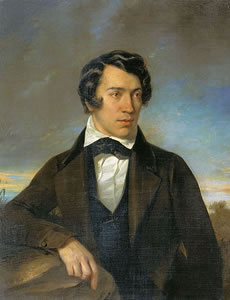
 1909157-a602fdec0225e80c4ba11776c235e312.jpg
Alexej Chomjakov (1 mei 1804 – 5 oktober 1860)
Zelfportret, 1842


De Franse schrijver Marcel Prévost (eig Eugène Marcel) werd geboren op 1 mei 1862 in Parijs. Zie ook alle tags voorMarcel Prévost op dit blog en ook mijn blog van 1 mei 2010.

Uit: Les Don Juanes

« Quand, aux quatre coins du monde, sur tous ces peuples que la guerre avait bouleversée, ruines, affamés, décimés, l‘acier des canons et le bronze des cloches lancèrent en ondes sonores la nouvelle de Parmistioe, prélude certain de la paix, le monde connut" un instant de stupeur.
Courbés durant cinquante-deux mois sous le destin, les peuples, a la longue, s‘étaient faits à leur servitude; a demi hallucinæ, à demi anesthüi6s, ils oheminsient dans le noir, ne demandant même pas où ils allaient, ni combien de temp: durerait encore un voyage dont les périls et les douleurs ne comptaient plus. On vivait, on mourait; un jour était supportable, un autre horrible : fallait-il s’en inquiéter par avance ou s‘en souveni; après, puisque l’on ne pouvait rien changer a rien.
Cependant, quelques gestes de joie s’ébauchaient çà et là, parce que l‘humaine volonté de jouir et de vivre est plus forte que tout; mais ces gestes cherchaient le rnystère, ou léxcuse de distraire ceux qui allaient mourir… Un plaisir qui ne se masquait pas «l‘hypocrisie était réputé criminel, et la saveur en devenait à la fois plus ambre et plus voluptueuse.
Délié de toutes les règles sociales ordinaires, mêlant les races, les castes et les âges dans une farandole macabre et sadique, l’amour se déguisait en pitié.
Proche du front, il restait du sang aux mains chaude: de caresses, et le goût de l‘iodoiforme empoisonnait les baisers; a l'arrière, ceux qui joignaient leurs lèvres n’osaient souvent pas unir leurs regards, tant certaines trahisons leur semblaient aggravée: de sacrilège."


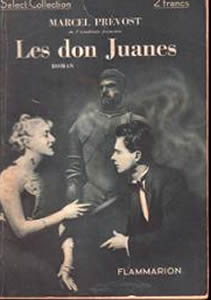
 1909157-7b13d7a0e17b86efdc16c1f2c783a508.jpg
Marcel Prévost (1 mei 1862 – 8 april 1941)
Cover


De Duitse dichter Konrad Weiß werd op 1 mei 1889 geboren in Rauhenbretzingen. Zie ook alle tags voor Konrad Weiß op dit blogen ook mijn blog van 1 mei 2010.


Nachtstille 1

Auf meinem Lager nachtumhängt
hinwachend ruhelos bedrängt,
ob eine Lichtung Ziel mir weist,
gräbt um sich fort mein armer Geist.

Und in sich redend stumm in stumm,
gräbt er die Lebensschollen um,
es wirft den dumpfen Körper schwer
des Gräbers Werkzeug hin und her.

Vom Fenster ein getrübtes Licht,
als sei mir hier Behausung nicht,
sei eine Grube erdenkühl,
reicht nicht zu meinem dunklen Pfühl.

Und schleppt mir doch mein heißer Sinn
mein Inbild wie zum Amboß hin
und hämmert mit gezieltem Schlag,
als sei ein lichtgewordner Tag.

Schlag immer zu, ich liege still
und harre, was geschehen will,
es krümmt sich, bildet sich, geschieht,
je mehr mein Herz entgegenglüht.


Zum Tage

Der ich mein Haupt rücklings verkehre
zum Morgenlicht,
verzweigend meiner Glieder stillen Bann,
vergaß ich, daß ich nicht,
der ich zum Tag mich ganz erheben kann,
entlastet bin, ein laubentladner Baum?
Nun steh ich wie in Knospenschwere:
ich rang die ganze Nacht mit dir im Traum.


 1909157-a7e74d714623dc30435e780f75e583a5.jpg
Konrad Weiß (1 mei 1880 – 4 januari 1940)


De Britse dichter, schrijver en politicus Joseph Addison werd geboren in Milston (Wiltshire) op 1 mei 1672. Zie ook alle tags voor Joseph Addison op dit blog en ook mijn blog van 1 mei 2010.


Ode

The spacious firmament on high,
With all the blue ethereal sky,
And spangled heav'ns, a shining frame,
Their great original proclaim:
Th' unwearied Sun, from day to day,
Does his Creator's power display,
And publishes to every land
The work of an Almighty Hand.

Soon as the evening shades prevail,
The Moon takes up the wondrous tale,
And nightly to the list'ning Earth
Repeats the story of her birth:
Whilst all the stars that round her burn,
And all the planets, in their turn,
Confirm the tidings as they roll,
And spread the truth from pole to pole.

What though, in solemn silence, all
Move round the dark terrestrial ball?
What though nor real voice nor sound
Amid their radiant orbs be found?
In Reason's ear they all rejoice,
And utter forth a glorious voice,
For ever singing, as they shine,
'The Hand that made us is Divine.'


 1909157-cefc58a00590d5cf45223f192e01242f.jpg
Joseph Addison (1 mei 1672 – 17 juni 1719)
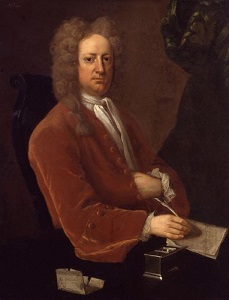
Portret door Michael Dahl, 1719


De Braziliaanse schrijver José Martiniano de Alencar werd geboren op 1 mei 1829 in Mecejana. Zie ook alle tags voor José Martiniano de Alencar op dit blog en ook mijn blog van 1 mei 2010.

Uit: Senhora, Profile of a Woman (Vertaald door Catarina Feldmann Edinger)

“One evening, at the casino, Lísia Soares, who was very close to her and would have liked to see her married, made a comment about Alfredo Moreira, an elegant young man who had just arrived from Europe.
"A very distinguished gentleman," replied Aurélia, smiling. "He is worth about a hundred thousand as a fiance, but I can afford a more expensive husband, Lísia; this one is not good enough for me."
Everyone laughed at these remarks of Aurélia's and considered them jests of a witty young girl. The majority of ladies, however, especially those with young daughters, were unrelenting in their criticism of this brazen conduct as improper for a well-bred young lady.
Aurélia's suitors knew of the value placed upon them in the girl's ledgers, for she made no secret of it. Rather than being upset at her honesty, however, they enjoyed the game—which often resulted in an increase in their stock in the nuptial business.
This happened whenever one of these young men was fortunate enough to do something that pleased the girl and fulfilled her fantasies. In such case, she raised his price, just as she similarly lowered that of those who displeased her or fell into disfavor with her.
Greed must have inured these men, or passion blinded them, for them not to see the cold scorn with which Aurélia deceived them in these silly games they took as girlish vanity, but which were, in fact, the impulses of a hidden, perhaps morbid, anger.
The truth is that they all persisted; at times caught up in temporary despair, but soon restored by an obstinate hope, none chose to abandon the field; least of all, Alfredo Moreira, who appeared to head the list.
I shall not follow Aurélia in her transient passage through the salons of the court, where she saw, coupled to her triumphant chariot, everything our society boasts of the most elevated and brilliant.
All I propose is to tell of the intimate and strange drama that decided the fate of this unique woman.”


 1909157-241b5edc0ac42b38df8be6dd3ffff59f.jpg
José Alencar (1 mei 1829 – 12 december 1877)
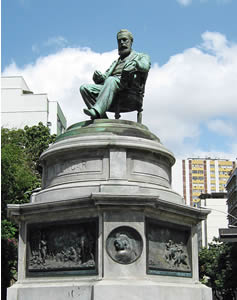
Monument in  Rio de Janeiro


De Franse kroniekschrijver en biograaf Jean de Joinville werd geboren rond 1 mei 1224 als zoon van Simon van Joinville en van Beatrix van Auxonne. Zie ook alle tags voor Jean de Joinville op dit blog en ook mijn blog van 1 mei 2010.

Uit: Livre des saintes paroles et des bons faiz nostre roy saint Looys

« Il disoît que Ten devoit son cors vestir et amer en tele ma-nîère, que les preudeshomes ' de ce^ siècle ne deissent que II en feist trop , ne que les joenes * homes ne dissent que II feist pou '. Et ceste chose me ramentî < le père le roy * qui orendroit^ est, pour les cotes brodéez à armer ^ que en fait hui et le jour, et li dîâoie que onques en la voie d'outremer là où je fîiz, je ni Vî cottes brodées, ne les roy ne les autrui. Et il ine dit qu'il avott tiex" atours brodez de ses armes, qnili avoient cousté huit cens livres de parisis. Et je H diz que il les eustmîex emploies se il les eust donnez pour Dieu, et eustfait ses atours de bon cendal enforcié de ses armes, si comme son père faisoit.
Il m'apela une foiz et me dist : « Je n'ose parler à vous pour le soutil senz dont vous estes de chose qui touche à teu; et pour ce aî-je appelé ses frères qui ci sont, que je vous weît faire une demande. » La demande fu tele : « Séneschal, fist- il, quel chose est Dieu? » Et je li diz : « Sire, ce est si benne chose que meilleur ne peut estre. » — « Vraiement, ûsxai, c'est bien respondu ; que ceste response que vous avez faîte , est escripte en cest livre que je tieing en ma main. Or vous demandé-je, flst-il , lequel vous ameriés roiex , ou que vous feus^ siés mesiaus*', ou que vous eussiés fait un péchié mortel."


 1909157-a6da33e3c287c3b134e3e9f693285ad1.jpg
Jean de Joinville (ca. 1 mei 1224 - 24 december 1317)
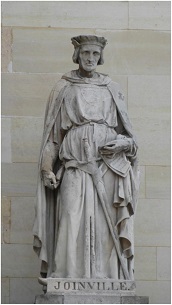
Standbeeld in Parijs

Geschreven door Romenu om 13:37 Reageer op dit bericht

Meer van Romenu

↑ Terug naar de berichten