Naar de inhoud

Romenu

Over literatuur, gedichten, kunst en cultuur
akke.beakke.be

Berichten van 8 mei 2016 tot 9 mei 2016

Libris Literatuur Prijs voor Connie Palmen


Libris Literatuur Prijs voor Connie Palmen

De Libris Literatuur Prijs is maandagavond naar Connie Palmen gegaan voor de roman “Jij zegt het.” In 'Jij zegt het' wordt de noodlottige liefde tussen de dichters Ted Hughes en Sylvia Plath. Behalve een cheque ter waarde van 50.000 euro ontving Connie Palmen een bronzen legpenning, die haar werd uitgereikt door minister Jet Bussemaker. De andere genomineerden waren Alex Boogers met 'Alleen met de goden', Joke van Leeuwen met 'De onervarenen', Inge Schilperoord met 'Muidhond', P.F. Thomése met 'De onderwaterzwemmer' en Thomas Verbogt met 'Als de winter voorbij is' Connie Palmen werd op 25 november 1955 geboren in Sint Odiliënberg. Zie ook alle tags voor Connie Palmen op dit blog.

Uit:Jij zegt het

“Ze was onvermoeibaar, mijn van energie stuiterende bruid. Zodra ze thuis was, de colleges voor de volgende dag had voorbereid, had gekookt, gebakken, geboend en gewassen, ging ze achter de typemachine zitten om ons werk uit te typen, van een begeleidend schrijven te voorzien en de wereld in te sturen. Sinds we weer dicht bij elkaar waren, kon ik nauwelijks de stroom aan poëtische ideeën en invallen bijhouden, schreef elke dag, het ene gedicht na het andere. Zij hield meticuleus een dagboek bij, zat een leven op de hielen dat pas geleefd was zodra ze het had beschreven, verstuurde wekelijks brieven aan haar moeder en soms aan haar broer, werkte moeizaam aan een roman, en maakte zo nu en dan een gedicht. Naast Shakespeare en Yeats lazen we vooral de eigen gedichten hardop aan elkaar voor, leverden waar nodig commentaar, schaafden ze bij, lazen ze opnieuw voor.
In de eerste winter van ons huwelijk kwamen - naast de talloze afwijzingen die op haar het effect hadden van een rode lap op een stier en een nog woedendere scheppingsdrift losmaakten - de eerste lofzangen binnen, toezeggingen van gerenommeerde tijdschriften, verzoeken om meer werk, en een bescheiden extra inkomen.
Soms was de nacht al begonnen als we, moe van het geconcentreerde werken, bij het ouijabord gingen zitten, de toppen van onze wijsvingers op het glas legden, en eens wat geesten uitnodigden om het ingespannen denkwerk over te nemen, ons te inspireren, te laten huiveren of aan het lachen te maken. Het wachten op beweging is als vissen, spannend en ontspannend tegelijkertijd. Gebeurt er iets? Beweegt er iets onder het oppervlak? Is er leven dat ik nog niet zie, maar zich kenbaar maakt zodra het toehapt? Wat komt er aan het licht?
De eerste keer dat ik met mijn bruid achter het bord zat, pen en papier bij de hand, en we na de invitatie aan de ether of aan ons onderbewuste - Is er iemand? - een poosje wachtten, en toen het omgekeerde glas opeens naar 'ja' zagen schuiven, keek ze me met wantrouwige ogen aan. Ze geloofde het niet. Ze verdacht me ervan dat ik het uit ongeduld naar de linkerhoek duwde. Ik ontkende. Als we al iets doen, doen we het samen, dat is de magie van de vermenging.”


 1912511-0c09a1833ca9cf17d2a88c4593b5fa5f.jpg
Connie Palmen (Sint Odiliënberg, 25 november 1955)

Geschreven door Romenu om 22:54 Reageer op dit bericht

Pieter Boskma, Charles Simic, Jotie T'Hooft, Jan Drees, Leopold Andrian, Alan Bennett, Lucian Blaga

De Nederlandse dichter en schrijver Pieter Boskma werd geboren in Leeuwarden op 9 mei 1956. Zie ook alle tags voor Pieter Boskma op dit blog.


Ontwakend zelfportret
Voor Remco Campert

Terwijl ik de tram in stapte dacht ik aan de zee.
Maar al wat er ruiste, wat er aan golven brak
stak aan een draadje in de meeste oren om mij heen.
En laten we ter stede maar niet spreken van de geuren.

Toch was het een prachtdag: de zon verscheen
boven de Herengracht, die licht begon te geven,
de mooiste meisjes fietsten blozend door de
katerloze ochtend, en nergens een hinderlaag.

Ik spoorde rustig voort, ik leefde op omdat ik dacht
dat ik het verplicht was aan mijn omgekomen liefde.
Men zit vast aan iets waarin men ging geloven
al betwijfelt men dat minstens even sterk.

Hoop en vrees, een koppig koppel dat elkaar
nooit loslaat, maar ik spoorde rustig voort
langs regel na stillere regel, hopend op de volgende,
vrezende dat die niet kwam – al hoeveel jaar.

Museumplein, ik moest eruit en alles klopte weer.
Ik stak schuin over het gras naar mijn nieuwe
uitgeefhuis, het vers was bijna af, een merel
zong brutaal op het Amerikaanse consulaat.

Dit was de dag, ik keek omhoog, ja, dit was de dag.


Uit: Doodsbloei

Ben jij het, liefste, ben je alles nu?
Stem die de diepste tonen zingen kan?
Gras dat koorddanst op een duinrug,
zon die opvlamt uit een vennetje?

Is het de zee waarmee je aanruist nu,
het nauw hoorbaar vallen van een blad?
Knipoog je vliegtuigstrepen aan de lucht
en plaag je me gewoon maar wat?

Naar het waarom zal ik niet langer vragen.
Geen enkel antwoord was bevredigend,
het leidde slechts tot feller onbehagen.

Vlieg dus maar rond en wees het lied
dat wij elkaar nog altijd kunnen geven,
allebei de tekst en allebei de melodie.


 1912221-bcc811eef1aa95899f3ed734bb054926.jpg
Pieter Boskma (Leeuwarden, 9 mei 1956)


De Amerikaanse dichter Charles Simic werd geboren in Belgrado op 9 mei 1938. Zie ook alle tags voor Charles Simic op dit blog.


Mirrors At 4 A.M

You must come to them sideways
In rooms webbed in shadow,
Sneak a view of their emptiness
Without them catching
A glimpse of you in return.

The secret is,
Even the empty bed is a burden to them,
A pretense.
They are more themselves keeping
The company of a blank wall,
The company of time and eternity

Which, begging your pardon,
Cast no image
As they admire themselves in the mirror,
While you stand to the side
Pulling a hanky out
To wipe your brow surreptitiously.


Pigeons at Dawn

Extraordinary efforts are being made
To hide things from us, my friend.
Some stay up into the wee hours
To search their souls.
Others undress each other in darkened rooms.

The creaky old elevator
Took us down to the icy cellar first
To show us a mop and a bucket
Before it deigned to ascend again
With a sigh of exasperation.

Under the vast, early-dawn sky
The city lay silent before us.
Everything on hold:
Rooftops and water towers,
Clouds and wisps of white smoke.

We must be patient, we told ourselves,
See if the pigeons will coo now
For the one who comes to her window
To feed them angel cake,
All but invisible, but for her slender arm.


 1912221-8fdb650e903dd1d099d2c81fc6336e7f.jpg
Charles Simic (Belgrado, 9 mei 1938)


De Vlaamse dichter en schrijver Jotie T'Hooft werd geboren in Oudenaarde op 9 mei 1956. Zie ook alle tags voor Jotie T’Hooft op dit blog.


Een doodshoofd

Mijn stilste en mijn trouwste vriend
getuige van het vele leed dat groeit
getuigenis ook van de verlossing
en hoe een & ander wordt verdiend.

Dat mijn doods hoofd mij eens
en voor altijd wordt ontroofd
door medemensen eerst omkleed
door wormen dan geheel gedoofd:

Somber, zult u zeggen, triest.
Toch rest mij nog de stille hoop
eens als schedel vriend te zijn
van anderen als wanhoop hen bevriest.


Een Brief

Lieve dood, ik weet dat gij niet lief zijt
maar als handwerkman uw dagen slijt.
Ik heb u geschreven om uw komst te vragen
maar het lijkt enkel uw komst te vertragen.

Ik geloof niet dat ik gered kan worden, doodjelief
en als het kon dan wou ik het niet: eens een dief
altijd een dief. Ik heb geen berouw over gestolen harten
noch over de vlammen veroorzaakt door verwarming

die verbrandden wie er zijn handen naar strekte.
Lieve dood, ik neem afscheid van jou in de koorts
in het ochtendlicht, in de maandag die mij wekte
en diep in mij weet ik: wat ik blindelings volg

is uw toorts.


 1912221-51f15c61db6ef3d373e7b95ff06deea0.jpg
Jotie T'Hooft (9 mei 1956 – 6 oktober 1977)
Cover (detail)


De Duitse schrijver Jan Drees werd geboren op 9 mei 1979 in Haan. Zie ook alle tags voor Jan Drees op dit blog.

Uit: Eins

“Wie damals, als es anfing, mit Nebil, der mich jeden Tag nach den Uni-Seminaren in den Arm nahm und leidenschaftlich auf den Mund küßte. Im April, Mai, Juni.
In diesen Monaten verbrachten wir späte Abende an einem Baggersee, badeten nackt in dem sich leicht abkühlenden Wasser und blieben am schmalen Stadtstrand liegen, bis es nicht mehr kühler werden konnte. "Es sind immer noch dreiundzwanzig Grad!" rief ich begeistert zu Nebil hinauf, der im nächtlichen Schatten lag und mich beschützte. Meine Erinnerung daran: Picknicke und späte Mücken, die sich auf unsere rostbraune Haut setzten, kleine Feuerpunkte hinterließen. Wir tranken Discount-Prosecco zu Erdbeeren, in die man greifen konnte, um klebrig zu werden. Nebil tauchte mit mir unter mondlichtbeschienenen Flusenalgen. Manchmal fanden wir ein wind-, sicht- und brennesselgeschütztes Dunkelwaldfleckchen, von wo gemeinsam kitschige Plejadennebel zu betrachteten waren. Glühwürmchen gab es, auf dem Heimweg, zwischen Ginster.
Beim Türken kauften wir Melonenviertel oder in verschiedenen schattig-kühlen Buchgeschäften Südfruchtprosa, die wie Kandis schmeckte und beim Lesen schmolz, als wäre sie Himbeereis: Es begann, mir zu gefallen. Es fing an, daß ich genauso schreiben wollte, als dufte das Papier wie eine Kinopopcorn- Tüte.
Weil wir schrecklich jung waren, flüsterten Nebil und ich nachts von Springbrunnenrändern im Park über Zitronenkerzen hinweg Cocktail-Neckisches. Mit Nebil ist es wunderbar, liebtrunken ein Bald, ein Später, ein Irgendwann anzutasten, wankend, kaum Karabiner gesichert, Steilwände hinab.“


 1912221-667c470c353491dd227fb454c88b9092.jpg
Jan Drees (Haan, 9 mei 1979)
Haan, de markt


De Oostenrijkse dichter, schrijver en diplomaat Leopold Andrian werd op 9 mei 1875 in Berlijn geboren. Zie ook alle tags voor Leopold Andrian op dit blog.

Uit: Erwin und Elmire. Fragmente

Du solltest, Liebe Freundin
Mir mild zur Seite stehn
Beim Lächeln Deines Auges
Wird dieser Spuk verwehn,
Und Deine Hand die kühle
Auf meiner Stirn sollt sein
Es ist so schwer zu kämpfen
Allein, so ganz allein!


Doch jetzt aus dubkler Zukunft
Mir entgegenschleicht
Die Zeit daß unser Ende wir erreicht.
Ja, ja, ich werd die Stunde schaun,
Da unter ihren schwarzen, schmalgewölbten Braun,
Der dunkelblauen Augen warmes Licht
Zu einem andern süße Phrasen spricht,
Und da nicht mehr von meiner Hand durchzogen
Elektrisch knistern Deines matten, blonden Haares Wogen,
Und nicht mehr aufgelöst wir aneinander lehnen
So göttlich still, und uns nach nichts mehr sehnen
Nach nichts!
Die Zeit da ich am Ring an Dir vorübergehe
Und wieder jene schlanke Büste sehe
Die mich im Wachen oft verfolgt und oft im Traum
Da den Parfum ich atme Deiner Nähe
Du aber siehst mich kaum


 1912221-dcadaf891186eb2caf9bbfdcb1584acb.jpg
Leopold Andrian (9 mei 1875 – 19 november 1951)
In 1911


De Britse schrijver en acteur Alan Bennett werd geboren op 9 mei 1934 in Armley in Leeds, Yorkshire. Zie ook alle tags voor Alan Bennett op dit blog.

Uit: The Uncommon Reader

 "No problem,' said Mr Hutchings.
'One is a pensioner,' said the Queen, not that she was sure that made any difference.
'Ma'am can borrow up to six books.'
'Six? Heavens!'
Meanwhile the ginger-haired young man had made his choice and given his book to the librarian to stamp. Still playing for time, the Queen picked it up.
'What have you chosen, Mr Seakins?' expecting it to be, well, she wasn't sure what she expected, but it wasn't what it was. 'Oh. Cecil Beaton. Did you know him?'
'No, ma'am.'
'No, of course not. You'd be too young. He always used to be round here, snapping away. And a bit of a tartar. Stand here, stand there. Snap, snap. And there's a book about him now?'
'Several, ma'am.'
'Really? I suppose everyone gets written about sooner or later.'
She riffled through it. 'There's probably a picture of me in it somewhere. Oh yes. That one.
Of course, he wasn't just a photographer. He designed, too. Oklahoma!, things like that.'
'I think it was My Fair Lady, ma'am.'
'Oh, was it?' said the Queen, unused to being contradicted. 'Where did you say you worked?' She put the book back in the boy's big red hands.
'In the kitchens, ma'am.'
She had still not solved her problem, knowing that if she left without a book it would seem to Mr Hutchings that the library was somehow lacking. Then on a shelf of rather worn-looking volumes she saw a name she remembered. 'Ivy Compton-Burnett! I can read that.' She took the book out and gave it to Mr Hutchings to stamp.
'What a treat!' she hugged it unconvincingly before opening it. 'Oh. The last time it was taken out was in 1989."


 1912221-02fe31721e3f26cf184959d5f3fa8ac1.jpg
Alan Bennett (Armley, 9 mei 1934)


De Roemeense dichter, schrijver en filosoof Lucian Blaga werd geboren op 9 mei 1895 in Lancrăm, bij Alba Iulia. Zie ook alle tags voor Lucian Blaga op dit blog.


Metaphysical sadness

In ports open to the wonders of great seas
I sang with fishermen, tall shadows on the shore,
dreaming of ships that carry
the foreign miracle.

Next to the workers covered in soot
I erected steel bridges
over white rivers, over the immaculate bird’s flight,
over deep forests,
and each bridge would arch
as if carrying us over to a land of legend.

I spent long time among rocks
next to saints as old as folk riddles,
and I awaited the opening
of a window to freedom
through powerful evening spaces.

With them all
I agonized on the roads, on the shores,
among cars and churches.
Near bottomless wells
I opened my all-knowing eye.

I prayed with the workers in rags,
I dreamt next to the sheep with the shepherds
and waited in precipices with the saints.
Now I bow in the light
and cry in the late remains
of the star I used to walk on.
With the whole creation
I raised my wounds in the wind
and waited: oh, no miracle happens.

No miracle, no miracle!
And yet, with simple words like ours
the world, the elements, the day and the fire were made.
With feet just like ours
Jesus walked on water.


Vertaald door Lori Tiron-Pandit


 1912221-b1594441d4a77572b94c1001c3d2b899.jpg
Lucian Blaga (9 mei 1895 – 6 mei 1961)
Standbeeld in Cluj-Napoca


Zie voor nog meer schrijvers van de 9e mei ook mijn blog van 9 mei 2015 deel 2.

Geschreven door Romenu om 18:43 Reageer op dit bericht

Reserve (Jean Pierre Rawie)


Bij moederdag


 1911430-bbacce49282bc3fbf8c46d5ce2921145.jpg
 Young Mother Gazing at Her Child door William Bouguereau, 1871.


Reserve

Nu ik mijn oude moeder weer aanschouw
wordt het mij week en wonderlijk te moede;
hoe woest de wind door zoveel jaren woedde,
ik blijf het kind ontwaren in de vrouw.

Zij keerde waar zij kon het kwaad ten goede,
een halve eeuw was zij mijn vader trouw,
en als het even in haar macht lag zou
zij hem ook voor het heengaan nog behoeden.

Al klaagt ze soms (vindt zich opeens te dik
en poogt verwoed haar snoeplust in te tomen):
zij put uit raadselachtige reserve.

Misschien dat zelfs mijn moeder ooit zal sterven,
maar in haar blauwe ogen blijft die blik
alsof het allermooiste nog moet komen.


 1911430-1d2d3fc874aa51f500cc9e678b9d9bb8.jpg
Jean Pierre Rawie (Scheveningen, 20 april 1951)
Portret door Harriët Geertjes, 2003


Zie voor de schrijvers van de 8e mei ook mijn vorige twee blogs van vandaag.

Geschreven door Romenu om 08:03 Reageer op dit bericht

Roddy Doyle, Thomas Pynchon, Pat Barker, Gary Snyder, Gertrud Fussenegger, Edmund Wilson, James Worthy

De Ierse schrijver Roddy Doyle werd geboren in Dublin op 8 mei 1958. Zie ook alle tags voor Roddy Doyle op dit blog.

Uit:Two More Pints

“Wha’ d’yeh think of the poll?
He’s alrigh’. He pulls a reasonable pint.
I meant, the election poll.
Ah, fuck the-. Go on.
Michael D.’s leadin’.
Followed by Mitchell.
No. The Dragons’ Den fella.
Fuckin’ hell. How did tha’ happen?
Well, he’s scutterin’ on abou’ community an’ disability an’ tha’. But, really, he’s an 01’ Fianna Fail hack. Up to his entrepreneurial bollix in it. Annyway, my theory.
Go on
People still love Fianna Fail.
But they’d hammer them if they had a candidate.
Exactly. But they can vote for this prick without havin’ to admit it.
Brilliant.
But I think Michael D. will get there.
How come?
He was goin’ on abou’ the President not bein’ a handmaiden to the government.
What’s a handmaiden?
I’m not sure. But if I was lookin’ for one in the Golden Pages, I wouldn’t be stoppin’ at the Michaels.
Annyway, he suddenly stops, an’ says he broke his kneecap when he fell durin’ a fact-findin’ mission in Colombia.
Wha’ does tha’ tell yeh?
He was ou’ of his head.
Exactly. Fact-findin’ mission me hole. He’s lettin’ us know - he’s one o’ the lads.
Well, that’s me decided.
Me too.”


 1911422-cc55696b881d42c1a7eeddc7be2d4141.jpg
Roddy Doyle (Dublin, 8 mei 1958)


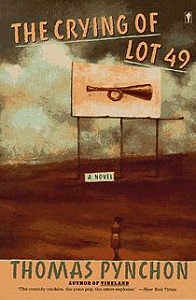
De Amerikaanse schrijver Thomas Pynchon werd op 8 mei 1937 geboren in Glen Cove, Long Island, New York. Zie ook alle tags voor Thomas Pynchon op dit blog.

Uit: The Crying of Lot 49

“Mucho, baby," she cried, in an access of helplessness.
Mucho Maas, home, bounded through the screen door. "Today was another defeat," he began.
"Let me tell you," she also began. But let Mucho go first.
He was a disk jockey who worked further along the Peninsula and suffered regular crises of conscience out his profession. "I don't believe in any of it, Ode," he could usually get out. "I try,
I truly can't," way down there, further down perhaps than she could reach, so that such times often brought her near panic. It might have been the sight of her so about to lose control that seemed to bring him back up.
"You're too sensitive." Yeah, there was so much else she ought to be saying also, but this was what came out. It was true, anyway. For a couple years he'd been a used car salesman and so hyperaware of what that profession had come to mean that working hours were Exquisite torture to him. Mucho shaved his upper lip every morning three times with, three times against the grain to remove any remotest breath of a moustache, new blades he drew blood invariably but kept at it; bought all natural-shoulder suits, then went to a tailor to have the lapels made yet more abnormally narrow, on his hair used only water, combing it like Jack Lemmon to throw them further off. The sight of sawdust, even pencil shavings, made him wince, his own kind being known to use it for hushing sick transmissions, and though he dieted he could still not as Oedipa did use honey to sweeten his coffee for like all things viscous it distressed him, recalling too poignantly what is often mixed with motor oil to ooze dishonest into gaps between piston and cylinder wall. He walked out of a party one night because somebody used the word "creampuff," it seemed maliciously, in his hearing. The man was a refugee Hungarian pastry cook talking shop, but there was your Mucho: thin-skinned.“


 1911422-1d8b5162e8a361bbbb053957983121aa.jpg
Thomas Pynchon (Glen Cove, 8 mei 1937)
Cover


De Engelse schrijfster Pat Barker werd geboren in Thornaby-on-Tees op 8 mei 1943. Zie ook alle tags voor Pat Barker op dit blog.

Uit: Toby's Room

« Tonks ushered her into a large room that contained a desk, two chairs, and a filing cabinet. There was a screened-off recess to her right. The part of the room she could see resembled a doctor’s surgery, except that at the far end, underneath the tall windows, there was an easel and a table covered with drawing pads, pens and ink, and pastels.
Directly underneath the window was a stool, presumably for the patient since it had been placed where the full, shadowless glare of northern light would fall directly on the face.
“I’ll see about the tea. Have a seat.”
He went out; she could hear his voice in the room across the corridor requesting a pot of tea and two slices of that rather nice fruitcake, do you think we could manage that? A woman’s voice replied; and then a man’s voice—not Tonks’s—and, finally, a rumble of conversation. Clearly, Tonks had got embroiled in hospital business.
Elinor went across to the table and looked at a pen-and-ink drawing of a patient with a gaping hole in his cheek. Presumably, Tonks’s medical drawings would be done in pen and ink—ironical, really, since he’d never made any secret of how much he hated the medium. In fact, he’d described it to her once as the least forgiving medium an artist could work in, calculated to expose every flaw in draftsmanship. Yet she’d have recognized this as Tonks’s work from the purity of the line alone.
She wondered what lay behind the screen; probably a washbasin, something like that. But when she looked behind it she saw, instead, a whole wall full of portraits of men with hideously disfigured faces. One of them, the man with no jaw, she recognized from the corridor. Individually, each portrait would have been remarkable; displayed together like this, row upon row, they were overwhelming. She took her time, pausing in front of first one portrait, then another.”


 1911422-369a58ec2304e3311944fd8a6533728c.jpg
Pat Barker (Thornaby-on-Tees, 8 mei 1943)


De Amerikaanse dichter Gary Snyder werd geboren op 8 mei 1930 in San Francisco. Zie ook alle tags voor Gary Snyder op dit blog.


As For Poets

As for poets
The Earth Poets
Who write small poems,
Need help from no man.
The Air Poets
Play out the swiftest gales
And sometimes loll in the eddies.
Poem after poem,
Curling back on the same thrust.

At fifty below
Fuel oil won't flow
And propane stays in the tank.
Fire Poets
Burn at absolute zero
Fossil love pumped backup

The first
Water Poet
Stayed down six years.
He was covered with seaweed.
The life in his poem
Left millions of tiny
Different tracks
Criss-crossing through the mud.

With the Sun and Moon
In his belly,
The Space Poet
Sleeps.
No end to the sky-
But his poems,
Like wild geese,
Fly off the edge.

AMind Poet
Stays in the house.
The house is empty
And it has no walls.
The poem
Is seen from all sides,
Everywhere,
At once.


 1911422-0df0e28c5905e39265db18b6e0d4764c.jpg
Gary Snyder (San Francisco, 8 mei 1930)


De Oostenrijkse schrijfster Gertrud Fussenegger werd geboren op 8 mei 1912 in Pilsen. Zie ook alle tags voor Gertrud Fussenegger op dit blog.

Uit: Maria Theresia

„Leider sollten die Kuriere nicht mehr viele Briefe zwischen den Schwestern hin und her zu spedieren haben. Zehn Monate nach ihrer Hochzeit erwartete Marianne ihre Niederkunft.
Mit Bangen, aber auch in zärtlicher Hoffnung fieberte Maria Theresia diesem Ereignis entgegen. "In diesen Tagen", schrieb sie, "wagte ich kaum mehr zu atmen." Seltsam bei dieser Frau, die fast jedes Jahr wohlgemut das Kreißbett bestieg, die sich kaum je über Beschwerden der Schwangerschaft, über die Schmerzen der Geburt beklagte! Um die Schwester zitterte sie. "Denn ich weiß, was eine Niederkunft bedeutet - und denke nur mit Schrecken daran." Gingen böse Ahnungen in ihr um?
Am 2. Oktober traten bei Marianne verfrüht die Wehen ein. Vier Tage quälte sie sich vergeblich. Am 5. Oktober empfing sie die Sterbesakramente, am 6. gebar sie ein totes Kind. Immerhin hofften die Ärzte, das Leben der jungen Mutter erhalten zu können.
Wieder stürzte Maria Theresia an den Schreibtisch, um die jüngere Schwester mit Zärtlichkeiten zu überschütten. So bitter die Totgeburt: Hauptsache ist und bleibt Mariannes Genesung. "Denken wir jetzt nur an Ihre Wiederherstellung und versenken wir uns nicht in traurige Betrachtungen. Gewiß wird uns Gott helfen..." Und im Nachsatz die Warnung: "Nehmen Sie sich kein Beispiel an mir, denn ich war immer nur zu glücklich bei meinen Entbindungen, mehr als ich es verdient habe."


 1911422-64bc87bee6fb2fa3e7589bf679f6b5b9.jpg
Gertrud Fussenegger (8 mei 1912 – 19 maart 2009)


De Amerikaanse schrijver en criticus Edmund Wilson werd geboren op 8 mei 1895 in Red Bank, New Jersey. Zie ook alle tags voor Edmund Wilson op dit blog.

Uit: Oo, Those Awful Orcs! (A review of Tolkiens The Fellowship of the Ring)

“The most distinguished of Tolkien's admirers and the most conspicuous of his defenders has been Mr. W. H. Auden. That Auden is a master of English verse and a well-equipped critic of verse, no one, as they say, will dispute. It is significant, then, that he comments on the badness of Tolkien's verse - there is a great deal of poetry in The Lord of the Rings. Mr. Auden is apparently quite insensitive - through lack of interest in the other department.- to the fact that Tolkien's prose is just as bad. Prose and verse are on the same level of professorial amateurishness. What I believe has misled Mr. Auden is his own special preoccupation with the legendary theme of the Quest. He has written a book about the literature of the Quest; he has experimented with the theme himself in a remarkable sequence of sonnets; and it is to be hoped that he will do something with it on an even larger scale. In the meantime - as sometimes happens with works that fall in with one's interests - he no doubt so overrates The Lord of the Rings because he reads into it something that he means to write himself. It is indeed the tale of a Quest, but, to the reviewer, an extremely unrewarding one. The hero has no serious temptations; is lured by no insidious enchantments, perplexed by few problems. What we get is a simple confrontation - in more or less the traditional terms of British melodrama - of the Forces of Evil with the Forces of Good, the remote and alien villain with the plucky little home-grown hero. There are streaks of imagination: the ancient tree-spirits, the Ents, with their deep eyes, twiggy beards, rumbly voices; the Elves, whose nobility and beauty is elusive and not quite human. But even these are rather clumsily handled. There is never much development in the episodes; you simply go on getting more of the same thing. Dr. Tolkien has little skill at narrative and no instinct for literary form. The characters talk a story-book language that might have come out of Howard Pyle, and as personalities they do not impose themselves. At the end of this long romance, I had still no conception of the wizard Gandalph, who is a cardinal figure, had never been able to visualize him at all. For the most part such characterizations as Dr. Tolkien is able to contrive are perfectly stereotyped: Frodo the good little Englishman, Samwise, his dog-like servant, who talks lower-class and respectful, and never deserts his master.”


 1911422-b9627d29f471dc182e5334464f4d20e0.jpg
Edmund Wilson (8 mei 1895 – 14 juni 1972)
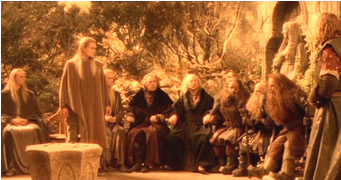
Scene uit de film “The Fellowship of the Ring” uit 2001


Onafhankelijk van geboortedata:

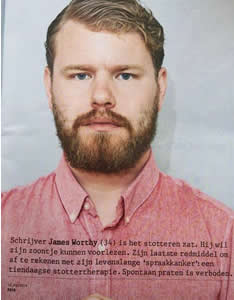
De Nederlandse schrijver James Worthy werd geboren in Amsterdamin 1980. Zie ook alle tags voor James Worthy op dit blog.

Uit: Wat een leven

“Marzipan kon de harige tenen in zijn bootschoenen voelen krommen. De blinde ezel balkte enthousiast voordat hij, in vloeiend Surinaams, Marzipan voor rotte vis uitmaakte. Marzipan verstond alles, hij had per slot van rekening twee jaar in Suriname gewoond. Alwaar hij schaafijs uitvond. ‘Een Surinaamse ezel? Leuk zo'n zwart balkje.’ giechelde onze zwaarlijvige vedette. 'Ai!’ zei de ezel. 'Mijn naam is Don Qui, Don voor intimi. En ja ik ben blind. En ja ik stoot mezelf dus in het gemeen tyfus vaak aan dezelfde steen.’ Marzipan was gelijk onder de indruk van Don en viel, niet veel later, als een blok voor hem. Het was liefde op het eerste gezicht, net als in de film, en wat volgde was een vrijpartij van jewelste. Ezelprikken, het was in die tijd heel normaal. Net als tandems. Een ezel van achteren pakken, in de volksmond ook wel een ezelsbruggetje genoemd, was zeg maar het nordic walken van de jaren 50.”


 1911422-fd70adc900fab3a8eebc99ffa8d4b591.jpg
James Worthy (Amsterdam. 1980)


Zie voor nog meer schrijvers van de 8e mei ook mijn vorige blog van vandaag.

Geschreven door Romenu om 08:01 Reageer op dit bericht

Romain Gary, Peter Benchley, Alain-René Lesage, J. Meade Falkner, Johann von Besser, Sophus Schandorph, Sloan Wilson, Otto Zierer

De Franse schrijver, vertaler regisseur en diplomaat Romain Gary werd geboren op 8 mei 1914 in Vilnius, Litouwen. Zie ook alle tags voor Romain Gary op dit blog.

Uit: La promesse de l’aube

«l me fallut quarante-huit heures pour arriver à Nice, par le train des permissionnaires. Le moral de ce train bleu horizon était au plus bas. C'était l'Angleterre qui nous avait entraînés là-dedans, on allait se faire mettre jusqu'au trognon, Hitler était un type pas si mal que ça qu'on avait pas compris et avec qui on aurait dû causer, mais il y avait tout de même un point clair dans le ciel: on avait inventé un nouveau médicament qui guérissait la blemorragie en quelques jours.
Cependant, j'étais loin d'être désespéré. Je ne le suis même pas devenu aujourd'hui. Je me donne seulement des airs. Le plus grand effort de ma vie a toujours été de parvenir à désespérer complètement. Il n'y a rien à faire. Il y a toujours en moi quelque chose qui continue à sourire.
J'arrivai à Nice au petit matin et me précipitai au Mermonts. Je montai au septième et frappai à la porte. Ma mère occupait la plus petite chambre de l'hôtel: elle avait les intérêts du patron à cœur. J'entrai. La chambre minuscule, triangulaire, avait un air bien fait et inhabité qui me terrifia complètement. Je me précipitai en bas, réveillai la concierge et appris que ma mère avait été transportée à la clinique Saint-Antoine. Je sautai dans un taxi.
Les infirmières me dirent plus tard qu'en me voyant entrer elles avaient cru à une attaque à main armée.
La tête de ma mère était enfoncée dans l'oreiller, son visage était creusé, inquiet, et désemparé. Je l'embrassai et m'assis sur le lit. J'avais toujours mon cuir sur le dos, et ma casquette sur l'œil: j'avais besoin de cette carapace. Il m'arriva pendant cette permission de garder un mégot de cigare serré pendant plusieurs heures entre mes lèvres: j'avais besoin de me ramasser autour de quelque chose. Sur la table de chevet, bien en évidence dans son écrin violet, il y avait la médaille d'argent gravée à mon nom que j'avais gagnée au championnat de ping-pong, en 1932."
 

 1911412-0a1235c228e283df64c15c656e76a7a6.jpeg
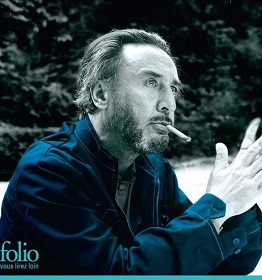
Romain Gary (9 mei 1914 – 2 december 1980)


De Amerikaanse schrijver Peter Benchley werd geboren in New York City op 8 mei 1940. Zie ook alle tags voor Peter Benchley op dit blog.

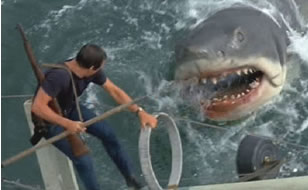
Uit: Jaws

“Middleton spoke into the microphone: “Something is going on, ladies and gentlemen, but we don’t know exactly what. All we know for sure is that Jim Prescott went swimming, and then suddenly a man on a boat out there saw something. Now Police Chief Brody is trying to get the boy to come ashore as fast as possible. It could be the shark, but we just don’t know.”
Hooper put the boat in reverse, to back away from the waves. As he looked off the stern, he saw a silver streak moving in the gray-blue water. It seemed part of the wave-motion, but it moved independently. For a second, Hooper did not realize what he was seeing. And even when the realization struck, he did not see the fish clearly. He cried, “Look out!”
“What is it?” yelled Brody.
“The fish! Get the kid out! Quick!”
The boy heard Hooper, and he tried to run. But in the chest-deep water his movements were slow and labored. A swell knocked him sideways. He stumbled, then stood and leaned forward.
Brody ran into the water and reached out. A wave hit him in the knees and pushed him back.
Middleton said into the microphone, “The man on the boat just said something about a fish. I just don’t know if he means a shark.”
 

 1911412-9f09ea6cea7e8b5c94340153b48355c5.jpg
Peter Benchley (8 mei 1940- 11 februari 2006)
Roy Schneider als Martin Brody in een scene uit de film uit 1975


De Franse schrijver Alain-René Lesage werd geboren op 8 mei 1668 in Sarzeau. Zie ook alle tags voor Alain-René Lesage op dit blog.

Uit: Histoire de Gil Blas de Santillane

“Il aurait encore bien voulu m’enseigner la langue latine; c’eût été autant d’argent épargné pour lui; mais, hélas! le pauvre Gil Perez! il n’en avait de sa vie su les premiers principes; c’était peut-être (car je n’avance pas cela comme un fait certain) le chanoine du chapitre le plus ignorant: aussi j’ai ouï dire qu’il n’avait pas obtenu son bénéfice par son érudition; il le devait uniquement à la reconnaissance de quelques bonnes religieuses dont il avait été le discret commissionnaire, et qui avaient eu le crédit de lui faire donner l’ordre de prêtrise sans examen.
Il fut donc obligé de me mettre sous la férule d’un maître: il m’envoya chez le docteur Godinez,   qui   passait   pour   le   plus   habile   pédant   d’Oviédo.   Je profitai si bien des instructions qu’on me donna, qu’au bout de cinq ou six années, j’entendis un peu les auteurs grecs et assez bien les poètes latins. Je m’appliquai aussi à la logique, qui m’apprit à raisonner beaucoup. J’aimais tant la dispute, que j’arrêtais les passants, connus ou inconnus, pour leur proposer des arguments. Je m’adressais quelquefois à des figures hibernoises qui ne demandaient pas mieux, et il fallait alors nous voir disputer! Quels gestes ! quelles grimaces! quelles contorsions! Nos yeux étaient pleins de fureur, et nosbouches écumantes; on nous devait plutôt prendre pour des possédés que pour des philosophes.
Je m’acquis toutefois par là, dans la ville, la réputation de savant. Mon oncle en fut ravi, parce qu’il fit réflexion que je cesserais bientôt de lui être à charge. Or ça, Gil Blas, me dit-il un jour, le temps de ton enfance est passé. Tu as déjà dix-sept ans, et te voilà devenu habile garçon: il faut songer à te pousser. Je suis d’avis de t’envoyer à l’université deSalamanque: avec l’esprit que je te vois, tu ne manqueras pas de trouver un bon poste.
Je te donnerai quelques ducats pour faire ton voyage, avec ma mule qui vaut bien dix à douze pistoles; tu la vendras à Salamanque, et tu en emploieras l’argent à t’entretenir jusqu’à ce que tu sois placé."
 

 1911412-b1c7cc257a6621e2864da2240a253cd7.jpg
Alain-René Lesage (8 mei 1668 – 17 november 1747)
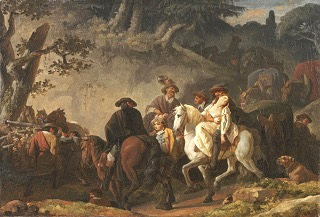
François André Vincent schilderde de ontvoering van Donna Mencia van Mosquera, 1777-1781
De jonge Gil de Blas hier in het midden, voor het wiite paard met Donna Mencia.


De Engelse dichter en schrijver John Meade Falkner werd geboren op 8 mei 1858 in Manningford Bruce, Wiltshire. Zie ook alle tags voor J. Meade Falkner op dit blog.


After Trinity

We have done with dogma and divinity,
Easter and Whitsun past,
The long, long Sundays after Trinity,
Are with us at last;
The passionless Sundays after Trinity,
Neither feast-day nor fast.

Christmas comes with plenty,
Lent spreads out its pall,
But these are five and twenty,
The longest Sundays of all;
The placid Sundays after Trinity,
Wheat-harvest, fruit-harvest, Fall.

Spring with its burst is over,
Summer has had its day,
The scented grasses and clover
Are cut, and dried into hay;
The singing-birds are silent,
And the swallows flown away.

Post pugnam pausa fiet;
Lord, we have made our choice;
In the stillness of autumn quiet,
We have heard the still, small voice.
We have sung Oh where shall Wisdom?
Thick paper, folio, Boyce.

Let it not all be sadness,
Not omnia vanitas,
Stir up a little gladness
To lighten the Tibi cras;
Send us that little summer,
That comes with Martinmas.

When still the cloudlet dapples
The windless cobalt blue,
And the scent of gathered apples
Fills all the store-rooms through,
The gossamer silvers the bramble,
The lawns are gemmed with dew.

An end of tombstone Latinity,
Stir up sober mirth,
Twenty-fifth after Trinity,
Kneel with the listening earth,
Behind the Advent trumpets
They are singing Emmanuel's birth.
 

 1911412-49179932e4dd6cdf40fecbc1def97dbb.jpg
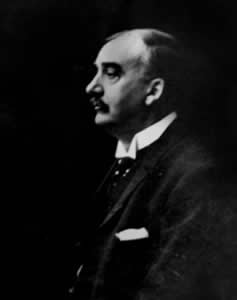
J. Meade Falkner (8 mei 1858 – 22 juli 1932)


De Duitse dichter Johann von Besser werd geboren op 8 mei 1654 in Frauenburg (tegenwoordig Saldus in Letland). Zie en ook alle tags voor Johann von Besser op dit blog.


Bestrafe mich mit keinem Tadel

Bestrafe mich mit keinem Tadel,
Daß deine Schooß mein Herze lieb gewinnt,
Denn der Magnet forscht mit der Nadel,
Bis er den Mittelpunkt ergründt.
Ein Schäfchen grast in Tal und Auen,
Wo Schatten ist:
Mein Herze will das deine schauen,
Drum such ist es, da wo du offen bist.


Was frag' ich denn darnach!

Was frag' ich denn darnach!
Wenn du mich nicht wilst lieben?
Das kan mich nicht betrüben /
Ich weiß / was Daphnis sprach:
Wird gleich der Chloris gunst geringer /
Ist doch die gantze welt voll solcher dinger.
Was frag' ich denn darnach!

Ich bin so gut als du;
Du must es auch entbehren /
Was ich dir kan gewähren.
Schleuß nur dein hertze zu!
Meins hat dich schon vorlängsten ausgejaget;
Wer weiß / wen noch der schimpff am ärgsten plaget.
Ich bin so gut als du!

Ich spitz' mich schon darauff /
Wie es dich wird gereuen.
Wie werd ich mich erfreuen /
Wenn dir hüpfft keiner auff.
Wenn du must welcke reibgen schaben /
Und flederwisch' am marckte feil wirst haben.
Ich spitz' mich schon darauff.
 

 1911412-627788b1f2e89e01087eafef7e53e47e.jpg
Johann von Besser (8 mei 1654 – 10 februari 1729)
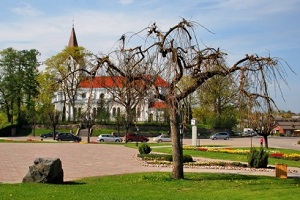
Johanneskerk in Saldus (Frauenburg)


De Deense schrijver Sophus Schandorph werd geboren op 8 mei 1836 in Ringstedt. Zie ook alle tags voor Sophus Schandorph op dit blog.

Uit: Stina Becomes a Farmer's Wife (vertaald door Sally Ryan)

“For a moment the owner of the cart peered at her from the corner of his eye and looked as if he were going to say something. But when his guest did not by the faintest sign reveal any inclination toward conversation or friendliness, and when he saw her staring straight ahead, crowding as far as possible away from him into the opposite corner of the seat, he sighed loudly, and exclaimed, "Well, well, begosh ye–hm, hm!" He stopped for a moment, wiped the perspiration from his forehead, reached for his pipe, stuffed it from a bladder-pouch, lighted it, touched the fat whitemaned sorrels lightly with the whip, and with a "Gidap!" made them start an easy trot.
Always the same white road, edged by grass and plantain leaves covered with a thick layer of dust. Always the same stubbly fields, unending stretches in woodless regions, interrupted only by the square of some solitary farmhouse, or by a cottage half veiled by the poplar row around the garden. Here and there a dried-out pool with its cracked, wrinkled, and hard clay bottom bore witness to the monstrous drought of the summer.
"It sure is mighty hot," sighed the farmer after they had ridden quite a distance.
Stina nodded, continuing to stare straight ahead. The man could only see the profile of her nose move a bit. Again he was silent for a while before making a new attempt to exchange ideas with her.
"The crop got in very well this year. There was nothing to complain about. For the weather was right steady. But–eh–the grain don't weigh much, and we got a mighty big pile o' chaff."
These reflections awakened so much interest in Stina that she turned half toward the farmer, and murmured, "The hay wasn't any good either."
 

 1911412-647be5bf27a01632b8686cd6a2a3b0d8.JPG
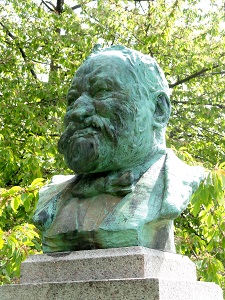
Sophus Schandorph (8 mei 1836 - 1 januari 1901)
Borstbeeld in Kopenhagen


De Amerikaanse schrijver Sloan Wilson werd geboren op 8 mei 1920 in Norwalk, Connecticut. Zie ook mijn blog van 8 mei 2007 en ook mijn blog van 8 mei 2009.

Uit: The Man in the Gray Flannel Suit

“Its peculiar shape caused people to stare at it abstractly, and once at a cocktail party one of the guests said, “Say, that’s funny. Did you ever notice that big question mark on your wall?”
“It’s only a crack,” Tom replied.
“But why should it be in the form of a question mark?”
“It’s just coincidence.”
“That’s funny,” the guest said. Tom and Betsy assured each other that someday they would have the whole wall replastered, but they never did.
The crack remained as a perpetual reminder of Betsy’s moment of extravagance, Tom’s moment of violence, and their inability either to fix walls properly or to pay to have them fixed. It seemed ironic to Tom that the house should preserve a souvenir of such things, while allowing evenings of pleasure and kindness to slip by without a trace.
The crack in the living room was not the only reminder of the worst. An ink stain with handmarks on the wallpaper in Janey’s room commemorated one of the few times Janey ever willfully destroyed property, and the only time Betsy ever lost her temper with her and struck her. Janey was five, and the middle one of the three Rath children.
She did everything hard: she screamed when she cried, and when she was happy her small face seemed to hold for an instant all the joy in the world. Upon deciding that she wanted to play with ink, she carefully poured ink over both her hands and made neat imprints on the wallpaper, from the floor to as high as she could reach. Betsy was so angry that she slapped both her hands, and Janey, feeling she had simply been interrupted in the midst of an artistic endeavor, lay on the bed for an hour sobbing and rubbing her hands in her eyes until her whole face was covered with ink. Feeling like a murderess, Betsy tried to comfort her, but even holding and rocking her didn’t seem to help, and Betsy was shocked to find that the child was shuddering. When Tom came home that night he found mother and daughter asleep on the bed together, tightly locked in each other’s arms. Both their faces were covered with ink.
All this the wall remembered and recorded.“
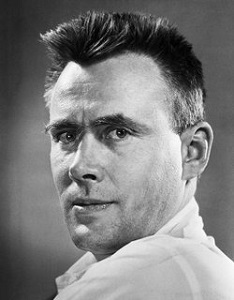
 

 1911412-9c95f074c7a90fb43af6e5dc2619c974.jpg
Sloan Wilson (8 mei 1920 – 25 mei 2003)


De Duitse schrijver Otto Zierer werd geboren op 8 mei 1909 in Bamberg. Zie ook alle tags voor Otto Zierer op dit blog.

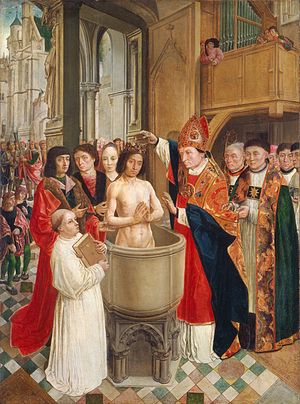
Uit: Chlodwig - ein Frankenkönig läßt sich taufen

"Bei Thor und seinen Blitzen", rief Chlodwig, König der Franken, und faßte nach seinem Zauber­amulett. "Der heilige Mann in Reims soll seinen Krug wiederhaben! Ich werde doch nicht so töricht sein und mit seinem Christengott Streit anfangen".  "Gelobt sei Jesus Christus", antwortete der Bote. Ihn hatte der Bischof Remigius von Reims in die Königspfalz nach Soissons, wo der Heerkönig der Franken Hof hielt, geschickt, damit er Chlodwig Vorhaltungen mache. Dessen wilde Krieger hatten wieder einmal im eroberten Gallien Kirchen geplündert und kostbare Gottesdienstgeräte weggeschleppt, darunter auch einen Krug von wunderbarer Größe und Schönheit. Jetzt war dieser Krug bei der noch un­verteilten Beute in Soissons. „Wenn das Los mir jenen Krug zuspricht, werde ich erfüllen, was dein Bischof wünscht", versprach Chlodwig. Unverzüglich befahl der Frankenherrscher seine Freunde und Gefolgsleute zu sich. Er führte sie in den Raum, wo die Beute der letzten Kriegszüge aufgestapelt war. Es war Brauch, diese Dinge gleichmäßig unter den Mächtigen zu verteilen.
„Tapfere Krieger“, sprach Chlodwig, "ich bitte euch, weigert euch nicht, mir außer meinem Beuteanteil noch jenes Gefäß zu geben." "Ruhmreicher König" war die Antwort, „tue, was dir gut erscheint!" So stimmten .alle zu, nur ein rothaariger Graf ...  rief  „Wieso willst du besser sein als wir anderen? Dir steht nur zu, was das Los bestimmt, nichts sonst!" Mit diesen Worten hob er die steinerne Streitaxt auf und schlug auf den Krug ein, ohne ihn zu zerstören. König Chlodwig tat, als mache ihm dieser Vorfall nichts aus. Er bewahrte aber die Kränkung tief in seiner Brust. Der Bote indes wurde mit dem Krug zu Remigius, dem mächtigen Bischof in der alten Römerstadt Reims, entlassen.“
 

 1911412-a51eb09da6893e60e4faaeff4c4ac188.jpg
Otto Zierer (8 mei 1909 – 5 maart 1983)
Clovis laat zich dopen door de meester van Saint-Gilles, rond 1500
(Geen portret beschikbaar)


Geschreven door Romenu om 08:00 Reageer op dit bericht

Meer van Romenu

↑ Terug naar de berichten