

Naar de inhoud

Romenu

Over literatuur, gedichten, kunst en cultuur
akke.beakke.be

Berichten van 1 juni 2016 tot 2 juni 2016

Jim Knipfel, Marcel Reich-Ranicki, Sibylle Berg, Carol Shields, Jean Nelissen, Thomas Hardy, Markies De Sade, Joy Ladin
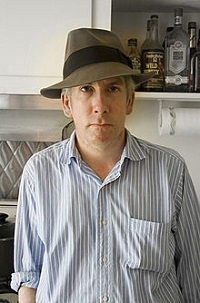
De Amerikaanse schrijver Jim Knipfel werd geboren op 2 juni 1965 in Green Bay, Wisconsin. Zie ook alle tags voor Jim Knipfel op dit blog.

Uit: Slackjaw: A Memoir

"There, you see? Can you imagine how they would feel if youkilled yourself?"
"So, what, I should go on living solely out of guilt? Guilt overhow they would feel if I were to end it? That's not much to workwith." I chuckled.
"See? You just laughed! If you laugh, that must meansomething. Everything's not completely dark."
"Well, Wagner said," I responded, one more young man whotook his Wagner too seriously, "`Amidst laughter should we faceour doom.'"
"Who?"
"Never mind," I told her, knowing the whole thing was amistake. It wasn't going anywhere, and never would go anywhere."Thanks for taking the time, but I'm suddenly real tired. I'mgoing to bed."
"Are you still thinking about hurting yourself?"
"Well, yeah. But right now I'm just too damn tired." Thesefew minutes on the phone with her had completely sapped whatenergy I had left. She began to say something else, but I hungup. Useless. I lay down on my mattress, still dressed, and fellasleep.
The next morning was brisk and clear outside. Therewere things I was supposed to be doing, but for the life of me, Icouldn't remember what. I put on my hat and coat, left theapartment, and started walking in a direction I'd never gone. I hadstarted wearing a black fedora everywhere when I was sixteenyears old. At the time, I thought it made me look like Bogart. Iwas mistaken. So many of us go through life trying to be Bogartor Cagney, but we mostly end up like Elisha Cook, Jr. I certainlydid. But the hat stayed. It was my most identifiable feature.
I walked for hours, hoping I could exhaust myself and walkthe bad thoughts out of my head. Once my legs started gettingnumb, I turned around and started back home. While I walked,I took inventory, only to discover that there was nothing to count.
When I got home, I opened the door, threw my hat and coaton the mattress, snatched the razors off the desk, took them intothe bathroom, and searched in vain for a comfortable spot on thetiled floor. After a few minutes I gave up on that silly notion andset to work on the right wrist."


 1921308-ffb077f9f1a285ad6ae02c677a21af8c.jpg
Jim Knipfel (Green Bay, 2 juni 1965)


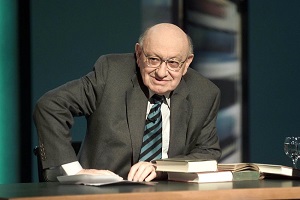
De Duitse schrijver en literatuurcriticus Marcel Reich-Ranicki werd geboren op 2 juni 1920 in Włocławek, Polen. Zie ook alle tags voor Marcel Reich-Ranicki op dit blog.

Uit: Deutschlands Glück in Deutschlands Unglück

„Aber es scheint so, als sei er zu dem Ergebnis gekommen, daß es leichtsinnig wäre, den postumen Revisionsprozeß, der auch ihm nicht erspart bleiben konnte, anderen, möglicherweise nicht zuständigen Kommentatoren zu überlassen. Vielmehr sei es richtiger, sich der Sache beizeiten, wenigstens teilweise anzunehmen.
Die Edition der ab 1977 in zehn Bänden erscheinenden Tagebücher Thomas Manns war 1986 abgeschlossen. Nun bietet ein Tagebuch in der Regel monologische Prosa ohne künstlerischen Anspruch, es ist eine zuchtlose, häufig unkontrollierte und daher für den Autor sehr bequeme Aneinanderreihung von Gedanken und Gefühlen, Beobachtungen und Beschreibungen. Was es immerhin ermöglicht, ist Unmittelbarkeit und Subjektivität. Beides mutet freilich oft etwas dilettantenhaft an.
Auch Thomas Manns Tagebücher haben im Grunde keinen literarischen Wert. Dennoch wurden sie sofort als ungewöhnliche Dokumente anerkannt, von seinen Anhängern und Bewunderern ebenso wie von jenen, die den Autor ablehnten und verachteten. Der Hauptbestandteil der Tagebücher sind Eintragungen über den Alltag. Thomas Mann geht spazieren und schreibt in Klammern "ohne Weste", er trinkt Lindenblütentee "mit einer Zitronenscheibe", er ißt zum Frühstück "zwei Eier ohne das Weiße des einen", er notiert "mit dem Pudel gescherzt". Und dergleichen mehr. Ich frage mich, warum ich trotz dieser nicht zu überbietenden Belanglosigkeiten die Lektüre des Tagebuchs keineswegs abgebrochen habe. Weil es aus der Feder des Autors stammt, der den "Zauberberg", den "Josephsroman" verfaßt hat? Nein, das ist es nicht - und auch nicht die Tatsache, daß sich hier zwischendurch aufschlußreiche und auch originelle Eintragungen finden.“
 

 1921308-ef778025f64ca3ad2bad3a96beceeed6.jpg
Marcel Reich-Ranicki (2 juni 1920 – 18 september 2013)


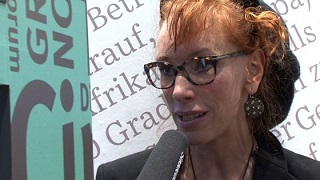
De Duitse schrijfster Sibylle Berg werd geboren in Weimar op 2 juni 1962. Zie ook alle tags voor Sibylle Berg op dit blog.

Uit: Hauptsache weit

“Und weg, hatte er gedacht.
Die Schule war zu Ende, das Leben noch nicht, hatte noch nicht begonnen, das Leben. Er hatte nicht viel Angst davor, weil er noch keine Enttäuschungen kannte. Er war ein schöner Junge mit langen dunklen Haaren, er spielte Gitarre, komponierte am Computer und dachte, irgendwie werde ich wohl später nach London gehen, was Kreatives machen. Aber das war später.
Und nun?
Warum kommt der Spaß nicht? Der Junge hockt in einem Zimmer, das Zimmer ist grün, wegen der Neonleuchte, es hat kein Fenster und der Ventilator ist sehr laut. Schatten huschen über den Betonboden, das Glück ist das nicht, eine Wolldecke auf dem Bett, auf der schon einige Kriege ausgetragen wurden. Magen gegen Tom Yam, Darm gegen Curry. Immer verloren, die Eingeweide.
Der Junge ist 18, und jetzt aber Asien, hatte er sich gedacht. Mit 1000 Dollar durch Thailand, Indien, Kambodscha, drei Monate unterwegs, und dann wieder heim, nach Deutschland. Das ist so eng, so langweilig, jetzt was erleben und vielleicht nie wieder zurück. Hast du keine Angst, hatten blasse Freunde zu Hause gefragt, so ganz alleine? Nein, hatte er geantwortet, man lernt ja so viele Leute kennen unterwegs. Bis jetzt hatte er hauptsächlich Mädchen kennen gelernt, nett waren die schon, wenn man Leute mag, die einen bei jedem Satz anfassen. Mädchen, die aussahen wie dreißig und doch so alt waren wie er, seit Monaten unterwegs, die Mädchen, da werden sie komisch. Übermorgen würde er in Laos sein, da mag er jetzt gar nicht dran denken, in seinem hässlichen Pensionszimmer, muss Obacht geben, dass er sich nicht aufs Bett wirft und weint, auf die Decke, wo schon die anderen Dinge drauf sind. In dem kleinen Fernseher kommen nur Leute vor, die ihm völlig fremd sind, das ist das Zeichen, dass man einsam ist, wenn man die Fernsehstars eines Landesnicht kennt und die eigenen keine Bedeutung haben. Der Junge sehnt sich nach Stefan Raab, nach Harald Schmidt. Er merkt weiter, dass er gar nicht existiert, wenn er nichts hat, was er kennt. Wenn er keine Zeitung in seiner Sprache kaufen kann, keine Klatschgeschichten über einheimische Prominente lesen, wenn keiner anruft und fragt, wie es ihm geht. Dann gibt es ihn nicht.“
 

 1921308-c610de18c079b5cd02d1197cc6233cc2.jpg
Sibylle Berg (Weimar, 2 juni 1962)


De Canadese schrijfster Carol Shields werd op 2 juni 1935 in Oak Park, Chicago, geboren als Carol Warner. Zie ook alle tags voor Carol Shields op dit blog.

Uit: The Republic of Love

“If Fay McLeod no longer loves Peter Knightly, there is still the question of whether she can live without  him, live alone that is. She is thirty-five years old, after all, and should know something about compromise.
Toast, she says to herself, might be the test.
She is being whimsical, of course, which is one of the ways she protects herself, but she is partly
serious too: can she bear to stand alone in her kitchen on a Saturday morning, or any morning, for that matter, and push down the lever of her ten-year-old General Electric black-and-chrome toaster and produce a single slice of breakfast toast? One only.
Other things she can do on her own. Traveling, for instance. Last summer, tracking down mermaid
legends, she scoured half a dozen American libraries, California, Texas, Boston -- three happy weeks, traveling light, one suitcase, three changes of clothes, two pairs of shoes, that was it. She relished the ease of arranging single-seat tickets and the sight every night of a neatly made-up hotel room, avoiding, if she could, those pompous doubles with their giant puffed duvets and bulging headboards.
"A very small room, please," she said to a succession of hotel clerks, interchangeable behind their
crisp summer haircuts and narrow shirt collars and eager looks, and they'd complied, beaming as
though she'd bent forward over the desk and smoothed their faces with the flat of her hand.
Occasionally, vacationing families with young children called out greetings, but mostly she sat alone
by pool sides or in hotel dining rooms with a book open by her plate. People looked her way and
smiled, pitying or else envious, she wasn't sure which, and it didn't matter. She finds the bewilderment of travel rousing. Next summer she'll be off again, Europe this time, her mermaids again, a second research grant, more generous than the first. She departs at the end of July and will be gone for four intense weeks. Most of the arrangements have already been made - and the thought that she will be on her own adds to, rather than subtracts from, her anticipation.”
 

 1921308-8b9554c9422a99f0025ddb4330744eab.jpg
Carol Shields (2 juni 1935 – 16 juli 2003)
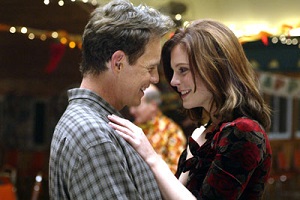
Scene uit de gelijknamige film met  Bruce Greenwood (Tom) en Emilia Fox (Fay), 2003


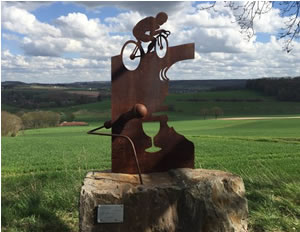
De Nederlandse sportjournalist en schrijver Jean Nelissen werd geboren in Geleen op 2 juni 1936. Zie ook alle tags voor Jean Nelissen op dit blog.

Uit: Het intrigerende wielerleven van Jean Nelissen

“Toon en Rietje Hermans hebben een huis gekocht in de chique Stokstraat in het hart van de totaal gerenoveerde. voormalige hoerenbuurt van Maastricht. Een paar keer per week ga ik bij Toon ontbijten, want ik werk op driehonderd meter afstandbij dagblad De Limburger in de Havenstraat. Wij kennen elkaar goed. Gedurende meer dan twintig jaar sluiten Toon‚ Rietje, de Zangeres zonder Naam' Mary Servaes en haar man Sjo en ik om twee uur 's nachts af aan de stamtafel van de populaire kroeg ‘ln den Ouden Vogelstruys' aan het Vrijthof. Op zondagmiddag drinken we koffie in de bestuurskamer van voetbalclub MVV.
In 1965 volg ik met Toon in mijn tweepersoons sportwagen. een knalrode Triumph met een stoffen zwart dakje, de Ronde van Nederland. Op weg naar Simpelveld - in de Koninginnerit - zien we een prachtig duel tussen jan Janssen en Jacques Anquetil. Het is 32 graden en ik zeg tegen Toon: ‘Zullen we iets drinken?' We stappen een café binnen en zodra de mensen in de overvolle kroeg Toon zien roepen ze: ‘Toon. vertel een mop.‘ Dat is het leven dat hem achtervolgt. Als hij met zijn one-man-show op de televisie verschijnt. is het land uitgestorven en zijn de autowegen verlaten.Want het volk zit massaal voor de tv, hij haalt 94% kijkdichtheid!”
 

 1921308-df13cabb5039b5aac9bd904876d1e817.jpg
Jean Nelissen (2 juni 1936 - 1 september 2010)
Monument voor Jean Nelissen op de Gulperberg


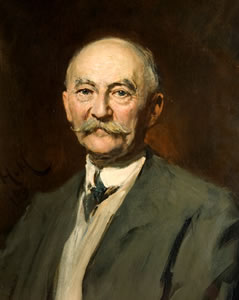
De Engels romanschrijver en dichter Thomas Hardy werd op 2 juni 1840 geboren in Higher Bockhampton, bij Dorchester. Zie ook alle tags voor Thomas Hardy op dit blog.


"I Said To Love"

I said to Love,
"It is not now as in old days
When men adored thee and thy ways
All else above;
Named thee the Boy, the Bright, the One
Who spread a heaven beneath the sun,"
I said to Love.

I said to him,
"We now know more of thee than then;
We were but weak in judgment when,
With hearts abrim,
We clamoured thee that thou would'st please
Inflict on us thine agonies,"
I said to him.

I said to Love,
"Thou art not young, thou art not fair,
No faery darts, no cherub air,
Nor swan, nor dove
Are thine; but features pitiless,
And iron daggers of distress,"
I said to Love.

"Depart then, Love! . . .
- Man's race shall end, dost threaten thou?
The age to come the man of now
Know nothing of? -
We fear not such a threat from thee;
We are too old in apathy!
Mankind shall cease.--So let it be,"
I said to Love.
 

 1921308-c9d0abd69292dd2220685cfec295f377.jpg
Thomas Hardy (2 juni 1840 – 11 januari 1928)
Portret door Hubert Herkomer. 1909


De Franse schrijver Donatien Alphonse François, Markies de Sade werd geboren op 2 juni 1740 in Parijs. Zie ook alle tags voor Markies de Sade op dit blog.

Uit: Justine (Vertaald door Austryn Wainhouse)

"Why," he continued with a curse, "he doesn't much aid you, your God, does he? and thus he allows unhappy virtue to suffer, he abandons it to villainy's hands; ah! what a bloody fine God you've got there, Therese, what a superb God he is! Come," he says, "come here, whore, your prayer should be done," and at the same time he places me upon the divan at the back of that cell; "I told you Therese, you have got to die!"
He seizes my arms, binds them to my side, then he slips a black silken noose about my neck; he holds both ends of the cord and, by tightening, he can strangle and dispatch me to the other world ei quickly or slowly, depending upon his pleasure.
"This torture is sweeter than you may imagine, Therese," says Roland; "you will only approach death by way of unspeakably pleasurable sensations; the pressure this noose will bring to bear upon your nervous system will set fire to the organs of voluptuousness; the effect is certain; were all the people who are condemned to this torture to know in what an intoxication of joy it makes one die, less terrified by this retribution for their crimes, they would commit them more often and with much greater self-assurance; this delicious operation, Therese, by causing, as well, the contraction of the locale in which I am going to fit myself," he added as he presented himself to a criminal avenue so worthy of such a villain, "is also going to double my pleasure."
 

 1921308-f25ef9ad81b70a852ade484c52814f67.jpg
Markies De Sade (2 juni 1740 – 2 december 1814)
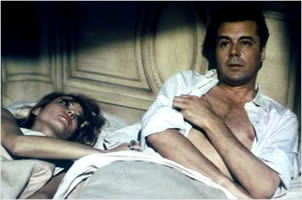
Anna Karina en Dirk Bogardein de Duits-Italiaanse film „Justine“ uit 1969


Onafhankelijk van geboortdata

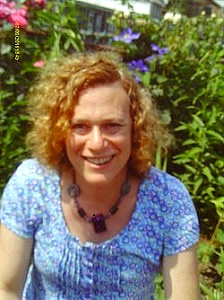
De Amerikaanse dichteres, schrijfster en hoogleraar transgender-wetenschappen Joy Ladin werd geboren in Rochester, New York in 1961. Zie ook alle tags voor Joy Ladin op dit blog.


Lost and Found

You find yourself quite comfortable
in the bony clothes of death,
though you seem to have lost the feeling of,

well, feeling. Light moves through you
easily and eerily, as though life were a window
that was broken when you found it

so you can admire without shame
its fracture-stars
that never set, though you find you get a little lost

when you try to navigate by them
though the complicated waste
of loss and obligation

to the life that reveals itself
when you close your eyes,
the stars, that is, of the foundling self,

aroused and assertive, warmed by the hope
you found you’ve lost
in the bony clothes of death.
 

 1921308-f0238efc3d6053edbd02056f90d3fa47.jpg
Joy Ladin (Rochester, 1961)


Zie voor nog meer schrijvers van de 2e juni ook mijn blog van 2 juni 2013 deel 2.
Geschreven door Romenu om 17:26 Reageer op dit bericht

Patrick Besson, John Masefield, Ferdinand Raimund, Peter de Mendelssohn, Colleen McCullough, Macedonio Fernández, Dennis Gaens, Rhidian Brook

De Franse schrijver en journalist Patrick Besson werd geboren op 1 juni 1956 in Montreuil. Zie ook mijn blog van 1 juni 2009 en alle tags voor Patrick Besson op dit blog.

Uit: Lettre à un ami perdu

« La nuit était tombée sur cette journée grise de février. Je me rappelle les phares des voitures sous la pluie, une boule blonde sous les draps blancs, qui était la tête de la femme qui m'aimait. La femme qui m'aimait dormait toujours la tête sous les draps car elle était frileuse. Il m'arrive encore de soulever les draps et les couvertures et de chercher, mais de moins en moins souvent. C'est sans doute cela qu'on appelle guérir.
Février est comme novembre, un mois où les amours commencent ou meurent. Il y a des moments où la vie vaut la peine d'être vécue. Par exemple quand on nous présente à une femme qui correspond à ce que nous cherchons sous les draps et les couvertures. Le bon moment est quand les mots de la femme et les nôtres se suivent en ligne continue, s'attrapent et jouent les uns avec les autres comme des chats avec une balle en caoutchouc. On dit rouge, et c'est le rouge qui sort. 9, et le 9 sort. Mais combien de fois cela arrive-t-il ? Cela arrive juste assez souvent pour nous empêcher de nous tuer et c'est pourquoi nous sommes en enfer. L'enfer, en effet, n'a pas de fin.”
(..)

« Il lui aurait dit qu'ils étaient avant tout des amis, un garçon et une fille tombés par hasard dans le même esquif et qui vont essayer, malgré la tempête et le manque de provisions, d'arriver ensemble à bon port. Alors il n'y aurait eu ni coups ni déchirures, simplement deux enfants dans un grand lit, qui vont en voir de toutes les couleurs mais qui n'ont pas peur parce qu'ils savent qu'ils ont un ami."


 1920993-b40c7d567c5894c8010d0c7f41db4f91.jpg
Patrick Besson (Montreuil, 1 juni 1956)


De Engelse dichter en schrijver John Edward Masefield werd geboren op 1 juni 1878 in Ledbury, in Herefordshire. Zie ook mijn blog van 1 juni 2009 en eveneens alle tags voor John Masefield op dit blog.


Laugh and be Merry

Laugh and be merry, remember, better the world with a song,
Better the world with a blow in the teeth of a wrong.
Laugh, for the time is brief, a thread the length of a span.
Laugh and be proud to belong to the old proud pageant of man.

Laugh and be merry: remember, in olden time.
God made Heaven and Earth for joy He took in a rhyme,
Made them, and filled them full with the strong red wine of
His mirth
The splendid joy of the stars: the joy of the earth.

So we must laugh and drink from the deep blue cup of the sky,
Join the jubilant song of the great stars sweeping by,
Laugh, and battle, and work, and drink of the wine outpoured
In the dear green earth, the sign of the joy of the Lord.

Laugh and be merry together, like brothers akin,
Guesting awhile in the rooms of a beautiful inn,
Glad till the dancing stops, and the lilt of the music ends.
Laugh till the game is played; and be you merry, my friends.


Hell’s Pavement

“When I’m discharged at Liverpool ‘n’ draws my bit o’ pay,
I won’t come to sea no more;
I’ll court a pretty little lass ‘n’ have a weddin’ day,
‘N’ settle somewhere down shore;
I’ll never fare to sea again a-temptin’ Davy Jones,
A-hearkening to the cruel sharks a-hungerin’ for my bones;
I’ll run a blushin’ dairy-farm or go a-crackin’ stones,
Or buy ‘n’ keep a little liquor-store” &mdash
So he said.

They towed her in to Liverpool, we made the hooker fast,
And the copper-bound official paid the crew,
And Billy drew his money, but the money didn’t last,
For he painted the alongshore blue, &mdash
It was rum for Poll, and rum for Nan, and gin for Jolly Jack;
He shipped a week later in the clothes upon his back;
He had to pinch a little straw, he had to beg a sack
To sleep on, when his watch was through, &mdash
So he did.


 1920993-5ca2e09b79843d19842b32c4235248bb.jpg
John Edward Masefield (1 juni 1878 – 12 mei 1967)


De Oostenrijkse schrijver Ferdinand Raimund werd geboren op 1 juni 1790 in Wenen. Zie ook mijn blog van 1 juni 2009 en eveneens alle tags voor Ferdinand Raimund op dit blog.

Uit: Die gefesselte Phantasie

““ALLES(ruft).
Willkommen, Distichon.
DISTICHONfeierlich).
Verderben diesen Zaubernymphen! Die ganze Nacht hat meine Phantasie geraset und den geflügelten Gaul beinahe zuschanden geritten, bis Aurora vierzig Schmähgedichte beleuchtete, die mein schöpferischer Geist in dieser Nacht gebar.
MEHRERE.
Hier sind noch mehr. (Zeigen sie vor.)
DISTICHON.
Ich glaub es euch, an Dichtern fehlt's auf unserer Insel nicht. Flora heißet sie, weil sie die Göttin hat mit Blümlein aller Art bedeckt. Wir kennen keinen Schnee, als wenn uns Zephir weiße Blüten streut, darum begeistert uns der ewige Blumenduft und weihet uns zu Priestern des Apoll. So daß der Schuster selbst mit einer Hand nur seinen Stiefel schafft, und in der andern hält er hoch die goldne Leier.
Sein kühner Geist ist mit Apoll verwandt,
Ist seine Lyra gleich mit Schustergarn bespannt.
AFFRIDURO.
Doch hohe Zeit ists nun, die Leier zu vertauschen mit dem Mut. Die Zauberschwestern müssen fallen.
DISTICHON.
Ich werfe sie mit Knittelreimen tot.
AFFRIDURO.
Ein Jahr ists nun, daß diese beiden Zauberschwestern auf unsere Insel kamen in einem Wolkenwagen, den zwei weiße Löwen zogen. Wir glaubten schon, die Götter hätten sie gesendet, doch bald erfuhren wir, daß sie der Orkus ausgespien. Denn ihre Zaubermacht erbaute schnell ein Schloß, vor dem die beiden Löwen wachen und jeden töten, der sich naht. Sie zertreten unsere Fluren, und mit vergifteten Pfeilen schießen sie nach den Dienern des Tempels.
ALLE.
Wehe, wehe über sie!“


 1920993-ccd1cbe507f91024757eb70db04eabae.jpg
Ferdinand Raimund (1 juni 1790 - 5 september 1836)
Scene uit een opvoering in Schrobenhausen, 1991


De Duitse schrijver, essayist, journalist, biograaf en uitgever Peter de Mendelssohn werd op 1 juni 1908 in München geboren. Zie ook mijn blog van 1 juni 2009 en eveneens alle tags voor Peter de Mendelssohn op dit blog.

Uit: Das zweite Leben

"Der nächste Tag, Sonntag, der fünfte März, war kalt und trübe. Ich stand zeitig auf und ging auf die Straße hinunter. Der Himmel über der Stadt war bewölkt, es fiel ein feiner Staubregen, der nach einiger Zeit aufhörte. . . . Dann bog ich um die Ecke und ging den Kurfürstendamm hinauf in Richtung Halensee.
Die Flaggen an den Fenstern hingen schlaff herunter, weil es windstill war, dazu waren sie schwer von Nässe. Trotz des Lärms machte alles einen müden abgekämpften Eindruck. Nicht nur die Menschen auf der Straße, sondern sogar die Häuser selbst, ja die ganze Stadt samt ihren Flaggen und Bannern, alles schien zu sagen: "Wir sind müde und erschöpft, wir haben es satt." Ich wußte nicht genau, wo das für mich zuständige Wahllokal lag, deshalb ging ich zu der Ecke, wo die Zeitungsleute standen und fragte meinen alten Freund danach. Der grüßte mich freundlich lächelnd und gab Auskunft. . . . Ich fand auch alsbald das Lokal, es war eine Turnhalle. Vor dem Eingang standen wieder Leute mit Wahlplakaten und Fahnen, die kleine Flugzettel austeilten, aber keiner von ihnen machte Lärm. Die Polizei stand daneben und überwachte sie aufs genaueste. Drinnen mußte man an einem Tisch vorüber, an dem zwei Männer saßen. Dazu wartete man in einer langen Schlange, die langsam vorwärtsrückte.  . . . Drinnen [in der Wahlzelle] stand ein kleiner Tisch, auf ihm lag eine Bleistift, der an einem Bindfaden hing. Ich nahm den Bleistift zur Hand und überflog die lange Liste der Parteien auf dem Wahlzettel.  . . . Die Nationalsozialistische Deutsche Arbeiter Partei führte die Liste an, dann folgten alle anderen, Sozialdemokraten, Demokraten, das katholische Zentrum, die Deutschnationalen und noch viele andere mehr. Auch Kommunisten waren dabei. Nicht viel Auswahl, dachte ich. Außerdem: man kann wählen, was man will, es ist doch umsonst. Was hatte es für einen Sinn, den Kommunisten das Kreuz zu geben? Im nächsten Reichstag gab es keine Kommunisten, denn sie saßen schon alle im Gefängnis. Sollte man seine Stimme der großen republikanischen Partei schenken?”


 1920993-eaee49d7ddd567aa498e40062ea8d24f.jpg
Peter de Mendelssohn (1 juni 1908 – 10 augustus 1982)
De Karlsplatz in München in 1908


De Australische schrijfster Colleen McCullough werd geboren op 1 juni 1937 in Wellington. Zie ook mijn blog van 1 juni 2009 en eveneens alle tags voor Colleen McCullough op dit blog.

Uit: The Thorn Birds

“Frank had driven his mother into Wahine to buy Meggie's doll, and he was still wondering what had prompted her to do it. She wasn't given to impractical birthday presents, there wasn't the money for them, and she had never given a toy to anyone before. They all got clothes; birthdays and Christmases replenished sparse wardrobes. But apparently Meggie had seen the doll on her one and only trip into town, and Fiona had not forgotten. When Frank questioned her, she muttered something about a girl needing a doll, and quickly changed the subject.
Jack and Hughie had the doll between them on the front path, manipulating its joints callously. All Frank could see of Meggie was her back, as she stood watching her brothers desecrate Agnes. Her neat white socks had slipped in crinkled folds around her little black boots, and the pink of her legs was visible for three or four inches below the hem of her brown velvet Sunday dress. Down her back cascaded a mane of carefully curled hair, sparkling in the sun; not red and not gold, but somewhere in between. The white taffeta bow which held the front curls back from her face hung draggled and limp; dust smeared her dress. She held the doll's clothes tightly in one hand, the other pushing vainly at Hughie.”
 

 1920993-72cca2f0d4c83add41dd969fcdc26d17.jpg
Colleen McCullough (Wellington, 1 juni 1937)
Scene uit de tv-serie met Richard Chamberlain en Rachel Ward, 1983


De Argentijnse schrijver Macedonio Fernández werd geboren op 1 juni 1874 in Buenos Aires. Zie ook mijn blog van 1 juni 2009 en ook mijn blog van 1 juni 2010.

Uit: From The Museum of Eterna’s Novel (Vertaald door Margaret Schwartz)

“The adjectivalization read above—conveniently, I speak before the novel of that which is not read that the book contains; but the rest, here, is before everything and I leave only a little of it; by means of prologues I have the refinement to privilege the readers who know the entire book, something only my readers have found in an abnegated author—I give the book to the public just to turn around and put it through the linguistic workshop of that singular artist, Xul Solar, who will make it into one, definitive word. And, already in its fourth edition, my salutation to the reader, which you’ll have to pardon me, will today be served decaffeinated.
To your health, reader. How sad we are in our books, and how distant. I, the most often mentioned and identified of the unknowns, find myself in a predicament with my Complete Works, to start with, in such a way that the entire future, my whole literary career, will be posterior, in my case, to the aforementioned Complete Works; only because the public has not stopped to wait for me and hasn’t given me the name of a great unknown.”


 1920993-d41c2e04197682cd2e18d5177cb48193.jpg
Macedonio Fernández (1 juni 1874 – 10 februari 1952)
Cover


Onafhankelijk van geboortedata:

De Nederlandse dichter Dennis Gaens werd geboren in Susteren in 1982. Zie ook alle tags voor Dennis Gaens op dit blog.


Achter de schaapskooi

Elk jaar kies je er opnieuw voor om te wonen,
ergens – hier is een optie. Waar dan ook.
Je bouwt in vertrouwde patronen,
met nieuw materiaal en een ander
uitzicht. Dan komt er een moment
waarop het thuiskomen begint.
Geen enkele keuze is zonder gevolgen.
Waar dan ook, ergens zijn ook wij
die vogels, en hier is, zonder meer,
een optie.


 1920993-f5042431a5cf6875c31bd4a7bb0487ce.jpg
Dennis Gaens (Susteren, 1982)


De Britse schrijver Rhidian Brook werd geboren in 1964 in Tenby. Zie ook alle tags voor Rhidian Brook op dit blog.

Uit: Niemandsland (The Aftermath, vertaald door Maria Andreas)

»Hier muss er sein, der Panther. Ich hab ihn gesehen. Berti hat ihn gesehen. Dietmar hat ihn auch gesehen. Schwarzes Fell wie ’n piekfeiner Pelzmantel. Und Zähne wie Klaviertasten. Den machen wir kalt. Müssen wir ja – wer sonst? Der Tommy vielleicht? Der Ami? Der Iwan? Der Franzose? Die kannst du vergessen. Alle zu beschäftigt. Die schauen doch bloß, was sie sich krallen können. Wie Hunde, die um einen Knochen raufen, an dem kein Fleisch mehr dran ist. Nee, da müssen wir selber ran. Wir machen das Biest kalt, bevor es uns kaltmacht. Dann sind wir aus dem Gröbsten raus.«
Der Junge, der Osi genannt wurde, rückte seinen Kopfschutz zurecht und führte die anderen durch die pulverisierte Landschaft dieser von den Briten zerbombten Stadt. Osi hatte den Tommy-Helm auf, den er in der Nähe der Alster aus einem Laster geklaut hatte. Der sah zwar nicht so schmissig aus wie die amerikanischen Helme aus seiner Sammlung, nicht einmal so schmissig wie die russischen, aber er passte am besten. Und er half Osi, auf Englisch zu fluchen, zu fluchen wie der Sergeant, der am Bahnhof Hamburg-Dammtor die Häftlinge zusammengeschissen hatte: »Oi! Put your fucking hands up. Fucking up, I said!Where I can see them! Dumb bloody fucking Huns.« Diese Männer hatten einen Augenblick gezögert, die Hände zu heben, nicht weil sie schwer von Begriff waren, sondern unterernährt und zu schwach. Dumb-Bloody-Fucking-Huns!Vom Hals abwärts war Osi in einem fantastischen, aus der Not geborenen Hybridstil gekleidet, ein Mischmasch aus Fetzen und Feinem: Unter dem Morgenmantel, der einmal einem Lebemann gehört hatte, trug er die Strickjacke einer alten Jungfer, ein kragenloses Opahemd und eine SA-Hose mit hochgekrempelten Beinen und einer Krawatte als Gürtel; seine an den Kappen durchlöcherten Schuhe stammten von einem Bahnhofsvorsteher, der schon lange nicht mehr lebte.“

1920993-53b4131ad9606fd5cffb60968ba78868.jpg
Rhidian Brook (Tenby, 1964)

Geschreven door Romenu om 18:29 Reageer op dit bericht

Meer van Romenu

↑ Terug naar de berichten