Naar de inhoud

Romenu

Over literatuur, gedichten, kunst en cultuur
akke.beakke.be

Berichten van 11 juni 2016 tot 12 juni 2016

Christoph Meckel, Wolfgang Herrndorf, Anne Frank, Renan Demirkan, Djuna Barnes, Johanna Spyri

De Duitse dichter, schrijver en graficus Christoph Meckel werd geboren op 12 juni 1935 in Berlijn. Zie ook alle tags voor Christopher Meckel op dit blog.


Dieser Tag

Alle Guten Geister für diesen Tag!

Der Wind strömt stark und warm.
                       Das Grosse Licht baut den Tag auf.
Bienen und Kraniche über der Brandung.

Als hätte die Schöpfung nocheinmal begonnen.
Kein vorletzter Tag, kein letzter
und das Meer bewegt lebendige Finsternis.

Das Haus, im Schwirren der Vogelflüge
                       fliegt auf in die Pinien.

Freude, das Wort aufersteht
                       nicht geraubt, nicht gesäubert.

Wir hängen die Schuhe hinaus in den Wind
und er füllt sie mit Schmetterling
                       und Samen der Steine.

Ein paar Sätze, die ich dir zurufen wollte
für heute, für morgen,
                       für sieben Leben, kein Ende —


Die Märchen, die Wunder sind alt...

–  Gott  hat dem Menschen wahrlich
sehr wenige Märchen gegeben –
                                                       (Mihály Babits)

Die Märchen, die Wunder sind alt
Und ausgeweidet wie Schlachtvieh.
Neue sind nicht erschienen. Der Gott ist fort,
ihm gehört das Wunder, Nichts zu sein
                                      in den Räumen draussen.
Die Glocke ist ein Gefäss für Laut und Klang
Und dem Wunder am nächsten, und ist kein Wunder.
Die Kerze hält Licht und Feuer fest,
dem Wunder am nächsten, und ist kein Wunder.
Der Vogel ist von allem das Gegenteil
und dem Märchen am nächsten, und ist kein Märchen.

Am Morgen schrie der Sperber im Sprühnebel draussen.


 1924602-80d08436f0b7373455615c8d15055f08.jpg
Christoph Meckel (Berlijn, 12 juni 1935)


De Duitse schrijver, schilder en illustrator Wolfgang Herrndorf werd geboren op 12 juni 1965 in Hamburg. Zie ook alle tags voor Wolfgang Herrndorf op dit blog.

Uit: Sand

„Polidorio hatte einen IQ von 102, errechnet nach einem Fragebogen für französische Schulkinder im Alter von zwölf bis dreizehn Jahren. Den Fragebogen hatten sie im Kommissariat als Packpapier für in Marseille gedruckte Formulare gefunden und nacheinander mit Bleistift ausgefüllt, in der vorgeschriebenen Zeit. Polidorio war schwer betrunken gewesen. Canisades auch. Es war die lange Nacht der Akten.
   Zweimal im Jahr wurden auf den Fluren Berge aus Papier aufgetürmt, flüchtig durchgesehen und im Hof verbrannt, eine lästige Pflicht, die oft bis zum Morgengrauen dauerte und traditionell an den Dienstjüngsten hängenblieb. Warum manche Akten weggeworfen und andere aufbewahrt wurden, konnte niemand erklären. Man hatte die Verwaltung von den Franzosen übernommen, wie man eine Höflichkeitsformel übernimmt, und der bürokratische Aufwand stand in keinem Verhältnis zum Nutzen. Die wenigsten Angeklagten konnten lesen und schreiben, Gerichtsverfahren waren kurz.
   Mitten in der Nacht hatte es im Kommissariat einen Stromausfall gegeben, Polidorio und Canisades waren stundenlang damit beschäftigt gewesen, jemanden aufzutreiben, der einen Vierkantschlüssel für den Sicherungskasten besaß. Eine Weile hatten sie bei Kerzenschein weitergearbeitet, und unter dem Einfluss von Kif und Alkohol war ihre Ermüdung in Euphorie umgeschlagen. Sie veranstalteten im Hof Schneeballschlachten mit zerknülltem Papier und auf den Gängen eine Verfolgungsjagd mit rollenden Aktenschränken. Canisades erklärte sich zu Emerson Fittipaldi, Polidorio setzte mit einer Zigarette einen Abfallhaufen in Brand, dann fiel aus einer umgestürzten Hängeregistratur ein Packen Spezialausweise aus der Kolonialzeit. Sie spannten die Ausweise in die Schreibmaschine, trugen Phantasienamen ein und stolperten damit im Licht des hereinbrechenden Tages gemeinsam ins Bordell («Sonderermittler des Tugendkomitees, Bédeux mein Name»)
   Und davor eben der verhängnisvolle IQ-Test. An die meisten Erlebnisse dieser fatalen Nacht konnte Polidorio sich hinterher nur noch undeutlich erinnern. Aber das Testergebnis blieb hängen. Einhundertzwei.
   «Alkohol, Stress, Stromausfall!», rief Canisades, eine kleinbusige Schwarze auf jedem Knie. «Ist das eine Entschuldigung? Runden wir einfach auf hundert ab.»


 1924602-d8fc2f22ad010eb78b9bc575f27c1134.jpg
Wolfgang Herrndorf (12 juni 1965 – 26 augustus 2013)


De Nederlandse schrijfster Anne Frank werd geboren in Frankfurt am Main op 12 juni 1929. Zie ook alle tags voor Anne Frank op dit blog.

Uit:The Diary of a Young Girl (Vertaald door B. M. Mooyart-Doubleday)

“SATURDAY, JULY 11, 1942
Dearest Kitty,
Father, Mother and Margot still can't get used to the chiming of the Westertoren clock, which tells us the time every quarter of an hour. Not me, I liked it from the start; it sounds so reassuring, especially at night. You no doubt want to hear what I think of being in hiding. Well, all I can say is that I don't really know yet. I don't think I'll ever feel at home in this house, but that doesn't mean I hate it. It's more like being on vacation in some strange pension. Kind of an odd way to look at life in hiding, but that's how things are. The Annex is an ideal place to hide in. It may be damp and lopsided, but there's probably not a more comfortable hiding place in all of Amsterdam. No, in all of Holland.
Up to now our bedroom, with its blank walls, was very bare. Thanks to Father -who brought my entire postcard and movie-star collection here beforehand -- and to a brush and a pot of glue, I was able to plaster the walls with pictures. It looks much more cheerful. When the van Daans arrive, we'll be able to build cupboards and other odds and ends out of the wood piled in the attic.
Margot and Mother have recovered somewhat. Yesterday Mother felt well enough to cook split-pea soup for the first time, but then she was downstairs talking and forgot all about it. The beans were scorched black, and no amount of scraping could get them out of the pan.
(…)

Yours,
Anne”


 1924602-b85d1ed6304e002b57d6258db984ad56.jpg
Anne Frank (12 juni 1929 – maart 1945)
Vader Otto Frank voor een foto van zijn dochter


De Turks-Duitse schrijfster en actrice Renan Demirkan werd geboren op 12 juni 1955 in Ankara. Zie ook alle tags voor Renan Demirkan op dit blog

Uit:  Septembertee oder Das geliehene Leben

„Es war mir immer unverständlich, wie sich Menschen festlegen können. Festlegen auf einen Beruf zum Beispiel, oder auf einen Mann fürs Leben oder aber auch auf eine »Leitkultur« für alle. Wie soll das denn gehen?, frage ich. Kein Mensch besteht aus nur einer Erfahrung. Oder aus nur einer Begegnung. Keine Kultur aus nur einer Geschichte. Das Leben ist weder monothematisch noch monokausal.
Ich selbst kann mich an keinen Tag erinnern, an dem ich von morgens bis abends immer derselbe Mensch gewesen wäre: Ich war abwechselnd und zuweilen auch gleichzeitig Tochter und Schülerin, Schwester und Freundin, Geliebte und Mutter, Türkin und Deutsche, Nachbarin, Angestellte und Kollegin. Dabei ist keines dieser Ichs eine Solistin, denn iede Erfahrung mit einem neuen Gegenüber geht »nahtlos und ohne unausgefüllte Zwischenräume« in die Erfahrung mit dem Nächsten über und »bewahrt gleichzeitig ihre Identität«, wie der Philosoph john Dewey in »Kunst als Erfahrung« schreibt.
Das heißt, man hat nie nur ein Leben, sondern besteht aus verschiedenen Paralleluniversen. Wir sind gemacht aus dem Genpool unserer Ahnen und unseren eigenen Erfahrungen. Deshalb, so Dewey, »existiert kein Mensch ausschließlich innerhalb des Bereichs seiner eigenen Haut«. Wir sind vielmehr ein Echo all der Leben, die uns abverlangt werden, und versuchen im täglichen Dazwischen mühsam, ein selbstbestimmtes und einmaliges Ich zu kreieren. Und werden dabei nur zu einem neuen Echo, nämlich dem unserer eigenen
Je mehr ich versuchte, irgendeine Art kontinuierliche Identität in mir zu finden, je Öfter ich fragte: Wer bin ich mit welchem Gegenüber? Und wie verhalte ich mich in dem jeweiligen Kontext?, desto mehr Erfahrungswelten fächerten sich in mir auf.“


 1924602-3742397ea63c9ab43adc7f612f988561.jpg
Renan Demirkan (Ankara, 12 juni 1955)


De Amerikaanse schrijfster Djuna Barnes werd geboren in Cornwall-on-Hudson, Orange County in de staat New York op 12 juni 1892. Zie ook alle tags voor Djuna Barnes op dit blog.

Uit: Nightwood

“In his search for the particular Comedie humaine Felix had come upon the odd. Conversant with edicts and laws, folk story and heresy, taster of rare wines, thumber of rarer books and old wives' tales - tales of men who became holy and of beasts that became damned - read in all plans for fortifications and bridges, given pause by all graveyards on all roads, a pedant of many churches and castles, his mind dimly and reverently reverberated to Madame de Sevigne, Goethe, Loyola and Brantome. But Loyola sounded the deepest note, he was alone, apart and single. A race that has fled its generations from city to city has not found the necessary time for the accumulation of that toughness which produces ribaldry, nor, after the crucifixion of its ideas, enough forgetfulness in twenty centuries to create legend. It takes a Christian, standing eternally in the Jew's salvation, to blame himself and to bring up from that depth charming and fantastic superstitions through which the slowly and tirelessly milling Jew once more becomes the "collector" of his own past. His undoing is never profitable until some goy has put it back into such shape that it can again be offered as a "sign." A Jew's undoing is never his own, it is God's; his rehabilitation is never his own, it is a Christian's. The Christian traffic in retribution has made the Jew's history a commodity; it is the medium through which he receives, at the necessary moment, the serum of his own past that he may offer it again as his blood. In this manner the Jew participates in the two conditions; and in like manner Felix took the breast of this wet nurse whose milk was his being but which could never be his birthright.
Early in life Felix had insinuated himself into the pageantry of the circus and the theatre. In some way they linked his emotions to the higher and unattainable pageantry of Kings and Queens.”


 1924602-046d389485b4ec9f24f85e300fdda5df.jpg
Djuna Barnes (12 juni 1892 – 18 juni 1982)
Cover


De Italiaanse dichter en schrijver Sandro Penna werd geboren op 12 juni 1906 in Perugia. Zie ook alle tags voor Sandro Penna op dit blog.


Lady on a Streetcar

You’d like to kiss your boy who doesn’t want to:
He’d like instead to look at life outside.
You’re disappointed then, but still you smile:
At least it doesn't ache like jealousy,
Even though he already looks just like
The other who “to look at life outside”
Left you like this.


Vertaald door A.Z. Foreman


Uit: Confuso sogno
 
Like the April wind, my boy—
clear, light,
and a bit variable.
But in my fields
the grass is warm.
Futile to expect
a more constant caress.
 
             *

If my boy appears
at the tavern,
the men smile at him,
surprised by the light.
But the deal changes
after that.
My boy in their
rough hands,
alone, unsure of himself.


Vertaald door George Scrivani
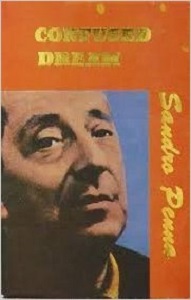
 

 1924607-59f15cf83063dd845e8a394183b58774.jpg
Sandro Penna (12 juni 1906 – 21 januari 1977)
Cover


De Zwitserse schrijfster Johanna Spyri werd geboren in Hirzel op 12 juni 1827. Zie ook alle tags voor Johanna Spyri op dit blog.

Uit: Heidi kann brauchen, was es gelernt hat

„Der Herr Doktor zuckte die Achseln. »Wenig«, sagte er halblaut. »Aber komm, denk einmal einen Augenblick an mich, lieber Freund! Hast du nicht ein liebes Kind, das nach dir verlangt und sich auf deine Heimkehr freut, wenn du weg bist? Nie mußt du in ein verödetes Haus zurückkehren und dich allein an deinen Tisch hinsetzen. Und dein Kind hat's auch gut daheim. Muß es auch vieles entbehren, was andere genießen können, so ist es in manch anderem auch vor vielen bevorzugt. Nein, Sesemann, ihr seid nicht so sehr zu beklagen, ihr habt es doch recht gut, so zusammenzusein; denk an mein einsames Haus!«
Herr Sesemann war aufgestanden und ging nun mit großen Schritten im Zimmer auf und ab, wie er immer zu tun pflegte, wenn ihn irgendeine Sache stark beschäftigte. Auf einmal stand er vor seinem Freunde still und klopfte ihm auf die Schulter.
»Doktor, ich habe einen Gedanken: Ich kann dich nicht so sehen, du bist ja gar nicht mehr der alte. Du mußt ein wenig aus dir heraus, und weißt du, wie? Du sollst die Reise unternehmen und das Kind Heidi auf seiner Alp besuchen in unser aller Namen.«
Der Herr Doktor war sehr überrascht von dem Vorschlage und wollte sich dagegen wehren, aber Herr Sesemann ließ ihm keine Zeit. Er war so erfreut und erfüllt von seiner neuen Idee, daß er den Freund unter den Arm faßte und nach dem Zimmer seines Töchterchens hinüberzog. Der gute Herr Doktor war für die kranke Klara immer eine erfreuliche Erscheinung, denn er hatte sie von jeher mit einer großen Freundlichkeit behandelt und ihr jedesmal, wenn er kam, etwas Lustiges und Erheiterndes zu erzählen gewußt. Warum er das jetzt nicht mehr konnte, wußte sie wohl und hätte so gern ihn wieder froh gemacht. Sie streckte ihm gleich die Hand entgegen, und er setzte sich zu ihr hin. Herr Sesemann rückte seinen Stuhl auch heran, und indem er Klara bei der Hand faßte, fing er an von der Schweizerreise zu reden und wie er sich selbst darauf gefreut hatte.“


 1924602-ed7a00e223e7bb887276292e5e5f85aa.jpg
Johanna Spyri (12 juni 1827 - 7 juli 1901)
Heidi en Klara. Illustratie door Clara M. Burd, 1924


Zie voor nog meer schrijvers van de 12e juni ook mijn vorige blog van vandaag.


Geschreven door Romenu om 12:22 Reageer op dit bericht

Brigid Brophy, H. C. Artmann, Günter Nehm, Rona Jaffe, André Suarès, Charles Kingsley

De Engelse schrijfster, essayiste, critica en biografe Brigid Antonia Brophy werd geboren op 12 juni 1929 in Londen. Zie ook alle tags voor Brigid Brophy op dit blog.

Uit: In Transit

“I had not succeeded in leaving the interlocution behind, trapped like drained nectar in the valley of the chair slope. Caught without an answer at the ready, I merely repeated: Ce qui m'étonnait ...
Hearing this for the second time round, the interlocutor demanded why it was already in the past tense.
I explained. I cruise, my jaws wide to snow-plough in the present tense, the plankton of experience. This I then excrete rehashed into a continuous narrative in the past tense.
Naturally the process is imaged according to bodily functions. That is an old habit of fant's (fant, the feu infant), so much of whose childtime is preoccupied with them. Even adult fant, book-learned enough to know about metabolism, doesn't feel it happening. You eat; you excrete; but you never catch your cells in the act of creating themselves out of your food and never hear the pop of sugar-energy released into your service from your laden corpuscles.
No more can you detect your personality and its decisions in the course of being created your experience. You know only that you ingest the present tense and excrete it as a narrative in the past.
History is in the shit tense. You have left it behind you. Fiction is piss: a stream of past events but not behind you, because they never really happened.
Hence the hold fictional narrative exerts on modern literate man. And hence the slightly shameful quality of its hold.
I knew as I statelily rose from the tweed and rubber launching pad that my stroll, ostensibly towards the glass wall, would soon conduct me to the bookstall.
Go daily to stall. Or do you want, inquires nanny interlocutor, to spend a punny?
And hence the disesteem in which authors of fictional narrative are held - and hold themselves. Don't, says nanny, hold; don't touch. That's where fantasy and fiction begin. How authors squirm, how they sidle from foot to foot, to avoid that compulsion to narrative. They poise their shears over the wire, threatening to cut the connection. They say they are seeking to alienate you. They take aim to fling you an open-ended fiction: the-book lands legs akimbo, pages open at the splits, less a book than a box of trick tools, its title DO IT YOURSELF KID.”


 1924600-6e97dc6f9a9490dc65fe34ca2c8951ba.jpg
Brigid Brophy (12 juni 1929 - 7 augustus 1995)


De Oostenrijkse dichter en vertaler Hans Carl Artmann werd geboren op 12 juni 1921 in Wenen. Zie ook alle tags voor H. C. Artmann op dit blog en eveneens voor H. Artmann.

Uit: How much Schatzi?

„Er belfert wie eine dogge, er ächzt wie ein eber, er dröhnt wie ein gorilla; er geifert, sabbert, lechzt, prustet, jault und blökt; er ist zum tierreich geworden, ein werwolf in hosenträgern, ein dem mittelalter entsprungener waldmensch, eine bestie in gestreiftem kammgarn, eine wildsau im fuffzigmarkhemd – holla! müßte ein beherzter rufen, holla, hier geht eine unangenehme szene zu weit! Allein der galante retter schläft auf beiden ohren, weilt im ausland, atmet im gebirge, macht in ferien, döst in freilichtspielen, mogelt bei freunden im skat, räkelt sich auf hoher see, sitzt betroffen im knast, schwitzt im entführten flugzeug, latscht auf exkursionen, verdreht sich den hals im Strandbad, befindet sich überall im bereiche des kreisenden globus, nur nicht vor dem café, wo der Unmensch Nathalie in sieben verschiedene teile zerlegt!
Eingehalten, man vergreift sich nicht an einer frau! Feige memme, unedler drecksack, erbärmlicher metzger! Er hat wohl keine mutter gehabt, er ist keinem schoß entsprungen, er trägt keinen zärtlichen Schimmer im blick, er ist auf dem mist geboren, er hat die sonne mit einer klosettbrille verwechselt, hilfe! er ist salamanderkalt, er ist molchhäutig, er ist grün und schleimig wie ein lang nicht gesäuberter ausguß! Monster, wer eine frau ins gesicht schlägt, ist nicht wert, nach ihrem gesäß zu greifen! Hat die weit schon sowas gesehen, berochen, geschmeckt, belauscht? Lassen sie sich ihr tanzstundengeld zurückgeben, mein herr; belieben sie die augengläser zu verlieren, durch die sie ein anmutiges, bein bewundern, einen reizenden hüftschwung verfolgen; eine frau ist ein geschenk der guten natur, dessen sie nie ein empfänger sein sollten, ja!“


 1924600-91bd8cca4f9d635f66ea808f768c5b54.jpg
H. C. Artmann (12 juni 1921 – 4 december 2000)


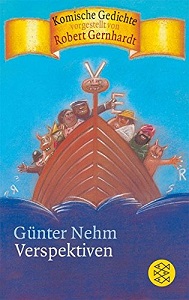
De Duitse dichter Günter Nehm werd geboren in Wattenscheid op 12 juni 1926. Zie ook alle tags voor Günter Nehm op dit blog.


Abergläubisch bin ich nicht

Ich habe einen Talisman,
der soll mich vor Gefahren,
dem Bösen Blick, vor Acht und Bann
und Hexenschuss bewahren.

Ich klopf vor jedem großen Coup
auf Holz mit krummem Finger
und sage „Toi, toi, toi!“ dazu,
dann klappen alle Dinger.

Vor jedem Auftritt lass ich mich
von Kopf bis Fuß bespuckeng
Das gibt mir Ruhe (innerlich),
dann kann mich nichtsmehr jucken.

Begegne ich ’nem steifen Hut,
gerat ich in Ekstase,
und drücke voller Übermut
mir dreimal auf die Nase.

Ob das was nützt, ob ich dem trau?
Ich lass mich nicht verladen.
Doch eines weiß ich ganz genau,
es kann bestimmt nicht schaden.

Ein Katzentier im Mondscheinlicht
macht mir ins Herz kein Risschen,
denn abergläubisch bin ich nicht,
das heißt: vielleicht ein bisschen.


Abschiedsschmerz und Kummerspeck

Hörst du das Lied der Finken schallen?
Die Preise für die Schinken fallen!
Drum woll’n wir uns am Schinken weiden
bevor wir unter Winken scheiden.

Eine Zecher, der dem Schinken traut,
viel fröhlicher beim Trinken schaut,
sofern nicht schon die Beine schwollen
von dem Verzehr der Schweinebollen.


 1924600-09b8591e1c927abab660c2b23ca4681e.jpg
Günter Nehm (12 juni 1926 - 11 februari 2009)
Cover


De Amerikaanse schrijfster Rona Jaffe werd geboren op 12 juni 1932 in New York. Zie ook alle tags voor Rona Jaffe op dit blog.

Uit: The Best of Everything

“It was nine o’clock and the room was suddenly filling up with girls, none of whom noticed her presence at all. The teletype operator was combing her hair out of its pin curls, one of the typists was going from desk to desk collecting empty glass jars and taking coffee orders. Covers were being pulled off typewriters, coats hung up, newspapers spread out on desks to be read, and as each new arrival came in she was greeted with delighted cries. It sounded as though they had all been separated from one another for four weeks, not four days. Caroline didn't know which desk was hers and she was afraid to sit at someone else's, so she kept standing, watching, and feeling for the first time that morning that she was an outsider at a private club.”
(…)

“She had a collection of matchbooks from extravagant places, dropped here and there on tables in the dingy apartment she still shared with Gregg. They made it look as if she lived a gay, mad life. What a typical picture for anyone from out of New York: career girl's apartment, stockings drying over the shower rod, clothes flung helter-skelter in the rush to get to the office on time, to a date on time, a bottle of wine there too, wads of dust lying under the studio couch because you couldn't clean except weekends and sometimes not even then, and all those brightly colored matchbooks with names of well-known eating places, so that even if one managed only two good and sufficient meals a week one could still light one's cigarettes for the rest of the week with the memory.”


 1924600-c8a787224f2099fd0b5c34a1c07f190f.jpg
Rona Jaffe (12 juni 1932 – 30 december 2005)


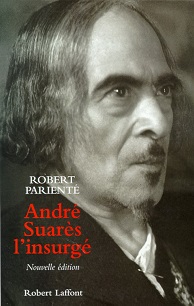
De Franse schrijver André Suarès (eig. Félix André Yves Scantre) werd geboren op 12 juni 1868 in Marseille. Zieook alle tags voor André Suarès op dit blog.

Uit: Hélène

«Si le bonheur était le rythme de la volupté, quelle certitude hélas, et que tout serait plus simple.
On juge de la beauté sur le plaisir qu’on en attend. Beaucoup de femmes ont cette innocence. Mais, pour quelques hommes, il arrive qu’ils se font une joie d’où le plaisir est presque absent. Chassez-moi ces hommes de la République, dirais-je aux filles de Platon quand elles feront la Loi.
La femme se croit la poésie et l’est peut-être. Mais le poète, c’est l’homme. Hélène elle-même est lasse d’être chantée.
Qui conteste le désir, le tue. Et l’on meurt, pourtant, de désirer en vain.
Hélène, ton tourment c’est le prix que je donne à ta beauté. Ton châtiment, aussi. Tu ne seras pas, tu n’es pas toujours belle.
Le coquillage du monde, entrouvert par la lumière, se ferme insensiblement sur la charnière veloutée de la forêt. Et la perle de feu, le soleil, roule vers le bord ; la valve de nacre, le ciel, descend ; et la valve dont la fraîcheur bleue est une flamme, la lèvre passionnée de la mer, s’enfle et tremble.
Que veut-elle ?
Elle ne sait si elle aime ce qu’elle embrasse, ni si même elle en aime la douleur. La mer monte, et les rocs de bronze, cachant un profond frissonnement, penchent."


 1924600-9054b2591bd6a8865f6513afe3a625a8.jpg
André Suarès (12 juni 1868 – 7 september 1948)
Cover biografie


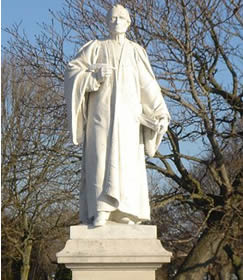
De Engelse schrijver, predikant en historicus Charles Kingsley werd geboren op 12 juni 1819 in Holne, Devon. Zie ook alle tags voor Charles Kingsley op dit blog.

Uit:Yeast

“As this my story will probably run counter to more than one fashion of the day, literary and other,
it is pmdent to how to those fashions wherever I honestly can; and therefore to begin with a scrap of
description.
The edge of a great fox-cover; a flat wilderness of low leafless oaks, fortified by a long dreary thom-
capped clay ditch, with sour red water oozing out at every' yard; a broken gate leading into a strait
wood-ride, ragged with dead grasses and black with fallen leaves, the centre mashed into a quagmire by innumerable horse-hoofs; some forty red coats, and some four black; a sprinhling of young farmers,
resplendent in gold buttons and green; a pair of sleek drab stable-keepers, showing ofl' horses for sale; the surgeon of the union, in Macintosh and antigropelos; two holiday schoolboys with trousers strapped down to bursting point, like a penny steamer’s saiety-valve; midshipman, the only merry one in the field, bumping about an a fretting, sweating hack, with. its nose a foot above its cars; and Lancelot Smith, who then kept two good horses, and “rode forward,” as a fine young fellow of three-and-twenty who can aflord it, and “has nothing else to do,” has a very good right to ride.
But what is a description, without a sketch of the weather? - In these Pantheist days especially, when
a hero or heroine’s moral state must entirer depend on the barometer, and authors talk as if Christians
were cabbages, and a man’s soul as well as his lungs might be saved by sea-breezes and sunshine, or his character developed by wearing guano in his shoes, and training himself against a south wall - we must have a weather-description, though, as I shall presently show, one in flat contradiction of the popular theory. Luckily for our iniormation, Lancelot was very much given to watch both the weather and himself, and had indeed, while in his teens, combined the two in a sort of soul-almanack on the principles just mentioned - somewhat in this style:
“Monday, 2lst. - Wind S. W., bright sun, mercury at 30} inches. Felt my heart expanded towards
the universe.”


 1924600-b35a55967a47aa34702ad5a44d9471d9.jpg
Charles Kingsley (12 juni 1819 - 23 jan 1875)
Standbeeld in Bideford, Devon

Geschreven door Romenu om 12:18 Reageer op dit bericht

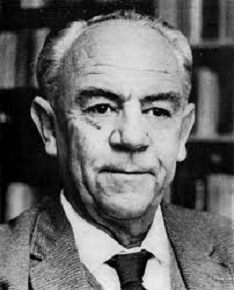
William Styron, Sophie van der Stap, N. P. van Wyk Louw, Renée Vivien, Jean-Pierre Chabrol, Ben Jonson, Yasunari Kawabata

De Amerikaanse schrijver William Styron werd op 11 juni 1925 in Newport News in de staat Virginia geboren. Zie ook alle tags voor William Styron op dit blog.

Uit: The Confessions of Nat Turner

“I suppose the truth is simply that it was possible for benefits like these to accrue only to a Negro lucky enough to remain in the poor but relatively benign atmosphere of Virginia. For here in this worn-out country with its decrepit little farms there was still an ebb and flow of human sympathy—no matter how strained and imperfect—between slave and master, even an understanding (if sometimes prickly) intimacy; and in this climate a black man had not yet become the cipher he would become in the steaming fastnesses of the far South but could get off in the woods by himself or with a friend, scratch his balls and relax and roast a stolen chicken over an open fire and brood upon women and the joys of the belly or the possibility of getting hold of a jug of brandy, or pleasure himself with thoughts of any of the countless tolerable features of human existence.”
(…)

“I reckon even you didn’t know the actual statistics, hiding out until now like you done. But in the three days and nights that your campaign lasted you managed to hasten fifty-five white people into early graves, not counting a score or so more fearfully wounded or disabled—hors de combat, as the Frenchies say, for the rest of their natural lives. And only God knows how many poor souls will be scarred in their minds by grief and by terrible memories until the day they part this life. No,” he went on, breaking off a black wad from a plug of chewing tobacco, “no, I’ll have to hand it to you, in many respects you was pretty thorough. By sword and ax and gun you run a swath through this county that will be long remembered. You did, as you say, come damn near to taking your army into this town. And in addition, as I think I told you before, you scared the entire South into a condition that may be described as well-nigh shitless. No niggers ever done anything like this.”


 1924247-223d789a795ab12fff16d1ee44777ce2.jpg
William Styron (11 juni 1925 – 1 november 2006)
In 1967


De Nederlandse schrijfster Sophie van der Stap werd geboren in Amsterdam op 11 juni 1983. Zie ook alle tags voor Sophie van der Stap op dit blog.

Uit: The Girl With Nine Wigs (Vertaald door Charlotte Caroline Jongejan)

“Before, my daily routine was to wake up at eight for a long run in the park, then have my coffee while rushing off to class. Now I wake up with a cough, and I'm lucky if I can run half the distance in double the time. Lately I need three coffees just to get going, and I'm still late to class every day.
Visiting the hospital is a thrilling part of my new routine. After numerous appointments with multiple doctors in various hospitals and two visits to the emergency room, I now find myself in yet another antiseptic hospital lounge with stale magazines, waiting to see a new doctor with a new diagnosis and a new file.
At this point, I know this hospital like the back of my hand. I've spent the past two months wandering from one department to the next, from the top floor to the bottom, from the front to the back. Over and over and over again. I've seen eight interns, two gynecologists-why do doctors always assume you're pregnant when they can't figure out what's wrong?-a pulmonary specialist, and two ER teams, and have been prescribed three courses of antibiotics. All to no avail. Between all these doctors, no diagnosis but plenty of symptoms and a lost tampon. Ick. It gave the doctors and my father, who was waiting in the hallway, a big laugh but left me mortified.
My symptoms-a strange jabbing here and there, shortness of breath, the loss of a few kilos (which I'm definitely not complaining about), and a pale face that no amount of blush can mask-don't seem to bring me to a diagnosis. So here I am in the waiting room. Again. A door opens and I see him-the one hundredth white coat to examine me and try to figure out what is causing all these seemingly unrelated symptoms. He approaches the reception desk, picks up my file, and calls out "Miss van der Stap" while randomly scanning the waiting room to see which of the rumpled contestants has just won a spot in his examination room.”


 1924247-87dee3b5d8f8d989dd03c7a31fee53d5.jpg
Sophie van der Stap (Amsterdam, 11 juni 1983)


De Zuid-Afrikaans schrijver en dichter Nicolaas Petrus van Wyk Louw werd geboren in Sutherland op 11 juni 1906. Zie ook alle tags voor N. P. van Wyk Louw op dit blog.


Vroegherfs

Die jaar word ryp in goue akkerblare,
in wingerd wat verbruin, en witter lug
wat daglank van die nuwe wind en klare
son deurspoel word; elke blom word vrug,
tot selfs die traagstes; en die eerste blare val
so stilweg in die rook-vaal bos en laan,
dat die takke van die lang populiere al
teen elke ligte môre witter staan.
O Heer, laat hierdie dae heilig word:
laat alles val wat pronk en sieraad was
of enkel jeug, en vér was van die pyn;
laat ryp word, Heer, laat U wind waai, laat stort
my waan, tot al die hoogheid eindelik vas
en nakend uit my teerder jeug verskyn.


Early Autumn

The year matures in golden oak-leaves, in the dun
of darkening vineyards, and, paler at all hours
air washed by fresh winds and the pellucid sun.
Fruits fulfil the individual flowers.
even the slowest, and the first leaves fall
so silently in smoke-dimmed wood and lane
that the slender branches of the poplars tall
lift wither silhouettes each radiant dawn.
Dear Lord, may all these days be sanctified:
let all things fall that were showy and vain
or merely young and far removed from tears;
make riper, Lord, let your wind blow; my pride
strip off, till all that's great at last shows plain
naked and firm above my greener years.


Vertaald door Guy Butler


 1924247-e6792a1f045270c293011da785c3500a.jpg
N. P. van Wyk Louw (11 juni 1906 – 18 juni 1970)


De Britse dichteres en schrijfster Renée Vivien (eig. Pauline Mary Tarn) werd geboren op 11 juni 1877 in Londen. Zie ook alle tags voor Renée Vivien op dit blog.


Night

The light, in throes of agony, dies at your knee,
Come, o you whose guarded face, so lovely to see,
Carries dejection from years heavy and jaded:
Come, with your deadly welts turning pale, in distress,
With no other scent in the long folds of your dress
Than the breath of flowers which have long since faded.

Come, with your unrouged lips that ignite my desires,
Without rings, - neither rubies, opals, nor sapphires
Dishonoring your fingers, milky as the moon, -
And from your eyes put mirrored reflections to flight...
For it is here: the simple, chaste hour of the night
When hues can oppress, and luxury importune.

Yield up all your chagrin to eternal delight,
Exhale in a profound cry your suffering blight,
All those events of the past, so cruel and senseless,
Leave them to death, to the distance and to silence...
In the dream which to strife gives such sweet condolence;
To the ancient fever of speech: forgetfulness.

I will kiss your hands and your divine naked feet;
Our hearts will cry out for the neglect that they meet,
Will decry the vile words and base gestures anew...
These flights will linger in peaceful security....
You will join your hands in their mystic purity,
And, in the soul-filled shadows, I will adore you.


 1924247-ac686128573019fdf04f540617760e5a.jpg
Renée Vivien (11 juni 1877 – 10 november 1909)
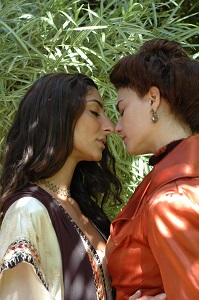
Necar Zadegan (Kerime) en Traci Dinwiddie (Renée) in de film “The Touch” uit 2007


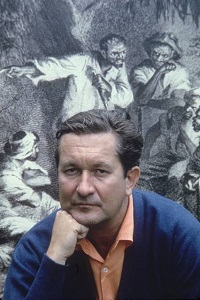
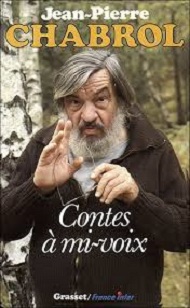
De Franse schrijver Jean-Pierre Chabrol werd geboren op 11 juni 1925 in Chamborigaud. Zie ook alle tags voor Jean-Pierre Chabrol op dit blog.

Uit: Contes à mi-voix

“Chaque matin, je lui apporte son petit déjeuner au lit, puis je le laisse. Un moment après, j'entends sa guitare. C'est un joli moment pour notre maisonnée ...
L'été, sa fenêtre reste ouverte. Les passants ralentissent et s'arrêtent de parler dès qu'ils perçoivent les premières notes, puis ils étouffent leurs pas, puis ils retiennent leur respiration. Sous la fenêtre, les plus hardis s'arrêtent un peu, puis ils repartent comme des voleurs avec ce petit morceau de guitare qui ne leur a rien coûté. Ils ne reprennent un pas normal, ils ne recommencent la conversation que longtemps après avoir dépassé la maison. »
(…)

« Ces casse-pieds pouvaient tout se permettre. Le cousin Palamède par exemple. Un vieux célibataire exigeant. La famille ne pouvait l'abandonner à lui-même, alors, elle se l'était réparti : trois mois chez l'un, trois mois chez l'autre. Il fallait voir le Palamède s'asseoir à table, jamais content. Quand la soupe était trop épaisse, il grognait : "Béton ! Béton !" Quand elle était trop claire, il grinçait : "La Garonne ..." Après le café, Palamède regardait le cousin quitter la cuisine pour aller donner aux bêtes, la cousine faire la vaisselle, il réclamait sa pipe et son tabac, s'étalait, soupirait béatement : "On est bien, quand on est célibataire, je ne comprends pas que vous vous mariiez, vous autres ..."


 1924247-e9c9f90608cbbdc85add84fee61793a1.jpg
Jean-Pierre Chabrol (11 juni 1925 – 1 december 2001)


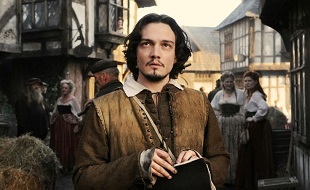
De Engelse dichter en schrijver Ben Jonson werd geboren rond 11 juni 1572 in Westminster, Londen. Zie ook alle tags voor Ben Jonson op dit blog.


The Noble Nature

It is not growing like a tree
in bulk, doth make Man better be;
or standing long an oak three hundred year,
to fall a log at last, dry, bald, and sere;

A lily of a day
is fairer in May,
although it fall and die that night-
It was the plant and flower of Light.
In small proportions we just beauties see:
and in short measures life may perfect be.


Porth Ceiriad Bay

Descended to the shore, odd how we left
the young girl with us to herself, and went
straight to examine the stratified cliffs,
forgot her entirely in our interest.

You marvelled at the shapes the clockwork sea
had worn the stone, talking keenly, until
the pace of this random sculpture recalled
your age to you, and then its anodynes.

And so you turned, pretending youth, courting
the girl as if you were a boy again,
leaving the wry cliffs to their erosion
and me to my observant solitude.


 1924247-ddd57f7245bd4538de96e8e71982e1bd.jpg
Ben Jonson (ca. 11 juni 1572 – 6 augustus 1637) 
Sebastian Armesto als Ben Jonson in de film “Anonymous”, 2011 


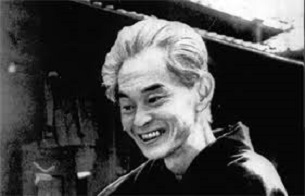
De Japanse schrijver Yasunari Kawabata werd geboren op 11 juni 1899 in Osaka. Zie ook alle tags voor Yasunari Kawabata op dit blog.

Uit: Snow Country (Vertaald door Edward Seidensticker)

“Her talk of novels seemed to have little to do with “literature” in the everyday sense of the word.
The only friendly ties she had with the people of this village had come from exchanging women’s
magazines, and afterwards she had gone on with her reading by herself. She was quite indiscriminate and had little understanding of literature, and she borrowed even the novels and magazines she found
lying in the guests’ rooms at the inn. Not a few of the new novelists whose names came to her meant
nothing to Shimamura. Her manner was as though she were talking of a distant foreign literature.
There was something lonely, something sad in it, something that rather suggested a beggar who has
lost all desire. It occurred to Shimamura that his own distant fantasy on the occidental ballet, built
up from words and photographs in foreign books, was not in its way dissimilar.
She talked on happily too of movies and plays she had never seen. She had no doubt been starved
all these months for someone who would listen to her.
Had she forgotten that a hundred and ninetynine days earlier exactly this sort of conversation had set off the impulse to throw herself at Shimamura? Again she lost herself in the talk, and again her words seemed to be warming her whole body.
But her longing for the city had become an undemanding dream, wrapped in simple resignation,
and the note of wasted effort was much stronger in it than any suggestion of the exile’s lofty dissatis-
faction. She did not seem to find herself especially sad, but in Shimamura’s eyes there was something
strangely touching about her. Were he to give himself quite up to that consciousness of wasred effort,
Shimamura felt, he would be drawn into a remote emotionalism that would make his own life a waste.
But before him was the quick, live face of the woman, ruddy from the mountain air.”


 1924247-5078746edc22f16c2ee7db9b9e61aea8.jpg
Yasunari Kawabata (11 juni 1899 — 16 april 1972)


Zie voor nog meer schrijvers van de 11e juni ook mijn vorige blog van vandaag.
Geschreven door Romenu om 12:51 Reageer op dit bericht

Athol Fugard, Nnimmo Bassey, Jules Vallès, George Wither, Barnabe Googe

De Zuidafrikaanse schrijver Harold Athol Lannigan Fugard werd geboren op 11 juni 1932 in Middelburg, Kaapprovincie. Zie ook alle tags voor Athol Fugard op dit blog.

Uit: Hello And Goodbye

““OHNNIE. What did you want to do?
HESTER. Nothing. [Loo/ting a! the certificate in her hand.] Johannes Cornelius Smit-Anna Van Rooyen. Biggest mistake she ever made!
JOHNNIE. You don’t know what you’re saying.
HESTrER. Yes, I do! I’m saying this was the biggest mistake she ever made. Marriage! One man’s slave all your life, slog away until you’re in your grave. For what? Happiness in Heaven? I seen them- Ma and the others like her, with more kids than they can count, and no money; bruises every pay-
day because he comes home drunk or anOIher one in the belly because he was so drunk he didn’t know it was his old wife and got into bed!
JOHNNIE. Daddy never beat Mommie. He was never drunk.
HESTER. Because he couldn’t. He was a crock. But he did it other ways. She fell into her grave the way they all do- tired, maeg. Frightened! I saw her.
JOHNNIE. This is terrible, Hester.
HESTER. You’re damned right it is. It’s hell. They live in hell, but they’re too frightened to do anything about it because there’s always somebody around shouting God and Judgement. Mommie should have taken what she wanted and then
kicked him out.
JOHNNlE. And the children.
HESTER. So what! If you get them you get them and if you don’t want them there’s ways.
JOHNNlE. Hester! Hester!
HESTER. Hester, Hester what? Hester who? Hester Smit! That‘s me. I’ve done it. And I don‘t care a damn. Two months old and I got rid of it.”


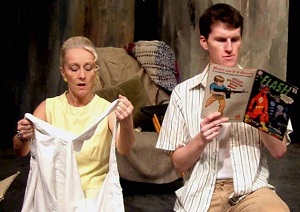
 1924243-d41d7b307ac5c3650558883ad087db5d.jpg
Athol Fugard (Middelburg (ZA), 11 juni 1932)
Scene uit een opvoering in het Abbey Theatre, St Albans, 2011


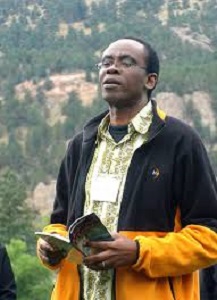
De Nigeriaanse dichter, schrijver, architect, en milieuactivist Nnimmo Bassey werd geboren in Akwa Ibom op 11 juni 1958. Zie ook alle tags voor Nnimmo Bassey op dit blog.

Uit:To cook a continent

“There are some in Africa who argue that having a valuable resource is not necessarily a curse. They say that nature’s wealth is a blessing and that the curse happens only in relation to how resources are grabbed, owned, extracted and utilised. In other words, the curse is located firmly in the social structure of the world.
Let us start with a caveat about the word ‘resource’, which implies that nature’s wealth is a bounty, ready for corporate robbery. But we as humans frame this dilemma of extraction incorrectly if we don’t point out the intrinsic right of nature to survive on its own terms. Most importantly, we are part of Mother Earth, not apart from her. Her rights to exist and reproduce the conditions for all species’ existence are not to be violated.
That said, everyone acknowledges that Africa is resource rich. That the continent has been a net supplier of energy and raw materials to the North is not in doubt. That the climate crisis confronting the world today is mainly rooted in the wealthy economies’ abuse of fossil fuels, indigenous forests and global commercial agriculture is not in doubt. What has been obfuscated is how to respond to this reality. Indeed, the question peddled in policy circles is often what can be done about Africa. And, in moments of generosity, the question moves to what can be done for Africa.“
This book looks at what has been done to Africa and how Africans and peoples of the world should respond for the collective good of all. The resource conflicts in Africa have been orchestrated by a history of greed and rapacious consumption. We ask the question: must these conflicts remain intractable? We will connect the drive for mindless extraction to the tightening noose of odious debt repayment and we will demand a fresh look at the accounting books, asking when environmental costs and other externalities are included: who really owes what to whom? Isn’t Africa the creditor of the world, if we take seriously the North’s ‘ecological debt’ to the South?”


 1924243-8d1b60f39b26e69a143c31c7f23be8d0.jpg
Nnimmo Bassey (Akwa Ibom, 11 juni 1958)


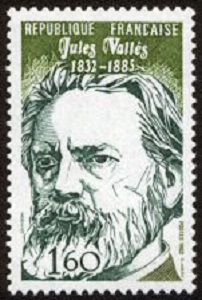
De Franse schrijver Jules Vallès werd geboren op 11 juni 1832 in Puy-en-Velay, Haute-Loire. Zie ook alle tags voor Jules Vallès op dit blog.

Uit: L’Enfant

« La maison que nous habitons est dans une rue sale, pénible à gravir, du haut de laquelle on embrasse tout le pays, mais où les voitures ne passent pas. Il n'y a que les charrettes de bois qui y arrivent, traînées par des boeufs qu'on pique avec un aiguillon. Ils vont, le cou tendu, le pied glissant; leur langue pend et leur peau fume. Je m'arrête toujours à les voir, quand ils portent des fagots et de la farine chez le boulanger qui est à mi-côte; je regarde en même temps les mitrons tout blancs et le grand four tout rouge, - on enfourne avec de grandes pelles, et ça sent la croûte et la braise!
La prison est au bout de la rue, et les gendarmes conduisent souvent des prisonniers qui ont les menottes, et qui marchent sans regarder ni à droite ni à gauche, l'oeil fixe, l'air malade.
Des femmes leur donnent des sous qu'ils serrent dans leurs mains en inclinant la tête pour remercier.
Ils n'ont pas du tout l'air méchant.
Un jour on en a emmené un sur une civière, avec un drap blanc qui le couvrait tout entier; il s'était mis le poignet sous une scie, après avoir volé; il avait coulé tant de sang qu'on croyait qu'il allait mourir.
Le geôlier, en sa qualité de voisin, est un ami de la maison; il vient de temps en temps manger la soupe chez les gens d'en bas, et nous sommes camarades, son fils et moi. Il m'emmène quelquefois à la prison, parce que c'est plus gai. C'est plein d'arbres; on joue, on rit, et il y en a un, tout vieux, qui vient du bagne et qui fait des cathédrales avec des bouchons et des coquilles de noix.
À la maison, l'on ne rit jamais; ma mère bougonne toujours. - Oh! comme je m'amuse davantage avec ce vieux là et le grand qu'on appelle le braconnier, qui a tué le gendarme à la foire du Vivarais!."


 1924243-361ce88342cc5d37f50620aeecf18f52.jpg
Jules Vallès (11 juni 1832 – 14 februari 1885)


De Engelse dichter en satiricus George Wither werd geboren op 11 juni 1588 in Bentworth. Zie ook alle tags voor George Wither op dit blog.


Shall I Wasting In Despair

Shall I wasting in despair
Die because a woman's fair?
Or make pale my cheeks with care
'Cause another's rosy are?
Be she fairer than the day,
Or the flow'ry meads in May,
If she be not so to me,
What care I how fair she be?

Shall my heart be griev'd or pin'd
'Cause I see a woman kind?
Or a well-disposed nature
Joined with a lovely feature?
Be she meeker, kinder, than
Turtle dove or pelican,
If she be not so to me,
What care I how kind she be?

Shall a woman's virtues move
Me to perish for her love?
Or her well-deserving known
Make me quite forget mine own?
Be she with that goodness blest
Which may gain her name of best
If she be not such to me,
What care I, how good she be?

'Cause her fortune seems too high
Shall I play the fool and die?
Those that bear a noble mind,
Where they want of riches find,
Think what with them they would
That without them dare to woo;
And unless that mind I see,
What care I how great she be?

Great, or good, or kind, or fair,
I will ne'er the more despair;
If she love me, this believe,
I will die ere she shall grieve;
If she slight me when I woo,
I can scorn and let her go;
For if she be not for me,
What care I for whom she be?


 1924243-865342cf1507b8b276ed2801e8c8f351.jpg
George Wither (11 juni 1588 – 2 mei 1667)


De Engelse dichter en vertaler Barnabe Googe werd geboren op 11 juni 1540 in Londen of Kent. Zie ook alle tags voor Barnabe Googe op dit blog.


Once Musing As I Sat

Once musing as I sat,
And candle burning by,
When all were hushed, I might discern
A simple silly fly,
That flew before mine eyes
With free rejoicing heart,
And here and there with wings did play,
As void of pain and smart.
Sometime by me she sat,
When she had played her fill,
And ever when she rested had,
About she flittered still.
When I perceived her well,
Rejoicing in her place,
O happy fly, quoth I, and eke
O worm in happy case,
Which two of us is best?
I that have reason? No;
But thou that reason art without
And therewith void of woe.
I live, and so dost thou,
But I live all in pain,
And subject am to her, alas,
That makes my grief her gain.
Thou livset, but feelst no grief,
No love doth thee torment;
A happy thing for me it were,
If God were so content,
That thou with pen wert placed here
And I sat in thy place,
Then I should joy, as thou dost now,
And thou shouldst wail thy case.


 1924243-5bac1f96b25a54b72b59426b27d488a9.JPG
Barnabe Googe (11 juni 1540 – 1594)
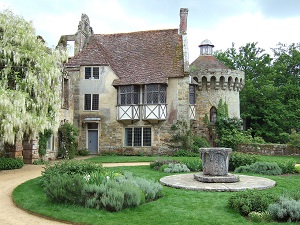
Huis in Tudor stijl bij Scotney Castle in Kent, waar Googe onderdak bood aan Jezuïeten

Geschreven door Romenu om 12:50 Reageer op dit bericht

Meer van Romenu

↑ Terug naar de berichten