Naar de inhoud

Romenu

Over literatuur, gedichten, kunst en cultuur
akke.beakke.be

Berichten van 25 juni 2016 tot 26 juni 2016

Aimé Césaire, Jacqueline van der Waals, Yves Beauchemin, Elisabeth Büchle, Laurie Lee, Pearl S. Buck
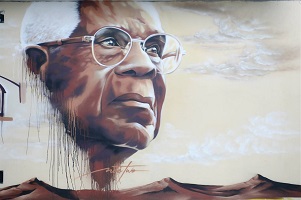
De Afrocaraïbische schrijver en politicus Aimé Césaire werd geboren op 26 juni 1913 in Basse-Pointe, Martinique. Zie ook alle tags voor Aimé Césaire op dit blog.


The Woman and the Flame

A bit of light that descends the springhead of a gaze
twin shadow of the eyelash and the rainbow on a face
and round about
who goes there angelically
ambling
Woman the current weather
the current weather matters little to me
my life is always ahead of a hurricane
you are the morning that swoops down on the lamp a night stone
   between its teeth
you are the passage of seabirds as well
you who are the wind through the salty ipomeas of consciousness
insinuating yourself from another world
Woman
you are a dragon whose lovely color is dispersed and darkens so
   as to constitute the
inevitable tenor of things
I am used to brush fires
I am used to ashen bush rats and the bronze ibis of the flame
Woman binder of the foresail gorgeous ghost
helmet of algae of eucalyptus
                             dawn isn’t it
                             and in the abandon of the ribbands
                             very savory swimmer

Vertaald door Clayton Eshleman


Mississipi

Too bad for you men who don’t notice that my eyes remember
slings and black flags
which murder with each blink of my Mississipi lashes

Too bad for you men who do not see who do not see anything
not even the gorgeous railway signals formed under my eyelids by the black and red discs
of the coral snake that my munificence coils in my Mississipi tears

Too bad for you men who do not see that in the depth of the reticule where chance has
deposited our Mississipi eyes

there waits a buffalo sunk to the very hilt of the swamp’s eyes
Too bad for you men who do not see that you cannot stop me from building to his fill

egg-headed islands of flagrant sky
under the calm ferocity of the immense geranium of our sun.

Vertaald door Clayton Eshleman en A. James Arnold


 1929692-1529b1974ed52e3393d315e19c8a1265.jpg
Aimé Césaire (26 juni 1913 – 17 april 2008)
Muurschildering in Bagnolet, Frankrijk


De Nederlandse dichteres Jacqueline Elisabeth van der Waals werd geboren op 26 juni 1868 in Den Haag. Zie ook alle tags voor Jacqueline van der Waals op dit blog.


Afscheid

Eén ogenblik van het voorbije leven
Als voor 't bewogen spiegelvlak te staan
Van rimplend water, dat met stadig beven,
Het beeld, eer het tot stand komt, doet vergaan.
De vorm te zien, die in het water drijft,
Onzuiver zo van kleuren als contouren,
Die, vluchtig bij het allerlichtst beroeren,
Geen wezen heeft, dat in zichzelf beklijft...

En heen te gaan - en niets dat achter blijft
Dan dingen, die wij meenden te bezitten,
En niet ons eigen waren, die als klitten
Nog hechten in de plooien van ons kleed,
Maar die wij van ons doen, zoals we leed
En bitterheid en zorgen van ons deden,
Als niet van ons, als dingen van 't verleden...

Een oogwenk voor het vlottend watervlak te staan
En naar 't verwarde spiegelbeeld te staren,
Dat nog de trekken draagt, die de onze waren,
En stil en eenzaam heen te gaan.


Avondnevel

O, die blinkend witte nevel over de venen! de uitgestrekte,
Grote, stille nevelzee, wier waatren de aarde bedekten!

Wij liepen des avonds tegen
De tijd, dat de zon onderging,
Samen op stille wegen
Door het moeras en zwegen
Van verwondering.
Slechts hoopjes turf en daken
Van donkere huisjes staken
Zwart uit de nevel omhoog.
Ze was zo stil, zo zonderling,
Die zee, waar niets bewoog.

O, die zwarte, grillige heuvelkust,
Die met haar brede lijn,
Scheidde de blinkende nevelrust
Van 't gloeiende karmijn!
Want boven de donkere landen
Stond vuurrood de hemel te branden
Met onheilspellende schijn.

Ik werd onrustig en ik zocht
Een woord, dat de stilte verbreken mocht.
Ik keek in de zon, in het nevelmeer....
Het zwijgen werd pijnlijk.
De avond, de aarde, mijn leven werd zeer,
zeer onwaarschijnlijk.


 1929692-3d5d3a688d02239c87fa670e447b81f8.jpg
Jacqueline van der Waals (26 juni 1868 – 29 april 1922)
Cover 


De Canadese schrijver Yves Beauchemin werd geboren op 26 juni 1941 in Rouyn-Noranda, Quebec. Zie ook alle tags voor Yves Beauchemin op dit blog.

Uit: Le Matou

“-Qu'est-ce que je vais faire de tout cet alphabet? se demandait Florent, de plus en plus intrigué.
- Va la vendre dans un magasin d'antiques, lui suggéra Slipskin et il lui fournit sur-le-champ l'adresse de l'établissement de son père.
Deux jours passèrent. la générosité de son bienfaiteur ne donnait pas de signes de fatigue. Florent résolut d'aller au fond de l'affaire et de recevoir lui-même son prochain colis. Il se leva à l'aube et s'installa à son bureau devant une tasse de café.
À six heures vingt, il entendit une auto stopper devant Musipop. Bondissant de sa chaise, il courut ouvrir la porte et se retrouva nez à nez avec un infirme loqueteux, à la barbe hirsute, au visage creusé, qui le regardait d'un air stupide, la bouche béante.
- Mo... mo... mossieu Bwazono, bafouilla-t-il en lui tendant un colis, pendant que l'auto démarrait avec fracas.
Florent le considéra un instant, puis se retira dans le bureau. L'infirme déposa le colis par terre et s'avança au milieu de la rue, tournant la tête de tous côtés, complètement désemparé.
(…)

- Votre père sur la deuxième ligne, fit mademoiselle Relique dont la voix, aggravée par le récepteur, avait la douceur de la broche piquante.
- Salut, lança Florent, je m'achète un restaurant.
- Hein ? Quoi ? Que c'est que tu me dis là ?
- Oui, je m'achète une restaurant. La Binerie, sur la rue Mont-Royal.
- Es-tu sérieux ? La Binerie ? C'est un très bon spot, ça. J'allais manger là durant la guerre. Mais tu veux rire. Jamais je ne croirai…
- Je te raconterai. Pour l'instant, je suis un peu pressé. Dis donc, tu connais un peu le milieu des affaires, toi… As-tu déjà entendu parler d'un bonhomme du nom d'Egon Ratablavasky ?
- Egon quoi ? Minute! Laisse-moi prendre un crayon et répète-moi ça lentement, mon blond. Je vais m'informer, fit-il après avoir noté. Fie-toi sur moi, j'ai le nez long et le bras sans fin. Ah oui! Pendant que j'y pense : ta mère fait demander si vous venez souper dimanche? "


 1929692-fbfd545097d7ea63eec80e8f6d975f84.jpg
Yves Beauchemin (Rouyn-Noranda, 26 juni 1941)


De Duitse schrijfster Elisabeth Büchle werd geboren op 26 juni 1969 in Trossingen, Baden-Württemberg. Zie ook alle tags voor Elisabeth Büchle op dit blog.

Uit: Unter dem Polarlicht

„Die künstliche Beleuchtung des Büros im Bankgebäude surrte leise vor sich hin, während Chiara Kilians Finger der Tastatur ein schnelles Stakkato an Klackgeräuschen abverlangte. Die Frau auf dem Stuhl gegeniiber rutschte unruhig umher. Sie hatte ihr Anliegen geschäftsmäßig und detailliert vorgetragen, doch nun verriet ihre Körpersprache ihre innere Aufregung.
Chiara lächelte die Eingabemaske mehr traurig als fröhlich an.
Sie fand Noa Schochs Idee von einem Blumen-Geschenk-Bücher-Café in einem reinen Wohngebiet in Freiburg interessant, ahnte jedoch, dass die Finanzierung durch die Bank, bei der Chiara morgen genau ein halbes Jahr angestellt war, nicht zustande kommen würde. Mit ihren 22 Jahren war Noa noch ein Jahr jünger als Chiara und hatte bis auf eine gut durchdachte und bezaubernde Geschäftsidee keine Sicherheiten vorzuweisen.
Sie wollte der hübschen Rothaarigen gerade mitteilen, wie gering ihre Chancen waren. als es an der Tür klopfte. Einer der neuen Auszubildenden - ihr Namensgedächtnis verweigerte wieder einmal seinen Dienst - kam herein und sagte, ohne die Kundin zu beachten: „Frau Kilian, Sie werden von Herrn Meier erwartet.“
„Zwei Minuten, bitte“, erwiderte Chiara Freundlich und warf Noa einen cntschulcligenden Blick zu.
„Er sagte aber sofort!“, widersprach der jugendliche und trat neben sie, als plane er, ihr den Drehstuhl unter dem Hintern wegzuziehen. „Ich kümmere mich so lange um „Frau Schoch“. brummte Chiara und stand auf. Dieser junge Mann würde es weit bringen, dessen war sie sich gewiss. „Entschuldigen Sie mich bitte. Ich bin gleich wieder für Sie da.“


 1929692-486ddef52e8ba34b0a4da83577f522a1.JPG
Elisabeth Büchle (Trossingen, 26 juni 1969)


De Engelse dichter en schrijver Laurence Edward Alan "Laurie" Lee werd geboren in Stroud, Gloucestershire op 26 juni 1914. Zie ook alle tags voor Laurie Lee op dit blog.


Day of These Days

Such a morning it is when love
leans through geranium windows
and calls with a cockerel's tongue.

When red-haired girls scamper like roses
over the rain-green grass;
and the sun drips honey.

When hedgerows grow venerable,
berries dry black as blood,
and holes suck in their bees.

Such a morning it is when mice
run whispering from the church,
dragging dropped ears of harvest.

When the partridge draws back his spring
and shoots like a buzzing arrow
over grained and mahogany fields.

When no table is bare,
and no beast dry,
and the tramp feeds on ribs of rabbit.


 1929692-4d1fdf25fb35a060de90c56eb829fa16.jpg
Laurie Lee (26 juni 1914 – 13 mei 1997)


De Amerikaanse schrijfster Pearl S. Buck werd geboren in Hillsboro West-Virginia, op 26 juni 1892. Zie ook alle tags voor Pearl S. Buck op dit blog en eveneens alle tags voor P. S. Buck.

Uit: The good earth

“And out of his heaviness there stood out strangely but one clear thought and it was a pain to him, and it was this, that he wished he had not taken the two pearls from O-lan that day when she was washing his clothes at the pool, and he would never bear to see Lotus put them in her ears again.”
(…)

“When the rich are too rich there are ways, and when the poor are too poor there are ways. Last winter we sold two girls and endured, and this winter, if this one my woman bears is a girl, we will sell again. One slave I have kept—the first. The others it is better to sell than to kill, although there are those who prefer to kill them before they draw breath. This is one of the ways when the poor are too poor. When the rich are too rich there is a way, and if I am not mistaken, that way will come soon.”
(…)

“Spring passed and summer passed into harvest and in the hot autumn sun before winter comes Wang Lung sat where his father had sat against the wall. And he thought no more about anything now except his food and his drink and his land. But of his land he thought no more what harvest it would bring or what seed would be planted or of anything except of the land itself, and he stooped sometimes and gathered some of the earth up in his hand and he sat thus and held it in his hand, and it seemed full of life between his fingers. And he was content, holding it thus, and he thought of it fitfully and of his good coffin that was there; and the kind earth waited without haste until he came to it.”


 1929692-90dbbcaa0fbf52cdf15549df991f3fc8.jpg
Pearl S. Buck (26 juni 1892 – 6 maart 1973) 


Zie voor nog meer schrijvers van de 26e juni ook mijn vorige blog van vandaag.
 

Geschreven door Romenu om 11:37 Reageer op dit bericht

Stefan Andres, Martin Andersen-Nexø, Branwell Brontë, Bankim Chandra Chatterjee, Sunthorn Phu, Sidney Howard

Duitse schrijver Stefan Andres werd geboren op 26 juni 1906 in Breitwies bij Trier. Zie ook alle tags voor Stefan Andres op dit blog.

Uit: Wir sind Utopia

“Die enge, düstere Gassenrinne fuhr der Wagen langsam dahin, wiewohl kein Mensch, weder Zivilist noch Soldat, ihm begegnete. Auf dem weiten, gleißenden Platz nahm er die Kehre, und im Schatten vor der Freitreppe der in ihrem starrenden Prunk unfreudig wirkenden Barockfassade des Karmeliterklosters stand er dann still.
Unter der Pforte erschien auf das groblässige Signal des Wagens hin ein Offizier, von einem Sergeanten und einem Soldaten begleitet, welche die Ankömmlinge mit düster gleichmütigen Blicken empfingen.
Die sechs Bajonette sprangen sofort auf das Pflaster, ein Kommando schnarrte, und die Lehmgestalten erhoben sich mühsam, traten ein paarmal hin und her und sprangen ebenfalls, nachdem sie die eingeschlafenen Füße zuvor möglichst tief hatten herabkommen lassen, vorsichtig auf das Pflaster.
Es waren über zwanzig Gefangene, die im Karmeliterkloster untergebracht werden sollten. Seine Geräumigkeit und vergitterten Fenster machten den Bau für seine neue Bestimmung noch geeigneter; zudem lag das Kloster mit der Hinterfront an der Stadtmauer, und da ging es aus den Fenstern des ersten Stockes über fünfzehn Meter tief jäh hinunter. Das war ein weiterer Vorteil für die Wachhabenden, denn das etwa zweihundert Gefangene beherbergende Lager konnte so mit einer schwachen Besatzung auskommen, die in der Tat nur aus einem Leutnant, einem Sergeanten und zwei Soldaten bestand.
Freilich lagen in der Stadt noch einige Fliegerabwehrbatterien und leichte Kraftfahrverbände, die auf den Einsatz warteten.“


 1929688-022f7d88c01513629c2f466a0ec97ae3.jpg
Stefan Andres (26 juni 1906 - 29 juni 1970)


De Deense schrijver Martin Andersen-Nexø werd geboren op 26 juni 1869 in Kopenhagen. Zie ook alle tags voor Martin Andersen-Nexø op dit blog.

Uit:Die Passagiere der leeren Plätze (Vertaald door Ellen Schou en Karl Schodder)

„Aber eines Tages hielt ich dann doch eine gewaltige Summe Geldes in der Hand: vierhundert Kronen, für die ich nach Italien fahren sollte; die unfassbar gutherzige Frau hatte sie herangeschafft. Es ist nicht zu sagen, wie mir zumute war; dem Tode war ich entschlüpft, und dem noch Schlimmeren — der Sklaverei — ebenfalls! Wie ein Sperling, der durch wunderbaren Zufall aus dem Rachen der Katze entkommt, flatterte ich davon, halbtot, aber froh und warm im Herzen. Ich war — im letzten Augenblick — auf die Sonnenseite des Daseins versetzt worden; jetzt war ich an der Reihe, Sonne zu schlecken!
Aber war da Platz für mich? Und würden jene, die dort schon saßen, mit mir zu tun haben wollen — oder würden sie mich hetzen wie einen fremden Köter, der dort nichts zu suchen hätte?
Es war ganz merkwürdig, ins Lager der Auserwählten versetzt zu werden, zu denen, deren Leben so viel mehr galt, dass Reisen in den Süden dafür aufgewendet wurden. Wenn ich auch nur dritter Klasse fuhr, so nahm sich vor dem Hintergrund des Zwecks der Reise doch alles ganz anders aus. Mein Leben sollte gerettet werden, während alle die anderen, meine Leidensgefährten, in ihrem Elend stecken blieben! Ich empfand zugleich ein Gefühl des Auserwähltseins und der Fahnenflucht — der Treulosigkeit gegenüber allen jenen, mit denen ich ein Schicksal gemeinsam hatte.
Und ich war aus meiner Arme-Leute-Ergebenheit herausgerissen worden. Ich entdeckte rasch, dass es auf der Sonnenseite des Daseins Platz genug gab, für mich und viele andere; überall fuhren die Züge halbleer, während jene, die hätten mit dabei sein sollen, irgendwo im Dunkel saßen und verkamen. Warum wagten sie sich nicht hervor und machten ihr Recht geltend? Und warum war ich selber so geniert und verschüchtert, als ob ich ein Schmarotzer wäre?
Schon die erste Nacht der Reise von der schleswigschen Grenze bis zur Hauptstadt wurde mir zu einer unvergesslichen Lektion, mich nicht deshalb als auserwählt zu betrachten, weil ich zufällig einem Menschen begegnet war, der in mein Schicksal eingegriffen und mich aus meinem Zusammenhang, aus dem Zusammenhang des Elends herausgerissen hatte.“


 1929688-ff195503e6dc105c30df478555030e50.jpg
Martin Andersen-Nexø (26 juni 1869 – 1 juni 1954)
Portret door Knud Aage Larsen, 1934.


De Engelse dichter en schilder Branwell Brontë werd op 26 juni 1817 geboren in Thornton, Yorkshire. Zie ook alle tags voor Branwell Brontë op dit blog.


Epistle To The Labouring Poor (Fragment)

Your mean attire and scanty fare
Are, doubtless, springs of bitter care,
Expose you blushing, trembling, bare,
To haughty scorn;
Yet murmur not in black despair,
Nor weep forlorn.

You see that lordling glittering ride
In all the pomp of wealth and pride,
With lady lolling at his side,
And train attendant:
'Tis all, when felt and fairly tried,
But care resplendent.

As riches grow his wants increase,
His passions burn and gnaw his peace,
Ambition foams like raging seas
And breaks the rein,
Excess produces pale disease
And racking pain.

Compared with him thrice happy you;
Though small your stock your wants are few,
Each wild desire your toils subdue,
And sweeten rest,
Remove all fancied ills from view,
And calm your breast.


 1929688-5d350f79692871652a7e965a616074b0.jpg
Branwell Brontë (26 juni 1817 – 24 september 1848)


De Bengaals – Indische dichter, schrijver, essayiste en journalist Bankim Chandra Chatterjee werd geboren op 26 juni 1838 in Kanthalpura. Zie ook alle tags voor Bankim Chandra Chatterjee op dit blog.

Uit: The Poison Tree (Vertaald door Miriam S. Knight)

“It was not quite an ordinary house, but it had no sign of prosperity. The door-frames were broken and dirty; there was no trace of human occupation—only owls, mice, reptiles, and insects gathered there. The light came only from one side. Nagendra saw some articles of furniture for human use; but everything indicated poverty. One or two cooking vessels, a broken oven, three or four brass dishes—these were the sole ornaments of the place. The walls were black; spiders' webs hung in the corners; cockroaches, spiders, lizards, and mice, scampered about everywhere. On a dilapidated bedstead lay an old man who seemed to be at death's door; his eyes were sunk, his breath hurried, his lips trembling. By the side of his bed stood an earthen lamp upon a fragment of brick taken from the ruins of the house. In it the oil was deficient; so also was it in the body of the man. Another lamp shone by the bedside—a girl of faultlessly fair face, of soft, starry beauty.
Whether because the light from the oil-less lamp was dim, or because the two occupants of the house were absorbed in thinking of their approaching separation, Nagendra's entrance was unseen. Standing in the doorway, he heard the last sorrowful words that issued from the mouth of the old man. These two, the old man and the young girl, were friendless in this densely-peopled world. Once they had had wealth, relatives, men and maid servants—abundance of all kinds; but by the fickleness of fortune, one after another, all had gone. The mother of the family, seeing the faces of her son and daughter daily fading like the dew-drenched lotus from the pinch of poverty, had early sunk upon the bed of death. All the other stars had been extinguished with that moon. The support of the race, the jewel of his mother's eye, the hope of his father's age, even he had been laid on the pyre before his father's eyes. No one remained save the old man and this enchanting girl. They dwelt in this ruined, deserted house in the midst of the forest. Each was to the other the only helper.”


 1929688-f6cc571363ce990a43076b5d23fc9153.jpg
Bankim Chandra Chatterjee (26 juni 1838 – 8 april 1894)
Cover 


De Thaise dichter Sunthorn Phu werd geboren op 26 juni 1786 in Bangkok. Zie ook alle tags voor Sunthorn Phu op dit blog.

Uit: Phra Aphai Mani (Vertaald door Prince Prem Burachat)

“The two pupils made rapid advance in their studies. The professor of music took Phra Abhai Mani to the top of a mountain to play his flute, and what he learned was no common kind of flute-playing.
When he played, all the wild animals in the forest - even tigers and elephants - forgot to eat and came to listen, enraptured by the magic notes that came out of the musical instrument. Within seven months, Phra Abhai Mani had completely mastered the art of music, with which he could charm the hearts of men and lull them to sleep or make them fall in with his desires. His instruction finished, the professor handed him back his ring : he desired no payment from a pupil such as Phra Abhai Mani. So Phra Abhai Mani, full of gratitude, took leave of him and rejoined his brother, who had likewise completed his course. Sri Suvarna now knew all there was to be known about military tactics and could handle any weapon with infinite skill. He had als o been handed back his ring on completing his studies. There was nothing to prevent the two brothers from returning to their father's palace with all due speed.
On their arrival, they went straight to the hall where Sudasna was giving audience. As soon as the Prince saw his sons, he beamed with pleasure, and called them to his side. At once he began to ask how they had fared. But when he heard how his elder son has been learning to play the flute, and his younger son had spent his time wielding common weapons, his pleasure turned to anger, and, stamping his royal foot, said in his rage
"I do not wish to hear an not wish to hear any more! Music! Music is fit only for hired minstrels and entertainers. Why, even the women in my palace can learn to play music. And a knowledge of common weapons is suitable only for common soldiers. What have the sons of princes to do with such things? You have both put me to shame. I cannot let you stay in my palace. I ought to drive you out. You have been away a whole year, wasting your time, and then you come to annoy me with your foolish talk.”


 1929688-dbe4e3d5fc22846730197be103e02a92.jpg
Sunthorn Phu (26 juni 1786 - ? 1855)
Beeld in het wassenbeelden museum in Nakhon Pathom


De Amerikaanse toneel- en draaiboekschrijver Sidney Howard werd geboren op 26 juni 1891 in Oakland, Californië. Zie ook alle tags voor Sidney Howard op dit blog.

Uit: The Story Gets a Treatment

“The talking picture should, if possible, never pause to talk about itself. This is a lesson which many directors and writers in Hollywood have still to learn. One still sees too many picture scenes which are no more than photographed play scenes. By this I mean scenes in which the director has deluded himself into the belief that he is satisfying the action demands of the picture medium by moving his camera round and about a theater stage and cutting from close-up of A to close-up of B.
Dialogue scenes of talking pictures should be written as though each were a full-rate cable, for every word of which the writer has to pay out of his own pocket.
Length hangs like doom over any picture. All producers and directors seem to have one weakness in common. They are unwilling to face the fact that their scripts are too long, and proceed in the delusion that they will not need cutting after the film has been shot and put together. The picture which is cut to length in script can be smoothly cut and the cuts blended over so that they will not afterwards be apparent. The picture which is shot from an over-length script and cut after it has been put together will always show the bad joints of crude carpentry.
The day of important original screenplays is near, when our O'Neills and Kaufmans will be writing for the screen as independently as they now write for the stage and arranging for their productions, not out of deference to the higher weekly salary, but with the same greed for the best artistic conditions of cast and direction which they now impose upon the theater. This is inevitable because the best talents for producing, directing and acting have already been drawn to the screen. In the screen drama that is to come, the director will continue his domination, at least until the screen has welded director and screenwriter into a single individual. But the writer's side of this superman will still play second fiddle and screen drama will not be literature but something else, something new. It is always a sound idea in art, as in life, to welcome anything new when it is good, and motion pictures seem bent on growing better and better."


 1929688-f63d200d4f66a4fb4a9f3e09fdb242dd.jpg
Sidney Howard (26 juni 1891 – 23 augustus 1939)

Geschreven door Romenu om 11:36 Reageer op dit bericht

Yann Martel, Rob van Essen, Michel Tremblay, Nicholas Mosley, Ingeborg Bachmann, Arseny Tarkovsky, George Orwell

De Canadese schrijver Yann Martel werd op 25 juni 1963 geboren in Salamanca. Zie ook alle tags voor Yann Martel op dit blog.

Uit: Life of Pi

“My brother Ravi once told me that when Mamaji was born he didn't want to give up on breathing water and so the doctor, to save his life, had to take him by the feet and swing him above his head round and round.
“It did the trick!” said Ravi, wildly spinning his hand above his head. “He coughed out water and started breathing air, but it forced all his flesh and blood to his upper body. That's why his chest is so thick and his legs are so skinny.”
I believed him. (Ravi was a merciless teaser. The first time he called Mamaji “Mr. Push” to my face I left a banana peel in his bed.)
Even in his sixties, when he was a little stooped and a lifetime of counter-obstetric gravity had begun to nudge his flesh downwards, Mamaji swam thirty lengths every morning at the pool of the Aurobindo Ashram.


 1929304-f378d95038f5abf9bcf523de22190750.jpg
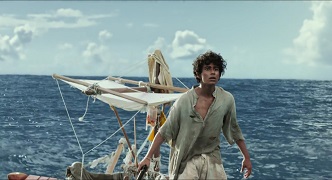
Scene uit de film “Life of Pi” uit 2012


He tried to teach my parents to swim, but he never got them to go beyond wading up to their knees at the beach and making ludicrous round motions with their arms, which, if they were practising the breaststroke, made them look as if they were walking through a jungle, spreading the tall grass ahead of them, or, if it was the front crawl, as ifthey were running down a hill and flailing their arms so as not to fall. Ravi was just as unenthusiastic.
Mamaji had to wait until I came into the picture to find a willing disciple. The day I came of swimming age, which, to Mother's distress, Mamaji claimed was seven, he brought me down to the beach, spread his arms seaward and said, “This is my gift to you.”
“And then he nearly drowned you," claimed Mother.“


 1929304-bfe2cbd1b77b30511583b7d01b72fe6f.jpg
Yann Martel (Salamanca, 25 juni 1963)


De Nederlandse schrijver en vertaler Rob van Essen werd op 25 juni 1963 geboren in Amstelveen. Zie ook alle tags voor Rob van Essen op dit blog.

Uit: Hier wonen ook mensen

“Hij was meteen voor deze plek gevallen. Als je op het terras stond, keek je kilometers ver de woestijn in, tot aan de trillende horizon, een uitzicht waarin niets gebeurde. Aan de andere kant van het huis werd het uitzicht afgesloten door een bergrug die in de loop van de dag van donkerrood naar lichtroze naar roestbruin verkleurde. Voor de bergrug lag een strook spiegelend water. Toen de makelaar hem in zijn vliegtuigje had meegenomen om dit gebied te laten zien, had Walter gedacht dat het een langwerpig meer was. Maar de makelaar had uitgelegd dat het ging om een doodlopende zijarm van een rivier, waaruit per dag net zoveel water verdampte als werd aangevoerd, zodat het waterpeil gelijk bleef. Toen Walter dat hoorde, had hij het perceel meteen gekocht. Daarna had hij de Finse architect opdracht gegeven een langgerekte woning te ontwerpen van één bouwlaag, met veel blank hout, grote, geschakelde ruimtes en een plat dak dat hier en daar ver uitstak om schaduw te geven. Dit was wat hij had gewild: iets langgerekts om in rond te dwalen en waarin verder niets gebeurde, iets zonder trappen of verdiepingen, alsof tijd verticaal was en eeuwigheid horizontaal.
En nergens iets wat herinnerde aan de vierling die dit alles mogelijk had gemaakt: Fritz, Fratz, Fretz en Frotz Frutzle. Ze waren even binnengekomen toen de Mexicaanse vrouw had gevraagd of hij de poster wilde signeren, maar diezelfde dag nog waren ze weer vertrokken, opgerold, in een kartonnen koker, zonder sporen na te laten.
Niets herinnerde hier aan zijn werk. Zijn archief bevond zich ergens in een opslag aan de westkust. Hij betaalde er nog steeds huur voor, maar het adres kende hij allang niet meer uit zijn hoofd en soms stelde hij zich voor hoe alles daar rustig lag te vergaan, ten prooi aan vocht en kleine beestjes die van papier leefden. Nog steeds ontving hij zo nu en dan een uitnodiging om langs te komen op een stripconventie. Dan ging het niet om de Frutzles, maar om eerder werk, Dr. Sjutsi, The School of Sex Lords – verzamelaars betaalden inmiddels grof geld voor de paar albums die destijds waren uitgebracht. Ook de Frutzles dateerden uit die tijd: de redactie van een van de bladen waarvoor hij werkte wilde een themanummer uitbrengen met kinderstrips, en omdat Walter voorzag dat zijn collega’s zich zouden overgeven aan vermoeiende parodieën vol goorheid en geweld, besloot hij als ultieme parodie een echte kinderstrip te maken, zonder poep, pis en anale seks.”


 1929304-6b0755346b95bf3337cb86e074472aab.jpg
Rob van Essen (Amstelveen, 25 juni 1963)


De Canadese schrijver Michel Tremblay werd geboren in Quebec op 25 juni 1942. Zie ook alle tags voor Michel Tremblay op dit blog.

Uit: Les belles-sœurs

“LINDA LAUZON – Le père, y peut pas te marier ?
LISE PAQUETTE – T’sais ben qu’y m’a laissé tomber, hein ? Y’est disparu dans’brume, ça pas été long ! Les belles promesses qu’y m’avait faites ! On était donc pour être heureux, ensemble ! Y faisait d’l’argent comme de l’eau, ça fait que moé, la folle, j’voyais pus clair ! Des cadeaux par icitte, des cadeaux par là, y finissait pus ! Ah ! j’en ai ben profité, un temps. Mais maudit, y fallait que ça arrive ! Y fallait que ça arrive ! Maudite marde ! J’ai jamais de chance, jamais ! Y faut toujours que r’reçoive un siau de marde su’à tête ! Mais j’veux tellement sortir de ma crasse ! Chus t’écoeurée de travailler au Kresge ! J’veux arriver à quequ’chose, dans’vie, vous comprenez, j’veux arriver à quequ’chose ! J’veux avoir un char, un beau logement, du beau linge ! J’ai quasiment rien que des uniformes de restaurant à me mettre sur le dos, bonyeu ! J’ai toujours été pauvre, j’ai toujours tiré le diable par la queue, pis j’veux que ça change ! J’sais que chus cheap, mais j’veux m’en sortir ! Chus v’nue au monde par la porte d’en arrière, mais m’as donc sortir par la porte d’en avant ! Pis y’a rien qui va m’en empêcher ! Y’a rien qui va m’arrêter ! Tu sauras me dire plus tard que j’avais raison, Linda ! Attends deux-trois ans, pis tu vas voir que Lise Paquette a va devenir quelqu’un ! Des cennes, a va n’avoir, O.K. ?”


 1929304-333964edbeb4f598d78d7d87c3a555d3.jpg
Michel Tremblay (Quebec, 25 juni 1942)
Scene uit een uitvoering als musical in Quebec, 2010


De Engelse schrijver Nicholas Mosley werd geboren op 25 juni 1923 geboren in Londen. Zie ook alle tags voor Nicholas Mosley op dit blog.

Uit: Children of Darkness and Light

“The editor gave me a look as if I might not last much longer with his newspaper.
I wrote yet another piece on what I myself felt about the story — in terms of it being a metaphor. I said that the Virgin Mary must know that her instructions weren't working because they had been tried so often and had been ineffective; what she must really want was for us, her children, to recognise this and grow up and start working things out on our own. I added that a metaphor was a way of talking about practical things that could be looked at in no better way.
I had become friendly with a local clergyman who was on the editorial board of an avant-garde religious magazine. I rang him up and said `Why is it that what the Virgin Mary says in these appearances is always so boring?'
He said `Perhaps she wants us to see that it's boring, so we'll begin to work things out for ourselves. But she can't say that, or we wouldn't be working things out for ourselves.'
I said `But that's just what I'm saying!'
He said `Then it seems to be working, doesn't it.'
He got my piece published in his religious magazine. It seemed that no one paid much attention to it.
I had a girlfriend at the time who was called Melissa. Melissa was a student at an art school: I had just started in this my first job with a newspaper. Melissa and I were living together in two rooms in North London. Melissa became pregnant. I said `Now what do we do — a bit of fasting and self-laceration, or do we think for ourselves.'
Melissa said `It's me we're talking about, not the Virgin Mary.'
I thought — What's the difference?
So in this way our son Billy came to be born — with the help, it is true, of what might be called a bit of anxiety and trusting.”


 1929304-de44247860ce26b520c502053a207abf.jpg
Nicholas Mosley (Londen, 25 juni 1923)


De Oostenrijkse dichteres Ingeborg Bachmann werd geboren op 25 juni 1926 in Klagenfurt. Zie ook mijn blog van 25 juni 2010 en eveneens alle tags voor Ingeborg Bachmann op dit blog.


Heimweg

Nacht aus Schlüsselblumen
und verwunschnem Klee,
feuchte mir die Füße,
daß ich leichter geh.

Der Vampir im Rücken
übt den Kinderschritt,
und ich hör ihn atmen,
wenn er kreuzweis tritt.

Folgt er mir schon lange?
Hab ich wen gekränkt?
Was mich retten könnte,
ist noch nicht verschenkt.

Wo die Halme zelten
um den Felsenspund,
bricht es aus der Quelle
altem, klarem Mund:

„Um nicht zu verderben,
bleib nicht länger aus,
hör das Schüsselklirren,
komm ins Wiesenhaus!

Reinen Fleischs wird sterben,
wer es nicht mehr liebt,
über Rausch und Trauer
nur mehr Nachricht gibt.“

Mit der Kraft des Übels,
das mich niederschlug,
weitet seine Schwinge
der Vampir im Flug,

hebt die tausend Köpfe,
Freund- und Feindgesicht,
vom Saturn beschattet,
der den Ring zerbricht.

Ist das Mal gerissen
in die Nackenhaut,
öffnen sich die Türen
grün und ohne Laut.

Und die Wiesenschwelle
glänzt von meinem Blut.
Deck mir, Nacht, die Augen
mit dem Narrenhut.


 1929304-6e123f9bea4a157b5f6d464d540eb9d3.jpg
Ingeborg Bachmann (25 juni 1926 – 17 oktober 1973)


De Russische dichter en vertaler Arseny Alexandrovich Tarkovsky werd geboren op 25 juni 1907 in Elisavetgrad. Zie ook alle tags voor Arseny Tarkovsky op dit blog.


To Poems

My poems: fledglings, heirs,
Plaintiffs and executors,
The silent ones, the loud,
The humble and the proud.

As soon as the shovel of time
Threw me onto the potter’s wheel—
Myself without kith or kin—
I grew beneath the hand, a miracle.

Something stretched out my long neck
And hollowed round my soul
And marked on my back
Legends of flowers and leaves.

I stoked the birch in the fire
As Daniel commanded
And blessed my red temper
Until I spoke as a prophet.

I had long been the earth—
Arid, ochre, forlorn since birth—
But you fell on my chest by chance
From beaks of birds, from eyes of grass.


Vertaald door Philip Metres


 1929304-a1b7bff20ffb45e01df1c06e44e1967f.jpeg
Arseny Tarkovsky (25 juni 1907 – 27 mei 1989)
Hier met zijn zoon Arseny in 1964 


De Britse schrijver George Orwell (pseudoniem van Eric Arthur Blair) werd op 25 juni 1903 geboren in Motihari, India. Zie ook mijn blog van 25 juni 2010 en eveneens alle tags voor George Orwell op dit blog.

Uit: 1984

“And the Records Department, after all, was itself only a single branch of the Ministry of Truth, whose primary job was not to reconstruct the past but to supply the citizens of Oceania with newspapers, films, textbooks, telescreen programmes, plays, novels — with every conceivable kind of information, instruction, or entertainment, from a statue to a slogan, from a lyric poem to a biological treatise, and from a child’s spelling-book to a Newspeak dictionary. And the Ministry had not only to supply the multifarious needs of the party, but also to repeat the whole operation at a lower level for the benefit of the proletariat. There was a whole chain of separate departments dealing with proletarian literature, music, drama, and entertainment generally. Here were produced rubbishy newspapers containing almost nothing except sport, crime and astrology, sensational five-cent novelettes, films oozing with sex, and sentimental songs which were composed entirely by mechanical means on a special kind of kaleidoscope known as a versificator. There was even a whole sub-section — Pornosec, it was called in Newspeak — engaged in producing the lowest kind of pornography, which was sent out in sealed packets and which no Party member, other than those who worked on it, was permitted to look at.
Three messages had slid out of the pneumatic tube while Winston was working, but they were simple matters, and he had disposed of them before the Two Minutes Hate interrupted him. When the Hate was over he returned to his cubicle, took the Newspeak dictionary from the shelf, pushed the speakwrite to one side, cleaned his spectacles, and settled down to his main job of the morning.
Winston’s greatest pleasure in life was in his work. Most of it was a tedious routine, but included in it there were also jobs so difficult and intricate that you could lose yourself in them as in the depths of a mathematical problem — delicate pieces of forgery in which you had nothing to guide you except your knowledge of the principles of Ingsoc and your estimate of what the Party wanted you to say. Winston was good at this kind of thing.”


 1929304-ba9a7245448cb7671fa9568085b6774d.jpg
George Orwell (25 juni 1903 – 21 januari 1950)
Cover Time, 1983


Zie voor nog meer schrijvers van de 25e juni ook mijn vorige blog van vandaag.

Geschreven door Romenu om 11:49 Reageer op dit bericht

Claude Seignolle, Larry Kramer, Ariel Gore, Heinrich Seidel, Hans Marchwitza, Georges Courteline, Friederike Kempner

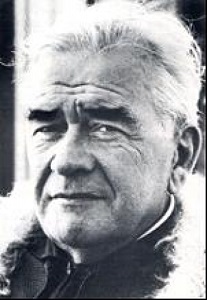
De Franse schrijver Claude Seignolle werd geboren op 25 juni 1917 in Périgueux. Zie ook alle tags voor Claude Seignrolle op dit blog.

Uit: L'Auberge du Larzac

"J'appelai et tapai du poing sur une table bancale qui faillit s'effondrer sous mes coups. L'aubergiste devait être au cellier ou dans une des chambres de l'étage. Mais, malgré mon tapage, on ne se montra pas. J'étais seul, tressaillant d'attente, devant un âtre vide inutilisé depuis bien longtemps, à en juger par les toiles d'araignées qui bouchaient la cheminée. Quant à la longue chandelle, allumée depuis peu, et soudée à une étagère, sa présence, au lieu de me rassurer, me remplit plus d'inquiétude que si je n'avais trouvé en cet endroit que la nuit et l'abandon.
Je cherchai un flacon d'eau-de-vie afin de me réconforter et chasser la crainte qui me retenait d'aller visiter les autres pièces de cette étrange auberge. Mais les bouteilles qui gisaient là, poussiéreuses, avaient depuis longtemps rendu l'âme. Toutes, de formes anciennes, étaient vides, les années assoiffées ayant effacé jusqu'aux traces des boissons qu'elles avaient contenues.
Tout était si singulier qu'attentif au moindre bruit, je me questionnai sur l'étrangeté des lieux. Du bois sec traînait. Je le rassemblai dans le foyer, sur un lit d'herbes sèches trouvées sans peine, et, frottant mon briquet épargné par la pluie, j'en tirai des flammes rassurantes.
Rencogné près de la cheminée, je me tendis à la chaleur, bien décidé à brûler le mobilier pour garder jusqu'à l'aube cette réconfortante compagnie. Les bouffées de résine me furent aussi revigorantes que des goulées d'alcool pur, mais, pensant à la perte de ma jument, je fus pris de tristesse, ne comptant plus que sur son instinct de bête pour qu'elle me revînt.
Tout à coup un insidieux frisson me traversa, semblable à celui ressenti dehors et qui m'avait chassé jusqu'ici. "On" se trouvait à nouveau là, tout proche !
Les murs avaient beau me protéger de trois côtés ; éclairé par le foyer craquant, j'étais visible et vulnérable. On pouvait m'atteindre de face, en tirant de loin, à plomb. Je me dressai, les muscles prêts à une nouvelle fuite.
Mais mon anxiété fit place à une vive angoisse qui m'oppressa jusqu'à m'étouffer. Maintenant "on" entourait l'auberge et, impitoyables dans leurs mystérieux desseins, d'invisibles regards, que je percevais, me fixaient par la fenêtre sans volets. "On" était attentif à ma personne et cela avec une telle violence que je suais, subitement terrifié. »


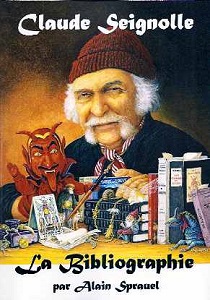
 1929295-05e7e172da1957ade4c95f57e1cb1de5.jpg
Claude Seignolle (Périgueux, 25 juni 1917)
Cover


De Amerikaanse schrijver, columnist en homoactivist  Larry Kramer werd geboren in Bridgeport, Connecticut op 25 juni 1935. Zie ook alle tags voor Larry Kramer op dit blog.

Uit: Gay Culture, Redefined

"The truth is, most gay men live calm, orderly lives, often as couples, and they are embarrassed by what Sex Panic espouses. They are ashamed this issue has surfaced again. Many feel that to speak up against Sex Panic only validates its existence, and that if they keep their mouths shut the group will go away. And, as with smoking, they feel that enough information about safe sex is out there -- if people choose to ignore it, that's their business.
Criticism from lesbians, the other half of our movement, is desperately needed as well. Promiscuous gay men must hear the message, "Enough already! Haven't you learned anything from the last 17 years?" Yet lesbian activists, who alongside gay men have fought against AIDS, crawl into shells rather than confront the idiocy of what Sex Panic is demanding. Why are they refusing to speak out, particularly when so many of them have confided that they agree with me?
After all, AIDS has usurped the entire gay movement's agenda, at great cost to lesbian issues. Just when it looked as if there was some breathing space to pay more attention to these issues, AIDS resurges. The message Sex Panic and its supporters are giving to women is tantamount to: we'll come back to your issues some other time.
I cannot understand why lesbians are not furious with their gay male friends.
Without a strong, vocal opposition, Sex Panic is on its way to convincing much of America that all gay men are back to pre-AIDS self-destructive behavior that will wind up costing the taxpayer a lot of extra money. Indeed, what Sex Panic is demanding could easily allow our enemies, as well as many of our straight friends, to deny all gay people what rights we've won or are still fighting for.
Those who do speak out in protest are automatically accused of assimilationist views: we want to be like straights; we want marriage and monogamy and white picket fenced-in homes.”


 1929295-6481d9655c4730d8a8d6e7c17526cdd5.jpg
Larry Kramer (Bridgeport, 25 juni 1935)


De Amerikaanse schrijfster en journaliste Ariel Gore werd geboren op 25 juni 1970 in Carmel, Californië. Zie ook alle tags voor Ariel Gore op dit blog.

Uit: The End of Eve

“Two months shy of the death date my mother had written on her calendar in red pen, Sol and I sublet our studio apartment to an art student for the school year. We’d keep the shop space downstairs.
“Your situation is interesting,” the art student said as he signed the lease agreement. “If there’s a gay kid in the family, it’s always the gay kid who has to take care of the sick parent. I always thought that was because the gay kid wouldn’t have any children of their own. But that’s obviously not true for you.”
I shrugged. “Always great to be the gay kid.” And we packed up the car again for our move across town.
“Let’s make a pact,” Sol said as she turned the key in the ignition. “If we start plotting to murder your mother, we have to move out.”
I laughed. “Agreed.” But I knew she wasn’t kidding.
The house wasn’t a duplex anymore, but my mother’s now-master bedroom was separated from our smaller bedrooms by the dining room, living room, and the huge unusable kitchen.
Our first weeks in the house, I focused on cooking. On the camping stove in the back yard, I made calabacitas, ancho and mild green chile stew. When the doorbell rang and my mother spied one of the hospice nurses, she hissed in my ear: “It’s one of those maidens of death. Send her away.”
We’d moved here to “help,” but what could we do? Our joint tasks included shopping for organic groceries and cooking when my mother was home, not asking where she was going when she left, and being polite to Ronald who came and went at odd hours carrying expensive building supplies and appliances he didn’t seem to know how to install.
“I’m here with electrical wire,” he announced one night after dark. He had a key to the front door. “Anyone know how to wire a place?”
My solo tasks included paying all the bills, keeping track of my mother’s alternative healer appointments, and making sure there was a steady stream of Netflix noirs coming to the mailbox.”


 1929295-4a24f7ca6ead16c3ab02a3ab01a19203.jpg
Ariel Gore (Carmel, 25 juni 1970)


De Duitse dichter, schrijver en ingenieur Heinrich Seidel werd geboren op 25 juni 1842 in Perlin, Mecklenburg-Schwerin. Zie ook alle tags voor Heinrich Seidel op dit blog.


Im Sommer

O komm mit mir aus dem Gewühl der Menge
Aus Rauch und Qualm und tobendem Gedränge,
Zum stillen Wald,
Dort wo die Wipfel sanfte Grüsse tauschen,
Und aus der Zweige sanft bewegtem Rauschen
Ein Liedchen schallt.

Dort zu dem Quell, der durch die Felsen gleitet
Und dann zum Teich die klaren Wasser breitet,
Führ’ ich dich hin.
In seinem Spiegel schau die stolzen Bäume
Und weisse Wolken, die wie sanfte Träume
Vorüber ziehn.

Dort lass uns lauschen auf der Quelle Tropfen
Und auf der Spechte weit entferntes Klopfen
Mit uns allein.
Dort wollen wir die laute Welt vergessen,
An unsrem Herzschlag nur die Stunden messen
Und glücklich sein!


Sommerfäden

Still im Herbsteslicht der Sonnen
Stand der Blumen bunte Zier -
Sommerfäden, leicht gesponnen,
Woben sich von Dir zu mir.

Und wir Beide schritten sinnig,
Sprachen wenig - dachten viel -
Nur die Augen still und innig
Gaben Deutung diesem Spiel.

Jene Tage sind verstoben,
Jene Blumen sind versäet. ...
Sommerfäden, leicht gewoben,
Ach, wohin seid ihr verweht.


 1929295-a0dfb9aec33f4da7c5ecd8f32d4f70be.jpg
Heinrich Seidel (25. Juni 1842 – 7. November 1906)


De Duitse dichter en schrijver Hans Marchwitza werd geboren in Scharley op 25 juni 1890. Zie ook alle tags voor Hans Marchwitza op dit blog.

Uit: Sturm auf Essen

„Der Junge aß die Kartoffeln, die ihm die Mutter aufnötigen musste. Sie beobachtete ihn dabei und wischte an ihren Augen. Groß und mager war er. Und der düstere, abwesende Blick schreckte sie. Sie wusste nicht, dass dieser Blick, diese sich krampfhaft faltende Stirn, die Unrast, mit der er sich umsah, Flandern, Verdun, Aisne und noch einmal Verdun und noch einmal Flandern waren. Sie wusste nicht, dass er nicht dreiundzwanzig Jahre, sondern fünfzig, hundert Jahre alt war, dass er eine Ewigkeit von Schrecken und Toden durchgehetzt hatte. Sie dachte glücklich: Er ist wieder zurückgekommen!, und sie schnaubte die Tränen in ihre Schürze.
Franz sah sich in der Wohnung um. Alles war noch wie früher, stand fast gespenstisch genau auf dem alten Fleck - aber ein Jahrhundert schien zwischen dem Früher und Heute zu liegen. „Wer ist denn von den anderen noch zurückgekommen?" fragte er.
Einige waren zurück. Von einem ganzen Dutzend vier. Ihre alte Ecke war leer geworden. Auch dieses Erinnern an die alte Ecke lag hundert Jahre zurück.
„Ja - der Freising-Bruno und der Koschewa-Edy sind wieder auf der Zeche am Arbeiten. Nur der Kahlstein rennt noch mit dem Gewehr rum", erzählte ihm die
Mutter. „Der Kahlstein-Hermann war doch bei der Marine in Kiel und ist schon vor zwei, drei Wochen zurück. Er rennt wieder mit dem Gewehr..."
Franz grübelte. Er war vorläufig zu gar nichts entschlossen, er wusste nicht, ob er noch einmal in die Grube gehen oder ob er die Arbeit wechseln solle. Vielleicht mit einer Übertagearbeit. Aber er konnte sich das kaum noch vorstellen, dass er jetzt wieder einer normalen Tagesbeschäftigung nachgehen könne; er fühlte sich noch immer draußen im Graben. Und allen, die das Glück hatten, sich zu retten, erging es wohl ebenso; alle phantasierten sie nachts dasselbe; sie waren noch immer in Flandern oder vor Verdun.“


 1929295-83c3a12202c19d6f61da44849f2cf224.jpg
Hans Marchwitza (25 juni 1890 - 17 januari 1965)


De Franse schrijver en dramaturg Georges Courteline (eig. Georges Victor Marcel Moineaux ) werd geboren op 25 juni 1858 in Tours. Zie ook alle tags voor Georges Courteline op dit blog.

Uit: Messieurs les ronds-de-cuir

"Une immense nappe de soleil balayait d’un bout à l’autre la chaussée blondie du boulevard dont les fenêtres, à l’infini, miroitaient comme des lames d’épée, et sur l’asphalte des trottoirs les ombres jetées en biais des platanes et des marronniers semblaient des bâtons d’écolier tracés par une main géante.
Lahrier, mis en joie dès le matin au seul vu d’un reflet cuivré se jouant par la cretonne fleurie de son rideau, avait déjeuné en deux temps auprès de sa fenêtre ouverte ; puis, tourmenté de l’impérieuse soif de sortir sans par-dessus pour la première fois de l’année, il avait, de son pied léger, gagné la place de l’Opéra, remonté le boulevard jusqu’à la rue Drouot, le long des arbres déjà encapuchonnés de vert tendre, faisant le gros dos sous le soleil dont la bonne tiédeur lui caressait l’épaule à travers l’étoffe du vêtement.
Mais comme il revenait sur ses pas, talonné par l’heure du travail, équitablement partagé entre le sentiment du devoir et son amour du bien-être, brusquement il s’était rappelé n’avoir pas pris de café à son repas, et devant cette considération il avait imposé silence à ses scrupules.
Le Ministère pouvait attendre. Aussi bien était-ce l’affaire d’une minute.
Et il s’était attablé à la terrasse du Café Riche.
Le malheur est qu’une fois-là, le chapeau ramené sur les yeux, le guéridon entre les genoux, Lahrier s’était trouvé bien. Il s’était senti envahi d’une grande lâcheté de tout l’être, d’un besoin de se laisser vivre, tranquillement, sans une pensée, tombé à une mollesse alanguie et bienheureuse de convalescent. Dans sa tasse emplie à ras-bords un prisme s’était allumé, tandis que le flacon d’eau-de-vie projetait sur le glacis de la tôle une tache imprécise et dansante, aux tons roux de topaze brûlée."


 1929295-bb68beb274d53d84e37fcd276f81466c.jpg
Georges Courteline (25 juni 1858 – 25 juni 1929)
Borstbeeld in de naar hem genoemde straat in Parijs


De Duitse dichteres Friederike Kempner werd geboren op 25 juni 1836 te Optatow in de provincie Posen. Zie ook alle tags voor Friederike Kempner op dit blog.


Siehst Du nicht die grünen Matten

Siehst Du nicht die grünen Matten
Und das blaue Himmelszelt?
Und der Bäume lange Schatten
Und die ganze Frühlingswelt?

All die Bäche und die Quellen
Und die Wiesen gelb und grün,
All die Knospen, die da schwellen,
Und die Düfte, die da ziehn?


Grüne Zweige, goldne Frucht

Grüne Zweige, goldne Frucht!
Wer sie findet, wer sie sucht!
Kennst Du ihren tiefen Sinn?
In der Seele wohnt er drin. –

Grüne Zweige, goldne Frucht!
Wer sie findet, wer sie sucht!
Suchen, finden wirst du sie,
Brechen, ach, auf Erden nie. –


Sonett

In Waffen steht die Welt
Um Länder und um Geld,
Aus Friedensliebe zwar,
So heißt es immerdar.

Nur eines ruhig bleibt
Und ew’ge Blüten treibt,
Im Reich der Poesie,
Da streitet man sich nie. –

In reinem Element
Man keine Feindschaft kennt,
Die Mensch von Menschen trennt.
Ob nahe oder weit
Man leidet mit, mit Leid –
Für jetzt und alle Zeit.


 1929295-ed26f640a02f50ded8571be48b9389b2.jpg
Friederike Kempner (25 juni 1836 – 23 februari 1904)

Geschreven door Romenu om 11:48 Reageer op dit bericht

Meer van Romenu

↑ Terug naar de berichten