Naar de inhoud

Romenu

Over literatuur, gedichten, kunst en cultuur
akke.beakke.be

Berichten van 25 augustus 2016 tot 26 augustus 2016

Dolce far niente, Stefan George, Christopher Isherwood, Laura van der Haar, Joachim Helfer, Guillaume Apollinaire, Rashid Al-Daif
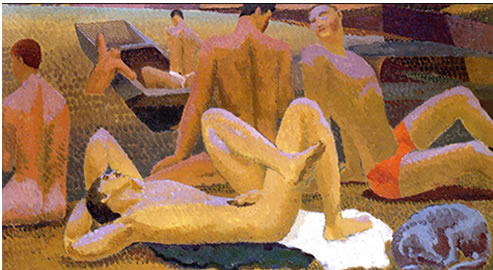
 

Dolce far niente


 1949256-1a708e4261b95f8041f4886275a05e67.jpg
Bathers by the Pond door Duncan Grant,  circa 1920-1921


Südlicher Strand: Tänzer

Ihr wart am pinienhage ohne staunen
Ins gras gelagert · junge schwinger · beide
Mit gliedern zierlich regen kräftig braunen
Mit offner augen unbefangner weide.

Ihr hobet euch vom boden auf im takte
Ins volle licht getauchte lächelnd reine
Und schrittet vor und rückwärts - göttlich nackte
Die breite brust gewiegt auf schlankem beine.

Von welcher urne oder welchem friese
Stiegt ihr ins leben ab zum fest gerüstet
Die ihr euch leicht verneigtet und euch küsstet
Und tanzend schwangt auf weiss-gesternter wiese!
 

 1949256-9f9c6b9471e112f2b6917579283d9849.jpg
Stefan George (12 juli 1868 – 4 december 1933)
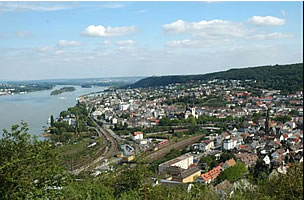
Büdesheim (Bingen). Stefan George werd in Büdesheim geboren.


De Brits-Amerikaanse schrijver Christopher Isherwood werd geboren op 26 augustus 1904 in Disley in het graafschap Cheshire in Engeland. Zie ook mijn blog van 26 augustus 2010 en eveneens alle tags voor Christopher Isherwood op dit blog.

Uit: Christopher and His Kind

„As a homosexual, he had been wavering between embarrassment and defiance. He became embarrassed when he felt that he was making a selfish demand for his individual rights at a time when only group action mattered. He became defiant when he made the treatment of the homosexual a test by which every political party and government must be judged. His challenge to each one of them was: "All right, we've heard your liberty speech. Does that include us or doesn't it?"
The Soviet Union had passed this test with honors when it recognized the private sexual rights of the individual, in 1917. But, in 1934, Stalin's government had withdrawn this recognition and made all homosexual acts punishable by heavy prison sentences. It had agreed with the Nazis in denouncing homosexuality as a form of treason to the state. The only difference was that the Nazis called it "sexual Bolshevism" and the Communists "Fascist perversion."
Christopher — like many of his friends, homosexual and heterosexual — had done his best to minimize the Soviet betrayal of its own principles. After all, he had said to himself, anti-homosexual laws exist in most capitalist countries, including England and the United States. Yes — but if Communists claim that their system is juster than capitalism, doesn't that make their injustice to homosexuals less excusable and their hypocrisy even viler? He now realized that he must dissociate himself from the Communists, even as a fellow traveler. He might, in certain situations, accept them as allies but he could never regard them as comrades. He must never again give way to embarrassment, never deny the rights of his tribe, never apologize for its existence, never think of sacrificing himself masochistically on the altar of that false god of the totalitarians, the Greatest Good of the Greatest Number — whose priests are alone empowered to decide what "good" is."


 1949256-f21f4a2febd40e515707e9406255b392.jpg
Christopher Isherwood (26 augustus 1904 – 4 januari 1986)
Cover


De Nederlandse dichteres Laura van der Haar werd geboren in Groningen in op 26 augustus 1982. Zie ook alle tags voor Laura van der Haar op dit blog.


afzadelen

bleke ingenieurs van geheugenplaatsen
rochelen gelaten en weten vast
hoe ze buitenboord moeten slapen

drinken de dag uit hun glazen
hangen lappig in hun stoel, vragen
of hun hoofd even open mag

ze snuiven krampachtig, likken
hard geworden vachten
hangen een beetje de dood uit

ze raspen de korst van hun wonden
liegen sluitingstijden en in reflecties
staat er nog altijd iemand achter ze


 1949256-dbf8c91b2d61be20b6afee3ce175c405.jpg
Laura van der Haar (Groningen, 26 augustus 1982)


De Duitse schrijver Joachim Helfer werd geboren in Bonn op 26 augustus 1964. Zie ook mijn blog van 26 augustus 2010 en eveneens alle tags voor Joachim Helfer op dit blog.

Uit: Du Idiot

„... erkennst du dich selber, Florian, in einer früheren Phase, die du so lange noch nicht überwunden hast: Ein räudiger Rüde in seinem Revier. Und ein verzweifelt verspielter Dichter, der in den Fassaden die ihn umgaben, Gesichter sah, niedliche rauhputzige Fratzen deutscher Eigenheime, in denen Geschichten von fataler Peinlichkeit geschrieben standen; die zu lesen ihn so traurig stimmte, gerade weil es ihm lächerlich erschien. (Das war ja das Elend: als geborener Dichter nicht ins Elend hineingeboren zu sein, nicht in Krieg, Katastrophe, noch Tyrannei, sondern in eine Neubausiedlung im Vortaunusland, auf jenem Haarriß in der Erdkruste gelegen, der nicht einmal für das allerschwächste Beben gut war, dafür aber die heißen Quellen einer Reihe reicher Heilbäder zum Sprudeln brachte, die als Zuchtperlenschnur um Frankfurts harten Hals hingen, irgendwo zwischen Bad Homburg und Bad Soden, im Nirgendwo also, im Kunstseidenknoten, wo echtes Blut richtiger Menschen, Hunger, Folter, Völkermord nurmehr aus dem Farbfernseher tropfte; daß du in unanfechtbar menschenwürdigen Verhältnissen vegetieren mußtest, höchstens noch durch eine Explosion des fernen Vogelbergs zu erschüttern, der seit Jahrmillionen schon erloschen war, so sicher, sauber, satt, daß dir dein Daran-Leiden doch im Ernst nicht abzunehmen war: Daran litt er ja eben...)“


 1949256-6b2b159f05ea4576debf38478e3873f8.jpg
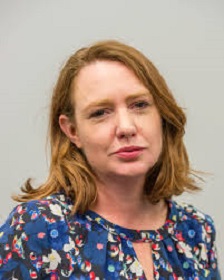
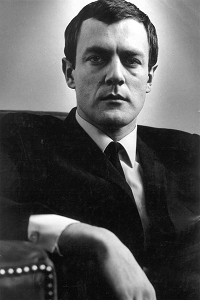
Joachim Helfer (Bonn, 26 augustus 1964)


De Franstalige schrijver en dichter Guillaume Apollinaire werd in Parijs geboren op 26 augustus 1880. Zie ook mijn blog van 26 augustus 2010 en eveneens alle tags voor Guillaume Apollinaire op dit blog.


La force du miroir

J'étais, indigne, un jour, en la chambre au lit blanc
Où Linda dans la glace admirait sa figure
Et j'emportai, grâce au miroir, en m'en allant,
La première raison de devenir parjure.

Linda fut non pareille avant, mais aujourd'hui
Je sais bien qu'elle est double au moins, grâce à la glace ;
Mon cœur par la raison où son amour l'induit
Est parjure à présent pour la seconde face.

Or, depuis ce jour-là, j'ai souvent comparé
Dans la chambre où la glace accepte un pur mirage,
La face de Linda, le visage miré,
Mais mon cœur pour élire a manqué de courage.

Si, parjure toujours, pour choisir j'ai douté,
Ce n'est pas qu'au miroir la dame soit plus belle ;
Je l'adore pourtant d'être en réalité
Et parce qu'elle meurt quand veut sa sœur formelle.

J'adore de Linda ce spécieux reflet
Qui la simule toute et presque fabuleuse,
Mais vivante vraiment, moderne comme elle est :
La dame du miroir est si miraculeuse !

Et la glace où se fige un réel mouvement
Reste froide malgré son détestable ouvrage.
La force du miroir trompa plus d'un amant
Qui crut aimer sa belle et n'aima qu'un mirage.


La tzigane

La Tzigane savait d'avance
Nos deux vies barrées par les nuits
Nous lui dîmes adieu et puis
De ce puits sortit l'Esperance
L'amour lourd comme un ours privé
Dansa debout quand nous voulûmes
Et l'oiseau bleu perdit ses plumes
Et les mendiants leurs Avé

On sait très bien que l'on se damne
Mais l'espoir d'aimer en chemin
Nous fait penser main dans la main
À ce qu'a prédit la tzigane


 1949256-2cc5e3cde503516de9445b2026ed6d84.jpg
Guillaume Apollinaire (26 augustus 1880 – 9 november 1918)
Apollinaire et ses amis door Marie Laurencin, 1909


Onafhankelijk van geboortedata:

De Libanese schrijver Rashid Al-Daif werd in 1945 geboren in Ehden bij Zgharta in het noorden van Libanon. Zie ook alle tags voor Rashid Al-Daif op dit blog.

Uit: Die Verschwulung der Welt (Samen met Joachim Helfer)

"Auch wenn ich Thomas gesagt hatte, diese Sache gehe mich nichts an, war ich doch froh, daß er mich informiert hatte. Gut, daß er es gesagt hat, dachte ich. Denn um ehrlich zu sein, begann mich das Thema irgendwie zu beschäftigen, und ich dachte lange darüber nach. Doch schließlich sagte ich mir: Warum eigentlich nicht? Soll er doch homosexuell sein! Vielleicht könnte ich von dieser Erfahrung ja profitieren, denn schließlich interessiere ich mich für alles, was mit Moral zu tun hat, insbesondere mit Sexualmoral, und schreibe darüber.
Ich denke, die Moral ist das eigentliche Schlachtfeld zwischen der westlichen Moderne und uns Arabern. Als mein Roman Zum Teufel mitMeryl Streep, der dieses Thema in gewisser Weise zum Gegenstand hat, ins Französische übersetzt wurde, wiederholte ich bei jedem Interview im Fernsehen, in Zeitungen und im Rundfunk, daß das Bett der eigentliche Ort ist, an dem der Konflikt zwischen Orient und Okzident ausgetragen wird. Das Bett ist ein Kriegsschauplatz zwischen arabischer »Tradition« und westlicher Moderne! Diese Zuspitzung mag ein wenig verallgemeinernd sein, doch sie deutet auf die Tatsache, daß die Antennen der Frau Schwingungen, die Neues ankündigen, schneller aufnehmen, als der Mann es vermag. Frauen haben ein besseres Gespür für Veränderungen als Männer. Sie riechen das Neue schon aus der Ferne und fühlen es kommen, und dies gilt insbesondere für alles, was mit moralischen und im engeren Sinne sexuellen Konventionen und Verhaltensweisen zu tun hat. Daraus ergeben sich Spannungen in ihrem Verhältnis zum Mann. Die Frau sieht und fühlt und begreift, während der Mann nichts davon bemerkt. Die sexuelle Beziehung ist der »Moment«, in dem diese unterschiedlichen Empfindungen zutage treten und sich manifestieren.“


1949256-ca44a43539ed540f3192087ce3498655.jpg
(Rashid Al-Daif, Ehden, 1945)


Zie voor nog meer schrijvers van de 26e augustus ook mijn blog van 26 augustus 2015 en ook mijn blog van 26 augustus 2012 en ook mijn blog van 26 augustus 2011 deel 1 en eveneens deel 2.
 

Geschreven door Romenu om 15:28 Reageer op dit bericht

Paula Hawkins

De Britse schrijfster Paula Hawkins werd geboren op 26 augustus 1972 en groeide op in Salisbury (het huidige Harare in Zimbabwe) in Rhodesië. Ze verhuisde in 1989 op 17-jarige leeftijd naar Londen waar ze filosofie, economie en politiek studeerde aan het Keble College van de universiteit van Oxford. Ze was journaliste voor The Times, werkte aan een aantal publicaties op freelancebasis en schreef ook een financieel adviesboek voor vrouwen, getiteld “The Money Goddess”. Hawkins schreef een aantal romantische komedieromans onder het pseudoniem Amy Silver en brak in 2015 door onder haar eigen naam met de psychologische thriller “The Girl on the Train”, waarin de huiselijk geweld, alcohol en drugsgebruik een rol spelen. Het boek werd in 2016 verfilmd met Emily Blunt in de rol van Rachel.. Het boek kwam op 1 februari 2015 op nummer één op de The New York Times Fiction Best Sellers of 2015 en stond 16 weken op de eerste plaats.

Uit:The Girl on the Train

“I want to run. I want to take a road trip, in a convertible, with the top down. I want to drive to the coast—any coast. I want to walk on a beach. Me and my big brother were going to be road trippers. We had such plans, Ben and I. Well, they were Ben's plans mostly—he was such a dreamer. We were going to ride motorbikes from Paris to the Côte d'Azur, or all the way down the Pacific coast of the USA, from Seattle to Los Angeles; we were going to follow in Che Guevara's tracks from Buenos Aires to Caracas. Maybe if I'd done all that, I wouldn't have ended up here, not knowing what to do next. Or maybe, if I'd done all that, I'd have ended up exactly where I am and I would be perfectly contented. But I didn't do all that, of course, because Ben never got as far as Paris, he never even made it as far as Cambridge. He died on the A10, his skull crushed beneath the wheels of an articulated lorry.
I miss him every day. More than anyone, I think. He's the big hole in my life, in the middle of my soul. Or maybe he was just the beginning of it. I don't know. I don't even know whether all this is really about Ben, or whether it's about everything that happened after that, and everything that's happened since. All I know is, one minute I'm ticking along fine and life is sweet and I want for nothing, and the next I can't wait to get away, I'm all over the place, slipping and sliding again.
So, I'm going to see a therapist! Which could be weird, but it could be a laugh, too. I've always thought that it might be fun to be Catholic, to be able to go to the confessional and unburden yourself and have someone tell you that they forgive you, to take all the sin away, wipe the slate clean.
This is not quite the same thing, of course. I'm a bit nervous, but I haven't been able to get to sleep lately, and Scott's been on my case to go. I told him I find it difficult enough talking to people I know about this stuff—I can barely even talk to him about it.
He said that's the point, you can say anything to strangers. But that isn't completely true. You can't just say anything. Poor Scott. He doesn't know the half of it. He loves me so much, it makes me ache. I don't know how he does it. I would drive me mad.
But I have to do something, and at least this feels like action. All those plans I had—photography courses and cookery classes—when it comes down to it, they feel a bit pointless, as if I'm playing at real life instead of actually living it. I need to find something that I must do, something undeniable. I can't do this, I can't just be a wife. I don't understand how anyone does it—there is literally nothing to do but wait. Wait for a man to come home and love you. Either that or look around for something to distract you.”


 2031528-6d6dbd834c5c46cb6278d94460721a9b.jpg
Paula Hawkins (Salisbury, 26 augustus 1972)

Geschreven door Romenu om 00:00 Reageer op dit bericht

C. B. Vaandrager

De Nederlandse schrijver en dichter Cornelis Bastiaan Vaandrager werd geboren in Rotterdam op 26 augustus 1935. Zijn vader was postbode, zijn moeder huisvrouw. Hij bleef enig kind. Na het gymnasium maakte Vaandrager met zijn schoolvriend Hans Sleutelaar deel uit van de redactie van het Rotterdamse literaire tijdschrift Proefschrift, dat halverwege de jaren vijftig verscheen. Later was Vaandrager met Sleutelaar, de dichter Hans Verhagen en schilder-dichter Armando redactielid van het Vlaams-Nederlandse literaire tijdschrift Gard Sivik en het tijdschrift De Nieuwe Stijl. In 1960 maakte Vaandrager zijn prozadebuut met de novelle “Leve Joop Massaker”, door critici vergeleken met romans van Gerard Reve en Hugo Claus. Een jaar later volgde zijn poëziedebuut “Met andere ogen”. Hiermee vestigde hij zijn naam als veelbelovend Rotterdams literair talent. Hij leek die faam te onderstrepen met de verhalenbundel “De avonturen van Cornelis Bastiaan Vaandrager” (1963), poëzie in “Gedichten” (1967) en de documentaire, sterk autobiografische romans “De reus van Rotterdam. Stadsgeheimen” (1971) en “De Hef” (1975). In de jaren zeventig ging het bergafwaarts met Vaandrager. Drugsgebruik begon zijn leven te beheersen. Hij verbleef met ernstige klinische depressies soms maanden achtereen in een psychiatrisch ziekenhuis. In 1981 werd hem de Anna Blaman Prijs van het Prins Bernhardfonds uitgereikt voor zijn gehele oeuvre. Daarna publiceerde hij nog slechts enkele dichtbundels, waaronder “Metalon” (1986) en “Sampleton” (1990). Vaandrager stierf vereenzaamd op 56-jarige leeftijd. In de 21e eeuw is de belangstelling voor Vaandrager enigszins opgeleefd. In 2005 verscheen de biografie “Vaan, Het bewogen bestaan van C.B. Vaandrager” van Menno Schenke. In 2008 volgde “Made in Rotterdam”, een uitgave van zijn verzamelde gedichten, bijeengebracht door Martin Bril en Hans Sleutelaar. Vier jaar daarna volgde de - postume - publicatie van de recent ontdekte, nooit eerder gepubliceerde novelle “Sleutels”.


Gelukkige dagen

Gisteravond naar Beckett geweest.
Dat gaf te denken..

Als je uren tot aan je oren
in een moeilijke materie zit,
is een pauze geen luxe.

Om kwart voor elf stonden we weer op straat.

Tot vier uur doorgezakt
en met een taxi naar huis.


A foggy day in Rotterdam

Je kent het wel: een middag wachten
tot het gaat misten. Wachten
tot het donker wordt. Of avond wordt. Hij
(ik heb het over hem) kijkt,
ziet lege bussen
die koppig starten, de stad in – op zoek naar meer mist?

Stemmen van mensen. Oproer? Bijval?
Hij herkent ze, de stemmen. De mensen
kent hij niet – nooit gekend.

Je kent het wel: pijnlijk nauwkeurig
kan hij je zeggen (maar hij doet het niet):
'Nu gaat de telefoon.'
En dan gaat de telefoon. De angst
dit aan te voelen. En dan de angst (nog groter)
zich na tien, elf juiste voorspellingen te vergissen.

De mist is binnen.
Reeds zijn de radiatoren verkild.
Hij trekt zijn benen op. Wacht.
Het wordt donker. Of avond.
Hij trekt huiverend een haar uit zijn pols.


 2028889-3759aef290d3af6adab36c7661415582.png
C. B. Vaandrager (26 augustus 1935 - 18 maart 1992)

Geschreven door Romenu om 00:00 Reageer op dit bericht

Dolce far niente, Albert Verwey, Kees Stip, Martin Amis, Howard Jacobson, Charles Wright, Maxim Biller


Dolce far niente


 1948984-a5891b86a8def7c9744a49e8fa36415f.jpg
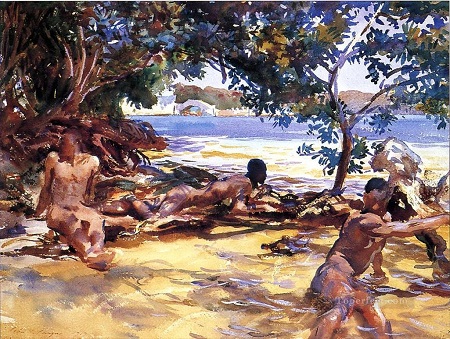
The Bathers door John Singer Sargent, 1917


Baders hartewens

Dwars door de tuinen
Van roos en ranken
Zich
‘t pad te banen,
Dan door de lanen
Van zand en dennen
Vluchtig te rennen
Tot waar de kruinen
Van hoge duinen
In
‘t blauwe blanken
En zo te naderen
Met zwellende aderen
In laatste loop
De harde golven
En, overdolven,
Hun koele doop.


 1948984-0e0e89787df20de7a1e2e32646baf819.jpg
Albert Verwey (15 mei 1865 - 8 maart 1937)
Amsterdam, 19e eeuw. Albert Verwey werd geboren in Amsterdam


De Nederlandse Cornelis Jan (Kees) Stip werd geboren in Veenendaal op 25 augustus 1913. Zie ook alle tags voor Kees Stip op dit blog.


Op een eendagsvlieg 

‘Ach,’ sprak een eendagsvlieg te Doorn,
‘hoe heerlijk is het ochtendgloren
en hoe verrukkelijk het uur
waarop het laaiend zonnevuur
verstild ter kimme wordt gedreven!
Men moest twee dagen kunnen leven.’


Hoogeveens verbeterd leesplankje

Op hoge poten stond het voor de klas
met platen door de juffrouw aangewezen
en letters om de namen mee te lezen
alsof je niet vanzelf zag wat het was.

Het lam had van het vuur niet veel te vrezen,
de schapen stonden grazend in het gras.
Als letterkundige begreep je pas
dat mies geen jet en jet geen mies kon wezen.

En 's avonds met het maanlicht door de ramen,
te wakker om te slapen en te moe
om te begrijpen waarvandaan en hoe,
lag je te wachten tot de letters kwamen
en dansten in je kleine paradijs
als aap noot mies wim zus jet teun vuur gijs.


 1948984-4f871497dd4200cf5dbc065e8b9f93a3.jpg
Kees Stip (25 augustus 1913 – 27 juni 2001)


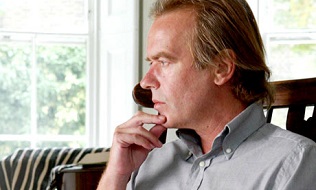
De Engelse schrijver Martin Amis werd geboren op 25 augustus 1949 in Cardiff, South Wales. Zie ook alle tags voor Martin Amis op dit blog en ook mijn blog van 25 augustus 2010.

Uit: Night Train

« I started out as a beat cop in the Southern. I was part of the Neighborhood Stabilization Unit in the Forty-Four. We walked foot patrol and did radio runs. Then for five years I was in the Senior Citizens Robbery Unit. Going proactive--decoy and entrapment--was my ticket to plainclothes. Later, another test, and downtown, with my shield. I'm now in Asset Forfeiture, but for eight years I was in Homicide. I worked murders. I was a murder police.
A few words about my appearance. The physique I inherited from my mother. Way ahead of her time, she had the look now associated with highly politicized feminists. Ma could have played the male villain in a postnuclear road movie. I copped her voice, too: It has been further deepened by three decades of nicotine abuse. My features I inherited from my father. They are rural rather than urban--flat, undecided. The hair is dyed blonde. I was born and raised in this city, out in Moon Park. But all that went to pieces, when I was ten, and thereafter I was raised by the state. I don't know where my parents are. I'm five-ten and I go 180.
Some say you can't top the adrenaline (and the dirty cash) of Narcotics, and all agree that Kidnapping is a million laughs (if murder in America is largely black on black, then kidnapping is largely gang on gang), and Sex Offenses has its followers, and Vice has its votaries, and Intelligence means what it says (Intelligence runs deep, and brings in the deep-sea malefactors), but everyone is quietly aware that Homicide is the daddy. Homicide is the Show.
In this second-echelon American city, mildly famed for its Jap-financed Babel Tower, its harbors and marinas, its university, its futuristically enlightened corporations (computer software, aerospace, pharmaceuticals), its high unemployment, and its catastrophic inner-city taxpayer flight, a homicide police works maybe a dozen murders per year. Sometimes you're a primary investigator on the case, sometimes a secondary. I worked one hundred murders. My clearance rate was just above average. I could read a crime scene, and, more than once, I was described as an "exceptional interrogator." My paperwork was outstanding. When I came to CID from the Southern everybody expected my reports to be district quality. But they were downtown quality, right from the start. And I sought to improve still further and gave it a hundred percent. One time I did a very, very competent job, collating two rival accounts of a hot-potato homicide in the Seventy-Three: One witness/suspect versus another witness/suspect. "Compared to what you guys give me to read," pronounced Detective Sergeant Henrik Overmars, brandishing my report at the whole squad, "this is fucking oratory. It's goddamn Cicero versus Robespierre."


 1948984-ecae3f35d4b98e320aa6d7f8f4cf149d.jpg
Martin Amis (Cardiff, 25 augustus 1949)


De Britse schrijver Howard Jacobson werd geboren op 25 augustus 1942 in Manchester. Zie ook alle tags voor Howard Jacobson op dit blog.

Uit: Shylock Is My Name

“It is one of those better-to-be-dead-than-alive days you get in the North of England in February, the space between the land and sky a mere letterbox of squeezed light, the sky itself unfathomably banal. A stage unsuited to tragedy, even here where the dead lie quietly. There are two men in the cemetery, occupied in duties of the heart. They don't look up. In these parts you must wage war against the weather if you don't want farce to claim you.
Signs of just such a struggle are etched on the face of the first of the mourners, a man of middle-age and uncertain bearing, who sometimes walks with his head held arrogantly high, and at others stoops as though hoping not to be seen. His mouth, too, is twitchy and misleading, his lips one moment twisted into a sneer, the next fallen softly open, as vulnerable to bruising as summer fruit. He is Simon Strulovitch - a rich, furious, but easily hurt philanthropist with on-again off-again enthusiasms, a distinguished collection of twentieth-century Anglo-Jewish art and old Bibles, a passion for Shakespeare (whose genius and swashbuckling Sephardi looks he once thought could only be explained by the playwright's ancestors having changed their name from Shapiro, but now he isn't sure), honorary doctorates from universities in London, Manchester and Tel Aviv (the one from Tel Aviv is something else he isn't sure about) and a daughter going off the rails. He is here to inspect the stone that has recently been erected at the head of his mother's grave, now that the 12 months of mourning for her has elapsed. He hasn't mourned her conscientiously during that period - too busy buying and lending art, too busy with his foundations and endowments, or 'benefacting,' as his mother called it with mixture of pride and concern (she didn't want him killing himself giving money away), too busy settling scores in his head, too busy with his daughter - but he intends to make amends. There is always time to be a better son.
Or a better father. Could it be that it's his daughter he's really getting ready to mourn? These things run in families. His father had briefly mourned him. 'You are dead to me!' And why? Because of his bride's religion. Yet his father wasn't in the slightest bit religious.
'Better you were dead at my feet...'
Would that really have been better?”


 1948984-f123dfab8029270a43455410d6608e43.jpg
Howard Jacobson (Manchester, 25 augustus 1942)


De Amerikaanse dichter Charles Wright werd geboren op 25 augustus 1935 in Pickwick Dam, Tennessee. Zie ook alle tags voor Charles Wright op dit blog en ook mijn blog van 25 augustus 2010.


The Appalachian Book of the Dead

Sunday, September Sunday ... Outdoors,
Like an early page from The Appalachian Book of the Dead,
Sunlight lavishes brilliance on every surface,
Doves settle, surreptitious angels, on tree limb and box branch,
A crow calls, deep in its own darkness,
Something like water ticks on
Just there, beyond the horizon, just there, steady clock ...

Go in fear of abstractions ...
Well, possibly. Meanwhile,
They are the strata our bodies rise through, the sere veins
Our skins rub off on.
For instance, whatever enlightenment there might be
Housels compassion and affection, those two tributaries
That river above our lives,
Whose waters we sense the sense of
late at night, and later still.

Uneasy, suburbanized,
I drift from the lawn chair to the back porch to the dwarf orchard
Testing the grass and border garden.
A stillness, as in the passageways of Paradise,
Bell jars the afternoon.
Leaves, like ex votos, hang hard and shine
Under the endlessness of heaven.
Such skeletal altars, such vacant sanctuary.

It always amazes me
How landscape recalibrates the stations of the dead,
How what we see jacks up
the odd quotient of what we don't see,
How God's breath reconstitutes our walking up and walking down.
First glimpse of autumn, stretched tight and snicked, a bad face lift,
Flicks in and flicks out,
a virtual reality.
Time to begin the long division.


 1948984-994f7349ccfc1097f78819a72937a7d9.jpg
Charles Wright (Pickwick Dam, 25 augustus 1935)


De Duitse schrijver Maxim Biller werd geboren op 25 augustus 1960 in Praag. Zie ook alle tags voor Maxim Biller op dit blog en ook mijn blog van 25 augustus 2010.

Uit:Im Kopf von Bruno Schulz

„Es funktionierte, wie fast immer, und schon saß er wieder am Tisch und schrieb auf eine neue, leere Seite schnell und ohne zu überlegen: »Lieber Dr. Thomas Mann! Obwohl wir uns nicht persönlich kennen, muss ich Sie darüber informieren, dass vor drei Wochen ein Deutscher in unsere Stadt gekommen ist, der behauptet, Sie zu sein. Da ich Sie, wie wir alle in Drohobycz, nur von Fotografien aus den Zeitungen kenne, kann ich nicht mit letzter Sicherheit sagen, dass Sie es nicht sind, aber allein die Geschichten, die er erzählt - von seiner abgetragenen Kleidung und dem starken Körpergeruch abgesehen, der ihn umgibt -, machen ihn verdächtig.«
So, sehr gut, das genügt für den Anfang, dachte der kleine, ernste Mann in dem Keller in der Florianskastraße zufrieden und schob den Bleistift es war ein Koh-i-Noor HB, mit dem man notfalls auch zeichnen konnte - in die Innentasche seines dicken, belgischen ]acketts, das er das ganze Jahr trug. Dann klappte er das schwarze Notizbuch mit dem leeren Etikett auf dem Deckblatt zu und streichelte, als wäre er nicht er selbst, sein Gesicht.
Er hatte das erste Mal an diesem Tag, nein, das erste Mal seit vielen Monaten, vielleicht sogar seit Jahren, nicht mehr das Gefühl, als würden gleich aus den Wänden um ihn herum große, schwarze Echsen und böse grinsende, schielende, petrolgrüne Schlangen herauskriechen, er hörte nicht wie sonst alle paar Minuten hinter sich das Schlagen und Rauschen riesiger Archaeopteryxflügel, er fürchtete nicht, dass sich schon bald, ganz bald etwas unvorstellbar Schreckliches ereignen würde.“

 1948984-9569206fe90c0449d71ef057924e7730.jpg
Maxim Biller (Praag, 25 augustus 1960)


Zie voor nog meerschrijvers van de 25e augustus ook mijn blog van 25 augustus 2015 en ook mijn blog van 25 augustus 2014 en ook mijn blog van 25 augustus 2013 deel 2.


Geschreven door Romenu om 17:01 Reageer op dit bericht

Meer van Romenu

↑ Terug naar de berichten