

Naar de inhoud

Romenu

Over literatuur, gedichten, kunst en cultuur
akke.beakke.be

Berichten van 13 oktober 2016 tot 14 oktober 2016

E. E. Cummings, Maarten van der Graaff, Péter Nádas, Katha Pollitt, Daniël Rovers, Katherine Mansfield, Margarete Susman, Stefan Żeromski
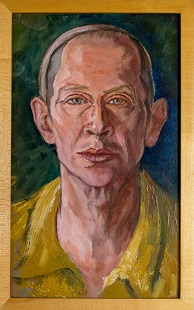
De Amerikaanse dichter en schrijver Edward Estlin Cummings werd geboren in Cambridge, Massachusetts op 14 oktober 1894. Zie ook mijn blog van 14 oktober 2010 en eveneens alle tags voor E. E. Cummings op dit blog.


My Love

my love
thy hair is one kingdom
  the king whereof is darkness
thy forehead is a flight of flowers

thy head is a quick forest
  filled with sleeping birds
thy breasts are swarms of white bees
  upon the bough of thy body
thy body to me is April
in whose armpits is the approach of spring

thy thighs are white horses yoked to a chariot
  of kings
they are the striking of a good minstrel
between them is always a pleasant song

my love
thy head is a casket
  of the cool jewel of thy mind
the hair of thy head is one warrior
  innocent of defeat
thy hair upon thy shoulders is an army
  with victory and with trumpets

thy legs are the trees of dreaming
whose fruit is the very eatage of forgetfulness

thy lips are satraps in scarlet
  in whose kiss is the combinings of kings
thy wrists
are holy
  which are the keepers of the keys of thy blood
thy feet upon thy ankles are flowers in vases
  of silver

in thy beauty is the dilemma of flutes

  thy eyes are the betrayal
of bells comprehended through incense


Who Knows If The Moon’s

who knows if the moon’s
a baloon,coming out of a keen city
in the sky—filled with pretty people?
(and if you and i should

get into it,if they
should take me and take you into their baloon,
why then
we’d go up higher with all the pretty people

than houses and steeples and clouds:
go sailing
away and away sailing into a keen
city which nobody’s ever visited,where

always
            it’s
                   Spring)and everyone’s
in love and flowers pick themselves


 1965950-d438fb9cc1bfb0a28bb7f65be5c7f53d.jpg
E. E. Cummings (14 oktober 1894 - 3 september 1962)
Zelfportret 1958 


De Nederlandse dichter en schrijver Maarten van der Graaff werd geboren op 14 oktober 1987 in Dirksland. Zie ook alle tags voor Maarten van der Graaf op dit blog.


De grote verscheidenheid

Van minuut tot minuut zou er niets van mij overblijven.
Een wandeling met aan weerskanten bedwelmende aspecten leerde mij dit.
Ik brak een angst aan die hier op had gewacht.
Het aanbreken van een angst na jaren van plompe,
aromatische stilte is niet niks, maar ook zeker geen spektakel.
De extremiteit ervan wordt binnensmonds ervaren.
Ik zou het je willen toefluisteren, maar moet mijn systemen
in acht nemen.

De locaties waar wij kwamen waren motoren van een sadistisch raadsel.
Een raadsel dat door sadisten was bedacht, maar ook een eigen sadisme bezat,
dat er niet door de makers was ingelegd.
Toen wij ons afgrijzen lieten blijken wees men ons op
de grote verscheidenheid.
Wij moesten toch toegeven dat de grote verscheidenheid indrukwekkend was
en ongeëvenaard. Wij zagen ons genoodzaakt hierin te overnachten.
Na vier nachten besloten wij te vluchten. Na vier nachten reden wij,
met gedoofde koplampen, de bedwelmende aspecten in.
Het was stil, wij leken niet te worden opgemerkt. Voor ons was geen plaats
en geen omgeving om een plaats in te hebben.
De locaties stelden ons voor vragen.
Bevonden wij ons op de graden van de grote verscheidenheid
of waren wij buiten zicht?
Wij sliepen dag na dag in zonder dit te weten.


 1965950-291fb88ca5db9bd75c4d5743bed85cd8.jpg
Maarten van der Graaff (Dirksland, 14 oktober 1987)


De Hongaarse schrijver Péter Nádas werd geboren op 14 oktober 1942 in Boedapest. Zie ook mijn blog van 14 oktober 2010 en eveneens alle tags voor Péter Nádas op dit blog.

Uit: Parallel Stories (Vertaald door Imre Goldstein) 

“In that memorable year when the famous Berlin wall came down, a corpse was discovered in the Tiergarten not far from the graying marble statue of Queen Louise. This happened a few days before Christmas.
The corpse was that of a well-groomed man of about fifty, and everything he wore or had on him appeared to be of better quality.
At first glance a gentleman of some consequence, a banker or a senior manager. Snow was falling slowly, but it was not very cold, so the flakes melted on the paths of the park; only the blades of grass retained a white edge. The investigators did everything by the book and, because of the weather conditions, worked quickly. They closed off the area and proceeding clockwise in a narrowing spiral course searched it thoroughly so they could record and secure all existing clues. Behind an improvised screen of black plastic sheets, they carefully undressed the corpse but found no signs indicating suicide.
A young man who ran in the park every dawn had discovered the body. He was the only one the investigators could question. It had been completely dark when he set out, and he ran almost every day on the same path at the same time.
Had it not been so, had not everything been routine and habit, had not every stone and shadow been engraved in his mind's eye, he most probably would not have discovered the body. The light of distant streetlamps barely reached this far. The reason he noticed the body, lying on and half dangling off a bench, was, he explained excitedly to the policemen, because on the dark coat the snow had not melted at all. And as he was running at a steady pace, he related a bit too loudly, the whiteness flashed into his eyes from the side.
While he was talking, several men busied themselves inside the roped-off area. They were working, one might say, in ideal conditions; there was not a soul in the park besides them, no nosy curiosity seekers. Using a flashbulb, one of the men photographed something on the bare, wet ground that two forensic technicians had already labeled with a number.”


 1965950-8ba52a7fb91cbad8d28a543210a76b1f.jpg
Péter Nádas (Boedapest,14 oktober 1942)


De Amerikaanse dichteres, essayiste, critica en feministe Katha Pollitt werd geboren op 14 oktober 1949 in New York. Zie ook mijn blog van 14 oktober 2010 en eveneens alle tags voor Katha Pollit op dit blog.


Two Cats

It's better to be a cat than to be a human.
Not because of their much-noted grace and beauty—
their beauty wins them no added pleasure, grace is
only a cat's way

of getting without fuss from one place to another—
but because they see things as they are. Cats never mistake a
saucer of milk for a declaration of passion
or the crook of your knees for

a permanent address. Observing two cats on a sunporch,
you might think of them as a pair of Florentine bravoes
awaiting through slitted eyes the least lapse of attention—
then slash! the stiletto

or alternately as a long-married couple, who hardly
notice each other but find it somehow a comfort
sharing the couch, the evening news, the cocoa.
Both these ideas

are wrong. Two cats together are like two strangers
cast up by different storms on the same desert island
who manage to guard, despite the utter absence
of privacy, chocolate,

useful domestic articles, reading material,
their separate solitudes. They would not dream of
telling each other their dreams, or the plots of old movies,
or inventing a bookful

of coconut recipes. Where we would long ago have
frantically shredded our underwear into signal
flags and be dancing obscenely about on the shore in
a desperate frenzy,

they merely shift on their haunches, calm as two stoics
weighing the probable odds of the soul's immortality,
as if to say, if a ship should happen along we'll
be rescued. If not, not.


 1965950-a817b3eac9aff8d9d71348434b3f3f4a.jpg
Katha Pollitt (New York,14 oktober 1949)


De Nederlandse schrijver Daniël Rovers werd geboren in Zelhem op 14 oktober 1975. Zie ook mijn blog van 14 oktober 2010 en eveneens alle tags voot Daniël Rovers op dit blog.

Uit:Walter

“Peeters was een man van weinig woorden in de tijd die voorafging aan zijn eerste preek. Snel trok hij priesterhemd en kazuifel over de toog aan, en gebaarde ongeduldig – ‘spoit-u!’ – dat de jongens zijn voorbeeld moesten volgen.
Walter hield het witte gewaad voor zich uit en rook er aan. Lichter en tegelijk ouder werd je ervan. Achter de deur zwol het geroezemoes aan. Peeters hief zijn hand en wees naar de klok, nog één minuut en het zou acht uur zijn. Een minuut duurt zestig tellen, een tel één vingerknip. Peeters streek een lucifer af en liet de wierookkorrels in het koperen scheepje op twee plaatsen ontbranden, en gaf het Zeger in handen; Walter nam de belstok van de tafel. De jongens rechtten hun rug. Niet wandelen maar schrijden, statig als de koningen van Jeruzalem.
Peeters opende de deur en ging voorop. Walter volgde, al wilden zijn knieën niet. Een hart kan zo groot worden dat het in de keel gaat kloppen. Rustig adem blijven halen en dan stap voor stap verder gaan.
Gedrieën liepen ze naar het altaar. Het lichtgroene kazuifel, met stiksels van gouddraad, had Peeters in Parijs laten maken voor zijn vijfentwintigjarig priesterjubileum. Aan de binnenzijde was een rechthoekig stuk stof genaaid, met daarin geborduurd de naam van de fabriek, frères esselinx, paris. Peeters glom als een koe die zojuist heeft gekalfd. In Parijs leefden zo veel mensen dat sommigen er onder een brug moesten slapen.
Wierook maakte de lucht kruidig en mistig, zoals het in de hemel was. De parochianen zaten geknield in de banken, en van sommigen stond de mond open, alsof ze in het land der blinden verbleven, en een lange slaapwandeling hen naar de kerk had gebracht. Peeters maakte een kruisteken bij het bereiken van het altaar. Het gewicht van de belstok rustte in Walters rechterhand; nu moest hij een eerste maal op de plavuizen vloer stampen.”

 1965950-058c7a1bd47669b4deff1289e591a8d9.jpg
Daniël Rovers (Zelhem, 14 oktober 1975)


De Nieuw-Zeelandse schrijfster Katherine Mansfield werd geboren op 14 oktober 1888 in Wellington. Zie ook mijn blog van 14 oktober 2010 en eveneens alle tags voor Katherine Mansfield op dit blog.

Uit: The Journey To Bruges

“I knew you'd be doin' that,” he said, airily. “I nearly come and stop you. I seen you from' ere.”
I dropped into a smoking compartment with four young men, two of whom were saying good-bye to a pale youth with a cane. “Well, good-bye, old chap. It's frightfully good of you to have come down. I knew you. I knew the same old slouch. Now, look here, when we come back we'll have a night of it. What? Ripping of you to have come, old man.” This from an enthusiast, who lit a cigar as the train swung out, turned to his companion and said, “Frightfully nice chap, but—lord—what a bore!” His companion, who was dressed entirely in mole, even unto his socks and hair, smiled gently. I think his brain must have been the same colour: he proved so gentle and sympathetic a listener. In the opposite corner to me sat a beautiful young Frenchman with curly hair and a watch-chain from which dangled a silver fish, a ring, a silver shoe, and a medal. He stared out of the window the whole time, faintly twitching his nose. Of the remaining member there was nothing to be seen from behind his luggage but a pair of tan shoes and a copy of The Snark's Summer Annual.
“Look here, old man,” said the Enthusiast, “I want to change all our places. You know those arrangements you've made—I want to cut them out altogether. Do you mind?”
“No,” said the Mole, faintly. “But why?”
“Well, I was thinking it over in bed last night, and I'm hanged if I can see the good of us paying fifteen bob if we don't want to. You see what I mean?” The Mole took off his pince-nez and breathed on them. “Now I don't want to unsettle you,” went on the Enthusiast, “because, after all, it's your party—you asked me. I wouldn't upset it for anything, but—there you are—you see—what?”
Suggested the Mole: “I'm afraid people will be down on me for taking you abroad.”
Straightway the other told him how sought after he had been. From far and near, people who were full up for the entire month of August had written and begged for him. He wrung the Mole's heart by enumerating those longing homes and vacant chairs dotted all over England, until the Mole deliberated between crying and going to sleep. He chose the latter.”

 1965950-665f6fe34619c2f06c91aca2ddd6984d.jpg
Katherine Mansfield (14 oktober 1888 – 9 januari 1923)
Cover


De Duitse dichteres, schrijfster en filosofe Margarete Susman werd geboren op 14 oktober 1872 in Hamburg. Zie ook mijn blog van 14 oktober 2010 en eveneens alle tags voor Margarete Susman op dit blog.


Johannisnacht

Blaue Johannisnacht
Lass uns über die Hügel gehn
Neunerlei Blumen zu brechen,
Kraut und Nesseln lassen wir stehn -
Wer will uns den Segen sprechen
Ehe der Tag erwacht?
Blaue ]ohannisnacht
Lass uns über die Hügel gehen -
Vielleicht dort hinten im Weiten
Werden wir leuchten sehn
Seliger, hlühender Zeiten
Tiefgeträumte Pracht. -
Blaue ]ohannisnacht
Lass uns über die Hügel gehn
Neunerlei Blumen deuten
Neun der Monde gläubig und schön,
Neun der zittetnd gefreuten -
Bis sich die Augen erschliessen
Die wie Blumen entspriesen,
Augen, aus denen die Zukunft lacht.
Blaue Johannisnacht.


Südlicher Mittag

Du Tal, das tief der Sonne Zeichen trägt.
Dich schliessen brennend klare Hügellketten
Hier mögen der versiegten Ströme Betten
Erinn’rung einzig da Geliebten retten:
Die Form, darein er flutend sie geprägt.

Vielleicht zu dieser Stunde eine Rast -
Der stumme weisse Mittag naht dem Tale,
Ein Zauber ruht in seiner klaren Schale;
Ein Schläfemdes entzittert jedem Strahle,
Des Lichtes Leben starrt zu heissem Glast.

Das Auge sinkt - zunächst dem Licht verwandt,
Doch leis und scheu umkreist mich noch das Leben:
Ich sehe halb der Falter stilles Schweben,
Der Hügelketten sanft verschlungnes Heben,
Die Riesenähren nah in goldnem Brand.

Der Blumen Lieberwillen füllt den Raum;
Ihn führt der Wind auf seiner seidnen Schwinge,
Ihm werden Boten matte Schmetterlinge
- Das wirre Abenteuer aller Dinge
Befällt mich wie ein grenzenloser Traum.


 1965950-6cf2f152fe6e23cb98ec80e97ae70490.jpg
Margarete Susman (14 oktober 1872 - 16 januari 1966)


De Poolse schrijver Stefan Żeromski werd geboren op 14 oktober 1864 in Strawczyn in de buurt van Kielce. Zie ook mijn blog van 14 oktober 2010 en eveneens alle tags voor Stefan Żeromski op dit blog.

Uit: The Faithful River (Vertaald door Bill Johnston)

"Which of you will dare to say that he’ll defeat those who come here in the night to torment innocent people like us? And if you can’t defeat them, which of you dared to unleash the savagery that they brought here in their souls from the cruel snows? Do you have in yourselves a strength that is equal to their savagery and is capable of crushing that evil?"
Olbromski [a leading figure in the uprising] was silent. She gave a sob and went on with her accusations: "The Russian soldiers burn down manor houses and kill the wounded on the battlefields. The farmers tie up the insurgents—"
He interrupted her in a different, hard voice: "You prefer their savagery to wounds and death? That savagery will reign over you for all time!"
"It already does, in spite of all the wounds."
"The Polish tribe has found itself between millstones of destruction: the Germans and Moscow. It must either become a millstone itself or be ground up as fodder for the other two. There is no other choice. Any further discussion is superfluous."
"What can we believe in? What can we live by?"
(…)

In those few days Salomea and Józef Odrowąż’s mother grew so close together that they became as one person. They communicated with each other by thoughts; above all, the feelings of each were an open book for the other. What for anyone else was only a word, a name, was for them the entire world. One understood the other’s emotions, could recognize them when they were merely referred to, could see them for what they were, and could move about them as if they were a land in another world, filled with hills, flower-covered valleys, cliffs, and deathly ravines. While the injured man slept, they sat in each other’s arms and recounted their impressions and their memories. A thousand times over Salomea divulged all the vicissitudes of the young man’s stay at the manor, all the stages of his sufferings, the mishaps, sorrows, and joys. For the mother it was all so fascinating and perpetually of interest that Salomea had to repeat it over and again.”


1965950-d080e201c5d0db14fc1a51eab01fcf6a.jpg
Stefan Żeromski (14 oktober 1864 - 20 november 1925)
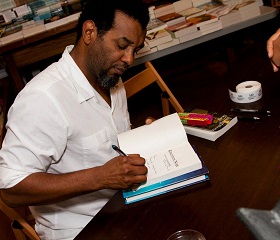
DVD-cover voor de film “Wierna rzeka” (Engels: The Faithful River) uit 1983

Geschreven door Romenu om 18:18 Reageer op dit bericht

Philip Winkler


Onafhankelijk van geboortedata

De Duitse schrijver Philip Winkler werd in 1986 geboren in Neustadt am Rübenberge en groeide op in Hagenburg bij Hannover. Winkler studeerde Creatief Schrijven en Culturele Journalistiek aan de Universiteit van Hildesheim. Hij verbleef enige tijd in het buitenland: Kosovo, Albanië, Servië en Japan. Hij publiceerde in verschillende bloemlezingen en Bella Triste en ontving in 2008 de Joseph Heinrich Colbin Prijs voor het korte verhaal “Sommertage” en in 2015 voor fragmenten uit “Hool” de Retzhof Prijs voor jonge literatuur van Literaturhaus Graz. Zijn debuutroman “Hool” werd al voor de publicatie door critici geprezen en belandde op de shortlist voor de Deutsche Buchpreis. Winkler woont tegenwoordig in Leipzig.

Uit: Hool

“Ich wärme meinen neuen Zahnschutz in der Hand an. Wende ihn mit den Fingern und presse ihn etwas zusammen. So mache ich es vor jedem Kampf. Das Gelmaterial bleibt stabil, gibt nur wenig nach. Das ist ein Top-Ding.
Was Besseres kann man nicht bekommen. Individuell vom Zahntechniker hergestellt. Keines dieser Billoteile aus Massenproduktion, die man nach zwei Wochen gleich wieder in die Tonne kloppen kann, weil dir die Kanten ins Zahnfleisch schneiden. Oder weil man wegen der beschissenen Passform und dem chemischen Kunststoffgeruch andauernd einen Würgreiz kriegt. Bis auf Jojo mit seinem mageren
Hausmeistergehalt haben wir inzwischen fast alle so einen Zahnschutz. Kai, der immer den feinsten Shit haben muss.
Ulf. Der kann das mal locker aus der Portokasse zahlen. Tomek, Töller. Und einige unserer Jungs, die entsprechende Jobs haben. Onkel Axel sowieso. Der hat den Zahntechniker vor ein paar Jahren aufgetan. Hat sich auf Kontaktsportarten spezialisiert und versorgt Kampfsportler in ganz Deutschland. Wie man hört, sollen auch welche von den Frankfurtern zu dem gehen und einige Jungs aus dem Osten. Aus Dresden und Halle, die Zwickauer. Müssen bestimmt ihren Monatssatz Hartz IV dafür hinblättern, denke ich und fahre die durchgestanzten Atemlöcher mit der Fingerspitze ab.
»Ey, Heiko!« Kai stößt mich in die Seite. »Handy klingelt.« Das Discounterhandy brummt zwischen uns auf dem Sitz. Mit zittrigen Fingern greife ich danach. Mein Onkel beobachtet mich im Seitenspiegel. Ich drücke auf die Taste mit dem grünen Hörer.
»Wo seid ihr? Wir warten«, kommt die Stimme von dem Kölner, mit dem ich das Match vereinbart habe, aus der Muschel. Ich kurble die Scheibe runter, um besser rausschauen zu können, suche nach irgendwelchen Anhaltspunkten.
»Sind bei Olpe von der B 55 ab. Müssten gleich da sein.«
»In der Wüste lang. Zweiten Kreisel rechts raus. Am Bratzkopf durch bis kurz hinterm Ortsausgang. Links kommt der Wald. Könnt ihr nich’ verfehlen.«
Bevor er auflegt, erinnere ich ihn noch mal an die Abmachung. Fünfzehn Mann auf jeder Seite. Dann lege ich auf.”


 1969285-ec9e2c7e31a1a2d93a7e8221453c2174.jpg
Philip Winkler (Neustadt am Rübenberge, 1986)

Geschreven door Romenu om 00:00 Reageer op dit bericht

Colin Channer, Herman Franke, Sebastian Fitzek, Richard Howard, Migjeni, Arna Wendell Bontemps, Conrad Richter, Edwina Currie, Frank Witzel

De Jamaicaanse schrijver Colin Channer werd geboren op 13 oktober 1963 in Kingston. Zie ook mijn blog van 13 oktober 2010 en eveneens alle tags voor Colin Channer op dit blog.

Uit: The Girl with the Golden Shoes

“So while the others ran, she hid behind the almond tree and watched in fearful fascination as the creature loomed.
It wasn’t until the mask had been removed that Estrella, who’d never been to school or traveled much on her tiny island, understood that what she thought had been a monster was a human being—a scuba diver in a rubber suit.
She stepped out from behind the tree and walked toward him in her old blue frock with eyelet lace around the hem, hips moving widely underneath the faded fabric, giving insight to the marvel of her shape. She was tall and big-boned with mannish shoulders and a long face with sharp cheeks. Her eyes were bright and slanted, and although her skin was darker than a Coke, she had a length of wavy hair.
“What are you wearing?” she asked in English, which she rarely had the need to use, since everyone around her spoke Sancoche.
“It lets me breathe beneath the water.”
They talked for several minutes, during which he explained some of his duties; then he disappeared below the surf.
In Sancoche, her native dialect, Estrella kept repeating as the ripples disappeared, “I never even thought to dream of seeing a thing like that.”


 1965630-27fc32b37f965c121fea8f1ac0c75260.jpg
Colin Channer (Kingston, 13 oktober 1963)


De Nederlandse schrijver Herman Franke werd geboren op 13 oktober 1948 in Groningen. Zie ook mijn blog van 13 oktober 2010 en eveneens alle tags voor Herman Franke op dit blog.

Uit: De ziel van Nederland

“Dat was anders toen ik die openingszin van mijn eerste roman schreef. Ik deed onderzoek en gaf les aan de universiteit. Ik had wetenschappelijke artikelen en boeken geschreven, onder meer over de doodstraf, die later in dit verhaal nog ter sprake zal komen. In de lente van dat jaar was ik – met hooggeleerde oppositie en ‘hora est’ en al – als sociologisch geschoold criminoloog gepromoveerd op Twee eeuwen gevangen, een bijna duizend bladzijden dik proefschrift over de geschiedenis van de gevangenisstraf vanaf het einde van de achttiende eeuw. Ik wist bij het tikken van die openingszin dus goed wat wetenschappelijk betogen is. En ik besefte tot in mijn vingertoppen dat Nisbet ongelijk had met zijn gelijkschakeling van kunst en wetenschap. Mijn gezicht paste zich aan bij dit besef. Ik kreeg een januskop.
Dat proefschrift van mij wemelt van de noten, 2129 welgeteld, en de bibliografie telt honderden titels. Ik wist dus ook wat het is om echt research te doen. Ik had me voor dat proefschrift zelfs, als een echte schrijver, zal ik maar zeggen, een nacht laten opsluiten in een negentiende-eeuwse cel van drie bij vier meter. Maar qua wetenschappelijk onderzoek stelde dat niets voor, zoals ook mijn research in Berlijn ten tijde van de Wiedervereinigung in 1989 wetenschappelijk geen waarde had, maar mijn eerste roman had ik zonder dat verblijf niet kunnen schrijven. Alles wat ik zag, las en hoorde, filterde ik door de zeef van een verhaal dat ik hoopte te kunnen vertellen. Dat mag als je schrijver bent, maar wetenschappers die met zo’n vooringenomen houding hun onderzoek verrichten deugen niet, wat beslist niet wil zeggen dat ze niet bestaan.
Tussen wetenschappelijk onderzoek en schrijversresearch zit een wereld van verschil. Wetenschappelijke onderzoekers willen weten welke antwoorden de waarneembare werkelijkheid geeft op vragen die zij gesteld hebben. Zij willen verzinsels scheiden van de objectieve werkelijkheid, wat zelden lukt, maar het gaat om de intentie. Als zij schrijven, willen ze hun lezers op basis van hun onderzoek met hun redeneringen overtuigen van de juistheid van hun kennis. Zij zijn uit op bewijzen. Kortom: zij betogen, ook als hun betoog in feite vol fictie zit.”


 1965630-3754d556d77584ba192d275672d42ee3.jpg
Herman Franke (13 oktober 1946 – 14 augustus 2010)


De Duitse schrijver en journalist Sebastian David Fitzek werd geboren op 13 oktober 1971 in Berlijn. Zie ook alle tags voor Sebastian Fitzek op dit blog.

Uit: Das Paket

„Als Emma die Tür zum Schlafzimmer ihrer Eltern öffnete, ahnte sie nicht, dass sie dies zum letzten Mal tun würde. Nie wieder würde sie sich, mit einem Stoffelefanten bewaffnet, nachts um halb eins an ihre Mutter kuscheln, vorsichtig bemüht, Papa beim Ins-Bett-Krabbeln nicht aufzuwecken, der im Traum mit den Füßen strampelte, zusammenhanglose Worte murmelte oder mit den Zähnen knirschte.
Heute strampelte, murmelte oder knirschte er nicht. Heute wimmerte er nur.
»Papa?«
Emma tapste von der Dunkelheit des Flurs ins Schlafzimmer. Das Licht des Vollmonds, der über Berlin in diesen Frühlingsnächten wie eine Mitternachtssonne thronte, fiel mit einem quecksilbrigen Schimmer durch die zugezogenen Gardinen.
Mit zusammengekniffenen Augen, über denen Emmas Pony wie ein kastanienbrauner Vorhang hing, konnte sie die Umgebung erahnen: die Rattantruhe am Fußende, die gläsernen Nachttische, die das ausladende Bett flankierten, den Schrank mit den Schiebetüren, in dem sie sich früher manchmal versteckt hatte.
Bis Arthur in ihr Leben trat und ihr das Versteckspielen verleidete.
»Papa?«, flüsterte Emma und tastete nach dem nackten Fuß ihres Vaters, der unter der Bettdecke hervorstach.
Sie selbst trug nur eine einzelne Socke, und auch die hing ihr kaum noch an den Zehen. Die andere hatte sie im Schlaf verloren, irgendwo auf dem Weg vom Einhorn-Glitzerschloss zum Tal der silbergrauen Flugspinne, die ihr im Traum manchmal Angst einjagte.
Aber nicht so viel Angst, wie ich sie vor Arthur habe.
Obwohl der ihr immer wieder versicherte, er wäre nicht böse. Aber konnte sie ihm vertrauen?"


 1965630-8e1fa02d048d5fbe65f9ef2f9852bcaf.jpg
Sebastian Fitzek (Berlijn, 13 oktober 1971)


De Amerikaanse dichter, literair criticus, essayist en vertaler Richard Joseph Howard werd geboren op 13 oktober 1929 in Cleveland, Ohio. Zie ook alle tags voor Richard Howard op dit blog.


Another Translator

The first one just happened to be there, a little like
Everest or the General’s nose
(remarkable eminences, both)
and also happened to be me, a daunted witness
of that weird Parisian ritual of the Sixties,
a de Gaulle press conference, summoned
since I was in Paris at the time
and had been his (or one of his) paraphrasts of prose
concerned with what the General preferred to call (un-
translatably) la chose allemande.

The occasion was particularly rare because
Mme de Gaulle was at his side and
(even rarer) willing to answer
questions, provided of course such inquiries observed
the mandates of Presidential privacy. Of course.
But after several anodine
approximations ofpolitesse
on the part of the Fourth Estate, a Herald- Tribune
reporter brought proceedings to a heart-stopping halt:
“What do you regard, Mme de Gaulle,

as the chief significance of life?” And with a sad smile,
after a moment, Yvonne de Gaulle
(whose life had after all included
the death of a soldier son in that same German Thing)
flabbergastcd us all by speaking three syllables:
“A penis.” And with an interval
of no more than five seconds, a hand
(with perhaps military promptitude) descended
on her shoulder: “I believe the English word you mean,
ma chén'e, is pronounced “Hap-pi-ness.”


 1965630-0a7a57ba902363299fe8132149c7bc05.jpg
Richard Howard (Cleveland, 13 oktober 1929)


De Albanese dichter Migjeni (eigen. Millosh Gjergj Nikolla) werd geboren op 13 oktober 1911 in Shkodra. Zie ook mijn blog van 13 oktober 2010 en eveneens alle tags voor Migjeni op dit blog.


Poem Of Poverty (Fragment)

Poverty, brothers, is a mouthful that's hard to swallow,
A bite that sticks in your throat and leaves you in sorrow,
When you watch the pale faces and rheumy eyes
Observing you like ghosts and holding out thin hands;
Behind you they lie, stretched out
Their whole lives through, until the moment of death.
Above them in the air, as if in disdain,
Crosses and stony minarets pierce the sky,
Prophets and saints in many colours radiate splendour.
And poverty feels betrayed.

Poverty carries its own vile imprint,
It is hideous, repulsive, disgusting.
The brow that bears it, the eyes that express it,
The lips that try in vain to hide it
Are the offspring of ignorance, the victims of disdain,
The filthy scraps flung from the table
At which for centuries
Some pitiless, insatiable dog has fed.
Poverty has no good fortune, only rags,
The tattered banners of a hope
Shattered by broken promises.

Poverty wallows in debauchery.
In dark corners, together with dogs, rats, cats,
On mouldy, stinking, filthy mattresses,
Naked breasts exposed, sallow dirty bodies,
With feelings overwhelmed by bestial desire,
They bite, devour, suck, kiss the sullied lips,
And in unbridled lust the thirst is quenched,
The craving stilled, and self-consciousness lost.
Here is the source of the imbeciles, the servants and the beggars
Who will tomorrow be born to fill the streets.

 1965630-52163bcb9a837324809dd47552c03b03.jpg
Migjeni (13 oktober 1911 – 26 augustus 1938)
Cover


De Amerikaanse dichter en schrijver Arna Wendell Bontemps werd geboren op 13 oktober 1902 in Alexandria in Louisiana. Zie ook mijn blog van 13 oktober 2010 en eveneens alle tags voor Arna Wendell Bontemps op dit blog.

Uit: Popo and Fifina (Samen met Langston Hughes)

“From the rear of their tiny caravan, Popo could see the members of his family stretched along the road, one after another, like a line of ducks. First was Papa Jean himself, a big powerful black man with the back torn out of his shirt.
He wore a broad turned-up straw hat and a pair of soiled white trousers; but, like all peasants of Haiti, he was barefooted. He walked proudly, and there was a happy bounce in his step as he led his little family toward the town of his dreams.
Next came Mamma Anna with the baby, Pensia, swinging from her side as Haitian babies do.
Mamma Anna was also barefootcd, and she wore a simple peasant dress and a bright peasant headcloth of red and green. She was a strong woman with high glossy cheek bones. She followed her husband stcp for step in the dusty road. The two loaded burros came next. They were shaggy animals, and their heads were lowered as they trudged along. Great bright- winged flies rode on their flanks and buzzed around their heads.
Fifina, Popo’s ten-year-old sister, walked so close behind the second burro that she could reach out her hand and smack him on the flanks if he stopped to nibble grass on the roadside. She wore a little blue dress that reached her knees.
But Popo, who walked behind her, was only eight, and all he wore was a shirt that didn’t even reach his waist. At home he wouldn’t have been wearing this; but when a person is making a long journey to an important town like Cape Haiti, he has to dress up a little. So Popo had worn his Sunday clothes. And Sunday c1othes for black peasant boys in Haiti usually consist of nothing more than the single shirt Popo was wearing to town.
Like all dressed-up people, Popo was proud of himself this afternoon. He was proud also to be going to town to live by the ocean and to see new wonders.”


1965630-0a63320cf3c08bebd412a236671d75cd.jpg
Arna Wendell Bontemps (13 oktober 1902 – 4 juni 1973)
Cover


De Amerikaanse schrijver Conrad Richter werd geboren op 13 oktober 1890 in Pine Grove, Pennsylvania. Zie ook mijn blog van 13 oktober 2010 en eveneens alle tags voor Conrad Richter op dit blog.

Uit: The Light in the Forest

„The day his father told him, the boy made up his mind. Never would he give up his Indian life. Never! When no one saw him, he crept away from the village. From an old campfire, he blackened his face. Up above Pockhapockink, which means the stream between two hills, he had once found a hollow tree. Now he hid himself in it. He thought only he knew the existence of that tree and was dismayed when his father tracked him to it. It was humiliating to be taken back with his blackened face and tied up in his father's cabin like some prisoner to be burned at the stake. When his father led him out next morning, he knew everybody watched: his mother and sisters, the townspeople, his uncle and aunt, his cousins and his favorite cousin, Half Arrow, with whom he had ever fished, hunted and played. Seldom had they been separated even for a single day.
All morning on the path with his father, crazy thoughts ran like squirrels in the boy's head. Never before had he know his father to be in the wrong. Could it be that he was in the right now? Had he unknowingly left a little white blood in the boy's veins and was it for this that he must be returned? Then they came in sight of the ugly log redoubts and pale tents of the white army, and the boy felt sure there was in his body not a drop of blood that knew these things. At the sight and smells of the white man, strong aversion and loathing came over him.
He tried with all his young strength to get away. His father had to hold him hard. In the end he dragged him twisting and yelling over the ground to the council house of the whites and threw him on the leaves that had been spread around.”


 1965630-0e00eaeb225890c809f31d6392e82a47.jpg
Conrad Richter (13 oktober 1890 – 30 oktober 1968)
Scene uit de film "The Light in the Forest" uit 1958


De Britse romanschrijfster en gewezen politica Edwina Currie werd geboren in Liverpool op 13 oktober 1946.Zie ook alle tags voor Edwina Currie op dit blog en ook mijn blog van 13 oktober 2010.

Uit: Diaries

“Tower House, Friday, April 25, 5.50pm
The Lichfield session was brilliant: Patrick told wonderful stories about Princess Margaret (his cousin) and other notables. My favourite was about how he tried to buy a piece of land on Mustique, adjacent to hers.
The negotiations were long and ultimately unsuccessful. Following the last two-hour session with solicitors, Patrick gave up.
As he left, he heard Margaret say to Sir Michael Farrar, her solicitor, ‘You see, Sir Michael, Patrick comes from the side of the family without the Jewish blood."


1965630-8b0764a7895f11c9b4c0fd7161068a29.jpg

Edwina Currie (Liverpool, 13 oktober 1946)


Onafhankelijk van geboortedata

De Duitse schrijver en muzikant. Frank Witzel werd geboren in 1955 in Wiesbaden. Zie ook alle tags voor Frank Witzel op dit blog.

Uit: Die Erfindung der Roten Armee Fraktion durch einen manisch depressiven Teenager im Sommer 1969

„Vorsichtig schauen wir auf die Straße. Die Bullen sind nirgendwo zu sehen. Los, schnell! Wir laufen die Weihergasse nach links runter und biegen rechts in die Feldstraße ein, dann zum Bahndamm und wieder rechts Richtung Schrott Wiedemann. Wir müssen uns trennen, sagt Claudia. Ja, sage ich, wenn ich um sieben nicht daheim bin, krieg ich sowieso Ärger. Ich muss erst um acht da sein, sagt Bernd. Am besten wir sehen uns ein paar Tage nicht. Wir nicken. Und wenn die Bullen bei einem vorbeikommen, dann sofort die anderen anrufen. Aber, was sollen wir sagen? Einfach sagen, es geht um die Mathe Hausaufgabe vom Montag. Mathe Hausaufgabe Montag, okay. Dann weiß jeder Bescheid. Ansonsten Samstag um vier an der Lohmühle. Ich muss Samstag zur Beichte, kommt nicht außerdem Beat-Club? Dann um halb sechs, okay?
Am Abend um zwanzig nach acht im Schlafanzug in der Tür zum Fernsehzimmer beim Gute-Nacht-Sagen versuche ich, einen Blick auf den Fernseher zu erhaschen, sehe verwackelte Aufnahmen von rennenden Männern auf nassen Straßen und bekomme wieder Angst. Nein, das waren wir nicht. Aber sie schienen die Suche noch nicht aufgegeben zu haben. Es kommt ein Phantombild mit Bleistift gezeichnet, aber zum Glück sind die Haare viel länger, weil ich erst letzte Woche wieder zum Frisör musste und sie mir zur Zeit noch nicht mal mehr über die Ohren gehen. Aber der vorgeschobene Unterkiefer, das könnte ich schon sein. Und dann das nächste Bild. Eine Frau diesmal. Nein, auch nicht Claudia. Claudia sieht ganz anders aus, da stimmt aber auch gar nichts, sie hat ganz andere Augen, und die Lippen sind auch nicht so schmal.
Dann wird etwas von einem Bekennerbrief erzählt, aber wir haben uns zu nichts bekannt. Noch nie, also auch vorher nicht. Einmal haben wir was zusammen geschrieben, aber nicht abgeschickt und außerdem gleich verbrannt, also, ich habs mitge-nommen und auf dem Heimweg durch den Henkellpark, als gerade niemand kam, angezündet und auf den Kiesweg geworfen und dann noch, als es ganz verbrannt war, die Rußflocken auseinandergetreten.“


1965630-0716e31d7f952fdd83177d91920bc81f.jpg
Frank Witzel (Wiesbaden, 1955)

Geschreven door Romenu om 17:18 Reageer op dit bericht

Nobelprijs voor Literatuur 2016 voor Bob Dylan

Nobelprijs voor Literatuur 2016 voor Bob Dylan


De Nobelprijs voor de Literatuur is dit jaar toegekend aan de Amerikaanse zanger, songwriter en dichter Bob Dylan. Bob Dylan werd geboren als Robert Allen Zimmerman op 24 mei 1941 in Duluth, Minnesota. Zie ook alle tags voor Bob Dylan op dit blog


Mr. Tambourine Man

Hey ! Mr Tambourine Man, play a song for me
I'm not sleepy and there is no place I'm going to
Hey !
Mr Tambourine Man, play a song for me
In the jingle jangle morning I'll come followin' you.
Though I know that evenin's empire has returned into sand
Vanished from my hand
Left me blindly here to stand but still not sleeping
My weariness amazes me, I'm branded on my feet
I have no one to meet
And the ancient empty street's too dead for dreaming.

Hey ! Mr Tambourine Man, play a song for me
I'm not sleepy and there is no place I'm going to
Hey ! Mr Tambourine Man, play a song for me
In the jingle jangle morning I'll come followin' you.

Take me on a trip upon your magic swirlin' ship
My senses have been stripped, my hands can't feel to grip
My toes too numb to step, wait only for my boot heels
To be wanderin'
I'm ready to go anywhere, I'm ready for to fade
Into my own parade, cast your dancing spell my way
I promise to go under it.

Hey ! Mr Tambourine Man, play a song for me
I'm not sleepy and there is no place I'm going to
Hey ! Mr Tambourine Man, play a song for me
In the jingle jangle morning I'll come followin' you.

Though you might hear laughin', spinnin' swingin' madly across the sun
It's not aimed at anyone, it's just escapin' on the run
And but for the sky there are no fences facin'
And if you hear vague traces of skippin' reels of rhyme
To your tambourine in time, it's just a ragged clown behind
I wouldn't pay it any mind, it's just a shadow you're
Seein' that he's chasing.

Hey ! Mr Tambourine Man, play a song for me
I'm not sleepy and there is no place I'm going to
Hey ! Mr Tambourine Man, play a song for me
In the jingle jangle morning I'll come followin' you.

Then take me disappearin' through the smoke rings of my mind
Down the foggy ruins of time, far past the frozen leaves
The haunted, frightened trees, out to the windy beach
Far from the twisted reach of crazy sorrow
Yes, to dance beneath the diamond sky with one hand waving free
Silhouetted by the sea, circled by the circus sands
With all memory and fate driven deep beneath the waves
Let me forget about today until tomorrow.

Hey ! Mr Tambourine Man, play a song for me
I'm not sleepy and there is no place I'm going to
Hey ! Mr Tambourine Man, play a song for me
In the jingle jangle morning I'll come followin' you.


 1965626-37db00596db1a46d9f661a4936d4cefb.jpg
Bob Dylan (Duluth, 24 mei 1941)


Geschreven door Romenu om 16:53 Reageer op dit bericht

In Memoriam Dario Fo


In Memoriam Dario Fo

De Italiaanse schrijver, regisseur en acteur Dario Fo die in 1997 de Nobelprijs voor de Literatuur kreeg, is op 90-jarige leeftijd overleden. Dat meldt de Italiaanse regering. Dario Fo werd geboren in Leggiuno-Sangiamo op 24 maart 1926. Zie ook alle tags voor Dario Fo op dit blog.

Uit: Mistero Buffo (Mary at the Cross, vertaald door Ed Emery)

“SOLDIER: I told you before, lady! there is only one way to make him happy: kill him at once. If you want to hurry it up and take that lance leaning over there, we soldiers will pretend not to see, and you must run up under the cross and stick the point into him with all your strength, stick the lance right into his belly, right in, and then, in a moment, you will see Christ die. [The Madonna faints] What's the matter? Why did she faint? I never even touched her!
MAN: Lay her out... do it gently... and give her room to breathe...
WOMAN: Let's have something to cover her with... she's shivering with the cold...
OTHER MAN: I left my cloak at home...
MAN: Move aside there... Help me to lay her out...
OTHER MAN: And now be quiet and let her recover.
MARY: [As if in a dream] Who are you, up there, young man, I sem to know you. What is it that you want from me?
WOMAN: She's talking in her sleep, she's confused... she's having visions...
GABRIEL: I am Gabriel, the Anel of the Lord. I am he, oh Virgin, the herald of your solitary and delicate love.
MARY: Go spread your wings, Gabriel. return to the radiant joys of Heaven, for there is nothing for you on this vile earth, in this tormented world. Go, so that you do not soil your wings, with their feathers coloured in gentle colours... Don't you see the mud... and the blood... dung and filth...? It's like a sewer... Go, so that your delicate ears are not burst asunder with this desperate crying, the pleading and weeping that arises on all sides. Go, so that you do not sear your bright eyes looking at sores and scabs and boils and flies and worms creeping forth from torn bodies of the dead.
You are not used to this, because in Paradise you have no wailing and lamentation, or wars, or prisons, or men hanged, or women raped. In Paradise there is no hunger, no starvation, nobody sweating with work, wearing themselves to the bone, no children without smiles, no women out of their mids with grief, nobody who suffers to pay the price of original sin. Go, Gabriel, go, Gabriel.
GABRIEL: Grief-stricken woman, whom suffering has struck even in her belly, now I understand clearly... Now that this torment has seized you, seeing the young Lord God nailed up... at this moment, I too understand, just like you...
MARY: You understand, just like me, just lik me? Gabriel, did you bear my son in your swelling belly? Did you bite you lip so as not to scream with pain while giving birth to him? Did you feed him? Did you give him the milk from your breast, Gabriel? Did ou suffer when he was sick with fever, when he was down with measles, and did you stay up all night comforting him when he was crying with his first teeth? No, Gabriel? Well, if you didn't go through all that, then you cannot speak of sharing my grief at this moment...
GABRIEL: You're right, Mary... Forgive my presumption. I said it because my heart is breaking within me. I who thought that I was above all suffering. But I come to remind you that it is just this, your song, this lament without a voice, this plaint without sobs, this, your sacrifice, and the sacrifice of your son, which will tear apart the heavens, and which will enable men for the first time to enter Paradise!”


 1965576-f3b560c75315a687597d6918d404767c.jpg
Dario Fo (24 maart 1926 – 13 oktober 2016)

Geschreven door Romenu om 12:33 Reageer op dit bericht

Jeet Thayil

De Indiase dichter, schrijver, librettist en muzikant Jeet Thayil werd geboren op 13 oktober 1959 in Kerala als zoon van de auteur en redacteur TJS George, die op verschillende plaatsen in India, in Hong Kong en New York heeft gewerkt. Thayil werd vooral in het buitenland opgeleid. Hij behaalde een Master in Fine Arts aan het Sarah Lawrence College (New York), en hij heeft beurzen prijzen gekregen van o.a. de New York Foundation for the Arts, de Zwitserse Raad voor de Kunsten, de British Council en de Rockefeller Foundation. Zijn eerste roman, Narcopolis (2011) speelt grotendeels in Bombay in de jaren '70 en '80, en vertelt de geheime geschiedenis van de stad, toen opium plaats maakte voor de nieuwe goedkope heroïne. Thayil is redacteur van het “Bloodaxe Book of Contemporary Indian Poets” (2008), “60 Indian Poets”, (2008) en een verzameling van essays “Divided Time: India and the End of Diaspora” (2006) en van een bloemlezing van Indische poëzie (2015). Ook schreef hij het libretto voor de opera “Babur in Londen”, in opdracht van de Britse Opera Group met muziek van de in Zurich gevestigde Britse componist Edward Rushton. De wereldpremière van de opera vond plaats in Zwitserland in 2012, gevolgd door reizen naar het Verenigd Koninkrijk (Londen en Oxford) en India. De kern van het werk is een verkenning van de complexiteit van geloof en multiculturalisme in het hedendaagse Groot-Brittannië. Thayil is ook bekend als een performance dichter en alsmuzikant. Als songwriter en gitarist is hij de ene helft van het hedendaagse muziek project Sridhar / Thayil. In 2012 kreeg hij voor de dichtbundel “These Errors are Correct” de Sahitya Akademi Award voor Engels. Zijn roman stond op de short list voor de Man Booker Prize 2012 en de Hindu Literary Prize (2013).


The Penitent

I'm back where my life and I parted ways.
I'm talking to the coffeemaker, to the face
towels folded by the sink, to the air
conditioner that conspires with my enemies. Even now,
in the midst of my extremity my eyes are dry,
and if I jump repeatedly against the window
I can tell myself I'm being lifted by a great joy -
until the glass smites my face and I cry out
your old name. The room is empty, lonely
as a still life, but the water stains speak
with your voice, Honor me, honor everything.


To Baudelaire

I am over you at last, in Mexico City,
in a white space high above the street,
my hands steady, the walls unmoving.
It's warm here, and safe, and even in winter
the rain is benign. Some mornings I let
the sounds of the plaza - a fruit seller,
a boy acrobat, a woman selling
impossible fictions - pile up in a corner
of the room. I'm not saying I'm happy
but I am healthy and my money's my own.
Sometimes when I walk in the market
past the chickens and the pig smoke,
I think of you - your big talk and wolf's heart,
your Bonaparte hair and eyes of Poe.
I don't miss you. I don't miss you when
I open a window and light fills the room
like water pouring into a paper cup,
or when I see a woman's white dress shine
like new coins and I know I could follow
my feet to the river and let my life go
away from me. At times like this,
if I catch myself talking to you,
I'm always surprised at the words I hear
of regret and dumb boyish devotion.


 2004124-5dd21d1c4127098336176f6f326a37cb.jpg
Jeet Thayil (Kerala, 13 oktober 1959)

Geschreven door Romenu om 00:00 Reageer op dit bericht

Meer van Romenu

↑ Terug naar de berichten