Naar de inhoud

Romenu

Over literatuur, gedichten, kunst en cultuur
akke.beakke.be

Berichten van 12 januari 2017 tot 13 januari 2017

Edmund White, Daniel Kehlmann, Jay McInerney, Lorrie Moore, Jan de Bas, Edgardo Cozarinsky, Mohammad- Ali Jamālzādeh, Clark Ashton Smith, Michael Carroll
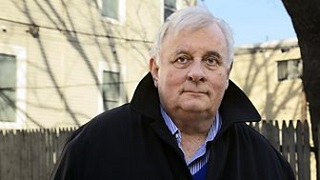
De Amerikaanse schrijver en essayist Edmund White werd geboren op 13 januari 1940 in Cincinnati. Zie ook alle tags voor Edmund White op dit blog.

Uit:Our Young Man

“Although Guy was thirty-five he was still working as a model, and certain of his more ironic and cultured friends called him, as the dying Proust had been called by Colette, “our young man.” For so many years he’d been actually young; he’d arrived from Paris to New York in the late 1970s when he was in his late twenties but passed as nineteen. He’d been the darling of Fire Island Pines the summers of 1980 and 1981; everyone in the Octagon House was in love with him and he was a good deal more egalitarian and participatory in chores and expenses than he needed to be, splitting the grocery and house cleaning bills down to the last penny, even when he skipped meals or entire weekends.
Everyone adored him, so he could have skimped on his share. He was making $175 an hour as a model for a whole host of beauty products, which was a lot of money in those days; he made more in two hours than his housemate, the young journalist Howard, earned in a week, or Howard’s lover the mustachioed Cuban bartender Martin took in at Uncle Charlie’s in tips on two or three shifts. Even his heavy French accent made him all the more desirable; one of their most besotted housemates, Tom, started taking French lessons but could never master a whole sentence.
Nor was he stinting with his favors. He’d swallow an after- dinner concoction Ted would assemble of acid, tranquilizers, Quaaludes, and the odd yellow jacket. After a strenuous night of dancing at the Sandpiper he’d be found nude at dawn, splayed in the surf with three other amorous beauties or massaging a Croatian fellow model on the deck by the pool as they sipped big shaggy joints of Acapulco gold.
He liked the Pines, since the muscular men there were bankers or lawyers or surgeons and not just gigolos, as comparable studs would have been in Saint-Tropez, lounging around on the decks of moored yachts (or “laying out in the sun,” as these American guys all said, though Guy knew from lycée English class back in France that it should be “lying”; the French, he thought primly, would never have made a similar mistake in their own language).
He was from Clermont-Ferrand, a big, dead, dreary industrial city in the heart of France, lava-black, cold in the winter and suffocatingly hot in the summer, and now he sent home a thousand dollars a month from New York to his pious mother, who arranged the flowers for the altar, and his Communist father, a Michelin factory hand who’d been laid off for twenty years, living on welfare and drinking too much red wine (his first coup de rouge he downed at eleven every morning, an old habit from his working days).”


 1997380-8f60effa6ee6d834066aa46a2a42db62.jpg
Edmund White (Cincinnati, 13 januari 1940)


De Duitse schrijver Daniel Kehlmann werd op 13 januari 1975 in München geboren. Zie ook alle tags voor Daniel Kehlmann op dit blog.

Uit:Du hättest gehen sollen

“2. Dezember
Jana und Ella fahren auf dem Tandem die Landstraße entlang. Die Sonne scheint, die Halme wogen, heitere Musik. Ella am Steuer, Jana breitet die Arme aus, Großaufnahme: Glücklich blinzelt sie in die Sonne. Dann fährt das Rad über einen Stein, kommt von der Straße ab und fällt um. Schmerzensschreie. Die Musik bricht ab, Schwarzblende, Anfangstitel. Setzt gleich den richtigen Ton.
Es passt gut, dass ich hier oben ein neues Notizbuch anfange. Neue Umgebung, neue Ideen, ein neuer Anfang. Frische Luft.
Letzte Woche ist Esther vier Jahre alt geworden. Jetzt wird alles leichter. Man merkt schon, dass es nicht mehr dauernd Streit um die Frage gibt, wer mit ihr aufsteht, wer sie zu Bett bringt, wer mit den Blöckchen oder der kleinen Eisenbahn oder den Legosteinen spielt. Sie kann jetzt viel mehr alleine tun.
Das kalte Blauweiß der zwei Gletscher, darunter schroffer Granit, dann die Wälder, die der Dunst in eine glatte dunkelgrüne Fläche verwandelt. Der Himmel ist leicht bewölkt, eine Wolke hat sich vor die Sonne geschoben, ein Feuerkranz legt sich um ihre weißfaserigen Ränder.
Vor dem Haus, das wir gemietet haben, bildet die Wiese einen sanften Abhang, hundert Meter etwa, zum Waldessaum hin: Fichten, Föhren und, dort, eine riesige bleiche Weide. Wenn ich das Fenster öffne, höre ich den Wind flüstern. Sonst höre ich nichts. Tief unten liegt das Tal mit seinen würfelkleinen Häusern, der Länge nach durchschnitten von drei Bändern: Straße, Fluss, Eisenbahn. Wie ein dünner Bleistiftstrich zweigt die Serpentinenstraße ab, auf der wir heraufgekommen sind.“

 

 1997380-4044a617dd90905273ba2d11d626892a.jpg
Daniel Kehlmann (München, 13 januari 1975)
Hier bij de uitreiking van de Weense Nestroy-Preis in 2012


De Amerikaanse schrijver Jay McInerney werd geboren op 13 januari 1955 in Hartford, Connecticut. Zie ook alle tags voor Jay McInerney op dit blog.

Uit: Bright, Precious Days

“Once, not so very long ago, young men and women had come to the city because they loved books, because they wanted to write novels or short stories or even poems, or because they wanted to be associated with the production and distribution of those artifacts and with the people who created them. For those who haunted suburban libraries and provincial bookstores, Manhattan was the shining island of letters. New York, New York: It was right there on the title pages—the place from which the books and magazines emanated, home of all the publishers, the address of The New Yorker and The Paris Review, where Hemingway had punched O’Hara and Ginsberg seduced Kerouac, Hellman sued McCarthy and Mailer had punched everybody, where—or so they imagined—earnest editorial assistants and aspiring novelists smoked cigarettes in cafés while reciting Dylan Thomas, who’d taken his last breath in St. Vincent’s Hospital after drinking seventeen whiskeys at the White Horse Tavern, which was still serving drinks to the tourists and the young litterateurs who flocked here to raise a glass to the memory of the Welsh bard. These dreamers were people of the book; they loved the sacred New York texts: The House of Mirth, Gatsby, Breakfast at Tiffany’s et al., but also all the marginalia: the romance and the attendant mythology—the affairs and addictions, the feuds and fistfights. Like everyone else in their lousy high school, they’d read The Catcher in the Rye, but unlike everyone else they’d really felt it—it spoke to them in their own language—and they secretly conceived the ambition to one day move to New York and write a novel called Where the Ducks Go in Winter or maybe just The Ducks in Winter.
 Russell Calloway had been one of them, a suburban Michigander who had an epiphany after his ninth-grade teacher assigned Thomas’s “Fern Hill” in honors English, who subsequently vowed to devote his life to poetry until A Portrait of the Artist as a Young Man changed his religion to fiction. Russell went east to Brown, determined to acquire the skills to write the great American novel, but after reading Ulysses—which seemed to render most of what came afterward anticlimactic—and comparing his own fledgling stories with those written by his Brown classmate Jeff Pierce, he decided he was a more plausible  Maxwell  Perkins  than  a  Fitzgerald  or  Hemingway.  After a postgraduate year at Oxford he moved to the city and eventually landed a coveted position opening mail and answering the phone for legendary editor Harold Stone, in his leisure hours prowling the used bookstores along Fourth Avenue in the Village, haunting the bars at the Lion’s Head and Elaine’s, catching glimpses of graying literary lions at the front tables.”

 

 1997380-cade24207a0dd352bfdd4f587cf891ea.jpg
Jay McInerney (Hartford, 13 januari 1955)


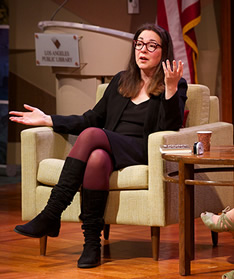
De Amerikaanse schrijfster Lorrie Moore werd geboren op 13 januari 1957 in Glens Falls, New York. Zie ook alle tags voor Lorrie Moore op dit blog.

Uit: Birds of America

„Everyone has divided into teams, four and four, and written the names of famous people, songs, films, plays, books on scraps of wrapping paper torn off the gifts hours earlier. It is another few hours until Therese and her husband Ray's flight, at 4:30, from National Airport. "Yes," says Therese, "I guess we'll have to forgo the 'Averell Harriman: Statesman for All Seasons' exhibit."
"I don't know why you couldn't catch a later flight," says Therese's sister, Ann. She is scowling. Ann is the youngest, and ten years younger than Therese, who is the oldest, but lately Ann's voice has taken up a prissy and matronly scolding that startles Therese. "Four-thirty," says Ann, pursing her lips and propping her feet up on the chair next to her. "That's a little ridiculous. You're missing dinner." Her shoes are pointy and Victorian-looking. They are green suede--a cross between a courtesan's and Peter Pan's.
The teams are divided in such a way that Therese and Ray and her parents are on one team, Andrew and Pam, Ann and Tad, Ann's fiancé, on the other. Tad is slender and red-haired, a marketing rep for Neutrogena. He and Ann have just become engaged. After nearly a decade of casting about in love and work, Ann is now going to law school and planning her summer wedding. Since Therese worked for years as a public defender and is currently, through a fluky political appointment, a county circuit court judge, she has assumed that Ann's decision to be a lawyer is a kind of sorrowful affirmation, that it will somehow mean the two of them will have new things in common, that Ann will have questions for her, observations, forensic things to say. But this seems not to be so. Ann appears instead to be preoccupied with trying to hire bands and caterers, and to rent a large room in a restaurant. "Ugh," said Therese sympathetically. "Doesn't it make you want to elope?" Therese and Ray were married at the courthouse, with the file clerks as witnesses.
Ann shrugged. "I'm trying to figure out how to get everybody from the church to the restaurant in a way that won't wrinkle their outfits and spoil the pictures."
"Really?" asked Therese. "You are?"
 

 1997380-01550674d88514cae211321527f3da8a.jpg
Lorrie Moore (Glens Falls, 13 januari 1957)


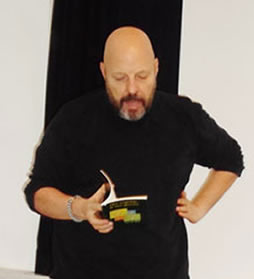
De Nederlandse historicus en dichter Jan de Bas werd geboren op 13 januari 1964 in Waddinxveen. Zie ook alle tags voor Jan de Bas op dit blog.


Liefdesgedichtje

Je ligt als een liefdesgedichtje
zachtjes te snurken

Lieve, kleine geluidjes
doen het goed in poëzie.

Ik kus je keer op keer
en zoen je woord voor woord.

Ik stel je wakker worden
zo lang mogelijk uit.


Tweerichtingsverkeer voor beginners

Juist door de andere kant op te kijken
- O, kijk mij eens kijken naar de dingen
die ik niet wil zien - zag hij wat ze zag.

Juist door te denken wat ze niet
wilde denken - O, wat een oninteressante
gedachten had ze – dacht ze aan hem.
 

 1997380-a3fbfa203ecd2b110a2864753a155d3b.jpg
Jan de Bas (Waddinxveen, 13 januari 1964)


De Argentijnse schrijver en regisseur Edgardo Cozarinsky werd geboren 13 januari 1939 in Buenos Aires. Zie ook alle tags voor Edgardo Cozarinsky op dit blog.

Uit:Letters From Buenos Aires

"On screen I had always regarded the great variety of the Argentine landscape—stretching for nearly three thousand miles between the Tropic of Capricorn and the ice-floes of Antarctica—as little more than a backdrop intended to stir patriotic sentiment. In Martel’s film, the wind rarely ruffles the exteriors which, because of the sheer immobility of the camera and the deliberate lack of conviction in the acting, begin to seem as if they were made of cardboard. Perhaps one has to go back to Mario Soffici’s Prisioneros de la tierra (1939) to find nature so bare, and yet playing such an effective role. That ‘classic’ was an ambitious literary adaptation, but a long way from the chamber films to which the logic of production always consigned urban interiors.
Carlos Sorin is not a beginner. He is over fifty, and worked for a long time in advertising and as a cinematographer. Returning to directing after more than a decade of absence, he too left the metropolis—this time for the scenery of his beloved Patagonian desert. His Historias mínimas(Minimal Stories, 2002) was a word-of-mouth success in Argentina, with screenings multiplying week by week.
The film combines anecdotal minimalism with extremely careful attention to the image and the actors—with a single exception, all non-professional. Its appeal, impossible to quantify or replicate, lies not only in its unending, empty scenery, but in its details: the tv game-show airing on a cable channel in the middle of nowhere, complete with shabby décor and rinky-dink presenter; the old man searching for his dog, sheepishly wondering if the animal could somehow know that his master had done something wrong; the boastful, love-struck travelling salesman who incessantly changes the name of the cake he is bringing to his girlfriend’s child. »

 

 1997380-853d1cdc5d0914398f3f5696121ab82f.jpg
Edgardo Cozarinsky (Buenos Aires, 13 januari 1939)


De Iraanse schrijver Mohammad- Ali Jamālzādeh Esfahani werd geboren op 13 januari 1892 in Isfahan. Zie ook alle tags voor Mohammad- Ali Jamālzādeh op dit blog.

Uit: Persian Is Sugar (Vertaald door Heshmat Moayyad en Paul Sprachman)

“Thinking back to the events before the appearance of the officials, I recalled a discussion between the passengers and the boatmen who transferred us to the shore. They were saying that, once again, the king and the parliament in Tehran had gone on the war path. They also said that not only governmental officials had started to pick up undesirables, but that strict orders had been issued from Tehran regarding all traffic in the region.
More importantly, that very morning a new official had arrived in Anzali from Rasht. To prove his loyalty and viability, they said, this official was burning the wet alongside the dry, as it were. His behavior was likened to that of a rabid dog that, without any apparent reason, attacks innocent people left and right. Additionally, this very official was eyeing the governorship of the region. Preparing the ground for becoming the governor of Anzali, throughout the morning, he had tied up the entire Anzali-Tehran telegraph line, transmitting information on his own activities.
For a while after I entered the hut, I was quite upset. So upset, in fact, that I could not see any thing. As my eyes got used to the darkness, however, I discovered that I was not alone. The first person I saw was one of those typical Europeanized young men who would remain Iran's symbol of insipidness, foolishness, and lack of education for generations to come. I can foresee that, for the next century, Iranian theater audiences will split their sides laughing at the demeanor and behavior of those compatriots of ours.
The Europeanized gentleman in the cell wore a high collar, very much like the chimney of a samovar. Even the color of his collar matched that of a samavar, indicating that he had crossed the Caucasus mountains aboard an oil-powered engine. He sat in a niche and, in the dim light, and immersed himself in reading a "novel."
 

 1997380-25707f4edf289a941c133235f504e8e7.jpg
Mohammad- Ali Jamālzādeh (13 januari 1892 - 8 november 1997)


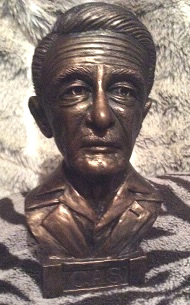
De Amerikaanse dichter, schrijver en beeldhouwer Clark Ashton Smith werd geboren in Long Valley (Californië) op 13 januari 1893. Zie ook alle tags voor Clark Ashton Smith op dit blog.


Autumn Orchards

Walled with far azures of the wintering year,
Late autumn on a windless altar burns;
Splendid as rubies from Sabean urns,
A holocaust of hues is gathered here.

The pear-trees lift a Tyrian tinged with blood;
Strange purples brighten in the smouldering plums;
The fire-red gold of peach and cherry comes
To storm the bronzing borders of the wood.

Rich as the pyre of some Hesperian queen,
Feeding the ultimate sunset with sad fires,
Is this, where beauty with her doom conspires
To tell in flame what death and beauty mean.

O, loveliness grown tragical and dear!
My heart has taken from the torchful leaf
A swiftly soaring glory, and the grief
Of love is colored like the dying year.


Amor

This is the fire of Hestia's careful hearth;
The flame that fed on many-towered Troy;
Selene's light about the Latmian boy;
The all-consuming ardor of Melkarth.

This is the peregrine star that will return,
Faithful to the olden ephemerides;
The torch of corybantic mysteries;
The spark still burning in the stoppered urn.

This is the lamp ancestral hands have lit
Deep in the doorless crypts of blood and bone . . . .
For you and me, it is a witch-fire blown

Where secret airs and obscure pinions flit,
That has outburned Walpurgis and the moon
And lifts in quenchless rose to a cloudy noon.
 

 1997380-4d0b321b292995b7053894c0538c5aec.jpg
Clark Ashton Smith (13 januari 1893 – 14 augustus 1961)
Borstbeeld door Joe Broers, 2015


Onafhankelijk van geboortedata

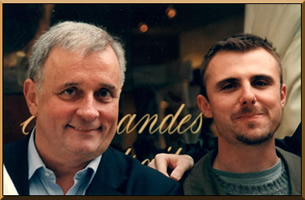
De Amerikaanse schrijver Michael Carroll werd geboren in 1965 en groeide op in een wijk van Fort Caroline (nu Jacksonville), Florida. Zie ook alle tags voor Michael Carroll op dit blog.

Uit:Little Reef and Other Stories (Little Reef)

“If you’re staying a while,” he ventured wryly, as always, “I could run you a tab.”
A tab wasn’t her style, as by now he should’ve deduced, and she said, “I don’t think so.”
She handed him a ten- she wasn’t one of those demure biddies- and he took it instantly.
Closing his lips and drawing them forth, Buster said, “Wes coming in, Miz Blake?”
“He’ll be along directly, I expect. At least I hope. How are things for you, Buster?”
“Had a nasty cold last week, but I’m on the mend now. Nice day out there, you’ll note.”
“Real pretty day,” she said, nodding, waiting for him to skedaddle.
“Be right back with your change,” he said, and his heart seemed to be bursting bright.
Jo’s was a bar for women, but Buster ran the day shift. He opened at an unthinkable two in the afternoon. While in her thirties, Jeanette had left inland Jacksonville to be closer to her job and after retiring stayed out here. The beaches had a more bohemian feel, which did not disturb her enough to make a fuss over. In general people minded their own business, Buster and Alison being the only two exceptions.
Alison, as usual, was at the bar and had been leaning over it with one of her cocktails, something concocted of juices and hard liquor, when Jeanette had first come in. Alison had also been in love with Wesley, who’d lived with Jeanette since he was a tot, since before that- since he was born and after Jeanette’s only daughter, Lisa, had passed away.
Alison had eventually gotten over her crush for Wesley, unlike Buster. She was young still, living with her father, and as far as Jeanette could tell she’d never worked a day in her life. She called her father the Bastard. You got used to stories like this. Jeanette reckoned by now she’d heard them all and most of them here at Jo’s Little Reef. In her agnostic way, she prayed that her Wes would meet a nice boyfriend (not here, God almighty, no!) and thus have no further use for Jo’s. At times she’d try to see what this man looked like in her imagination, playing her game of mental slot machine.“
 1997380-68204b98b6da222c590b2cbc1912b9f4.jpg
Michael Carroll (Fort Caroline, 1965)
Hier met partner Edmund White (links)


Zie voor nog meer schrijvers van de 13e januari ook mijn blog van 13 januari 2014 en ook mijn blog van 13 januari 2013 deel 2.

Geschreven door Romenu om 19:20 Reageer op dit bericht

BNG Bank Literatuurprijs 2016 voor Hanna Bervoets

De BNG Bank Literatuurprijs is dit jaar gewonnen door de Nederlandse schrijfster Hanna Bervoets. Een dag geleden won de 32-jarige Bervoets nog de Frans Kellendonk-prijs. Hanna Bervoets werd geboren in Amsterdam op 14 februari 1984. Zie ook alle tags voor Hanna Bervoets op dit blog.

Uit:Efter

“Laat me jullie vertellen over #103.
18 december, kwart voor negen ’s ochtends: Roya LaFayette loopt het Rheinpark in. Ze draagt een donkerblauwe jas met capuchon en duwt een kinderwagen. Haar tred houdt het midden tussen de zelfverzekerde gang van een wandelaar en de haastige passen van iemand die een trein moet halen: Roya LaFayette stapt stevig door, maar lijkt eerder vastberaden dan bang om te laat te komen.
Over de kinderwagen zit een kap die haar dochtertje, net negen maanden oud, moet beschermen tegen de kou. De baby heeft een muts op; het hoofddeksel bedekt beide oren.
Om negen uur wordt Roya verwacht op haar werk, een verzekeringsmaatschappij in het centrum van Keulen. Wanneer haar manager haar blauwe jas om kwart over negen niet aan de kapstok ziet hangen, probeert hij contact op te nemen met Roya.
Ze blijkt haar Seos te hebben uitgeschakeld.
Op dat moment staat Roya voor de deur van een huis, vijf woonblokken van het park.
Ze belt aan.
Heike Ratz ligt in bed wanneer ze haar deurbel hoort. Ze opent haar ogen, kijkt recht in het verbaasde gezicht van Hamid LaFayette: de man met wie ze de nacht doorbracht.
‘Zal ik opendoen?’ vraagt Heike.
Hamid knikt langzaam.
Zodra Heike de deur heeft geopend, rijdt Roya haar kinderwagen de gang in. Ze loopt Heikes woonkamer door, direct naar de keuken. Daar parkeert ze de kinderwagen voor het aanrecht. En controleert ze nog één keer of de kap goed dichtzit.
‘Wat doe je?’ gilt Heike, maar Roya duwt Heike de keuken uit.
Hamid, die nog altijd in bed ligt, hoort nu het gehuil van zijn dochtertje.
En daarna het gekrijs van zijn minnares.
Wanneer Hamid de huiskamer binnenkomt, ligt Heike op de grond. Naast haar staat zijn vrouw Roya. Met in haar hand zíjn stanleymes.
Daarmee staat de teller nu op honderddrie. En dat zijn slechts de dodelijke slachtoffers. Honderden, duizenden geweldsdelicten worden op dit moment met Efter in verband gebracht. Om nog niet te spreken van de aanrandingen. Deze maand negenentwintig in de regio Kopenhagen alleen, Denemarken registreert de Efterverkrachtingen als enige land apart.
#104, #105, #106, #107: morgen, hooguit overmorgen zal ik over nieuwe slachtoffers moeten vertellen.”

 1997119-31c1620b6b97570123214b7ebd9a7632.jpg
Hanna Bervoets (Amsterdam, 14 februari 1984)

Geschreven door Romenu om 08:21 Reageer op dit bericht

Cees van der Pluijm, David Mitchell, Jacques Hamelink, Haruki Murakami, Kamiel Verwer, Jakob Lenz, Fatos Kongoli, Jack London, Ferenc Molnár

De Nederlandse dichter, schrijver en columnist Cees van der Pluijm werd geboren op 12 januari 1954 te Radio Kootwijk (Gld.). Cees van der Pluijm overleed op 14 december jongstleden op 60-jarige leeftijd. Zie ook alle tags voor Cees van der Pluijm op dit blog.


Winterpark

Je ademt witte wolken uit
Het park spreidt als een winterbruid
Nog blinkend, haast onaangeraakt

Een wereld van gedempt geluid
Waarin je voetstap knisperkraakt
Waarin je kinderziel ontwaakt

Je weet dat het niet duren zal:
(Als al het ongerepte schoons)
Straks vliedt als water naar het dal
Wat uit de lucht viel als kristal

De wereld kreeg iets ongewoons
De vaders werden weer als zoons
Dit moest de sneeuw zijn van hun jeugd
O winterpark, o kindervreugd...


De cederallee

Zo moet het zijn: het tedere geweld
Van ceders in september, kopergroen
Als wachters in gelid, die heel het bos
Behoeden voor wat schuilt en spiedt en dreigt

Maar beuken zijn het: neigend naar het veld
En reikend naar de lucht, een legioen
Van overmoed dat zonder blik of blos
Ons voorhoudt dat het eeuwen overstijgt

En in oktobers late middagzon
Valt stofgoud van de droge bladerdos

November waait de eerste takken los
Het leven wijkt nu met de lichtval mee

Dan wordt voltooid wat eens als feest begon
Verloochend in een herfstige allee


Uit: Momenten

1957

Vijfhonderd meter was het hemelsbreed
Een handkar was voldoende voor het huisraad
En jij mocht zittend mee, wat zat je plat

Fijn bonkend op de bodem met je gat
Een kind van drie dat naar een ander huis gaat
En de gemeentegrens zelfs overschreed

't Was net iets groter; 't lag er bijna naast
't Was meer verplaatsen dan verhuizen haast

Maar Barneveld werd Apeldoorn die zomer
Je weet nog dat het warm was: almaar lomer
Werd ieder ritje hotsend uitgezeten

Ook wees men naar de hemel, stomverbaasd
Om wat je later nooit meer zou vergeten:
Zo'n Sputnik was wel kostje voor een dromer...


 1996938-e216935667c4a2f4739cb9b391f6b2c8.jpg
Cees van der Pluijm (12 januari 1954 – 14 december 2014)


De Britse schrijver David Mitchell werd geboren in Southport op 12 januari 1969. Zie ook alle tags voor David Mitchell op dit blog.

Uit: The Bone Clocks

"Well, perhaps your little walk took you up Peacock Street, to a certain someone called Vincent Costello?" The kitchen sort of swirls, and through the window, on the Essex shore of the river, a tiny stick-man's lifting his bike off the ferry. "Lost for words all of a sudden? Let me jog your memory: ten o'clock last night, closing the blinds, front window, wearing a T-shirt and not a lot else."
Yes, I did go downstairs to get Vinny a lager. Yes, I did lower the blind in the front room. Yes, someone did walk by. Relax, I'd told myself. What's the chances of one stranger recognizing me? Mam's expecting me to crumple, but I don't. "You're wasted as a barmaid, Mam. You ought to be handling supergrasses for MI5."
Mam gives me the Kath Sykes Filthy Glare. "How old is he?"
Now I fold my arms. "None of your business."
Mam's eyes go slitty. "Twenty-four, apparently."
"If you already know, why're you asking?"
"Because a twenty-four-year-old man interfering with a fifteen-year-old schoolgirl is illegal. He could go to prison."
"I'll be sixteen in September, and I reckon the Kent police have bigger fish to fry. I'm old enough to make up my own mind about my relationships."        
Mam lights one of her Marlboro Reds. I'd kill for one. "When I tell your father, he'll flay this Costello fella alive."
Sure, Dad has to persuade piss-artists off the premises from time to time, all landlords do, but he's not the flaying-anyone-alive type. "Brendan was fifteen when he was going out with Mandy Fry, and if you think they were just holding hands on the swings, they weren't. Don't recall him getting the 'You could go to prison' treatment."
She spells it out like I'm a moron: "It's—different—for—boys."


 1996938-0b913c7584f4d16932666a38bc2aadba.jpg
David Mitchell (Southport, 12 januari 1969)


De Nederlandse dichter en schrijver Jacques Hamelink werd geboren op 12 januari 1939 in Driewegen, bij Terneuzen. Zie ook alle tags voor Jacques Hamelink op dit blog.


Proefpatroon

In de rietlaagte waar kapotte petroleumstellen eindigen
hebben boerenturven de beige koffers ammunitie uitgekipt.

Licht vastgezogen in de eendemodder en amper onder water
lokken, half doorgeroest, de diverse soorten belemnieten er.

In het geheim aan de schaafbank wrijf ik schoon wat ik kan. Zet
in de bankschroef puntvast de scherpe patroon, slaghoedje boven.

Hamertje-tik geeft de vlam in de pan, helse oorpijn. Geen hulsflinter
is over, zo waar als ik ongedeerd de dreun van de god geïncasseerd heb.


Baadster

Ze zit op haar hurken overdwars
in de badkuip Evavoorbeeldig
rechtop onder de douchesproeier

die ze als een föhn boven haar
hoofd hanteert, die haar volmaakt,
die haar de bloeddichtbije huid

bekleedt met het continu gruis-
glasscherp verglaasselglanzend
zich vergietend warmwatervlies,

het klaterjuweel dat ze geniet,
met de vrije hand haar haar
achter haar oren vastklevend,

de ogen toe, voor de nacht toilet
makend in de badkuiphurkzit, haar
van het badwater luxurieus gezalfd

schijnende borsten zich zeer groot tonend.


Albaanse grens

De tankkolonne in de zode terzijdegeschoven. De mededood-
groene kolonne met de lanceerinstallaties vordert voorrang.

Over verrotgereden landweg zwermen naar de strijdvehikels
de gehuchtkrijgertjes uit, in frank plezante geestdrift als

hanen kraaiend, opvliegbewegingen makend, om hun iele spil
zich draaiend ter verwelkoming van NATO en hun extase speelt

en het elan van Cantecleer fier op zijn mestvaalt voor elkaar
dat het verbeterd bombardement en de tankslag gelijk aanvangen.


 1996938-1d898a58c86c8fe201c41ade391e9787.jpg
Jacques Hamelink (Terneuzen, 12 januari 1939)


De Japanse schrijver en vertaler Haruki Murakami werd geboren op 12 januari 1949 in Kyoto. Zie ook alle tags voor Haruki Murakami op dit blog.

Uit: What I Talk About When I Talk About Running

“I’m on Kauai, in Hawaii, today, Friday, August 5, 2005. It’s unbelievably clear and sunny, not a cloud in the sky. As if the concept clouds doesn’t even exist. I came here at the end of July and, as always, we rented a condo. During the mornings, when it’s cool, I sit at my desk, writing all sorts of things. Like now: I’m writing this, a piece on running that I can pretty much compose as I wish. It’s summer, so naturally it’s hot. Hawaii’s been called the island of eternal summer, but since it’s in the Northern Hemisphere there are, arguably, four seasons of a sort. Summer is somewhat hotter than winter. I spend a lot of time in Cambridge, Massachusetts, and compared to Cambridge—so muggy and hot with all its bricks and concrete it’s like a form of torture—summer in Hawaii is a veritable paradise. No need for an air conditioner here—just leave the window open, and a refreshing breeze blows in. People in Cambridge are always surprised when they hear I’m spending August in Hawaii. “Why would you want to spend summer in a hot place like that?” they invariably ask. But they don’t know what it’s like. How the constant trade winds from the northeast make summers cool. How happy life is here, where we can enjoy lounging around, reading a book in the shade of trees, or, if the notion strikes us, go down, just as we are, for a dip in the inlet.
Since I arrived in Hawaii I’ve run about an hour every day, six days a week. It’s two and a half months now since I resumed my old lifestyle in which, unless it’s totally unavoidable, I run every single day. Today I ran for an hour and ten minutes, listening on my Walkman to two albums by the Lovin’ Spoonful—Daydream and Hums of the Lovin’ Spoonful—which I’d recorded on an MD disc.
Right now I’m aiming at increasing the distance I run, so speed is less of an issue. As long as I can run a certain distance, that’s all I care about. Sometimes I run fast when I feel like it, but if I increase the pace I shorten the amount of time I run, the point being to let the exhilaration I feel at the end of each run carry over to the next day. This is the same sort of tack I find necessary when writing a novel. I stop every day right at the point where I feel I can write more.”


 1996938-2530bcf0502d5f4ceca7b25476874247.jpg
Haruki Murakami (Kioto, 12 januari 1949)


De Nederlandse dichter en schrijver Kamiel Verwer werd op 12 januari 1979 in Tilburg geboren. Zie ook alle tags voor Kamiel Verwer op dit blog.


Humaan

twee transhumanisten uit Leiden
wilden het leed van de mensheid vermijden
ze programmeerden hun brein
en wat hadden ze het fijn
tot ze zich van het silicium wilden bevrijden 


Kwamrij

je bleef een dapper en verliefd estheet
die scherp en galant zijn kruit verschoot
je bracht leven in de bliksemse keet
Gerrit, waarom verdomme ben je nu al dood


 1996938-ccdd2cc5b5f28c5121fd1da178a6c65e.jpeg
Kamiel Verwer (Tilburg, 12 januari 1979)


De Duitse dichter en schrijver Jakob Michael Reinho;d Lenz werd geboren op 12 januari 1751 in Seßwegen. Zie ook alle tags voor Jakob Lenz en eveneens alle tags voor Jakob Michael Reinhold Lenz op dit blog.


Bebe, beb´ihr auf zu Füßen

Bebe, beb´ihr auf zu Füßen,
Frühlingserde, und ein Flor,
junger Veilchen, sie zu grüßen,
keim aus deinem Schoß hervor.

Sagt, ihr Veilchen, eure Wonne,
daß ihr sie zu sehn gekriegt,
sagt ihr, daß in eurer Sonne,
fern von ihr, ein Bruder liegt.


An die Sonne

Seele der Welt, unermüdete Sonne!
Mutter der Liebe, der Freuden, des Weins!
Ach ohne dich erstarret die Erde
Und die Geschöpfe in Traurigkeit.
Und wie kann ich von deinem Einfluß
Hier allein beseelt und beseligt
Ach wie kann ich den Rücken dir wenden?

Wärme, Milde! Mein Vaterland
Mit deinem süßesten Strahl, nur laß mich,
Ach ich flehe, hier dir näher,
Nah wie der Adler dir bleiben.


 1996938-45cfbde9ab3226ed64a21a3d1b3874e9.jpg
Jakob Michael Reinhold Lenz (12 januari 1751- 24 mei 1792)
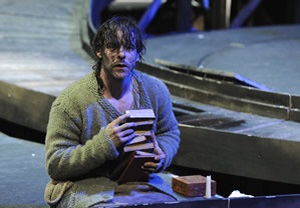
Markus Meyer als Lenz in een uitvoering van het gelijknamige toneelstuk van Georg Büchner, Salzburg 2012.


De Albanese schrijver Fatos Kongoli werd geboren op 12 januari 1944 in Elbasan. Zie ook alle tags voor Fatos Kongoli op dit blog.

Uit: The Loser (Vertaald door Robert Elsie en Janice Mathie-Heck)

“Nevertheless, there I was.The next day, my feet carried me out to the cemetery. You might have assumed that it was the grave of some loved one or some sort of nostalgic contemplation which had prevented my departure. This isn’t true, though I have a lot of respect for graves and for nostalgia. In fact, I’m envious of people who feel that those kinds of notions are important and provide stability, like the force of gravity, as a basis for action. For myself, I feel I’m somewhere beyond gravity, cast off and abandoned in a black hole of disdain. Nostalgia was a fleeting luxury for me. Those weren’t the motives behind my aborted departure or behind my visit the following day – for the first time in my life – to the cemetery. For everyone and from every point of view, I was and am a loser.
Grey clouds hovered over the town the next morning. My thoughts were with the refugees at sea. My parents – I live with my mother and father in a two-room apartment plus kitchen – didn’t even bother to ask where I’d been the day before. They were used to my absences and had stopped asking me a long time ago where I was going and what I was doing. My coming home at night was enough for them to get a good night’s sleep. So my thoughts were with the refugees. I was worried about them because of the bad weather, yet there are certain biological processes inside the human body that take place independent of your emotions. I was starving. I dressed and after a quick and muffled ‘morning!’ from the doorway, I left my parents to their coffee in the kitchen, and went out.
I don’t think there’s anywhere on earth quite as dusty as the place I live. There’s dust all over, on the flat cement roofs of apartment buildings, on the tiled roofs of private houses, on the pavements and on the flowers poking up in the only park in the centre of town. It sticks to everything, like icing sugar sprinkled on a layer cake in the baker’s showcase window.”


 1996938-7227f5c68edd99271d38d117069d1007.jpg
Fatos Kongoli (Elbasan, 12 januari 1944)


De Amerikaanse schrijver Jack London (eig. John Griffith Chaney) werd geboren op 12 januari 1876 in San Francisco, Californië. Zie ook alle tags voor Jack London op dit blog.

Uit: To Build a Fire

“Day had broken cold and grey, exceedingly cold and grey, when the man turned aside from the main Yukon trail and climbed the high earth-bank, where a dim and little travelled trail led eastward through the fat spruce timberland. It was a steep bank, and he paused for breath at the top, excusing the act to himself by looking at his watch. It was nine o'clock. There was no sun nor hint of sun, though there was not a cloud in the sky. It was a clear day, and yet there seemed an intangible pall over the face of things, a subtle gloom that made the day dark, and that was due to the absence of sun. This fact did not worry the man. He was used to the lack of sun. It had been days since he had seen the sun, and he knew that a few more-days must pass before that cheerful orb, due south, would just peep above the sky-line and dip immediately from view.
The man flung a look back along the way he had come. The Yukon lay a mile wide and hidden under three feet of ice. On top of this ice were as many feet of snow. It was all pure white, rolling in gentle, undulations where the ice jams of the freeze-up had formed. North and south, as far as his eye could see, it was unbroken white, save for a dark hairline that curved and twisted from around the spruce-covered island to the south, and that curved and twisted away into the north, where it disappeared behind another spruce-covered island. This dark hair-line was the trail - the main trail - that led south five hundred miles to the Chilcoot Pass, Dyea, and salt water; and that led north seventy miles to Dawson, and still on to the north a thousand miles to Nulato, and finally to St. Michael on Bering Sea, a thousand miles and half a thousand more.
But all this - the mysterious, far-reaching hair-line trail. the absence of sun from the sky, the tremendous cold, and the strangeness and weirdness of it all - made no impression on the man. It was not because he was long used to it. He was a newcomer! in the land, a chechaquo, and this was his first winter. The trouble with him was that he was without imagination. He was quick and alert in the things of life, but only in the things, and not in the significances.“


 1996938-e3ffad0ecf8313440f121b34089b5e11.jpg
Jack London (12 januari 1876 - 22 november 1916)


De Hongaarse schrijver Ferenc Molnár werd op 12 januari 1878 in een burgerlijk-joods gezin van Duitse afkomst geboren. Zie ook alle tags voor Ferenc Molnár op dit blog.

Uit: Liliom

“JULIE Are you talking to me?
MRS. MUSKAT Yes, you! You - chamber-maid, you! In my carousel - -
JULIE Who did anything in your old carousel? I paid my fare and took my seat and never said a word, except to my friend here.
MARIE No, she never opened her mouth. Liliom came over to her of his own accord.
MRS. MUSKAT It's all the same. I'm not going to get in trouble with the police, and lose my license on account of you - you shabby kitchen maid!
JULIE Shabby yourself.
MRS. MUSKAT You stay out of my carousel! Letting my barker fool with you! Aren't you ashamed of yourself?
JULIE What? What did you say?
MRS. MUSKAT I suppose you think I have no eyes in my head. I see everything that goes on in my carousel. During the whole ride she let Liliom fool with her - the shameless hussy!
JULIE He did not fool with me! I don't let any man fool with me!
MRS. MUSKAT He leaned against you all through the ride!
JULIE He leaned against the panther. He always leans against something, doesn't he? Everybody leans where he wants. I couldn't tell him not to lean, if he always leans, could I? But he didn't lay a hand on me. »
MRS. MUSKAT Oh, didn't he? And I suppose he didn't put his hand around your waist, either?
MARIE And if he did? What of it?
MRS. MUSKAT You hold your tongue! No one's asking you - just you keep out of it.”


 1996938-a996bf50aabfd7de4968850302c01e62.jpg
Ferenc Molnár (12 januari 1878 – 1 april 1952)
Scene uit een opvoering in Kecskemét, Hongarije, 2014


Zie voor nog meer schrijvers van de 12e januari ook mijn blog van 12 januari 2015 en ook mijn blog van 12 januari 2014 deel 2.

Geschreven door Romenu om 17:47 Reageer op dit bericht

Frans Kellendonk-prijs 2017 voor Hanna Bervoets


Frans Kellendonk-prijs 2017 voor Hanna Bervoets

De Nederlandse schrijfster Hanna Bervoets heeft de Frans Kellendonk-prijs 2017 gewonnen, de driejaarlijkse literatuurprijs voor een auteur met originele kijk op maatschappelijke of existentiële problematiek. De Kellendonk-prijs is vernoemd naar de in Nijmegen geboren schrijver en vertaler Frans Kellendonk (1951-1990). Hanna Bervoets werd geboren in Amsterdam op 14 februari 1984. Zie ook alle tags voor Hanna Bervoets op dit blog.

Uit:  Ivanov

“Geheimen willen we altijd kwijt. Ja, uiteindelijk vertelt iedereen elkaar altijd alles. Ik heb me vaak afgevraagd waarom. Waarschijnlijk is het omdat juist dat wat anderen niet van ons weten, ons maakt tot wie we zijn; onze uitzonderlijkheid bewijst. Zo dragen we onze geheimen mee als een zak glimmende edelstenen. Het is een onopvallende zak, die we bewaren op een onopvallende plek. Tot er per ongeluk iemand over struikelt, de zak opent, nog net iets ziet blinken voor we zijn hand wegduwen – nee, dit mag jij niet weten. Maar wanneer de fonkeling eenmaal ontsnapt is, wordt de verleiding groot; willen we pochen met wat we bij ons dragen en zullen we de zak alsnog opentrekken: kijk dan, hier zijn ze, mijn edelstenen, edelstenen die alleen ík heb, die maken dat ik ben geworden wie ik nu ben. Het snelst trekken we de zak open voor de mensen om wie we geven, want nog meer dan de ander willen zien, betekent liefde dat je jezelf aan de ander wilt laten zien, is het niet? 
En toch.
De eerste keer dat ik Jonas over Helena vertelde, was ook meteen de laatste keer.
We kenden elkaar nog maar een paar weken. Het was een warme, droge zomer. Jonas zou met vrienden naar Italië gaan maar had die vakantie één dag voor vertrek afgezegd. Omdat hij geen zin had, beweerde hij. Omdat hij mij had leren kennen, wist ik. Vanaf dat moment zagen we elkaar dagelijks. We spraken af in parken en op stadse terrassen, tot we de ogen van anderen niet meer nodig hadden om onze afspraakjes een zekere ongedwongenheid te verschaffen. Daarna zaten we vooral op mijn balkon. Wanneer de onderburen niet thuis waren dronken we bier en mojito’s tot laat in de avond, en vertelden we elkaar onze levensverhalen; telkens opnieuw, steeds andere details, alsof onze levens routes op een landkaart waren die we nauwkeurig moesten volgen met onze wijsvingers, omdat iedere afslag een nieuwe karaktertrek, een nieuw geheim zou kunnen prijsgeven.
Zijn jeugd in Brabant: vader kweker, moeder huisvrouw, één zus, twee broers, een warm gezin (‘maar ook beklemmend’), met neefjes de maïsvelden in om elkaar af te trekken, als tiener het dorp uit, Architectuur in Antwerpen (‘eigenlijk begon mijn leven daar pas’).
Mijn jeugd in Rotterdam: enig kind van alleenstaande moeder, vaak op straat, voetballen, skateboarden en schuimblokken stelen uit de supermarkt, duistere puber met paars haar, drie studies begonnen, drie studies niet afgemaakt.”


 1996801-c2897130c2434ae7ccf643359e713eee.png
Hanna Bervoets (Amsterdam, 14 februari 1984)

Geschreven door Romenu om 07:48 Reageer op dit bericht

Meer van Romenu

↑ Terug naar de berichten