

Naar de inhoud

Romenu

Over literatuur, gedichten, kunst en cultuur
akke.beakke.be

Berichten van 7 mei 2017 tot 8 mei 2017

Roddy Doyle, Thomas Pynchon, Pat Barker, Gary Snyder, Gertrud Fussenegger, Edmund Wilson, Romain Gary, Alain-René Lesage, Sophus Schandorph
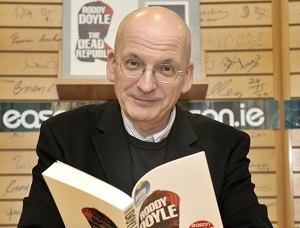
De Ierse schrijver Roddy Doyle werd geboren in Dublin op 8 mei 1958. Zie ook alle tags voor Roddy Doyle op dit blog.

Uit:Brilliant

“Gloria Kelly lay in bed. She was wide awake. She knew her brother, Raymond, was too. She could tell by the way he was breathing. It was awake breath. He was lying there, thinking and listening. Sleep breath was different. It was longer and lighter, less in and out.
‘Rayzer?’ she whispered,
Raymond didn’t answer. But she didn’t care.
She liked sharing the bedroom. Although she knew Raymond didn’t. She didn’t care about that either. She could like it in secret. She didn’t have to tell him.
She’d been moved into Raymond’s room when their Uncle Ben had come to live with them. For a while. That was what her mam and dad had said. Uncle Ben would be staying ‘for a while’. At first her mother had called it ‘a little while’. But the ‘little’ had disappeared when Uncle Ben kept staying, and Gloria began to think that her bedroom wasn’t hers any more. And Raymond, she supposed, began to think the same thing. His room had become their room.
She looked into her room sometimes, when her Uncle Ben wasn’t in there. He hadn’t done anything to it. He hadn’t touched her pictures or her other stuff. It was still pink, nearly everything in it. The only really new thing in the room was her Uncle Ben’s smell. It was kind of an adult smell. A mixture of soap and sweatiness. There were none of his clothes lying around, and just one book that wasn’t hers. She’d looked at the cover but it had looked boring, about a war or something. Except for the fact that she didn’t sleep or play in there any more, it was still Gloria’s room. So maybe her Uncle Ben really was only staying for a while – but the while was a bit longer than they’d expected.
Maybe.
‘Rayzer?’
He still wouldn’t answer.
She didn’t like her bed. It wasn’t a real bed. It was just a mattress on the floor. She’d liked it at first. It had been fun, nearly like camping. But not now. Her face was sometimes right against the wall, low down, at the skirting board, nearly where it joined the floor. It was cold there. Always – even when the rest of the room was warm. And she could hear things sometimes – she thought she could. Behind the skirting board.”


 2034714-fe374130e04b3282a402cabb8f3798c3.jpg
Roddy Doyle (Dublin, 8 mei 1958)


De Amerikaanse schrijver Thomas Pynchon werd op 8 mei 1937 geboren in Glen Cove, Long Island, New York. Zie ook alle tags voor Thomas Pynchon op dit blog.

Uit: Inherent Vice

"Okay, Doc. He's married."
"Some…; money situation."
She shook back hair that wasn't there and raised her eyebrows so what.
Groovy with Doc. "And the wife—she knows about you?"
Shasta nodded. "But she's seeing somebody too. Only it isn't just the usual—they're working together on some creepy little scheme."
"To make off with hubby's fortune, yeah, I think I heard of that happenin once or twice around L.A. And…; you want me to do what, exactly?" He found the paper bag he'd brought his supper home in and got busy pretending to scribble notes on it, because straight–chick uniform, makeup supposed to look like no makeup or whatever, here came that old well–known hardon Shasta was always good for sooner or later. Does it ever end, he wondered. Of course it does. It did.
They went in the front room and Doc laid down on the couch and Shasta stayed on her feet and sort of drifted around the place.
"Is, they want me in on it," she said. "They think I'm the one who can reach him when he's vulnerable, or as much as he ever gets."
"Bareass and asleep."
"I knew you'd understand."
"You're still trying to figure out if it's right or wrong, Shasta?"
"Worse than that." She drilled him with that gaze he remembered so well. When he remembered. "How much loyalty I owe him."


 2034714-1d8b5162e8a361bbbb053957983121aa.jpg
Thomas Pynchon (Glen Cove, 8 mei 1937)
Cover


De Engelse schrijfster Pat Barker werd geboren in Thornaby-on-Tees op 8 mei 1943. Zie ook alle tags voor Pat Barker op dit blog.

Uit: The Ghost Road

“She was scrabbling in her handbag, dislodging bus tickets, comb, purse, producing, finally, a packet of Woodbines. She let the cigarette dangle wetly from her lower lip while she groped for the matches. Her lips were plump, a pale salmon pink at the centre, darkening to brownish red at the edges. She glanced up, caught him looking at her, and flushed, not with pleasure — his lust was too blatant to be flattering— but drawn by it, nevertheless, into the memory of her unencumbered girlhood.
Her mother was helping the little boy step into his drawers, his hand a dimpled starfish on her broad shoulder. The flare of the match caught her attention. Tor God's sake, Louie,' she snapped. 'If you could only see how common you look…'
Louie's gaze hadn't moved. Her mother turned and squinted up into the sun, seeing the characteristic silhouette that said 'officer'. 'Look for the thin knees,' German snipers were told, but where they saw prey this woman saw a predator. If he'd been a private she'd have asked him what the bloody hell he thought he was gawping at. As it was, she said, 'Nice weather we're having, sir.'
Prior smiled, amused, recognizing his mother's speech, the accent of working-class gentility. 'Let's hope it lasts.'
He touched his cap and withdrew, thinking, as he strolled off, that the girl was neither a widow nor married. The way the mother's voice had cracked with panic over that word 'common' said it all.
Louie's knees were by no means glued together, even after the child. And her mother was absolutely right, with that fag stuck in her mouth she did look common. Gloriously, devastatingly, fuckably common.
He ought to be getting back to barracks. He had his medical in less than an hour, and it certainly wouldn't do to arrive gasping. He had no business to be drifting along the front looking at girls. But he looked anyway, hoarding golden fuzz on a bare arm, the bluish shadow between breasts thrust together by stays, breathing in lavender sharpened by sweat.”


 2034714-2d2a887bc22ec4cc4976d141fbd2da35.jpg
Pat Barker (Thornaby-on-Tees, 8 mei 1943)


De Amerikaanse dichter Gary Snyder werd geboren op 8 mei 1930 in San Francisco. Zie ook alle tags voor Gary Snyder op dit blog.


Beneath My Hand And Eye The Dis­tant Hills, Your Body

What my hand fol­lows on your body
Is the line. A stream of love
of heat, of light, what my
eye las­civ­i­ous
licks
over watch­ing
far snow-dappled Uin­tah moun­tains
Is that stream
Of power. what my
hand curves over, fol­low­ing the line.
"hip" and "groin"
Where "I"
fol­low by hand and eye
the swim­ming limit of your body.
As when vision idly dal­lies on the hills
Lov­ing what it feeds on.
soft cin­der cones and craters;
-Drum Hadley in the Pinacate
took ten min­utes more to look again-
A leap of power unfurl­ing:
left, right-right-
My heart beat faster look­ing
at the snowy Uin­tah Moun­tains.
What "is" within not know
but feel it
sink­ing with a breath
pusht ruth­less, surely, down.
Beneath this long caress of hand and eye
"we" learn the flow­er­ing burn­ing,
out­ward, from "below".


A Dent in a Bucket

Hammering a dent out of a bucket
    a woodpecker
                answers from the woods


 2034714-893dcc5febda23fbd5933699fa28cf41.png
Gary Snyder (San Francisco, 8 mei 1930)


De Oostenrijkse schrijfster Gertrud Fussenegger werd geboren op 8 mei 1912 in Pilsen. Zie ook alle tags voor Gertrud Fussenegger op dit blog.

Uit: Das verschüttete Antlitz

„Er hätte nicht lügen, vielmehr, er hätte besser lügen sollen. Er war zu verwirrt, ihm kam die Nachricht zu plötzlich, ein niederschmettender Schlag.( Dabei stand sie seit dem Morgen in allen Zeitungen). So wußte er nichts,als er auf das Gericht kam und sie ihn fragten. „ Ich kennne sie nicht, Ihre Tote“, hatte er gesagt. „Kenne keine Helena Jacubowska,“( Und war´s nicht auch so)“ was soll ich mit ihr zu schaffen haben?“
Aber sie war es,konnte niemand anderes sein. Es stand alles so elend genau in der Beschreibung: der grüne Sweater, der schwarze Rock, die Pelzjacke mit den kahlgescheuerten Knöpfen und dem abgestoßenem Saum. Arme, erniedrigte, vom Leben zerdrückte Kreatur! Und doch hatte sie sich gewehrt- in Zemans Herz glühte etwas auf wie Genugtuung. Sie hatte sich gewehrt gegen das Äußerste, Letzte, Infamste; hatte sich gewehrt, verzweifelt, unter Einsatz des Lebens, um den Preis des Lebens.
Niemand braucht zu wissen, wer sie war: das hatte sie sich verdient, wie sie dort lag. Er, Zeman,würde sie morgen sehen; sie hatten ihn noch einmal vorgeladen. Er wollte sich wappnen gegen diesen Anblick. Warum hatte er Angst davor? Es war ihm schon so viel Schlimmes unter die Augen gekommen, ihr Anblick würde das Ärgste nicht sein. Er würde sich nicht ergeben; würde wiederholen: “Ich kenne sie nicht“. Gegen eine Aussage, die sich gleichbleibt, kommt kein Augenschein auf. Laut schrie er, gegen den Wind ankämpfend: “Ich kenne sie nicht“.


 2034714-c0e7087f1be8740803b57b8076ea595e.jpg
Gertrud Fussenegger (8 mei 1912 – 19 maart 2009)
Cover


De Amerikaanse schrijver en criticus Edmund Wilson werd geboren op 8 mei 1895 in Red Bank, New Jersey. Zie ook alle tags voor Edmund Wilson op dit blog.

Uit:The Sixties

“I have decided that the best thing to travel with -- New York last winter and Israel last spring -- is a volume of Balzac. You sink into the familiar Balzac world with the familiar Balzac characters. In the end, you may become disgusted by his sketchy and implausible inventions -- which must have been written when he had become too tired -- and repelled by his inveterate habit of having the good people undone or destroyed by the bad. But I was reading a particularly good one, "La Rabouilleuse." Wellfleet, Spring 1969
My 74th birthday. I spent the day in sloth and the doldrums. Champagne at lunch -- Svetlana [ Alliluyeva, Stalin's daughter ] insisted on making the cork pop to the ceiling. My not being able to make love, not being able to swim or take much exercise and now, with my lower teeth gone, not being able to eat anything but the softest food is getting me down and making me feel frustrated. Had some drinks and went to sleep very early, but had bad dreams and woke up feeling horrible -- partly from worrying about Svetlana and how to write about her. But read Macaulay and somewhat regained my equanimity and my inspiration to live. Talcottville, Spring 1969
It sometimes seems to me strange that I am still alive and writing this diary.
At moments, especially when reading in bed, I have a brief comfortable feeling of renewal of something in the past -- through a book, a passing contact with some old phase of life, something I recognize, a reassurance cropping up in my now infirm self. New York, Autumn 1969
In New York, working on proofs, I found myself quite comfortable and competent again and began to put together in my mind a new volume of literary essays. This gave me satisfaction -- something solid and real in my mind that I shall gradually bring into being. New York, Spring 1970.“


 2034714-b9627d29f471dc182e5334464f4d20e0.jpg
Edmund Wilson (8 mei 1895 – 14 juni 1972)
Cover


De Franse schrijver Alain-René Lesage werd geboren op 8 mei 1668 in Sarzeau. Zie ook alle tags voor Alain-René Lesage op dit blog.

Uit: Histoire de Gil Blas de Santillane

« Il ne pouvait rien me proposer qui me fût plus agréable car je mourais d’envie de voir le pays. Cependant j’eus assez de force sur moi pour cacher ma joie ; et lorsqu’il fallut partir, ne paraissant sensible qu’à la douleur de quitter un oncle à qui j’avais tant d’obligation, j’attendris le bonhomme, qui me donna plus d’argent qu’il ne m’en aurait donné qu’il eût pu lire au fond de mon âme. Avant mon départ j’allai embrasser mon père et ma mère, qui ne m’épargnèrent pas les remontrances. Ils m’exhortèrent à prier Dieu pour mon oncle, à vivre en honnête homme, à ne me point engager dans de mauvaises affaires, et, sur toutes choses, à ne pas prendre le bien d’autrui. Après qu’ils m’eurent très longtemps harangué, ils me firent présent de leur bénédiction, qui était le seul bien que j’attendais d’eux. Aussitôt je montai sur ma mule, et sortis de la ville.
Me voilà donc hors d’Oviédo, sur le chemin de Peñaflor, au milieu de la campagne, maître de mes actions, d’une mauvaise mule et de quarante bons ducats, sans compter quelques réaux que j’avais volés à mon très honoré oncle. La première chose que je fis fut de laisser ma mule aller à discrétion, c’est-à-dire au petit pas. Je lui mis la bride sur le cou, et, tirant de ma poche mes ducats, je commençai à les compter et recompter dans mon chapeau. Je n’étais pas maître de ma joie. Je n’avais jamais vu autant d’argent. Je ne pouvais me lasser de le regarder et de le manier. Je le comptais peut-être pour la vingtième fois, quand tout à coup ma mule, levant la tête et les oreilles, s’arrêta au milieu du grand chemin. Je jugeai que quelque chose l’effrayait ; je regardai ce que ce pouvait être : j’aperçus sur la terre un chapeau renversé sur lequel il y avait un rosaire à gros grains, et en même temps j’entendis une voix lamentable qui prononça ces paroles : Seigneur passant, ayez pitié, de grâce, d’un pauvre soldat estropié ; jetez, s’il vous plaît, quelques pièces d’argent dans ce chapeau ; vous en serez récompensé dans l’autre monde. Je tournai aussitôt les yeux du côté que partait la voix ; je vis au pied d’un buisson, à vingt ou trente pas de moi, une espèce de soldat qui, sur deux bâtons croisés, appuyait le bout d’une escopette qui me parut plus longue qu’une pique, et avec laquelle il me couchait en joue. »

 2034714-b1c7cc257a6621e2864da2240a253cd7.jpg
Alain-René Lesage (8 mei 1668 – 17 november 1747)
Illustratie uit Gil Blas


De Deense schrijver Sophus Schandorph werd geboren op 8 mei 1836 in Ringstedt. Zie ook alle tags voor Sophus Schandorph op dit blog.

Uit: Stina Becomes a Farmer's Wife (vertaald door Sally Ryan)

"No; if only we don't have to buy fodder for the cattle before winter is over."

"That might be bad enough," said Stina sullenly, and turned away from the man. Perhaps this discouraged him from further attempts at conversation. He turned toward her several times, clearing his throat and mumbling, "Well, well, begosh! Ye-e-es." –What was there to be said to that?–Then, as he did not receive the least response, he fell into a silence, perhaps into a reverie. He bent forward, placed his whip between his legs, the handle leaning against his right thigh, and left the two sorrels to do as they pleased. At their present pace it was out of the question for them to cover four miles an hour, and yet the perspiration formed big flakes of foam on their loins and backs.
No sound was heard except the heavy, monotonous creaking of the axles and a slight rattling of the harness when the horses shook themselves to get rid of the "blind flies" that buzzed around the carriage and sometimes, with a short, faintly snapping sound, hit the leather cover which protected the travelers.
The owner of the spring-cart was roused from his drowsiness by a motion of the girl beside him. Again he glanced sideways at her, and saw her untie the knot in the red and white dotted cotton kerchief which was covering the bundle in her lap. Inside was a parcel wrapped in a newspaper. She opened it, took out a big round of rye bread covered with smoked sausage, and broke the bread in two parts. With a nod she offered her host one of these, without, however, looking at him.
"Thanks to him who offers," murmured the farmer. Each devoured his half of the round with due composure. It was succeeded by an other covered with green cheese. This slice was also broken in two by its proprietress who then repeated her silent invitation.”


 2034714-080226bc1b2cd0773533352f9b87d2c7.png
Sophus Schandorph (8 mei 1836 - 1 januari 1901)
Portret door P.S. Krøyer, 1895


De Franse schrijver, vertaler regisseur en diplomaat Romain Gary werd geboren op 8 mei 1914 in Vilnius, Litouwen. Zie ook alle tags voor Romain Gary op dit blog.

Uit: La promesse de l’aube

« Nous restâmes là une heure, deux heures sans nous parler. Puis elle me demanda d'aller tirer les rideaux. Je tirai les rideaux. J'hésitai un moment et puis je levai les yeux au ciel, pour lui éviter d'avoir à me le demander. Je demeurai ainsi un bon coup, les yeux levés à la lumière. C'était à peu près tout ce que je pouvais faire pour elle. On resta là, tous les trois, en silence. Je n'avais même pas besoin de me tourner vers elle pour savoir qu'elle pleurait. Et je n'étais même pas sûr que c'était de moi qu'il s'agissait. Puis j'allai m'asseoir dans le fauteuil en face du lit. J'ai vécu dans ce fauteuil quarante-huit heures. Je gardai presque tout le temps ma casquette et mon cuir et mon mégot: j'avais besoin d'amitié. A un moment, elle me demanda si j'avais des nouvelles de ma Hongroise, Ilona. Je lui dis que non.
– Il te faut une femme à côté de toi, dit-elle, avec conviction.
Je lui dis que tous les hommes en étaient là.
– Ce sera plus difficile pour toi que pour les autres, dit-elle.
Nous jouâmes un peu à la belote. Elle fumait toujours autant, mais elle me dit que les médecins ne le lui défendaient plus. Ce n'était évidemment plus la peine de se gêner. Elle fumait, en m'observant attentivement, et je sentais bien qu'elle faisait des plans. Mais j'étais très loin de me douter de ce qu'elle était en train de combiner. Car je suis convaincu que ce fut à ce moment-là qu'elle eut, pour la première fois, sa petite idée. Je surprenais bien, dans son regard, une expression de ruse, et je savais bien qu'elle avait une idée en tête, mais je ne pouvais vraiment pas deviner, même la connaissant comme je la connaissais, qu'elle pouvait aller aussi loin. Je parlai un peu au médecin: il était rassurant. Elle pouvait tenir encore le coup pendant quelques années. «Le diabète, vous savez…», me dit-il, d'un air entendu. Le troisième jour, au soir, j'allai dîner au Masséna et j'y tombai sur un mynheer hollandais, lequel se rendait par avion en Afrique du Sud pour «se mettre à l'abri de l'invasion allemande qui se préparait». Sans aucune provocation de ma part, se fiant sans doute à mon uniforme d'aviateur, il me demanda si je pouvais lui présenter une femme. Quand j'y pense, le nombre de gens qui m'ont fait la même requête, dans ma vie, est assez inquiétant. J'avais pourtant toujours cru que j'avais l'air distingué. Je lui dis que je n'étais pas en forme, ce soir-là. Il m'annonça que toute sa fortune se trouvait déjà en Afrique du Sud et nous allâmes célébrer cette bonne nouvelle au «Chat Noir»."


 2034714-e24caa7ef457ce527e5d166dce5fb9d2.jpg
Romain Gary (9 mei 1914 – 2 december 1980)
Cover


Zie voor nog meer schrijvers van de 8e mei ook mijn blog van 8 mei 2016 deel 2.

Geschreven door Romenu om 18:35 Reageer op dit bericht

Willem Elsschot, Almudena Grandes, Christoph Marzi, Edgar Cairo, Volker Braun, Robert Browning, Peter Carey, Archibald MacLeish, Rabindranath Tagore

De Vlaamse schrijver en dichter  Willem Elsschot werd in Antwerpen geboren op 7 mei 1882. Zie ook alle tags voor Willem Elschot op dit blog.

Uit: Lijmen / Het been

“Ook de notaris scheen in te zien dat het nu uit was en nam zijn hamer in de hand. Driehonderd vijftig éénmaal, driehonderd vijftig andermaal.
Boorman was recht gestaan en had een arm opgestoken als een eerste Mussolini.
– Acht duizend vijfhonderd frank, sprak zijn zware basstem.
Het vrouwtje staarde hem aan met oogen die uitpuilden van verstomming, verslikte zich, hoestte geweldig, probeerde tevergeefs een opwellend gegichel te smooren en bevrijdde zich eindelijk in een onweerstaanbaren schaterlach die de heele zaal meesleepte, en de ruiten daveren deed.
Het publiek was opgesprongen.
– Huu, huu! jouwde een stem.
– Bui-ten, bui-ten, bui-ten, scandeerden de papiermenschen, zichzelf begeleidend met rhythmisch getrappel.
De notaris hamerde geweldig en toen even een windstilte intrad kon hij zich verstaanbaar maken.
– Mijnheer, riep hij, ik verzoek u dringend de orde niet te storen. Hetis hier geen kermistent.
De agent van politie had zich losgemaakt van den wand en slenterde in onze richting.
– Acht duizend vijfhonderd andermaal, brulde Boorman, of hoor jij niet goed? Toewijzen zeg ik!
– Eén millioen achthonderd vijftig duizend frank, schreeuwde opeens een mannetje met een bolhoed dat op een stoel was gesprongen.
Dat bod werd onthaald op een ontzaglijk hoera.
Wat Boorman toen riep was niet meer te verstaan, maar ik zag dat de radelooze notaris met zijn hamer een teeken gaf en de agent pakte Boorman bij den arm.
– Vooruit, beval hij verbeten.
Boorman was niet groot, maar sterk, want het borstbeeld van Leopold ii, een massief marmeren blok
dat voor mij geen vin wilde verroeren, had hij eens opgepakt en alleen van ’t Museum van Inlandsche en Uitheemsche voortbrengselen tot in de gang gedragen, bij gelegenheid van een schoonmaak.”


 2034288-3a7d3c3e7d5bdb9a7f9d908abda0d090.jpg
Willem Elsschot (7 mei 1882 – 31 mei 1960) 


De Spaanse schrijfster Almudena Grandes Hernández werd geboren op 7 mei 1960 in Madrid. Zie ook alle tags voor Almudena Grandes op dit blog.

Uit: De vijand van mijn vader (Vertaald door Mia Buursma)

“Het ijs bedekte de binnenplaats met een wittig, groezelig gaas, als een oud verband om de armetierige boomstammen aan weerszijden van de put, en in het nog vage licht van de dageraad verleende het een mysterieuze betekenis aan elke kiezelsteen, scherpe contouren die afstaken tegen de door de kou omhooggekrulde, stijf geworden grond. En ook aan mijn neus, die eerder dan ikzelf als een bevroren aanhangsel wakker werd in mijn gezicht, haast alsof hij van iemand anders was. Dan stak ik een hand uit om hem aan te raken, alsof ik verbaasd was dat hij daar was, tussen mijn ogen en mijn mond, en het verschil in temperatuur deed tegelijk pijn aan mijn neus en aan mijn vingers. Om dat niet te hoeven voelen, stopte ik mijn hoofd helemaal tussen de warme zachte lakens en viel weer in slaap, en deze keer was beter dan de eerste, maar zoals bijna alles in dit leven wat beter is, was die rust maar van korte duur. De deur van de kamer die ik met mijn zusjes deelde, was in het midden, aan de andere kant van het groene gordijn, maar het raam hoorde bij mij en daarom maakte mijn moeder mij altijd als eerste wakker. Het licht kwam gelijk met haar stem, kom, Nino, opstaan, het is de hoogste tijd, en even later de snelle vluchtige kus op mijn voorhoofd, het onvermijdelijke begin van elke ochtend.
Elke dag begon op dezelfde manier, dezelfde voetstappen, dezelfde woorden, het kleine geluidje van haar vingers die de luiken openmaakten en ook die kleine kus, de huid van mijn moeder die amper mijn huid aanraakte, een zachtheid die voortkwam uit haast en die in niets leek op de luidruchtige, herhaalde druk van haar lippen die me welterusten wensten alsof ze hun afdruk voorgoed op mijn wangen wilden achterlaten. Elke dag begon op dezelfde manier, maar met de eerste vorst veranderde alles zonder dat er iets veranderde. In andere huizen in het dorp werd met gefronste blikken naar de bergen gekeken, één enkele bezorgde uitdrukking op heel veel verschillende gezichten. In mijn huis, dat geen huis was maar drie kamers in de kazerne van Fuensanta de Martos, gedroegen wij ons beter, want we wisten dat zodra de winter begon mijn moeder geen zin meer had in grapjes.
‘Hoe heb ik het ooit in mijn hoofd kunnen halen om met hem hier te trouwen, hè, hoe heb ik dat ooit kunnen doen, en dat terwijl ik het zo goed had in mijn dorp ...’

 2034288-3008e11c54a3f277d1da89025be00cf2.jpg
Almudena Grandes (Madrid, 7 mei 1960 )


De Duitse schrijver Christoph Marzi werd geboren op 7 mei 1970 in Mayen. Zie ook alle tags voor Christoph Marzi op dit blog.

Uit: Der letzte Film des Abraham Tenenbaum

„Geschichten wie diese kennt man aus dem Kino. Aber diese Geschichte ist wirklich passiert. Und das Verrückte daran ist, dass sie mir passiert ist. Es war im letzten September, und wenn ich an den Tag, an dem alles anfing, zurückdenke, sind auch die kleinsten Erinnerungen wie Bilder aus einem alten Film: die Stadt ein einziges Panorama aus Herbst, in schillernden Farben und Cinemascope, und ich mittendrin. Das Leben ist manchmal wirklich wie im Kino — nur anders, viel echter. Der Tag, an dem sich mein Leben ändern sollte, begann unspektakulär mit einem Wecker, den ich nicht hörte. Das allein war nichts Ungewöhnliches. Zu verschlafen war meine Spezialität und es war nicht das erste Mal, dass ich knapp eine halbe Stunde, bevor die Schicht im Thunderbird begann, aufwachte. Es war auch nicht das erste Mal, dass ich mir Quentins Vespa ausleihen musste, wenn ich es noch einigermaßen pünktlich bis rauf in die Montague Street schaffen wollte. Quentin Klein hatte die Wohnung gegenüber gemietet, er studierte irgendwas mit Wirtschaft an der Columbia, doch die meiste Zeit saß er einfach rum, hörte Modern Jazz und lernte jede Menge Mädchen kennen. »Hi, ich bin Tom«, stellte ich mich einer hübschen Unbekannten vor, die mir die Tür zu Quentins Bude öffnete. »Ist Quentin da? Ich meine, äh, ich brauche die Vespa.« Müde Augen starrten mich verständnislos an. »Den Roller«, drängelte ich und schaute über ihre Schulter ins Halbdunkel der Wohnung. Das Mädchen trug nur ein T-Shirt mit einem grimmigen Hulk darauf. Ich kannte das T-Shirt, es gehörte Quentin. »Ich wohne gegenüber«, erklärte ich ihr (irgendwo da drüben stand sogar mein Name auf dem Klingelschild: Tom Balfour). »Der Nachbar«, fügte ich hinzu, weil sie verwirrt wirkte. Der Schlüssel für die Vespa hing jedenfalls an dem Rüssel eines ziemlich hässlichen Porzellanelefanten, den Quentin aus irgendeinem Grund liebte. »Quentin leiht mir öfter seine Vespa.« Ihr Blick wurde klarer und gleichzeitig verwirrter. »Quentin hat eine Vespa?« »Nimm dir den Schlüssel!«, rief Quentin irgendwo aus dem Halbdunkel. »Und mach den Tank voll, wenn du sie zurückbringst.« Ich lächelte die Unbekannte höflich an, dann machte sie Platz und ich schob mich an ihr vorbei in die Wohnung. »Da ist er ja!« Der hässliche Porzellanelefant war pink und dick, aber der Schlüssel hing genau da, wo er hingehörte. Ich schnappte ihn mir und schlüpfte schnell wieder nach draußen. »Bin schon weg«, flüsterte ich entschuldigend.“


 2034288-d63aecdda2d3bde192cc0d51829f2ca8.jpg
Christoph Marzi (Mayen, 7 mei 1970)


De Surinaamse schrijver Edgar Eduard Cairo werd geboren in Paramaribo op 7 mei 1948. Zie ook alle tags voor Edgar Cairo op dit blog.

Uit:De Negerhaan

“Aangezien wij arm waren, maar niet werkelijk straatarm, kwamen de buren gedurig, behalve suiker, zout, peper, brokjes cacao, blauwsel, soda en andere huishoudelijke luxe, schoon en helder kraanwater bij ons lenen: ‘Me schat, me schat! Ik ben nie gebaad vandaag, ma' ik moet bij dokter gaan. Dankje danke, leen me een beetje water, no?’ Vader mopperde zich een ongeluk, maar moeder kon nu eenmaal dat soort dingen niet weigeren en dus kan men de permanente staat van oorlog tussen vader en de buren wel vermoeden. Het was dan ook altijd eerst een kwestie van schichtig loeren van zo'n buurvrouw, desnoods met een compagnon op de uitkijk, hoegenaamd kleren met de maïskolf borstelend: zodra mijn vader z'n voet het huis uittrok... rrrttts... als 'n rat naar binnen gerend bij ons met: ‘Buurvrouw! Buurvrouw...!’
Zulks nog afgezien van het feit dat men geleend water of suiker nooit terugkrijgt, tenzij er een wonderbare vermenigvuldiging optreedt. Dan praat ik niet over de mensen die, eenmaal iets geleend hebbend, het voorwerp, een kam of bezem, liefst tegen betaling aan hun over-overburen verder leenden. Totdat je iets wat je zelf leende, als je oorspronkelijke eigendom herkende. Ruzie geblazen, zeg ik je, desnoods met vechtpartij tot bloedens toe! Negerhuis-leven? 't Was me wat!
Bij ons op het erf had je helemaal aan de voorzijde, aan de straat, een grote woning op - hoe kon het anders - heel hoge stenen stutten, met een hoge en vooral brede, tegelijk stenen stoep in de vorm van een halve cirkel. Aha: de eigenaarswoning, groot en machtig boven alle krotverdenkingen uittorenend. Zo'n woning aan de voorkant, overal in de stad volgens de oudkoloniale bouwstijl nog te vinden, heette maar al te bloemrijk bakra-oso, letterlijk: de blankenwoning (vroeger dus de woning van de blanke slavenmeester). De halfcirkelige hoge stoep die ik zojuist beschreef stond aan de erfzijde van het grote huis. Maar aan de straatzijde was er een nog grotere, compleet met een groen geverfd, gietijzeren hek met zoet Hollands motiefje.”


 2034288-577ea31f3cd2100a6e6ecc21037b2529.jpg
Edgar Cairo (7 mei 1948 – 16 november 2000) 


De Duitse dichter en schrijver Volker Braun werd geboren op 7 mei 1939 in Dresden. Zie ook alle tags voor Volker Braun op dit blog.

Uit: Der Weststrand

V

Frühstück, „Herr Ober, die Staukarte bitte“
        . . .

Sie hocken im Modder wie komische Vögel
        Die Krallen abwärtsgerichtet
                         Plastikbeutel als schwarze
                 Wehende Kröpfe, Muschelsucher
In La Tranche-sur-Mer. Einsame lüsterne Arbeit
Der Dichter,
                       für eine rohe Mahlzeit.
                                                             Was zählt
        Das Ende der Geschichte
                         In diesem alltäglichen Schlick
Wo oben unten ist und Tod Leben.
        . . . Und er benutzte die Zeit, darüber nachzudenken
                 Wie paradox es ist
                         Daß uns Stöße Genuß bereiten
        „Ein Stochern im Leib. . . dankbar aufgenommen“.
                         Im Gesicht einer Frau
Liest er,  öffnet sich was sich öffnen läßt
        Mund und Auge, mehr
                 Liest er im Gesicht einer Frau.
Siedendes Wasser. Sie schlürfen die Muscheln
                 Eine Nacht nach der andern
        Betäubt mit Zitronen
Und ich hoffte wieder, mich der Dinge
        Die mich treffen
                 Ein Erwählter
                         Würdig zu zeigen.


 2034288-1535666a9b8f89de2023fe23bb5736e7.JPG
Volker Braun (Dresden, 7 mei 1939)


De Engelse dichter en schrijver Robert Browning werd geboren op 7 mei 1812 in Londen. Zie ook alle tags voor Robert Browning op dit blog.


Childe Roland To The Dark Tower Came

IV
For, what with my whole world-wide wandering,
What with my search drawn out thro’ years, my hope
Dwindled into a ghost not fit to cope
With that obstreperous joy success would bring,—
I hardly tried now to rebuke the spring
My heart made, finding failure in its scope.

V
As when a sick man very near to death
Seems dead indeed, and feels begin and end
The tears and takes the farewell of each friend,
And hears one bid the other go, draw breath
Freelier outside, (“since all is o’er,” he saith,
“And the blow fallen no grieving can amend;”)

VI
While some discuss if near the other graves
Be room enough for this, and when a day
Suits best for carrying the corpse away,
With care about the banners, scarves and staves,
And still the man hears all, and only craves
He may not shame such tender love and stay.

VII
Thus, I had so long suffer’d, in this quest,
Heard failure prophesied so oft, been writ
So many times among “The Band”—to wit,
The knights who to the Dark Tower’s search address’d
Their steps—that just to fail as they, seem’d best.
And all the doubt was now—should I be fit?


 2034288-9b67a3584ec7ddcfb794e73bf2b9b3a1.jpg
Robert Browning (7 mei 1812 – 12 december 1889)


De Australische schrijver Peter Carey werd geboren in Bacchus Marsh, Victoria, op 7 februari 1943. Zie ook Zie ook alle tags voor Peter Carey op dit blog.

Uit: Amnesia

“I had published several books, fifty features, a thousand columns, mainly concerned with the traumatic injury done to my country by our American allies in 1975. While my colleagues leapt to the conclusion that the hacker was concerned simply with freeing boat people from Australian custody, I took the same view as our American allies, that this was an attack on the United States. It was clear to me, straight away, that the events of 1975 had been a first act in this tragedy and that the Angel Worm was a retaliation. If Washington was right, this was the story I had spent my life preparing for. If the “events of 1975” seem confusing or enigmatic to you, then that is exactly my point. They are all part of “The Great Amnesia.” More TC.
In court, I listened as my publisher got a belting from the judge and I saw his face when he finally understood he could not even sell my book as remaindered.
“Pulp?” he said.
“Including that copy in your hand.”
Damages were awarded against me for $120,000. Was I insured or not insured? I did not know.
The crowd outside the court was as happy as a hanging day.
“Feels, Feels,” the News International guy shouted. “Look this way. Felix.”
That was Kev Dawson, a cautious little prick who made his living rewriting press releases.
“Look this way Feels.”
“What do you think about the verdict, Feels?”
What I thought was: our sole remaining left-wing journalist had been pissed on from a mighty height. And what was my crime? Repeating press releases? No, I had reported a rumour. In the world of grown-ups a rumour is as much a “fact” as smoke. To omit the smoke is to fail to communicate the threat in the landscape.”


 2034288-93b47dd7b0b26cd3df491f1d44163400.jpg
Peter Carey (Bacchus Marsh, 7 mei 1943)


De Amerikaanse dichter en politicus Archibald MacLeish werd geboren op 7 mei 1892 in Glencoe, Illinois. Zie ook alle tags voor Archibald MacLeish op dit blog.


The Young Dead Soldiers Do Not Speak

The young dead soldiers do not speak.

Nevertheless, they are heard in the still houses:
who has not heard them?

They have a silence that speaks for them at night
and when the clock counts.

They say: We were young. We have died.
Remember us.

They say: We have done what we could
but until it is finished it is not done.

They say: We have given our lives but until it is finished
no one can know what our lives gave.

They say: Our deaths are not ours: they are yours,
they will mean what you make them.

They say: Whether our lives and our deaths were for
peace and a new hope or for nothing we cannot say,
it is you who must say this.

We leave you our deaths. Give them their meaning.
We were young, they say. We have died; remember us.


The Snowflake Which Is Now And Hence Forever

Will it last? he says.
Is it a masterpiece?
Will generation after generation
Turn with reverence to the page?

Birdseye scholar of the frozen fish,
What would he make of the sole, clean, clear
Leap of the salmon that has disappeared?

To be, yes!--whether they like it or not!
But not to last when leap and water are forgotten,
A plank of standard pinkness in the dish.

They also live
Who swerve and vanish in the river.


 2034288-46964e0f78acaf9a772417f027340a62.png
Archibald MacLeish (7 mei 1892 – 20 april 1982)
Rond 1925


De Bengaalse dichter en schrijver Rabindranath Tagore werd op 7 mei 1861 in Calcutta (tegenwoordig: Kolkata) geboren. Zie ook alle tags voor Rabindranath Tagore op dit blog.


Clouds And Waves

Mother, the folk who live up in the clouds call out to me-
"We play from the time we wake till the day ends.
We play with the golden dawn, we play with the silver moon."
I ask, "But how am I to get up to you ?"
They answer, "Come to the edge of the earth, lift up your
hands to the sky, and you will be taken up into the clouds."
"My mother is waiting for me at home, "I say, "How can I leave
her and come?"
Then they smile and float away.
But I know a nicer game than that, mother.
I shall be the cloud and you the moon.
I shall cover you with both my hands, and our house-top will
be the blue sky.
The folk who live in the waves call out to me-
"We sing from morning till night; on and on we travel and know
not where we pass."
I ask, "But how am I to join you?"
They tell me, "Come to the edge of the shore and stand with
your eyes tight shut, and you will be carried out upon the waves."
I say, "My mother always wants me at home in the everything-
how can I leave her and go?"
They smile, dance and pass by.
But I know a better game than that.
I will be the waves and you will be a strange shore.
I shall roll on and on and on, and break upon your lap with
laughter.
And no one in the world will know where we both are.


2034288-7b311edba60a596fdba3d11974fd162d.jpg
Rabindranath Tagore (7 mei 1861 – 7 augustus 1941)
Portret door Walther Illner, ca.1930


Zie voor nog meer schrijvers van de 7e mei ook mijn vorige blog van vandaag.

Geschreven door Romenu om 12:16 Reageer op dit bericht

Horst Bienek, Joseph Joubert, Stanisław Przybyszewski, Karl Gustav Vollmõller, A. E. W. Mason, Therese Huber, Dorit Zinn, Angela Carter, André du Bouchet

De Duitse dichter en schrijver Horst Bienek werd geboren op 7 mei 1930 in Gleiwitz. Zie ook alle tags voor Horst Bienek op dit blog.


Berlin, Chausseestrasse 125

Man muß die Schuhe abstreifen,
noch einmal, bevor man eintreten darf.
Der strenge Blick der Aufseherin,
die auch in Bautzen
Dienst tun könnte. Wer fünf Minuten
später kommt, wird nicht mehr eingelassen.
Überhaupt, nur Gruppenführungen. Im Kollektiv.

Dann: die Räume,
aus denen die Zeit entflohen ist. Hier
also hat er gelebt. Hier also
soll er geschrieben haben. Briefe.
Die Bearbeitung des Coriolan. Nichts
Neues mehr. Die Elegien in Buckow, draußen,
unter Sandkiefern.
Dämmerlicht, von einem Raum zum andern,
− Wo er doch die Klarheit liebte
Der wuchtige Schreibtisch, leer,
kahl, abweisend. Das Holz ist das einzige,
was hier noch atmet.

Leben des Galilei schrieb er auf den Knien
in engen, stickigen Hotelzimmern .

Früher ging der Blick auf den
Dorotheenstädtischen Friedhof. Hegels Grab.
Fichtes Gedenkstein. Früher.
Jetzt verwehrt das eine dicke graue Gardine.
Aus konservatorischen Gründen, sagt die
Aufseherin. Aus was?

Nichts erinnert an ihn. Nicht einmal
die amerikanischen Krimis, oben im Regal,
die er gelesen haben soll.
Nur im Schlafzimmer seine Mütze, die schwarze,
verschwitzte, am Haken, hinter der Tür,
beweist, daß er einmal hier gewesen ist.


 2034284-1a885cb43ea554d7c65065f58e68622c.jpg
Horst Bienek (7 mei 1930 – 7 december 1990)


De Franse schrijver en essayist Joseph Joubert werd geboren in Montignac op 7 mei 1754. Zie ook alle tags voor Joseph Joubert op dit blog.

Uit: Pensées

« J’ai donné mes fleurs et mon fruit : je ne suis plus qu’un tronc retentissant ; mais quiconque s’assied à mon ombre et m’entend, devient plus sage.

Je ressemble en beaucoup de choses au papillon : comme lui j’aime la lumière ; comme lui j’y brûle ma vie ; comme lui j’ai besoin, pour déployer mes ailes, que dans la société il fasse beau autour de moi, et que mon esprit s’y sente environné et comme pénétré d’une douce température, celle de l’indulgence ; j’ai l’esprit et le caractère frileux.

J’ai besoin que les regards de la faveur luisent sur moi. C’est de moi qu’il est vrai de dire : « Qui plaît est roi, qui ne plaît plus n’est rien. » Je vais où l’on me désire pour le moins aussi volontiers qu’où je me plais.

J’ai de la peine à quitter Paris, parce qu’il faut me séparer de mes amis, et de la peine à quitter la campagne, parce qu’il faut me séparer de moi.

J’ai la tête fort aimante et le cœur têtu. Tout ce que j’admire m’est cher, et tout ce qui m’est cher ne peut me devenir indifférent.

Philanthropie et repentir est ma devise.

J’aime peu la prudence si elle n’est morale. J’ai mauvaise opinion du lion depuis que je sais que son pas est oblique.

Quand mes amis sont borgnes, je les regarde de profil."


 2034284-21fe3d552ba565dae600437a9384d8b0.jpg
Joseph Joubert (7 mei 1754 - 4 mei 1824)
Cover


De Poolse dichter en schrijver Stanisław Przybyszewski werd geboren op 7 mei 1868 in Łojewo. Zie ook alle tags voor Stanisław Przybyszewski op dit blog.

Uit: De Profundis

„Das Surrogat dieses unsichtbaren Seelenlebens: das logische Gehirnleben, kennen wir nun zur Genüge. Das ganze Fazit aller seiner wissenschaftlichen und philosophischen Spekulationen ist ein Ignoramus und Ignorabimus, also eine gänzliche Bankerotterklärung all' seiner verzweifelten Bestrebungen. Das künstlerische Fazit – risum teneatis amici – ist der Naturalismus, die seelenlose, brutale Kunst für das Volk, die Bürgerkunst par excellence, die biblia pauperum für das schwache »normale« Gehirn, das denkfaule, feige, plebejische Gehirn, das Alles erklärt, Alles zurechtgelegt haben will, das jede Tiefe, jedes Geheimnis verhöhnt und verspottet und für Verrücktheit erklärt, weil es die Seele haßt, nur weil es sie nicht begreifen kann. Ja! das rohe, stupide Bürgergehirn – die famose vox populi – haßt Alles, was es nicht verstehen kann, vielleicht auch, weil es die bekannte Plebejerangst hat, düpiert zu werden.
Nun ja: man überlasse dem Plebejer, was des Plebejers ist, mit Vergnügen sogar einige Herren, die durchaus »Großgehirnaristokraten« genannt werden wollen.
Ich meine hier also eine andere Kunst. Die Kunst, die sich in der Malerei nicht mit der banalen Außenwelt, ein paar alten, stupiden Invaliden in Amsterdam zum Beispiel, beschäftigt, sondern der Welt, wie sie sich in der Seele in seltenen Stunden, den Stunden der Halluzination und der Ekstase widerspiegelt. Ich denke auch nicht an die famosen Leoncavallos und die zahllosen Mascagnis, sondern etwa an die Fis-moll-Polonaise von Chopin, diesen gräßlichen, nackten Seelenschrei. Ich meine hier auch nicht den feudalen Reinhold Begas, sondern Vigeland. Ja, ich denke jetzt an eine andere Kunst, die Kunst, die das Tageblatt-Bürgertum für verrückt, blödsinnig, impotent u. s. w., u. s. w. erklärt hatte.
In der Literatur hat diese Kunstgattung im orientalischen Altertum und namentlich im Mittelalter ungemein reiche Blüten getrieben. Ja, namentlich im germanischen Mittelalter. Keine Rasse hat so viele Mystiker, also Menschen, die des reinen visionären Seelenlebens teilhaftig wurden, hervorgebracht, wie gerade die germanische.
Für die moderne deutsche Künstlergeneration dieser Art, also Künstler, die sich mit den Phänomenen des Seelenlebens beschäftigen, scheint mir Amadeus Hoffmann der Urahn zu sein. Freilich hat Hoffmann an die seelischen Phänomene als solche kaum geglaubt. Er suchte sie rationalistisch zu analysieren, etwa wie ein anderer Herr den Übergang der Juden über das rote Meer durch eine kolossale Ebbe erklären wollte; vielleicht suchte Hoffmann das Rätselhafte der Seele dem fetten Bürgergehirn, auf das er nun einmal aus buchhändlerischen Rücksichten angewiesen war, gegen bessere Überzeugung verständlich zu machen.“

 2034284-c7f47f4d3b3a52ce558107d75293ded8.jpg
Stanisław Przybyszewski (7 mei 1868 – 23 november 1927)
Portret door Edward Munch, 1895


De Duitse schrijver Karl Gustav Vollmõller werd geboren op 7 mei 1878 in Stuttgart. . Zie ook alle tags voor Karl Gustav Vollmöller op dit blog.

Uit:Turandot, Princess of China (Vertaald door Jethro Bithell)

“BRIGELLA. (Behind the scenes.) Halt! Present arms!
TRUFFALDINO. (Behind the scenes.)
Halt! Slope swords! Open the gate! At ease! Quick march!
(The gate is thrown open. TRUFFALDINO, leading the eunuchs; then, between PANTALONE
and TARTAGLIA, the PRINCE OF SAMARKAND; behind them, at the head of his pages, BRIGELLA. The whole procession halts in front of the gate, they all draw up in one line, and gaze upwards at the bloody heads.)
PANTALONE. (Stepping in front of the footlights.)
My name is Pantalone, and I am a native of Venice. At the moment I am the Prime Minister of the
Chinese Empire. Eh, what d'ye say? What I'm doing here in Pekin? H'm. (Puts his hand in front of his mouth.) Venice got too hot for me. An indindelicate affair. My wife of course, you guess my meaning. (To the PRINCE.) This, your Royal Highness, is the place you have heard so much of. Have a good look at it, please. Make yourself quite_at home. Yes, quite right, up there, please! (To TARTAGLIA.) I say, my dear Lord Chancellor. Be so good as to show his Royal Highness the elevated position he will occupy in the near future. You have the information, I presume.
(TARTAGLIA turns towards the PRINCE, PANTALONE _pulls his sleeve.)
Don't forget, my dear Lord Chancellor.
TARTAGLIA.(Stepping in front of the footlights.) My name is Tat-Tra-Tartaglia (stammers). From Naples. My mother always maintained that she was the daughter of a Spanish grandee, but I fear she
was a fisherman's daughter from Po-Po-Pozzuoli. My father, on the other hand (stops short and
looks round)—“


 2034284-5e78df1233ebe28def8be06da61de3b4.jpg
Karl Gustav Vollmõller (7 mei 1878 – 18 okrober 1948)


De Britse schrijver Alfred Edward Woodley Mason werd geboren op 7 mei 1865 in Londen. Zie ook alle tags voor A. E. W. Mason op dit blog en ook voor A. Mason.

Uit: The Four Feathers

“He remembered a season in London to which he had come fresh from the China station; and he was curious to see Harry Feversham. He did not admit that it was more than the natural curiosity of a man who, disabled in comparative youth, had made a hobby out of the study of human nature. He was interested to see whether the lad took after his mother or his father—that was all.
So that night Harry Feversham took a place at the dinner-table and listened to the stories which his elders told, while Lieutenant Sutch watched him. The stories were all of that dark winter in the Crimea, and a fresh story was always in the telling before its predecessor was ended. They were stories of death, of hazardous exploits, of the pinch of famine, and the chill of snow. But they were told in clipped words and with a matter-of-fact tone, as though the men who related them were only conscious of them as far-off things; and there was seldom a comment more pronounced than a mere “That’s curious,” or an exclamation more significant than a laugh.
But Harry Feversham sat listening as though the incidents thus carelessly narrated were happening actually at that moment and within the walls of that room. His dark eyes—the eyes of his mother—turned with each story from speaker to speaker, and waited, wide open and fixed, until the last word was spoken. He listened fascinated and enthralled. And so vividly did the changes of expression shoot and quiver across his face, that it seemed to Sutch the lad must actually hear the drone of bullets in the air, actually resist the stunning shock of a charge, actually ride down in the thick of a squadron to where guns screeched out a tongue of flame from a fog. Once a major of artillery spoke of the suspense of the hours between the parading of the troops before a battle and the first command to advance; and Harry’s shoulders worked under the intolerable strain of those lagging minutes.
But he did more than work his shoulders. He threw a single furtive, wavering glance backwards; and Lieutenant Sutch was startled, and indeed more than startled—he was pained. For this after all was Muriel Graham’s boy.
The look was too familiar a one to Sutch. He had seen it on the faces of recruits during their first experience of a battle too often for him to misunderstand it. And one picture in particular rose before his mind: an advancing square at Inkermann, and a tall big soldier rushing forward from the line in the eagerness of his attack, and then stopping suddenly as though he suddenly understood that he was alone, and had to meet alone the charge of a mounted Cossack.”

 2034284-88a1454104a53f9c1853a6e8ed118bca.jpg
A. E. W. Mason (7 mei 1865 – 22 november 1948)
Affiche voor de gelijknamige film uit 1931 


De Duitse schrijfster Therese Huber werd geboren als Marie Therese Heyne op 7 mei 1764 in Göttingen. Zie ook alle tags voor Therese Huber op dit blog.

Uit:Alte Zeit und neue Zeit

“Ich habe dir versprochen, ohne Hehl die Eindrücke zu schildern, welche nach einer Abwesenheit von zwanzig Jahren die Menschen und Gegenstände in meiner Heimat auf mich machen würden. Dinge, von denen ich dir so oft mit Jugendglut der Erinnerung sprach! – und nachdem dir meine ersten beiden Briefe die Freude des Wiedersehens, die Wehmut, so manche Stätte leer, so manches Haupt ergraut gefunden zu haben, schilderten, will ich dir auch die Wahrnehmungen nicht verhehlen, zu denen ein längerer Aufenthalt in meiner Vaterstadt mir Anlaß gibt.
Ich verließ sie in der Fülle jugendlichen Gefühls, und kehre, ein Vierziger, zu ihr zurück; schwärmte ich damals, – wahrlich, so bin ich nun ruhig; daß ich nicht kalt ward, mein guter Hartmann, danke ich dir und deiner lieben Frau, da ihr mir durch den Zutritt in euer Haus Vaterland und Familie ersetztet, und endlich, nachdem ihr den Jüngling reifen saht, den Mann durch eure geliebte Schwester beglücktet. Möge Gott meine Amalie in dieser Stunde und in jeder des Lebens erfreuen! – Ich schreibe ihr, daß sie von dir diese Details erhalten wird, über die wir, so vertraut mein mutiges Herz, nächsten Winter schon wieder um unsern Kamin versammelt, schwatzen werden.
Lieber Hartmann, entweder bin ich anders geworden, oder meine Landsleute, oder beides. Ich erzählte dir ja wohl oft in den ersten Jahren meiner Niederlassung in Philadelphia von unserm gesellschaftlichen Leben in **, wie die Frauen den ganzen Morgen ihren Geschäften oblägen, im Haushalt, der Kinderstube, am Nähtisch, dann mittags der Gatte, aus den Hörsälen, der Session gekommen, sich des Wohlseins seiner Lieben freute, die Knaben nach ihren Schulzeugnissen fragte, der Mädchen ihre Schreibbücher ansah, oder vor ihrem Nähzeug mit einem freundlichen Scherz zurückfuhr, weil ihre Kunst ihm unbegreiflich blieb – dann arbeitete wieder ein jeder in seinem Beruf; die Hausfrau mußte wohl irgendeinen Höflichkeitsbesuch machen oder nahm deren an, des Abends gingen die Eltern auch wohl in Gesellschaft, dann ward meinen Schwestern ein froher Zeitvertreib gegeben, oder ein Buch, oder eine junge Freundin besuchte sie – aber meistens versammelten sich die Kinder um die Mutter, der Vater kam, er las ihr vor, wir hörten zu, oder trieben allerlei stille und laute Künste im Nebenzimmer.“


 2034284-5ad4c980dcceea83c436beb2174c70fe.jpg
Therese Huber (7 mei 1764 – 15 juni 1829)
<Göttingen


De Duitse schrijfster Dorit Zinn werd geboren in Dessau op 7 mei 1940, Zie ook alle tags voor Dorit Zinn op dit blog.

Uit: Mein Sohn liebt Männer

„Wie geht es Alex? Gut. Ich strahle sie an und verbessere mich: blendend! Er lebt nach wie vor in Berlin, arbeitet als Journalist und Wissenschaft-ler und ist immer noch mit demselben Mann zusam-men. Frau H. strahlt zurück. Unser Felix, sagt sie, ist auch mit seinem Freund in Berlin, er hat einen Job an der Humboldt-Universität, irgendein spannendes For-schungsprojekt. Wissen Sie noch, wie wir uns gesorgt und aufgeregt haben - und heute ist alles so leicht und selbstverständlich geworden. Vergnügt packt sie mich am Arm. Letzte Woche war ich bei den Kindern in Ber-lin, unsere Tochter hat doch ein Baby bekommen, wenn Sie wüssten, wie vernarrt Felix in seine kleine Nichte ist. Und bei uns, verkündet Konrad stolz, kommt in weni-gen Monaten das dritte Enkelkind zur Welt. Max wird zum dritten Mal Vater, erkläre ich, aber Alex sieht die Kinder seines Bruders leider selten, sie wohnen zu weit auseinander, und ich denke: Wenn Max noch in Berlin wohnte, ob sie dann mehr Kontakt hätten? Sie mögen sich, aber sie leben in verschiedenen Welten. Übrigens habe ich Alex kürzlich im Fernsehen gesehen, sagt Frau H., viel Prominenz war anwesend, neugierig schaut sie uns an, ich glaube, Wowereit war auch dabei. Gut möglich, sage ich, und Konrad erzählt, dass Alex einen Preis der Bundesregierung für zwei Schwulenprojekte entgegengenommen hat.
Wenige Meter von uns entfernt teilen Hände das Sonnenblumendickicht, ein junges Pärchen taucht auf, zerzaust und mit hochroten Köpfen. Wohlwollend lächeln wir ihnen zu. Wenn ich mir vorstelle, überlege ich, dass einer unserer Jungs mit seinem Liebsten aus dem Feld herausgestolpert käme ... Wo ist das Problem? Frau H. lacht und wir lachen mit. Allerdings, sagt sie, für viele Leute wäre es sicher ein Problem. Leider, ich stimme ihr zu, zwar würde man über unsere Jungs nicht mehr offen lästern wie früher, aber angelächelt wie dieses Hetero-pärchen würden sie nicht.“


 2034284-56b7cf588b911d020f83d54dcfa73ce0.jpg
Dorit Zinn (Dessau, 7 mei 1940)
Cover 


De Britse schrijfster en journaliste Angela Carter werd geboren in Eastbourne op 7 mei 1940. Zie ook alle tags voor Angela Carter op dit blog.

Uit: The Company of Wolves

“She stands and moved within the invisible pentacle of her own virginity. She is an unbroken egg; she is a sealed vessel; she has inside her a magic space the entrance to which is shut tight with a plug of membrane; she is a closed system; she does not known how to shiver. She has her knife and she is afraid of nothing.
Her father might forbid her, if he were home, but he is away in the forest, gathering wood, and her mother cannot deny her.
The forest is closed upon her like a pair of jaws.
There is always something to look at in the forest, even in the middle of winter - the huddled mounds of birds, succumbed to the lethargy o f the season, heaped on the creaking boughs and too forlorn to sing; the bright frills of the winter fungi on the blotched trunks of trees; the cuneiform slots of rabbits and deer, the herringbone tracks of the birds, a hare as lean as a rasher of bacon streaking across the path where the thin sunlight dapples the russet brakes of last year's bracken.
When she heard the freezing howl of a distant wolf, her practiced hand sprang to the handle of the knife, but she saw no sign of a wolf at all, nor of a naked man, neither, but then she heard a clattering among the brushwood and there sprang onto the path a fully clothed one, a very handsome one, in the green coat and wide-awake hat of a hunter, laden with the caresses of game birds. She had her hand on the knife at the first rustle of twigs, but he laughed with a flash of white teeth when he saw her and mad her a comic yet flattering little bow; she'd never seen such a fine fellow before, not among the rustic clowns of her native village. So on they went together, through the thickening light of the afternoon.
Soon they were laughing and joking like old friends. When he offered to carry her basket, she gave it to him although her knife was in it because he told her his rifle would protect them. As the day darkened, it began to snow again; she felt the first flakes settle on her dark eyelashes, but now there was only half a mile to go and there would be fire, and hot tea, and a welcome, a warm one, surely, for this dashing huntsman as well as herself.”


 2034284-d7d7d1552f01338058d1ee6b636f7b77.jpg
Angela Carter (7 mei 1940 - 16 februari 1992)


De Franse dichter André du Bouchet werd op 7 mei 1924 geboren in Parijs. Zie ook alle tags voor André du Bouchet op dit blog.


Cession

Le vent,
  dans les terres sans eau de l'été, nous
  quitte sur une lame,

                               ce qui subsiste du ciel.

En plusieurs fractures, la terre se précise. La terre
demeure stable dans le souffle qui nous dénude.

Ici, dans le monde immobile et bleu, j'ai presque atteint
ce mur. Le fond du jour est encore devant nous. Le
fond embrasé de la terre. Le fond
et la surface du front,
  aplani par le même souffle,

ce froid.

Je me recompose au pied de la façade comme l'air
bleu au pied des labours.

- Rien ne désaltère mon pas.

 2034284-20b1073a3c91cdcdbfc0f457bcc95e8e.jpg
André du Bouchet (7 mei 1924 – 19 april 2001)

Geschreven door Romenu om 12:15 Reageer op dit bericht

Am dritten Sonntage nach Ostern (Annette von Droste-Hülshoff)


Bij de derde zondag na Pasen


 2034280-d5679a9e1ac02eff87079d928c96d454.jpg
Joannes de Evangelist door Valentin de Boulogne, ca. 1621-22


Am dritten Sonntage nach Ostern
»Über ein kleines werdet ihr mich sehen.« (Joh: 16:16)

Ich seh dich nicht!
Wo bist du denn, o Hort, o Lebenshauch?
Kannst du nicht wehen, daß mein Ohr es hört?
Was nebelst, was verflatterst du wie Rauch,
Wenn sich das Aug' nach deinen Zeichen kehrt?
Mein Wüstenlicht,
Mein Aaronsstab, der lieblich könnte grünen,
Du tust es nicht;
So muß ich eigne Schuld und Torheit sühnen!

Heiß ist der Tag;
Die Sonne prallt von meiner Zelle Wand,
Ein traulich Vöglein flattert ein und aus;
Sein glänzend Auge fragt mich unverwandt:
Schaut nicht der Herr zu diesen Fenstern aus?
Was fragst du nach?
Die Stirne muß ich senken und erröten.
O bittre Schmach!
Mein Wissen mußte meinen Glauben töten.

Die Wolke steigt,
Und langsam über den azurnen Bau
Hat eine Schwefelhülle sich gelegt.
Die Lüfte wehn so seufzervoll und lau
Und Angstgestöhn sich in den Zweigen regt;
Die Herde keucht.
Was fühlt das stumpfe Tier, ist's deine Schwüle?
Ich steh gebeugt;
Mein Herr berühre mich, daß ich dich fühle!

Ein Donnerschlag!
Entsetzen hat den kranken Wald gepackt.
Ich sehe, wie im Nest mein Vogel duckt,
Wie Ast an Ast sich ächzend reibt und knackt,
Wie Blitz an Blitz durch Schwefelgassen zuckt;
Ich schau ihm nach.
Ist's deine Leuchte nicht, gewaltig Wesen?
Warum denn, ach!
Warum nur fällt mir ein was ich gelesen?

Das Dunkel weicht;
Und wie ein leises Weinen fällt herab
Der Wolkentau; Geflüster fern und nah.
Die Sonne senkt den goldnen Gnadenstab,
Und plötzlich steht der Friedensbogen da.
Wie? wird denn feucht
Mein Auge, ist nicht Dunstgebild der Regen?
Mir wird so leicht!
Wie? kann denn Halmes Reibung mich bewegen?

Auf Bergeshöhn
Stand ein Prophet und suchte dich wie ich:
Da brach ein Sturm der Riesenfichte Ast,
Da fraß ein Feuer durch die Wipfel sich;
Doch unerschüttert stand der Wüste Gast.
Da kam ein Wehn
Wie Gnadenhauch und zitternd überwunden
Sank der Prophet,
Und weinte laut und hatte dich gefunden.

Hat denn dein Hauch
Verkündet mir, was sich im Sturme barg,
Was nicht im Blitze sich enträtselt hat?
So will ich harren auch, schon wächst mein Sarg,
Der Regen fällt auf meine Schlummerstatt.
Dann wird wie Rauch
Entschwinden eitler Weisheit Nebelschemen,
Dann schau ich auch,
»Und meine Freude wird mir niemand nehmen.«


 2034280-5048edb7f3bded4ae380218573b9b334.jpg
Annette von Droste-Hülshoff (10 januari 1797 – 24 mei 1848)
De kapel van Burg Hülshoff


Zie voor de schrijvers van de 7e mei ook mijn volgende twee blogs van vandaag.

Geschreven door Romenu om 12:15 Reageer op dit bericht

Meer van Romenu

↑ Terug naar de berichten