Naar de inhoud

Romenu

Over literatuur, gedichten, kunst en cultuur
akke.beakke.be

Berichten van 8 mei 2017 tot 9 mei 2017

Pieter Boskma, Charles Simic, Jotie T'Hooft, Jan Drees, Leopold Andrian, Alan Bennett, Lucian Blaga, Richard Adams, James Barrie
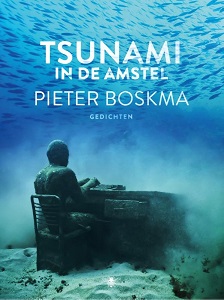
De Nederlandse dichter en schrijver Pieter Boskma werd geboren in Leeuwarden op 9 mei 1956. Zie ook alle tags voor Pieter Boskma op dit blog.


Wenteling

Het jaar begon toen koud. Zelfs de duinen wit
van de tot kant gestolde mist. Het weer
van weinig mensen, die kropen binnen
op elkaar voor een geboortegolf.

In de politieke smidse was de waakvlam al gedoofd.
Het Kamerdebat over netelige kwesties lag huiverend
op straat. Daar warmde bij een vuurtje in een oliedrum
de allerlaatste motie zijn magere motief.

Zo groeide de kloof tussen de enthousiaste burger,
copulerend op het vloerkleed voor de open haard,
en het gezag dat buiten naar zijn eigen adem staart.

Het was gewoon te laat, zelfs het opgefokt klimaat krabde
zichzelf achter de wolken. Maar de dichters stonden klaar,
‘Barre Omstandigheden’ was hun geuzennaam,

het krassen van hun pen dreef het landsbestuur al in het nauw,
en zie: daar werd een van hen op de troon gehesen
waarna de koersen kelderden en vaak de stroom uitviel,

en dat met die bittere koude. Niks te vreten, nog geen dreumes
van de revolutie, zo die er al was. Er verrezen de partijen
die het vers hadden afgeschaft. Massamars, omwenteling,

en toch maar weer het geld.


De morgen

Het waren de dagen dat de poëzie zich schuilhield.
Voor het staaroog van de grijsaard als een eindeloze dageraad.
Voor het kinderbrein als een voorgoed geschrapt verouderen.
Voor het zwarte als een pirouette van primaire kleuren.

De wegstervende echo van het geïnspireerde woord
werd nog af en toe gehoord door wie de stekkers
uit elk toestel trok, maar de online geblevenen
viel het niet eens op dat ze nooit meer neurieden.

En niemand die nog pleitte voor afschaffing van het parlement,
die hol keffende achterhoede van de samenleving,
of voor het hangen van zes manen aan een stapelwolk
of het oplossen van de frontlijn in een pornografisch hologram.

Er waren geen woorden voor het lang verwachte andere.
Men sprak er op gelijke wijze niet eens schande van.
Men sprak algauw in het geheel nog slechts fragmenten.
En daar ging ook de klank als een ontsnapte heliumballon.

Weinigen bemerkten dat nieuwslezers hard vloekten
bij de aankondiging van elk uiterst schaars bericht.
Nondeju die klotesport en nondeju dat kutweer.
En elk meisje dat wel kussen wilde werd door tachtig man verkracht.

Het waren de dagen die wij heden morgen noemen
of de morgen dat wij reeds ach en heden zuchten.


 2035023-0ec5ce4e322b502d93f3b11fa9d4f06c.jpg
Pieter Boskma (Leeuwarden, 9 mei 1956)
Cover


De Amerikaanse dichter Charles Simic werd geboren in Belgrado op 9 mei 1938. Zie ook alle tags voor Charles Simic op dit blog.


To The One Upstairs

Boss of all bosses of the universe.
Mr. know-it-all, wheeler-dealer, wire-puller,
And whatever else you're good at.
Go ahead, shuffle your zeros tonight.
Dip in ink the comets' tails.
Staple the night with starlight.

You'd be better off reading coffee dregs,
Thumbing the pages of the Farmer's Almanac.
But no! You love to put on airs,
And cultivate your famous serenity
While you sit behind your big desk
With zilch in your in-tray, zilch
In your out-tray,
And all of eternity spread around you.

Doesn't it give you the creeps
To hear them begging you on their knees,
Sputtering endearments,
As if you were an inflatable, life-size doll?
Tell them to button up and go to bed.
Stop pretending you're too busy to take notice.

Your hands are empty and so are your eyes.
There's nothing to put your signature to,
Even if you knew your own name,
Or believed the ones I keep inventing,
As I scribble this note to you in the dark.


Late September

The mail truck goes down the coast
Carrying a single letter.
At the end of a long pier
The bored seagull lifts a leg now and then
And forgets to put it down.
There is a menace in the air
Of tragedies in the making.

Last night you thought you heard television
In the house next door.
You were sure it was some new
Horror they were reporting,
So you went out to find out.
Barefoot, wearing just shorts.
It was only the sea sounding weary
After so many lifetimes
Of pretending to be rushing off somewhere
And never getting anywhere.

This morning, it felt like Sunday.
The heavens did their part
By casting no shadow along the boardwalk
Or the row of vacant cottages,
Among them a small church
With a dozen gray tombstones huddled close
As if they, too, had the shivers.


 2035023-8fdb650e903dd1d099d2c81fc6336e7f.jpg
Charles Simic (Belgrado, 9 mei 1938)


De Vlaamse dichter en schrijver Jotie T'Hooft werd geboren in Oudenaarde op 9 mei 1956. Zie ook alle tags voor Jotie T’Hooft op dit blog.


Eenhoorn

Here, zonder naam en zonder gezicht
Zie vanuit den hoge
Op uw droeve eenhoorn neer
Die danig hunkert naar uw licht,

Die sierlijk door de wouden dwaalt
Maar bladeren geen voedsel vindt,
Die voor de poort der doden draalt,
Allen bladeren op uw wind.

Here, zonder handen zonder stem
Snij de lichtlans van zijn voorhoofd
En vang hem in uw stalen klem
Voor de wereld hem de glans ontrooft,

Lok hem langs de stapsteen sterven
Niet als anderen domweg gedoofd
Maar rein, vrij van bederven
Langs de kruisweg waar hij in gelooft.


Sweet/Sixteen

Ik heb een hoog voorhoofd
waarachter niet veel meer gebeurt.
Ik stel me schaamteloos tentoon.
Er is niemand die me opbeurt,
sweet sixteen

Van sommige namen herinner ik me de geur
en er zijn ogen die ik al meer gezien heb,
bijgezet in de galerijen van de sleur
Er is niets dat mij ontlast,
sweet sixteen

Ik ben bang om je aan te raken
en ik kan me al niet meer afkeren
zonder je pijn te doen. Luister,
dan hoor je mijn bevroren kraken,
sweet sixteen


 2035023-a528fc5fd371c9165dc75abc70aff256.jpg
Jotie T'Hooft (9 mei 1956 – 6 oktober 1977)
In 1977


De Duitse schrijver Jan Drees werd geboren op 9 mei 1979 in Haan. Zie ook alle tags voor Jan Drees op dit blog.

Uit: Eins

„Wir beobachteten irritiert glücklich sirrende Fledermäuse, die aus Tannenwaldgrotten flappten, unseren Hügel (über der schimmernden Stadt) umrundeten, die kleine Öllaterne, im Sommer: Gänsehautarme, Benjamin-Biolay-Chansons, und während schwüler Augustabende manchmal stilles Gewitterblitzen am fernen Horizont.
Später, um Viertel nach drei, duschten Nebil und ich Nachthitze aus unseren verliebt erwärmten Teeniekörpern, siriusgeleitet, während Sonnenwindfeuer, Elfen, Kobolde vor dem Bleiglas-Badfenster tanzten. Danach lagen wir perlschaumweinsüchtig erschöpft, verschwitzt, im moskitonetzgefälschten Himmelbett. Über uns funkelten angeklebte Plastiksterne mit Phosphorschimmer.
Inzwischen geht alles vorbei, im Junimond. Wenn Mond ist und keine Regenwolken durch die kühlkalten Nächte ziehen und unsere Sternenbilder verhängen, wenn Schauer schon morgens auf das Giebeldach schlagen und Wasser durch die Holzdecke in unsere Zimmer tropft, von Ziegeln gewaschenen Ruß über eilig aufgestellte Suppenterrinen, Putzeimer, Bonbonnieren spült.
Wir verleben (abschließend) Tage, die wie ein Schlüssellochbild an uns vorübernebeln. João Gilberto singt "The Girl from Ipanema".
Während sporadischer Off-Theater-Besuche wird deutlich, daß ein zeitgeistiges Bühnenkreischen eher Edvard-Munch-Pop sein will (im Gegensatz zu klassischen Pornographiefilmschreien). - Wenn wir uns streiten, werde ich Großstadt-Actrice und imitiere moderne René-Pollesch-Szenen.“


 2035023-352e3209b3aa7302aec198f2978ebaf3.jpg
Jan Drees (Haan, 9 mei 1979) 
In 2014 


De Oostenrijkse dichter, schrijver en diplomaat Leopold Andrian werd op 9 mei 1875 in Berlijn geboren. Zie ook alle tags voor Leopold Andrian op dit blog.


Sahst Du im Spiegel des verträumten Wien
Der eigenen Seele nie gehauchte Klagen
Sahst Du den blassen Duft entfliehen,
Den Duft von unsern ersten Tagen.

Der ersten unerklärten Liebe Reiz
Die noch das Wort, die fast den Blick verschmähte
Mir ists als ob Dein müdes Angesicht
Todkrank um jene Stimmung flehte

So krank wie weißer Flieder, den
Das heiße Gas zu lang umwehte
Der rührend, rein und wunderschön
Schon trunken um Erlösung flehte

Da's ihn im Dunst der Freudennacht
Durchbebt, zu der sie ihn erkoren
Daß in der sinnentrunknen Pracht
Sein keuscher Duft auf immerdar verloren


 2035023-d9ea95d11b8cc3d83b1eeea506c67983.png
Leopold Andrian (9 mei 1875 – 19 november 1951)


De Britse schrijver en acteur Alan Bennett werd geboren op 9 mei 1934 in Armley in Leeds, Yorkshire. Zie ook alle tags voor Alan Bennett op dit blog.

Uit:The Uncommon Reader

'She's not a popular author, ma'am.'
'Why, I wonder? I made her a dame.'
Mr Hutchings refrained from saying that this wasn't necessarily the road to the public's heart.
The Queen looked at the photograph on the back of the jacket. 'Yes. I remember that hair, a roll like a pie-crust that went right round her head.' She smiled and Mr Hutchings knew that the visit was over. 'Goodbye.'
He inclined his head as they had told him at the library to do should this eventuality ever arise, and the Queen went off in the direction of the garden with the dogs madly barking again, while Norman, bearing his Cecil Beaton, skirted a chef lounging outside by the bins having a cigarette and went back to the kitchens.
Shutting up the van and driving away, Mr Hutchings reflected that a novel by Ivy Compton-Burnett would take some reading. He had never got very far with her himself and thought, rightly, that borrowing the book had just been a polite gesture. Still, it was one that he appreciated and as more than a courtesy. The council was always threatening to cut back on the library, and the patronage of so distinguished a borrower (or customer, as the council preferred to call it) would do him no harm.
'We have a travelling library,' the Queen said to her husband that evening. 'Comes every Wednesday.'
'Jolly good. Wonders never cease.'
'You remember Oklahoma!?'
'Yes. We saw it when we were engaged.' Extraordinary to think of it, the dashing blond boy he had been.
'Was that Cecil Beaton?'
'No idea. Never liked the fellow. Green shoes.'


 2035023-02fe31721e3f26cf184959d5f3fa8ac1.jpg
Alan Bennett (Armley, 9 mei 1934)


De Roemeense dichter, schrijver en filosoof Lucian Blaga werd geboren op 9 mei 1895 in Lancrăm, bij Alba Iulia. Zie ook alle tags voor Lucian Blaga op dit blog.


Lot (Fragment)

I have seen many and sin-breeding deeds
profaning the light and the wind,
and misunderstood customs, and fire games in the city.
Naked people have I seen in rusty-copper green lakes
kissing silvery swans.

I have seen, fear-stricken, in front of the gate,
girls dancing their whiteness off
for long nailed voivodes -
and I have seen priests in linen clothes intoxicating
the beggars with the wine the dead have been washed with.

I have seen women setting their seed on fire,
their mission cast between two eternities like an insult,
their breasts-ripe fruit with no milk, no milk within,
their breath killing bees and herbs.

I have seen transparent guests on the shore of blood:
children who will be delivered but are not desired
(if you stop your ears up
you can hear through spheres their bitter thirst,
their dumb murmur at the world's windows,
and their song of relief
when they find entrance in trees, dogs, and in birds).


Vertaald door Liliana Mihalachi


Die Quelle der Nacht

Du Schöne,
so schwarz sind deine Augen,daß mir abends,
wenn ich den Kopf in deinen Schoß gebettet hab,
so ist,
als seien deine tiefen Augen eine Quelle,
aus der die Nacht geheimnisvoll hervorquillt
und über Berge,Täler,Fluren strömt,
um in ein Meer von Finsternis
die Erde einzutauchen.
So schwarz sind deine Augen,du,
mein Licht.

Vertaald door Ruth Herrfurth


 2035023-b1594441d4a77572b94c1001c3d2b899.jpg
Lucian Blaga (9 mei 1895 – 6 mei 1961)
Cover


De Engelse schrijver Richard Adams werd geboren in Newbury op 9 mei 1920. Zie ook alle tags voor Richard Adams op dit blog.

Uit Watership Down

‘I don’t know what it is,’ answered Fiver wretchedly. ‘There isn’t any danger here, at this moment. But it’s coming – it’s coming. Oh, Hazel, look! The field! It’s covered with blood!’
‘Don’t be silly, it’s only the light of the sunset. Fiver, come on, don’t talk like this, you’re frightening me!’
Fiver sat trembling and crying among the nettles as Hazel tried to reassure him and to find out what it could be that had suddenly driven him beside himself. If he was terrified, why did he not run for safety, as any sensible rabbit would? But Fiver could not explain and only grew more and more distressed. At last Hazel said,
‘Fiver, you can’t sit crying here. Anyway, it’s getting dark. We’d better go back to the burrow.’
‘Back to the burrow?’ whimpered Fiver. ‘It’ll come there – don’t think it won’t! I tell you, the field’s full of blood –’
‘Now stop it,’ said Hazel firmly. ‘Just let me look after you for a bit. Whatever the trouble is, it’s time we got back.’
He ran down the field and over the brook to the cattle-wade. Here there was a delay, for Fiver – surrounded on all sides by the quiet summer evening – became helpless and almost paralysed with fear. When at last Hazel had got him back to the ditch, he refused at first to go underground and Hazel had almost to push him down the hole.
The sun set behind the opposite slope. The wind turned colder, with a scatter of rain, and in less than an hour it was dark. All colour had faded from the sky: and although the big board by the gate creaked slightly in the night wind (as though to insist that it had not disappeared in the darkness, but was still firmly where it had been put), there was no passer-by to read the sharp, hard letters that cut straight as black knives across its white surface. They said:
THIS IDEALLY SITUATED ESTATE, COMPRISING SIX ACRES OF EXCELLENT BUILDING LAND, IS TO BE DEVELOPED WITH HIGH CLASS MODERN RESIDENCES BY SUTCH AND MARTIN, LIMITED, OF NEWBURY BERKS."


 2035023-736d65c264f8c5c53c58bdbf2b9481de.jpg
Richard Adams (Newbury, 9 mei 1920)
Cover


De Schotse schrijver James Barrie werd op 9 mei 1860 in Kirriemuir nabij Dundee geborenZie ook alle tags voor James Barrie op dit blog.

Uit:The Adventures of Peter Pan

"She is dead," he said uncomfortably. "Perhaps she is frightened at being dead."
He thought of hopping off in a comic sort of way till he was out of sight of her, and then never going near the spot any more. They would all have been glad to follow if he had done this.
But there was the arrow. He took it from her heart and faced his band.
"Whose arrow?" he demanded sternly.
"Mine, Peter," said Tootles on his knees.
"Oh, dastard hand," Peter said, and he raised the arrow to use it as a dagger.
Tootles did not flinch. He bared his breast. "Strike, Peter," he said firmly, "strike true."
Twice did Peter raise the arrow, and twice did his hand fall. "I cannot strike," he said with awe, "there is something stays my hand."
All looked at him in wonder, save Nibs, who fortunately looked at Wendy.
"It is she," he cried, "the Wendy lady, see, her arm!"
Wonderful to relate [tell], Wendy had raised her arm. Nibs bent over her and listened reverently. "I think she said, 'Poor Tootles,'" he whispered.
"She lives," Peter said briefly.
Slightly cried instantly, "The Wendy lady lives."
Then Peter knelt beside her and found his button. You remember she had put it on a chain that she wore round her neck.
"See," he said, "the arrow struck against this. It is the kiss I gave her. It has saved her life."
"I remember kisses," Slightly interposed quickly, "let me see it. Ay, that's a kiss."
Peter did not hear him. He was begging Wendy to get better quickly, so that he could show her the mermaids. Of course she could not answer yet, being still in a frightful faint; but from overhead came a wailing note."


 2035023-5b665b312f5f279cf2dcc904dd0f0e94.jpg
James Barrie (9 mei 1860 – 19 juni 1937)
J.M. Barrie speelt kapitein Haak en Michael Llewelyn Davies speelt Peter Pan. (1906) Michael was het 4e zoontje van Arthur and Sylvia Llewelyn Davies, een bevriend echtpaar, en stond mede model voor Peter Pan.


Zie voor nog meer schrijvers van de 9e mei ook mijn blog van 9 mei 2015 deel 2.

Geschreven door Romenu om 18:16 Reageer op dit bericht

Libris Literatuur Prijs 2017 voor Alfred Birney


Libris Literatuur Prijs 2017 voor Alfred Birney

De Libris Literatuur Prijs 2017 is toegekend aan Alfred Birney voor zijn roman De tolk van Java. Maandagavond kreeg de Haagse schrijver de prijs van 50 duizend euro en een door Irma Boom ontworpen bronzen legpenning uitgereikt. Het boek gaat over de vader van de auteur die tegen wisselende vijanden vocht tijdens de onafhankelijkheidsoorlog in het voormalige Nederlands-Indië. Alfred Alexander Birney werd geboren in Den Haag op 20 augustus 1951. Zie ook alle tags voor Alfred Birney op dit blog.

Uit:De tolk van Java

“Als jongeman zag mijn vader in Soerabaja de ‘vliegende sigaren’ van de Japanse luchtmacht zijn ouderlijk huis aan puin bombarderen, hij zag Japanse soldaten burgers onthoofden, hij werd gemarteld wegens sabotage in dienst van het zogenoemde Vernielingskorps en in een ijzeren kist onder de brandende zon te smoren gelegd, hij zag Japanse soldaten Australische krijgsgevangenen in open bamboekisten aan de haaien voeren, hij zag Punjabisoldaten in Engelse dienst Japanse soldaten besluipen en ze de strot doorsnijden, hij hoorde over de dood van een neef aan de Birmaspoorlijn, hij hoorde hoe zijn lievelingsoom door Japanse soldaten was doodgemarteld op het landgoed van zijn vaders familie, hij verraadde de Japanse vriend van zijn zuster, die als animeermeisje aan de kost kwam, hij wees de geallieerden de weg in de hitte van de Javaanse Oosthoek, waar opstandige Indonesiërs ondersteboven hangend aan de enkels werden verhoord terwijl hij optrad als tolk en de schrijfmachine hanteerde, hij hielp de geallieerden met het platbranden van desa’s, hij zag brandende opstandige jongelingen schreeuwend van de pijn hun eenvoudige huisjes uit rennen en overhoopgeschoten worden, hij leerde schieten en doorzeefde op een treinstation een vrouw en zuigeling achter wie een Javaanse vrijheidsstrijder zich had verscholen, hij kreeg als hoofd van de afdeling Verhoor van Gevangenen in Djember de hardnekkigste zwijgers aan het praten, hij reed met een pantserwagen op een landmijn en stortte tachtig meter een ravijn in, hij kreeg het bevel van een Hollandse adjudant om het transport te begeleiden van honderd gevangenen van de stadsgevangenis van Djember naar het station Wonokromo en mocht aan het einde van de veertien uur durende rit zesenveertig lijken van gestikte mensen uit de goederentrein slepen, hij vond een Indo-vriend* terug die zichzelf voor de kop had geschoten nadat hij had ontdekt dat zijn meisje met een Hollandse soldaat het bed had gedeeld, hij maakte tijdens de Bersiap* jongens af met wie hij nog een appeltje te schillen had, maar het ergst van alles vond hij dat tijdens de Eerste Politionele Actie de hals van zijn gitaar brak.
Of ben je dat laatste vergeten, Pa, omdat je het misschien verzonnen had?
Het gebeurde tijdens het passeren van twee elkaar tegemoetkomende konvooien. Iemand hield de loop van zijn mitrailleur niet binnenboord en jij de hals van je gitaar niet. De mitrailleur was van onbekende makelij, je gitaar een originele Amerikaanse Gibson, de droom van elke Indo, een instrument waar alle grootheden op speelden, een juweel waarvoor je zelfs het mooiste meisje van de krokodillenstad zou inruilen.”


 2034882-4ca168fc8e41bdd0206a8a9e4b21833b.jpg
Alfred Birney (Den Haag, 20 augustus 1951)

Geschreven door Romenu om 09:06 Reageer op dit bericht

Jorie Graham

De Amerikaanse dichteres Jorie Graham werd geboren op 9 mei 1950 in New York geboren als dochter van Curtis Bill Pepper, een oorlogscorrespondent en het hoofd van het bureau Rome voor Newsweek en de beeldhouwester Beverly Stoll Pepper. Zij groeide op in Rome. Graham studeerde filosofie aan de Sorbonne, maar werd er weggestuurd omdat zij deelnam aan de studentenprotesten. Zij voltooide haar bacheloropleiding aan de Universiteit van New York en raakte in die tijd geïnteresseerd in poëzie. Nadat ze als secretaresse gewerkt had behaalde zij haar Master of Fine Arts in de beroemde Iowa Writers Workshop aan de Universiteit van Iowa. Graham werkte jarenlang bij de Iowa Writers Workshop en kreeg in 1999 een aanstelling aan Harvard University. Graham volgde Nobelprijswinnaar en dichter Seamus Heaney op als Boylston hoogleraar aan de afdeling Engels en Amerikaanse letterkunde en taal van Harvard. Zij was de eerste vrouw die deze positie veroverde. Graham is tweemaal gescheiden en trouwde in 2000 voor de derde keer, ditmaal met dichter en schilder Peter M. Sacks, een collega in Harvard. Jorie Graham publiceerde talrijke poëziebundels, waaronder “The End of Beauty”, “The Dream of the Unified Field: Selected Poems 1974-1994” en “PLAC E”. Zij heeft ook twee anthologieën, “Earth Took of Earth: 100 Great Poems of the English Language” (1996) en “The Best American Poetry” (1990) gepubliceerd. Graham ontving veel prijzen zoals de Whiting Award (1985), de John D. en Catherine T. MacArthur Fellowship, een Ingram Merrill Fellowship, en The Morton Dauwen Zabel Award van The American Academy and Institute of Arts and Letters. “The Dream of the Unified Field: Selected Poems 1974-1994” won de Pulitzerprijs voor Poëzie 1996. Voor haar bundel “P L A C E” ontving zij in 2012 Forward Poetry Prize. Zij was de eerste Amerikaanse vrouw die deze zeer prestigieuze Britse poëzieprijs won.


Prayer

Over a dock railing, I watch the minnows, thousands, swirl
themselves, each a minuscule muscle, but also, without the
way to create current, making of their unison (turning, re-
infolding,
entering and exiting their own unison in unison) making of themselves a
visual current, one that cannot freight or sway by
minutest fractions the water’s downdrafts and upswirls, the
dockside cycles of finally-arriving boat-wakes, there where
they hit deeper resistance, water that seems to burst into
itself (it has those layers), a real current though mostly
invisible sending into the visible (minnows) arrowing
motion that forces change—
this is freedom. This is the force of faith. Nobody gets
what they want. Never again are you the same. The longing
is to be pure. What you get is to be changed. More and more by
each glistening minute, through which infinity threads itself,
also oblivion, of course, the aftershocks of something
at sea. Here, hands full of sand, letting it sift through
in the wind, I look in and say take this, this is
what I have saved, take this, hurry. And if I listen
now? Listen, I was not saying anything. It was only
something I did. I could not choose words. I am free to go.
I cannot of course come back. Not to this. Never.
It is a ghost posed on my lips. Here: never.


Over and Over Stitch

Late in the season the world digs in, the fat blossoms
hold still for just a moment longer.
Nothing looks satisfied,
but there is no real reason to move on much further:
this isn’t a bad place;
why not pretend

we wished for it?
The bushes have learned to live with their haunches.
The hydrangea is resigned
to its pale and inconclusive utterances.
Towards the end of the season
it is not bad

to have the body. To have experienced joy
as the mere lifting of hunger
is not to have known it
less. The tobacco leaves
don’t mind being removed
to the long racks—all uses are astounding

to the used.
There are moments in our lives which, threaded, give us heaven—
noon, for instance, or all the single victories
of gravity, or the kudzu vine,
most delicate of manias,
which has pressed its luck

this far this season.
It shines a gloating green.
Its edges darken with impatience, a kind of wind.
Nothing again will ever be this easy, lives
being snatched up like dropped stitches, the dry stalks of daylilies
marking a stillness we can’t keep.

 2052184-e695dbe993c0405e85c0631212548c74.jpg
Jorie Graham (New York, 9 mei 1950)

Geschreven door Romenu om 00:00 Reageer op dit bericht

Luuk Wojcik

De Nederlandse dichter Luuk Wojcik werd geboren in Roermond op 9 mei 1993. Zie ook alle tags voor Luuk Wojcik op dit blog.


Dit klinkt als muziek

In stoeltjes waar geen hoofd in past zitten we, luisteren we.
Niemand wilde hiernaartoe maar het meisje mocht kiezen.

De poortjes van onze huizen staan open alsof er nog iemand thuiskomt.
Iedereen hoort dit: hoe zacht een vlag wapperen kan.
De struiken bewegen niet, wind is een verre herinnering.
Deze straten hebben andere namen dan we gewend zijn.

Een orkest speelt,
iets van een moderne componist, laat van zich horen,
trompetten adagio, dan komen de klarinetten en basgitaren.
Pauken, hoorns zwellen aan, de dirigent dirigeert.

In onze huizen is er een vader wiens mopperen in de hart en nieren van iedere soldaat zit,
wiens mopperen de adem van de oorlog is, een conflict gaande houdt.
Een impasse in stand houdt.
Een moeder wiens zonen haar allang voorbij zijn, een moeder die haar nagellak deelt met
vriendinnetjes.

Als de hoorns en trombones en trompetten galmen, schateren,
laat de dirigent zijn stokje vallen. Zijn haar komt voor zijn ogen te hangen.

Als een laatste borrelnootje barst op rokerskiezen, met drop erachter, aan gruzelementen ligt op een
mentholtong,
buigt hij,door dacht dat het verder kon.

Ik klap tot ik mezelf als laatste hoor.


 2038003-4f369787dc8552e0ee2e7d61d82ad9f3.jpg
Luuk Wojcik (Roermond, 9 mei 1993)

Geschreven door Romenu om 00:00 Reageer op dit bericht

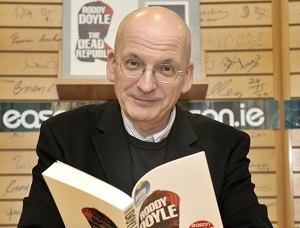
Roddy Doyle, Thomas Pynchon, Pat Barker, Gary Snyder, Gertrud Fussenegger, Edmund Wilson, Romain Gary, Alain-René Lesage, Sophus Schandorph

De Ierse schrijver Roddy Doyle werd geboren in Dublin op 8 mei 1958. Zie ook alle tags voor Roddy Doyle op dit blog.

Uit:Brilliant

“Gloria Kelly lay in bed. She was wide awake. She knew her brother, Raymond, was too. She could tell by the way he was breathing. It was awake breath. He was lying there, thinking and listening. Sleep breath was different. It was longer and lighter, less in and out.
‘Rayzer?’ she whispered,
Raymond didn’t answer. But she didn’t care.
She liked sharing the bedroom. Although she knew Raymond didn’t. She didn’t care about that either. She could like it in secret. She didn’t have to tell him.
She’d been moved into Raymond’s room when their Uncle Ben had come to live with them. For a while. That was what her mam and dad had said. Uncle Ben would be staying ‘for a while’. At first her mother had called it ‘a little while’. But the ‘little’ had disappeared when Uncle Ben kept staying, and Gloria began to think that her bedroom wasn’t hers any more. And Raymond, she supposed, began to think the same thing. His room had become their room.
She looked into her room sometimes, when her Uncle Ben wasn’t in there. He hadn’t done anything to it. He hadn’t touched her pictures or her other stuff. It was still pink, nearly everything in it. The only really new thing in the room was her Uncle Ben’s smell. It was kind of an adult smell. A mixture of soap and sweatiness. There were none of his clothes lying around, and just one book that wasn’t hers. She’d looked at the cover but it had looked boring, about a war or something. Except for the fact that she didn’t sleep or play in there any more, it was still Gloria’s room. So maybe her Uncle Ben really was only staying for a while – but the while was a bit longer than they’d expected.
Maybe.
‘Rayzer?’
He still wouldn’t answer.
She didn’t like her bed. It wasn’t a real bed. It was just a mattress on the floor. She’d liked it at first. It had been fun, nearly like camping. But not now. Her face was sometimes right against the wall, low down, at the skirting board, nearly where it joined the floor. It was cold there. Always – even when the rest of the room was warm. And she could hear things sometimes – she thought she could. Behind the skirting board.”


 2034714-fe374130e04b3282a402cabb8f3798c3.jpg
Roddy Doyle (Dublin, 8 mei 1958)


De Amerikaanse schrijver Thomas Pynchon werd op 8 mei 1937 geboren in Glen Cove, Long Island, New York. Zie ook alle tags voor Thomas Pynchon op dit blog.

Uit: Inherent Vice

"Okay, Doc. He's married."
"Some…; money situation."
She shook back hair that wasn't there and raised her eyebrows so what.
Groovy with Doc. "And the wife—she knows about you?"
Shasta nodded. "But she's seeing somebody too. Only it isn't just the usual—they're working together on some creepy little scheme."
"To make off with hubby's fortune, yeah, I think I heard of that happenin once or twice around L.A. And…; you want me to do what, exactly?" He found the paper bag he'd brought his supper home in and got busy pretending to scribble notes on it, because straight–chick uniform, makeup supposed to look like no makeup or whatever, here came that old well–known hardon Shasta was always good for sooner or later. Does it ever end, he wondered. Of course it does. It did.
They went in the front room and Doc laid down on the couch and Shasta stayed on her feet and sort of drifted around the place.
"Is, they want me in on it," she said. "They think I'm the one who can reach him when he's vulnerable, or as much as he ever gets."
"Bareass and asleep."
"I knew you'd understand."
"You're still trying to figure out if it's right or wrong, Shasta?"
"Worse than that." She drilled him with that gaze he remembered so well. When he remembered. "How much loyalty I owe him."


 2034714-1d8b5162e8a361bbbb053957983121aa.jpg
Thomas Pynchon (Glen Cove, 8 mei 1937)
Cover


De Engelse schrijfster Pat Barker werd geboren in Thornaby-on-Tees op 8 mei 1943. Zie ook alle tags voor Pat Barker op dit blog.

Uit: The Ghost Road

“She was scrabbling in her handbag, dislodging bus tickets, comb, purse, producing, finally, a packet of Woodbines. She let the cigarette dangle wetly from her lower lip while she groped for the matches. Her lips were plump, a pale salmon pink at the centre, darkening to brownish red at the edges. She glanced up, caught him looking at her, and flushed, not with pleasure — his lust was too blatant to be flattering— but drawn by it, nevertheless, into the memory of her unencumbered girlhood.
Her mother was helping the little boy step into his drawers, his hand a dimpled starfish on her broad shoulder. The flare of the match caught her attention. Tor God's sake, Louie,' she snapped. 'If you could only see how common you look…'
Louie's gaze hadn't moved. Her mother turned and squinted up into the sun, seeing the characteristic silhouette that said 'officer'. 'Look for the thin knees,' German snipers were told, but where they saw prey this woman saw a predator. If he'd been a private she'd have asked him what the bloody hell he thought he was gawping at. As it was, she said, 'Nice weather we're having, sir.'
Prior smiled, amused, recognizing his mother's speech, the accent of working-class gentility. 'Let's hope it lasts.'
He touched his cap and withdrew, thinking, as he strolled off, that the girl was neither a widow nor married. The way the mother's voice had cracked with panic over that word 'common' said it all.
Louie's knees were by no means glued together, even after the child. And her mother was absolutely right, with that fag stuck in her mouth she did look common. Gloriously, devastatingly, fuckably common.
He ought to be getting back to barracks. He had his medical in less than an hour, and it certainly wouldn't do to arrive gasping. He had no business to be drifting along the front looking at girls. But he looked anyway, hoarding golden fuzz on a bare arm, the bluish shadow between breasts thrust together by stays, breathing in lavender sharpened by sweat.”


 2034714-2d2a887bc22ec4cc4976d141fbd2da35.jpg
Pat Barker (Thornaby-on-Tees, 8 mei 1943)


De Amerikaanse dichter Gary Snyder werd geboren op 8 mei 1930 in San Francisco. Zie ook alle tags voor Gary Snyder op dit blog.


Beneath My Hand And Eye The Dis­tant Hills, Your Body

What my hand fol­lows on your body
Is the line. A stream of love
of heat, of light, what my
eye las­civ­i­ous
licks
over watch­ing
far snow-dappled Uin­tah moun­tains
Is that stream
Of power. what my
hand curves over, fol­low­ing the line.
"hip" and "groin"
Where "I"
fol­low by hand and eye
the swim­ming limit of your body.
As when vision idly dal­lies on the hills
Lov­ing what it feeds on.
soft cin­der cones and craters;
-Drum Hadley in the Pinacate
took ten min­utes more to look again-
A leap of power unfurl­ing:
left, right-right-
My heart beat faster look­ing
at the snowy Uin­tah Moun­tains.
What "is" within not know
but feel it
sink­ing with a breath
pusht ruth­less, surely, down.
Beneath this long caress of hand and eye
"we" learn the flow­er­ing burn­ing,
out­ward, from "below".


A Dent in a Bucket

Hammering a dent out of a bucket
    a woodpecker
                answers from the woods


 2034714-893dcc5febda23fbd5933699fa28cf41.png
Gary Snyder (San Francisco, 8 mei 1930)


De Oostenrijkse schrijfster Gertrud Fussenegger werd geboren op 8 mei 1912 in Pilsen. Zie ook alle tags voor Gertrud Fussenegger op dit blog.

Uit: Das verschüttete Antlitz

„Er hätte nicht lügen, vielmehr, er hätte besser lügen sollen. Er war zu verwirrt, ihm kam die Nachricht zu plötzlich, ein niederschmettender Schlag.( Dabei stand sie seit dem Morgen in allen Zeitungen). So wußte er nichts,als er auf das Gericht kam und sie ihn fragten. „ Ich kennne sie nicht, Ihre Tote“, hatte er gesagt. „Kenne keine Helena Jacubowska,“( Und war´s nicht auch so)“ was soll ich mit ihr zu schaffen haben?“
Aber sie war es,konnte niemand anderes sein. Es stand alles so elend genau in der Beschreibung: der grüne Sweater, der schwarze Rock, die Pelzjacke mit den kahlgescheuerten Knöpfen und dem abgestoßenem Saum. Arme, erniedrigte, vom Leben zerdrückte Kreatur! Und doch hatte sie sich gewehrt- in Zemans Herz glühte etwas auf wie Genugtuung. Sie hatte sich gewehrt gegen das Äußerste, Letzte, Infamste; hatte sich gewehrt, verzweifelt, unter Einsatz des Lebens, um den Preis des Lebens.
Niemand braucht zu wissen, wer sie war: das hatte sie sich verdient, wie sie dort lag. Er, Zeman,würde sie morgen sehen; sie hatten ihn noch einmal vorgeladen. Er wollte sich wappnen gegen diesen Anblick. Warum hatte er Angst davor? Es war ihm schon so viel Schlimmes unter die Augen gekommen, ihr Anblick würde das Ärgste nicht sein. Er würde sich nicht ergeben; würde wiederholen: “Ich kenne sie nicht“. Gegen eine Aussage, die sich gleichbleibt, kommt kein Augenschein auf. Laut schrie er, gegen den Wind ankämpfend: “Ich kenne sie nicht“.


 2034714-c0e7087f1be8740803b57b8076ea595e.jpg
Gertrud Fussenegger (8 mei 1912 – 19 maart 2009)
Cover


De Amerikaanse schrijver en criticus Edmund Wilson werd geboren op 8 mei 1895 in Red Bank, New Jersey. Zie ook alle tags voor Edmund Wilson op dit blog.

Uit:The Sixties

“I have decided that the best thing to travel with -- New York last winter and Israel last spring -- is a volume of Balzac. You sink into the familiar Balzac world with the familiar Balzac characters. In the end, you may become disgusted by his sketchy and implausible inventions -- which must have been written when he had become too tired -- and repelled by his inveterate habit of having the good people undone or destroyed by the bad. But I was reading a particularly good one, "La Rabouilleuse." Wellfleet, Spring 1969
My 74th birthday. I spent the day in sloth and the doldrums. Champagne at lunch -- Svetlana [ Alliluyeva, Stalin's daughter ] insisted on making the cork pop to the ceiling. My not being able to make love, not being able to swim or take much exercise and now, with my lower teeth gone, not being able to eat anything but the softest food is getting me down and making me feel frustrated. Had some drinks and went to sleep very early, but had bad dreams and woke up feeling horrible -- partly from worrying about Svetlana and how to write about her. But read Macaulay and somewhat regained my equanimity and my inspiration to live. Talcottville, Spring 1969
It sometimes seems to me strange that I am still alive and writing this diary.
At moments, especially when reading in bed, I have a brief comfortable feeling of renewal of something in the past -- through a book, a passing contact with some old phase of life, something I recognize, a reassurance cropping up in my now infirm self. New York, Autumn 1969
In New York, working on proofs, I found myself quite comfortable and competent again and began to put together in my mind a new volume of literary essays. This gave me satisfaction -- something solid and real in my mind that I shall gradually bring into being. New York, Spring 1970.“


 2034714-b9627d29f471dc182e5334464f4d20e0.jpg
Edmund Wilson (8 mei 1895 – 14 juni 1972)
Cover


De Franse schrijver Alain-René Lesage werd geboren op 8 mei 1668 in Sarzeau. Zie ook alle tags voor Alain-René Lesage op dit blog.

Uit: Histoire de Gil Blas de Santillane

« Il ne pouvait rien me proposer qui me fût plus agréable car je mourais d’envie de voir le pays. Cependant j’eus assez de force sur moi pour cacher ma joie ; et lorsqu’il fallut partir, ne paraissant sensible qu’à la douleur de quitter un oncle à qui j’avais tant d’obligation, j’attendris le bonhomme, qui me donna plus d’argent qu’il ne m’en aurait donné qu’il eût pu lire au fond de mon âme. Avant mon départ j’allai embrasser mon père et ma mère, qui ne m’épargnèrent pas les remontrances. Ils m’exhortèrent à prier Dieu pour mon oncle, à vivre en honnête homme, à ne me point engager dans de mauvaises affaires, et, sur toutes choses, à ne pas prendre le bien d’autrui. Après qu’ils m’eurent très longtemps harangué, ils me firent présent de leur bénédiction, qui était le seul bien que j’attendais d’eux. Aussitôt je montai sur ma mule, et sortis de la ville.
Me voilà donc hors d’Oviédo, sur le chemin de Peñaflor, au milieu de la campagne, maître de mes actions, d’une mauvaise mule et de quarante bons ducats, sans compter quelques réaux que j’avais volés à mon très honoré oncle. La première chose que je fis fut de laisser ma mule aller à discrétion, c’est-à-dire au petit pas. Je lui mis la bride sur le cou, et, tirant de ma poche mes ducats, je commençai à les compter et recompter dans mon chapeau. Je n’étais pas maître de ma joie. Je n’avais jamais vu autant d’argent. Je ne pouvais me lasser de le regarder et de le manier. Je le comptais peut-être pour la vingtième fois, quand tout à coup ma mule, levant la tête et les oreilles, s’arrêta au milieu du grand chemin. Je jugeai que quelque chose l’effrayait ; je regardai ce que ce pouvait être : j’aperçus sur la terre un chapeau renversé sur lequel il y avait un rosaire à gros grains, et en même temps j’entendis une voix lamentable qui prononça ces paroles : Seigneur passant, ayez pitié, de grâce, d’un pauvre soldat estropié ; jetez, s’il vous plaît, quelques pièces d’argent dans ce chapeau ; vous en serez récompensé dans l’autre monde. Je tournai aussitôt les yeux du côté que partait la voix ; je vis au pied d’un buisson, à vingt ou trente pas de moi, une espèce de soldat qui, sur deux bâtons croisés, appuyait le bout d’une escopette qui me parut plus longue qu’une pique, et avec laquelle il me couchait en joue. »

 2034714-b1c7cc257a6621e2864da2240a253cd7.jpg
Alain-René Lesage (8 mei 1668 – 17 november 1747)
Illustratie uit Gil Blas


De Deense schrijver Sophus Schandorph werd geboren op 8 mei 1836 in Ringstedt. Zie ook alle tags voor Sophus Schandorph op dit blog.

Uit: Stina Becomes a Farmer's Wife (vertaald door Sally Ryan)

"No; if only we don't have to buy fodder for the cattle before winter is over."

"That might be bad enough," said Stina sullenly, and turned away from the man. Perhaps this discouraged him from further attempts at conversation. He turned toward her several times, clearing his throat and mumbling, "Well, well, begosh! Ye-e-es." –What was there to be said to that?–Then, as he did not receive the least response, he fell into a silence, perhaps into a reverie. He bent forward, placed his whip between his legs, the handle leaning against his right thigh, and left the two sorrels to do as they pleased. At their present pace it was out of the question for them to cover four miles an hour, and yet the perspiration formed big flakes of foam on their loins and backs.
No sound was heard except the heavy, monotonous creaking of the axles and a slight rattling of the harness when the horses shook themselves to get rid of the "blind flies" that buzzed around the carriage and sometimes, with a short, faintly snapping sound, hit the leather cover which protected the travelers.
The owner of the spring-cart was roused from his drowsiness by a motion of the girl beside him. Again he glanced sideways at her, and saw her untie the knot in the red and white dotted cotton kerchief which was covering the bundle in her lap. Inside was a parcel wrapped in a newspaper. She opened it, took out a big round of rye bread covered with smoked sausage, and broke the bread in two parts. With a nod she offered her host one of these, without, however, looking at him.
"Thanks to him who offers," murmured the farmer. Each devoured his half of the round with due composure. It was succeeded by an other covered with green cheese. This slice was also broken in two by its proprietress who then repeated her silent invitation.”


 2034714-080226bc1b2cd0773533352f9b87d2c7.png
Sophus Schandorph (8 mei 1836 - 1 januari 1901)
Portret door P.S. Krøyer, 1895


De Franse schrijver, vertaler regisseur en diplomaat Romain Gary werd geboren op 8 mei 1914 in Vilnius, Litouwen. Zie ook alle tags voor Romain Gary op dit blog.

Uit: La promesse de l’aube

« Nous restâmes là une heure, deux heures sans nous parler. Puis elle me demanda d'aller tirer les rideaux. Je tirai les rideaux. J'hésitai un moment et puis je levai les yeux au ciel, pour lui éviter d'avoir à me le demander. Je demeurai ainsi un bon coup, les yeux levés à la lumière. C'était à peu près tout ce que je pouvais faire pour elle. On resta là, tous les trois, en silence. Je n'avais même pas besoin de me tourner vers elle pour savoir qu'elle pleurait. Et je n'étais même pas sûr que c'était de moi qu'il s'agissait. Puis j'allai m'asseoir dans le fauteuil en face du lit. J'ai vécu dans ce fauteuil quarante-huit heures. Je gardai presque tout le temps ma casquette et mon cuir et mon mégot: j'avais besoin d'amitié. A un moment, elle me demanda si j'avais des nouvelles de ma Hongroise, Ilona. Je lui dis que non.
– Il te faut une femme à côté de toi, dit-elle, avec conviction.
Je lui dis que tous les hommes en étaient là.
– Ce sera plus difficile pour toi que pour les autres, dit-elle.
Nous jouâmes un peu à la belote. Elle fumait toujours autant, mais elle me dit que les médecins ne le lui défendaient plus. Ce n'était évidemment plus la peine de se gêner. Elle fumait, en m'observant attentivement, et je sentais bien qu'elle faisait des plans. Mais j'étais très loin de me douter de ce qu'elle était en train de combiner. Car je suis convaincu que ce fut à ce moment-là qu'elle eut, pour la première fois, sa petite idée. Je surprenais bien, dans son regard, une expression de ruse, et je savais bien qu'elle avait une idée en tête, mais je ne pouvais vraiment pas deviner, même la connaissant comme je la connaissais, qu'elle pouvait aller aussi loin. Je parlai un peu au médecin: il était rassurant. Elle pouvait tenir encore le coup pendant quelques années. «Le diabète, vous savez…», me dit-il, d'un air entendu. Le troisième jour, au soir, j'allai dîner au Masséna et j'y tombai sur un mynheer hollandais, lequel se rendait par avion en Afrique du Sud pour «se mettre à l'abri de l'invasion allemande qui se préparait». Sans aucune provocation de ma part, se fiant sans doute à mon uniforme d'aviateur, il me demanda si je pouvais lui présenter une femme. Quand j'y pense, le nombre de gens qui m'ont fait la même requête, dans ma vie, est assez inquiétant. J'avais pourtant toujours cru que j'avais l'air distingué. Je lui dis que je n'étais pas en forme, ce soir-là. Il m'annonça que toute sa fortune se trouvait déjà en Afrique du Sud et nous allâmes célébrer cette bonne nouvelle au «Chat Noir»."


 2034714-e24caa7ef457ce527e5d166dce5fb9d2.jpg
Romain Gary (9 mei 1914 – 2 december 1980)
Cover


Zie voor nog meer schrijvers van de 8e mei ook mijn blog van 8 mei 2016 deel 2.

Geschreven door Romenu om 18:35 Reageer op dit bericht

Meer van Romenu

↑ Terug naar de berichten