Naar de inhoud

Romenu

Over literatuur, gedichten, kunst en cultuur
akke.beakke.be

Berichten van 16 juli 2017 tot 17 juli 2017

Martin R. Dean, Rainer Kirsch, Eelke de Jong, Alie Smeding, Paul Lomami Tshibamba, James Purdy, Roger Garaudy, Clara Viebig, Lilian Loke

De Zwitserse schrijver Martin R. Dean werd geboren op 17 juli 1955 in Menziken Aargau. Zie ook alle tags voor Martin R. Dean op dit blog en ook mijn blog van 17 juli 2010.

Uit:The Guyana Knot (Vertaald door Nadia Lawrence)

“First of all, I’ll lie down. You have to dream a city first, before you can take possession of it. Then I’ll take my clothes out of the suitcase and spread them around the room; I shove the heavy metal trunk with the work tools under the bed, to begin with. I won’t need it for my first appearance. Till then I’m a normal traveler.
The hotel room is a strange thing. The white walls radiate the blind concentration of a delivery room; towards evening they become crowded with colorful plays of light and shade, which gently heave and sway this way and that and simulate a deep ocean bed. One of the walls, the east wall, curves into the middle of the room with a wide, full angel’s swing. I felt as if I was in a submarine when I came in. There were the round windows too, molded in greyish cast iron, three bull’s eyes which lure you towards three different views.
In a certain evening light, the south window goes blind and reflects the Vittorio Emanuele monument. Behind that gleam the enormous incisors of the Colosseum. I think about the story of the hotel rooms I’ve stayed in while I’ve been on tour. In northern Germany, melancholy square double bedrooms with a rustic feel and a luxury that amazed me. Further north, purple or mustard patterned carpets, rooms which chilled or nauseated me, all of them overheated. Instead of enjoying a view of chimney pots or shrubby pedestrian precincts, I watched TV for hours at a time. Like someone chained to the bed, I shuddered at the sight of politicians, priests and sportsmen, waffling entertainers in gloomy brewery cellars.
Still further north, in Sweden, I was brought to a room completely lined in blood-red velvet. Outside it was pitch dark and cold, Stockholm in never-ending rain. I sat tight in that room; the blood-red walls flowed over my hands and feet, trickled over my body. I showered half a dozen times and switched on every available lamp. Rainwater clung to bull’s eye window panes as thick as my finger; the only window looked out onto a murky inner courtyard into which, I imagined, a small girl with red glowing eyes and a slit throat was throwing herself, over and over again. Stockholm, an ode full of blood; through my mind ran images of murder, incest, torture and refined methods of mutilation. After ten days I traveled on to Helsinki. There I was met by pure coffin wood, the euphoria of a hotel room lined with pale pinewood. Pinewood, wherever I looked: there wasn’t half an inch in this shack that wasn’t made of that wood. The bed and the walls, the rails and the shower, the breakfast dishes and the chairs and tables—everything was made of pinewood. Looking out of the window, I still saw nothing but pine trees, though in between was sand and a few heavy birches, and in the distance, where the wet black sky stuck, a dreary sea. Not the foamy, steel blue sea of the south, but a northern sea welded tightly into the horizon, heaving up and down, thick and filthy. Up here, life came to an end; obscene fact, everything lay limply on the ground and wallowed in its own oily daze.“


 2056153-c7b557a9ae403ffc79c9228c4b7ac8fd.jpg
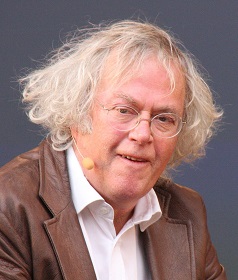
Martin R. Dean (Menziken, 17 juli 1955)


De Duitse dichter en schrijver Rainer Kirsch werd geboren op 17 juli 1934 in Döbeln. Zie ook alle tags voor Rainer Kirsch op dit blog en ook mijn blog van 17 juli 2010.


Claudine oder die Zeitläufte

Hübsche Claudine, mußt du bei mir weinen?
Dein Loch ist wundersüß, ich gönn es keinem
So glatt wie mir, doch kann ichs nicht verwalten
Als Eigentum: Schwäch wen du schwächst!, und halten
Dich andre aus, sei seufzend guter Dinge.
(Es gibt der Güter schlimmere und geringe,
Das schlimmste ist: Claudine unverspundet.)
Dann nämlich will sie, daß die Welt gesundet,
Und wenn die Welt das nicht so eilig möchte,
Schwindelt Claudine sie höchst laut zurechte.
Und weil das wehtut, kommen ihr die Tränen.
Es ist ja wahr: ein Balg mit Sägespänen
Strengt nicht so an; was mach ichs dir? Mir scheint:
Weil Eine weniger dann lügt und weint.


Im Maß Petrarcas

Wolltest du ich sein wie ich du bin: Wäre
Zeit Unzeit dann, der festentflochtenen Haare
Aschblondheit Regen, mit dem Tag und Jahre
Rückfielen wie in mondbewegter Meere
Hinspiel und Gegenspiel, da schlagend Wellen
Getier am Ort belassen, Größeres treibend
Und wir, im salzigtrüben Tiefen, bleibend?
Wirkten des Welttods Gegengrund im schnellen
Gemeinen Wechsel, der wie lang er währte
Um was sonst Zeit ist fischgleich Strudel, nährte
Die unser Atmen aufschickt und erhält?
Dein Haar ists, das mir in die Augen fällt
Daß ich neu sähe; was? was Blinde sehen.
Sprich was du weißt, die Augenblicke gehen.


 2056153-8b6d022c162b6f9436ae0c3c45443a15.jpg
Rainer Kirsch (17 juli 1934 – 14 september 2015)
Cover


De Nederlandse schrijver Eelke de Jong werd geboren in Apeldoorn op 17 juli 1935. Zie ook alle tags voor Eelke de Jong op dit blog.

Uit:Paris mon amour

“Vandaag laat, d.w.z. 'n uur of 10 ontwaakt met uitgedroogde ofwel verschrompelde mondholte en zware druk op de ogen, poosje op de rand van het bed gezeten, 'k word elke morgen beroerder wakker. Niets schijnt zo uit te putten als de nachtrust. Heeft niets te maken met drankmisbruik, want daar probaat middeltje op gevonden, nl. 2 Entosorbinetabletjes voor het slapen gaan, die een kalme spijsvertering, 'n gezonde ontlasting garanderen, maar zou graag willen weten wat wél de oorzaak is. Lange tijd gedacht, dat m'n bed in een aardstraal stond en derhalve verlangend uitgezien naar eerstvolgende wenk voor een logeerpartij. Uitnodigingen lieten echter op zich wachten en toen maar kamer in hotel besproken om proef op som te nemen. Even besodemieterd wakker geworden, dus theorie ging niet op.
Voor de spiegel zag ik bleek, 'n ongezonde midwinterkleur met de zomervakantie nog maar net achter de rug, 'n rode gloed over de ogen, hologig tb-lijdertje, vreemde.
Laat d.w.z. uur of half 12 honden uitgelaten. Sprongen vrolijk tegen me op, geen verwijt dat ze circa een etmaal in een klein kamertje opgesloten waren geweest, maar dieren hebben misschien geen besef van tijd, alleen honger.
Naar de dijk. Tijdje op een door raadselachtige hand hier achtergelaten boomstam gezeten tot 't begon te regenen.
Opgestaan en verder gewandeld. Tekkel had 'n pootje van 'n haas gevonden. Afgepakt, hondje weggebonjourd, keek me nog leep na, pootje zag er onbeschadigd uit. Rest van haas echter niet gevonden.
Toen 't droog werd een tijdje op een steen op een knik in de dijkrug gezeten. De lucht zag grauw, maar in de verte vertoonden zich boven de stad opklaringen.
Jongensstemmen van een onzichtbaar sportveld, daarachter rij peppels, torens van flats, hotels, kantoren, fabrieken.”

 2056153-e9974fe51395072cbbf12faa3c3e71e1.jpg
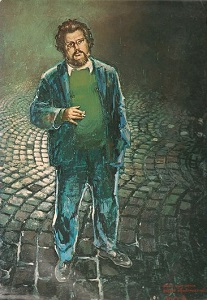
Eelke de Jong (17 juli 1935 – 1 augustus 1987)


De Nederlandse schrijfster Alie Smeding werd geboren in Enkhuizen op 17 juli 1890. Zie ook alle tags voor Alie Smeding op dit blog.

Uit:Duivelsnaaigaren

“Fem morrelde moeizaam de roestige grendels van de achterdeur af, de scharnieren krasten als raven, gelijk met de glanzende ochtend boog een verwaaide Ribesstruik de keuken in.
Onder haar hand uit, keek ze op in de witte dag.
Het voorjaar stond als een bonte prent van groen, rood en zilver voor haar knipperende oogen en in haar neus drong als een krieuwel, een overzoete geur.
Zij ademde ingehouden als in tegenzin, en haar kuisch-dunne mond kneep in kleine dwarse plooien bijeen, of ze wat bitters proefde. ‘Ik geloof,’ zei ze vaag in zich zelf, ‘dat ik er bang van ben.’ Haar mat-grijze oogen werden donker, en in haar breedwit gezicht trokken de rimpels veel te diep.
Werktuigelijk streek ze een haarpiek terug in haar dikke zwarte vlechten, toen zag ze ook weer de zware gouden ring met de bloedroode camee aan haar middenvinger, en dacht aan haar verjaardag...
Fronsend een beetje, draaide ze de scheef-gezakte steen terecht, onder het wat knobbelige vingerkootje, en ademde op het flonkerende kopje van koraal. ‘Lief,’ waardeerde ze, ‘van Grômoeder, zoo'n mooie ouë ring, er zat ook vast wel wat intiems aan vast, 'n geschiedenis uit Grômoeder's jonge jaren. Daarom had zij hem zeker ook aangehouën van nacht: 'n ring die met 'n belofte gegeven was misschien, en met 'n zoen. Grômoeder had zoo genoeglijk zitten te kijken over haar bril heen...’
Fem plukte met haar handen aan haar bovenlip. Haar glimlach aarzelde en vergleed... donkere gedachten sloegen een stempel...
Ze boog de Ribes-tak terug en liep over de rinkelende blauwe tegels van de plaats, het tuintje in.
Schel-bont en schaterend glansden er de roode en witte tulpen in het midden-bed, en de forsch-opgeschoten hyacinthen stonden als zuiltjes van geur in de halvemaan-perken.
Fem trok haar lip op - als misprijzend. ‘Verleden jaar was 't ook zoo en eer-verleden jaar en al die jaren terug...’
Het brak in haar luisteren.
Achter de hooge dijkrug - oostwaarts van het land - spoelde de stem van de zee aan - gelijkmatig en klein - of zij telkens een enkel eender-klinkend woord neerlei op het slik.”


 2056153-b07dc387b02a4beb6161660bf6360c7f.jpg
Alie Smeding (17 juli 1890 - 5 juli 1938)
Enkhuizen


De Congolese schrijver en journalist Paul Lomami Tshibamba werd geboren op 17 juli 1914 in Brazzaville. Zie ook alle tags voorPaul Lomami Tshibamba op dit blog.

Uit: Ah ! Mbongo

« Il n’est peut-être pas sans intérêt, pensons-nous, de débuter par la présentation du principal personnage qui est à l’origine des péripéties dont nous suivrons plus loin la trame. Nous estimons donc opportun qu’avant de lui emboîter le pas tout au long de la succession des épisodes où l’entraînera l’engrenage des événements, de faire prendre connaissance aux lecteurs de l’état civil circonstancié se rapportant aux particularités plutôt singulières de sa venue au monde.
Son nom est Gikwa. Il descend d’un grand chef des Hoto Mbanza1, une des grandes branches parmi les tribus d’Oubangui. Son aventure se situe dans les années 20. À une époque où, douze ans après avoir été cédé à la Belgique, le fantomatique « État Indépendant du Congo » du roublard Mfumu Mandefu Léopold II était assujetti à un nouveau statut et baptisé Colonie du Congo belge, dont les indigènes étaient taillables et corvéables à merci, tout comme ils le furent durant le règne du souverain-monarque belge. Redevenant ainsi le sosie de l’ancien « Empire du Silence », il était particulièrement marqué par des situations « héroïques », sous des fourches caudines, grâce à la servilité admirablement conjuguée au mutisme : deux solides éléments du gond sur lequel s’articulait la « civilisatrice sujétion » pour le plus grand bien des indigènes soigneusement « chosifiés ». Ainsi le plus bel humanisme proclamé par les nouveaux maîtres ne réussissait qu’à étamer l’oxyde de l’humanisme léopoldien avide d’ivoire et de caoutchouc… Le prince Gikwa était un des indigènes de cette époque « nouvelle »
Au lendemain d’une nuit orgiaque, les Hoto Mbanza ivres de fatigue se reposaient. Les hommes surtout : étendus çà et là sous l’auvent de leur case ou sous l’ombre d’un arbre à proximité, tous ronflaient, chacun sur sa chaise longue, un siège soporifique par excellence. Il y en avait cependant qui, malgré la pression de la torpeur rendue opiniâtre par la tumultueuse frairie de la veille, résistaient à l’assoupissement tout en demeurant immobiles, comme momifiés, ne réagissant même pas aux picoteries agaçantes des mouches. Bien entendu, dans cette prostration générale, aucun promeneur ne manifestait la moindre présence. »


 2056153-a9658a817d2f09bd935227d00e514b7c.jpg
Paul Lomami Tshibamba (17 juli 1914 – 12 augustus 1985)


De Amerikaanse schrijver James Purdy werd geboren in Fremont in de staat Ohio op 17 juli 1914. Zie ook alle tags voor James Purdy op dit blog.

Uit:Eustace Chisholm And the Works

“Eustace Chisholm's street, with the Home for the Incurables to the south and the streetcar line to the west, extended east up to blue immense choppy Lake Michigan. South of its terminus the great gray museum took up acres and acres with its caryatids, and further south rose the steel mills of Gary and South Chicago with their perpetual vomit of fire. Further down his street in a westerly direction, before Washington Park slipped into the colored ghetto, there was a rose garden in which the German poet, Lessing, sat among the blooms. Here amid the industrial whirlwind of America's economic burnout, the unemployed, in nondescript small separate armies, with a generous sprinkling of white youths from small towns and farms and up-from-the-South Negroes, stood in line to go on relief. Eustace Chisholm had been caught up in two tragedies, the national one of his country's economic collapse, and his failed attempt to combine marriage with the calling of narrative poet. He wondered whether it was because of his inability to produce a book or merely the general tenor of the times that his wife, Carla, who had supported him hand and mouth for two years, ran out on him with a baker's apprentice some six months before this story begins. Eustace answered for his failure as a writer on the grounds that he was too far distant from the great monopoly city of New York, claiming that no Chicago writer could become famous until he had departed the gem of prairies. Yet he dared not ever run the risk of abandoning his coign of vantage on Fifty-fifth Street, with the concomitant danger of losing his native accent and vision, so Eustace stayed in Chicago, where he was known by intimates and strangers as Ace. The original name, like a scar, he reopened each morning while shaving. "I am Eustace," he would mumble into the mirror. On the day this story begins Ace had been to the Catholic Salvage to see about getting an extra mattress, for Carla had taken the only good one when she had run off.


 2056153-066d2a8a3f6bfdbc3717bb20ff2014dc.jpg
James Purdy (17 juli 1914 - 13 maart 2009)
Cover


De Franse schrijver, filosoof en politicus Roger Garaudy werd geboren in Marseille op 17 juli 1913. Zie ook alle tags voor Roger Garaudy op dit blog.

Uit:Comment construire l'unité humaine

« Le point de départ de l'éducation, c'est cet acte créateur de l'homme.
C'est aussi son point d'arrivée: faire de chaque homme un homme, c'est-à-dire un créateur, un poète.
Comment alors peut se situer la création artistique dans le développement de l'acte humain du travail, de la création continuée de l'homme par l'homme?
Comment le mythe peut-il être une composante de l'action pour transformer le monde?
S'il est le langage de la transcendance, cette transcendance ne peut être pensée en termes d'extériorité ni de puissance: ni transcendance d'en haut d'un Dieu, ni transcendance d'en bas d'une nature donnée toute faite.
Le mythe n'est pas participation mais création.
Le mythe chez Marx, n'est pas, comme chez Freud, une traduction, même sublimée, du désir, mais un moment du travail.
Différence fondamentale, car le désir prolonge la nature alors que le travail la transcende.
Faire du travail la matrice du mythe, comme d'ailleurs de toute culture par opposition à la nature, nous permet déjà de tracer une ligne de démarcation entre le symbole onirique et le symbole mythique. Le premier est expression ou traduction du désir, le second est un moment de la création continuée de l'homme par l'homme, sous forme poétique, prophétique, militante, mais toujours prospective.
Ainsi est écartée la confusion entre le mythe proprement dit et ce que l'on appelle faussement de ce nom: si le mythe est ce moment du travail par lequel l'émergence de l'homme s'affirme avec cette dimension nouvelle de l'être: l'efficace du futur, l'on ne saurait appeler mythe ce qui est simple survivance du passé, la raison paresseuse et dépassée de l'allégorie ou des fables étiologiques. Pas davantage ce qui est simple reproduction ou conservation du présent par une image qui devient norme de conduite. Ce stéréotype social, démultiplié par la propagande ou la publicité, est illusion et aliénation. Il tend non à promouvoir l'histoire mais au contraire à l'arrêter en donnant seulement un visage au désir; et en laissant l'homme tourner en rond, dans le cercle fermé de l'instinct. Les variantes en sont nombreuses, depuis la propagande hitlérienne de la race, ou l'érotisme comme moyen de publicité. Jusqu'à cet ersatz dégradé du héros mythique que constitue l'idole, offrant à la jeunesse l'illusion compensatrice d'une vie aliénée, d'une vie par procuration grâce à l'inflation du mythe: Diana pour Bérénice, Madonna pour Aphrodite…"


 2056153-56c358e787840f76d72ff59fca5f5831.jpg
Roger Garaudy (17 juli 1913 – 13 juni 2012)


De Duitse schrijfster Clara Viebig werd geboren op 17 juli 1860 in Trier. Zie ook alle tags voor Clara Viebig op dit blog.

Uit: Vor Tau und Tag

„Vom Waldrand her kommt Vogelgezwitscher, und in den Hecken am Weg regt sich's auch; es hüpft, es schlüpft, es piept, es jagt und erhascht und schnäbelt sich — Frühling! Die Schlehen blüh'n, der Himmel ist lichtblau; um die Zweige, die, zitternd vor Glück, die ersten grünen Blättchen tragen, fächelt der laue Wind. Aus dem Wald treten zwei Gestalten, ein Mädchen und ein Mann; nun wandern sie langsam den schmalen Grasrain entlang. Rechts und links die Hecken sind hoch, die beiden gehen dahinter wie von einem Schirm gedeckt, die Welt sieht sie nicht; aber sie küssen sich doch nicht. Nun gehn sie auch nicht mehr nebeneinander; das Mädchen schlendert voran, hebt das Gesicht zum Himmel auf und versucht gleichgültig auszusehen. Sie ist sehr schlank, jung, sehr hübsch, und sind ihre Wangen auch nur schwach rötlich angehaucht, wie die Blätter der Dijon-Rose, es pulst doch gesundes warmes Blut in ihnen. Sie ist ganz frisch, ganz unberührt. „Maria", sagte der Mann leise. Er hielt die Blicke unverwandt auf die schlank vor ihm Herwandelnde geheftet, und das Blut stieg ihm heiß in die Stirn. Der Hut drückte ihn wie im heißen Sommer, er nahm ihn ab und fuhr sich mit gespreizten Fingern durchs Haar. „Maria —!" Sie drehte sich nicht um, sie hielt immer das Gesicht geradauf zum Himmel gerichtet. „Maria," sagte er wieder, „Maria, sei doch nicht so stumm! Was hab' ich dir getan? Eben warst du noch so fröhlich, und nun ist alles wie fortgeweht. Was hast du?" Ihre zartgefärbten Lippen drückten sich mit leisem Zucken aufeinander, ihre Augen zwinkerten.
„Maria,” fragte er, „bin ich dir denn zuwider? Das habe ich nicht gedacht!" Er machte einen raschen Schritt, um neben sie zu treten; sie machte noch einen rascheren und war ihm wieder voraus. Noch immer keine Antwort. Zwei, drei Minuten vergingen. Der Wind strich lau durch die Hecken und zupfte der Schlehe ein paar weiße Blüten aus der schimmernden Brautkrone; ein Vogelpärchen verkroch sich, lockend, tiefer ins lauschige Versteck. Antwortete sie jetzt? Der Mann lauschte — nein! „So war es eine Täuschung", sagte er bitter. „Ich werde morgen früh abreisen." „Nein, o nein!" Hastig fuhr Marias Kopf herum, die Augen blitzten angstvoll. „Schon — abreisen —?!"


2056153-e52c035eef7e38597df99083245677b4.jpg
Clara Viebig (17 juli 1860 – 31 juli 1952)
Cover biografie


Onafhankelijk van geboortedata

De Duitse schrijfster Lilian Loke werd geboren in 1985 in München. Zie ook alle tags voor Lilian Loke op dit blog.

 Uit: Gold in den Straßen

„Zurück in seiner Wohnung, stopft er vor Wut die Sportkleidung und Laufschuhe in den Müll, fuck Adidas Supernova Glide Boost, fuck Continental-Außensohle, optimale Griffigkeit bei Nässe, Meyer hätte mit seinem Arsch zu Hause bleiben sollen, sein Hals, sein Kopf, jeder Muskel schmerzt, er fühlt sich fiebrig, überhaupt nicht in der Lage, gleich diesen Termin wahrzunehmen, aber er muss sich zusammenreißen, duscht, zieht sich um, in nicht mal einer Stunde muss er in Kronberg sein, um das Haus für die Besichtigung vorzubereiten, und, wie Falber ihn gestern bereits gewarnt hat, Brink kam bisher immer zu früh.
Meyer wirft seine Aktenmappe auf den Rücksitz, schlägt die Wagentür zu, überprüft noch mal sein Outfit für Brink in der Spiegelung der Autoscheibe, der neue tiefblaue Einreiher, weißes Hemd, silbergraue Krawatte, passendes Einstecktuch. Auf der Kappe seines Schuhs entdeckt er einen kleinen Fleck, wischt ihn mit etwas Spucke weg. Bevor er in den Wagen steigt, breitet er zur Sicherheit ein frisches Handtuch auf dem Sitz aus. Er bildet sich ein, das Leder sei immer noch sandig und klamm, die ganze Kabine rieche nach dem Moder des Weihers.
Als Meyer die Kronberger Villa betritt, strömt ihm der schwache Duft von Möbelpolitur entgegen, die Putzleute waren gestern da, Meyer öffnet die Fenster, legt die Sicherungen um, kontrolliert alle Räume, verbringt fast zwanzig Minuten damit, in den düsteren Ecken Licht zu machen, aber dann liegt alles in warmem Glanz. Zum Schluss platziert er das bestellte Blumenarrangement auf dem Tisch in der Eingangshalle, bevor er sich kurz auf den Absatz der Treppe setzt, spürt, wie ihm die Handflächen feucht werden. Ihn packt immer noch das Lampenfieber bei jeder großen Besichtigung, ein Gefühl, als sirre jede Faser seines Körpers, Angst, aber noch mehr die Lust auf Performance, sich ganz hineinzulegen in den Verkauf. Meyer steht auf, atmet durch. Heute verkuppelt er den alten Brink. Anfang sechzig, Unternehmer, Chemieindustrie, zu viel Aftershave und keine Spur von Grau im Haar, nur ein verdächtiger Violettstich im Braun.“


 2056153-d3fea0eb4611c77d4fc0a6d07cfa7ce8.jpg
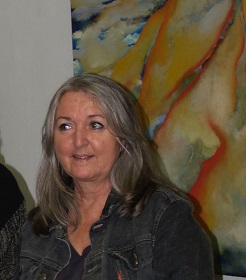
Lilian Loke (München, 1985)


Zie voor nog meer schrijvers van de 17e juli ook
mijn blog van 17 juli 2016 deel 2.
Geschreven door Romenu om 18:34 Reageer op dit bericht

Donald Davie

De Engelse dichter en criticus Donald Alfred Davie werd geboren op 17 juli 1922 in Barnsley, Yorkshire. Hij begon zijn opleiding aan de Barnsley Holgate Grammar School en doorliep later het St Catharine's College in Cambridge. Zijn studies daar werden onderbroken tijdens de oorlog door zijn dienst bij de Koninklijke Marine in het Russiche deel van de Noordpool, waar hij zichzelf de taal leerde. In het laatste oorlogsjaar, in Devon, trouwde hij met Doreen John. Na zijn terugkeer in Cambridge, vervolgde hij zijn studie en behaalde hij zijn B.A., M.A. en Ph.D. Hij keerde terug naar Cambridge in 1958 en werd in 1964 de eerste hoogleraar Engels aan de nieuwe universiteit van Essex. Hij doceerde Engels aan de universiteit van Essex van 1964 tot 1968, toen hij verhuisde naar Stanford University, waar hij Yvor Winters opvolgde. In 1978 verhuisde hij naar de Vanderbilt University, waar hij les gaf tot zijn pensionering in 1988. Hij schreef vaak over de techniek van poëzie, zowel in boeken als “Purity of Diction in English Verse”, en in kleinere artikelen zoals 'Some Notes on Rhythm in Verse'. Davie's kritiek en poëzie worden beide gekenmerkt door zijn interesse in modernistische en pre-modernistische technieken. Veel van Davie's poëzie is vergeleken met die van de traditionalistische Philip Larkin, maar andere werken zijn meer beïnvloed door Ezra Pound.


Across the Bay

A queer thing about those waters: there are no
Birds there, or hardly any.
I did not miss them, I do not remember
Missing them, or thinking it uncanny.

The beach so-called was a blinding splinter of limestone,
A quarry outraged by hulls.
We took pleasure in that: the emptiness, the hardness
Of the light, the silence, and the water’s stillness.

But this was the setting for one of our murderous scenes.
This hurt, and goes on hurting:
The venomous soft jelly, the undersides.
We could stand the world if it were hard all over.


In California

Chemicals ripen the citrus;
There are rattlesnakes in the mountains,
And on the shoreline
Hygiene, inhuman caution.

Beef in cellophane
Tall as giraffes,
The orange-rancher’s daughters
Crop their own groves, mistrustful.

Perpetual summer seems
Precarious on the littoral. We drive
Inland to prove
The risk we sense. At once

Winter claps-to like a shutter
High over the Ojai valley, and discloses
A double crisis,
Winter and Drought.

Ranges on mountain-ranges,
Empty, unwatered, crumbling,
Hot colours come at the eye.
It is too cold

For picnics at the trestle-tables. Claypit
Yellow burns on the distance.
The phantom walks
Everywhere, of intolerable heat.

At Ventucopa, elevation
Two-eight-nine-six, the water hydrant frozen,
Deserted or broken settlements,
Gasoline stations closed and boarded.

By nightfall, to the snows;
And over the mile on tilted
Mile of the mountain park
The bright cars hazarded.


 2135113-27dcf63f6cdc948ebe104c0696b92ba3.jpg
Donald Davie (17 juli 1922 - 18 september 1995)


Geschreven door Romenu om 00:00 Reageer op dit bericht

In Memoriam Anne Golon

In Memoriam Anne Golon

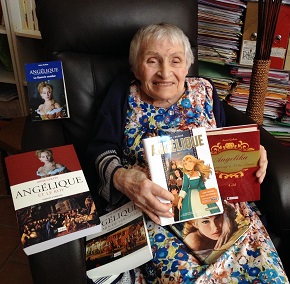
De Franse schrijfster Anne Golon is op afgelopen vrijdag op 95-jarige leeftijd overleden in Versailles. Anne Golon werd geboren als Simone Changeux in Toulon, Frankrijk op 19 december 1921. zij is vooral bekend geworden als schrijfster van de Angélique-cyclus. Zie ook ook alle tags voor Anne Golon op dit blog.

Uit:Angélique et la Cour des Miracles

« Pour un peu, elles seraient allées s'installer tout de suite devant la maison de la rue de la Ferronnerie, mais les autres les houspillèrent et Cul-de-Bois rugit une fois de plus, les injuriant copieusement: — Merde alors! Si nous nous occupons de notre boulot et de nos petites affaires, alors que le Grand Coesre nous attend! Qu'est-ce qui m'a foutu des mémés pareilles! Les usages se perdent, ma parole !... Les mémés confuses baissèrent la tête et tremblotèrent du menton. Puis chacun, qui par un trou, qui par l'autre, se glissa dans le cimetière. Le crieur des morts s'éloigna en secouant sa clochette. Aux carrefours, il s'arrêtait, levant son visage vers la lune, et psalmodiait lugubrement:
Réveillez-vous, gens qui dormez Priez Dieu pour les trépassés...
Angélique, les yeux agrandis, s'avançait à travers le vaste espace gorgé de cadavres. Çà et là il y avait des fosses communes grandes ouvertes, déjà à moitié pleines de corps cousus dans leurs linceuls, et qui attendaient un nouveau contingent de morts pour être refermées. Quelques stèles, quelques dalles, posées à même le sol, marquaient ilasmaier„,tombes de familles plus fortunées. Mais c'était ici depuis des siècles le cimetière des pauvres gens. Les riches se faisaient enterrer à Saint-Paul. La lune, qui avait choisi enfin de régner dans un ciel sans nuages, éclairait maintenant la mince couche de neige recouvrant le toit de l'église et des bâtiments alentour. La croix des Buteaux, qui était un haut crucifix de métal, dressé près du prêchoir, au centre du terrain, luisait doucement. Le froid atténuait l'odeur nauséabonde. Personne d'ailleurs n'y attachait d'importance et Angélique elle-même respirait avec indifférence cet air saturé de miasmes. Ce qui attirait son regard et la sidérait au point qu'elle avait l'impression d'être la proie d'un cauchemar, c'étaient les quatre galeries qui, partant de l'église, formaient l'enclos du cimetière. Ces bâtiments datant du Moyen Âge étaient composés, dans leurs soubassements, d'un cloître aux arcades en ogive où, le jour venu, les marchands établissaient leurs éventaires. Mais, au-dessus du cloître, se trouvaient des galetas couverts de toits de tuiles, et qui reposaient du côté du cimetière sur des piliers de bois, laissant ainsi des intervalles à claire-voie entre les toitures et les voûtes. Tout cet espace était comblé d'ossements. Des milliers et des milliers de têtes de morts et de débris de squelettes s'entassaient là. Les greniers de la mort, gorgés de leur sinistre récolte, exposaient aux regards et à la méditation des vivants des amoncellements inouïs de crânes que les courants d'air séchaient et que le temps réduisait en cendres. Mais, sans cesse, de nouvelles provendes, extraites de la terre du cimetière, les remplaçaient. En effet, un peu partout, près des tombes, on voyait des tas de squelettes assemblés en fagots ou les sinistres boules blanches des têtes de morts soigneusement empilées par le fossoyeur et qui, demain, seraient rangées dans les greniers, au-dessus du cloître. —«


 2055858-7d9e85c470fa22a1026e9ec7a0498219.jpg
Anne Golon (19 december 1921 – 14 juli 2017)

Geschreven door Romenu om 18:22 Reageer op dit bericht

Reinaldo Arenas, Georges Rodenbach, Tony Kushner, Anita Brookner, Jörg Fauser

De Cubaanse dichter en schrijver Reinaldo Arenas werd geboren op 16 juli 1943 in Holguin. Zie ook alle tags voor Reinaldo Arenas op dit blog.

Uit: The Color of Summer (Vertaald door Andrew Hurley)

“FIFO: (more enraged yet)
No more delay! Do what I say—
torpedo Avellaneda!
Brought back from the grave for this special day,
this is how she repays us!
No more mercy, no more pleas—
blast her out of the waves!
The broadest spot is the best spot to aim—
do it! Bombs away!
Be sure to shoot for the backside, boys! Death to every traitor!
AVELLANEDA:
No, not the backside, seat of inspiration!
Take aim at the fore!
All who read me know my slogan:
I wish all to enter through the front door.
All the participants in the act of repudiation throw rotten eggs at Avellaneda.
CHORUS:
No more mercy, no more pleas—
blast her out of the waves!
The backside's the best spot to aim,
so do it! Bombs away!
AVELLANEDA:
If that's the way it's going to be,
if that's the way they're going to treat me,
then I'm glad I decided not to stay.
Clearly, here there's no home for me,
so I'll make my getaway ...
But if I ever get my hands on that Horcayés
that brought me back from the dead,
when I get through with him he'll need
the finest seamstress in Key West,
to sew back on his head.
Meanwhile, on my rowing let me concentrate—
I think I'm going to have to paddle with both arms and both feet!”


 2055813-e64a36090f41dce1818aea60eff2b09b.jpg
Reinaldo Arenas (16 juli 1943 – 7 december 1990)
Cover 


De Belgische dichter en schrijver Georges Rodenbach werd geboren in Doornik op 16 juli 1855. Zie ook alle tags voor Georges Rodenbach op dit blog.


Béguinage flamand

I
Au loin, le béguinage avec ses clochers noirs,
Avec son rouge enclos, ses toits d'ardoises bleues
Reflétant tout le ciel comme de grands miroirs,
S'étend dans la verdure et la paix des banlieues.

Les pignons dentelés étagent leurs gradins
Par où montent le Rêve aux lointains qui brunissent,
Et des branches parfois, sur les murs des jardins,
Ont le geste très doux des prêtres qui bénissent.

En fines lettres d'or chaque nom des couvents
Sur les portes s'enroule autour des banderoles,
Noms charmants chuchotés par la lèvre des vents ;
La maison de l'Amour, la maison des Corolles,

Les fenêtres surtout sont comme des autels
Où fleurissent toujours des géraniums roses,
Qui mettent, combinant leurs couleurs de pastels,
Comme un rêve de fleurs dans les fenêtres closes.

Fenêtres des couvents ! attirantes le soir
Avec leurs rideaux blancs, voiles de mariées,
Qu'on voudrait soulever dans un bruit d'encensoir
Pour goûter vos baisers, lèvres appariées !

Mais ces femmes sont là, le coeur pacifié,
La chair morte, cousant dans l'exil de leurs chambres ;
Elles n'aiment que toi, pâle crucifié,
Et regardent le Ciel par les trous de tes membres !

Oh ! le silence heureux de l'ouvroir aux grands murs,
Où l'on entend à peine un bruit de banc qui bouge,
Tandis qu'elles sont là, suivant de leurs yeux purs
Le sable en ruisseaux blonds sur le pavement rouge.

Oh ! le bonheur muet des vierges s'assemblant,
Et comme si leurs mains étaient de candeur telle
Qu'elles ne peuvent plus manier que du blanc,
Elles brodent du linge ou font de la dentelle.

C'est un charme imprévu de leur dire " ma sœur "
Et de voir la pâleur de leur teint diaphane
Avec un pointillé de taches de rousseur
Comme un camélia d'un blanc mat qui se fane.

Rien d'impur n'a flétri leurs flancs immaculés,
Car la source de vie est enfermée en elles
Comme un vin rare et doux dans des vases scellés
Qui veulent, pour s'ouvrir, des lèvres éternelles !


 2055813-314c6b7b2a73e4f82e20643e9af2eab0.jpg
Georges Rodenbach (16 juli 1855 – 25 december 1898)
Doornik


De Amerikaanse schrijver Tony Kushner werd geboren op 16 juli 1956 in New York Zie ook alle tags voor Tony Kushner op dit blog.

Uit:Angels in America

“PRIOR: Out of my way, I wanna meet my replacement [pushes past Belize into Joe Pitt's office] Oh, God.
JOE: Yes, can I help you?
PRIOR: [stares] I'm a prophet.
JOE: What?
PRIOR: PROPHET! PROPHET! I PROPHESY, I HAVE SIGHT, I SEE! What do you do?
JOE: [slightly stunned] I'm a clerk.
PRIOR : Oh, big deal, a clerk? You, what, you file things? You better be keeping a file on the hearts you break. That's all that counts in the end. You'll be having bills to pay in the world to come. You and your friend, the Whore of Babylon. Sorry, wrong room.
PRIOR: [back outside with Belize] He's the Marlboro Man!
[After Belize goes inside to look]
PRIOR: Home on the range!
BELIZE: Chaps and spurs.
PRIOR: Mega-butch! He made me feel beyond nelly, like I've got wispy daisies sprouting out my ears."


 2055813-4ac761e80066cfb72d31e230c6450b0f.jpg
Tony Kushner (New York, 16 juli 1956)
Scene uit een opvoering in Richmond, 2015 


De Engelse schrijfster en historica Anita Brookner werd geboren op 16 juli 1928 in Herne Hill, een voorstad van Londen. Zie ook alle tags voor Anita Brookner op dit blog.

Uit:Hotel Du Lac

'Anyway, I got over that, though it was not easy, and joined the most reliable set of people I could find, knowing, without bothering to ask, that they were bound to be going to Switzerland, and very soon I was on the plane and a quite charming man sat next to me and told me about this conference he was attending in Geneva. I deduced that he was a doctor; in fact, I had him down as a specialist in tropical diseases, particularly as he told me that he did most of his work in Sierra Leone, but it turned out that he had something to do with tungsten. So much for the novelist's famed powers of imagination. Nevertheless I felt a bit better, and he told me about his wife and daughters and how he was flying back to them in two days' time to have a weekend at home before he goes back to Sierra Leone. And within an extraordinarily short time we were there (I notice that I say 'there' and not 'here') and he put me in a taxi, and after about half an hour I ended up here (and it is beginning to be 'here' rather than 'there') and very soon I shall have to unpack and wash and tidy my hair and go downstairs and try to find a cup of tea.
'The place seems to be deserted. I noticed only one elderly woman as I came in, very small, with a face like a bulldog, and legs so bowed that she seemed to throw herself from side to side in her effort to get ahead, but doing so with such grim conviction that I instinctively got out of the way. She walked with a stick and wore one of those net veils on her head covered with small blue velvet bows. I had her down as a Belgian confectioner's widow, but the boy carrying my bags nodded vestigially and murmured 'Madame la Comtesse' as she rocked past. So much for the novelist's famed powers, etc. In any event I was processed so speedily into this room (almost induced into it) that I couldn't take in anything else.
It seems quiet, warm, fairly spacious. The weather might, I suppose, be described as calm.
'I think about you all the time. I try to work out where you are, but this is rather difficult, surrounded as I am by the time change, minimal though it is, and the lingering effects of my pills, and all these sad cypresses. In a manner of speaking. But tomorrow is Friday, and when it begins to get dark I shall be able to imagine you getting in the car and driving to the cottage. And then, of course, the weekend, about which I try not to think. You cannot know . . .'


 2055813-57c1f6c46eae0b574e3e5906e0683bf0.jpg
Anita Brookner (16 juli 1928 – 10 maart 2016)
Cover


De Duitse schrijver en journalist Jörg Fauser werd geboren op 16 juli 1944 in Bad Schwalbach. Zie ook alle tags voor Jörg Fauser op dit blog.


Samstag im Siechenheim

Jeden Samstag mittag passierte dasselbe:
der alte Tom Bradley, ungefähr 85, ehemaliger
Schmied und Mittelstürmer beim FC Watford,
ein Brocken von Kerl und noch lang nicht am Ende,
schob sich in seiner Falle hoch wie ’n Eisberg aus der See,
schmiß seinen Teller Grütze in die Ecke,
Kissen hinterher, rüttelte an dem Eisengitter
das Harvey und ich an seinem Bett befestigen mußten,
und brüllte:
Laßt mich raus, Jungs! Laßt mich aufs Feld, ihr
Hurenböcke!

Es war Punkt halb vier und im Stadion pfiff der Schiedsrichter
das Spiel an und Tom Bradley, Mittelstürmer
der Bezirksmeistermannschaft von 1907, mußte raus
um sein Tor zu machen,

und der ganze Saal im Siechenheim, dreißig Mann,
die Depperten und Ausgepowerten,
die Maroden und unheilbaren Fälle von Delirium tremens
und Krebs und Zucker und Schlagfluß und Wahnsinn,
die Pferdenarren die keine Wette mehr machten
und die Säufer die kein Glas mehr kippten
und die Arbeitslosen die keine Arbeit mehr brauchten,
die Toten, die noch zehn Jahre krepieren würden
und die Lebenden die ihren letzten Schnaufer machten,
alle feuerten Tom Bradley an:
Los, Tom, gib ihnen Saures! Gibs den Waschlappen!
Ran an den Ball! Schaff dich! Go go go!

Der ganze Saal tobte jeden Samstag halb vier,
Watford verlor todsicher und wir waren schuld,
der Nigger-Arzt und Harvey, das Oberpfleger-Arschloch
und ich, obwohl ich ja kein Limey war und schon deshalb
nichts von Fußball verstand, und wir mußten das Gitter
abschrauben und Tom seinen Bademantel überziehn und
ihn ins Bad verfrachten, bis die Jungs ihn vergaßen,
während er in der Wanne grunzte und ich seine Schrunden
schrubbte und er mit seinem gichtigen Pimmel spielte
als ob er ihn das erste Mal sehn würde,
und nach der Schicht nach Hause, die Stones hatten einen neuen Hit
rausgebracht, »Under my thumb«, zum Abendessen gabs
Hammelbraten mit Bohnen und Stellas Alter
saß mit vergrätztem Gesicht in der Küche,
»was ’n los« –
»die Kaffer ham schon wieder verloren« –
shit, ich packte Stella und machte, daß ich da rauskam.


 2055813-7a7c8175e17fbd7f1adbc5ed77529135.png
Jörg Fauser (16 juli 1944 – 17 juli 1987)
Cover 


Zie voor nog meer schrijvers van de 16e juli ook mijn vorige blog van vandaag.

Geschreven door Romenu om 15:38 Reageer op dit bericht

Dag Solstad, Bernard Dimey, Andrea Wolfmayr, Pierre Benoit, Franz Nabl

De Noorsde schrijver Dag Solstad werd geboren op 16 juli 1941 in Sandefjord. Zie ook alle tags voor Dag Solstad op dit blog.

Uit: Shyness and Dignity (Vertaald door Sverre Lyngstad)

“And so, when the chips are down, I must say, though not without a sense of repugnance, that if you wish to show your belief in democracy, you also have to do so when you are in the minority, convinced both intellectually and, not least, in your innermost self, that the majority, in the name of democracy, is crushing everything you stand for and that means something to you, indeed, all that gives you the strength to endure, well, that gives a kind of meaning to your life, something that transcends your own fortuitous lot, one might say. When the heralds of democracy roar, triumphantly bawling out their vulgar victories day after day so that it really makes you suffer, as in my own case, you still have to accept it; I will not let anything else be said about me, he thought.”
(...)

“for a brief moment it is his fate, and nothing else, that is frozen into immobility on the stage. The moment of the minor figure. Both before and after this he remains the same, the man who reels off those smart lines, one of which has acquired an immortal status in Norwegian literature: ‘If you take the life-lie away from an average person, you take away his happiness as well.”


 2055809-33df733f178773a57c5481bd23b70547.jpg
Dag Solstad (Sandefjord, 16 juli 1941)


De Franse dichter en schrijver van chansons Bernard Dimey werd geboren op 16 juli 1931 in Nogent-en-Bassigny (tegenwoordig Nogent). Zie ook alle tags voor Bernard Dimey op dit blog.


La crucifixion

I
Tu viens c’t’ après-midi à la crucifixion ?
T’as qu’à v’nir avec moi, ça t’chang’ra les idées !
Ta bergère est pas là, profit’de l’occasion
Moi j’ai prév’nu Lévy que j ’prenais ma journée
J’y ai dit « j’veux voir ça, et pis j’ai mes raisons ! »
Il a pas pu r’fuser vu qu’il y va, cézigue !
Ça va ram ’ner du monde et marquer la saison
C’ t’affair’là, tu vas voir, mais le truc qui m’intrigue
C’est qu’sur les trois clients qu’ils vont foutre au séchoir
Y en a deux, paraît-il, qu’on a dû bien connaître
Ils nous ont fait marron sur un coup d’marché noir
On ira les r’garder, ça les amus’ra p’t’être

Quand on avait l’tuyau pour les surplus romains
J’avais tout préparé, tout mâché la besogne,
On était cinq su’l’coup, vraiment du cousu-main !
Quand ils nous ont doublé, on a passé la pogne
Mais j’dois dire qu’aujourd’hui, je vais bien rigoler
Comm’quoî, mon vieux cochon, y a tout d’même un’justice
Comm’disait mon vieux père : « Faut pas tuer ni voler à moins
D’être certain que le coup réussisse ! »

Le troisième, il paraît qu’il marche à la gamberge
Il jacte à droite à gauche, on l’a vu v’nir de loin
Il est pas vieux du tout, il n’a pas trente-cinq berges
On n’sait pas bien qui c’est, c’est pas un gars du coin
C’est un genr’de r’bouteux, il guérit les malades
Ça fait trois ans, guèr’plus, qu’il est sur le trimard
N’empêch’que le Pilate et ses p’tits camarades
L’ont prié d’obéir et d’arrêter son char
Comm’disait mon vieux père : « La poisse, elle vient tout’seule
Mais plus tu veux jacter, plus qu’ell’vient rapid’ment
C’est un’bell’qualité d’savoir fermer sa gueule »
Mon père, pour un ivrogne, il n’manquait pas d’jug’ment !

D’ailleurs, en fait d’jug’ment, c’est par là qu’ça commence
Si tu veux v’nir, tu viens… Moi j’veux pas m foutr’en r’tard
Tu viens pas… Moi j’m’en vais… J’te dirai c’que j’en pense !
J’pass’rai pour l’apéro, à sept heures, au plus tard.


 2055809-97de1d750e7037c3c2794113f29e938d.jpg
Bernard Dimey (16 juli 1931 – 1 juli 1981)


De Oostenrijkse schrijfster en politica Andrea Wolfmayr werd geboren op 16 juli 1953 in Gleisdorf. Zie ook alle tags voor Andrea Wolfmayr op dit blog.

Uit: Wenn du weggehst von zuhause

„Demut vor der Arbeit von vielen war für mich ein Ergebnis, und der wachsende Wunsch, noch besser zusammenzuarbeiten, um mehr zu erreichen.
Kurz gefasst: Für die Gleisdorferin in Wien war es ein Jahr voll Staunen, interessierter Teilnahme, Aufmerksamkeit, Wachsamkeit. Dauerndes Lernen, jeden Tag neue Erfahrungen, das Kennenlernen unsäglich vieler Menschen, verschiedenste und kontroversiellste Sicht von aktuellen Problemen. Spannend und begeisternd – manchmal auch erschöpfend und anstrengend.
Was bleibt und wohl immer bleiben wird: die Verbundenheit mit Gleisdorf. Denn eines Tages möchte ich zurückkehren in unsere Stadt mit ihren überschaubaren Strukturen und ihrer lebens- und liebenswerten Umgebung. Hier bin ich zuhause, von hier stamme ich, hierher fühle ich mich zugehörig. Und wenn ich auch dabei bin, mir weitere "Heimaten" zu erwerben, Graz, das schon lang eine zweite Heimat ist, Wien, und vielleicht als nächstes noch weitere europäische oder osteuropäische Städte – Gleisdorf wird immer Heimat bleiben, Vaterstadt, Mutterstadt. Mein Hirn ist zwar zur Zeit in Wien, mein Körper dauernd unterwegs. Aber hier, in Gleisdorf, ist mein Herz.”


 2055809-02692ce37563fc9e92a6cd47fc736350.jpg
Andrea Wolfmayr (Gleisdorf, 16 juli 1953)


De Franse dichter en schrijver Pierre Benoit werd geboren op 16 juli 1886 in Albi. Zie ook alle tags voor Pierre Benoit op dit blog.


Uit: L’Atlantide

« Voilà cinq mois que j’en faisais fonction, et, ma foi, je supportais bien cette responsabilité et goûtais fort cette indépendance. Je puis même affirmer, sans me flatter, que, sous ma direction, le service avait marché autrement que sous celle du capitaine Dieulivol, le prédécesseur de Saint-Avit. Brave homme, ce capitaine Dieulivol, colonial de la vieille école, sous-officier des Dodds et des Duchesne, mais affecté d’une effroyable propension aux liqueurs fortes, et trop enclin, quand il avait bu, à confondre tous les dialectes et à faire subir à un Haoussa un interrogatoire en sakalave. Personne ne fut jamais plus parcimonieux des ressources en eau du poste. Un matin qu’il préparait son absinthe, en compagnie du maréchal des logis chef, Châtelain, les yeux fixés sur le verre du capitaine, vit avec étonnement la liqueur verte blanchir sous une dose d’eau plus forte qu’à l’ordinaire. Il releva la tête, sentant que quelque chose d’anormal venait de se produire. Raidi, la carafe inclinée à la main, le capitaine Dieulivol fixait l’eau qui dégouttait sur le sucre. Il était mort.
Cinq mois durant, après la disparition de ce sympathique ivrogne, on avait semblé se désintéresser en haut lieu de son remplacement. J’avais même espéré un moment qu’une décision serait prise, m’investissant en droit des fonctions que j’exerçais en fait… Et aujourd’hui, cette soudaine nomination…
Le capitaine de Saint-Avit… À Saint-Cyr, il était de mes recrues. Je l’avais perdu de vue. Puis mon attention avait été rappelée sur lui par son avancement rapide, sa décoration, récompense méritée de trois voyages d’exploration particulièrement audacieux, au Tibesti et dans l’Aïr ; et soudain, le drame mystérieux de son quatrième voyage, cette fameuse mission entreprise avec le capitaine Morhange, et d’où un seul des explorateurs était revenu. Tout s’oublie vite, en France. Il y avait bien six ans de cela. Je n’avais plus entendu parler de Saint-Avit. Je croyais même qu’il avait quitté l’armée. Et maintenant, voici que je me trouvais l’avoir pour chef."


 2055809-4b0df59b1a19b900eae750d22b742404.png
Pierre Benoit (16 juli 1886 – 3 maart 1962)


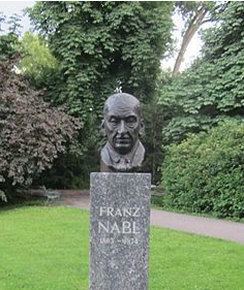
De Oostenrijkse schrijver Franz Nabl werd geboren op 16 juli 1883 in Lautschin.Zie ook alle tags voor Franz Nabl op dit blog.

Uit: The Long Arm (Vertaald door Roy Temple House)

« The longer we talked the more intimate, the more in the nature of a mutual confession, our conversation became. I admitted to Banaotovich that the hifalutin fashion in which I had left the town to win fame and fortune years before, had been asinine in the extreme, and that it
served me just right to have to sneak back unknown and penniless.
Banaotovich rejoined that for all his pride in his school marks he had remained a person of no importance, and that the pot had not the slightest intention of making itself ridiculous by calling the kettle black. He seemed almost painfully inclined to run himself down. I could feel in his manner a sort of pathetic reaching out for sympathy and consideration. And it began to seem as if he were about to tell me something or ask me for something. But whatever he had to tell seemed hard to say, and it was slow in coming over his lips.
Banaotovich ordered two bottles of the heavy native wine. I drank sparingly of it, because it goes to my head. But Banaotovich swallowed two or three glassfuls in hasty succession, and his cheeks grew flushed.
There was a pause. Suddenly he leaned across the table toward me and spoke in a hoarse, excited whisper.
"Modersohn," he said anxiously, "I want to make a confession to you – a terrible confession. It may turn you against me completely. Maybe you don't want to hear it. If you don't, say so, and I'll go home. But it seems as if I've got to tell somebody about it. It seems as if I've got to find somebody who understands me and can excuse me, or it will kill me. Shall I tell you? Shall I?"
I was startled. I was reasonably sure that Banaotovich was no criminal, since he had lived half a century in his native city, undisturbed and from all he had told me solvent and respected. I had always known that he was a queer fish, a brooding, solitary sort of person, and I settled
myself to listen to some harmless bit of psychopathy which meant nothing except to the unfortunate subject."


 2055809-17da5c5a3b3b2bfd657fe5e6c8d8a9a6.png
Franz Nabl (16 juli 1883 – 19 januari 1974)
Borstbeeld in Graz

Geschreven door Romenu om 15:27 Reageer op dit bericht

William Irwin Thompson

De Amerikaanse dichter, sociaal filosoof en cultuurcriticus William Irwin Thompson werd geboren op 16 juli 1938 in Chicago, Illinois Hij groeide op in Los Angeles, Californië. Hij behaalde zijn B.A. aan Pomona College en zijn Ph.D. aan de Cornell University. Hij werd hoogleraar geesteswetenschappen aan het Massachusetts Institute of Technology en vervolgens aan de York University in Toronto, Ontario. Hij heeft verder gedoceerd aan de Universiteit van Syracuse, de Universiteit van Hawaï, de Universiteit van Toronto en het California Institute of Integral Studies. In 1973 verliet hij de academische wereld om de Lindisfarne Association te stichten, een groep wetenschappers, dichters en religieuze geleerden die elkaar ontmoetten om te discussiëren en deel te nemen aan de opkomende planetaire cultuur die hij leidde van 1972 tot 2012. Thompson woonde ook 17 jaar in Zwitserland. Hij beschrijft een recent werk, “Canticum Turicum” in zijn boek uit 2009, “Still Travels: Three Long Poems”, zelf als "een lang gedicht over de westerse beschaving dat begint met volksverhalen en sporen van Karel de Grote in Zürich en eindigt met de voltooiing van de westerse beschaving zoals uitgedrukt in “Finnegans Wake” en de sporen van James Joyce in Zürich. " In 1995 ontwierp Thomson, samen met wiskundige Ralph Abraham, een nieuw type cultuurhistorisch curriculum op basis van hun theorieën over de evolutie van het bewustzijn. Thompson woont momenteel in Portland, Maine.


Four In The Morning

The universe is crawling with unseen life:
angels and djinn and spiritual guides.
Like the excess in a stagnant pond,
this abscess of the Absolute
is obscenely corpulent
in every nook and cranny,
armpit and crotch
of the Great Mother
of dark energy and dark matter
we do not see anymore
than the germs in our guts see us,
because they are not germs
but neurons of a larger brain
in which an I is only an organ,
or rather an artificially imposed
membrane drawn arbitrarily
amid a mass of interactive
molecular gates with ions
coming and going as they please
without a thought of me.
Savages knew this once
and could feel it like an itch
beyond the reach of scratch.
Christian missionaries called it animism
and tried to beat it out of them,
bringing brassieres to contain breasts,
and bibles to contain minds,
but nights when I cannot sleep,
I wake at something the clock
marks as three or four,
with my mind teeming and itching
with alien cosmologies
of journeys through other galaxies
and I wake, knowing more than I am.


Ghazal to Sleet

It is too cold to walk today, the Canadian wind
has been iced and chilled to stay cold and true North Amerind.

Only Inuit and arctic polar bears ambulate
on ice--not Maui beach sand where tanned couples congregate.

I think of Hawaiian hot volcanic spots where I sinned
Entangled in knots of Polynesian sun-tanned limbs, skin twinned.

Here I'm so wool bundled up in all, I can't separate
my fingers from my hand or recall which parts propagate.

The sky drops down on me, I walk slippingly, my face skinned,
Aztec flayed alive and priestly held to the copaled wind.

I thought snow was supposed to fall, not slash and lacerate;
this horizontal pose of life I'd call eviscerate.

Thompson, turn round, escape inside and let the wind
scrape the wild streets while you hide as the sheets of ice abscind.


 2119723-1a55572163c15d5ab8316bb55435abfc.jpg
William Irwin Thompson (Chicago, 16 juli 1938)

Geschreven door Romenu om 00:00 Reageer op dit bericht

Meer van Romenu

↑ Terug naar de berichten