Naar de inhoud

Romenu

Over literatuur, gedichten, kunst en cultuur
akke.beakke.be

Berichten van 23 juli 2017 tot 24 juli 2017

Robert Graves, Johan Andreas der Mouw, Banana Yoshimoto, Rosemarie Schuder, Katia Mann, Junichirō Tanizaki, Frank Wedekind, Alexandre Dumas père, Betje Wolff
De Engelse dichter en schrijver Robert Graves werd geboren in Londen (Wimbledon) op 24 juli 1895. Zie ook alle tags voor Robert Graves op dit blog.

Uit: I, Claudius

"This is a confidential history. But who, it may be asked, are my confidants?
My answer is: it is addressed to posterity. I do not mean my great-grandchildren, or my great-great- grandchildren: I mean an extremely remote posterity.
Yet my hope is that you, my eventual readers of a hundred generations ahead, or more, will feel yourselves directly spoken to, as if by a contemporary: as often Herodotus and Thucydides, long dead, seem to speak to me. And why do I specify so extremely remote a posterity as that? I shall explain.
I went to Cumae, in Campania, a little less than eighteen years ago, and visited the Sibyl in her cliff cavern on Mount Gaurus. There is always a Sibyl at Cumae, for when one dies her novice-attendant succeeds; but they are not all equally famous. Some of them are never granted a prophecy by Apollo in all the long years of their service. Others prophesy, indeed, but seem more inspired by Bacchus than by Apollo, the drunken nonsense they deliver; which has brought the oracle into discredit. Before the succession of Deiphobe, whom Augustus often consulted, and Amalthea, who is still alive and most famous, there had been a run of very poor Sibyls for nearly three hundred years. The cavern lies behind a pretty little Greek temple sacred to Apollo and Artemis--Cumae was an Aeolian Greek colony. There is an ancient gilt frieze above the portico ascribed to Daedalus, though this is patently absurd, for it is no older than five hundred years, if as old as that, and Daedalus lived at least eleven hundred years ago; it represents the story of Theseus and the Minotaur whom he killed in the Labyrinth of Crete. Before being permitted to visit the Sibyl I had to sacrifice a bullock and a ewe there, to Apollo and Artemis respectively. It was cold December weather.
The cavern was a terrifying place, hollowed out from the solid rock, the approach steep, tortuous, pitch-dark and full or bats. I went disguised, but the Sibyl knew me. It must have been my stammer that betrayed me. I stammered badly as a child and though, by following the advice of specialists in elocution, I gradually learned to control my speech on set public occasions, yet on private and unpremeditated ones, I am still, though less so than formerly, liable every now and then to trip nervously over my own tongue: which is what happened to me at Cumae.”


 2058059-a9e24ceb7885ae5e068a913899b3b644.jpg
Robert Graves (24 juli 1895 - 7 december 1985)
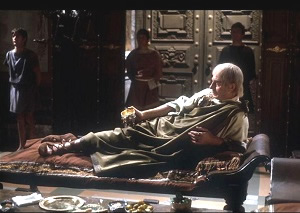
Derek Jacobi als Claudius in de BBC-serie uit 1976


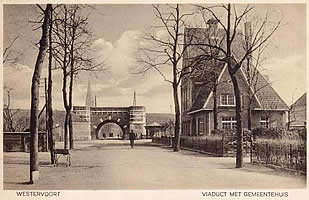
De Nederlandse dichter Johan Andreas dèr Mouw (Adwaita) werd geboren op 24 juli 1863 in Westervoort. Zie ook mijn blog van 24 juli 2010 en eveneens alle tags voor Johan Andreas dèr Mouw op dit blog.


Omhoog zien naar de zon de waterrozen

Omhoog zien naar de zon de waterrozen,
Kinderlijk, alsof 't Rafaels eng'len waren;
Grauw slib en wijde schem'ringen bewaren,
Die hier de dood stilde tot smartelozen.

Opzuigt de bliksemstorm het meer tot hozen:
Dan staan in blauw doorschijnende pilaren
De doden: hun zwarte ogengaten staren
Boven hun grijns om macabre apotheozen.

Naar Brahman's zonlicht bloeien mijn gedachten;
Schem'ringen, koel, van zielegronden brachten
Rust aan mijn smart om wensen, lang gebroken:

Vlaag van herinn'ring woelt uit grauw vergeten
'T verleden op bij flits van plots'ling weten -
'T herrijst, 't herrijst; mijn dode wensen spoken.


Ik zat aan ’t roer

Ik zat aan 't roer; jouw half blote armen roeiden;
Door verre rietkrans zwierf karkietgeroep.-
De plantjes zag 'k door 't meer - reusacht'ge loup -
Die ginds in licht als van Davinci groeiden.

'K zag, hoe diep onder mij, boven een groep
Van avondwolken, die roodvlokkig gloeiden,
Blauw op oranje, twee libellen stoeiden,
Aëroplanen, scheen 't, looping the loop.

En 'k schrok, toen 't plots'ling door mijn denken schoot:
Mijn luchtschip hangt boven het avondrood,
Dan staat Hij nog boven mijn horizon.

En langs de wolken keek ik weg van 't stuur.
Jouw fosf'rend haar leek een roodstralend vuur:
En even zag ik de ondergaande zon.


Zwevend op winden waait de zee door ’t duin

Zwevend op winden waait de zee door 't duin,
En 't zout blijft achter in 't diep-koele zand;
Geen bloemengloed, geen groen van sapp'ge plant
Kleurt 't bleke egaal van vér-zichtbare kruin;

Maar 't water, neerfilt'rend, doet, tuin naast tuin,
Laaien van tulpenrood 't wijdvlammend land,
En ruist als bossen op, tot waar de rand
Vaal is door helm en ziek'lijk struikenbruin:

Stormend door open mensenleven, laat
De Godheid bloemloos 't oppervlak, waar 't zaad
Van blijdschap sterft, door lang verdriet geschroeid;

Tot ondergrondse zuiverheid vervloeid,
Herrijst Ze als 't rijk van schijn en rijm en maat,
Waar 't Denken tulpt en lovert, ruist en gloeit.
 

 2058059-328414b424d7c9dbd736b535af9d341b.jpg
Johan Andreas dèr Mouw (24 juli 1863 – 8 juli 1919)
Westervoort op een oude ansichtkaart


De Japanse schrijfster Banana Yoshimoto werd geboren op 24 juli 1964 inTokyo. Zie ook alle tags voor Banana Yoshimoto op dit blog en ook mijn blog van 24 juli 2010.

Uit : Kitchen (Vertaald door Megan Backus)

"Not at all," he said. "Did you decide on a place to live yet?"
"Not even close." I smiled.
"I see."
"Would you like to come in for some tea?"
"No. I'm on my way somewhere and I'm kind of in a hurry." He grinned. "I just stopped by to ask you something. I was talking to my mother, and we were thinking you ought to come to our house for a while."
"Huh?" I said.
"In any case, why don't you come over tonight around seven? Here's the directions."
"Okay ..." I said vacantly, taking the slip of paper.
"All right, then, good. Mom and I are both looking forward to your coming." His smile was so bright as he stood in my doorway that I zoomed in for a closeup on his pupils. I couldn't take my eyes off him. I think I heard a spirit call my name.
"Okay," I said. "I'll be there."
Bad as it sounds, it was like I was possessed. His attitude was so totally "cool," though, I felt I could trust him. In the black gloom before my eyes (as it always is in cases of bewitchment), I saw a straight road leading from me to him. He seemed to glow with white light. That was the effect he had on me.
"Okay, see you later," he said, smiling, and left.
Before my grandmother's funeral I had barely known him. On the day itself, when Yuichi Tanabe showed up all of a sudden, I actually wondered if he had been her lover. His hands trembled as he lit the incense; his eyes were swollen from crying. When he saw my grandmother's picture on the altar, again his tears fell like rain. My first thought when I saw that was that my love for my own grandmother was nothing compared to this boy's, whoever he was. He looked that sad.
Then, mopping his face with a handkerchief, he said, "Let me help with something." After that, he helped me a lot.
Yuichi Tanabe ... I must have been quite confused if I took that long to remember when I'd heard grandmother mention his name.”

 

 2058059-f7345a34f72e2cc9ddde2e03dc084e61.jpg
Banana Yoshimoto (Tokyo, 24 juli 1964)
Cover


De Duitse schrijfster Rosemarie Schuder werd geboren op 24 juli 1928 in Jena. Zie ook alle tags voor Rosemarie Schuder op dit blog en ook mijn blog van 24 juli 2010.

Uit: In der Mühle des Teufels

„Er hat geschrieben, jeder kann seine Beschwerde vortragen. Es wird Abhilfe geschaffen.” Siegmund schlug dem Wirt ermunternd auf die Schulter.
“Nach Möglichkeit, steht in dem Blatt”, meinte Baumgartner zurückhaltend. Nach einer Weile des Nachdenkens setzte er hinzu: “Ich wüßte schon, worüber ich mich beschweren könnt. Einer hat mir meinen Sack gestohlen, der Spinoll.”
“Pfui, du wirst doch nicht einen Kameraden verraten, du denkst wohl, dafür bekommst du eine Belohnung, ja?”
Der Wirt von Baumgarting fuhr betroffen zusammen.
“Verrat, mein Gott, ja, der Spinoll war einer von den Anführern, sie könnten ihn greifen …”
“Und aufhängen”, setzte Siegmund hinzu.
Der Wirt bekreuzigte sich hastig.
“Ich will nicht schuld sein am Tode eines Menschen. Die Rache ist mein, spricht der Herr. Ich will mich so billig an dem Spinoll nicht rächen, daß er mich bestohlen hat. Mag er’s mit Gott ausmachen. Und was soll ich beim Statthalter? Ich will mich über nichts beschweren. Will nicht die Aufmerksamkeit auf mich lenken. Leb wohl, Bruder, glaub kaum, daß wir uns noch einmal wiedersehen, es sei denn, du kommst zu mir als Gast nach Baumgarting. Aber als zahlender”, fügte er lachend hinzu und ging.
Sie kamen beide nicht weit. Die Reiter des Statthalters griffen sie auf. Sie wurden beschuldigt, sich im verbotenen Gebiet aufzuhalten. Die Reiter berechneten die zwanzig Meilen großzügig. Sie setzten ihre beiden Gefangenen auf Pferde und banden ihnen die Beine unter den Pferdebäuchen zusammen. Der Wirt jammerte leise vor sich hin, die Stricke schnitten schmerzend ein.“


2058059-2f148220d1c6b3b30116efd768035f0b.jpg

Rosemarie Schuder (Jena, 24 juli 1928)
Cover


De Duitse schrijversvrouw Katia Mann, steun en toeverlaat van de Duitse schrijver Thomas Mann, werd geboren als Katharina Pringsheim op 24 juli 1883 in Feldafing. Zie ook alle tags voor Katia Mann op dit blog en ook mijn blog van 24 juli 2010.

Uit:Katia Mann: Meine ungeschriebenen Memoiren

“Die ersten Jahre bis zur Tertia hat mich noch ein Student, der ins Haus kam, um meine vier Brüder bei ihren Aufgaben zu beaufsichtigen, in den Fächern, die man bis zur Unter- oder Obertertia nimmt, unterrichtet; und das war eine Kleinigkeit. Von da ab hatte ich dann Gymnasiallehrer. Jeder kam die Woche vielleicht zwei Stunden; einer für die alten Sprachen, einer für Mathematik und einer für Deutsch und Geschichte. Das Ganze war ja furchtbar leicht, und ich lernte nicht schwer. Es ging sehr schnell. Wenn man allein ist, lernt man viel schneller. In der Schule muß man sich immer nach dem Durchschnitt oder dem Unterdurchschnitt richten, und ich gehörte zum oberen Durchschnitt. Im letzten Jahre hatte ich dann noch Unterricht bei einem Religionsprofessor des Gymnasiums, einem Dr. Engelhardt. Mit dem las ich das Neue Testament auf Griechisch. Religion war ja Pflichtfach am Gymnasium. Ich kann mich erinnern, daß wir einmal zu der Geschichte kamen, wie Jesus die Samariterin trifft und zu ihr sagt: Fünf Männer hast du gehabt, und der, mit dem du jetzt lebst, ist nicht dein Mann. Da wurde der Lehrer etwas verlegen und er kommentierte: Das findet man so in der Vorstadt. So ging es bis zu meinem siebzehnten Jahr. Dann machte ich gemeinsam mit dem Zwillingsbruder als Externe das Abitur am Wilhelms-Gymnasium. Es verlief glänzend. Nun sollte ich auch etwas studieren. Ich ging auf die Universität und hörte vor allem Naturwissenschaften. Bei Röntgen Experimentalphysik und bei meinem Vater Mathematik: Infinitesimal-, Integral-und Differentialrechnung und Funktionstheorie. Aber ich bin noch immer der Meinung, daß ich für diese Fächer keine besondere Veranlagung hatte. Einer meiner Brüder, Peter, der zweitälteste, studierte auch Physik. Er ist ein sehr guter Physiker geworden. Ich war gar nicht dafür prädestiniert, und Röntgen hielt auch gar nichts von mir. Beim Experimentieren passierte mir einmal etwas sehr Mißliches. Ich warf einen Apparat hin. Das hat Röntgen mir sehr übelgenommen. Ich hätte es wahrscheinlich in diesem Fach nie zu etwas gebracht, und auch für Mathematik fand ich mich gar nicht sehr begabt. Ich hätte es auch da nicht sehr weit gebracht. Es war eigentlich mehr so töchterliche Anhänglichkeit. Ich hab's auch alles vergessen. Vielleicht hätte ich zu Ende studiert und auch Examina gemacht. Ich hatte ja erst vier oder sechs Semester studiert, als ich heiratete, und wie ich dann verheiratet war, kam bald das erste Baby, und dann sofort das zweite Baby, und sehr bald kam dann das dritte und vierte.“
 

 2058059-cf5182edb8440828a4bb64ecc3030654.jpg
Katia Mann (24 juli 1883 – 25 april 1980)
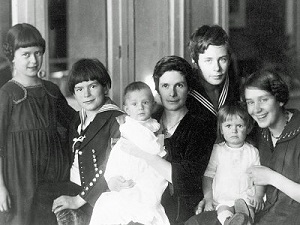
Katia Mann met haar 6 kinderen in 1919 (van links naar rechts: Monika, Golo, Michael, Katia Mann, Klaus, Elisabeth en Erika)


De Japanse schrijver Junichirō Tanizaki werd geboren in Tokio op 24 juli 1886. Zie ook alle tags voor Junichirō Tanizaki op dit blog en ook mijn blog van 24 juli 2010.

Uit:In Praise of Shadows (Vertaald door Thomas Harper en Edward Seidensticker)

“What incredible pains the fancier of traditional ar-chitecture must take when he sets out to build a house in pure Japanese style, striving somehow to make electric wires, gas pipes, and water lines har-monize with the austerity of Japanese rooms—even someone who has never built a house for himself must sense this when he visits a teahouse, a restaurant, or an inn. For the solitary eccentric it is another matter, he can ignore the blessings of scientific civilization and retreat to some forsaken corner of the countryside) but a man who has a family and lives in the city cannot turn his back on the necessities of modem life—heating, electric lights, sanitary facilities—merely for the sake of doing things the Japanese way. The purist may rack his brain over the placement of a single tele-phone, hiding it behind the staircase or in a corner of the hallway, wherever he thinks it will least offend the eye. He may bury the wires rather than hang them in the garden, hide the switches in a closet or cupboard, run the cords behind a folding screen. Yet for all his ingenuity, his efforts often impress us as nervous, fussy, excessively contrived. For so accustomed are we to electric lights that the sight of a naked bulb beneath an ordinary milk glass shade seems simpler and more natural than any gratuitous attempt to hide it. Seen at dusk as one gazes out upon the countryside from the window of a train, the lonely light of a bulb under an old-fashioned shade, shining dimly from behind the white paper shoji of a thatch-roofed farmhouse, can seem positively elegant. But the snarl and the bulk of an electric fan remain a bit out of place in a Japanese room. The ordinary householder, if he dislikes electric fans, can simply do without them. But if the family business involves the entertainment of own tastes at the expense of others. A friend of mine, the proprietor of a Chinese restaurant called the Kairakuen, is a thoroughgoing purist in matters archi-tectural. He deplores electric fans and long refused to have them in his restaurant, but the complaints from customers with which he was faced every summer ul-timately forced him to give in. »
 

 2058059-ac1b5d174af433aed39f4de0775e34f8.jpg
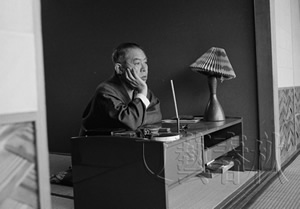
Junichirō Tanizaki (24 juli 1886 – 30 juli 1965)


De Duitse dichter, schrijver en acteur Frank Wedekind werd geboren in Hannover op 24 juli 1864. Zie ook alle tags voor Frank Wedekind op dit blog en ook mijn blog van 24 juli 2010.

Uit: Frühlings Erwachen

„Melchior Das ist mir zu langweilig. Ich mache nicht mehr mit.
Otto Dann können wir andern nur auch aufhören! – Hast du die Arbeiten, Melchior?
Melchior Spielt ihr nur weiter!
Moritz Wohin gehst du?
Melchior Spazieren.
Georg Es wird ja dunkel!
Robert Hast du die Arbeiten schon?
Melchior Warum soll ich denn nicht im Dunkeln spazierengehn?
Ernst Zentralamerika! – Ludwig der Fünfzehnte! Sechzig Verse Homer! – Sieben Gleichungen!
Melchior Verdammte Arbeiten!
Georg Wenn nur wenigstens der lateinische Aufsatz nicht auf morgen wäre!
Moritz An nichts kann man denken, ohne daß einem Arbeiten dazwischenkommen!
Otto Ich gehe nach Hause.
Georg Ich auch, Arbeiten machen.
Ernst Ich auch, ich auch.
Robert Gute Nacht, Melchior.
Melchior Schlaft wohl!
Alle entfernen sich bis auf Moritz und Melchior.
Melchior Möchte doch wissen, wozu wir eigentlich auf der Welt sind!
Moritz Lieber wollt' ich ein Droschkengaul sein um der Schule willen! – Wozu gehen wir in die Schule? – Wir gehen in die Schule, damit man uns examinieren kann! – Und wozu examiniert man uns? – Damit wir durchfallen. – Sieben müssen ja durchfallen, schon weil das Klassenzimmer oben nur sechzig faßt. – Mir ist so eigentümlich seit Weihnachten... hol mich der Teufel, wäre Papa nicht, heut noch schnürt' ich mein Bündel und ginge nach Altona!
Melchior Reden wir von etwas anderem. –
 

 2058059-bb4ab1e100b4f77695968a6bf7f46b60.jpg
Frank Wedekind (24 juli 1864 - 9 maart 1918)
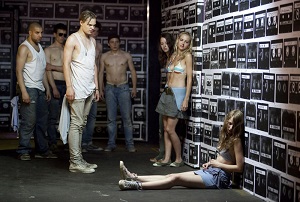
Scene uit de gelijkamige film uit 2009


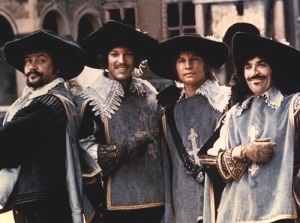
De Franse dramaturg en schrijver Alexandre Dumas père werd geboren in (Villers-Cotterêts (Aisne) op 24 juli 1802. Zie ook alle tags voor Alexandre Dumas père op dit blogen ook mijn blog van 24 juli 2010.

Uit: The Three Musketeers (Vertaald doorWilliam Barrow)

« By the latter I mean your relatives and friends. Endure nothing from anyone except Monsieur the Cardinal and the king. It is by his courage, please observe, by his courage alone, that a gentleman can make his way nowadays. Whoever hesitates for a second perhaps allows the bait to escape which during that exact second fortune held out to him. You are young. You ought to be brave for two reasons: the first is that you are a Gascon, and the second is that you are my son. Never fear quarrels, but seek adventures. I have taught you how to handle a sword; you have thews of iron, a wrist of steel. Fight on all occasions. Fight the more for duels being forbidden, since consequently there is twice as much courage in fighting. I have nothing to give you, my son, but fifteen crowns, my horse, and the counsels you have just heard. Your mother will add to them a recipe for a certain balsam, which she had from a Bohemian and which has the miraculous virtue of curing all wounds that do not reach the heart. Take advantage of all, and live happily and long. I have but one word to add, and that is to propose an example to you-- not mine, for I myself have never appeared at court, and have only taken part in religious wars as a volunteer; I speak of Monsieur de Tréville, who was formerly my neighbor, and who had the honor to be, as a child, the play-fellow of our king, Louis XIII, whom God preserve! Sometimes their play degenerated into battles, and in these battles the king was not always the stronger. The blows which he received increased greatly his esteem and friendship for Monsieur de Tréville. Afterward, Monsieur de Tréville fought with others: in his first journey to Paris, five times; from the death of the late king till the young one came of age, without reckoning wars and sieges, seven times; and from that date up to the present day, a hundred times, perhaps! So that in spite of edicts, ordinances, and decrees, there he is, captain of the Musketeers; that is to say, chief of a legion of Caesars, whom the king holds in great esteem and whom the cardinal dreads--he who dreads nothing, as it is said. Still further, Monsieur de Tréville gains ten thousand crowns a year; he is therefore a great noble. He began as you begin. Go to him with this letter, and make him your model in order that you may do as he has done.”
Upon which M. D’Artagnan the elder girded his own sword round his son, kissed him tenderly on both cheeks, and gave him his benediction. “
 

 2058059-71a0c2324c02a20b00f53d1d2304b0be.jpg
Alexandre Dumas père (24 juli 1802 - 5 december 1870)
Scene uit de gelijknamige film uit 1973


De Nederlandse schrijfster Betje Wolff (eig. Elizabeth Bekker) werd geboren in Vlissingen op 24 juli 1738. Zie ook alle tags voor Betje Wolff op dit blog en ook mijn blog van 24 juli 2010.

Uit:Historie van mejuffrouw Sara Burgerhart (Samen met Aagje deken)

“Ik moest mynen vorigen, die hier nevens gaat, zo schielyk afbreken, om dat Tante my riep, schoon zy my niets te zeggen hadt, en slegts beval, by haar te zitten: Onze gromparty sla ik maar over, om dat ik u nu eens ernstig moet schryven.
Myn waarde Vader, weet gy, was Jan Burgerhart; hy negotieerde in de Thee; zyn handel was voordeelig. Myne lieve Moeder was, zo als men dat noemt, een bestorven Meisje. Zy hadt een stuiver goeds, en trouwde zeer jong. My, het eenig kind, voedde men op als een meisje, dat van eene goede familie is, en geld te wagten heeft, door brave Ouders opgevoed wordt. Gy kent myn aandoenlyk hart; gy weet hoe vatbaar het is voor de minste blyken van genegenheid; oordeel dan hoe ik deeze myne dierbare Ouders eerde en beminde. Ouders! dat is toch een zielroerend woord, Antje, en kost my meermaal eene stille traan. Myne Ouders waren gelukkig met elkander. Hun karakter was voor elkander berekent.
Meer zeg ik niet. Wie spreekt ooit dan met achting van myne zalige Ouders? och, yder een! .... Gy weet het. Hoe aangenaam was ons zeer geregeld huishouden! Myne Ouders lazen veel, en zagen deeze zucht in my met goedkeuring. Nog zie ik hen in onzen tuin, op de bank zitten, als Vader zyn pypje van rust, zo als hy het noemde, rookte, en Moeder hem iets voorlas, terwyl ik op des goedaartigen mans knie zat te luisteren, of te spelen. Nog zie ik hoe hy my, gevolgt door myne glimlachende Moeder, in huis draagt. ô! Dat waren gouden dagen; waren het niet?
Myne Moeder hadt eene Zuster, die veel ouder was, en waar by ik nu inwoon. Die Zuster vondt maar gansch niet billyk, dat Saartje vóór haar ten huwelyk verzogt wierd, en kyk, de Juffrouw was magtig gestelt op het Decorum; dat was het maar: zy meende ook zeer wel te weten, dat zy zo wel veel meer verdiensten, als jaren telde, dan myne Moeder. Doch, of het spel sprak, daar kwamen geene Liefhebbers. Indien onze Vriendin hadt kunnen bewogen worden, om eene aanpryzende voorrede voor Tante te schryven, mooglyk zou men haar gezogt hebben. Hoe 't zy - (verschoon dien inval!) zy begreep, (Tante heeft ook haare invallen, Antje,) dat er geen beter party voor haar opzat, dan zich te voegen by die Lieden, die wy fynen, en die zich zelf vroomen noemen.”
 2058059-b7f4ed079b233e4b78a46316b7802355.jpg
Betje Wolff (24 juli 1738 - 5 november 1804)
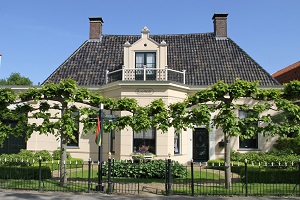
Het Betje Wolff Museum in Middenbeemster


Zie voor nog meer schrijvers van de 24e juli ook mijn blog van 24 juli 2016 deel 2.
Geschreven door Romenu om 18:26 Reageer op dit bericht

Wilfried de Jong, Mohsin Hamid, Lauren Groff, Frans Erens, Kai Meyer, Thea Dorn, Irina Liebmann


Bij (het slot van) de Tour de France


 2057579-4ef17bbf835b66bfa5e96b5e9decc0fe.jpg
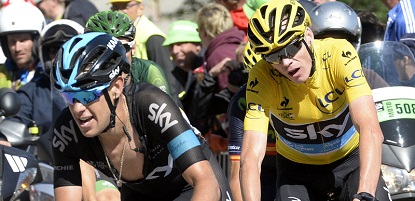
 Wout Poels en Chris Froome op de Alpe d'Huez in 2015


Uit: Froome en Poels (Column)

Ze reden ze samen het Critérium du Dauphiné, Froome en Poels. De Sky-kopman met zijn Hollandse meesterknecht. Dit was een meerdaagse wedstrijd over een parcours dat al een beetje rook naar de Tour de France.
Wout Poels is de lange lerp voor wie het geluk in de bergen ligt. Geef de Noord-Limburgse klimmer een paar meter stijgend asfalt en zie hoe sierlijk en rustig hij op zijn fiets blijft zitten.
In het voorjaar had hij pech. Wout brak een stuk van zijn schouder. En in 2012 was hij betrokken bij een ernstige valpartij in de Tour. Hij brak drie ribben, scheurde nier en milt en kneusde zijn longen. Poels lag achterover in het gras te kermen maar besloot toch op de fiets te stappen.
Ik wil er niet aan denken hoe dat voelde.
In deze Dauphiné zag ik een herboren Poels. Hij reed tijdens de bergetappes in dienst van Froome. Onverstoorbaar trappen op tempo. Stille rug, malende benen. Alleen de wijd opengesperde mond van Wout verraadde de pijn.
Wout reed zich leeg op de laatste helling, keek om, ten teken dat zijn kopman ten aanval kon.
Na de klassieke fietsbewegingen van Poels, zag ik Froome vol in beeld. De in Kenia geboren Brit trapte als een wezenloze. Hij hield zijn hoofd naar beneden, zijn ellebogen staken lelijk naar buiten.
Zijn gezicht werd steeds bleker; alsof de rode bloedlichaampjes in nood hadden geroepen: “Baas, wij blijven hier even beneden, in je kuiten.”
Pierlala op een zadel.
Zijn stijl is geen lelijke stijl te noemen. Nee, het is erger; het ís geen stijl. Het gaat alleen verschrikkelijk hard.


 2057579-ca8b8c6e09d07aa72942b868290e00e9.jpg
Wilfried de Jong (Rotterdam, 30 september 1957)
De Tour de France in Rotterdam, 2015


De Nederlandse schrijver Frans Erens werd geboren op 23 juli 1857 in Schaesberg. Zie ook alle tags voor Frans Erens op dit blog.

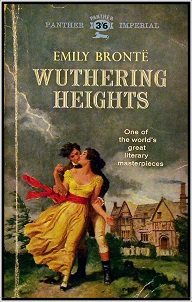
Uit Toppen en hoogten (Over “Wuthering Heights”)

“De roman van Emily Bronte is een eigenaardig product. Hij gelijkt op niets anders. De auteur, zonder het vak van opstellen te kennen, heeft zich eenvoudig aan het schrijven gezet, omdat zij den tijd daartoe had; omdat haar zuster schreef misschien. Het lijkt niet, dat zij een bepaalde geestdrift voor het een of ander geval heeft gevoeld, maar, willende een verhaal geven, heeft zij een geval van verschrikking, maar toch doodgewone, zeer nabij liggende verschrikking genomen.
Hare buitengewoon sterke natuur deed haar indringen in de personen, waarvan zij de daden en gestes wilde noteeren. Geen voorbeeld van een anderen roman zweefde haar voor oogen. Zij teekende op uit haar eigen merg en bloed. Het is alsof zij haar pen daarin doopte: zij de stroeve, harde vrouw, die, niet voor verteedering vatbaar, slechts harde, droge-knookige karakters kon geven. Waarlijk echt Engelsch. Engeland alleen kent het harde, stroeve, haast houterige en daar, naast het uiterst weeke en sentimenteele. Zoo is Engelands taal, 'zoo is zijn litteratuur, zoo zijn zijn menschen. Deze roman is echt Engelsch, door en door Engelsch. Het is alles: concies, afgebroken. Aan de sentimenten is geen enkele sleep, geen franje. Sommige fragmenten konden door Shakespeare zijn geschreven, wanneer hij zich tot romanschrijven had willen zetten.
Men moet het werk zelf lezen. Dat, wat men er over heeft gezegd, voor zoover ik weet, geeft niet den zuiveren indruk weer. Noch Wyzewa noch Maeterlinck hebben bij hun lofprijzingen een juist denkbeeld van het karakter van dit product vermogen te vestigen. Het diabolische van Heathcliff is van een indringende intensiteit. Omdat het zoo gewoon is, is dit karakter zoo machtig: beperkt in zijne ziel, is deze toch van groote kracht. Schraapzuchtig en egoistisch, egocentrisch in den meest ongunstigen zin van het woord. Voor niemandt heeft hij een week gevoel over en alleen voor Catherine is hij alles”.


 2057579-2f0398c60b553902d4655557e9cb1e55.jpg
Frans Erens (23 juli 1857 – 5 december 1936)
Een cover van Wuthering Heights


De Brits-Pakistaanse schrijver Mohsin Hamid werd geboren op 23 juli 1971 in Lahore, Pakistan. Zie ook alle tags voor Moshin Hamid op dit blog.

Uit: Exit West

“In a city swollen by refugees but still mostly at peace, or at least not yet openly at war, a young man met a young woman in a classroom and did not speak to her. For many days. His name was Saeed and her name was Nadia and he had a beard, not a full beard, more a studiously maintained stubble, and she was always clad from the tips of her toes to the bottom of her jugular notch in a f lowing black robe. Back then people continued to enjoy the luxury of wearing more or less what they wanted to wear, clothing and hair wise, within certain bounds of course, and so these choices meant something.
It might seem odd that in cities teetering at the edge of the abyss young people still go to class—in this case an evening class on corporate identity and product branding—but that is the way of things, with cities as with life, for one moment we are pottering about our errands as usual and the next we are dying, and our eternally impending ending does not put a stop to our transient beginnings and middles until the instant when it does.
Saeed noticed that Nadia had a beauty mark on her neck, a tawny oval that sometimes, rarely but not never, moved with her pulse.
Not long after noticing this, Saeed spoke to Nadia for the first time. Their city had yet to experience any major fighting, just some shootings and the odd car bombing, felt in one’s chest cavity as a subsonic vibration like those emitted by large loudspeakers at music concerts, and Saeed and Nadia had packed up their books and were leaving class.
In the stairwell he turned to her and said, “Listen, would you like to have a coffee,” and after a brief pause added, to make it seem less forward, given her conservative attire, “in the cafeteria?”


 2057579-7ee653ad593d3e81616e316a3fbe2532.jpg
Mohsin Hamid (Lahore, 23 juli 1971)


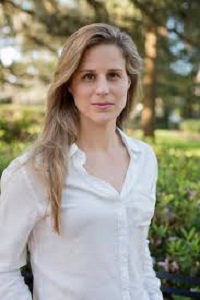
De Amerikaanse schrijver Lauren Groff werd geboren op 23 juli 1978 in Cooperstown, New York. Zie ook alle tags voor Lauren Groff op dit blog.

Uit:Fates and Furies

“At his feet the party roiled with cutting-edge early nineties fashions, midriffs and piercings and ball caps to hide receding hairlines, teeth empurpled by the black light, brown lipstick with brown liner and cartilage cuffs and biker boots and exposed boxers and bump and grind and Salt-N-Pepa and green-glowing dandruff and deodorant streaks and cheekbones highlighted to shine.
Somehow he'd acquired an empty jug of water that someone had Ace-bandaged to his head. There was shouting: "All Hail the Water Princeling." Oy: this was bad. His friends had found out where his money came from. He had hidden it, drove a beat-up Volvo for goodness sakes. He was shirtless, he found, better to show off his muscles. He was aware of how he appeared at every angle in the room, and what the jug stole in dignity, it returned in militaristic jauntiness. He puffed his chest. Now he had a bottle of gin in his hand and his friends were shouting, "Lotto! Lotto! Lotto!" as he tilted it to his lips and took in a long draught, which would turn to soldering flux in his brain by morning and make his thoughts impenetrable, impossible to part.
"The world is ending," he bellowed. "Why not hump?"
A cheer from the dancers at his feet.
He raised his arms. [The fatal look up.]
In the doorway, suddenly, her.
Tall, in silhouette, wet hair casting the hall light into a halo, stream of bodies on the stairs behind her. She was looking at him, though he couldn't see her face.
She moved her head and there was half of it, strong and bright. High cheekbones, plush lips. Tiny ears. She was dripping from walking through the rain. He loved her first for the stun of her across this thump and dance.
He had seen her before, he knew who she was. Mathilde, whatsername. Beauty like hers cast glimmers on the walls even across campus, phosphorescence on the things she touched. She'd been so far above Lotto -- so far above every person at the school -- she had become mythological. Friendless. Icy. She went weekends to the city; she was a model, hence the fancy clothes. She never partied. Olympian, elegant on her mount. Yes -- Mathilde Yoder. But his victory had made him ready for her tonight. Here she was for him.”


 2057579-839316920ecb895f38ec31de8f5f5280.jpg
Lauren Groff (Cooperstown, 23 juli 1978)


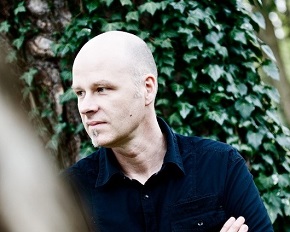
De Duitse schrijver Kai Meyer werd geboren op 23 juli 1969 in Lübeck. Zie ook alle tags voor Kai Meyer op dit blog en ook mijn blog van 23 juli 2010.

Uit:Die Krone der Sterne

“Sie trage die Sterne in den Augen, hatte einmal jemand gesagt. Iniza spürte den Sog des Universums, seit sie zum ersten Mal hinauf in die Nacht geblickt hatte. Für sie war der Himmel keine Grenze, sondern ein Tor. Sie hatte den Tag kaum erwarten können, an dem es ihr endlich offen stand.
Doch dann war nichts so gekommen, wie sie es sich vorgestellt hatte. Paladine in blutroten Rüstungen hatten sie die Rampe einer Raumbarke hinaufgeführt. Lange bevor ihre Heimatwelt im Plasmastrom der Triebwerke verblasst war, hatte Iniza gewusst, dass sie an Bord kein Gast, sondern eine Gefangene war. Man behandelte sie wie eine kostbare Fracht, las ihr die Wünsche von den Lippen ab – Baroness hier, Baroness da – , aber keine Stunde nach dem Start wünschte sie sich zurück in den Palast von Koryantum, von dessen Türmen aus sie schon als Kind das All in seiner ganzen Pracht bewundert hatte.
Hier im Schiff sah sie keine Sterne, nur graue Wände aus Stahl, und so bat sie am zweiten Tag der Reise, dass man sie zu einem Fenster bringe, zu einer der gewölbten Panoramascheiben auf dem Oberdeck der Barke.
Die Hexe Setembra sandte ihr zwei Paladine, bewaffnet mit Blastern und Klingen, die sie aus ihrer Kabine führten und dorthin begleiteten, wo die Gestirne hundertmal heller strahlten als in den klarsten Nächten daheim auf Koryantum.
Stumm vor Ehrfurcht, blickte Iniza ins All hinaus und vergaß beinahe, warum sie wirklich darum gebeten hatte, das Oberdeck aufzusuchen. Dass dies alles Teil des Plans war.
Dort draußen loderten die Feuerschwärme der Galaxis, die Sternenflut des äußeren Spiralarms, quarzweiß und rot wie Rubine, smaragdgrün und aquamarin. Sie erkannte den Kerkes-Nebel, wabernd jenseits der Aschenen Welten, und er erinnerte sie an Erzählungen von Schlachtfeldern auf fernen Monden und halbverglühten Wracks auf vergessenen Umlaufbahnen.“


 2057579-bea3972b28af337281bc7ccc2d2f0b1c.jpg
Kai Meyer (Lübeck, 23 juli 1969)


De Duitse schrijfster en televisiepresentatrice Thea Dorn (peudoniem van Christiane Scherer) werd geboren op 23 juli 1970 in Offenbach am Main. Zie ook alle tags voor Thea Dorn en ook mijn blog van 23 juli 2010.

Uit:Die deutsche Seele

“Es ist karg. Es ist ein wenig pedantisch. Es ist liebevoll Seine Zubereitung erfordert keinen großen Aufwand, aber die wenigen Zutaten müssen mit Bedacht gewählt sein: Roggen-, Roggenmisch- oder Vollkorn-brot, zu acht Millimeter dicken Scheiben geschnitten. Ein bisschen Butter. Käse (Tilsiter), Schinken (Schwarzwälder), Wurst (Jagdwurst). Und schön wäre eine saure Gurke, zum Ende hin blättrig aufgefächert. Die Brote werden mit der Butter dünn bestrichen, auf eins wird der Käse gelegt, auf eins der Schinken, auf eins die Wurst. Idealerweise entsprechen Form und Größe der Käse-, Schinken- und Wurstscheibe Form und Größe der Roggen-, Roggenmisch- oder Vollkornbrot-scheibe. Nur so entsteht die Harmonie, die ein echtes Abendbrot auszeichnet. Auch wenn man sein Abendbrot allein einnimmt, sollte man es keinesfalls stehend in der Küche oder vor dem Fernseher hinunterschlingen. Ein Abend-brot ist ein Abendbrot und kein Sandwich. Bei christlicher Neigung besinnt man sich aufs letzte Abendmahl, während man das Brot zwar nicht bricht, sondern voll Sorgfalt schneidet. Die protestantische Diätweisheit »Frühstücken wie ein Kaiser, Mittagessen wie ein Fürst, Abendessen wie ein Bettelmann• verliert alles Trostlose. Nicht weil man ans Schlankbleiben bzw. -werden denkt. Weil man sich freut, dass Schlichtes glücklich macht. Anfängern, die das bloße Abendbrot nicht in die rechte Gemütslage zu bringen vermag, empfiehlt es sich, ein Bier zu öffnen. »Ich Geringer trinke täglich zum Abendbrot ein Glas helles Bier und reagiere auf diese anderthalb Quart so stark, dass sie regelmäßig meine Verfassung durchaus verändern. Sie verschaffen mir Ruhe, Abspannung und Lehnstuhlbehagen, eine Stimmung von 'Es ist vollbracht!, und >Oh, wie wohl ist mir am Abend!,., schrieb Thomas Mann im Jahre 1906. Der musikalisch versierte Abendbrötler wird das Stichwort des Schriftstellers sogleich aufnehmen. Im Geiste singt er Kanon mit sich selbst •0 wie wohl ist mir am Abend, / Mir am Abend, / Wenn zur Ruh' die Glocken läuten, / Glocken läuten, / Bim, bam, bim, bam, bim, bam!« Doch auch der musikalisch weniger Versierte muss mit seinem Abendbrot nicht im Stillen sitzen bleiben.“


 2057579-08de1605d3739a5858f345c970748c59.jpg
Thea Dorn (Offenbach am Main, 23 juli 1970)


De Duitse dichteres en schrijfster Irina Liebmann werd geboren op 23 juli 1943 in Moskou. Zie ook alle tags voor Irina Liebmann op dit blog en ook mijn blog van 23 juli 2010.

Uit: Drei Schritte nach Russland

„Sollen wir zu ihnen blicken? In ihre Richtung? Was ist denn dort? Was? Und was waren das für Jahre, die letzten zwanzig? Was war das für ein Glanz, dem wir nachliefen? War es überhaupt Licht? War es Glitzerkram? Haben wir einen Fehler gemacht? Wann? Warum? Was ist geschehen?
Diese Frage muss man in Russland nicht stellen. In Russland springt sie einem von jedem Büchertisch entgegen, an jedem Zeitungskiosk brüllen sie regelrecht, diese Schlagzeilen: Wann? Warum? Was ist geschehen? Was ist mit uns geschehen?
— Mussten wir das sein?! Die Vogelscheuche unter den Völkern?! — Wir haben euch geliebt. — Wer? — Unsere Kindergartengruppe zum Beispiel. Wir haben russische Tänze geübt. — Na wunderbar, ich sage es ja! Vogelscheuche unter den Völkern! Und das sind wir immer noch!
Gespräch in einer Moskauer Küche. Diese Küche ist so klein, dass gerade mal ein winziges Tischchen mit zwei Hockern hineinpasst und ein Hängeschrank über dem Abwaschtisch. Direkt unter dem Küchenfenster stehen Bäume, Schnee auf den Ästen, ein Kiosk, die Sonne scheint. Minus 14 Grad. Die Heizkörper der Wohnung haben keine Ventile, im zentralen Heizwerk wissen sie schon, wie kalt es ist, und schicken genau die Wärme, die gebraucht wird, die bullige Wärme hier in der Küche kostet fast nichts. — Gas haben wir genug! Wir sind Gas! Sie lacht, meine Wirtin. Kein gutes Lachen ist das. — Und verschone mich mit der Vergangenheit. Ich bin eine erwachsene Frau, weißt du, ich habe genug erlebt. Ich spare jetzt meine Kräfte.”


 2057579-8258cc9ed8cde5a5dac6ea6dda762f95.jpg
Irina Liebmann (Moskou, 23 juli 1943)
Cover


Zie voor nog meer schrijvers van de 23e juli ook mijn vorige blog van vandaag.

Geschreven door Romenu om 10:52 Reageer op dit bericht

Lisa Alther, Hubert Selby jr., Raymond Chandler, Matthias Spiegel, Tim Reus

De Amerikaanse schrijfster Lisa Alther werd geboren op 23 juli 1944 in Kingsport, Tennessee. Zie ook alle tags voor Lisa Alther op dit blog en ook mijn blog van 23 juli 2010.

Uit: About Women: Conversations Between a Writer and a Painter (Met Francoise Gilot)

“LA: Although we were born of different generations an ocean apart, both our childhoods were impacted by war—­yours by World Wars I and II, and mine by World War II, the Cold War, Korea, and Vietnam. We read a lot about the effect of war on the combatants but not that much about its effect on civilians. Can you say something about how war affected you as a child?
FG: My maternal grandmother had five children, two of whom died when they were quite young, leaving two sons and my mother, the youngest. The child my grandmother loved best was named André. He was wounded at the front and died on November 1, 1918, from a shrapnel wound to the liver. The armistice occurred on November 11, 1918. Just when my grandmother thought that her two sons had escaped the war, she learned the tragic news. André was only twenty-­three years old. She had had a special relationship with him, so for her it was as if life ended right then and there.
On the third floor of her home in Neuilly, there was a small room where her sons, my uncles, both of them officers, had collected all sorts of paraphernalia from the different phases of the war. Many photographs were pinned to the walls, as well as warmaps with little flags on pins for the various events. This room was left as it had been when André died. On the walls, one could see all these black-­and-­white photographs, some taken from the sky, of destroyed villages and cathedrals and bridges, charredforests, trenches. It was a room entirely full of destruction.
LA: Why did your uncles do this?
FG: I think they were so involved in the fight that destruction had grown inside them. They had had to withstand so much horror, and perhaps it was a catharsis to objectify their feelings on the walls of that room.
Years later, when I entered it for the first time, it felt very strange. I was five years old. It was quite frightening. There were also some half-­exploded bombshells that looked like dark and ghostly flowers. My grandmother called that room the War Room.I thought it was the Death Room.”


 2057576-cab4ad2c144c894ef28d82275973fb1b.jpg
Lisa Alther (Kingsport, 23 juli 1944)


De Amerikaanse schrijver Hubert Selby jr. werd op 23 juli 1928 in Brooklyn, New York geboren. Zie ook alle tags voor Hubert Selby jr. op dit blog en ook mijn blog van 23 juli 2010.

Uit: Requiem for a Dream

“Like if youre beautiful you dont feel pain or have dreams or know the despair of loneliness. Why should you be unhappy, youre so beautiful? My God they drive me nuts, like all I am is a beautiful body and nothing else. Not once, never, have they ever tried to love the real me, to love me for what I am, to love me for my mind.”
(...)

„They laughed and put their arms around each other and kissed, first gently, then more passionately, and Harry pulled his face back a few inches and looked lovingly at Marion, I love you, and kissed her on the tip of her nose, her eyelids, her cheeks, then her soft lips, her chin, her neck, her ears, then nuzzled his face in her hair and caressed her back with his hands and breathed her name in her ear, Marion, Marion, I love you, and she gently moved with the flow and felt his words and kisses and feelings flow through her, easing away all her problems, her doubts, her fears, her anxieties and she felt warm and alive and vital. She felt loved. She felt necessary. Harry felt real and substantial. He could feel all the loose pieces starting to fall into place. He felt on the verge of something momentous. They felt whole. They felt united. Though they were still on the couch they felt a part of the vastness of the sky and the stars and moon. They were somehow on the crest of a hill with a gentle breeze blowing Marions hair flowingly; and walking through a sunlit woods and flower studded field feeling the freedom of the birds as they flew through the air chirping and singing and the night was comfortingly warm as the soft filtered light continued to push the darkness into the shadows as they held each other and kissed and pushed each others darkness into the corner, believing in each others light, each others dream.”


 2057576-d322a77bb1b52223cc114850be0a6b68.jpg
Hubert Selby jr. (23 juli 1928 – 26 april 2004)


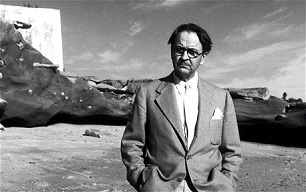
De Amerikaanse schrijver Raymond Thornton Chandler werd geboren in Chicago op 23 juli 1888. Zie ook alle tags voor Raymond Chandler op dit blog en ook mijn blog van 23 juli 2010.

Uit: Blackmailers Don't Shoot

„The man in the powderblue suit -- which wasn't powder-blue under the lights of the Club
Bolivar -- was tall, with wide-set gray eyes, a thin nose, a jaw of stone. He had a rather sensitive mouth. His hair was crisp and black, ever so faintly touched with gray, as by an almost diffident hand. His clothes fitted him as though they had a soul of their own, not just a doubtful past. His name happened to be Mallory.
He held a cigarette between the strong, precise fingers of one hand. He put the other hand flat on the white tablecloth, and said: "The letters will cost you ten grand, Miss Farr. That's not too much."
He looked at the girl opposite him very briefly; then he looked across empty tables towards the heart-shaped space of floor where the dancers prowled under shifting colored lights.
They crowded the customers around the dance-floor so closely that the perspiring waiters had to balance themselves like tightrope walkers to get between the tables. But near where Mallory sat were only four people.
A slim, dark woman was drinking a highball across the table from a man whose fat red neck glistened with damp bristles. The woman stared into her glass morosely, and fiddled with a big silver flask in her lap. Farther alongtwo bored, frowning men smoked long thin cigars, without speaking to each other.
Mallory said thoughtfully: "Ten grand does it nicely, Miss Farr."
Rhonda Farr was very beautiful. She was wearing, for this occasion, all black, except a collar of white fur, light as thistledown, on her evening wrap. Except also a white wig which, meant to disguise her, made her look very girlish. Her eyes were cornflower blue, and she had the sort of skin an old rake dreams of.“


 2057576-afa6aa07fc3792a836c21eb996f8166b.jpg
Raymond Chandler (23 juli 1888 – 26 maart 1959)


Onafhankelijk van geboortedata:

De Duitse schrijver Matthias Spiegel werd geboren in 1970 in Bad Dürkheim/ Pfalz en woont tegenwoordig in Kaiserslautern. Zie ook alle tags voor Matthiias Spiegel op dit blog.

Uit:Die Klette

"Ich spürte den Windzug seiner Bewegungen. Was soll's, dachte ich. Ich versuchte, mich nicht um ihn zu kümmern.
Nach einer Weile kam ich an einer Markthalle vorbei. Sie war voller Menschen. An den Ständenwurden Gurken oder grüne Bohnen feilgeboten. In der Mitte der Halle gab es eine offene Kanalisation. Die graubraune Brühe stank fürchterlich.Trotzdem drängten immer mehr Menschen hinein.
"Wissen Sie, was die Leute hier machen?"
Ich schüttelte den Kopf. "Sie tun so, als ob sie einkaufen. Klingt komisch, aber so ist es. Alle tun so, als ob. Verrückt, finden Sie nicht?"
Ich seufzte. "Na los, sagen Sie mir wohin, und ich bringe Sie hin."
Wir gingen zurück zum Parque de Céspedes. Auf dem Weg kamen wir an der barocken Kathedrale vorbei. Es war eines der wenigen Gebäude, von denen nicht der Verputz abblätterte. Die Fassade erstrahlte in sattem Gelb. Auf den Stufen der Kathedrale saß ein dicker Mulatte. Er hatte ein breites, hässliches Gesicht mit einer platten Nase. Ernesto begrüßte ihn. Der Mulatte hieß Miguel. Er war Schuhputzer.
Miguel bestand darauf, mir seinen Schemel zu zeigen. Er hatte ihn selbst gezimmert.
Wir gingen über die Straße. Miguel hatte sich unter dem Vordach eines mehrstöckigen Mietshauses eingerichtet. Er zeigte mir Stolz seinen Schemel. Es war ein gewöhnlicher Hocker, wie ich ihn auf Kuba häufiger gesehen hatte. Nicht besonders stabil, da die Seiten aus dünnem Sperrholz gefertigt waren.
"Warten Sie, Sie können ein Foto von uns machen."
Ernesto setzte sich auf den Schemel. Er stellte die Füße auf das Trittbrett. Miguel nahm eine Bürste aus einer Holzkiste und begann Ernestos Schuhe zu putzen."


 2057576-85bc7eca41c07188748244964fdd8dfa.jpg
Matthias Spiegel (Bad Dürkheim,1970)
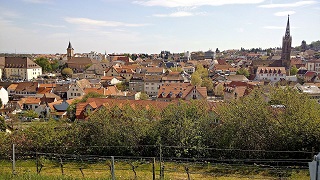
Bad Dürkheim


De Nederlandse dichter en schrijver Tim Reus werd geboren in 1990 in Enkhuizen. Zie ook alle tags voor Tim Reus op dit blog.


Ze is me vergeten

Ze is me
vergeten, want
zij kan dat.

Ik zit hier nog in de
ruïnes van onze relatie,

hier de computer met de
gebroken antenne zodat
internet niet meer werkt,

daar het bos van onze
eerste kus.

Toen was het er nog groen en geel
maar nu is het bladertapijt
zompig bruin en de lucht
groot en grijs.

Ik trek voorbij deze
vlagen als een kreupele
bevroren zwerver.

Maar soms,
heel soms,
kust een flintertje zonlicht
m’n gezicht en dan verdwijnt
de kramp uit m’n rug:

de mist heeft een einde.
Ergens.


 2057576-fddbe6cc4aeebe388311f4b274feaca8.jpg
Tim Reus (Enkhuizen, 1990)

Geschreven door Romenu om 10:50 Reageer op dit bericht

Meer van Romenu

↑ Terug naar de berichten