Naar de inhoud

Romenu

Over literatuur, gedichten, kunst en cultuur
akke.beakke.be

Berichten van 30 augustus 2017 tot 31 augustus 2017

William Saroyan, Éric Zemmour, Wolfgang Hilbig, Elizabeth von Arnim, Théophile Gautier, Raymond P. Hammond
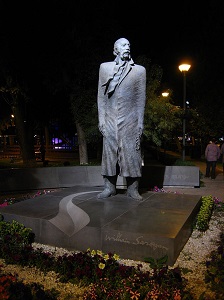
De Amerikaanse dichter en schrijver William Saroyan werd geboren op 31 augustus 1908 in Fresno, Californië. Zie ook mijn blog van 31 augustus 2010 en eveneens alle tags voor William Saroyan op dit blog.

Uit: The Daring Young Man on the Flying Trapez

“He (the living) dressed and shaved, grinning at himself in the mirror. Very unhandsome, he said; where is my tie? (He had but one.) Coffee and a gray sky, Pacific Ocean fog, the drone of a passing street car, people going to the city, time again, the day, prose and poetry. He moved swiftly down the stairs to the street and began to walk, thinking suddenly. It is only in sleep that we may know we live. There only, in that living death, do we meet ourselves and the far earth, God and the saints, the names of our fathers, the substance of remote moments: it is there that the centuries merge in the moment, that the vast becomes the tiny, tangible atom of eternity.
He walked into the day as alertly as might be, making a definite noise with his heels, perceiving with his eyes the superficial truth of streets and structures, the trivial truth of reality. Helplessly his mind sang, He flies through the air with the greatest of ease, the daring young man on the flying trapeze, then laughed with all the might of his being. It was really a splendid morning: gray, cold, and cheerless, a morning for inward vigor; ah, Edgar Guest, he said, how I long for your music.
In the gutter he saw a coin which proved to be a penny dated 1923, and placing it in the palm of his hand he examined it closely, remembering that year and thinking of Lincoln, whose profile was stamped upon the coin. There was almost nothing a man could do with a penny. I will purchase a motor-car, he thought. I will dress myself in the fashion of a fop, visit the hotel strumpets, drink and dine, and then return to the quiet. Or I will drop the coin into a slot and weigh myself.
It was good to be poor, and the Communists-but it was dreadful to be hungry. What appetites they had, how fond they were of food! Empty stomachs. He remembered how greatly he needed food. Every meal was bread and coffee and cigarettes, and now he had no more bread. Coffee without bread could never honestly serve as supper, and there were no weeds in the park that could be cooked as spinach is cooked.
If the truth were known, he was half starved, and there was still no end of books he ought to read before he died. He remembered the young Italian in a Brooklyn hospital, a small sick clerk named Mollica, who had said desperately, I would like to see California once before I die. And he thought earnestly, I ought at least to read Hamlet once again; or perhaps Huckleberry Finn.”


 2068764-9a68a6e5f19e4400b5e60fc7adf01163.jpg
William Saroyan (31 augustus 1908 – 18 mei 1981)
Standbeeld in Jerevan


De Franse schrijver en journalist Éric Zemmour werd geboren op 31 augustus 1958 in Montreuil-sous-Bois, vlakbij Parijs. Zie ook alle tags voor Éric Zemmour op dit blog.

Uit: Le Dandy rouge

« Je ne suis pas un écrivain. Pas un philosophe ni un révolution-naire. Je ne suis pas un poète. Pas un intellectuel, comme on dit dé-sormais à Paris. Je ne suis pas Kautsky. Pas Bernstein, Karl Liebk-necht, ni Rosa Luxemburg. Je ne suis pas non plus un tribun comme August Bebel, même si je trône à la tribune, à côté des chefs du par-ti, même si je découvre les discours quelques heures avant qu'ils ne soient prononcés, discute un mot ou un souvenir historique, corrige une phrase ou un concept révolutionnaire. Je ne suis rien. Un com-plet sombre parmi des complets sombres. Une tonsure parmi des tonsures. Un militant parmi des militants. Un ouvrier parmi des ou-vriers, grandi dans le parti au bénéfice de l'âge et de la médiocrité qui n'inquiète pas. On m'écoute car on sait que ce ne sera pas long. On me lit car on s'attend à un texte de synthèse. Ce soir, c'était mon dernier congrès. C'est August qui m'a demandé de conclure. Un vieil homme pour une vieille histoire déjà. D'abord je n'osai effleu-rer cette estrade qu'il venait de martyriser de son corps d'homme rude ; je n'osai lancer mes mots fatigués et banals dans le tourbillon où sa voix tempétueuse avait emporté les esprits. Je ne suis pas un tribun. Souvent, je l'avoue, j'en ai rêvé : je rugis et des milliers de poitrines s'exclament à l'unisson ; je murmure et des milliers de souffles se retiennent, des milliers d'oreilles se dressent. Mais je ne suis pas un tribun. Pas un intellectuel, ni un philosophe, ni un poète. Pas un écrivain. Rien qu'un ouvrier, un militant, une tonsure, un complet sombre. Rien. Bien sûr, avec le temps, j'ai appris. J'ai conquis, peu à peu, d'autres mots ; mais ils se sentent toujours, dans mes phrases, comme en terre étrangère, occupée. Parfois, mes an-ciens mots, ceux de mon enfance au Moabit, dans les faubourgs de Berlin, reprennent le dessus."

 

 2068764-f1904aafec65dcf4e106fdefdf1ac7e4.jpg
Éric Zemmour (Montreuil-sous-Bois, 31 augustus 1958)


De Duitse dichter en schrijver Wolfgang Hilbig werd geboren in Meuselwitz op 31 augustus 1941. Zie ook mijn blog van 31 augustus 2010 en eveneens alle tags voor Wolfgang Hilbich op dit blog.


'laßt mich doch‘

laßt mich doch
laßt mich in kalte fremden gehn
zu hause
sink ich
in diesen warnen klebrigen brei
der kaum noch durchsichtig ist
der mich festhält der mich so
festhält

laßt mich in die einsame fremde
dort will ich um mich haun
mit meinem schatten fechten daß
hiebe pfeifen in wasserklarer luft
hier würgt mich stille
hier saugt zäher brei an meiner hand

laßt mich
wo die sicht klar ist
oder in steine in hohe steinwände in
mauern für meinen schädel - -


'ihr habt mir ein haus gebaut‘

ihr habt mir ein haus gebaut
laßt mich ein andres anfangen.

ihr habt mir sessel aufgestellt
setzt puppen in eure sessel.

ihr habt mir geld aufgespart
lieber stehle ich.

ihr habt mir einen weg gebahnt
ich schlag mich
durchs gestrüpp seitlich des wegs.

sagtet ihr man soll allein gehn
würd ich gehn
mit euch.

 

 2068764-a897d7535e4ffda9405cbbdfc71251c0.jpg
Wolfgang Hilbig (31 augustus 1941 - 2 juni 2007)
Cover biografie


De Engelse schrijfster Elizabeth von Arnim werd op 31 augustus 1866 geboren in Kirribilli Point in de buurt van Sydney. Zie ook mijn blog van 31 augustus 2010 en eveneens alle tags voor Elizabeth von Arnim op dit blog.

Uit: Elizabeth and Her German Garden

“These women accept their beatings with a simplicity worthy of all praise, and far from considering themselves insulted, admire the strength and energy of the man who can administer such eloquent rebukes. In Russia, not only may a man beat his wife, but it is laid down in the catechism and taught all boys at the time of confirmation as necessary at least once a week, whether she has done anything or not, for the sake of her general health and happiness."
I thought I observed a tendency in the Man of Wrath rather to gloat over these castigations.
"Pray, my dear man," I said, pointing with my whip, "look at that baby moon so innocently peeping at us over the edge of the mist just behind that silver birch; and don't talk so much about women and things you don't understand. What is the use of your bothering about fists and whips and muscles and all the dreadful things invented for the confusion of obstreperous wives? You know you are a civilised husband, and a civilised husband is a creature who has ceased to be a man.
"And a civilised wife?" he asked, bringing his horse close up beside me and putting his arm round my waist, "has she ceased to be a woman?"
"I should think so indeed,--she is a goddess, and can never be worshipped and adored enough.”
(...)

“I have always had a liking for pilgrimages, and if I had lived in the Middle Ages would have spent most of my time on the way to Rome. The pilgrims, leaving all their cares at home, the anxieties of their riches or their debts, the wife that worried and the children that disturbed, took only their sins with them, and turning back on their obligations, set out with that sole burden, and perhaps a cheerful heart.”

 

 2068764-e1ef792af4ad428e25838e57041e1774.jpg
Elizabeth von Arnim (31 augustus 1866 – 9 februari 1941)
Cover 


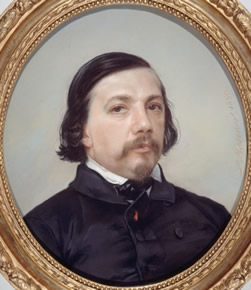
De Franse dichter en schrijver Théophile Gautier werd op 31 augustus 1811 geboren in Tarbes (departement Hautes-Pyrénées. Zie ook mijn blog van 31 augustus 2010 en eveneens alle tags voor Théophile Gautier op dit blog.


L'Escurial

Posé comme un défi tout près d'une montagne,
L'on aperçoit de loin dans la morne campagne
Le sombre Escurial, à trois cents pieds du sol,
Soulevant sur le coin de son épaule énorme,
Éléphant monstrueux, la coupole difforme ;
Débauche de granit du Tibère espagnol.

Jamais vieux Pharaon, au flanc d'un mont d'Égypte,
Ne fit pour sa momie une plus noire crypte ;
Jamais sphinx au désert n'a gardé plus d'ennui ;
La cigogne s'endort au bout des cheminées ;
Partout l'herbe verdit les cours abandonnées ;
Moines, prêtres, soldats, courtisans, tout a fui !

Et tout semblerait mort, si du bord des corniches,
Des mains des rois sculptés, des frontons et des niches,
Avec leurs cris charmants et leur folle gaîté,
Il ne s'envolait pas des essaims d'hirondelles,
Qui, pour le réveiller, agacent à coups d'ailes
Le géant assoupi qui rêve éternité !...


Le poète et la foule

La plaine un jour disait à la montagne oisive :
" Rien ne vient sur ton front des vents toujours battu ! "
Au poète, courbé sur sa lyre pensive,
La foule aussi disait : " Rêveur, à quoi sers-tu ? "

La montagne en courroux répondit à la plaine :
" C'est moi qui fais germer les moissons sur ton sol ;
Du midi dévorant je tempère l'haleine ;
J'arrête dans les cieux les nuages au vol !

Je pétris de mes doigts la neige en avalanches ;
Dans mon creuset je fonds les cristaux des glaciers,
Et je verse, du bout de mes mamelles blanches,
En longs filets d'argent, les fleuves nourriciers.

Le poète, à son tour, répondit à la foule :
" Laissez mon pâle front s'appuyer sur ma main.
N'ai-je pas de mon flanc, d'où mon âme s'écoule,
Fait jaillir une source où boit le genre humain ? "
 

 2068764-696efdd6fbf6d345c8b3cc75339290b2.jpg
Théophile Gautier (31 augustus 1811 – 23 oktober 1872)
Portret door Léon Riesener, 1850


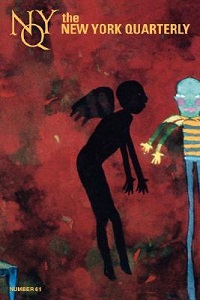
De Amerikaanse dichter, criticus en tijdschriftredacteur Raymond P. Hammond werd geboren op 31 augustus 1964 in Roanoke, Virginia. Zie ook mijn blog van 31 augustus 2010 en eveneens alle tags voor Raymond P. Hammond op dit blog.

Uit: Meet the Press: Nin Andrews interviews Raymond Hammond

“NA: I read that NYQ Books only publishes books by poets who have published in The New York Quarterly magazine. How does that work? Do you solicit manuscripts from these poets after they have published in the journal?
RH: We do not solicit work. We rely on two very simple concepts to select manuscripts. The first is prior acceptance for publication in the magazine. Prior acceptance gives us a good starting point for manuscripts as the editorial vetting is already done, and done at no cost to the author such as in a contest scenario. The second concept is that we also do not accept unsolicited manuscripts—an invitation must be extended. The invitation gives us a modicum of control over how many books we consider at any given time, and most importantly it allows us to better coordinate the books we are looking for which keeps the press as eclectic as the magazine. The vetting and the invitation process allow us a starting point of already knowing the author and their work.
NA: Do you then solicit poets to submit to the New York Quarterly? Or are you, as I would imagine, already overwhelmed with submissions?
RH: We work very hard to keep the selection of poems for the magazine to just that, the poem for the poem’s sake for the sake of the magazine. The way that a poet begins to get noticed for inclusion in the books is when we start accepting repeated submissions from them, then we say to ourselves, maybe we should just do a book of their work. I have found so far that having the books for that added venue is a very nice option because some people I just want to publish more of their work than publication in the magazine will allow.”
 2068764-c9109d7bf2b453b43887167a22aee796.jpg
Raymond P. Hammond (Roanoke, 31 augustus 1964)
Cover van de The New York Quarterly, 2007

Geschreven door Romenu om 18:16 Reageer op dit bericht

Dolce far niente, James Whitcomb Riley, Charles Reznikoff, François Cheng, Jiři Orten, Libu¨e Moníková, Mary Wollstonecraft Shelley


Dolce far niente


 2068526-22954fbbbdfbbd8912d360ec3954e063.jpg
Streets in Late August door Daniel Robbins, 2013


August

A day of torpor in the sullen heat
Of Summer's passion: In the sluggish stream
The panting cattle lave their lazy feet,
With drowsy eyes, and dream.

Long since the winds have died, and in the sky
There lives no cloud to hint of Nature's grief;
The sun glares ever like an evil eye,
And withers flower and leaf.

Upon the gleaming harvest-field remote
The thresher lies deserted, like some old
Dismantled galleon that hangs afloat
Upon a sea of gold.

The yearning cry of some bewildered bird
Above an empty nest, and truant boys
Along the river's shady margin heard--
A harmony of noise--

A melody of wrangling voices blent
With liquid laughter, and with rippling calls
Of piping lips and thrilling echoes sent
To mimic waterfalls.

And through the hazy veil the atmosphere
Has draped about the gleaming face of Day,
The sifted glances of the sun appear
In splinterings of spray.

The dusty highway, like a cloud of dawn,
Trails o'er the hillside, and the passer-by,
A tired ghost in misty shroud, toils on
His journey to the sky.

And down across the valley's drooping sweep,
Withdrawn to farthest limit of the glade,
The forest stands in silence, drinking deep
Its purple wine of shade.

The gossamer floats up on phantom wing;
The sailor-vision voyages the skies
And carries into chaos everything
That freights the weary eyes:

Till, throbbing on and on, the pulse of heat
Increases--reaches--passes fever's height,
And Day sinks into slumber, cool and sweet,
Within the arms of Night.


 2068526-7a100b73b4754244b6bfb481ac81f2c9.jpg
James Whitcomb Riley (7 oktober 1849 – 22 juli 1916)
Greenfield, Indiana, de geboorteplaats van James Whitcomb Riley


De Amerikaanse dichter Charles Reznikoff werd op 30 augustus 1894 in New York geboren. Zie ook mijn blog van 30 augustus 2010 en alle alle tags voor Charles Reznikoff op dit blog.


A Son with a Future

When he was four years old, he stood at the window during a
thunderstorm. His father, a tailor, sat on the table sewing.
He came up to his father and said, "I know what makes
thunder: two clouds knock together."
When he was older, he recited well-known rants at parties.
They all said that he would be a lawyer.
At law school he won a prize for an essay. Afterwards, he
became the chum of an only son of rich people. They
were said to think the world of the young lawyer.
The Appellate Division considered the matter of his disbarment.
His relatives heard rumours of embezzlement.

When a boy, to keep himself at school, he had worked in a
drug store.
Now he turned to this half-forgotten work, among perfumes
and pungent drugs, quiet after the hubble-bubble of the
courts and the search in law books.
He had just enough money to buy a drug store in a side
street.
Influenza broke out. The old tailor was still keeping his shop
and sitting cross-legged on the table sewing, but he was
half-blind.
He, too, was taken sick. As he lay in bed he thought, "What a
lot of money doctors and druggists must be making; now
is my son's chance."
They did not tell him that his son was dead of influenza.


2068526-a530aa4976edc47b73aba465921d7834.jpg 
Charles Reznikoff (30 augustus 1894 – 22 januari 1976)
Een zomers dakterras in New York


De Chinees-Franse dichter, schrijver en vertaler François Cheng werd geboren op 30 augustus 1929 in Nanchang in China. Zie ook mijn blog van 30 augustus 2010 en eveens alle tags voor François Cheng op dit blog.


Ame soeur

Ame soeur
Entends-tu ce qui
Vient de l’heure, ce qui
Vient du coeur, à l’heure
De l’abandon, à l’heure
Du crève-coeur,
Ce battement depuis
La naissance, déchirant
Les entrailles maternelles,
Déchirant l’écorce
Terrestre, ce battement
Qui cherche à se dire,
Qui cherche à se faire
Entendre, entends-tu
Ame soeur
Ce cri d’avant-vie, plein
D’une étranger nostsalgie,
De ce qui avait été
Rêvé, et comme à jamais
Vécu, matin de brume
D’un fleuve, nuage
Se découvrant feuillage,
Midi de feu d’un pré, pierre
Se dévoilant pivoine, toute
La terre embrasée, tout
Le ciel incandescent
En une seule promesse,
En une seule invite
Ne rate pas le divin
Ne rate pas le destin,
Entends-tu ce qui
Vient de la flamme
Du cœur, à l’heure
Du crève cœur, ce cri
Surgi un jour, à ton
Insu, en toi-même,
Le transparent, le transportant,
Le transfigurant, seul cri
Fidèle à l’âme en attente,
Ame sœur.


 2068526-754f884c013d002dda317be5ef4b130c.jpg
François Cheng (Nanchang, 30 augustus 1929)


De Tsjechische dichter Jiří Orten (eig.Jiří Ohrenstein) werd geboren op 30 augustus 1919 bij Kutná Hora. Zie ook mijn blog van 30 augustus 2010 en eveneens alle tags voor Jiří Orten op dit blog en eveneens de tags voor J. Orten.


And Throw Your Clothes Away...

Things would become full of life again
and all the songs, time's arias
would follow as before to sustain
things hidden within us

If someone just shed that heaviness
which has imprinted our touch
and finishes sewing the coat's stitches
knowing now it doesn't hurt much

Just not to pull it on the body
as you are used to in the frost
wearing long sleeves when February
has brought love that tends to exhaust

Feel a touch where the cloth has left it
where there is the bare skin lying
where there is no place for a jacket
(it is too large for the living)


 2068526-7461b86642085975a34e904f6194a8f8.jpg
Jiří Orten (30 augustus 1919 – 1 september 1941)
Cover


De Duitstalige, Tsjechische schrijfster Libuše Moníková werd geboren op 30 augustus 1945 in Praag. Zie ook mijn blog van 30 augustus 2010 en eveneens alle tags voor Libuše Moníková op dit blog.

Uit: Eine Schädigung und Pavane für eine verstorbene Infantin

„Ich habe heute die Katze ausgesetzt. Ich habe sie an einem Waldrain, zum Feld hin, verlassen, ich rannte davon, damit sie mich nicht einholt. Es war der liebste Kater, den ich je hatte, er heulte und miaute und lief mir nach, ich habe ihn abgehängt. Danach Seitenstechen, und die Hüfte. Ich habe Katzen nie kastrieren lassen, ich habe sie vertragen, wenn sie zu träge, zu anhänglich wurden, sie sollen verwildern, Wühlmäuse fangen, notfalls auch Sperlinge falls
sie sie kriegen, sich mit anderen Katzen anlegen, vielleicht auch mit Füchsen. Er soll sich verlaufen.
Ein Film über die holländischen Geiseln, die zwölf Tage von den Molukkern im Zug festgehalten wurden, in Frost, Hunger, Todesangst. Nach der Freilassung besuchten viele von ihnen die Molukker im Gefängnis und setzten sich für ihre Forderungen ein.
Ein Mann geht seitdem regelmäßig mit seiner Frau zu ihren Festen und versucht, mit ihnen zu feiern. Andere haben es bis heute nicht überwunden, sie sind für Augenblicke immer noch Geiseln.
Ein fünfzigjähriger Zeitungsredakteur aus Groningen schildert die Strapazen, dann sagt er zu seiner Frau, die bei dem Interview neben ihm sitzt, daß es auch schön war. »Ich habe zwölf Tage lang nichts getan, wofür ich mich hätte schämen müssen.
Ich bereite mich für das Seminar am nächsten Tag vor.
Ich werde eine Karte der Stadt an die Wand projizieren und die wichtigsten Orte zeigen, die mit Kafkas Biographie und mit seinen Texten zusammenhängen: die wechselnden Wohnsitze der Familie, Kafkas Anstellungsstätten, seine gescheiterten Versuche, allein zu wohnen, die Wege, die er unternahm, um sich in der weiteren, tschechischen Umgebung auszukennen.
Er blieb in dem kleinen Stadtquadranten gefangen. Über seine Grenzen, im eigentlichen Sinne aus der Stadt, ist er nicht hinausgekommen; nur der letzte Ausflug glückte und endete in
Kierling.
Ich werde diesen Bereich auf dem Stadtplan markieren; ich werde über Kafkas Zugehörigkeiten mutmaßen.“


 2068526-b210c48bfca47934e39434e7cca45565.jpg
Libuše Moníková (30 augustus 1945 – 12 januari 1998)
Cover


De Engelse schrijfster Mary Wollstonecraft Shelley werd geboren op 30 augustus 1797 in Somers Town, London. Zie ook alle tags voor Mary Wollstonecraft Shelley op dit blog en ook mijn blog van 30 augustus 2010.

Uit: Frankenstein

“Well, these are useless complaints; I shall certainly find no friend on the wide ocean, nor even here in Archangel, among merchants and seamen. Yet some feelings, unallied to the dross of human nature, beat even in these rugged bosoms. My lieutenant, for instance, is a man of wonderful courage and enterprise; he is madly desirous of glory, or rather, to word my phrase more characteristically, of advancement in his profession. He is an Englishman, and in the midst of national and professional prejudices, unsoftened by cultivation, retains some of the noblest endowments of humanity. I first became acquainted with him on board a whale vessel; finding that he was unemployed in this city, I easily engaged him to assist in my enterprise.
The master is a person of an excellent disposition and is remarkable in the ship for his gentleness and the mildness of his discipline. This circumstance, added to his well-known integrity and dauntless courage, made me very desirous to engage him. A youth passed in solitude, my best years spent under your gentle and feminine fosterage, has so refined the groundwork of my character that I cannot overcome an intense distaste to the usual brutality exercised on board ship: I have never believed it to be necessary, and when I heard of a mariner equally noted for his kindliness of heart and the respect and obedience paid to him by his crew, I felt myself peculiarly fortunate in being able to secure his services. I heard of him first in rather a romantic manner, from a lady who owes to him the happiness of her life. This, briefly, is his story. Some years ago he loved a young Russian lady of moderate fortune, and having amassed a considerable sum in prize-money, the father of the girl consented to the match. He saw his mistress once before the destined ceremony; but she was bathed in tears, and throwing herself at his feet, entreated him to spare her, confessing at the same time that she loved another, but that he was poor, and that her father would never consent to the union. My generous friend reassured the suppliant, and on being informed of the name of her lover, instantly abandoned his pursuit. He had already bought a farm with his money, on which he had designed to pass the remainder of his life; but he bestowed the whole on his rival, together with the remains of his prize-money to purchase stock, and then himself solicited the young woman's father to consent to her marriage with her lover. But the old man decidedly refused, thinking himself bound in honour to my friend, who, when he found the father inexorable, quitted his country, nor returned until he heard that his former mistress was married according to her inclinations. "What a noble fellow!" you will exclaim. He is so; but then he is wholly uneducated: he is as silent as a Turk, and a kind of ignorant carelessness attends him, which, while it renders his conduct the more astonishing, detracts from the interest and sympathy which otherwise he would command.”

 2068526-9c62bcadab85ed2f9cc74a6ea36dc853.jpg
Mary Shelley (30 augustus 1797 – 1 februari 1851)
Scene uit het ballet “Frankenstein” van choreograaf Liam Scarlett, Londen, 2016


Zie voor nog meer schrijvers van de 30e augustus ook mijn blog van 30 augustus 2016.

Geschreven door Romenu om 19:28 Reageer op dit bericht

Meer van Romenu

↑ Terug naar de berichten