

Naar de inhoud

Romenu

Over literatuur, gedichten, kunst en cultuur
akke.beakke.be

Berichten van 28 november 2017 tot 29 november 2017

Mario Petrucci, George Szirtes, Jean Senac, Carlo Levi, Jean-Philippe Toussaint, C.S. Lewis, Wilhelm Hauff, Louisa May Alcott, Franz Stelzhamer
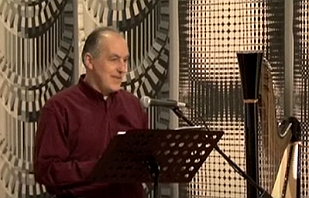
De Engelse dichter en schrijver Mario Petrucci werd geboren op 29 november 1958 in Londen. Zie ook alle tags voor Mario Petrucci op dit blog.


Gene

With pollution and GM, future seas may change colour.

Worl alway same me rekon
nuttin much-change Dere alway green
melon-anana Alway yelow-sea

Me granee she live-be twennysix
wit ray hair Me tel me-babee
we not die-soon We like granee –

we live-long An me caree-she
for look-see thru eave – for look
yelow-sea An me tel-she

wen de-Life tek-you you com
yelow like you fall-in yelow-sea An
you stopp Dat all

An me tel-she bout ol-peepol
hoo-liv wen Worl dri Me tel-she
storee bout way ting used-be

wen ol-peepol walk in air an walk
wid weel An way dem ol-peepol talk
in riddl An way dem stepp in someting

dey call Gene Yeh Dem mess-up
reel-bad someting call Gene An dem
rising-now for meet-us in yelow-sea

An me-babee say – Dees storee
all troo? Dem ol-peepol all stopp? All
com-yelow like ye’ow-sea? Butt me

know nuttin mor Cept
dey bildin tall Dey much-like carr
much-like Wor Dem tuch ev-where

dem stepp ev-where Butt
me tel-me-babee – me-tink
dem ol-peepol dem juss-walk

one Gene too-farr


 2096969-e95b53fb7a828d8abfe5b2b389b516a4.png
Mario Petrucci (Londen, 29 november 1958)


De Britse dichter en schrijver George Szirtes werd geboren op 29 november 1948 in Boedapest. Zie ook alle tags voor George Szirtes op dit blog.


Esprit de l'Escalier

Suddenly there we all were, talking together
but not to each other. It might have been I
who had started it, muttering as I do
to myself, or rather to a figure to whom
I have something to say in the manner known
as l’esprit de l’escalier, that ghostly meeting

on the staircase with a person already past meeting
for whom we now have an altogether
brilliant answer, one we have always known
but had failed to produce when required. And now, I
and the others were talking, all of us, to whom
it would finally concern us to talk to, as we do

each day on the bus, knowing just what to do
and to say at this and every other such meeting.
There were friends, fears, ghosts, and past selves whom
each of us had to answer, all of us speaking together
every which one a distinct and separate I
in a world where everything has always been known.

The air was packed solid with voices we had once known
or were ours, it was hard to tell which, for how do
you tell the inner from the outer, or distinguish the I
from the not-quite-I? And soon each intimate meeting
had spilled onto the street, all voices singing together
to make one thundering chorus, each who with its whom,

in doorways, on staircases, singing to whom-
soever could hear and respond to the known-or-unknown
harmonies we were producing as if we were together.
We were ghosts. We were dead. There was little to do
but to listen and sing and be dead and be meeting
each ghost on its staircase. And so it was I

myself spoke to the dead ones within me since I
was their only voice, the lost hum of their whom.
It was crazy this sound, the music of meeting
all of them now, there on the bus, having known
only the steps to the top deck, knowing what to do
only in emergencies when we’re all thrown together

and have to make do as we are, no matter with whom
we travel or have known, these voices with their I,
their you, their singing together at each and every meeting.


Stoelen

De lege stoelen vreesde hij
niet die met leuningen in hen geplant,
niet die bestrooid met kruimels of papiertjes.

De stemmen die niet spraken,
de piepjes en kraakjes die de stoelen niet maakten,
het overhellen, het omvallen,
de gebroken stoelpoten, het dagelijks gedoe.

Ze rond een tafel zien geschaard,
in zichzelf gekeerd als voor een ritueel
dat was het onrustbarende, en dat er een,
ja, die met open armen
en z’n uitnodiging om te gaan zitten,
z’n slaperigheid, zijn steek naar waardigheid,
zijn ledigheid, de duivel zelve was.


Vertaald door Rob Schouten


 2096969-93c347020b4dfd1a222dc037da5bbca6.jpg
George Szirtes (Boedapest, 29 november 1948)


De Algerijnse, Franstalige, dichter en schrijver Jean Senac werd geboren op 29 november 1926 in Beni Saf in de regio Oran. Zie ook alle tags voor Jean Senac op dit blog.


Le chant de Robert

L’odeur ouvre le front
met dans la main une rumeur ancienne
la simple odeur longtemps retenue de la laine
et la tranquille ampoule où brûle le limon

L’oreille ouvre le temps
quel genêt bouge alors dans le cœur quelle pierre
frappe la jambe quel printemps
remet au centre la misère

La bouche ouvre la nuit
libère un vieux galion sous la dure falaise
une fille s’endort le bruit
des mers inachevées la conduit la protège

Le cœur ouvre l’étui
où rêvait le poète à ses futures frondes
pareil au garve enfant que la mort dévergonde
sourd à ses animaux sourd aux dieux, sourd aux fruits

La chaleur ouvre le monde
dans le signe de l’ami


Le temps des mots

Cœur percé d’une hirondelle
mes camarades sont en prison
mon image n’est pas belle
s’ils doivent y rester longtemps

La beauté est difficile
deux cœurs ne font pas une île
mais une flèche un tison
Au-dessus de la ville
mes camarades sont en prison

Pourquoi chanter quand nous menace
le cri funèbre d’un innocent
la beauté est une impasse
l’hirondelle un mot sans passe
si la poésie n’arrête pas le sang

Cœur percé d’une hirondelle
ma patrie est en prison
mon image n’est pas belle
si elle n’ouvre pas le temps
de la liberté et de la raison

Cœur percé d’une hirondelle
la vie au bout de la chanson.


 2096969-ff32bc16281a320c197abe1b48aab794.jpg
Jean Senac (29 november 1926 – 30 augustus 1973)


De Italiaanse schrijver, schilder, arts en politicus Carlo Levi werd geboren op 29 november 1902 in Turijn. Zie ook alle tags voor Carlo Levi op dit blog.

Uit:Christ Stopped at Eboli (Vertaald door Frances Frenaye)

„Many years have gone by, years ol war and of what men call History. Buffeted here and there at random I have not been able to return to my peasants as I promised when I left them, and I do not know when, if ever, I can keep my promise. But closed in one room, in a world apart, I am
glad to travel in my memory to that other world, hedged in by custom and sorrow, cut off from History and the State, eternally patient, to that land without comfort or solace, where the peasant lives out his motionless civilization on barren ground in remote poverty, and in the presence of death.
"We're not Christians," they say. "Christ stopped short of here, at Eboli." "Christian," In their way of speaking means "human being," and this almost proverbial phrase that I have so often heard them repeat may be no more than the expression of a hopeless feeling of inferiority. We're not Christians, we're not human beings; we're not thought of as men but simply as beasts, beasts of burden, or even less than beasts, mere creatures of the wild. They at least live for better or for worse, like angels or demons, in a world of their own, while we have to submit to the world of Christians, beyond the horizon, to carry its weight and to stand comparison with it. But the phrase has a much deeper meaning and, as is the way of symbols, this is the literal one.
Christ did stop at Eboli, where the road and the railway leave the coast of Salerno and turn into the desolate reaches of Lucania. Christ never came this far, nor did time, nor the individual soul, nor hope, nor the relation of cause to effect, nor reason nor history. Christ never came, just as the Romans never came, content to garrison the highways without penetrating the mountains and forests, nor the Greeks, who flourished beside the Gulf of Taranto. None of the pioneers of Western civilization brought here his sense of the passage of time, his deification of the State or that ceaseless activity which feeds upon itself.”


 2096969-51d12f4fdf39180113450f3d62bc4f81.jpg
Carlo Levi (29 november 1902 – 4 januari 1975)
Cover


De Belgische schrijver Jean-Philippe Toussaint werd op 29 november 1957 geboren in Brussel. Zie ook alle tags voor Jean-Philippe Toussaint op dit blog.

Uit: Nue

« Tel, du moins, était le principe. En pratique, les difficultés s’étaient multipliées, et la présentation de la robe en miel au Spiral de Tokyo avait nécessité des mois de travail et la mise en place d’une petite cellule spécialisée qui s’étaient consacrés exclusivement au développement du projet de la robe en miel. Dès le départ, il avait fallu choisir entre travailler avec de vraies abeilles ou faire appel à un système de faux insectes téléguidés, en s’appuyant sur les travaux les plus récents de biorobotique, qui permettent d’envisager de minuscules robots aériens dotés de capteurs électroniques ventraux. Après examen de la question, et de nombreux échanges de courriers électroniques entre Tokyo et Paris, agrémentés de documents joints croquignolets qui contenaient des schémas complexes de prototypes volants miniaturisés, à l’allure sibylline de machines à voler de Léonard de Vinci, il apparut qu’il était technique- ment possible de faire voler un essaim d’abeilles sur un podium de mode. Le principal point positif mis en lumière par les collaborateurs de Marie était que les colonies d’abeilles sont dociles et suivent partout aveuglément leur reine (si une reine parvient à s’échapper d’une ruche, toute la colonie la suit dans la nature, de sorte que certainsapiculteurs n’hésitent pas à couper les ailes de leurs reines pour éviter de tels exodes). Lors d’un premier voyage préparatoire que Marie avait fait au Japon, son assistant lui avait arrangé un ren- dez-vous avec un apiculteur corse qui vivait à Tokyo, et Marie s’était retrouvée à déjeuner dans un restaurant panoramique de Shinjuku avec un certain M. Tristani, ou Cristiani (dont le prénom n’était rien de moins que Toussaint), petit homme sympathique, débonnaire, vêtu de tweed, de chevrons, de beige et de bordeaux. M. Tristani avait le poignet dans le plâtre et le bras en écharpe, il portait d’épaisses lunettes jaunes aux verres fumés qui cachaient un regard aigu, rusé et méfiant.M. Tristani avait commandé l’apéritif dans la grande salle à manger déserte du restaurant panoramique, et il devait s’attendre à quelque déjeuner galant en compagnie d’une jeune femme qui s’intéressait à la fabrication du miel, mais Marie n’avait pas l’habitude de badiner pendant les déjeuners de travail. Dès que le maître d’hôtel était venu prendre la commande, elle lui avait exposé d’une voix décidée les grandes lignes de son projet. M. Tristani, dont les ardeurs s’étaient très vite éteintes, l’écoutait gravement, en hochant la tête, le poignet dans le plâtre, détachant detemps à autre maladroitement un filet de sole de sa main valide, puis, posant son couteau à poisson sur la nappe, il ramassait sa fourchette et avalait une bouchée d’un air douloureux, et même préoccupé, car, s’il avait bien compris, l’idée consistait à recouvrir un top-model de miel. »


 2096969-adf481fc2534ee727cae190f6c4e91ee.jpg
Jean-Philippe Toussaint (Brussel, 29 november 1957)


De Ierse schrijver C.S. Lewis werd geboren op 29 november 1898 in Belfast. Zie ook alle tags voor C. S. Lewis en de overige tags voor C, S. Lewis op dit blog.

Uit: The Chronicles Of Narnia

"What's that noise?" said Lucy suddenly. It was a far larger house than she had ever been in before and the thought of all those long passages and rows of doors leading into empty rooms was beginning to make her feel a little creepy.
"It's only a bird, silly," said Edmund.
"It's an owl," said Peter. "This is going to be a wonderful place for birds. I shall go to bed now. I say, let's go and explore tomorrow. You might find anything in a place like this. Did you see those mountains as we came along? And the woods? There might be eagles. There might be stags. There'll be hawks."
"Badgers!" said Lucy.
"Foxes!" said Edmund.
"Rabbits!" said Susan.
But when next morning came there was a steady rain falling, so thick that when you looked out of the window you could see neither the mountains nor the woods nor even the stream in the garden.
"Of course it would be raining!" said Edmund. They had just finished their breakfast with the
Professor and were upstairs in the room he had set apart for them - a long, low room with two windows looking out in one direction and two in another.
"Do stop grumbling, Ed," said Susan. "Ten to one it'll clear up in an hour or so. And in the meantime we're pretty well off. There's a wireless and lots of books.""Not for me” said Peter; "I'm going to explore in the house."
Everyone agreed to this and that was how the adventures began. It was the sort of house that you never seem to come to the end of, and it was full of unexpected places. The first few doors they tried led only into spare bedrooms, as everyone had expected that they would; but soon they came to a very long room full of pictures and there they found a suit of armour; and after that was a room all hung with green, with a harp in one corner; and then came three steps down and five steps up, and then a kind of little upstairs hall and a door that led out on to a balcony, and then a whole series of rooms that led into each other and were lined with books - most of them very old books and some bigger than a Bible in a church.”


 2096969-9af64a152816fa7580b9b945a4332f0a.jpg
C.S. Lewis (29 november 1898 – 22 november 1963)
Scene uit de film “The Chronicles of Narnia: The Lion, the Witch, and the Wardrobe”, 2005


De Duitse dichter en schrijver Wilhelm Hauff werd geboren inStuttgart op 29 november 1802. Zie ook alle tags voor Wilhelm Hauff op dit blog.

Uit: Die Bettlerin vom Pont des Arts

„Wer im Jahr 1824 abends hie und da in den Gasthof »Zum König von England« in Stuttgart kam, oder nachmittags zwischen 2 und 3 Uhr in den Anlagen auf dem breiten Weg promenierte, muß sich, wenn anders sein Gedächtnis nicht zu kurz ist, noch einiger Gestalten erinnern, die damals jedes Auge auf sich zogen. Es waren nämlich zwei Männer, die ganz und gar nicht unter die gewöhnlichen Stuttgarter Trinkgäste oder Anlagenspaziergänger paßten, sondern eher auf den Prado zu Madrid oder in ein Café zu Lissabon oder Sevilla zu gehören schienen. Denket euch einen ältlichen, großen, hageren Mann mit schwärzlich grauen Haaren, tiefen, brennenden Augen, von dunkelbrauner Farbe, mit einer kühngebogenen Nase und feinem, eingepreßtem Mund. Er geht langsam, stolz und aufrecht. Zu seinen schwarzseidenen Unterkleidern und Strümpfen, zu den großen Rosen auf den Schuhen und den breiten Schnallen am Kniegürtel, zu dem langen, dünnen Degen an der Seite, zu dem hohen, etwas zugespitzten Hut mit breitem Rande, schief an die Stirne gedrückt, wünschet ihr, wenn euch nur einigermaßen Phantasie innewohnt, ein kurzes geschlitztes Wams und einen spanischen Mantel, statt des schwarzen Frackes, den der Alte umgelegt hat.
Und der Diener, der ihm ebenso stolzen Schrittes folgt, erinnert er nicht durch das spitzbübische, dummdreiste Gesicht, durch die fremdartige, grelle Kleidung, durch das ungenierte Wesen, womit er um sich schaut, alles angafft und doch nichts bewundert, an jene Diener im spanischen Lustspiel, die ihrem Herrn, wie ein Schatten treu, an Bildung tief unter ihm, an Stolz neben ihm, an List und Schlauheit über ihm stehen? Unter dem Arm trägt er seines Gebieters Sonnenschirm und Regenmantel, in der Hand eine silberne Büchse mit Zigarren und eine Lunte.“


 2096969-4959ce6c649d75a2a9c6132679ef9827.jpg
Wilhelm Hauff (29 november 1802 - 18 november 1827)
Portret door Jiří Běhounek, 1985.


De Amerikaanse schrijfster Louisa May Alcott werd geboren op 29 november 1832 in Germantown, Pennylvania. Zie ook alle tags voor Louisa May Alcott op dit blog.

Uit:A Garland for Girls

“Being Boston girls, of course they got up a club for mental improvement, and, as they were all descendants of the Pilgrim Fathers, they called it the Mayflower Club. A very good name, and the six young girls who were members of it made a very pretty posy when they met together, once a week, to sew, and read well-chosen books. At the first meeting of the season, after being separated all summer, there was a good deal of gossip to be attended to before the question, “What shall we read?” came up for serious discussion.
Anna Winslow, as president, began by proposing “Happy Dodd;” but a chorus of “I’ve read it!” made her turn to her list for another title.
“‘Prisoners of Poverty’ is all about workingwomen, very true and very sad; but Mamma said it might do us good to know something of the hard times other girls have,” said Anna, soberly; for she was a thoughtful creature, very anxious to do her duty in all ways.
“I’d rather not know about sad things, since I can’t help to make them any better,” answered Ella Carver, softly patting the apple blossoms she was embroidering on a bit of blue satin.
“But we might help if we really tried, I suppose; you know how much Happy Dodd did when she once began, and she was only a poor little girl without half the means of doing good which we have,” said Anna, glad to discuss the matter, for she had a little plan in her head and wanted to prepare a way for proposing it.
“Yes, I’m always saying that I have more than my share of fun and comfort and pretty things, and that I ought and will share them with some one. But I don’t do it; and now and then, when I hear about real poverty, or dreadful sickness, I feel so wicked it quite upsets me. If I knew HOW to begin, I really would. But dirty little children don’t come in my way, nor tipsy women to be reformed, nor nice lame girls to sing and pray with, as it all happens in books,” cried Marion Warren, with such a remorseful expression on her merry round face that her mates laughed with one accord.”


 2096969-42305ac9b1151870082e9fd7b7350947.jpg
Louisa May Alcott (29 november 1832 – 6 maart 1888
Cover


De Oostenrijkse dichter en schrijver Franz Stelzhamer werd geboren in Großpiesenham op 29 november 1802. Zie ook alle tags voor Frans Stelzhammer op dit blog.

Uit: Reisel, der Wildschütz und Geiger

Im gesegneten Oberösterreich, unfern des Hausrucks, an einem lustigen Landsträßchen liegt das trauliche Bad St. Thomas mit seinen weitläufigen Gast- und Wirtschaftsgebäuden. – Ach, rücke dich mir näher, du baumgekrönter, blumengeschmückter Hügel, aus dessen geheimnisvoller Tiefe die lauterste Quelle hervorbricht, die nicht nur weithin den Wiesgrund erfrischt und die rotsprengelige Forelle ernährt, sondern selbst der leidenden Menschheit so ersprießliche Labung bietet; ja, rücke dich näher und gewähre mir Raum in deiner kühlen Laubenhalle und fröhlichen Ausblick in die vielbefreundete schöne Landschaft! – Ha, wie die Saaten wogen, dem fließenden Golde gleich, und wie das Sträßchen so saumselig sich krümmt und schlendert, um nur nicht allzu bald aus der lichten, lebensfrohen Landschaft in den großen Wald zu müssen, wo die düsteren Schatten lagern und die rätselhafte Stille herrscht. – Genug! Oder nein, ich will gütig sein und noch einen letzten lohnenden Blick erlauben auf das heitere Bild im mächtigen Waldesrahmen; denn kaum daß unsere düstere Geschichte beginnt, ist all die Lieblichkeit verschwunden: die Felder leer, die Blumen dürr, die Bäume kahl, der Himmel trüb und kalt – es ist Herbst und frostige, lichtarme Abendzeit.
Wie die Lebenswärme bei eintretender Kälte aus den Extremitäten sich gegen die Mitte des Körpers zurückzieht, so war es jetzt in der weitschichtigen Gehöftschaft und freundlichen Umfriedung von St. Thomas ebenfalls: die Zimmer, wo die verschiedenen Badegäste aus nah und fern gewohnt, die Säle, wo sie sich gemeinschaftlich unterhalten, die Laubgänge, wo sie abwechselnd kühle Rast und luftigen Wandel gepflogen – alles, alles leer und verlassen; nur in der großen Gemein- oder Gaststube ist einiges Leben, und zwar, wie es gewesen sein mochte, einzig und allstets, ehe noch die Heilkraft der Quelle entdeckt und der schlichte Bauer von Wirt im grünen Samtkäppchen seinen lieben paar Gästen das edle Braunbier oder das Branntweingläschen höchst eigenhändig mit einem stereotypen »Gottgesegns!« kredenzt und dargebracht hatte."


 2096969-0b14b09d4f521aed4c4cddb17db73bdd.jpg
Franz Stelzhamer (29 november 1802 – 14 juni 1874)
Standbeeld in Linz (detail)


Zie voor nog meer schrijvers van de 29e november ook mijn blog van 29 november 2015 deel 1 en eveneens deel 2.

Zie voor bovenstaande schrijvers ook mijn blog van 29 november 2008, en ook mijn blog van 29 november 2007 en mijn blog van 29 november 2006.


Geschreven door Romenu om 18:12 Reageer op dit bericht

Erwin Mortier, Alberto Moravia, Hugo Pos, Stefan Zweig, Sherko Fatah, Philippe Sollers, William Blake, Alexander Blok, Rita Mae Brown

De Vlaamse dichter en schrijver Erwin Mortier werd geboren in Nevele op 28 november 1965. Zie ook alle tags voor Erwin Mortier op dit blog.


Brief achtentwintig

Als ik zwijg kan ik u horen. Wat ik hoor
legt mij het zwijgen op. Wat ik verzwijgen moet

hoor ik met mijn ziel vol tanden aan.
Als ik u uitspreek scheuren de talen mij open

–dus ik zwijg en ik slaap
in het voorhoofd van uw nacht.

Blijf, trek het laken der firmamenten
niet van mij af. Laat uw naakte hemel

en diens hemisferen als een dakloos
raadsel op mijn ogen rusten.

Leg een vinger op mijn lippen Liefste.
Uit één vinger valt men niet.


Gebed
(Hadewijchvariatie)

Ik vrees dat ik te licht word en teveel
voel dat ik barst hier (in mijn hoofd het uitbreekt,
geen woord volstaat). Ik ben de veer

het buigzaam schreeuwen (in uw vel - syllaben).
Ik ben de vlekken die ik tel

als jamben troubadoursmuziek maar ik wil
de schuimende muil zijn van de gargouille de water-
spuwende draak (lief) wanneer het op uw

gewelven regent en de verdoemden (de versteenden)
in het westportaal zich warmen

aan de troost van uw hel.


Uiteindelijk reinigt alles zich, altijd

Uiteindelijk reinigt alles zich, altijd. Waarom
anders heft het huis zijn goten hoog op zinken

pijpen rank als libellenpoten
langs de gevels, om dorstig te wachten

tot de wolken splijten ? Het dak
wordt dak wanneer het regent.

Veld van glinstering. De pannen blozen
nu de pijpen gulzig slikken.

Langs rozen, langs leipeer
en klimop omlaag. Tot ergens,

onder de keukenvloer, een maag
de vangst opslaat.

Voor ons, voor later.


 2096711-f54ad23435e5f91d02502caa561660b0.jpg
Erwin Mortier (Nevele, 28 november 1965)
In 2014


De Italiaanse schrijver Alberto Moravia werd geboren in Rome op 28 november 1907. Zie ook ale tags voor Alberto Moravia op dit blog.

Uit:Two Friends (Vertaald door Marina Harss)

“He had no precise vocation, only a certain intellectual attitude toward life and a facility for writing; he was poor, and his dreams for the future were vast but vague. Youth did not inspire in him the same joyful, fulfilling vigor felt by Maurizio; if anything, his youth inspired a continual discomfort and struggle between contradictory emotions and purposes. He was extremely serious and felt seriously about everything he did, read, loved, discussed, or experienced. And yet he was not able to free himself — despite all his seriousness — from a constant feeling of insecurity and impotence, in other words from what is usually referred to as an inferiority complex. This complex had many elements, all of which seemed to converge toward something that he was unable to identify but was obscurely aware of. He felt socially inferior to Maurizio and Maurizio's circle; he felt inferior to the women he pursued; and he felt inferior to so-called men of action. To Sergio, action required innumerable profound, subtle reflections which usually resulted in inaction, out of fear or shyness. Instinctively, he sought an explanation for his frame of mind, but he might never have pinpointed it if Maurizio had not revealed it to him by chance, with cruel carelessness. It was a few years after their break. Because they Wed in the same city, they often crossed paths. Whenever this happened, Sergio was stone-faced, embarrassed, filled with unspoken reproaches 166 and a feeling of irritated impotence mixed with a secret attraction. Maurizio — to whom Sergio was simply one acquaintance among many — treated him with the jovial, indulgent condescension one affects with old schoolmates with whom one has lost touch. During these casual encounters, he would greet Sergio with jokes and quick repartee, aggravating his friend's sense of inferiority and ill-concealed rivalry. These meetings, which usually took place on the street or in ofés or other public pbces, were always very brief. After inquiring about work and life, Maurizio would depart with a joke and a smile, leaving Sergio to feel unhappy and wonder in vain why, given that there was no longer real friendship between them, he even bothered to stop and talk to Maurizio. On one of these occasions, Maurcio was sitting in his car, parked on an elegant street. As Sergio — gloomy and sloppily dressed — walked toward him along the sidewalk, Maurizio called out casually: "Well, how is the intellectual doing today? What have you been up to?" The word "intellectual" had an unpleasant ring to it, but in some strange way Sergio knew it to be tinged with truth. He heard himself say. almost resentfully: "Who are you callina an intellectual?"


 2096711-aff132ebca8b95a3440869d89a87523f.jpg
Alberto Moravia (28 november 1907 – 26 september 1990)
Cover Italiaanse uitgave


De Surinaamse schrijver, dichter en jurist Hugo Pos werd geboren in Paramaribo op 28 november 1913. Zie ook alle tags voor Hugo Pos op dit blog.

Uit: In triplo

“Het enige detail dat me van deze wandeltocht is bijgebleven is de ontmoeting met een spraakzame marskramer, die tot mijn verbazing Rothschild heette en zich zorgen maakte over de toekomst van de joden in Duitsland. Dat was ongewoon, joodse jongens als we alle vijf waren, klonk het in onze oren toch schromelijk overdreven, Hitler was toen nog een grote onbekende. Voor het overige was het een genoeglijke, zorgeloze tocht. 's Avonds, als ik mij los kon maken van het communale gezang, kon een verlaten pleintje mij in een romantische stemming brengen. Hiervan getuigt dit:

De maan
een kerkje
en een oude man
mooi is de maan
mooi is het kerkje
mooi is de oude man
mooier nog is de schoonheid
van maan, kerkje en oude man.

Deze regels heb ik voor me gehouden. Waarom ik ze onthouden heb zou ik niet kunnen zeggen. Nu ik ze opschrijf en erover nadenk zie ik er een aanloop in tot een samenvattend, kosmologisch denken dat verder reikt dan één en één is twee. Ik was in die tijd in de ban van J.C. van Schagens pantheïstische Narrenwijsheid. De regels ‘Ik had God en de wereld lief. Toen sprong mijn bretel los.’ verbraken voor mij het ingedamde van de poëzie. Ze hebben mij bovendien op het spoor gebracht van een levensopvatting die me erg aansprak. Nog altijd citeer ik te pas en te onpas zijn: ‘Ik ga maar en ben.’ In Leiden zal ik voor het studentenweekblad Virtus geregeld verzen inzenden.”


 2096711-3256a14baec748409ffd0a847a03023e.jpg
Hugo Pos (28 november 1913 - 11 november 2000)
Paramaribo


De Oostenrijkse schrijver Stefan Zweig werd op 28 november 1881 in Wenen. Zie ook alle tags voor Stefan Zweig op dit blog.

Uit: Die Welt von Gestern. Erinnerungen eines Europäers

„Ihre Lebensform scheint mir dermaßen typisch für das sogenannte »gute jüdische Bürgertum«, das der Wiener Kultur so wesentliche Werte gegeben hat und zum Dank dafür völlig ausgerottet wurde, daß ich mit dem Bericht ihres gemächlichen und lautlosen Daseins eigentlich etwas Unpersönliches erzähle: so wie meine Eltern haben zehntausend oder zwanzigtausend Familien in Wien gelebt in jenem Jahrhundert der gesicherten Werte. Die Familie meines Vaters stammte aus Mähren. In kleinen ländlichen Orten lebten dort die jüdischen Gemeinden in bestem Einvernehmen mit der Bauernschaft und dem Kleinbürgertum; so fehlte ihnen völlig die Gedrücktheit und anderseits die geschmeidig vordrängende Ungeduld der galizischen. der östlichen Juden. Stark und kräftig durch das Leben auf dem Lande, schritten sie sicher und ruhig ihren Weg wie die Bauern ihrer Heimat über das Feld. Früh vom orthodox Religiösen emanzipiert, waren sie leidenschaftliche Anhänger der Zeitreligion des »Fortschritts« und stellten in der politischen Ära des Liberalismus die geachtetsten Abgeordneten im Parlament. Wenn sie aus ihrer Heimat nach Wien übersiedelten, paßten sie sich mit erstaunlicher Geschwindigkeit der höheren Kultursphäre an, und ihr persönlicher Aufstieg verband sich organisch dem allgemeinen Aufschwung der Zeit. Auch in dieser Form des Übergangs war unsere Familie durchaus typisch. Mein Großvater väterlicherseits hatte Manufakturwaren vertrieben. Dann begann in der zweiten Hälfte des Jahrhunderts die industrielle Konjunktur in Österreich. Die aus England importierten mechanischen Webstühle und Spinnmaschinen brachten durch Rationierung eine ungeheure Verbilligung gegenüber der altgeübten Handweberei, und mit ihrer kommerziellen Beobachtungsgabe, ihrem internationalen Überblick waren es die jüdischen Kaufleute, die als erste in Österreich die Notwendigkeit und Ergiebigkeit einer Umstellung auf industrielle Produktion erkannten.“


 2096711-43646c7d2d78bc17821475650e3a8860.png
Stefan Zweig (28 november 1881 – 22 februari 1942) 
Cover


De Duitse schrijver Sherko Fatah werd geboren op 28 november 1964 in Oost-Berlijn. Zie ook alle tags voor Sherko Fatah op dit blog.

Uit: Das Dunkle Schiff

„Halb zum Bildschirm blickend, der über ihren Köpfen hing, halb seiner Familie zugewandt, stets recht schweigsam, ohne dabei stumpf zu wirken, so begegnete ihm Kerim in seinen Erinnerungen.
Sein Vater betrieb ein kleines Restaurant, fast schon außerhalb ihrer Stadt gelegen. Es war nicht mehr als eine Hütte, vollgestellt mit hölzernen Bänken und Stühlen, das Dach hatte an einer Stelle ein großes Loch, behelfsweise mit einer Matte bedeckt. Im Laufe der Zeit war diese Matte verwittert und ließ, vor allem in den frühen Abendstunden, Strahlen eines, wie Kerim es empfand, lieblichen Lichtes in die Hütte fallen. Aber niemand außer ihm bemerkte das.
Die meisten der Gäste waren Durchreisende, die auf ihrem Weg durch den gebirgigen Norden des Landes eine Rast einlegten. Das Gasthaus lag ganz in der Nähe einer der großen Überlandstraßen, auf denen man das gesamte Land durchfahren konnte. Kerim erinnerte sich an den gelblichbraunen Raum, an das Stimmengewirr und an die Rauchschwaden über den Köpfen der Gäste. In der Nähe der Matte füllte der Rauch die einfallenden Lichtstrahlen, als wären sie gläserne Gefäße. Kerims Mutter war sehr unzufrieden darüber, dass das Loch im Dach nie fachmännisch ausgebessert wurde. Doch ihr Mann fand dazu keine Zeit. Sein Leben wurde bestimmt vom Zubereiten des Essens. Solange Kerim ihn kannte, war das Essen das einzige, was ihn ernsthaft beschäftigte.
Bevor er zur Schule aufbrach, musste Kerim bereits arbeiten. Er hatte die kleine Küche vorzubereiten, die sich in einem Anbau der Hütte befand. Der Tag begann um vier Uhr morgens, denn um diese Stunde fanden sich die Taxifahrer ein. Sie waren immer unterwegs und zahlten im Gasthaus Sonderpreise, dafür übernahmen sie ab und an Lieferungen für Kerims Vater. Um diese frühe Morgenstunde gab es nur Brühe oder Innereien am Spieß. Das war so üblich; später am Tag hatten die Gäste die Wahl zwischen Huhn oder Hammel und der dazugehörigen Brühe. Dazu gab es immer Reis, der in einem riesigen schwarzen Kessel in Unmengen gekocht wurde. Das regelmäßige Umrühren und schließlich das Ausleeren und Wiederbefüllen überließ sein Vater gänzlich Kerim, später auch die Sorge um die Gasflaschen, die ein schweigsamer Mann regelmäßig auf einem Holzkarren vorbeibrachte.
Das war ein wenig teurer als sie selbst im Laden abzuholen, doch dafür schloss er sie gleich an und überprüfte die Dichtung mit einem Streichholz. Kerim kannte diesen Mann sein ganzes Leben lang, ohne je mehr als ein paar Sätze mit ihm gesprochen zu haben.“


 2096711-01ac4d4e6abcd53d4f24e87fc1db2937.jpg
Sherko Fatah (Oost-Berlijn, 28 november 1964)


De Franse schrijver Philippe Sollers werd geboren op 28 november 1936 in Bordeaux. Zie ook alle tags voor Philippe Sollers op dit blog.

Uit: Lettres à Dominique Rolin 1958-1980

“Le Martray, 22 mars 1967).
Mon amour, cette fois je souligne l’expression trois fois —mon amour— pour qu’il soit bien inscrit que l’écriture que je t’adresse n’est rien à côté de cela où nous sommes pris tous les deux (les moments où je t’ai vue, ces derniers jours, dépassent toute description). Je me répète sans cesse que « tu seras la seule à me défendre », et je crois que c’est vrai. Tout cela est à la fois dérisoire et « intéressant » (terrible).
J’ai en toi une confiance absolue.
Sans cesse, je me reproche de ne pas avoir assez marqué tout ce que je te dois (de liberté, de courage). L’expérience en cours le prouve encore mille fois plus. Quand je te dis « sans toi, c’est la nuit », cela veut dire que tu es du côté de ce que je peux ramasser de force et de clarté dans les signes écrits, du côté où je garde le contact avec la « totalité ». Il y a là quelque chose de très dérobé (ce que l’on peut appeler « sacré »). Étrange, étrange.
Tout est simultanément présent (Venise, Barcelone, nos corps, la proximité fluide, suspendue, sans insistance, de chaque espace) — et rien ne peut arriver à cette présence. Je suis à chaque instant pulvérisé par cette présence (ton visage dans la vitre du train). Je t’aime de façon incroyable, incompréhensible et directe (au point de pouvoir réellement en mourir).
Ce que j’ai à faire et à vivre m’échappe sans doute en partie ; il fallait probablement redescendre dans de vieilles histoires d’enfance, m’enfoncer à nouveau — cette fois avec les yeux ouverts, pas en rêve — dans de vieilles traces qui doivent être effacées.Sois avec moi, tu ne peux pas ne pas être avec moi.
Je t’aime (à chaque seconde ta main passe sur moi et me sauve).
J’aime ta vie.”

 2096711-e716424951ca02a1e185f550de1b74d2.jpg
Philippe Sollers (Bordeaux, 28 november 1936)


De Engelse schrijver, dichter en schilder William Blake werd geboren op 28 november 1757 in Londen. Zie ook alle tags voor William Blake op dit blog.


The Grey Monk

'I die, I die!' the Mother said,
'My children die for lack of bread.
What more has the merciless Tyrant said?'
The Monk sat down on the stony bed.

The blood red ran from the Grey Monk's side,
His hands and feet were wounded wide,
His body bent, his arms and knees
Like to the roots of ancient trees.

His eye was dry; no tear could flow:
A hollow groan first spoke his woe.
He trembled and shudder'd upon the bed;
At length with a feeble cry he said:

'When God commanded this hand to write
In the studious hours of deep midnight,
He told me the writing I wrote should prove
The bane of all that on Earth I lov'd.

My Brother starv'd between two walls,
His Children's cry my soul appalls;
I mock'd at the rack and griding chain,
My bent body mocks their torturing pain.

Thy father drew his sword in the North,
With his thousands strong he marched forth;
Thy Brother has arm'd himself in steel
To avenge the wrongs thy Children feel.

But vain the Sword and vain the Bow,
They never can work War's overthrow.
The Hermit's prayer and the Widow's tear
Alone can free the World from fear.

For a Tear is an intellectual thing,
And a Sigh is the sword of an Angel King,
And the bitter groan of the Martyr's woe
Is an arrow from the Almighty's bow.

The hand of Vengeance found the bed
To which the Purple Tyrant fled;
The iron hand crush'd the Tyrant's head
And became a Tyrant in his stead.'


 2096711-d5c56ecace2c7ff00b7588799383770c.jpg
William Blake (28 november 1757 – 12 augustus 1827)
Ezekiel door William Blake, 1794 (kopergravure)


De Russische schrijver en dichter Alexander Blok werd geboren op 28 november 1880 in St. Petersburg. Zie ook alle tags voor Alexander Blok op dit blog.


In the sea of high grass

In the sea of high grass you'll be sunk with your head,
In the house - with peace come along…
She'll embrace with her arms, veil around with her plait.
"Hi, my prince," she will say, slim and strong.

She will tell you again, "Here are charms of the rose,
Here the dodder was waving his curls.
What the news have you brought, in what lands have been lost?
Who dislikes us, who likes, who sends curse? "

As before you forget that the days go ahead,
As before you excuse loft and wrong,
And you see as the clouds at distance are spread,
And you hear the villages' song.

For the far lands your heart will bemoan its plea,
To the battle will call and entice,
She will say, "Farewell. And again come to me. "…
And again bells sing songs behind grass.


I slow was losing

I slow was losing my poor mind
By doors of her, with whom I’m crazy.
A day was followed by a night,
Just making my great thirst more blazing.

And I was crying, tired with
My love, was deafening my moans;
And it was doubling in a mist –
The mad thought with its low goals

It was invading the dead lull
Of my poor heart, creasy, already,
And flooded my spring with the dull
Wave, that is soundless and blackened

A day was followed by a night,
Was cooling o’er a grave my soul.
I slow was losing my poor mind
At thinking coldly of my sole.


I seek salvation

I seek salvation.
My fires blaze on mountains’ far heights –
The realm of night is in a glare.
But brighter blaze my spiritual sight
And You’re afar – but are you real there?
I seek salvation.

The starry choir sings solemnly in skies,
I’m cursed for good by every generation.
For you lights my bonfire on the heights.
You’re conjuration.
I seek salvation.

The tired choir of stars calms down, yet.
Night goes away with apprehension.
There You descent from far hills in sunset.
I craved for you. To you my spirit’s spread.
You’re my salvation!


Vertaald door Yevgeny Bonver


 2096711-6fc7950c72dcdb76db6eba5eecbfc713.jpg
Alexander Blok (28 november 1880 – 7 augustus 1921)
Standbeeld in Moskou


De Amerikaanse schrijfster Rita Mae Brown werd geboren in Hanover, Pennsylvania op 28 november 1944. Zie ook alle tags voor Rita Mae Brown op dit blog.

Uit: Rubyfruit Jungle

"You shamed me in front of all the neighbors, and I've got a good mind to throw you outa this house. You and your high and mighty ways, sailing in the house and out the house as you damn well please. You reading them books and puttin' on airs. You're a fine one to be snotty. Miss Ups, out there in the woods playing with his old dong. Well, I got news for you, you little shitass, you think you're so smart. You ain't so fine as you think you are, and you ain't mine neither. And I don't want you now that I know what you're about. Wanna know who you are, smartypants? You're Ruby Drollinger's bastard, that's who you are. Now let's see you put your nose in the air."
"Who's Ruby Drollinger?"
"Your real mother, that's who and she was a slut, you hear me, Miss Molly? A common, dirty slut who'd lay with a dog if it shook its ass right."
"I don't care. It makes no difference where I came from.
I'm here, ain't I?"
"It makes all the difference in the world. Them that's born in wedlock are blessed by the Lord. Them that's born out of wedlock are cursed as bastards. So there."
"I don't care."
"Well, you oughta care, you horse's ass. Just see how far all your pretty ways and books get you when you go out and people find out you're a bastard. And you act like one Blood's thicker than water and yours tells. Bullheaded like Ruby and out there in the woods jerking off that Detwiler idiot. Bastard!"
Carrie was red in the face and her veins were popping out of her neck. She looked like a one-woman horror movie and she was thumping the table and thumping me. She grabbed me by the shoulders and shook me like a dog shakes a rag doll. "Snot-nosed, bitch of a bastard. Living in my house, under my roof. You'd be dead in that orphanage if I hadn't gotten you out and nursed you round the clock. You come here and eat the food, keep me runnin' after you and then go out and shame me. You better straighten up, girl, or I'11 throw you back where you came from -- the gutter.”


 2096711-ee4f9ad1a3a02e259515b95934cebe2f.jpg
Rita Mae Brown (Hanover, 28 november 1944)


Zie voor nog meer schrijvers van de 28e november mijn blog van 28 november 2015 deel 2 en eveneens deel 3.

Zie voor bovenstaande schrijvers ook mijn blog van 28 november 2008, mijn blog van 28 november 2007 en ook mijn blog van 28 november 2006.

Geschreven door Romenu om 18:53 Reageer op dit bericht

Meer van Romenu

↑ Terug naar de berichten