

Naar de inhoud

Romenu

Over literatuur, gedichten, kunst en cultuur
akke.beakke.be

Berichten van 12 januari 2018 tot 13 januari 2018

Edmund White, Daniel Kehlmann, Jay McInerney, Lorrie Moore, Jan de Bas, Edgardo Cozarinsky, Mohammad- Ali Jamālzādeh, Clark Ashton Smith, Michael Carroll

De Amerikaanse schrijver en essayist Edmund White werd geboren op 13 januari 1940 in Cincinnati. Zie ook alle tags voor Edmund White op dit blog.

Uit: Hotel de Dream

“This little room above the massive front oak door was his study, where now he was wheezing, listless and half-asleep, on the daybed. The whole room smelled of dogs and mud. At one end, under the couch and Stephen's table, there lay a threadbare Persian carpet, pale and silky but discolored on one side with a large tea-stain the shape of Borneo.At the other end of the room it had amused Stephen to throw rushes on the floor as if he were a merry old soul living in crude, medieval splendor. There were reeds and rushes and grass everywhere downstairs, which confused two of the three dogs, Tolstoi and Spongie, into thinking they were outdoors: they weren't always mindful of their best housebroken comportment.
The maid, a superstitious old thing, had placed a small jar of tar under Stephen's bed. Did she think it would absorb the evil spirits, or hold off the ghosts that were supposed to haunt Brede Place?
Yes, Stephen had all the symptoms, what the doctors called the "diathesis," or look of consumption: nearly transparent skin, through which blue veins could be seen ticking, and a haggard face and a cavernous, wheezing chest. His hair was as lank and breakable as old lamp fringe. His voice was hoarse from so much coughing and sometimes he sounded as if he were an owl hooting in the innermost chamber of a deep cave. He complained of a buzzing in the ears and even temporary deafness, which terrified a "socialist" like him, the friendliest man on earth (it was Cora's companion, the blameless but dim Mrs. Ruedy, who had worked up this very special, facetious, meaning of socialist). Cora wondered idly if Mrs. Ruedy was back in America yet—another rat deserting the sinking ship.
Cora glimpsed something bright yellow and pushed back Stephen's shirt—oh! the doctor had painted the right side of his torso with iodine. At least they weren't blistering him. She remembered how one of the "girls" in her house, the Hotel de Dream, in Jacksonville, had had those hot jars applied to her back and bust in order to raise painful blisters, all to no avail. She'd already been a goner.
"Hey, Imogene," Stephen murmured, his pink-lidded eyes fluttering open. He smiled, a faint echo of his usual playfulness. He liked to call her "Imogene Carter," the nom de plume she'd made up for herself when she was a war correspondent in Greece and which she still used for the gossip columns and fashion notes she sent to American newspapers."

 2110861-8f60effa6ee6d834066aa46a2a42db62.jpg
Edmund White (Cincinnati, 13 januari 1940)
Cover


De Duitse schrijver Daniel Kehlmann werd op 13 januari 1975 in München geboren. Zie ook alle tags voor Daniel Kehlmann op dit blog.

Uit:Tyll

„Der Krieg war bisher nicht zu uns gekommen. Wir lebten in Furcht und Hoffnung und versuchten, Gottes Zorn nicht auf unsere fest von Mauern umschlossene Stadt zu ziehen, mit ihren hundertfünf Häusern und der Kirche und dem Friedhof, wo unsere Vorfahren auf den Tag der Auferstehung warteten.
Wir beteten viel, um den Krieg fernzuhalten. Zum Allmächtigen beteten wir und zur gütigen Jungfrau, wir beteten zur Herrin des Waldes und zu den kleinen Leuten der Mitternacht, zum heiligen Gerwin, zu Petrus dem Torwächter, zum Evangelisten Johannes, und sicherheitshalber betetenwir auch zur Alten Mela, die in den rauen Nächten, wenn die Dämonen frei wandeln dürfen, vor ihrem Gefolge her durch die Himmel streift. Wir beteten zu den Gehörnten der alten Tage und zum Bischof Martin, der seinen Mantel mit dem Bettler geteilt hatte, als es diesen fror, sodass sie danach beide froren und beide gottgefällig waren, denn was nützt ein halber Mantel im Winter, und natürlich beteten wir zum heiligen Moritz, der mit einer ganzen Legion den Tod gewählt hatte, um nicht seinen Glauben an den einen und gerechten Gott zu verraten.
Zweimal im Jahr kam der Steuereintreiber und schien immer überrascht, dass wir noch da waren. Hin und wieder kamen Händler, aber da wir nicht viel kauften, zogen sie schnell ihrer Wege, und so war es uns recht. Wir brauchten nichts aus der weiten Welt und dachten nicht an sie, bis eines Morgens ein Planwagen, gezogen von einem Esel, über unsere Hauptstraße rollte. Es war ein Samstag und seit kurzem auch Frühling, der Bach schwoll vom Schmelzwasser an, und auf den Feldern, die gerade nicht brachlagen, hatten wir die Saat ausgebracht.“

 

 2110861-33a8bd6af873b60654369be755566168.jpg
Daniel Kehlmann (München, 13 januari 1975)


De Amerikaanse schrijver Jay McInerney werd geboren op 13 januari 1955 in Hartford, Connecticut. Zie ook alle tags voor Jay McInerney op dit blog.

Uit: The Last Bachelor (Sleeping with Pigs)

"Wait a minute," my shrink says. "Stop. Go back. Did you say in the bed?" I nod cautiously. Actually, my mind was drifting off on a tangent. Even as I was droning on about my failed marriage, I was wondering, not for the first time, why she had a picture of John Lennon in her office and whether it was an Annie Liebowitz. You know, the one where he's in a sleeveless New York City T-shirt with his arms crossed. "The pig was sleeping in the bed. With you. In the marital bed. With you and your wife." "Well, yes," I say. "You've been coming to me for more than a year, trying to come to terms with your guilt about the breakup of your marriage, and this is the first time it's occurred to you to mention that the pig was sleeping with you in the bed?" I can see her point. I don't know why I didn't mention it before. It was actually a big point of contention at the time. On the other hand, I was behaving so badly by then that I didn't really feel I was in a position to make demands. Blythe used to have all kinds of jokes about sleeping with two pigs. No, actually, it was the same joke over and over. Plus, McSweeney's my surname and she liked to call me McSwine. "Was this a nightly occurrence? How long did it go on?" "Pretty much every night for a year or so. Two years maybe. Mostly at the end." "And where did the pig sleep?" "Between us." "Between you. In the bed." Apparently, she wants to make sure she's clear on this point. "Sometimes it would burrow under the covers and sleep down at the foot." "Didn't you think this was relevant to our enterprise here? To the whole question of the fate of the marriage? That you were being asked to sleep with a pig between you? Am I safe in assuming this wasn't your idea?" "Of course not." About this at least, I can be emphatic. "It was hers." "And you didn't object?" "Well, yeah, sometimes. In the beginning."
"And then?" "Well, you get used to things." She sighs and shakes her head. "I think we need to talk about this." I can see her point. In retrospect, here, on the Upper West Side of New York, sitting in this book-lined office across from my shrink, who is literally and figuratively framed within a constellation of diplomas and portraits of Carl Jung, Hannah Arendt and Anna Freud, I can imagine how bizarre this sounds. Now that it's come up, I'm kind of amazed myself that I let my ex-wife talk me into sharing the bed with her potbellied pig. Over time almost anything can come to seem normal in the course of a marriage: food fetishes, sexual kinks, even in-laws. First you get talked into a pet pig, and the next thing you know it's sleeping with you. "How did it get up on the bed?" "She built a ramp. With carpeted steps." "And you didn't think this was ... unusual? And, in terms of your marriage, unhealthy? How did you manage to have sexual relations with a— How big was the pig?" "By then? Hard to say, really. Too big to lift anyway. I threw my back out the last time I tried. Hundred and sixty, hundred and seventy pounds. About my weight. Plus, the shape's kind of awkward and it's not like they're going to hold still and stay quiet when you try to pick them up."

 2110861-b4a17c9a92dae0246d91f9a5c5d680f0.jpg
Jay McInerney (Hartford, 13 januari 1955)


De Amerikaanse schrijfster Lorrie Moore werd geboren op 13 januari 1957 in Glens Falls, New York. Zie ook alle tags voor Lorrie Moore op dit blog.

Uit: Self-Help

« Meet in expensive beige raincoats, on a pea-soupy night. Like a detective movie. First, stand in front of Florsheim's Fifty-seventh Street window, press your face close to the glass, watch the fake velvet Hummels inside revolving around the wing tips; some white shoes, like your father wears, are propped up with garlands on a small mound of chemical snow. All the stores have closed. You can see your breath on the glass. Draw a peace sign. You are waiting for a bus.He emerges from nowhere, looks like Robert Culp, the fog rolling, then parting, then sort of closing up again behind him. He asks you for a light and you jump a bit, startled, but you give him your "Lucky's Lounge--Where Leisure Is a Suit" matches. He has a nice chuckle, nice fingernails. He lights the cigarette, cupping his hands around the end, and drags deeply, like a starving man. He smiles as he exhales, returns you the matches, looks at your face, says: "Thanks."He then stands not far from you, waiting. Perhaps for the same bus. The two of you glance furtively at each other, shifting feet. Pretend to contemplate the chemical snow. You are two spies glancing quickly at watches, necks disappearing in the hunch of your shoulders, collars upturned and slowly razoring the cab and store-lit fog like sharkfins. You begin to circle, gauging each other in primordial sniffs, eyeing, sidling, keen as Basil Rathbone.A bus arrives. It is crowded, everyone looking laughlessly into one another's underarms. A blonde woman in barrettes steps off, holding her shoes in one hand.You climb on together, grab adjacent chrome posts, and when the bus hisses and rumbles forward, you take out a book. A minute goes by and he asks what you're reading. It is Madame Bovary in a Doris Day biography jacket. Try to explain about binding warpage. He smiles, interested.Return to your book. Emma is opening her window, thinking of Rouen."What weather," you hear him sigh, faintly British or uppercrust Delaware.Glance up. Say: "It is fit for neither beast nor vegetable."It sounds dumb. It makes no sense.But it is how you meet.At the movies he is tender, caressing your hand beneath the seat.At concerts he is sweet and attentive, buying cocktails, locating the ladies' lounge when you can't find it.At museums he is wise and loving, leading you slowly through the Etruscan cinerary urns with affectionate gestures and an art history minor from Columbia. He is kind; he laughs at your jokes.After four movies, three concerts, and two-and-a-half museums, you sleep with him. It seems the right number of cultural events. On the stereo you play your favorite harp and oboe music. He tells you his wife's name. It is Patricia.”
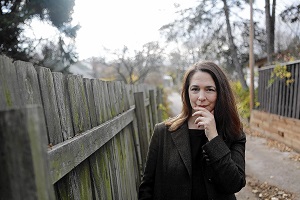
 

 2110861-01550674d88514cae211321527f3da8a.jpg
Lorrie Moore (Glens Falls, 13 januari 1957)


De Nederlandse historicus en dichter Jan de Bas werd geboren op 13 januari 1964 in Waddinxveen. Zie ook alle tags voor Jan de Bas op dit blog.


De tweede Noach

Ik reed rond op mijn gemak,
in mijn gele regenpak,
onder zon en wolken droog,
't leek wel of de hemel loog.

Mensen lachten achter mij,
maar niet meer van angsten vrij,
zagen ze de regenboog,
ook al was de hemel droog.

Plots, viel recht de regen neer,
niemand voor me lachte meer,
toen de hemel openbrak,
op mijn gele regenpak.


Zo is het leven
Prediker 3: 21

Hond. Vier poten in de mand.
Kijken. Blaffen. Hijgen. Vier
poten uit de mand. Lopen.
Stilstaan. Lopen naar de mand.

Hond. Vier poten in de mand.
Kijken. Blaffen. Hijgen. Vier poten
uit de mand. Lopen. Blaffen.
Hijgen. Hond. Vier poten

in de mand. Kijken. Blaffen.
Hijgen. Zitten. Blaffen. Hijgen.
Liggen. Blaffen. Hijgen. Hond.
Vier poten in de mand.

 

 2110861-745b23024fa5ca24bcf6f2b8049cf4e0.jpg
Jan de Bas (Waddinxveen, 13 januari 1964)


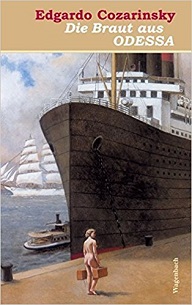
De Argentijnse schrijver en regisseur Edgardo Cozarinsky werd geboren 13 januari 1939 in Buenos Aires. Zie ook alle tags voor Edgardo Cozarinsky op dit blog.

Uit: Die Braut aus Odessa: Erzählungen (Vertaald door Sabine Giersberg)

„Auf dem rosa Granit der Potemkin-Treppe ein paar Meter weiter unten entdeckte er ein Mädchen, das gedankenverloren in die Landschaft starrte, ihr Blick war nicht weniger traurig als seiner. Sie hatte sich auf eine Stufe gesetzt und zwei große runde Schachteln übereinander neben sich abgestellt, um jede war ein blaues Atlasband gebunden, sie wurden von einer einfachen Klemme zusammengehalten, und auf dem Schild konnte man in lateinischen Buchstaben lesen: »Madame Yvonne. Paris – Wien – Odessa«.
Eine Brise erfrischte die Luft und schob in der Ferne über dem Meer launische Wolkengebilde von Osten nach Westen, Drachen und Erzengel, die eine glückliche Begegnung vorauszusagen schienen. Der junge Mann, wir wollen ihn Daniel Aisenson nennen, wusste nicht, mit welchen Worten man eine Fremde ansprach. Er ging zu dem Mädchen hin, stellte sich neben sie und lächelte. Als es ihr unangenehm wurde, so zu tun, als würde sie ihn nicht bemerken, warf sie ihm einen strengen Blick zu, der sofort sanft wurde. Etwas an ihm bezeugte seine Unschuld, etwas, das den unflätigen oder schmeichlerischen Verführern abging, die sie in der großen Stadt sofort zu erkennen gelernt hatte.
Wir werden nie erfahren, welches die ersten Worte waren, die sie austauschten, und auch nicht, wer sie sprach, aber es ist nicht abwegig, dass sie die Schüchternheit des Jungen besiegten. Daniel war in einem Schtetl geboren; als er fünf Jahre war, zogen seine Eltern in einen Randbezirk der Stadt, die heilige unter den heiligen, Kiew, von der er wenig mehr kannte als den Besarabia genannten Markt und das Posamentengeschäft der Familie. Mehr als einmal hatte er als Jugendlicher das Gold und die Voluten der Sophien-Kirche, die fünf leuchtenden Kuppeln der Andreas-Kirche und den noch höheren Glockenturm des Percherska-Klosters bestaunt.
Er konnte nicht verhindern, dass er diesen Glanz mit der bescheidenen Synagoge verglich, die seine Eltern ohne große Hingabe besuchten und in die er sie begleiten musste. Und dieser Vergleich machte, dass er sich schuldig fühlte. „
 

 2110861-853d1cdc5d0914398f3f5696121ab82f.jpg
Edgardo Cozarinsky (Buenos Aires, 13 januari 1939)
Cover 


De Iraanse schrijver Mohammad- Ali Jamālzādeh Esfahani werd geboren op 13 januari 1892 in Isfahan. Zie ook alle tags voor Mohammad- Ali Jamālzādeh op dit blog.

Uit: Persian Is Sugar (Vertaald door Heshmat Moayyad en Paul Sprachman)

“I was entertaining the thought of going ahead and proferring a bonjour monsieur, just to let him know that I, too, belonged, when a hissing sound from the other end of the cell attracted my attention. Looking in that direction, I could make out something shiny and white that resembled a cat curled over a bag of coals. In reality, however, I was looking at a Mullah who sat in the manner of school children, with his arms wrapped around his knees. His entire body was covered by his cloak. What I had mistaken for a shiny, white cat was his turban the tail end of which, dangling over his shoulder, looked like the tail of a cat. The hissing sound, of course, was the sound of his Arabic prayers.
It was now apparent that three guests shared the same cell. Considering number three as a good omen, I was about to inquire from my friends who they were and what circumstance had landed them in this cell; I even entertained the possibility of our collectively discovering a way out of our predicament, when the cell door flung wide open, and amid the commotion, a poor young boy, wearing a felt cap, was thrown into the cell. Then as quickly as the boy was thrown in, the door was shut again. It turned out that the same newly-appointed official from Rasht, had thrown this innocent, poor child into this cell to intimidate the population. Some time earlier, during the altercations of the Constitutional Revolution, it turned out, this little boy had been employed by a Cossack as a servant.
Recognizing that crying was absolutely useless, the new comer dried his eyes using the tail of his dirty shirt. At the same time, knowing that there were no guards around, he directed a volley of special Iranian curses toward almost everyone who came to his mind, all the time kicking the door and the walls of the cell with his bare feet. Once he realized that the door, flimsy as it looked, was not about to fall apart, he spat on the floor, looked around, and found out that there were other people present in the cell..
He considered me to be a European and, therefore, of no help to him. The Europeanized fellow, too, did not seem to inspire much confidence in him. Walking gingerly, he approached the Mullah. Then, after staring a while at him, in a trembling voice, said, "Excellency, in the name of the holiest of the holies, what have I done to deserve this? Wouldn't it be appropriate for us all to commit suicide and free ourselves from this oppression?"
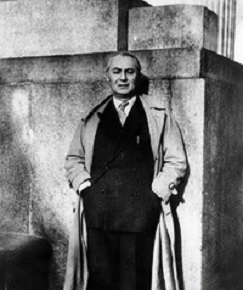
 

 2110861-25707f4edf289a941c133235f504e8e7.jpg
Mohammad- Ali Jamālzādeh (13 januari 1892 - 8 november 1997)


De Amerikaanse dichter, schrijver en beeldhouwer Clark Ashton Smith werd geboren in Long Valley (Californië) op 13 januari 1893. Zie ook alle tags voor Clark Ashton Smith op dit blog.


Fire Of Snow

Pale fire of snow had lit the dusk for me:
Astray with mind half-consciously intent
I had not thought the wood so imminent—
Pregnant with pine and sombre cypress-tree.
Darker than sleep, and mute with mystery
Like far-off death, where questing dreams are spent,
Their winding caverns deepened as I went
Therein, and paused in old expectancy.

Pale fire of snow had lit the dusk for me....
But the black stillness held where once the wind
Had parted boughs in music, that the gleam
Of stars might enter; all was strangely blind,
Like midnight thickening 'neath the middle sea—
Filled with the silence of a time-slain dream.


February

Gossamer-frail, the moon
Goes down the skies of days;
Vague winds are on the noon,
Blown from the wandering vales
of cloudland far away.

They come, and hardly stir
The dell-grown grasses high;
But in the pine and fir,
As in my musing heart,
I hear a tender sigh.

Fragile as dreams, afloat
Between the earth and skies,
Beyond serene, remote,
Blue-folded hills the fair
And moon-white mountains rise.

In woodland shadows deep
The firstling flowers blow;
And in my heart I keep
A love that also came
After the frost and snow.


Foggy Night

Hastening I strode
Past the drunkard lying
Beside the moonless road.
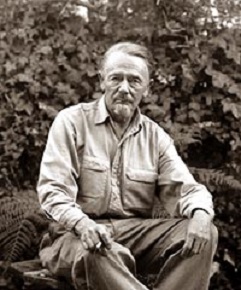
 

 2110861-b9c460870a104eb80b1479519780ae85.jpg
Clark Ashton Smith (13 januari 1893 – 14 augustus 1961)


Onafhankelijk van geboortedata

De Amerikaanse schrijver Michael Carroll werd geboren in 1965 en groeide op in een wijk van Fort Caroline (nu Jacksonville), Florida. Zie ook alle tags voor Michael Carroll op dit blog.

Uit: Little Reef and Other Stories (Little Reef)

“He was a tad older than Wes, gainfully employed, something of a father figure, and very sensible with money—in short, a male role model. Shouldn't be any harder than hooking a bride, and yet meeting your grandson habitually in bars on Friday nights hardened you not just about gays. Her only husband, all that time ago—well, people were people. She liked the salt crystals around the cool sweaty rim of the curvaceous glass. The first few sips, like breaths drawn in the cool depths of a cavernous rainforest. She wanted to go to Brazil someday alone, ensconced in a tour group. The electric-blue and uncannily gilt fish flicked bigly with their self-possessed dignity off to one side of the tank, hovering unblinking. Buster's hemorrhoids were killing him. He'd done a sugar reading just before and it topped off at 80, a triumph. Everything was medical. Get after the age of thirty in life and it was just numbers, stats you filed with medical authorities. He lived alone. Buster wanted a lover, but not as much as he needed tips. To live, he served. He turned and wiped the counter, and Alison straightened up from her slump. His slump. Alison was becoming Alex and so now Alex said, "Shit, I forgot to bring my STP." Stand To Pee: a plastic funnel and little hose gadget Buster hoped he'd soon not have to hear about again. He hummed, saying, "I'll watch your drink. You want to run home and get it?" He'd been sipping beer and went to the register to make Mrs. Blake's change, thinking of Wes. Have Wesley Blake and he'd be calm like sipping watery Jack, intoxicated. But he'd never have Wesley, not with Mrs. Blake as gatekeeper. Life got you in its tickling reaches and laughed. Alison/Alex slumped again and Buster felt a certain love for her, wild beaten-down thing. "No:' Alison/Alex said, touch of the drama queen, "I'm fine," tittering to herself. "Fine:' Kid was a quiz, messed up some at home then shoved out the door to hang out in bars. Buster came around with three and a half dollars' change, thinking, nice lady, you do not know. How I'm on the edge, how we're all on the edge, and I need affection as much as you do. »
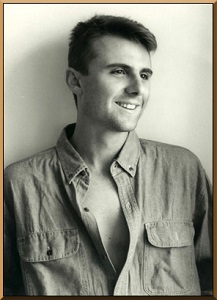
 

 2110861-68204b98b6da222c590b2cbc1912b9f4.jpg
Michael Carroll (Fort Caroline, 1965)


Zie voor nog meer schrijvers van de 13e januari ook mijn vorige blog van vandaag.

Geschreven door Romenu om 14:10 Reageer op dit bericht

Jurgis Kunčinas, Kostís Palamás, Karl Bleibtreu, Victor de Laprade, Eduard von Bauernfeld, Maler Müller, Mark Alexander Boyd

De Litouwse schrijver en vertaler Jurgis Kunčinas werd geboren op 13 januari 1947 in Alytus. Zie ook alle tags voor Jurgis Kunčinas op dit blog.

Uit: Mobile Röntgenstationen (Vertaald door Klaus Berthel)

“Für den Beginn des Kommunismus war das Jahr 1980 angesetzt. Da bist du dreiundvierzig, dachte ich mir, und kannst noch dreißig Jahre oder länger ganz prima im Kommunismus leben. Ohne jede Ironie erwog ich diese Möglichkeit. Ich war damals vierzehn. Ich trank nicht, rauchte nicht.
Jeden Morgen trieb ich Gymnastik und härtete mich mit kaltem Wasser ab. Auf dem Weg zur Schule passierte ich zweimal eine Wandtafel, auf der in Großbuchstaben der Moralische Kodex der Erbauer des Kommunismus prangte. Der Erste, der sich über meine Überlegungen lustig machte, war mein aus Sibirien zurückgekehrter Onkel. Nein, er sagte nichts, er kicherte nur in sich hinein, dass es mir kalt den Rücken herunterlief. Ich war beleidigt und begann, ihm aus dem Weg zu gehen, obwohl er ein gutmütiger Mensch war, auch wenn er, na wenn schon, früher Polizist gewesen war. Überhaupt, von heute her die Dinge zu betrachten ist billig; wer Lust hat, amüsiert sich über diesen Chruščëv-Plan oder nicht mal das, dieses Thema langweilt nur noch. An den Abenden saßen wir Halbwüchsigen an einem Hang unten am Fluss und unterhielten uns. Die Älteren ließen schon Zigaretten herumgehen. Wie gesagt, ich rauchte nicht. Und da gab es einen, Stasys hieß er, sein Vater war Offizier bei Smetona gewesen und während des Krieges irgendwohin verschwunden, und der hatte uns einiges mitzuteilen.
Wisst ihr, Männer, so begann er, was Churchill über Chruščëvs Plan gesagt hat? Die ganze Truppe horchte auf. Nun, was denn? Also Churchill, Winston übrigens, hat Folgendes gesagt: Die ganze Zeit habe ich gedacht, an Altersschwäche zu sterben, aber jetzt gibt es auch die Möglichkeit sich totzulachen. Alle johlten vor Begeisterung, aber mir schlug das, was ich da gerade gehört hatte, dermaßen auf den Magen, dass mir auf der Stelle schlecht wurde, fast hätte ich hinter die Büsche gemusst.“


 2110854-58cf6dee380cf29301c8efb80e6251a9.jpg
Jurgis Kunčinas (13 januari 1947 – 13 december 2002)


De Nieuwgrieks dichter Kostís Palamás werd geboren op 13 januari 1859 in Patra. Zie ook alle tags voor Kostís Palamás op dit blog.


Ruins

I returned to my golden playgrounds,
I returned to my white boyhood trail,
I returned to see the wondrous palace,
Built just for me by love’s divine ways.
Blackberry bushes now cover the boyhood trail,
And the midday suns have burned the playgrounds,
And a tremor has destroyed my palace so rare,
And in the midst of fallen walls and burned Timbers,
I remain lifeless; lizards and snakes
With me now live the sorrows and the hates;
And of my palace a broken mass now remains.


Vertaald door Alex Moskios


Fatherlands

I

Where with its many ships the harbor moans,
The land spreads beaten by the billows wild,
Remembering not even as a dream
Her ancient silkworks, carriers of wealth.

The vineyards, filled with fruit, now make her rich;
And on her brow, an aged crown she wears,
A castle that the strangers, Franks or Turks,
Thirst for, since Venice founded it with might.

O'er her a mountain stands, a sleepless watch;
And white like dawn, Parnassus shimmers far
Aloft with midland Zygos at his side.

Here I first opened to the day mine eyes;
And here my memory weaves a dream dream-born,
An image faint, half-vanished, fair—a mother.


II

Upon the lake, the island-studded, where
The breeze of May, grown strong with sea-brine, stirs
The seashore strewn with seaweed far away,
The Fates cast me a little child thrice orphan.

'Tis there the northwind battles mightily
Upon the southwind; and the high tide on
The low; and far into the main's abyss
The dazzling coral of the sun is sinking.

There stands Varassova, the triple-headed;
And from her heights, a lady from her tower,
The moon bends o'er the waters lying still.

But innocent peace, the peace that is a child's,
Not even there I knew; but only sorrow
And, what is now a fire, the spirit's spark.


Vertaald door Aristides E. Phoutrides


 2110854-8fbf513647372d3c7844ae54236e5ffb.jpg
Kostís Palamás (13 januari 1859 - 27 februari 1943)
Borstbeeld in Athene


De Duitse schrijver en criticus Karl August Bleibtreu werd geboren op 13 januari 1859 in Berlijn. Zie ook alle tags voor Karl Bleibtreu op dit blog.


Schnellzug

Das Dampfroß dröhnend schnaubte
Voran in tiefer Nacht.
Und ich, der Schlafberaubte,
Hielt mit mir selber Wacht.

Die Räder rastlos rollten
Wohl über Berg und Tal,
Als ob erklimmen wollten
Sie dort den Morgenstrahl.
Die Finsternis durchgellten
Die Pfiffe laut genug –
Doch wenn wir nun zerschellten
An einem andern Zug?

Dampfsäulen uns umqualmen.
Im nächsten Augenblick
Mag uns der Tod zermalmen
Das trotzige Geschick.
Ein Wort, zu früh gegeben,
Zu spät ein Zeichen nur –
Von unser aller Leben
Verweht dann leicht die Spur.

Da ich so sinnend lauschte,
Da plötzlich däuchte mir,
Daß mit uns weiterrauschte
Die Weltgeschichte hier.
Dem Eisenwagen gleichen
Die Räder auch der Zeit –
Mit nimmermüden Speichen
Fortrollend weit und breit.

Doch weiter, weiter! heischen
Wir alle ruhelos –
Wann wird der Notpfiff kreischen:
Weh uns, Zusammenstoß?


 2110854-703929e42fc2b226c78bdf51531570da.jpg
Karl Bleibtreu (13 januari 1859 – 30 januari 1928)
Het Berlijnse stadspaleis op een gravure van J. M. Kolb naar L. Rohbock. 1860 


De Franse dichter en criticus Victor Richard de Laprade werd geboren op 13 januari 1812 in Montbrison. Zie ook alle tags voor Victor de Laprade op dit blog.


Fleurs des près

Viens consulter les marguerites,
Oracles des fraîches amours.
Toutes les pages de vos jours
Dans les fleurs des prés sont écrites.
Viens consulter les marguerites.

Viens nous cueillir comme autrefois,
Et tresser de blanches couronnes

Pour parer le front des Madones,
Assise encore au bord des bois,
Viens nous cueillir comme autrefois.

À nos prés nous restons fidèles,
Sans folle envie et sans dédains ;
Nous ne rêvons pas les jardins
Où nos fleurs deviendraient plus belles.
À nos prés nous restons fidèles.


Vents d’automne

Tenez la porte close et gardez votre cœur !
Je sens un souffle aigu, j’écoute un bruit moqueur ;
Voici les vents d’automne.
Les feuilles devant moi volent en tourbillons ;
Un brouillard glacial étend sur les sillons
Sa blancheur monotone.

Adieu, tièdes zéphyrs aux murmures discrets !
C’est la bise insolente ; elle arrache aux forêts
Des cris de mille sortes.
Je l’entends qui nous raille en ses longs sifflements…
Et j’ai fait, sous mes pieds, comme des ossements,
Craquer les branches mortes.


Les corbeaux

Voici l’hiver lugubre et son affreux cortège
D’oiseaux noirs répandus sur son linceul de neige.
Les corbeaux ont senti le parfum de la mort.
Ils viennent, enhardis en leurs instincts funestes ;
De nos belles saisons ils dévorent les restes,
Croassants et rongeurs, et pareils au remords.

Là, les débris sanglants du coursier plein d’audace
Dont le vol idéal nous portait dans l’espace ;
Ici, le chien fidèle à son maître oublieux ;
Là, le cygne plaintif et la tendre colombe…
Bien, corbeau ! fais rouler sur cette fraîche tombe
Ce crâne chauve et blanc dont tu crevas les yeux.


 2110854-953297877cc00e68ad7d7be37d0ada52.jpg
Victor de Laprade (13 januari 1812 – 13 december 1883)
Anoniem portret


De Oostenrijkse dichter en schrijver Eduard von Bauernfeld werd geboren op 13 januari 1802 in Wenen. Zie ook alle tags voor Eduard von Bauernfeld op dit blog.

Uit:Aus Alt- und Neu-Wien

„Als ich in die zweite Humanitätsclasse, in die »Rhetorik« vorrückte, bekamen wir einen Professor, dessen Persönlichkeit und ganzes Wesen nicht ohne mächtigen Einfluß auf uns werdende Jünglinge bleiben konnte. Leander König war zwar kein grundgelehrter Specialist, auch kein eigentliches philologisches Genie, wie der oben genannte Araber und Syrier, jedoch ein wissenschaftlich genugsam ausgebildeter Mann, dabei voll Eifer und Glut für sein Lieblingsfach, für griechische und römische Literatur und Poesie, für Poesie überhaupt. Er hielt überdies nicht wenig auf guten rhythmischen, zugleich richtig empfundenen Vortrag des Verses. Mit seinen besseren Schülern, die er bald herausbekam, las er die Iliade in Extrastunden. Einer meiner Schulkameraden, der mich noch zuweilen besucht, der wackere Schulrath Anton Kral, wird sich erinnern, wie uns der unermüdliche Lehrer sowohl im Interpretiren, wie im Recitiren rastlos herumhetzte. Die Uebrigen durften zuhören, weiter gab er sich aber mit dem »Troß« – sein eigener Ausdruck – nicht ab, sondern wendete sich ausschließlich an das halbe Dutzend seiner homerischen Akolythen. Der Troß horchte übrigens nicht ungern zu, da unser begeisterter, geistreicher, auch witziger Lehrer nicht selten auf Abwege gerieth, dabei Ausfälle machte, die bisweilen ihr Bedenkliches hatten. So wurde der Studien-Hofcommission nicht immer mit dem größten Respecte Erwähnung gethan. »Es ist der Troß, der hinauf kommt!« hieß es. – Ein neuer Studienplan lag eben im Werke. Wenn ein jeder Professor bisher sein specielles Fach pflegte und tradirte, so wurde diese geistige Theilung der Arbeit plötzlich verworfen. Ein und derselbe Lehrer sollte in Zukunft sämmtliche Gegenstände oder Wissenschaften vertreten – das heißt, der Grieche oder Lateiner sollte sich zugleich in einen Historiker umwandeln, in einen Natur-Historiker und Mathematiker. Der sarkastische Pater Leander erzählte uns von diesen didaskalischen Metamorphosen par ordre du Mufti: »Fragen Sie Ihre Mama zu Hause,« – setzte er hinzu, – »ob sie ihrer Kammerjungfer zumuthen wird, zu kochen, oder ihrer Köchin, sie von heute auf morgen zu frisiren?«


 2110854-dcf3bf6887a10c73646b2f051a9d046c.jpg
Eduard von Bauernfeld (13 januari 1802 – 9 augustus 1890)
Portret door Franz Dobiaschofsky, 1850


De Duitse dichter en schilder Maler (Friedrich) Müller werd geboren op 13 januari 1749 in Kreuznach. Zie ook alle tags voor Maler Müller op dit blog.


Lied

Dein holdes Bild schwebt immer mir vor Augen,
Durch Thal und Wälder folgt's mir nach;
Bald schlummernd auf der Au, umscherzt von Zephirs Hauchen
Und Liebesgöttern, jung und wach.

Bald, wie am Wasserfall du unter Blütenbüschen
Auf frischem Moos die Glieder reckst;
Und nun den linden West, dich sanfter zu erfrischen,
Von Rosenknospen zu dir neckst.

Vom Myrtenstrauch, um den die Liebesgötter gaukeln,
Schwingt Amor sich auf deinen Schooß;
Ihm flattern alle nach voll hoher Lust und schaukeln
Sich in dem schwellend weichen Moos.

Bald seh' ich dich am Bach die heiße Wange kühlen,
Am Bach, wo jüngst ich zu dir schlich;
Ich kann, o Herrliche, seit ich dich sah, nichts fühlen,
Nichts denken, träumen, als nur dich.


Mystik

Ja doch, das Mystische schätz' ich; das Brautlied von Amor und Psyche,
Wenn sich der irdischen Form neu vermälet der Geist.
Aus dem hohen Naturwerk, in den Bildern der Künste
Spricht es erfreulich mich an, reicht mit der Blüte die Frucht.
Nur das Mystische haß' ich, deß sich der Gaukler zum Spielchen
Pfiffig bedienet, sammt dem, was aus den Ställen man fegt.


 2110854-4926047b153727a7838a5083aabad7b0.jpg
Maler Müller (13 januari 1749 - 23 april 1825)
Maler Müller: Grasbeladenes Fuhrwerk auf einer Wiese, im Hintergrund ein Dorf, 1776


De Schotse dichter Mark Alexander Boyd werd geboren op 13 januarri 1562 in Ayrshire, Schotland. Zie ook alle tags voor Mark Alexander Boyd op dit blog.

Uit  Epistolae Heroides et Hymni


AD JACOBVM SEXTVM REGEM

Sideris Arctoi nitor auree, lumen auorum
Nobile, venturae posteritatis amor.
Primus in orbe Deus, qui iungis Pallada Marti,
Et facis ut titulis cedat uterque tuis.
Adspice, ni pigeat, teneri pigmenta poetae.
Difficilem facili carmine falle diem.
Nec mirere mei si frons macilenta libelli,
Agricolae tenui debile prodit olus.
At tu si fundum clementi afflaveris aura,
Agricolae domino nobile surget opus.


 2110854-25e8cae7a3be118e77655a5e31786c5d.jpg
Mark Alexander Boyd (13 januari 1562 – 10 april 1601)
Ayr in Ayrshire


Zie voor bovenstaande schrijvers ook mijn blog van 13 januari 2007 en ook mijn blog van 13 januari 2008 en eveneens mijn blog van 13 januari 2009.

Geschreven door Romenu om 14:08 Reageer op dit bericht

Cees van der Pluijm, David Mitchell, Jacques Hamelink, Haruki Murakami, Kamiel Verwer, Jakob Lenz, Fatos Kongoli, Jack London, Ferenc Molnár

De Nederlandse dichter, schrijver en columnist Cees van der Pluijm werd geboren op 12 januari 1954 te Radio Kootwijk (Gld.). Zie ook alle tags voor Cees van der Pluijm op dit blog.


Castanea sativa

Hij, die als vreemdeling hier binnenkwam
Als gast in dit ons koude Nederland
Uit streken rond de Middellandse Zee –
Die zich gehandhaafd heeft in weer en wind

Die eeuwen overziet – een fiere stam
Zijn rechte rug – hij werpt met gulle hand
Zijn bitterzoete vruchten naar beneê
Een herfstgeschenk voor wie zijn bolsters vindt

Die aangeplant door Kelten en Romeinen
Gekweekt voor hongerige legioenen
Soms stil verlangt naar Griekenland of Spanje –

Hij kwam en bleef om nooit meer te verdwijnen
Een allochtoon met wortels in zijn schoenen
Wel tam, maar trots en trouw; hij heet kastanje


De expositie
Sonsbeek 2008

Kijk, een tuinhuis waaruit harken, schoffels, spades, schepjes groeien
En waar binnenin de mooiste roze woekerschimmels bloeien
En wie ligt daar voor de Villa blinkend in het licht te zonnen?
’t Is de vadsig luie koning starend naar wat lome koeien

Als een luchtschip hangt organisch in het bos een tros ballonnen
Oude flessendoppen zijn tot rododendrondek gesponnen
En de Afrikaanse grijsaards zien hoe wij met afval knoeien
Waaruit zij zijn opgetrokken: roestig wijze dorpsbaronnen

Sonsbeek voert ons naar de wortels van ons alledagstheater
Waarin alles wat van waarde is, verzand lijkt in de sleur
Brengt ons weer naar de essentie tussen bomen, gras en water

Sonsbeek trekt in ons verstarde denken, voelen, zien een scheur:
Waar je loopt en om je heenkijkt, tot in elke uithoek staat er
Iets wat aanzet tot gepeinzen, tot verrukking en grandeur


Uit: Momenten

1966

Er trouwde iemand met een Duitse man
En in de hoofdstad brak het oproer uit
Een rookbom legde alle vreugde lam

Het was misschien wel zielig voor de bruid
Maar Nieuwe Tijden hè, dat krijg je dan
De hippies bleven slapen op de Dam

We waren hoopvol, opgetogen, blij
De jaren vijftig waren echt voorbij

Het rook naar anarchie, verlossing, mei
Kabouters preekten stoned de revolutie
Van flower power, hasj en popmuziek

Van afbraak van haast elke institutie –
Aquarius breekt aan en maakt ons vrij –
Maar toch werd Van het Reve katholiek


 2110601-8893359606f4c567e48046290b25aa5a.jpg
Cees van der Pluijm (12 januari 1954 – 14 december 2014)


De Britse schrijver David Mitchell werd geboren in Southport op 12 januari 1969. Zie ook alle tags voor David Mitchell op dit blog.

Uit:The Thousand Autumns of Jacob de Zoet

“The House of Kawasemi the Concubine, above Nagasaki
The ninth night of the fifth month
"Miss kawasemi?" orito kneels on a stale and sticky futon. "Can you hear me?"
In the rice paddy beyond the garden, a cacophony of frogs detonates.
Orito dabs the concubine's sweat-drenched face with a damp cloth.
"She's barely spoken"- the maid holds the lamp - "for hours and hours...."
"Miss Kawasemi, I'm Aibagawa. I'm a midwife. I want to help."
Kawasemi's eyes flicker open. She manages a frail sigh. Her eyes shut.
She is too exhausted, Orito thinks, even to fear dying tonight.
Dr. Maeno whispers through the muslin curtain. "I wanted to examine the child's presentation myself, but..." The elderly scholar chooses his words with care. "But this is prohibited, it seems."
"My orders are clear," states the chamberlain. "No man may touch her."
Orito lifts the bloodied sheet and finds, as warned, the fetus's limp arm, up to the shoulder, protruding from Kawasemi's vagina.
"Have you ever seen such a presentation?" asks Dr. Maeno.
"Yes: in an engraving, from the Dutch text Father was translating."
"This is what I prayed to hear! The Observations of William Smellie?"
"Yes: Dr. Smellie terms it," Orito uses the Dutch, " 'Prolapse of the Arm.' "
Orito clasps the fetus's mucus-smeared wrist to search for a pulse.
Maeno now asks her in Dutch, "What are your opinions?"
There is no pulse. "The baby is dead," Orito answers, in the same language, "and the mother will die soon, if the child is not delivered." She places her fingertips on Kawasemi's distended belly and probes the bulge around the inverted navel. "It was a boy." She kneels between Kawasemi's parted legs, noting the narrow pelvis, and sniffs the bulging labia: she detects the malty mixture of grumous blood and excrement, but not the stench of a rotted fetus. "He died one or two hours ago."
Orito asks the maid, "When did the waters break?"
The maid is still mute with astonishment at hearing a foreign language.“


 2110601-8c7d7280d848ec42f05a2caaf19bf8c9.JPG
David Mitchell (Southport, 12 januari 1969)


De Nederlandse dichter en schrijver Jacques Hamelink werd geboren op 12 januari 1939 in Driewegen, bij Terneuzen. Zie ook alle tags voor Jacques Hamelink op dit blog.


Voorbereidende schrijfles

De penhouder wordt magnetisch uit mijn
grof onbehendige rechterhand vandaan
aangetrokken door de me verboden linker,

daarmee zet ik tussen horizontale lijnen
alle diagonale beginnersstreepjes als regen
de verkeerde kant uit. Juffrouw Koster, choco

ladebruin kleed, solide schoenen, mepmeetlat,
stapt hoogrood van achter haar lessenaar, maakt
me van ruikvlakbij haar gegriefdheid kenbaar,

troggelt me de pen uit de onwijze inktige linker
en poot hem tussen drie vingers van de vereiste
rechterhand. En nu geen enkele vergissing meer

vat ik. Zet me in met rechts de regenkeepjes te doen
vallen in de nieuwe richting. Gered van het onheil
van de lat. Maar pal naast me in de val klem zit nog

de kleinzoon van de kolenboer, na nog een week en na
nog een op van de zenuwen, hopeloos snotterend, ik mee
gekweld Billetje de pen in de bevolen hand voorhoudend.

Maar daar is de kosteres al die links met die lat raakt.


Aardverschuiving

Een kille warmte en het gezang van kinderen
warm en koud schuiven
geruisloos
ineen

grond glijdt onder de voeten uit
dampend kruid kruipt de weg op
ik huiver
door ieder huis kijk ik heen

in een holle boomstam komt het vuur de stroom af
het is volbracht geen zege
de moerassen verbloeden

ik vouw mijn vleugels toe
een eindeloze dag.


Equilibrium

Nacht roert geheimtaal aan.
Mijn slijmmond heeft de smaak van pepermunt.
Hees bloedgroepgevoel: ik ben mijn eigen kind.

De huid sluit nauw om het vlees.
Ononderbroken klokken uren met droge keel.
In holten van kalmoes tovert de wind.

Ik ben geheel één met mijn lichaam,
Een koortsvrome gezindte. Ergens in huis is schik
Omdat de kerkdienst nog niet begint.


 2110601-77a662fefb61838f7e7525c1e7e4ae05.png
Jacques Hamelink (Terneuzen, 12 januari 1939)
Cover 


De Japanse schrijver en vertaler Haruki Murakami werd geboren op 12 januari 1949 in Kyoto. Zie ook alle tags voor Haruki Murakami op dit blog.

Uit: Mannen zonder vrouw (Vertaald door Jacques Westerhoven)

“Kafuku had al veel vrouwelijke chauffeurs meegemaakt, en wat hem betreft kon je vrouwen achter het stuur grofweg indelen in twee types: ze reden net iets te wild, of net iets te voorzichtig. En van dat laatste type waren er veel meer dan van het eerste – iets waar wij waarschijnlijk dankbaar voor mogen zijn. In het algemeen rijden vrouwelijke chauffeurs oplettender dan mannelijke, en ook voorzichtiger. Natuurlijk is het onzin om je over een oplettende, voorzichtige chauffeur te beklagen. Toch kan het voorkomen dat zo’n rijstijl andere weggebruikers irriteert. Aan de andere kant hebben vrouwelijke chauffeurs van het wilde type meestal een hoge dunk van hun eigen rijvaardigheid.
In veel gevallen kijken ze op hun voorzichtige zusters neer en zijn ze er trots op dat zij niet zo zijn. Maar terwijl ze driest van de ene rijstrook naar de andere flitsen, lijken ze niet in de gaten te hebben dat andere automobilisten zuchtend, en soms verwensingen uitend, stevig op de rem trappen.
Natuurlijk heb je er ook die tot geen van beide types behoren – vrouwen die niet te voorzichtig of te wild rijden, maar heel normaal. Daaronder zijn er zelfs bijzonder goede chauffeurs. Maar ook van zulke voelde Kafuku toch altijd een soort spanning uitgaan. Hij kon niet precies zeggen waarom, maar zodra hij naast de bestuurder ging zitten, werd hij zich bewust van een geladen sfeer, en dan kon hij zich niet meer ontspannen. Dan kreeg hij een droge keel, of hij begon een kletspraatje om de stilte te vullen.
Onder mannen heb je natuurlijk ook goede en minder goede chauffeurs, maar hun manier van rijden bezorgde hem die spanning meestal niet. Niet dat mannen meer ontspannen zijn dan vrouwen. In feite zijn ze ongetwijfeld net zo gespannen. Het lijkt er echter op dat zij in staat zijn om – waarschijnlijk onbewust – hun spanning op natuurlijke wijze van zichzelf gescheiden te houden. Ze zijn in staat om hun aandacht bij het rijden te houden en tegelijkertijd een normale conversatie te voeren en andere dingen te doen. Zo van: dit is dit, en dat is dat. Waar dat verschil vandaan kwam, wist Kafuku niet.”

 2110601-2530bcf0502d5f4ceca7b25476874247.jpg
Haruki Murakami (Kioto, 12 januari 1949)


De Nederlandse dichter en schrijver Kamiel Verwer werd op 12 januari 1979 in Tilburg geboren. Zie ook alle tags voor Kamiel Verwer op dit blog.

Uit: Plezier met het CJIB

“Naar aanleiding van een mij opgelegde boete voor het lopen langs de rijksweg bij Delfzijl, telefoneerde ik met het Centraal Justitieel Incassobureau. Dit is een door mijzelf aangepaste weergave van dat gesprek.
“Goedemiddag, u spreekt met Kamiel Verwer.”
– “Waarmee kan ik u van dienst zijn, meneer Verwer?”
“Ik wil graag informeren naar een openstaande boete. De boete is in de patrouillewagen uitgeschreven door agenten van de politie te Delfzijl, omdat ik daar langs de Rijksweg heb gelopen.”
– “Heeft u het CJIB-nummer?”
“Ze hebben me helaas geen nummer gegeven. Ik heb alleen mijn naam.”
– “Uw naam?”
“Ja. Die heb ik ook aan de agenten opgegeven. Kamiel V-e-r-w-e-r. Zo staat het op mijn paspoort.”
– “Ik zal kijken wat ik voor u kan dan. Blijft u even aan de lijn.”
“Dank u wel. Het is erg prettig door een menselijke assistent te worden geholpen. Ik stel het zeer op prijs dat…”
– “…all my troubles seemed so far away…”
“Dat is zoveel fijner dan een antwoordautomaat met een keuzemenu, waar je cijfers in moet toetsen.”
– “Now it looks as though they’re here to stay”
“Waar je het gevoel hebt dat je een nummertje bent.”
– “oh, I believe in yesterday”
“Mooi. Heeft u iets kunnen vinden?”
– “Nee meneer, ik heb helaas geen openstaande bekeuringen voor u kunnen vinden.”


 2110601-9b92b17f9f2ce4787366c5ac238d0db0.jpg
Kamiel Verwer (Tilburg, 12 januari 1979)


De Duitse dichter en schrijver Jakob Michael Reinho;d Lenz werd geboren op 12 januari 1751 in Seßwegen. Zie ook alle tags voor Jakob Lenz en eveneens alle tags voor Jakob Michael Reinhold Lenz op dit blog.

Uit:Der Landprediger

„Johannes Mannheim gab seine Empfehlungsschreiben ab, aber ach! er fand die Männer, an welche sie gerichtet waren, sehr unterschieden von dem Bilde, das ihm seine Einbildungskraft zu Hause mit so feierlichem Heiligenschein um sie her von ihnen vorgezaubert. Ein Umstand kam dazu, den ich als Geschichtschreiber nicht aus den Augen lassen darf, weil in der Knospe des menschlichen Lebens jeder Keim, jedes Zäserchen oft von unendlichen Folgen bei seiner Entwickelung werden kann. Und so wird die Abweichung einer halben Sekunde von dem vorgezeichneten Wege in der Kindheit oft im Alter eine Entfernung von mehr als 90 Graden, und die Entscheidung der aus den übrigen Voraussetzungen der Erziehung und der Umstände unerklärbarsten Phänomene.
Damit ich also meinen Kollegen, den Philosophen über menschliche Natur und Wesen, manches Kopfbrechen über meinen Helden erspare, muß ich ihnen hier zum Vorschub sagen, daß einer von den Freunden des alten Mannheim nicht allein ein großer Landwirt im kleinen war, sondern auch gar zu gern von der Verbesserung seiner Haushaltung und Einkünfte allgemeine Schlüsse machte, die sich auf das Gebiet seines Landesherrn, und, wenn er warm ward, auf das ganze Heilige Römische Reich ausdehnten. Er las dannenhero zu seiner Gemütsergötzung alles, was jemals über Staatswirtschaft geschrieben worden war, schickte auch oft Verbesserungsprojekte ohne Namen, bald an den Premierminister, bald an den Präsidenten von der Kammer, auf welche er noch niemals Antwort erhalten hatte. Indessen schmeichelte er sich doch in heitern Stunden mit der angenehmen Hoffnung, daß sie für beide nicht könnten ohne Nutzen gewesen sein und daß unbemerkt zum Wohl des Ganzen mitzuwirken der größte Triumph des Weisen wäre. Dabei befand er sich um nichts desto übler. Das ewige Anspornen des allgemeinen Wohls machte ihn desto aufmerksamer auf sein Privatwohl, welches er als den verjüngten Maßstab ansah, nach welchem er jenes allein übersehen und beurteilen konnte.“


 2110601-45cfbde9ab3226ed64a21a3d1b3874e9.jpg
Jakob Michael Reinhold Lenz (12 januari 1751- 24 mei 1792)
Portret door Friedrich Wocher, rond 1778


De Albanese schrijver Fatos Kongoli werd geboren op 12 januari 1944 in Elbasan. Zie ook alle tags voor Fatos Kongoli op dit blog.

Uit: The Loser (Vertaald door Robert Elsie en Janice Mathie-Heck)

“Vilma was the apple of Xhoda’s eye. The lap dog was the apple of Vilma’s eye. I decided to poison Vilma’s dog.
I poisoned Vilma’s white lap dog to take revenge. There wasn’t any other reason for doing it. As a child, I considered myself equal to all the other kids in the sense of social equality, or rather, to the extent a twelveyear- old can understand the concept of social equality. I’m sure that I had no complexes and didn’t see myself as descending from a race of mongrels – as belonging to a species of wretches – and I didn’t see Vilma as stemming from a race of lap dogs – a species of the chosen few. It was only later that I’d learn that Vilma and I belonged to different species. This was to be my second trauma. But at the time, I was still under the influence of the first trauma when, after the beating, I lost all respect for my father. Vilma’s puppy would have to pay, even if it meant that Vilma would be in tears for days and nights on end and that Xhoda would rage and lose his mind.
It was a beautiful lap dog, and like all others of its kind it would rush out and bark wildly, sticking its nose through the pickets of the fence whenever anyone walked by. It barked at me that way, too. It was a warm afternoon and Vilma was sitting in her little chair near the stairs, concentrating on her book. She didn’t look up when the barking started. But since I didn’t budge, it started lunging at me furiously, yelping loud enough to wake up the whole neighbourhood.
I’d counted on this. Annoyed, Vilma finally raised her head. Her eyes caught mine… and mine caught hers. They were azure blue like the ocean. We recognised one another, but we’d never spoken because we’d always been in different classes at school. And, to tell the truth, I really had no desire to speak to Vilma right then.

First she frowned and then shouted something like ‘Max, be quiet, get back here!’ As Max had no intention of obeying, she got up, tossed her book on the chair, and ran towards us. I stood there bewildered. Max only calmed down when his mistress picked him up. I blushed and attempted a smile. I told her she had a beautiful dog. ‘Don’t say that,’ replied Vilma. ‘He’ll get all stuck-up if he hears you and he’ll start biting everyone who walks past the house.’


 2110601-7227f5c68edd99271d38d117069d1007.jpg
Fatos Kongoli (Elbasan, 12 januari 1944)


De Amerikaanse schrijver Jack London (eig. John Griffith Chaney) werd geboren op 12 januari 1876 in San Francisco, Californië. Zie ook alle tags voor Jack London op dit blog.

Uit: War of the Classes

“Unfortunately or otherwise, people are prone to believe in the reality of the things they think ought to be so. This comes of the cheery optimism which is innate with life itself; and, while it may sometimes be deplored, it must never be censured, for, as a rule, it is productive of more good than harm, and of about all the achievement there is in the world. There are cases where this optimism has been disastrous, as with the people who lived in Pompeii during its last quivering days; or with the aristocrats of the time of Louis XVI, who confidently expected the Deluge to overwhelm their children, or their children's children, but never themselves. But there is small likelihood that the case of perverse optimism here to be considered will end in such disaster, while there is every reason to believe that the great change now manifesting itself in society will be as peaceful and orderly in its culmination as it is in its present development.
Out of their constitutional optimism, and because a class struggle is an abhorred and dangerous thing, the great American people are unanimous in asserting that there is no class struggle. And by "American people" is meant the recognized and authoritative mouth- pieces of the American people, which are the press, the pulpit, and the university. The journalists, the preachers, and the professors are practically of one voice in declaring that there is no such thing as a class struggle now going on, much less that a class struggle will ever go on, in the United States. And this declaration they continually make in the face of a multitude of facts which impeach, not so much their sincerity, as affirm, rather, their optimism.
There are two ways of approaching the subject of the class struggle. The existence of this struggle can be shown theoretically, and it can be shown actually. For a class struggle to exist in society there must be, first, a class inequality, a superior class and an inferior class (as measured by power); and, second, the outlets must be closed whereby the strength and ferment of the inferior class have been permitted to escape”.

 2110601-e3ffad0ecf8313440f121b34089b5e11.jpg
Jack London (12 januari 1876 - 22 november 1916)
Cover


De Hongaarse schrijver Ferenc Molnár werd op 12 januari 1878 in een burgerlijk-joods gezin van Duitse afkomst geboren. Zie ook alle tags voor Ferenc Molnár op dit blog.

Uit: Liliom

„JULIE He put his arm around my waist—just the same as he does to all the girls. He always does that.
MRS. MUSKAT I’ll teach him not to do it any more, my dear. No carryings on in my carousel! If you are looking for that sort of thing, you’d better go to the circus! You’ll find lots of soldiers there to carry on with!
JULIE You keep your soldiers for yourself!
MARIE Soldiers! As if we wanted soldiers!
MRS. MUSKAT Well, I only want to tell you this, my dear, so that we understand each other perfectly. If you ever stick your nose in my carousel again, you’ll wish you hadn’t! I’m not going to lose my license on account of the likes of you! People who don’t know how to behave, have got to stay out!
JULIE You’re wasting your breath. If I feel like riding on your carousel I’ll pay my ten heller and I’ll ride. I’d like to see anyone try to stop me!
MRS. MUSKAT Just come and try it, my dear—just come and try it.
MARIE We’ll see what’ll happen.
MRS. MUSKAT Yes, you will see something happen that never happened before in this park.
JULIE Perhaps you think you could throw me out!
MRS. MUSKAT I’m sure of it, my dear.
JULIE And suppose I’m stronger than you?
MRS. MUSKAT I’d think twice before I’d dirty my hands on a common servant girl. I’ll have Liliom throw you out. He knows how to handle your kind.
JULIE You think Liliom would throw me out.
MRS. MUSKAT Yes, my dear, so fast that you won’t know what happened to you!."


 2110601-d32e8388fb9f102c3d2bc7db95cefb0f.jpg
Ferenc Molnár (12 januari 1878 – 1 april 1952)
Kim Rogers als Mrs. Muskat en Gerrard Lobo als Liliom in een uitvoering in New York, 2014


Zie voor nog meer schrijvers van de 12e januari ook mijn blog van 12 januari 2015 en ook mijn blog van 12 januari 2014 deel 2.

Zie voor bovenstaande schrijvers ook mijn blog van 12 januari 2007 en ook mijn blog van 12 januari 2008 en eveneens mijn blog van 12 januari 2009.


Geschreven door Romenu om 18:16 Reageer op dit bericht

BNG Bank Literatuurprijs 2017 voor Marjolijn van Heemstra

BNG Bank Literatuurprijs 2017 voor Marjolijn van Heemstra

De Nederlandse dichteres, schrijfster, columniste en theatermaakster Marjolijn van Heemstra heeft de BNG Bank Literatuurprijs 2017 gewonnen. Zij ontving donderdag in de Amstelkerk in Amsterdam een geldbedrag van 15.000 euro en een sculptuur van kunstenaar Theo van Eldik. Marjolijn (barones) van Heemstra werd geboren in Amsterdam op 10 februari 1981. Zie ook alle tags voor Marjolijn van Heemstra op dit blog.

Uit: En we noemen hem

“‘We noemen hem Frans,’ zeg ik, ‘Frans Julius Johan.’
Ik schrik van het volume van mijn stem.
D lacht. ‘Je hoeft niet te schreeuwen, ik sta naast je.’
Hij opent het portier van de auto. ‘Moet ik je helpen?’
‘Ik ben zwanger, niet gehandicapt.’
Grinnikend loopt hij naar de bestuurderskant. Voordat hij instapt klopt hij twee keer op het dak van de auto. Bijgeloof. D denkt dat je bij te veel geluk het ongeluk moet bezweren. Ik probeer me opgelucht te voelen. De onzekere weken zijn voorbij, er klopt een hart, er groeit een kind. Maar met de opluchting nestelt zich ook een angst in mijn borst, de angst die door mijn lichaam sluipt sinds het helderblauwe kruis op de zwangerschapstest verscheen. Het is een dreigende leegte die met de baby lijkt mee te groeien. Groot en wit als de kaart van Antarctica die een vriend mij vorig jaar voor mijn verjaardag gaf. Een gigantisch vlak met de naam van het gebied linksboven, de schaal rechtsonder en verder niks. Geen pad, geen meer, geen dorp. De vriend vond het de mooiste kaart die hij ooit gezien had, maar ik kreeg er kippenvel van. Sinds we de weken aftellen spookt dat witte vel door mijn hoofd, die angstaanjagende combinatie van iets en niets.
Ik laat me in de stoel zakken, de stekende pijn in mijn heupen verbijtend. Dertien weken zwanger en nu al een instabiel bekken. Als D naast me neerploft wijst hij naar het fotomapje dat ik tussen mijn handen klem. ‘Laat nog één keer zien.’ Samen bekijken we de beelden die de echoscopist voor ons printte (‘Nieuwe kiekjes van jullie kindje!’) nadat ze de lichte vlekken op het scherm had benoemd. Een arm, een maag, een pompend hart, ons kind dat zich in stralende delen openbaarde. Ik knikte braaf bij alles wat ze opsomde maar kon niets menselijks ontdekken in de vormen die door het duister zweefden. Het leken primitieve wezens in de oersoep. De foto’s in het mapje doen me denken aan een nachtelijk mistlandschap. D bladert erdoorheen, ik weet welke afbeelding hij zoekt, die met twee lange vlekken (benen) en een kleine uitstulping daartussenin. De foto waarbij de echoscopist ‘Overduidelijk een zoon!’ riep.”


 2110464-72c9ad14b936ffa2d2dc5d3603e1b008.jpg
Marjolijn van Heemstra (Amsterdam, 10 februari 1981)

Geschreven door Romenu om 08:10 Reageer op dit bericht

Meer van Romenu

↑ Terug naar de berichten