Naar de inhoud

Romenu

Over literatuur, gedichten, kunst en cultuur
akke.beakke.be

Berichten van 25 maart 2018 tot 26 maart 2018

Tennessee Williams, Gregory Corso, Hwang Sun-won, Martin McDonagh, Robert Frost, Patrick Süskind, A. E. Housman, Bettina Galvagni, Erica Jong
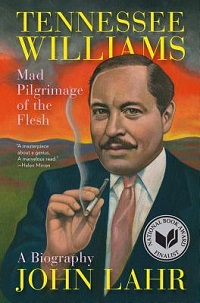
De Amerikaanse schrijver Tennessee Williams (eigenlijk Thomas Lanier Williams) werd geboren in Columbus, Mississippi, op 26 maart 1911. Zie ook alle tags voor Tennessee Williams op dit blog.


We have not long to love

We have not long to love.
Light does not stay.
The tender things are those
we fold away.
Coarse fabrics are the ones
for common wear.
In silence I have watched you
comb your hair.
Intimate the silence,
dim and warm.
I could but did not, reach
to touch your arm.
I could, but do not, break
that which is still.
(Almost the faintest whisper
would be shrill.)
So moments pass as though
they wished to stay.
We have not long to love.
A night. A day....


The Soft City

I
Eastward the city with scarcely even a murmur
turns in the soft dusk,
the lights of it blur,
the delicate spires are unequal
as though the emollient dusk had begun to dissolve them...

And the soft air-breathers,
their soft bosoms rising and falling as ferns under water
responding to some impalpably soft pressure,
turn with the city, too.

The petals of tenderness in them,
their tentative ways of feeling, not quite reaching out
but ever so gently half reaching out and withdrawing,

withdrawing to where their feminine star is withdrawing,
the planet that turns with them,
faithfully always and softly...


 2132409-a4ff30ecfd4e437b4bd549173b8fa848.jpg
Tennessee Williams (26 maart 1911 – 25 februari 1983)
Cover


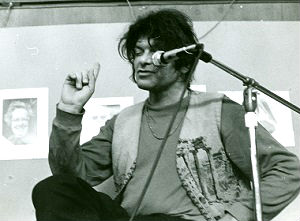
De Amerikaanse dichter Gregory Corso werd geboren in New York op 26 maart 1930. Zie ook alle tags voor Gregory Corso op dit blog.


America Politica Historia, In Spontaneity (Fragment)

I could never understand Uncle Sam
his red & white striped pants his funny whiskers his starry hat:
how surreal Yankee Doodle Dandy, goof!
American history has a way of making you feel
George Washington is still around, that is
when I think of Washington I do not think of Death—
Of all Presidents I have been under
Hoover is the most unreal
and FDR is the most President-looking
and Truman the most Jewish-looking
and Eisenhower the miscast of Time into Space—
Hoover is another America, Mr. 1930
and what must he be thinking now?
FDR was my youth, and how strange to still see
his wife around.
Truman is still in Presidential time.
I saw Eisenhower helicopter over Athens
and he looked at the Acropolis like only Zeus could.
OF THE PEOPLE is fortunate and select.
FOR THE PEOPLE has never happened in America or elsewhere.
BY THE PEOPLE is the sadness of America.
I am not politic.
I am not patriotic.
I am nationalistic!
I boast well the beauty of America to all the people in Europe.
In me they do not see their vision of America.
O whenever I pass an American Embassy I don’t know what to feel!
Sometimes I want to rush in and scream: “I’m American!”
but instead go a few paces down to the American Bar
get drunk and cry: “I’m no American!”
The men of politics I love are but youth’s fantasy:
The fine profile of Washington on coins stamps & tobacco wraps
The handsomeness and death-in-the-snow of Hamilton.
The eyeglasses shoe-buckles kites & keys of Ben Franklin.
The sweet melancholy of Lincoln.
The way I see Christ, as something romantic & unreal, is the way I see them.
An American is unique among peoples.
 

 2132409-4ebe2157141d1e06ff0aa7aaa8eb40c4.jpg
Gregory Corso (26 maart 1930 – 17 januari 2001)


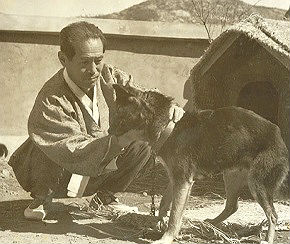
De Zuid-Koreaanse dichter en schrijver Hwang Sun-won werd geboren op 26 maart 1915 in Taedong, Zuid-Pyongan, in het hedendaagse Noord-Korea. Zie ook alle tags voor Hwang Sun-won op dit blog.

Uit: Cranes (Vertaald door David R. McCann)

“The old grandfather with the wen had probably passed away in the time since. He hadn’t been among the old people encountered in the area so far.
Holding on to the chestnut tree, for a moment Sŏngsam looked up at the blue autumn sky. Even without the branch being shaken, one of the remaining chestnuts opened, and the nut slipped out,
and fell.
As he reached the front of a house, the temporary headquarters for the Public Peace Corps, he saw there was some young fellow tied up in handcuff rope.
It didn’t seem to be anyone he had seen before in the village, so he went up close for a look at his face. He was stunned. Wasn’t it his closest childhood friend, Tŏkchae?
What was going on, he asked the Public Peace Corpsman who had come over from Ch’ŏnt’ae with him.
Vice chairman of the Farmers Collective Committee, this one was, caught hiding out in his own house.
Sŏngsam squatted down there on the dirt floor, a lighted cigarette in his mouth.
Tŏkchae was going to be sent off to Ch’ŏngdan. One of the Public Peace Corps members was going to take him.
Lighting a new cigarette from the one he had just finished, Sŏngsam stood up again.
“I’ll take this sunnavabitch.”
Tŏkchae all this time kept his face turned away and did not even try to look in Sŏngsam’s direction.
The two came out of the village.
Sŏngsam smoked one cigarette after another. The cigarettes seemed to have no flavor. He just kept drawing the smoke in deep, and letting it out. After a while, the thought came to him that this
Tŏkchae fellow, he might want a cigarette too. He remembered when they were young, how they would make cigarettes out of pumpkin leaves and smoke them behind the wall, so the grown-ups wouldn’t know. But how could he offer a cigarette to a guy like this one, today?"
 

 2132409-6ed6fa8d704fe8573e6087708f964663.jpg
Hwang Sun-won (26 maart 1915-14 september 2000)


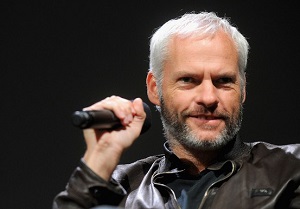
De Engels-Ierse schrijver en regisseur Martin McDonagh werd geboren op 26 maart 1970 in Camberwell, Londen. Zie ook alle tags voor Martin McDonagh op dit blog.

Uit: The Lieutenant of Inishmore

“DONNY If you admit it was you knocked poor Thomas down, Davey, I won’t tell him. If you carry on that it wasn’t, then I will. Them are your choices.
DAVEY But it isn’t fecking fair, Donny!
DONNY I don’t know if it is or it isn’t.
DAVEY I knew well I should’ve up and ignored the bastard when I saw him lying there, for if a black cat crossing your path is bad luck, what must one of the feckers lying dead in front of you be? Worse luck. I killed Wee Thomas so, if that’s what you want to hear.
DONNY How?
DAVEY How? However you fecking want, sure! I hit him with me bike, then I banged him with a hoe, then I jumped up and down on the feck!
DONNY You hit him with your bike, uh-huh, I suspected. But an accident it was?
DAVEY An accident, aye. A pure fecking accident.
DONNY Well . . . fair enough if an accident is all it was.
DAVEY (pause) So you won’t be mentioning my name so?
DONNY I won’t be.
DAVEY Good-oh. (Pause.) When’ll you be informing him of the news?
DONNY I’ll give him a ring in a minute now. He has a mobile.
DAVEY He’ll be furious.
DONNY I’ll tell him . . . I’ll tell him Wee Thomas is poorly, I’ll tell him. Aye . . .
DAVEY Sure he’ll know he’s more than poorly, Donny, when he sees them brains bubbling away . . .
DONNY He’s poorly but there’s no need to be rushing home, I’m saying . . .
DAVEY I’m with you now, Donny . . . »
DONNY Do you get me? He’s just a tadeen off his food, like, I’ll tell him. And in a week I’ll say he’s going downhill a biteen. And in another week I’ll say he passed away peaceful in his sleep, like.”
 

 2132409-e5f56e7f71e30015e986373605a05a43.jpg
Martin McDonagh (Camberwell, 26 maart 1970) 


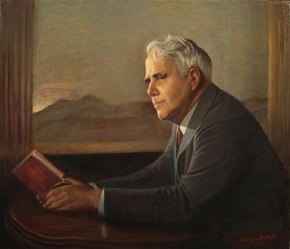
De Amerikaanse dichter Robert Lee Frost werd geboren op 26 maart 1874 in San Francisco. Zie ook alle tags voor Robert Frost op dit blog.


Brown's Descent (Fragment)

Brown lived at such a lofty farm
That everyone for miles could see
His lantern when he did his chores
In winter after half-past three.

And many must have seen him make
His wild descent from there one night,
'Cross lots, 'cross walls, 'cross everything,
Describing rings of lantern light.

Between the house and barn the gale
Got him by something he had on
And blew him out on the icy crust
That cased the world, and he was gone!

Walls were all buried, trees were few:
He saw no stay unless he stove
A hole in somewhere with his heel.
But though repeatedly he strove

And stamped and said things to himself,
And sometimes something seemed to yield,
He gained no foothold, but pursued
His journey down from field to field.

Sometimes he came with arms outspread
Like wings, revolving in the scene
Upon his longer axis, and
With no small dignity of mien.

Faster or slower as he chanced,
Sitting or standing as he chose,
According as he feared to risk
His neck, or thought to spare his clothes,

He never let the lantern drop.
And some exclaimed who saw afar
The figures he described with it,
"I wonder what those signals are

Brown makes at such an hour of night!
He's celebrating something strange.
I wonder if he's sold his farm,
Or been made Master of the Grange."
 

 2132409-47e750047afe871a632afe5eb77addb8.jpg
Robert Frost (26 maart 1874 – 29 januari 1963) 
Portret door A. Allyn Bishop, 1936


De Duitse schrijver Patrick Süskind werd geboren in Ambach op 26 maart 1949. Zie ook alle tags voor Patrick Süskind op dit blog.

Uit: Die Taube

„Als ihm die Sache mit der Taube widerfuhr, die seine Existenz von einem Tag zum andern aus den Angeln hob, war Jonathan Noel schon über fünfzig Jahre alt, blickte auf eine wohl zwanzigjährige Zeitspanne von vollkommener Ereignislosigkeit zurück und hätte niemals mehr damit gerechnet, daß ihm überhaupt noch irgend etwas anderes Wesentliches würde widerfahren können als dereinst der Tod. Und das war ihm durchaus recht. Denn er mochte Ereignisse nicht, und er haßte geradezu jene, die das innere Gleichgewicht erschütterten und die äußere Lebensordnung durcheinanderbrachten.
Die meisten derartigen Ereignisse lagen Gott sei Dank weit zurück in der grauen Vorzeit seiner Kindheits- und Jugendjahre, und er erinnerte sich ihrer am liebsten überhaupt nicht mehr, und wenn, dann nur mit größtem Unbehagen: An einen Sommernachmittag in Charenton etwa, im Juli 1942, als er vom Angeln nach Hause kam – es hatte ein Gewitter gegeben an jenem Tag und dann geregnet, nach langer Hitze, auf dem Heimweg hatte er die Schuhe ausgezogen, war mit nackten Füßen auf dem [6] warmen, nassen Asphalt gegangen und durch die Pfützen gepatscht, ein unbeschreibliches Vergnügen… – er war also vom Angeln nach Hause gekommen und in die Küche gelaufen, in der Erwartung, die Mutter dort beim Kochen anzutreffen, und da war die Mutter nicht mehr vorhanden, nur noch ihre Schürze war vorhanden, sie hing über der Lehne des Stuhls. Die Mutter sei weg, sagte der Vater, sie habe für längere Zeit verreisen müssen. Man hat sie fortgeschafft, sagten die Nachbarn, man hat sie zuerst ins Vélodrome d’Hiver geschafft und dann hinaus ins Lager von Drancy, von dort geht’s nach Osten, da kommt keiner zurück. Und Jonathan begriff nichts von diesem Ereignis, das Ereignis hatte ihn vollkommen verwirrt, und ein paar Tage später war dann auch der Vater verschwunden, und Jonathan und seine kleinere Schwester befanden sich plötzlich in einem Zug, der nach Süden fuhr, und wurden nächtens von wildfremden Männern über eine Wiese geführt und durch ein Waldstück gezerrt und abermals in einen Zug gesetzt, der nach Süden fuhr, weit, unbegreiflich weit, und ein Onkel, den sie bisher noch nie gesehen hatten, holte sie ab in Cavaillon und brachte sie auf seinen Bauernhof nahe der Ortschaft Puget im Tal der Durance und hielt sie dort versteckt bis zum Ende des Krieges. Dann ließ er sie auf den Gemüsefeldern arbeiten.”

 

 2132409-016857c610c93b3d062d7a5aa27b0917.jpg
Patrick Süskind (Ambach, 26 maart 1949)
Cover


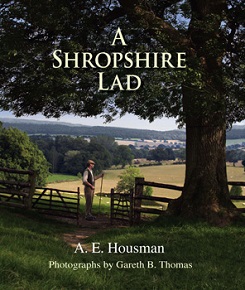
De Engelse dichter Alfred Edward Housman werd geboren op 26 maart 1859 in Fockbury, Worcestershire. Zie ook alle tags voor A. E. Housman op dit blog.


On Wenlock Edge the wood's in trouble;

On Wenlock Edge the wood's in trouble;
His forest fleece the Wrekin heaves;
The gale, it plies the saplings double,
And thick on Severn snow the leaves.

'Twould blow like this through holt and hanger
When Uricon the city stood:
'Tis the old wind in the old anger,
But then it threshed another wood.

Then, 'twas before my time, the Roman
At yonder heaving hill would stare:
The blood that warms an English yeoman,
The thoughts that hurt him, they were there.

There, like the wind through woods in riot,
Through him the gale of life blew high;
The tree of man was never quiet:
Then 'twas the Roman, now 'tis I.

The gale, it plies the saplings double,
It blows so hard, 'twill soon be gone:
To-day the Roman and his trouble
Are ashes under Uricon.
 

 2132409-2cb36323fbe1e043de2931dd8f91b063.jpg
A. E. Housman (26 maart 1859 – 30 april 1936)
Cover


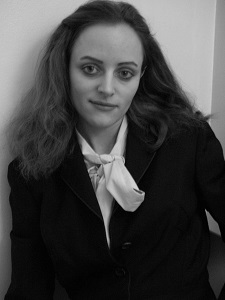
De Italiaanse, Duitstalige, dichteres en schrijfster Bettina Galvagni werd geboren op 26 maart 1976 in Neumarkt. Zie ook alle tags voor Bettina Galvagni op dit blog.

Uit: Guinevere in Zürich

“Guinevere, Sie verlassen mich, bevor ich Sie verlasse. Sie flüchten vor mir.“ Ja, es ist wahr, ich hatte Rachel Zilberstein verlassen. Ich hatte Anfälle, ich wurde mit der Ambulanz ins Krankenhaus gebracht, die Psychiatrie ersetzte im Sommer das Schwimmbad und im Winter den Schnee, ich verbrachte ein paar Stunden dort, ein paar Tage, ein paar Wochen, dann Monate und schließlich drei Jahre. Irgendwann gelang es Madame David, eine in der Schweiz lebende Tante von mir ausfindig zu machen, zu der ich nie Kontakt hatte. Sie nahm mich auf, bei sich, ihrem Mann, einem Professor, der wissenschaftliche Bücher und Romane publizierte, und ihrer Tochter auf dem Zürichberg.

In der ersten Zeit gingen wir oft am See spazieren, im Park neben ihrem Haus, wir besuchten alle möglichen Professoren und Professorinnen, Kollegen des Onkels. Abends saß ich manchmal in seinem „Büro“. Die matt glänzenden weißen Bücherregale waren mit einem dünnen Messingstreifen verziert, der im Schein der grünen Schreibtischlampe geheimnisvoll aussah. Die Bücher befanden sich in einer perfekten Ordnung. Ich saß an dem englischen Schreibtisch, betrachtete die silbernen Köcher und die blauen und roten Caran-d’Ache-Kugelschreiber, mit denen mein Onkel zu schreiben pflegte. Auch sie waren perfekt arrangiert. Nie wagte ich es, mich auf die Le-Corbusier-Liege zu setzen, auf der mein Onkel seine Bücher las. Er hatte einmal zwei Dinge zu mir gesagt, erstens, daß er im Bett nicht lesen könne, und zweitens, daß kein einziges Buch in seinen Regalen stehe, das er nicht gelesen habe. Das hatte mich sehr beeindruckt. Ich las nahezu ausschließlich im Bett, erstens, weil es der einzige Ort war, an dem ich allein war (ich schlief im zweiten Zimmer meiner Cousine), und zweitens, weil ich seit meinen Anfällen grundsätzlich viel im Bett lag, wo ich stundenlang mein kleines eiskaltes Herz hörte, das schlug und schlug und schlug, so wie Hühner am Morgen ihr Futter aufpicken, pick pick pick, und dann begann ich an die Katze zu denken, die bei Madame David manchmal aufgetaucht war, sie war schwarz und hatte grüne Augen, und wir haben uns sehr geliebt. Ich betete, die Katze möge weiterleben, sie möge alles nicht so sehen, wie es ist, die kleine, kalte Wohnung, den harten Pariser Winter, dessen Inneres so voller heißer Versprechen ist wie das alte venezianische Haus voller Türen, von dem Joseph Brodsky erzählte, er öffnet alle die Türen, es wird immer orgiastischer, wie ein Maskenball... „
 

 2132409-fe7ad0d360111df836ca2d61c68ffb15.JPG
Bettina Galvagni (Neumarkt, 26 maart 1976)


De Amerikaanse dichteres en schrijfster Erica Jong werd geboren in New York op 26 maart 1942. Zie ook alle tags voor Erica Jong op dit blog.

Uit: Fear of Dying

“I used to love the power I had over men. Walking down the street, my mandolin-shaped ass swaying and swinging to their backward eyes. How strange that I only completely knew this power when it was gone -- or transferred to my daughter, all male eyes on her nubile twentyish body, promising babies. I missed this power. It seemed that the things that had come to replace it -- marriage, maternity, the wisdom of the mature woman (ugh, I hate that phrase) -- weren't worth the candle. Ah, the candle! Standing up. Burning for me. Full of sound and fury signifying everything. I know I should fade away like a good old girl and spare my daughter the embarrassments of my passions, but I can't any more than I can conveniently die. Life is passion. But now I know what passion costs, so it's hard to be quite so carefree anymore.
But was I ever carefree? Was anyone? Wasn't love always an exploding cigar? Didn't Gypsy Rose Lee say, "God is love, but get it in writing"? And didn't Fanny Brice say, "Love is like a card trick -- once you know how it works, it's no fun anymore"? Those old broads knew a thing or two. And did they give up? Never!
I'm not going to tell you - yet -- how old I am or how many times I've been married. (I have decided never to get any older than fifty.) My husband and I read the obituaries together more often than we have sex. I'm only going to say that when all the troubles of my family of origin engulfed me and I realized that my marriage could not save me, I reached a point where I was just unhinged enough to put the following ad on Zipless.com, a sex site on the Internet:
Happily married woman with extra erotic energy seeks happily married man to share same. Come celebrate Eros one after noon per week. Discretion guaranteed by playful, pretty, imaginative, witty woman. Send e- mail and recent picture. New York area.
Talk about a woman on the verge of a nervous breakdown! It was autumn in New York -- season of mellow mists, Jewish holidays, and five-thousand-dollar-a-plate benefits for chic diseases."

 

 2132409-c60e8ce385dbf1ccf8b876f86e2d333b.jpg
Erica Jong (New York, 26 maart 1942)


Zie voor nog meer schrijvers van de 26e maart ook mijn blog van 26 maart 2017 deel 2.

Zie voor bovenstaande schrijvers ook mijn blog van 26 maart 2007 en ook mijn blog van 26 maart 2008 en eveneens mijn blog van 26 maart 2009.

Geschreven door Romenu om 18:30 Reageer op dit bericht

Jezus intrede in Jeruzalem (Nicolaas Beets)


Bij Palmzondag


 2132051-3ad53b1c7fa5162de78534a166662c95.jpg
De intocht van Jezus in Jeruzalem door Anthony van Dyck, 1617


Jezus intrede in Jeruzalem
Matth. XXI. v. 1-9.

Wat feestelijk hozannagalmen,
Wat luid gewoel in Davids stad,
Gezwier van schaduwende palmen
En kleederspreiding over 't pad!
Wien groeten de opgetogen scharen?
Wiens statig' intocht viert haar drom?
Wien spreidt men bloem en groene blaren,
En voert Hem zegevierende om?

Een Zegepraler, wien, na 't strijden,
Een juichend volk met drift begroet?
Maar hij zou 't oorlogsros beschrijden,
Nog kleurig van vergoten bloed.
Een lijfwacht zou zijn zij' bekleeden,
De bloem van 't overwonnen heir
Zou in zijns kleppers voetspoor treden,
Een keten slepend, Hem ter eer.

Of is 't een uitgeroepen Koning,
Die 't rijk aanvaard heeft door zijn recht,
Ten dage, die met praalvertooning
De kroon Hem op den tulband legt?
Maar neen, geen stoet van vorstenmagen,
Die voor zijn schreden zich verdringt;
Geen schepter wordt vooruitgedragen;
Geen schelle feestbazuin weerklinkt.

En toch een Vorst, maar niet van de aarde,
Is Hij wien 't ezelveulen draagt;
Een prins, dien Davids dochter baarde,
Maar die geen zetel Davids vraagt,
Daar Hij zijn afkomst hooger rekent,
En hooger troon bestijgen zal;
Wiens naam Gezalfde Gods beteekent,
Wiens staf trekt over 't wijd heelal.

Wie kent, van die zijn intocht vieren,
In Davids zegenrijke stad,
Wier handen hem de meien zwieren,
En kleedren spreiden op zijn pad;
Schoon zij den grooten Meester eeren,
Den Wonderdoener en Profeet,
Wie kent in Hem den Heer der Heeren,
Die Satan op den gorgel treedt?

Die d' ijselijken strijd beginnen,
De schrikbre worstling aan zal gaan,
Waarin Hij Dood en Hel verwinnen,
En, zegevierder, op zal staan?
En hoe? Door lijden boven maten,
Door sterven, 't menschdom ten rantsoen, -
Die nu Hem toejuicht op de straten,
Een lot, dat gij Hem aan zult doen!

Wij weten van uw zegepralen,
O Heer, in wien ons hart gelooft!
Wij koestren ons in 't licht der stralen,
Die schittren om uw zeegrijk hoofd.
Wij heffen oog en hand en harte
Tot U, die op de wolken troont;
Gij waart op aarde een man van smarte,
Maar nu met hemelsche eer gekroond.

Hozanna! Koning, dien wij groeten;
Hozanna! Heer en Hoofd der Kerk!
Wij vallen needrig aan uw voeten,
Alleen door uw genade sterk.
Bekrachtig ons, gij Heer der Heeren,
Opdat wij, in uw naam gegord,
Verwinnaars, uit het strijdperk keeren,
Waarin ons zonde en dwaasheid stort.


 2132051-0f09170bbfab79bddaf64195a4a214c6.jpg
Nicolaas Beets (13 september 1814 – 13 maart 1903)
De Nieuwe Kerk in Haarlem, de geboortestad van Nicolaas Beets


Zie voor de schrijvers van de 25e maart ook mijn twee vorige blogs van vandaag.

Geschreven door Romenu om 11:59 Reageer op dit bericht

Pol Hoste, Menno Van der Beek, Jung Chang, Paul Meeuws, Flannery O'Connor, Jaime Sabines, Peter Van Straaten, Toni Cade Bambara

De Vlaamse schrijver Pol Hoste werd geboren in Lokeren op 25 maart 1947. Zie ook alle tags voor Pol Hoste op dit blog.

Uit: Thee

“Aan mijn broer heb ik een foto gestuurd van het huis. Ik heb hem geschreven dat ik kunstgeschiedenis studeer. Hij kan de keuken zien en de ramen van de kamers en mijn vrienden lachen hem toe. Het is zomer en in de achtertuin eten we gebraden vlees met look en veel ajuin zodat we gespaard blijven van wormen. Ik lust geen rauw vlees. Men zal geen bloed drinken. Maar als er bloedworst wordt opgediend, eet ik en klaag niet.
Of de brief zijn bestemming zal bereiken, weet ik niet. Waar mijn familie leeft is het oorlog. Mijn grootvader werd vervolgd en gedood. Wij waren prinsen. Nu woon ik hier. Zal mijn broer ooit zien hoe mijn vrienden en ik kefir drinken en tomaten eten met brood? Dit hier zijn de stallen van de buren.
- Ga verder.
- Als het zondag was zette ik thee voor mijn vrienden. Maar ik kwam er niet achter waarom ze niet graag thee dronken. Kan men vragen waarom? Ik dacht dat het aan het water lag. Hier is er veel kalk in het water.
Op de markt kocht ik een nieuw kannetje. Ik vertelde de handelaar dat het water veel kalk bevatte.
‘Waarom keert u niet terug naar uw land?’ zei hij. ‘Als het water hier niet deugt?’ Ik verzweeg voor hem dat mijn familie in de woestijn woonde.
‘In mijn land, meneer,’ zei ik, ‘kookt het water als men er vuur onder maakt. En daarom heb ik een kannetje nodig.’ Dit vond ik een goed antwoord.
Het kostte me moeite om op de oude markt een waterdicht kannetje te vinden. Hoe kon ik weten dat men zich alles in winkels aanschaft? Ik zag geen winkels waar men kannetjes verkoopt.
‘Wat u zoekt,’ zei de handelaar die zich warmde aan een flesje cognac, ‘vindt men enkel bij oude boeren op het platteland.’ Later heb ik begrepen dat hij de warenhuizen bedoelde die buiten de stad zijn gevestigd. Dat begreep ik niet.
Maar ook nadat ik het water in een nieuw kannetje had gekookt leken mijn vrienden niet graag thee met mij te drinken. Daarom kocht ik wijn voor hen, kefir of verse geitemelk, kaas, vijgen en tomaten. En als ze op bezoek kwamen begon ik zelf smakelijk te eten om te tonen dat alles lekker was en net van de markt kwam en dat er voor iedereen voldoende was.”


 2132048-7ca3837f26bc97cd6684ce24972a57eb.jpg
Pol Hoste (Lokeren, 25 maart 1947)


De Nederlandse dichter en vertaler Menno van der Beek werd geboren op 25 maart 1967 in Rotterdam. Zie ook alle tags voor Menno van der Beek op dit blog


Het visioen

Dit overwegend naast de koffieautomaat:
- ik heb mij jarenlang aan deze zaak gewijd -
vult hij zijn beker. Hij neemt alle tijd
en stelt zich voor wat hem te wachten staat.

Hij brandt zijn vingers aan het hete vocht
waar hij net iets te veel van heeft gekocht

en dat hem huilend uit de vingers valt
omdat de kwaliteit hem tegenvalt.

Dan wordt hij op zijn knieën aangetroffen:
wanhopig dweilend met gemorste koffie.


Waterballet

Zo hard heeft het misschien nog nooit geregend
of misschien zat ik boven, toen het zo ver was
en danste men in regenkleding door de plassen
terwijl ik langzaam grote voeten kreeg.

Wat heb ik ondertussen al die tijd gedaan?
Aarzelend boven aan de trap gestaan.

Ik wachtte tot ik groot genoeg was om de vader
voortaan heel anders te benaderen.

Kom terug, en troost mij in uw lange armen
die in de regen uit de hemel hangen.


 2132048-238effe3e8e317d3c2bc1b187c8c7187.jpg
Menno Van der Beek (Rotterdam, 25 maart 1967)


De Chinese schrijfster Jung Chang werd geboren in Yibin, Sichuan op 25 maart 1952. Zie ook alle tags voor Jung Chang op dit blog.

Uit: Wilde zwanen.Drie dochters van China (Vertaald door Paul Syrier)

“Yangs vader had besloten dat zijn zoon hem beter niet kon opvolgen in het viltbedrijf van de familie en dwong zichzelf en zijn gezin grote offers te brengen om de opleiding van zijn zoon te bekostigen. De vrouwen namen naaiwerk aan van plaatselijke kleeren gewadenmakers en zwoegden tot diep in de nacht. Om geld uit te sparen draaiden ze hun olielampen zo laag mogelijk, waardoor ze blijvende oogschade opliepen. De gewrichten van hun vingers zwollen op door de lange werkdagen. Overeenkomstig het gebruik trouwde mijn overgrootvader jong, op veertienjarige leeftijd, met een vrouw die zes jaar ouder was dan hij. Het werd als een van de taken van een echtgenote gezien mee te helpen met de opvoeding van haar man. De geschiedenis van zijn vrouw, mijn overgrootmoeder, was typerend voor miljoenen Chinese vrouwen van die tijd. Ze was afkomstig van een familie van leerlooiers, die Wu heette. Omdat haar familie niet uit intellectuelen bestond en geen officiële posten bekleedde, en omdat ze een meisje was, had ze geen naam gekreegen. Aangezien ze de tweede dochter was, werd ze eenvoudigweg 'Meisje Nummer Twee' (Er-ya-tou) genoemd. Haar vader overleed toen ze nog kind was en ze werd door een oom opgevoed. Op een dag, toen ze zes jaar was, at haar oom bij een vriend wiens vrouw zwanger was. Tijdens het eten spraken de beide mannen af dat als het kind een jongen zou blijken te zijn, het met zijn zes jaar oude nichtje zou trouwen. De twee jonge mensen hadden elkaar tot de dag van hun huwelijk nooit gezien. Verliefdheid werd zelfs bijna als beschamend, als een schande voor de familie beschouwd. Niet omdat het taboe was — er bestond een achtenswaardige traditie van romantische liefde in China — maar omdat jonge mensen niet werden geacht aan situaties te worden blootgesteld waarin iets dergelijks kon gebeuren, gedeeltelijk omdat dergelijke ontmoetingen als immoreel werden beschouwd en gedeeltelijk omdat het huwelijk vooral als een plicht, als een afspraak tussen twee families werd gezien. Met enig geluk kon je verliefd worden nadat je was getrouwd. Op zijn veertiende was mijn overgrootvader, die bovendien een heel beschermd bestaan had geleid, nog maar weinig meer dan een jongetje toen hij trouwde. In de huwelijksnacht wilde hij de huwelijkskamer niet in. Hij ging naar bed in de kamer van zijn moeder en moest, nadat hij in slaap was gevallen, naar zijn bruid worden gedragen.”


 2132048-d25813fc938d5f088f175bcbe0f4c931.jpg
Jung Chang (Yibin, 25 maart 1952)


De Nederlandse dichter en schrijver Paul Meeuws werd geboren op 25 maart 1947 in Roermond. Zie ook alle tags voor Paul Meeuws op dit blog.

Uit: Een partij droog hout

“Even buiten de stad ging de weg naar Bartels, bergafwaarts, over in een karrespoor. Vandaar keek je over een rivierlandschap met weilanden, knotwilgen, een ondoordringbaar braambos en een beek die ergens tussen de lisdodden ontsprong.
Bij Bartels wachtte ons een mooie partij beuken. Al wekenlang was het volop zomer, het hout was droger dan ooit. Mijn vader veerde monter door zijn knieën bij het afdalen. Voor de zoveelste maal verklaarde hij zijn liefde aan het hout, zijn milde warmte, zijn verholen klank.
Ik kwinkeleerde op mijn fluitje dat plat en rond als een stuiver op mijn tong lag. Het membraampje kietelde mijn gehemelte en ik genoot van de virtuoze capriolen van mijn tong die mij, stotteraar, bij het spreken danig in de weg zat, terwijl mijn lippen nu gelukkig niets hoefden te doen. Hoe vaak had ik er niet van gedroomd met een onbelemmerd, hemels gegorgel te kunnen volstaan, een taal zonder die onuitsprekelijke labialen. Blaffen kon ik als een hond, brommen als een beer, snateren als een eend, en sinds kort, ook fluiten als een vogel.
Ik lette scherp op het gedrag van de vogeltjes die in de haag voor kleine ontploffinkjes zorgden. Blijkbaar hadden die het te druk met hun geruzie om op mijn gefluit te letten. In de hoge bomen rond de Stadsweide woonden tussen flarden van gestrande vliegers de grotere vogels, kraaien, eksters, duiven en hoog boven ons cirkelde een buizerd. Die stootte zo nu en dan kreten uit, overslaand van een onbegrijpelijke paniek.
‘Franciscus sprak met de vogels,’ zei mijn vader.
‘Maar Franciscus stotterde niet,’ sliste ik, zonder te stotteren. Ik begreep hoe belachelijk kunstmatig de vogels mijn gefluit moesten vinden.
‘Zie je wel dat het fluitje helpt,’ lachte mijn vader.
Hij spreidde zijn armen en zei dat daar het hele landschap in paste, tot en met de rivier achter het domein van Bartels en hij legde uit dat dat het perspectief was zoals schilders dat op hun schilderijen brengen. Ik mat de schoorstenen van de Electriciteitscentrale ginds tussen duim en wijsvinger, de rij bomen die de loop van de rivier markeerden en de spoorbrug waarover een haardunne trein kroop. In de manke vergelijking van een trein met een haar lag het geheim van de onmetelijke ruimte”.


 2132048-7a366d4a62091f21615512ac710e1899.jpg
Paul Meeuws (Roermond, 25 maart 1947)
Portret door Peter Thijs, 2006


De Amerikaanse schrijfster Flannery O'Connor werd geboren op 25 maart 1925 in Savannah, Georgia. Zie ook  alle tags voor Flannery O'Connor op dit blog.

Uit:A Temple of the Holy Ghost

“The child decided she would have to be a saint because that was the occupation that included everything you could know; and yet she knew she would never be a saint. She did not steal or murder but she was a born liar and slothful and she sassed her mother and was deliberately ugly to almost everybody. She was eaten up also with the sin of Pride, the worst one. She made fun of the Baptist preacher who came to the school at commencement to give the devotional. She would pull down her mouth and hold her forehead as if she were in agony and groan, “Fawther, we thank Thee,” exactly the way he did and she had been told many times not to do it. She could never be a saint, but she thought she could be a martyr if they killed her quick.
She could stand to be shot but not to be burned in oil. She didn’t know if she could stand to be torn to pieces by lions or not. She began to prepare her martyrdom, seeing herself in a pair of tights in a great arena, lit by the early Christians hanging in cages of fire, making a gold dusty light that fell on her and the lions. The first lion charged forward and fell at her feet, converted. A whole series of lions did the same. The lions liked her so much she even slept with them and finally the Romans were obliged to burn her but to their astonishment she would not burn down and finding she was so hard to kill, they finally cut off her head quickly with a sword and she went immediately to heaven. She rehearsed this several times, returning each time at the entrance of Paradise to the lions. …
The girls came in at a quarter to twelve and waked her up with their giggling. They turned on the small blue-shaded lamp to see to get undressed by and their skinny shadows climbed up the wall and broke and continued moving about softly on the ceiling. The child sat up to hear what all they had seen at the fair. Susan had a plastic pistol full of cheap candy and Joanne a pasteboard cat with red polka dots on it. “Did you see the monkeys dance?” the child asked. “Did you see the fat man and those midgets?”


 2132048-87f19cfbacae50290f50a862ac7785e2.jpg
Flannery O'Connor (25 maart 1925 – 3 augustus 1964)
Wise Blood: A Portrait of Flannery O'Connor door Lauren Pope, 2007


De Mexicaanse dichter en schrijver Jaime Sabines Gutiérrez werd geboren op 25 maart 1926 in Tuxtla Gutiérrez, Chiapas. Zie ook alle tags voor Jaime Sabines op dit blog.


Before long you will offer these pages to people you don’t know as though you were holding out a handful of grass that you had cut.
.
Proud and depressed of your achievement you will come back and fling yourself into your favourite corner.
.
You call yourself a poet because you don’t have enough modesty to remain silent.
.
Good luck to you, thief, with what you’re stealing from your suffering – and your loves! Let’s see what sort of image you make out of the pieces of your shadow you pick up.


You have what I look for, what I long for, what I love – you have it.
The fist of my heart is beating, calling.
I thank the stories for you.
I thank your mother and your father and death who has not seen you.
I thank the air for you.
You are elegant as wheat,
delicate as the outline of your body.
I have never loved a slender woman
but you have made my hands fall in love,
you moored my desire,
you caught my eyes like two fish.
And for this I am at your door, waiting.


Vertaald door W.S. Merwin


 2132048-fcd4c9931c673bc9dd9b475b4fc0c764.jpg
Jaime Sabines (25 maart 1926 – 19 maart 1999)


De Nederlandse cartoonist en striptekenaar Peter van Straaten werd geboren in Arnhem op 25 maart 1935. Zie ook alle tags voor Peter van Straaten op dit blog.


 2132048-731a57bb5ef0445d5e699795507fea37.jpg
“Als jij nou een paar beroemde schrijvers versiert, dan haal ik iets te drinken.”


 2132048-0cb051d7d958004e82fc631ca91b2b14.jpg
Peter Van Straaten (25 maart 1935 – 8 december 2016)


De Amerikaanse schrijfster en sociale activiste Toni Cade Bambara werd als Miltona Mirkin Cade geboren op 25 maart 1939 in New York. Zie ook alle tags voor Toni Cade Bambara op dit blog.

Uit: Raymond's Run

“I don’t have much work to do around the house like some girls. My mother does that. And I don’t have to earn my pocket money by hustling; George runs errands for the big boys and sells Christmas cards.
And anything else that’s got to get done, my father does. All I have to do in life is mind my brother Raymond, which is enough.
Sometimes I slip and say my little brother Raymond. But as any fool can see he’s much bigger and he’s older too. But a lot of people call him my little brother cause he needs looking after cause he’s
not quite right. And a lot of smart mouths got lots to say about that too, especially when George was minding him.
But now, if anybody has anything to say to Raymond, anything to say about his big head, they have to come by me. And I don’t play the dozens or believe in standing around with somebody in my face doi
ng a lot of talking. I much rather just knock you down and take my chances even if I am a little girl with skinny arms and a squeaky voice, which is how I got the name Squeaky. And if things get too rough, I run. And as anybody can tell you, I’m the fastest thing on two feet.
There is no track meet that I don’t win the first-place medal. I used to win the twenty-yard dash when I was a little kid in kindergarten. Nowadays, it’s the fifty-yard dash. And tomorrow I’m subject to run the quarter-meter relay all by myself and come in first, second, and third. The big kids call me Mercury cause I’m the swiftest thing in the neighborhood.
Everybody knows that—except two people who know better, my father and me. He can beat me to Amsterdam Avenue with me having a two-fire-hydrant headstart and him running with his hands in his
pockets and whistling. But that’s private information. Cause can you imagine some thirty-five-year-old man stuffing himself into PAL shorts to race little kids?
So as far as everyone’s concerned, I’m the fastest and that goes for Gretchen, too, who has put out the tale that she is going to win the first-place medal this year. Ridiculous. In the second place, she’
s got short legs. In the third place, she’s got freckles. In the first place, no one can beat me and that’s all there is to it.”


 2132048-9dd8f3d3aa9d46b9c698be5a98a575de.jpg
Toni Cade Bambara (25 maart 1939 – 9 december 1995)
Cover


Zie voor nog meer schrijvers van de 25e maart ook mijn vorige blog van vandaag.

Zie voor bovenstaande schrijvers ook mijn blog van 25 maart 2007 en ook mijn blog van 25 maart 2008 en eveneens mijn blog van 25 maart 2009.

Geschreven door Romenu om 11:58 Reageer op dit bericht

Antonio Fogazzaro, Jacques Bens, Jacques Audiberti, Filip De Pillecyn, Erica Pedretti, Evliya Çelebi, Anne Fanshawe, Daniel Schiebeler, Mary Webb

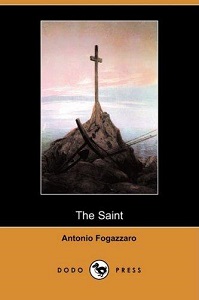
De Italiaanse schrijver Antonio Fogazzaro werd geboren op 25 maart 1842 in Vicenza. Zie ook alle tags voor Antonio Fogazzaro op dit blog.

Uit: The Saint

“Nonsense,” answered the author. “It is not progressing at all.” He was making no headway, but was, in fact, floundering hopelessly in the shallows of a desperate situation. Two personages had stuck in the author’s throat, and could move neither up nor down; one fat and good-natured, the other thin and sarcastic, like Mademoiselle d’Arxel. He felt like a certain unfortunate Tuscan peasant, who had lately swallowed a fig with a bee upon it, and had died in consequence. The “bee” understood that he really wanted to talk of his book; she stung him again and again to such a degree that he actually did talk about it. His story was founded on a curious case of spiritual infection. The hero was a French priest, an octogenarian, pious, pure, and learned. French? Why French? Simply because the character must be possessed of a certain tinge of poetic fancy, a certain elasticity of sentiment, and according to Carlino, not one Italian priest in a thousand was likely to possess these exalted attributes. It happened one day that this priest received the confession of a man of great intellect whose faith was assailed by terrible doubts. His confession over, the penitent went his way completely reassured, leaving the confessor shaken in his own faith. Here would follow a long and minute analysis of the different phases through which the old man’s conscience passed. He lived in daily expectation of death with a feeling of dismay akin to that of the schoolboy who waits his turn for examination in the ante-room, conscious only of his empty head. The priest comes to Bruges. At this point the hostile critic exclaimed:
“To Bruges? Why?”
“Because,” answered Carlino, “I send him wherever I wish. Because at Bruges there is the silence of the ante-chamber of Eternity, and that carillon (which honestly is beginning to exasperate me) may pass for the voices of summoning angels. Finally, because at Bruges there is a dark young lady slight, tall, and whom we may also call intelligent, although she speaks Italian badly, and does not understand music.”
Noemi pursed her lips and wrinkled her nose.
“What nonsense,” she said.”


 2132046-2e6d0924c9494eefebed8cdd1f9796eb.jpg
Antonio Fogazzaro (25 maart 1842 – 7 maart 1911)
Cover 


De Franse dichter en schrijver Jacques Bens werd geboren op 25 maart 1931 in Cadolive (Bouches-du-Rhône). Zie ook alle tags voor Jacques Bens op dit blog.


Thirteen

Poet, stay calm, but it’s not unforeseen,
One day you’ll write a poem numbered thirteen,
While rather anxious that the sky will fall.

I’m not superstitious, but all the same.

Thirteen, in days of yore, brought death to call
On shepherds in Sumer and Greece, umpteen
Year II troops, the English merchant marine!
At least, that’s the rumor that ran the hall.

Don’t believe it, no no, but all the same.

Committing blasphemy’s no parlor game.
If freethinking may have its charms for me, 
I’m quite wary of those who will lay blame; 
the thirteenth poem’s thirteenth line must lay claim
to some virtues that I just cannot see.


Modest

Sometimes my friends pout, want to altercate,
And turn their backs. And then I speculate. 
Such as: I think they find me pretentious.

No, really, no joke, don’t I seem modest?

Pretentious! No slight is more spurious! 
I never judge, opine, incriminate!
My point of view will never dominate!
(Though my take’s often the most judicious.) 

Objectively speaking, I’m quite modest.  

Besides, consider one who will protest 
And likely thinks he’s unimpeachable.
Listen to him: he’ll keep scolding with zest,
Advise, contradict, exhort, and suggest,
And I’m the one who’s objectionable?


Vertaald door Rachel Galvin


2132046-e24f3bcc919a8546dbad5fa84b83aedb.jpg 
Jacques Bens (25 maart 1931 – 26 juli 2001)


De Franse dichter en schrijver Jacques Audiberti werd geboren op 25 maart 1899 in Antibes. Zie ook alle tags voor Jacques Audiberti op dit blog.

Uit: Le Maître de Milan

« Elle avait été trop dure, trop exigeante. Trop " personnelle ". Ce séjour à Pravesa-Massiglione lui avait permis d'y voir plus clair, de mettre le doigt sur l'habitude qu'elle avait de croire à sa propre importance. Ce roman, par exemple, elle avait cru qu'il se rapportait à elle. A elle, Mathilde Bracchiapelli ! Quelle folie ! Parce que, dans le roman, ils mangeaient des Rat casqué. Parce que le roman se passait dans un quartier semblable à la rue Mangiatecugini. Parce qu'il y avait un prêtre, un dentiste, un cordonnier. Parce que le cordonnier avait une âme, un moment, comme la sienne, enveloppée de frôlements, obsédée de soupçons. Les âmes des uns et des autres ont des postures semblables, voilà tout. Les corps en ont bien !
Restait Pravesa-Massiglione. Le cordonnier était venu à Pravesa-Massiglione. Et puis ? Pravesa-Massiglione n'était tout de même pas la propriété de Mme Mathilde Bracchiapelli ! D'ailleurs, admis le thème du roman, c'est là, logiquement, c'est là que doit aller une personne de la ville, si elle veut avoir l'air d'accomplir un voyage, ou de partir en vacances, sans, toutefois, partir pour de bon. À quelques kilomètres de Pravesa, on arrivait dans les lacs véritables, on touchait les premières Alpes. Mais, dans l'autre sens, pas très loin, les autobus citadins poussaient leurs pointes extrêmes, c'était encore la périphérie.
Doucement, elle dit à Franca : " Franca, ma petite chérie, tu n'as pas besoin de t'exténuer. Tu n'es pas en prison ! " Franca, machinale, continuait à tricoter. " L'année prochaine, nous nous arrangerons, je ne sais pas comment, mais il faudra que nous nous arrangions. Pour commencer, il te faudra une robe de toile, des sandales. Et puis, tu enlèveras tes bas. Pauvre ! Ils te donnent chaud. Et nous essaierons d'aller à la mer. Tu te baigneras, Franca ! La mer est bonne pour toi. Franca ! Le soleil est bon pour toi, Franca ! "


 2132046-950ffad8157d1da04fb5a409643eb027.jpg
Jacques Audiberti (25 maart 1899 – 10 juli 1965)


De Vlaamse schrijver Filip De Pillecyn werd te Hamme aan de Durme geboren op 25 maart 1891. Zie ook alle tags voor Filip De Pillecyn op dit blog.

Uit: Mensen achter de dijk

“Met lange rukken duwt de wind tegen ons aan; zijn klagend gezoef dringt door tot mijn warme schuilplaats en roept in mij het gevoel van oneindige uitgestrektheden waar hij als een tastbaar, grijpelijk leven overheen woelt. Er vallen geen lichtvlekken van winkelramen meer onder de boord van de mantel.
- Moeder, roep ik, zijn wij aan het kerkhof.
Mijn stem klinkt vreemd en zwak, verdoofd en als opgezogen in de stof.
Maar moeder hoort het en ik hoor ze ‘ja’ antwoorden.
Wij gaan heel alleen voorbij het kerkhof. Bang ben ik niet, maar vervuld van een grote eerbied. Daar liggen de lichamen van mensen wier ziel God reeds aanschouwt, heeft moeder mij gezegd. En 's avonds liggen zij daar zo eenzaam, een wereld op zichzelf van hen die wachten op de opstanding. Ik bid drie weesgegroeten, ik weet dat ook moeders lippen bewegen onder de woorden van haar gebed.
Rechtdoor loopt de weg door akkers en weiden. Een bosje is er waar arme mensen hun geit laten grazen tussen de wijd uiteenstaande stammen van kanadapopulieren. Van daaruit gezien is het alsof de wereld ten einde is: geen huis meer, de straatweg wordt een wegel die doorloopt in een gebied dat niemand schijnt toe te horen. En toch komt soms van daaruit ver geblaf van honden; als de wind een poos gaat liggen is het alsof een hond scherp en lang ligt te huilen in de duisternis.
En linksaf gaat de weg naar huis. Nu weet ik huis voor huis waar wij voorbijkomen. Veel zijn er niet. De kinderen, wier hoge roepstem ik soms hoor antwoorden op de kijvende woorden van een vrouw, zijn mij bekend. Maar boven alles hoor ik nu de wind met brede, lange stoten over het veld trekken. De geur van het vochtige raapland dringt door tot mij en doorweekte blaren ploffen tegen moeders mantel. De naderende herfst omgeeft mij met al zijn geluid en zijn plotse stilte.
Ik schrijd met moeder naar de eenzaamheid waar wij wonen. Ik druk haar goede, warme hand tegen mijn wang en ik weet dat zij nu zachtjes glimlacht. Het is alsof ik ze hoor zingen; dat doet zij slechts als zij alleen is. En wij zijn nu alleen, moeder, alleen in het stille land tussen de dijken die hun lis en hun zompen tot ver in de akkers vooruitschuiven. Plots blijft zij staan: zwellend op de wind komt het gelui van een klok. Moeder buigt zich voorover tot mij: ‘Bid voor de gelovige zielen’, zegt zij.”


2132046-d63ccd704dd82d90ce72915a48df3fa9.gif 
Filip De Pillecyn (25 maart 1891 – 7 augustus 1962)
Cover 


De Zwitserse schrijfster en beeldhouwster Erica Pedretti werd geboren op 25 maart 1930 in Šternberk (Tsjechië). Zie ook alle tags voor Erica Pedretti op dit blog.

Uit: Fremd genug

„Irgendwo in der Steiermark fanden die Eltern das nachste Kinderheim. Wir scheinen dort nicht allzu behutet gewesen zu sein, denn es gelang mir mehrmals, mich bis zur Post zu stehlen, um heimlich Briefe einzuwerfen. Ich konnte noch nicht schreiben, nur zeichnen, meine Hilferufe kamen nie zu Hause an.
Im Jahr darauf fand ich mich in einem Heim auf dem Obersalzberg wieder, in dem einige Jahre zuvor eine Cousine (offenbar gern) gewesen war.
Eigenartigerweise fuhr man dort auf der rechten statt wie bei uns in der Tschechoslowakei auf der linken Strasenseite, und als wir bei einem der taglichen Spaziergange auf eine Gruppe Manner trafen, rissen alle, Betreuerin und Kinder, die Hande hoch und marschierten mit schrag erhobenem Arm stramm vorbei, den Blick auf einem nicht sehr beeindruckenden Mann, den sie Fuhrer nannten.
Eigenartig. Und hatten sie nicht gelernt, das man niemanden so anstarren darf ? Kurze Zeit spater sei dann dieses Kinderheim verschwunden.
Mein nachstes, ein Kindersanatorium, fand sich im Thuringer Wald. Es war schon dunkel, als wir ankamen, durch die erleuchteten Fenster konnte man im riesigen Speisesaal die Kinder essen sehen.
Drinnen, beim Empfang, ubertonte das Klappern des Bestecks in den Tellern jedes Wort, es roch nach angebrannten Zwiebeln, und ich hoffte, niemand wurde merken, das ich noch nicht gegessen hatte. Sieben oder acht war ich, also schon gros, wurde aber, weil mein Vater mich mit dem Geburtsdatum einer jungeren Schwester abgegeben hatte, in zu kleine Anstaltskleider und zu den kleinen Madchen gesteckt.
Wahrend der Liegekur wurde vorgelesen, doch das Spannendste kam immer dann, wenn ich zur Heilgymnastik muste. Sonntags beim Gottesdienst in der Turnhalle wurden vor dem Singen die einzelnen Strophen der Lieder vorgelesen.
Wer kann den Text?“


 2132046-bbca34d87a56b8452ff2277a814f2d33.jpg
Erica Pedretti (Šternberk 25 maart 1930)


De Turkse schrijver Evliya Çelebi werd geboren op 25 maart 1611 in Istanbul. Zie ook alle tags voor Evliya Çelebi op dit blog.

Uit: Narrative of Travels in Europe, Asia, and Africa, in the Seventeenth Century (Vertaald door Joseph von Hammer)

“The town of Brússa having been built towards the North on natural rocks has no ditch, but on the side of the head fountain (Búnár-báshí) and the quarter of the Mills, it has a deep one, which at the time of the Asiatic rebellions of Kará Yazijí, Kallender and Sa’íd Arab was filled up. Some of the stones of the walls are of the size of the cupola of a bath, and some bear Greek inscriptions on them. The town is protected against southerly and easterly winds from its being situated at the foot of Mount Olympus. The houses have a northern aspect and look over the plain of Filehdár. The fortress, the circumference of which is eleven thousand paces, has six thousand battlements, sixty-seven towers, and four gates, viz. the gate of the head fountain, the prison-gate, the hot-baths’-gate to the west, and the gate of the fishmarket. This stronghold was besieged more than once by the Seljúkians, who came with an army of twenty thousand men; the siege lasted between seven and eight months, the besiegers retiring only on the approach of winter. Osmán the founder of the Ottoman dynasty besieged it three times, but was compelled on the last occasion by an attack of the gout to retire to Iconium. He sent his son Orkhán with Sheikh Hájí Begtásh, who renewed the siege, and built two great towers, one at the side of the hot-baths (Kaplijah), and the other on the side of the head fountain (Búnár-báshí), which took seven months to complete. Orkhán posted himself at the hot-bath, his nephew Timúr-beg, at the head-fountain, and Yalabánjik-beg at the mountain’s side. It surrendered in 722 (1322) after a year’s siege, and Osmán died at the moment he received the news. Orkhán his successor entered Brússa with Hájí Begtásh, there fixed his residence, and buried his father’s body in the castle. Osmán conquered seventy towns during the lifetime of his father Ertoghrúl. His first conquest was in Kojá-Ilí by Akcheh Kojá. Near Nicæa at the castle of Wáilakabád, he begat his son Orkhán on Sheikh Edebáli’s daughter, who was related to the prophet, so that the Ottoman Sultáns are Seyyids or Sherífs on the mother’s side. Sheikh Túrsún their first divine was a relation of Sheikh Edebáli, and said the first prayer from the pulpit in Sultán Osmán’s name. Brússa soon became populated by mussulman colonists from all quarters. »


 2132046-ed6f35e8ee49ab2665f47fb7c26c3539.jpg
Evliya Çelebi (25 maart 1611 – na 1683 op een van zijn reizen)


De Engelse schrijfster Lady Anne Fanshawe werd geboren op 25 maart 1625 in Balls Park, bij Hertford. Zie ook alle tags voor Anne Fanshawe op dit blog.

Uit:The Memoirs of Lady Fanshawe

““There is in that town a free school, with a very good house and noble endowment, founded by your great-grandfather, who was sent for to London in Henry the Eighth's time, by an uncle of his, and of his own name, to be brought up a clerk under his uncle Thomas Fanshawe, who procured your great-grandfather's life to be put with his in the patent of Remembrancer of his Majesty's Exchequer ; which place he enjoyed after the death of his uncle, he having left no male issue [but] only two daughters, who had both great fortunes in land and money, and married into the best families in Essex at that time. This was the rise of your great-grand-father, who, with his office and his Derbyshire estate, raised the family to what it hath been and is now. He had one only brother, Robert Fanshawe, who had a good estate in Derbyshire, and lived in Fanshawe-Gate, which he hired of his eldest brother your great-grandfather.
In this house my mother was born, Margaret, the youngest daughter of Robert your great-great-uncle. He married one of the daughters of Rowland Eyre, of Bradway in the same county of Derby ; by whom he had twelve sons and two daughters. That family remains in Dronfield to this day.
Your great-grandfather married Alice Bourchier of the last Earl of Bath's family, by whom he had only one son that lived, Henry, which was your grandfather. Afterwards, when he had been two years a widower, he married one of the daughters of Customer Smythe, who had six sons and six daughters. His sons were Sir John Smythe, Sir Thomas Smythe, Sir Richard Smythe, Sir Robert Smythe, Mr. William Smythe and Mr. Edward Smythe, who died young. Two were knighted by Queen Elizabeth and two by King James. The eldest was the grandfather of the now Lord Strangford. The second had been several times ambassador, and all married into good families, and left great estates to their posterity, which remain to this day. The daughters were Mrs. Fanshawe, your great-grandmother-in-law ; the second married Sir John Scot, of Kent ; the third married Sir Robert Davies, of the same county ; the fourth
married Sir Robert Poynts, of Leicestershire; the fifth married [William] Boteler of Harrold, Esquire ; and the sixth married Sir Henry Fanshawe, your grandfather. They all left a numerous posterity but Davies, and this day they are matched into very considerable families."


 2132046-86a97013f9bce2f6ab11130714fe0b5a.jpg
Anne Fanshawe (25 maart 1625 - 1680)
Cover


De Duitse dichter en schrijver Daniel Schiebeler werd geboren op 25 maart 1741 in Hamburg. Zie ook alle tags voor Daniel Schiebeler op dit blog.


An den Schlaf

Komm, süsser Schlaf, und schau auf meine Zähren,
Und höre, was mein Herz von dir zu bitten wagt!
Komm, senke dich herab, das Glück mir zu gewähren,
Das mir des Tages Neid versagt.

Sie, die mein Herz so unaussprechlich liebet,
O mahle du sie mir im holden Traumgesicht!
Mit allem Frühlingsreiz, der jenen Mund umgiebet,
Aus dem die schönste Seele spricht,

So, wie sie oft, von Engeln rings umgeben,
Bey Cronegks Liedern sich der Morgenstunde freut,
So, wie im schönen Aug' ihr sanfte Thränen beben,
Die sie Clarissens Schicksal weiht.

Laß mich ihr nahn, laß mich zu ihren Füssen,
In Ehrfurcht hingebeugt, ihr meine Glut gestehn,
Mit froher Zärtlichkeit die schöne Hand ihr küssen,
Für meine Lieb' um Hoffnung flehn!

Doch, holder Schlaf, laß mich nicht kühner werden,
Viel lieber müsse mich dein Labsal nie erfreun!
Das unbefleckte Herz der Würdigsten auf Erden
Müß' auch im Traum mir heilig seyn!


 2132046-d61c500eeca44b52e2ef990398b5d94f.jpg
Daniel Schiebeler (25 maart 1741 – 19 augustus 1771)
Aurora wekt Morpheus door Bartolomeo Altomonte, 1769


De Engelse dichteres en schrijfster Mary Webb werd geboren als Gladys Mary Meredith in Leighton, Shropshire op 25 maart 1881. Zie ook alle tags voor Mary Webb op dit blog.


The Wood

Tall, feathered birches, on the tides of air,
Wash to and fro, like seaweeds fine and fair,
And deep in leaf and blossom from all eyes
The ropewalk of the honeysuckle lies.
There, crimson foxgloves taper slenderly,
And the brown-seeded brake grows ten feet high.
There are strange, flaming toad-stools, and the berries
Of ash and rose, that shine like scarlet cherries.
The rose-bay willowherb, in her bridal hour,
Bloom, and the larch sets forth her rosy flower.
Kestrels are there, and tawny foxes play
Amid the shadows in the early day
Low cry the sheep, and leave their shining fleece
On the long vines of purple blackberries.
High in their minstrel gallery above,
Hidden in fretted leaves, dove answers dove,
And like a distant bell, melodiously
Haunting these glades, the music of the bee
Chimes all the summer . . . Like a bird, with wings
Dusky and silent, I would flit through spring's
Wistful, immaculate colours; through the dream
And hush of summer; down the rush and gleam
Of autumn; and when winter, with a moan,
Swept through the freezing wood aloof, alone,
Prisoning the pine needles in shining, hollow
Cases of ice, yet the brown bird would follow.
Light as a last year's leaf I'd flutter by,
With the sad note of finches in July.
Still would the foxgloves gather, spring by spring,
till should the feathered birches wash and swing
Upon the tides of air, and in the sun
Each autumn should the little foxes run,
While I in shadow dwelt. Dark on the sky
Should kestrels anchor, watching warily
For small brown birds: but in the meadow green
I'd fearless flit, beneath their gaze unseen.
Cases of ice


 2132046-82759e3d9f6d3cca9768b0f5ac215082.jpg
Mary Webb (25 maart 1881 – 8 oktober 1927)
Borstbeeld in Shrewsbury, Shropshire.


Zie voor bovenstaande schrijvers ook mijn blog van 25 maart 2007 en ook mijn blog van 25 maart 2008 en eveneens mijn blog van 25 maart 2009.

Geschreven door Romenu om 11:56 Reageer op dit bericht

Meer van Romenu

↑ Terug naar de berichten