Naar de inhoud

Romenu

Over literatuur, gedichten, kunst en cultuur
akke.beakke.be

Berichten van 23 mei 2018 tot 24 mei 2018

Joseph Brodsky, Michael Chabon, Bob Dylan, Henri Michaux, William Trevor, Tobias Falberg, Arnold Wesker, Rainald Goetz, Louis Fürnberg
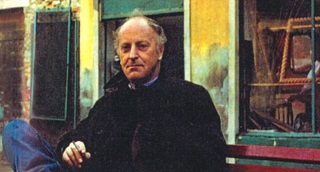
De Russisch-Amerikaanse dichter en schrijver Joseph Brodsky werd op 24 mei 1940 in Leningrad (het huidige St.Petersburg) geboren als Iosif Brodski. Zie ook mijn blog van 24 mei 2010 en eveneens alle tags voor Joseph Brodsky op dit blog.

Uit:Anna Achmatova

“Anna Achmatova behoort tot de categorie dichters die geen genealogie hebben en ook geen duidelijk bespeurbare ‘ontwikkeling’. Zij is het soort dichter dat gewoon ‘toevallig ontstaat’, dat de wereld betreedt met een reeds gevestigde dictie en zijn of haar eigen unieke sensibiliteit. Ze kwam volledig toegerust, en ze heeft nooit op iemand geleken. Misschien nog veelzeggender is dat geen van haar talloze imitators ooit in staat is geweest een overtuigende Achmatova-pastiche te produceren: vroeg of laat leken ze meer op elkaar dan op haar.
Dit suggereert dat Achmatova's idioom een produkt was van iets minder bevattelijks dan een scherpzinnige stilistische berekening en laat ons achter met de noodzaak het tweede deel van Buffon's beroemde vergelijking aangaande het begrip ‘zelf’ te herwaarderen.
Los van de algemene geestelijke aspecten van de genoemde entiteit, werd de uniekheid in het geval van Achmatova voorts nog bevestigd door haar feitelijke lichamelijke schoonheid. Ze zag er echt fantastisch uit. Met haar een meter vijfenvijftig, donkere haar, blanke huid, lichte grijsgroene ogen als die van een sneeuwluipaard, slank en ongelooflijk lenig, werd zij gedurende een halve eeuw getekend, geschilderd, geboetseerd, gebeeldhouwd en gefotografeerd door legio kunstenaars, te beginnen met Amedeo Modigliani. Wat betreft de verzen die aan haar zijn opgedragen - die zouden meer boekdelen beslaan dan haar eigen verzamelde werk.
Hiermee is bedoeld te zeggen dat het zichtbare deel van die persoonlijkheid bepaald adembenemend was; dat het verborgen deel daar volmaakt tegenop woog, daarvan getuigt haar schrijftrant die een mengeling is van die twee.
De voornaamste karakteristieken van deze mengeling zijn adeldom en gereserveerdheid. Achmatova is de dichter van het strenge metrum, exacte rijmen en korte zinnen. Haar syntaxis is eenvoudig en vrij van bijzinnen, wier aforistische kronkelingen verantwoordelijk zijn voor het overgrote deel van de Russische literatuur; eigenlijk lijkt haar syntaxis qua eenvoud op het Engels. Vanaf het prille begin van haar carrière tot aan het einde toe is zij altijd volkomen helder en samenhangend gebleven. Temidden van haar tijdgenoten is zij een Jane Austen. Hoe het ook zij, als haar gezegden duister waren, kwam dat niet door haar grammatica.”


 2149094-cf12746b711ea7c113e3505282cdcddc.jpg
Joseph Brodsky (24 mei 1940 – 28 januari 1996) 


De Amerikaanse schrijver Michael Chabon werd geboren op 24 mei 1963 in Washington. Zie ook alle tags voor Michael Chabon op dit blog.

Uit:Gentlemen of the Road

“For numberless years a myna had astounded travelers to the caravansary with its ability to spew indecencies in ten languages, and before the fight broke out everyone assumed the old blue-tongued devil on its perch by the fireplace was the one who maligned the giant African with such foulness and verve. Engrossed in the study of a small ivory shatranj board with pieces of ebony and horn, and in the stew of chickpeas, carrots, dried lemons and mutton for which the caravansary was renowned, the African held the place nearest the fire, his broad back to the bird, with a view of the doors and the window with its shutters thrown open to the blue dusk. On this temperate autumn evening in the kingdom of Arran in the eastern foothills of the Caucasus, it was only the two natives of burning jungles, the African and the myna, who sought to warm their bones. The precise origin of the African remained a mystery. In his quilted gray bambakion with its frayed hood, worn over a ragged white tunic, there was a hint of former service in the armies of Byzantium, while the brass eyelets on the straps of his buskins suggested a sojourn in the West. No one had hazarded to discover whether the speech of the known empires, khanates, emirates, hordes and kingdoms was intelligible to him. With his skin that was lustrous as the tarnish on a copper kettle, and his eyes womanly as a camel’s, and his shining pate with its ruff of wool whose silver hue implied a seniority attained only by the most hardened men, and above all with the air of stillness that trumpeted his murderous nature to all but the greenest travelers on this minor spur of the Silk Road, the African appeared neither to invite nor to promise to tolerate questions. Among the travelers at the caravansary there was a moment of admiration, therefore, for the bird’s temerity when it seemed to declare, in its excellent Greek, that the African consumed his food in just the carrion-scarfing way one might expect of the bastard offspring of a bald-pated vulture and a Barbary ape.”


 2149094-55c5b008a08eb6ecaff8773c61ef8870.jpeg
Michael Chabon (Washington, 24 mei 1963)


De Amerikaanse zanger, songwriter en dichter Bob Dylan werd geboren als Robert Allen Zimmerman op 24 mei 1941 in Duluth, Minnesota. Zie ook alle tags voor Bob Dylan op dit blog.


Positively 4th Street

You've got a lotta nerve to say you are my friend
When I was down you just stood there grinnin'
You've got a lotta nerve to say you got a helping hand to lend
You just want to be on the side that's winnin'

You say I let you down, ya know its not like that
If you're so hurt, why then don't you show it?
You say you've lost your faith, but that's not where its at
You have no faith to lose, and ya know it

I know the reason, that you talked behind my back
I used to be among the crowd you're in with
Do you take me for such a fool, to think I'd make contact
With the one who tries to hide what he don't know to begin with?

You see me on the street, you always act surprised
You say "how are you?", "good luck", but ya don't mean it
When you know as well as me, you'd rather see me paralyzed
Why don't you just come out once and scream it

No, I do not feel that good when I see the heartbreaks you embrace
If I was a master thief perhaps I'd rob them
And tho I know you're dissatisfied with your position and your place
Don't you understand, its not my problem?

I wish that for just one time you could stand inside my shoes
And just for that one moment I could be you
Yes, I wish that for just one time you could stand inside my shoes
You'd know what a drag it is to see you

 

 2149094-60ed02fcf7c9c066924e340663d886df.jpg
Bob Dylan (Duluth, 24 mei 1941)
In 1989


De Franse schrijver, dichter  en schilder Henri Michaux werd geboren op 24 mei 1899 in Namur in België. Zie ook alle tags voor Henri Michaux op dit blog.


Annales

Alors commença la grande guerre des statues.
Ce fut dans l'année du cheval de feu et il y eut grande immolation.
Jeune ni vieux ne pouvait retenir sa vie.
Il fallut la sacrifier.

Pour statue, pour statue immobile.

Tribus du feu écrasèrent tribus du chêne.

Tribus de la flèche écrasèrent pays de la houe.

Le monde était tout spasme.
Ce furent les années, où ils durent vivre leur vie.


Chant Cinquième

Un désert brûlant, en sa saison extrême, sous le soleil le plus ouvert, en la
Saison que, même le grand scorpion noir africain hésite à sortir ses pattes sur le sable poivré de chaleur, ce désert, une armée qu'on croyait endormie, le
traversa, s'ébranlant dans des chars plus chauds que des poêles, fonçant en avant, et une bataille nouvelle dut être livrée.

Les éléments hostiles ne faisaient pas reculer.

Ici, le sable était si chaud qu'il faisait éclater la peau des jambes.

Là, si dense était la boue qu'elle engluait les canons, les hommes, les chevaux, dans un écœurant et gigantesque empêtrement.

Ailleurs, le froid glaçait l'œil dans l'orbite comme une bille.

Les armes, l'acier, collaient aux doigts, martyrisaient l'homme longuement, comme une grenouille sous un savant penché, bistouri à la main et préoccupé, préoccupé
de ses réflexes, si curieux, si curieusement finalistes d'allure, quand on y songe.

Le ciel était mis en batterie contre la terre et la terre contre le ciel.

Même au fond des eaux un navire n'était pas tranquille.

Hébétés dans la mêlée.
Hébétés hors de la mêlée.

La vie entre l'écorce et l'arbre pour les plus fortunés.
Les pensées, les propos étaient mitraillés.

L'air même était devenu policier.

Beaucoup regardaient leur nez, leur nom avec inquiétude, cherchant dans leur tréfonds les tendances d'une race honnie.
 

 2149094-7303e36526864cd3ce432322dfb4711b.jpg
Henri Michaux (24 mei 1899 – 19 oktober 1984)
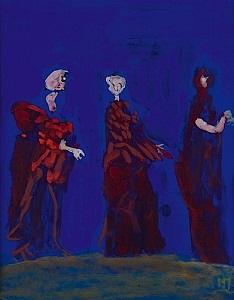
Les Trois Graces door Henri Michaux, 1930


De Ierse schrijver William Trevor werd geboren op 24 mei 1928 in Mitchelstown, County Cork. Zie ook alle tags voor William Trevor op dit blog.

Uit: A Bit on the Side

“His eyes had been closed and he opened them, saying he wanted to see the stable-yard.
Emily’s expression was empty of response. Her face, younger than his and yet not seeming so, was empty of everything except the tiredness she felt. ‘From the window?’ she said.
No, he’d go down, he said. ‘Will you get me the coat? And have the boots by the door.’
She turned away from the bed. He would manage on his own if she didn’t help him: she’d known him for twenty-eight years, been married to him for twenty-three. Whether or not she brought the coat up to him would make no difference, any more than it would if she protested.
‘It could kill you,’ she said.
‘The fresh air’d strengthen a man.’
Downstairs, she placed the boots ready for him at the back door. She brought his cap and muffler to him with his overcoat. A stitch was needed where the left sleeve met the shoulder, she noticed. She hadn’t before and knew he wouldn’t wait while she repaired it now.
‘What’re you going to do there?’ she asked, and he said nothing much. Tidy up a bit, he said.

* * * * *
He died eight days later, and Dr Ann explained that tidying the stable-yard with only a coat over his pyjamas wouldn’t have hastened anything. An hour after she left, the Geraghtys came to the house, not knowing that he was dead.
It was half past seven in the evening then. At the same time the next morning, Keane the undertaker was due. She said that to the Geraghtys, making sure they understood, not wanting them to think she was turning them away for some other reason. Although she knew that if her husband had been alive he wouldn’t have agreed to have the Geraghtys at his bedside. It was a relief that they had come too late.
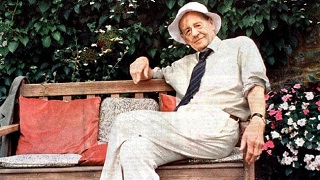
The Geraghtys were two middle-aged women, sisters, the Misses Geraghty, who sat with the dying. Emily had heard of them, but did not know them, not even to see: they’d had to give their name when she opened the door to them. It had never occurred to her that the Geraghtys would attempt to bring their good works to the sick-room she had lived with herself for the last seven months. They were Legion of Mary women, famed for their charity, tireless in their support of the Society of St Vincent de Paul and their promulgation of the writings of Father Xavier O’Shea, a local priest who, at a young age in the 1880s, had contracted malaria in the mission fields of the East.”
 

 2149094-32cd26a9f7db0ae0e323e713edf8be2b.jpg
William Trevor (24 mei 1928 – 20 november 2016) 


De Duitse schrijver en tekenaar Tobias Falberg werd geboren op 24 mei 1976 in Wittenberg. Zie ook alle tags voor Tobias Falberg op dit blog.


Plastiniertes Gelände

Kernkraftwerk Isar 1

– ∪–∪∪– / –∪∪–∪–
–∪–∪∪– / –∪∪–∪–
–∪–∪∪–∪
–∪–∪∪–∪–

Aufkeimt Kraftwerksbeton, erst eine Knospe nur,
glatt und grau aus dem Braun körniger Erde, dann
pumpt er Triebe nach oben,
fünf zylindrische Röhren, dick,

saftig, voller Substanz, um Energie aus Brenn-
elementen und Dampf mittels Turbinenpark
tief im Wald zu erzeugen,
sie zu speichern im Wurzelblock.

Stäbe reifen, ihr Schmelz stockt an der Luft, gerinnt,
bindet Käfer und Tier, Unkraut, Gebüsch, das hier
ledrig siedelt, sich gegen
Licht und Reste von Regen wehrt.

Eichen, Buchen gebannt. Reglos verharrt ein Schwarm
luftversiegelter Krähn. Rehe und Hasen stehn
starr, in seltsam verrenkter
Körperhaltung im Raum fixiert.

Bald sprießt neuer Beton. Kraftwerke treiben aus
über steinigem Grund. Es konserviert der Wald
mit aseptischen Blättern
unermüdlich sein Biotop.
 

 2149094-f7e7542728d2d327dd9f61295c67b708.jpg
Tobias Falberg (Wittenberg, 24 mei 1976)
In 2013


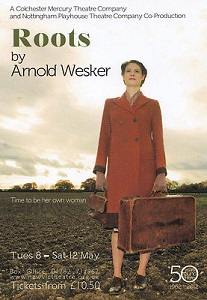
De Britse schrijver Arnold Wesker werd geboren op 24 mei 1932 in Londen. Zie ook alle tags voor Arnold Wesker op dit blog.

Uit: Roots

“BEATIE Watcha Jimmy Beales, how you doin' bor?
JIMMY Not so bad gal, how's yourself?
BEATIE All right you know. When you comin' to London again for a football match?
JIMMY O blust gal, I don' wanna go to any more o' those things. Ole father Bryant was there in the middle of that crowd and he turn around an' he say (imitating), 'Stop you a-pushin' there,' he say, 'stop you a-pushin'.'
JIMMY Where's Ronnie?
BEATIE He's comin' down at the end of two weeks.
JIMMY Ent you married yit?
BEATIE No.
JIMMY You wanna hurry then gal, a long engagement don't do the ole legs any good.
JENNY Now shut you up Jimmy Beales and get that food down you. Every time you talk, look, you miss a mouthful! That's why you complain of pain in your shoulder blades.
BEATIE You bin hevin' pains then Jimmy?
JIMMY Blust yes! Right a'tween my shoulder blades.
JENNY Mother says it's indigestion.
BEATIE What the hell's indigestion doin' a'tween his shoulder blades?”
 

 2149094-b8d633711563f3c52ee55b095408f686.jpg
Arnold Wesker (24 mei 1932 – 12 april 2016)
Affiche voor een voorstelling


De Duitse schrijver Rainald Maria Goetz werd geboren op 24 mei 1954 in München. Zie ook alle tags voor Rainald Goetz op dit blog.

Uit:Klage

„Hauptwerke der politischen Theorie
Mittwoch, 7. Februar 2007, Berlin
Ein herrlicher Morgen, Kyritz dahin am Rad, Kronprinzenbrücke, Adenauerstraße, Bismarckallee, heißt so hier, die immer noch traumhaft leergefegteWeite zwischen Bahnhof und Regierungsbauten, blassgelb besonnt da vorn im Westen nähert sich das Kanzleramt, Ecke Willy-Brandt-Straße, absteigen bitte. 9 Uhr 30, Kabinett.
In der Sicherheitskontrolle bleibt Kyritz schon am ersten strengen Türhüter hängen, schade, dass ich nie richtig Kafka gelesen habe. Die Verhandlungen mit der den Zugang zum Kabinett bewachenden Frau Gillar, die sich erst empört, dann freundlich, aber auf jeden Fall ausgiebig unerbittlich der Abweisung des Kyritz von hier widmet, passen zu diesem halkyonischen Tag. Die Anordnungen sind Unsinn, aber sie werden eingehalten, das stabilisiert dasWeltgefühl. Ich notiere den nächsthöheren Ansprechpartner, telefoniere mit ihm von daheim aus, schreibe ihm eine kurze Mail, sehr geehrter Herr, vielen Dank für Ihr Entgegenkommen. Und nächsten
Mittwoch wieder: 9 Uhr 30, Kabinett.
Der brandenburgische Held ist verliebt, passt nicht richtig auf, wie der Schlachtplan besprochen wird. Gegen ausdrückliche Weisung greift er den Feind an und siegt. Wegen Renitenz wird er trotz seines Sieges zum Tod verurteilt, aus Prinzip.
Er sieht seine Schuld ein, kann deshalb begnadigt werden.
Die Prinzessin tritt vor ihn hin und wird seine Frau. Da fällt der Held in Ohnmacht.
Mitschrift
Medienspiegel
Rede
Meldungen”
 

 2149094-7b0ce2adcfcf728332746937d2dbbd7c.jpg
Rainald Goetz (München, 24 mei 1954)


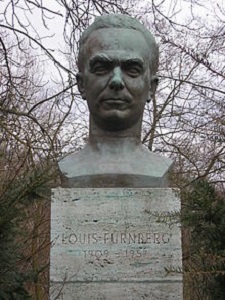
De Tsjechoslovaaks-Duitse schrijver, dichter, journalist, componist en diplomaat Louis Fürnberg werd geboren op 24 mei 1909 in Jihlava, Moravië, Oostenrijk-Hongarije. Zie ook alle tags voor Louis Fürnberg op dit blog.


Und noch ein Frühlingslied

So viele Lieder geschrieben werden
auf den Frühling, es sind noch immer zu wenig
und je älter ich werde, desto mehr lieb ich ihn.
Wenn ich am Morgen in den jungfräulichen Tagen
nach den Bäumen schau, die die nackten Arme ausstrecken
und sie in der Sonne wärmen,
dann seh ich schon, wie sie Blätter tragen
und wie die Kastanien die Kerzen anstecken
und wie die Erde, von Blütenschauern erschreckt,
in hektischen Atemstößen den Vogelschwärmen
sich entgegenwirft, den Libellen, den Faltern,
den Bienen, den Blumen, den Käfern, den Beeten
und wie in der Nacht die Gärten vom Flöten
und Singen der Nachtigallen klingen und klingen
und nach jungem Heu duften und nach Holunder,
nach Maiglöckchenschlaf und Jasmin und Linden
und spür schon den Frühling den Sommer entbinden
und seh schon die Kinder Blumen winden
zu Kränzen und fühl die Buchen, die Birkenwunder,
die Ahornträume, die glitzernden Teiche,
den Halm, in den ich beiße,
das Blaue und Weiße
des Mittsommermittags...
 

 2149094-bea766328710378a2a4a02ca102d19de.jpg
Louis Fürnberg (24 mei 1909 - 23 juni 1957)
Monument in Weimar


Zie voor nog meer schrijvers van de 24e mei ook mijn blog van 24 mei 2017 en ook mijn blog van 24 mei 2015 deel 2.
Geschreven door Romenu om 18:10 Reageer op dit bericht

Adriaan Roland Holst, Maarten Biesheuvel, Lydia Rood, Jane Kenyon, Susan Cooper, Michaël Vandebril, Jack McCarthy, Mitchell Albom, Pär Fabian Lagerkvist

De Nederlandse dichter Adriaan Roland Holst werd geboren op 23 mei 1888 in Amsterdam. Zie ook alle tags voor Adriaan Roland Holst op dit blog.


Er is een vrede

Er is een vrede die uit leed geboren
In 't oog van vreugde als traan van teerheid beeft,
Of als een zachte glimlach glanzend zweeft
Over 't gelaat dat vreugden heeft verloren.

Maar nimmer zal die vrede 't leven schoren
Dat schuw voor 't eigen hart in luidheid leeft,
Slechts wie de moed van eigen lijden heeft
Wordt tot de zaligheid dier vreê verkoren.

En als gij eens uw stil gelaat zult heffen
Naar dat nieuw licht boven verleden's graf,
Roep dan mijn naam. - Ik zal uw roepen beiden.

O dan zal ik, ontroerd èn trots, beseffen
Dat ik mijn volste jeugd in liefde gaf
Aan 't hart dat groter was dan liefdes lijden.


Wijdheid

Wijdheid van zijn is vrijheid van gedachten
In heldere open geest als lichtfontein
Opwaarts te stralen, en dan ijl en fijn,
Goudluchtig zwevend vocht, in daling zacht en
Overal neer te regenen - zoo rein
Als in de najaarsochtenden, na nachten
Van steromklaarde kou, de zon met prachten
Van goud doorsprenkelt sferenkristallijn.

't Is de glimlach na luid gezongen jeugd -
Het ijl geluk dat glanzende eeuwigheid
Te ademen schijnt in een verstilde vreugd.

't Is als een zee die na een wilden strijd
Met golven nu al ver de kim ontweken,
Vol zonweerspiegeling ligt gladgestreken.


De belijdenis van de stilte

I
Tijdloos Gelaat, dat boven diepten zwijgt
Waar 't Leven wordt en sterft en stervend wordt
Went'lend.... Droom, waarheen alles eeuwig stijgt,
En Rots, waar eeuwig alles tegen stort.

Droom van mijn woord - Rots van mijn zang - ik weet
Hoe wijd de duizling van uw oogen leeft
Over het Al, en dat nooit vreugd', nooit leed
Hun openheden oversluierd heeft.

Want als de tijd mij loslaat, en ik blijf
In duizelende zwevingen, tot ik
Plots' uit de sidderingen van mijn lijf
Stijg, en in de eeuwigheid van 't oogenblik

't Eindeloos ruischen van uw zwijgen hoor
Door sferen, waar geen aardsche stem meer spreekt,
Voel ik dat zij mij aan en door zien, dóór
Tot in 't hart van mijn hart, dat snikkend breekt.


 2148833-b96926f57f11ab157c28d4bb9c2ee81d.jpg
Adriaan Roland Holst (23 mei 1888 - 5 augustus 1976)
Portret door Kees Verwey, 1965


De Nederlandse schrijver Maarten Biesheuvel werd geboren in Schiedam op 23 mei 1939. Zie ook alle tags voor Maarten Biesheuvel op dit blog.

Uit: Port Churchill

“Op mijn veertiende jaar mocht ik van mijn vader een klein radiotoestel van de heer Feikema, onze gereformeerde buurman, kopen. Hij deed al jaren lang in radio's. Hij kocht kapotte toestellen op, van de allerkleinste modellen tot bakbeesten toe, die minstens een vierde van de ruimte van een gemiddelde burgermanswoning vulden, en verkocht ze weer voor prijzen die variëerden van een rijksdaalder tot tachtig gulden. Hij was boekhouder bij een houtwerf in Schiedam en vulde nagenoeg al zijn avonden met het oplappen van oude radio's. Hij woonde in hetzelfde blok ‘witte huizen’, (de meest riante arbeidershuizen die er na de oorlog in Schiedam zijn gebouwd: ze bestonden uit zes behoorlijk ruime kamers, een keuken en een douchecel, benevens een kelder die zo groot was dat men er met gemak twee amerikaanse automobielen uit de populaire middenklasse in had kwijt gekund. De huizen maakten in 1949 slechts f 48.56, - schrijve acht en veertig gulden en zes en vijftig cent - per maand).
De vrouw waar meneer Feikema mee was getrouwd probeerde op dringend aanraden van mijn moeder, toen ik zes jaar was, mij heen te helpen over de problemen van eeuwigheid, onbegrensd heelal, tijd en ruimte. Ze verkondigde de buurtbewoners dat ik over ‘mediamieke gaven’ beschikte. (Misschien heeft ze ook wel gelijk gehad: aan hallicunatoire toestanden heeft het mij tot nog toe niet ontbroken en ondanks een viertal rustigmakende pillen dat ik dagelijks slik, ben ik toch voortdurend in hoger sferen. In ieder geval zal ik nooit in het openbaar ‘voorspellingen doen’, hoewel ik iemand maar vijf minuten hoef te observeren om precies te weten hoe het hem ‘verder zal vergaan’). Ik geloof dat ik juist dat radiootje - veertig gulden - van mijn vader kopen mocht omdat hij wellicht hoopte dat ik, wanneer ik 's nachts, wakker liggende en denkende over problemen waar knappere koppen dan ik ook nog niet uit zijn gekomen, zo verstandig zou zijn om dat ding aan te zetten zodat mijn geest een beetje verstrooid zou raken. Het was een uiterst klein bakelieten toestel, als ik het wel heb van het merk Philips. Ik had ten behoeve van het ontvangapparaat twaalf antennedraden in mijn kamer uitgezet. Ik kan me nog heel goed herinneren hoe ik de ligging van mijn kamer ten opzichte van de coördinaten van Moskou, Tashkent, Irkoetsk, Algiers, Teheran, Istanboel en andere exotische plaatsen naar de gegevens uit mijn eenvoudige Bos schoolatlas uitrekende.”


 2148833-c2fbe459cb8cdb2cdbddbeeca8e6ec49.jpg
Maarten Biesheuvel (Schiedam, 23 mei 1939)


De Nederlandse schrijfster en columniste Lydia Rood werd geboren op 23 mei 1957 in Velp. Zie ook alle tags voor Lydia Rood op dit blog.

Uit: Sprong in de leegte

“Nagel op het bordje. Het was zo'n lentedag dat het lijkt te sneeuwen. Ik herinner me de wittige warreling in het bleke zonlicht en al wist ik niet wat het was, ik genoot van het wisselende licht en het gedwarrel tussen de tramdraden. Zaadhuisjes waren het, weet ik nu, niet wit maar bijna doorzichtig, met de zwarte pit van het zaadje in het hart, maar dat heb ik later pas geleerd. Ik keek naar buiten en zei met mijn rug naar de kamer dat mijn ouders geen kinderen meer wilden. Tegen mijn tante zei ik dat; ze was op kraamvisite. Later zeiden ze dat ik me dat onmogelijk kon herinneren, omdat ik amper één jaar oud was, maar ik herinner me details die zij niet meer weten, zoals de nagel die mijn tante verloor toen ze haar beschuit met muisjes at: opeens lag er een felroze nagel op het bordje en ik vond het raar dat ze daaronder nóg een nagel had, met een gewone kleur. Ik herinner me ook hoe kwaad ze waren (ik was zes) toen ik erover vertelde. Niet om het verhaal zelf, dat was onschuldig genoeg, maar omdat ik volhield dat ik het me herinnerde. Die dag, mijn zesde verjaardag, kwam ik er opnieuw achter dat de wereld niet was zoals ik haar zag, maar zoals zij die wilden zien. Ik leerde ook te zwijgen over wat ik wist. Maar daar gaat het nu niet over. Het punt was dat ik dus een zusje had. Ik was amper één, amper aan het leven gewend en daar was het al. Ze lieten het me zien, een in roze ingepakt rood hoofd, en zeiden dat het mijn zusje was en dat het Elsa heette. — 0, goed, zei ik, en ik draaide me om om te gaan spelen, ik weet niet met wat, blokken of zo, het was iets met kleuren. Ja, ik zei: 'goed'. Niet 'koe' of zo, met veel kwijl, gewoon 'goed'. Ik praatte al, daar ga ik me hier dus niet voor zitten schamen. Ik heb me genoeg gedeisd gehouden. Als mensen me kunnen zien, doe ik met ze mee, maar dit schrijf ik voor mezelf. En, misschien, voor Sal.
Terwijl ik naar de lentestorm keek, zei ik: Mama genoeg kindje. Oké, perfect Nederlands is dat niet, maar ik weet het nog letterlijk en ik weet ook verdomd goed wat ik ermee bedoelde: nu is het wel genoeg. Die ene, die pik ik dan wel. De eerste tijd was het ook wel oké. Dat ik een zusje had bedoel ik. Pas later vroeg ik me af waarom ze haar gewoon Elsa hadden genoemd en mij Cornélie, wat in de klas werd afgekort tot Nelie en thuis tot Cor, met zo'n naam vraag je daar toch om? Misschien waren ze wijs geworden toen ze eenmaal gemerkt hadden dat mijn zogenaamd mooie naam alleen maar verlelijkt werd, en wilden ze dat mijn zusje besparen.”


 2148833-0f5b4e6d48153a456715791f6baab26f.jpg
Lydia Rood (Velp, 23 mei 1957)


De Amerikaanse dichteres en vertaalster Jane Kenyon werd geboren op 23 mei 1947 in Ann Arbor, Michigan. Zie ook alle tags voor Jane Kenyon op dit blog.


Having It Out With Melancholy


5 ONCE THERE WAS LIGHT

Once, in my early thirties, I saw
that I was a speck of light in the great
river of light that undulates through time.

I was floating with the whole
human family. We were all colors -- those
who are living now, those who have died,
those who are not yet born. For a few
moments I floated, completely calm,
and I no longer hated having to exist.

Like a crow who smells hot blood
you came flying to pull me out
of the glowing stream.
"I'll hold you up. I never let my dear
ones drown!" After that, I wept for days.


6 IN AND OUT

The dog searches until he finds me
upstairs, lies down with a clatter
of elbows, puts his head on my foot.

Sometimes the sound of his breathing
saves my life -- in and out, in
and out; a pause, a long sigh. . . .


7 PARDON

A piece of burned meat
wears my clothes, speaks
in my voice, dispatches obligations
haltingly, or not at all.
It is tired of trying
to be stouthearted, tired
beyond measure.

We move on to the monoamine
oxidase inhibitors. Day and night
I feel as if I had drunk six cups
of coffee, but the pain stops
abruptly. With the wonder
and bitterness of someone pardoned
for a crime she did not commit
I come back to marriage and friends,
to pink fringed hollyhocks; come back
to my desk, books, and chair.


 2148833-6b59631881a95bcf1d904fb17bb5488d.jpg
Jane Kenyon (23 mei 1947 – 22 april 1995)
Ann Arbor, Michigan


De Britse schrijfster Susan Cooper werd op 23 mei 1935 geboren in Buckinghamshire. Zie ook alle tags voor Susan Cooper op dit blog.

Uit: Ghost hawk

“He had left his canoe in the river, tied to a branch of a low-growing cherry tree. Now there was green marshland ahead of him, all round the river's last slow curve. He pushed his way through waist-high grass toward one of the three high places in the marshland, where trees grew. They were islands of trees, never visited; the duck hunters went only to the marsh. He had chosen this place months ago, and now was the day to come back. In a squawking flurry two ducks erupted ahead of him, flying low, but his bow stayed on his back; he would not hunt till later, on the way home. He reached the trees--a tangle of pin oak and cherry, sumac and hickory, juniper and birch--and threaded his way through the grabbing branches to the two rocks that marked the tree he had chosen. There it still was, beside the rocks, still the proper shape: the small bitternut hickory tree with its twin leading stems growing in a slender V. He gave the tree a respectful greeting, and explained what he was about to do. The woven birch-bark pouch was heavy round his neck. He took out the stone blade, a long, notched rectangle of flint with one edge chipped to a fine sharpness. This blade had belonged to the tomahawk used by his father and his grandfather, until its handle broke; nobody knew where it had come from or when it was made. It was very precious to him. Carefully he fitted the blade into the cleft between the tree's two slim branches, twisting them together above it. Then, with tough strands of deer sinew from his pouch, he bound the joined branches tightly above the stone--so tightly that they would grow together as the years went by, enclosing the blade. To make a tomahawk for your son, you needed the stone blade, and the wooden shaft, and time. In my father's day, there was still time. When he'd finished his binding, he thanked the small tree, and gave it good wishes to grow straight and strong. Then he went back across the marshland to his canoe. On the way he shot three ducks, for the feast celebrating the arrival of the baby son who had been born early that day. I was that son. Because Flying Hawk was my father, the name they were giving me was Little Hawk.”


 2148833-485556119ee2de60a1479021ca75cf86.jpg
Susan Cooper (Buckinghamshire, 23 mei 1935)


De Vlaamse dichter Michaël Vandebril werd geboren op 23 mei 1972 in Turnhout. Vandebril studeerde rechten. Zie ook alle tags voor Michaël Vandebril op dit blog.


Duran Adam (staande man)

stilstaan is niet achteruitgaan
het is standhouden
ik ben gewoon iemand
als ze me weghalen

zal iemand anders mijn plaats
innemen sta op en
schrijf woorden van een dichter
op je voorhoofd: blake

whitman pasolini vinkenoog
of van vliet: het wordt tijd
dat wij orde op zaken stellen
woede verzamelen

druk ons de kop in en we
schieten dieper wortel
u wil zo graag dat we zwijgen
wel we zwijgen

als vermoord wij zijn de muur
waar u tegen loopt
ik herken de wapens
en laat ze liggen dit is ons leven

en dit is de tijd die we veil hebben
voor onze vrijheid
het spijt me u te moeten storen
maar mijn wereld brandt


Inat

                voor Gavrilo Princip

het heeft geen naam brandt
in mijn ogen zoals een gedicht
dat je luidop zingen kan
maar geen titel verdraagt

ik heb genoeg aan een handdruk
om te weten hoe laat het is
deze leugenachtige dag zal driemaal kraaien
om me te herinneren aan mijn heldendom

de uren kruipen voorbij langs dit café traag
en ondiep als het bruine water van de miljacka
ik kijk in de spiegel van een nieuwe tijd en zie
het avondland dat als een deken valt over mijn stad

in de verte dendert een slee
over de kasseien het geluid vult
mijn lege ziel die duizend muren
zal doorboren om tot u te komen

als een zwarte vogel die neerstrijkt
op het eeuwig smeulende veld


 2148833-8353137d8cac8425fd410c479e6abaf3.jpg
Michaël Vandebril (Turnhout, 23 mei 1972)


De Amerikaanse schrijver en slam poet Jack McCarthy werd geboren op 23 mei 1939 in Massachusetts. Zie ook alle tags voor Jack McCarthy op dit blog.


Riding Waves (Fragment)

II. Picking the Wave

The waves you want are waves
that don’t break all at once,
begin their break well out,
then gather force, a landslide 0f the water.
The slowly swelling approaching thunder,
rather than the sudden nearby crash.
On a good day, the right wave is the wave
that’s going to break just after passing you.
If you stood your ground,
it would hit you with a slapping sound.
If foam is forming lazily at the crest,
you are too late, let this one go. It must
be taken in the instant prior to the foam.
The right wave is curved like a bow,
up and outward from you (you are its arrow).
Its face is smooth rather than rough, .
the little surface ripples all resolved.
If you could not see it you could feel it
by the accelerating outward rush
of suddenly shallow water about your legs.
If the wave has foam on its face
from a wave that broke before it,
further out, this is a good omen.
Perhaps the best of all is the wave
that is broader at its base than most,
that is in fact two waves,
for the second will ride piggy-back on the first,
absorb all its momentum,
then break itself with reckless speed and power—
this even though neither wave was by itself
exceptional.


 2148833-1dfb7b2071a7d351012bb184a7f6f4a6.jpg
Jack McCarthy (Massachusetts, 23 mei 1939)


De Amerikaanse schrijver, journalist en radiopresentator Mitchell David Albom werd geboren op 23 mei 1958 in Passaic, New Jersey. Zie ook alle tags voor Mitch Allborn op dit blog.

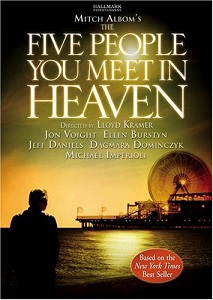
Uit:The Five People You Meet in Heaven

“With 50 minutes left on earth, Eddie took his last walk along Ruby Pier. He passed an elderly couple.
“Folks,” he mumbled, touching his cap.
They nodded politely. Customers knew Eddie. At least the regular ones did. They saw him summer after summer, one of those faces you associate with a place. His work shirt had a patch on the chest that read Eddie above the word Maintenance, and sometimes they would say, “Hiya, Eddie Maintenance,” although he never thought that was funny.
Today, it so happened, was Eddie’s birthday, his 83rd. A doctor, last week, had told him he had shingles. Shingles? Eddie didn’t even know what they were. Once, he had been strong enough to lift a carousel horse in each arm. That was a long time ago.
“Eddie!” . . . “Take me, Eddie!” . . . “Take me!”
Forty minutes until his death. Eddie made his way to the front of the roller coaster line. He rode every attraction at least once a week, to be certain the brakes and steering were solid. Today was coaster day — the “Ghoster Coaster” they called this one — and the kids who knew Eddie yelled to get in the cart with him.
Children liked Eddie. Not teenagers. Teenagers gave him headaches. Over the years, Eddie figured he’d seen every sort of do-nothing, snarl-at-you teenager there was. But children were different. Children looked at Eddie — who, with his protruding lower jaw, always seemed to be grinning, like a dolphin — and they trusted him. They drew in like cold hands to a fire. They hugged his leg. They played with his keys. Eddie mostly grunted, never saying much. He figured it was because he didn’t say much that they liked him.
Now Eddie tapped two little boys with backward baseball caps. They raced to the cart and tumbled in. Eddie handed his cane to the ride attendant and slowly lowered himself between the two.
“Here we go . . . . Here we go! . . . ” one boy squealed, as the other pulled Eddie’s arm around his shoulder. Eddie lowered the lap bar and clack-clack-clack, up they went.
A story went around about Eddie. When he was a boy, growing up by this very same pier, he got in an alley fight. Five kids from Pitkin Avenue had cornered his brother, Joe, and were about to give him a beating. Eddie was a block away, on a stoop, eating a sandwich. He heard his brother scream. He ran to the alley, grabbed a garbage can lid, and sent two boys to the hospital.”


 2148833-20f826b2c5eb28d889afe5f73b4718f3.jpg
Mitchell Albom (Passaic, 23 mei 1958)
Cover


De Zweedse schrijver Pär Fabian Lagerkvist werd geboren in Växjö op 23 mei 1891 in Stockholm. Zie ook alle tags voor Pär Lagerkvist op dit blog.

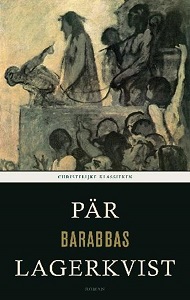
Uit: Barabbas (Vertaald door Alan Blair)

“Yes, he was indeed the one the son of God had died for! It was to him and no other that it had been said:—Release this man and crucify me! Such were Barabbas's thoughts as he walked away after trying to be one of them, as he strode away from the potter's workshop in Potters' Lane, where they had so plainly shown that they did not want him among them. And he decided to go and see them no more. But next day, when he turned up again notwithstanding, they asked what it was in their faith that he didn't understand; showing clearly that they felt sorry and reproached themselves for not having welcomed him properly and been glad to give him the knowledge for which he was thirsting. What was it he wanted to ask them about? That he didn't understand? Barabbas was on the point of shrugging his shoulders and replying that the whole thing was a mystery to him and, in fact, he couldn't be bothered with it. But then he mentioned that a thing like the resurrection, for instance, he found hard to grasp. He didn't believe that there was anyone who had risen from the dead. Glancing up from their potters' wheels, they looked first at him and then at each other. And, after whispering amongst themselves, the eldest among them asked if he would like to meet a man whom their Master had raised from the dead? If so, they could arrange it, but not before the evening after work, as he lived some little way outside Jerusalem. Barabbas was afraid. This was not what he had expected. He had imagined they would argue about it and put forward their point of view, not try and prove it in such a pushing way. True, he was convinced that the whole thing was some queer fancy, a pious swindle, and that actually the man had not been dead. He was afraid all the same. He was not a bit keen on meeting the man. But he couldn't very well say so. He must pretend he was grateful for the chance of convincing himself of their Lord and Master's power. He put in time by walking about the streets in a state of mounting agitation. When he returned to the workshop at closing-time, a young man accompanied him out through the city gates and up towards the Mount of Olives. The man they sought lived on the outskirts of a little village on the slopes of the mountain. When the young potter drew aside the straw mat over the doorway they saw him sitting inside with his arms in front of him on the table and gazing straight out into the room. He seemed not to notice them until the young man greeted him in his clear voice. Then he slowly turned his head towards the door and returned their greeting in a curiously flat tone.“


 2148833-df8c2cff3f6e33307a7ce76fed78acde.jpg
Pär Lagerkvist (23 mei 1891 – 11 juli 1974)
Cover


Zie voor nog meer schrijvers van de 23e mei ook mijn blog van 23 mei 2015 deel 2.

Geschreven door Romenu om 16:03 Reageer op dit bericht

In Memoriam Philip Roth


In Memoriam Philip Roth


De Amerikaanse schrijver Philip Roth is op 85-jarige leeftijd overleden. Philip Roth werd geboren op 19 maart 1933 in Newark.en gold als een van de grootste Amerikaanse schrijvers en won talrijke literaire prijzen, waaronder een Pulitzer in 1998. Zie ook alle tags voor Philip Roth op dit blog.

Uit: American Pastoral

“But wit or irony is like a hitch in his swing for a kid like the Swede, irony being a human consolation and beside the point if you're getting your way as a god. Either there was a whole side to his personality that he was suppressing or that was as yet asleep or, more likely, there wasn't. His aloofness, his seeming passivity as the desired object of all this asexual lovemaking, made him appear, if not divine, a distinguished cut above the more primordial humanity of just about everybody else at the school. He was fettered to history, an instrument of history, esteemed with a passion that might never have been if he'd broken the Weequahic basketball record - by scoring twenty-seven points against Barringer - on a day other than the sad, sad day in 1943 when fifty-eight Flying Fortresses were shot down by Luftwaffe fighter planes, two fell victim to flak, and five more crashed after crossing the English coast on their way back from bombing Germany.
The Swede's younger brother was my classmate, Jerry Levov, a scrawny, small-headed, oddly overflexible boy built along the lines of a licorice stick, something of a mathematical wizard, and the January 1950 valedictorian. Though Jerry never really had a friendship with anyone, in his imperious, irascible way, he took an interest in me over the years, and that was how I wound up, from the age of ten, regularly getting beaten by him at Ping-Pong in the finished basement of the Levovs' one-family house, on the corner of Wyndmoor and Keer - the word "finished" indicating that it was paneled in knotty pine, domesticated, and not, as Jerry seemed to think, that the basement was the perfect place for finishing off another kid.
The explosiveness of Jerry's aggression at a Ping-Pong table exceeded his brother's in any sport. A Ping-Pong ball is, brilliantly, sized and shaped so that it cannot take out your eye. I would not otherwise have played in Jerry Levov's basement. If it weren't for the opportunity to tell people that I knew my way around Swede Levov's house, nobody could have got me down into that basement, defenseless but for a small wooden paddle. Nothing that weighs as little as a Ping-Pong ball can be lethal, yet when Jerry whacked that thing murder couldn't have been far from his mind. It never occurred to me that this violent display might have something to do with what it was like for him to be the kid brother of Swede Levov. Since I couldn't imagine anything better than being the Swede's brother - short of being the Swede himself - I failed to understand that for Jerry it might be difficult to imagine anything worse.
The Swede's bedroom - which I never dared enter but would pause to gaze into when I used the toilet outside Jerry's room - was tucked under the eaves at the back of the house. With its slanted ceiling and dormer windows and Weequahic pennants on the walls, it looked like what I thought of as a real boy's room. From the two windows that opened out over the back lawn you could see the roof of the Levovs' garage, where the Swede as a grade school kid practiced hitting in the wintertime by swinging at a baseball taped to a cord hung from a rafter - an idea he might have got from a baseball novel by John R. Tunis called The Kid from Tomkinsville. I came to that book and to other of Tunis's baseball books - Iron Duke, The Duke Decides, Champion's Choice, Keystone Kids, Rookie of the Year - by spotting them on the built-in shelf beside the Swede's bed, all lined up alphabetically between two solid bronze bookends that had been a bar mitzvah gift, miniaturized replicas of Rodin's "The Thinker."


 2148744-c541269fda7bb5ab0865e238e7c4a949.jpg
Philip Roth (19 maart 1933 – 22 mei 2018)

Geschreven door Romenu om 09:24 Reageer op dit bericht

Jan Baeke

De Nederlands dichter Jan Baeke werd geboren in Roosendaal op 23 mei 1956. Baeke debuteerde in 1997 met de bundel “Nooit zonder de paarden”. De tien jaar ervoor publiceerde hij gedichten in de tijdschriften Tirade en De Zingende Zaag. Zijn vierde bundel, “Groter dan de feiten”, werd genomineerd voor de VSB Poëzieprijs 2008. De poëzie van Jan Baeke neemt in Nederland een eigen plek in. Het is poëzie die in gewone taal en met directe beelden een mysterie weet op te roepen. Invloeden zijn er van filmers (Luis Buñuel, Michael Haneke en Andrej Tarkovsky) en dichters (Ingeborg Bachmann, Jaan Kaplinski en János Pilinszky). Naast dichter is Jan Baeke vertaler van Lavinia Greenlaw, Liz Lochhead en Deryn Rees-Jones. Hij was werkzaam bij het Nederlands Filmmuseum in Amsterdam. Sinds 2009 is hij verbonden aan Poetry International.


De jaren betalen

Het gras is gezaaid, de bomen zijn gesnoeid.
Er zijn mensen aan het werk en verderop
in een straat die te vol werd voor mensen die die straat waren
kan de belofte van gras niemand iets schelen.
De woede en het galmen tussen zingen en schreeuwen in
vreet alle ruimte op.

Dat we niet meer in de straat gewenst zijn -
we zijn niet erg gewenst in de goed verlichte winkels
die het hart van onze stad zoveel cachet verlenen.
Voor ons heeft de wereld weinig geheimen
en die er zijn, kunnen wij bewaren - mondje dicht.

Als ons en de jongens die net afgetraind de trap aflopen
is de straat niet de specialiteit van onze generatie.
Van onze generatie zijn de teksten
en de gedrongen figuren
in mooie kleuren en verf die jaren mee gaat.

Woede zou de tuinman niet eens misstaan en
in droge seizoenen kan woede de regen een tijdlang vervangen.
De bomen zijn gesnoeid om sterke takken te houden
waar we nog eens iets aan kunnen hangen
en iemand die teveel wordt, die voor ons gebrek
aan straat bij het licht van onze koplampen zal moeten betalen.

We zijn de we die je bij elkaar ziet staan
maar ieder van ons heeft een eigen straat een eigen ziel
een eigen duidelijke ziekte die we niemand laten zien
en waarover we verder, waar we verder het zwijgen
over doen.


Een heldere dag

Is het nodig die hond te herkennen
of te denken dat je die hond herkent?

Ik dacht een stem te herkennen
die lachte maar ook zweeg.

Het was toen jij stopte en zei:
er zijn er die een hond tegen de storm in gooien
en tellen tot hij landt of terugkomt.

Ik zag een jongen, dacht

als hij landt is het
om zijn vader en moeder te bewijzen
om iets te maken
en snel te zijn.

Hoe vreemd te kunnen geloven
dat de wereld is zoals hier afgebeeld.

Een hond aan het strand, tussen wandelaars.
Velen nog kinderen, nog niet weggevoerd
nergens naar verwijzend.

Ik wilde kalmte zien en rust
zoals die zich in de golven ophouden.
Ik ben toegekomen aan de hond
noch aan de worp.


 2210916-ac8c63c43246d279ced8e7c718be37aa.jpg
Jan Baeke (Roosendaal, 23 mei 1956)

Geschreven door Romenu om 00:00 Reageer op dit bericht

Meer van Romenu

↑ Terug naar de berichten