Naar de inhoud

Romenu

Over literatuur, gedichten, kunst en cultuur
akke.beakke.be

Berichten van 29 mei 2018 tot 30 mei 2018

Summer Storm (Bliss Carman)


Dolce far niente


 2150764-6799984ccbfb5a3c7591e1244ff17d7a.jpg
Summer Storm door Romona Youngquist, 2015


Summer Storm

The hilltop trees are bowing
Under the coming of storm.
The low gray clouds are trailing
Like squadrons that sweep and form,
With their ammunition of rain.
Then the trumpeter wind gives signal
To unlimber the viewless guns;
The cattle huddle together;
Indoors the farmer runs;
And the first shot lashes the pane.
They charge through the quiet orchard;
One pear tree is snapped like a wand;
As they sweep from the shattered hillside,
Ruffling the blackened pond,
Ere the sun takes the field again.


 2150764-0a4174f29288ce50c84a86a362d624b9.jpg
Bliss Carman (15 april 1861 – 8 juni 1929)
Fredericton, de geboorteplaats van Bliss Carman


Zie voor de schrijvers van de 30e mei ook mijn vorige blog van vandaag.

Geschreven door Romenu om 18:14 Reageer op dit bericht

Elizabeth Alexander, Oscar van den Boogaard, Countee Cullen, Emmanuel Hiel, Martin Jankowski, Alfred Austin, Eddy Bruma, Henri François Rikken, Jan Geerts

De Amerikaanse dichteres en schrijfster Elizabeth Alexander werd geboren op 30 mei 1962 in New York. Zie ook alle tags voor Elizabeth Alexander op dit blog.


Minnesota Fats Describes His Youth

I've been eating
like a sultan
since I was two days old.

I had a mother
and three sisters
who worshipped me.

When I was two years old
they used to plop me
in a bed with a jillion

satin pillows
and spray me
with exotic perfumes

and lilac water,
and then
they would shoot me the grapes.


Narrative: Ali
a poem in twelve rounds

1.
My head so big
they had to pry
me out. I'm sorry
Bird (is what I call
my mother). Cassius
Marcellus Clay,
Muhammad Ali;
you can say
my name in any
language, any
continent: Ali.


2.
Two photographs
of Emmett Till,
born my year,
on my birthday.
One, he's smiling,
happy, and the other one
is after. His mother
did the bold thing,
kept the casket open,
made the thousands look upon
his bulging eyes,
his twisted neck,
her lynched black boy.
I couldn't sleep
for thinking,
Emmett Till.

One day I went
Down to the train tracks,
found some iron
shoe-shine rests
and planted them
between the ties
and waited
for a train to come,
and watched the train
derail, and ran,
and after that
I slept at night.


 2150761-789bb5f7917a33c314a6c6eac71299ee.jpg
Elizabeth Alexander (New York, 30 mei 1962)


De Nederlandse schrijver Oscar van den Boogaard werd geboren in Harderwijk op 30 mei 1964. Zie ook alle tags voor Oscar van den Boogaard op dit blog.

Uit: Kindsoldaat

“Laten we beginnen bij de bron die om onverklaarbare redenen precies hier ontsprong – en niet ergens anders – midden tussen met eiken en beuken begroeide heuveltjes in het noorden van Nederlands- Limburg, in het moerassig gebied tussen de Maas en een hogergelegen rivierterras. De bron lag zo volmaakt ingebed tussen drie steenblokken dat haar ligging noodzakelijk leek.
De blokken die sterfelijke handen niet zouden kunnen verplaatsen, werden in de volksmond, dat wil zeggen door de dorpelingen die op het landgoed geen zaken hadden, cycloopstenen genoemd. In een ver verleden zou een eenogige reus ze vanuit de Alpen woedend weggeslingerd hebben. Andere waren bij de monding van de Geul in de buurt van Aken terechtgekomen, maar deze drie waren door een overschot aan toorn nog eens honderd kilometer verder geland in deze perfecte compositie rond het opborrelende water.
Het verontrustende aan het verhaal van eenoog is dat razernij de laatste hand heeft gelegd aan het paradijs, want zo zou je deze plek kunnen noemen. Herten, everzwijnen, eekhoorns, vogels en konijnen deelden de bron gebroederlijk met de bewoners van kasteel Metternich, die al honderden jaren hun flessen met het bronwater lieten vullen en er heilzame werking aan toekenden. Het was alsof zij behoorden tot dezelfde goddelijke natuur.
Omdat Metternich in het grensgebied tussen Nederland en Duitsland lag, beschikte het over een Limburgse en een Pruisische poort. In hun hart waren de bewoners, die pas sinds de Franse tijd officieel aan Nederlandse zijde woonden, evenzeer met het Duitse achterland verbonden.
Zo kon het gebeuren dat de Pruisische generaal Maximiliaan die vlak over de grens op een buitenplaats woonde, op een zomerse middag in 1884 toen hij op Metternich kwam jagen op goed geluk zijn dochter meenam om aan de enige zoon van de kasteelheer voor te stellen.
Terwijl ze zich in het koetsje over de dijk onder de steilrand door het moeras lieten rijden, lag haar vaders hand in Hermines ranke nek. Ze liet haar hoofd nog even zorgeloos achterover rusten, maar bij de grenspaal trok haar vader zijn hand weg.
Toen ze de Pruisische poort binnenreden en de hoektorens van Metternich in zicht kwamen, rechtte ze haar rug en bond haar haren samen.
‘Twee verwante zielen,’ merkte Arnold op toen zijn zoon Edmond en Hermine elkaar op het voorplein een hand gaven. Het klonk niet als een vaststelling maar als bevel.
‘Onze jongelui zijn veel te gevoelig voor de jacht,’ had Maximiliaan geconstateerd.
De vaders sloegen elkaar op de schouder en liepen met hun geweren in de aanslag de slotbrug over.”


 2150761-7ee455978c51e6981d8d72e2e5ad77e7.png
Oscar van den Boogaard (Harderwijk, 30 mei 1964)


De Afro-Amerikaanse dichter Countee Cullen werd geboren als Countee LeRoy Porter op 30 mei 1903 in Louisville, Kentucy, of Baltimore. Zie ook alle tags voor Countee Cullen op dit blog.


She Of The Dancing Feet Sings

And what would I do in heaven pray,
Me with my dancing feet?
And limbs like apple boughs that sway
When the gusty rain winds beat.

And how would I thrive in a perfect place
Where dancing would be a sin,
With not a man to love my face,
Nor an arm to hold me in?

The seraphs and the cherubim
Would be too proud to bend,
To sing the faery tunes that brim
My heart from end to end.

The wistful angels down in hell
Will smile to see my face,
And understand, because they fell
From that all-perfect place.


Tableau

Locked arm in arm they cross the way
The black boy and the white,
The golden splendor of the day
The sable pride of night.

From lowered blinds the dark folk stare
And here the fair folk talk,
Indignant that these two should dare
In unison to walk.

Oblivious to look and word
They pass, and see no wonder
That lightning brilliant as a sword
Should blaze the path of thunder.


 2150761-1850cd3e2927b763f53060576fd63914.jpg
Countee Cullen (30 mei 1903 – 9 januari 1946)
Cover


De Vlaamse dichter en schrijver Emanuel Hiel werd geboren in Sint-Gillis-bij-Dendermonde op 30 mei 1834. Zie ook alle tags voor Emanuel Hiel op dit blog.


Kom, lieve mei

Kom lieve lente, tover
de bomen weder groen,
dan kan ik, onder 't lover,
een wandelingske doen.

Laat weer aan 't beekje groeien
de kleine violet,
ik zie zo geerne bloeien
wat zedig is en net.

't Is waar, de winterdagen
verschaffen ook plezier,
men kan door 't ijs dan jagen
in tomeloze zwier.

Maar de arme mensen strijden
zo fel met hongerpijn,
waar mijne broeders lijden
kan ik niet lustig zijn.

Doch 't geen mij meest doet treuren
is Liza's droefenis,
ze smacht naar 't bloemengeuren
gelijk de snoek naar vis.

Nu zit zij op haar bankske
als 't hoentje op zijn ei;
ik kus haar blozend wangske
en spreek haar van de mei.

De mei, die bloem en lover,
verspreidt door 't kale land,
die als een vogelrover
zijn wondernetten spant,

die lokt met gulle zangen
en streelt met zoele wind,
om 't jonge hert te vangen,
dat hij vol liefde vindt.

O, schone mei wil komen,
wil komen, schone mei!
dan kan mijn Liza dromen
zo zalig in de wei.

En breng ook met u mede
het honigzoet jolijt,
geluk, en spijs en vrede
voor al wie hier nog lijdt.


 2150761-40e946d64d466b1ae1712e4d8cd72120.jpg
Emanuel Hiel (30 mei 1834 - 27 augustus 1899)
Cover


De Duitse dichter en schrijver Martin Jankowski werd op 29 mei 1965 in Greifswald geboren. Zie ook alle tags voor Martin Jankowski op dit blog.

Uit: Leck mich auf

“Ich gehe gern ins Kino. Aber nur alleine und in einen Film, der schon seit Wochen läuft, bevorzugt am Nachmittag.
Dann habe ich oft Glück und bin die einzige Zuschauerin. Heute sehe ich mir einen Liebesfilm mit Julia Roberts und Jude Law an.
Ich sitze in der letzten Reihe, ausgerüstet mit Popcorn und Cola, freue mich über die Ruhe. Die Werbung läuft, ich guck immer mal wieder zur Tür. Hoffentlich kommt keiner.
Es ist ein kleines Kino, acht Reihen. Billig, die Stühle haben hinten nicht mal n durchgängigen Rücken.
Da kommt einer rein, ein Junge, sicher zehn Jahre jünger als ich - zu alt, um meinen Mutterinstinkt zu wecken und zu jung, um begehrenswert zu sein.
Er ist klein, ein Weißer, mehr erkenne ich bei dieser Dunkelheit nicht.
Er geht in meine Richtung
Es sind ungefähr 42 andere Plätze frei, aber er wählt den direkt vor mir.
Ich bin entsetzt. Dass ich jetzt selber den Sitz wechsle, kommt nicht in Frage.
Er ist nicht groß genug und hat nicht einmal knisternde Chips dabei, trotzdem bin ich wütend - so eine Provokation kann ich mir nicht gefallen lassen.
Ich überlege schon, wie ich mich räche und kann mich nicht auf den Film konzentrieren. Julia Roberts und Jude
Law sind nicht mehr wichtig, Mister Blond und Jung vor mir ist es.
Ich starre auf seinen Rücken, dann sehe ich es und beiße mir auf die Lippen, um nicht laut loszulachen.
Er ist wohl einer von diesen Ich komme aus Hellersdorf, höre den ganzen Tag Eminem und kann genauso schnell sprechen wie Thomas D-Jugendlichen. Einer von denen, die weite Hosen tragen, die erst an den Kniekehlen beginnen. Ich kann es sehen, weil die Sitze in diesem Kino im unteren Teil der Rückenlehne eine größere Aussparung besitzen. Sei- ne Poritze ist jedenfalls sehr interessant. Poritze ist eindeu- tig untertrieben. Ich kann seinen Hintern bis zum After se- hen - gut, den After sehe ich nicht, da sind ja seine Backen davor. Aber was für Backen! So was krieg ich bei Männern in meinem Alter kaum mehr zu sehen.“


 2150761-3947393a1161b21ace945e989b3ed340.jpg
Martin Jankowski (Greifswald, 29 mei 1965)


De Engelse dichter Alfred Austin werd geboren in Headingley, Leeds, op 30 mei 1835. Zie ook alle tags voor Alfres Austin op dit blog.


A Country Nosegay

Where have you been through the long sweet hours
That follow the fragrant feet of June?
By the dells and the dingles gathering flowers,
Ere the dew of the dawn be sipped by noon.

And sooth each wilding that buds and blows
You seem to have found and clustered here,
Round the rustic sprays of the child-like rose
That smiles in one's face till it stirs a tear.

The clambering vetch, and the meadow-sweet tall,
That nodded good-day as you sauntered past,
And the poppy flaunting atop of the wall,
Which, proud as glory, will fade as fast.

The campion bladders the children burst,
The bramble that clutches and won't take nay,
And the pensive delicate foxgloves nursed
In woods that curtain from glare of day.

The prosperous elder that always smells
Of homely joys and the cares that bless,
And the woodbine's waxen and honeyed cells,
A hive of the sweetest idleness.

And this wayside nosegay is all for me,
For me, the poet-the word sounds strong;-
Well, for him at least, whatever he be,
Who has loitered his morning away in song.

And though sweetest poems that ever were writ,
With the posy that up to my gaze you lift,
Seem void of music and poor of wit,
Yet I guess your meaning, and take your gift.

For 'tis true among fields and woods I sing,
Aloof from cities, and my poor strains
Were born, like the simple flowers you bring,
In English meadows and English lanes.

If e'er in my verse lurks tender thought,
'Tis borrowed from cushat or blackbird's throat;
If sweetness any, 'tis culled or caught
From boughs that blossom and clouds that float.

No rare exotics nor forced are these;
They budded in darkness and throve in storm;
They drank their colour from rain and breeze,
And from sun and season they took their form.

They peeped through the drift of the winter snows;
They waxed and waned with the waning moon;
Their music they stole from the deep-hushed rose,
And all the year round to them is June.

So let us exchange, nor ask who gains,
What each has saved from the morning hours:
Take, such as they are, my wilding strains,
And I will accept your wilding flowers.


 2150761-c63e9bd0395a2c4d2f7afe55f69d2917.jpg
Alfred Austin (30 mei 1835 – 2 juni 1913)
Cover


De Surinaamse jurist, schrijver en politicus Eduard Johan (Eddy) Bruma werd in Paramaribo geboren op 30 mei 1925. Zie ook alle tags voor Eddy Bruma op dit blog.

Uit: De fuik

“Zou ze nog iets zachter hebben gesproken dan had geen van hen haar kunnen verstaan. Een ogenblik zelfs dachten de beide mannen, die vlak bij haar stonden, dat Oom Safrie haar niet hoorde. Hij zoog zo heftig aan zijn pijp, twee, drie keer, zo dat de pijpekop wel een smokopatoe [ijzeren pot, waarin een vuurtje wordt gestookt om door de rook de muggen te verdrijven] leek. Toen draaide hij zich om en begon met langzame stappen de dam af te lopen. De anderen volgden hem; zo bewogen ze zich als zwarte geesten onder de kokospalm voort. Elk van hen diep in gedachten. Oom Safrie, begon de vrouw weer. Toen, terwijl hij zich omdraaide en aan zijn pijp zoog, zodat de gloed zijn oude gezicht verlichtte, zei ze snel: Oom, weet je wel, dat Joewan naar de stad wil? Ik en Lodie zijn ten einde raad! Als door een dolkmes getroffen stond Oom Safrie stil. Zijn pijp viel op de dam, maar hij verzette geen voet om hem op te rapen. Als een stenen beeld stond hij daar en het was of iemand hem de keel dichtkneep, toen hij vroeg: Joewan, zeg je? Joewan?
Ja, Oom Safrie, Joewan! Al dagen geleden wou ik het je zeggen, maar ik wist niet hoe. Joewan zegt, dat hij weg gaat. Hij is dit leven moe, Oom Safrie! Oom Safrie zuchtte. Hij had iets dergelijks al verwacht. Hij was er al lang bang voor geweest. Een jaar voor de droogte begon had er een soort spanning over Coronie gelegen. Op een dag was er een auto naar Coronie gekomen, die een stevig gebouwde stedeling naar de plantage had gebracht. Ze wisten niet wie het was, maar op een vroege morgen zat Oom Safrie op zijn eigen wagen en was onderweg naar Totness om aan het kanaal zijn watervaten te vullen, want net als alle andere Coronianen placht hij water uit het kanaal te halen om de kokoskoeken voor zijn varkens te kunnen weken en 's morgens voor hij ging planten zijn olie te koken. Die dag stonden de watervaten bij hem op de wagen en ze denderden en slingerden maar heen en weer. Nog maar net was hij de oude kokosvelden van Djanie voorbij of hij zag een grote troep mensen op de weg staan. Nou, nou, dacht hij, terwijl hij de os aan zijn staart rukte om hem wat harder aan het lopen te krijgen. Nou, nou! Wat zouden die mensen daar moeten? Hoe komt het dat die dwazen al zo vroeg buiten zijn en daar nu als vlooien op de weg staan? Die negers zijn me toch ook rare mensen, kijk ze nu eens! Gestaag trok hij de leidsels aan toen hij zijn streekgenoten naderde.”

 2150761-6a5a52f5f0bb075db2e0e5a7a22c1a1e.jpg
Eddy Bruma (30 mei 1925 – 6 november 2000)


De Surinaamse schrijver Henri François Rikken werd geboren in Paramaribo op 30 mei 1863. Zie ook alle tags voor Henri François Rikken op dit blog.

Uit: Ma Kankantrie

‘Misgeene heeft de kamp tegen Falsi Lobi aanvaard’, ziedaar het grote nieuws, dat de bewoners van Paramaribo in januari 1800 in beweging bracht. Indien wij zeggen ‘de bewoners van Paramaribo’ dan is deze uitdrukking in zoverre juist, dat zij de slavenbevolking, immers verreweg het grootste gedeelte der stadsbewoners, betreft.
‘Mi sisa’, riepen de slavinnen elkaar uitgelaten van vreugde op straat toe, ‘heb je 't al gehoord, Misgeene heeft 't tegen Falsi Lobi opgenomen. Dat zal me eens wat worden! Mijn benen beginnen mij nu al te jeuken!’ Bij deze laatste woorden maakten zij dansende een paar passen, draaiden lustig enige keren in 't rond en vervolgden weer opgewekt hun weg, terwijl zij het blijde nieuws aan allen, die zij tegenkwamen, met luidruchtige blijdschap mededeelden. Het rumoerigst echter werd dit grote nieuws verbreid en besproken op de Oude Oranjetuin, waar niet alleen de slavenmarkt gehouden, maar ook allerlei levensmiddelen ten verkoop werden aangeboden. Dit fraaie plein, dat een regelmatig vierkant vormde, was met oranjebomen beplant en ter weerszijden met nette huizen bezet. Van de kant der Heerenstraat uit gezien had men, iets verder dan waar thans de Hervormde kerk staat, het stadhuis of zoals 't in de wandeling genoemd werd: het Hof. Het behoorde tot de oudste gebouwen der stad en mocht eveneens onder de aanzienlijkste en grootste van Paramaribo gerekend worden. Het was een groot langwerpig vierkant met twee verdiepingen, dat hoog van de grond geheel uit zware ‘klipstenen’ was opgetrokken, terwijl de ‘gevels van Mopstenen opgemetseld’ waren en het met singels gedekt was. Volgens Stedman bezat het bovendien een spitse toren met een uurwerk. In het bovengedeelte werden de godsdienstoefeningen der Hervormde kerk gehouden en het benedengedeelte diende tot vergaderzaal van het ‘Hof van Politie en Criminele Justitie’, meer algemeen echter het ‘Rode Hof’ genoemd naar de rode kostuums der rechters."


 2150761-c65845647de4fbacb4351234f5b7dc0c.jpg
Henri François Rikken (30 mei 1863 - 17 mei 1908)
Cover


Onafhankelijk van geboortedata:

De Vlaamse dichter Jan Geerts werd geboren in Hoogstraten in 1972. Zie ook alle tags voor Jan Geerts op dit blog.


Vergeet

me en vind me jaren later terug
vouw me open als was mijn huid
van papier en de stad van je nachten
lees wat je kwijt raakte, wat achterbleef
in de binnenzak van een oude jas
terwijl onder een brug de regen
wacht op de laatste bus en op de tijd
die ons ontbrak en weer samenveegt
als een hand de kruimels van de tafel
maak me weer onmisbaar, geen leven
zonder en de wetenschap dat alles blijft
zoals het voorbijgaat, nauwelijks nog
aanraakbaar en spaar met je vinger
op mijn lippen de woorden die je wil
horen, besta mij opnieuw op de stoep
die ons tekent tussen stad en tijd
loop me tegen het lijf om de hoek
van het vergeten en spreek
me tegen als ik het niet ben


 2150761-31545bffda408fb53347b1ee1e726e4c.jpg
Jan Geerts (Hoogstraten, 1972)
Cover


Zie voor nog meer schrijvers van de 30e mei ook mijn blog van 30 mei 2017 en ook mijn blog van 30 mei 2015.


Geschreven door Romenu om 18:12 Reageer op dit bericht

Summer in the City, 1949 (Ernest Farrés)


Dolce far niente


 2150558-ccf642714a9a49bb3cf117dc060161fd.jpg
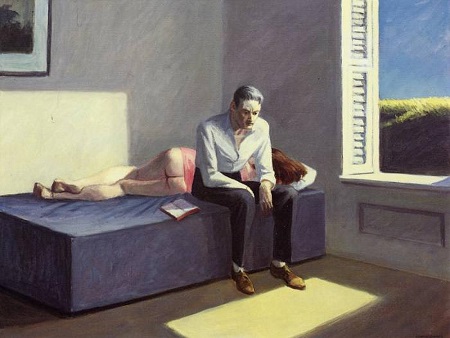
Summer in the City door Edward Hopper, 1949


Summer in the City, 1949

The man is looking for trouble,
thrills, sublime ecstasies, places
devoid of folklore, deals,
calculated approximations, objects
of desire that hold
your attention and help you
keep your cool, the latest rage
at your fingertips, binges,
infatuations, sexual icons,
irrefutable proofs, joyrides, advice
within parentheses, green lights, comfy shoes,
forms of expression that presume
supremacy, free tickets to the game,
ways of killing time that are reckless and frenzied,
the upper hand before bellyaching, straight
answers. The woman, however, is looking for love.


Vertaald door Lawrence Venuti


 2150558-85295e1d3080ab86b33c3e15fe30e3b6.jpg
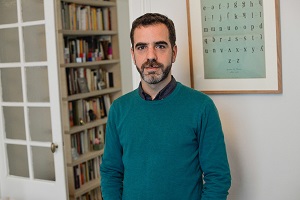
Ernest Farrés (Igualada, 21 juli 1967)
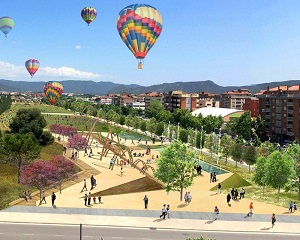
Igualada, de geboorteplaats van Ernest Farrés tijdens een ballonfestival


Zie voor de schrijvers van de 29e mei ook mijn vorige blog van vandaag.

Geschreven door Romenu om 18:21 Reageer op dit bericht

André Brink, Eduard Escoffet, G. K. Chesterton, Bernard Clavel, T. H. White, Hans Weigel, Alfonsina Storni, Max Brand, Joel Benton

De Zuid-Afrikaanse schrijver André Brink werd geboren op 29 mei 1935 in Vrede. Zie ook alle tags voor André Brink op dit blog.

Uit: A dry white season

“Even if I’m hated, and ostracized, and persecuted, and in the end destroyed, nothing can make me black. And so those who are cannot but remain suspicious of me. In their eyes my very efforts to identify myself with Gordon, with all the Gordons, would be obscene. Every gesture I make, every act I commit in my efforts to help them makes it more difficult for them to define their real needs and discover for themselves their integrity and affirm their own dignity. How else could we hope to arrive beyond predator and prey, helper and helped, white and black, and find redemption?
On the other hand: what can I do but what I have done? I cannot choose not to intervene: that would be a denial and a mockery not only of everything I believe in, but of the hope that compassion may survive among men. By not acting as I did I would deny the very possibility of that gulf to be bridged.
If I act, I cannot but lose. But if I do not act, it is a different kind of defeat, equally decisive and maybe worse.
Because then I will not even have a conscience left.
The end seems ineluctable: failure, defeat, loss. The only choice I have left is whether I am prepared to salvage a little honour, a little decency, a little humanity — or nothing. It seems as if a sacrifice is impossible to avoid, whatever way one looks at it. But at least one has the choice between a wholly futile sacrifice and one that might, in the long run, open up a possibility, however negligible or dubious, of something better, less sordid and more noble, for our children…”


 2150556-f79002cc56c37ab4771178aa962cd20c.jpg
André Brink (29 mei 1935 - 6 februari 2015)
Begin jaren 1960


De Catalaanse dichter, schrijver en vertaler Eduard Escoffet werd geboren op 29 mei 1979 in Barcelona. Zie ook alle tags voor Eduard Escoffet op dit blog.


alles egal

die liebe
macht alles kaputt;
sie macht den sex kaputt,
sie zerstört den verstand
und sie bleicht den teint.
sie macht aus den augen ein möbel
und aus dem bett ein anderes möbel
– und zwar eins ums andere mal.
die liebe
macht das flirten kaputt,
sie tötet die masern,
sie tötet den schweifenden blick und
erhöht die moral
hin zu unbekannten neigungen.

die liebe
macht alles kaputt;
sie lässt die stimme rostig werden,
zerstört pläne und panoramablicke,
sie füllt den kaffee mit klumpen und
die adern mit nervenfasern, die sich überschlagen.
die liebe lässt das meer ruhig werden und die landschaften zahmer,
sie lässt die plattfüße platt
und macht platt die härteste rute.

die liebe
macht alles kaputt:
sie bedeckt dir die augen,
und zwischen den vorhängen und fensterläden
vergesse ich mich selbst,
die flüsse sind immer noch flüsse
und ich weiß nicht mehr was tun.


Vertaald doorRoger Friedlein


 2150556-c9048823df23e7f9c3a92473a447ef44.jpg
Eduard Escoffet (Barcelona, 29 mei 1979)


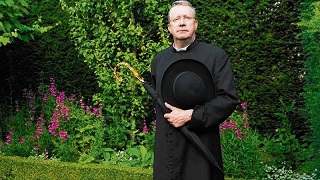
De Engelse dichter, letterkundige, schrijver en journalist Gilbert Keith Chesterton werd geboren in Londen op 29 mei 1874. Zie ook alle tags voor G. K. Chesterton en alle tags voor Chesterton op dit blog.

Uit: The Secret Garden (The Complete “Father Brown”)

“I mean,” said little Father Brown, from the corner of the room, “I mean that cigar Mr. Brayne is finishing. It seems nearly as long as a walking-stick.”
Despite the irrelevance there was assent as well as irritation in Valentin’s face as he lifted his head.
“Quite right,” he remarked sharply. “Ivan, go and see about Mr. Brayne again, and bring him here at once.”
The instant the factotum had closed the door, Valentin addressed the girl with an entirely new earnestness.
“Lady Margaret,” he said, “we all feel, I am sure, both gratitude and admiration for your act in rising above your lower dignity and explaining the Commandant’s conduct. But there is a hiatus still. Lord Galloway, I understand, met you passing from the study to the drawing-room, and it was only some minutes afterwards that he found the garden and the Commandant still walking there.”
“You have to remember,” replied Margaret, with a faint irony in her voice, “that I had just refused him, so we should scarcely have come back arm in arm. He is a gentleman, anyhow; and he loitered behind—and so got charged with murder.”
“In those few moments,” said Valentin gravely, “he might really—”
The knock came again, and Ivan put in his scarred face.
“Beg pardon, sir,” he said, “but Mr. Brayne has left the house.”
“Left!” cried Valentin, and rose for the first time to his feet.
“Gone. Scooted. Evaporated,” replied Ivan in humorous French. “His hat and coat are gone, too, and I’ll tell you something to cap it all. I ran outside the house to find any traces of him, and I found one, and a big trace, too.”
“What do you mean?” asked Valentin.
“I’ll show you,” said his servant, and reappeared with a flashing naked cavalry sabre, streaked with blood about the point and edge. Everyone in the room eyed it as if it were a thunderbolt; but the experienced Ivan went on quite quietly:
“I found this,” he said, “flung among the bushes fifty yards up the road to Paris. In other words, I found it just where your respectable Mr. Brayne threw it when he ran away.”
There was again a silence, but of a new sort. Valentin took the sabre, examined it, reflected with unaffected concentration of thought, and then turned a respectful face to O’Brien. “Commandant,” he said, “we trust you will always produce this weapon if it is wanted for police examination. Meanwhile,” he added, slapping the steel back in the ringing scabbard, “let me return you your sword.”


 2150556-6d91a51d12e5cbc0ddf4b18fcf1ca0fe.jpg
G. K. Chesterton (29 mei 1874 - 14 juli 1936)
Mark Williams speelt Father Brown in de BBC-serie vanaf 2013


De Franse schrijver Bernard Charles Henri Clavel werd geboren op 29 mei 1923 in Lons-le-Saunier. Zie ook alle tags voor Bernard Clavel op dit blog.

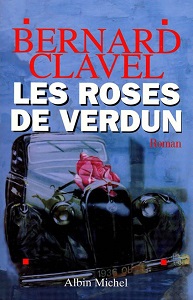
Uit: Les roses de Verdun

« Je suis allé à la porte. La neige tenait. La rue n'était pas déblayée et la voiture de Mme Vallier garée le long du trottoir, un peu plus bas, dans un renfoncement, était blanche. J'ai pensé un instant à la nettoyer, mais comme je ne savais pas quelle décision serait prise, je me suis dit que c'était inutile. Heureusement, elle était venue avec leur plus grosse auto qui était une quinze-chevaux Citroën. Si nous devions partir, sur la neige, la traction avant nous serait très précieuse. Et c'est une voiture que j'aime beaucoup conduire. [...]
Ce matin-là encore Monsieur allait m'étonner. Alors que je m'attendais à l'entendre pester contre le mauvais sort qui semblait s'acharner sur nous depuis le début du voyage, lorsqu'il a vu tomber la neige il nous a déclaré:
- Quelle chance que l'Hotchkiss soit cassée, nous serons plus en sécurité dans la traction avec une route pareille.
Mais, au petit déjeuner, il y a eu un très vif accrochage entre les deux femmes et lui. En dépit de l'état des routes et de la piètre visibilité, il s'était mis en tête de pousser jusqu'à Aulnois. Ce qui représentait, en comptant le retour, pas loin de quatre cents kilomètres de plus. Ça me semblait à proprement parler de la folie pure. Fort heureusement, cette empoignade avait dû faire monter sa tension artérielle. Il est devenu rouge et son souffle, de nouveau court et saccadé, l'a obligé à se taire.
- Veux-tu que j'appelle le médecin? a demandé Madame.
Dans un grand effort qui faisait un peu mal à voir car la souffrance se lisait sur ses traits, il est parvenu à gronder:
- Fous-moi la paix avec ce con! Il t'a fait acheter pour une fortune de drogues à foutre aux chiottes... Il doit toucher des ristournes du pharmacien, celui-là... Entre les toubibs qui ne font rien et ceux qui font trop... Les malades qui s'en tirent ont vraiment la peau dure...
- Tais-toi, papa. Tu parles trop. Tu t'essouffles encore plus.
Sa fille lui a pris la main qu'elle a caressée tendrement. Elle lui ressemble. Mince et les traits un peu durs comme lui. Le même grand front. Elle a ajouté d'une voix très douce:
- Tu devrais aller te reposer un moment. Nous ferons les valises et, dès que des voitures auront circulé un peu, on essaiera de partir. S'il faut s'arrêter en route, ce ne sont pas les hôtels qui manquent, entre ici et Lyon. «


 2150556-e29386537c02ecf3e863253f2691837f.jpg
Bernard Clavel (29 mei 1923 – 5 oktober 2010)
Cover


De Engelse dichter en schrijver Terence Hanbury White werd geboren op 29 mei 1906 in Bombay (Mombai). Zie ook alle tags voor T. H. White op dit blog.

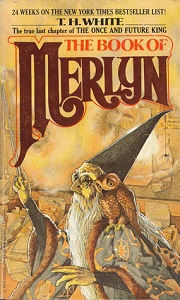
Uit:The Book of Merlyn

"The best thing for being sad," replied Merlin, beginning to puff and blow, "is to learn something. That's the only thing that never fails. You may grow old and trembling in your anatomies, you may lie awake at night listening to the disorder of your veins, you may miss your only love, you may see the world about you devastated by evil lunatics, or know your honour trampled in the sewers of baser minds. There is only one thing for it then — to learn. Learn why the world wags and what wags it. That is the only thing which the mind can never exhaust, never alienate, never be tortured by, never fear or distrust, and never dream of regretting. Learning is the only thing for you. Look what a lot of things there are to learn".
(...)

“He caught a glimpse of that extraordinary faculty in man, that strange, altruistic, rare, and obstinate decency which will make writers or scientists maintain their truths at the risk of death. Eppur si muove, Galileo was to say; it moves all the same. They were to be in a position to burn him if he would go on with it, with his preposterous nonsense about the earth moving round the sun, but he was to continue with the sublime assertion because there was something which he valued more than himself. The Truth. To recognize and to acknowledge What Is. That was the thing which man could do, which his English could do, his beloved, his sleeping, his now defenceless English. They might be stupid, ferocious, unpolitical, almost hopeless. But here and there, oh so seldome, oh so rare, oh so glorious, there were those all the same who would face the rack, the executioner, and even utter extinction, in the cause of something greater than themselves. Truth, that strange thing, the jest of Pilate's. Many stupid young men had thought they were dying for it, and many would continue to die for it, perhaps for a thousand years. They did not have to be right about their truth, as Galileo was to be. It was enough that they, the few and martyred, should establish a greatness, a thing above the sum of all they ignorantly had.”


 2150556-8f60effa6ee6d834066aa46a2a42db62.jpg
T. H. White (29 mei 1906 – 17 januari 1964)
Cover


De Oostenrijkse schrijver en theatercriticus Hans Weigel werd geboren op 29 mei 1908 in Wenen. Zie ook alle tags voor Hans Weigel op dit blog.

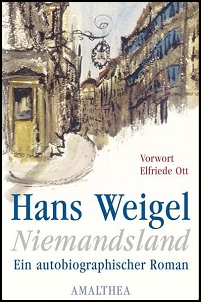
Uit: Niemandsland

„Österreich nimmt den Untergang Österreichs nicht zur Kenntnis. Man hört hier auch schon das verhängnisvolle Wort vom "kleineren Übel", das in Deutschland geprägt worden ist, so lange, bis die Betonung von dem "kleiner" unerheblich immer mehr auf "Übel" gewechselt hatte, so lange, bis das Übel unversehens immer grösser und schliesslich das ganz grosse geworden war. Peter versucht vergeblich darzutun, dass man jedes Übel bekämpfen müsse, ob es nun kleiner oder grösser sei.
Peter kann solche Gespräche nicht mehr hören. Es ist gespenstisch, höllisch, dass man hier das selbe erleben muss wie draussen, einen Staat auf dem selben Weg in den Untergang sehen und ein Volk die selben selbstbetrügerischen Phrasen dazu sagen hören muss, ohne dass man helfen kann, ja ohne dass der dokumentarische Hinweis dieser Gleichartigkeit auch nur zur Kenntnis genommen wird.
Peter fühlt sich erschöpft und völlig leer. Alles, was er, seit er denken kann, erlebt hat, alle Enttäuschung, alle Fragwürdigkeit seiner Existenz und der letzten Tage zumal, alles steigt auf, wächst unerträglich in ihm an und höhlt ihn aus. Kein Erlebnis kann ihn aus dieser Hoffnungslosigkeit reissen, was immer geschieht, wird sie nur bestätigen, falls es unerfreulich, wird sie doppelt grausam machen, wenn es erfreulich ist.“

 2150556-78f747d137d777c64a8b4e760234cb79.jpg
Hans Weigel (29 mei 1908 – 12 augustus 1991) 
Cover


De Argentijnse dichteres Alfonsina Storni werd geboren in Sala Capriasca, Zwitserland op 29 mei 1892. Zie ook alle tags voor Alfonsina Storni op dit blog.


You Want Me White

You want me to be the dawn
You want me made of seaspray
Made of mother-of-pearl
That I be a lily
Chaste above all others
Of tenuous perfume
A blossom closed

That not even a moonbeam
Might have touched me
Nor a daisy
Call herself my sister
You want me like snow
You want me white
You want me to be the dawn

You who had all
The cups before you
Of fruit and honey
Lips dyed purple
You who in the banquet
Covered in grapevines
Let go of your flesh
Celebrating Bacchus
You who in the dark
Gardens of Deceit
Dressed in red
Ran towards Destruction

You who maintain
Your bones intact
Only by some miracle
Of which I know not
You ask that I be white
(May God forgive you)
You ask that I be chaste
(May God forgive you)
You ask that I be the dawn!

Flee towards the forest
Go to the mountains
Clean your mouth
Live in a hut
Touch with your hands
The damp earth
Feed yourself
With bitter roots
Drink from the rocks
Sleep on the frost
Clean your clothes
With saltpeter and water
Talk with the birds
And set sail at dawn
And when your flesh
Has returned to you
And when you have put
Into it the soul
That through the bedrooms
Became entangled
Then, good man,
Ask that I be white
Ask that I be like snow
Ask that I be chaste


Vertaald door Catherine Fountain


 2150556-cf8aad5e7ff8e2837e6c09884ed9b39b.jpg
Alfonsina Storni (29 mei 1892 – 25 oktober 1938)


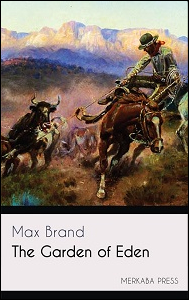
De Amerikaanse schrijver Max Brand (eig. Frederick Schiller Faust) werd geboren op 29 mei 1892 in Seattle. Zie ook alle tags voor Max Brand op dit blog.

Uit: The Garden of Eden

“By careful tailoring the broad shoulders of Ben Connor were made to appear fashionably slender, and he disguised the depth of his chest by a stoop whose model slouched along Broadway somewhere between sunset and dawn. He wore, moreover, the first or second pair of spats that had ever stepped off the train at Lukin Junction, a glowing Scotch tweed, and a Panama hat of the color and weave of fine old linen. There was a skeleton at this Feast of Fashion, however, for only tight gloves could make the stubby fingers and broad palms of Connor presentable. At ninety-five in the shade gloves were out of the question, so he held a pair of yellow chamois in one hand and in the other an amber-headed cane. This was the end of the little spur-line, and while the train backed off down the track, staggering across the switch, Ben Connor looked after it, leaning upon his cane just forcibly enough to feel the flection of the wood. This was one of his attitudes of elegance, and when the train was out of sight, and only the puffs of white vapor rolled around the shoulder of the hill, he turned to look the town over, having already given Lukin Junction ample time to look over Ben Connor.
The little crowd was not through with its survey, but the eye of the imposing stranger abashed it. He had one of those long somber faces which Scotchmen call "dour." The complexion was sallow, heavy pouches of sleeplessness lay beneath his eyes, and there were ridges beside the corners of his mouth which came from an habitual compression of the lips. Looked at in profile he seemed to be smiling broadly so that the gravity of the full face was always surprising. It was this that made the townsfolk look down. After a moment, they glanced back at him hastily. Somewhere about the corners of his lips or his eyes there was a glint of interest, a touch of amusement--they could not tell which, but from that moment they were willing to forget the clothes and look at the man.
While Ben Connor was still enjoying the situation, a rotund fellow bore down on him.
"You're Mr. Connor, ain't you? You wired for a room in the hotel? Come on, then. My rig is over here. These your grips?"
He picked up the suit case and the soft leather traveling bag, and led the way to a buckboard at which stood two downheaded ponies.”


 2150556-d15871becf100970a9dec3852658ca8b.jpg
Max Brand (29 mei 1892 – 12 mei 1944)
Cover


De Amerikaanse dichter, schrijver en publicist Joel Benton werd geboren op 29 mei 1832 in het kleine stadje Amenia, in county New York. Zie ook alle tags voor Joel Benton op dit blog.


The Scarlet Tanager

A all of fire shoots through the tamarack
In scarlet splendor, on voluptuous wings;
Delirious joy the pyrotechnist brings,
Who marks for us high summer’s almanac.
How instantly the red-coat hurtles back!
No fiercer flame has flashed beneath the sky.
Note now the rapture in his cautious eye,
The conflagration lit along his track.
Winged soul of beauty, tropic in desire,
Thy love seems alien in our northern zone;
Thou giv’st to our green lands a burst of fire
And callest back the fables we disown.
The hot equator thou mightst well inspire,
Or stand above some Eastern monarch’s throne.


 2150556-85e98eb1976934f8a5a34a0917d36ae1.jpg
Joel Benton (29 mei 1832 – 15 september 1911)


Zie voor nog meer schrijvers van de 29e mei ook mijn blog van 29 mei 2016 deel 2.

Geschreven door Romenu om 18:19 Reageer op dit bericht

Meer van Romenu

↑ Terug naar de berichten