Naar de inhoud

Romenu

Over literatuur, gedichten, kunst en cultuur
akke.beakke.be

Berichten van 21 juni 2018 tot 22 juni 2018

Nescio, Juliën Holtrigter, Jaap Robben, Willie Verhegghe, Erich Maria Remarque, Dan Brown, Aaro Hellaakoski, Henry Rider Haggard, Xavier Grall

De Nederlandse schrijver Nescio (pseudoniem van Jan Hendrik Frederik Grönloh) werd geboren in Amsterdam op 22 juni 1882. Zie ook alle tags voor Nescio op dit blog.

Uit: Mene Tekel

“Bavink was begonnen met te zeggen datti niet ernstig kon praten, dat is een raar begin voor zoo'n mannetje, dat in de eerste plaats ernstig is en in opdracht komt. 't Mannetje had zoo goed mogelijk gelachen en gezegd: `11 schertst, meneer Bavink.' Toen schudde zelfs Bekker van 't lachen en zei datti een idioot was en z'n zaken aan kant zou doen en z'n gekleede jas verkoopen en voor 't geld sigaren rooken. Watti natuurlijk niet gedaan heeft. En Bavink had geantwoord datti niet schertste en 't mannetje was heelemaal van de wijs geraakt. Hij durfde Bavink niet minachten, omdatti van bekende menschen had gehoord, dat Bavink 'bijzonder knap werk maakte.' `Dan veronderstel ik,' hatti gezegd en toen hatti even gewacht en z'n lorgnet recht gezet en Bavink aangekeken en toen hatti weer gezegd: Dan veronderstel ik, dat u al uw ernst in uw werk legt?' `Zou jij geweten hebben, Koekebakker, wat je toen had moeten doen?' t Mannetje had zoo eerbiedig gesproken, dat Bavink dacht: Wat is-i toch een erg mal ventje,' maar nix dorst te zeggen. Weet je wat ik gedaan zou hebben, Bavink? Ik had gevraagd of-i es wilde opsteken.' Dat heb ik nou juist ook gedaan en toen zeidi: "Neen dank u ik rook nooit."' 't Mannetje sprak alsof-i uit de krant voorlas. Hij begreep volkomen dat 't Bavink niet aangenaam was over zichzelf te spreken, hijzelf vond 't ook altijd onaangenaam, maar u begrijpt, je kunt er niet altijd buiten, 't leven brengt verplichtingen mee en een kunstenaar (dat woord sprak 't mannetje met veel nadruk uit) behoort nu eenmaal min of meer... Toen bedacht Bavink datti ook wel eens iets kon zeggen dat klonk alsof 't uit een redevoering was en zei: 'Volkomen waar."t Mannetje schrok er van. 't Dee 'm genoegen, dat meneer Bavink op dit punt net zoo dacht als hij, zoo iets noemen zulke mannetjes een 'punt', en hij vond daarin de vrijmoedigheid, meneer Bavink te vragen of 't waar was wat in sommige kranten (`clagbladen', zeidi) had gestaan, dat hij in hooge mate, in hooge mate ongevoelig was voor roem? `Jezus, daar zat ik,' zei Bavink, 'ik dacht, was nou Hoyer maar hier, die zou wel even 't woord doen.' En wat zei je?' Ik vroeg, heeft dat in de krant gestaan?' Leest u dan geen krant?' vroeg-i, net als een gewoon mensch. `Verdomme,' zei Bekker, 'dan was dat mannetje toch niet voor nix gekomen. Nou kanni in zijn blaadje zetten, dat Johannes Bavink nooit een krant leest.'”


 2156840-019725545887163f965c2548cc6a0757.JPG
Nescio (22 juni 1882 – 25 juli 1961)
Bronzen reliëf in de Sarphatistraat in Amsterdam door Da van Daalen


De Nederlandse dichter Juliën Holtrigter (pseudoniem van Henk van Loenen) werd geboren op 22 juni 1946 in Hilversum. Zie ook alle tags voor Juliën Holtrigter op dit blog.


Aarde

Zoals ze leefden zo liggen ze hier
ook begraven, dicht op elkaar, bijna
hand in hand.

Spandiensten verleent men elkaar
tot op de rand van de dood.

Blinde paarden draven erheen,
met koetsen maar zonder koetsiers.
Het is het geheim van de hemel.

Zo hoog komen de mussen niet,
waar de zwaluwen buitelen, tuimelen
door de geweldige ruimte.


Zondagmiddag

Zondagmiddag, de krekels naaien de stilte.
Ik volg de spoorbaan, de brandnetels bloeien,
de bramen smaken naar niets en naar bloed.

Het dorp ligt verscholen in dichte grijzen.
Ik herken het, dit lopen: zo kwam ik thuis.
Van het nog warme huis staan de ramen wijd open.

Het bijna doorzichtige hoofd in de kamer
is van mijn vader, hij kijkt niet naar buiten.
In de hemdsmouwen wacht hij op onweer en regen.

Zo jongen, zal hij wel zeggen, dat is lang geleden.
Wat brengt je hier? Waar heb je gezeten?
Hij vraagt niet maar gebaart: hoor, het begint.

Hij loopt naar de deur, naar de stromende regen.
Hij zal zwijgen en knikken en alles vergeten.


 2156840-1e2e9db29af8a5227a7034e8749d7d2a.jpg
Juliën Holtrigter (Hilversum, 22 juni 1946)


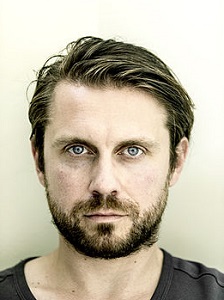
De Nederlandse dichter, schrijver en theatermaker Jaap Robben werd geboren in Oosterhout op 22 juni 1984. Zie ook alle tags voor Jaap Robben op dit blog.


Vier vingers en een duim

Mijn duim
kij kt mij n vingers niet aan.

Omdat zij met z’n vieren
op een muurtje aan
en hij mag er niet tussen.

Kleine dikke broer
en zij n vier pianozussen.

Ze lij ken wel een voetbalteam
en hij aat kleumend
langs de kant.

Zij zij n de giraff en
en hij is altij d olifant.

Maar het eenzaam e zij n de winters.
Alle dagen in z’n eentje
in een want


Haar nek

Mijn handen passen precies
om de nek van onze poes.

Dat vind ik eng.

Niet de poes
en niet mij n handen.

Maar dat ze precies om haar nek
dat ik dat weet
terwij l er verder niemand thuis is.

En de poes mij n knie vertrouwt,
haar pootjes om een hand heen vouwt
en voorzitig op mijn vinger kauwt


 2156840-b18c0f6b41d910254bc02b6256634224.jpg
Jaap Robben (Oosterhout, 22 juni 1984)


De Belgische dichter en schrijver Willie Verhegghe werd op 22 juni 1947 te Denderleeuw geboren. Zie ook alle tags voor Willie Verhegghe op dit blog.


Opvolging verzekerd
- voor Vic, Ferre en Arthur -

Kleinzonen blijven niet klein,
je ziet ze groeien als kool, ze zitten je speels
op de steeds tragere hielen en rijden je
met panache en jeugdige grinta uit de wielen.

Zoals dat bij de meeste jongens het geval is
gaat de voorkeur eerst uit naar voetballen en
komt de liefde voor de fiets pas later.

Maar eens de derailleur in de prille kopjes
zijn verslavend tikkend werk doet kan het rijden
met een heuse koersfiets niet meer stuk en
vormen afstanden of het tegen hellingen opspurten
geen probleem meer, wordt zelfs de outfit
van blitse brillen en kleurrijke truitjes
met smaak en een eigentijdse look verzorgd.


 2156840-c0a2bd1c26b051979fda746406745650.jpg
Willie Verhegghe (Denderleeuw, 22 juni 1947)


De Duitse schrijver Erich Maria Remarque (pseudoniem van Erich Paul Remark) werd geboren op 22 juni 1898 in Osnabrück. Zie ook alle tags voor Erich Maria Remarque op dit blog.

Uit: Im Westen nichts Neues

»Haie, was würdest du denn machen, wenn jetzt Frieden wäre?«
»Er müßte dir den Arsch vollhauen, weil du hier von so etwas überhaupt anfängst«, sage ich,»wie kommt das eigentlich?«
»Wie kommt Kuhscheiße aufs Dach?« antwortet Müller lakonisch und wendet sich wieder an Haie Westhus.
Es ist zu schwer auf einmal für Haie. Er wiegt seinen sommersprossigen Schädel:»Du meinst, wenn kein Krieg mehr ist?«
»Richtig. Du merkst auch alles.«
»Dann kämen doch wieder Weiber, nicht?«- Haie leckt sich das Maul. »Das auch.«
»Meine Fresse noch mal«, sagt Haie, und sein Gesicht taut auf,»dann würde ich mir so einen strammen Feger schnappen, so einen richtigen Küchendragoner, weißt du, mit ordentlich was dran zum Festhalten, und sofort nichts wie ‘rin in die Betten! Stell dir mal vor, richtige Federbetten mit Sprungmatratzen, Kinners, acht Tage lang würde ich keine Hose wieder anziehen.«
Alles schweigt. Das Bild ist zu wunderbar. Schauer laufen uns über die Haut. Endlich ermannt sich Müller und fragt:»Und danach?«
Pause. Dann erklärt Haie etwas verzwickt:»Wenn ich Unteroffizier wäre, würde ich erst noch bei den Preußen bleiben und kapitulieren.«»Haie, du hast glatt einen Vogel«, sage ich. Er fragt gemütlich zurück:»Hast du schon mal Torf gestochen? Probier’s mal.«
Damit zieht er seinen Löffel aus dem Stiefelschaft und langt damit in Alberts Eßnapf.
»Schlimmer als Schanzen in der Champagne kann’s auch nicht sein«, erwiderte ich.
Haie kaut und grinst:»Dauert aber länger. Kannst dich auch nicht drücken.«
»Aber, Mensch, zu Hause ist es doch besser, Haie.«»Teils, teils«, sagt er und versinkt mit offenem Munde in Grübelei.
Man kann auf seinen Zügen lesen, was er denkt. Da ist eine arme Moorkate, da ist schwere Arbeit in der Hitze der Heide vom frühen Morgen bis zum Abend, da ist spärlicher Lohn, da ist ein schmutziger Knechtsanzug -»Hast beim Kommiß in Frieden keine Sorgen«, teilt er mit,»jeden Tag ist dein Futter da, sonst machst du Krach, hast dein Bett, alle acht Tage reine Wäsche wie ein Kavalier, machst deinen Unteroffiziersdienst, hast dein schönes Zeug; – abends bist du ein freier Mann und gehst in die Kneipe."


 2156840-aa96931bf22afc084d4d7b0ebd95ff28.jpg
Erich Maria Remarque (22 juni 1898 – 25 september 1970)
Cover


De Amerikaanse schrijver Dan Brown werd geboren in Exeter, New Hampshire, op 22 juni 1964. Zie ook alle tags voor Dan Brown op dit blog.

Uit: Origin

“As the ancient cogwheel train clawed its way up the dizzying incline, Edmond Kirsch surveyed the jagged mountaintop above him. In the distance, built into the face of a sheer cliff, the massive stone monastery seemed to hang in space, as if magically fused to the vertical precipice.
This timeless sanctuary in Catalonia, Spain, had endured the relentless pull of gravity for more than four centuries, never slipping from its original purpose: to insulate its occupants from the modern world.
Ironically, they will now be the first to learn the truth, Kirsch thought, wondering how they would react. Historically, the most dangerous men on earth were men of God . . . especially when their gods became threatened. And I am about to hurl a flaming spear into a hornets’ nest.
When the train reached the mountaintop, Kirsch saw a solitary figure waiting for him on the platform. The wizened skeleton of a man was draped in the traditional Catholic purple cassock and white rochet, with a zucchetto on his head. Kirsch recognized his host’s rawboned features from photos and felt an unexpected surge of adrenaline.
Valdespino is greeting me personally.
Bishop Antonio Valdespino was a formidable figure in Spain—not only a trusted friend and counselor to the king himself, but one of the country’s most vocal and influential advocates for the preservation of conservative Catholic values and traditional political standards.
“Edmond Kirsch, I assume?” the bishop intoned as Kirsch exited the train.
“Guilty as charged,” Kirsch said, smiling as he reached out to shake his host’s bony hand. “Bishop Valdespino, I want to thank you for arranging this meeting.”
“I appreciate your requesting it.” The bishop’s voice was stronger than Kirsch expected—clear and penetrating, like a bell. “It is not often we are consulted by men of science, especially one of your prominence. This way, please.”
As Valdespino guided Kirsch across the platform, the cold mountain air whipped at the bishop’s cassock.
“I must confess,” Valdespino said, “you look different than I imagined. I was expecting a scientist, but you’re quite . . .” He eyed his guest’s sleek Kiton K50 suit and Barker ostrich shoes with a hint of disdain. “ ‘Hip,’ I believe, is the word?”
Kirsch smiled politely. The word “hip” went out of style decades ago.
“In reading your list of accomplishments,” the bishop said, “I am still not entirely sure what it is you do.”
“I specialize in game theory and computer modeling.”
“So you make the computer games that the children play?”


 2156840-ee4f9ad1a3a02e259515b95934cebe2f.jpg
Dan Brown (Exeter, 22 juni 1964)
Affiche voor de film uit 2016


De Finse  dichter, criticus en geograaf Aaro Hellaakoski werd geboren op 22 juni 1893 in Oulu. Zie ook alle tags voor Aaro Hellaakoski op dit blog.


Humming

A sunbeam glistened,
flickered for a flash
on the side of a comber,
stroked the rockside,
vanished between leaves.
In passing we
swapped a word or so.
We’d, just a little,
understood
the other.
We were working together.
Rejoicing at it, I hummed,
hummed, just so.
Don’t know,
did that light,
the slightest of lights,
also know
that I was.
That we were.


Death’s sitting on my shoulder

Death’s sitting on my shoulder. Ravenlike?
No. A little beak pecked my cheek, the faintest knock

promising some song, to make me look
for the unlocking, when all the bolts slide back.


Vertaald door Herbert Lomas


 2156840-eaca457aed7bdb0f42781350e242ae68.jpg
Aaro Hellaakoski (22 juni 1893 – 23 november 1952)
In 1913


De Engelse schrijver Henry Rider Haggard werd geboren in Norfolk op 22 juni 1856. Zie ook alle tags voor Henry Rider Haggard op dit blog.

Uit: The Days of My Life

“A while ago, it may have been a year or more, the telephone in this house rang and down the mysterious wire — for notwithstanding a thousand explanations, what is more mysterious than a telephone wire, except a telephone without one? — came an excited inquiry from a London press agency, as to whether I were dead.
Miss Hector, my secretary, answered that to the best of her knowledge and belief I was out walking on my farm in an average state of health. Explanations followed; diversified by telegrams from the Authors’ Society and others interested in the continuance or the cessation of my terrestrial life. From these it appeared that, like a sudden wind upon the sea, a rumour had sprung up to the effect that I had vanished from the world.
It was a false rumour, but the day must come, when or how I know not, since Providence in its mercy hides this ultimate issue from our eyes, on which it will be true, and like the storm that I hear raving outside the windows as I write, the elemental forces which are about every one of us will sweep me away as they brought me here and my place will know me no more.
Before this event happens to me, this common, everyday event which excites so little surprise even among those who knew us and yet, whatever his degree or lack of faith, is so important to the individual concerned, shall overtake me, before I too, like the countless millions who have gone before, put on the Purple and have my part in the majesty of Death, it has entered into my mind that I desire to set down, while I still have my full faculties, certain of my own experiences of life.
I have met many men, I have seen many lands, I have known many emotions — all of them, I think, except that of hate; I have played many parts. From all this sum of things, tangible or intangible, hidden now in the heart and the memory, some essence may perhaps be pressed which is worthy of preservation, some picture painted at which eyes unborn may be glad to look. At least, such is my hope.”


 2156840-6f786906072a9b5d213734835a2f2db4.jpg
Henry Rider Haggard (22 juni 1856 – 14 mei 1925)
Cover


De Franse dichter en schrijver Xavier Grall werd geboren op 22 juni 1930 in Landivisiau (Finistère). Zie ook alle tags voor Xavier Grall op dit blog.


Solo (Fragment)

Seigneur me voici devant votre face
chanteur des manoirs et des haies
que vous apporterai-je
dans mes mains lasses
sinon les traces et les allées
l’âtre féal et le bruit des marées
les temps ont passé
comme l’onde sous le saule
et je ne sais plus l’âge
ni l’usage du corps
je ne sais plus que le dit
et la complainte
telle la poésie
mon âme serait-elle patiente
au bout des galantes années ?

Seigneur me voici c’est moi
de votre terre j’ai tout aimé
les mers et les saisons
et les hommes étranges
meilleurs que leurs idées
et comme la haine est difficile
les amants marchent dans la ville
souvenez-vous de la beauté humaine
dans les siècles et les cités
mais comme la peine est prochaine !

Seigneur me voici c’est moi
j’arrive de lointaine Bretagne
O ma barque belle
parmi les bleuets et les dauphins
les brumes y sont plus roses
que les toits de l’Espagne
je viens d’un pays de marins
les rêves sur les vagues
sont de jeunes rameurs
qui vont aux îles bienheureuses
de la grande mer du Nord.


 2156840-43ca0046c635162cb7a3d0203962b40d.jpg
Xavier Grall (22 juni 1930 – 11 december 1981)
Cover, 1989


Zie voor nog meer schrijvers van de 22e juni ook mijn blog van 22 juni 2014 deel 1 en eveneens deel 2.

Geschreven door Romenu om 18:01 Reageer op dit bericht

Albert Besnard

De Nederlandse dichter Albert Pierre Adolphe Aloysse Besnard werd geboren in Den Haag op 22 juni 1887. Besnard raakte al in zijn jeugd al bevriend met J.C. Bloem en zou dat levenslang blijven. Van 1903 tot 1911 was Besnard beroepsmilitair, van 1911 tot 1913 planter op Sumatra en Java, van 1914 tot 1918 dienstplichtig militair en daarna journalist. Hij publiceerde in 1917 de bundel “Sonnetten” en in 1923 “De bloei en andere gedichten”, welke twee uitgaven gewijzigd opnieuw werden uitgegeven onder de titel “Opstand en wroeging” (1925, met een inleiding van J.C. Bloem). Gedurende de jaren 1930-1942 was Besnard hoofdredacteur van de Sumatrapost en later van het Medan-Bulletin. In die periode schreef hij onder het pseudoniem Dr. Anseb onder meer het verhaal “De grond van Deli” (1938) voor de lezers van de Sumatrapost. In 1942, geïnterneerd in een Japans kamp, kwam hij weer tot het schrijven van poëzie. Sedert 1947 weer in Nederland, publiceerde Albert Besnard de lyrische bundel “Doem en dorst” (1952) en de episch-religieuze cyclus in alexandrijnen, “Drama” (1959).


Kleuren

De wijde zee min ik in diep smaragd,
In licht azuur verlang ik naar de sferen,
Bij d'avond gloeit mijn ziel in stil schakeeren
Der wondren die zij van den schemer wacht.

Het is mijn drift die ros en donker dacht
Het vochte land dat juist de ploegen keeren.
In korenvelden wuift mijn goud begeeren
En bloesems bloeien waar mijn wezen lacht.

Dùs in het niets van starre majesteit,
Dit metrisch spel van kristallijnen machten,
Schiep onze liefde zich een waan van tijd

Voor 't kleurig perspectief van haar gedachten,
En ieder ziet en ieder hoort en lijdt
Den broozen droom van dagen en van nachten.


Stervensklacht

Ik heb gedragen de lange dagen,
Ik heb gewacht de bange nacht.
De winden klagen, angstig, trage,
Het Al versmacht, de zee weent zacht.

En stil vertreuren de bleeke kleuren,
Ik heb gebeid een wreeden tijd
Uit bloemengeuren, een wijd gebeuren.
De avond schreit, haar eenzaamheid.

Maar nu verduistren, in vage kluistren
Mijn pijnen stil. Mijn God ik wil
Nog toevend luistren, naar 't stervend fluistren
Der laatste gril... dan wordt het kil.


 2221515-11ceb9aceab076e37c17abd471b57e7d.jpg
Albert Besnard (22 juni 1887 - 1 oktober 1966)

Geschreven door Romenu om 00:00 Reageer op dit bericht

Ed Leeflang, Thomas Blondeau, Anne Carson, Adam Zagajewski, Ian McEwan, Alon Hilu, Jean-Paul Sartre, Stanley Moss, Machado de Assis

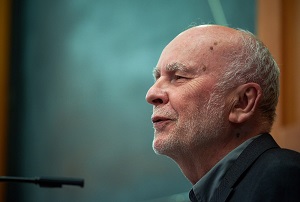
De Nederlandse dichter Ed Leeflang werd geboren op 21 juni 1929 in Amsterdam. Zie ook alle tags voor Ed Leeflang op dit blog.


Voor de sopraan

Een vrolijke familie de pioenen,
van de bollebozen die geen leed verkroppen,
volle harten en onnozel, gulzig in de lippen,
sierlijk in verliefd gespreide vingers,
doende doende in het rond te zoenen.

Zomer wordt het nooit zonder pioenen
te bezingen, jou, mij, jullie en ook u,
regen die ze schudt, ieder dol en dommer
van de lente, terwijl schoenen, paraplu
van die overoude droeve dingen bleven
uit die tijden, nu wij zomaar en hoognodig
mee met de pioenen moeten bloeien,
doof en blozend en terzijde.


In de ton

Maakt het uit wie het dicht
de wind of een ander, zijn slepende regels
stemmen niet hondser en wie ze nog opschrijft
is mij om het even, de stad raakt vergeten.
Wie het je aanzegt, lood om oud ijzer.

Maakt het je enig verschil waar ze bleven
de zomer de schemer november de dagen.
Kan het je schelen wie in je huizen
voetvegen narrige wezens windvanen,
als het hier binnen zingt van de regen
buien en avonden lang op je duigen.


Najaar

Ze hadden het recht van overpad,
honden, geweren. Ze keken binnen,
lachten zowaar en schikten
hun lege tassen. Hun rode koppen
telden we voor ze verdwenen
in de nog dampende velden.
We aten ons brood, lazen bladen.
Tegen het donker kwamen ze terug
beladen met hangende poten.
We gingen naar bed, lagen wakker,
hatend omdat ze bestonden.


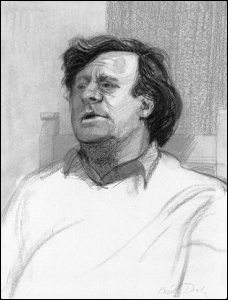
 2156600-7bfed2661e4301d2ed4d077f28a1eee2.jpg
Ed Leeflang (21 juni 1929 – 17 maart 2008)
Portret door Rein Dool, 1982


De Vlaamse dichter, schrijver en journalist Thomas Blondeau werd geboren in Poperinge op 21 juni 1978. Zie ook Zie ook alle tags voor Thomas Blondeau op dit blog


Uit: Donderhart

“Eva twijfelde even maar toen ze Max zag glimlachen, krulden ook haar mondhoeken omhoog. Max stond op, en kuste haar wang. Hij deed een stap naar achter en keek naar haar. Ze was afgevallen. Ze was altijd slank geweest, maar de plooien bij haar ogen en mondhoeken waren nu nog zichtbaarder geworden.
Eva uit zijn gedachten schrappen was niet makkelijk geweest. Ze was al tien jaar zangeres van een band die bij ieder album nog meer platen verkocht en nog meer zalen deed volstromen. Vlak na hun breuk spotte haar roem met zijn liefdesverdriet. Soms nam die hoon paranoïde vormen aan. Was ze even uit zijn aandacht verdwenen, dan hoorde hij opeens haar stem op de radio terwijl de kappersschaar over zijn hoofd gleed. ’s Nachts in de snackbar danste ze op het tv-scherm dat de wachtenden moest vermaken. De etalages van kiosken, de rijen affiches op blinde muren reproduceerden haar bestraffende blik in oneindig veelvoud.
Om het vergeten makkelijker te maken, had Max de muziekzenders van zijn tv gewist. Hij luisterde bijna alleen nog maar naar klassieke muziek en zijn autoradio was zo geprogrammeerd dat het gevaar van opdringerige herinneringen tot een minimum was gereduceerd.
De tijdschriftenkast op de redactie van Criterium kon hij natuurlijk niet censureren. Wanneer er een nieuw album uit was, zag hij een maand lang Eva’s nieuwe look opduiken op de voorpagina van de concurrerende bladen. Hij had geluk dat popmuziek nog steeds zelden toegang vond tot de kolommen van zijn tijdschrift. In de jaren dat Max voor Criterium werkte, was de band slechts één keer door het blad geïnterviewd. Hij had zijn ogen over de tekst laten glijden, zoekend naar woorden als ‘vriendje’, ‘ex’ of ‘lief’ maar kon niks vinden.
Behalve wat oude vrienden wist niemand uit Max’ omgeving van zijn tijd met Eva af. Véronique vertelde hij het pas toen ze elkaar al twee jaar kenden. Eerst geloofde ze het niet. Eens ze overtuigd was, vroeg ze of hij Eva nog wel eens zag. Dat ze een keer langs moest komen. Max snauwde haar af. Véronique was er niet meer over begonnen.
‘Londen, meneer Gosset, dat brengt mij hier. Evenals u, neem ik aan.’ Door Max’ overdreven formele toon over te nemen, gaf ze blijk van een mondigheid die nieuw was voor hem. Bij het uitspreken van zijn achternaam had ze zelfs een kleine buiging gemaakt. Ze had iets smalends, arrogants over zich gekregen. Was het een uitwas van de ijdelheid die vroeger slechts sluimerend bij haar aanwezig was geweest? “


2156600-6eabaeb7f984d295e2a9a926b6785eb7.jpg
Thomas Blondeau (21 juni 1978 – 20 oktober 2013)


De Poolse dichter en essayist Adam Zagajewski werd geboren op 21 juni 1945 in Lwów, het huidige Lviv. Zie ook alle tags voor Adam Zagajewski op dit blog.


Poetry searches for radiance

Poetry searches for radiance,
poetry is the kingly road
that leads us farthest.
We seek radiance in a gray hour,
at noon or in the chimneys of the dawn,
even on a bus, in November,
while an old priest nods beside us.

The waiter in a Chinese restaurant bursts into tears
and no one can think why.
Who knows, this may also be a quest,
like that moment at the seashore,
when a predatory ship appeared on the horizon
and stopped short, held still for a long while.
And also moments of deep joy

and countless moments of anxiety.
Let me see, I ask.
Let me persist, I say.
A cold rain falls at night.
In the streets and avenues of my city
quiet darkness is hard at work.
Poetry searches for radiance.


Ravenna

This sleepy little town was once the empire’s center.
This baker was Caesar’s baker.
This fire flamed high.
This tailor hunched over cloth of gold.
This oriole sang in the language of the gods.

Ravenna is quiet, botanical.
Thrushes hop over its flat earth.
Bikes chat together casually like deaf-mutes.
A sluggish train from Ferrara enters the station.
Two German girls squabble: how to say solitude?

These bricks touched fingers.
These fingers touched iron and trees.
These acacias climbed romanesque vaults.
Ravenna’s bookmark lies in a herbarium of guidebooks,
and waits, just keeps on waiting.

A golden flame still smoulders in mosaics,
one day it will doubtless go out.
A single match may serve
to kindle it again.
A single moment’s concentration.
Is that so?


Vertaald door Clare Cavanagh


 2156600-77190219c6420eff6e6c9bab09be9f81.jpg
Adam Zagajewski (Lwów, 21 juni 1945)


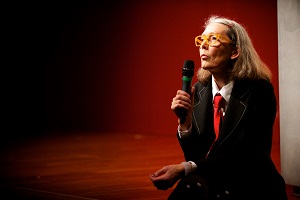
De Canadese dichteres, essayiste en vertaalster Anne Carson werd geboren op 21 juni 1950 in Toronto. Zie ook alle tags voor Anne Carson op dit blog.


Apostle Town

After your death.
It was windy every day.
Every day.
Opposed us like a wall.
We went.
Shouting sideways at one another.
Along the road.
It was useless.
The spaces between us.
Got hard.
They are empty spaces.
And yet they are solid.
And black and grievous.
As gaps between the teeth.
Of an old woman.
You knew years ago.
When she was.
Beautiful the nerves pouring around in her like palace fire.


Short Talk on Major and Minor

Major things are wind, evil, a good fighting horse,
prepositions, inexhaustible love, the way people
choose their king. Minor things include dirt,
the names of schools of philosophy, mood and
not having a mood, the correct time. There
are more major things than minor things
overall, yet there are more minor things
than I have written here, but it is
disheartening to list them. When I
think of you reading this I do not
want you to be taken captive,
separated by a wire mesh lined with glass
from your life itself, like some Elektra.


 2156600-255984660a99406d4a4d07774b7854f4.jpg
Anne Carson (Toronto, 21 juni 1950)


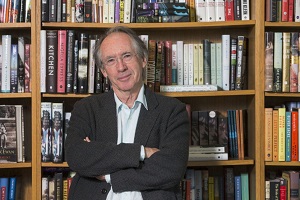
De Britse schrijver Ian McEwan werd op 21 juni 1948 geboren in de Engelse garnizoensplaats Aldershot. Zie ook alle tags voor Ian McEwan op dit blog.

Uit: Nutshell

“So here I am, upside down in a woman. Arms patiently crossed, waiting, waiting and wondering who I’m in, what I’m in for. My eyes close nostalgically when I remember how I once drifted in my translucent body bag, floated dreamily in the bubble of my thoughts through my private ocean in slow-motion somersaults, colliding gently against the transparent bounds of my confinement, the confiding membrane that vibrated with, even as it muffled, the voices of conspirators in a vile enterprise. That was in my careless youth. Now, fully inverted, not an inch of space to myself, knees crammed against belly, my thoughts as well as my head are fully engaged. I’ve no choice, my ear is pressed all day and night against the bloody walls. I listen, make mental notes, and I’m troubled. I’m hearing pillow talk of deadly intent and I’m terrified by what awaits me, by what might draw me in.
I’m immersed in abstractions, and only the proliferating relations between them create the illusion of a known world. When I hear “blue,” which I’ve never seen, I imagine some kind of mental event that’s fairly close to “green”—which I’ve never seen.
I count myself an innocent, unburdened by allegiances and obligations, a free spirit, despite my meagre living room. No one to contradict or reprimand me, no name or previous address, no religion, no debts, no enemies. My appointment diary, if it existed, notes only my forthcoming birthday. I am, or I was, despite what the geneticists are now saying, a blank slate. But a slippery, porous slate no school­room or cottage roof could find use for, a slate that writes upon itself as it grows by the day and becomes less blank. I count myself an innocent, but it seems I’m party to a plot. My mother, bless her unceasing, loudly squelching heart, seems to be involved.
Seems, Mother? No, it is. You are. You are involved. I’ve known from my beginning. Let me summon it, that moment of creation that arrived with my first concept. Long ago, many weeks ago, my neural groove closed upon itself to become my spine and my many million young neurons, busy as silkworms, spun and wove from their trailing axons the gorgeous golden fabric of my first idea, a notion so simple it partly eludes me now. Was it me? Too self-loving. Was it now? Overly dramatic. Then something antecedent to both, containing both, a single word mediated by a mental sigh or swoon of acceptance, of pure being, something like—this? Too precious. So, getting closer, my idea was To be. Or if not that, its grammatical variant, is.
This was my aboriginal notion and here’s the crux—is. Just that. In the spirit of Es muss sein. The beginning of conscious life was the end of illusion, the illusion of non-being, and the eruption of the real. The triumph of realism over magic, of is over seems. My mother is involved in a plot, and therefore I am too, even if my role might be to foil it. Or if I, reluctant fool, come to term too late, then to avenge it.”


 2156600-1a1b0a87d8ca7111d863a1badfc97d17.jpg
Ian McEwan (Aldershot, 21 juni 1948)


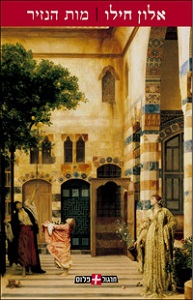
De Israëlische schrijver Alon Hilu werd geboren op 21 juni 1972 in Jaffa. Zie ook alle tags voor Alon Hilu op dit blog.

Uit: Death of a Monk

“I would bathe alone, never at the hammam in Kharet Elyahud, the Jewish Quarter, with the other men, but with a bucket of hot water in the room at the edge of the fruit orchards, so that no unfamiliar eye could catch sight of me, and I could gaze in wonder at my feeble body: the pale and bloated belly, which had not seen a ray of sunlight for some time and was always hidden under thick clothing; the toes, as separate and distant from one another as a band of brothers in hot dispute; the brittle fingers, unfit for labour, mottled pink and red; the shoulders, made like two marbles that roll and sway in every direction. And in summertime, when a tardy sunbeam flickered suddenly through the window and lit up the small room, tiny pores that covered my skin in flocks would reveal themselves and I would regard them without comprehending their meaning. The long days and weeks when Father was absent from the city, travelling to Aleppo or Sidon and from there by ship across the sea, were my moments of happiness and pleasure; upon returning from the Talmud Torah school, when my evil and angry sister had turned her blue eyes to her games and my little brother was preoccupied with matters in his room, I would circle the large apricot tree that stood in the centre of the alkhosh, tossing crumbs of bread to the goldfish sailing the fish pond at the foot of the tree, and then with hesitation tinged with anticipation I would ask one of the servants to request an audience for me with Maman, and when the response came — that she awaited me in her room — I would walk slowly to her, close the door behind me, and give myself over to her cursory kisses and sugary hugs. Then we would spread about the costly bolts of fabric she had had sent by special delivery from shops in Europe, and alongside them garments and dresses she had obtained from sharp-eyed local traders or from the travelling merchants who sometimes visited our estate. “


 2156600-2176d04fc8a848ff13e810b924f5668e.jpg
Alon Hilu (Jaffa, 21 juni 1972)
Cover Israëlische uitgave 


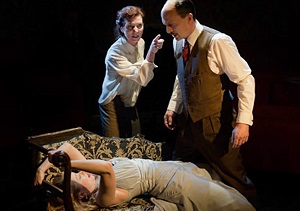
De Franse schrijver Jean Paul Sartre werd geboren op 21 juni 1905 in Parijs. Zie ook alle tags voor Jean-Paul Sartre op dit blog.

Uit: Huis clos

"GARCIN Vipère ! Tu as réponse à tout.
INÈS Allons ! allons ! Ne perds pas courage. Il doit t'être facile de me persuader. Cherche des arguments, fais un effort. (Garcin hausse les épaules.) Eh bien, eh bien ? Je t'avais dit que tu étais vulnérable. Ah ! comme tu vas payer à présent. Tu es un lâche, Garcin, un lâche parce que je le veux. Je le veux, tu entends, je le veux ! Et pourtant, vois comme je suis faible, un souffle ; je ne suis rien que le regard qui te voit, que cette pensée incolore qui te pense. (Il marche sur elle, les mains ouvertes.) Ha ! elles s'ouvrent, ces grosses mains d'homme. Mais qu'espères-tu ? On n'attrape pas les pensées avec les mains. Allons, tu n'as pas le choix : il faut me convaincre. Je te tiens.
Garcin ! Quoi ? Venge-toi. Comment ?
ESTELLE Garcin !
GARCIN Quoi?
ESTELLE Venge-toi.
GARCIN Comment?
ESTELLE Embrasse-moi, tu l'entendras chanter.
GARCIN
C'est pourtant vrai, Inès. Tu me tiens, mais je te tiens aussi. Il se penche sur Estelle. Inès pousse un cri. INÈS Ha ! lâche ! lâche ! Va ! Va te faire consoler par les femmes.
ESTELLE Chante, Inès, chante !
INÈS Le beau couple ! Si tu voyais sa grosse patte posée à plat sur ton dos, froissant la chair et l'étoffe. Il a les mains moites ; il transpire. Il laissera une marque bleue sur ta robe.
ESTELLE Chante ! Chante ! Serre-moi plus fort contre toi, Garcin ; elle en crèvera. INÈS Mais oui, serre-la bien fort, serre-la ! Mêlez vos chaleurs. C'est bon
l'amour, hein Garcin ? C'est tiède et profond comme le sommeil, mais je t'empêcherai de dormir.
Geste de Garcin.
ESTELLE Ne l'écoute pas. Prends ma bouche ; je suis à toi tout entière."


 2156600-356940e87a7385ba634acb0cf20d1765.jpg
Jean-Paul Sartre (21 juni 1905 – 15 april 1980)
Scene uit een opvoering in Londen, 2012


De Amerikaanse dichter, uitgever en kunsthandelaar Stanley Moss werd geboren in Woodhaven, New York op 21 juni 1925. Zie ook alle tags voor Stanley Moss op dit blog.


Paper Swallow

Francisco Goya y Lucientes,
I dedicate this paper swallow to you and fly it
from the balcony of San Antonio de la Florida
past the empty chapels of the Four Doctors of the Church.
My praying hands are fish fins again,
one eye a lump of tar, the other hard blood,
my flapping lids sewed down to my cheekbones.
Time, the invisible snake, keeps its head
and fangs deep in the vagina of space.
Reason blinded me, banished me.
I fight the liar in me, selective desire,
my calling nightmares ‘dreamless sleep.’
Blind, coño, I made a musical watch,
the image of Don Quixote points the hours,
Sancho the minute hand. I hear the right time
when I listen to my watch play church bells.
Mystery this, mystery that.
I have another watch—wolves howling and dogs barking.
Now the invisible snake swims in the Ebro.
I look out of my window to see time
as if it were not in my mouth
and all my other two-timing orifices.
Don Francisco, I swear at the feet of the dead who maim me
and the living who heal me that the least sound,
a page turning, whips me. I owe my blindness,
this paper swallow, to you, because I lived
most of my life, a marrano, in your deaf house.
I pull open one of my eyes like the jaws of a beast.


 2156600-650d00a4ce42a9dea09f559a13f728f0.jpg
Stanley Moss (Woodhaven, 21 juni 1925)


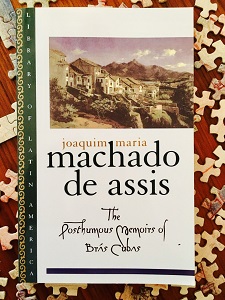
De Braziliaanse schrijver Joaquim Maria Machado de Assis werd geboren in Rio de Janeiro op 21 juni 1839. Zie ook alle tags voor Machado de Assis op dit blog.

Uit: The Posthumous Memoirs of Brás Cubas (Vertaald door Gregory Rabassa)

“As it so happened, one day in the morning while I was strolling about my place an idea started to hang from the trapeze I have in my brain. Once hanging there it began to wave is arms and legs and execute the most daring antics of a tightrope-walker that anyone could imagine. I let myself stand there contemplating it. Suddenly it took a great leap, extended its arms and legs until it took on the shape of an X: decipher me or I'll devour you.
That idea was nothing less than the invention of a sublime remedy, an antihypochondriacal poultice, destined to alleviate our melancholy humanity. In the patent application that I drew up afterward I brought that truly Christian product to the government's attention. I didn't hide from friends, however, the pecuniary rewards that would of needs result from the distribution of a product with such far-reaching and profound effects. But now that I'm on the other side of life I can confess everything: what mainly influenced me was the pleasure I would have seeing in print in newspapers, on store counters, in pamphlets, on street corners, and, finally, on boxes of the medicine these three words: Brás Cubas Poultice. Why deny it? I had a passion for ballyhoo, the limelight, fireworks. More modest people will censure me perhaps for this defect. I'm confident, however, that clever people will recognize this talent of mine. So my idea had two faces, like a medal, one turned toward the public and the other toward me. On one side philanthropy and profit, on the other a thirst for fame. Let us say:--love of glory.
An uncle of mine, a canon with full prebend, liked to say that love of temporal glory was the perdition of souls, who should covet only eternal glory. To which another uncle, an officer in one of those old infantry regiments called tercos, would retort that love of glory was the most truly human thing there was in a man and, consequently, his most genuine attribute.
Let the reader decide between the military man and the canon. I'm going back to the poultice.”


 2156600-1a583e3015514d7dfae64d82c56c976f.jpg
Machado de Assis (21 juni 1839 - 29 september 1908)
Cover


Zie voor nog meer schrijvers van de 21e juni ook mijn blog van 21 juni 2016 en eveneens mijn blog van 21 juni 2014 deel 1, en deel 2 en eveneens deel 3.

Geschreven door Romenu om 18:41 Reageer op dit bericht

Meer van Romenu

↑ Terug naar de berichten