Naar de inhoud

Romenu

Over literatuur, gedichten, kunst en cultuur
akke.beakke.be

Berichten van 15 juli 2018 tot 16 juli 2018

Sylvie Marie, Reinaldo Arenas, Georges Rodenbach, Tony Kushner, Anita Brookner, Jörg Fauser, William Irwin Thompson
 

Dolce far niente


 2163077-e0883eb1ca6ce03ed36198ec6a62c288.jpg
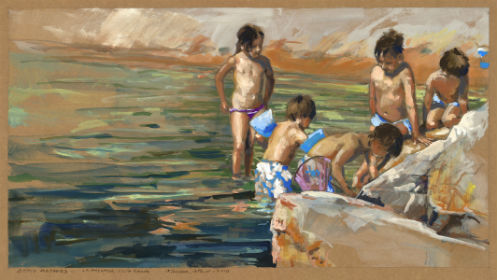
Beach Bathers door Jack Maxwell, 2010


zomerdagen

op zomerdagen gebeurt zoveel
aan zee. vrouwen ontbloten
buiken, mannen smeren ze
in, jongens halen ballen boven.
weinigen verdiepen zich
in tegendraads gemekker, hardnekkige
vlekken of veters die keer op keer
weer lossen.
het is dat ik, wat de weerman ook voorspelt,
steeds de paraplu meebreng. ik weet:
niet aarzelend verandert alles
maar vastbesloten als de vloed
die op het strand het tij komt keren,
het dier mee loodst, het kind verrast.


2163077-ea25dc25fe43b07e83eb81841c040293.jpg 
Sylvie Marie (Tielt, 28 februari 1984)
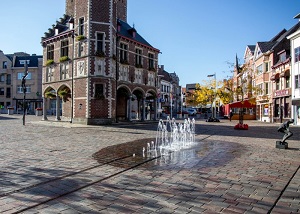
De markt in Tielt, de geboorteplaats van Sylvie Marie


De Cubaanse dichter en schrijver Reinaldo Arenas werd geboren op 16 juli 1943 in Holguin. Zie ook alle tags voor Reinaldo Arenas op dit blog.

Uit: The Color of Summer (Vertaald door Andrew Hurley)

“Virgilio Piñera: (moving away)
Well done! Bravo! Bravo!
You've got bi-i-ig feet
and one heel's crooked on your shoe ...
Go—there's nothing for you here.
Suddenly, seeing that Coco Salas is right behind him with a tape recorder, he
turns toward the sea and shouts at the top of his lungs:
Virgilio Piñera:
Where are you going, you ingrate!
Come back—we'll forgive you! It's not too late!
Avellaneda: (growing farther and farther away from the Malecón and the harbor)
Ingrate! Ungrateful for what?
That parting shot
to my vulnerable backside?
No thanks, you snot—
I'll take my chances
in New York or Florida or Kansas.
Chorus: (standing on the wall of the Malecón)
No more mercy, no more pleas—
blast her out of the waves!
The backside's the best spot to aim,
so do it! Bombs away!
A new barrage of rotten eggs is launched.
Avellaneda: (now pulling into the open sea in a hail of rotten eggs)
What ineffable light, what strange happiness!
Night's mourning is banished from the skies.
The hour's come round, the artillery thunders;
fire, fire, fire, you murderers,
fire at this trembling bosom!
Meanwhile, back on shore, Delfín Proust arrives. After first making a quick check of himself in a portable mirror that opens like a huge fan, he makes a grand pirouette and leaps up onto the Malecón. He whirls about several times, hops like a frog, opens and closes his arms. Prancing about, he begins his poetic discourse:”
 

 2163077-1887d9f79fae076d3a096f778949eb43.jpeg
Reinaldo Arenas (16 juli 1943 – 7 december 1990)
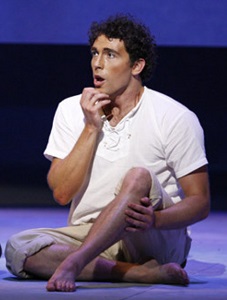
Zanger / acteur Wes Mason als Reinaldo Arenas in de opera "Before Night Falls“, 2012


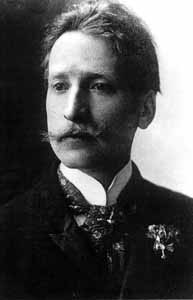
De Belgische dichter en schrijver Georges Rodenbach werd geboren in Doornik op 16 juli 1855. Zie ook alle tags voor Georges Rodenbach op dit blog.


Béguinage flamand

II
Cependant quand le soir douloureux est défunt,
La cloche lentement les appelle à complies
Comme si leur prière était le seul parfum
Qui pût consoler Dieu dans ses mélancolies !

Tout est doux, tout est calme au milieu de l'enclos ;
Aux offices du soir la cloche les exhorte,
Et chacune s'y rend, mains jointes, les yeux clos,
Avec des glissements de cygne dans l'eau morte.

Elles mettent un voile à longs plis ; le secret
De leur âme s'épanche à la lueur des cierges,
Et, quand passe un vieux prêtre en étole, on croirait
Voir le Seigneur marcher dans un Jardin de Vierges !


III
Et l'élan de l'extase est si contagieux,
Et le coeur à prier si bien se tranquillise,
Que plus d'une, pendant les soirs religieux,
L'été répète encor les Ave de l'Église ;

Debout à sa fenêtre ouverte au vent joyeux,
Plus d'une, sans Ôter sa cornette et ses voiles,
Bien avant dans la nuit, égrène avec ses yeux
Le rosaire aux grains d'or des priantes étoiles !
 

 2163077-314c6b7b2a73e4f82e20643e9af2eab0.jpg
Georges Rodenbach (16 juli 1855 – 25 december 1898)


De Amerikaanse schrijver Tony Kushner werd geboren op 16 juli 1956 in New York. Zie ook alle tags voor Tony Kushner op dit blog.

Uit: Angels in America

“ROY COHN: [delirious, under the impression that Belize is the Angel of Death] Can I ask you something, sir?
BELIZE: "Sir"?
ROY COHN: What's it like? After?
BELIZE: After...?
ROY COHN: This misery ends?
BELIZE: Hell or heaven?
ROY COHN: [laughs]
BELIZE: Like San Francisco.
ROY COHN A city! Good! I was worried... it'd be a garden. I hate that shit.
BELIZE Mmmm. Big city. Overgrown with weeds, but flowering weeds. On every corner a wrecking crew and something new and crooked going up catty corner to that. Windows missing in every edifice like broken teeth, gritty wind, and a gray high sky full of ravens.
ROY COHN Isaiah.
BELIZE: Prophet birds, Roy. Piles of trash, but lapidary like rubies and obsidian, and diamond-colored cowspit streamers in the wind. And voting booths. And everyone in Balenciaga gowns with red corsages, and big dance palaces full of music and lights and racial impurity and gender confusion. And all the deities are creole, mulatto, brown as the mouths of rivers. Race, taste and history finally overcome. And you ain't there.
ROY COHN: And Heaven?
BELIZE: That was Heaven, Roy.
ROY COHN: The fuck it was!“

 

 2163077-9404f13d3b3ce16756f849146b59013d.jpg
Tony Kushner (New York, 16 juli 1956)
Affiche


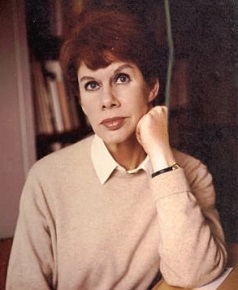
De Engelse schrijfster en historica Anita Brookner werd geboren op 16 juli 1928 in Herne Hill, een voorstad van Londen. Zie ook alle tags voor Anita Brookner op dit blog.

Uit: The Rules of Engagement

“We met, and became friends of a sort, by virtue of the fact that we started school on the same day. Because we had the same Christian name it was decreed that she should choose an alternative. For some reason—largely, I think, because she was influenced by the sort of sunny children’s books available in our milieu—she decided to be known as Betsy. When we met up again, several years later, she was Betsy de Saint-Jorre. Not bad for a girl initially registered as Elizabeth Newton.
How much nicer children were in those days than the adults they have become! Born in 1948, we were well-behaved, incurious, with none of the rebellious features adopted by those who make youthfulness a permanent quest. We went to tea in one another’s houses, sent each other postcards when we went on holiday with our parents, assumed we would know each other all our lives . . . The Sixties took us by surprise: we were unprepared, unready, uncomprehending. That, I now see, was why I married Digby: it was the right, unthinking thing to do. That was why Betsy took it upon herself to have a career, out of despair, perhaps, at not being provided for.
Choice hardly dictated our actions. Yet I suppose we were contented enough. Certainly we knew no better. And now we know too much. Discretion veiled our motives then, and perhaps does so even now, even in an age of multiple communications, of e-mails, text messages, and news bulletins all round the clock. We still rely on narrative, on the considered account. That is how and why I knew Betsy’s story, though I cannot claim to know all of it. There were areas of confusion which it seemed better not to disclose. But she was always painfully honest, rather more so than prudence might advise. That quality made itself felt when we were still children; her desire to explain herself, to be known, was perhaps really a desire to be loved. That too was discernible, and it set her apart. In later life, when I knew her again, that quality was still there, obscured only slightly by the manners she had acquired, and always at odds with her mind, which was exacting. In other circumstances she might have been remarkable. But her hopes had been curtailed, and in the years of her adulthood one sometimes saw this, in the odd distant glance directed towards a window, or the eagerness with which she smiled at any passing child.
Her initial demotion from Elizabeth to Betsy was thought to be justified, given her uncertainty of status. She took it in her stride, thinking it gave her permission to assume an altogether different character, someone more lighthearted, skimming the surface, responding always with a smile.“
 

 2163077-87315fa6e39c7ec0ba8a11e2b12aab33.jpg
Anita Brookner (16 juli 1928 – 10 maart 2016)


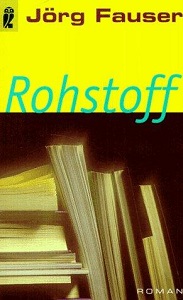
De Duitse schrijver en journalist Jörg Fauser werd geboren op 16 juli 1944 in Bad Schwalbach. Zie ook alle tags voor Jörg Fauser op dit blog.

Uit: Rohstoff

“William S. Burroughs empfing mich nachmittags um drei in seinem spärlich möblierten Apartment in der Duke Street, unweit Piccadilly Circus. Er trug einen schwarzen dreiteiligen Anzug, der mich an die Anzüge meines Großvaters, eines Volksschulrektors, erinnerte, ein weißes Hemd und eine schwarze Krawatte. Ich hatte wieder mal meinen Nadelstreifenanzug an, weißes Hemd, Krawatte. Burroughs war groß und hager und ging leicht gebückt. Er war an den Schläfen weißhaarig, und sein Mund war ein schmaler, blutleerer Strich.
»Kaffee oder Tee?«
»Kaffee.«
»Weiß oder schwarz?«
»Weiß, bitte.«
Wir nahmen jeder eine Tasse Nescafé und setzten uns an einen blankpolierten Tisch. Burroughs saß mit dem Rücken zum Fenster. Er fixierte mich durch seine Brille. Seine Augen waren blau und strahlten die unerschütterliche Autorität eines hohen Richters aus, der jede Art von Korruption kennengelernt hat und dem alle zusammen immer noch zu billig sind.
»Was ist das für eine Zeitschrift, für die Sie arbeiten?«
Ich verlor ein paar Worte über twen. Mein Englisch war ohnehin nicht besonders flüssig, und jetzt fiel mir mein dicker deutscher Akzent unangenehm auf. Burroughs schien er nicht zu stören. Vielleicht hatte er eine perverse Sympathie für die Deutschen.
»Und dieser Artikel, den Sie erwähnten?«
Ich hatte den Auftrag von twen, einen Bericht über harte Drogen zu schreiben. Den Kontakt zu Burroughs hatte Lou Schneider hergestellt. Twen hatte mir den Flug nach London und einen reichlichen Spesenvorschuß bewilligt. Ich war auf dem Weg, und wie. Der rasende Junk-Reporter. Ich
versuchte Burroughs zu erklären, daß ich selbst vier Jahre Junkie gewesen war und in dem Bericht auch über die Möglichkeiten schreiben wollte, von dem Zeug loszukommen. Burroughs hatte es mit Apomorphin geschafft.
Apomorphin war bei uns unbekannt. Deshalb war ich hier. Er machte eine neue Zigarette an. Er rauchte Senior Service ohne Filter. Kette.
»Was für Zeug haben Sie denn genommen?«
»Oh, vor allem Opium.«
»Was – Rohopium? Das haben Sie doch nicht intravenös gefixt?«
»Doch.«
»Junger Mann«, sagte Burroughs mit der Andeutung eines Lächelns, »Sie müssen ja völlig verrückt gewesen sein."
 

 2163077-fc05af2b0ab9137813da7b650a0cff4d.jpg
Jörg Fauser (16 juli 1944 – 17 juli 1987)
Cover 


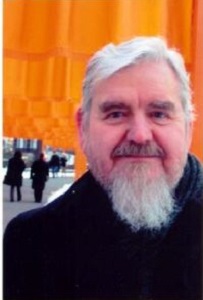
De Amerikaanse dichter, sociaal filosoof en cultuurcriticus William Irwin Thompson werd geboren op 16 juli 1938 in Chicago, Illinois. Zie ook alle tags voor William Irwin Thompson op dit blog.

Uit: The Time Falling Bodies Take to Light:

“As the great Gilgamesh polishes his armor and weapons in preparation for the great expedition, he attracts the attention of the goddess of love and war, Ishtar (Manna), and she asks to become his lover. Ishtar displays all her beauty and makes great promises to Gilgamesh, but the hero focuses on his heroic ideal and rejects Ishtar in what amounts to a curse. Here the conflict between male bonding and the companionship of the transcen-dent quest versus sexual love and involvement in the immanence of bodily life comes right out into the open. Gilgamesh recites an entire litany which unfolds all the treacheries of Ishtar; he recites the list of all her past lovers who have come to ruin. When Ishtar hears this she is enraged and mounts to the realm of the sky god, Anu, and demands that the Bull of Heaven be sent to earth to destroy Gilgamesh. Threatening to create famine and raise the dead unless she has her way, Ishtar is able to compel Anu to grant her the demand. Anu relents and sends down the Bull of Heaven (a comet?) to attack Gilgamesh. But the goddess has forgotten that bulls and oxen are the province of man, the domesticator of animals, and so the two cowboys, Gilgamesh and Enkidu, make short work of the Bull. Ishtar is again enraged and mounts the walls of Uruk and cries out: "Woe unto Gilgamesh because he insulted me." When Enkidu hears Ishtar's threat, he tears loose the right thigh of the Bull of Heaven and flings it at her. No doubt, "right thigh" is a euphemism for the genitals of the bull, and by flinging the phallus into the face of the goddess Enkidu is mocking her role as the goddess of love and war and parodying the old rituals of appeasement of the Great Goddess in rites of castration. That we are witnessing the parody of an ancient ritual becomes clearer when Ishtar responds to Enkidu's taunt by setting up the old lament for the torn god.

Ishtar assembled the girl-devotees,
The prostitutes, and the courtesans;
Over the right thigh of the bull of heaven
she set up a lamentation.
But Gilgamesh called the craftsmen, the armorers,
all of them.
The artisans admired the size of the horns .
He brought (them) into the room of his rulership (?)
and hung (them) up (therein).

While the women wail over the severed phallus of the torn god, the craftsmen go to work, and Gilgamesh places the more durable horns in his room, a room that would thus have the appearance of the male bull shrine at catal Hiiyiik. By placing an old ritual in a new context, the men are mocking the old religion in which the women lament the death of Dumuzi; in this new context, the old conservative religion of the women is being mocked in a celebra-tion of male ambition."
 

 2163077-312e6885b311bec3ef9fc0a4e816e87f.jpg
William Irwin Thompson (Chicago, 16 juli 1938)


Zie voor nog meer schrijvers van de 16e juli ook mijn vorige blog van vandaag.    

Geschreven door Romenu om 18:17 Reageer op dit bericht

Een stad, een zomer (Patrick Cornillie)


Dolce far niente


 2162660-f3778da10b3fecbb5f5eb4aa359d3ee7.jpg
Summer Cocktail door Peter Graham, 2015


Een stad, een zomer

Zwaar en vermoeid laat
een avond zich neerzijgen tegen
de gevels. Pleinen en straten liggen
te trillen als trommelvellen in de zon.

Het verroeste gras, de hitte
van kasseistenen, bomen die in
de spiegels van de grachten kijken
naar hun verschroeide benen.

Terrassen, biertjes, puffende heren,
de gedachte dat er nog enige beweging
komt. Een zacht briesje, meisjes in
wapperende jurken op de fiets.

De draaglijke lichtheid van het niets.


 2162660-9ef367d724fd49c9438541a3fc0e0eae.jpg
Patrick Cornillie (Roeselare, 11 april 1961)
Roeselare, de geboorteplaats van Patrick Cornillie


Zie voor de schrijvers van de 15e juli ook mijn vorige blog van vandaag.

Geschreven door Romenu om 08:44 Reageer op dit bericht

Wenn doch heute der Apostel (Melchior Meyer)


Bij de 15e zondag door het jaar


 2162722-b9fbf9bf70a8bbc5a5335958538e8979.jpg
These Twelve Jesus Sent Forth door Walter Rane. z.j.


Wenn doch heute der Apostel

Wenn doch heute der Apostel
Noch auf Erden wandelte,
Reich zu machen jeden Burschen,
Der als Braver handelte!

Oder, da die Welt dem Heil’gen
Zum Besuche jetzt zu rund —
Wenn man doch noch mit dem Satan
Könnte schließen einen Bund!

Einen Bund, wo man gemütlich
Durch das Leben könnte gehn
Und mit Freuden alle Tage
Mitten in der Fülle stehn.

Einen Bund, wobei der Böse,
Wie sein Netz er auch gestellt,
Sich von dem gewitzten Burschen
Endlich sähe doch geprellt.

Leider ist das nun vorüber!
Mündig worden ist die Zeit
Und es heißt nun: hilf dir selber,
Mensch, in deinem Herzeleid!


 2162722-4a4a38feb988eca6e58be0dd88102d0c.jpg
Melchior Meyr (28. juni 1810 - 22. April 1871)
Ehringen, de geboorteplaats van Melchiot Meyer


Zie voor enkele schrijvers ook mijn vorige blog van vandaag.
Geschreven door Romenu om 08:43 Reageer op dit bericht

Jean Christophe Grangé, Driss Chraïbi, Iris Murdoch, Richard Russo, Jacques Rivière, Rira Abbasim, Paul Hermans

De Franse schrijver Jean Christophe Grangé werd geboren op 15 juli 1961 in Parijs. Zie ook alle tags voor Jean Christophe Grangé op dit blog.

Uit: La Terre des morts

« Le squonk avait tout pour lui déplaire. Une botte de strip-tease, soi-disant branchée, située au troisième sous-sol 1 d'un immeuble décrépit du r arrondissement. Marches, murs, sol, plafond, tout y était noir. Quand Stéphane Corso, chef du groupe 1 de la Brigade criminelle, avait plongé dans l'escalier, un sourd vrombissement lui avait aussitôt vrillé l'esto-mac — il avait pensé au métro... Pas du tout : simple effet sonore à la David Lynch, histoire d'achever de vous oppresser. Après un couloir décoré de photos de pin-up fifties éclairées par une fine rampe de lods, un bar vous accueillait. Derrière le comptoir, les traditionnelles rangées de bouteilles étaient rem-placées par des images en noir et blanc de sites industriels vétustes et d'hôtels abandonnés. No comment. Corso avait suivi les autres spectateurs et obliqué à droite pour découvrir une salle en pente aux fauteuils rouges. Il s'était installé dans un coin, voyeur parmi les voyeurs, et avait attendu que les lumières s'éteignent. Il était venu pour flairer le terrain et, de ce point de vue, il était servi. D'après le programme (une page de plastique noir écrite en blanc, genre radiographie), on en était aux deux tiers du show et Corso se demandait pour la centième fois par quel snobisme bizarrc cc genre de prestations ringardes (on avait opté pour la terminologie américaine, on parlait désormais de « new bur-lesque ») était revenu à la mode. Il s'était déjà farci Miss Velvet, une brune coiffée à la Louise Brooks et couverte de tatouages, Candy Moon et sa danse des sept voiles, Gypsy La Rose, capable d'ôter ses chaussures en faisant le petit pont. On attendait Mam'zelle Nitouche et Lova Doll... Corso n'avait jamais été attiré par ce type de shows et le physique de ces dames ne l'incitait pas à l'indulgence : plutôt grasses, surmaquillées et grimaçantes, elles se situaient aux anti-podes de ce qui l'excitait. Cette pensée lui rappela Émiliya et les premières conclusions du divorce que son avocat lui avait envoyées dans la journée. C'était la véritable raison de sa mauvaise humeur. »


 2162642-1d1f10c3955fc76c24c603cbcb7e9a30.jpg
Jean Christophe Grangé (Parijs, 15 juli 1961)


De Marokkaanse schrijver Driss Chraïbi werd geboren in El Jadida op 15 juli 1926. Zie ook alle tags voor Driss Chraïbi op dit blog.

Uit: La Civilisation, ma Mère !…

"-Mais qu’est-ce que c’est cette « radio » dont j’entends parler depuis trois jours ? Radio… Blo… Bla Upunn… Radio… Kteu !...
Les yeux dans les yeux, Nagib et moi nous sommes regardés en frères et nous avons répondu d’une seule et même voix :
-C’est une boîte qui parle.
-Qui parle ? Une boîte qui parle? Ah ça ! Vous me prenez pour une femme du Moyen Age ou pour un haricot ? Vous osez vous moquez de votre mère ? Attendez un peu que je défasse ma ceinture.
-Elle est en soie, a dit Nagib. Elle ne ferait pas de mal à un ver de terre. Prends plutôt une de ces planches. Et tape si tu ne comprends pas. Mais auparavant, écoute-moi, petite mère : ceci est une boîte , je te l’assure, et une boîte qui parle.
-Mais elle ne parle pas !
-Elle va le faire. Elle va donner les nouvelles du monde entier, elle va chanter, dire : « Au quatrième top, il sera exactement 10 heures 24 minutes 30 secondes.» Elle va rire, pleurer, raconter un tas d’histoires.
-Elle va faire tout ça ? Tu en es sûr ?
-Oui, madame.
-Mais… mais comment ?
De nouveau, nous nous sommes regardés, mon frère et moi. Et nous nous sommes compris. J’ai vu comme un doigt sur les yeux de Nagib me recommandant la plus grande prudence : «Chut! Tais-toi. Ne lui parle surtout pas de l’électricité, ça ferait des étincelles.»J’ai répondu très vite :
Par magie.
-Ah bon ! a dit ma mère, soulagée et joyeuse tout à coup. Comme les fakirs et les charmeurs de serpents ?
-C’est ça. Parfaitement.
-Tu veux dire qu’un magicien va venir et animer cette grande boîte ?
Nagib l’a prise dans ses bras, lui a embrassé les mains, le front, les cheveux.
-C’est un magicien tellement magique que tu ne le verras même pas. Je t’en donne ma parole.
-Oh ! je suis contente… si contente… "


 2162642-707c0fef4477fcefc42bc52934718384.jpg
Driss Chraïbi (15 juli 1926 – 1 april 2007)


De Iers-Britse schrijfster en filosofe Iris Murdoch werd geboren in Dublin op 15 juli 1919. Zie ook alle tags voor Iris Murdoch op dit blog.

Uit:The Black Prince

“Five years of marriage seemed to have convinced both of us of the utter impossibility of this state. However, shortly after our divorce Christian married a rich unlettered American called Evandale, went to live in Illinois, and as far as I was concerned disappeared forever. There is nothing quite like the dead dull feel of a failed marriage. Nor is there anything like one's hatred for an ex-spouse. (How can such a person dare to be happy?) I cannot credit those who speak of `friendship' in such a context. I lived for years with a sense of things irrevocably soiled and spoiled, it could give suddenly such a sad feel to the world sometimes. I could not liberate myself from her mind. This had nothing to do with love. Those who have suffered this sort of bondage will understand. Some people are just `diminishers' and `spoilers' for others. I suppose almost everybody diminishes someone. A saint would be nobody's spoiler. Most of one's acquaintances however can be blessedly forgotten when not present. Out of sight out of mind is a charter of human survival. Not so Christian, she was ubiquitous: her consciousness was rapacious, her thoughts could damage, passing like noxious rays through space and time. Her remarks were memorable. Only good old America cured her for me in the end. I put her away with a tedious man in a tedious and very distant town and was able to feel that she had died. What a relief. Francis Marloe was another matter. Neither he nor his thoughts had ever been important to me, nor as far as I could see to anyone. He was Christian's younger brother, treated by her with indulgent contempt. He never married. After lengthy trying he qualified as a doctor, but was soon struck off the register for some irregularity in the prescription of drugs. I learnt later with abhorrence that he had set up in business as a self-styled 'psychoanalyst'. Later still I heard he had taken to drink. If I had been told that he had committed suicide I should have heard the news without either concern or surprise. I was not pleased to see him again. He had in fact altered almost beyond recognition. He had been a slim tripping blond-haloed faun. Now he looked coarse, fat, red-faced, pathetic, slightly wild, slightly sinister, perhaps a little mad. He had always been very stupid. However at that moment I was not concerned about Mr Francis Marloe, but about the absolutely terrifying news which he had brought me.”


 2162642-06523b872602ca8c8d089a46b2f0672f.jpg
Iris Murdoch (15 juli 1919 – 8 februari 1999)
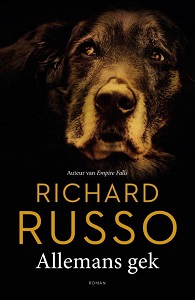
Cover


De Amerikaanse schrijver Richard Russo werd geboren op 15 juli 1949 in Johnstown, New York. Zie ook alle tags voor Richard Russo op dit blog.

Uit: Allemans gek (Vertaald door Kees Mollema)

“Becka, dacht hij, terwijl de tranen in zijn ogen sprongen bij de herinnering aan die veel te korte periode waarin ze van elkaar hadden gehouden. Aangezien geen van de rouwenden op hem lette, besloot hij een blik in de richting van haar graf te werpen. Hij wist globaal waar het was, maar door de liggende grafstenen op Dale kon hij niet precies zeggen waar. Iemand had een bos rode rozen met lange stelen op een van de graven dicht bij het hare gelegd, waardoor Raymer, die de eerste verjaardag van haar dood ongemerkt voorbij had laten gaan, een doordringende scheut verlaat schuldgevoel voelde. Becka was enig kind geweest, haar ouders waren omgekomen bij een auto-ongeluk toen ze nog op de middelbare school zat, en de meeste van haar theatervrienden waren te veel met zichzelf bezig om haar te missen of zich haar zelfs maar te herinneren. En dus kwam het alleen op Raymer neer, tenzij je Alice Moynihan meerekende.
Of de man voor wie Becka hem had willen verlaten.
Toen Gus hem opnieuw aanstootte, met een verbaasde blik op zijn gezicht, besefte Raymer dat hij de afstandsbediening van een garagedeur uit zijn broekzak had gehaald en daar onbewust mee speelde. Niet lang na Becka’s dood had hij haar rav weer verkocht aan de Toyota-dealer bij wie hij hem twee jaar daarvoor had gekocht. Hij dacht dat hij de auto goed had schoongemaakt, maar een garagemedewerker had, toen hij hem klaarmaakte voor de verkoop, een afstandsbediening gevonden toen hij de bestuurdersstoel helemaal naar achteren duwde. ‘Ik weet zeker dat je je gek hebt gezocht hiernaar,’ zei hij, toen hij het apparaat langs bracht op het politiebureau. ‘Ik begrijp niet hoe dat ding zo onder de stoel klem heeft gezeten.’
Raymer had eerst gedacht dat het de afstandsbediening voor hun eigen garagedeur was. Hij had de dag na haar begrafenis het huis te koop gezet, en had zich voorgenomen hem aan de nieuwe eigenaren te geven. Daarna had hij hem in zijn bureaula gelegd en was hij hem helemaal vergeten, tot een paar weken geleden.”


 2162642-88085b9afd1182a1746b61b8be7f29cf.jpg
Richard Russo (Johnstown, 15 juli 1949)
Cover


De Franse schrijver Jacques Rivière werd geboren op 15 juli 1886 in Bordeaux. Zie ook alle tags voorJacques Rivière op dit blog.

Uit: Alain Fournier

“Je date des environs de Noël 1903 la révélation qui nous fut faite en même temps l’un à l’autre. Pour nous remercier du compliment traditionnel que nous lui avions adressé avant le départ en vacances, notre excellent professeur, M. Francisque Vial, […] nous fit une lecture du Tel qu’en songe d’Henri de Régnier :
J’ai cru voir ma Tristesse – dit-il – et je l’ai vue
– Dit-il plus bas –
Elle était nue,
Assise dans la grotte la plus silencieuse De mes plus intérieures pensées, …etc.
(...)

Nous tombions, sans avoir même su qu’il en existât de tels, sur des mots choisis exprès pour nous et qui non seulement caressaient nommément notre sensibilité, mais encore nous révélaient à nous-mêmes. Quelque chose d’inconnu, en effet, était atteint dans nos âmes ; une harpe que nous ne soupçonnions pas en nous s’éveillait, répondait ; ses vibrations nous emplissaient. Nous n’écoutions plus le sens des phrases ; nous retentissions seulement, devenus tout entiers harmoniques. Je regardais Fournier sur son banc ; il écoutait profondément ; plusieurs fois nous échangeâmes des regards brillants d’émotion. À la fin de la classe, nous nous précipitâmes l’un vers l’autre. Les forts en thème ricanaient autour de nous, parlaient avec dédain de « loufoqueries ». Mais nous, nous étions dans l’enchantement et bouleversés d’un enthousiasme si pareil que notre amitié en fut brusquement portée à son comble."


 2162642-71c73048e0716ee43ac97585ff12a7e9.jpg
Jacques Rivière (15 juli 1886 – 14 februari 1925)
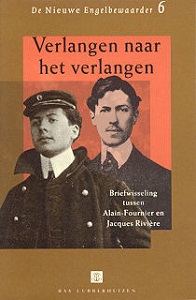
Cover van een Nederlandse uitgave van de briefwisseling met Alain Fournier


Onafhankelijk van geboortedata

De Iraanse dichteres, schrijfster en vredesactiviste Rira Abbasi werd geboren in 1962 in Khorramabad, Iran. Zie ook alle tags voor Rira Abbasi op dit blog.


Poets of Peace (Fragment)

O’ daddy, remember!
Never entered in my room
Without knocking at the door
O’ children of the world!
I’m ashamed, when I see.
Like a wolf in Baghdad streets,
Daddy is wandering with dwarf Uncle Sam,
Wreck the doors of the houses,
With their nail–shaped boots.
O’ children, tell the world:
Does a toothless baby have a gun?
O’ children, I’m ashamed.
When I see daddy.
Ruins the houses. Kills mothers and babies,
O’ children!
O’ children!
How can I say where I come from?
I’m ashamed
I’m upset.

We children of the world,
With USA have a word.
Every land has a treasure.
Gold and iron and steel,
Tobacco, sugar, oil, and wheat
Grapes, dates, olives, and endless seas
In children’s world,
Everything has a worth.


 2162642-ec40da7c912810ff4646e946f41a3147.jpg
Rira Abbasi (Khorramabad, 1962)
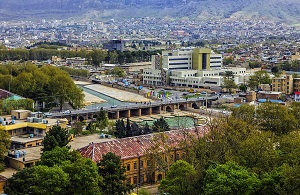
Khorramabad


De Nederlandse dichter en schrijver Paul Hermans werd geboren in Maastricht in 1953. Hermans studeerde klinische psychologie en psychogerontologie aan de Katholieke Universiteit Nijmegen. Hij werkt als psycholoog in verschillende centra voor dementerende ouderen in de regio Brunssum / Schinnen. Vanaf 1982 tot 1984 publiceerde hij onder het pseudoniem P.J. Donnee gedichten in literaire tijdschriften. Dit gebeurde daarna onder zijn eigen naam. Hij debuteerde in 1992 met de dichtbundel “Een kern van oppervlakkigheid”. Daarna publiceerde hij de bundels “Inhuizig” (1995), “Ademnis” (1999), “Achteruitwaarts Vliegen” (2003), “Hartschelp” (2007) en “Spraakdoorn” (2010). Ondanks zijn kleine oeuvre ontving hij in 2003 voor zijn poëzie de Halewijnprijs, de literatuurprijs van de Stad Roermond.


Leeuwerik

Een lichtbruin wolkje leeuwerik
hing in de avondlucht te zingen,

zong van mijn onverklaarbaar
heimwee steeds naar al wat reeds
rondom mij is,

zong mij zijn klankrijk wolkje in:
Wij, nader tot de schemering.


Landschapsfoto

Landschap, alleen in november.
Afwezig geluid van de stemmen.
Een man op een akker, alleen.
En over alles de lichtbruine waas
van een sepialicht. En het was als
was er een stokoude foto ongemerkt
tussen mij en het landschap geschoven,
een stokoude foto van dit landschap,
volstrekt identiek aan dit landschap,
met precies dezelfde schaduw
van vader, alleen op de akker,
met dezelfde afwezige stemmen, zelfs
met de kartelrand van zwijgende
bomen rondom in het vierkant.


 2162642-bd9c486af6c498b3d5a88680c54760d9.jpg
Paul Hermans (Maastricht, 1953)


Zie voor nog meer schrijvers van de 15e juli ook mijn blog van 15 juli 2017 deel 2.

Geschreven door Romenu om 08:42 Reageer op dit bericht

Meer van Romenu

↑ Terug naar de berichten