

Naar de inhoud

Romenu

Over literatuur, gedichten, kunst en cultuur
akke.beakke.be

Berichten van 17 juli 2018 tot 18 juli 2018

Judith Beveridge, Simon Vinkenoog, Hunter S. Thompson, Steffen Popp, Per Petterson, Elizabeth Gilbert, Alicia Steimberg, Aad Nuis
 

Dolce far niente


 2163557-b8cfd6822173c4a6b657f748b6d44c77.jpg
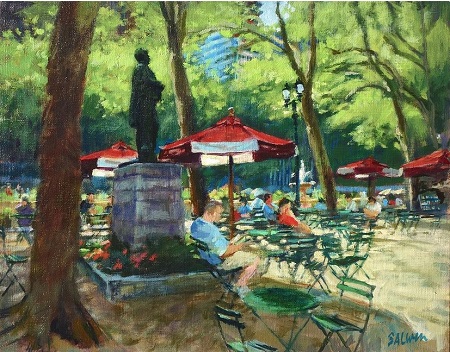
Bryant Park Reading Room door Peter Salwen, 2014


In The Park

Sitting on the grass
in the park—thinking about
what's going by, about
the pinks and plenary reds

of today's sunset.
Insects rampant as ions
off charged wires nipping,
tingling my legs.

Those buildings are like
bottles of scent fragile
in their lemon spray
mist and cologne light.

The harbour's becoming
dark against the chromocosm
of the moon adrift
under the stars.

A gull squeaks—it's
the sound of a pin
piercing polystyrene—it
carries out to the yachtmasts

moving mechanically
as wiper-bars, out to
the Opera House a duster
of starched serviettes.

Now, out to the suburbs,
those racks and racks
of tinted light
rising behind the trees.
 

 2163557-4cef024766de8771e83dfd3b9339b7b1.jpg
Judith Beveridge (Londen, 1956)
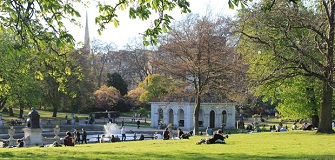
Hydepark in een zomers Londen


De Nederlandse dichter en schrijver Simon Vinkenoog werd op 18 juli 1928 in Amsterdam geboren. Zie ook alle tags voor Simon Vinkenoog op dit blog.


Robert

dit kan mijn geboorte nog niet zijn
dit is het leven van een ander -
het slaan van mijn hart is geen bewijs
en mijn mond is nog gesloten

dit is het bloeden van een rose keel
het woord dat de eerste daad verlamt
de hand die op mijn mond gelegd
aarzelend de gedichten zegt
waarin mijn vloeken
huizen naar beneden halen

dan sloop ik deze negenmaandse muur
waarop mijn vingers langzaam
het mene mene tekel schrijven


Groet

In de pijnkamer van onthechting
overgave deint en dreint

alles weten om niets te weten
lessen vergeten alles opnieuw
van te voren

kleine roofridder
hard als staal

adieu


Thelonious Monk

dit is een straat van parijs
met een arabier in de zon
die langzaam slenterend werkloos
loopt te zijn een 1951-noordafrikaan
ting ting ting in de bleke zon
zonder geluid

dit onder water uitgesproken
vonnis ting ting ting
ternauwernood de oppervlakte rakend
en met een strofe in de franse taal:
je donnerais ma vie
toute entière
pour un petit rire confus et obscène
herinnert aan de dierentuinapen
met mondbekken harige benen
en ronde gladde achterhanden
die gretig alle kleuren willen grijpen wit en zwart
ting ting ting
 

 2163557-5054204bd38eb3bd74de601cd45e0ae4.jpg
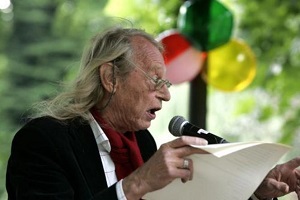
Simon Vinkenoog (18 juli 1928 – 12 juli 2009)


De Amerikaanse schrijver en journalist Hunter Stockton Thompson werd geboren in Louisville (Kentucky). op 18 juli 1937. Zie ook alle tags voor Hunter S. Thompson op dit blog.

Uit: Fear and Loathing in Las Vegas

“The only thing that really worried me was the ether. There is nothing in the world more helpless and irresponsible and depraved than a man in the depths of an ether binge. And I knew we’d get into that rotten stuff pretty soon. Probably at the next gas station. We had sampled almost everything else, and now – yes, it was time for a long snort of ether. And then do the next 100 miles in a horrible, slobbering sort of spastic stupor. The only way to keep alert on ether is to do up a lot of amyls – not all at once, but steadily, just enough to maintain the focus at 90 miles an hour through Barstow.
“Man, this is the way to travel,” said my attorney. He leaned over to turn the volume up on the radio, humming along with the rhythm section and kind of moaning the words: “One toke over the line … Sweet Jesus … One toke over the line …”
One toke? You poor fool! Wait till you see those goddamn bats. I could barely hear the radio … slumped over on the far side of the seat, grappling with a tape recorder turned all the way up on “Sympathy for the Devil.” That was the only tape we had, so we played it constantly, over and over, as a kind of demented counterpoint to the radio. And also to maintain our rhythm on the road. A constant speed is good for gas mileage – and for some reason that seemed important at the time. Indeed. On a trip like this one must be careful about gas consumption. Avoid those quick bursts of acceleration that drag blood to the back of the brain.
My attorney saw the hitchhiker long before I did. “Let’s give this boy a lift,” he said, and before I could mount any argument he was stopped and this poor Okie kid was running up to the car with a big grin on his face, saying, “Hot damn! I never rode in a convertible before!”
“Is that right?” I said. “Well, I guess you’re about ready, eh?”
The kid nodded eagerly as we roared off.
“We’re your friends,” said my attorney. “We’re not like the others.”
O Christ, I thought, he’s gone around the bend. “No more of that talk,” I said sharply. “Or I’ll put the leeches on you.” He grinned, seeming to understand. Luckily, the noise in the car was so awful – between the wind and the radio and the tape machine – that the kid in the back seat couldn’t hear a word we were saying. Or could he?”
 2163557-312e6885b311bec3ef9fc0a4e816e87f.jpg
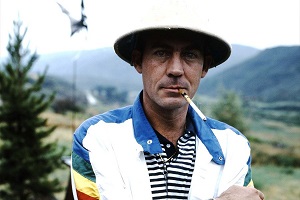
Hunter S. Thompson (18 juli 1937 – 20 februari 2005)


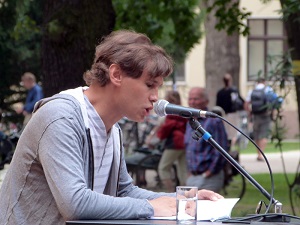
De Duitse dichter en schrijver Steffen Popp werd geboren op 18 juli 1978 in Greifswald. Zie ook alle tags voor Steffen Popp op dit blog.


Dickicht mit Reden und Augen

Möglichkeit und Methode überschneiden sich
ein kühner Satz bricht sich im Wald, fortan er hinkt

kein Sprung ins Dickicht dringt, kein Huf hinaus
kein ausrangiertes Fahrrad betet hier um Ruh
kein altes Lama spuckt, kein junges auch

sie hängen in den Tag, in Baumschaukeln
kein Baum, genau besehen, keine Schaukel, nicht mal
ein sie, nur hängen, Tag

Reden, durch nichts gedeckt, doch lebhaft
Lebewesen fast in einem Dickicht
hängend, hinkend eine, darum nicht weniger wahr
nicht wahr, nicht weniger, nicht – ungerührt

schaukeln oder grasen zur Pflege der Landschaft
oder stehen nur in ihr, schauen herüber mit Augen.


Betonstufen, die Meere

Bewegung (Luft), Meerfarbe (grün), ein Igel (die Technik eines Coyoten
ihn auf den Rücken zu drehen) – dein Herz, der nahe Hafen
dehnt sich an seinen Schlafkanten. Futter in Säcken, Munitionskisten
der gespaltene Huf eines Esels im Brackwasser –

das Meer zeigt dir Ufer (die Grenzen), du schläfst in deinen Staaten
es gibt Geheimzeichen, Türme (auf See blickend), Flugabwehr
Ingenieure mit Fliegerkappen – du zählst sie an Stränden, es sind Gelenke
und sie verbinden dich (wie eine Schrift) mit allen Dingen.
 

 2163557-c90a9cd76384ee9bebc87c72425df2ff.jpg
Steffen Popp (Greifswald, 18 juli 1978)
In 2013 


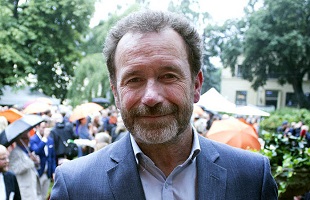
De Noorse schrijver Per Petterson werd geboren in Oslo op 18 juli 1952. Zie ook alle tags voor Per Petterson op dit blog.

Uit: Out Stealing Horses (Vertaald door Anne Born Picador)

„Early November. It’s nine o’clock. The titmice are banging against the window. Sometimes they fly dizzily off after the impact, other times they fall and lie struggling in the new snow until they can take off again. I don’t know what they want that I have. I look out the window at the forest. There is a reddish light over the trees by the lake. It is starting to blow. I can see the shape of the wind on the water.
I live here now, in a small house in the far east of Norway. A river flows into the lake. It is not much of a river, and it gets shallow in the summer, but in the spring and autumn it runs briskly, and there are trout in it. I have caught some myself. The mouth of the river is only a hundred metres from here.
I can just see it from my kitchen window once the birch leaves have fallen. As now in November. There is a cottage down by the river that I can see when its lights are on if I go out onto my doorstep.  A man lives there. He is older than I am, I think. Or he seems to be. But perhaps that’s because I do not realise what I look like myself, or life has been tougher for him than it has been for me. I cannot rule that out. He has a dog, a border collie.
I have a bird table on a pole a little way out in my yard. When it is getting light in the morning I sit at the kitchen table with a cup of coffee and watch them come fluttering in. I have seen eight different species so far, which is more than anywhere else I have lived, but only the titmice fly into the window. I have lived in many places. Now I am here. When the light comes I have been awake for several hours. Stoked the fire. Walked around, read yesterday’s paper, washed yesterday’s dishes, there were not many. Listened to the B.B.C. I keep the radio on most of the day. I listen to the news, cannot break that habit, but I do not know what to make of it any more. They say sixty-seven is no age, not nowadays, and it does not feel it either, I feel pretty spry. But when I listen to the news it no longer has the same place in my life. It does not affect my view of the world as once it did. Maybe there is something wrong with the news, the way it is reported, maybe there’s too much of it. The good thing about the B.B.C.’s World Service, which is broadcast early in the morning, is that everything sounds foreign, that nothing is said about Norway, and that I can get updated on the position of countries like Jamaica, Pakistan, India and Sri Lanka in a sport such as cricket; a game I have never seen played and never will see, if I have a say in the matter. But what I have noticed is that ‘The Motherland’, England, is constantly being beaten. That’s always something.”
 

 2163557-9e64fddc982798985a4eed6d3173d7da.jpg
Per Petterson (Oslo, 18 juli 1952)


De Amerikaanse schrijfster en essayiste Elizabeth M. Gilbert werd geboren op 18 juli 1969 in Waterbury, Connecticut. Zie ook alle tags voor Elizabeth Gilbert op dit blog.

Uit: Big Magic

“When I talk about ‘creative living’ here, please understand that I am not necessarily talking about pursuing a life that is professionally or exclusively devoted to the arts. I’m not saying that you must become a poet who lives on a mountaintop in Greece, or that you must perform at Carnegie Hall, or that you must win the Palme d’Or at the Cannes Film Festival. (Though if you want to attempt any of these feats, by all means, have at it. I love watching people swing for the Bleachers.) No, when I refer to ‘creative living’ I am speaking more broadly. I’m talking about living a life that is driven more strongly by curiosity than by fear.
One of the coolest examples of creative living that I’ve seen in recent years, for instance, came from my friend Susan, who took up figure skating when she was forty years old. To be more precise, she actually already knew how to skate. She had competed in figure skating as a child and had always loved it, but she’d quit the sport during adolescence when it became clear she didn’t have quite enough talent to be a champion. (Ah, lovely adolescence when the ‘talented’ are officially shunted off from the herd, thus putting the total burden of society’s creative dreams on the thin shoulders of a few select souls, while condemning everyone else to live a more commonplace, inspiration-free existence! What a system...)
For the next quarter of a century, my friend Susan did not skate. Why bother, if you can’t be the best? Then she turned forty. She was listless. She was restless. She felt drab and heavy. She did a little soul-searching, the way one does on the big birthdays. She asked herself when was the last time she’d felt truly light, joyous, and – yes – creative in her own skin. To her shock, she realised that it had been decades since she’d felt that way. In fact, the last time she’d experienced such feelings had been as a teenager, back when she was still figure skating. She was appalled to discover that she had denied herself this life-affirming pursuit for so long, and she was curious to see if she still loved it.“

 

 2163557-700990222d2dc124a71bcf6f6b1df04c.jpg
Elizabeth Gilbert (Waterbury, 18 juli 1969)


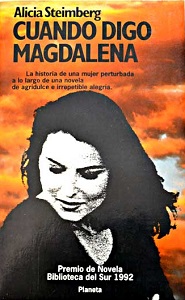
De Argentijnse schrijfster en vertaalster Alicia Steimberg werd geboren op 18 juli 1933 in Buenos Aires. Zie ook alle tags voor Alicia Steinberg op dit blog.

Uit: Call Me Magdalena

"They were helping themselves from all the dishes and trays, and they left everything a mess. They were playing with a little rubber ball, and suddenly one of them missed the mark and the ball fell into Enrique's cup, and to top it all off he was dressed in a white shirt and blue tie at the time?' "My God" "But nothing bothered us after the first bite of that crisp toast with butter and homemade duke de leche. And right after that a good cup of excellent coffee" "With milk?" "Yes, it was already mixed with the milk, in an enormous coffee pot?' "Just like in those old-fashioned hotels" "Everything was old-fashioned in that house. Even the kitchen helper, who was white and chubby, with a blue dress and apron and white slippers, with freckles on her arms and chest. She was the one who knew how to make a cocktail with port and a beaten egg" "What's it like?" "You have to go get the eggs from the henhouse and use them while they're still warm. You separate the whites from the yolks. You can reserve the whites to make meringue. You beat the yolks with sugar until they take on a whitish color, and you add the port drop by drop, beating all the while. That woman beats egg yolks with sugar and port all day long?'
"Now let's have breakfast in Mar del Plata, as you suggested?' "This isn't the same place where we always go?' "But Hike it, dear. It's sheltered from the wind and you can see the ocean. How many croissants do you want?" "How many do you think? Three, of course. Don't they always bring three croissants with the café au lait?" "No, dear, that was before. Now you have to ask for the number of croissants you're going to eat" "Why did they change it, dear?"
"Because diets have become so popular: croissants are very fattening. By the way, shouldn't you be on a diet?" ‘
"Im not planning to diet in Mar del Plata, dear?'
"But you weigh 125."
"And YOU weigh 150. Let's go to the casino?"
"Later. I think I'm just going to order cafe au lait and nothing else. No croissants."
"I'll do the same, dear. Coffee with skim milk and artificial sweetener?'
"Now you're talking?"
"May I ask your name? We've called each other 'dear' so much I've forgotten your name?'
"My name is Ignacio Ibargiiengoitia."
"Basque?"'
"Strange that you should ask after forty years of marriage. My grandparents were Basque, all four of them."
 

 2163557-d9b00ded58804060040e2b952e9a27a5.jpg
Alicia Steimberg (18 juli 1933 – 16 juni 2012)
Affiche


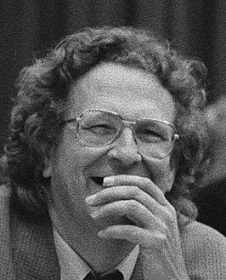
De Nederlandse schrijver, criticus en politicus Aad Nuis werd geboren op 18 juli 1933 in Sliedrecht. Zie ook alle tags voor Aad Nuis op dit blog.


Gezichten

Een gezicht nooit meer zien.

Een gezicht zien dat niet bestaat.
Langzaam duidelijker, totdat
ook de kleinste rimpels, putjes in de huid
een oogwenk helder zichtbaar zijn.

Maar het is geen gezicht.
Het was misschien een man die
honderd jaar dood is, en gestorven
zonder ooit te zijn afgebeeld.

Er zijn er zoveel.


Voor B.

Gedachteloze woorden raken dieper dan doordachte,
weloverwogene, ze snijden door het zachte
web dat onzichtbaar de vertrouwde dingen bindt.
Vastknopen kan dan niet. Geen goed woord dat ik vind.
Ik voel me dwaas - en even dwaas is alles weer terecht
als je gedachteloos 'dag liefje' zegt.
 

 2163557-337045e3a6ebc08fc21afc643c46b5bf.jpg
Aad Nuis (18 juli 1933 – 8 november 2007)


Zie voor nog meer schrijvers van de 18e juli ook mijn blog van 18 juli 2015 deel 2.
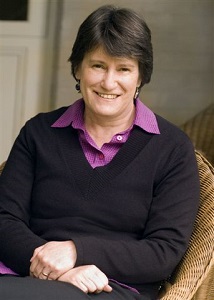
Geschreven door Romenu om 18:06 Reageer op dit bericht

Judith Beveridge


Onafhankelijk van geboortedata

De Australische dichteres en schrijfster Judith Beveridge werd geboren in 1956 in Londen, Engeland, en emigreerde in 1960 met haar familie naar Australië. Ze groeide op en ging naar school in de westelijke buitenwijken van Sydney. Later studeerde zij aan de University of Technology in Sydney. Ze besloot toen ze van school ging om zich te wijden aan het schrijven van poëzie en nam parttime banen in kantoren en bibliotheken aan om voor zichzelf tijd over te houden om te schrijven. Haar eerste boek “The Domesticity of Giraffes” (1987) was een enorm succes. Ze won de Dame Mary Gilmore Award, de New South Wales Premier's Award en de Victoriaanse Premier's Award in 1988. Voor haar vierde boek “Wolf Notes” (2004) ontving zij de Victorian Premier's Award en de Age Book of the Year Award voor poëzie. Beveridge heeft creatief schrijven gedoceerd aan de University of Technology, Sydney, de University of Newcastle en de University of Sydney, evenals aan hogescholen. Ze co-redigeerde de poëzie bloemlezing “A Parachute of Blue” (1995) en heeft ook meegewerkt aan de poëzietijdschriften Hobo en Kalimat. Ze was lid van de Literatuurraad van de Australische Raad en werd in 2005 poëzie-editor van het literaire tijdschrift Meanjin.


The Kite

Today I watched a boy fly his kite.
It didn’t crackle in the wind – but
gave out a barely perceptible hum.

At a certain height, I’d swear I heard
it sing. He could make it climb in
any wind; could crank those angles up,

make it veer with the precision of
an insect targeting a sting; then he’d
let it roil in rapturous finesse, a tiny

bird in mid-air courtship. When
lightning cracked across the cliff –
(like quick pale flicks of yak-hair

fly-whisks) – he stayed steady. For
so long he kept his arms up, as if
he knew he’d hoist that kite enough.

I asked if it was made of special silk,
if he used some particular string –
and what he’d heard while holding it.

He looked at me from a distance,
then asked about my alms bowl,
my robes, and about that for which

a monk lives. It was then I saw
I could tell him nothing in the cohort
wind, that didn’t sound illusory.


For Rilke

You can cup your ear in your hand
and hear your voice turn all light and clear
in its depths —
but we hear nothing, just the noisy world.

And the world loves to be noisy.
It loves to make a clatter,
to play itself with our tongues
its diamond styluses
loudly
and for long periods.

But you are your own quiet singing.
The world sets speakers above our heads
(even when we sleep)
blaring at tremendous decibels —
and we can't hold out against it,
in the morning
the words of its song
pummel our lips awake.

Our hearts—they're like utensils
taken from their original uses
and put into the world's jug-band.
Listen to us: we are like bottles
filled to different levels and then struck
for our various resonances:

not like you, poet —
your voice pure as a tuning fork
independent
of what it's struck off; the gentle
absolute humming of steel
against which we are, to ourselves
severe grating, unbearable
dissonance.


 2163602-a1ad6914d6da52a07ebf9efcb03fda1b.jpg
Judith Beveridge (Londen, 1956)
Hydepark in een zomers Londen


Geschreven door Romenu om 18:06 Reageer op dit bericht

Lewis Catoll, Martin R. Dean, Rainer Kirsch, Eelke de Jong, Alie Smeding, Tsead Bruinja, Thé Lau, Lilian Loke


Dolce far niente


 2163395-623cc38a50759060b70fd75ee627e02c.jpg
Rode boten in Argenteuil door Claude Monet, 1872


A Boat Beneath a Sunny Sky

A boat beneath a sunny sky,
Lingering onward dreamily
In an evening of July —

Children three that nestle near,
Eager eye and willing ear,
Pleased a simple tale to hear —

Long has paled that sunny sky:
Echoes fade and memories die:
Autumn frosts have slain July.

Still she haunts me, phantomwise,
Alice moving under skies
Never seen by waking eyes.

Children yet, the tale to hear,
Eager eye and willing ear,
Lovingly shall nestle near.

In a Wonderland they lie,
Dreaming as the days go by,
Dreaming as the summers die:

Ever drifting down the stream —
Lingering in the golden gleam —
Life, what is it but a dream?


 2163395-4331289e1c6a982d437d428269cd9450.jpg
Lewis Caroll (27 januari 1832 — 14 januari 1898)
De Ring 'O' Bells Pub in Daresbury, de geboorteplaats van Lewis Caroll


De Zwitserse schrijver Martin R. Dean werd geboren op 17 juli 1955 in Menziken Aargau. Zie ook alle tags voor Martin R. Dean op dit blog.

Uit:The Guyana Knot (Vertaald door Nadia Lawrence)

« Now I couldn’t leave my escapology exercises alone. Barely awake out of my deep sea sleep, I had to drag the heavy trunk out from under the bed. No day without practice. To brighten up my previous appearance in Gera, which is in what used to be East Germany, I tried again to get out of the Butcher’s Knot. This made people think of oven roasts and corned beef, so it got a lot of applause. It is also called the Jam Knot. I wriggled across the floor of my room, lashed a double loop around my legs, and tied up the top half of my body alternately with Bowline and Packer’s Knots. And for my arms, which have to be free so I can tie myself up, I have two artificial ones from shop window dummies that I tie to my torso. The pressure of the ropes immediately brought to mind a vivid memory of the hard floor of what were once the Russian barracks in Gera. Applied the Barrel Knot (relatively compact, doesn’t come undone and doesn’t cramp you) out of which tangle I freed myself in approximately a quarter of an hour. Too long for a Roman audience! I got pointlessly sweaty with the Swivel Hitch: the climate here doesn’t permit violent exertion. All the northern sorts of knots have to be dropped. Thought of the southern Trumpet Hitch, a Single-Strand Stopper, with which I tied myself to a chair leg so as not to escape too quickly.
It’s five o’clock in the afternoon. I stand at the bull’s eye and watch the play of the birds. In tight formation they climb over St. Peter’s, fly like bullets from the treetops and rise in flocks over the gardens. In the air the group forms the wildest, most exuberant shapes, runs away like a stream, falls and splashes and trickles on, forms soft waves pushed by the wind, is pulled away by a flying formation at the tip, a loose amoeba mass. Shortly after, it shapes itself into an arrow, shoots straight down towards a dome, a tower, and, just before hitting it, broadens into a wide sheet, an ever-turning mobile, a fluttering flag, which straightaway dissolves and disintegrates into hundreds of delicate spots, the grain pattern of the sky like black raindrops held lightly in the hand and dripping downwards, and then, over a little wood, a hidden garden, vanish from my sight.
But my world is not really the study, it’s the circus. Already, as a child, I played hooky from school on hot June mornings, to watch our national circus arrive at the village’s disused railway station. Scarcely had I seen the train of red and white carriages standing on the tracks in the siding, when the big doors opened and dark-skinned circus hands in light red livery pulled the animals into the open. Spitting lamas and sleepwalking zebras were dragged along the narrow ramp.”


 2163395-c7b557a9ae403ffc79c9228c4b7ac8fd.jpg
Martin R. Dean (Menziken, 17 juli 1955)


De Duitse dichter en schrijver Rainer Kirsch werd geboren op 17 juli 1934 in Döbeln. Zie ook alle tags voor Rainer Kirsch op dit blog.


Lied der Kinder
für Herburger

Hu, auf zu den Sternen!
Im Weltall ist es kalt.
Man sieht keine Fernen.
Es lebt kein Wald.

Man denkt, man steht still.
Dabei rast man in Eile.
Man wollte, was man will.
Das ist die Langeweile.

Auf einem Stern steigt man aus.
Die Erde ist weit weg.
Der Stern sieht grau aus.
Er ist aus Eisen und Dreck.

Der Weltmolch sagt: Ich fresse
Die Langeweile und die Geschwindigkeit.
Ich verdaue und presse
Heraus kommt die Zeit.

Zwischen hinten und vorn
Denkt man sich eine Mitte.
Was ist, ist schon verlorn.
Ach, hätte man das Dritte.

Durch die schmale, die Spalte
Rutscht man, kann sein, zurück.
Die Erde wäre die alte.
Das wäre Glück.


Uitstel

Opdat wij later kunnen spreken, zwijgen we.
We leren onze kinderen te zwijgen, zodat

Zij later kunnen spreken.
Onze kinderen leren hun kinderen zwijgen.
We zwijgen en leren alles
Dan sterven we.
Ook onze kinderen sterven. Dan
Sterven hun kinderen, Nadat
Zij onze achterkleinkinderen alles hebben geleerd
Ook het zwijgen zodat zij
Op een dag kunnen spreken.
Dit, zeggen we, is niet de tijd om te spreken.
Dat leren we onze kinderen
Zij hun kinderen
Zij die van hun.
Ooit, denken we, moet toch de tijd
komen.


Vertaald door Frans Roumen


 2163395-8b6d022c162b6f9436ae0c3c45443a15.jpg
Rainer Kirsch (17 juli 1934 – 14 september 2015)


De Nederlandse schrijver Eelke de Jong werd geboren in Apeldoorn op 17 juli 1935. Zie ook alle tags voor Eelke de Jong op dit blog.

Uit: Paris mon amour

“Nagedacht of ik gisteravond in het café niet te aanhalig geweest was. Dat bier maakt me praatziek, overschreeuwerig, opdringerig, slachtoffer van een verhitte vertrouwelijkheid. Wie weet.
Onderaan de dijk lagen bergjes geel zand, 'n stuk of 20 keurig gerangschikte, anderhalve meter hoge hopen, vorige week aangevoerd door een truck. Vanmorgen zaten er kraaien op de heuveltjes en een kraai bovenop een ijzeren paaltje.
Op de andere dijk zag ik een bejaard echtpaar naar boven klimmen. Vooraf dalfde een grote zwarte hond. De vrouw trok de man mee omhoog, hield zijn uitgestrekte hand tussen elleboog en zij geklemd, hij kroop meer.
Laat d.w.z. 'n uur of 1 ontbeten, t.w. een soepkom met yoghurt uit de ijskast en een paar eetlepels boekweitvlokken, tarwekiemen en bramenjam. Bodempje van beton in m'n maag, straks waarschijnlijk weer 't zuur. En stukjes gelezen van Malsen in ‘Paris Saloon’, treurige Casanova in een wereldje van keutelende misfits. En eigen séjours in Parijs herinnerd. De eerste keer was 't najaar '54.
En niet veel meer gedaan dan alsmaar rondgeslenterd, alsmaar over de trottoirs van de boulevards en de Seinekades en de straatjes daartussen, alsmaar en alsmaar in regen en zonneschijn rondgelopen. En blaren verzorgd in een kamertje in de Rue Jacob, meer alkoof je eigenlijk, doolhof van smalle gangetjes en trapjes bij een waaklampje, voor de wc moest je je bukken.
't Raampje van de wc keek uit op een binnenplaats. Op een avond zag ik aan de overkant een naakt meisje op een bed liggen in de lichtkring van een lamp, de dekens opengeslagen, de rest van de kamer in het donker, haar hoofd weggesneden door het raamkozijn. Aan haar bewegingen te zien lag ze een boek te lezen. En ik zat op de wc en spoot m'n zaad in de afvoerpijp.
Ik had een vriendin in Parijs, gevonden in het correspondentiehoekje van het christelijk-nationaal weekblad De Spiegel, waar ze thuis op geabonneerd waren, een 10 jaar ouder, tamelijk mollig kantoormeisje, dat forensde uit Versailles en me geld begon te lenen om m'n verblijf te kunnen rekken. Dacht er zelfs over om me in Parijs te vestigen, maar het beursje van de typiste raakte leeg en wie niet werkt zal niet eten, zo was het toen ook, en ik wist niet waarmee aan te vangen.”


 2163395-a039d7c854d5034fa392839df1b5aa13.jpg
Eelke de Jong (17 juli 1935 – 1 augustus 1987)


De Nederlandse schrijfster Alie Smeding werd geboren in Enkhuizen op 17 juli 1890. Zie ook alle tags voor Alie Smeding op dit blog.

Uit: De zondaar

“Het barsch-bevelende hoornsignaal van een vrachtauto, dreef Dirk naar de krap-afgepaste veiligheid van een trottoir, en bijna botste hij dan eerst nog tegen een achteloos-fietsende slagersjongen aan.
Hij kreeg er een knorrige glimlach bij. ‘Soeskop,’ misprees hij, ‘ja, wie loopt er nou midden op de straat, je ben niet in je dorp...’
Zijn wrevel vloeide meteen al weer weg. ‘Waar dacht hij ook weer aan daarnet?, wat was 't...?’
Het glimpte nog als wat warms na in zijn hoofd. ‘Over de boerderij?, nee, of over Moeder...?’ De drukte om hem heen onderschepte het.
Toen zag hij ook de stad weer: rijen van grauwe lange buurten, schemerige stegen en vieze sloppen.
‘Jazzes,’ mokte hij, ‘wat toch 'n steenmop, hè?’ Een verlegen minachting vloog naar zijn jonge lichte oogen, maar ook een ijle angst. En ongedurig woelden zijn vingers rond in de dingen van zijn jaszakken: stompjes potlood, staafjes krijt, stuf...
‘Nou,’ zei hij bij zichzelf, ‘maar ik ken m'n werk best ân, geen-een zal zeggen dat ik m'n werk niet ân ken.’ Toch moest hij telkens slikken, en om zijn mond kwam een koud gevoel.
‘Wees maar niet ongerust,’ bemoedigde hij, ‘'t eenigste is, je moet nog wennen, als je hier eerst maar gewend ben, dan zal je 's zien... je moet ook denken: alles is zoo anders, geen mensch die je nou nog bij je voornaam noemen zal, natuurlijk niet, nou was 't altijd: Meneer Hartsen of Meester.’
Hij kreeg er een schrale glimlach van. ‘Menéer...’ Maar zijn schuw-waarnemende oogen dwaalden toch onrustig van de steile huizen-complexen, naar de menschen die hij elke ochtend opnieuw tegenkwam.
Vluchtig keken ze, onverschillig-terloops, en zonder een blik van herkenning. Enkel maar vreemden.”


 2163395-5bbafd7a12c538da663e48a87fc524e1.jpg
Alie Smeding (17 juli 1890 – 5 juli 1938)


De Nederlandse dichter Tsead Bruinja werd geboren in Rinsumageest op 17 juli 1974. Zie ook alle tags voor Tsead Bruinja op dit blog.


ik zei ik zie de roos

ik zei ik zie de roos
als een wrak
in aanbouw

ze zwierde aan de kroonluchters
boven de romige hapjes

met een vorkje porde ik van alle kanten
in het gebakje

vat vol ongenoegen dat ik ben
inclusief slenterhart dat al twee dagen
zijn plek niet meer kent

en ik maar denken
ik liet haar gaan maar niet zonder
slag of stoot geen letter hortte uit mijn mond
ik snotterde alleen rook

toen ze zei dag ik hou van je
riep ik heel hard tegen het plastic ivoor
dag telefoon
dahaaaaag


De wagen van de deen

weet jij wie er vandaag onder de wagen
van de deen gaat liggen

onder de bedrijfswagen

wie er in de bedrijfswagen mag

de bootvluchteling

mag de bootvluchteling
in de bedrijfswagen

onder de wagen
is het beschutter

daar houden die mensen van

je zult het zien
met de wagen van die deen
gaat heintje van hiernaast
de pui rammen

van de bootvluchteling

had hij maar met zijn jatten
van de vrouw van de deen
af moeten blijven

maar met zijn nieuwe wagen

ja....joh

je moeder en een halfnaakte bosuil


 2163395-d37c5fc18c65d0e4cce1245a745ddc40.jpg
Tsead Bruinja (Rinsumageest, 17 juli 1974)


De Nederlandse muzikant en schrijver Thé (Matheus Josephus) Lau werd eboren in Bergen op 17 juli 1952. Zie ook alle tags voor Thé Lau op dit blog.

Uit: Juliette, een liefde in snapshots

“Maar makkelijke score of niet, Robbie was voor het eerst met een vrouw naar bed geweest en teder betastte hij de plek waar Elsa had gelegen. Toen zijn vingertoppen in de plooien van het laken niets meer van haar voelden klom hij uit het bed, kleedde zich aan en liep naar de tafel bij het raam van het tuinhuisje. Ze had een bordje en een mok voor hem klaargezet. Op het bord lag een briefje:
‘Ik ben naar het paviljoen om schoon te maken. In de keuken is brood, en koffie en filters, als je wilt. Kijk maar. Kus. Elsa.’
Ze had een krullerig meisjeshandschrift, en onder haar naam had ze een hartje getekend. Het was aandoenlijk, en in strijd met haar nymfomane reputatie. Robbie tekende er een hartje naast en liep naar buiten.
Hij keek nieuwsgierig om zich heen. Wat vannacht in duisternis gehuld was geweest bleek een groot, met hoge bomen en krakkemikkige bouwsels bezaaid terrein. Drie schuren stonden her en der verspreid rond een grote boerderij met een aangevreten rieten dak. Van een ervan hingen de deuren in hun hengsels. In hun schaduw was een roestige tractor te zien, en eromheen slingerde gereedschap. Naast Elsa’s huisje stond een half ingestort kippenhok.
Het geheel maakte de indruk van een machine die krakend en piepend tot stilstand was gekomen.
Robbie stak het erf over en opende het hek. Hij keek naar zijn witte Puch, die ertegenaan stond, en dacht aan zijn vader. Wat zou hij van deze eerste verovering hebben gevonden? Het antwoord zou Robbie nooit krijgen. Zijn vader had vorig jaar een beroerte gekregen en was zittend aan de schildersezel overleden.
Robbie stapte op en startte de brommer.
Na een paar minuten kwam hij bij de splitsing van de weg naar het dorp, dat hij ‘de enclave’ noemde, en de Zeeweg. In de volksmond heette het punt ‘de Bourgondiër’, omdat er ten tijde van de Franse Revolutie door Franse, Britse en Russische troepen slag was geleverd. De Fransen hadden gewonnen.”


 2163395-e8b586211b0848f157c537d28a4282e8.jpg
Thé Lau (17 juli 1952 – 23 juni 2015)


Onafhankelijk van geboortedata

De Duitse schrijfster Lilian Loke werd geboren in 1985 in München. Zie ook alle tags voor Lilian Loke op dit blog.

Uit: Gold in den Straßen

„Hat gerade die Scheidung hinter sich, das alte Haus an die Exfrau abgetreten, will jetzt was nach ganz eigenem Geschmack, – Groß, ehrwürdig, mit Seele! Vernunftehen und Vernunftimmobilien seien was für Arme, hat er geschäkert. Eigentlich ist Brink Falbers Kunde, aber die vier Häuser, die Falber bislang für ihn ausgesucht hat, waren Brink noch nicht einmalig, außergewöhnlich genug, die fand er regelrecht tot. Herr Falber hat noch nicht verstanden, was ich eigentlich suche!, lamentierte Brink vor einigen Wochen, stand mit Falber im Empfangsbereich des Maklerbüros, machte Meyer zum Publikum, als er zurückkam von einem Außentermin, fasste ihn sanft, aber bestimmt am Oberarm, hielt ihn auf. Meyer ist es mittlerweile gewohnt, von Leuten ungefragt angefasst zu werden, nimmt es hin wie ein unanständiges, aber schmeichelhaftes Kompliment, – Ihr Chef ist ein guter Mann, deklarierte Brink, Herr Falber wurde mir ja wärmstens empfohlen, aber ich bitte Sie, Herr …? Meyer stellte sich vor, Brink drückte ihm schmerzhaft die Hand, – Herr Meyer, tun Sie mir den Gefallen, helfen Sie Ihrem Chef, ich fürchte, Herr Falber hat kein Gespür für mich … Dann warf Brink einen Blick auf seine massive Armbanduhr, – So, ich muss! Herr Falber, wir sprechen – und Sie, junger Mann, Sie bringen mir ein bisschen Bewegung in die Sache, nicht? Falber nahm die Spitze gelassen, Meyer könne sich ruhig umhören, sagte er, als Brink aus der Tür war. Wenn Meyer für den Kerl tatsächlich was finde, mache er drei Kreuze. Drei Wochen später, auf einer von Frau Scherings Benefizgalas in der Alten Oper, stieß Meyer auf die Villa in Kronberg, allerdings war die alles andere als ein Wohnjuwel. Seinen Rat brauche sie, deklarierte seine Tischnachbarin, als er wie beiläufig fallenließ, er sei im Immobiliengeschäft. Sandra Götz, Chefeinkäuferin für Peek & Cloppenburg, überblond, überhungert, nicht mehr taufrisch, aber scheckheftgepflegt, wollte das Haus ihres Vaters verkaufen, – Gott hab ihn selig, aber das Haus ist ein Albtraum, klagte die Götz, einen absurd eklektizistischen Geschmack habe ihr Vater gehabt, Tudor-Style-Leuchter, altdeutsche Essgruppe, ein Gussofen aus dem späten 19ten, dunkle Holzvertäfelungen en masse und diese Tapisserien nach Louis Schlag-mich-tot, die ihr Vater gesammelt habe. Nicht zu sprechen von den Badezimmern, handgemalte Lindwürmer auf roten Kacheln, französische Spezialanfertigung.“


 2163395-d3fea0eb4611c77d4fc0a6d07cfa7ce8.jpg
Lilian Loke (München, 1985)


Zie voor nog meer schrijvers van de 17e juli ook mijn blog van 17 juli 2017 en ook mijn blog van 17 juli 2016 deel 2.

Geschreven door Romenu om 18:52 Reageer op dit bericht

Meer van Romenu

↑ Terug naar de berichten