

Naar de inhoud

Romenu

Over literatuur, gedichten, kunst en cultuur
akke.beakke.be

Berichten van 26 juli 2018 tot 27 juli 2018

Louise Glück, Michael Longley, Marijke Höweler, Elizabeth Hardwick, Dan Coman, Hilde Domin, Eimear McBride, Graeme C. Simsion
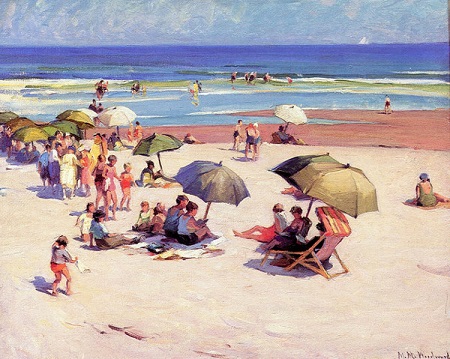
 

Dolce far niente


 2165720-f1debb882dc2d1e82c8db8ccbaad5561.jpg
Bathers On A Beach door Mabel May Woodward, ca. 1915–1920


Summer at the Beach

Before we started camp, we went to the beach.

Long days, before the sun was dangerous.
My sister lay on her stomach, reading mysteries.
I sat in the sand, watching the water.

You could use the sand to cover
parts of your body that you didn't like,
I covered my feet, to make my legs longer;
the sand climbed over my ankles.

I looked down at my body, away from the water.
I was what the magazines told me to be:
coltish. I was a frozen colt.

My sister didn't bother with these adjustments.
When I told her to cover her feet, she tried a few times,
but she got bored; she didn't have enough willpower
to sustain a deception.

I watched the sea; I listened to other families.
Babies everywhere: what went on in their heads?
I couldn't imagine myself as a baby;
I couldn't picture myself not thinking.

I couldn't imagine myself as an adult either.
They all had terrible bodies: lax, oily, completely
committed to being male and female.

The days were all the same.
When it rained, we stayed home.
When the sun shone, we went to the beach with my mother.
My sister lay on her stomach, reading her mysteries.
I sat with my legs arranged to resemble
what I saw in my head, what I believed was my true self.

Because it was true: when I didn't move I was perfect.



 2165720-82ad7dc509d5e068062e7632a93c4269.jpg
Louise Glück (New York, 22 april 1943)
Zomer in New York


De Ierse dichter Michael Longley werd geboren op 27 juli 1939 in Belfast. Zie ook alle tags voor Michael Longley op dit blog.


The Waterfall

If you were to read my poems, all of them, I mean,
My life's work, at the one sitting, in the one place,
Let it be here by this half-hearted waterfall
That allows each pebbly basin its separate say,
Damp stones and syllables, then, as it grows dark
And you go home past overgrown vineyards and
Chestnut trees, suppliers once of crossbeams, moon-
Shaped nuts, flour, and crackly stuffing for mattresses,
Leave them here, on the page, in your mind's eye, lit
Like the fireflies at the waterfall, a wall of stars.


Freeze-Up

The freeze-up annexes the sea even,
Putting out over the waves its platform.
Let skies fall, the fox's belly cave in -
This catastrophic shortlived reform
Directs to our homes the birds of heaven.
They come on farfetched winds to keep us warm.
Romantic
Bribing these with bounty, we would rather
Forget our hopes of thaw when spring will clean
The boughs, dust from our sills snow and feather,
Release to its decay and true decline
The bittern whom this different weather
Cupboarded in ice like a specimen.
 

 2165720-6c6ed47774a297a6146196c0ab1db55b.jpg
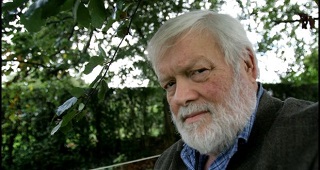
Michael Longley (Belfast, 27 juli 1939)


De Nederlandse schrijfster en psychologe Marijke Höweler werd geboren in Koog aan de Zaan op 27 juli 1938. Zie ook alle tags voor Marijke Höweler op dit blog.

Uit: Zum Wohl, Zum Glück!

“Bovengekomen met de stapel houtblokken waarvoor hij eigenlijk naar beneden was gegaan bleef hij een ogenblik uit het raam staan kijken. Als een verre, vage schemerlamp bescheen de zon het mistige dal. Het was zes uur. Jasper kon zich niet herinneren de laatste jaren ooit zo vroeg te zijn opgestaan. Toch leek hij in het verleden goede ervaringen te hebben opgedaan met dit vroege uur want er maakte zich een gevoel van hem meester alsof hij een onvervreemdbaar deel van de schepping uitmaakte. Dit vervulde hem van hoopvolle verwachting en een soort energie die hij zich ook herinnerde als behorend tot vervlogen dagen. Buiten maakten de vogels - de soort kende hij niet - geluiden alsof ze met een handzaag op een roestige spijker gestuit waren, terwijl de koeien een houten tafel over een stenen vloer leken te schuiven. Ook in de dierenwereld is het niet altijd rozegeur en maneschijn blijkbaar. Gisteren was Jasper zo kinderachtig geweest om direct na aankomst in zijn betrekkelijk nieuwe huis het zwaluwnest onder de dakrand te verwijderen. Met toegeknepen ogen en afgewend gezicht van schaamte had hij hun eengezinswoning met een forse duw van de bezem van zijn fundamenten gestoten. Jasper had zich daarbij de krakersbeweging voor ogen gehouden; en het feit dat de diertjes er de voorkeur aan gegeven hadden buiten het eigen nest, maar langs Jaspers glanzende beits te toiletteren en dus eigenlijk in Jaspers nest, had hem daar bij geholpen.
Wat zou hij nu eens gaan doen behalve wachten tot de bakker langs kwam? Witkalk gaan kopen misschien om z'n zonde ongedaan te maken? Maar Jasper vond dat sneu voor de bakker, die te zamen met zijn treurige dochter dag in dag uit deze negorij bezocht in de hoop dat één van de bewoners uit het rijtje van sterkste schouders die meenden de zwaarste lasten te dragen door de liquide middelen persoonlijk over de grens te tillen, hier zou zijn vandaag. Een kleine impasse dus en Jasper drentelde de voordeur uit en maakte een rondje om zijn huis. De zon had nu de mist uit het dal verdreven en veegde de laatste restjes tussen de bomen weg. Kringelend kwamen zij in de vorm van rookwolkjes uit hun schuilplaatsen te voorschijn. Jasper zou graag de krant zijn gaan lezen op zijn stoepje in de zon. Maar er was geen krant. Ook zou hij graag een praatje gemaakt hebben met een onbekend iemand. Maar er was niemand. Nee, zijn nieuwe huisje voldeed aan al z'n verwachtingen: de koeien, het gras, de beek, de bomen, de zenuwachtige vogeltjes en hij. En daar was de bakker, nee niet de bakker... of toch? Jawel daar was de bakker.”
 

 2165720-bdfd0da539b9448c9b23a97189c46e88.jpg
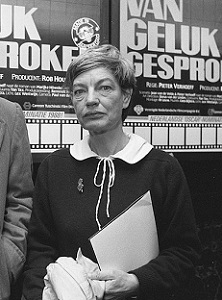
Marijke Höweler (27 juli 1938 – 5 mei 2006)
In 1987 


De Amerikaanse schrijfster en literatuurcritica Elizabeth Hardwick werd geboren op 27 juli 1916 in Lexington, Kentucky. Zie ook alle tags voor Elizabeth Hardwick op dit blog.

Uit: Sleepless Nights

“It is june. This is what I have decided to do with my life just now. I will do this work of transformed and even distorted memory and lead this life, the one I am leading today. Every morning the blue clock and the crocheted bedspread with its pink and blue and gray squares and diamonds. How nice it is—this production of a broken old woman in a squalid nursing home. The niceness and the squalor and sorrow in an apathetic battle—that is what I see. More beautiful is the table with the telephone, the books and magazines, the Times at the door, the birdsong of rough, grinding trucks in the street.
If only one knew what to remember or pretend to remember. Make a decision and what you want from the lost things will present itself. You can take it down like a can from a shelf. Perhaps. One can would be marked Rand Avenue in Kentucky and some would recall the address at least as true. Inside the can are the blackening porches of winter, the gas grates, the swarm.
The sunlight blinds me. When I look up I see confusing electricity behind windows. Maybe the shadows will suffice, the light and the shade. Think of yourself as if you were in Apollinaire's poem:

Here you are in Marseilles, surrounded by watermelons.
Here you are in Coblenz at the Hotel du Geant.
Here you are in Rome sitting under a Japanese medlar tree.
Here you are in Amsterdam...

1954
Dearest M.: Here I am in Boston, on Marlborough Street, number 239. I am looking out on a snowstorm. It fell like a great armistice, bringing all simple struggles to an end. In the extraordinary snow, people are walking about in wonderful costumes—old coats with fur collars, woolen caps, scarves, boots, leather hiking shoes that shine like copper. Under the yellow glow of the streetlights you begin to imagine what it was like forty or fifty years ago. The stillness, the open whiteness—nostalgia and romance in the clear, quiet, white air... More or less settled in this handsome house. Flowered curtains made to measure, rugs cut for the stairs, bookshelves, wood for the fireplace.“
 

 2165720-2835760f0a4a95f6c77781a34210452c.jpg
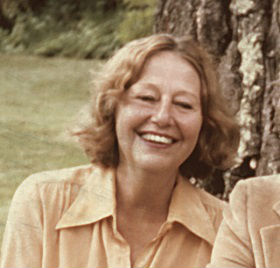
Elizabeth Hardwick (27 juli 1916 – 2 december 2007)


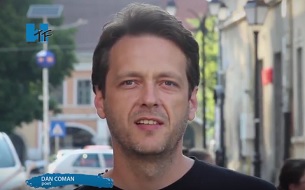
De Roemeense dichter en schrijver Dan Coman werd geboren op 27 juli 1975 in Gersa in de provincie Bistrita-Nasaud. Zie ook alle tags voor Dan Coman op dit blog.


Chicco

i wake up every morning before five
and like this, unwashed without tobacco
like this, in the dark and cold
i get out of bed on all fours
feeling for it.
before five he’s no more than a glass bead
when I touch him whoosh
leaping to some other part of the room.
i pick him up quickly, using only two fingers
roll him only on the carpet
lest he make noise and
wake the girls.
so it’s this way at five on all fours with this sun
this sun in the room rolled for hours on end
until like a snowball it grows quite large
until it begins to brighten begins to warm
though it’s only after growing so large
brighter and warmer
it’s only then that the sweat pours out
the chicco sun sweating likes a grown man
and at eight when the girls wake up
they must open the window
needing nearly an hour to air out the room.


Impossible to move

i’m impossible to move, there is nothing inside me
still I’m impossible to move with the force of only one man.
like a massive piece of living-room furniture.
like anything that means nothing in itself.
but i talk. i talk until the skin of my cheeks bursts.
i never stop talking.
all my force gathers like a spring inside my mouth
and mercilessly beats out sound after sound. phrase after phrase.
nobody ever seems to get tired of understanding nothing of what I say.
nobody seems annoyed because there’s nobody left.
that’s how I was born. straight out of the ground impossible to move
directly with words outside mine. exactly like this.
like anything else that means nothing in itself.


Vertaald door Martin Woodside en Ioana Ieronim
 

 2165720-a8b6a5c4d07b45384825c54dccc7a363.jpg
Dan Coman (Gersa, 27 juli 1975)


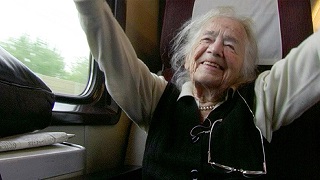
De Duitse schrijfster, dichteres en vertaalster Hilde Domin werd geboren in Keulen als Hilde Löwenstein op 27 juli 1909. Zie ook alle tags voor Hilde Domin op dit blog.


Älter werden

Antwort an Christa Wolf

Die Sehnsucht
nach Gerechtigkeit
nimmt nicht ab
Aber die Hoffnung

Die Sehnsucht
nach Frieden
nicht
Aber die Hoffnung

Die Sehnsucht nach Sonne
nicht
täglich kann das Licht kommen
durchkommen

Das Licht ist immer da
eine Flugzeugfahrt reicht
zur Gewissheit

Aber die Liebe

der Tode und Auferstehungen fähig
wie wir selbst
und wie wir
der Schonung bedürftig


Herbstaugen

Presse dich eng
an den Boden.

Die Erde
riecht noch nach Sommer,
und der Körper
riecht noch nach Liebe.

Aber das Gras
ist schon gelb über dir.
Der Wind ist kalt
und voll Distelsamen.

Und der Traum, der dir nachstellt,
schattenfüssig,
dein Traum
hat Herbstaugen.
 

 2165720-61b93aaade6273f1ba307f7e057c3e53.jpg
Hilde Domin (27 juli 1909 – 22 februari 2006)


Onafhankelijk van geboortedata

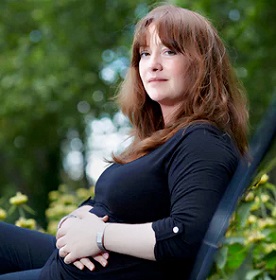
De Iers-Britse schrijfster Eimear McBride werd geboren in 1976 in Liverpool en groeide op in Tubbercurry, County Sligo en in Castlebar, County Mayo. Zie ook alle tags voor Eimear McBride op dit blog.

Uit:  A Girl is a Half-Formed Thing

“For you. You’ll soon. You’ll give her name. In the stitches of her skin she’ll wear your say. Mammy me? Yes you. Bounce the bed, I’d say. I’d say that’s what you did. Then lay you down. They cut you round. Wait and hour and day.
Walking up corridors up the stairs. Are you alright? Will you sit, he says. No. I want she says. I want to see my son. Smell from dettol through her skin. Mops diamond floor tiles all as strong. All the burn your eyes out if you had some. Her heart going pat. Going dum dum dum. Don’t mind me she’s going to your room. See the. Jesus. What have they done? Jesus. Bile for. Tidals burn. Ssssh. All over. Mother. She cries. Oh no. Oh no no no.
I know. The thing wrong. It’s a. It is called. Nosebleeds, head aches. Where you can’t hold. Fall mugs and dinner plates she says clear up. Ah young he says give the child a break. Fall off swings. Can’t or. Grip well. Slipping in the muck. Bang your. Poor head wrapped up white and the blood come through. She feel the sick of that. Little boy head. Shush.
She saw it first when you couldn’t open your eye. Don’t wink so long wind’ll change and you’ll stay that way. I’m not Mammy. It’s got stuck. She pull it open. Hold it up. I can’t it’s all fall down.
And now Holy Family on a Saturday night. He is leaning you are sleeping she the chair me whirlabout. Listen in to doctor chat. We done the best we could. There really wasn’t much. It’s all through his brain like the roots of trees. Sorry. Don’t say. That. He’s running out I’m afraid. I’m afraid he’s running down. You should take him home, enjoy him while you can. He’s not. He is. Can’t you operate again? We can’t. Shush. Something? Chemo then. We’ll have a go at that.
Gethsemane dear Lord hear our prayer our. Please. Intercession. Night in hospital beds. Faces on the candlewick. Lino in the knees. Please don’t God take. Our. Holy Mary mother of all, humbly we beseech thee.”
 2165720-cddacb98b07622c30be192d3ffbddec9.jpg
Eimear McBride (Liverpool, 1976)


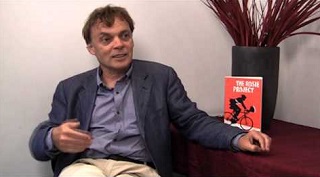
De Nieuw-Zeelandse schrijver Graeme C. Simsion werd geboren in in Auckland, Australië, in 1956. Zie ook alle tags voor Graeme C. Simsion op dit blog.

Uit: The Rosie Project

“Afterward, Claudia advised me that I should have abandoned the experiment prior to Elizabeth's leaving. Obviously. But at what point? Where was the signal? These are the subtleties I fail to see. But I also fail to see why heightened sensitivity to obscure cues about ice-cream flavors should be a prerequisite for being someone's partner. It seems reasonable to assume that some women do not require this. Unfortunately, the process of finding them is impossibly inefficient. The Apricot Ice Cream Disaster had cost a whole evening of my life, compensated for only by the information about simulation algorithms. •  •  • Two lunchtimes were sufficient to research and prepare my lecture on Asperger's syndrome, without sacrificing nourishment, thanks to the provision of Wi-Fi in the medical library café. I had no previous knowledge of autism spectrum disorders, as they were outside my specialty. The subject was fascinating. It seemed appropriate to focus on the genetic aspects of the syndrome, which might be unfamiliar to my audience. Most diseases have some basis in our DNA, though in many cases we have yet to discover it. My own work focuses on genetic predisposition to cirrhosis of the liver. Much of my working time is devoted to getting mice drunk. Naturally, the books and research papers described the symptoms of Asperger's syndrome, and I formed a provisional conclusion that most of these were simply variations in human brain function that had been inappropriately medicalized because they did not fit social norms--constructed social norms--that reflected the most common human configurations rather than the full range. The lecture was scheduled for 7:00 p.m. at an inner-suburban school. I estimated the cycle ride at twelve minutes and allowed three minutes to boot my computer and connect it to the projector. I arrived on schedule at 6:57 p.m., having let Eva, the short-skirted cleaner, into my apartment twenty-seven minutes earlier. There were approximately twenty-five people milling around the door and the front of the classroom, but I immediately recognized Julie, the convenor, from Gene's description: "blonde with big tits." In fact, her breasts were probably no more than one and a half standard deviations from the mean size for her body weight and hardly a remarkable identifying feature.”
 

 2165720-a77fa2c4c69c0ea21a7988b2c2007c50.jpg
Graeme C. Simsion (Auckland in 1956)


Zie voor nog meer schrijvers van de 27e juli ook mijn blog van 27 juli 2017 en ook mijn blog van 27 juli 2011 deel 2.


Geschreven door Romenu om 18:33 Reageer op dit bericht

Paul Rodenko, Arthur Japin, Gregoire Delacourt, Anne Provoost, Yves Petry, Aldous Huxley, Nicholas Evans, George Bernard Shaw


Dolce far niente


 2165498-226877db9a7ff69d7891d1e5b541b76d.jpg
Jeux de plage door Philippe Greffard, 2010


Strand

De zon. Het strand.
De rode torso van de dag,
half in het hete zand begraven.
Een vogel schreeuwt gekweld.

Tegen een bronzen hek van baders
schurkt zich de zee als een loom rund.
In kassen van de horizon
staan vreemde purperrode varens.

Ik lig geketend in het zand
en hoor het bonzen van gitaren
tegen de deuren van de nacht
en hoor je hoge hese praten.
Je lijf staat donker in het licht.
Ik ruik de brandlucht van je schaduw
en voel een onderhuidse pijn.
Je benen zijn twee zwartgeblakerde pilaren
in een vergane stad.

De zon drijft stil in haar aquarium,
een dode vis met witgezwollen buik. 


 2165498-a4238f7742e67fd34eb7582f52b78bd4.jpg
Paul Rodenko (26 november 1920 – 9 juni 1976)
Het strand bij Scheveningen, Den Haag, de geboorteplaats van Paul Rodenko


De Nederlandse schrijver Arthur Japin werd geboren in Haarlem op 26 juli 1956. Zie ook alle tags voor Arthur Japin op dit blog.

Uit: Kolja

„Ik zag het al vanaf de Nevski Prospekt, nog voordat ik de straat in liep.
In de verte had zich voor het huis een menigte verzameld, hoofd in de nek, hopend op een glimp van het onnoemelijk verdriet daarboven. Op de vijfde verdieping stonden, ondanks het vroege uur en de ijzige wind die vanaf de Neva door de straten joeg, alle ramen wijd open.
Ik versnelde mijn pas, alsof na een nacht ononder - broken reizen die laatste honderd meter nog iets uit - maakte.
Een theeventer wrong zich door de wachtenden, die daar sinds middernacht al stonden. Waterdamp hing rond de samowaar die hij op zijn rug droeg. Zijn klanten warmden hun verkleumde vingers aan de wolkende kommen. Een melkkar had de oploop ook gevonden. Een jongen met een plateau kartosjka-cakejes deed goede zaken, een paar boerinnen, zeulend met een mand vol antonovka-appels, minder.
Wie niet wist wat hier gaande was, had het voor een buurtfeest kunnen houden: rood aangelopen koppen met her en der een glimmer van sensatie. Hun opwinding leek op die van de wachtende meute buiten de hekken van een regimentsbal, en toch... Er is iets aan de dood wat de levenden doortrilt. Zijn loodzware aanwezigheid beperkt zich niet tot de ontslapene, maar sijpelt door de kieren van het sterfhuis en doordrenkt ons van een doodsbesef, dat Deze schuldige gewaarwording, aan andermans pijn te zijn ontsnapt, verenigde de mensen voor de deur van de Morskajastraat. Hun mededogen en de vroomheid van hun gebeden zijn er niet minder om, maar het idee voorlopig nog een lengte op het onvermijdelijke voor te liggen werkt op een massa even aanstekelijk als vrolijkheid of bloeddorst.
Eén blik op die koppen en ik wist dat ik te laat kwam.
Sommigen probeerden, alsof ik voordrong bij de avondkassa van het Aleksandrinski, mij de doorgang te beletten. Anderen dachten dat ik voor de ophef kwam en klampten mij aan om mij op de hoogte te brengen van de laatste geruchten, maar ik sloeg mijn blik neer, zodat ik niet wist wat ze zeiden.”


 2165498-bf3023ee4b6a9e07730c1b8e788bc0e5.jpg
Arthur Japin (Haarlem, 26 juli 1956)


De Franse schrijver, journalist, regisseur en scenarist Gregoire Delacourt werd geboren op 26 juli 1960 in Valenciennes, Zie ook alle tags voor Gregoire Delacourt op dit blog.

Uit: De lijst van al mijn wensen (Vertaald door Marga Blankestijn)

“Iedereen liegt zichzelf voor.
Zo weet ik bijvoorbeeld best dat ik niet mooi ben. Ik heb niet van die blauwe ogen waarin mannen zich graag spiegelen, waarin ze willen verdrinken om weer opgedoken en gered te worden. Ik heb niet de ideale maten van een fotomodel: ik ben weelderig, zeg maar mollig van vorm. Zo’n vorm die anderhalve plaats inneemt. Ik heb zo’n lichaam waar de armen van een gemiddelde man net niet helemaal omheen reiken. Ik heb niet de gratie van vrouwen tegen wie lange zinnen worden gepreveld, met zuchten als leestekens, nee. Ik roep eerder korte zinnen in gedachten. Het abrupte aforisme. Het gebeente van de lust, zonder het zwoerd, zonder het zachte vetrandje.
Dat weet ik allemaal best.
En toch gebeurt het wel dat ik, voordat Jo thuiskomt, boven in onze slaapkamer voor de spiegel van de klerenkast ga staan. Ik moet hem er nog aan herinneren dat hij die kast aan de muur bevestigt, voordat ik er een dezer dagen tijdens mijn bespiegelingendoor verpletterd word.
Dan sluit ik mijn ogen en kleed me langzaam uit, zoals niemand me ooit heeft uitgekleed. Iedere keer krijg ik het een beetje koud en ril ik even. Als ik helemaal naakt ben, wacht ik nog voordat ik mijn ogen open doe. Ik geniet. Ik mijmer. Ik droom. Ik zie weer de aandoenlijke, hunkerende lichamen voor me in de kunstboeken vol schilderijen die vroeger thuis in de kast stonden; later, de grovere lichamen uit de blaadjes.
Dan doe ik langzaam mijn ogen open, in slow motion.
Ik kijk naar mijn lijf, mijn donkere ogen, mijn kleine borsten, mijn zwembandje, mijn donkere bos schaamhaar en ik vind mezelf mooi en ik zweer je dat ik op dat moment mooi ben, een schoonheid zelfs.
Die schoonheid maakt me intens gelukkig. En verschrikkelijk sterk.
Hij zorgt dat ik de lelijke dingen vergeet. De fourniturenwinkel, die een beetje saai is. Het gebabbel en de lotto van Danièle en Françoise, de tweelingzussen die de kapperszaak Coiff’Esthétique ernaast runnen. De schoonheid zorgt dat ik de onveranderlijke dingen vergeet. Zoals een leven zonder verhalen. Zoals deze akelige stad, zonder vliegveld; deze grijze stad waaraan je niet kunt ontsnappen en waar nooit iemand komt, geen hartendief, geen witte ridder op een wit paard.”


 2165498-cf8c3579c0a030caa5329260551bb454.jpg
Gregoire Delacourt (Valenciennes, 26 juli 1960)


De Vlaamse schrijver Yves Petry werd op 26 juli 1967 geboren in Tongeren. Zie ook alle tags voor Yves Petry op dit blog.

Uit:In Paradisum (Vertaald door Gregor Seferens)

“Die Tür geht auf, und für Marino ist es keine Überraschung, dass der Mann, der dort erscheint, nur eine Unterhose anhat. Das haben sie so verabredet. Überraschender ist der Gesichtsausdruck des Mannes. Die halb geschlossenen Augen deuten auf ein gewisses Maß von Sedierung. Seine Schritte sind ein wenig unsicher. Doch die straff angespannten Kiefermuskeln drücken eine große Entschlossenheit aus. Das Kinn ist leicht in die Höhe gereckt, die Lippen ragen herausfordernd hervor. Er sieht aus wie eine Kreuzung aus Zombie und Märtyrer, wie ein vor Kampfeslust flimmernder Schlafwandler. Höchstwahrscheinlich ist dies ein Effekt der Drogen, die er genommen hat.
Die Wohnzimmervorhänge sind sorgfältig geschlossen. Kein Schimmer ist mehr von der Außenwelt zu sehen. In einer Ecke verbreitet eine Stehlampe mit einem grobbaumwollenen Schirm ein nicht allzu helles Licht. Es könnte beinahe gemütlich sein, wenn das Zimmer nicht ansonsten leer wäre, von einem Esstisch mit zwei Stühlen und einem Sofa abgesehen.
Auf einem der Stühle sitzt Marino. Wovor er sich vorher schon gefürchtet hat, überfällt ihn plötzlich als unverrückbare Tatsache: Der Moment ist nicht gut gewählt. Nicht, weil es noch zu früh ist, nicht, weil es bereits zu spät ist, nicht, weil ein anderer Zeitpunkt besser gewesen wäre, sondern weil es falsch ist, selbst einen Zeitpunkt zu wählen.
Jetzt kann er nicht mehr zurück. Er steht auf und folgt dem Mann, der sich schweigend mit dem Rücken an eine Wand stellt. Links und rechts von ihm befinden sich, jeweils eine Armlänge entfernt, zwei Metallringe, die dort vor einigen Tagen angebracht wurden. Mit zwei kurzen Seilen, die auf dem Tisch bereitliegen, bindet Marino die Handgelenke des Mannes an den Ringen fest.
Auch was er sonst noch tun soll, haben sie vorher verabredet.
Auf dem Gesicht des Mannes liegt ein recht verträumter Ausdruck, um seine Lippen spielt sogar ein Hauch von Spott, als fände er Marinos Schüchternheit lustig. Marino zieht einen Stoffstreifen, den er aus einem alten Kleid geschnitten hat, aus der Hosentasche und verbindet damit dem Mann die Augen, der dies widerstandslos zulässt.
Marino lässt eine Hand über die Brust des Mannes gleiten. Die andere Hand fährt über Schenkel und Geschlecht. Er kennt diesen Körper. Er hat ihn schon öfter gespürt. Damals hatten sie Sex miteinander. Diesmal werden sie sehr viel weiter gehen.
Geplant ist, dass Marino sich nicht wie der Liebhaber dieses Körpers verhält, sondern wie dessen Schinder. Oder sogar wie etwas, das noch weniger menschlich, noch unpersönlicher ist: eine tödliche Krankheit, ein rein körperlicher Unfall. Aber wie glaubwürdig ist es, wenn eine tödliche Krankheit wie verabredet zuschlägt?“


 2165498-86bd5abb40606208a798dfeacbc94acf.jpg
Yves Petry (Tongeren, 26 juli 1967)


De Vlaamse schrijfster Anne Provoost werd geboren in Poperinge op 26 juli 1964. Zie ook alle tags voor Anne Provoost op dit blog.

Uit: In de zon kijken

„Ilana en ik zaten op de achterbank van de Volkswagen, de strohoeden tegen de zon tussen ons in. Ilana had haar haren hoog opgebonden, haar handen losjes in haar schoot, de rug gestrekt. Ze keek niet naar me, had alleen aandacht voor het land dat zich eindeloos ontrolde. Ik zat op mijn knieën, achterstevoren, mijn armen om de hoofdsteun geslagen. In de rechthoek van de achterruit doken elektriciteitspalen ritmisch op, schoven naar elkaar toe, verdwenen in een luchtspiegeling aan de horizon. We lieten het vlakke binnenland achter ons, de grijze velden met de gombomen, hun zilveren stammen en onbeweeglijke bladeren. De witte streep op het wegdek wentelde als een worm op zoute grond. Ik wachtte op een verandering in het beeld, ik was nog niet dikwijls zo ver van huis geweest. Al sinds de ochtend waren we aan het rijden en de bodem was nog altijd kurkdroog: geen onkruid in de bermen, de vertrouwde schraalheid van een verzilte omgeving.
Het was hoogzomer. We hadden een jerrycan benzine bij ons, en liters drinkwater. Bij elke oneffenheid rinkelden de likeurflessen in de koffer. In de auto hing de geur van namaakleder dat kneedbaar wordt in de zon. Ik was op mijn hoede. Als ik Ilana iets wilde zeggen, leunde ik naar haar toe om te fluisteren. We waren de reis begonnen met raadsels en een spel, maar de vrolijkheid was nu voorbij. Mijn vader zat aan het stuur, mijn moeder naast hem met haar fototoestel op haar schoot. Ze wreef over haar mondhoeken; ze denkt dat haar speeksel zich daar ophoopt als ze vurig praat. ‘Je had je broer kunnen vragen wat hij bedoelde met een verrassing,’ zei ze.
Mijn vader had zijn ene hand op het stuurwiel, de andere aan zijn voorhoofd. Hij was de enige met kortgeknipt haar, maar evengoed parelde het zweet in zijn nek. ‘Wat had Brendan meer kunnen vertellen dan dat er iets zou zijn?’ antwoordde hij. ‘Anders was het toch geen verrassing meer.’


 2165498-3c87e790bdeffcd973ada9c601681fd7.jpg
Anne Provoost (Poperinge, 26 juli 1964)
Cover


De Engelse schrijver en criticus Aldous Huxley werd geboren op 26 juli 1894 in Godalming, Surrey. Zie ook alle tags voor Aldous Huxley op dit blog.

Uit: Brave new World

“Mustapha Mond shut the book and leaned back in his chair. 'One of the numerous things in heaven and earth that these philosophers didn't dream about was this' (he waved his hand), 'us, the modern world. "You can only be independent of God while you've got youth and prosperity; independence won't take you safely to the end." Well, we've now got youth and prosperity right up to the end. What follows? Evidently, that we can be independent of God. "The religious sentiment will compensate us for all our losses." But there aren't any losses for us to compensate; religious sentiment is superfluous. And why should we go hunting for a substitute for youthful desires, when youthful desires never fail? A substitute for distractions, when we go on enjoying all the old fooleries to the very last? What need have we of repose when our minds and bodies continue to delight in activity? of consolation, when we have soma? of something immovable, when there is the social order?'
'Then you think there is no God?'
'No, I think there quite probably is one.'
'Then why?...'
Mustapha Mond checked him. 'But he manifests himself in different ways to different men. In pre-modern times he manifested himself as the being that's described in these books. Now...'
'How does he manifest himself now?' asked the Savage.
'Well, he manifests himself as an absence; as though he weren't there at all.'
'That's your fault.'
'Call it the fault of civilization. God isn't compatible with machinery and scientific medicine and universal happiness. You must make your choice. Our civilization has chosen machinery and medicine and happiness. That's why I have to keep these books locked up in the safe. They're smut. People would be shocked if...'
The Savage interrupted him. 'But isn't it natural to feel there's a God?'
'You might as well ask if it's natural to do up one's trousers with zippers,' said the Controller sarcastically. 'You remind me of another of those old fellows called Bradley. He defined philosophy as the finding of bad reason for what one believes by instinct. As if one believed anything by instinct! One believes things because one has been conditioned to believe them. Finding bad reasons for what one believes for other bad reasons--that's philosophy. People believe in God because they've been conditioned to believe in God.'


 2165498-10e1962711e5502aa488b8e576039ba5.jpg
Aldous Huxley (26 juli 1894 – 22 november 1963)
Scene uit een toneelbewerking in Northampton, 2015


De Engelse schrijver Nicholas Evans werd geboren op 26 juli 1950 in Bromsgrove. Zie ook alle tags voor Nicholas Evans op dit blog.

Uit:The Horse Whisperer

“There was snow. The first fall of winter. And from the laterals of the fence up by the pond she could tell there must be almost a foot of it. With no deflecting wind, it was perfect and driftless, heaped in comical proportion on the branches of the six small cherry trees her father had planted last year. A single star shone in a wedge of deep blue above the woods. The girl looked down and saw a lace of frost had formed on the lower part of the window and she placed a finger on it, melting a small hole. She shivered, not from the cold, but from the thrill that this transformed world was for the moment entirely hers. And she turned and hurried to get dressed.
Grace Maclean had come up from New York City the night before with her father, just the two of them. She always enjoyed the trip, two and a half hours on the Taconic State Parkway, cocooned together in the long Mercedes, listening to tapes and chatting easily about school or some new case he was working on. She liked to hear him talk as he drove, liked having him to herself, seeing him slowly unwind in his studiously weekend clothes. Her mother, as usual, had some dinner or function or something and would be catching the train to Hudson this morning, which she preferred to do anyway. The Friday-night crawl of traffic invariably made her crabby and impatient and she would compensate by taking charge, telling Robert, Grace’s father, to slow down or speed up or take some devious route to avoid delays. He never bothered to argue, just did as he was told, though sometimes he would sigh or give Grace, relegated to the backseat, a wry glance in the mirror. Her parents’ relationship had long been a mystery to her, a complicated world where dominance and compliance were never quite what they seemed. Rather than get involved, Grace would simply retreat into the sanctuary of her Walkman.
On the train her mother would work for the entire journey, undistracted and undistractable. Accompanying her once recently, Grace had watched her and marveled that she never even looked out of the window except perhaps in a glazed, unseeing scan when some big-shot writer or one of her more eager assistant editors called on the cellular phone.”


 2165498-1e2bf7999e60b9f4c2a4b92b67da93d9.jpg
Nicholas Evans (Bromsgrove, 26 juli 1950)
Robert Redford als de “Horse Whisperer” Tom Booker in de gelijknamige film uit 1998


De Ierse toneelschrijver, socialist en theatercriticus George Bernard Shaw werd geboren in Dublin op 26 juli 1856. Zie ook alle tags voor George Bernard Shaw op dit blog.

Uit: The Devil's Disciple

“At the most wretched hour between a black night and a wintry morning in the year 1777, Mrs. Dudgeon, of New Hampshire, is sitting up in the kitchen and general dwelling room of her farm house on the outskirts of the town of Websterbridge. She is not a prepossessing woman. No woman looks her best after sitting up all night; and Mrs. Dudgeon's face, even at its best, is grimly trenched by the channels into which the barren forms and observances of a dead Puritanism can pen a bitter temper and a fierce pride. She is an elderly matron who has worked hard and got nothing by it except dominion and detestation in her sordid home, and an unquestioned reputation for piety and respectability among her neighbors, to whom drink and debauchery are still so much more tempting than religion and rectitude, that they conceive goodness simply as self-denial. This conception is easily extended to others--denial, and finally generalized as covering anything disagreeable. So Mrs. Dudgeon, being exceedingly disagreeable, is held to be exceedingly good. Short of flat felony, she enjoys complete license except for amiable weaknesses of any sort, and is consequently, without knowing it, the most licentious woman in the parish on the strength of never having broken the seventh commandment or missed a Sunday at the Presbyterian church.
The year 1777 is the one in which the passions roused of the breaking off of the American colonies from England, more by their own weight than their own will, boiled up to shooting point, the shooting being idealized to the English mind as suppression of rebellion and maintenance of British dominion, and to the American as defence of liberty, resistance to tyranny, and selfsacrifice on the altar of the Rights of Man.”


 2165498-8da097f64141e3565fe2ba9f7bfae966.jpg
George Bernard Shaw (26 juli 1856 – 2 november 1950)
Affiche voor de gelijknamige film uit 1959 met Kirk Douglas, Burt Lancaster en Laurence Olivier


Zie voor nog meer schrijvers van de 26e juli ook mijn blog van 26 juli 2017 en ook mijn blog van 26 juli 2015 deel 2.

Geschreven door Romenu om 18:11 Reageer op dit bericht

Meer van Romenu

↑ Terug naar de berichten