Dolce far niente, Remco Campert, Fernando Arrabal, Yoshikawa Eiji, Ernst Stadler, Hugh MacDiarmid, Andre Dubus
Dolce far niente
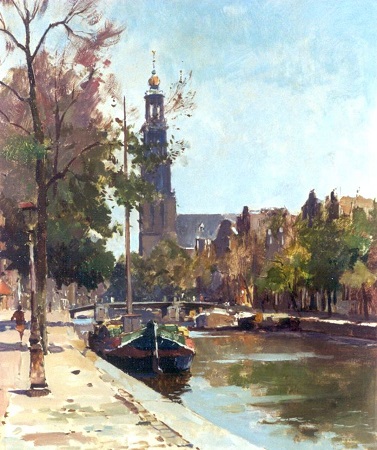
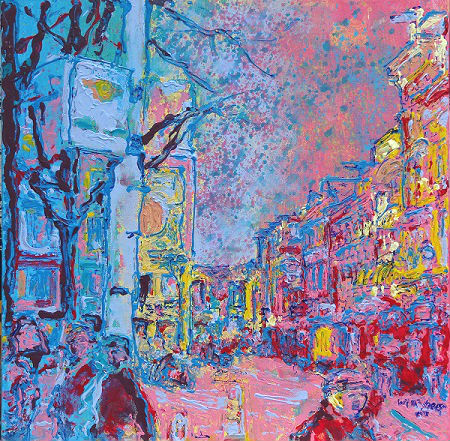
Leidseplein, Amsterdam door Wim Streep, 2014
Uit: De zwerftocht van Remco Campert (Ons Amsterdam, redactie Jojanneke Claassen en Jochem Brouwer)
“Een groot deel van de oorlog woonde ik in Epe op de Veluwe, maar in 1945 was ik weer terug in de Huidekoperstraat 23, terug in Amsterdam. Ik ben van die stad gaan houden, het is echt mijn stad geworden, al is er één ding dat ik wel altijd gemist heb: de zee. Je kon wel naar zee, natuurlijk. Dan ging je met de blauwe tram. Waar nu Athenaeum Nieuwscentrum is, op de hoek van de Spuistraat en het Spui, was het beginpunt van de tram naar Zandvoort. Maar de zee zoals in Den Haag onder bereik, nee.
Ik werd verliefd op Freddy Rutgers, een Wassenaars meisje dat aan de tekenacademie studeerde, en dat was voor mij het moment om het huis uit te gaan. Bij Bert Schierbeek, die ik uit de dichterskringen van Reijnders en Eylders op het Leidseplein kende, konden we een kamer krijgen in zijn huis, Van Eeghenlaan 7. In die tijd was zoiets niet gepast, maar Bert was zeer ruim en zeer behulpzaam. Ook mijn moeder deed er niet echt moeilijk over en ten slotte zijn Freddy en ik ook netjes getrouwd. We woonden in de Van Eeghenlaan en zaten veelvuldig in Parijs tot we in 1952 een verdieping in de Kerkstraat konden krijgen.
Op nummer 15, vlakbij de Leidsegracht, kregen we een benedenverdieping met een souterrain dat helemaal volgestouwd zat. Onze huisbaas woonde boven ons, een reusachtige aardappelboer met handen als kolenschoppen. Zulke grote handen had ik nog nooit gezien. En heb ik sindsdien ook niet meer gezien. Het was een aardige man met een pet. Geen Amsterdammer, hij kwam geloof ik uit Nood-Holland. Onze woonkamer was vrij behoorlijk, wel laag, en daarachter hadden we een klein keukentje met een wc in de hoek, waarvan de deur niet dicht kon als je erin ging. Dan was er nog een piepklein binnenplaatsje. Aan de straatkant hadden we een klein voorkamertje, wat mijn werkkamer was. In die tijd werkte het GEB nog met munten voor gas en licht. Munten die je bij de melkboer kon kopen. Als het licht plotseling uitging, stopte je een munt in de meter en dan liep het zaakje weer.”
Remco Campert (Den Haag, 28 juli 1929)
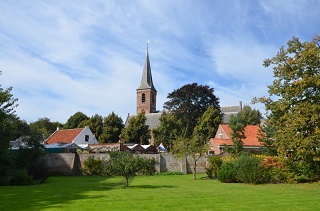
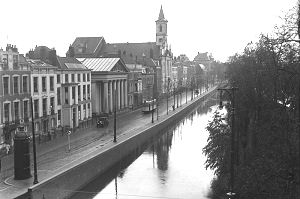
De Prinsessegracht in Den Haag, 1930
De Spaanse schrijver, dichter, dramaturg en cineast Fernando Arrabal werd geboren in Melila, Spaans Marokko op 11 augustus 1932. Zie ook alle tags voor Fernando Arrabal op dit blog.
Je te salue démente !
Je te salue démente !
Etrangement parée pour le bal de l’asile
Tu désires voler sur les rochers du sort
Alors que les furies sont devenues patientes
Grace aux nouveaux psychiatres, ces bergers de la haine
Je te salue démente !
Au centre du désert sans baisers, ni caresses
Des sectes aux gourous feignant la différence
Se disputent l’opium pour asservir l’enfant
Que parfume le sang versé par l’innocence.
Je te salue démente !
Tout enfant est un fou, le fou n’est qu’un enfant
Quand sa tête repose sur le divan de plumes.
Les Diafoirus entre eux, très fiers, se congratulent
Bercés par le roulis des certitudes molles.
Je te salue démente !
Toute damassée de portes sans issues ni secours
Tu nous tiens par la fête et surtout par l’étrange.
Phantasmes et fantômes sont venus d’ici-bas.
Ta cervelle te regarde et ne te connaît plus
Je te salue démente !
Tu galopes, inconsciente, en chevauchant Sigmund
Ou ses disciples creux, sans école buissonnière.
Héritières du carcan, purgées de tout amour
Leurs têtes vont sombrant dans la norme grégaire.
Je te salue démente !
Murés dans le cachot de ton retranchement
Tu distilles l’ennui, goutte à goutte, du temps
Craignant de naufrager sur ton sommet flottant
Cernés par des rancoeurs fatalement exactes
Je te salue démente !
Planant sur un déluge à peine universel,
Au cœur de ton chagrin tu triomphes, ignorant
Le déploiement d’étoiles dans ton sillage noir :
La vierge, la vivace, la belle apocalypse.
Je te salue démente !

Fernando Arrabal (Melila, 11 augustus 1932)
De Japanse schrijver Yoshikawa Eiji werd geboren op 11 augustus 1892 in de prefectuur Kanagawa. Zie ook alle tags voor Yoshikawa Eiji op dit blog.
Uit: Taiko (Vertaald door William Scott Wilson)
“Thus chastened, Ofuku could say nothing. He lost courage and bit his nails. Although he was only a child, being called an ingrate made him feel much worse than being called a spineless jellyfish. The others looked away, their attention shifting from honey bees to a cloud of yellow dust rising at the far end of the fields. "Look, an army!" cried one of the boys. "Samurai!" said another. "They've come back from battle." The children waved and cheered. The lord of Owari, Oda Nobuhide, and his neighbor, Imagawa Yoshimoto, were bitter enemies, a situation that led to constant skirmishing along their common border. One year, Imagawa troops crossed the border, set fire to the villages, and trampled the crops. The Oda troops rushed out of the castles of Nagoya and Kiyosu and routed the enemy, cutting them down to the last man. When the following winter came, both food and shelter were lacking, but the people did not reproach their lord. If they starved, they starved; if they were cold, they were cold. In fact, contrary to Yoshimoto's expectations, their hardships only served to harden their hostility toward him.
The children had seen and heard about such things from the time they were born. When they saw their lord's troops, it was as if they were seeing themselves. It was in their blood, and nothing excited them more than the sight of men-at-arms. "Let's go see!" The boys headed toward the soldiers, breaking into a run, except for Ofuku and Hiyoshi, who were still glaring at one another. The weak-spirited Ofuku wanted to run off with the others, but he was held by Hiyoshi's stare. "I'm sorry." Ofuku nervously approached Hiyoshi's side and put his hand on his shoulder. "I'm sorry, all right?" Hiyoshi flushed angrily and jerked away his shoulder, but seeing Ofuku on the brink of tears, he softened. "It's just because you ganged up with the others and said bad things about me," he reproached him. "When they tease you, they always call you names, like 'the Chinese kid.' But have I ever made fun of you?" "No." "Even a Chinese kid, when he becomes a member of our gang, is one of us. That's what I always say, right?" "Yeah." Ofuku rubbed his eyes. Mud dissolved in his tears, making little splotches around his eyes. "Dummy' It's because you cry that they call you 'the Chinese kid.' Come on, let's go see the warriors. If we don't hurry, they'll be gone." Taking Ofuku by the hand, Hiyoshi ran after the others. War-horses and banners loomed out of the dust. There were some twenty mounted samurai and two hundred foot soldiers. Trailing behind was a motley group of bearers: pike, spear, and bow carriers. Cutting across the Inaba Plain from the Atsuta Road, they began to climb the embankment of the Shonai River. The children outstripped the horses and scampered up the embankment. Eyes gleaming, Hiyoshi, Ofuku, Ni'o, and the other snotty-nosed kids picked roses and violets and other wildflowers and threw them in the air, all the time yelling at the top of their voices, "Hachiman! Hachiman!" invoking the god of war, and, "Victory for our valiant, glorious warriors!"

Yoshikawa Eiji (11 augustus 1892 – 7 september 1962)
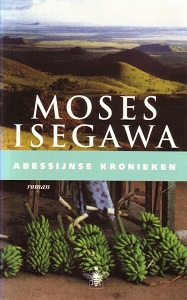
Cover
De Duitse dichter Ernst Stadler werd geboren op 11 augustus 1883 in Colmar (Kolmar). Zie ook alle tags voor Ernst Stadler op dit blog.
Ballhaus
Farbe prallt in Farbe wie die Strahlen von Fontänen, die ihr Feuer ineinanderschießen,
Im Geflitter hochgeraffter Röcke und dem Bausch der bunten Sommerblusen. Rings von allen Wänden, hundertfältig
Ausgeteilt, strömt Licht. Die Flammen, die sich zuckend in den Wirbel gießen,
Stehen, höher, eingesammelt, in den goldgefaßten Spiegeln, fremd und hinterhältig,
Wie erstarrt und Regung doch in grenzenlose Tiefen weiterleitend, Leben, abgelöst und fern und wieder eins und einig mit den Paaren,
Die im Bann der immer gleichen Melodien, engverschmiegt, mit losgelassnen Gliedern schreitend,
Durcheinanderquirlen: Frauen, die geschminkten Wangen rot behaucht, mit halb gelösten Haaren,
Taumelnd, nur die Augen ganz im Grund ein wenig matt, die in das Dunkel leerer Stunden laden,
Während ihre Körper sich im Takt unkeuscher Gesten ineinanderneigen,
Ernsthaft und voll Andacht: und sie tanzen, gläubig blickend, die Balladen
Müd gebrannter Herzen, lüstern und verspielt, und vom Geplärr der Geigen
Wie von einer zähen lauen Flut umschwemmt. Zuweilen kreischt ein Schrei. Ein Lachen gellt. Die Schwebe,
In der die Paare, unsichtbar gehalten, schaukeln, schwankt. Doch immer, wie in traumhaft irrem Schwung
Schnurrt der Rhythmus weiter durch den überhitzten Saal . . . Daß nur kein Windzug jetzt die roten Samtportieren hebe,
Hinter denen schon der Morgen wartet, grau, hager, fahl . . . bereit, in kaltem Sprung,
Die Brüstung übergreifend, ins Parkett zu gleiten, daß die heißgetanzten Reihen jählings stocken, Traum und Tanz zerbricht,
Und während noch die Walzerweise sinnlos leiernd weitertönt,
Tag einströmt und die dicke Luft von Schweiß, Parfum und umgegossnem Wein zerreißt, und durch das harte Licht,
Fernher rollend, ehern, stark und klar, das Arbeitslied der großen Stadt durch plötzlich aufgerissene Fenster dröhnt.
Ernst Stadler (11 augustus 1883 – 30 oktober 1914)
Cover
De Schotse dichter Hugh MacDiarmid werd geboren op 11 augustus 1892 als Christopher Marray Grieve in Langholm. Zie ook alle tags voor Hugh MacDiarmid op dit blog.
Gairmscoile (Fragment)
I
Wergeland, I mind o’ thee—for thy bluid tae
Kent the rouch dirl o’ an auld Scots strain,
—A dour dark burn that has its ain wild say
Thro’ a’ the thrang bricht babble o’ Earth’s flood.
Behold, thwart my ramballiach life again,
What thrawn and roothewn dreams, royat and rude,
Reek forth—a foray dowless herts condemn—
While chance wi’ rungs o’ sang or silence renshels them.
(A foray frae the past—and future tae
Sin Time’s a blindness we’ll thraw aff some day!)
... On the rumgunshoch sides o’ hills forgotten
Life hears beasts rowtin’ that it deemed extinct,
And, sudden, on the hapless cities linked
In canny civilisation’s canty dance
Poor herds o’ heich-skeich monsters, misbegotten,
... Streets clear afore the scarmoch advance:
Frae every winnock skimmerin’ een keek oot
To see what sic camsteerie cast-offs are aboot.
Cast-offs?—But wha mak’s life a means to ony end?
This sterves and that stuff’s fu’, scraps this and succours that?
The best survive there’s nane but fules contend.
Na! Ilka daith is but a santit need.
... Lo! what bricht flames o’ beauty are lit at
The unco’ een o’ lives that Life thocht deid
Till winnock efter winnock kindles wi’ a sense
O’ gain and glee—as gin a mair intense
Starn nor the sun had risen in wha’s licht
Mankind and beasts anew, wi’ gusto, see their plicht.
Mony’s the auld hauf-human cry I ken
Fa’s like a revelation on the herts o’ men
As tho’ the graves were split and the first man
Grippit the latest wi’ a freendly han’
... And there’s forgotten shibboleths o’ the Scots
Ha’e keys to senses lockit to us yet
—Coorse words that shamble thro’ oor minds like stots,
Syne turn on’s muckle een wi’ doonsin’ emerauds lit.
I hear nae ‘hee-haw’ but I mind the day
A’e donkey strunted doon a palm-strewn way
As Chesterton has sung; nae wee click-clack
O’ hoofs but to my hert at aince comes back
Jammes’ Prayer to Gang to Heaven wi’ the Asses;
And shambles-ward nae cattle-beast e’er passes
But I mind hoo the saft een o’ the kine
Lichted Christ’s craidle wi’ their canny shine.
Hee-Haw! Click-Clack! And Cock-a-doodle-doo!
—Wull Gabriel in Esperanto cry
Or a’ the warld’s undeemis jargons try?
It’s soon’, no’ sense, that faddoms the herts o’ men,
And by my sangs the rouch auld Scots I ken
E’en herts that ha’e nae Scots’ll dirl richt thro’
As nocht else could—for here’s a language rings
Wi’ datchie sesames, and names for nameless things.
Hugh MacDiarmid (11 augustus 1892 – 9 september 1978)
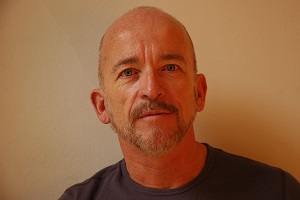
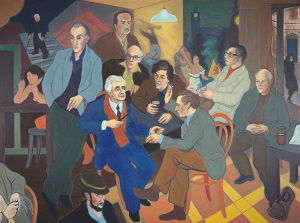
Poets' Pub door Alexander Moffat, 1980. Hugh MacDiarmid zittend in het blauwe pak.
De Amerikaanse schrijver en essayist Andre Dubus werd geboren op 11 augustus 1936 in Lake Charles, Louisiana. Zie ook alle tags voor Andre Dubus op dit blog.
Uit: Dancing After Hours
“But he had no coffee, and he put on his raincoat and a felt hat turned the smile to him and said: "Well. What brings you out in the rain?" He took off his hat and placed it on the counter and was about to say he was going to buy coffee, but he looked at Doreen's blue eyes and said: "I woke to the sound of rain. It was the first thing I smelled." From behind her a young waitress approached and he signaled with thumb and forefinger as if gripping a cup. "Some was splashing through the screen, onto the windowsill. I didn't close the window. I wanted to write about rain, but I was out of coffee." He was unbuttoning his coat, removing his aims from its sleeves. "I've been writing things. I wanted to write its smell and sound. Its feel in April." He let his coat fall to the back of his stool. The waitress brought his coffee, and he stopped talking to pay. She was a young brunette wearing glasses, probably a year out of high school and waiting, happily enough, it seemed, for something to happen. He looked at Doreen's eyes: "It would be a separate section; the rain. Coming right after something I wrote yesterday about William James. He said that fear doesn't cause running away. Running away causes fear. So if you hold your ground, you'll be brave. And that sadness doesn't cause crying. Crying makes us sad. So we should act the way we want to feel. And he said if that doesn't work, nothing else will anyway." Then he blushed. "He was a philosopher. I've been reading all kinds of things." "Does it work?" "What?" "Acting the way you want to feel." "Sometimes." He looked away from her, stirred sugar and cream into his cup. Still he felt her eyes. "What is it you want to feel?"
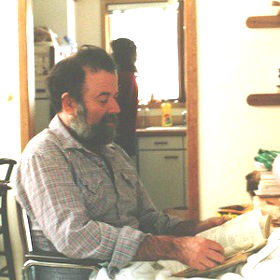
Andre Dubus (11 augustus 1936 – 24 februari 1999)
Zie voor nog meer schrijvers ook mijn blog van 11 augustus 2016 en ook mijn blog van 11 augustus 2011 deel 2.