Naar de inhoud

Romenu

Over literatuur, gedichten, kunst en cultuur
akke.beakke.be

Berichten van 22 september 2018 tot 23 september 2018

Herbst (Theodor Storm)


Bij het begin van de herfst


 2179769-fe0c2ffe78e03c17d2dfb7c88316cdbc.jpg
Spirit Of Autumn door George Inness, 1891


Herbst

Schon ins Land der Pyramiden
Flohn die Störche übers Meer;
Schwalbenflug ist längst geschieden,
Auch die Lerche singt nicht mehr.

Seufzend in geheimer Klage
Streift der Wind das letzte Grün;
Und die süßen Sommertage,
Ach, sie sind dahin, dahin!

Nebel hat den Wald verschlungen,
Der dein stillstes Glück gesehn;
Ganz in Duft und Dämmerungen
Will die schöne Welt vergehn.

Nur noch einmal bricht die Sonne
Unaufhaltsam durch den Duft,
Und ein Strahl der alten Wonne
Rieselt über Tal und Kluft.

Und es leuchten Wald und Heide,
Dass man sicher glauben mag,
Hinter allem Winterleide
Lieg' ein ferner Frühlingstag.


 2179769-90cd629cc66d6b593d8d2542b823d558.jpg
Theodor Storm (14 september 1817 – 4 juli 1888)
Husum, de geboorteplaats van Theodor Storm


Zie voor de schrijvers van de 23e september ook mijn twee vorige blogs van vandaag.

Geschreven door Romenu om 11:04 Reageer op dit bericht

Inge Boulonois, Antonio Tabucchi, Tom de Cock, Ellen Warmond, Olga Kirsch, Mary Coleridge

De Nederlandse dichteres en schilderes Inge Boulonois werd geboren in Alkmaar op 23 september 1945. Zie ook alle tags voor Inge Boulonois op dit blog.


Ode aan de kastanje

Oktober. Dagen zijn mistgrijs gekleed
en wilde kastanjes vallen maar raak.
Hun boom een kerel, zijn dos vol
groene stekelbollen. Als dobbelstenen
rollen ze weg, hun hoop gericht op boomhoog.

Onweerstaanbare pralines,
rap door kleine handen opgeraapt,
binnen als schat verloren gelegd –
dood in minder dan een winter.

Herfsttijd kreupelt weken door.
De zon bindt in, het loof gloeit na
totdat het oud en bruin wordt afgelegd,
de boom bloot naar zijn wortels keert
om zo kou te weerstaan.

Alsof het niets is, schept de kastanjeboom
na wintertijd als eerste nieuw blad. Lentekanjer –


Zoals het meestal wordt

Of misschien ook niet:
hij baart geen opzien meer in huis,
noch ik. Een zin kromp in.

Het harde bed blijft vierkant staan
net als de nieuwe oude tafel.
Bezetten we de overkant van ik
of ik en blazen nog wat zeepbellen.

Ik luister naar het raam of kijk
me buiten weg, volg aandacht
die steeds kruimels van het blad schuift.
Een opgewekte vogel pikt
soms in mijn ribbenkast.

We blijven zitten waar men zat.
Omdat. De suiker roert zich
gillend door de koffie -


Hooimaand

‘t Is niet te harden zonder parasol
Al kost gezeul met gieters mij steeds uren
Mijn gras blijft geler dan bij alle buren
Catalpa’s houden herfstgloed in hun bol

Maar ’t ergste vind ik nog die enge look
Van mannenbenen in een korte broek


 2179767-ebf39ee0b48b21ca582728254ca178ef.jpg
Inge Boulonois (Alkmaar, 23 september 1945)


De Italiaanse schrijver, vertaler, en literatuurwetenschapper Antonio Tabucchi werd op 23 september 1943 geboren in Pisa. Zie ook alle tags voor Antonio Tabucchi op dit blog.

Uit: For Isabel (Vertaald door Elizabeth Harris)

“He dug in his pocket and pulled out a bunch of keys. The only ones who come here are Chinese, all of them with birdcages, he said, following a logic that escaped me, they each have a little songbird in a cage and they’ll get their bird to converse with their neighbor’s bird, and this is how it’s done in China, the birdies chatter and make friends, and so their owners also make friends, and they, too, get to talk. He paused and stared at me, looking distressed. But you don’t have a birdcage, he went on, and there’s no one else here with a birdcage, the only ones left in the garden are two old Mahjong players who’ll leave by the smaller gate, what else is there for you to do here now, except run into bats? I need to get into the cave tonight, I insisted, you know, friend, you might say it’s part of my destiny, that destiny the stars steer, you yourself believe in the stars, please let me stay, I’ll leave by the smaller gate, too, let me stay, please, maybe that half-blind poet of the sixteenth century will even help me out tonight, here in this garden that smells of magnolias. The gatekeeper looked at me with something like pity. This garden doesn’t smell of magnolias, he replied, this garden smells of piss, because all the Chinese piss on the trees, they’re too lazy to go to the bathrooms we installed near the fountain, and so this garden stinks of piss. Very well, I agreed, under the light of that star which guides my terrestrial journey, I’ll remain in this garden that stinks of piss; it’s true, I haven’t brought any birds in a cage, but I’m here to follow a destiny which I’ll eventually come to know.
The gatekeeper stepped aside and handed me a small flashlight. This should help, he said, you can leave it at the outside gate when you go. I walked down the path, breathing deeply, waiting for the stink of piss, but nothing stank, a cool breeze had risen and carried the smell of the sea. Beneath a streetlamp, two Chinese were playing Mahjong, I said hello and they nodded in return. One was building superior honors, with a row of four white dragons, the other was working on a set of characters. I thought I could use both dragons and characters that night, and I headed for the cave. I was halfway down the garden path when I heard a whistle behind me from one of the players. You want to watch? he called, we don’t have anyone to watch, and Mahjong needs an audience. I signaled no with my hand and continued on my way; at the cave entrance I turned on the gatekeeper’s flashlight.”


 2179767-03b9d1e09df7e13590eabb9516b59ea6.jpg
Antonio Tabucchi (23 september 1943 – 25 maart 2012)


De Vlaamse schrijver en radio-dj Tom De Cock werd geboren in Rotselaar op 23 september 1983. Hij woont in Borgerhout. Zie ook alle tags voor Tom de Cock op dit blog.

Uit: En toen kwam jij

“Euforisch en doodsbenauwd. En dan nemen we je mee naar huis.
Daar lig je dan, in je gloednieuwe babystoel op de achterbank. Die vanaf dan ook jouw achterbank is.
Onze achterbank. Van jou, van mij, en van papa.
Ja, dat lees je goed, het is beslist: hij mag de papa zijn. Dat was een cadeautje. Zomaar, onderweg in een auto ergens in Argentinië, met de zon op mijn bol en de uitgestrekte Andes als volstrekt ongeïnteresseerde getuige. ‘Jij mag de papa zijn.’
‘Meen je dat?’ En glunderen dat ie deed. ‘En jij dan?’
Goh, ja. Paps, pappie, Tom, Tokke, vake, vader, daddy, da T, Mustafa de Zesde, voor mijn part zelfs mama: couldn’t care less. Zelfs als je me consequent aanspreekt als ‘hé jeannette’ zal ik je op mijn schouders tillen en zo op de meest heroïsche tocht van mijn bestaan de Prioriteitenberg op klimmen.
Radioprogramma’s en boeken en reizen en allerlei gekke projecten aan de voet. Collega’s, kennissen, vrienden en familie bij de boomgrens. Je grootouders en je ooms en tantes zo’n beetje tussen de wolken. En hélemaal op de top, op het plekje met het mooiste uitzicht en de meeste zon, naast je papa: daar kom jij. Niet omdat dat zo hoort, maar omdat jij me gaat leren Wat Belangrijk Is En Wat Niet.
En je hoeft daar niks bijzonders voor te doen. Als ik je maar mag zien rondspetteren in bad, en schaterlachen en boos zijn en met alles spelen behalve met de karrenvracht speelgoed die je zult hebben.
Tekenen op de sofa met de dikste en meest onuitwisbare viltstift die er in huis te vinden is. Het net als we gehaast zijn vrolijk in je broek doen. Onuitstaanbaar hard een meisje zijn, of een jongen, of een beetje van allebei. Vloeken op je huiswerk. Je hart laten opblazen door je eerste grote liefde.”


 2179767-2f8b93b1935a0f4891f4cfe1f9fc2c6f.jpg
Tom De Cock (Rotselaar, 23 september 1983)


De Nederlandse dichteres en schrijfster Ellen Warmond (pseudoniem van Pietronella Cornelia van Yperen) werd geboren in Rotterdam op 23 september 1930. Zie ook alle tags voor Ellen Warmond op dit blog.


Jong als kinderstemmen

Jong als kinderstemmen
reeds met de tongval van de ouderdom
te kunnen zeggen:
zie achter mij hoeveel ik al tot stof geleefd heb
en hoeveel as zich ophoopt in mijn ogen
en hoeveel stof en as mijn hand daarvan
bevatten kan en samenbalt tot niets.
en toch en desondanks
wachten - onmatig -
- want matigheid is zwakte -
en nieuwe kleren kopen voor de hoop
hoewel de laatste zekerheden naakt gaan
en trachten waar men niet bestond
toch te ontstaan
om het onmogelijk natuurverschijnsel:
zon in de maan
rondlopende weg terug
of het oog in de rug.
omdat geloof ontspringt
uit de zekerheid dat er geen hoop meer is
omdat het hart zich voedt
met wat de hand ontvalt.


Avond

Seconden lopen driftig achteruit
de dag is uit de tijd gekanteld

ik word zo stil als een strand
in een winternacht ik word
zo leeg als een uitgebrand
huis het leven staat verder
van mij af dan ik kan vertellen

leg je gezicht in je handen
en probeer je dit voor te stellen.


 2179767-f7221ca929fffdce0711a423d9d3fc65.png
Ellen Warmond (23 september 1930 – 28 juni 2011)


De Zuid-Afrikaanse / Israëlische dichteres Olga Kirsch werd geboren in Koppies in de Oranje Vrijstaat op 23 september 1924. Zie ook alle tags voor Olga Kirsch op dit blog.


Aan die verhuisingsmanne

Dra saggies, vriende,
want sierpotte en erdewerk,
keurborde en fyn glas
sluit ’n lewe
met sy drome
en verlangens in;

Dra saggies, mededraers,
want die drag
van veerbed,
tafels, lessenaar
druk teen die bors
se dun skelet;

Dra saggies, regters,
want die oordeel
oor my klein bedryf
lê vasgevang
in prente, boeke
en ’n eie ou gemakstoel;

Dra saggies, gode,
want die hart se porselein
is broos en tot veel seer
en kwesbaarheid geneig:
die kratte van ’n lewe
kan so maklik breek.


Something died in me with your departure

Something died in me with your departure;
something ecstatic and joyfully spontaneous,
irresponsible as a spring illusion,
leaked from my being – drop by drop.

Something disappeared ... Oh that I could awake
from this heavy trance, and again happiness
experience, overwhelmingly big, or choke and swallow
with sorrow! But I remain cold, untouched.

So I must resign myself, although I’m dull –
numb with longing. Because I await
everything that has eluded me, and so

much that you must replenish, that
will unfold in me like a flower on that joyful day
when you come home from afar.


Vertaald door Egonne Roth


 2179767-8b6d022c162b6f9436ae0c3c45443a15.jpg
Olga Kirsch (23 september 1924 – 5 juni 1997)
Cover


De Engelse dichteres en schrijfster Mary Elizabeth Coleridge werd geboren in Londen op 23 september 1861. Zie ook alle tags voor Mary Colderidge op dit blog.


Unwelcome

We were young, we were merry, we were very very wise,
And the door stood open at our feast,
When there passed us a woman with the West in her eyes,
And a man with his back to the East.

O, still grew the hearts that were beating so fast,
The loudest voice was still.
The jest died away on our lips as thy passed,
And the rays of July struck chill.

The cups of red wine turned pale on the board,
The white bread black as soot.
The hound forgot the hand of her lord,
She fell down at his foot.

Low let me lie, where the dead dog lies,
Ere I sit me down again at a feast,
When there passes a woman with the West in her eyes,
And a man with his back to the East.


Marriage

No more alone sleeping, no more alone waking,
Thy dreams divided, thy prayers in twain;
Thy merry sisters tonight forsaking,
Never shall we see, maiden, again.

Never shall we see thee, thine eyes glancing.
Flashing with laughter and wild in glee,
Under the mistletoe kissing and dancing,
Wantonly free.

There shall come a matron walking sedately,
Low-voiced, gentle, wise in reply.
Tell me, O tell me, can I love her greatly?
All for her sake must the maiden die!


 2179767-f495a991ee2e51b0ef11505253329792.jpeg
Mary Coleridge (23 september 1861 – 25 augustus 1907)
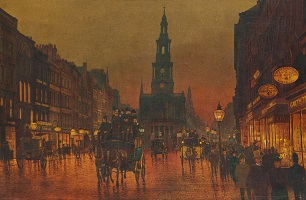
The Strand, London door John Atkinson Grimshaw, 1899.


Zie voor de schrijvers van de 23e september ook mijn vorige blog van vandsaag.

Geschreven door Romenu om 11:03 Reageer op dit bericht

Leni Saris, Jaroslav Seifert, Theodor Körner, Euripides, Emma Orczy, Daniel Czepko von Reigersfeld

De Nederlandse schrijfster Leni Saris werd geboren in Rotterdam op 23 september 1915. Zie ook alle tags voor Leni Saris op dit blog.

Uit: Geluk reikt ver

“Zij was Teresa Roberta Valerie van Rossum gedoopt en haar vader klaagde gewoonlijk, met een pretglans in zijn ogen, dat het geen zin had, je dochter bij het begin van haar leven een serie fraaie namen te geven, wanneer je haar onmiddellijk daarna 'Terry' wilde gaan noemen. De moeder van Teresa Roberta Valerie lachte erom, maar bleef het kleintje hardnekkig Terry noemen. Misschien vond ze al die namen te zwaar en te gewichtig voor het tere donkerogige hoop-je mens. In ieder geval bleef het altijd bij 'Terry' en het kleine meisje was een vrolijk en gelukkig kind, vooral toen later Cora, Inger en ten slotte Ronny arriveerden. Het blonde vrolijke jongetje was vanaf het begin de lieveling van de hele familie en soms merkte zijn moeder weleens bezorgd op, dat het kind de kans liep om een verwend klein mormel te worden, maar Ronny had zon zonnig karakter en was de gulheid en zachtheid in persoon, zodat niemand die klachten al te zwaar opnam. Terry had zich altijd echt 'de oudste' gevoeld, die, hoe dol ze ook mee kon doen met de wilde spelletjes van de anderen, tenslotte toch de verantwoordelijkheid voor de drie jongere kinderen bleef voelen. „Kom maar bij Terry," zei ze beschermend, wanneer Ronny een enkele keer verdriet had. „Terry kan je immers altijd helpen!" Mevrouw Van Rossum keek op een zonnige morgen, toen de familie op het punt stond om met vakantie te gaan, naar buiten, omdat ze Ronny hoorde huilen. Cora wilde hem troosten, maar de kleine jon-gen trok zich los. „Ik wil naar Terry... Terry moet me helpen!" brulde hij. Terry, klein en tenger voor haar twaalf jaren, kwam haastig aandra-ven en hurkte bij haar broertje neer. „Stil maar, Ronny, zo erg is het toch niet?" Ze wreef deskundig over een blonde krullenbol, die er gelukkig onbeschadigd uitzag. „De pijn is alweer weg... kijk, daar vliegt ze... hoog in de lucht!" „Ik zie niks!" pruilde het ventje, met zijn handje aan zijn hoofd, maar hij liet zich toch getroost door zijn zusje meetrekken naar de zand-bak. „Het verveelt me nooit om te zien hoe Terry met Ronny optrekt," zei mevrouw Van Rossum. „Ze doet het zo leuk en vanzelfsprekend, zonder op de bemoeizuchtige kopie van een volwassen mens te lij-ken. Ik denk weleens..."


 2179760-a62dbde7dd1e8d962b20854bd4fab37a.jpg
Leni Saris (23 september 1915 – 9 december 1999)
Cover


De Tsjechische dichter Jaroslav Seifert werd op 23 september 1901 geboren en groeide op in Praag. Zie ook alle tags voor Jaroslav Seifert op dit blog.


Struggle With The Angel (Fragment)

Sometimes it’s just a tremor of delight,
more often long and bitter pain.
At other times all sighs and tears.
And sometimes even boredom.
That’s the saddest kind.

Some time in the past I saw a rose-red shade.
It stood by the entrance to a house
facing Prague’s railway station,
eternally swathed in smoke.

We used to sit there by the window.
I held her delicate hands
and talked of love.
I’m good at that!
She’s long been dead.
The red lights were winking
down by the track.

As soon as the wind sprang up a little
it blew away the grey veil
and the rails glistened
like the strings of some monstrous piano.
At times you could also hear the whistle of steam
and the puffing of engines
as they carried off people’s wretched longings
from the grimy platforms
to all possible destinations.
Sometimes they also carried away the dead
returning to their homes
and to their cemeteries.

Now I know why it hurts so
to tear hand from hand,
lips from lips,
when the stitches tear
and the guard slams shut
the last carriage door.

Love’s an eternal struggle with the angel.
From dawn to night.
Without mercy.
The opponent is often stronger.
But woe to him
who doesn’t realize
that his angel has no wings
and will not bless.


 2179760-0a9e01c21be4a2421af187da9fa58274.jpg
Jaroslav Seifert ( 23 september 1901 – 10 januari 1986)
In 1981 


De Duitse dichter en schrijver Theodor Körner  werd geboren op23 september 1791 in Dresden. Zie ook alle tags voor Theodor Körner op dit blog.


Des Feldpredigers Kriegstaten

Ich bin bei englischem Rindfleisch erzogen
Und habe bei englischem Biere studiert.
Der Herr General war mir gewogen;
Drum ward ich zum Feldprediger avanciert.
Denn der Mensch muß etwas versuchen und wagen;
Drum sitz' ich hier auf dem Bagagewagen.

Bin in Portugal nun Soldatenpastor
Und predige über Ach und Weh
Und warne vor Trunkenheit und Laster,
Die reuige, aber besoffene Armee,
Pfleg' aufs beste die Kehl' und den Magen
Und sitze hier auf dem Bagagewagen.

Gestern war eine große Bataille;
Es kam zu einer blutigen Schlacht.
Wir fochten alle en canaille;
Ich hätt' es kaum als möglich gedacht.
Der Franzose ward aufs Haupt geschlagen,
Und ich saß auf dem Bagagewagen.

Es ward schrecklich viel Blut vergossen
Ich kam in den größten Embarras.
Die Feinde hatten einen Bock geschossen
Und wir, wir schossen Viktoria.
Der gehört zu meinen glorreichsten Tagen;
Und ich saß auf dem Bagagewagen.

Ich sehe schon die Haufen Gedichte,
Die man uns Helden wird billig weihn.
Wir glänzen ewig in der Geschichte
Und ziehn in die Unsterblichkeit ein,
Und von mir auch wird man singen und sagen:
"Ja, der saß auf dem Bagagewagen!"


 2179760-4688ac3617d3de8386648e7d2e8dc08f.jpg
Theodor Körner (23 september 1791 – 26 augustus 1813)
Cover


De Griekse schrijver Euripides werd geboren in 480 of 484 voor Christus. Zie ook alle tags voor Euripises op dit blog.


Uit: Medea

KOORr:
Ik hoor de stem, ik hoor de klacht
der rampzalige Colchische.
Weet zij nog niet te berusten; o zeg mij:
´k hoorde hier binnen haar jamm´ren:
´t leed van haar huis verschaft mij geen vreugde:
zij was mij lief geworden.

VOEDSTERr:
Voorbij is alles, verloren haar huis!
D´ een gaat in zijn vorstelijk huwelijk op
en Medea verdwijnt in haar kamer,
voor alles, wat iemand haar zeggen wil doof
en koud voor elke vertroosting.

MEDEA:
O dat het vuur van den hemel mij voer door het hoofd;
wat wacht ik nog van het leven:
ik haat het; o kwam nu de dood mij bevrijden.

KOOR:
Hoort gij, o Zeus, o Aarde en Licht
het klaaglied dier rampzaal´ge vrouw?
Verdwaasde, zal ´t verlangen
naar ongenaakb´re sponde
u drijven naar het eind des levens?
Neen, smeek dat niet.
Stelt uw gemaal
zijn eer in nieuw een verbond,
Zeus zal hem richten;
verteer niet u zelve
van smart om uw bedgenoot.

MEDEA:
O Themis, o Artemis, ziet
wat ik lijd, die met duren eed
mij bond aan dien man, dien vervloekte.
O mocht ik hem zelf en zijn bruid
zien vermalen in ´t puin van zijn huis,
die mij durfde te krenken in recht en eer.
O vader, o stad, die ik schand´lijk ontvlood,
na mijn eigen broeder te hebben gedood.


Vertaald door Dr. Chr. Deknatel


 2179760-a2593eef035ba12397a59efcaf6c7578.jpg
Euripides (484 v. Chr – 406 v. Chr) 
Beeld in het Louvre, Parijs


De Hongaarse schrijfster Emmuska Orcy de Orczi, ook wel Baronesse Orczy of Baronesse d’Orczy werd geboren in Tarnaörs op 23 september 1865. Zie ook alle tags voor Emma Orczy op dit blog.

Uit: The Scarlet Pimpernel

“The sun was sinking low down in the west. Bibot prepared himself to close the gates.
"EN AVANT The carts," he said.
Some dozen covered carts were drawn up in a row, ready to leave town, in order to fetch the produce from the country close by, for market the next morning. They were mostly well known to Bibot, as they went through his gate twice every day on their way to and from the town. He spoke to one or two of their drivers--mostly women--and was at great pains to examine the inside of the carts.
"You never know," he would say, "and I'm not going to be caught like that fool Grospierre."
The women who drove the carts usually spent their day on the Place de la Greve, beneath the platform of the guillotine, knitting and gossiping, whilst they watched the rows of tumbrils arriving with the victims the Reign of Terror claimed every day. It was great fun to see the aristos arriving for the reception of Madame la Guillotine, and the places close by the platform were very much sought after. Bibot, during the day, had been on duty on the Place. He recognized most of the old hats, "tricotteuses," as they were called, who sat there and knitted, whilst head after head fell beneath the knife, and they themselves got quite bespattered with the blood of those cursed aristos.
"He! la mere!" said Bibot to one of these horrible hags, "what have you got there?"
He had seen her earlier in the day, with her knitting and the whip of her cart close beside her. Now she had fastened a row of curly locks to the whip handle, all colours, from gold to silver, fair to dark, and she stroked them with her huge, bony fingers as she laughed at Bibot.
"I made friends with Madame Guillotine's lover," she said with a coarse laugh, "he cut these off for me from the heads as they rolled down. He has promised me some more to-morrow, but I don't know if I shall be at my usual place."


 2179760-32cdca58b709fc4214a2c93c11f3a98b.jpg
Emma Orczy (23 september 1865 – 12 november 1947)
Cover


De Duitse dichter en schrijver Daniel Czepko von Reigersfeld werd op 23 september 1605 in Koischwitz (Pools: Koskowice) geboren. Zie ook alle tags voor Daniel Czepko von Reigersfeld op dit blog.


Ohne Gott nirgend Ruh
An den Ruh suchenden

Ist wohl, so lang' ein Mensch der Welt noch ist ergeben,
In allem, was er thut, im Tod und auch im Leben,
Er schläffet oder wacht, in Wollust oder Pein,
Er hoffet oder wünscht Ruh anzutreffen? Nein.
Jedoch begehret er nicht einen Tritt zu schreiten,
Er sieht sich keinmal umb, wendt sich zu keiner Seiten,
Kein Eßen stillet ihn, kein Auge macht er zu,
Streckt keine Hand nicht aus, sucht er nicht drinnen Ruh.[28]
Ruh schreyt ein iedes Ding. Ruh ist ein Ziel der Sachen,
Und was das gröste, Got wil selbst zur Ruh sich machen.
Ja sprichst du, welcher ist, der Gott erforschen kan?
O Mensch, du triffst ihn ja in allen Dingen an.
Ich sehe, du wilt fort, bleib wilt du Ruh ergründen,
In dir ist Gott allein, in Gott ist Sie zu finden.


 2179760-37b9e8f305ffed547456ce3a85d4f6c9.jpg
Daniel Czepko von Reigersfeld (23 september 1605 – 8 september 1660)
Cover

Geschreven door Romenu om 11:03 Reageer op dit bericht

Thank God for little children (Frances Harper)


Bij de 25e zondag door het jaar


 2179758-5187c85a0a9069516d1689ee48a36c6c.jpg
Christus en de kinderen door Carl Bloch, ca. 1870


Thank God for little children

Thank God for little children,
Bright flowers by earth's wayside,
The dancing, joyous lifeboats
Upon life's stormy tide.

Thank God for little children;
When our skies are cold and gray,
They come as sunshine to our hearts,
And charm our cares away.

I almost think the angels,
Who tend life's garden fair,
Drop down the sweet wild blossoms
That bloom around us here.

It seems a breath of heaven
Round many a cradle lies,
And every little baby
Brings a message from the skies.

Dear mothers, guard these jewels.
As sacred offerings meet,
A wealth of household treasures
To lay at Jesus' feet.


 2179758-3fb0958289d86617df5e07ca178438ab.jpg
Frances Harper (24 september 1825 - 25 februari 1911)
De Saint Francis Xavier Catholic Church in Baltimore, de geboorteplaats van Frances Harper


Zie voor de schrijvers van de 23e septmber ook mijn twee volgende blogs van vandaag.

Geschreven door Romenu om 11:02 Reageer op dit bericht

Jaap Harten, Dannie Abse, Lodewijk van Deyssel, Nick Cave, Peter Drehmanns, Nathan Hill

De Nederlandse dichter en schrijver Jacobus Cornelis (Jaap) Harten werd geboren in Blaricum op 22 september 1930. Zie ook alle tags voor Jaap Harten op dit blog.


In de schaduw van hout

Wij waren niet nieuwsgierig
naar woorden en ook niet
naar cijfers, grijs als het haar
van de meester. Wij zaten
in de vergeelde foto
van een klas, een
ontbloeiend mechaniek
van jeugd.

De meesten onder ons
hadden houten ouders;
in de zomer vol meloenen en bessen
lieten zij hun schaduw na,
vol wantrouwen
als een vogelverschrikker die
toch altijd weer
verkeerd begrepen wordt.

En de dichte bossen
waar wij met een fluit op zak
in verdwenen; de hooiberg waar
wij koppig stoeiden met snelle, groene
spieren; en later
de nachten op hol
in het zadel van liefde: wisten
de houten beelden er iets van?

Nee. Of deden alsof.
Zij gingen met de kippen
op stok onder een paraplu
van zelfgenoegzaamheid.
Zij sliepen als runen.
De nacht, als honderd zwarte
katten, danste stug bijgeloof
op het koord van hun slaap.


Schlechte Zeit für Lyrik (Bertolt Brecht)

1
Al deze vragen:
de opgestoken duim van een bloemblad,
de naakte iris achter oogharen
die eklipseren voor het
zien, dat weer nieuwe
vragen oproept:

een braadpan vol kinderwoorden,
feeën van een bladzij losgescheurd
en voor 3 à 4 sekonden
kopulerend met een jongensbroek.

Waar zijn de lichtgewicht
kampioenen in demonie
die vanuit 1939
opeens vuur spuwen in dit gedicht?

Vriendjes als mieren
rondkruipend over de zolder,
ik mijn vaders kepi
opgeprikt als een grimas.

Erekties. Vechtpartijen.
Scherpe geur van oksels
zout als tranen.

Vragen.
Geen tijd voor lyriek.


 2179568-277fd1dd341a4daf3e72a9f8557d345a.jpg
Jaap Harten (Blaricum, 22 september 1930)


De Britse dichter en schrijver Dannie Abse werd geboren op 22 september 1923 in Cardiff, Wales. Zie ook alle tags voor Dannie Abse op dit blog.


Not Adlestrop

Not Adlestrop, no - besides the name
hardly matters. Nor did I languish in June heat.
Simply, I stood, too early, on the empty platform,
and the wrong train came in slowly, surprised, stopped.
Directly facing me, from a window,
a very, very pretty girl leaned out.

When I, all instinct,
stared at her, she, all instinct, inclined her head away
as if she'd divined the much married life in me,
or as if she might spot, up platform,
some unlikely familiar.

For my part, under the clock, I continued
my scrutiny with unmitigated pleasure.
And she knew it, she certainly knew it, and would
not glance at me in the silence of not Adlestrop.

Only when the train heaved noisily, only
when it jolted, when it slid away, only then,
daring and secure, she smiled back at my smile,
and I, daring and secure, waved back at her waving.
And so it was, all the way down the hurrying platform
as the train gathered atrocious speed
towards Oxfordshire or Gloucestshire.


Failure

Writing should be dedicated living, and ordinary heroes go lame,
torn like bits of poems, bits of voices into the wind.
I should be vocal for all the dumb ; for the homeless be home,
for the hunted be shelter. Oh make this ink a land.

I should be forever new and tum towards them with pure surprise,
endow the lonely with gifts far lovelier than this look,
and cage their ragged shadows in my eyes
that fly down tearward. But only ghosts people this book.

Humanity, the earth is richer where you stand.
So I wish myself imagined, a young legendary sage
·possessed with worlds of blood and flesh, not this faltering hand
that limps in pain and poverty over each uncreated page.


 2179568-84fa3fd65ad3b51bf7b73d3e67c268e2.jpg
Dannie Abse (22 september 1923 – 28 september 2014)


De Nederlandse dichter, schrijver en criticus Lodewijk van Deyssel werd geboren op 22 september 1864 in Amsterdam. Zie ook alle tags voor Lodewijk van Deyssel op dit blog.

Uit:Jongensjeugd-schetsen

“Achter de schouders van den vader ging Adriaan door den gang. Het was hier stiller dan op straat. Van den wind was weinig meer te hooren. De gang was wit, maar het ganglampje was al op en dit maakte hier en daar goud-geele plekken op het wit, met breede, flauw goud doorwemelde, licht zwarte schaduw-randen. Het lampje was daar boven, aan het achter-einde van den gang, een kleine blank-geele vlam met een donkerder randje, met een, naar boven smaller, rond lampeglaasje, zoo doorzichtig als water, er om heen. Van boven eindigde het lampeglaasje met een open rontetje.
Aan de kleêrenkast gekomen, bergden zij hier hun kleêren in. Terwijl Adriaan met reikenden rechter arm de donkere kast in was, voelend met zijn hand de andere kleêren, waar-tusschen hij zijn jas aan den kapstok hing, hield hij zijn linker hand, recht opgestrekt en met zijn voorarm ook naar boven, tegen den rug van zijn vader aan, alsof dit bepaald noodig was om zich te houden bij het reiken.
Het heele huis was stil en op de trappen, tot boven toe, was niemand. Zij gingen de trap op, Adriaan achter zijn vader. De looper voelde zacht aan na de steenen van de straat en je kon de stappen bijna niet hooren. Alleen kwam nu en dan een van hun vier voeten tegen een looper-roede aan en dit gaf een geluid, dat prettig was om te hooren. Op het huiskamer-portaal brandde de groote lantaarn. Dit was het tweede licht in huis waar zij aan kwamen. Vader kwam met zijn hand naar achter zich, terwijl Adriaan achter hem liep, en nam zijn zakdoek uit een achterzak van zijn jas. Deze was groot en wit met vele kleine vlaktetjes en kromminkjes en rond gebogen vlakjes met veel butsjes en driehoekig uitstekende, alleenige dunne eindjes.
Voor de huiskamerdeur zag men nu het matje liggen in het licht. Dit was klein, lankwerpig en licht bruin en met een oranje rooden rand, en was hard en zacht onder je voeten.
De huiskamerdeur was nu geheel in 't licht en over-dag, als de lantaarn uit was, altijd in donker. Je zag nu de post van de deur, die om de deur heen was en die aan dezen kant van de deur meer als een deurpost gezien werd omdat er overal witte, door het lantaarnlicht licht goud gekleurde, muur om heen was. Je zoû aan den anderen kant nooit er zoo aan gedacht hebben dat de huiskamerdeur een deur was en met een post er om heen zooals dat ook bij andere deuren is. De deur was hier ook met lichter kleur geverfd dan aan den binnen-kant. Hij was gesloten. De kruk was daar en onbewegelijk stil. En boven de deur was nu het goud aan het goud-lokkig jongens-kopje veel duidelijker.”


 2179568-260c6cd3137854abeb7ae304649269fa.jpg
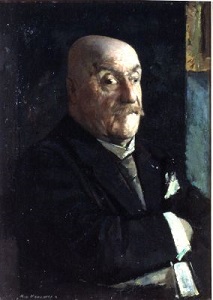
Lodewijk van Deyssel (22 september 1864 – 26 januari 1952)
Portret door Kees Verwey, 1941


De Australische singer / songwriter, dichter, schrijver en acteur Nicholas Edward Cave werd geboren in Warracknabeal op 22 september 1957. Zie ook alle tags voor Nick Cave op dit blog.

Uit: The Death of Bunny Munro

“He hears it now above the bombination of the air conditioner and it is sufficiently apocalyptic to almost arouse his curiosity. But not quite.
The watermark on the ceiling is growing, changing shape – a bigger breast, a buttock, a sexy female knee – and a droplet forms, elongates and trembles, detaches itself from the ceiling, freefalls and explodes on Bunny's chest. Bunny pats at it as if he were in a dream and says, 'Libby, baby, where do we live?'
‘Brighton.'
'And where is Brighton?' he says, running a finger along the row of miniature bottles of liquor arranged on the bedside table and choosing a Smirnoff.
'Down south.'
'Which is about as far away from 'up north' as you can get without falling into the bloody sea. Now, sweetie, turn off the TV, take your Tegretol, take a sleeping tablet – shit, take two sleeping tablets – and I'll be back tomorrow. Early.'
'The pier is burning down', says Libby.
'What?'
'The West Pier, it's burning down. I can smell the smoke from here.'
'The West Pier?'
Bunny empties the tiny bottle of vodka down his throat, lights another cigarette, and rises from the bed. The room heaves as Bunny is hit by the realisation that he is very drunk. With arms held out to the side and on tiptoe, Bunny moonwalks across the room to the window. He lurches, stumbles and Tarzans the faded chintz curtains until he finds his balance and steadies himself. He draws them open extravagantly and vulcanised daylight and the screaming of birds deranges the room. Bunny's pupils contract painfully as he grimaces through the window, into the light. He sees a dark cloud of starlings, twittering madly over the flaming, smoking hulk of the West Pier that stands, helpless, in the sea across from the hotel. He wonders why he hadn't seen this before and then wonders how long he has been in this room, then remembers his wife and hears her say, 'Bunny, are you there?'
'Yeah,' says Bunny, transfixed by the sight of the burning pier and the thousand screaming birds.
'The starlings have gone mad. It's such a horrible thing. Their little babies burning in their nests. I can't bear it, Bun,' says Libby, the high violin rising.”

 2179568-ca6610ca49edf404a52b5885e87304b9.jpg
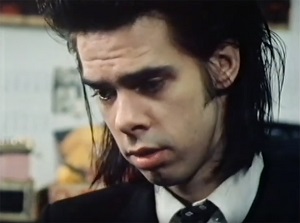
Nick Cave (Warracknabeal , 22 september 1957)


De Nederlandse dichter en schrijver Peter Drehmanns werd op 22 september 1960 in Roermond geboren. Zie ook alle tags voor Peter Drehmanns op dit blog.


Terwijl

Terwijl de trein te velde trekt
verdwijn je maximaal
in met fluweel beknuffelde banken
tussen Omsk en Otranto.

Terwijl de taxi's talmen voor Termini
struikel je danig
de napalmnacht binnen,
koppeltekens boven je beduimelde ogen
accolades in je mondhoeken
een dubbele tong in je hand.

Terwijl de hotelkamer openscheurt
val je voluit
tussen de regels van het opengeslagen bed -
en op het nachtkastje troont het happy end,
het jachtgeweer van de schrijver
in de open mond van de dag
in de stofstorm van wat weg was
van wat drab was.


Nog zowat

en dat de conducteur steeds opnieuw
langskomt en je kaartje bekladt
en dat het stof nooit ophoudt
neer te dalen en dat het zicht beperkt
blijft rondkolken en dat de konijnen zachtjes
sudderen en dat je rechtop moet lopen
en dat de bitten beschuimd zijn
in de tuigkamer en de teugels onontwarbaar
en dat de paarden de stal niet meer ruiken
en dat het sneeuwt in het apenhuis
en dat mijn meisje haar vingers zoekt
in het lange gras bezijden de roofdierverblijven
en dat de rantsoenkaarten verkruimelen
tussen mijn tanden en geen touw meer valt
vast te knopen aan welke geloofsrichting
dan ook


 2179568-ebca2d8665715aa01e03dac999aefdea.jpg
Peter Drehmanns (Roermond, 22 september 1960)


Onafhankelijk van geboortedata


De Amerikaanse schrijver Nathan Hill werd geboren in Cedar Rapids, Iowa, in 1976. Zie ook alle tags voor Nathan Hill op dit blog.

Uit: The Nix

“All I actually know right now,” the reporter says, “is that things were thrown.”
“What things?”
“That is unclear at this time.”
“Was the governor struck by any of the things? Is he injured?”
“I believe he was struck, yes.”
“Did you see the attackers? Were there many of them? Throwing the things?”
“There was a lot of confusion. And some yelling.”
“The things that were thrown, were they big things or small things?”
“I guess I would say small enough to be thrown.”
“Were they larger than baseballs, the thrown things?”
“No, smaller.”
“So golf- ball- size things?”
“Maybe that’s accurate.”
“Were they sharp? Were they heavy?”
“It all happened very fast.”
“Was it premeditated? Or a conspiracy?”
“There are many questions of that sort being asked.”
A logo is made: Terror in Chicago. It whooshes to a spot next to the anchor’s ear and flaps like a flag in the wind. The news displays a map of Grant Park on a massive touch- screen television in what has become a commonplace of modern newscasting: someone on television communicating via another television, standing in front of the television and controlling the screen by pinching it with his hands and zooming in and out in super- high definition. It all looks really cool.”


 2179568-30ae92093484c86c8b42757f23a66d97.jpg
Nathan Hill (Cedar Rapids, 1976)


Zie voor nog meer schrijvers van de 22e september ook mijn vorige blog van vandaag.

Geschreven door Romenu om 12:12 Reageer op dit bericht

Fay Weldon, Rosamunde Pilcher, György Faludy, Hans Leip, Uri Zvi Greenberg, Barthold Heinrich Brockes

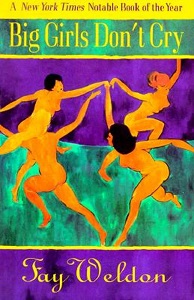
De Britse schrijfster Fay Weldon werd geboren op 22 september 1931 in Alvechurch, Engeland. Zie ook alle tags voor Fay Weldon op dit blog.

Uit: Big Girls Don't Cry

“Stephanie doesn't get the joke. This is her life problem. Her life asset is her beauty. In 1971 she is twenty-five; she has perfect features, a lanky body, abundant blonde straight hair, and rather large hands and feet. Layla is twenty-six, shorter, plumper, funnier; she has curly dark hair. One side of Layla's face does not line up with the other, so she is called sexy and attractive, but seldom beautiful. Layla does not regard this as a life problem. She has too much to think about.
The posters declare over and over, A Woman Needs a Man like a Fish Needs a Bicycle. People stare a moment and pass on. The message makes no sense. Obviously women need men. Everyone needs men. Masculinity is all. Armies need men, and government and business and technology and high finance. And teaching and medicine and adventuring and fashion. And all the serious arts. Offices, except for the typing pool, which is female, need men. It's homes which need women, except for the lawn which is male. Women are for sex, motherhood and domesticity. Men are in for status and action. Outside the home is high status, inside the home is low status. In popular myth men make decisions, women try on hats. The world is all id and precious little anima. Layla and Stephie, friends, mean to change all this. A Woman Needs a Man like a Fish Needs a Bicycle. Ho, ho, ho. Everyone knows women compete for male attention; isn't this how the problem of female bitchery arises? Catty? Felines are nothing compared with women. Perhaps this puzzle poster is advertising something?
A couple of tourists, Brian and Nancy from New Zealand, emerge from the crowds in Carnaby Street. They have been rendered punch-drunk by colour, fabric, and the smell of patchouli. These are still flower-power and drug days. See feather boas, silk caftans, crushed velvet hats; lots of mauve, flares, miniskirts, platform heels; good-looking guys with lots of hair, girls with doll faces drifting behind them; wide eyes, fake lashes, white faces. Brian and Nancy both wear white Aertex shirts and tennis shoes for ease and comfort. Both are in culture shock. They flew in today from Wellington. (It took thirty-six hours.) They are accustomed to mountains, plains and sheep farms. Brian is gloriously handsome and golden. Nancy is pleasing enough to look at, but lacks eroticism: she's tall, long-limbed, and manages to appear gawky rather than slender.”
 

 2179559-79ca52ec8b447efcd80b04bb3600c9c1.jpg
Fay Weldon (Alvechurch, 22 september 1931)
Cover


De Britse schrijfster Rosamunde Pilcher werd op 22 september 1924 geboren in Lelant, Cornwall, Groot-Brittannië. Zie ook alle tags voor Rosamunde Pilcher op dit blog.

Uit: The Shell Seekers

“She sometimes thought that for her, Nancy Chamberlain, the most straightforward or innocent occupation was doomed to become, inevitably, fraught with tedious complication.
Take this morning. A dull day in the middle of March. All she was doing ... all she planned to do ... was to catch the 9:15 from Cheltenham to London, have lunch with her sister Olivia, perhaps pop into Harrods, and then return home. There was nothing, after all, particularly heinous about this proposal. She was not about to indulge in a wild orgy of extravagance, nor meet a lover; in fact, it was a duty visit more than anything else, with responsibilities to be discussed and decisions made, and yet as soon as the plan was voiced to her household, circumstances seemed to close ranks, and she was faced with objections, or, worse, indifference, and left feeling as though she were fighting for her life.
Yesterday evening, having made the arrangement with Olivia over the phone, she had gone in search of her children. She found them in the small living room, which Nancy euphemistically thought of as the library, sprawled on the sofa in front of the fire, watching television. They had a playroom and a television of their own, but the playroom had no fireplace and was deathly cold, and the television was an old black-and-white, so it was no wonder they spent most of their time in here.
"Darlings, I have to go to London tomorrow to meet Aunt Olivia and have a talk about Granny Pen ..."
"If you're going to be in London, then who's going to take Lightning to the blacksmith to be shod?"
That was Melanie. As she spoke, Melanie chewed the end of her pigtail and kept one baleful eye glued to the manic rock singer whose image filled the screen. She was fourteen and was going through, as her mother kept telling herself, that awkward age.
Nancy had expected this question and had her answer ready.
"I'll ask Croftway to deal with that. He ought to be able to manage on his own."
Croftway was the surly gardener-handyman who lived with his wife in a flat over the stables. He hated the horses and constantly spooked them into a frenzy with his loud voice and uncouth ways, but part of his job was helping to cope with them, and this he grudgingly did, manhandling the poor lathered creatures into the horse-box, and then driving this unwieldly vehicle across country to various Pony Club events. On these occasions Nancy always referred to him as "the groom."
 2179559-1f8f9cb236ca6456f2391fb0fdce4889.jpg
Rosamunde Pilcher (Lelant, 22 september 1924)
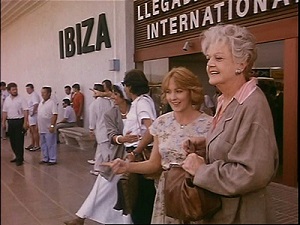
Scene uit de gelijknamige tv-film uit 1989 met o.a. Angela Lansbury als Penelope Keeling (rechts)


De Hongaarse dichter en schrijver György Faludy werd geboren op 22 september 1910 in Boedapest. Zie ook alle tags voor György Faludy op dit blog.


Ballade de celui qui n'est fils de personne

Comme un grand chapeau, le ciel bleu m'a recouvert,
et il s'est trouvé pour moi un seul ami fidèle: le brouillard.
Parmi des plats garnis la faim m'a saisi,
et j'ai eu froid à en mourir devant des poêles chauffés au rouge.
Là où j'ai mis la main, il n'y avait que des tuiles qui tombaient,
et la boue montait jusqu'à atteindre le bord de ma bouche,
près de ma route les roses mouraient
et mon souffle rendait l'été terne,
je m'étonne déjà presque de la lumière du jour,
de ce qu'elle brille encore parfois sur mes épaules en haillons,
moi qui ai parcouru tous les six mondes,
partout béni et partout cible de crachats.

J'ai lutté contre le vent dans les champs gelés,
mon vêtement n'est qu'une feuille de vigne,
rien n'est plus pur pour moi que la nuit,
rien n'est plus sombre pour moi que le midi.
J'ai éclaté en sanglots au fond des tavernes de marins,
de même que je ris dans les cimetières;
ce que j'ai est seulement ce que j'ai jeté dans la boue,
et j'ai tué tout ce que j'aime.
Avec son givre blanc, l'automne s'est déjà couché
sur mes tempes et mes cheveux roux comme le feu,
et je vais ainsi, sifflotant tout seul,
partout béni et partout cible de crachats.

Le ciel victorieux a posé sa tente sur moi,
la rosée a coloré de bleu mon front,
et c'est ainsi que j'ai poursuivi Dieu, qui a reculé,
et poursuivi l'avenir, qui est comme mon foyer.
Je me suis reposé des heures sur les sommets montagneux
et j'ai regardé avec admiration le casseur de pierres en sueur,
mais je suis passé en sifflotant près des cathédrales
et je me suis moqué de l'évêque aux vêtements ornés,
et pour cela il n'est tombé que baisers et coups de cravache
sur mon pauvre corps, qui s'est couché tout pareillement
parmi les coussins brodés et dans la boue des rues,
partout béni et partout cible de crachats.

Et bien que je n'aie ni maison, ni vin, ni épouse
et que le vent me siffle entre les jambes,
j'aurai encore de l'argent, et j'espère avec certitude
qu'un jour tout me réussira.
Et quand je serai lassé de manger dans des plats en or,
j'abandonnerai encore une fois les palais,
les vers danseront déjà la gigue pour atteindre mon ventre,
et quelque part sur les feuilles mortes d'automne,
au pied d'un vieux buisson d'épines sur lequel ne brillera
que la lumière douteuse d'une mauvaise étoile,
c'est là qu'un jour je resterai, François Villon, couché,
partout béni et partout cible de crachats.
 

 2179559-cbeca3bd8a09cf8fe058d19884e6f405.jpg
György Faludy (22 september 1910 – 1 september 2006)
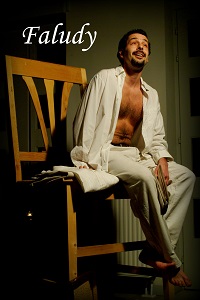
De Hongaarse acteur Turek Miklós presenteerde leven en werk van György Faludy tijdens een theatervoorstelling in Őriszentpéter,2004


De Duitse dichter en schrijver Hans Leip werd geboren op 22 september 1893 in Hamburg. Zie ook alle tags voor Hans Leip op dit blog.

Uit: Die Nächtezettel der Sinsebal

“(Sinsebal tanzt vor einem Spiegel in ihrer einsamen Stube)

Dann tanze ich das Spiegellied. Das Spiegellied? Oho! Was weiß mein Bein von mir? Was weiß mein Nacken von mir? Was weiß die weiße Haut? Der Vorhang ist zu, der Teppich grau und ein einziger Kuß. Da schläft mein Bett allein. Nein, gaffen die Kissen? Und pumpen die Puppen im Stuhl in der Kuhle die Mäuler zum Wundern rund? Die Berge schmunzeln auf den Bildern. Was macht die Lampe denn? Die Lampe macht sich winzig, rennt in mein Knotenhaar, brennt in mein Bronzepudelhaar, ein Edelstein, mein süßer Karfunk!
Ei Fürstin, ei Engelbengel, hü! Ei Töchterlein, ei Schmatz, mein Schatz!
Nun neigen sich die Arme sehr, die Schultern schleichen hinterdrein. Nun schlüpft das Knie davon, nun ruft das andre zärtlich nach. Schnipp, macht der Finger.
Nun heben sich die Zehen, tirili. Nun scharwenzen die Hüften juja, nun klingeln ting, ting die Brüstelein.
Nun stülpt eine Glocke über mich. O schwanker Trunk, dunkles Blau! Wer schwingt mich so, o halt, nein! O ja, schön! Noch fängt mich der Spiegel, steif grapst mich sein Mantel, nun klemmt er nicht mehr, schmal bin ich ihm weg, fängt mich nicht, fängt mich nicht! Nun Kreisel, nun Mond im Griff. Wirft mich ein Gaukler? Ein Walfisch schnappt mich. Feuer ist, Feuer ist! O schauert mich Eis!
Nun kreiseln die Wiesen, viel Blumen wie Mücken, die Schwalben, die Rehe, o schwindelnder Duft; nun häng’ ich im Wind, wie Zweige geschaukelt, wie Blätter geschleudert, wie Sternschnuppen blank. Nun schieß’ ich hinauf, o dunkel, o sausend, nun schluckt mich die Sonne, nun ist sie mein Tanzrad, ist toll, ist toll, o Fieber, ich brenne! Zu Regenbögen gestriemt die Wände, die Puppen, die Stühle, mein Hemd, meine Kissen, mein Bett, meine Bücher, ich schwebe, ich falle!”
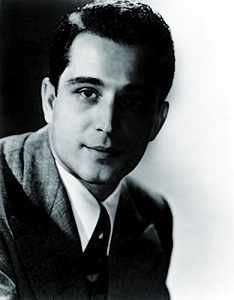
 

 2179559-027851224f6159d283c8397a085473f9.jpg
Hans Leip (22 september 1893 – 6 juni 1983)


De Israëlische Hebreeuwse en Jiddische dichter en politicus Uri Zvi Greenberg werd geboren op 22 september 1896 in Bialikamin, Lviv, in Galicië, destijds behorend tot Oostenrijk-Hongarije. Zie ook alle tags voor Uri Zvi Greenberg op dit blog.


We Were Not Likened To Dogs

We were not likened to dogs among the Gentiles—by them a dog is pitied
Caressed and even kissed by the Gentile mouth, for like the puppy
Beloved of his home, he is fondled and rejoiced in always:
And when this dog dies—how very much the Gentile mourns him!

We were not led like sheep to the slaughter in the boxcars
For like leprous sheep they led us to extinction
Over all the beautiful landscapes of Europe... .
The Gentiles did not handle their sheep as they handled our bodies:
Before slaughter they did not pull out the teeth of their sheep:
They did not pluck the wool from their bodies as they did to us:
They did not push the sheep into the fire to make ashes of the living
And to scatter the ashes over rivers and sewers.

Are there other parables like this, our catastrophe, that came to us from their hands?
There are no other parables (all words are shades of shadow)—
And therein is the horror-striking expression: There are no other parables!
Every cruel torture that man may yet do to man in a Gentile country,
The future fashioner of parables will liken so: He was tortured like a Jew.
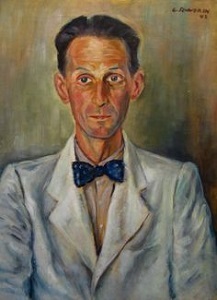
 

 2179559-d9c3e9e22d67961cecbdc118e7370a2b.jpg
Uri Zvi Greenberg (22 september 1896 – 8 mei 1981)
Portret uit 1942


De Duitse dichter Barthold Heinrich Brockes werd geboren in Hamburg op 22 september 1680. Zie ook alle tags voor Barthold Heinrich Brockes op dit blog.


Gedanken bey dem Fall der Blätter im Herbst

In einem angenehmen Herbst, bey ganz entwölktem heiterm Wetter,
Indem ich im verdünnten Schatten, bald Blätter-loser Bäume, geh′,
Und des so schön gefärbten Laubes annoch vorhandnen Rest beseh′;
Befällt mich schnell ein sanfter Regen, von selbst herabgesunkner Blätter.

Ein reges Schweben füllt die Luft. Es zirkelt, schwärmt′ und drehte sich
Ihr bunt, sanft abwärts sinkend Heer; doch selten im geraden Strich.
Es schien die Luft, sich zu bemühn, den Schmuck, der sie bisher gezieret,
So lang es möglich, zu behalten, und hindert′ ihren schnellen Fall.
Hiedurch ward ihre leichte Last, im weiten Luft-Kreis überall,
In kleinen Zirkelchen bewegt, in sanften Wirbeln umgeführet,
Bevor ein jedes seinen Zweck, und seiner Mutter Schooß, berühret;
Um sie, bevor sie aufgelöst, und sich dem Sichtlichen entrücken,
Mit Decken, die weit schöner noch, als persianische, zu schmücken.

Ich hatte diesem sanften Sinken, der Blätter lieblichem Gewühl,
Und dem dadurch, in heitrer Luft, erregten angenehmen Spiel,
Der bunten Tropfen schwebendem, im lindem Fall formiertem, Drehn,
Mit offnem Aug′, und ernstem Denken, nun eine Zeitlang zugesehn;
Als ihr von dem geliebten Baum freywilligs Scheiden (da durch Wind,
Durch Regen, durch den scharfen Nord, sie nicht herabgestreifet sind;
Nein, willig ihren Sitz verlassen, in ihren ungezwungnen Fällen)
Nach ernstem Denken, mich bewog, sie mir zum Bilde vorzustellen,
Von einem wohlgeführten Alter, und sanftem Sterben; Die hingegen,
Die, durch der Stürme strengen Hauch, durch scharfen Frost, durch schwehren Regen
Von ihren Zweigen abgestreift und abgerissen, kommen mir,
Wie Menschen, die durch Krieg und Brand und Stahl gewaltsam fallen, für.

Wie glücklich, dacht′ ich, sind die Menschen, die den freywillgen Blättern gleichen,
Und, wenn sie ihres Lebens Ziel, in sanfter Ruh′ und Fried′, erreichen;
Der Ordnung der Natur zufolge, gelassen scheiden, und erbleichen!

 

 2179559-6255d6f7dbfcfc379335d4b2cbe2a621.jpg
Barthold Heinrich Brockes (22 september 1680 - 16 januari 1747)
Cover

Geschreven door Romenu om 12:12 Reageer op dit bericht

Meer van Romenu

↑ Terug naar de berichten