Naar de inhoud

Romenu

Over literatuur, gedichten, kunst en cultuur
akke.beakke.be

Berichten van 8 november 2018 tot 9 november 2018

Jens Christian Grøndahl, Ivan Toergenjev, Lloyd Haft, Erika Mann, Jan Decker, Roger McGough, Anne Sexton, Mohammed Iqbal, Michael Derrick Hudson
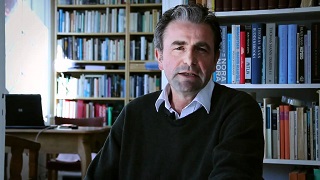
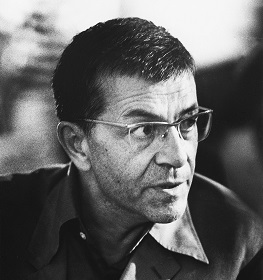
De Deense schrijver Jens Christian Grøndahl werd geboren in Lyngby op 9 november 1959. Zie ook alle tags voor Jens Christian Grøndahl op dit blog.

Uit: Often I Am Happy

“Now your husband is also dead, Anna. Your husband, our husband. I would have liked him to lie next to you, but you have neighbors, a lawyer and a lady who was buried a couple of years ago. The lawyer had been around for a long time when you joined them. I found a vacant plot for Georg on the next row; the back of his stone is visible from your grave. I opted for limestone, although the stonemason said it wouldn’t be weatherproof. So what? I don’t like granite. The twins would have liked granite—on this point they agreed for once. Granite is too heavy, and our Georg had been complaining about this weight on his chest. We should have taken it more seriously, but he shrugged it off. At first he moaned, and when you wanted to share his concern you were brushed aside. Georg was like that.
He collapsed in the shower. I knew right away that something was wrong, or only now I think I knew it. He groaned and it felt anomalous to maneuver his heavy, wet body. He was still conscious as I got him to bed. When the ambulance came, it was all over. He looked like himself, older but still nice enough. His belly was less protruding when he was lying on his back. You never saw him that way, but seventy-eight is nothing, really, don’t you agree? Or seventy, for that matter. It could have been you who found him on the tiles under the jet of hot water. Normally, it would have been you. Can you say that? He always stayed out there for so long. He might easily have remained standing if his coronary artery had not burst. It could have been your life continuing just like that. Where would I have been, in your life? Where would I have been in mine? I caressed him as we were waiting for the ambulance to come, but I don’t know if he felt anything. At some point as I sat with him, there was no longer anything to feel. I realized it later. He could not feel my touch, as if I were the one who was suddenly absent. His absence felt like a lump growing inside me, making me suffocate. I never felt so alone. One is used to reality responding or just resounding with whatever one thinks or feels. Death shuts up the living; the real is our enemy in the long run.
The day after the funeral, I biked to the cemetery again. I took a couple of the sprays and put them in front of your headstone. Otherwise, I have brought you flowers only when it was your birthday. The first years I came quite often, mostly alone. Georg didn’t like to come along, and in the end I’d stopped telling him that I had been at your grave. At that time, it had been ages since I’d stopped asking him why he wouldn’t come. I don’t think he ever forgave you completely, but even that he probably wouldn’t have wanted to admit, had I asked him. I might have construed his answer in the sense that I had not been fully capable of filling your place. He was so considerate, and I think he had come to be really fond of me. The years passed, mind you, and in the end we belonged together, simply because we lived side by side. We underestimate the power of habit while we’re young, and we underestimate the grace of it. Strange word, but there it is.”


 2191511-7b99f03e7720096d7cf39e1e13703944.jpg
Jens Christian Grøndahl (Lyngby, 9 november 1959)


De Russische schrijver Ivan Sergejevitsj Toergenjev werd geboren op 9 november 1818 in Orjol, in de Oekraïne. Zie ook alle tags voor Ivan Toergenjev op dit blog.

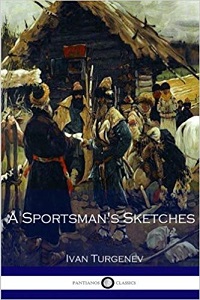
Uit: The District Doctor (Vertaald door Constance Garnett)

“One day in autumn on my way back from a remote part of the country I caught cold and fell ill. Fortunately the fever attacked me in the district town at the inn; I sent for the doctor. In half-an-hour the district doctor appeared, a thin, dark-haired man of middle height. He prescribed me the usual sudorific, ordered a mustard-plaster to be put on, very deftly slid a five-rouble note up his sleeve, coughing drily and looking away as he did so, and then was getting up to go home, but somehow fell into talk and remained. I was exhausted with feverishness; I foresaw a sleepless night, and was glad of a little chat with a pleasant companion. Tea was served. My doctor began to converse freely. He was a sensible fellow, and expressed himself with vigour and some humour. Queer things happen in the world: you may live a long while with some people, and be on friendly terms with them, and never once speak openly with them from your soul; with others you have scarcely time to get acquainted, and all at once you are pouring out to him — or he to you — all your secrets, as though you were at confession. I don’t know how I gained the confidence of my new friend — any way, with nothing to lead up to it, he told me a rather curious incident; and here I will report his tale for the information of the indulgent reader. I will try to tell it in the doctor’s own words.
‘You don’t happen to know,’ he began in a weak and quavering voice (the common result of the use of unmixed Berezov snuff); ‘you don’t happen to know the judge here, Mylov, Pavel Lukitch? . . . You don’t know him? . . . Well, it’s all the same.’ (He cleared his throat and rubbed his eyes.) ‘Well, you see, the thing happened, to tell you exactly without mistake, in Lent, at the very time of the thaws. I was sitting at his house — our judge’s, you know — playing preference. Our judge is a good fellow, and fond of playing preference. Suddenly’ (the doctor made frequent use of this word, suddenly) ‘they tell me, “There’s a servant asking for you.” I say, “What does he want?” They say, “He has brought a note — it must be from a patient.” “Give me the note,” I say. So it is from a patient — well and good — you understand — it’s our bread and butter. . . . But this is how it was: a lady, a widow, writes to me; she says, “My daughter is dying. Come, for God’s sake!” she says; “and the horses have been sent for you.” watercourses, and the dyke had suddenly burst there — that was the worst of it! However, I arrived at last. It was a little thatched house. There was a light in the windows; that meant they expected me. I was met by an old lady, very venerable, in a cap. “Save her!” she says; “she is dying.” I say, “Pray don’t distress yourself — Where is the invalid?” “Come this way.” I see a clean little room, a lamp in the corner; on the bed a girl of twenty, unconscious. She was in a burning heat, and breathing heavily — it was fever. There were two other girls, her sisters, scared and in tears. “Yesterday,” they tell me, “she was perfectly well and had a good appetite; this morning she complained of her head, and this evening, suddenly, you see, like this.” I say again: “Pray don’t be uneasy.” It’s a doctor’s duty, you know — and I went up to her and bled her, told them to put on a mustard-plaster, and prescribed a mixture. Meantime I looked at her; I looked at her, you know — there, by God! I had never seen such a face! — she was a beauty, in a word! I felt quite shaken with pity.”
 

 2191511-3fd4a435f3db5631a06231d5b24f862e.jpg
Ivan Toergenjev (9 november 1818 – 3 september 1883)
Cover


De Nederlandstalige dichter, vertaler en sinoloog Lloyd Lewis Haft werd geboren in Sheboygan, Wisconsin, op 9 november 1946. Zie ook alle tags voor Lloyd Haft op dit blog.


Zigeunerspies (Leidse Hout)

Vergis je niet, mijn hart is geen berg,
geen machtige vermeerdering
van eens geworden afgescheidenheid:

Mijn hart is een levend weefsel
als een rauwe biefstuk zo groot,

Zo'n ding doet pijn als kolen,
en sintels, en losse rode bladeren
op alle paden branden die ik ken-

als ook de bomen, onverbloemd,
mij levend in hun leegte laten zien.


Hagel (Peking)

Het kan zo plotseling gebeuren:
zo'n hemelvol stenen
uit water geworden.

Komt het door meren in 't zuiden,
woestijnen in 't westen?
Zoek geen verklaring op aarde, want

dit is de werkelijkheid.
Ieder mens heeft dan ook
een masker voor. Kalm, geduldig,

verre boven de hoeken
der tienduizend straten, staat
één witte bus doodstil.
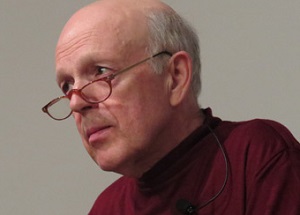
 

 2191511-5c1cdfb80c56f8f75644c64c07dd5f87.jpg
Lloyd Haft (Sheboygan, 9 november 1946)


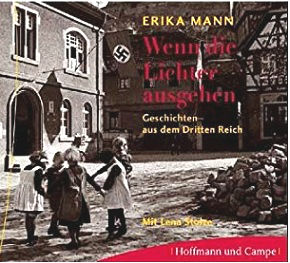
De Duitse schrijfster Erika Mann werd geboren op 9 november 1905 in München als oudste dochter van de Duitse schrijver Thomas Mann. Zie ook alle tags voor Erika Mann op dit blog.

Uit: Wenn die Lichter ausgehen

«770 841 Industriearbeiter», bellte die Stimme aus dem Radio. Der Gast, dem man anstelle von Eiern den Völkischen Beobachter angeboten hatte, stand auf, streckte sich, gähnte und sah auf die Uhr.
«Eineinhalb Stunden», meinte er, «und noch kein einziges Wort über unsere Brüder im Sudetenland.» Was ist denn das, fragte sich der Fremde. Keiner hier scheint sich besonders zu begeistern. Eine sture Bande, diese Bayern, ein dickköpfiges, nachdenkliches Volk; sie lassen sich ihre Begeisterung nicht anmerken. In einer Ecke nahe beim Ofen saß ein kleines Mädchen und schrieb etwas auf. «Morgen hat sie eine Klassenarbeit», sagte der Wirt. «Also muß sie sich Notizen machen und sie auswendig lernen. Sonst bekommt sie eine Strafe.» «Wie viele Industriearbeiter waren das?» fragte das Kind. Niemand antwortete. Der Fremde hörte sich die Rede bis zum Schluß an. Auch als der wütende Führer geendet hatte und das Horst-Wessel-Lied verklungen war, blieb er sitzen. Er wollte sehen, welche Wirkung die Rede gehabt hatte, und er wollte mit dem Wirt reden, der wie ein freundlicher Mensch aussah. Der buschige Schnurrbart hätte einem Seehund zur Ehre gereicht, aber die klaren Augen in seinem kräftigroten Gesicht sprachen eine lebhafte Sprache. Doch er war kein gesprächiger Mensch. Auch an den Tischen wurde wenig geredet. Niemand erwähnte die Rede des Führers. «Hast du die Kirchenbanner gesehen?» fragte eine Frau ihren, ann. «Ich habe mindestens acht gezählt, allein fünf in der Bärenstraße.» Ihr Mann nickte. Ein verstohlenes Grinsen huschte über sein Gesicht. «So eine Unverfrorenheit!» sagte er. «Kirchenbanner hinzuhängen, wo es ausdrücklich verboten ist!» Zur Bekräftigung schlug er mit der Aachen Hand auf den Tisch. Dennoch hatte der Fremde den Eindruck, daß der Mann sich freute. «Eine ausgemachte Unverschämtheit», wiederholte er und warf dem Wirt einen fröhlichen Blick zu. Minuten vergingen, und die Gäste verließen nach und nach das Lokal. Der Fremde wartete gespannt auf alles, was er noch aufschnappen konnte, und blieb. «Wie viele Einwohner hat diese Stadt?» fragte er den Wirt und hoffte auf ein Gespräch. «120 nee», sagte der Wirt «Aber jede fünfte Familie hat kein eigenes Heim. Wir haben wenige Häuser und viele Mietskasernen. Macht ja nichts», fügte er rasch hinzu, als der Fremde die Stirn runzelte. «Es ist auch nur vorübergehend, bis wir die Wiederbewaffnung abgeschlossen haben. Natürlich hat die Waffenindustrie im Augenblick Vorrang. Erst kommt die Politik, dann das Privatleben.» «Jede fünfte Familie?» fragte der Fremde. «Woher wissen Sie das so genau?» Der Wirt lehnte sich mit seinem kräftigen Körper noch weiter über den Tresen. Nun, sein eigener, bereits verheirateter Sohn wohne noch hier im Haus; weil er keine eigene Wohnung bekommen könne.”
 

 2191511-64ff53fb8e3660f64c72c96184474ec2.jpg
Erika Mann (9 november 1905 – 27 augustus 1969)
Cover


De Duitse schrijver Jan Decker werd geboren op 9 november 1977 in Kassel. Zie ook alle tags voor Jan Decker op dit blog.

Uit: Der lange Schlummer

“Als ich aus dem Rasthof heraustrat, fiel mir erst das höllische Getöse auf, das ich vor der Mahlzeit im Halbschlummer überhört haben musste. Sonderbare Vehikel, ganz ohne Pferde angetrieben, rasten mit Getöse und ungekannter Geschwindigkeit in einem fort auf einem breiten Verkehrsweg an mir vorbei. Sie schienen moderne Kutschen zu sein, doch ganz aus Metall. Ich hielt mir die Ohren zu, nur irgendwann brauchte ich meine Hände wieder, spätestens bei der Verrichtung der nächsten Notdurft. Hier in Thüringen, wo ich einst die schönste Naturstille genossen hatte, musste ich nun mit diesem infernalischen Krach haushalten. Dies gelang mir, indem ich störrischer Esel auf dem Seitenstreifen in Richtung Osten trottete, was mir der Stand der Sonne sagte, und dabei an die herrliche Bucht von Neapel dachte. Das war gar nicht klug, wie sich herausstellte. Ich zuckte nämlich bei jedem vorbeirasenden Geschoss zusammen, während diese hupten wie die Postkutschen, was den Beginn meines Spaziergangs zu einem ziemlichen Spießroutenlauf machte. Grob wusste ich, dass Gräfenroda zwischen Arnstadt und Gotha gelegen ist. An eine dieser beiden Städte wollte ich mich nun halten, um mein Quartier für die Nacht zu beziehen.
Du allein weißt, ob ich auf diesem Weg bis nach Sachsen gekommen wäre! Just da traf ich jedoch auf einen Russen, der mit einem riesenhaften Gefährt, das er Lastwagen nannte, auf dem Seitenstreifen haltgemacht hatte und eben ein rotes Dreieck aufstellte, das wohl Vorsicht gebieten sollte. Der gute Mann war völlig außer sich, an diesem unwirtlichen Ort einen Spaziergänger zu treffen. Er sagte immer wieder »Autobahn« zu mir, »hier Autobahn, nix laufen« – was in seinem krachenden Deutsch etwas kindisch klang, aber doch gut gemeint war. Mit den paar Brocken Russisch, die ich noch immer an mir trage, mahnte ich den guten Mann, er solle sich bloß um seine eigenen Sachen kümmern, mit mir sei alles in bester Ordnung.
Hier findest du einige Betrachtungen über die Verkehrswege der neuen Zeit, die mir sogleich in den Sinn kamen: Erstens scheinen mir diese mehr Rennstrecken als öffentliche Einrichtungen zu sein. So traf ich auf meinem ganzen Weg von Gräfenroda bis zur nächsten Ausfahrt keinen weiteren Spaziergänger an. Zweitens verleiten sie zu einer schrecklichen Hast, da ich die Fahrzeuge, wenn sie einmal an mir vorbeigestoben waren, nach einigen Sekunden bereits schon wieder aus den Augen verloren hatte. Höre, sie mussten noch am selben Tag zumindest bis Prag reisen können! Aber was hat man davon, wenn der ganze Weg übersprungen ist, der doch das eigentliche Lockmittel der Reise ist? Drittens gelangt man zu keinem Charakteristikum der Reisenden selbst, da sich diese in ihren Fahrzeugen zu verbergen scheinen. So reist man recht anonym in dieser modernen Welt herum, denke ich mir.”

 

 2191511-5719971ba226ffc5c5d915bf84064237.jpg
Jan Decker (Kassel, 9 november 1977)


De Engelse dichter en schrijver Roger Joseph McGough werd geboren op 9 november 1937 in Litherland, Lancashire. Zie ook alle tags voorRoger McGough op dit blog.


The Sound Collector

A stranger called this morning
Dressed all in black and grey
Put every sound into a bag
And carried them away

The whistling of the kettle
The turning of the lock
The purring of the kitten
The ticking of the clock

The popping of the toaster
The crunching of the flakes
When you spread the marmalade
The scraping noise it makes

The hissing of the frying pan
The ticking of the grill
The bubbling of the bathtub
As it starts to fill

The drumming of the raindrops
On the windowpane
When you do the washing-up
The gurgle of the drain

The crying of the baby
The squeaking of the chair
The swishing of the curtain
The creaking of the stair

A stranger called this morning
He didn't leave his name
Left us only silence
Life will never be the same


Kinetic Poem No.2

with love
give me your hand
some stranger
is fiction than truth

without love
I'm justa has
been away
too long in the tooth.

 

 2191511-96694c89b08249e2a4f4a5688bacd823.jpg
Roger McGough (Litherland, 9 november 1937)


De Engelse dichteres en schrijfster Anne Sexton werd geboren op 9 november 1928 in Newton, Massachusetts. Zie ook alle tags voor Anne Sexton op dit blog.


45 Mercy Street (Fragment)

Where did you go?
45 Mercy Street,
with great-grandmother
kneeling in her whale-bone corset
and praying gently but fiercely
to the wash basin,
at five A.M.
at noon
dozing in her wiggy rocker,
grandfather taking a nap in the pantry,
grandmother pushing the bell for the downstairs maid,
and Nana rocking Mother with an oversized flower
on her forehead to cover the curl
of when she was good and when she was...
And where she was begat
and in a generation
the third she will beget,
me,
with the stranger's seed blooming
into the flower called Horrid.

I walk in a yellow dress
and a white pocketbook stuffed with cigarettes,
enough pills, my wallet, my keys,
and being twenty-eight, or is it forty-five?
I walk. I walk.
I hold matches at street signs
for it is dark,
as dark as the leathery dead
and I have lost my green Ford,
my house in the suburbs,
two little kids
sucked up like pollen by the bee in me
and a husband
who has wiped off his eyes
in order not to see my inside out
and I am walking and looking
and this is no dream
just my oily life
where the people are alibis
and the street is unfindable for an
entire lifetime.

 

 2191511-34bca656693ba2916e57e485a0fde06a.jpg
Anne Sexton (9 november 1928 – 4 oktober 1974)
Cover


De Indische dichter en schrijver Mohammed Iqbal werd geboren op 9 november 1877 in Sialkot in het tegenwoordige Pakistan. Zie ook alle tags voorMohammed Iqbal op dit blog.


The Withered Rose

O withered rose! How can I still call you a rose?
How can I call you the longing of nightingale's heart?

Once the zephyr's movement was your rocking cradle
In the garden's expanse joyous rose was your name

The morning breeze acknowledged your benevolence
The garden was like perfumer's tray by your presence

My weeping eye sheds dew on you
My desolate heart is concealed in your sorrow

You are a tiny picture of my destruction
You are the interpretation of my life's dream

Like a flute to my reed-brake I narrate my story
Listen O rose! I complain about separations!


Sympathy

Perched on the branch of a tree
Was a nightingale sad and lonely

'The night has drawn near', He was thinking
'I passed the day in flying around and feeding

How can I reach up to the nest
Darkness has enveloped everything'?

Hearing the nightingale wailing thus
A glow-worm lurking nearby spoke thus

'With my heart and soul ready to help I am
Though only an insignificant insect I am

Never mind if the night is dark
I shall shed light if the way is dark

God has bestowed a torch on me
He has given a shining lamp to me

The good in the world only those are
Ready to be useful to others who are
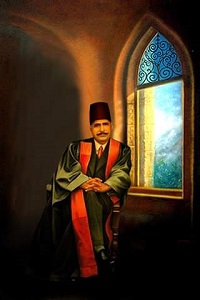
 

 2191511-da6c54d72a024a569f3c7fa0e25b46cb.jpg
Mohammed Iqbal (9 november 1877 – 21 april 1938)


Onafhankelijk van geboortedata


De Amerikaanse dichter en bibliothecaris Michael Derrick Hudson werd geboren in 1963 in Wabash, Indiana. Zie ook alle tags voor Michael Derrick Hudson op dit blog.


Baby Zach and the Winter Squash

It’s his favorite food, she told me, but I have no idea

what it is. Me neither, but it sounds very nutritious
and wholesome in an apocryphal

First Thanksgiving way:  The Legend of Squanto’s

Delicious Squash and how he had to beg a starving
bluejawed Pilgrim to try it, scowling

while he masticated with theological rectitude and
pigheaded paranoia despite the evidence

of toothless old women and dozens of drooling,

happy babies gumming down the stuff with gusto
in the prosperous Wampanoag village

slightly hazy from the cooking fires where baskets

bulged with corn and blueberries and raccoon pelts
hung everywhere until finally

the trespassing homespun homicidal grouch
proclaimed:  Indeed, ’tis a wholesome victual and

added it to the available proof of God’s preferment.

 

 2191511-a7f27a9e762ebd8df72a1f65aa76ad40.jpg
Michael Derrick Hudson (Wabash, 1963)


Zie voor nog meer schrijvers van de 9e november ook mijn blog van 9 november 2017 en ook mijn blog van 9 november 2014 deel 1 en eveneens deel 2.


Geschreven door Romenu om 18:28 Reageer op dit bericht

BookSpot Literatuurprijs 2018 voor Tommy Wieringa

BookSpot Literatuurprijs 2018 voor Tommy Wieringa


De Nederlandse schrijver Tommy Wieringa heeft voor zijn boek “De heilige Rita” de BookSpot Literatuurprijs 2018 gekregen. Dat heeft de jury donderdagavond laten weten. Bij de prijs, die eerder ECI Literatuurprijs en AKO Literatuurprijs heette, hoort een geldbedrag van 50.000 euro en een sculptuur. Eerder op donderdag kreeg Wieringa’s “De heilige Rita” ook al de lezersprijs. Voor deze publieksprijs krijgt hij nog eens 10.000 euro. Tommy Wieringa werd geboren in Goor op 20 mei 1967. Zie ook alle tags voor Tommy Wieringa op dit blog.

Uit: De heilige Rita

“Paul trok zijn benen binnenboord, deed het portier dicht en reed naar het dorp.
Bij Shu Dynasty, voorheen Bar-Feestzaal Kottink, stond Laurens Steggink met een onbekende man bij het biljart.
‘Mannen,’ groette Steggink.
Paul ging zitten aan de kopse kant van de bar, in de nis van schrootjes. Hij was graag gedekt in de rug, als een cowboy, zodat hij iedereen kon zien binnenkomen. Hedwiges schoof op de kruk naast hem. De radio stond op een halve zender, op golven van ruis klonk Die Sonne geht unter in Texas.
Mama Shu zei ‘hai Paul’ en ‘hai Hedwig’, en zette een flesje Grolsch voor Paul neer en een glas cola voor Hedwiges. De piraat bedankte cafetaria’s, loonbedrijven, houtzagerijen en sloperijen voor hun steun aan de zender. Paul wist hem te zitten, in een schuur achter aan de Tien Ellenweg; soms was de doffe basdreun tot in de wijde omtrek te horen.
Steggink boog voorover en spiedde langs zijn keu. Hij nam de tijd. Hij kon goed biljarten. In dienst geleerd tijdens de lange, lege uren in de onderdeelsbar in Seedorf.
Paul Krüzen had met Hedwiges Geerdink en Laurens Steggink in de klas gezeten.
Met Steggink had hij op een dag een ondergrondse hut gebouwd in het bos. Ze zouden er slapen. Ze roosterden bevroren frikadellen boven een rokerig vuurtje en rolden hun slaapzak uit, maar toen het donker werd schrok Paul terug voor een nacht in het hol tussen de spinnen en de pissebedden en fietste naar huis terug. Steggink bleef alleen achter. Hij was niet bang voor het donker.
De vriendschap was voorbijgegaan; Paul had steeds meer een afkeer gekregen van zijn streken en verhalen, alsmede van het vettige paardenstaartje in zijn nek. Op Theo Abbinks drieëntwintigste verjaardag had Steggink drie kittens van Theo’s vriendin de nek omgedraaid en in het weiland gegooid. Zijn verweer: hij was dronken en had een hekel aan katten.
De stilte tussen hen had zo’n twintig jaar geduurd.
Toen Steggink op een dag werd veroordeeld voor een wietplantage bij de ouders van zijn verloofde in de schuur en valse zaken op Marktplaats, was Paul niet verbaasd geweest. Niemand eigenlijk. Je zag het aankomen. Laurens Steggink had geen biografie maar een strafblad. Zijn ex deed het nog altijd in haar broek voor hem.
Toen hij vrijkwam had hij zijn zaken naar de overzijde van de grens verplaatst. In een voormalige drukkerij op een armetierig industrieterrein buiten Stattau bestierde hij een bordeel met meisjes uit de hele wereld. In Club Pacha zat hij met zijn lange lijf op een barkruk met een frisje voor zich en een telefoon aan het oor. Hem ontging niets. Maar vandaag was het maandag en op maandag was de club gesloten.”


  2191508-c9fd7e7b8588a66ae60e74a01e1f78de.jpg
Tommy Wieringa (Goor, 20 mei 1967)


Geschreven door Romenu om 14:41 Reageer op dit bericht

Kazuo Ishiguro, Joshua Ferris, Detlef Opitz, Alice Notley, Herbert Hindringer, Elfriede Brüning, Margaret Mitchell, Bram Stoker, Peter Weiss

De Japanse schrijver Kazuo Ishiguro werd op 8 november 1954 geboren in Nagasaki. Zie ook alle tags voor Kazuo Ishiguro op dit blog.

Uit: The Remains of the Day

“I believe I can best highlight the difference between the generations by expressing myself figuratively. Butlers of my father’s generation, I would say, tended to see the world in terms of a ladder – the houses of royalty, dukes and the lords from the oldest families placed at the top, those of ‘new money’ lower down and so on, until one reached a point below which the hierarchy was determined simply by wealth – or the lack of it. Any butler with ambition simply did his best to climb as high up this ladder as possible, and by and large, the higher he went, the greater was his professional prestige. Such are, of course, precisely the values embodied in the Hayes Society’s idea of a ‘distinguished household’, and the fact that it was confidently making such pronouncements as late as 1929 shows clearly why the demise of that society was inevitable, if not long overdue. For by that time, such thinking was quite out of step with that of the finest men emerging to the forefront of our profession. For our generation, I believe, it is accurate to say, viewed the world not as a ladder, but more as a wheel. Perhaps I might explain this further.
It is my impression that our generation was the first to recognize something which had passed the notice of all earlier generations: namely that the great decisions of the world are not, in fact, arrived at simply in the public chambers, or else during a handful of days given over to an international conference under the full gaze of the public and the press. Rather, debates are conducted, and crucial decisions arrived at, in the privacy and calm of the great houses of this country. What occurs under the public gaze with so much pomp and ceremony is often the conclusion, or mere ratification, of what has taken place over weeks or months within the walls of such houses. To us, then, the world was a wheel, revolving with these great houses at the hub, their mighty decisions emanating out to all else, rich and poor, who revolved around them. It was the aspiration of all those of us with professional ambition to work our way as close to this hub as we were each of us capable. For we were, as I say, an idealistic generation for whom the question was not simply one of how well one practised one’s skills, but to what end one did so; each of us harboured the desire to make our own small contribution to the creation of a better world, and saw that, as professionals, the surest means of doing so would be to serve the great gentlemen of our times in whose hands civilization had been entrusted.”


 2191307-97157b4ed363e77740b0eaf988bfee7c.jpg
Kazuo Ishiguro (Nagasaki, 8 november 1954)


De Amerikaanse schrijver Joshua Ferris werd op 8 november 1974 in Danville, Illinois geboren. Zie ook alle tags voor Joshua Ferris op dit blog.

Uit:The Dinner Party

“They come in,” he said, “we take their coats. Everyone talks in a big hurry as if we didn’t have four long hours ahead of us. We self-medicate with alcohol. A lot of things are discussed, different issues. Everyone laughs a lot, but later no one can say what exactly was so witty. Compliments on the food. A couple of monologues. Then they start to yawn, we start to yawn. They say, ‘We should think about leaving, huh?,’ and we politely look away, like they’ve just decided to take a crap on the dinner table. Everyone stands, one of us gets their coats, peppy goodbyes. We all say what a lovely evening, do it again soon, blah-blah-blah. And then they leave and we talk about them and they hit the streets and talk about us.”
“What would make you happy?” she asked.
“A blow job.”
“Let’s wait until they get here for that,” she said.
She slid her finger along the blade to free the clinging onion. He handed her her glass. “Drink your wine,” he said. She took a sip. He left the kitchen.
He sat on the sofa and resumed reading an article. Then he got up and returned to the kitchen and poured himself a new drink.
“That’s another thing,” he said. “Their big surprise. Even their goddam surprises are predictable.”
“You need to act surprised for their sake,” she said.
“Wait for a little opening,” he said, “a little silence, and then he’ll say, he’ll be very coy, he’ll say, ‘Why don’t you tell them?’ And she’ll say, ‘No, you,’ and he’ll say, ‘No, you,’ and then she’ll say, ‘O.K., O.K., I’ll tell them.’ And we’ll take in the news like we’re genuinely surprised—like, holy shit, can you believe she’s knocked up, someone run down for a Lotto ticket, someone tell Veuve Clicquot, that bastard will want to know! And that’s just the worst, how predictable our response to their so-called news will be.”


 2191307-479b9c567fd2f6382f09f12f3ba7136e.jpg
Joshua Ferris (Danville, 8 november 1974)


De Duitse schrijver Detlef Opitz werd geboren op 8 november 1956 in Steinheidel-Erlabrunn. Zie ook alle tags voor Detlef Opitz op dit blog.

Uit: Der Büchermörder

“Denn das Bankhaus Frege & Co. liegt von der Grimmaischen Gasse aus besehen quer übern Markt, dann nur sieben Häuser die Katharinenstraße hinein, linkerhand; Nummer 372. Wie später die Ermittlungen ergaben, war zur etwa selben Stunde, in der der Anschlag auf Schmidt geschah, im Fregeschen Comptoir eine Person erschienen, die sich als Hr. Siegel aus Elsterberg bei Stolpe ausgab, um elf ihrer Stadtobligationen zu verkaufen. Dem Hrn. Obercassirer Witzendorf kam der Mann vom Ansehen her zwar vor, wie ein bestimmter, hier in Leipzig wohnender Hr. Doctor Dorn, doch er dachte hierüber nicht weiter nach. Desfalls, es sollte etwas nicht gut sein, machte ihm sein Gegenüber ein gar zu besonnenes Gesicht, schien auch keineswegs in Eile, oder der hohen Summe wegen in erkennbarer Aufregung befangen. Nach kurzer Rücksprache mit seinem Principalen zahlte er die Summe baar aus, und zwar nominal Gold in preussischen Friedrichsd’or, französischen Louisd’or und braunschweigischen und sächsischen Thalern, einen kleinen Rest aber silbern in Preussisch-Courant. Der Verkäufer zählte genau noch einmal alles durch, schob 10 halbe Louisd’or zurück und erbat sich ganze dafür, verbrachte dann umständlich die vielen Stücke in seine ledernen Beutel und war, anbei, auch einem Schwätzchen nicht abgeneigt über diese und iene Course, und welche derzeit die günstigsten warn. In aller Weltenruhe, als hätte er nur eine schlechte Lotterie eingeholt oder eine harmlose Tratte vertauscht, verließ er schließlich das Bureau unter freundlichem Grüßen.
Genau zur gleichen Minute, als bedachter Hr. Siegel aus Elsterberg, als der Verkäufer elfer Obligationen, nur kurze Zeit nach seinem Weggang noch einmal zurück ins Comptoir spazirt kam und Bitte vortrug um eine Note über das Geschäft, welche er vorhin vergessen, genau im selben Moment sank, nur einige hundert Schritte entfernt, zwischen Schalter und Actenrepositorium des Schoßamts, der Kaufmann Schmidt zum zweiten Male binnen halber Stunde in sich selbst hinein.”


 2191307-5af56aede05277173dcb0f2c763e0a5d.jpg
Detlef Opitz (Steinheidel-Erlabrunn, 8 november 1956)


De Amerikaanse dichteres Alice Notley werd geboren op 8 november 1945 in Bisbee, Arizona. Zie ook alle tags voor Allice Notley op dit blog.


The Elements

You must do battle with Eros I am
more worried about space, pressed for details
collapsed in chaos with my sword holding up the sky the
girl said. They cared not for love lying ever that they loved
But I your leader wounded in gender and bleeding
for Eros fought it away from my true beginning as now.

Always climbing that hill in several ways.
One goes past the Baptist Church and through the ugly
trees, houses I only visualize in dreams
you have no right to pursue me to my origins man
as bipolar as the one candidate, forgettable
as the other. We once lived in a postwar barracks blue
heated by a black stove of assumptions
Eros a youth admits no equal; Aphrodite the slut;
Chaos is whom I admire that keeps forgetting
love in favor of this terrible mixity I am
for example ... these poems. Out of the pre-beginning

a different beauty. They want you to confess
something like in church, that a man will
save you. But I am your leader savior and poet
I am your general out of the desert thee
most ardent void precursor of love
Eros approaches again not the man but quality
sculpted genitals arush with the words
of unreason: I will never die. Which I is I
if I can remain chaotic I'll tell you who you are

that you've never anticipated, but know
the only one. Without a thing. To be is not
to have; nor to belong; nor to have been born.
You are not the child of earth. Beauty still thy name.


Poem 2

You hear that heroic big land music?
Land a one could call one.
He starred, had lives, looks down:
windmill still now they buy only
snow cows. Part of a dream, she
had a long waist he once but yet
never encircled, and now I'm
in charge of this, this donkey with
a charmed voice. Elly, I'm
being sad thinking of Daddy.
He marshaled his private lady,
did she wear a hat or the
other side? get off my own land? We
were all born on it to die on
with no writin' on it. But who are
you to look back, well he's
humming 'From this valley,' who's gone.
Support and preserve me, father. Oh
Daddy, who can stand it?


 2191307-ce9648333c4ed3505607bfe85e73033a.jpg
Alice Notley (Bisbee, 8 november 1945)


De Duitse dichter en schrijver Herbert Hindringer werd geboren op 8 november 1974 in Passau. Zie ook alle tags voor Herbert Hindringer op dit blog.


Profi-Teufelskerle

laufen 100 Meter Amok unter 3 Minuten, einmal um die ganze Welt
ein Staffellauf durch alle Gesichtsbücher, oh Gott, wir sind fassungslos
ihr auch? Nur Amy Winehouse als Stolperstein
Fuck Amy, es sind 77 unschuldige Menschen gestorben, oh

meine Güte, deine Güte, was für ein Arschloch, Hans-Peter Uhl
(CSU) sagt: In Wahrheit wurde diese Tat im Internet geboren

Da nehmen wir doch gleich Erziehungsurlaub, bilden uns fort und weiter
im Text: Wir sind die deutsche Synchronstimme des norwegischen Volkes
immerhin sind wir nicht verfassungslos und wachsen sorglos auf

dem Boden der Tatsachen fest
gehen in die Kneipe, denn draußen findet das wahre Leben statt
Tod statt, das gilt auch für hier drinnen, ein Bier, wir nicken und schütteln Köpfe
und Hände, wissen mehr als andere: In was für Zeiten wir nur leben

aber nicht lieben, Herzschmerz ist eine App, die man als Wecker benutzt
in den finsteren Nächten, in denen Haustiere sterben
wacht man als Achtjähriger auf und Satan liegt unter dem Bett

schnurrt wie eine Erinnerung, so wird der Kopf zum Fall von ganz oben
wartet auf Knien und auf Gedeih und Verderb und auf den nächsten Knall


 2191307-92ba1818d7fca1ed693eb27a60077f14.JPG
Herbert Hindringer (Passau, 8 november 1974)


De Duitse schrijfster Elfriede Brüning werd geboren op 8 november 1910 in Berlijn. Zie ook alle tags voor Elfriede Brüning op dit blog.

Uit: Und außerdem ist Sommer

“Trude Klein saß vor der Schreibmaschine und wartete den Büroschluß ab. Gegenüber las der Doktor Korrekturen. Es sah aus, als sei er eingeschlafen. Der Kopf lag halb auf dem Tisch, und die Augen waren von gebogenen Lidern weit überzogen. Aber jetzt fing er an, mit den Rändern der Fahnen zu knistern, wie es seine Gewohnheit war. Er steckte den Bleistift zwischen die Lippen und sah auf. „Schreibt man ‚Waage‘ mit Doppel-a oder nicht?“ fragte er langsam. „In meiner Jugendzeit …“ Hier unterbrach er sich. Aber obgleich Fräulein Klein hätte antworten können, saß sie stillundwartetegeduldigab.DerDoktorstütztedenEllenbogen auf den Tisch, das heißt, er ließ ihn über die Tischplatte gleiten, von rechts nach links und an der Kante entlang, bis er den richtigen Punkt gefunden hatte. Nun beugte er sich weit über den Tisch und legte das Kinn in die flache Hand. „Ja, in meiner Jugendzeit schrieb man ‚Waage‘ noch mit Doppel-a, dann nahm man im Laufe der Zeit ein a weg, soweit ich unterrichtet bin. Aber ich bin mir nicht im klaren, was die neueste Rechtschreibung vorsieht. Ich könnte mir denken …“ „Jedenfalls schreibt man es mit Doppel-a“, kürzte die Stenotypistin ab. Sie stand auf und ging an den Regalen vorbei zum Ofen. Die Uhr zeigte auf zwei. Der Doktor wandte sich auf seinem Stuhl um und sah dem Fräulein nach, wie es den Handspiegel auf dem Sims plazierte und behutsam eine Mütze auf die Haare schob. „Wollen Sie schon gehen, Kleine?“ „Natürlich. Um zwei ist Schluß. Übrigens sollen Sie mich nicht Kleine nennen.“ Der Doktor entzündete ein Streichholz und warf es auf den Boden. „Wollen Sie nicht drinnen Ihren Chef fragen, ob er noch was für Sie hat, und nicht einfach lostürmen? Und daß ‚Kleine‘ kein Kosewort ist, sondern nur die weibliche Form Ihres Namens, wissen Sie ja.“ „Sie haben ein Streichholz auf die Erde geworfen.“ Gerade knurrte der Hausapparat dreimal hintereinander. Trude riß die Mütze vom Kopf und ging mit gespreizten Schritten zum Chef in den Nebenraum. Als sie wiederkam, waren zehn Minuten vergangen. Der Doktor stand in der Tür, er war in Hut und Mantel. „Haben Sie noch zu tun?“ Die Stenotypistin sah ihn an. Sie hatte gerade den Bogen einspannen wollen, nun stand sie auf und klappte die Maschine zu. Der Doktor schien zwar auf dem Sprung, immerhin war er da, ein Gebildeter, der am meisten geschätzte Mitarbeiter, ein Mann, dem man vertrauen durfte. Sie sagte: „Sehen Sie, so ist es immer. Gerade sonnabends, wenn man zeitig weg will. Punkt zwei fällt ihm ein, was er noch zu erledigen hat.“ Der Doktor ließ die Klinke los und kam zurück in das Zimmer. „Wenn Sie’s ihm mal höflich sagen würden?“


 2191307-6e9fc167d2b8e42e5ec07078e7eea4d9.jpg
Elfriede Brüning (8 november 1910 – 5 augustus 2014)


De Ameikaanse schrijfster Margaret Mitchell werd geboren op 8 november 1900 in Atlanta, Georgia. Zie ook alle tags voor Margaret Mitchell op dit blog.

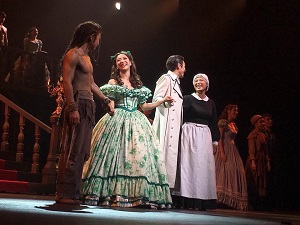
Uit: Gone with the wind

“Hunger gnawed at her empty stomach again and she said aloud: “As God is my witness, as God is my witness, the Yankees aren’t going to lick me. I’m going to live through this, and when it’s over, I’m never going to be hungry again. No, nor any of my folks. If I have to steal or kill — as God is my witness, I’m never going to be hungry again.”
In the days that followed, Tara might have been Crusoe’s desert island, so still it was, so isolated from the rest of the world. The world lay only a few miles away, but a thousand miles of tumbling waves might have stretched between Tara and Jonesboro and Fayetteville and Lovejoy, even between Tara and the neighbors’ plantations. With the old horse dead, their one mode of conveyance was gone, and there was neither time nor strength for walking the weary red miles.
Sometimes, in the days of backbreaking work, in the desperate struggle for food and the never-ceasing care of the three sick girls, Scarlett found herself straining her ears for familiar sounds — the shrill laughter of the pickaninnies in the quarters, the creaking of wagons home from the fields, the thunder of Gerald’s stallion tearing across the pasture, the crunching of carriage wheels on the drive and the gay voices of neighbors dropping in for an afternoon of gossip. But she listened in vain. The road lay still and deserted and never a cloud of red dust proclaimed the approach of visitors. Tara was an island in a sea of rolling green hills and red fields.
Somewhere was the world and families who ate and slept safely under their own roofs. Somewhere girls in thrice-turned dresses were flirting gaily and singing “When This Cruel War Is Over,” as she had done only a few weeks before. Somewhere there was a war and cannon booming and burning towns and men who rotted in hospitals amid sickening-sweet stinks. Somewhere a barefoot army in dirty homespun was marching, fighting, sleeping, hungry and weary with the weariness that comes when hope is gone. And somewhere the hills of Georgia were blue with Yankees, well-fed Yankees on sleek corn-stuffed horses.
Beyond Tara was the war and the world. But on the plantation the war and the world did not exist except as memories which must be fought back when they rushed to mind in moments of exhaustion. The world outside receded before the demands of empty and half-empty stomachs and life resolved itself into two related thoughts, food and how to get it.
Food! Food! Why did the stomach have a longer memory than the mind? Scarlett could banish heartbreak but not hunger and each morning as she lay half asleep, before memory brought back to her mind war and hunger, she curled drowsily expecting the sweet smells of bacon frying and rolls baking. And each morning she sniffed so hard to really smell the food she woke herself up.”


 2191307-0b913c7584f4d16932666a38bc2aadba.jpg
Margaret Mitchell (8 november 1900 – 16 augustus 1949)
Scene uit een uitvoering van de musical ‘Gone with the wind’ in Seoul, 2015


De Ierse schrijver Bram Stoker werd geboren op 8 november 1847 in Clontarf, een wijk van Dublin in Ierland. Zie ook alle tags voor Bram Stoker op dit blog.

Uit: Dracula

“I was told that this road is in summertime excellent, but that it had not yet been put in order after the winter snows. In this respect it is different from the general run of roads in the Carpathians, for it is an old tradition that they are not to be kept in too good order. Of old the Hospadars would not repair them, lest the Turk should think that they were preparing to bring in foreign troops, and so hasten the war which was always really at loading point.
Beyond the green swelling hills of the Mittel Land rose mighty slopes of forest up to the lofty steeps of the Carpathians themselves. Right and left of us they towered, with the afternoon sun falling full upon them and bringing out all the glorious colours of this beautiful range, deep blue and purple in the shadows of the peaks, green and brown where grass and rock mingled, and an endless perspective of jagged rock and pointed crags, till these were themselves lost in the distance, where the snowy peaks rose grandly. Here and there seemed mighty rifts in the mountains, through which, as the sun began to sink, we saw now and again the white gleam of falling water. One of my companions touched my arm as we swept round the base of a hill and opened up the lofty, snow-covered peak of a mountain, which seemed, as we wound on our serpentine way, to be right before us:--
"Look! Isten szek!"--"God's seat!"--and he crossed himself reverently.
As we wound on our endless way, and the sun sank lower and lower behind us, the shadows of the evening began to creep round us. This was emphasised by the fact that the snowy mountain-top still held the sunset, and seemed to glow out with a delicate cool pink. Here and there we passed Cszeks and Slovaks, all in picturesque attire, but I noticed that goitre was painfully prevalent. By the roadside were many crosses, and as we swept by, my companions all crossed themselves. Here and there was a peasant man or woman kneeling before a shrine, who did not even turn round as we approached, but seemed in the self-surrender of devotion to have neither eyes nor ears for the outer world.”


 2191307-36f6ccf548ea85a5c671b075ea94ad24.jpg
Bram Stoker (8 november 1847 – 20 april 1912)
Frank Langella als Dracula in de gelijknamige film uit 1979


De Duitse schrijver Peter Weiss werd geboren op 8 november 1916 in Nowawes (het tegenwoordige Neubabelsberg) bij Berlijn. Zie ook alle tags voor Peter Weiss op dit blog.

Uit: Abschied von den Eltern

"Ich habe oft versucht, mich mit der Gestalt meiner Mutter und der Gestalt meines Vaters auseinanderzusetzen, peilend zwischen Aufruhr und Unterwerfung. Nie habe ich das Wesen dieser beiden Portalfiguren meines Lebens fassen und deuten können. Bei ihrem fast gleichzeitigen Tod sah ich, wie tief entfremdet ich ihnen war. Die Trauer, die mich überkam, galt nicht ihnen, denn sie kannte ich kaum, die Trauer galt dem Versäumten, das meine Kindheit und Jugend mit gähnender Leere umgeben hatte. Die Trauer galt der Erkenntnis eines gänzlich mißglückten Versuchs von Zusammenleben, in dem die Mitglieder einer Familie ein paar Jahrzehnte lang beieinander ausgeharrt hatten.
(...)

Ich verschloß meine Tür und hängte ein Tuch über das Schlüsselloch. Erst nachts war ich befreit von dem Schnüffeln draußen vor meiner Tür. Da war ich allein in der sausenden Stille eines Hohlraums, allein mit meinem Bildern und meinen beschriebenen Blättern, allein mit meinen Büchern und meiner Musik. Mit Decken dämpfte ich das Grammofon. Aus unermeßlicher Ferne kam die Musik zu mir, wie ein Traum von Befreiung. Ich stand in meiner Grotte, und meine Hände tanzten zum Takt der Musik. In meinem Blut und in den Vibrationen meiner Nerven, in meinen Pulsschlägen und Atemzügen klang die Musik. Von Tränen überströmt trankt ich die Musik, und dann ging ich zu den Geisterstimmen der Bücher, trat in die anonyme Gemeinschaft mit Sprechern, die sich ringsum in der Welt umhertasteten, diese Bücher waren geheime Botschaften, Flaschenposten, ausgeworfen, um einen Gleichgesinnten zu finden. Überall in fremden Städten, an öden Küsten, in der Verborgenheit von Wäldern, lebten diese Einzelnen, und viele sprachen aus einem Totenreich zu mir. Die Vorstellung dieser Zusammengehörigkeit tröstete mich. Es war mir, als müsse, der, dessen Buch ich jetzt las, von meiner Gegenwart wissen, und wenn ich mich dann selbst zum Schreiben niedersetzte, so wußte ich, daß andere auf mich lauschten, durch ein großes Rauschen hindurch, das uns alle umgab."


 2191307-36d34e92c6c36a3825868ac1809f08e4.jpg
Peter Weiss (8 november 1916 – 10 mei 1982)


Zie voor nog meer schrijvers van de 8e november ook mijn blog van 8 november 2015 deel 2.


Geschreven door Romenu om 16:10 Reageer op dit bericht

Meer van Romenu

↑ Terug naar de berichten