Naar de inhoud

Romenu

Over literatuur, gedichten, kunst en cultuur
akke.beakke.be

Berichten van 7 januari 2019 tot 8 januari 2019

Juan Marsé, Claudia Grehn, Waldtraut Lewin, Leonardo Sciascia, Alfred Tomlinson, Gaston Miron, Vasyl Stus, Wilkie Collins, Béla Zsolt
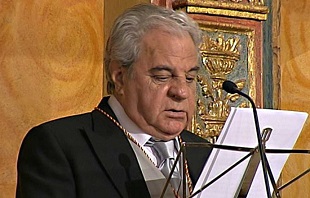
De Catalaanse schrijver Juan Marsé werd geboren op 8 januari 1933 in Barcelona. Zie ook alle tags voor Juan Marsé op mijn blog.

Uit: Detektivgeschichte (Vertaald door Alexander en Michael Fidora)

„An den hellen Tagen reicht die Sicht von den oberen Stadtteilen, von dieser Straße, die sich gegen den Hügel aufbäumt, als wolle sie sich im Mittelmeer betrachten, weit aufs Meer hinaus, und das Herz täuscht sich: das schlafende Viertel ist ein Ausblick über einem Traum, der nicht vergeht. Manchmal aber, jenseits des Hafens und seiner Wellenbrecher, jenseits des weißen Schaumes der Kähne, der die Küste säumt, am Heck der Frachtschiffe, die am Horizont auf Anker zu liegen scheinen, und auf dem rostigen Vorschiff der großen Öltanker, die nach Süden steuern, manchmal haben wir die silbernen Ringe funkeln sehen in den Ohren der über die Reling gebeugten Seemänner, sahen wir die auf ihre Bronzebrüste tätowierten Sirenen und die vom Pfeil durchbohrten Herzen unter einem Frauennamen; natürlich nur wenn man sehr darauf achtet, wenn man wirklich sehen will, wonach man schaut, und sich nicht von der Sonne blenden lässt. Aber an den grauen Tagen verliert sich der Blick in einem Dunst aus Nebeln und flachen Rauchschwaden, die das Labyrinth der Stadtviertel Horta und La Salud verpesten, und vermag nicht weiter vorzudringen. Die Stadt streckt sich gespenstisch und grau nieder, wie ein schlammiger Tümpel, ein totes Gewässer. Es war einer dieser schlechten Tage, verregnet und mit eisigen Windböen, als wir uns im Auto für einen besonderen Auftrag trafen. Im Fenster sahen wir eine Möwe, die verirrt durch den Regenwind segelte. Ab und zu hob der Wind an, und der Regen schien dann in der Luft zu hängen, still geneigt. Dann ließ sich die Möwe im Sturzflug auf uns fallen, streifte mit ihrem äschernen Flügel die matte Windschutzscheibe des Lincoln, und bevor sie den Flug wieder aufnahm, starrte sie uns schief mit ihrem Bleiauge an.
“Ein Höllentag”, sagte Marés hinterm Steuer und lud zu rauchen ein. “Haltet die Augen offen.”
Er sprach mit seiner Bauchrednerstimme, ohne die Lippen zu bewegen. Und wie im Traum, durch den blausten und durchsichtigsten Rauch, den eine ekelhafte Zigarette in ekelhaften Jahren je abgegeben hatte, sahen wir durch das offene Gelände eine Frau auf uns zukommen, mit einer grauen Baskenmütze und hellem Mantel, sehr blass und sehr hübsch und verheult. Es war ein Samstag Nachmittag im April, der wie November war. Juanito Marés musterte David und Jaime auf dem Rücksitz, danach mich. Als er mir den Ellbogen in die Rippen stieß, war mir klar, dass er mich ausgewählt hatte:
“Schöne Beine”, sagte er, während er die Frau anschaute.
“Ja, Chef.”
“Gefallen sie dir?”
“Und ob, Chef.”
“Dann verlier sie nicht aus den Augen.”
Er kniff seine Katzenaugen zusammen und zog ein Gesicht wie der alte, listige Barry Fitzgerald, der in Die nackte Stadt dem Detektiv [sabueso] befiehlt, das Mädchen zu verfolgen. Er brummte noch:
“Los, sie gehört dir.”


 2206121-78dcb53bf3f75b0cf7d9ce3a551efbcf.jpg
Juan Marsé (Barcelona, 8 januari 1933)


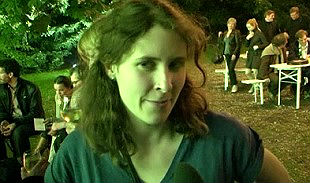
De Duitse (toneel)schrijfster Claudia Grehn werd geboren op 8 januari 1982 in Wiesbaden. Zie ook alle tags voor Claudia Grehn op dit blog.

Uit: Reicht es nicht zu sagen ich will leben

„JÜRGEN Sie schulden uns was, nicht wir Ihnen, Sie können Samstag noch kommen, oder wir ziehens vom nächsten Lohn ab, wie sie wollen.
GEORG Ich arbeite diese Minusstunden auch noch ab. Aber nicht mehr an diesem Telefon sondern in der Montage. Ich will zurück in die Montage.
Wissen Sie, was ich gelernt habe?
JÜRGEN Das ist zurzeit nicht relevant. Es geht hier um ein komplexes Netz von/
GEORG Ich weiß, ich habe die Leitungen hier verlegt. Ohne mich könnten sie hier nicht mal ihr Handy aufladen. Seit 1975 in diesem Betrieb.
JÜRGEN Seit 1975- Wenn Sie genug von diesem Unternehmen haben / Wir leben in einem Wohlfahrtsstaat. Sie sind frei. Das Geld kommt auch, wenn Sie nichts mehr tun.
GEORG Ich bring mich nicht um. Ich bleibe hier sitzen bis ich meinen Job wiederhabe.
JÜRGEN Jeden morgen, wenn ich zur Arbeit fahre, sehe ich die Türkinnen zu Fuß zur Fabrik gehen/ und abends machen die noch den Haushalt, werden weiter herumbefohlen, die wären froh, könnten sie sich mal hinsetzen und nichts tun.
Da ist er gegangen. Ich habe ihn nicht wieder gesehen. Du kannst ein Einzugsverfahren einleiten, Bert.
BRIETZ Jürgen, wie kommt es dass wir in dem ganzen Jahr hier keine Steuern gezahlt haben?
JÜRGEN Angestellte. Bekloppte. Kannst froh sein hast du mit denen bisher nichts zu tun gehabt.“
 

 2206121-70432ff8a3268c5857bdd83e81cf30cb.jpg
Claudia Grehn (Wiesbaden, 8 januari 1982)


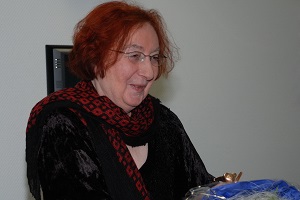
De Duitse schrijfster Waldtraut Lewin werd geboren op 8 januari 1937 in Wernigerode. Zie ook alle tags voor Waldtraut Lewin op dit blog.

Uit: Goethe

„Und dann: «Ich werde meinen Eheherrn bewegen, anlässlich dieses Vorfalls, einen Geburtshelfer für die Armen zu bestellen und die Wehmütter besser unterrichten zu lassen. Sodass denn doch ein Segen entsteht aus dem, was heute beinah zu einer Katastrophe wurde.« — Es gibt viele Zeugnisse über diese Geburt, vor allem die Erzählungen Elisabeths selber, als sie dann eine alte Frau war und eine junge, in ihren großen Sohn verliebte Frau sie nach allen Einzelheiten aus dem Leben Wolfgangs ausfragte. Wer die junge Frau war? — Das hören wir später... Elisabeth jedenfalls hatte ein gutes Gedächtnis. Sogar dass die Vorhänge ihres Wochenbettes blau gewürfelt waren, wusste sie noch — man hat später anhand ihrer Haushaltsbücher nachweisen können, dass dieser Stoff tatsächlich gekauft worden war. So also hat sich die Geburt Johann Wolfgang von Goethes mit ziemlicher Wahrscheinlichkeit abgespielt. Schwerer Sauerstoffmangel in der letzten Phase der Geburt hatte zu der Blaufärbung des Säuglings geführt. Häufig sind mit diesem Befund, falls das Kind überlebt, Hirnschäden verbunden. Da bedurfte es wahrhaftig einer glücklichen Planetenkonstellation! Das Kind war gesund — doch es hing am seidenen Faden, und der Junge wäre bei der Geburt gestorben. Es hätte nie einen Goethe gegeben. Und hier sollten wir auch gleich etwas klären: Die so oft bemühte Geschichte von Goethe als einem Ausbund an geistiger und körperlicher Gesundheit — sie ist eine Legende. Der größte Dichter Deutschlands war häufig schwer leidend, hatte Krankheiten, die die Wissenschaft heute als «psychosomatisch« bezeichnet — und er hatte Zeit seines Lebens Angst vor Tod und Sterben, blieb Begräbnissen fern, kümmerte sich nicht um schwer kranke Freunde und Angehörige. Herzlos? Oder vielleicht ein im Unterbewussten verankertes Erlebnis — das Erlebnis, sozusagen im Moment der Geburt «dem Tod von der Schippe gesprungen« zu sein? Wir können es nur vermuten. Über andere Dinge wissen wir dafür umso genauer Bescheid. Denn im hohen Alter hat sich der Dichter die Mühe gemacht, seine Lebenserinnerungen aufzuschreiben. Der Titel dieses Buches heißt «Dichtung und Wahrheit«, und es sind viele Vermutungen darüber angestellt worden, in welchem Anteil sich nun die Dichtung, beziehungsweise das Ausgedachte, zur Wahrheit befindet. Keiner weiß es so genau. Und Goethe? Was wusste er noch wirklich, als Mann von fünfzig Jahren? Wie genau sind überhaupt Erinnerungen? Vieles erfuhr er von seiner Mutter selbst. Es hat keinen Sinn, darüber zu spekulieren. Halten wir uns an das, was als Fakten gilt. Und was ist nun mit diesem Horoskop, das zu Beginn dieses Buches über Johann Wolfgang steht? Wir Heutigen neigen ja zu der Ansicht, Horoskope als etwas für abergläubische Gemüter und ängstlich in die Zukunft blickende Schwächlinge anzusehen.“
 

 2206121-ed6975c5acd9fcb95bf32c7c0de93dd5.jpg
Waldtraut Lewin (8 januari 1937 – 20 mei 2017)


De Italiaanse schrijver en politicus Leonardo Sciascia werd geboren in Racalmuto, Agrigento op 8 januari 1921. Zie ook alle tags voor Leonardo Sciascia op dit blog.

Uit: Der Tag der Eule (Il giorno della civetta, vertaald door Arianna Giachi)

„Der Autobus sollte gerade losfahren. Er brummte und ratterte; einige Male heulte der Motor auf. Schweigend lag der Platz im Grau der Morgendämmerung. Nebelschwaden hingen um die Türme der Pfarrkirche. Nur der Autobus brummte. Dazu, flehend und spöttisch, die Stimme des Ölkuchenverkäufers: »Ölkuchen, heiße Ölkuchen.« Der Schaffner schloß die Wagentür. Mit einem scheppernden Geräusch setzte der Autobus sich in Bewegung. Der letzte Blick des Schaffners fiel auf den dunkelgekleideten Mann, der herbeirannte. »Einen Augenblick«, sagte der Schaffner zu dem Fahrer und öffnete noch während des Fahrens die Wagentür. Da knallten zwei Schüsse. Der Dunkelgekleidete, der gerade auf das Trittbrett springen wollte, schwebte einen Augenblick lang in der Luft, als ziehe eine unsichtbare Hand ihn empor. Die Mappe entglitt seiner Hand. Langsam sank er über ihr zusammen.
Der Schaffner fluchte. Sein Gesicht war schwefelfarben geworden. Er zitterte. Der Ölkuchenverkäufer, der drei Meter von dem Gestürzten entfernt stand, zog sich im Krebsgang Richtung Kirchentür zurück. Im Autobus rührte sich niemand. Der Fahrer war wie versteinert, die Rechte an der Handbremse, die Linke auf dem Lenkrad. Der Schaffner betrachtete alle diese Gesichter, die blicklos waren wie die Gesichter von Blinden. »Den haben sie umgebracht«, sagte er, setzte seine Mütze ab und begann sich heftig mit der Hand durch die Haare zu fahren. Dabei fluchte er noch immer.
»Die Carabinieri«, sagte der Fahrer, »wir müssen die Carabinieri holen.«
Er stand auf und öffnete die Wagentür. »Ich gehe«, sagte er zum Schaffner.
Der Schaffner schaute auf den Toten und dann auf die Fahrgäste. Im Autobus saßen auch Frauen, alte Frauen, die jeden Morgen schwere, weiße Leinensäcke bei sich hatten und Körbe voller Eier. Ihren Röcken entströmte der Geruch von Steinklee, Mist und verbranntem Holz. Gewöhnlich schimpften und zeterten sie. Jetzt waren sie stumm. Jahrhundertealtes Schweigen schien auf ihren Gesichtern eingegraben.
»Wer ist das?« fragte der Schaffner und deutete auf den Toten.
Niemand antwortete. Der Schaffner fluchte. Er war bei den Fahrgästen dieser Buslinie für sein Fluchen bekannt. Er fluchte mit Hingabe. Man hatte ihm schon mit Entlassung gedroht. Denn mit seiner üblen Angewohnheit, dauernd zu fluchen, ging er soweit, daß er keine Rücksicht auf die Anwesenheit von Geistlichen und Nonnen im Autobus nahm. Er stammte aus der Provinz Syrakus und hatte mit Mordfällen nur wenig Erfahrung. Eine dumme Provinz, die Provinz Syrakus.”
 

 2206121-9f42431d9ffb8957e6cef4535f535d15.jpg
Leonardo Sciascia (8 januari 1921 – 20 november 1989)
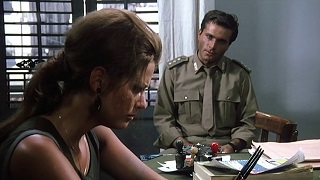
Scene uit de film “Il giorno della civetta" (1968) met Claudia Cardinale en Franco Nero 


De Engelse dichter, vertaler en graficus Alfred Charles Tomlinson werd geboren op 8 januari 1927 in Stoke-on-Trent, Staffordshire. Zie ook alle tags voor Alfred Tomlinson op dit blog.


Chinchon

Trees in this landscape
signal the presence of a river.
A side road leads us on—
parched grass, a rock horizon—
and winds us towards
a town watched over by
the blind eyes of a ruined castle:
This is Chinchon.
December a week away,
the place is half-deserted.
The square that can be converted
into a bullring or a theater
awaits the arrival of actors
to perform the piece by Lope de Vega
promised on the playbills.
We sit in the bar of the parador
in the midst of a floral display
on blue tiles, over a drink
that creates a circle of warmth
in the growing chill
and is also called Chinchon.
Aniseed. Anise is
what these dry fields feed,
with its yellowish-white small flowers
and licorice-flavored seed:
we are drinking the distillation
of Spain—a certain pungency
which is not unsweet, like the heat
and tang in the Spanish aspirate.
The sky looks down on our departure
through each one of the blind eyes
of the castle. The car
is a lost beetle in the vast
spreading amplitude of Castile
expanding around us. Snowflakes
over the far Guadarrama
feel for the mountain spine
that reaches to the heights like a line
of surf suddenly breaking on the peaks. Below,
burning stubble in the fields
is turning the twilight blue
and losing the thread of the road we are on,
Chinchón lamplit behind us, Chinchón gone.
 2206121-6ba402f3f9df82d662733e72446b56ba.jpg
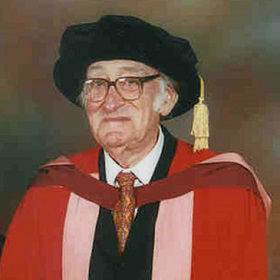
Alfred Tomlinson (8 januari 1927 – 22 August 2015)


De Franstalige, Canadese dichter, schrijver en uitgever Gaston Miron werd geboren op 8 januari 1928 in Sainte-Agathe-des-Monts. Zie ook alle tags voor Gaston Miron op dit blog.


La marche à l’amour (Fragment)

mon courage est un sapin toujours vert
et j'ai du chiendent d'achigan plein l'âme
tu es belle de tout l'avenir épargné
d'une frêle beauté soleilleuse contre l'ombre
ouvre-moi tes bras que j'entre au port
et mon corps d'amoureux viendra rouler
sur les talus du mont Royal
orignal, quand tu brames orignal
coule-moi dans ta plainte osseuse
fais-moi passer tout cabré tout empanaché
dans ton appel et ta détermination

Montréal est grand comme un désordre universel
tu es assise quelque part avec l'ombre et ton coeur
ton regard vient luire sur le sommeil des colombes
fille dont le visage est ma route aux réverbères
quand je plonge dans les nuits de sources
si jamais je te rencontre fille
après les femmes de la soif glacée
je pleurerai te consolerai
de tes jours sans pluies et sans quenouilles
des circonstances de l'amour dénoué
j'allumerai chez toi les phares de la douceur
nous nous reposerons dans la lumière
de toutes les mers en fleurs de manne
puis je jetterai dans ton corps le vent de mon sang
tu seras heureuse fille heureuse
d'être la femme que tu es dans mes bras
le monde entier sera changé en toi et moi

la marche à l'amour s'ébruite en un voilier
de pas voletant par les lacs de portage
mes absolus poings
ah violence de délices et d'aval
j'aime
           que j'aime
                             que tu t'avances
                                                      ma ravie
frileuse aux pieds nus sur les frimas de l'aube
par ce temps profus d'épilobes en beauté
 

 2206121-4d27a64b890bc2f961af5500e0ee8f93.jpg
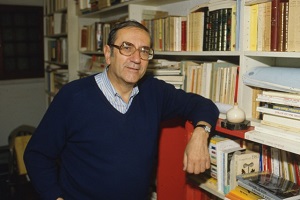
Gaston Miron (8 januari 1928 – 14 december 1996)


De Oekraïense dichter en schrijver Vasyl Stus werd geboren op 8 januari 1938 in Rakhnivka, in de provincie Vinnytsia Oblast. Zie ook alle tags voor Vasyl Stus op dit blog.


The stinging winds relentlessly pervade

The stinging winds relentlessly pervade
this embrasure of fulfillment.
Your naked voice, like a painful injection, is thrust
into this whistling December noise.
And wait awhile! And waiting is unbearable!
And one more spring that splashes like a wave,
one more oar-stroke and our black raft
will beach itself. And there — the devil take it —
and there — go on, reproach or curse at will.

I think that I do not live,
and the other one lives in the world for me
in my likeness. No eyes, no ears,
no hands, no feet or mouth. Indifferent in your body and, bit of pain,
and I live in darkness and twilight frozen
I myself, there, in terrible pain.


Vertaald door Matthew Raphael Johnson
 

 2206121-c6447fae8b373f64aa7593a9d57b9b60.jpg
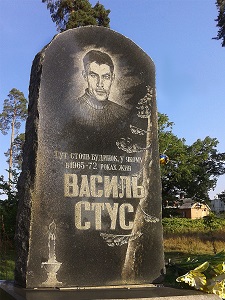
Vasyl Stus (8 januari 1938 – 4 september 1985)
Monument in Kiev


De Britse schrijver Wilkie Collins werd geboren in Londen op 8 januari 1824. Zie ook alle tags voor Wilkie Collins op dit blog.

Uit: The Woman in White

“It was the last day of July. The long hot summer was drawing to a close; and we, the weary pilgrims of the London pavement, were beginning to think of the cloud-shadows on the corn-fields, and the autumn breezes on the sea-shore.
For my own poor part, the fading summer left me out of health, out of spirits, and, if the truth must be told, out of money as well. During the past year I had not managed my professional resources as carefully as usual; and my extravagance now limited me to the prospect of spending the autumn economically between my mother's cottage at Hampstead and my own chambers in town.
The evening, I remember, was still and cloudy; the London air was at its heaviest; the distant hum of the street-traffic was at its faintest; the small pulse of the life within me, and the great heart of the city around me, seemed to be sinking in unison, languidly and more languidly, with the sinking sun. I roused myself from the book which I was dreaming over rather than reading, and left my chambers to meet the cool night air in the suburbs. It was one of the two evenings in every week which I was accustomed to spend with my mother and my sister. So I turned my steps northward in the direction of Hampstead.
Events which I have yet to relate make it necessary to mention in this place that my father had been dead some years at the period of which I am now writing; and that my sister Sarah and I were the sole survivors of a family of five children. My father was a drawing-master before me. His exertions had made him highly successful in his profession; and his affectionate anxiety to provide for the future of those who were dependent on his labours had impelled him, from the time of his marriage, to devote to the insuring of his life a much larger portion of his income than most men consider it necessary to set aside for that purpose. Thanks to his admirable prudence and self-denial my mother and sister were left, after his death, as independent of the world as they had been during his lifetime. I succeeded to his connection, and had every reason to feel grateful for the prospect that awaited me at my starting in life.
The quiet twilight was still trembling on the topmost ridges of the heath; and the view of London below me had sunk into a black gulf in the shadow of the cloudy night, when I stood before the gate of my mother's cottage. I had hardly rung the bell before the house door was opened violently; my worthy Italian friend, Professor Pesca, appeared in the servant's place; and darted out joyously to receive me, with a shrill foreign parody on an English cheer.
On his own account, and, I must be allowed to add, on mine also, the Professor merits the honour of a formal introduction. Accident has made him the starting-point of the strange family story which it is the purpose of these pages to unfold.”

 

 2206121-e29db9bb9d1b46c655c96610b7d1256a.jpg
Wilkie Collins (8 januari 1824 – 23 september 1889)
Cover


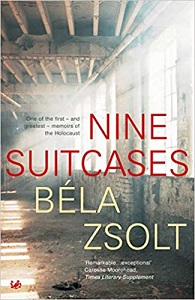
De Hongaarse schrijver Béla Zsolt werd op 8 januari 1895 geboren in Komárom in het noorden van Hongarije. Zie ook alle tags voor Béla Zsolt op dit blog.

Uit: Nine Suitcases (Vertaald door Ladislaus Lob)

“The engine struggled on, and silence reigned in the compart-ment. The travelers went to sleep, or at least tried to catch forty winks. Our gendarme must have been extremely tired by the huge task he had recently accomplished, for he was sound asleep, judg-ing by the even jounce of his head back and forth. Now that his head was bare of the feathered hat and chinstrap, and his jauntily twirled mustache hung limp and ruffled, the sleeping gendarme's harsh, martial features somewhat deflated: he had the impassive, expressionless peasant face of a hired hand who fell asleep on a haywagon bumping along on the road — the oxen would know the way home by themselves. There he sat facing me, his warm breath brushing my face as he dreamed, smacking his lips like a child. And to think of the acts this man had committed in front ofmy eyes! — or rather: what had they turned this dumb, slumbering, harmless-looking peasant into? My earlier tipsiness must still have been play-ing games with me, for I almost woke him up to tell him off, in the following way: `Listen here, homeboy, you're from Gyor county, I from Koma-r= — we're neighbors and practically the same age. We could have gone to the same elementary school, or hung out together waiting for the Vienna steamer at the landing stage by the Danube where we swam naked. So tell me, fellow countryman, what did you do to my poor old mother? Have you gone stark raving mad? Didn't I, as soon as I came of age, take your side, the cause of the poor people? Didn't I insist, even as a kid, that the lands belonging to the count of Oszony, the baron of Herkaly, and the Jew who owned Bela-puszta should be divided up among you poor people?' Yes indeed, I was on the verge of yanking the gendarme's shirt to wake him, when Mrs. Szabo must have sensed something, for she took my hand and squeezed it in a warning fashion. All right, all right, I thought. I won't wake him this time. But it had hurt more than words can tell that it was precisely peasants like this one, and other loudmouth 'little men' of his kind, who had bloodied their hands and finished us off! The very ones for whom I had fought all my life, much more than I had for the hapless Jews! In the Ukraine, on forced labor service, whenever the officers had tormented me, it left me emotionally uninvolved. All right, they were my enemies, and I was theirs; ever since I had attained the age of reason, I had been fighting these oafish, good-for-nothing bour-geois, who, prisoners of their own ignorance and limited horizons, as if vacuum-sealed, had always considered themselves the clev-erest and most special people on earth. All they needed was the racist ideology borrowed from the Germans. But all those articles I had written were on behalf of the 'little men' — my proletarians and peasants — although I was well aware that most of them, impover-ished and uneducated, were selfish and cold. And yet, whenever one of them, a 'prole' or peasant, mistreated me in forced labor, it made me feel that my entire life, all my work, had been ludicrous. In nineteen months I met only one individual who was grateful to me, the journalist fighting for his interests.”
 

 2206121-1df6df3356d394a58972ac059f23d407.jpg
Béla Zsolt (8 januari 1895 – 6 februari 1949)
Cover


Zie voor nog meer schrijvers van de 8e januari ook mijn blog van 8 januari 2018 en ook mijn blog van 8 januari 2017 deel 2.
 

Geschreven door Romenu om 18:12 Reageer op dit bericht

Frans Kellendonk, Reginald Gibbons, Dionne Brand, Sofi Oksanen, Henk van Zuiden, Shobhaa Dé, Marie Desplechin, Chester Kallman

De Nederlandse schrijver en vertaler Frans Kellendonk werd geboren in Nijmegen op 7 januari 1951. Zie ook alle tags voor Frans Kellendonk op dit blog.

Uit: De brieven

“Aan Johan Polak, 12 januari 1981
Beste Johan,
Bijgaand mijn verhaal ter ondersteuning van de subsidieaanvraag voor de uitgave van Henry James. Er staat, dacht ik, genoeg in — in elk geval zoveel als ik verzinnen kon zonder al te veel in details te treden. Het hopen is nu op een gunstige beslissing.
Vriendelijke groeten, ook aan Rik.
Frans Kellendonk

Ps Is er al overleg met Meulenhoff geweest over een evt. gezamenlijke uitgave van het boek? Ik wil zelf ook wel met Laurens gaan praten.

Appendix
Uitgeverij Polak & Van Gennep heeft het plan opgevat om een bundel te publiceren met de belangrijkste verhalen van Henry James. De Amerikaanse schrijver Henry James (1843-1916) wordt gerekend tot de grootste auteurs van de wereldliteratuur, maar in Nederland is hij tot op vandaag nagenoeg onbekend. Tientallen jaren geleden al zijn er vertalingen verschenen van The Aspern Papers' (Een dichterlijke nalatenschap bij de Wereldbibliotheek), 'The Turn of the Screw' (In de greep, Salamanderreeks) en, meer recent, van de korte roman What Maisie Knew (Wat Maisie wist, in de reeks Prima Klassieken). Deze vertalingen kunnen niet eens adequaat genoemd worden en hebben nauwelijks iets bijgedragen tot een grotere bekendheid van het Nederlandse lezerspubliek met het werk van Henry James.
De voorgenomen bundel zal verhalen bevatten uit alle fasen van James' schrijverschap en alle belangrijke thema's van zijn romans zullen erin aan de orde komen. 'Daisy Miller' (1878) behandelt het 'transatlantische' thema, dat James later op groter schaal heeft uitgewerkt in de roman The Portrait of a Lady: de ondergang van een puriteins, romantisch Amerikaans meisje in een corrupt, overgecultiveerd Europa. In The Aspern Papers' (1888) vertelt James over de ongenaakbaarheid van het verleden en bovendien is dit het eerste verhaal waarin een zogenaamd onbetrouwbare verteller aan het woord is. 'The Lesson of the Master' (1888), 'The Real Thing' (1893) en The Figure in the Carpet' (1896) hebben esthetische thema's: die verhalen gaan over de verhouding van de kunstenaar tot zijn kunst, de verhouding van de kunstenaar tot het leven en van kunst tot het leven en over 'het geheim' van het kunstwerk, dat altijd aan de oppervlakte ligt. 'The Pupil' (1892) is weer een variatie op het thema van 'Daisy Miller', onschuld versus corruptie, de gaafheid van de jeugd die desintegreert wanneer ze in contact komt met de hopeloos gecompromitteerde ouderdom. Een dergelijke problematiek vinden we ook in wat wellicht het beroemdste spookverhaal van alle tijden is, The Turn of the Screw' (1898). 'In the Cage' (uit datzelfde jaar 1898) ontleent, net als dat spookverhaal, zijn spanning aan het gezichtspunt van waaruit de gebeurtenissen verteld worden; hier gaat het om de fantasieën van een telegrafiste over de raadselachtige telegrammen die de rijkelui van Mayfair via haar versturen. 'The Beast in the Jungle' (1903), The Jolly Corner' (1906) en 'The Bench of Desolation' (1910), drie verhalen die zijn geschreven in de complexe stijl van de late James, behandelen op heel verschillende manieren het thema van de grote roman The Ambassadors: een man ontdekt dat zijn leven heel anders had kunnen verlopen.”


 2205894-6e381da4eb2e4adce2d8a7296d782606.jpg
Frans Kellendonk (7 januari 1951 – 15 februari 1990) 


De Amerikaanse dichter, redacteur en hoogleraar Reginald Gibbons werd geboren in Houston op 7 januari 1947. Zie ook alle tags voor Reginald Gibbons op dit blog.


Wildflowers

Coleridge carefully wrote down a whole page
of them, all beginning with the letter b.
Guidebooks preserve our knowledge
of their hues and shapes, their breeding.
Many poems have made delicate word-chimes—
like wind-chimes not for wind but for the breath of man—
out of their lovely names.
At the edge of the prairie in a cabin
when thunder comes closer to thump the roof hard
a few of them—in a corner, brittle in a dry jar
where a woman's thoughtful hand left them to fade—
seem to blow with the announcing winds outside
as the rain begins to fall on all their supple kin
of all colors, under a sky of one color, or none.


At Noon

The thick-walled room's cave-darkness,
cool in summer, soothes
by saying, This is the truth, not the taut
cicada-strummed daylight.
Rest here, out of the flame—the thick air's
stirred by the fan's four
slow-moving spoons; under the house the stone
has its feet in deep water.
Outside, even the sun god, dressed in this life
as a lizard, abruptly rises
on stiff legs and descends blasé toward the shadows.


 2205894-2c8d60044036901b08c08cbc5a3368ed.jpg
Reginald Gibbons (Houston, 7 januari 1947)


De Canadese dichteres en schrijfster Dionne Brand werd geboren op 7 januari 1953 op Trinidad. Zie ook alle tags voor Dionne Brand op dit blog.


Out here I am like someone without a sheet

Out here I am like someone without a sheet
without a branch but not even safe at sea,
without the relief of the sky or good graces of a door.
If I am peaceful in this discomfort, is not peace,
is getting used to harm. Is giving up, or misplacing
surfaces, the seam in grain, so standing
in a doorway I cannot summon up the yard,
familiar broken chair or rag of cloth on a blowing line,
I cannot smell smoke, something burning in a pit,
or gather air from far off or hear anyone calling.
The doorway cannot bell a sound, cannot repeat
what is outside. My eyes is not a mirror.


I saw this woman once in another poem

I saw this woman once in another poem, sitting,
throwing water over her head on the rind of a country
beach as she turned toward her century. Seeing her
no part of me was comfortable with itself. I envied her,
so old and set aside, a certain habit washed from her
eyes. I must have recognized her. I know I watched
her along the rim of the surf promising myself, an old
woman is free. In my nerves something there
unraveling, and she was a place to go, believe me,
against gales of masculinity but in that then, she was
masculine, old woman, old bird squinting at the
water’s wing above her head, swearing under her
breath. I had a mind that she would be graceful in me
and she might have been if I had not heard you
laughing in another tense and lifted my head from her
dry charm.


 2205894-d15871becf100970a9dec3852658ca8b.jpg
Dionne Brand (Trinidad, 7 januari 1953)


De Finse schrijfster Sofi Oksanen werd geboren in Jyväskylä op 7 januari 1977. Zie ook alle tags voor Sofi Oksanen op dit blog.

Uit: Norma (Vertaald door Sophie Kuiper)

“De taxi was er nog niet. Norma leunde tegen het hek van de begraafplaats en liet haar opluchting rondzwemmen in een bel van benzo’s en scopolamine. Ze had de begrafenis doorstaan. Ze had geen valsheid bespeurd in de condoleances, geen schijnheiligheid in empathisch bedoelde woorden. Ze was niet flauwgevallen, had niet overgegeven en was niet in paniek geraakt, ook al waren sommige aanwezigen dichtbij gekomen om haar te omhelzen. Ze had zich de perfecte dochter betoond en kon eindelijk haar zonnebril afzetten, die in de brandende zon langs haar bezwete neus omlaaggleed, maar net toen ze de bril in haar tas wilde stoppen, kwam een onbekende man zijn medeleven betuigen.
Norma schoof haar zonnebril weer op haar neus. Ze had geen behoefte aan gezelschap.
‘De anderen zijn geloof ik al naar binnen.’ Norma maakte een gebaar naar het restaurant waar het begrafenismaal plaatsvond en trok de rand van haar hoed omlaag. De man ging niet weg en stak zijn hand uit. Norma wendde zich af en negeerde het begroetingsgebaar, ze had geen zin in praatjes met vreemden. Maar de man gaf niet op. Hij pakte Norma’s hand vast.
‘Directeur Lambert,’ stelde hij zich voor. ‘Max Lambert. Een oude vriend van je moeder.’
‘Ik kan me niet herinneren dat ze het ooit over u heeft gehad.’ ‘Besprak u al úw vrienden met uw moeder?’ lachte de man. ‘Het is al lang geleden. In onze jonge jaren hebben Anita en ik heel wat meegemaakt.’
Norma trok haar hand los. De greep van de man om haar vingers voelde als een stempel dat tegen haar wil op haar huid werd gedrukt, en hij had over haar moeder gesproken in de verleden tijd. Dat klonk als een belediging. Norma was nog niet in dat staNorma dium en de man zag er niet uit als een vriend van haar moeder. Norma en Anita Ross hadden een teruggetrokken leven geleid, sociale activiteiten waren beperkt geweest tot werkverplichtingen. Ze kenden elkaars bescheiden kennissenkring. Deze man hoorde daar niet bij.
De man had zijn haar naar achteren gekamd, aan de diepte van zijn inhammen was zijn leeftijd niet af te lezen, wat niet gezegd kon worden van zijn huid. Zijn rimpels waren diepe groeven van de zon, zijn wallen zwaar van langdurig en overvloedig alcoholgebruik en zijn gebruinde kleur kon de gesprongen adertjes niet verhullen.”


 2205894-048328ff7bd3d1bdb37ee7e3b078e455.jpg
Sofi Oksanen (Jyväskylä, 7 januari 1977)


De Nederlandse dichter, bloemlezer Henk van Zuiden werd geboren in Apeldoorn op 7 januari 1951. Zie ook alle tags voor Henk van Zuiden op dit blog.


Had je anders gedacht?
Voor melieve

Zelfs niet bij uitzondering,

de arm die ik om je schouders sla, de deur die ik voor
je open houd, lieve of gekke woorden die ik je bedenk,
de muziek waarmee ik je oren verwen, een bergwan-
deling die je voert naar een klein welhaast vergeten
oord waar tijd bijzaak is.
Ik deed en doe het voor je omdat je mij zo lief bent,
en nooit ingegeven om wat toeval wordt genoemd. En
nooit gedaan uit vanzelfsprekendheid. Dat ken ik niet,
daar zijn wij beiden vreemd mee. Het nieuwe gerecht
dat ik op tafel tover, de Zwitserse puurste chocolade
die ik tevoorschijn haal, een nog niet eerder gehoord
sprookje vertel, een grap die ik maak, oudroze rozen
die geurend Rilkegedichten oproepen in de theetuin
van Bern. Niets was en is gedaan uit vanzelfsprekend-
heid, niets uit toeval, zelfs niet bij uitzondering.
Ik deed en doe het louter voor jou, kom maar thuis
melieve, het hout brandt in de haard,
om je lijf te warmen en tegen alle vormen van kou-


Met de paarden of achterop de motor
Voor Annabel Sprengen

Dag Annabel, ik heb je gezocht.
Naar vrienden, naar wat jou boeide.
Daar is geen antwoord op gevonden.
Ik kan het niet verbeelden, bereikte
geen van de vertrekpunten waar jij
eens begon te zoeken naar aards-
vergeten beleven met hulpmidde-
len die je niet meer loslieten.
Of, was het andersom?
Het opperst genieten, het vervagen
van de wereld waar jij op leefde,
duurde telkens kort. Te kort. Weer
en meer wilde je het terughalen, dat
eeuwig verlangen is nu vervlucht.
Je lichaam had je al vroeg geoefend
in ’n houding om terug te keren naar
moederschoot. Buiten stonden de
paarden van Elijah en de motor
van je vader. Vrienden van je heb
ik niet gevonden, niemand zag hoe
jij vertrok.
Het is een lange trip geworden.


 2205894-fc0eac00f0d0ed09fc0876c2cf1813f0.jpeg
Henk van Zuiden (Apeldoorn, 7 januari 1951)


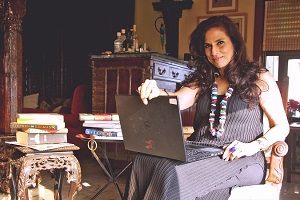
De Indiase schrijfster en columniste Shobhaa Dé werd geboren op 7 januari 1947 in Maharashtra. Zie ook alle tags voor Shobhaa Dé op dit blog.

Uit: Starry Nights

“Aasha Rani hadn't bothered to show up for the preview. She wasn't expected to. In any case, she now had a small theatre attached to her swanky Bandra bungalow. Plus a dubbing studio. Good business sense, Kishenbhai mused. Who was her guru? Whoever it was had got her to part with her precious money. Kishenbhai laughed silently at the image his mind suddenly conjured up: `Aasha Rani, darling, part your legs, you can part with the money later.' She deserved whoever it was. She deserved what he was doing to her. Scheming bitch! Chalo chhodo, all women are the same. All filmi women, at least. No exceptions. Not one. When Kishenbhai discovered Aasha Rani she had been nothing. A dhool ka phool' the film rags gleefully dismissed her. An awkward, ungainly, overweight girl from Madras. And so dark. Chhee! Kishenbhai didn't like dark girls. He'd always gone for 'cloodh-ke-jaisi-gori' women himself. His own swarthy complexion was worked over with Afghan Snow and Pond's Dreamflower talc, a part of his daily, post-bath ritual. Aasha Rani had laughed and laughed when she'd found him at his careful toilette. But that was later. After she had officially become his. No, he hadn't married the bitch or anything. But it was known in their circle that Kishenbhai had got hold of a new chidiya. It was a signal to all others to keep their paws off. But Gopal had deliberately chosen to ignore the commandment. Gopal had always felt one-up on Kishenbhai. Because Gopal was from Himachal Pradesh. Very fair, and with light eyes. Anyway, here she was now. Beautiful sequence. Well shot. Aasha Rani was very finicky about the opening shot. Yes, Aasha Rani had certainly learnt all the tricks. She knew her face better than anybody else. She knew she had a difficult nose. And a heavy chin. But she also knew that once her eyes were the focus and her lips properly pouted, nobody bothered about anything else. Kishenbhai searched the image on the screen and found the mole above her lips. She used to hate it in those days. Wikaldo na,' she'd plead with her make-up man. It was Kishenbhai who had convinced her that the mole looked very sexy. That it drew attention to her mouth. These days she darkened it. He tried to stop thinking about old times and to concentrate on the song she was moving her lips to. Still the same Aasha Rani—terrified to open her mouth too wide lest her crooked dog-teeth showed up on the screen. Soft focus lens, a back lit shot, three-quarter profile—everything just the way she wanted. He let the words of the song engulf him Nothing special—though the soundtrack had a minute or so of suggestive panting. The visual had her in a jacuzzi, one slim leg sticking out. It was supposed to be a fantasy sequence in which the heroine dreamed of her wedding night. Aasha Rani had really let herself go for this one. He watched as she caressed herself with a cake of soap.”


 2205894-b2d59cf083c7885753748bbf312df27c.jpg
Shobhaa Dé (Maharashtra, 7 januari 1947)


De Franse schrijfster Marie Desplechin werd geboren op 7 januari 1959 in Roubaix. Zie ook alle tags voor Marie Desplechin op dit blog.

Uit: Mauve

“Nous étions assises sur un banc, face à l'entrée du bâtiment D, et nous regardions les gosses partir pour l'école. Euphronie avait eu la bonne idée de préparer un thermos de café. Depuis plus d'une heure que nous attendions, j'en avais bu un demi-litre, et mes nerfs étaient dans un drôle d'état. Ma voisine avait une allure étrange dans son tablier fleuri, qui lui faisait comme une housse multicolore. Elle ressemblait à un fauteuil.
Nous avions jugé prudent de nous conformer aux habitudes vestimentaires du quartier. L'affaire n'avait pas été facile. Je ne trouvais rien d'assez normal à mon goût avant de tomber sur un vieux survêtement que j'avait porté à l'hôpital à l'époque de mon opération du genou. Il était mou et informe. J'étais moche mais Euphronie était encore plus moche que moi. Il y a des gens à qui la normalité ne va pas.
Les gamins sortaient de l'immeuble comme des souris de sous un tas de bûches. Les premiers à quitter leurs appartements étaient les collégiens qui commencent leurs journées à huit heures, tôt, très tôt, bien trop tôt à mon goût. Ils avaient des figures d'endives. Si ça n'avait tenu qu'à moi, tout ce petit monde aurait dormi deux heures de plus, ce qui n'aurait pas empêché la terre de tourner. Après eux, nous avons vu trottiner les petits bouts qui fréquentaient encore l'école primaire, ouverture à huit heures et demie. Ils n'avaient pas l'air en meilleur état, farcis de céréales trop sucrées , fripés de sommeil et pas lavés pour la plupart d'entre eux, j'en aurais mis ma main à couper. C'était maintenant le tour de ceux dont les cours ne débutent qu'à neuf heures. Ca n'en finirait donc jamais ? Après ce que j'avais bu, le parfum du café me levait le coeur. »
(…)

Derrière un petit groupe d'enfants qui bavardaient en traînant leurs cartables, une gamine marchait lentement. Ses longs cheveux soigneusement peignés se tordaient en boucles à leurs extrémités. Elle se tenait très droite, ce qui donnait à sa façon de marcher quelque chose de particulier. Les enfants ont le corps souple et plein de vie. Courir, sauter, se balancer, voilà ce qu'ils veulent. Mais cette petite personne marchait toute raide dans son manteau, à l'écart des rires et des conversations. Elle ressemblait à un soldat minuscule casqué de cheveux. Le plus frappant était son regard, qui restait fixe et comme posé dans le vide. Ce n'est pas qu'elle était mal à l'aise, grave ou inquiète comme le sont certains enfants. C'est qu'elle se tenait en dehors d'un monde qui n'était pas assez bien pour elle."


 2205894-c3c1e26cc4ba7922c23c2a735acd8438.jpg
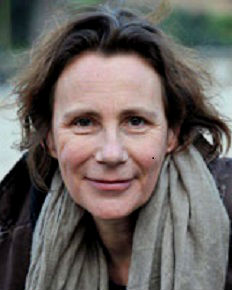
Marie Desplechin (Roubaix, 7 januari 1959) 


De Amerikaanse schrijver Nicholson Baker werd geboren op 7 januari 1957 in Rochester.Zie ook alle tags voor Nicholson Baker op dit blog.

Uit:Traveling Sprinkler

“I’m parked on Inigo Road, which is my favorite road anywhere. I wish I could write about the phrase “happy phrase,” but there’s no time. Very soon I’m going to be Fifty Fucking Five. The three Fs. The last time I hit three Fs was ten years ago, and this time is definitely worse. Unless you’re Yeats or Merwin you are done as a poet at fifty-five. Dylan Thomas was in the ground for sixteen years at fifty-five. Keats was dead at, what, twenty-six? Riding on horseback with his sad lungs coughing blood. And as for Wilfred Owen.
The first time I read Keats’s sonnet “When I Have Fears,” I was eating a tuna sub. I was an applied music major, with a concentration in bassoon. I’d found the poem in The Norton Anthology of Poetry—the shorter black edition with the Blake watercolor of a griffin on the cover. I propped the Norton open with my brown plastic food tray and I started reading and eating the tuna sub and drinking V8 juice occasionally from a little can.
Keats says: “When I have fears that I may cease to be.” He doesn’t say, “When I have fears that I may,” you know, “drop dead,” or “breathe my last”—no, it’s “cease to be.” I stopped chewing. I was caught by the emptiness and ungraspability in that phrase. And then came the next line, and I made a little hum of amazement: “When I have fears that I may cease to be,” Keats says, “Before my pen has gleaned my teeming brain.”
I don’t want to pretend that the cafeteria spun around. It stayed still. I heard the grinding sound of the cash register printing. But I was thinking very hard. I was thinking about a large tortoiseshell that somebody had given me when I was small. There was a sort of fused backbone on the inside of it that ran down the middle. This bony ridge smelled terrible when you sniffed it close-up, although it had no odor from a normal distance. I imagined the tortoiseshell as the top dome of a human skull, and I imagined Keats’s pen gleaning bits of thought flesh from it.”

 2205894-636212cddbc1820db7b98933a9c5a1d1.jpg
Nicholson Baker (Rochester, 7 januari 1957) 


De Amerikaanse dichter, librettist en vertaler Chester Simon Kallman werd geboren op 7 januari 1921 in Brooklyn, New York. Zie ook alle tags voor Chester Kallman op dit blog.


The Souvenir

Evening. Who calls? The light
Is walking on the waves; the light retreats.
A word advances and repeats:
Or time or tide or night.

There was no victory
To speak about: a star that fell, a look
Contracted to a choice. I took
The sea-shell for the sea.


Like As Not

If you don't believe my assertion
That when a sky-blue plate from Sweden
Yesterday was broken
A beam fractured from the universe,
And aren't convinced again
With me how things always get worse,
You'll convict me there and then—
'A lover of perfection.'

But I'm not such a baby
Nor by any means that gloomy,
In fact I'd be happy
To show you a left finger-tip gone dead
Which is wronged sympathy,
And a scar proving I bled
When progress operated out of me
The Twenty-third Street Ferry.

Do stars weep into my pillow?
Excess of laughter, not sorrow
At the exhausted meadow
Reviving each night less beneath its cover
Of engine-sooted snow.
Why if anything I'm a lover.
Of what's frankly imperfect: I know
Myself in my echo.


 2205894-a38fac64abb0fe7873a271b0baa22b4a.jpg
Chester Kallman (7 januari 1921 – 18 januari 1975)


Zie voor nog meer schrijvers van de 7e januari ook mijn blog van 7 januari 2018 deel 1 en eveneens deel 2.


Geschreven door Romenu om 18:19 Reageer op dit bericht

Meer van Romenu

↑ Terug naar de berichten